I’m trying to decide what precisely is implied by the term numeratum.
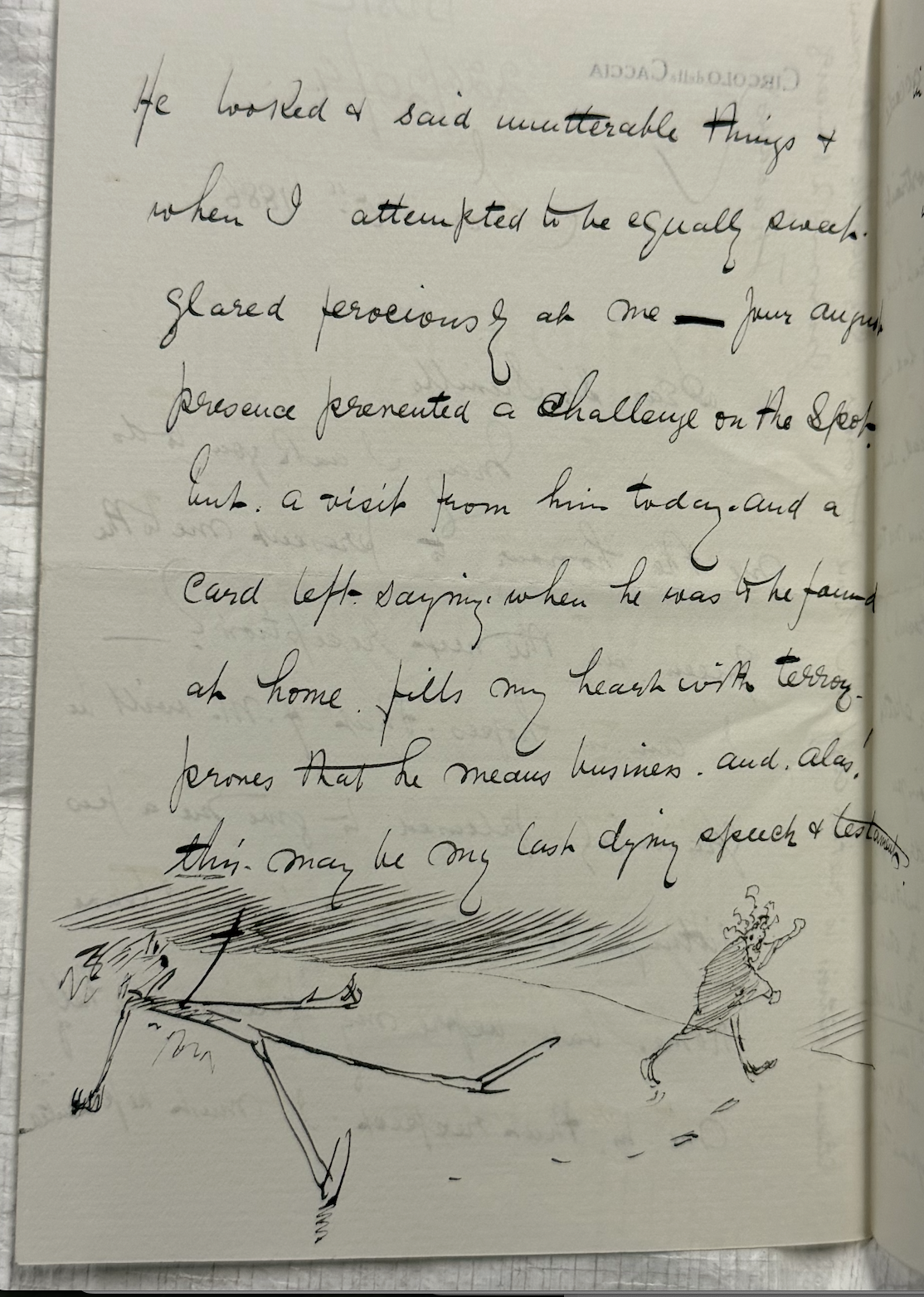
Early January 49 BCE (ad Fam. 5.20)
Cicero says he does not have even a 100k ready cash to pay to his former quaestor who is concerned about a book-keeping error, even if he wanted to pay him.
quod si mihi expensa ista HS [100k] tulisses, tamen, quae tua est suavitas quique in me amor, nolles a me hoc tempore aestimationem accipere; nam numeratum si cuperem, non erat.
March 45 BCE (ad Att. 12.25)
Cicero is looking to by buy a suburban estate. He doesn’t want to sell or trade properties and doesn’t want to pay too much interest. He can call in a debt for 600k sestertii and has another 600k at home (domi) and can pay some interest on the remainder of the cost to the seller.
mihi et res et condicio placet, sed ita ut numerato malim quam aestimatione. … unde ergo numerato? HS [600k] exprimes ab Hermogene, cum praesertim necesse erit; et domi video esse HS [600k]. reliquae pecuniae vel usuram Silio pendemus…
600k sestertii in silver of any coin denomination would weigh more than 1250 pounds.
It would fit in 3 standard five-gallon construction buckets if packed solid. With space between coins it would probably need to be distributed across four or five buckets. But don’t try to lift one of those buckets–you would put your back out!
Do we think Cicero really kept this laying around his house somewhere?!
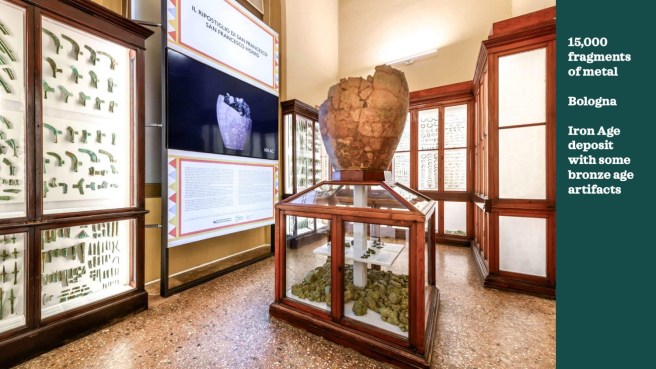
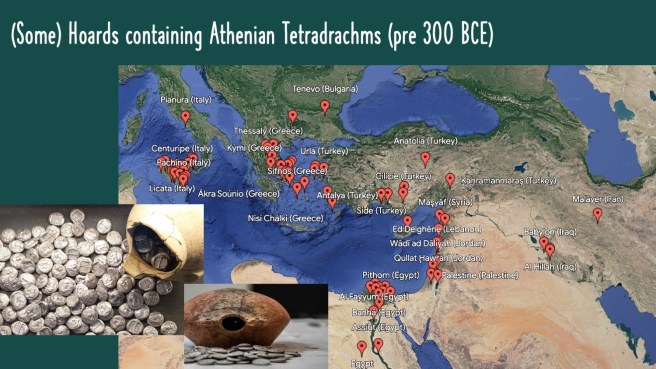
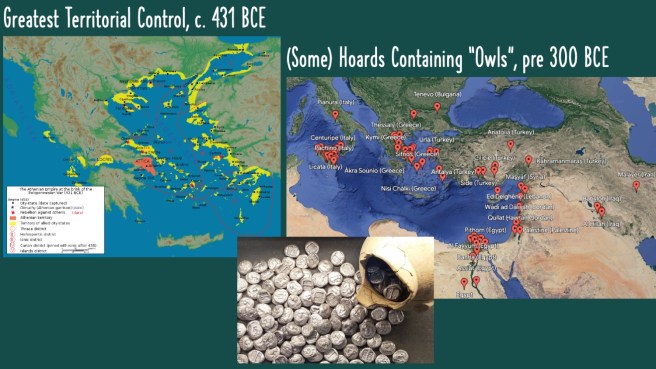
What a hoard! The so-called Mesagne hoard has 5,861 coins reported. That’s just shy of 50 pounds of silver. By volume, if solid silver, that would fill just three quarter jars.
I think it is possible to have this much ready cash in a Roman house but as the numbers get bigger than this at what point is it preposterous to imagine the weight and volume in a private residence?
And, for context when Cicero flees to Epirus to join Pompey in 48 BCE he gets cash. This time explicitly in coins from Atticus’ people.
a tuis et nummorum accepi HS [20k] et vestimentorum quod opus fuit. (ad Att. 11.2)
So Atticus himself must have had a store of coins in Epirus far exceeding this amount. Now we must imagine Cicero and his staff (and enslaved persons) carrying around 42 pounds or more of silver with them. Sounds incredibly awkward for whomever had the burden. This was only slightly less than the Mesagne hoard as reported.
I’m dropping this here as it seems to also deal with the physicality of money:
nunc omnia ista iacere puto propter nummorum caritatem. (ad Att. 11.9, 17 March 49 BCE)
Coins themselves are dear, so by extension Cicero thinks if Atticus can pay in coin he can get a better price on the estate he is contemplating purchasing.
Shackleton Bailey calls it a coin shortage, but that cannot be quite right. As the Civil War between Pompey and Caesar looms everyone wants greater liquidity as they don’t know how the credit system or real estate values may be effected. The latter were particularly vulnerable to confiscation or devaluation through destruction. Romans seem to have keep a huge amount of their assets tied up in property investments. So cash becomes king as it is portable.
There is a potential reference to the same situation in:
omnia scilicet nunc minoris. [ad Att. 13.31, 28 May 45 BCE]
versuram scribis esse faciendam mensum quinque, id est ad Kal. Nov., HS [200k] in eam diem cadere nummos qui a Quinto debentur. [ad Att. 15.20]
Here again we seem to have a question of large sum liquidity during the uncertain political landscape. A new loan is needed because COINS in particular must be repaid on specific date (1st of November). It is a lack of physical coin that is the concern. The letter goes on to discuss rental income for his son and his desire put together his own viaticus. Shackleton Bailey again oversteps in translation assuming this means a lump sum rather than simply a means of access money while traveling. Cicero is contemplating leaving Italy to escape the Political landscape of summer of 44 BCE.
See reference in first comment!
Numeratum in Cicero
Pis. 88
stipendium militibus per omnis annos a civitatibus, mensis palam propositis, esse numeratum?
What of the pay counted out to your troops throughout all those years by the [foreign] states, upon tables set out under the public gaze?
Flac. 80
Verum esto, gloriosus fuisti, voluisti magnum agri modum censeri, et eius agri qui dividi plebi Romanae non potest. Census es praeterea numeratae pecuniae CXXX [line above]. Eam opinor tibi numeratam non esse abs te. Sed haec omitto. Census es mancipia Amyntae neque huic ullam in eo fecisti iniuriam. Possidet enim ea mancipia Amyntas.
But let that pass; you were full of your own importance, you wanted to be assessed for a large area of land, and land at that which cannot be divided among the Roman commons. You also declared 130,000 sesterces in cash, but I think that your ready money was not your own. I let that go too. You declared Amyntas’ slaves but you did not cause him any loss by doing so, for he still owns those slaves.
Caec. 11
M. Fulcinius fuit, recuperatores, e municipio Tarquiniensi, qui et domi suae cum primis honestus existimatus est, et Romae argentariam non ignobilem fecit. Is habuit in matrimonio Caesenniam eodem e municipio, summo loco natam et probatissimam feminam, sicut et vivus ipse multis rebus ostendit et in morte sua testamento declaravit. Huic Caesenniae fundum in agro Tarquiniensi vendidit temporibus illis difficillimis solutionis. Quum uteretur dote uxoris numerata, quo mulieri esset res cautior, curavit ut in eo fundo dos collocaretur. Aliquanto post iam argentaria dissoluta, Fulcinius huic fundo uxoris continentia quaedam praedia atque adiuncta mercatur.
There was one M. Fulcinius, gentlemen, a native of Tarquinii, who in his native place enjoyed an eminently honourable reputation and at Rome had a considerable business as a banker. He was married to Caesennia, a lady from the same township, of honourable family and approved character, as he made known in many ways during her life and after his death declared by his will. To this Caesennia he sold an estate in the districts of Tarquinii during those times of financial stringency, and as he was using the cash which had comprised his wife’s dowry, he took the precaution of charging the dowry on the farm in order to give her, as a woman, better security for it. Some time afterwards Fulcinius gave up his banking business and bought some land in continuation of and next to this estate of his wife’s. …
Font. frag. 7
Si nulla pecunia numerata est, cuius pecuniae quinquagesima est?
If no money was paid, of what sum is that a fiftieth part?

Balbus quaestor magna numerata pecunia, magno pondere auri, maiore argenti coacto de publicis exactionibus, ne stipendio quidem militibus reddito duxit se a Gadibus et triduum tempestate retentus ad Calpen Kal. lun. traiecit sese in regnum Bogudis plane bene peculiatus. his rumoribus utrum Gadis referatur an Romam (ad singulos enim nuntios turpissime consilia mutat) nondum scio.
Leg. Agr. I.2-3

Agros emi vult qui dividantur; quaerit pecuniam. Videlicet excogitabit aliquid atque adferet. Nam superioribus capitibus dignitas populi Romani violabatur, nomen imperi in commune odium orbis terrae vocabatur, urbes pacatae, agri sociorum, regum status decemviris donabantur; nunc praesens pecunia, certa, numerata quaeritur. Exspecto quid tribunus plebis vigilans et acutus excogitet. “Veneat,” inquit, “silva Scantia.”
Att. 13.45.3: 11 August 45, Tusculum.
Lamia quidem a Balbo, ut videbatur, audiverat multos nummos domi esse numeratos, quos oporteret quam primum dividi, magnum pondus argenti praeter praedia; auctionem primo quoque tempore fieri oportere.