
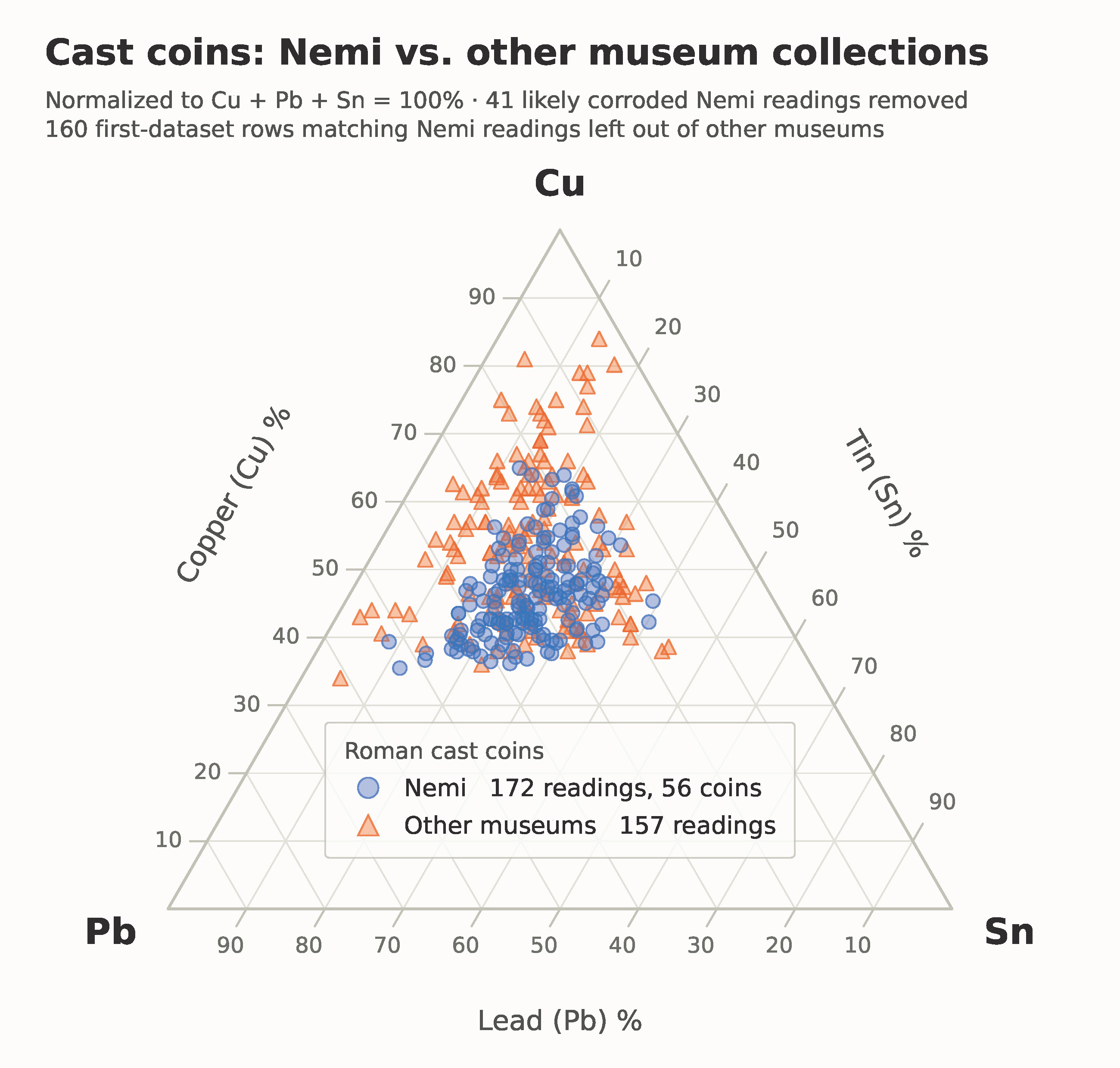
I am sitting in the lobby of my Warsaw hotel improving visuals for upcoming talks. Yes I am using Claude to help draw the pretty graphics from my own datasets. No apologies for this application. It does it faster and more attractively than I can do manually and lets me move on to the thinking and analysis faster.
Notice how much tighter the data is for the Nemi aes grave surface analyses. This is likely because of the shared conditions of deposit. I have no reason to doubt that any of the museum specimens are anything other than genuine but they come from very different contexts and may have had their surfaces altered through conservation or other interventions. Nevertheless there is a tight grouping. The Cu is too low in the vast majority of these readings for a whole bunch of reasons and DOES NOT REPRESENT THE ORIGINAL RECIPE, but the overall pattern of relative homogeneity is clear from the surface readings something that just does not exist for aes rude.
Here is another fun graphic:
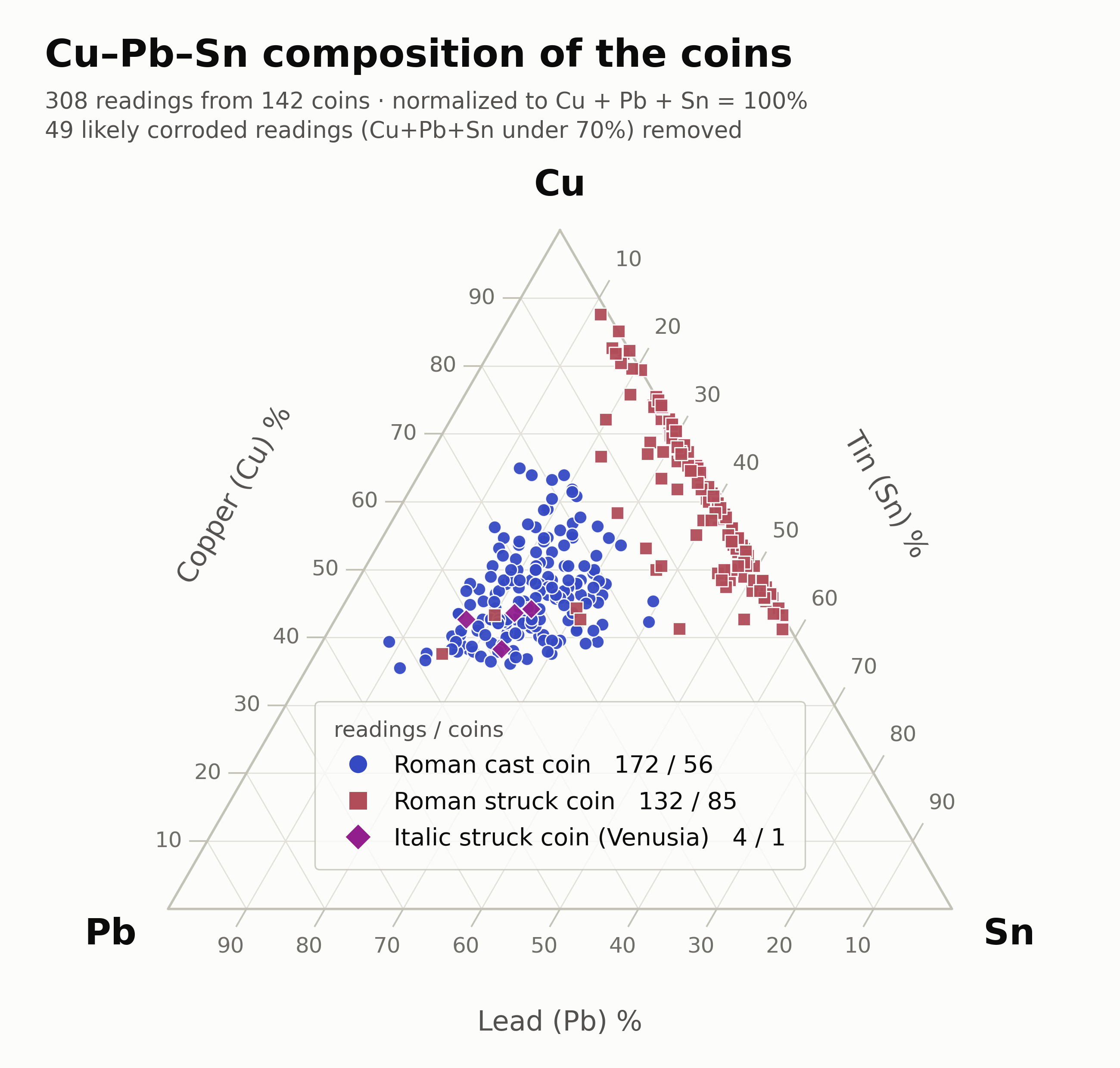
This is just material from Nemi. I haven not tested struck coinage from anywhere else. The struck issues are just RRC 26 and lower Crawford numbers, mostly RRC 17 and 16. Notice how much the pull towards tin, even as they come out of the same context of deposition as the cast coinage and were created at much the same time.


