Aes Grave MuX Grant Approved!

It’s official! My team has been awarded SIX DAYS of beam time! [we run experiments 24-7 during that time, taking over night shifts in rotation] Below you’ll find the whole grant narrative. All going well we should be able to make comparisons between and within all common Roman aes grave series, and establish original ‘recipes’ for the lead heavy admixture. I’m already dreaming about how to apply this data to other votive offerings and experimental archaeology to explore casting technologies!
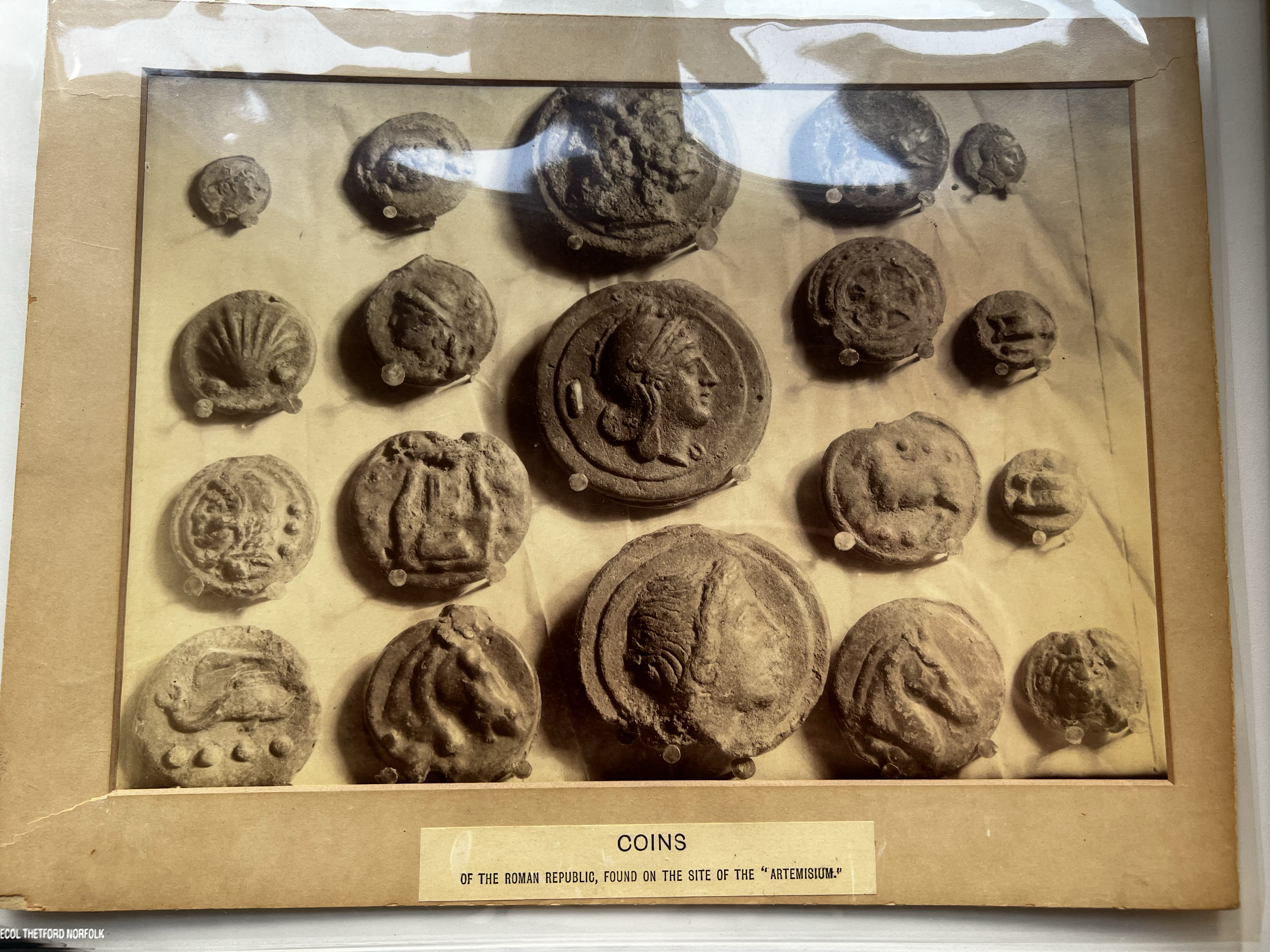
Fig. 1. One of Lord Saville’s 1880 excavation photos showing a selection of Nemi aes grave discoveries.

Stable Currency? Variable Cu:Pb:Sn Alloys and the Value of Rome’s Cast Coinages


L.M. Yarrow (ICS, SAS, London), W. Powell (CUNY), A. D. Hillier (STFC), S. Biswas (STFC), A. Inscker (Nottingham)


I. Background and Context

This cultural heritage proposal seeks to determine whether the composition of Rome’s earliest cast coinage, called aes grave (‘heavy bronze’) was an intentional and stable admixture of metals, particularly whether there was a stable ‘recipe’ within series and between series. The Romans seem to have adopted the tradition of using roughly shaped copper alloy ingots as money from northern and central Italic cultures and married this tradition to the design habits of the silver coins introduced by Greeks of southern Italy. This resulted in a perplexingly heavy cast coinage with numerous fixed denominations of an uncertain ‘bronze’ alloy or alloys. There is no definitive explanation for why they would be made so large or in so many denominations. Until recently, the prevailing scholarly view was that the heft of the objects (>300g for the largest denomination) corresponded to intrinsic value, but recent work on their metrology, pXRF surface analyses, and the results from preliminary MuX experiments (RB 2410477), make this view untenable. (1,2,3) This calls into question the origins of Roman money and by extension how we conceptualize the evolution of economic systems writ large. In essence, we’re asking if these objects were more akin to poker chips than a raw commodity.


II. Proposed Experiment


We seek to characterize the composition of the Nemi assemblage in Nottingham. Our fundamental research question is whether or not these coins were created using an intentional, controlled ‘recipe’, and if so, if it remained consistent across denominations and across series. This data allows us to test hypotheses regarding chronological sequencing and place of production. The experiment focuses on smaller denominations, allowing for multiple specimens from the same series to be compared one to another (series consistency), as well as direct denomination to denomination comparison between series (temporal/regional consistency). Smaller denominations (1/12th; 1/6th), with smaller mass and volume, are more likely to have quenched upon casting, thereby avoiding complications associated with compositional heterogeneities arising from the segregation of immiscible melts during cooling. At least two, and where possible three, examples from each series will be analyzed to test for compositional consistency. Coins from seven stylistically, and potentially temporally distinct, series will be analyzed to investigate compositional consistency interregionally and across time. Analyses will be focused at a depth of 2mm. This optimal depth avoids compositional transformations associated with weathering, but is shallow enough to remain in the compositionally homogenous quenched region, as determined from prior studies of leaded bronze at the ISIS facility(4). The material from Lord Saville’s 1880s excavations at the sanctuary of Diana at Nemi (Fig. 1) is curated by Nottingham City Museums & Galleries. Securely provenanced collections of aes grave including nearly all known series and denominations are exceptionally rare. The objects have all been previously tested using pXRF, and we can be confident in both authenticity and common conditions of ancient deposition and post-excavation storage, ensuring comparison between objects and series are valid and reasonable. Any destructive technique, such as drilling, is ruled out with respect to the cultural heritage importance of these objects. Even if seemingly similar objects are available in other collections, and even on the antiquities market we have no means (yet!) to ascertain if such objects are genuine without a clear chain of custody from the point of excavation. Forgery of such objects has been rampant since the early modern period. It would be deeply unethical to drill the only assemblage with archaeological provenance in the whole of the UK and one of only a handful globally; all the others are subject to strict protections by Italian law. We expect that the original ‘recipe’ should be consistent within series, or at least within the same denomination within a series. It may also be consistent across series, or show evolution over time. Any demonstrable difference will be historically significant in determining the economic function of the objects, and potentially, for confirming the relative chronology and relationships between the series. The sequence of creation is disputed, as is the length of time over which these objects were created and used. We theorize that the earliest were made just before the 1st Punic War (c.265BCE) and production continued through the beginnings of the 2nd Punic War (c.215 BCE). These analyses will help us better understand the socio-economic role of all bronze objects from this period, from their military applications to their status as religious offerings, including but not limited to those headline grabbing discoveries at San Casciano dei Bagni (Tuscany). At a meeting of the American Institute of Archaeology in January 2025, researchers from this site presented exceptional new discoveries from the 2024 excavations revealing that bronze votive statues bore inscriptions testifying to their weights. This religious context is not unlike what we know of the Nemi sanctuary. The heaviness of the object may have religious as well as economic significance.

Results will be calibrated through comparison with analyses of an international Pb-bronze standard (MBH-32XLB12). Based on the ISIS experiment RB2410477, we believe one analysis for each 1/12th piece is sufficient. As we lack comparanda for the larger 1/6th pieces, one reading from each side of each object ensures that we can determine if cross-denominational comparisons are valid. The assemblage contains only a single coin from series RRC25. This coin is a 1/3rd piece. An analysis at a depth of 2mm will be taken for comparison with the other series. Additional analyses will be taken at depths of 4mm, 6mm, and 8mm, to investigate potential internal inhomogeneities. This data will inform future studies in developing analytical methods for larger aes grave denominations and related artifacts.

III. Summary of Previous Beamtime or Characterization

Weathering of leaded-bronze results in a loss of Cu and a corresponding increase in concentrations of Sn and Pb in the patina. Our initial results (RB 2410477) prove that even artifacts that lack evidence of patina development (absence of O, C, S, and Cl based on pXRF analysis), exhibit large and non-systematic variance between analyses if the surface by pXRF compared to interior analyses using muonic x-rays (Fig. 2a). Thus, only internal analyses of bronze artifacts are meaningful. Our initial, exploratory experiments at ISIS suggest that the composition of aes grave vary linearly with their fractional denominations (1, 1/3rd, 1/12th) (Fig. 2b). A prior muonic x-ray study on leaded-bronze found that the compostion remains consistent within the first two millimeters, but at greater depths there is a non-linear shift in composition due to the development of immiscible melts during the cooling process (Fig. 2c) (ref). Accordingly, we conclude that these linear compositional trends at the 2mm depth across denominations is more likely to be the result of intentional ‘recipe’ modifications, rather than complications due to phase separation. RB 2410477 was critical for developing appropriate testing methods and furthered our understanding of how to use MuX to collect data from heavily leaded samples. This follow-up allows for a corresponding leap in our knowledge of this type of artifacts.
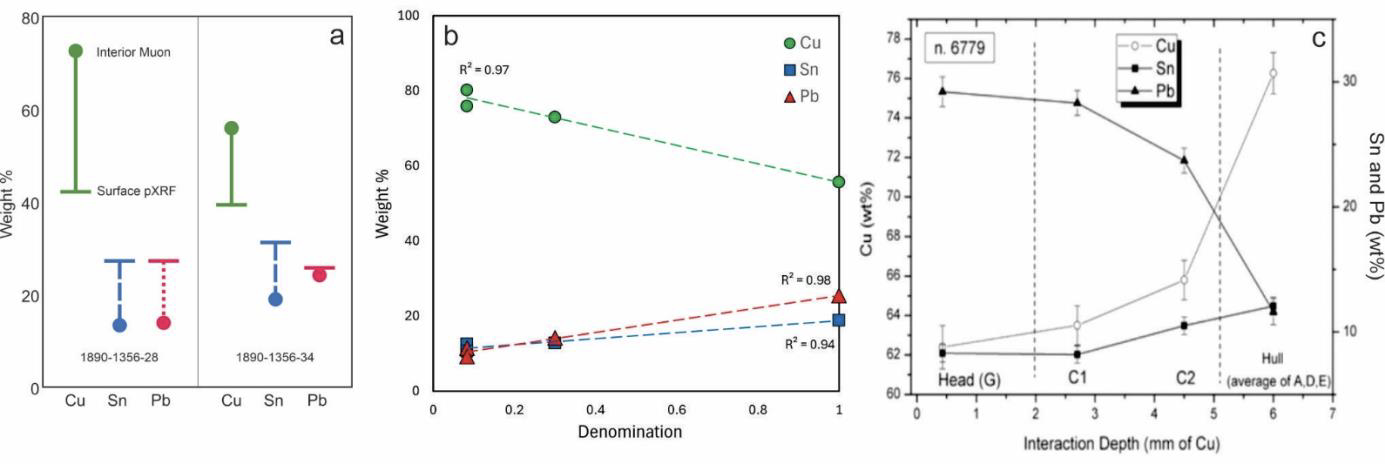
Figure 2. Prior results of muonic x-ray studies. A) Comparison of surface and 2mm interior analyses of aes grave; as expected; the Pb-bronze standard readings (not shown) had no meaningful difference at different depths; B) Compositional variation of aes grave relative to denomination; C) Compositional variation of leaded-bronze relative to depth (Cataldo et al., 2022).

IV. Justification of Beamtime Request


Analysis of sizable Pb-Sn-bronze artifacts such as these aes grave requires a non-destructive, deep-penetrating method that can document variation in composition with depth, and position. Muon X-ray emission spectrometry, as available at ISIS on the MuX instrument, is ideal for this purpose. Invasive techniques are ruled out by ethical concerns.. Neither surface analyses, nor neutron activation can provide reliable documentary evidence of the original “recipe(s?)” again because of inconsistent internal structure of the leaded bronze admixture and the high levels of patinatation and/or environmental incrustation from the conditions of deposit. 144 hours of beam time (6 days on the MuX spectrometer) would allow characterizing an international Pb-bronze standard (MBH-32XLB12) (5 analyses at surface, 2mm, 4mm, 6mm, and 8 mm; c. 20 hours), as well as 16 cultural heritage objects (32 analyses total). These objects include (a) 7 1/12th pieces, 1 analysis each aiming to reach a depth of 2mm, c. 28 hours, (b) 6 1/6th pieces, two analyses each at 2mm, one on each side of the object, c. 40 hours, and (c) 3 1/3rd pieces, four analyses at 2mm, 4mm, 6mm, and 8 mm, c. 16 hours (d) one additional surface reading on 1 1/3rd piece. The two surface readings allow us to demonstrate pXRF data and MuX data can be accurately compared for Pb-bronze objects. Testing the smallest available denomination of each of 7 series of cast bronzes and characterize any difference within and between the series. These results will be integrated with the results of RB2410477 for publication and should allow us to confirm either an intentional recipe for the alloy across denomination and series, or instead address the historic implications of either intentional recipe adjustments or a disregard for precise metal content.


1 Baldassarri, et al. (2006). Analisi LIBS di esemplari di AES Rude… Cong. Naz. di Archeometria IV, 561-573.
2 Ingo et al. (2005). Microchemical investigation of archaeological copper… . Microchimica Acta 144, 87-95.
3 Yarrow. (2023). Strangeness of Rome’s Early Heavy Bronze Coinage. In Making the Middle Republic, 103-31.
4 Cataldo et al. (2022). A novel non-destructive technique for cultural heritage … negative muons. App. Sci., 12, 4237
Towards a Methodology for Mirrors

Please congratulate me for resisting naming this blog “something, something Wednesdayand thus making it even harder to resist such a title tomorrow.

After lunch yesterday I got to reflecting on what intellectual work I was really itching to do. I almost wrote an extension of that morning’s post on myth but with a focus on how I read fragmentary texts, ancient cultures of citation, and my general philosophy of historiography. I decided, while that might be a fun writing exercise, I’m already on record with a great deal of this. Not just my 2006 book, but also my 2018 Diodorus article and my forthcoming piece on Dionysius in the CUP volume Making Sense of Monarchy (link to my publications). It didn’t feel like a good use of LIBRARY time. I’m enjoying the gift of research time, but I’m so out of the habit of being in research libraries I forget to indulge in the books themselves. There is also voice in my head that says that writing and focusing on publication goals is more ‘productive’ than exposing myself to new things. That might be true to a point, but a good deal of the joy of being specifically here at ICS are the BOOKS, specifically the major catalogues and reference works.

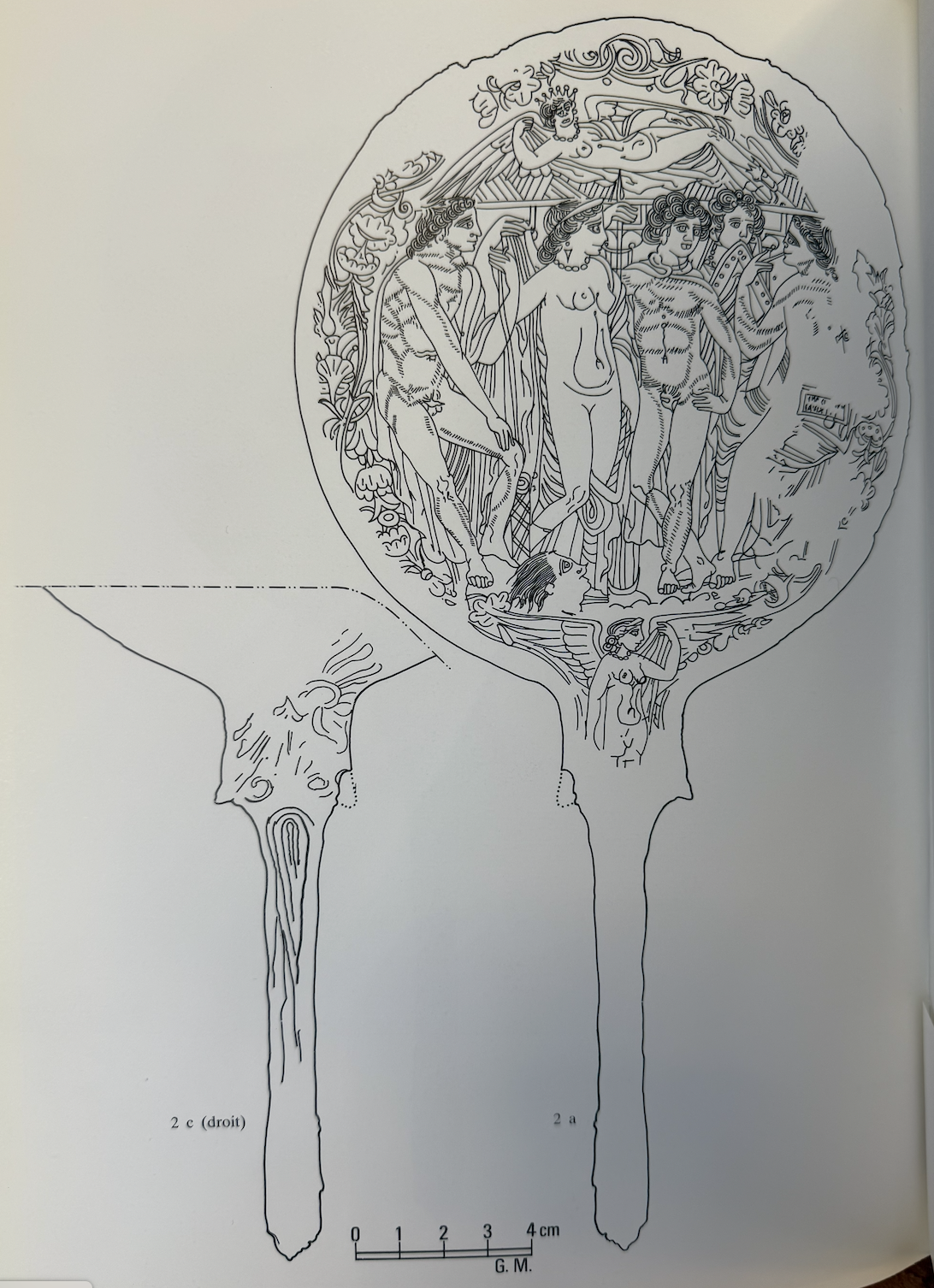
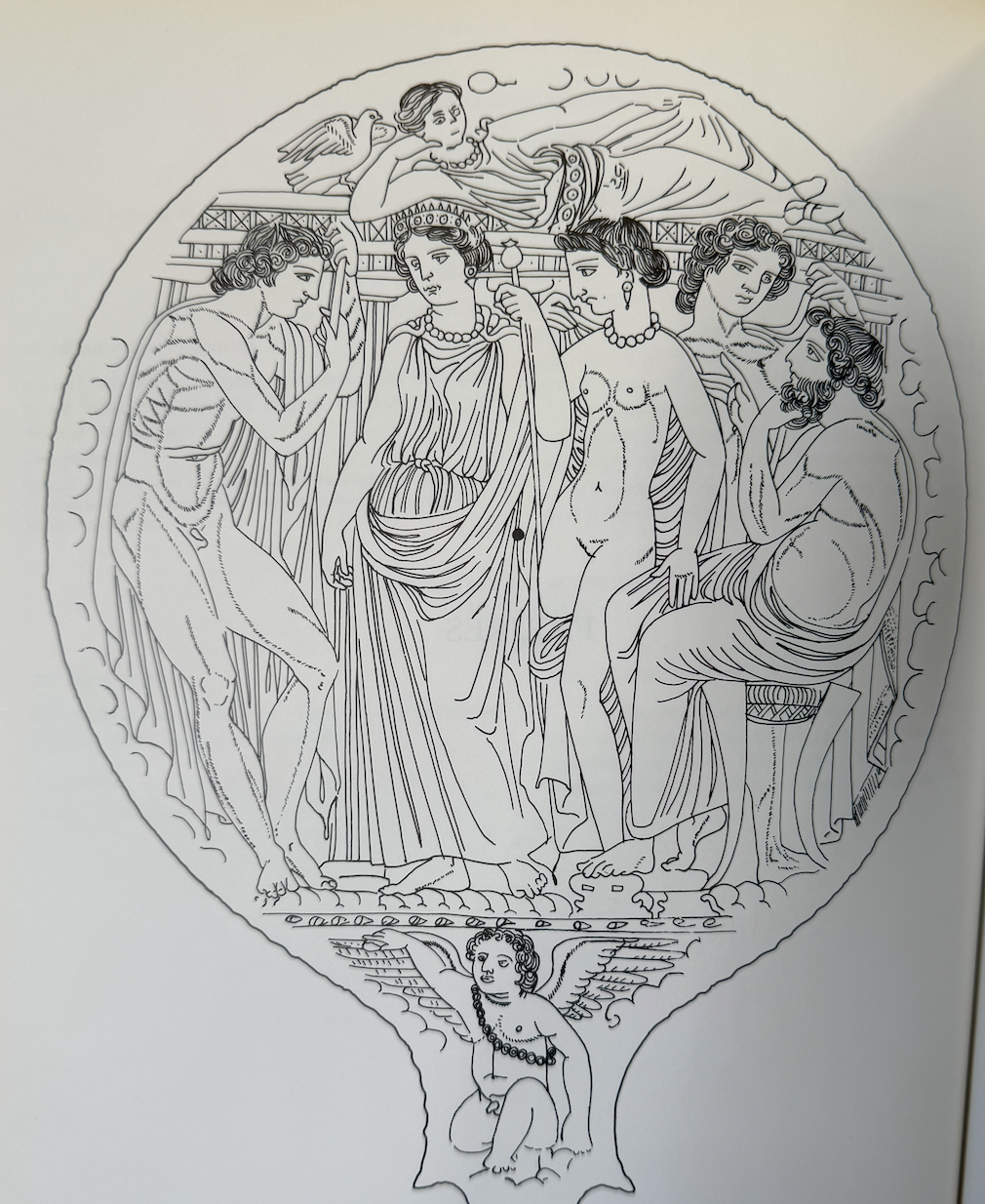
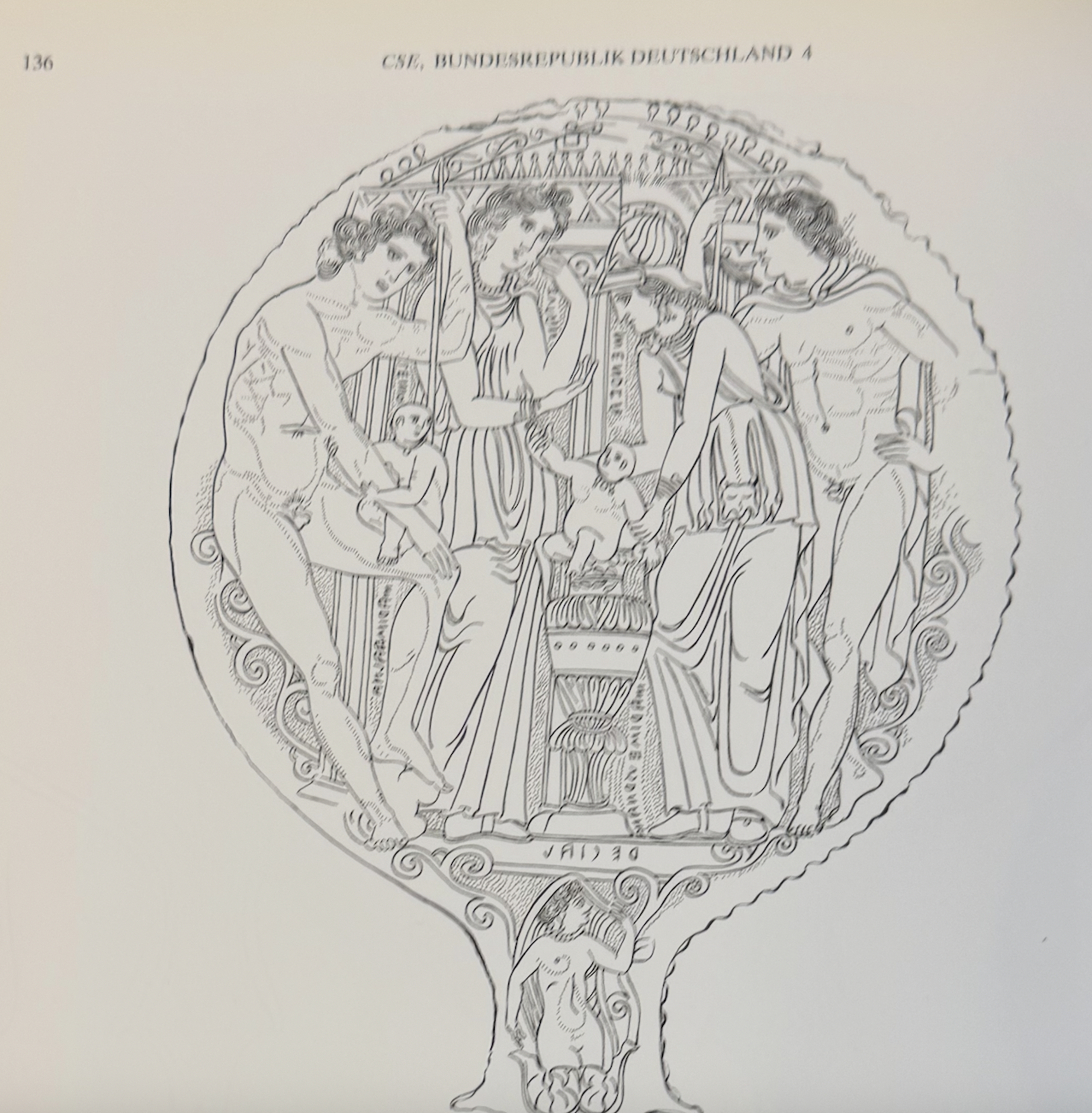
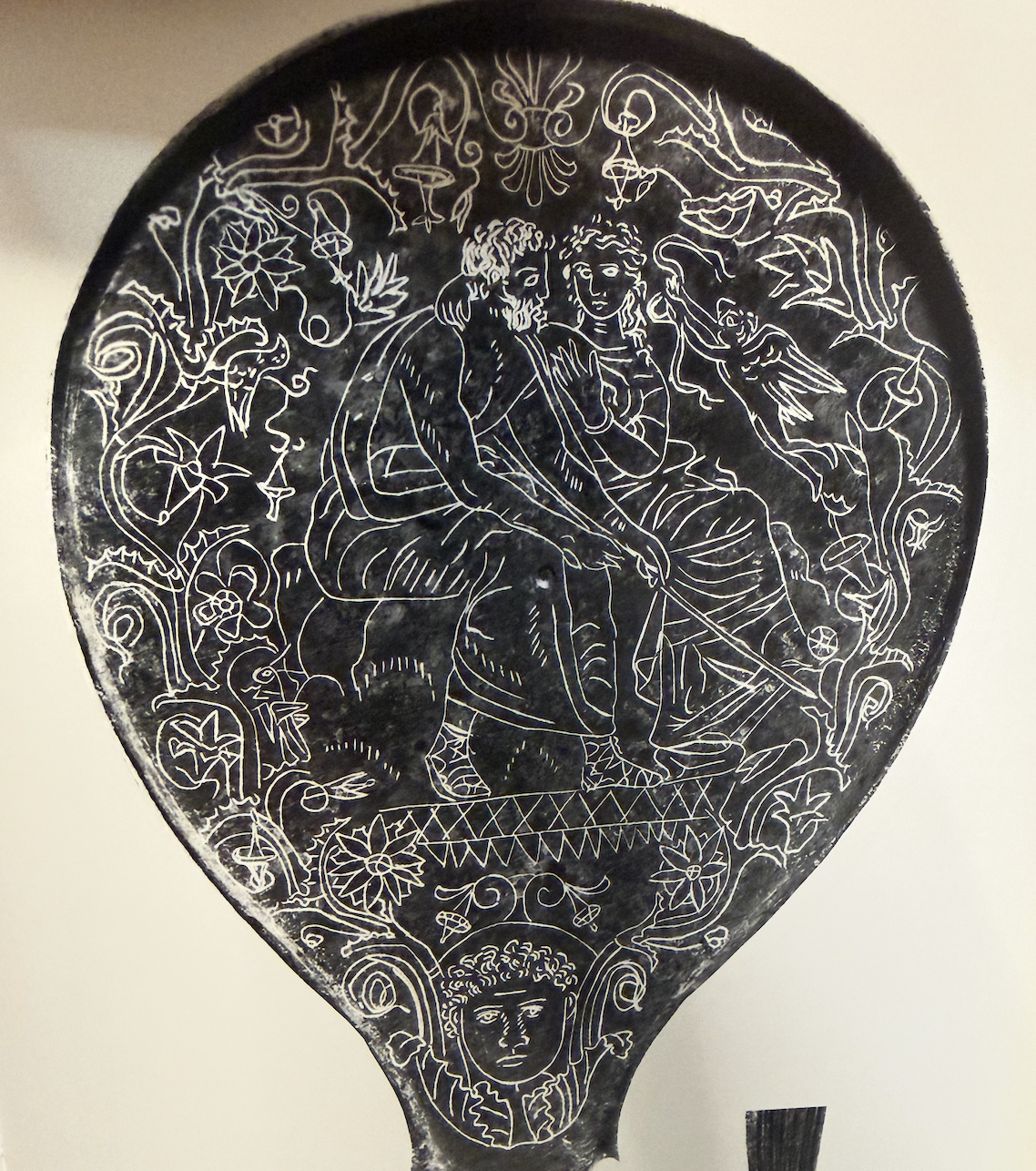
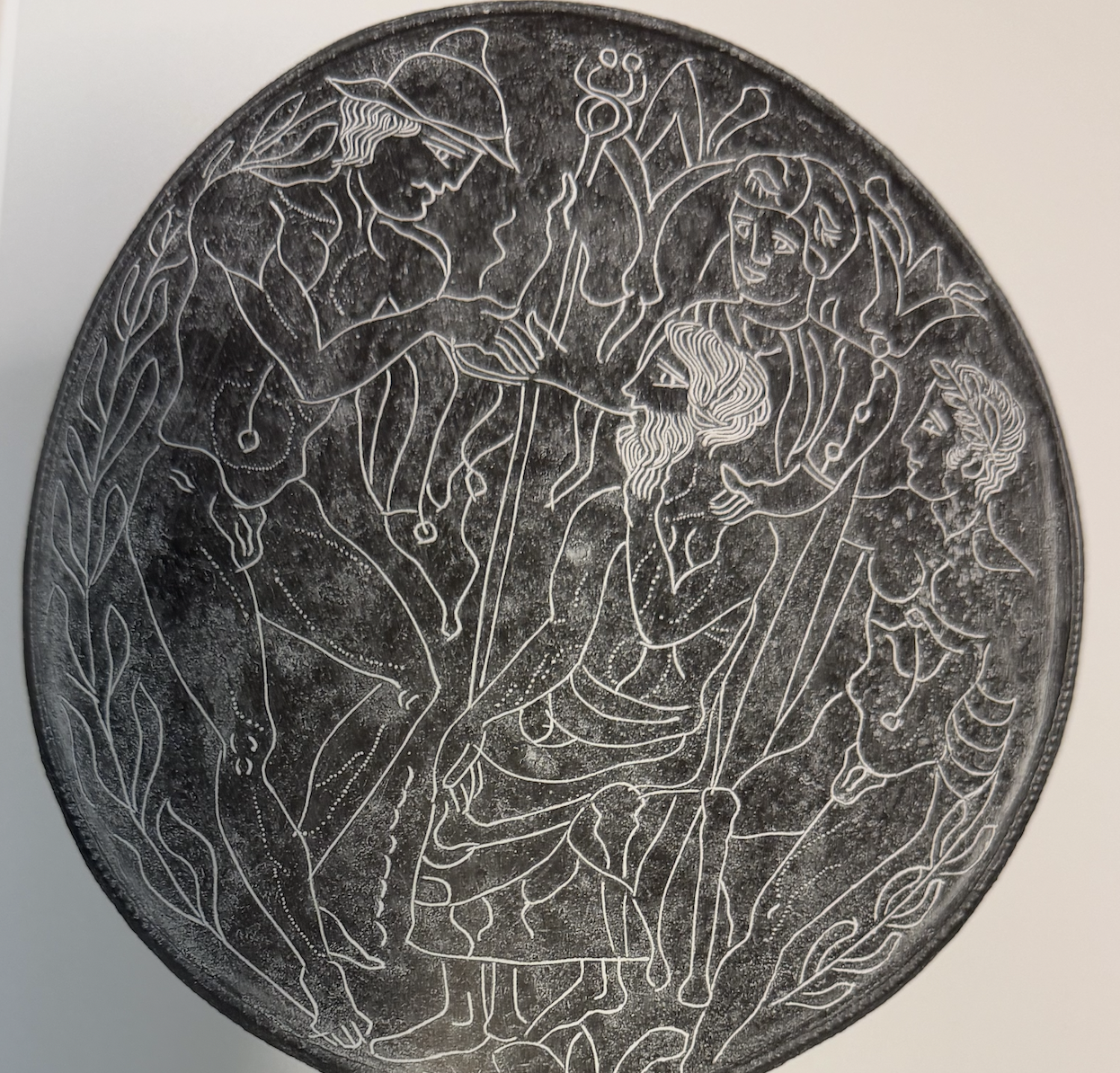
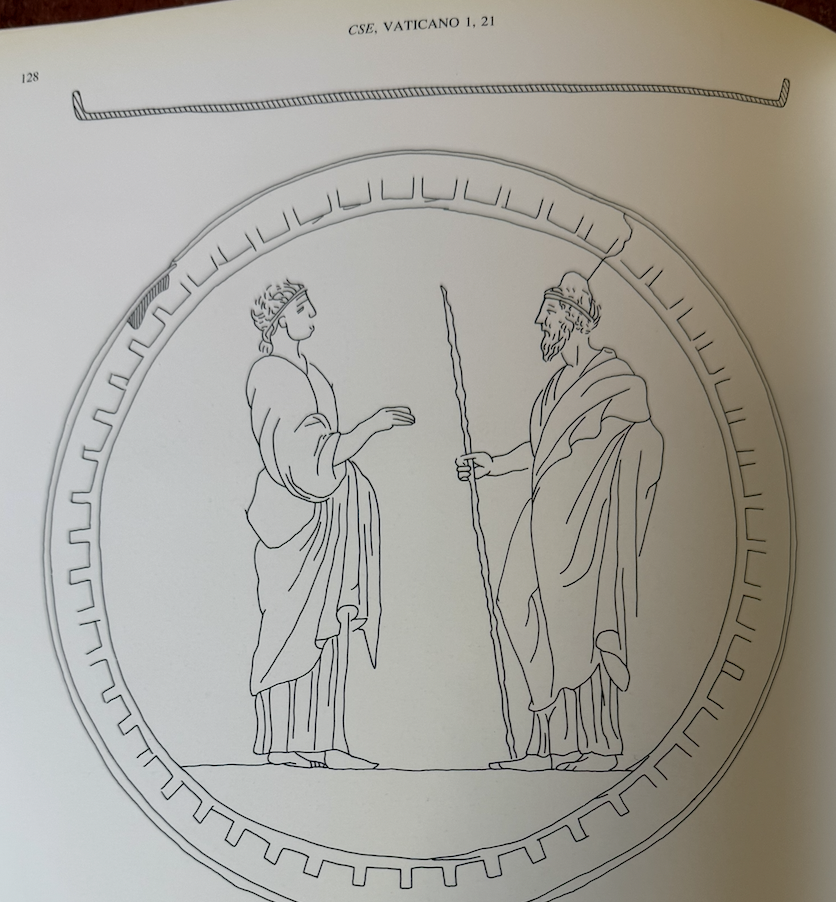
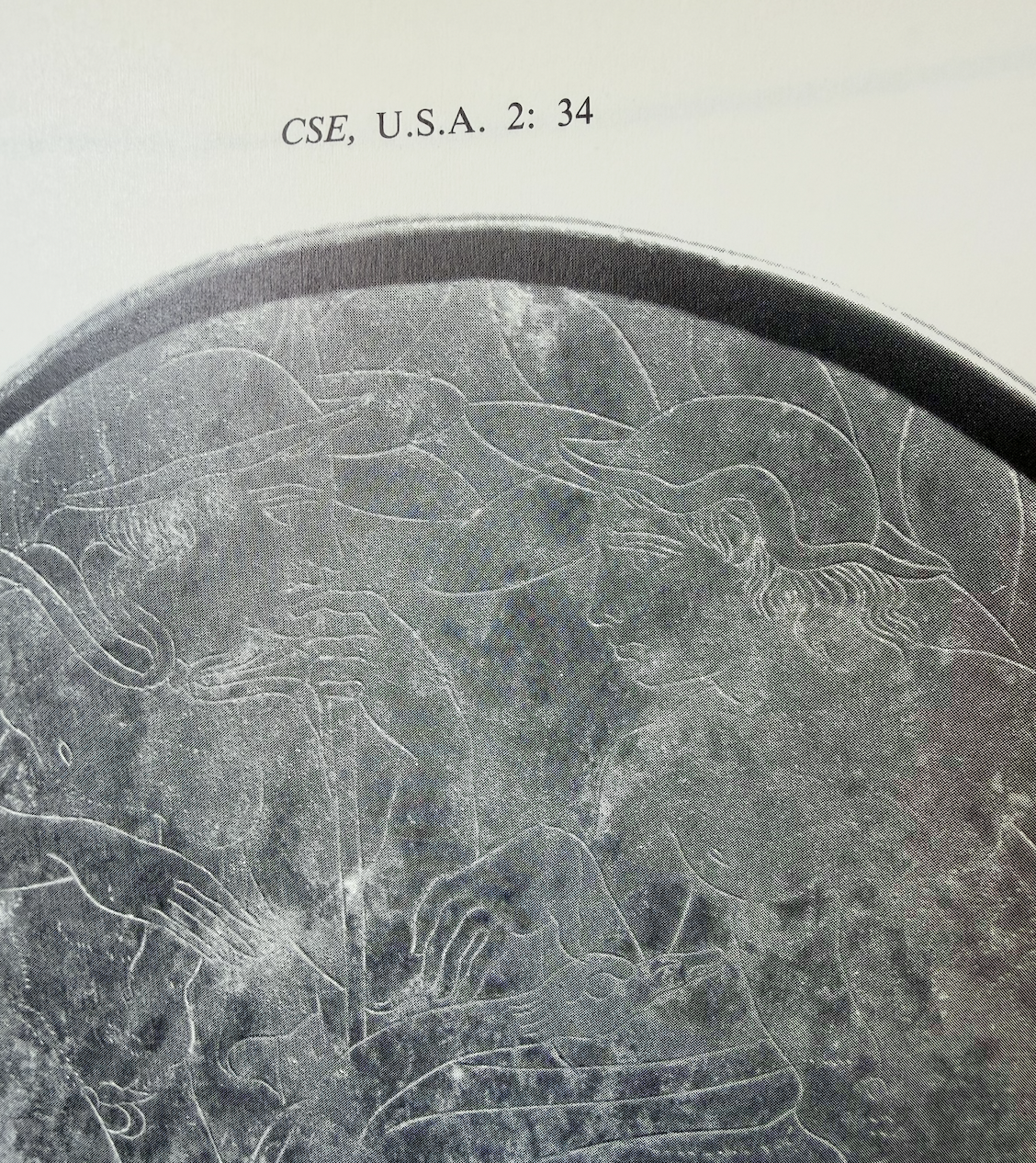
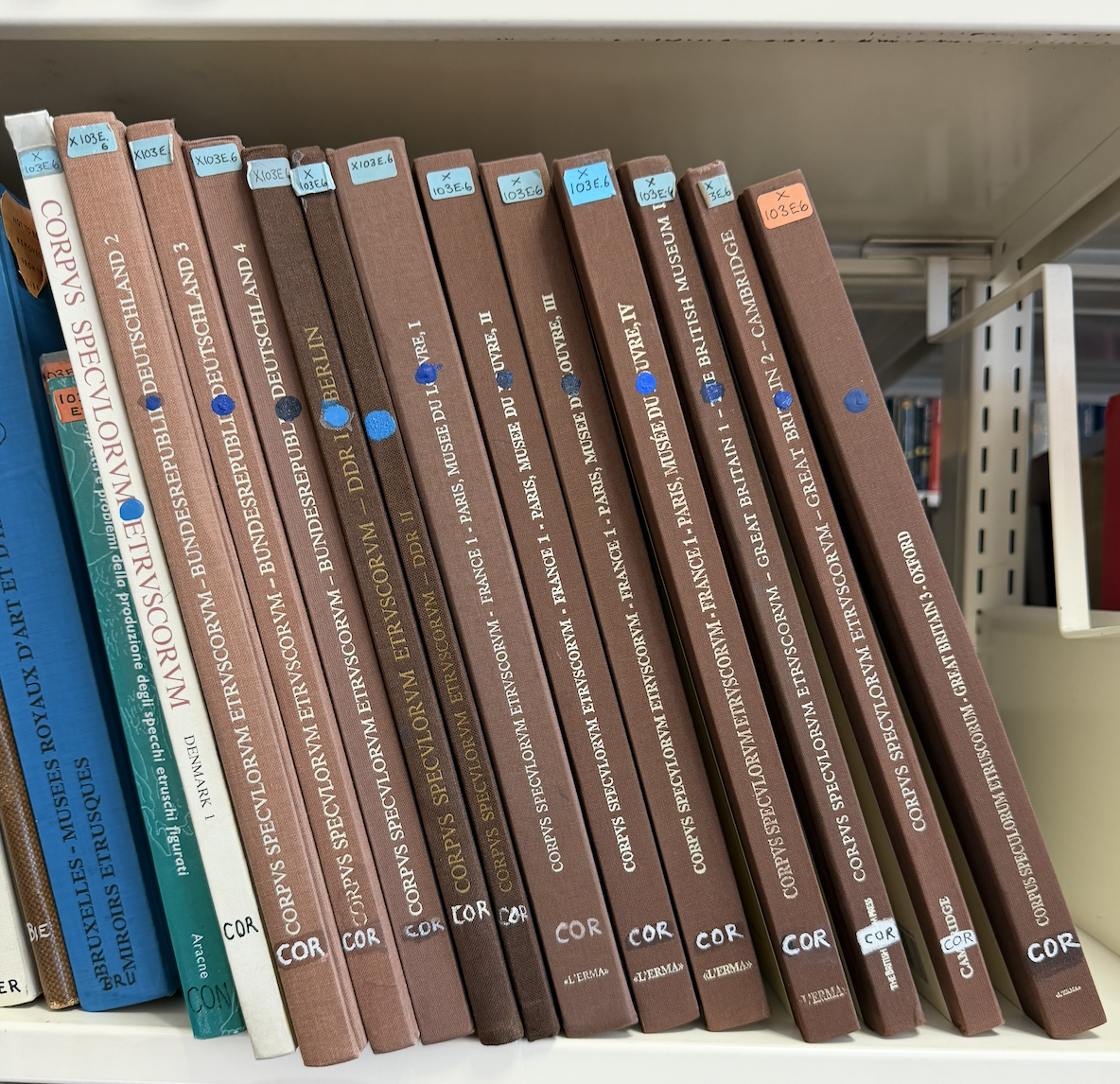
Meet the Corpus of Etruscan Mirrors, or officially Corpus Speculorum Etruscorum,

Ok so it is no SNG in scale of series but it is a monster of a late 20th century project, one of those like LIMC that I’d love see fully digitized, updated, and continued. It is massive but more mirrors do exist outside this standard reference work.

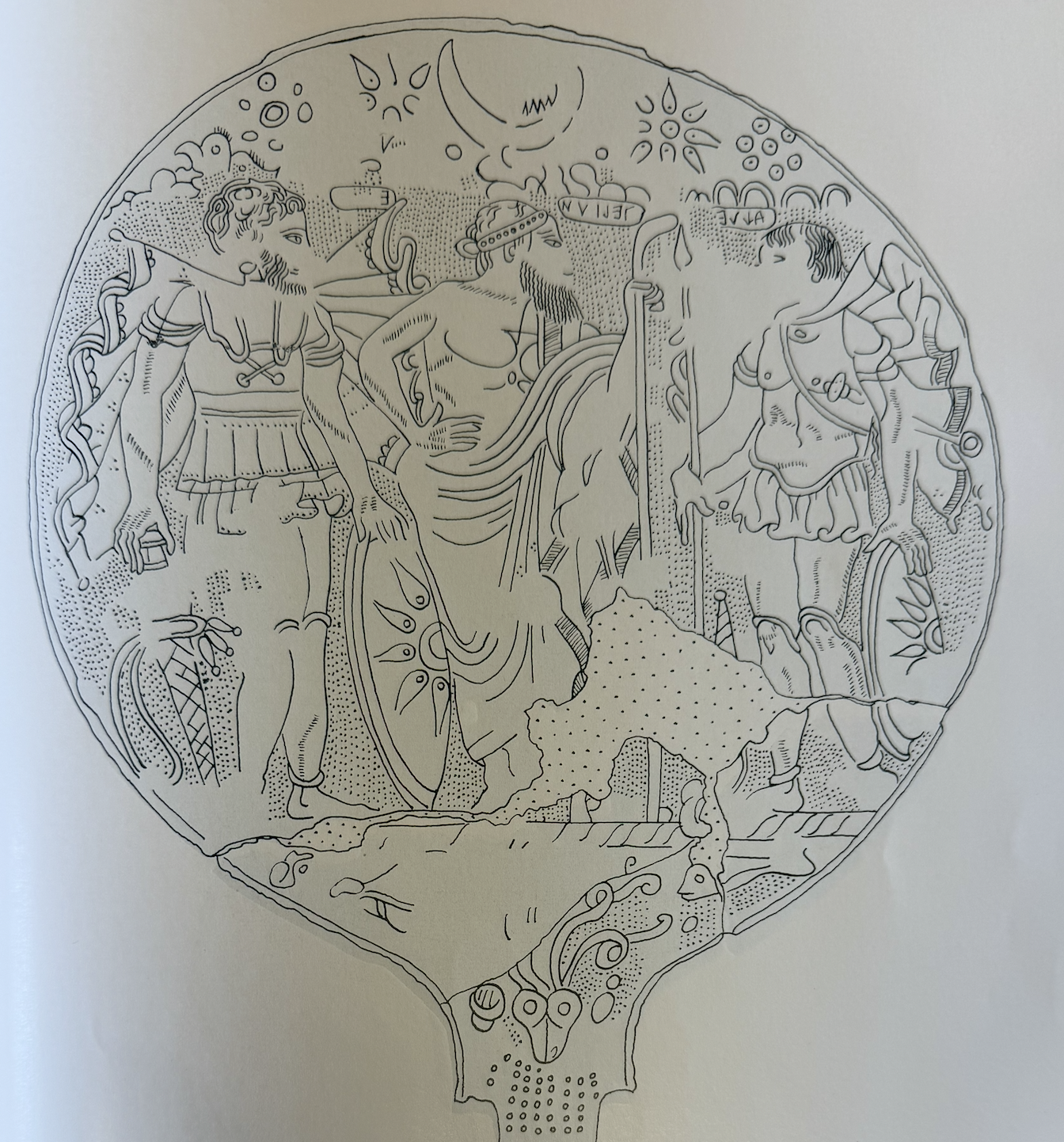
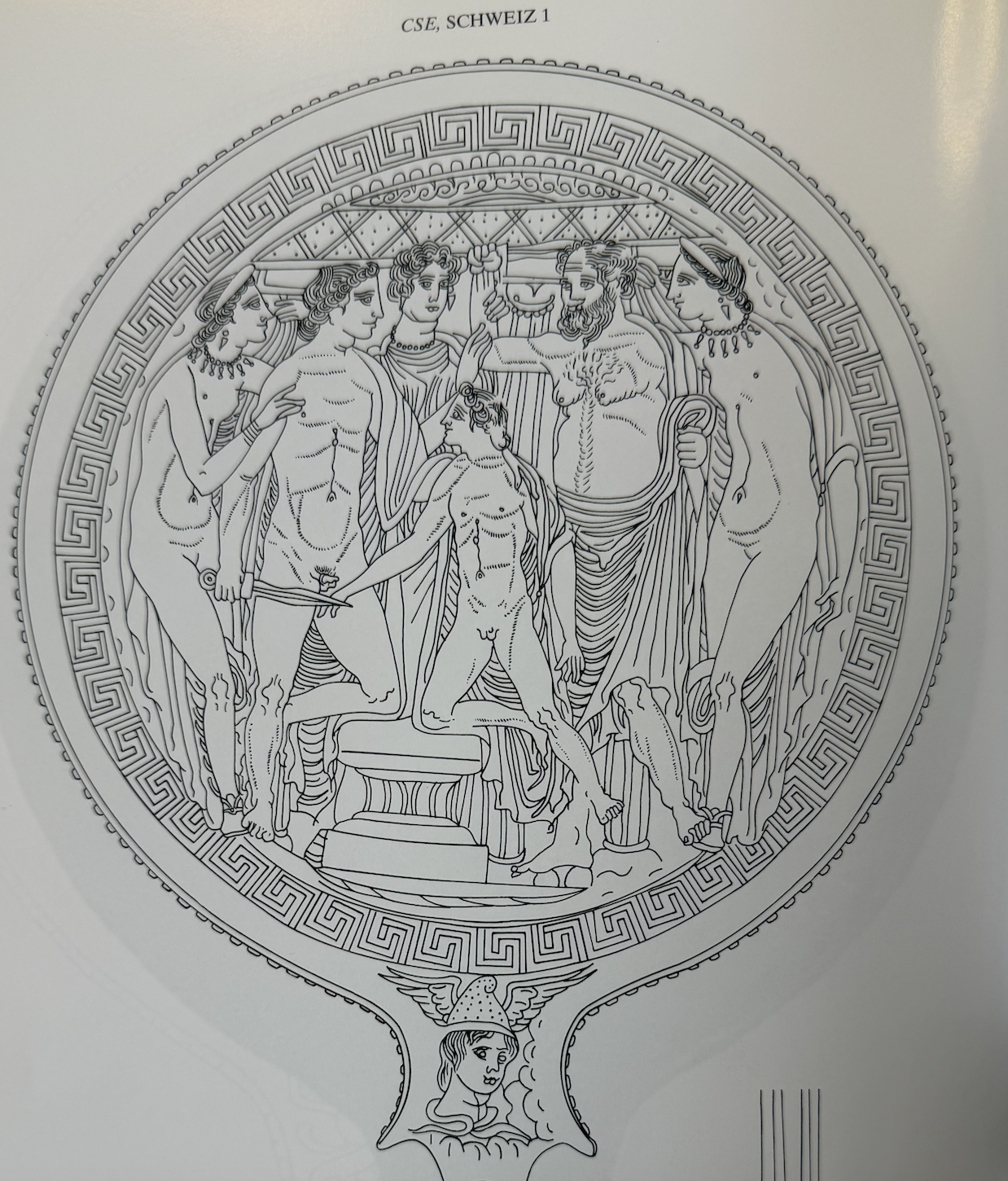
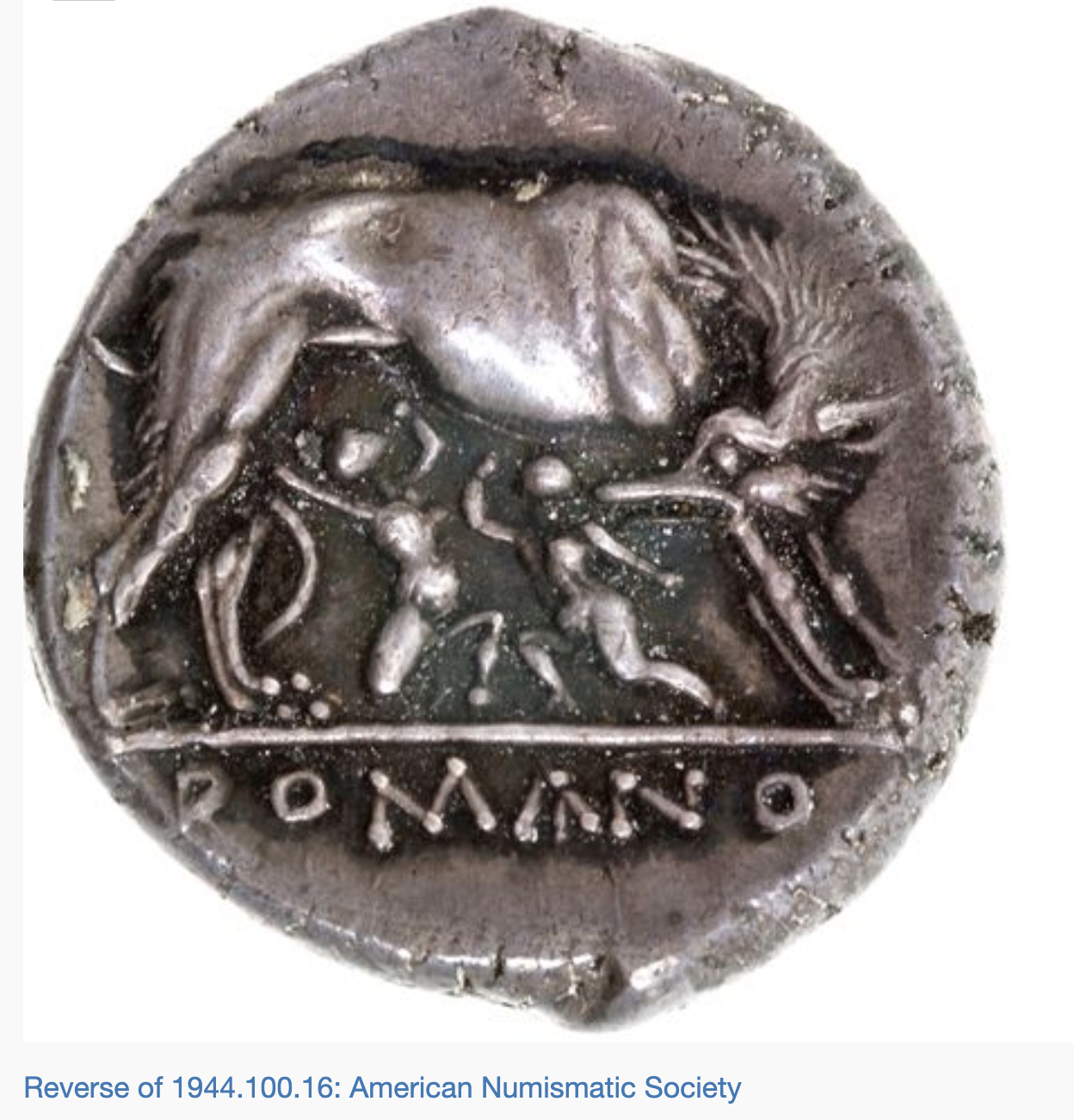
I decided that I didn’t feel confident in talking about the Bolsena mirror with wolf and twins because while I love the genre of Etruscan mirrors I’ve never made a systematic review of them, just oooo-ed and aaaah-ed as I went along. Think of it like how your perspective changes on a coin when you sit down and work through trays upon trays of coins within a given series. Or how great it is just to go through Schaefer’s Archive or the CRRO examples to see the range of renderings. It’s the type of visual expertise I pride myself upon and continually seek to develop and refine.

I sat at my desk thinking, What do I need to know to talk about this iconography? How can I determine what the composition is likely to mean? What features are typical? What are unusual? Do comparanda exist for individual elements in the composition? Can they offer clues to support interpretations?

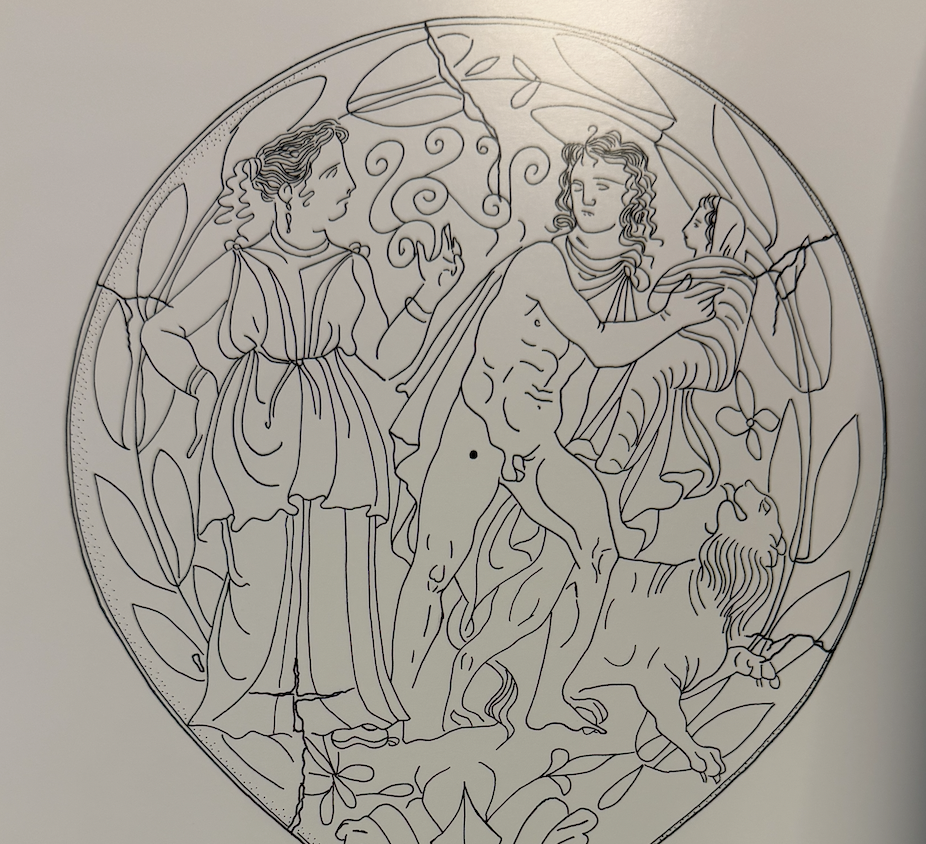
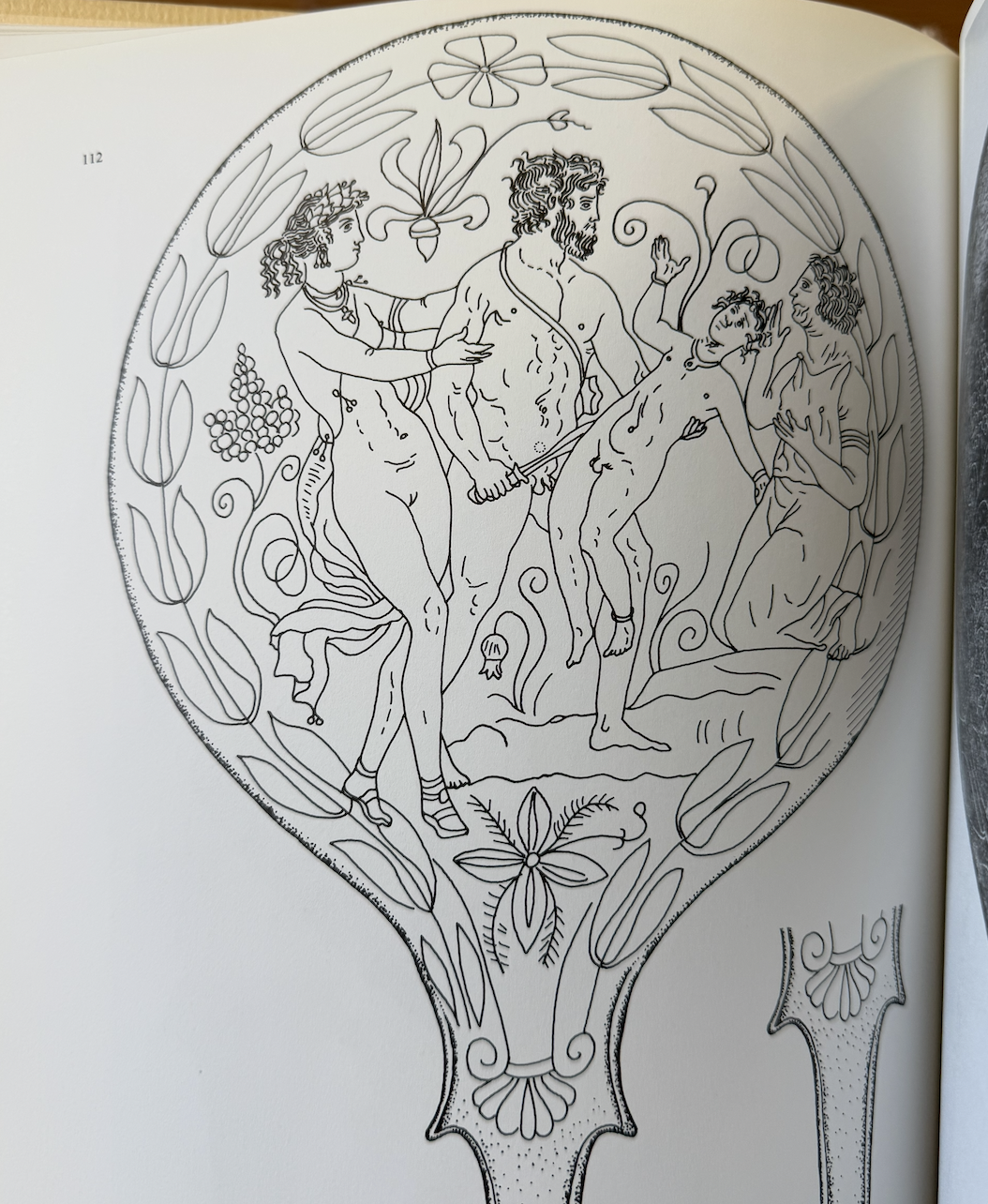
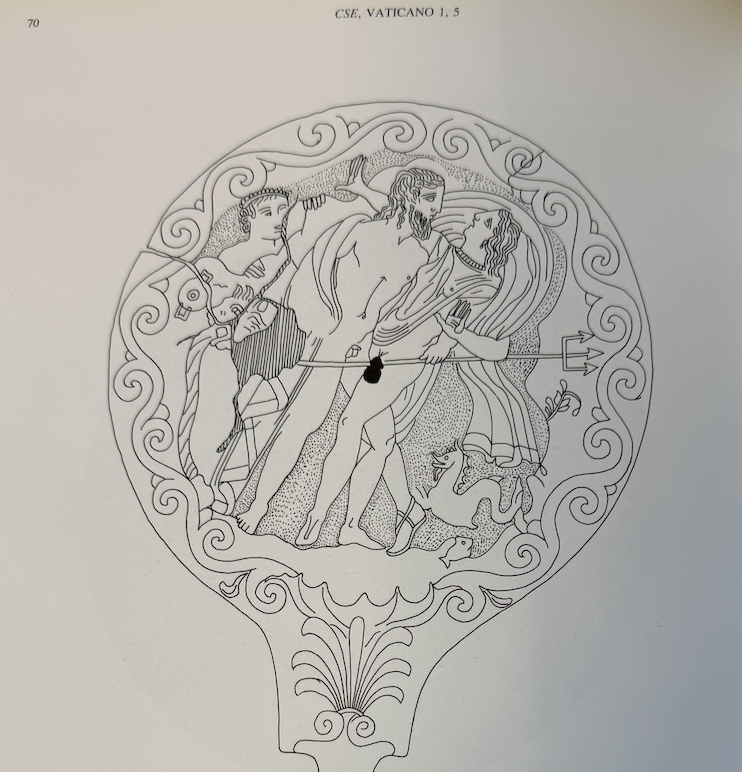
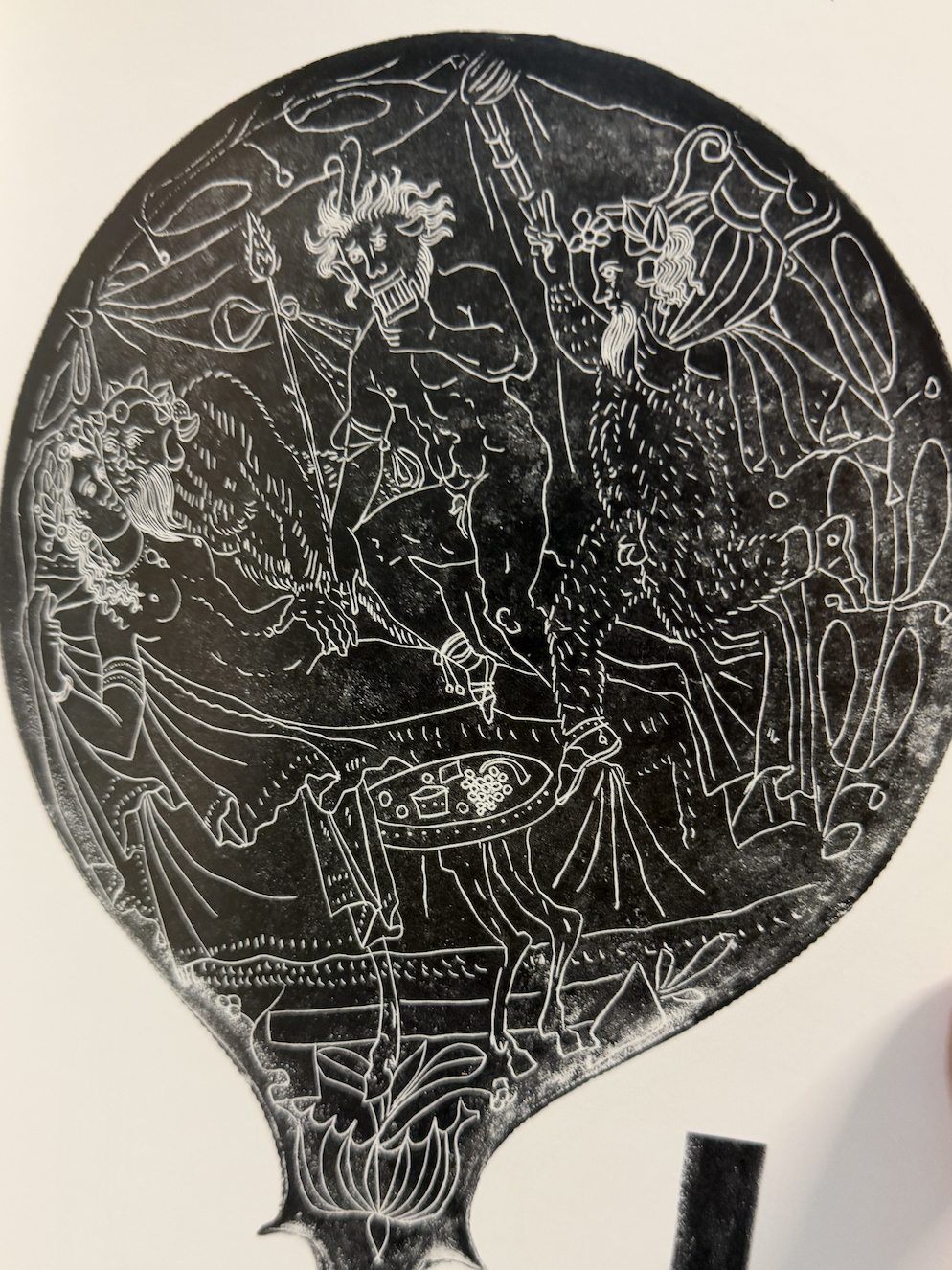
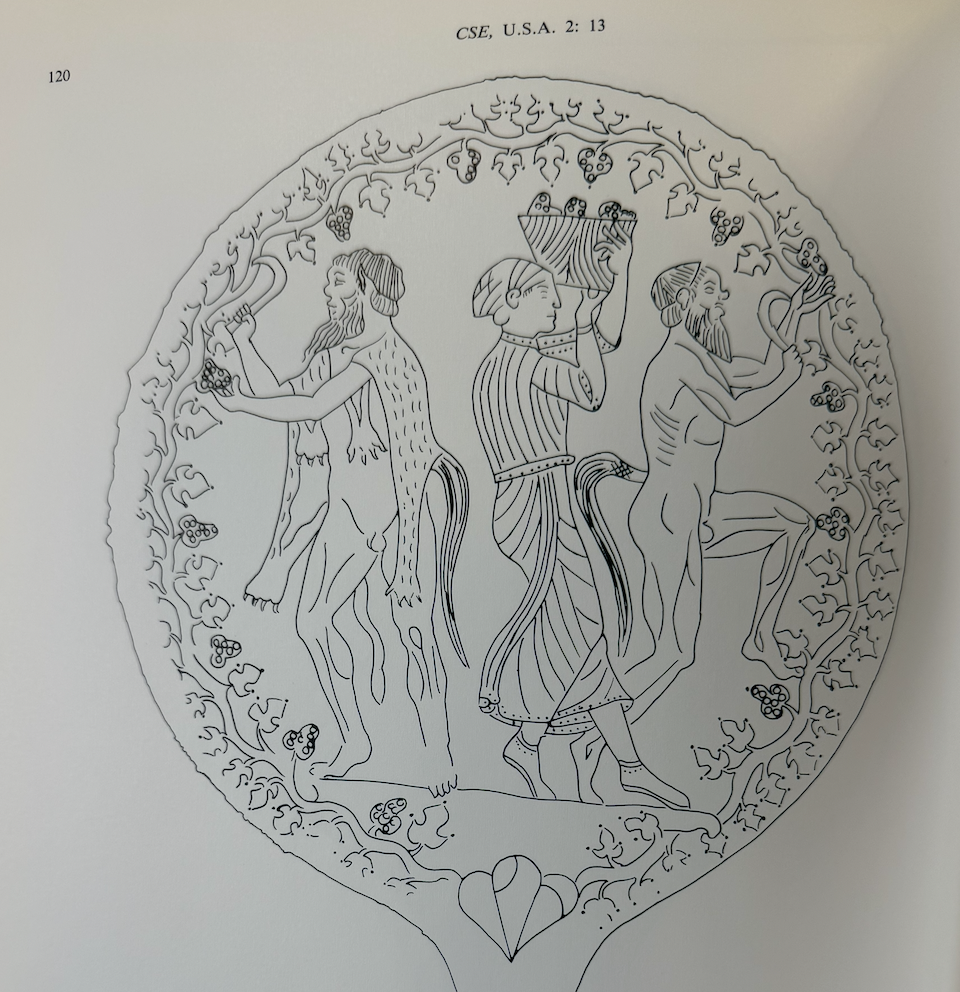
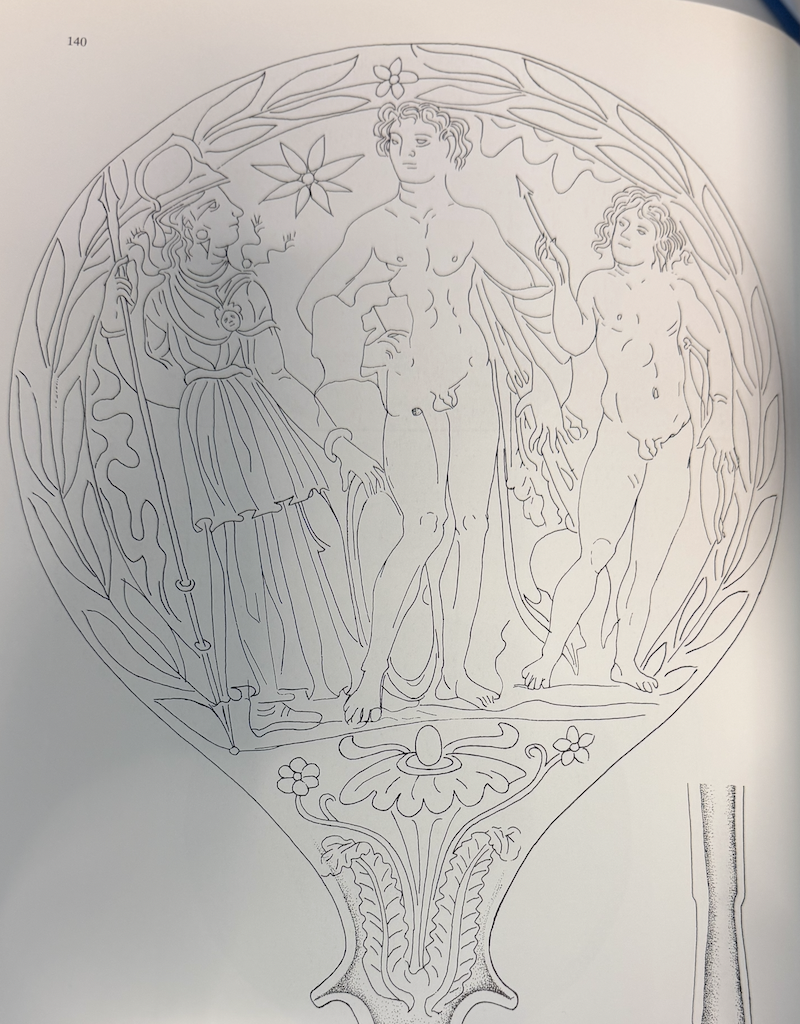
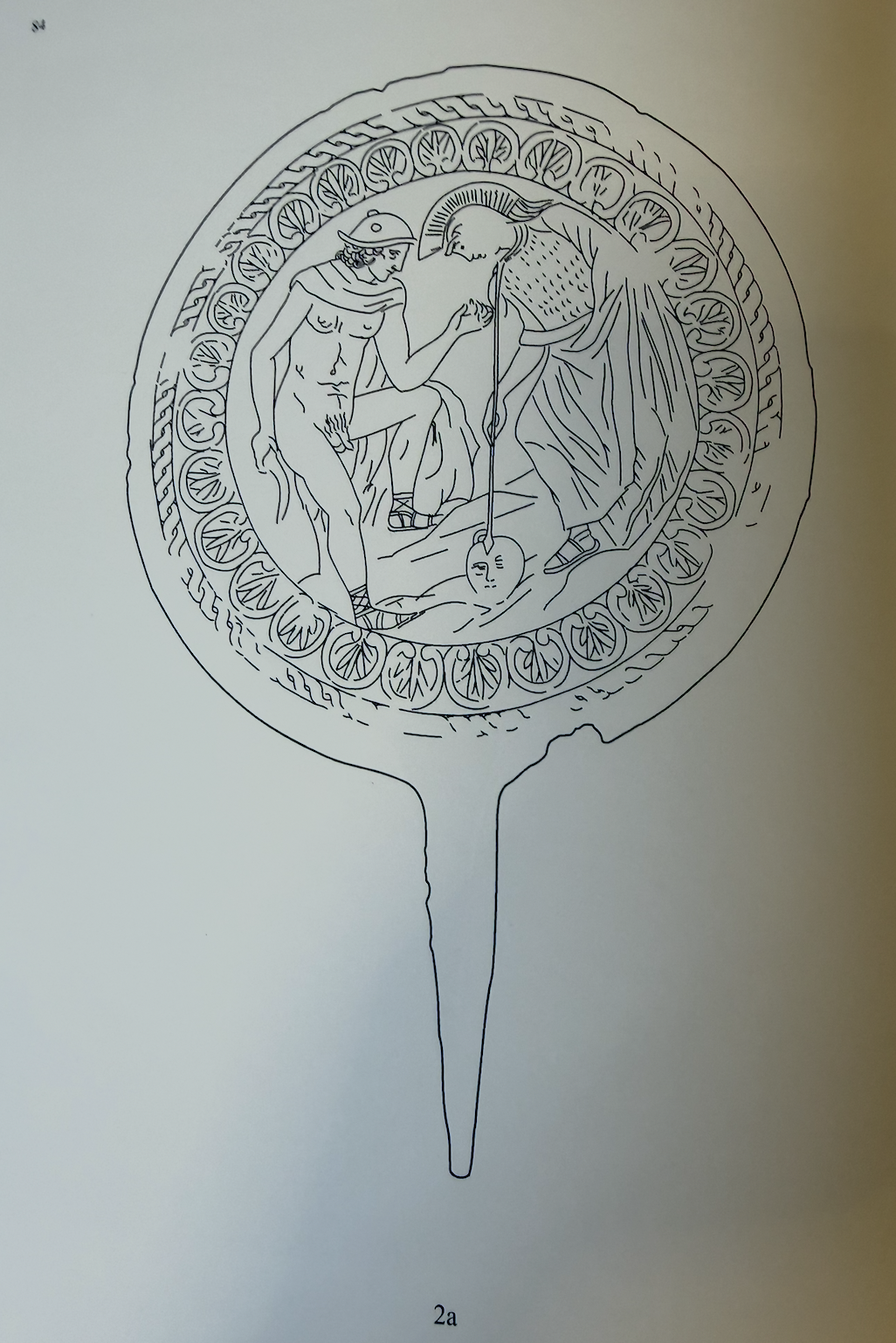
Whelp. I did it. Looked at every mirror in CSE and will do it again if I ever want to publish any of this. I took snapshots as I went of things that felt potentially relevant, but as so often I’d approach the survey of the evidence differently if I knew then what I know now. On my next pass I want to quantify (1) how many of each border type including nature of the border, intrusion of design over border, any lines defining the borders (2) number of figures in composition (3) nudity vs types of costume (4) depiction of landscape and/or interior space (5) animals depicted (6) facial hair (7) veiling (8) presence or absence of negative space (9) figures peeking over or around inanimate objects (10) genre of subject matter. All of that would allow me to be more absolute in the following observations, but as I didn’t count specifics I’m going to just narrate my general impressions of what I saw.

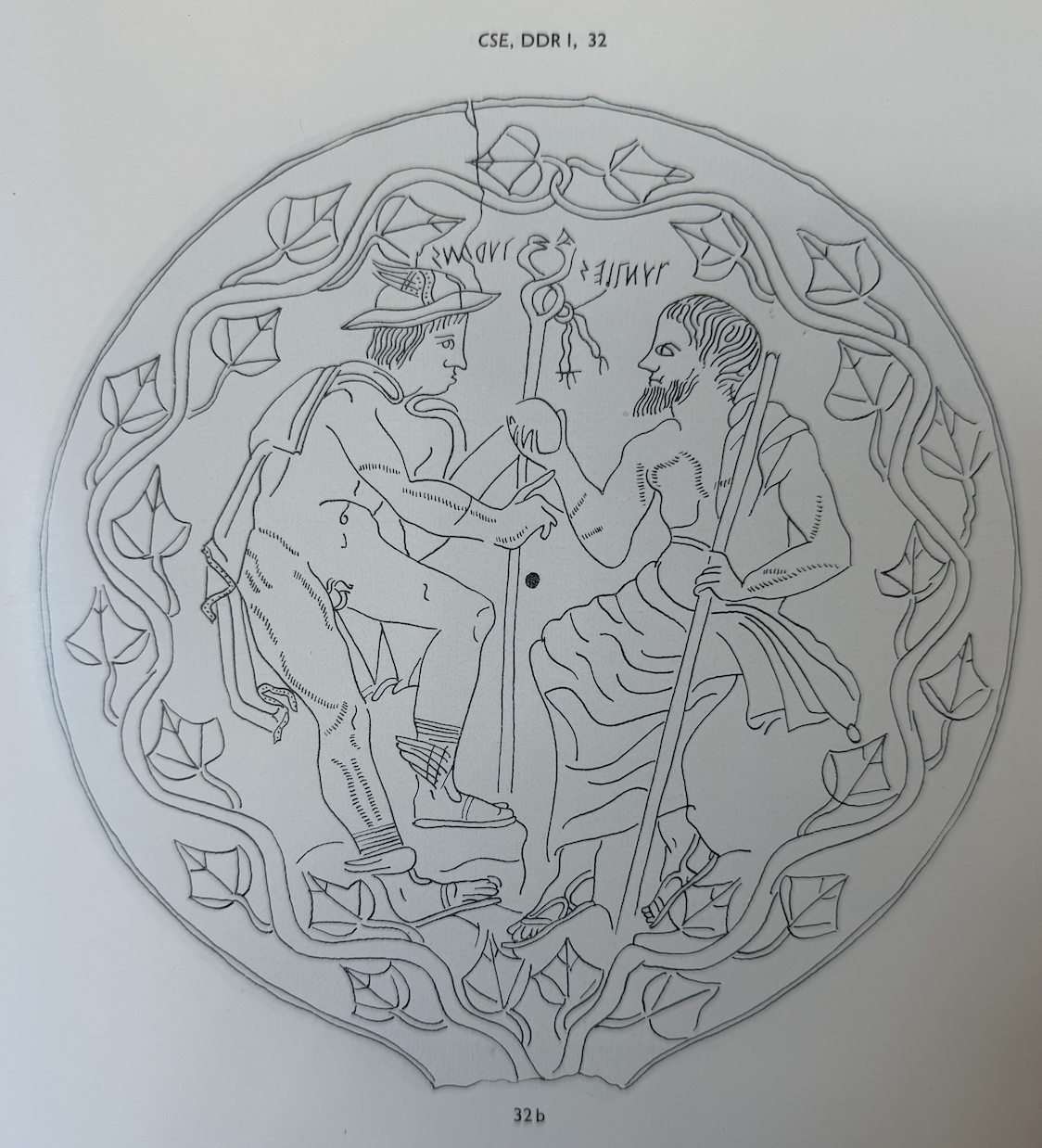
By far and away the most common composition is two figures with Phrygian caps and boot (often in knee length costume belted high on the chest) looking at each other typically with a star or dots between. After this most figural mirrors had either a two figure, three figure, or four figure compositional layout. Most figures stand but those closest to the outside of the design tend to curve/bend towards the more central space/figure(s). Reclining figures are rare. When four figures are present there is often a temple visible above their heads. Nudity is the most typical costume and the vast majority of figures are depicted as youthful. Facial hair is reserved for old men (kings?), a few wild men and paternal gods like Jupiter. Babies and Elders are rarely depicted. Animals rarely take up much of the compositional space excepting sometimes horses and the occasional hunting dog. When women are heavily draped their faces tend to be covered. The vast majority of subjects are drawn from what we might call Greek myth rather than Italic. Certain subjects repeat (Pelius and Thetis, Many Aphrodite scenes, Birth of Athena, Helen’s Egg, Hercules and Mercury).

All and all I’m left with the impression that the Bolsena mirror is bizarrely exceptional. I could find zero parallels for certain elements. That doesn’t mean they don’t exist, but it does mean they are unlikely to be common. I saw no bare trees. I saw no wolfs. I saw no lions that broke the fourth wall staring out at the viewer. I saw no women with fans or even fans as a compositional attribute in domestic ‘toilet’ scenes. I saw no figure in the same short tunic as the figure on the right hand of the composition.

The Bolsena mirror feels familiar from my work on coins and intaglios, even lamps, but most mirrors do not feel this way. It is as if the vast majority of mirrors derive from a different stylistic approach to filling a circular compositional space. It also feels very Italic the same way much Etruscan tomb painting does but I’m thinking of especially the Tomba François or even some Bronze Cista (such as are associated with Praeneste, but also manufactured at Rome). Typically the Etruscan mirrors remind me more of the tondos of Kylixes if they connect to anything besides their own well-defined traditions.

What follows are images I collected along my survey of CSE that I thought might be relevant. While there are a great deal of images here, I’m most struck by how none are a great parallel and that there really are not that many given the large number of images in the whole corpus. I don’t like arguments from silence and I don’t like trying to argue a negative conclusion, but the wolf and twins mirror is exceptional and really very different from other examples. I don’t know why and I don’t want to speculate, yet.

Next step, figure out bit more of how the Bolsena mirror came to light. So many of these mirrors don’t have secure find spots…

Later the same day.

So I’ve now tackled the publication that rehabilitated the mirror. I am glad I retained my habit of prioritizing my own investigation of the primary evidence prior to reading it through the lens of secondary scholarship.

Open Access link.

I find myself not at all startled that the mirror had long been considered a fake and that it was only in 1982 that it was rehabilitated. The reading is adept and the images show clearly that the rendering of the certain details have strong parallels from mirrors associated with Praeneste. These details however are stylistic, rather than iconographic, comparisons. The Lion’s face is compared to that of Papa Silenus type figures, Mercury in 3/4 profile has strong parallels, one of which is a feminine face. The drapery of the right-hand figure, the so-called Quirinus figure, has parallels with drapery of a female figure. The centaur parallel offered for the face and hair of the left-hand figure (“Faunus”) is equally strong. I think the question remains:do these parallels amount to authentication? Praeneste is certainly a place where we know cista with more Italic themes were made. If the mirror is genuine, I would believe the attribution. It still gives me deep pause that there are so few parallels for iconographic similarities for similar figures, for all the stylistic comparisons seem potentially valid. I would really, really like to have this mirror sent for compositional analysis along side some of the stylistic parallels offered in the article or better yet some mirrors excavated more recently at Praeneste with secure context.

The mirror is said to have been sold to Alessandro Castellani in Florence in 1877, the Bolsena origin was part of the object origin story. No excavator. No more specific find details. As the Castellani Wikipedia page says

It has been hypothesized that some Etruscan finds traded by Castellani were fake.

The citations attached to this quotation:

Simpson, Elizabeth (2005). “Una perfetta imitazione del lavoro antico”, Gioielleria antica e adattamenti Castellani. In: I Castellani e l’oreficeria archeologica italiana. L’Erma di Bretschneider. pp. 177–200. ISBN88-8265-354-4.

Edilberto Formigli, Wolf-Dieter Heilmeyer (1993). «Einige Faelschungen antiken Goldschmucks im 19. Jahrhundert», Archaeologischer Anzeiger (in German). pp. 299–332.

Here is a link to the forgeries he sold to the British Museum. Most came with so-called find spots.

If Castellani gave it away, rather than selling it, I wonder if he himself had doubts about it… There were few of his generation better able to judge genuine vs a good fake vs a bad fake. But this is only speculation. We need more data preferable metallurgical.

Reclining figure

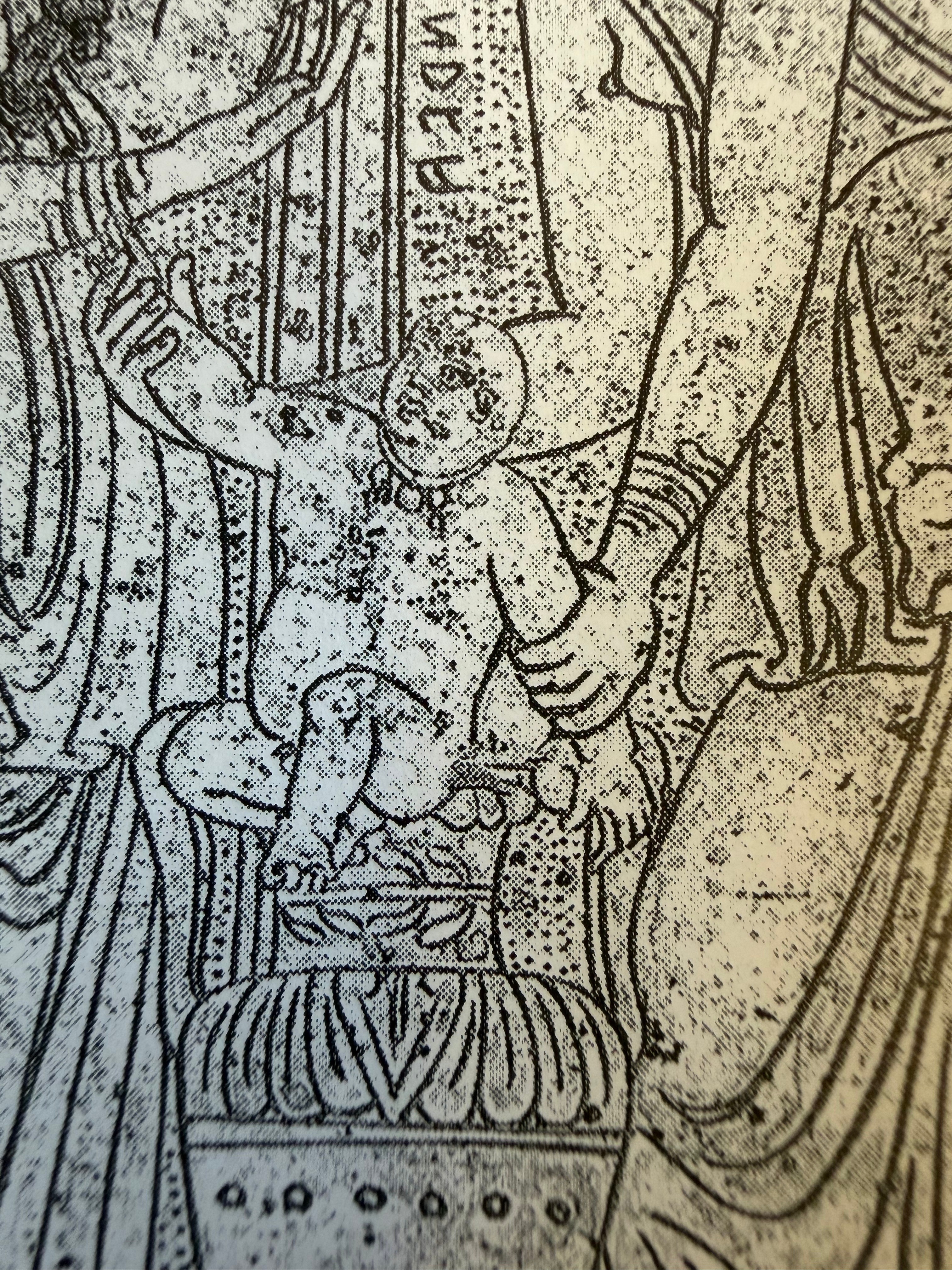
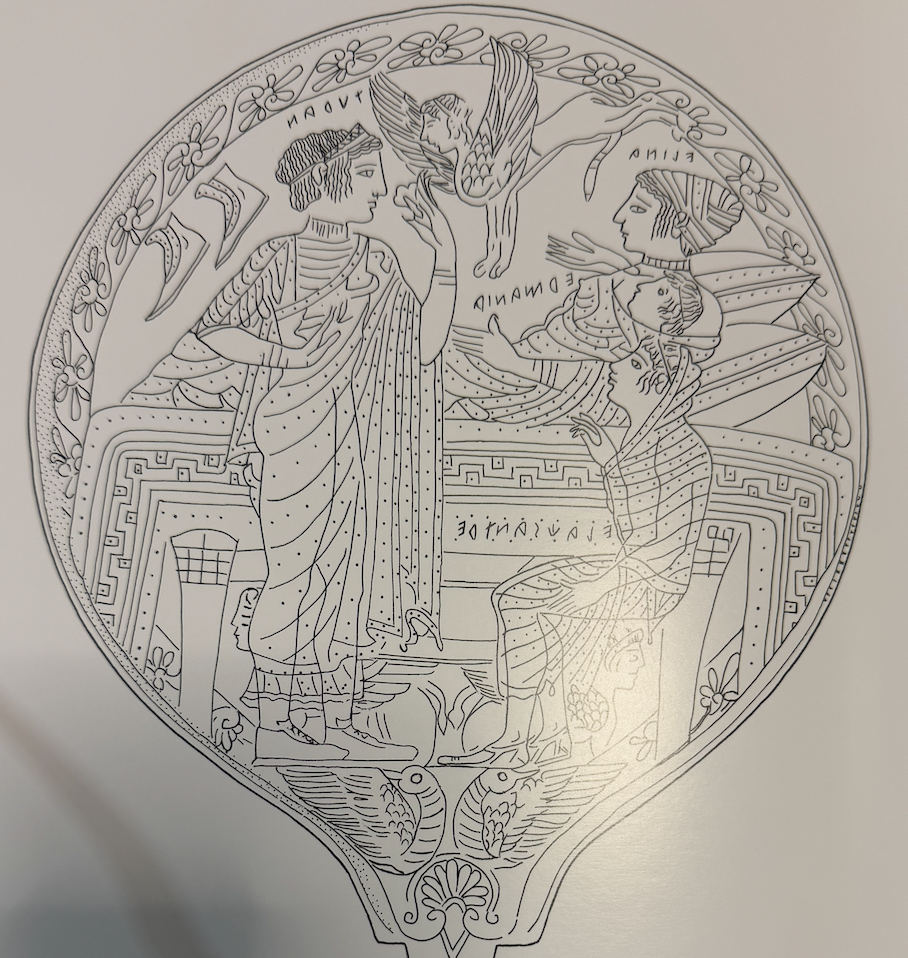
Infants

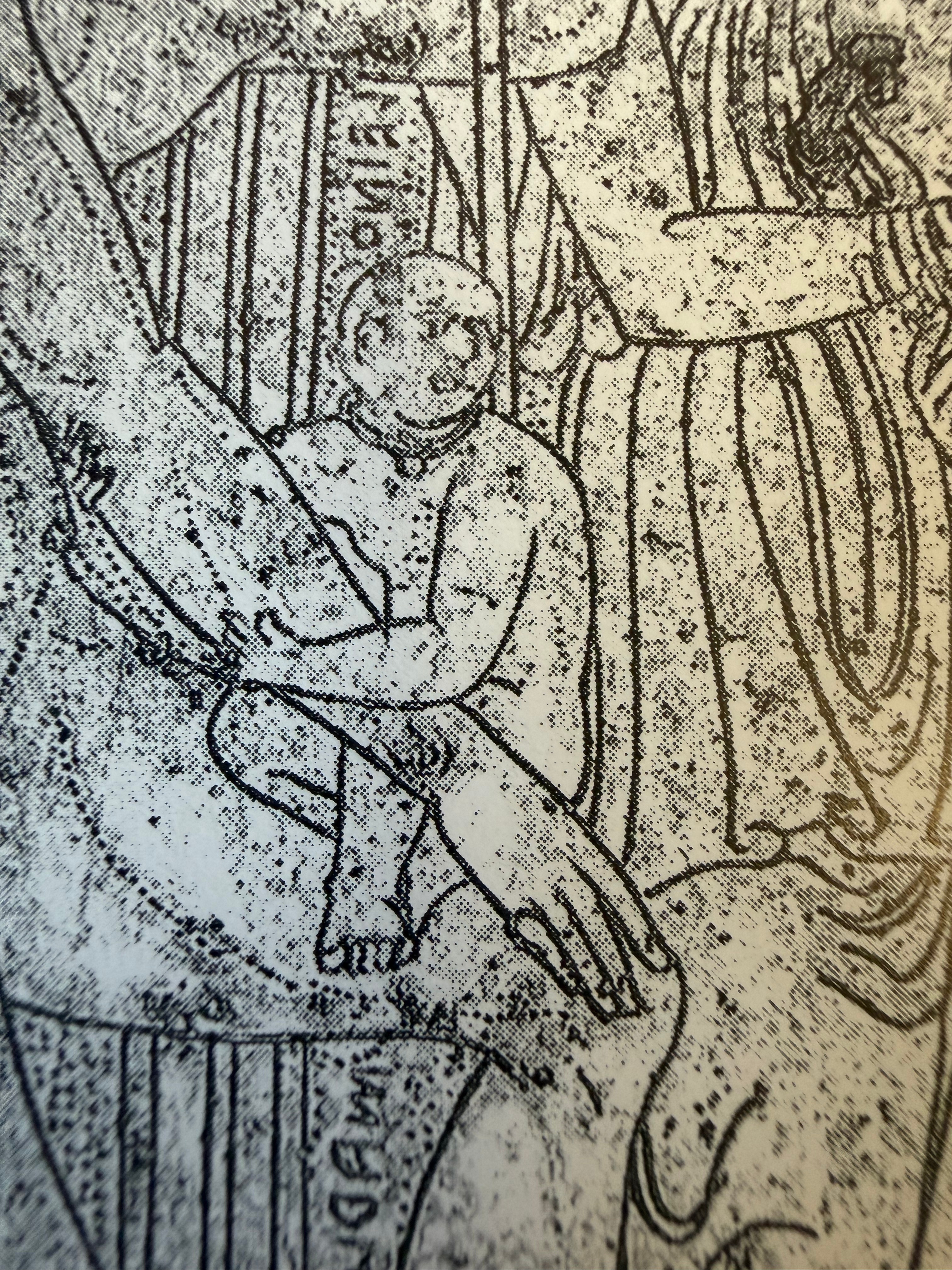
I don’t know why Helen is in a vase on the mirror to the right but given the motif of infants coming out of Vases I thought I’d include this one. Besides the mirror shown above there is a very similar one with three instead of two babies and then another cista with Mars coming out of a Vase. On the mirror to the right with Helen, the right hand figure is labeled Odysseus, the left hand Diomedes. The catalogue wanted ALAONAO to refer to owner of mirror, but shouldn’t it label the middle standing figure?

CSE Netherlands 12

I find it fascinating that thus far it seems female infants are shown tightly wrapped while male infants are nude.

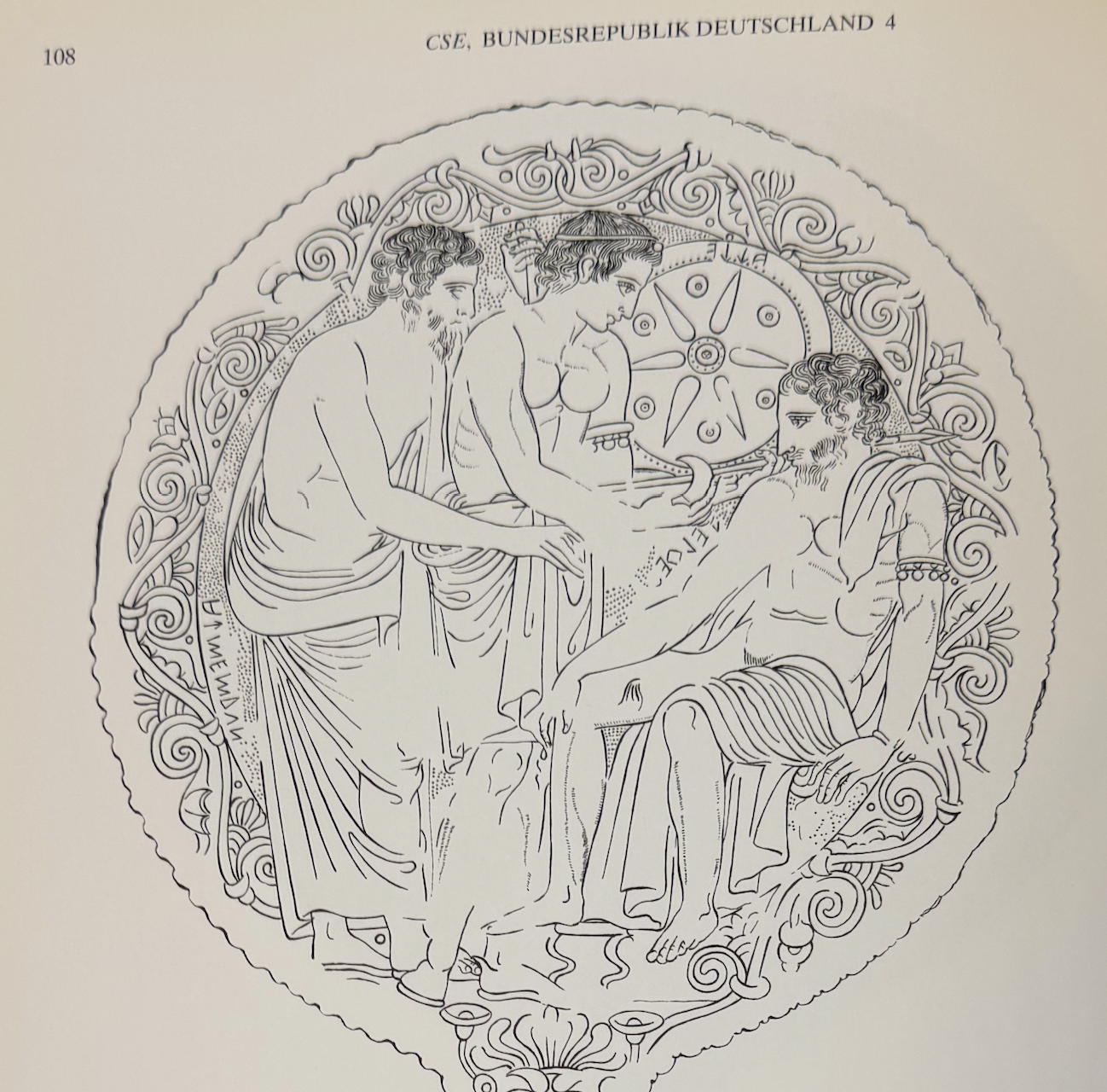
Beards

Notice that genitals are typically covered for bearded males unless they are gods or depicted enraged. They mostly have staves and bare chests with a toga like garment.

seated

standing

active

wildmen

Veil

Floral motif

One of the only parts of the Bolsena wolf and twins mirror that feels deeply like other known mirrors is the ivy border growing out of a flower motif and the way the figures intrude into that border.

CSE, BRD I.18. – notice flower at base

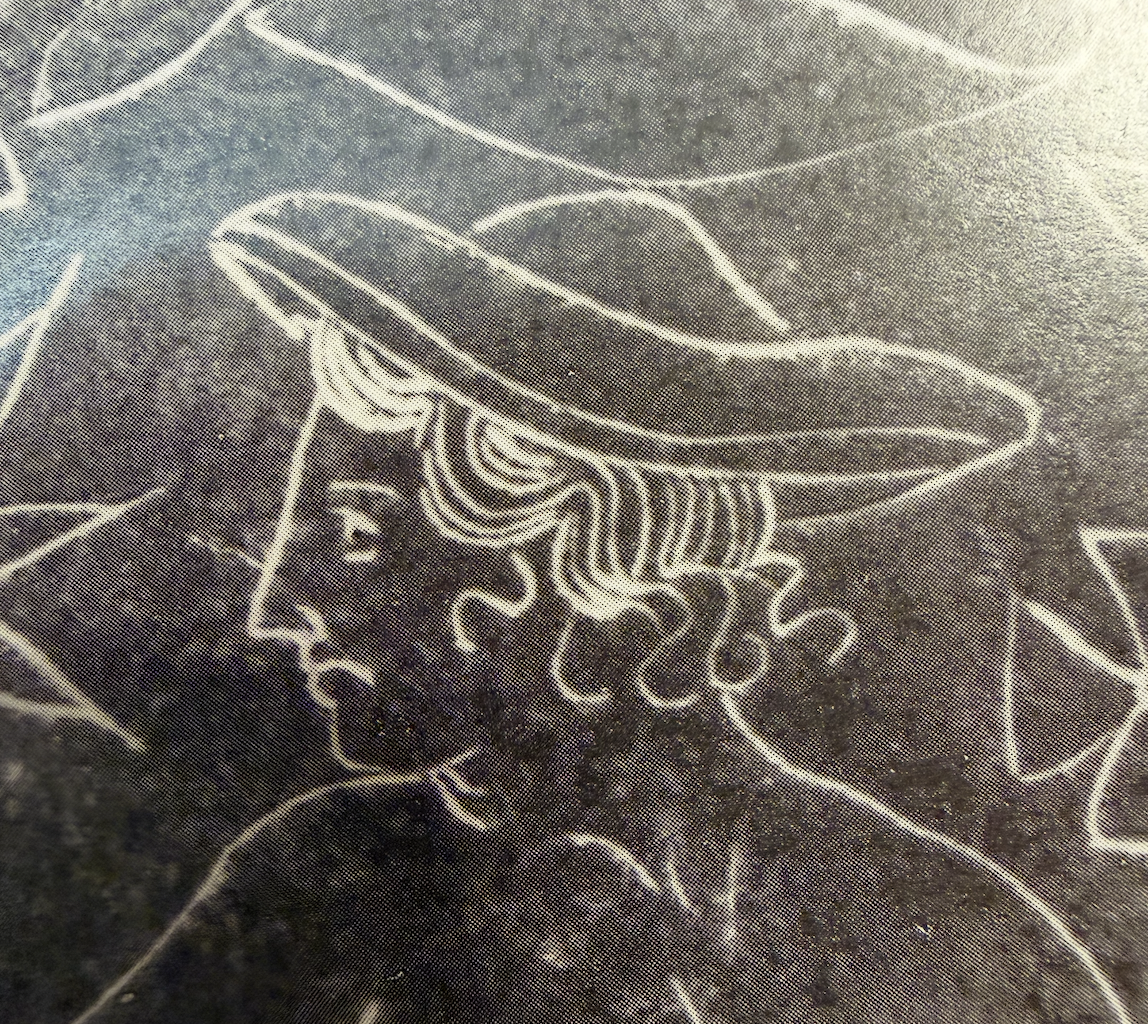
Wingless Travelling Hats

Sitzfleisch Tuesday (?)

If you are not familiar with the concept of “sitzfleisch” the BBC will explain it to you.

Warning. This post starts as me trying to figure out what to work on and then swerves very heavy into the question of myth formation and if we can create historical timeline of the creation of mythic narrative. It is a very long post.

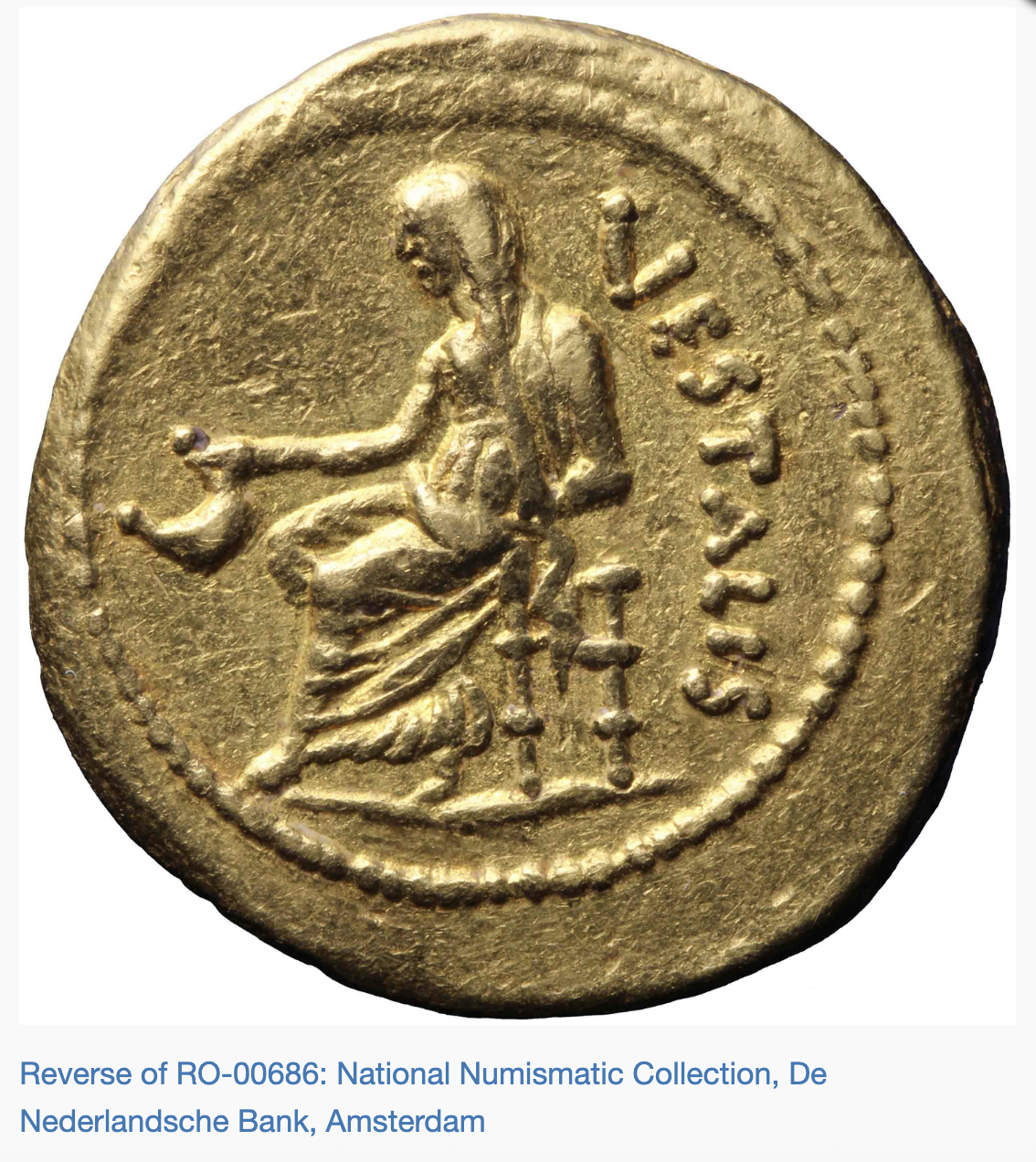
Vesta seated, RRC 512/1

Yesterday I was mostly a petty bureaucrat, necessary and productive, but my work had a whiff of the inappropriate about it. I’m in my office in a research library. Research should be the priority. And yet, with the holidays and conference I certainly needed my Plough Monday to dig through the most critical of emails.

But what research?

Do I continue with the AVREVS volume? Probably a practical choice. That would mean returning to the posts I made last November and just continuing the series.

I could continue my relationship with the Wiseman volume for Monday’s event. I’m making steady progress, however, in the off moments out of the library. His views of on Bradley were kinder than on most but he still had a go at his framing of Myth. [I tackled chapter 14 over a pint after work last night in really classic English pub–what a joy!]. Perhaps it doesn’t need library time, my best hours. Unless I want to actually say something about the Bolsena mirror. What would I say? I think what I would want to tackle is the idea that even if it contains a reference to the lares (which is certainly plausible) how can that exclude the existence of a Romulus and Remus interpretation of the mirror itself or the very existence of some version of the narrative?

I’m a both/and thinker, and tend to reject either/or approaches. Reality is complex and I don’t necessarily think two apparently opposing views require one to be wrong and the other true. They may be parts of an elusive whole of which we are only seeing fragments. Or frankly, they may both be wrong. Certitude is the greater sin.

Theatre and story tellers can craft narratives that become legend, most certainly. The most powerful retellings become canonical and can be retrojected onto deep time. And yet, narrative is iterative especially when narrative defines a community and a shared experience. The acceptance of a narrative is not just about the power of the story but also about how it ‘feels’ truth, the Colbert ‘truthiness’ effect. It is insidious power of falsehoods like the great replacement. It is the enshrining of the Pilgrim foundation narrative and the ahistorical creation of Thanksgiving and its mythologies in US after the Civil Wars (cf. chapter one of this book).

Let us take a favorite book of mine as a thought experiment.

Santa’s Husband Wikipedia Page

My children have always had a present from David (Santa’s Husband) under the tree. When they ask about Mrs. Claus I tell them that is obviously Santa’s sister. Do my children believe this? Not really, maybe when they were younger. Will they give gifts to their own children from David? Maybe. This is pretty niche stuff. I like the book because it encodes inclusive values and takes pot shots at the so called “War on Christmas” narrative. It is an exercise is satirical myth-making.

If we were going to going to try to unpack the ‘origins’ of this story on this story we could talk about Coca Cola Santa and Nicholas of Myra and any number of other threads before we got back to Matthew and Luke and their shared source for the infancy narrative of Jesus and from there we might head into a study of savior births and the miracles said to accompany them probably leaning hard into the wise men from the East motif who bring gifts… Someone might want to bring in the Saturnalia and the appropriation of pre Christian solstice rituals. I’m open to that too and there is probably some validity in doing so. If we take authoring of Santa’s Husband as the tip of this cultural iceberg we can travel through pre existing narratives into deep time where we are left with only fragments and speculation. If we took a time machine and brought Santa’s Husband and a reasonable translator back thousands of years it would be illegible to Nicholas of Myra or Jesus of Nazareth, and yet it could not exist without those historical figures and those that loved them.

There is no kernel of truth and yet there is cultural connection and cultural values across broad sweeps of historical time through iterative narration. Roland Barthes said a myth at once true and unreal and that is what makes it a myth. As such Santa’s Husband for me (but not necessarily for you!) is about as truly mythical as any narrative can be, even as I can pinpoint its specific authorship and date of creation.

So what does this say about my reception of Wiseman on the Bolsena Mirror and Romulus and Remus? This is harder to articulate. Please bear with me as I think aloud.

I think we cannot know what was in the mind of the creator of the mirror. I think we can say that the imagery must have resonated with the artist and patron and that similar imagery likely existed in other media, some lost, and much that was perishable. I think many different names could have been given to the figures and especially the twins. Plenty of similar bronze artifacts (mirrors, cista esp.) have inscriptions to clarify our interpretations. Without labels we today and ancient viewers are equally free to see what we want to see.

I cannot accept the mirror as a terminus post quem for myth creation. Because I do not see the existence of one plausible explanation (the birth of the Lares) as precluding another potentially equally ancient interpretation (Romulus and Remus) OR even another set of infants whose names are lost to us.

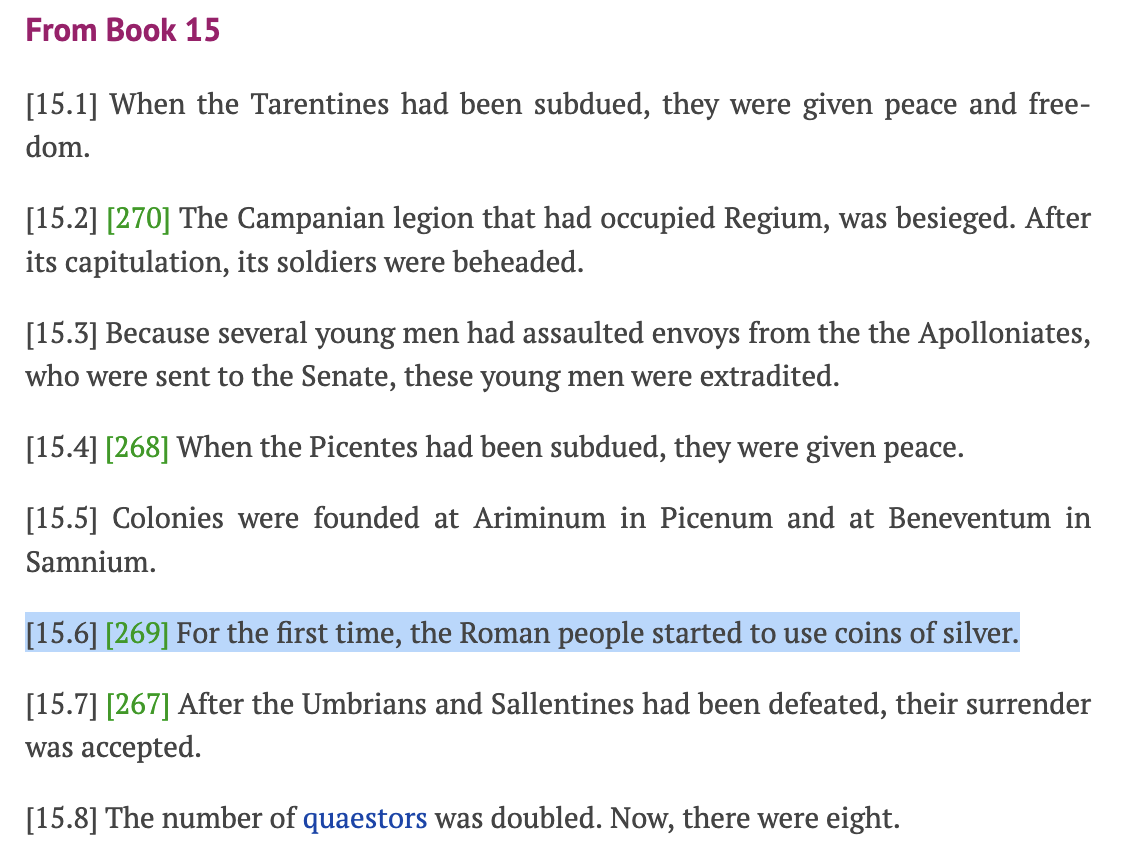
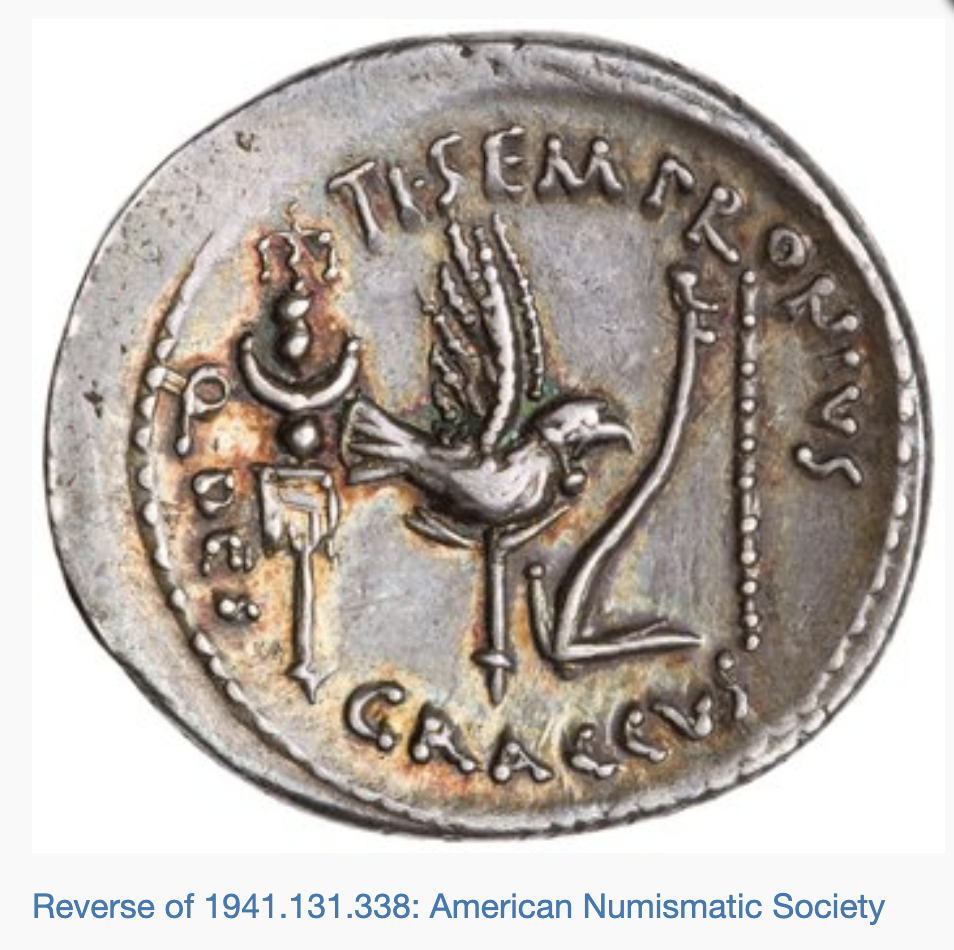
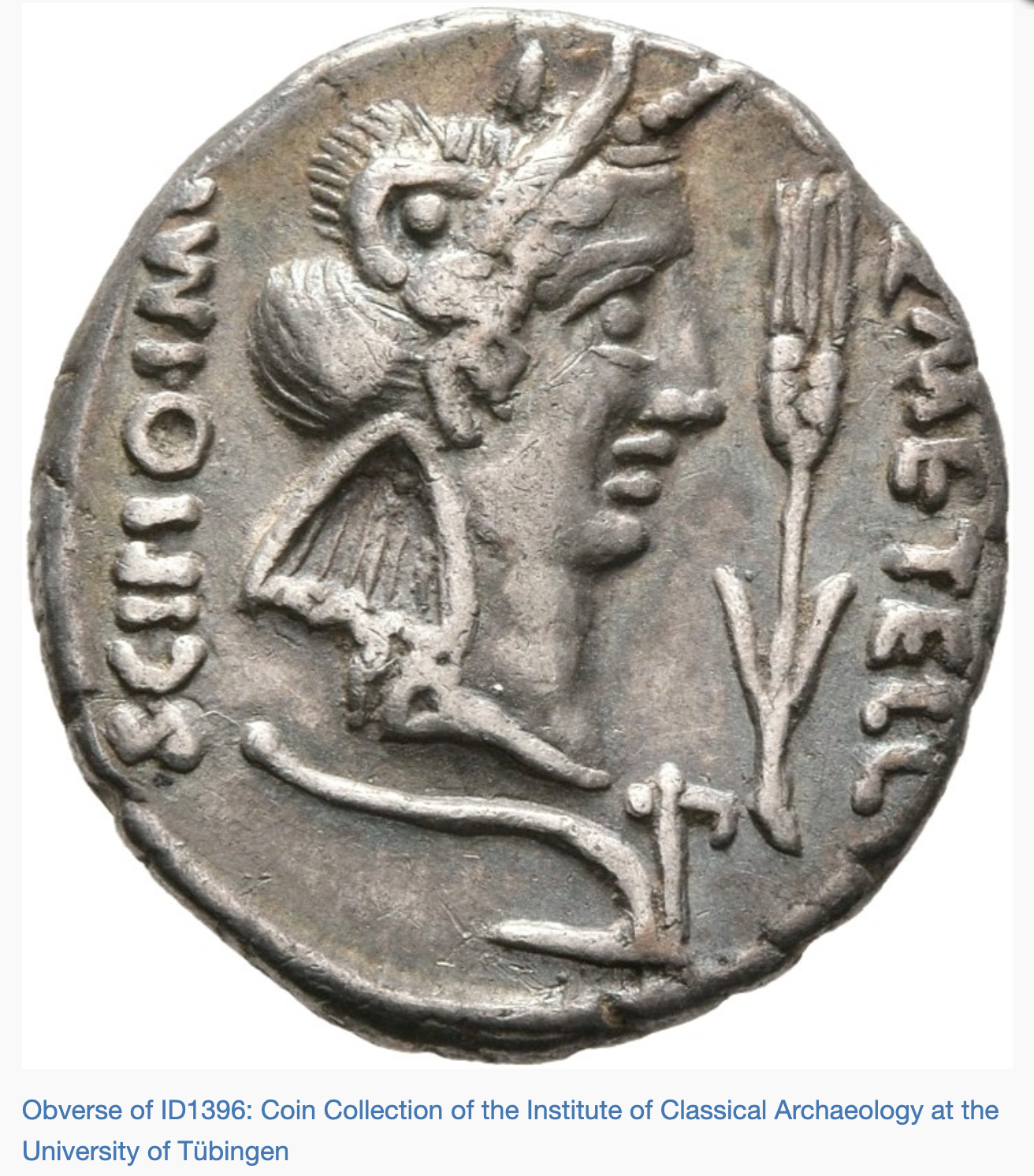
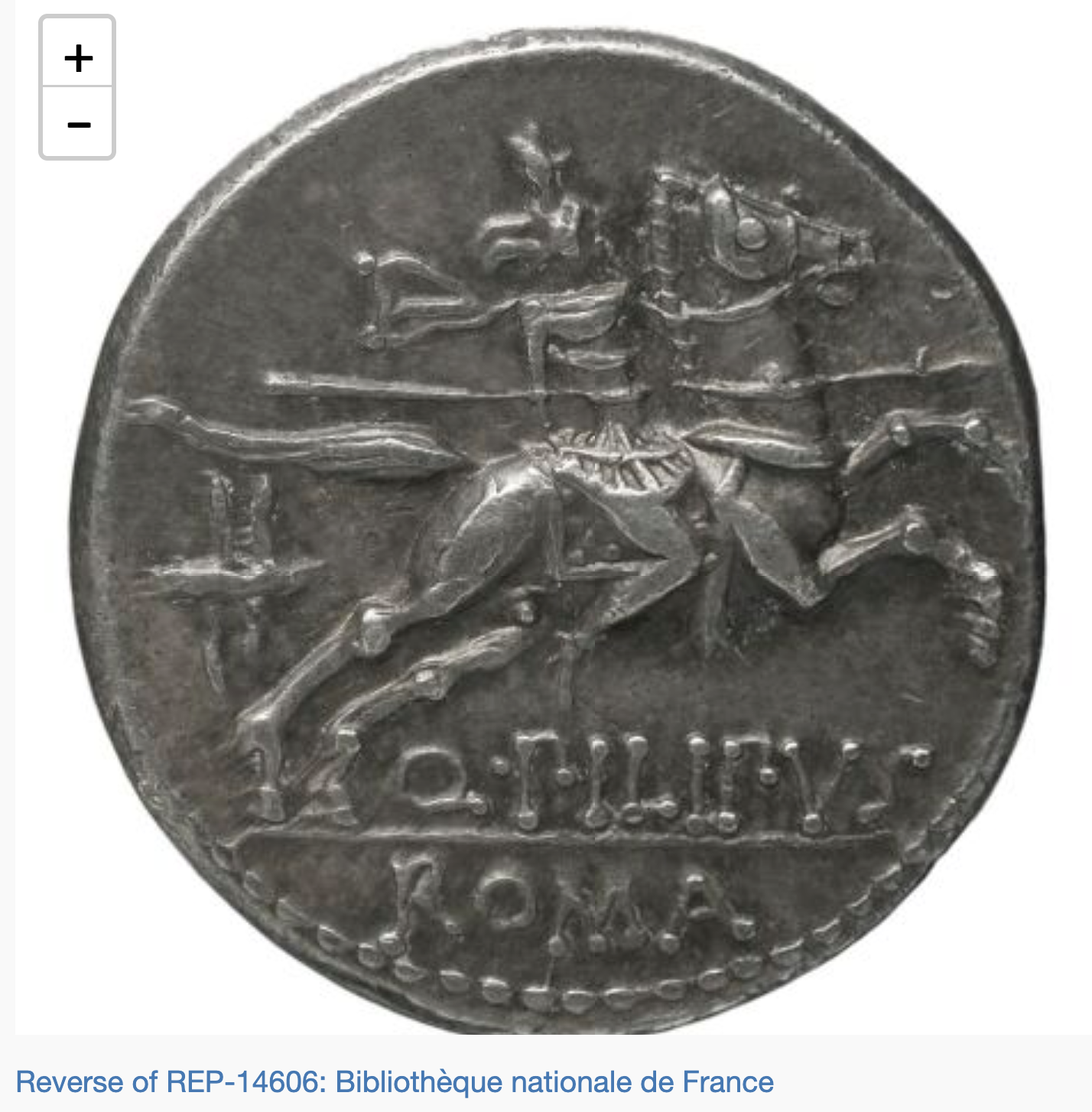
For years many scholars believed that RRC 20/1 must date to 269 BCE to make it line up with Livy, emphasizing that Ogulnius the consul of that year had earlier in his career set up a statue with a presumed similar subject and literary testimony places the creation of silver coins in this year.

The curule aediles, Cnaeus and Quintus Ogulnius, brought up several money-lenders for trial this year. The proportion of their fines which was paid into the treasury was devoted to various public objects; the wooden thresholds of the Capitol were replaced by bronze, silver vessels were made for the three tables in the shrine of Jupiter, and a statue of the god himself, seated in a four-horsed chariot, was set up on the roof. They also placed near the Ficus Ruminalis a group representing the Founders of the City as infants being suckled by the she-wolf. [ad ficum Ruminalem infantium conditorum urbis sub uberibus lupae posuerunt simulacra]. The street leading from the Porta Capena to the temple of Mars was paved, under their instructions, with stone slabs. Some graziers were also prosecuted for exceeding the number of cattle allowed them on the public land, and the plebeian aediles, L. Aelius Paetus and C. Fulvius Curvus, spent the money derived from their fines on public games and a set of golden bowls to be placed in the temple of Ceres.

Livy 10.23
Livy Per. 15, echoed in Plin. NH 33.44

The archeological record makes it impossible to date RRC 20/1 to 269 BCE (Burnett,
San Martino in Pensilis Hoard, 2006). It must be at the tail end or directly after the 1st Punic War. Also while many scholars have tried to make 269 for the introduction of silver ‘true’ in some way, this is again contrary to our archaeological evidence.

These are topics I’ve blogged about in dribs and drabs before. One key post on dating using texts versus archaeology. An early post on how Coarelli suggests the Lares may be the original founders of the city under the wolf and twins.

While Coarelli might be wrong about dating, he’s not wrong that there could (but need not) be overlap between the Lares as founders and Romulus and Remus as founders. We cannot know what was in the minds of the Ogulnii or their contemporary in 296 BCE. We cannot even know beyond a shadow of doubt if the attribution of the statue, its dates, the conditions and placement of its erection are accurate. Livy was wrong about the introduction of silver and many other things he could be wrong about this as well. If we want 296 BCE to be a firm date we need to trust Livy’s access to accurate records. Do we? Why? If it is inaccurate do we think Livy is making stuff up completely? OR, do we blame an unknown intermediary for falsification.

Does it matter? Clearly it matters to Wiseman and many others. And yet, I do not think I care overly much. Livy is only certain proof only Livy’s own historical discretion. When we try to using Livy or any author to interpret the more distant past from which we only have elusive material culture and minimal textual testimony, then we must allow there must be a potential for inaccuracy and hold some skepticism of it all. To me the question is not who is depicted on the Bolsena Mirror but what is possible and plausible. What is the range of explanations we might consider.

Yes storytelling, theater, and other ‘proto’ literary moments could and likely did radically influence how the Romans and others thought about the origins of city. Yet, I would emphasize that for those narratives to contain share power in the formation of communal identity they must contain something of what Barthes describes of myth that which is at once true and unreal. The unrealness makes the narrative malliable and open to interpretation and reformulation. The truth need not be literal but the ethical and cultural resonance embodied in the narrative. Truth can also be in how the narrative forms a plausible connection to the unknowable but desired past that is essential because of the present reality as experienced by the audience.

Now, if any nation ought to be allowed to claim a sacred origin and point back to a divine paternity that nation is Rome. For such is her renown in war that when she chooses to represent Mars as her own and her founder’s father, the nations of the world accept the statement with the same equanimity with which they accept her dominion.

Livy Preface

Huh.

I had a lot say. I think I have more to say as well. But I might need to get up and walk about and shake my head a bit.

See you soon.

Plough Monday

I’m feeling this Plough Monday. The cycle of work begins again in earnest after a festal period. All of the things need attention. How beautiful that English folk tradition marked out this day with rituals to help ease us back into the rhythms of work. If I really wanted to be complete about ploughing imagery on the republican series I’d have collect the control marks and teams of oxen and other various symbolism but really I just want wanted a nod in that direction as I warm up my fingers and acknowledge the feelings of the name. And I’ll be honest I’m American enough that I want to spell it PLOW but will resist for this one day.

I’m in London for my Webster Fellowship and when I started this post back at the flat I was feeling rather overwhelmed and pulled towards work for my students and mentees, work for my department, overdue publication commitments, and my deep desire to get stuck in to research and the intellectual life of London. I threw myself out into the soft, steady rain and put on some very peppy poppy tunes and enjoyed a brisk 30 minute walk to the library with a little stop for a packed lunch to care for future me.

I feel so joyous.

Three cups of coffee has nothing on moving through a familiar urban landscape and light exercise with a two weeks stretching ahead of me.

I thought this would be a to do list post, but no. I wrote my to dos in my shiny new 2026 paper planner (Moleskin of course).

It just says “all of the emails”.

Happy Ploughing. My all your fields be fertile.

Battle on Horseback

While listening to a paper on Battisti on Glabrio at Delphi, I was reminded of this Plutarch passage about an equestrian statue of Philopoemen.

After Philopoemen had routed these with great slaughter (more than four thousand of them are said to have fallen), he set out against Machanidas, who was returning with his mercenaries from the pursuit. But a broad and deep ditch stretched between them, along which the two leaders rode opposite each other, one wishing to get across and escape, the other to prevent this. 6 The spectacle was not that of two commanders fighting, but that of a power­ful hunter attacking a wild beast that has been forced to turn at bay, and Philopoemen was the hunter. And now the tyrant’s horse, which was vigorous and high-spirited and felt the bloody spurs in his sides, essayed to make the leap across, and striking against edge of the ditch with his breast, was struggling with his fore-feet to extricate himself. 7 At this point Simmias and Polyaenus, who were always at Philopoemen’s side when he was fighting and protected him with their shields, rode up both at the same time and levelled their spears at the horse. But Philopoemen was before them in attacking Machanidas, and seeing that the tyrant’s horse was lifting its head up in front of its rider’s body, he gave his own horse a little swerve to one side, and then, clasping his spear firmly in the middle, pushed it home with all his weight and overturned his enemy. 8 This is the attitude in which he is represented by a bronze statue set up at Delphi by the Achaeans, who admired especially both his deed of prowess and his general­ship on that day.
Plut.Phil. 10

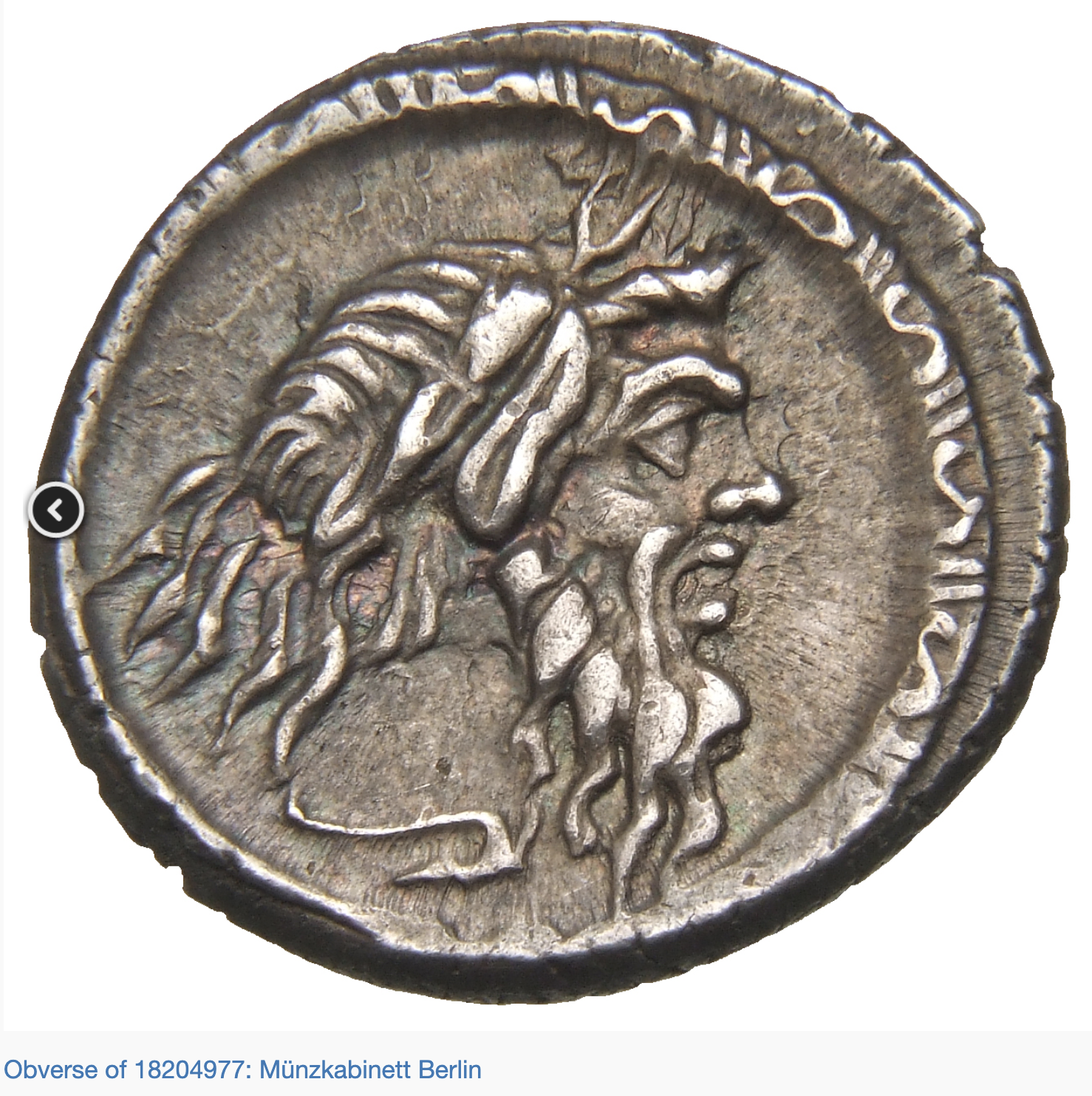
I’ve often wondered if RRC 259/1 was an alternate depiction of the Tremulus statue (cf. my 2021 book, pages 64-69) rather than just Tremulus the man, but I have been convinced that the dynamic motion with spear would be too unusual for a statue as the other representations on later coins are so staid and calm.

RRC 259/1

It also occurred to me that I might also think of and compare it and the Plutarch passage to the follow battle scene.

RRC 264/1, cf. RRC 370/1

I’m not saying I believe these to certainly represent statues only that the possibility (if not the probability) seems stronger after reading the Plutarch.

The Despot and The Emperor’s Image

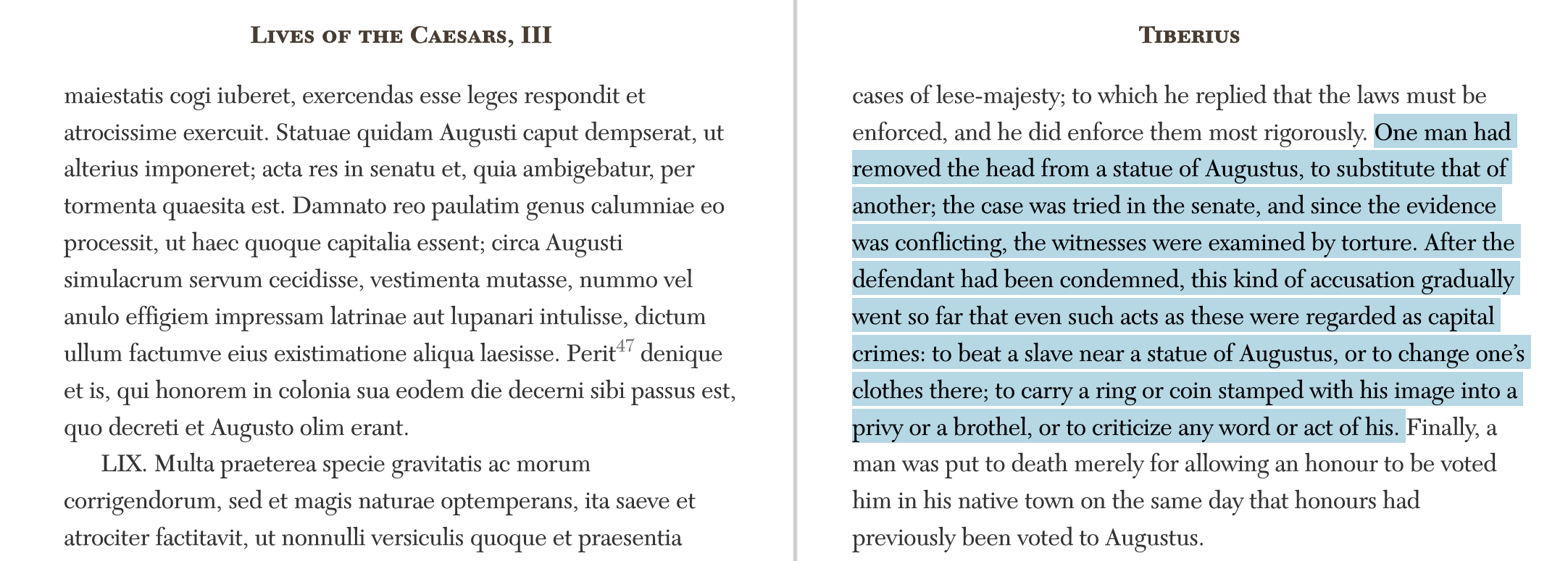
Suetonius

A fragment of Cassius Dio Book 78 set c. 213 CE

Historically these two passages have been connected to so called Spintriae and used to justify their false identification as brothel tokens. This is nonsense if often repeated. For a quick open access overview of the numismatic stuff see Rowan’s 2015 blog post or better yet buy her book.

I think a better reading of these passages is on the historical topos of the Despot who cares overmuch about his own portraiture as a proxy of himself and/or his power/ancestry and uses it as an excuse to inflict meaningless cruelty.

Fronto on Coins and Portraiture

I went looking for these references to share with a scholar I met at the AIA/SCS and decided they better live on my blog so I didn’t have to dig for them the next time I wanted them.

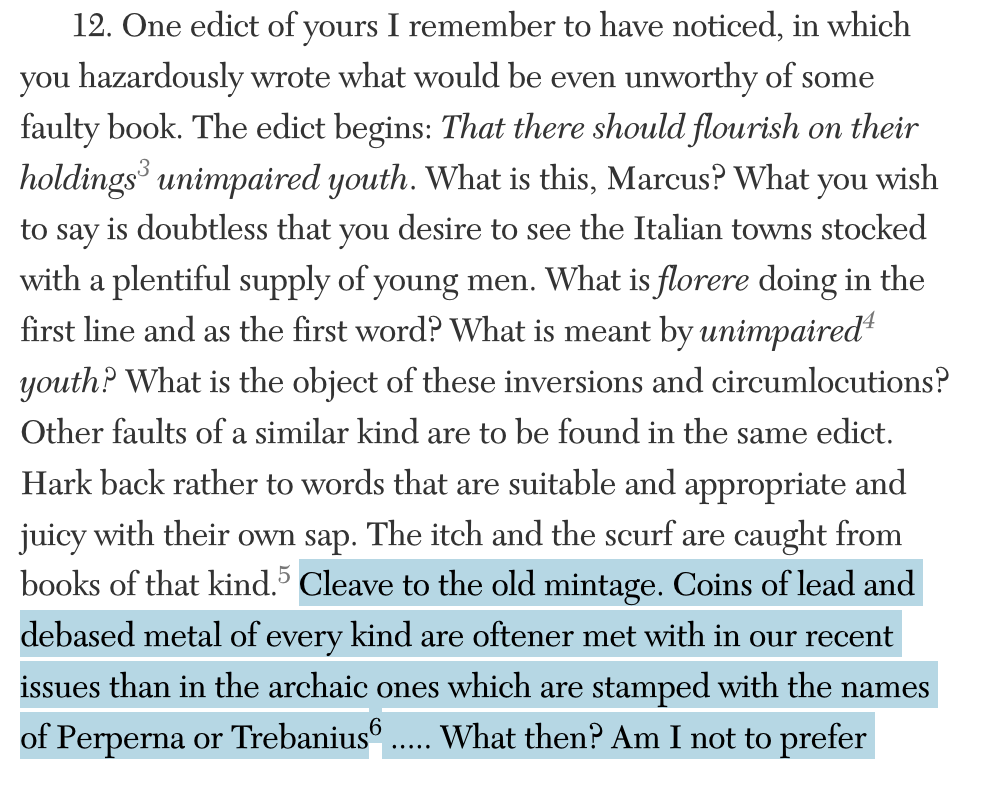
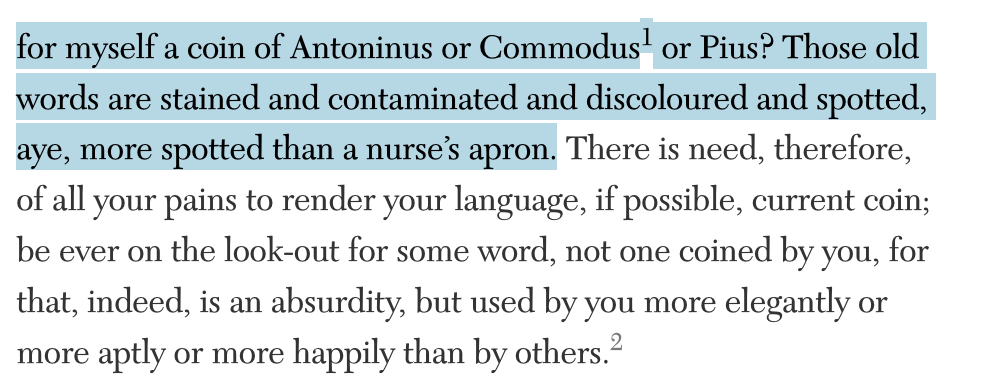
Fronto, Ad Marcum Antoninum de Orationibus 12.

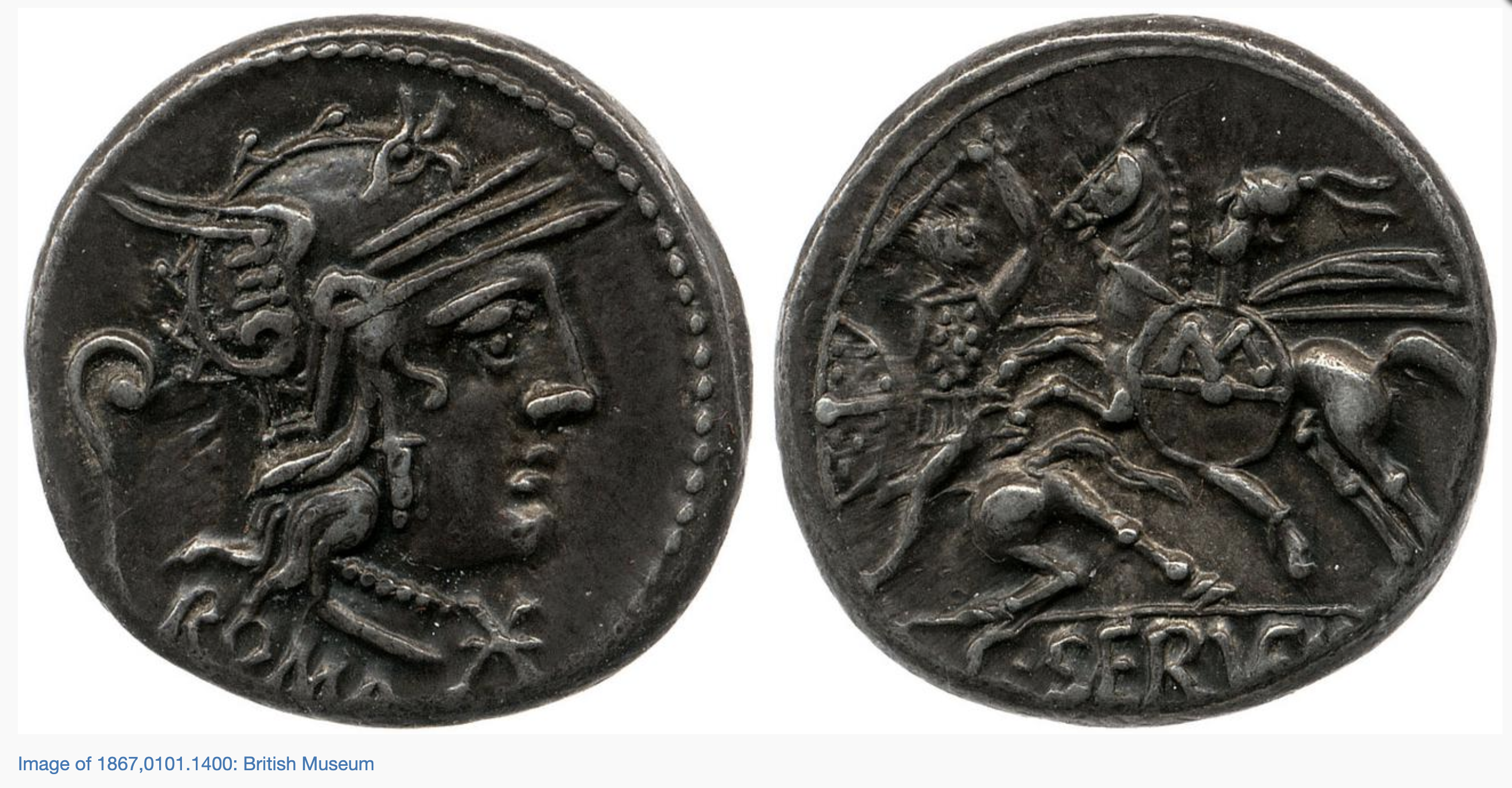
Addressed to Marcus Aurelius about not fetishizing old words or coins and perferring

The passage is hard and the translation disputed. The gist seems today to me to mean that while old coin/words is more reliable new coin/words may be used with care and attention to the quality of the usage. If you disagree don’t hesitate to share your views.

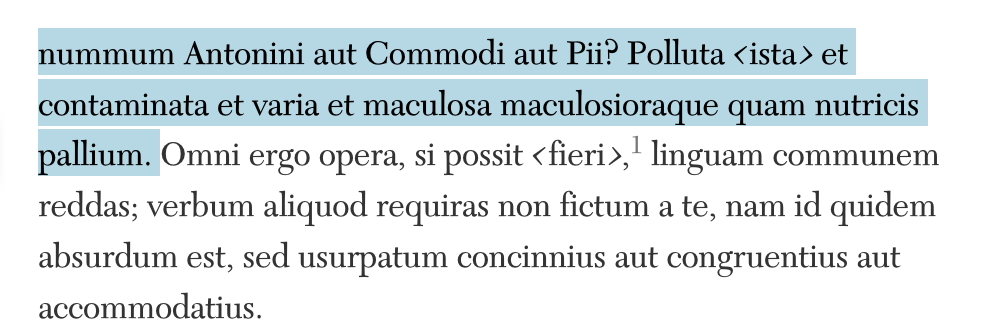
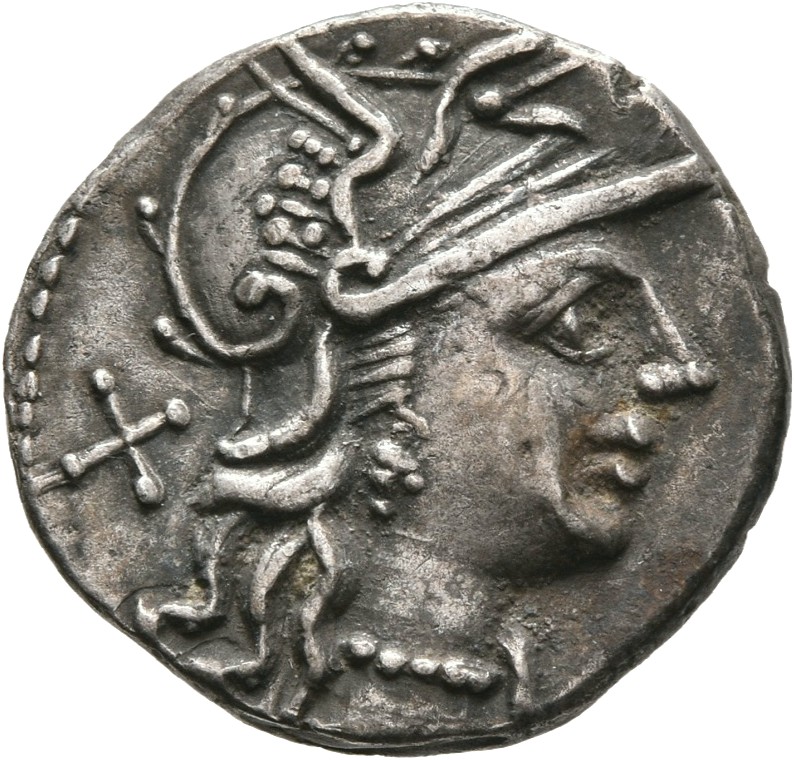
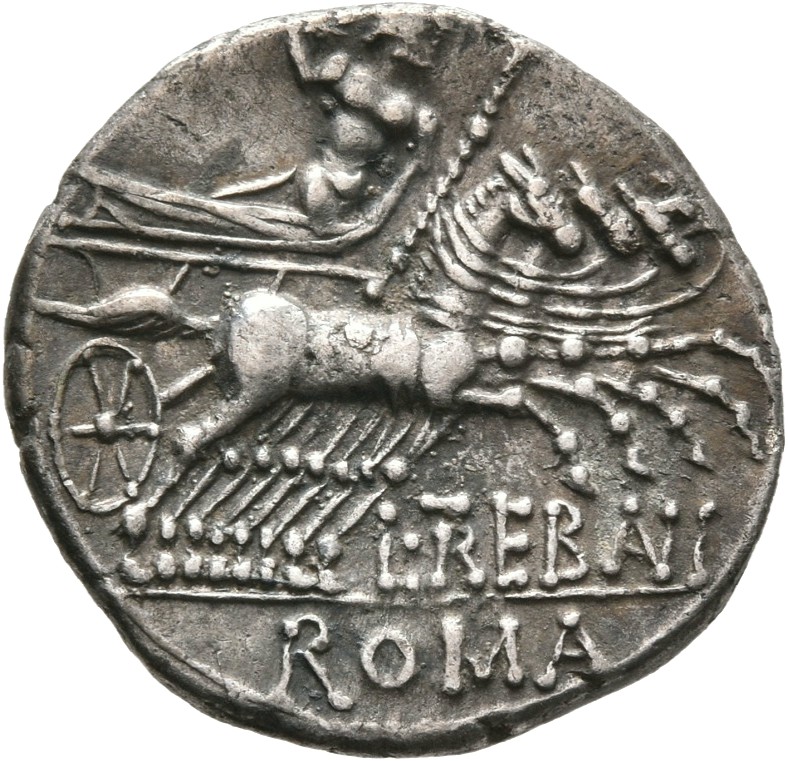
I will refrain from too many particular statements beyond pointing out that no coins of Perperna survive (did they ever exist?! and if not why does Fronto think they did?!) and the Trebanius coin series (RRC 241, c. mid 130s BCE) is not terribly abundant.

Commodus refers in all likelihood to Aelius or Verus. I feel the latter more likely. Commodus, in the sense of Aurelius’. son was first celebrated on coins c. 161 CE, and was first on the obverse c. 172 BCE with his grant of the title Caesar. The common reverse is PRINC IVVENT. The letter to Marcus is suggestive of his still being Caesar himself or at least junior enough to be rebuked by a tutor.

Fronto Ad M. Caes. iv. 12 (Naber, p. 72), c. 147 CE

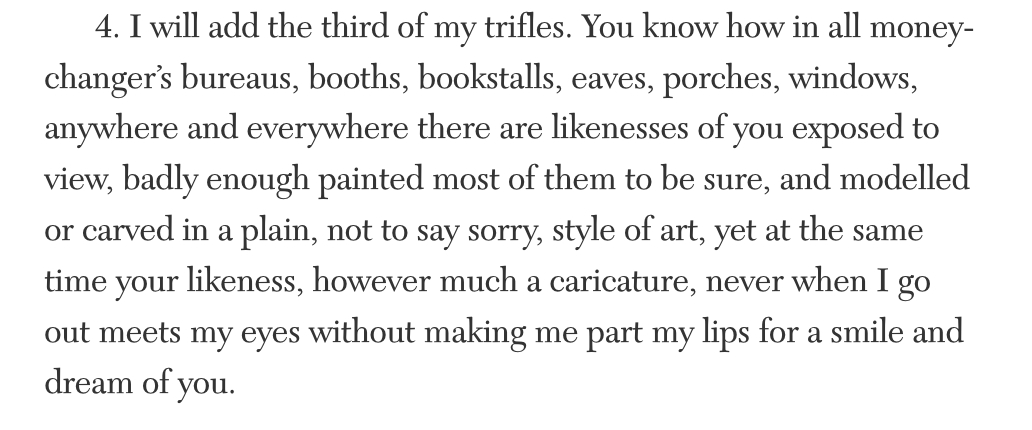
Even a bad portrait is still recognizable and calls to mind the subject. I like this passage for the reminder of ubiquitous nature of the imperial image. One durable materials survive until today but many many more were visible on the ancient streets. Reminds me of images of the ubiquitous nature of Ataturk when I first visited Türkiye.

Sling bullets got me out of bed

earlier posts on sling bullets

Dane Scott (BU PhD candidate) is our speaker in a panel at 8 am sponsored by Society of Ancient Mediterranean Religions. I like the energy of this society, perhaps I need to join.

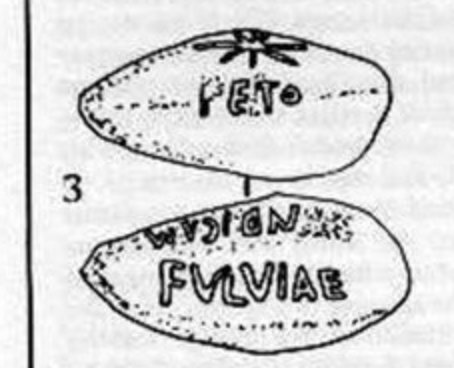
He reads in sling bullets as materialized curses; he uses magic as heuristic tool, not an emic category used in antiquity. His case studies are from Asculum and Perusia as case studies, and I personally found the earlier ones most stimulating or at least less familiar to me.

The panel is in honor of Brenk and the speaker refers to the reading of Caesar’s last words “Kai Su! Teknon” by Brenk in his article of 1999 as a key work showing how apotropaic traditions were available to ancient individuals not just in narrow confines of what we normally think of as magic. Unfamiliar? I have some examples in my teaching materials.

The speaker points out the treatment of magic is on the periphery of Religion and religion studies, but that this marginality is an inheritance from antiquity where our texts are often suspicious of such acts, but effects this has limited modern scholarship and categorization. Magic is least useful when we use it categorize objects, rather than practices. Broadening the category of Magic invites inclusion of wider range of classica texts as enacting speech rather than descriptive speech. The speaker points to the double work of verbs on curse tablets (e.g. Kropp 2010).

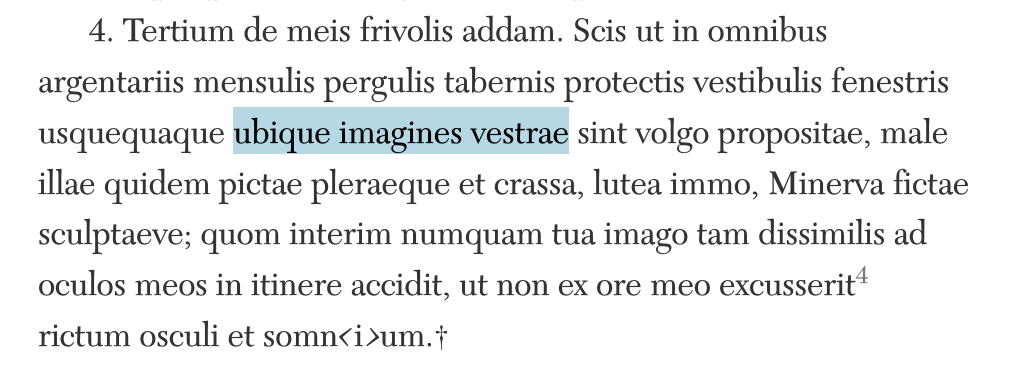
He now turns to the evidence and points to how the verb PETO mirrors the physical action of the bullet as it leaves the sling.

Likewise he points to Latin inscriptions like “for the belly” “on the backs” guide the bullet to its destination and the inevitability implied by perfect or perfect tense : ” you runaways have perished”, “Tamen EVONES omnes” “You will spit all of them out”. He then turns to “em tibe malum malo” and how it invokes ambiguous supernatural forces and sends them away from thrower towards the target. This reminds me so much of the “I’m rubber you’re glue…” playground chant of my childhood. It really stuck with me his comment on how the bullets embody the theorization that the harm can be manifested linguistically, not just kinetically.

Comment from audience – Is imagination important in Magic as conceptualization? Speaker says he’s using imagine as a substitute for belief which he does not feel captures’ the ideas in the minds of soldiers.

At least in modern contexts writing on bullets, weapons, bombs etc. the audience isn’t really the people being hit, but for the sender and his allies, but does this hold for ancient audiences? These bullets are enduring.

Question of archaic speaking objects connection to these bullets and other curses, especially linked through grammatical use of first person.

Speaker says Judith Butler’s performativity complicates speech acts theory of Austin by making clear that we are always enacting ourselves through performance and speech…

[handout on file]


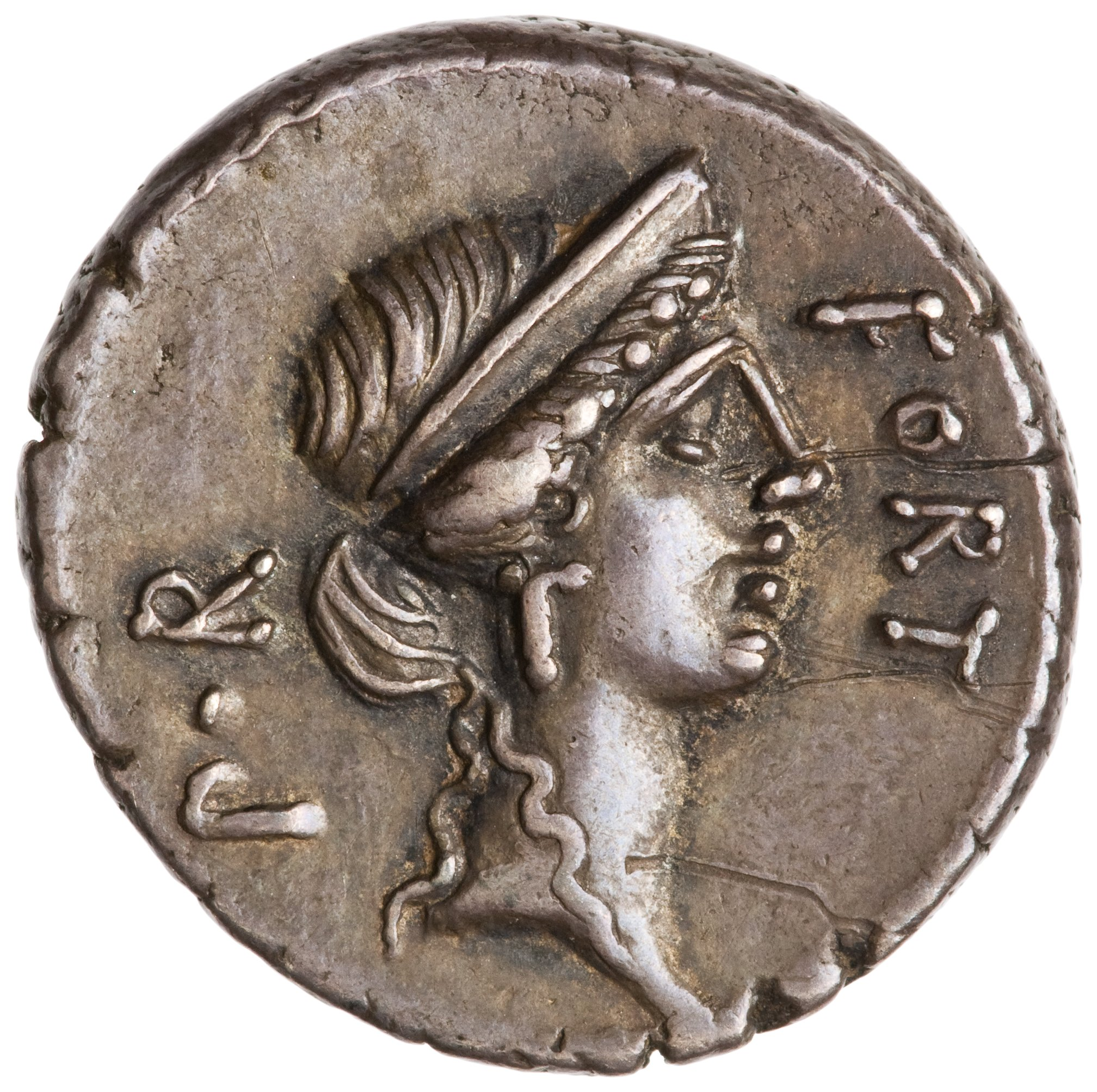
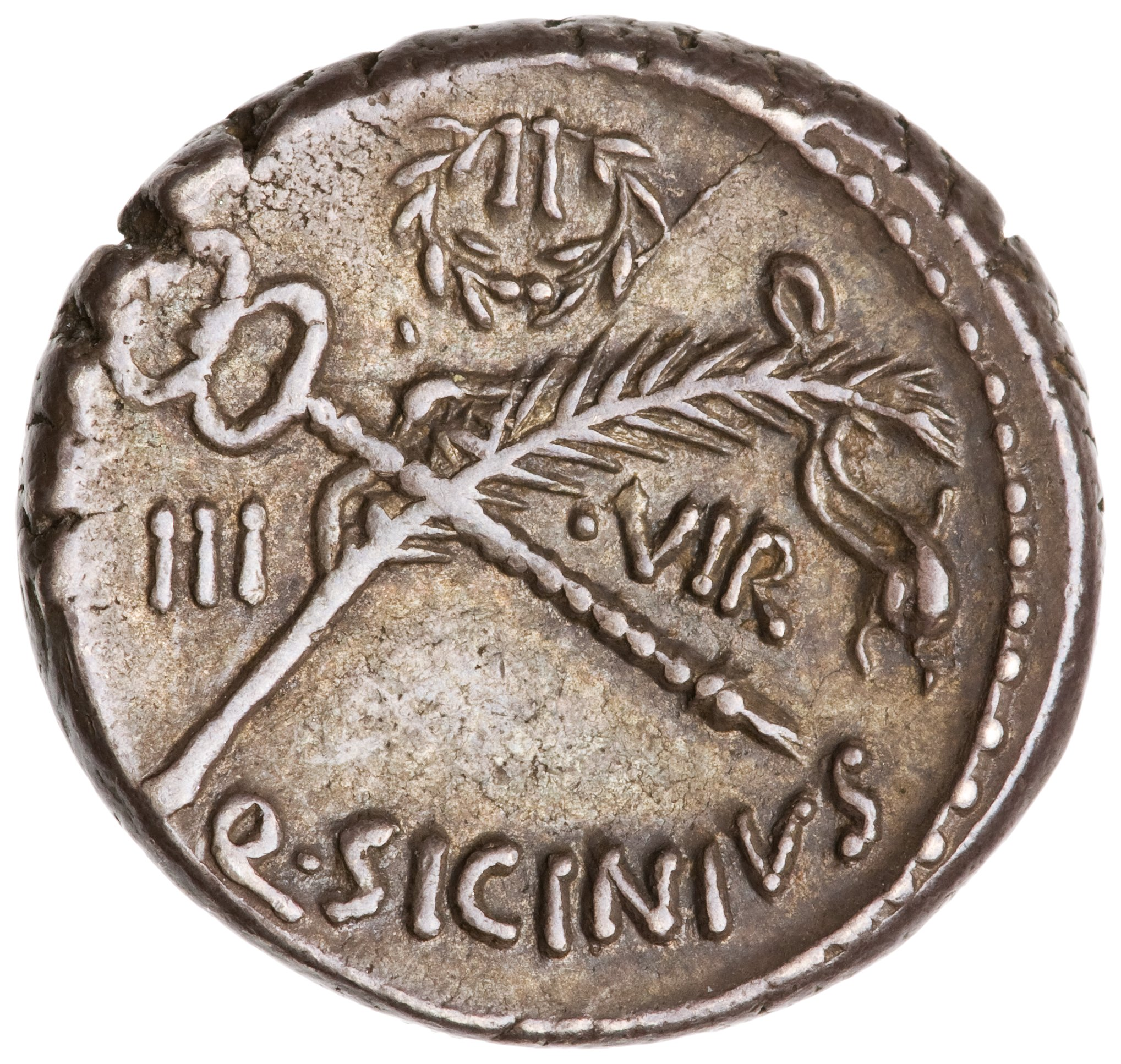
Next up Sebastian Tyrrall on Fortuna Populi Romani. Below are my rough notes as I listened but to me the most important part of this paper was how it helps me contextualize RRC 440/1.

ANS specimen

I’m interested in how the speaker connects FPR to the populism and how this may connect to Caesar’s self positioning. And also how this may connect to the Genius PR and also Sulla’s positioning of himself as “blessed” (Felix). I also feel the speaker’s selections of passages help us see why this type is appropriate at the moment that Caesar takes the city itself in a bloodless shift of power. I want to think much more of this.


Rough notes [handout on file]

Plutarch, de Fort. Rom. 317f-318a describes in words artistic depictions of the movement of art

Livy 6.30.6 contrasts the poor judgement of the generals with the FPR that protects of the soldiers because of their virtus. cf. 35.6.9. When human leadership fails, divine provides.

1.46.5 FPR arranges a marriage to allow Servius more time to set Rome on firm foundations. Livy first says it was chance and then shifts via CREDO to give divine agency.

Is Fortuna Urbis the same as FPR see 3.7.1? The speaker thinks so. Only causal invocation of this concept, another Four for FPR.

But speaker says FPR is implied on many other occasions (cf. 5.49)

Tyche goddesses of Hellenistic States, but no cult with the name FPR known in the city.

Evocation of FPR in speeches cf. 7.36, 28.44

Selvans?

I’ve never been convinced with the identification of this obverse as Hercules. It is part of RRC 39. A ‘mysterious’ bronze series whose iconography has caused much speculation. I have an earlier post on another one of these coins suggesting that the semuncia is Feronia, one of the few posts on this blog I think is truly important for a number of reasons. This has led me to think that the other “confusing” iconography may be about honoring other Italic gods and ensuring they were honored during the crisis of the Hannibalic War and the threats of Italian communities shifting their alliances.

Today I had a brain wave as I was listening to an excellent Etruscan paper that I had not thought about Selvans as a possibility.

Today I learned that the famous Culsans statuette so commonly shown to illustrate the connection with Janus has a friend, Selvans deposited at the same time with a nearly identical inscription. (earlier posts on Culsans).

These figurines are in the Etruscan museum in Cortona. Even better they were found under the city gate and are both signed by a woman dedicant who names the gods. Selvans is often thought to be a god of boundaries.

Selvans animal scalp is typically described as a bear’s scalp not a boars. I’m curious to see this figurine from the back. Do you have a picture?

Notes on Fajardo on Anonymous Civil War coinages of 68-69 BCE

Link to ANS specimens relevant to this topic

Any attribution to a particular emperor or leader uncertain

NW empire provenance

Mattingly 1914 could not establish provenance, but now CHRE allows us to do so.

Movement and finds suggest a decoupled from troop movement

Variable weights and many plated examples 17% in Martin’s study

144 types, of which 127 denarius, 13 shared by aurei and denarii, 4 aurei only types.

Heads where present represent gods, personifications, or divus Augustus

Thought to be republican until 19th century, but on a Neronian standard and metallurgical testing support dating

25 possible find spots from a range of sources, Martin 1974 and CHRE. 10 have sufficient data quality for inclusion in the study.

All small hoards, 9 denarii hoards, 1 aureii, typically only one anonymous denarius per hoard.

Created a data set of hoards with Contemporary Imperial issues those struck in the names of Galba, Otho, and Vitellius dated to 68-69 BCE.

The hoards with anonymous coin show a significantly different geographical distribution than would be expected from the other hoards. Clustering along the northern frontiers. [photo on file]

Really cool statistical visualizations, I want to practice using Kernel Density Estimates myself as an alternative to traditional histograms.

Take away, the anonymous coins spent only a small period of time in circulation but the contemporary civil war coinages linger in the hoards much longer.

Both (variable) quality and iconography likely lead to their falling out of circulation faster than contemporary issues.


Cool (new to me) finds database out Germany.


N.B. I enjoyed Aracelli’s paper on Rhodian coins but came in too late to take adequate notes. The most interesting point came at the end and in discussion regarding comparison of patterns of coin finds with amphora finds.