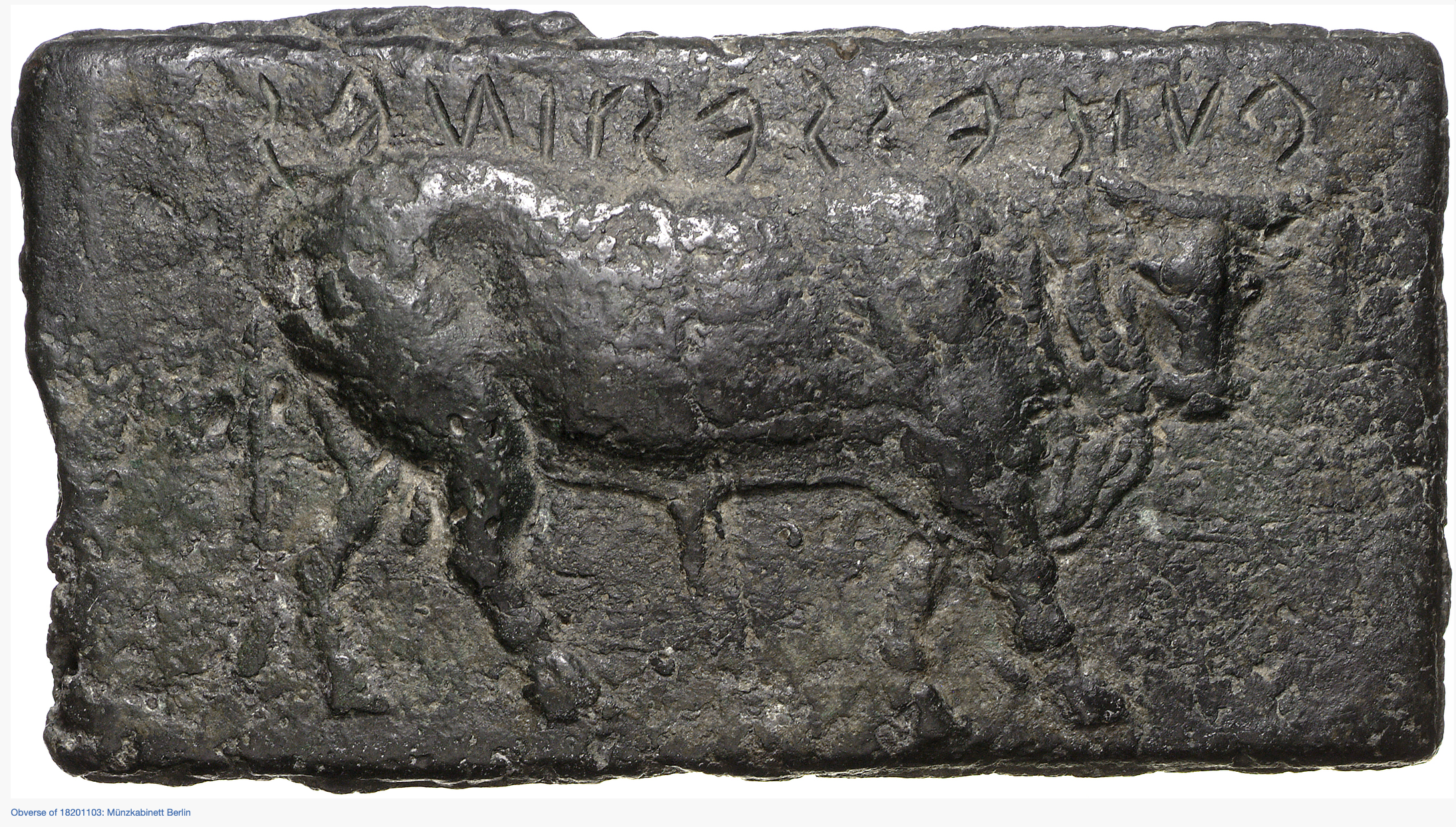
A scholarly correspondent has sent me more citations and photographs AND another specimen from the Bern collection of a specimen of RRC 14/2 engraved along the edge and perhaps pierced?! This of course made me think of RRC 5/1 in Berlin that has an inscription:
AND looking for that sent me down a rabbit hole trying to make sense of Garrucci and Haeberlin’s conflicting testimony of a possible inscription in the Ariccia hoard, which led to some updates to a previous post. And revisting Ariccia hoard made me realize I really should publish a little note on the aes grave of Praeneste as it lets us date the series.
—
Original post.
The Etruscan Necropolis of Poggio del Sole in Arezzo revealed in the late 19th century in controlled excavations an engrave Roman semis weighing 18.4 grams. The engraving is with an Etruscan name, likely a coin deposited with the deceased. Interestingly great care seems to have been taken not to obscure or deface the iconography of the coin.
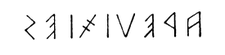
The letters on the obverse begin beneath the head of Jupiter, curve around in front of it to a point above the head, and reveal the following name:
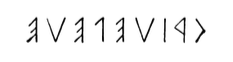
The letters on the reverse present greater difficulty; the first begins at the *acrostolion* (the curved prow ornament) of the ship, and they proceed from right to left:
This was read VE CRIVEPE AREVIZIES and pulled into Latin as Velius Crivepius Arevissii [filius]. Then the next year it was re read as Criuepeue Areuizies with the assertion that the first was the name of a lautni or freedman and the second was the name of the patron/master and of Celtic/Gallic origin. I find the proposed comparanda less than convincing in this second piece, but onomastics are not my specialty. I’m satisfied that it is all one name and that it is Etruscan and that the function was likely sepulcheral.
I’d dearly love to share a photo of this coin but know of none thus far. I wonder if it is in the Arezzo museum. I must visit next year. For the most part I agree with the interpretation:
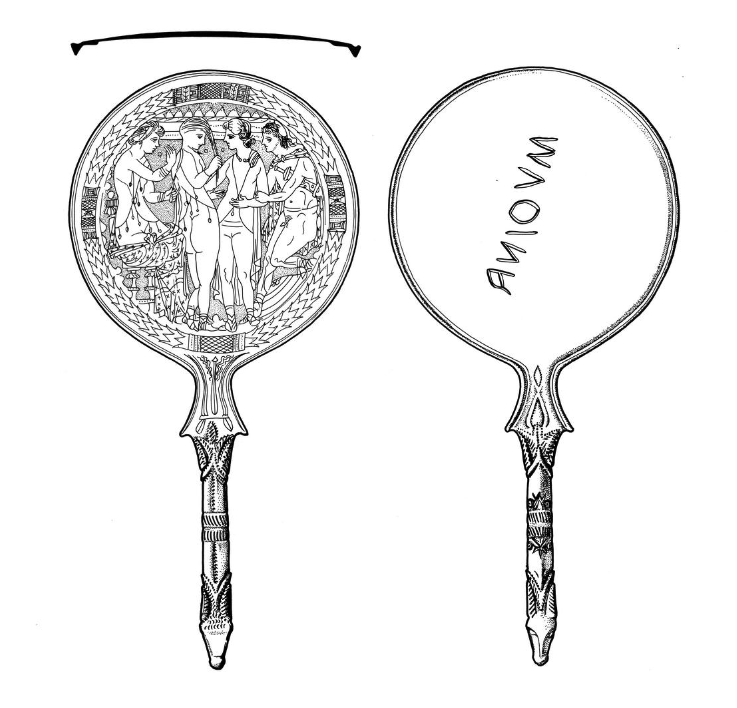
The incising of an Etruscan personal name on a Roman *semis*, while entirely novel, is consistent with the customs of the time. In addition to marking the urn that held the deceased’s body and ashes, such inscriptions were sometimes found on objects that had belonged to the individual or had been deposited by grieving relatives in accordance with ritual practice. This served not only to clearly distinguish—within the same tomb—which items belonged to the deceased, but also to ensure that the objects (especially those of everyday use) would not be employed by the living. To this end, the word *SVTHINA* (“sepulchral”) was inscribed across the polished surface of mirrors from Volsinii; weapons and vessels were frequently broken; and the practice of depositing *aes rude* continued into the third century BC, even when coinage bearing official markings was already in use. I have even observed that, in the first century, *asses* of the uncial standard were snapped in two to prevent them from re-entering circulation. A truly rare example has also come down to us: a *sextantal as* bearing the inscription *FORTUNAI STIPE* (B. d’Ailly, *Recherches sur la monnaie rep.*, pl. LIV, p. 12), indicating that the coin was part of a *stips* (offering) dedicated to Fortuna—perhaps intended for the construction of a temple in her honor. Similarly, by examining the countermarks found on coins of the Roman Republic—most of which remain indecipherable—we may reasonably surmise that some represent marks associated with sacred offerings or with pooled funds collected for a specific purpose.
I particularly like the idea that aes rude was preferred specifically for ritual purposes, cf. Praeneste practices. And I want to know more about this halving of asses in grave goods. The countermarks meant are likely bankers marks and those I’d connect to test cuts probably in conjunction with the legislation of Gratidianus and the Lex Cornelia. I’ve got a co-authored article that touches on that, but still awaiting proofs – so cannot share yet.
More on the Fortunai Stipe coin and parallels in an earlier post.
I wonder if some less that ethical individuals added the inscription to artifacts to raise their value through the application of a ‘unique’ ‘authentic’ feature… I wish I was not so suspicious.
No. I’ve not formatted that bibliography yet… Why do you ask…
Classic Researchastination. Or is it procrasti-posting?