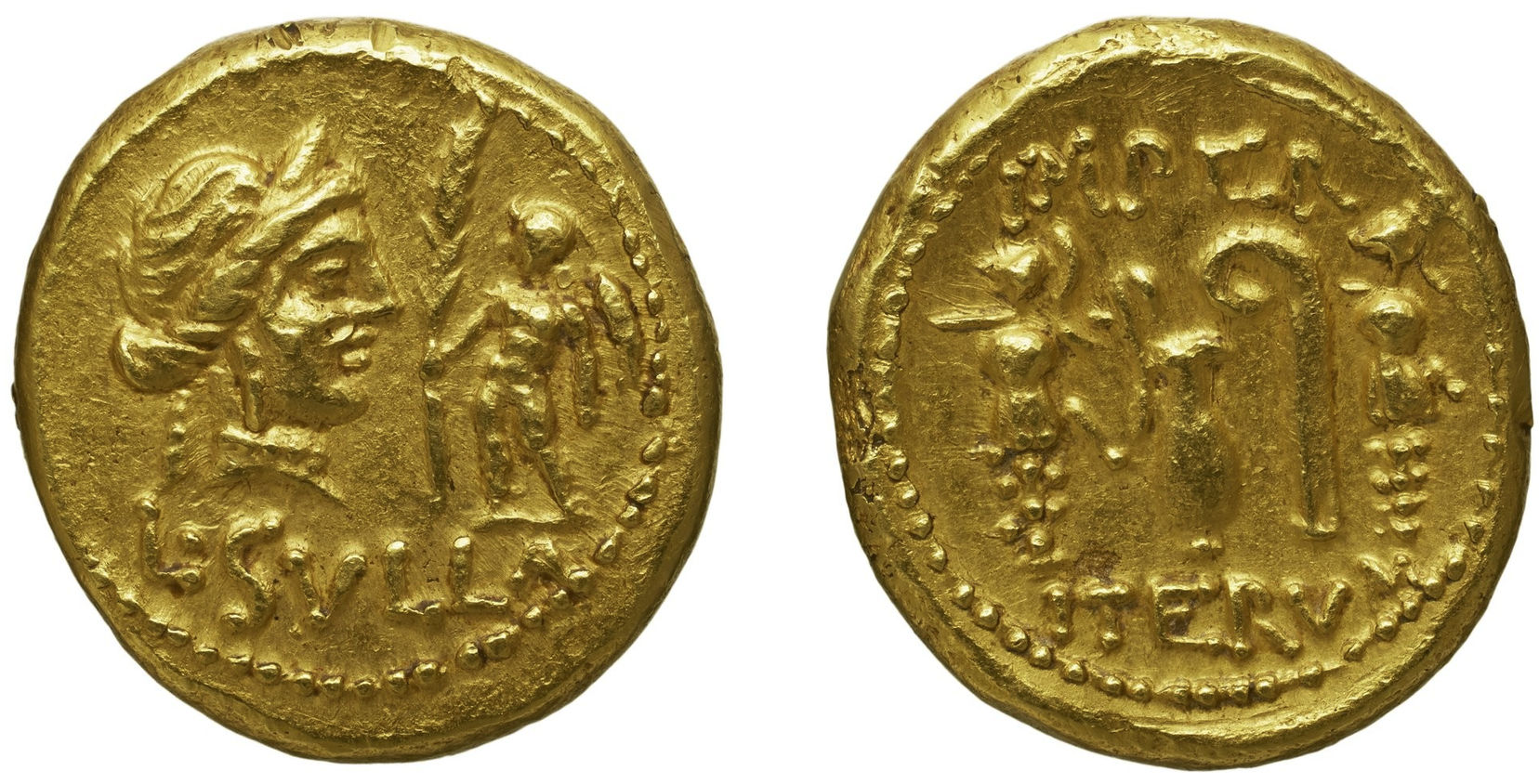
For another footnote I wanted to remind myself of the primary sources on this episode.
Basically I’m thinking about ready cash vs. income and wealth derived from real estate.
Plutarch, Life of Sulla 12
ἔγραψε δὲ καὶ τοῖς Ἀμφικτύοσιν εἰς Δελφοὺς ὅτι τὰ χρήματα τοῦ θεοῦ βέλτιον εἴη κομισθῆναι πρὸς αὐτόν· ἢ γὰρ φυλάξειν ἀσφαλέστερον ἢ καὶ ἀποχρησάμενος ἀποδώσειν οὐκ ἐλάττω· καὶ τῶν φίλων ἀπέστειλε Κάφιν τὸν Φωκέα κελεύσας σταθμῷ παραλαβεῖν ἕκαστον. ὁ δὲ Κάφις ἧκε μὲν εἰς Δελφούς, ὤκνει δὲ τῶν ἱερῶν θιγεῖν, καὶ πολλὰ τῶν Ἀμφικτυόνων παρόντων ἀπεδάκρυσε τὴν ἀνάγκην. 5ἐνίων δὲ φασκόντων ἀκοῦσαι φθεγγομένης τῆς ἐν τοῖς ἀνακτόροις κιθάρας, εἴτε πιστεύσας εἴτε τὸν Σύλλαν βουλόμενος ἐμβαλεῖν εἰς δεισιδαιμονίαν, ἐπέστειλε πρὸς αὐτόν. ὁ δὲ σκώπτων ἀντέγραψε θαυμάζειν τὸν Κάφιν, εἰ μὴ συνίησιν ὅτι χαίροντος, οὐ χαλεπαίνοντος, εἴη τὸ ᾄδειν· ὥστε θαρροῦντα λαμβάνειν ἐκέλευσεν, ὡς ἡδομένου τοῦ θεοῦ καὶ διδόντος. Τὰ μὲν οὖν ἄλλα διέλαθε τούς γε πολλοὺς Ἕλληνας ἐκπεμπόμενα, τὸν δὲ ἀργυροῦν πίθον, ὃς ἦν ὑπόλοιπος ἔτι τῶν βασιλικῶν, διὰ βάρος καὶ μέγεθος οὐ δυναμένων ἀναλαβεῖν τῶν ὑποζυγίων, ἀναγκαζόμενοι κατακόπτειν οἱ Ἀμφικτύονες εἰς μνήμην ἐβάλοντο τοῦτο μὲν Τίτον Φλαμινῖνον καὶ Μάνιον Ἀκύλιον, τοῦτο δὲ Αἰμίλιον Παῦλον, ὧν ὁ μὲν Ἀντίοχον ἐξελάσας τῆς Ἑλλάδος, οἱ δὲ τοὺς Μακεδόνων βασιλεῖς καταπολεμήσαντες οὐ μόνον ἀπέσχοντο τῶν ἱερῶν τῶν Ἑλληνικῶν, ἀλλὰ καὶ δῶρα καὶ τιμὴν αὐτοῖς καὶ σεμνότητα πολλὴν προσέθεσαν. 7ἀλλ᾿ ἐκεῖνοι μὲν ἀνδρῶν τε σωφρόνων καὶ μεμαθηκότων σιωπῇ τοῖς ἄρχουσι παρέχειν τὰς χεῖρας ἡγούμενοι κατὰ νόμον, αὐτοί τε ταῖς ψυχαῖς βασιλικοὶ καὶ ταῖς δαπάναις εὐτελεῖς ὄντες, μετρίοις ἐχρῶντο καὶ τεταγμένοις ἀναλώμασι, τὸ κολακεύειν τοὺς στρατιώτας αἴσχιον 8ἡγούμενοι τοῦ δεδιέναι τοὺς πολεμίους· οἱ δὲ τότε στρατηγοὶ βίᾳ τὸ πρωτεῖον, οὐκ ἀρετῇ, κτώμενοι, καὶ μᾶλλον ἐπ᾿ ἀλλήλους δεόμενοι τῶν ὅπλων ἢ τοὺς πολεμίους, ἠναγκάζοντο δημαγωγεῖν ἐν τῷ στρατηγεῖν, εἶθ᾿ ὧν εἰς τὰς ἡδυπαθείας τοῖς στρατευομένοις ἀνήλισκον ὠνούμενοι τοὺς πόνους αὐτῶν, ἔλαθον ὤνιον ὅλην τὴν πατρίδα ποιήσαντες ἑαυτούς τε δούλους τῶν κακίστων ἐπὶ τῷ τῶν βελτιόνων ἄρχειν.
He wrote also to the Amphictyons at Delphi that it was better to have the treasures of the god sent to him; for he would either keep them more safely, or, if he spent them, would restore as much. And he sent Caphis, the Phocian, one of his friends, with the letter, bidding him receive each article by weight. Caphis came to Delphi, but was loth to touch the sacred objects, and shed many tears, in the presence of the Amphictyons, over the necessity of it. And when some of them declared they heard the sound of the god’s lyre in the inner sanctuary, Caphis, either because he believed them, or because he wished to strike Sulla with superstitious fear, sent word to him about it. But Sulla wrote back jocosely, expressing his amazement that Caphis did not understand that singing was done in joy, not anger; his orders were therefore to take boldly, assured that the god was willing and glad to give. Accordingly, the rest of the treasures were sent away without the knowledge of the most, certainly, of the Greeks; but the silver jar, the only one of the royal gifts which still remained, was too large and heavy for any beast of burden to carry, and the Amphictyons were compelled to cut it into pieces. As they did so, they called to mind now Titus Flamininus and Manius Acilius, and now Aemilius Paulus, of whom one had driven Antiochus out of Greece, and the others had subdued in war the kings of Macedonia; these had not only spared the sanctuaries of the Greeks, but had even made additional gifts to them, and greatly increased their honour and dignity. But these were lawful commanders of men who were self-restrained and had learned to serve their leaders without a murmur, and they were themselves kingly in spirit and simple in their personal expenses, and indulged in moderate and specified public expenditures, deeming it more disgraceful to flatter their soldiers than to fear their enemies; the generals of this later time, however, who won their primacy by force, not merit, and who needed their armies for service against one another, rather than against the public enemy, were compelled to merge the general in the demagogue, and then, by purchasing the services of their soldiers with lavish sums to be spent on luxurious living, they unwittingly made their whole country a thing for sale, and themselves slaves of the basest men for the sake of ruling over the better.
Pausanias, Boeotia 7.5-6
Σύλλα δὲ ἐσβαλόντος ἐς τὴν Βοιωτίαν δεῖμα ἔσχε τοὺς Θηβαίους, καὶ ἐγνωσιμάχησάν τε αὐτίκα καὶ ἐτράποντο αὖθις ἐς τὴν Ῥωμαίων φιλίαν. Σύλλας δὲ ἐς αὐτοὺς ἐχρῆτο ὅμως τῷ θυμῷ, καὶ ἄλλα τε ἐξεῦρεν ἐπὶ λύμῃ τῶν Θηβαίων καὶ τὴν ἡμίσειαν ἀπετέμετο αὐτῶν τῆς χώρας κατὰ πρόφασιν τοιαύτην. ἡνίκα ἤρχετο τοῦ πρὸς Μιθριδάτην πολέμου, χρῃμάτων ἐσπάνιζε· συνέλεξεν οὖν ἔκ τε Ὀλυμπίας ἀναθήματα καὶ τὰ ἐξ Ἐπιδαύρου καὶ τὰ ἐκ Δελφῶν, ὁπόσα ὑπελίποντο οἱ Φωκεῖς· ταῦτα μὲν δὴ διένειμε τῇ στρατιᾷ, τοῖς θεοῖς δὲ ἀντέδωκεν ἀντὶ τῶν χρημάτων γῆς τὴν ἡμίσειαν τῆς Θηβαΐδος. τὴν μὲν δὴ ἀφαίρετον χώραν ὕστερον Ῥωμαίων χάριτι ἀνεσώσαντο οἱ Θηβαῖοι, τὰ δὲ ἄλλα ἐς τὸ ἀσθενέστατον ἀπ᾿ ἐκείνου προήχθησαν·
when Sulla invaded Boeotia, terror seized the Thebans; they at once changed sides, and sought the friendship of the Romans. Sulla nevertheless was angry with them, and among his plans to humble them was to cut away one half of their territory. His pretext was as follows. When he began the war against Mithridates, he was short of funds. So he collected offerings from Olympia, those at Epidaurus, and all those at Delphi that had been left by the Phocians, These he divided among his soldiery, and repaid the gods with half of the Theban territory. Although by favour of the Romans the Thebans afterwards recovered the land of which they had been deprived, yet from this point they sank into the greatest depths of weakness.
Frontinus Stratagems 1.11
(Cf. Val. Max. i. ii, also mentioned Delphi as the source of the Apollo figurine; 3; Plut. Sulla 29)
L. Sulla, quo paratiorem militem ad pugnandum haberet, praedici sibi a diis futura simulavit. Postremo etiam in conspectu exercitus, priusquam in aciem descenderet, signum modicae amplitudinis, quod Delphis sustulerat, orabat petebatque, promissam victoriam maturaret.
Lucius Sulla, in order to make his soldiers readier for combat, pretended that the future was foretold him by the gods. His last act, before engaging in battle, was to pray, in the sight of his army, to a small image which he had taken from Delphi, entreating it to speed the promised victory.
Diodorus 38/39.7
Here’s the passage I was remembering (from my doctorate!)
Ὅτι ὁ Σύλλας χρημάτων ἀπορούμενος ἐπέβαλε τὰς χεῖρας τρισὶν ἱεροῖς, ἐν οἷς ἀναθημάτων ἀργυρῶν τε καὶ χρυσῶν πλῆθος ἦν, ἐν μὲν Δελφοῖς τῷ Ἀπόλλωνι καθιερωμένα,ἐν Ἐπιδαύρῳ δὲ τῷ Ἀσκληπιῷ, ἐν Ὀλυμπίᾳ δὲ τῷ Διί. πλεῖστα δὲ ἔλαβεν ἐξ Ὀλυμπίας διὰ τὸ μεμενηκέναι τὸ ἱερὸν τοῦτο ἄσυλον ἐξ αἰῶνος· τῶν γὰρ ἐν Δελφοῖς χρημάτων Φωκεῖς τὰ πλεῖστα διεφόρησαν ἐν τῷ ἱερῷ κληθέντι πολέμῳ. ὁ δὲ Σύλλας πολὺν ἄργυρον καὶ χρυσόν, ἔτι δὲ τὴν ἄλλην πολυτελῆ κατασκευὴν ἀναλαβὼν ἤθροισε χρημάτων πλῆθος πρὸς τοὺς ἐν Ἰταλίᾳ προσδοκωμένους πολέμους. ἀδεισιδαιμόνως δὲ τῇ λήψει τῶν ἱερῶν χρημάτων προσενεχθεὶς χώραν ἀντὶ τούτων καθιέρωσε τοῖς θεοῖς εἰς τὰς κατ᾿ ἔτος προσόδους. εὐτραπελευόμενος δὲ ἀπεφαίνετο κρατεῖν τῷ πολέμῳ πάντως διὰ τὸ τοὺς θεοὺς αὐτῷ συνεργεῖν, εἰσενηνοχότας χρημάτων πολύ τι πλῆθος αὐτῷ.
Sulla, being in need of money, laid hands on three sanctuaries that possessed a wealth of offerings in gold and silver: those consecrated to Apollo at Delphi, to Asclepius at Epidaurus, and to Zeus at Olympia.His largest haul was at Olympia, since that sanctuary had remained inviolate through the ages, whereas most of the treasures at Delphi had been plundered by the Phocians during the so-called “Sacred War.” Sulla, by appropriating large amounts of gold and silver, and any other objects of value, amassed ample funds for the anticipated war in Italy. And though he showed no scruples in seizing the sacred treasures, in their stead he did consecrate land to the gods to provide them an annual revenue. He would say in jest that his supremacy in battle was assured, since the gods, by their large contributions to his war chest, were aiding his cause.
Just for eye candy: