Another distraction. It has been one of those days.
Let’s reflect on C. Genucius Clepsina.
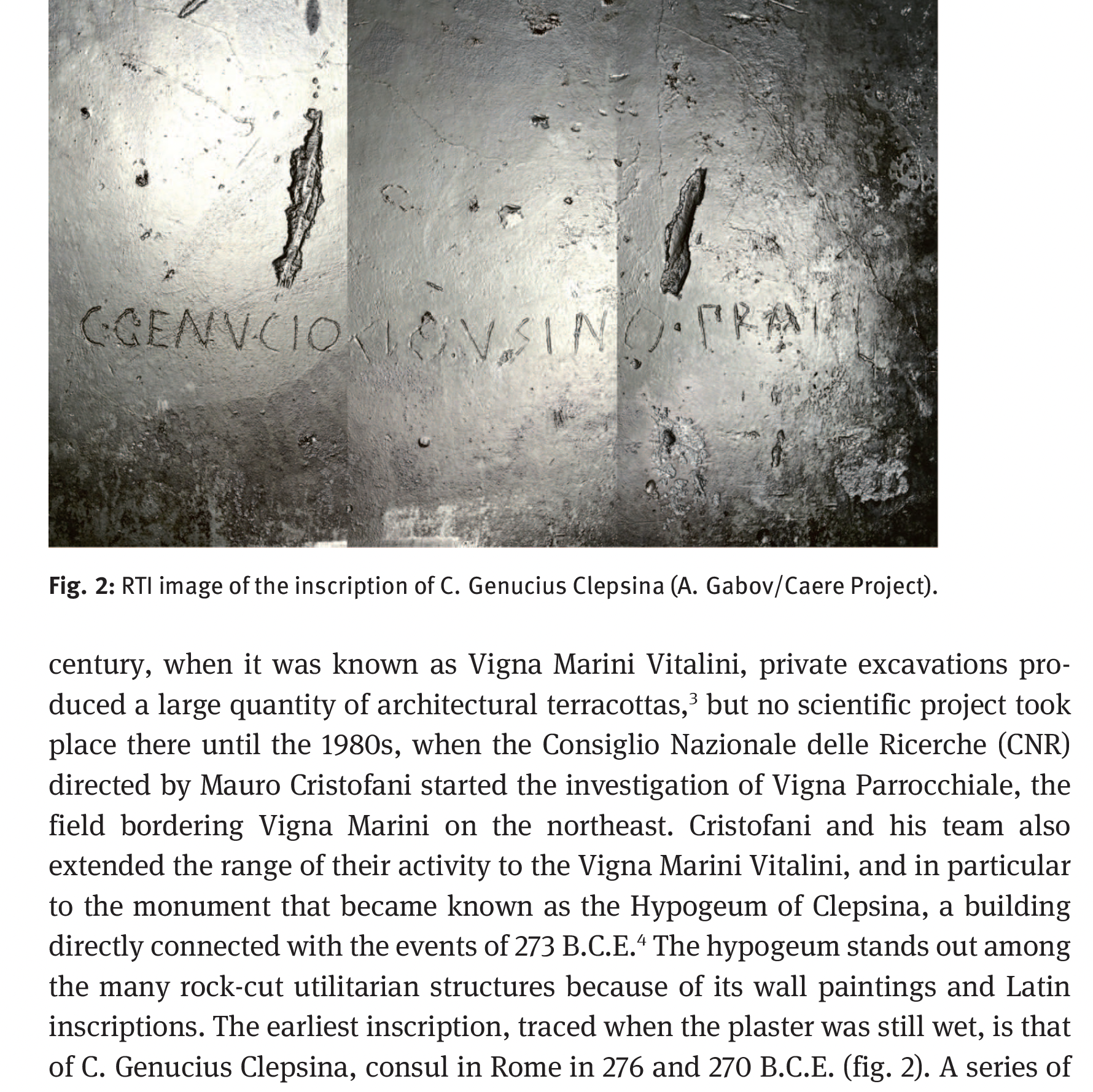
This inscription reads:
C(aius) Genucio(s) Clousino(s) pra<e=I>(tor)
EDCS-71000466
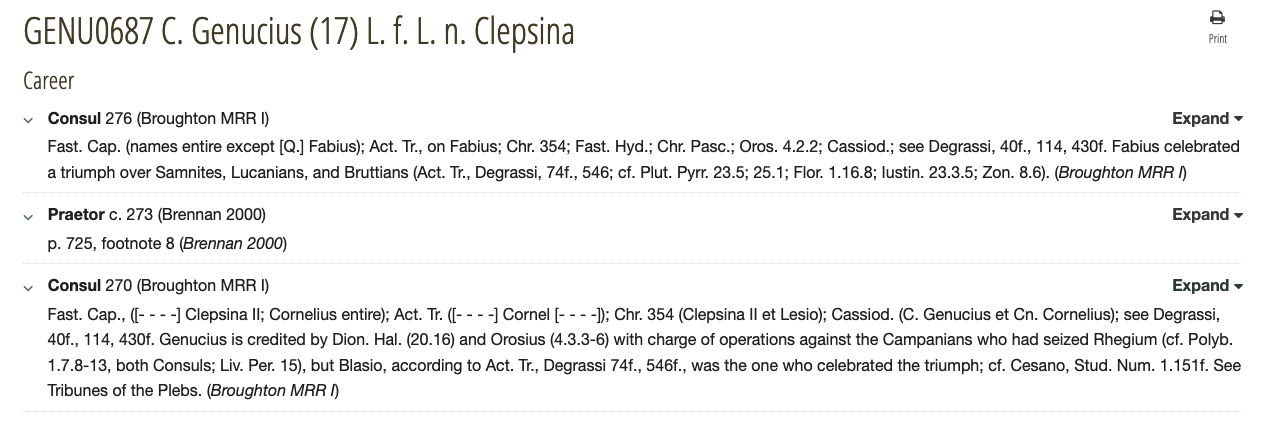
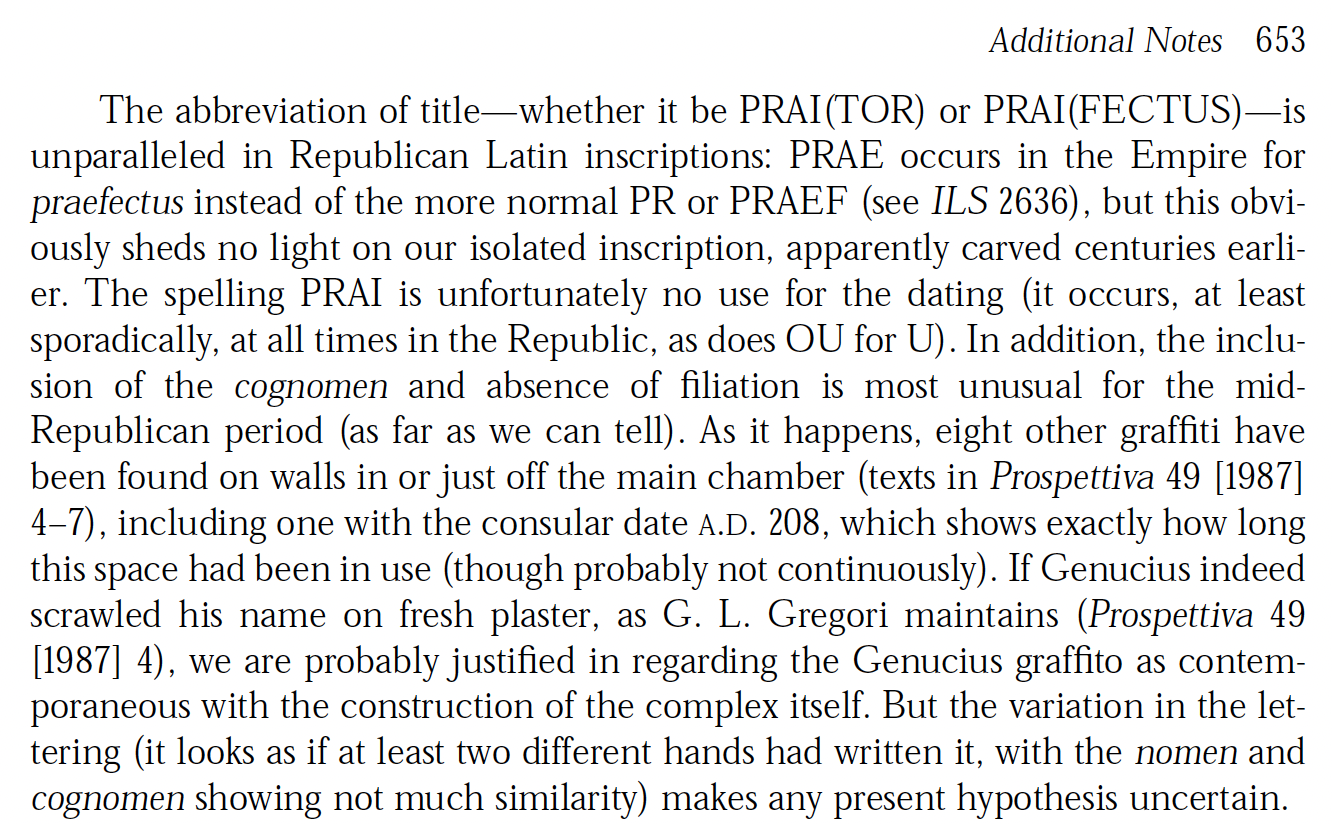
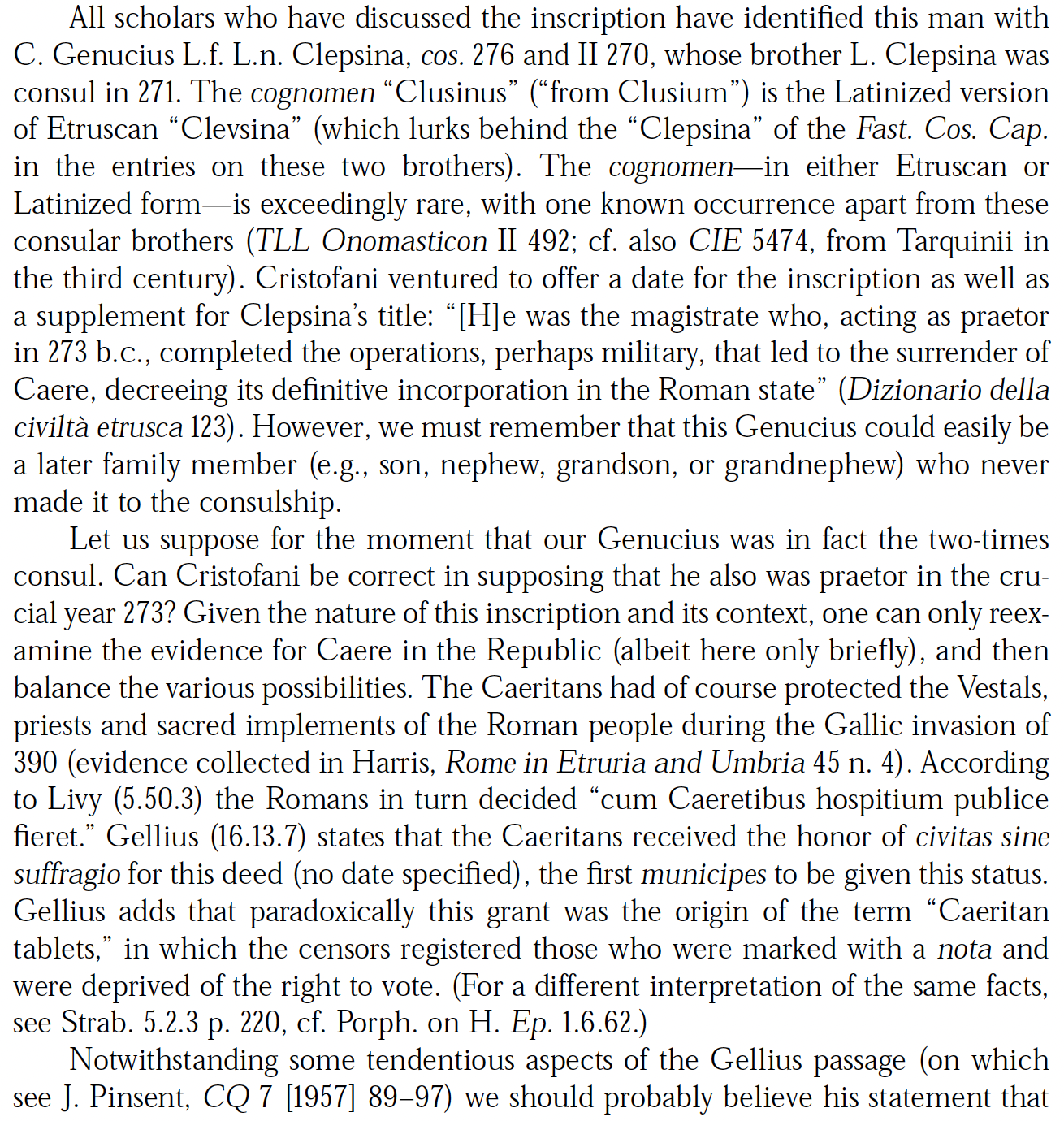
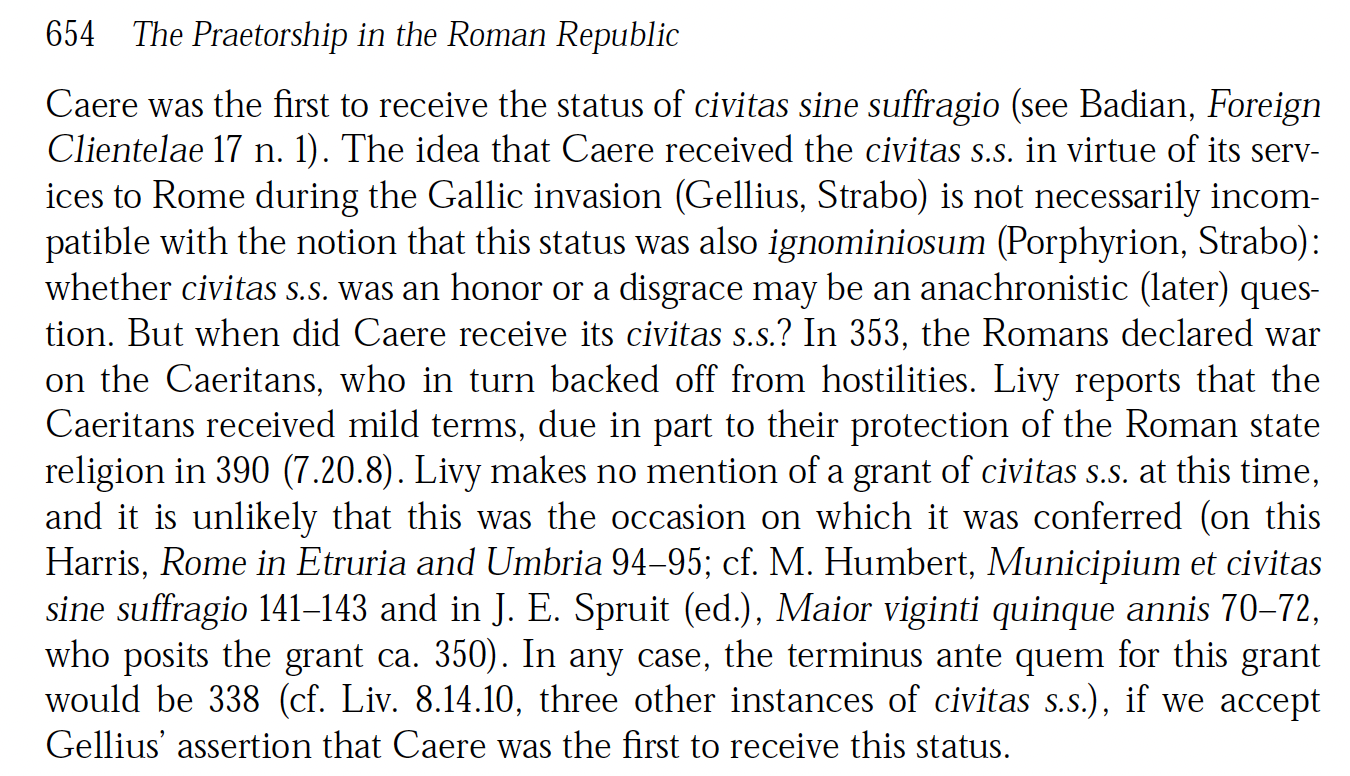
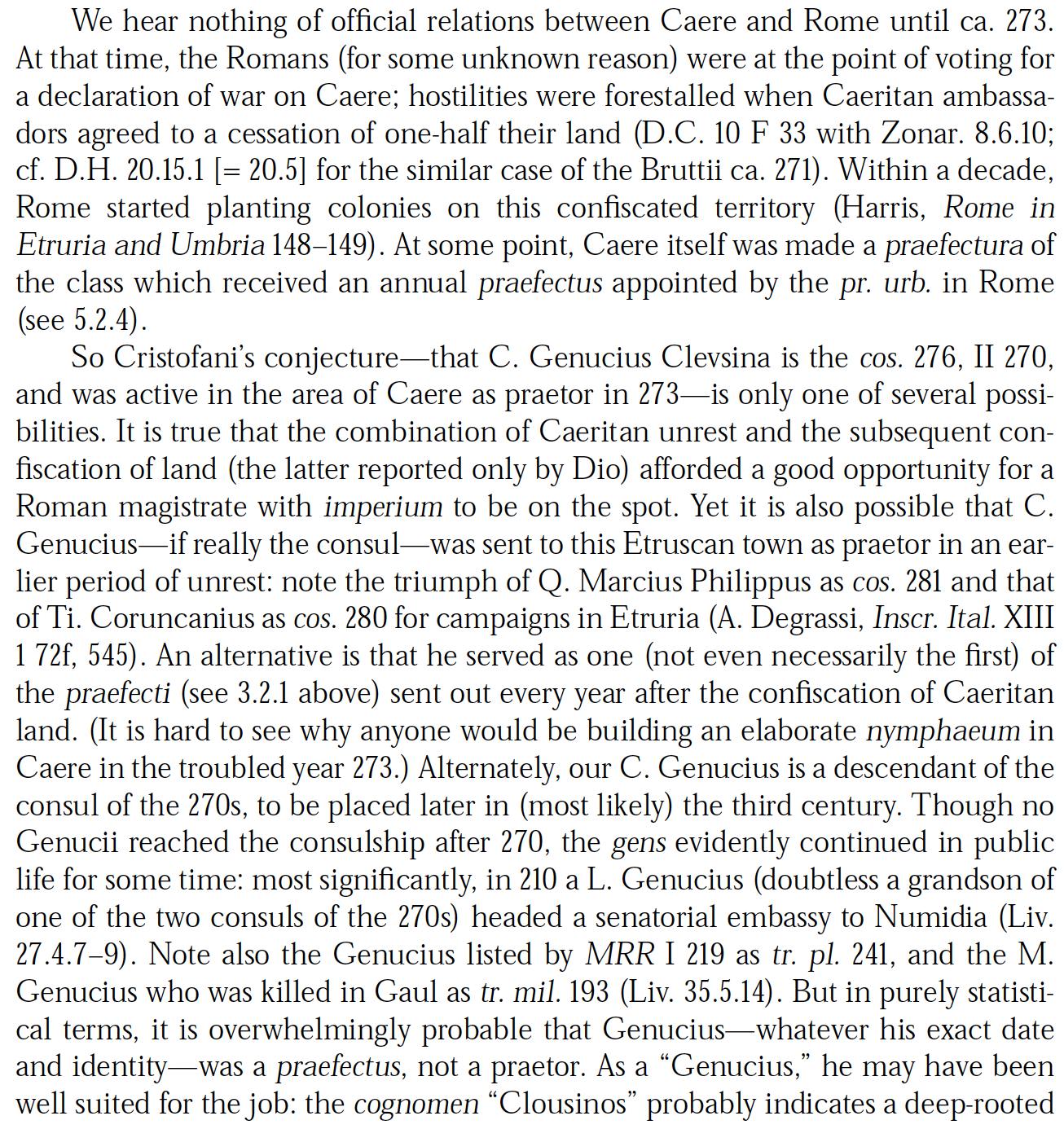
From Brennan 2000: 652-655.
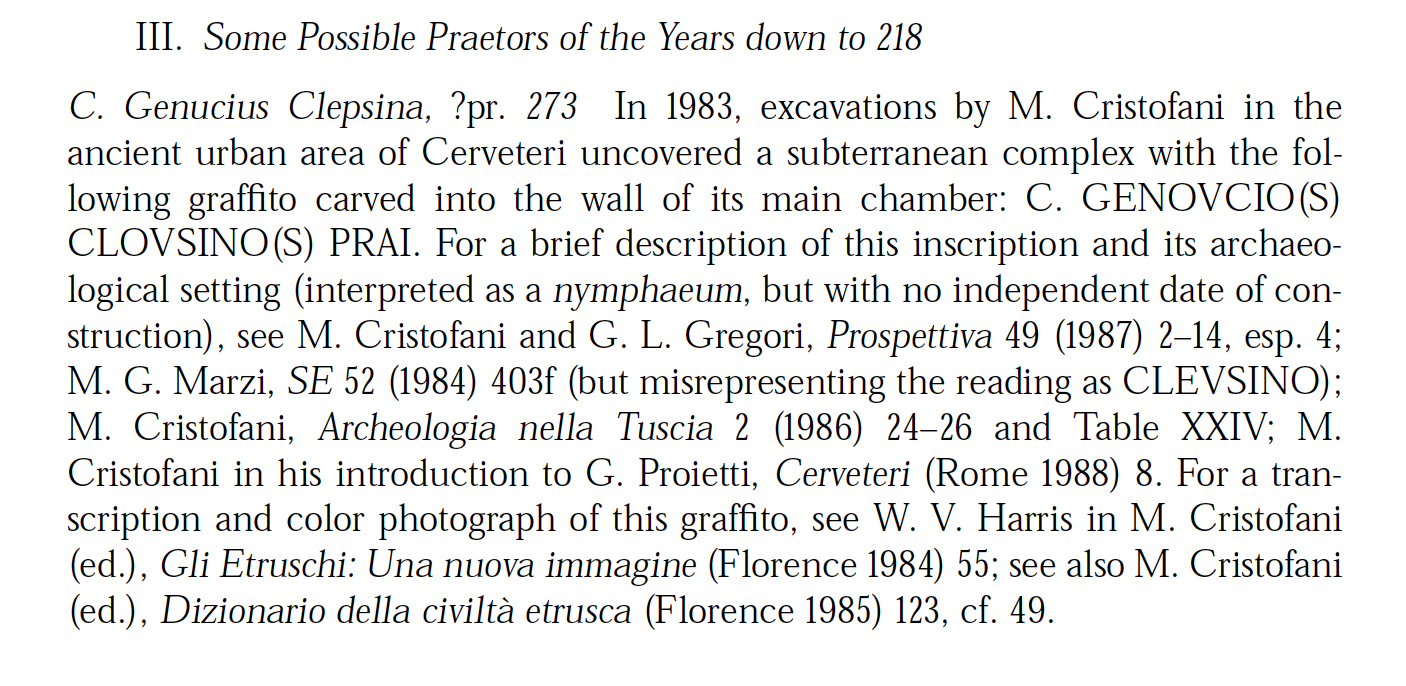

Some thoughts.
- I agree we cannot be sure the inscription is the consul and not a later descendant
- The letter forms do seem suggestive of the third century
- Are we certain the plaster was wet when inscribed?
- Why does Brennan call it a graffito? There are many rather haphazard inscriptions of the 3rd century in formal contexts.
- I’m less confident I see two hands at work in the writing. The closest evidence I can detect is the shape of the Cs the first two are more rounded but the third seems more linear. By contrast the Ns and Vs are very close in their angle size and shape. I’d want a to inspect in person.
- I’m less worried than Brennan about the lack of filiation and the inclusion of the cognomen. Early cognomen are attested as are inscriptions lacking filiation, although I cannot come up with precise parallel that has a Roman magistracy also listed.
- I do have questions about the function of the structure in the 3rd Century BCE in which this inscription to be found. It is called a ‘hypogeum’, i.e. an underground sacred space, and functioned as one in the imperial period clearly, but the discussion by Colivicchi summarizing the interpretation of others doesn’t really fill me with a sense of certainty or confidence.
- Are we sure that the PRAI is complete? Could there we a TOR obscured by damage to the wall/plaster etc…? Again not something really intelligible from a photo.
- I’m intrigued by praifectus being the an alternative resolution. I went looking for early parallels.
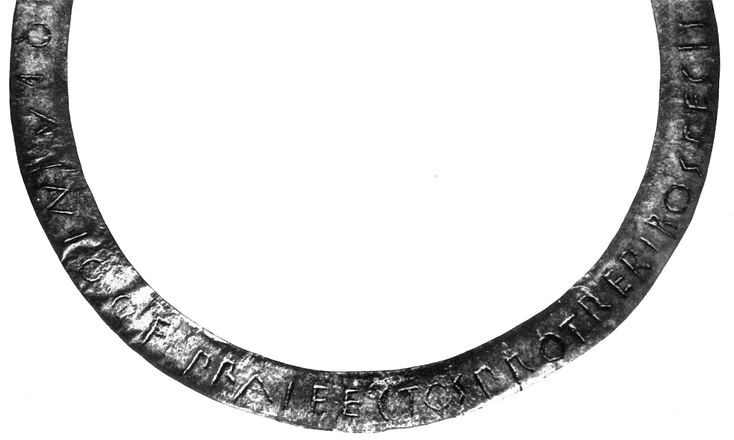
Meet:
EDCS-14805235 = CIL 9, 4204 = ILLRP 302 = etc…
Q(uintus) Lainio(s) Q(uinti) f(ilius) praifectos pro trebibos fecit
found at Amiternum (Samnium) and thus likely post 293 BCE inscription as that is the date the Romans captured the settlement.
Ok. Back to the task I’m still trying to complete for my students.

 Liv Mariah Yarrow