
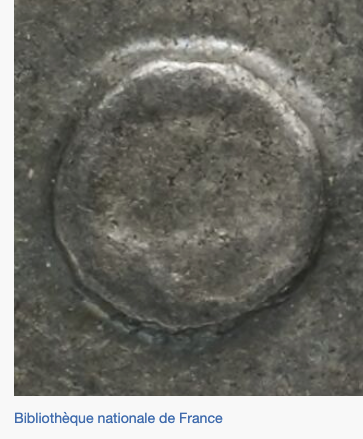
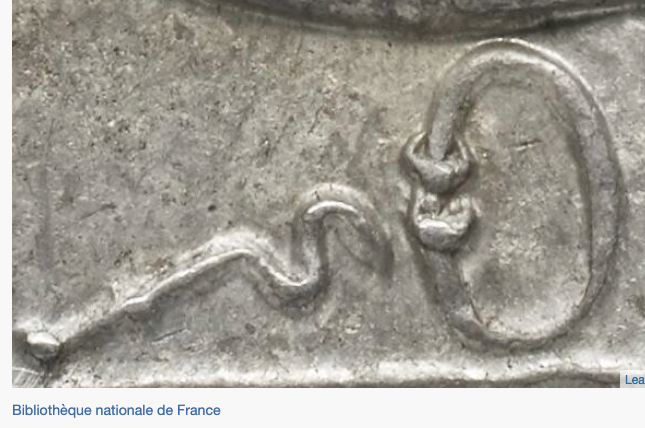
Crawford called Papius die pair no. 36: “Ball/Whip and Hoop”
I like this description very much but I cannot get myself to believe it. And I think I might be stuck thinking about Roman toys to identify them and that need not be right. Alice Sharpless rightly was concerned about the two v intentional additions to the ‘hoop’. She called it a “torque”. She also noticed the very intentional flatness of the obverse symbol and decided to call it a discus. Again reasonable. What can I add? Only that I see the problems with Crawford but am not satisfied with Sharpless’ labels as I cannot come up with a reason for the pairing.
I’ve learned some other things I want to document but they really don’t get us closer to an identification.
Hoops are rolled with a stick not a whip, BUT that stick can have a very noticeable hook or bend in it. Some modern hoops have been manufactured with catch rings that do not interfere with rolling but this doesn’t seem standard. Those rings seem to be help one start the rolling.

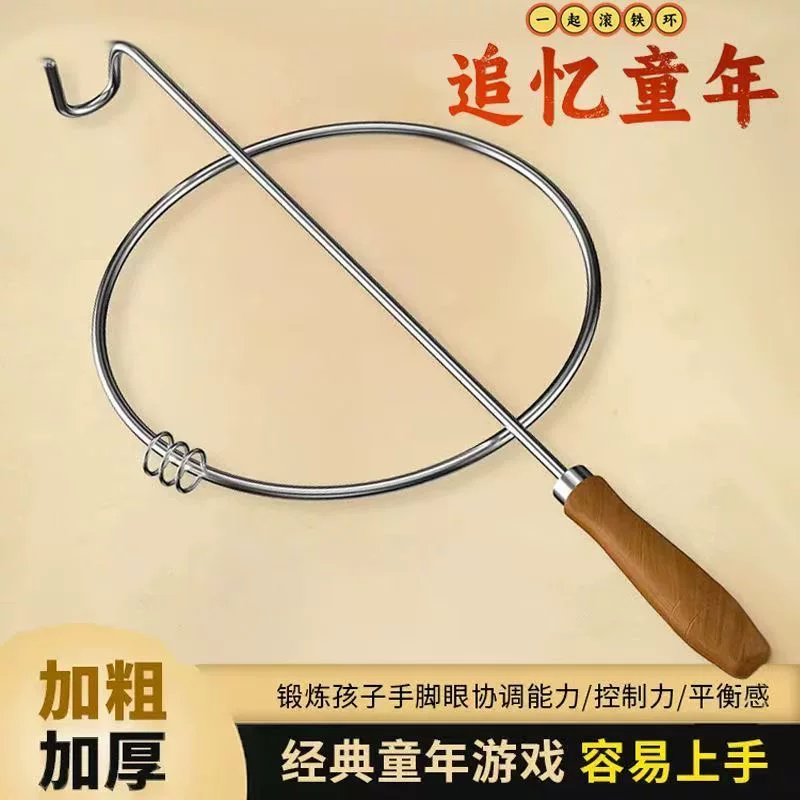
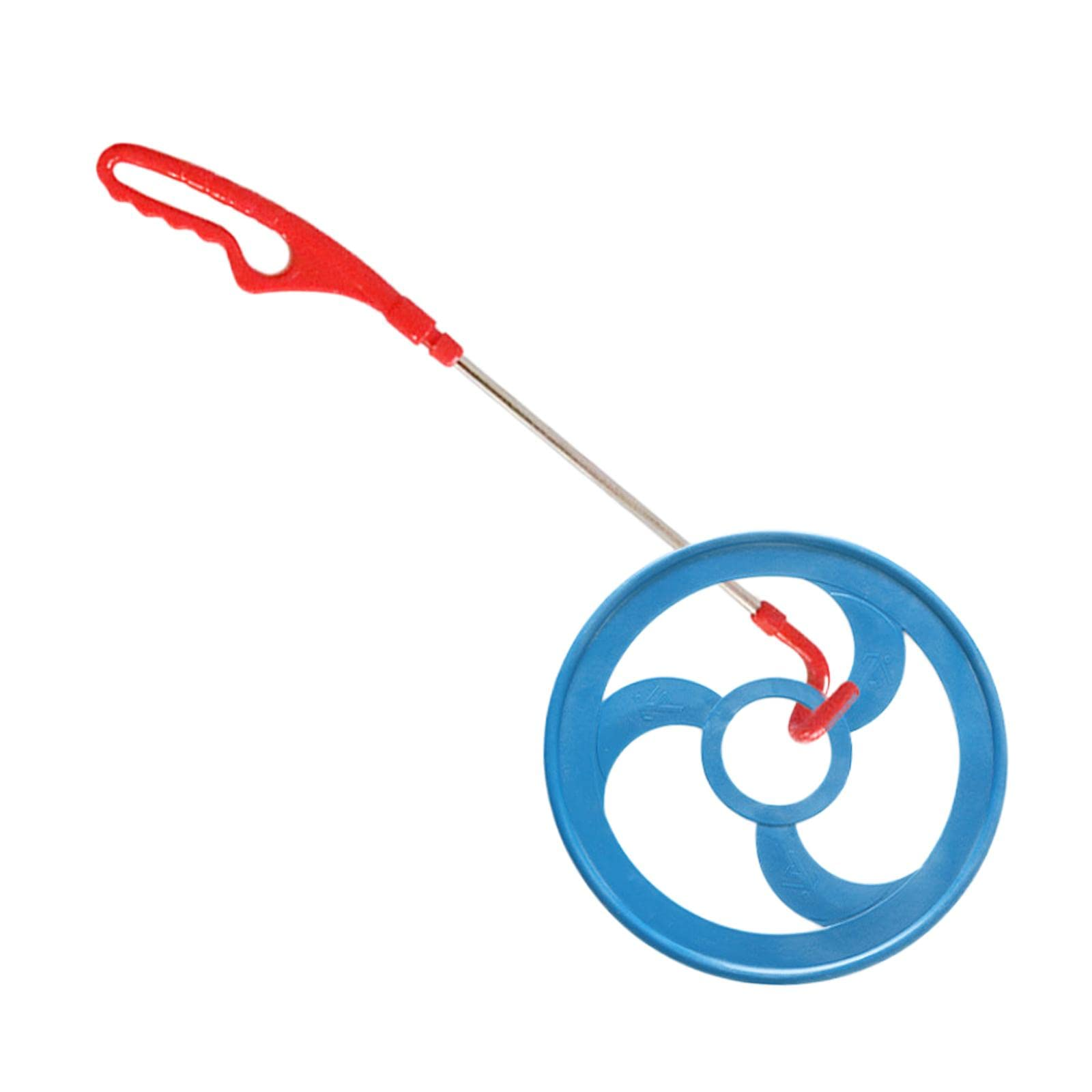

Hoop rolling was of course a popular amusement in the ancient Mediterranean.
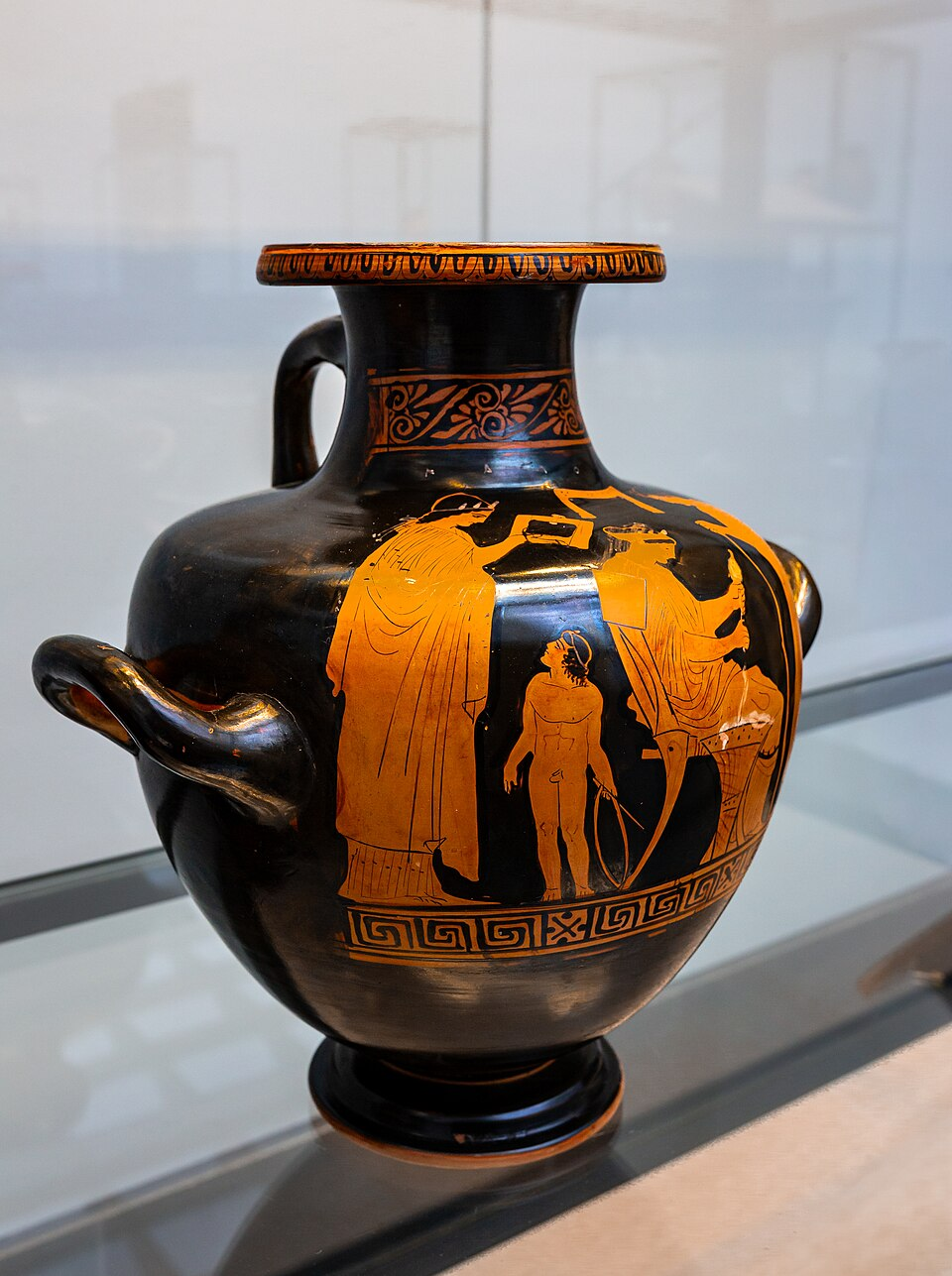
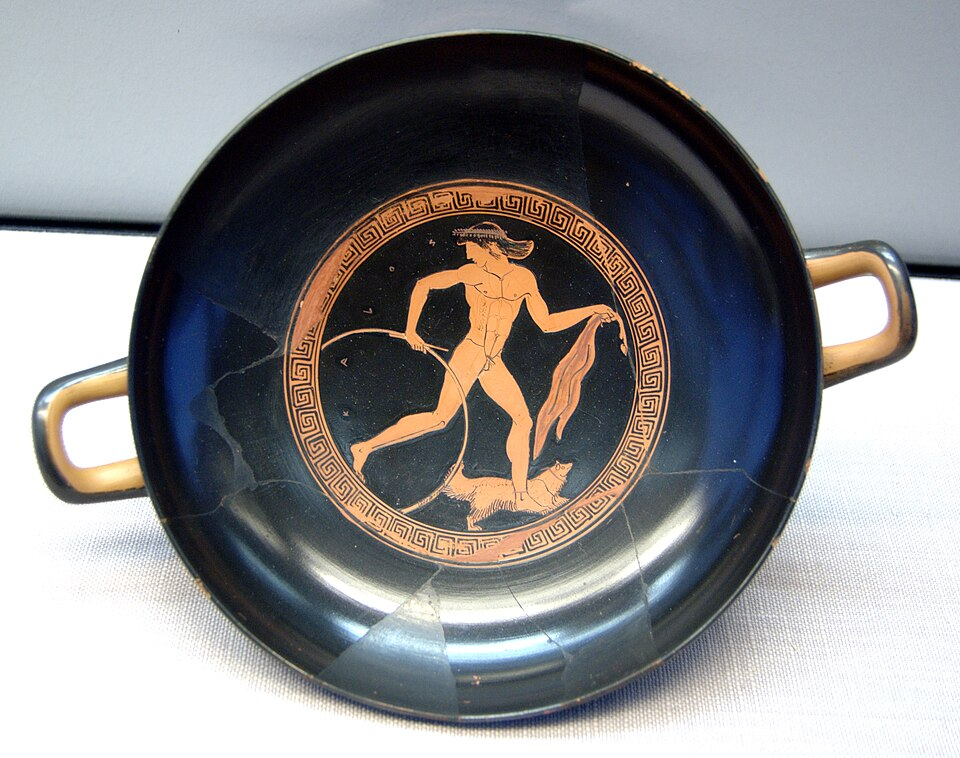
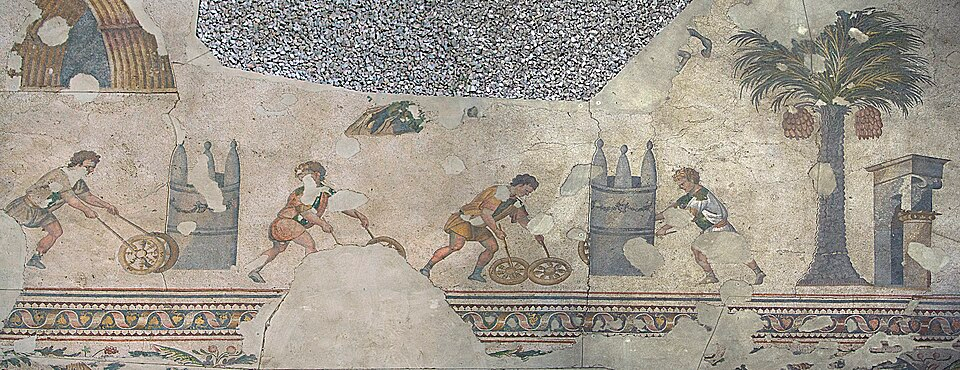
I have no evidence that Roman sticks had hooks or Roman hoops had rings. So I’m still not so happy with the reverse identification.
My other thought was that if it is truly a whip and we are really looking at a gaming theme for this set of control-marks. Then the most common toy whip is for spinning a top:
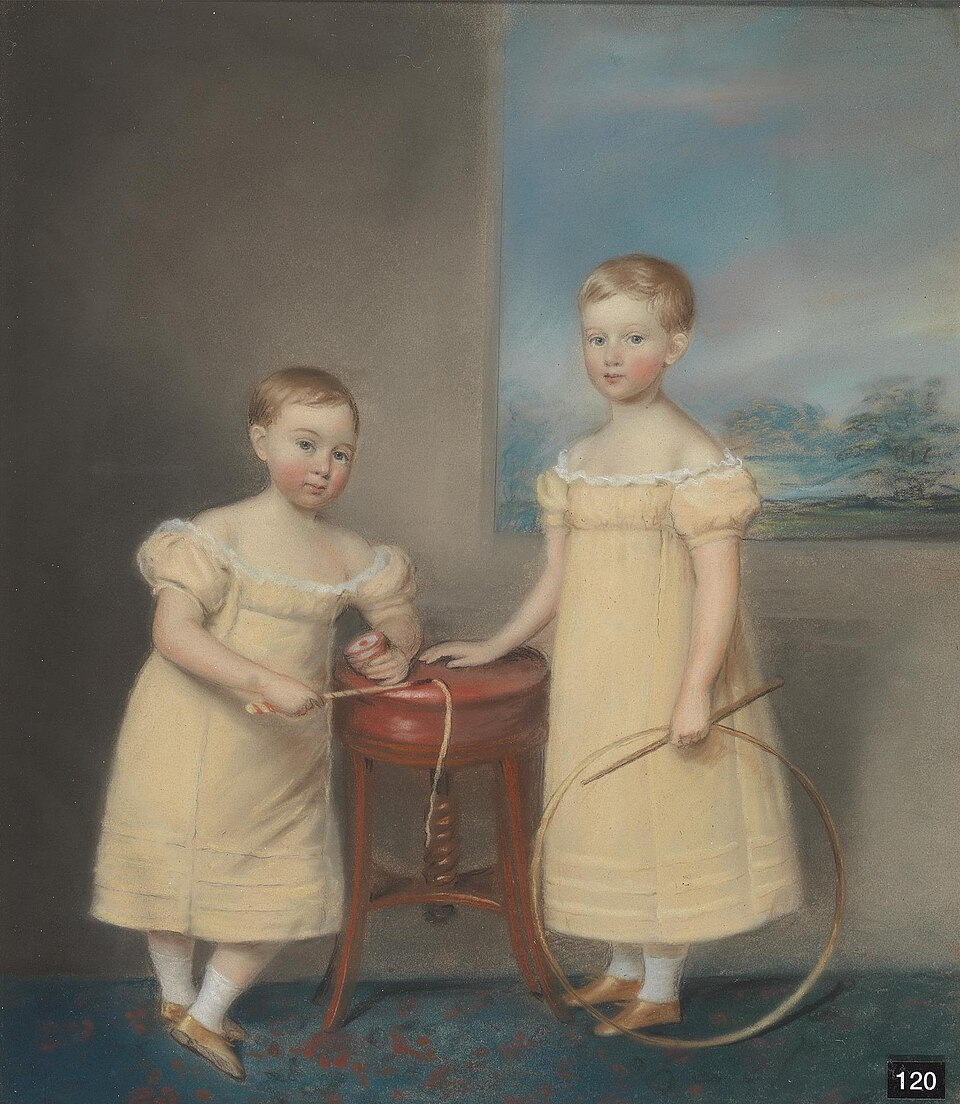
The Romans certainly also had spinning tops they launched with whips:
As a spinning-top, sometimes, that boys intent on play thrash
in a circle round an empty courtyard, turns under the whirling lash,
– driven with the whip it moves in curving tracks: and the childish crowd
marvel over it in innocence, gazing at the twirling boxwood:
and the blows grant it life:
Vergil, Aeneid 7.367ff. Kline translation.

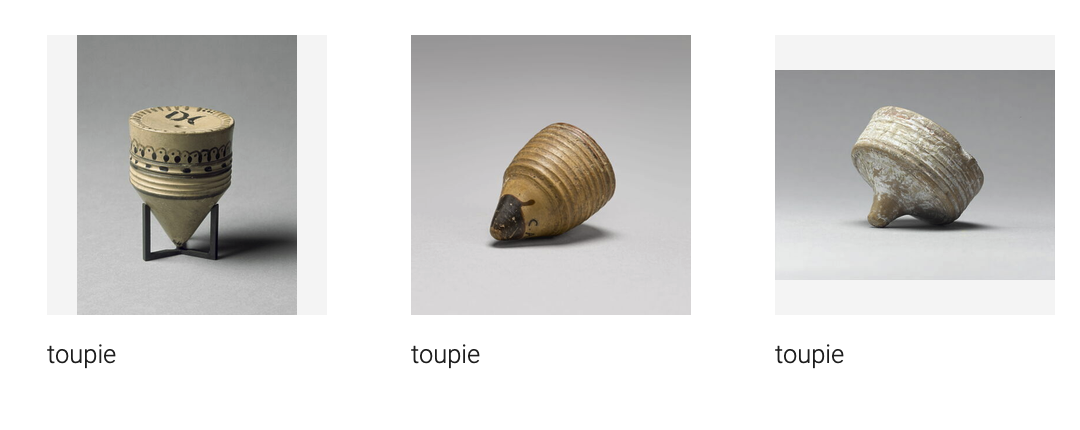

BUT this doesn’t help us much, unless we decide the obverse symbol is the top of a top, but that seems a silly way to represent it. And then what do we do with the hoop?! This picture suggests a relationship, but perhaps it is just two toys shown together. Tops are some times spun inside circles, bowls or on other playing surfaces made to contain them.


Also see:
https://www.beazley.ox.ac.uk/record/D05E76F2-E59D-45C5-84EE-462E6567D317
—


