
This topic is stopping me moving forward with curriculum design. A toss-away comment in an article I was reviewing for appropriateness to assign to students led me down a rabbit-hole.

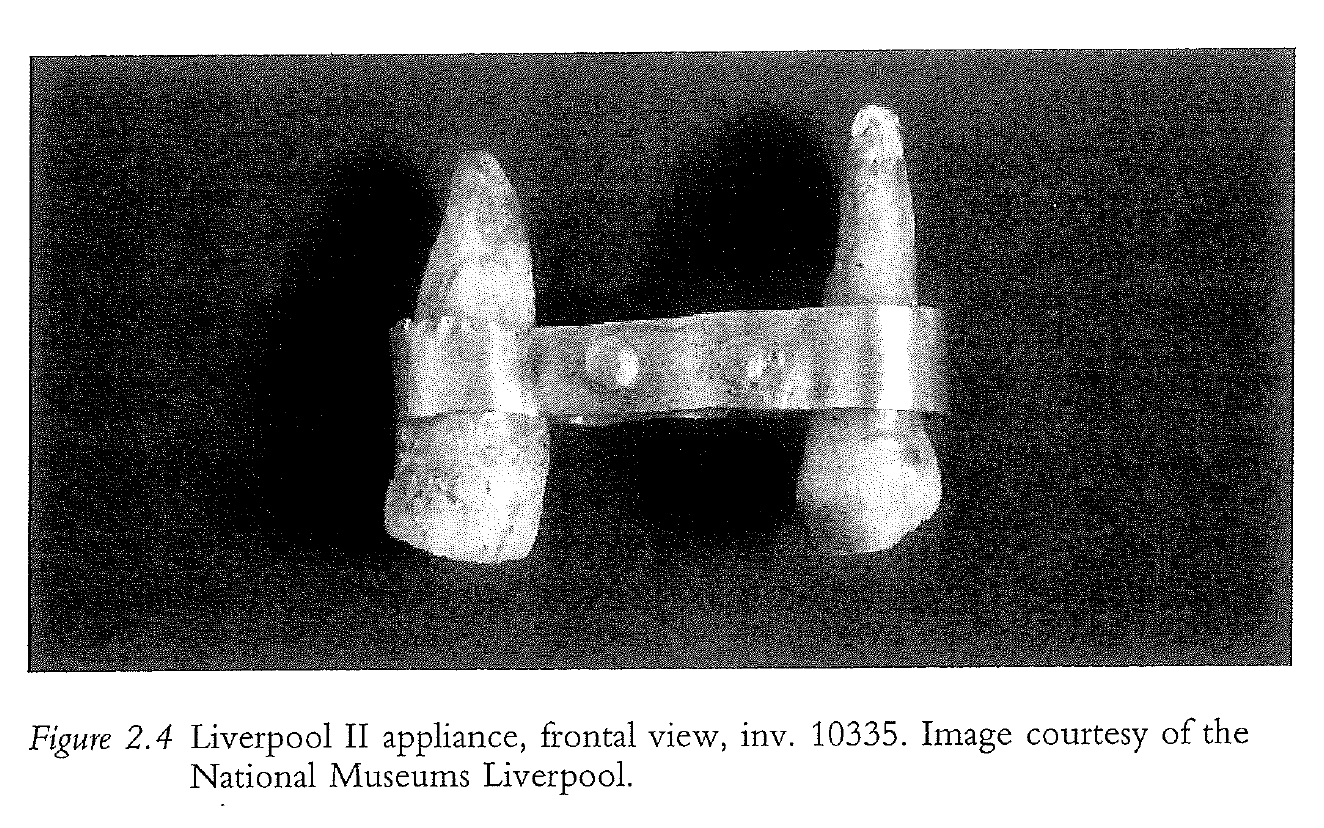
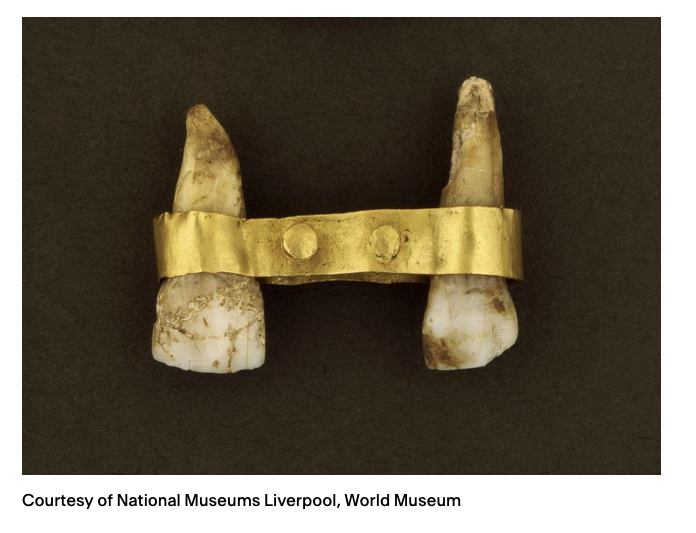
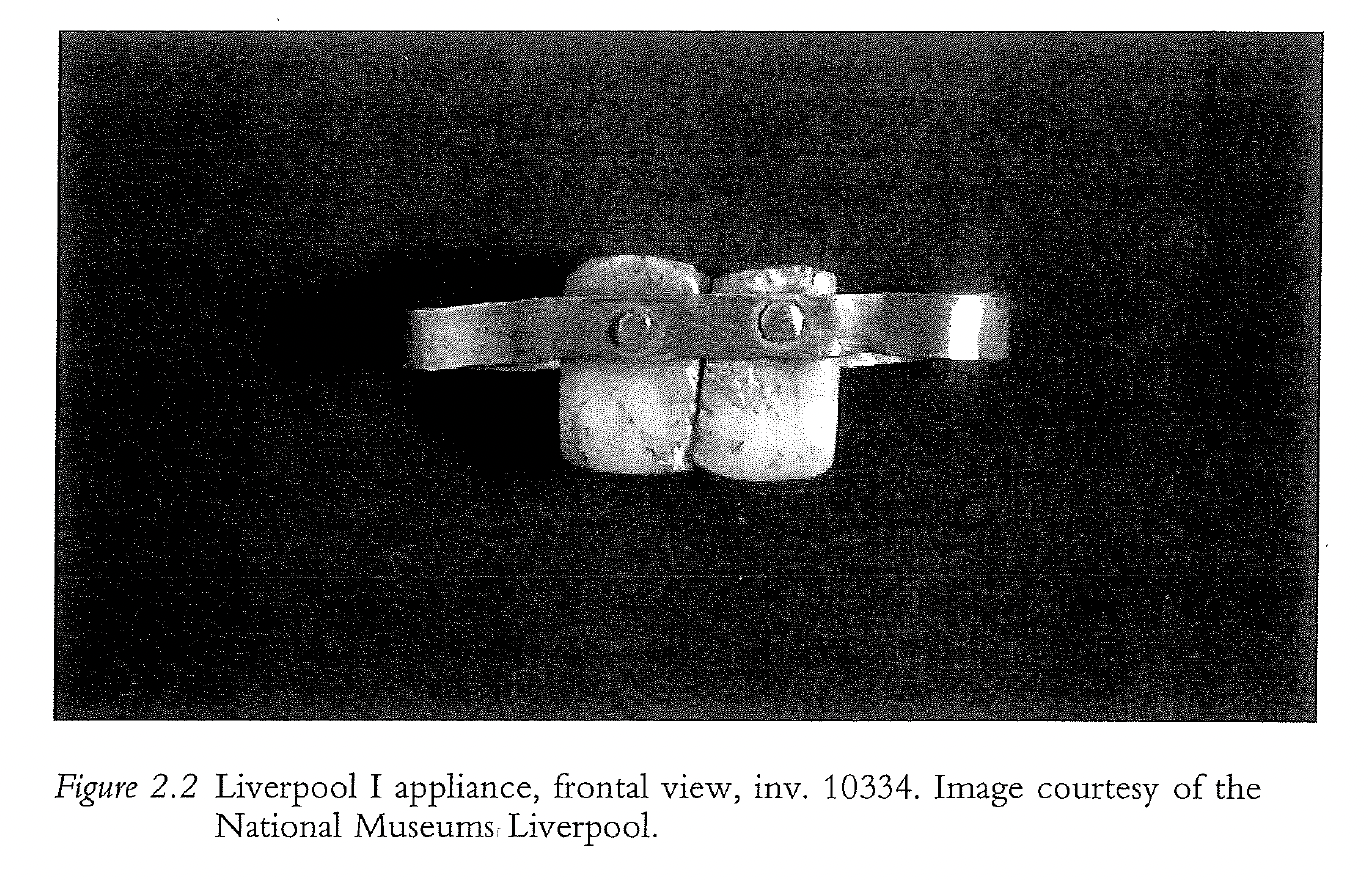
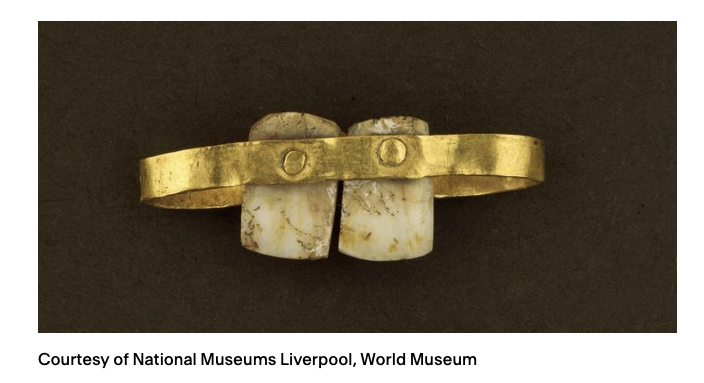
The above publication has a very useful list of known examples with notes on provenance.

If I come across more images I’m sure I’ll come back and add them to this post, as is my habit.
Most are separated from the remains of the humans who presumably used them, but some do have fairly precise findspots that could help in reconstruction:

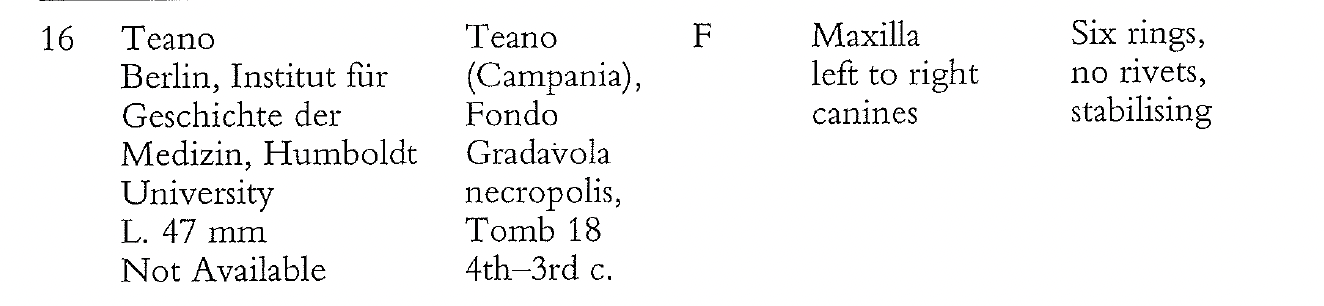


The following piece suggests that the metal of at least one specimen is not true gold but a man-made electrum:
Becker, Marshall Joseph. “Etruscan gold dental appliances.” Molecular and Structural Archaeology: Cosmetic and Therapeutic Chemicals (2003): 11-27.
What I want to know but need to stop investigating (so I can focus on my actual job) is if we’ve done DNA testing on any of the teeth in any of the surviving bridges (or even radio carbon dating!). The other thing I find exceptionally puzzling is that I can’t see any studies on the DNA of George Washington’s dentures, teeth we know came from enslaved labor.
Such DNA analyses would provide very valuable insights into the intersection of disability, medicine, and enslavement, both ancient and early modern… This cannot be an original question, I’m posing. Hence my deep frustration at not finding an answer.
Van Horn, Jennifer. “George Washington’s Dentures: Disability, Deception, and the Republican Body.” Early American Studies (2016): 2-47.
Fleming, Eleanor, and Patricia Neville. “Critical retelling of dental ethics told through ‘George Washington’s Complete Denture’.” Medical Humanities 51, no. 3 (2025): 376-385.
Ok. I’m going back to my curriculum design. Maybe social media will come through with some satisfaction for my curiosity.
—
Update 10/2/26
Cic. Leg. 2.60
And whereas the same law forbids the use of gold, note what a considerate exception is made by another: “If a man’s teeth are joined with gold, it shall be no violation of the law to bury or burn his body along with that gold.”
qua in lege cum esset: “Neve aurum addito,” videte quam humane excipiat altera lex: “At cui auro dentes iuncti escunt, ast im cum illo sepeliet uretve, se fraude esto.”


I have no answers on Etruscan material, but I was on a search committee this year and one of our applicants is a specialist in dentistry and the source of teeth for dentures in colonial America, including these dentures. She didn’t do DNA work and I guess there are issues with getting permission for that type of research, but her answer about the source of teeth in the dentures is that it varied. He had multiple pairs and the teeth in dentures often had multiple sources, including animal teeth and Napoleonic War battlefields, for which she had receipts. The teeth of enslaved peoples, she believes, weren’t for dentures, but meant to be surgically implanted since that practice required the teeth to be pulled and implanted in quick succession if there would be a chance of the operation taking.
Some how that is more grim. The implant thing.
There’s a Medical Anthropology (History of Medicine) docuseries (I think on netflix) that featured these. They talked about all kinds of reasoning behind purposeful adornment of teeth, but they didn’t talk at all about signs of trauma to the bones of the face. Do you see any mention of facial trauma in your research?
I’ve not! But I will keep an eye out of this type of info