arachne.dainst.org/entity/1136018
arachne.dainst.org/entity/1252574
arachne.dainst.org/entity/5036621
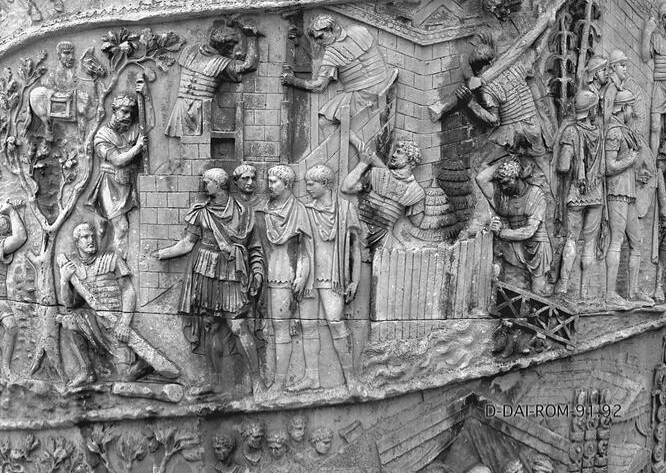
arachne.dainst.org/entity/1249450
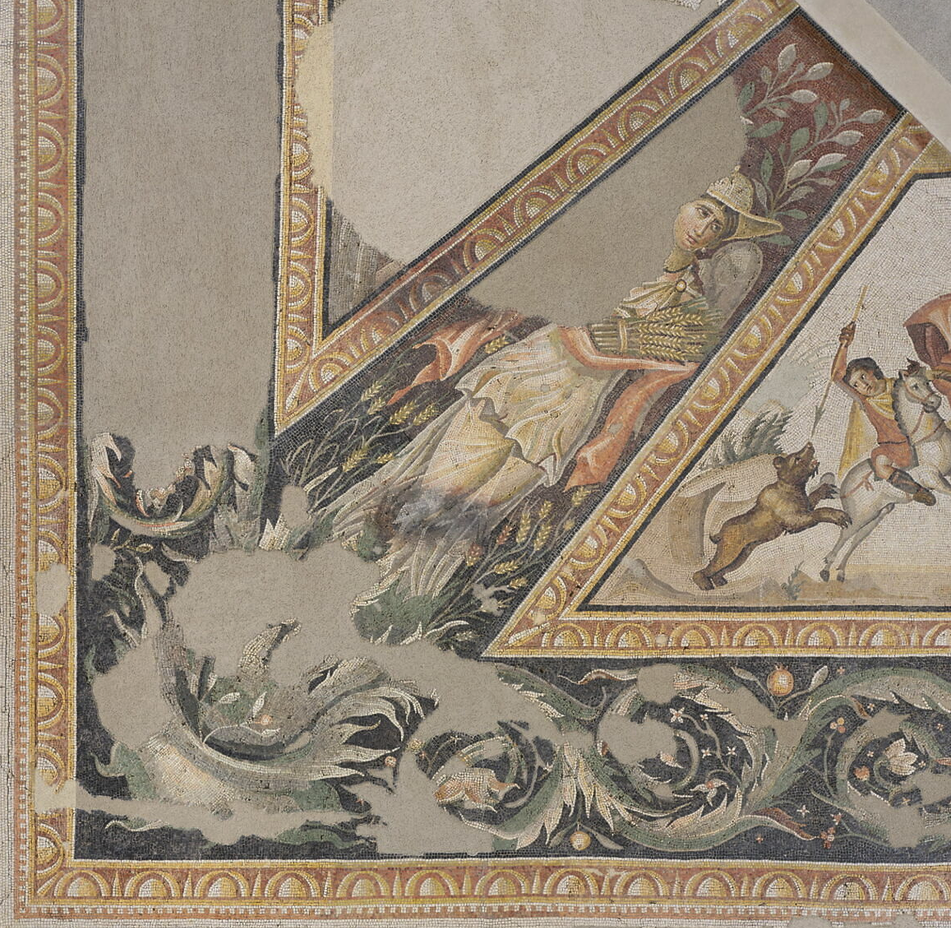
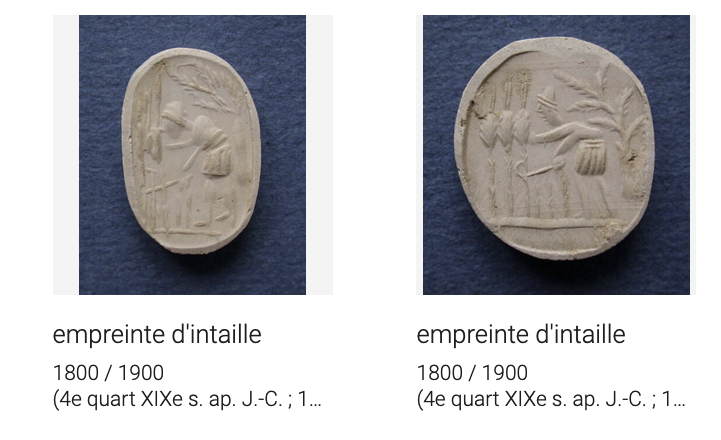
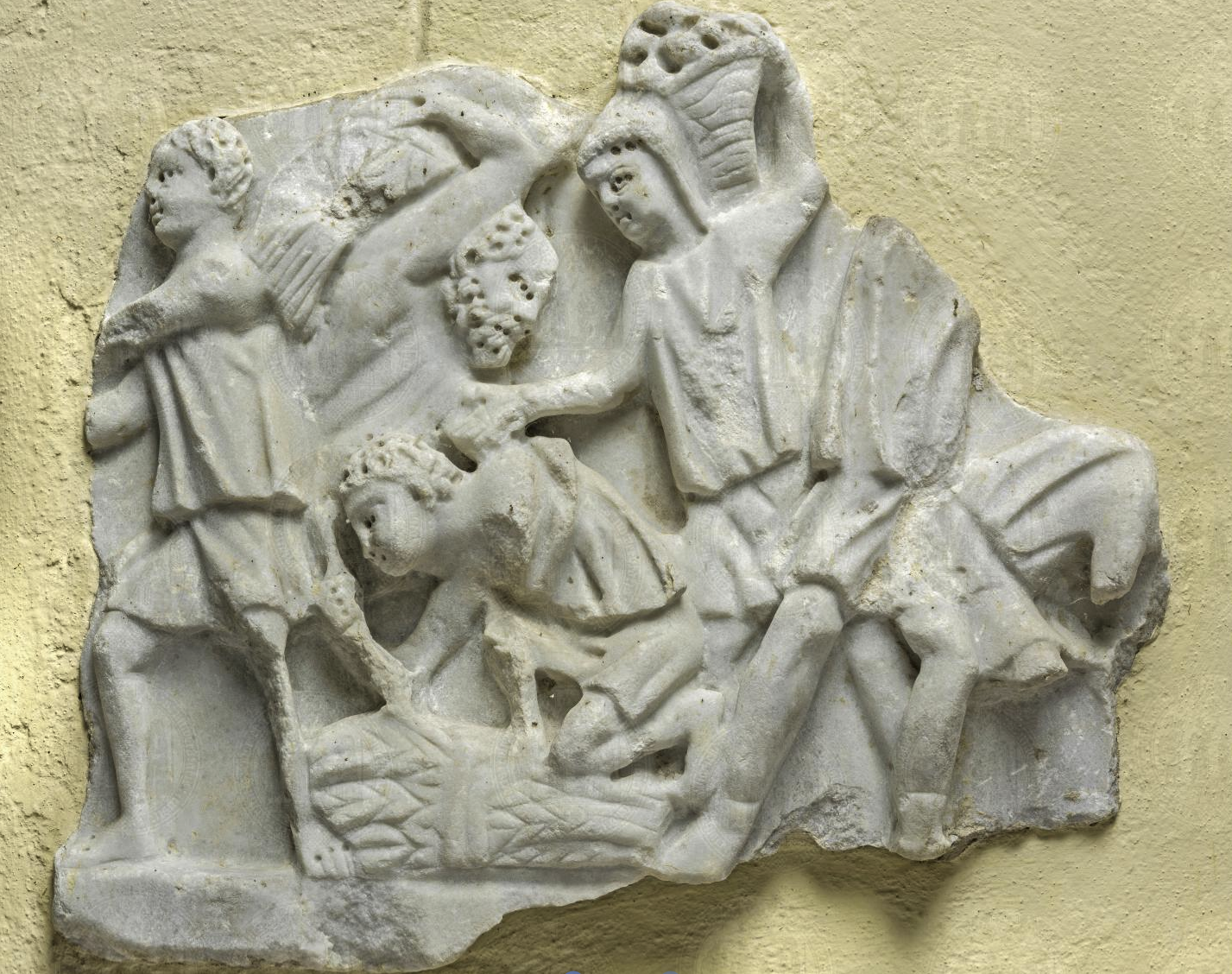
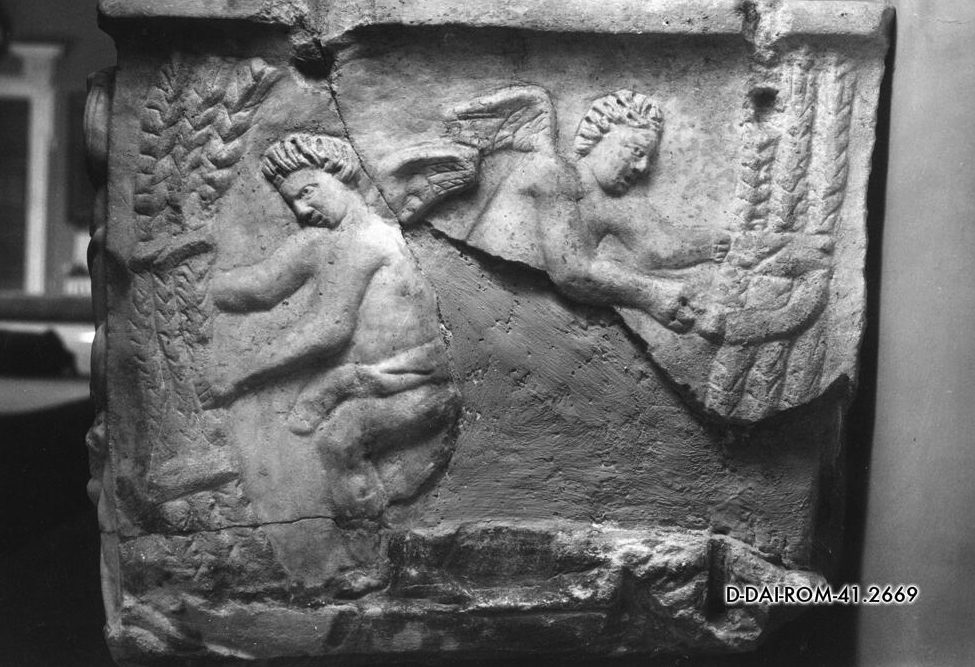
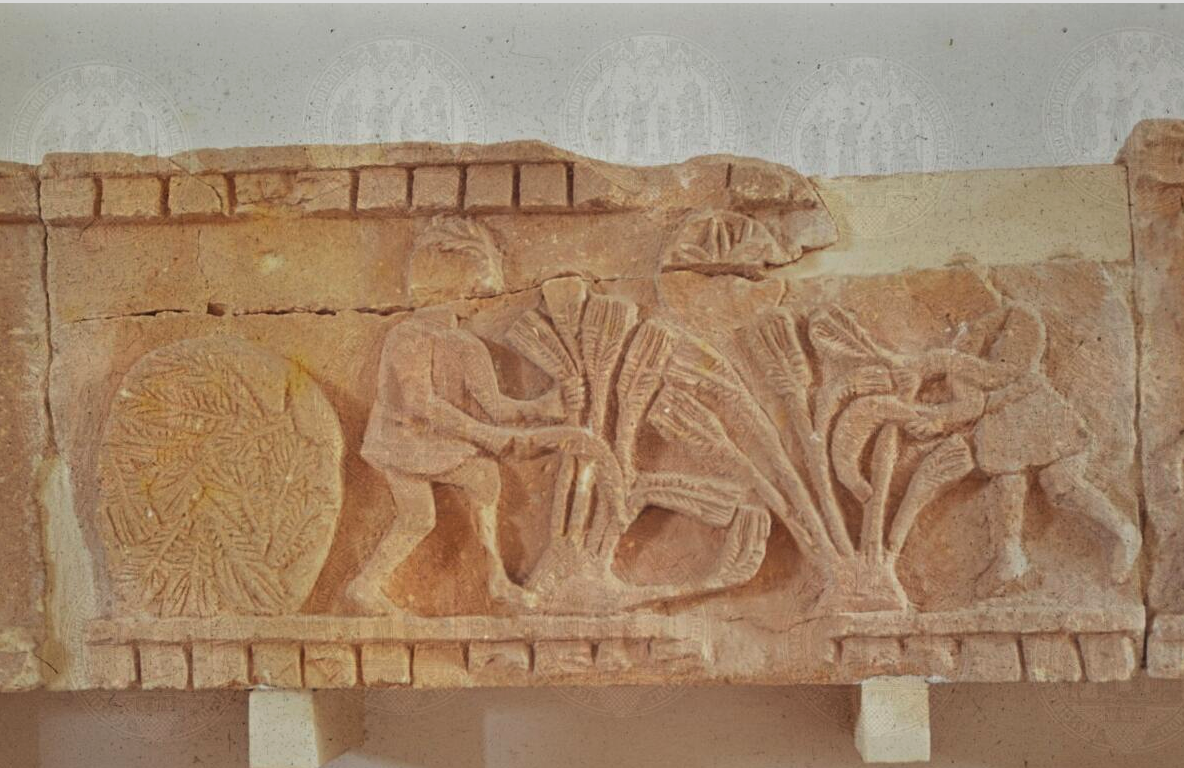
There are three methods of harvesting grain: the first, employed in Umbria, in which the stalk is cut close to the ground with the hook, and each bundle, as it is cut, is laid on the ground. When a number of bundles are formed, they go over them again, and cut the ears from each close to the stalk. The ears are cast into the basket and carried to the threshing-floor, while the straw is left in the field and afterwards stacked. In the second method, employed in Picenum, they use a curved handle of wood with a small iron saw attached to the end; when this catches a bundle of ears it cuts them off and leaves the straw standing in the field to be cut later. In the third method, employed near Rome and in numerous other places, seizing the top with the left hand they cut the straw in the middle … The part of the stalk below the hand remains attached to the ground, and is cut later; while the part which is attached to the ear is carried to the threshing-floor in baskets. … The grain should be cut when it is ripe; and on easily worked land it is held that the reaping of one iugerum is approximately a day’s work for one man—this should include the carrying of the reaped ears to the threshing-floor in baskets.
Varro, On Agriculture 1.50 (Loeb trans.)
no. 162 Fabatus (RRC 412/1)
Alice Sharpless writes: “Crawford identifies symbol as a sheaf of corn (i.e., wheat) but wheat does not look like this; more likely a young tree with stakes; RRC, pl. LXIX-162” and identifies it as a young sapling with stakes.
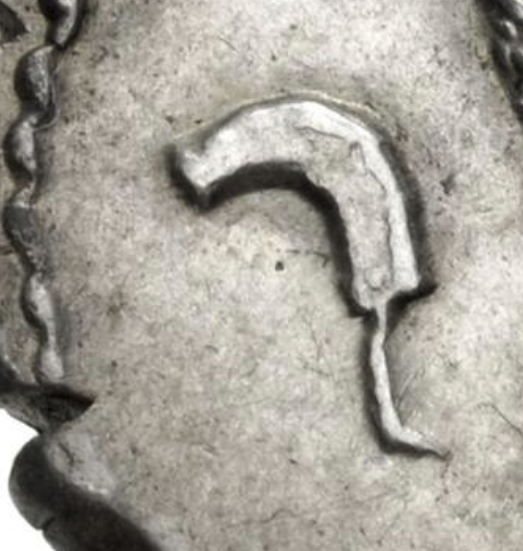
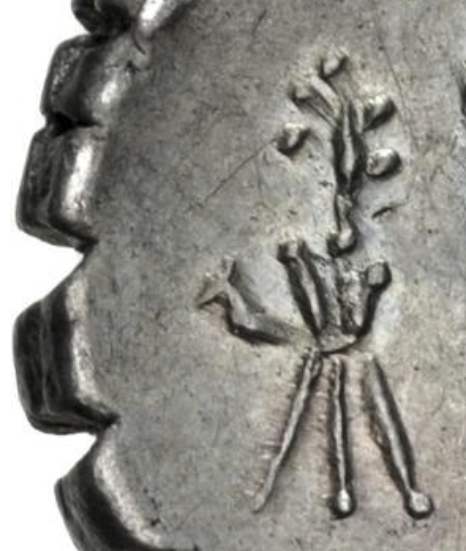
Papius (RRC 384/1) no. 20 (cf. earlier post)
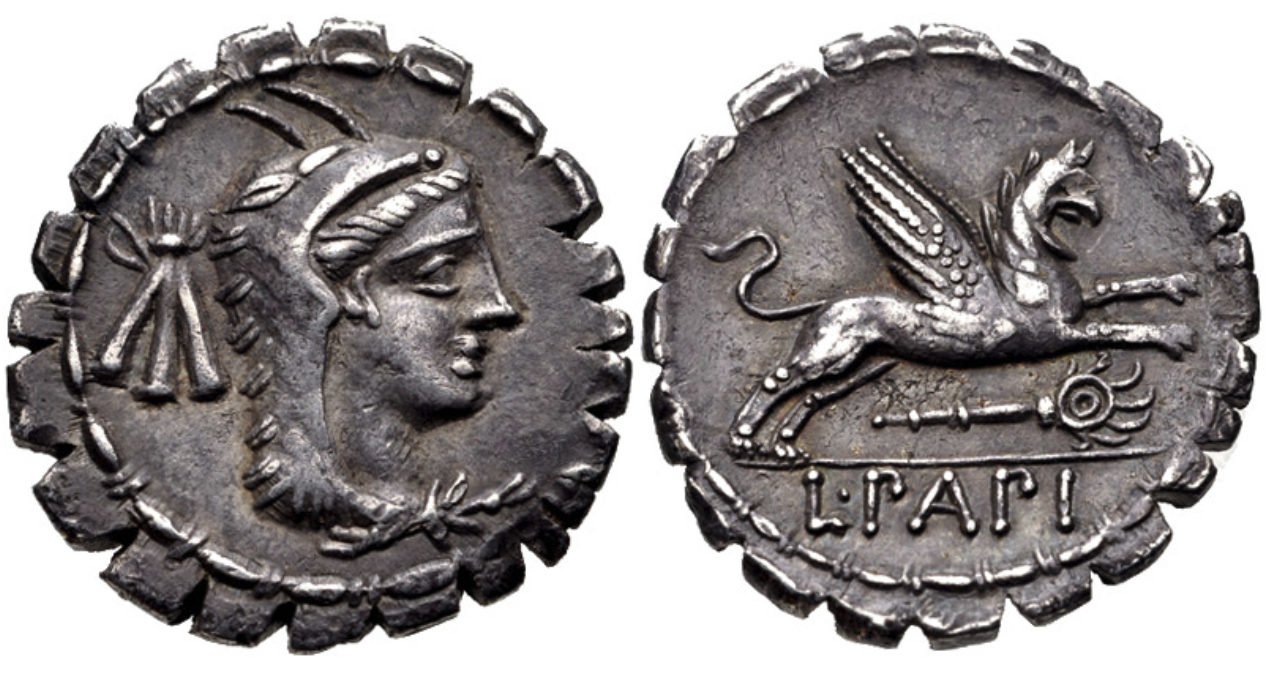
The term for a group of sheaves stacked to dry is a stook.
I’d feel a lot more certain about this ID if I ever find an image or even literary description of Roman stooks.
Past me thought this object in front of the anvil might be related but I’m far from sure:

The same object seems also to be on the back of Fabatus no. 156.


One thought on “Wheat, Hay, Straw”