
Let’s start with some kitten joy!

Yes. I’m wearing kittens in a hoodie in late July. Silly but anything to socialize these little demons. Yesterday I got TWO wonderful emails about the next academic year. It is still hush hush but let’s just say I have no reason to be cranky. I’ve been making the most of my minimal ability to really look at a screen. Cooking complicated dinners. Organizing the house. Time with kiddos. Gardening. Today I’ve even booked a volunteer shift. And yet… The best news of all was that my replacement eyeglasses finally came in this afternoon and I can see again!
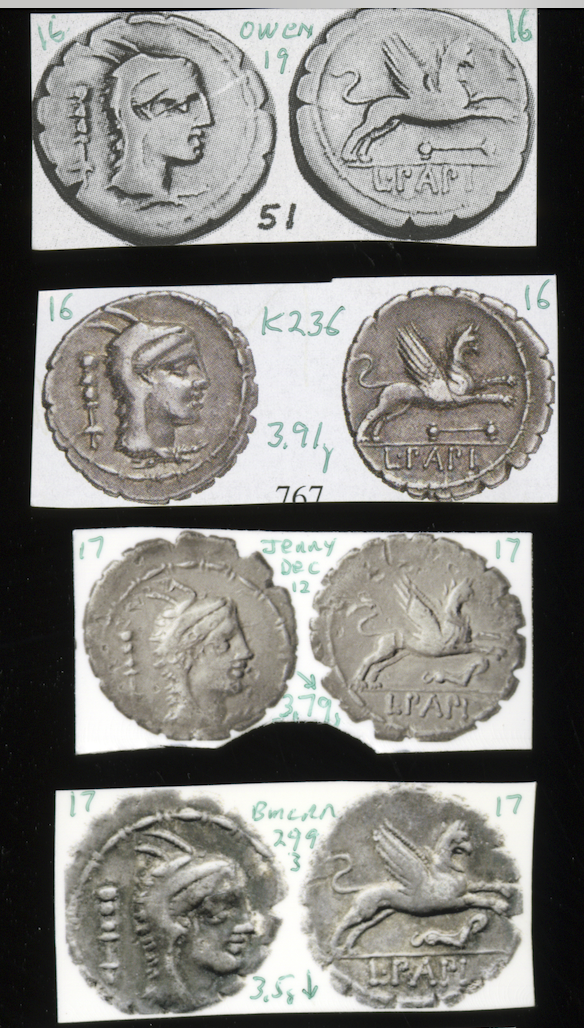
I wasn’t even going to write a post until I saw this first coin below which so nicely linked my previous obsession to youthful Mars (key words: young, beardless). Right now, I’m interested in the parts of the legionary standard. Yes this is a Papius (RRC 384) related post. Hence I’ve been looking at the column of Trajan and seeing other things as I go. Those are pretty uniform but do have some variation.
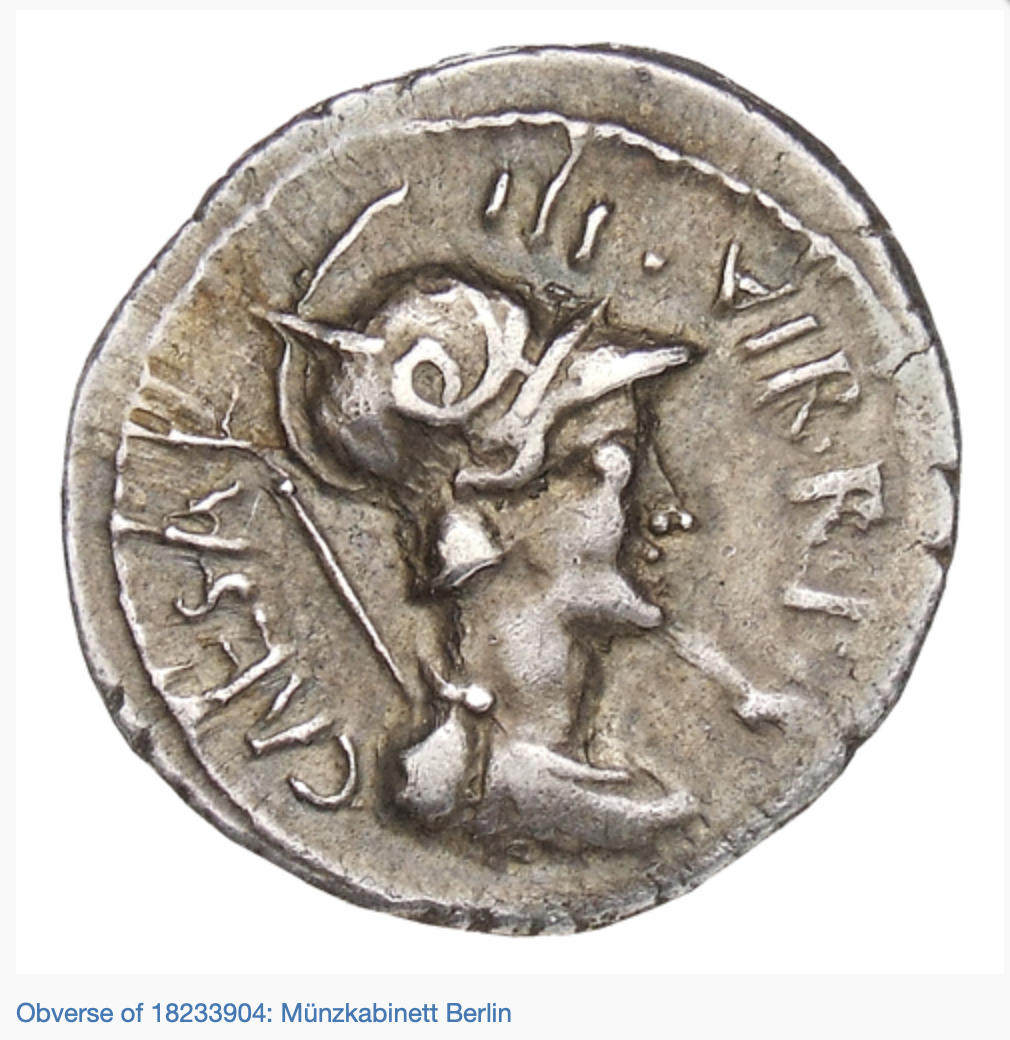
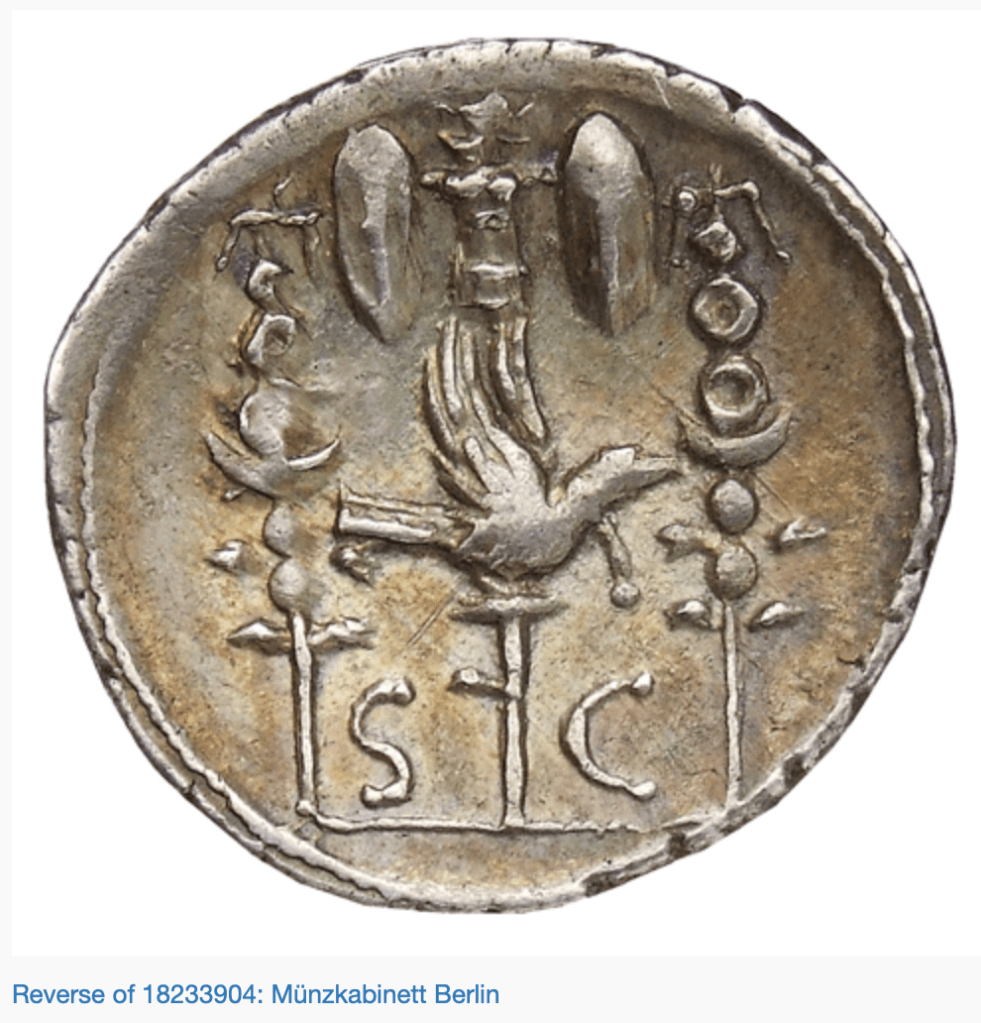
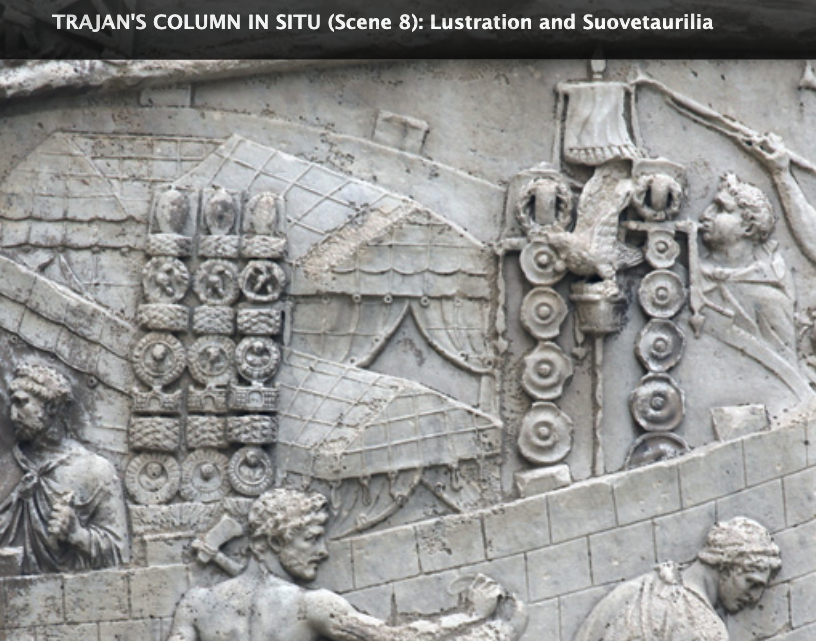
Notice on both the coin and there relief the horizontal bar on the standards stacked with other shapes objects. These bars are called antennae and on the column and on the above coin they have ribbons coming down ending in a heart shaped ivy leaf shaped decoration.
Let’s go back a bit.
On the rare specimen of RRC 365/1 where the top is not off the flan and we can see the line border intersect the standard top there is a ribbon tied to the shaft itself. The ribbon has a small end as its defining feature. Also note that on the clearest of specimens the eagle clearly is grasping a snake in its talons with the snake head beneath the eagle head and the tail beneath the tail. The legs of the eagle are given extra prominence in the design.
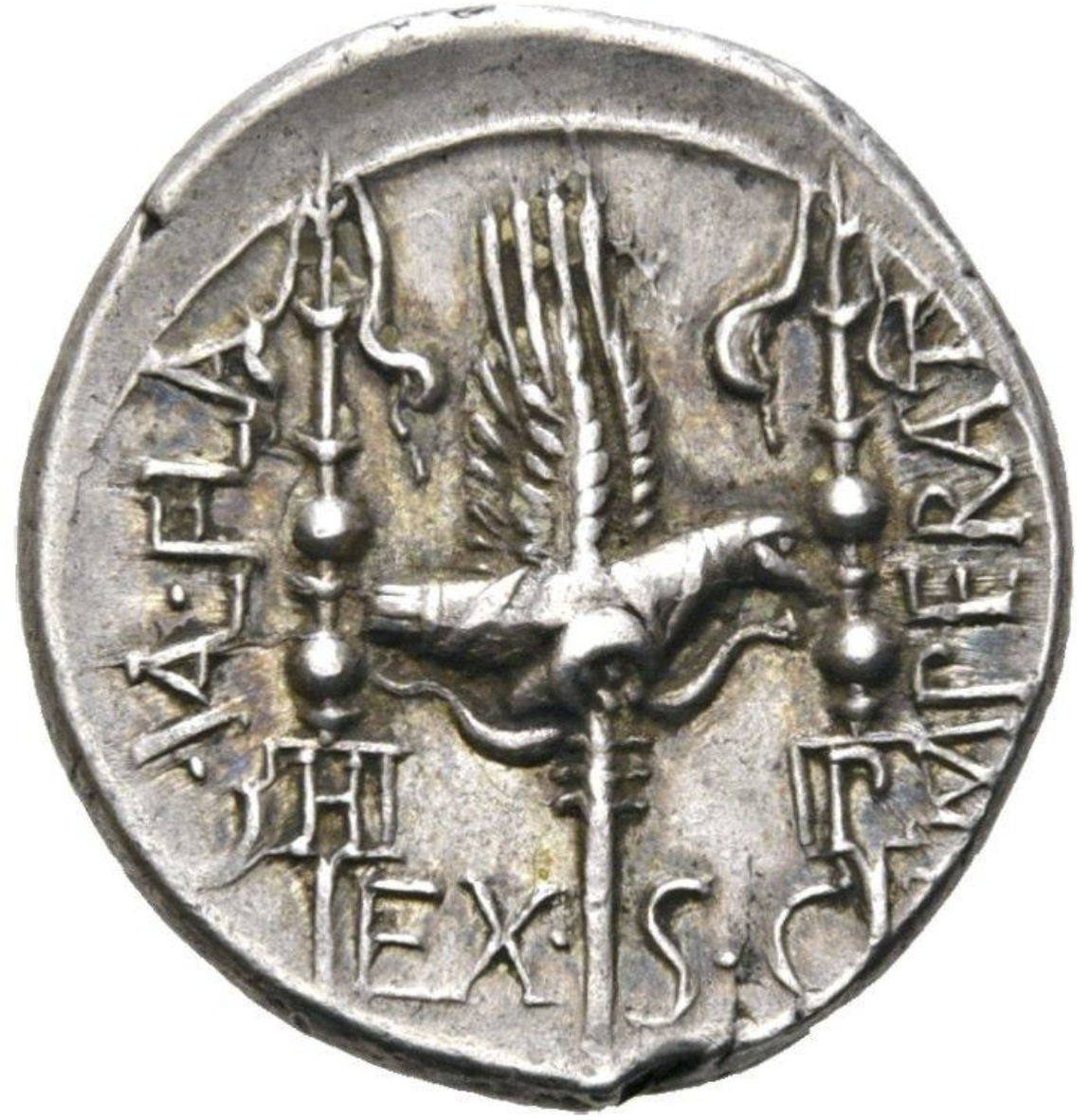
RRC 441/1 revives the same reverse type but adds a radiate border (unusual!) and the snake is no longer very snaky at all. But for our purposes the ribbons with their narrow endings at the top have stayed the same, and are easier to see.
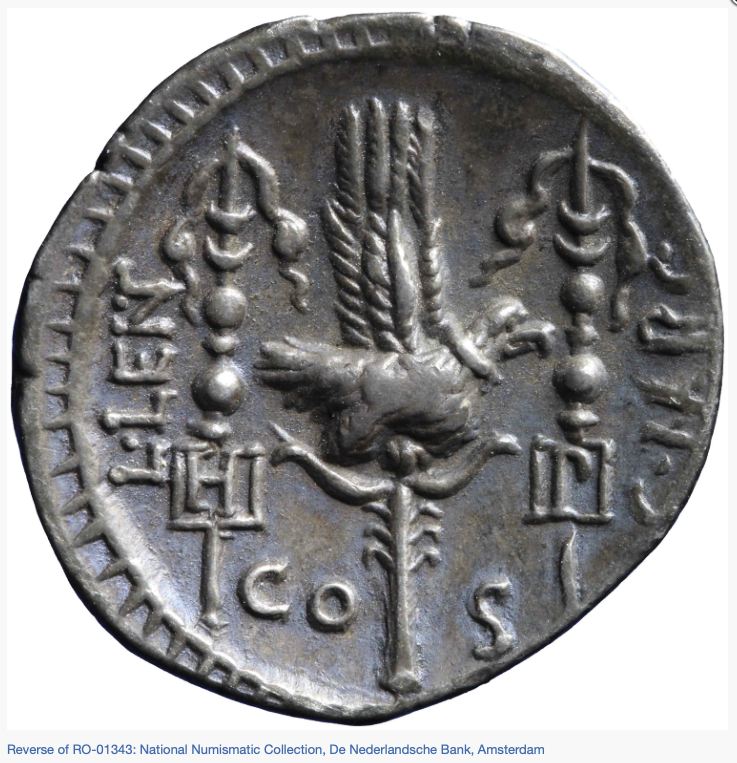
RRC 413/3 is of no help with the forms of ribbons or antennae, but does help us see that these items are not required elements.
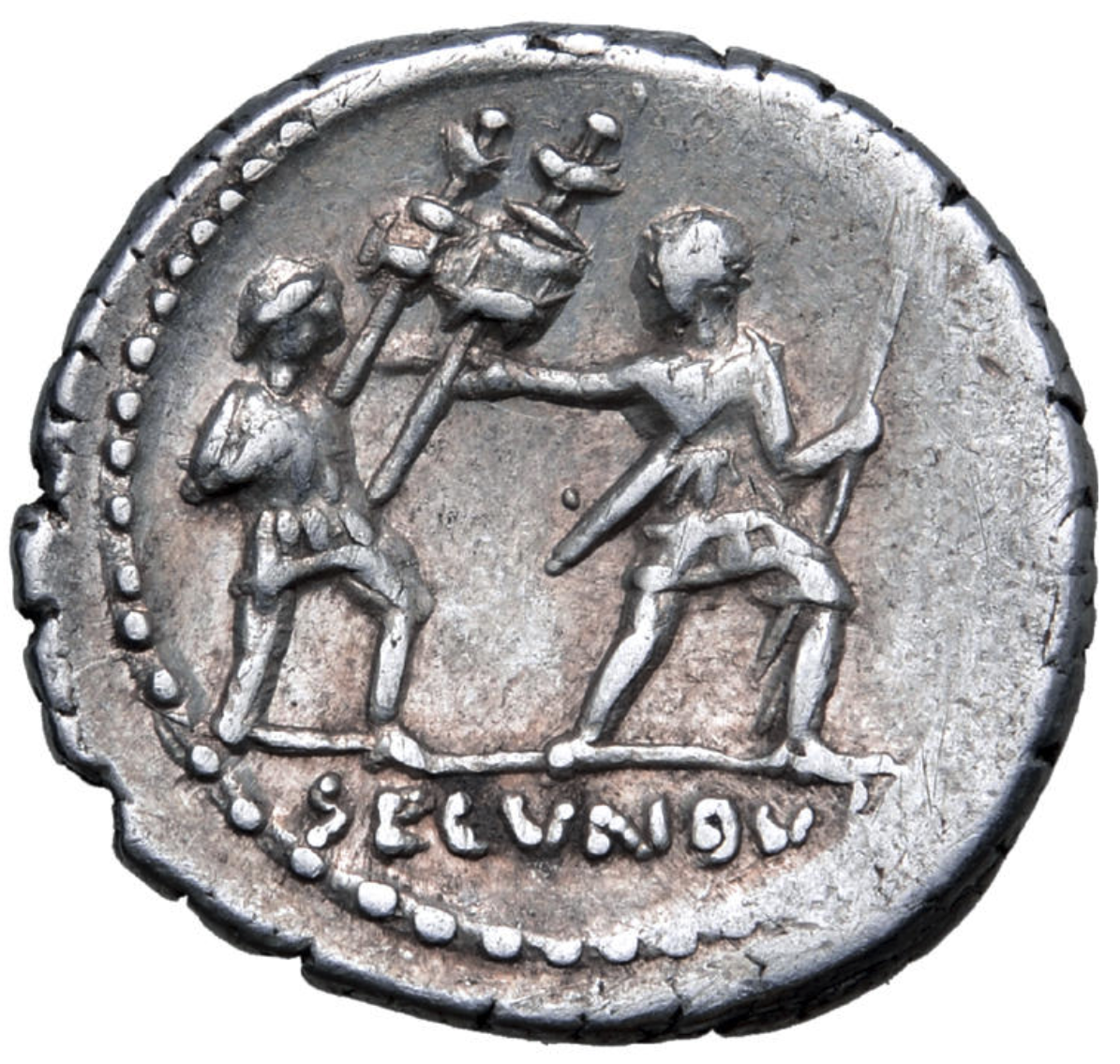
RRC 525/2 and 3 look very similar on the reverse but there don’t seem to be over lapping dies and the standards of the two also seem different. Those of RRC 525/3 have antennae with decorations hanging down, whereas RRC 525/2 has no antennae or two lines at 45 degree angles, like a V shape at the top of the standard. Also notice that there is no emphasis on the legs of the eagle the body just rests on a little cup. The eagle also has a dot just under its chin on all the specimens I’ve seen. Is it intentional?! Who would put a bell or collar on an eagle?! Yet on the best preserved specimens in trade it really does look like a collar with a bell.
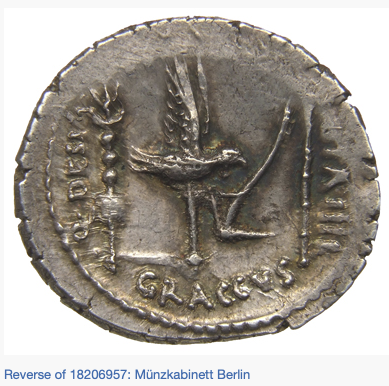
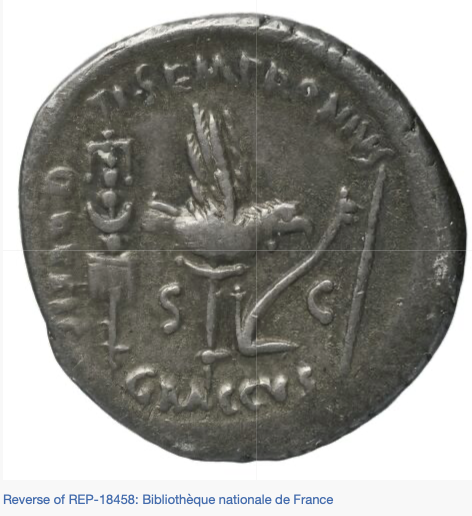
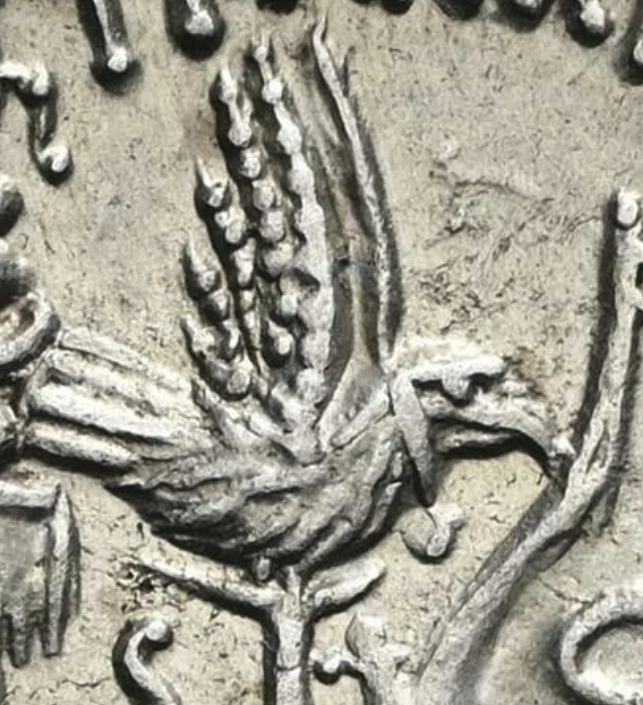
So now I have to talk about Marc Anthony’s legionary coinage, something (else) I try to avoid. RRC 544 is the series with so many subtypes because of legion variations. Notice the collar and bell on the eagle again. AND notice the horizontal antennae with circular termini and no ribbons hanging down. This is consistent even when the dies are poorly carved. sometimes the line is just a line but it is always there. As is that little 45 degree branch from the pole for which I have no explanation (it is also visible on the first coin of this post struck by the young Caesar). The bar is even there on the one special issue with special standards and no eagle, RRC 544/12, but as if to be the exception that proves the rule these antennae have little heart (ivy leaf) symbols hanging down BUT not long ribbon for suspension.
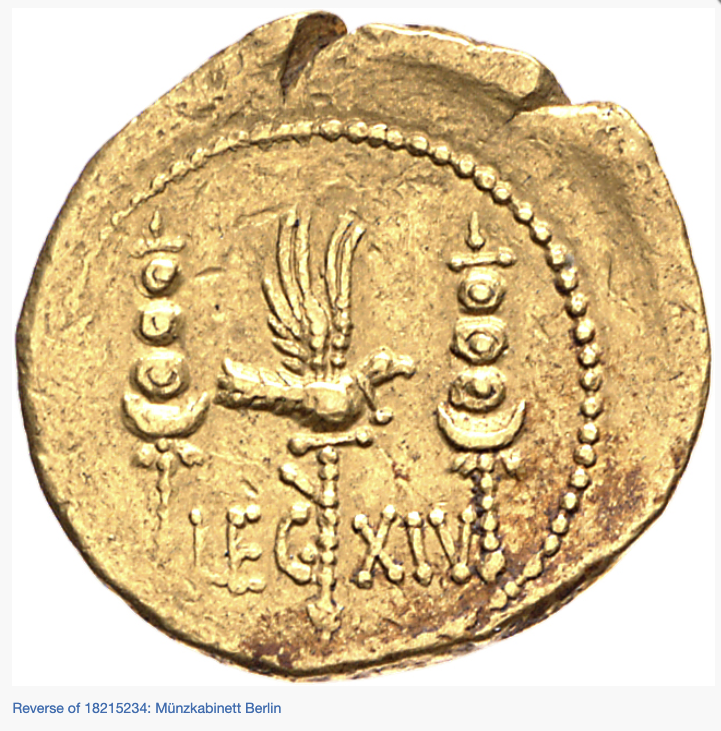
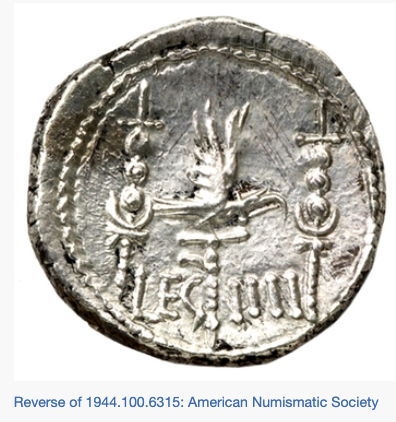
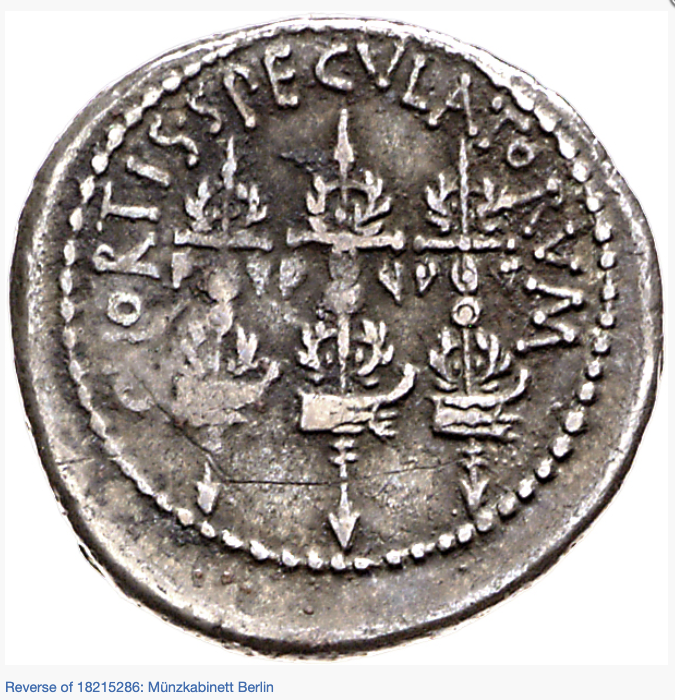
based on all of this above I hope most will accept my identifications of controlmarks 16 and 17 legionary standard obverse and different component piece reverse.
Images of things called standards but not of the type I’m discussing here.
Is RRC 335/9 really showing standards (vexilla)? if so why is there no pole. These really don’t look like other vexilla.
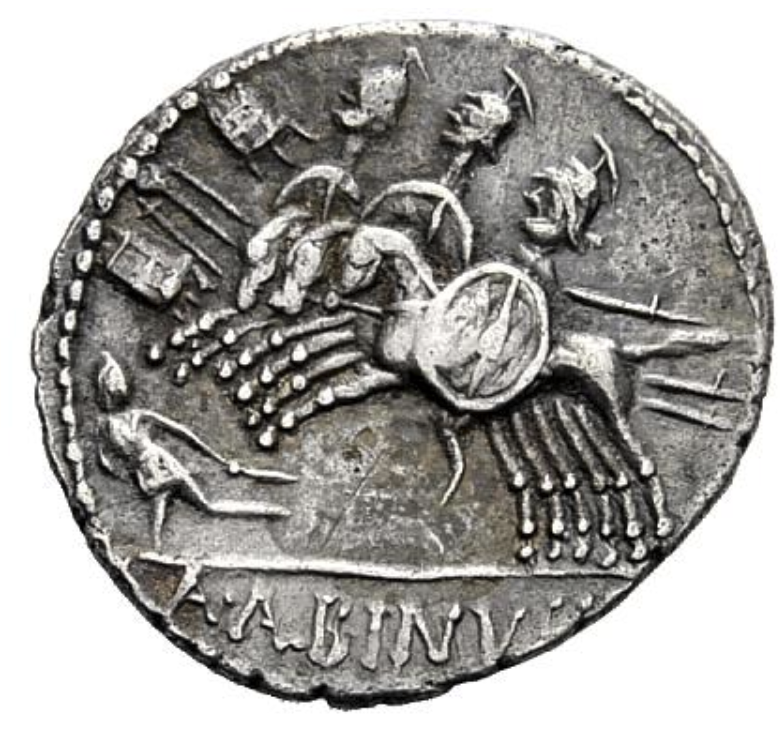
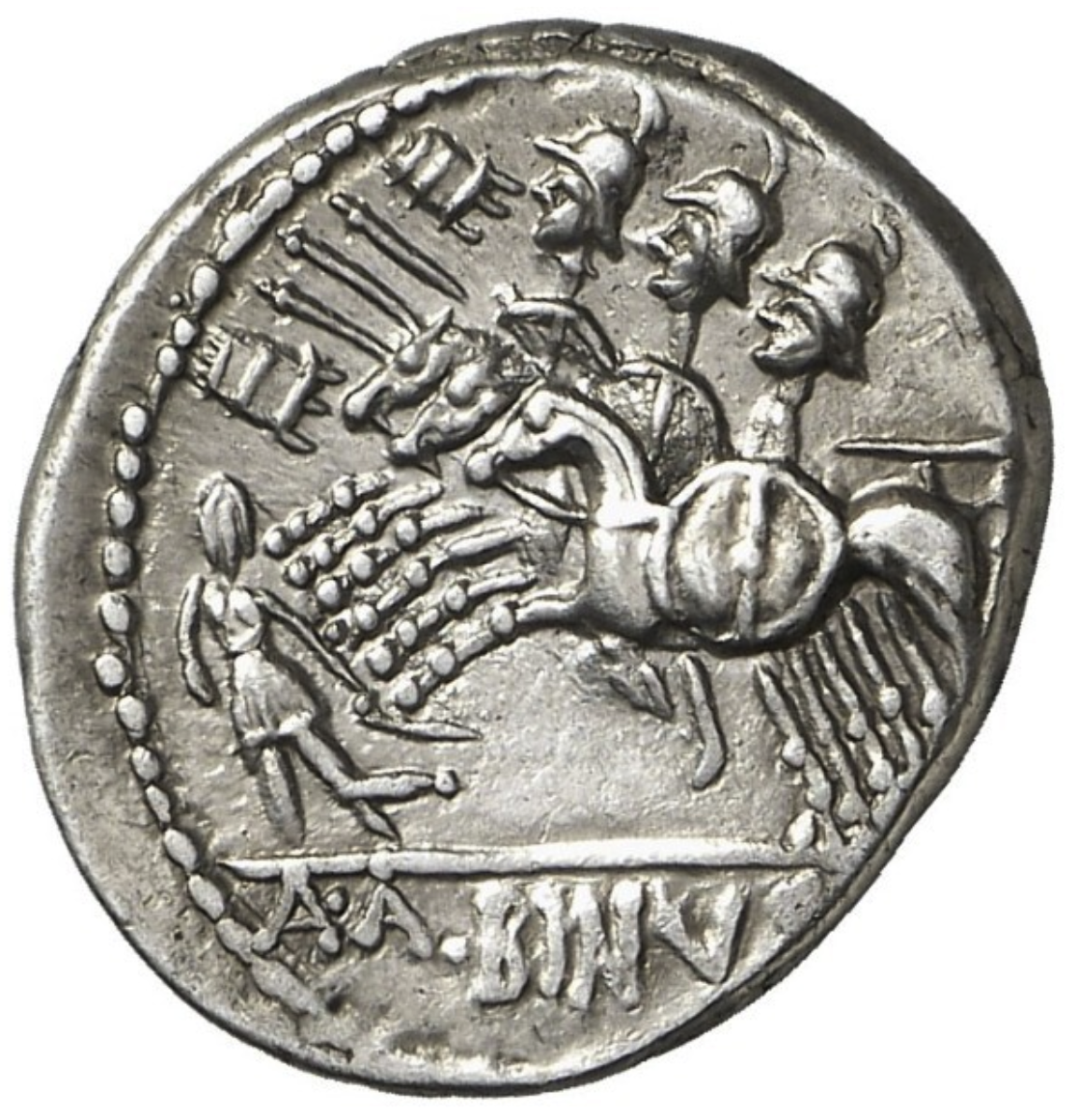
The best parallel I’ve found is the vexillum on the kneeling Parthian types under Augustus
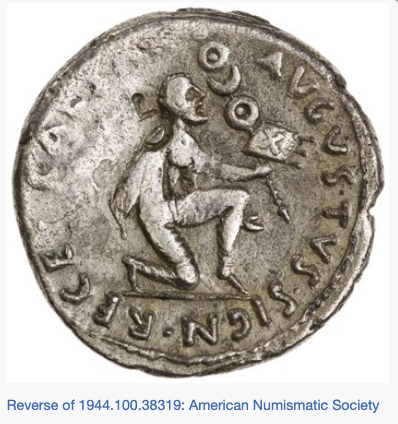
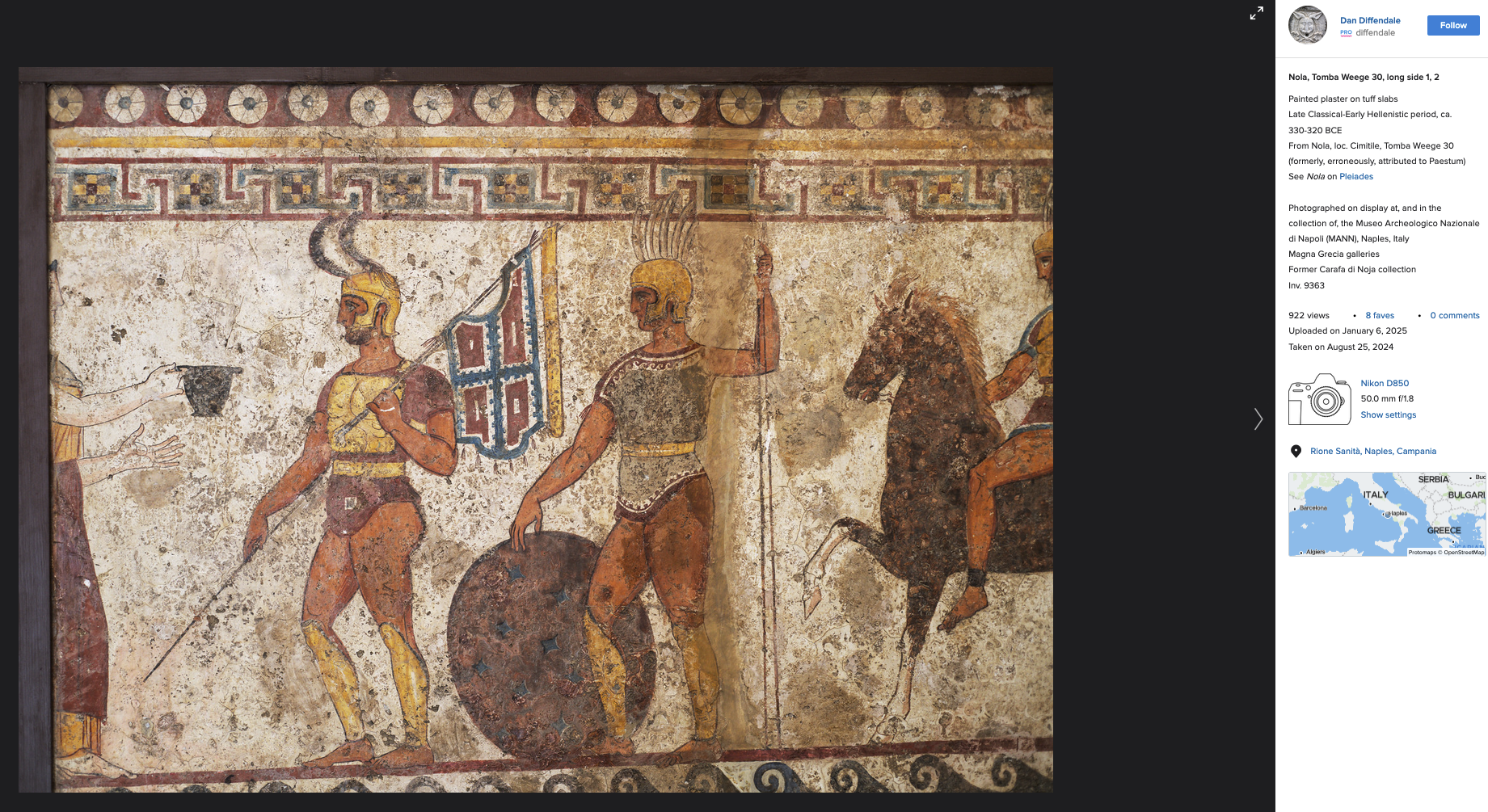
—
Augustan standards on coins have antennae without ornamentation and the aquilae all have that funny grip similar to on some hunting spears cf. papius reverse control mark no. 19.
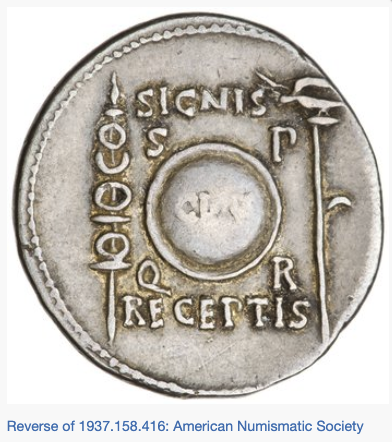
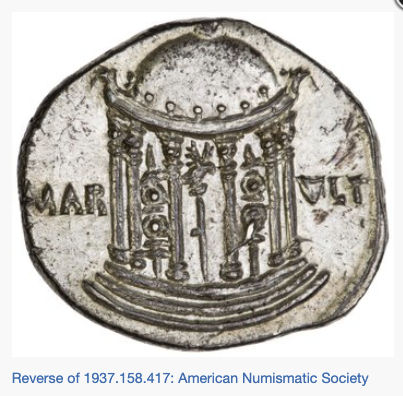
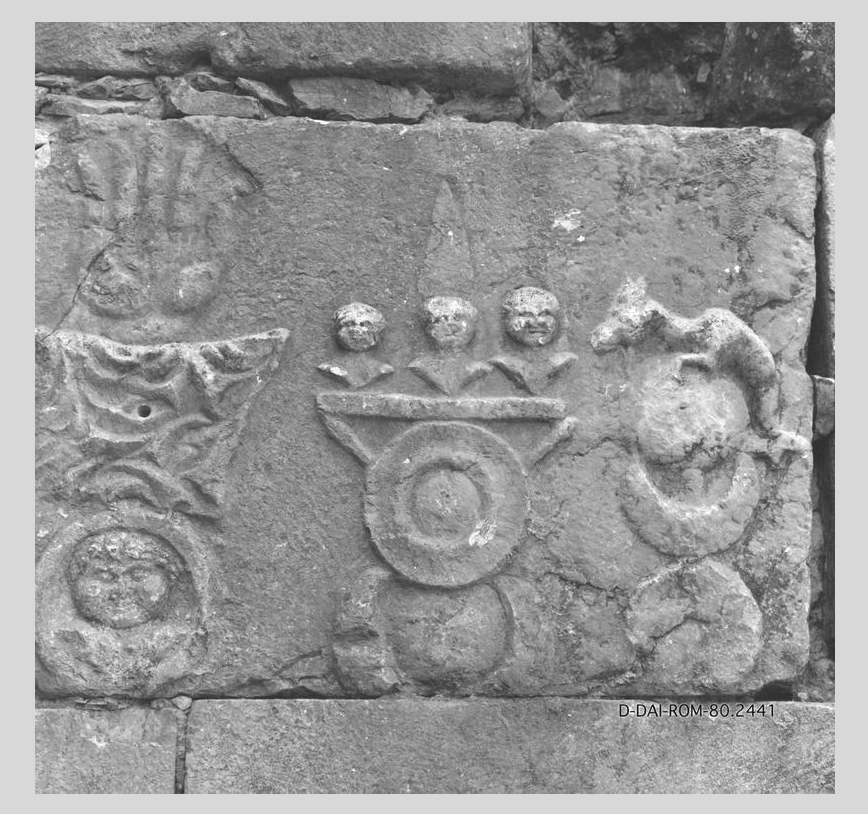
more images of interest
7-31-26


One thought on “Republican Variation in Legionary Standards”