
You might have guessed that I’m doing a bit of pre writing here to augment another piece I’m working on. This type of blogging I find very useful as I try to decide what I think of the data.
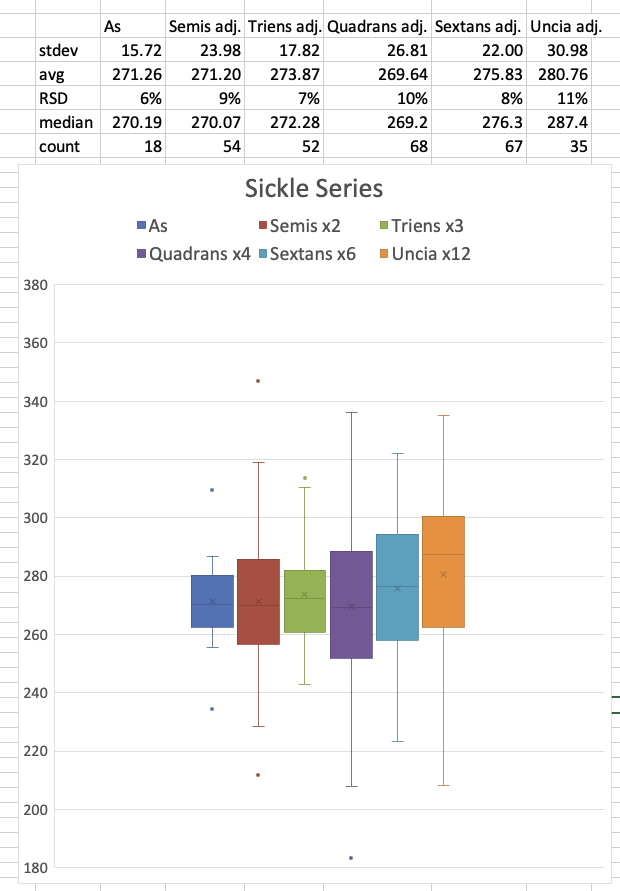
Why did Crawford put this aes grave with the silver of RRC 26? The types are both revivals and they both have Apollo as the chief denomination but do they really go together?!
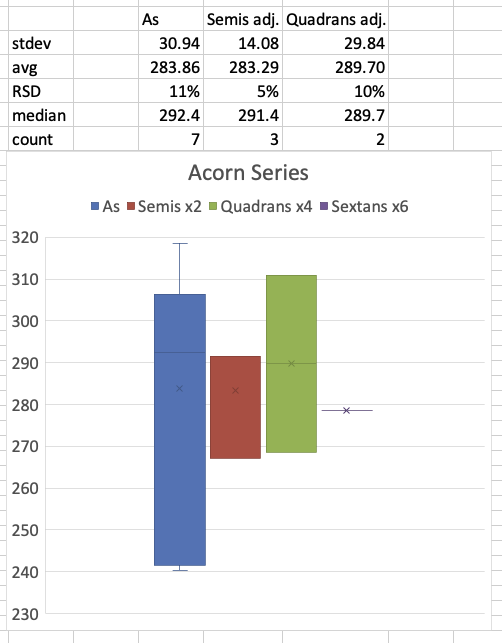
This data is so minimal it is hard to draw any conclusions. One new RRC 26 aes grave has appeared on the market and just adding in its weight changes the shape of the data, a nice reminder that this is not a very meaningful body of evidence from which to generalized.
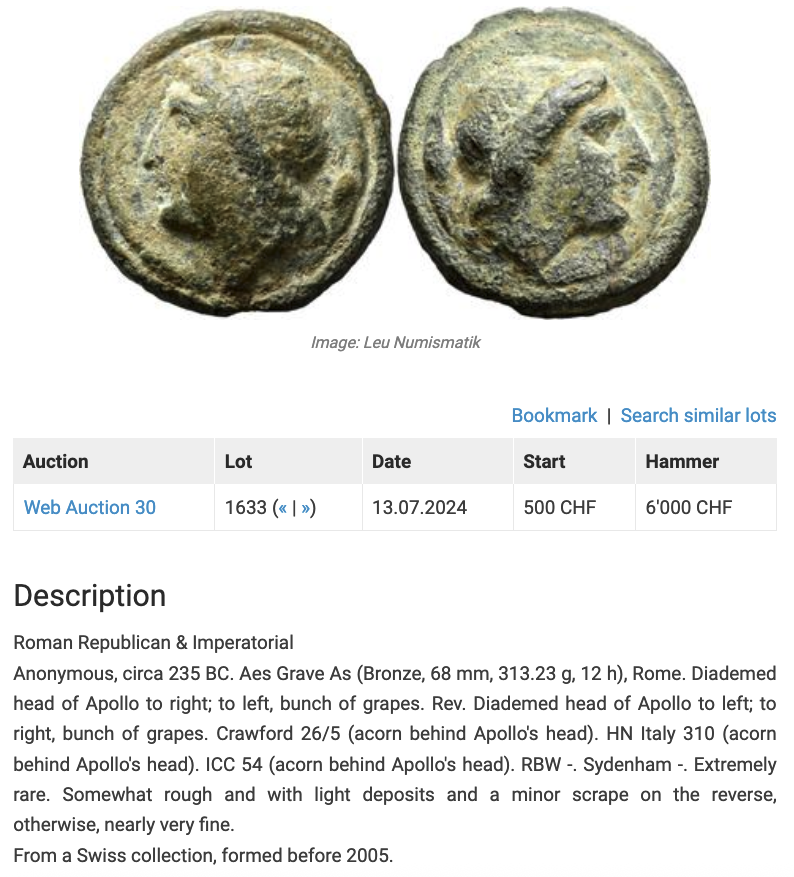
I have not held this piece. I cannot authenticate it. The patina suggests it was recently unearthed likely in Italy. It is great shame we do not have the find data. Aes grave is not legal for export for just this reason.
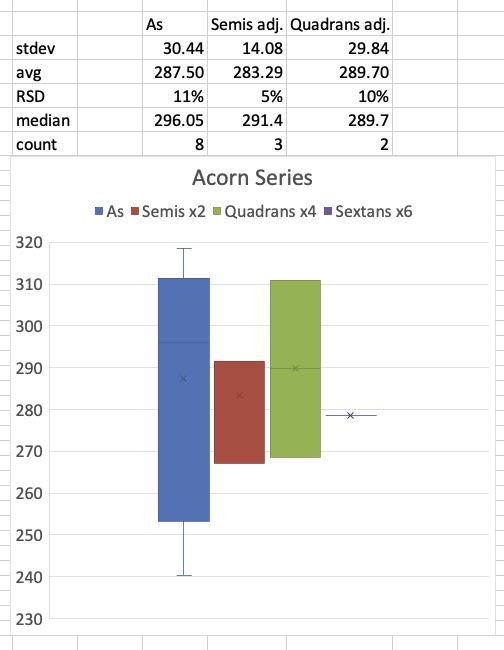
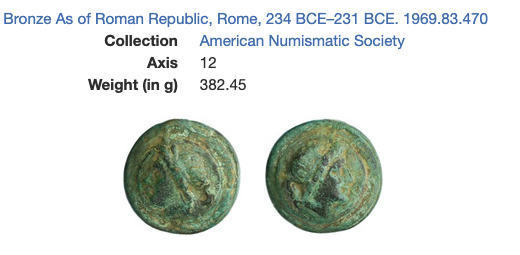
But the data gets even MORE messy if we put in the specimen the Miles specimen in the ANS which is impossibly heavy. I’ve just about convinced myself that that acorn is really there behind Apollo’s head but I really don’t know what to think about this piece.
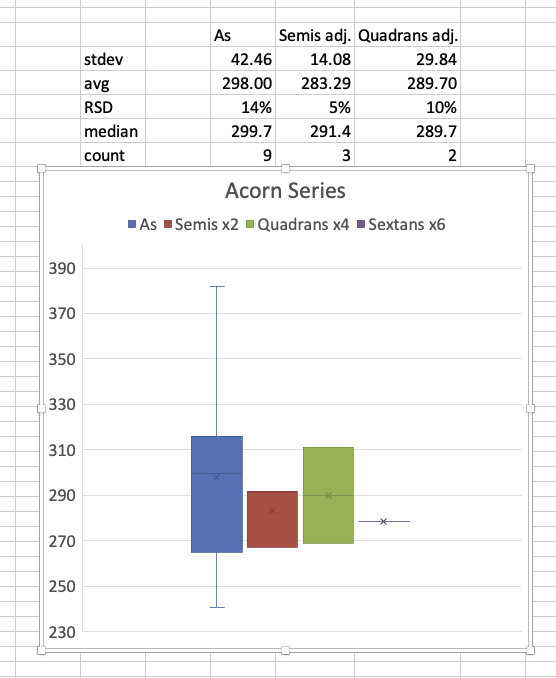
This minimal series looks like it might have been aiming at a higher weight standard, c. 290grams. The missing triens and uncia are strange indeed. A bit like RRC 19 which has only two cast denominations. I will only publish results based on Haeberlin numbers to keep my data set relatively consistent in it sourcing of evidence.
I’ve gotten faster now as I come to the end of the data extraction and processing. The As again shows the least variation and the highest average and median. The weight standard looks about the same as the Sickle standard but perhaps more tightly controlled across all denominations.
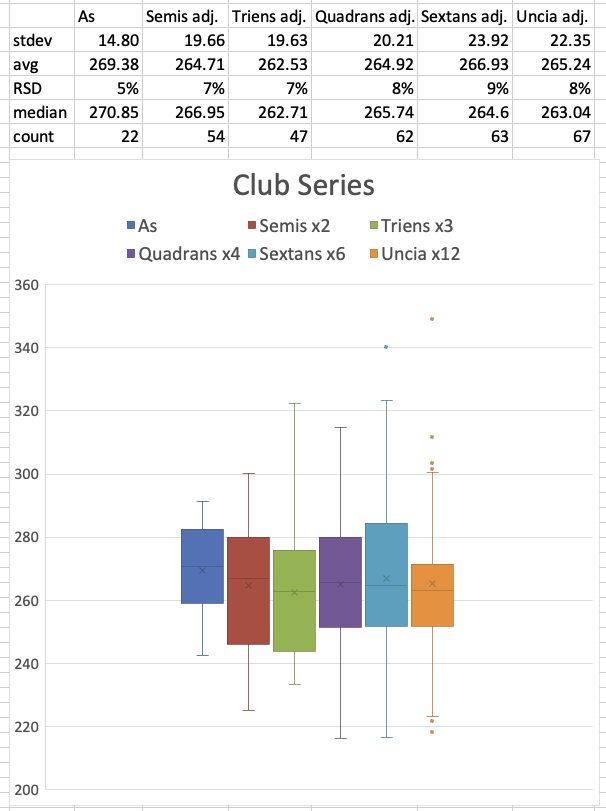
The acorn series feels out of place, again. Earlier blog post.


