
Yup. I’ve got the bit between my teeth today and am running with it. Still using RRC 419/2, Claude, and Schaefer’s die IDs for his obverse 3.
I first asked Claude to produce a master outline. It had been using red outlines to help visualize the similarity between dies and I found this appealing, but I realized it was using a one-to-one comparison not combining data from multiple coins to make the outline and thus inform the comparison.
It gave me lots of visuals but this is perhaps the easiest to read.
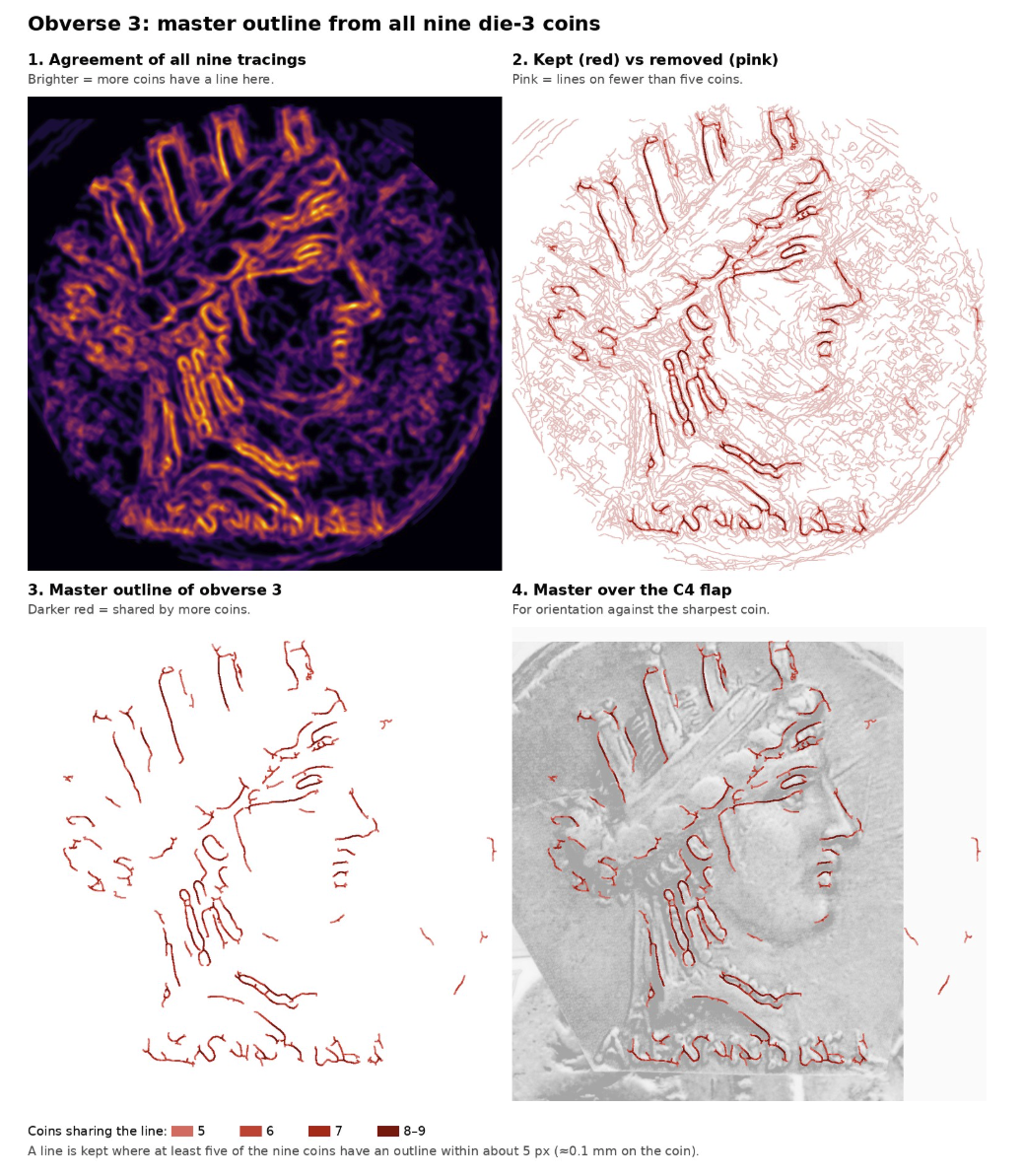
I liked the heat map and deductive elements but the final result was deeply unsatisfying, even as Claude tried to convince me it was good enough to separate the wheat from the chaff, as it were.
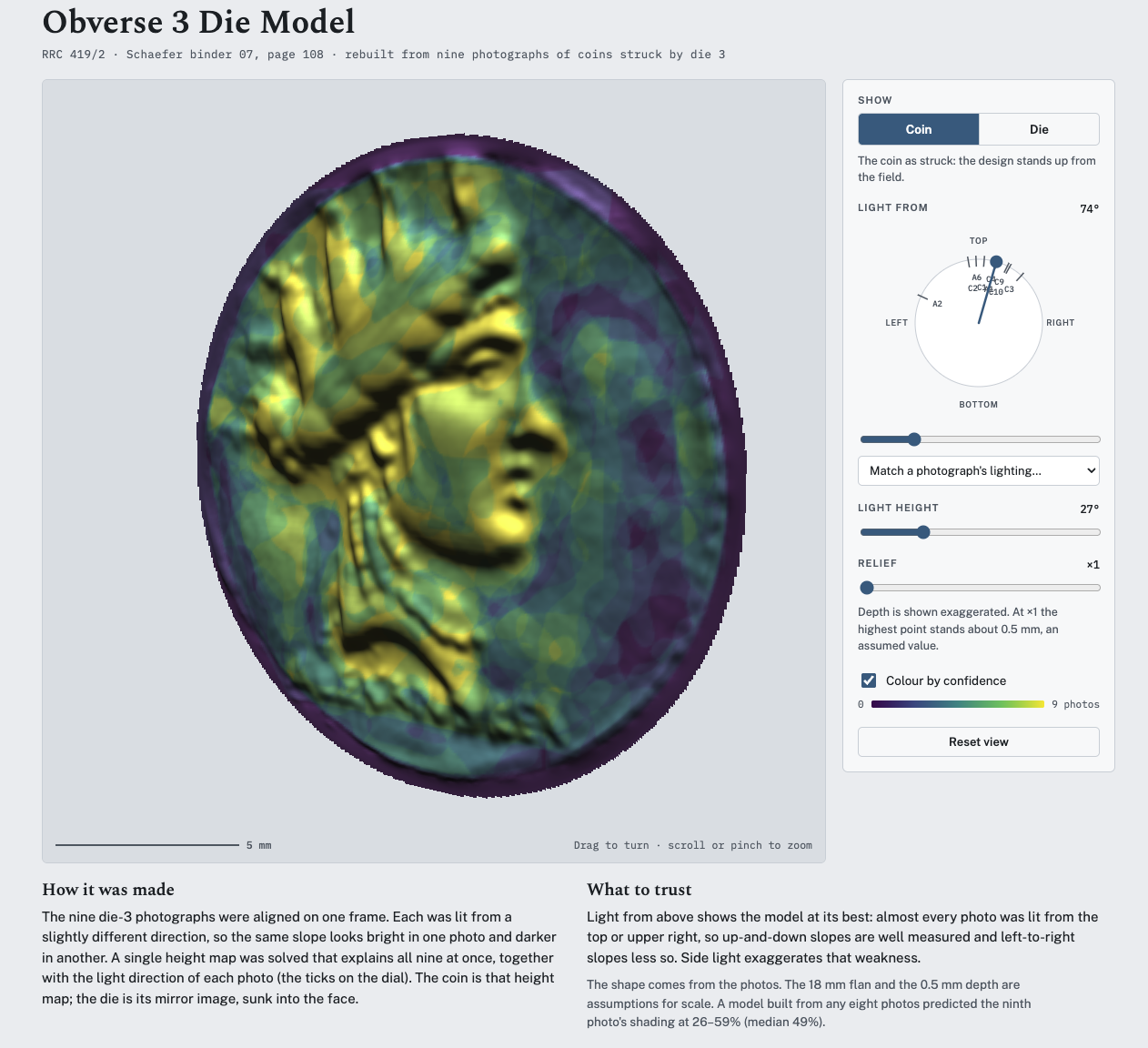
I started to think about what I know or see that the computer wasn’t including. I next asked it to consider the three dimensionality of the coins and the effects of lighting and photographic angle and even how the die might have hit the flan, perhaps at a slightly different angle of impact or different level of force. I didn’t mention wear but that is a similar consideration. The output I asked for was a 3D model approximating the original die. On my interface this is fully interactive. In this screenshot, I’ve selected the lighting and heat map and angle of view to best reflect the utility.
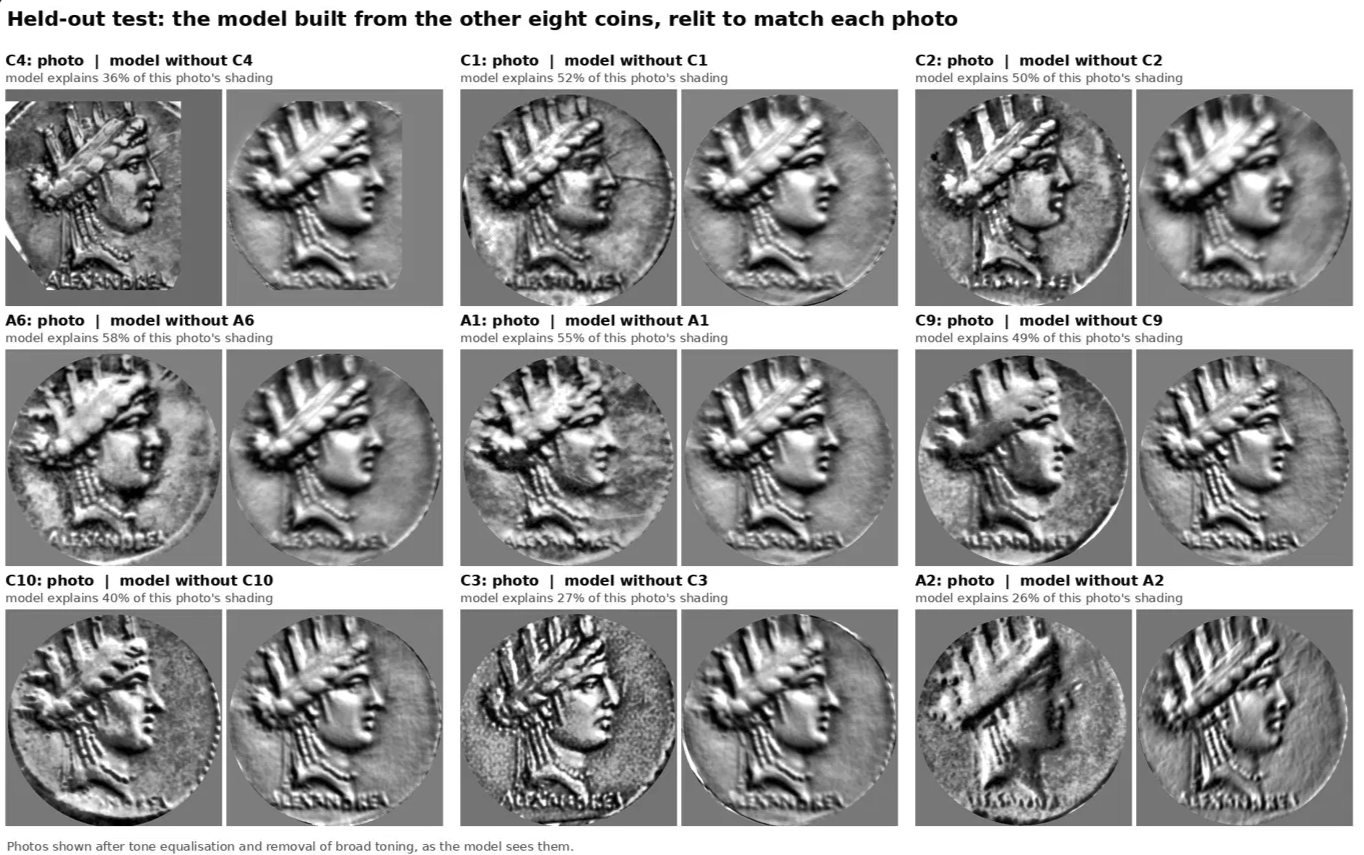
To see what each specimen is contributing to the model and help verify accuracy of the Die ID Claude provided this visual:
I then selected an image from trade of a specimen I believe to be struck by die 3.
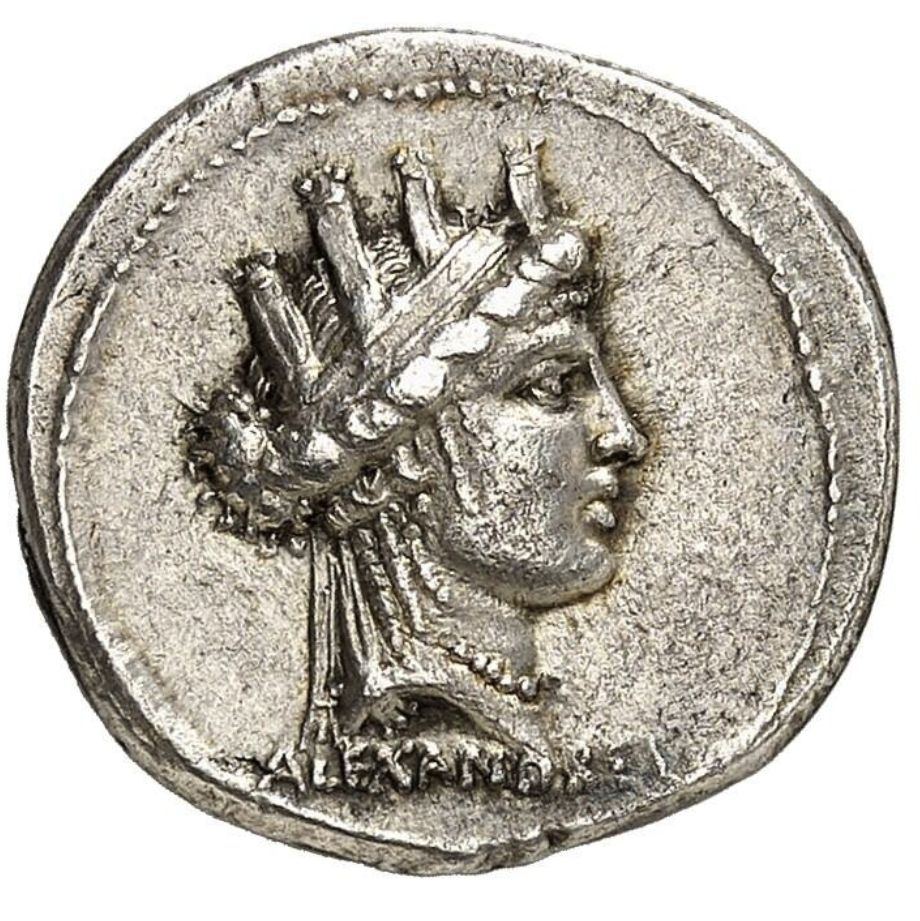
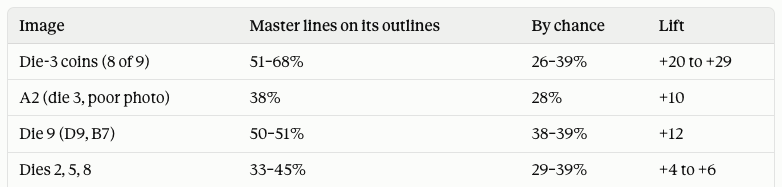
I asked Claude to use the tools from this session including the 3D model to test if this coin was struck by Die 3. [no, I didn’t tell it my belief that it was.] Of its own initiative–wow, it is freaky when it does this and yet I’m not ready to ask it to stop completely, even as I stop it from fetching or opening anything with out asking me–as I was saying…
Of it’s own initiative, it also compared this photo the rest of the dies identified on the page from Schaefer’s Archive.
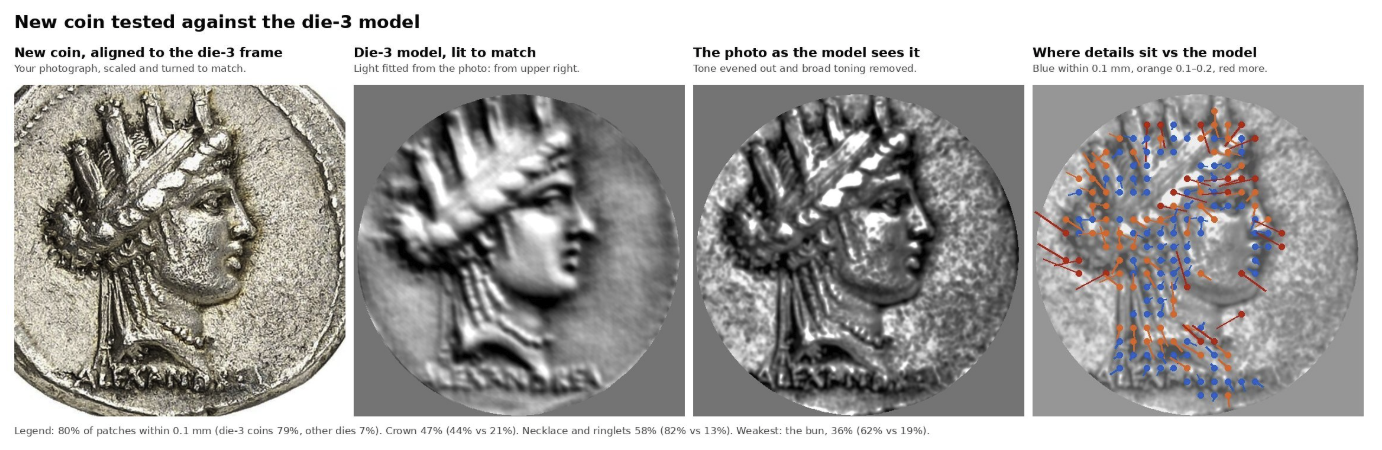
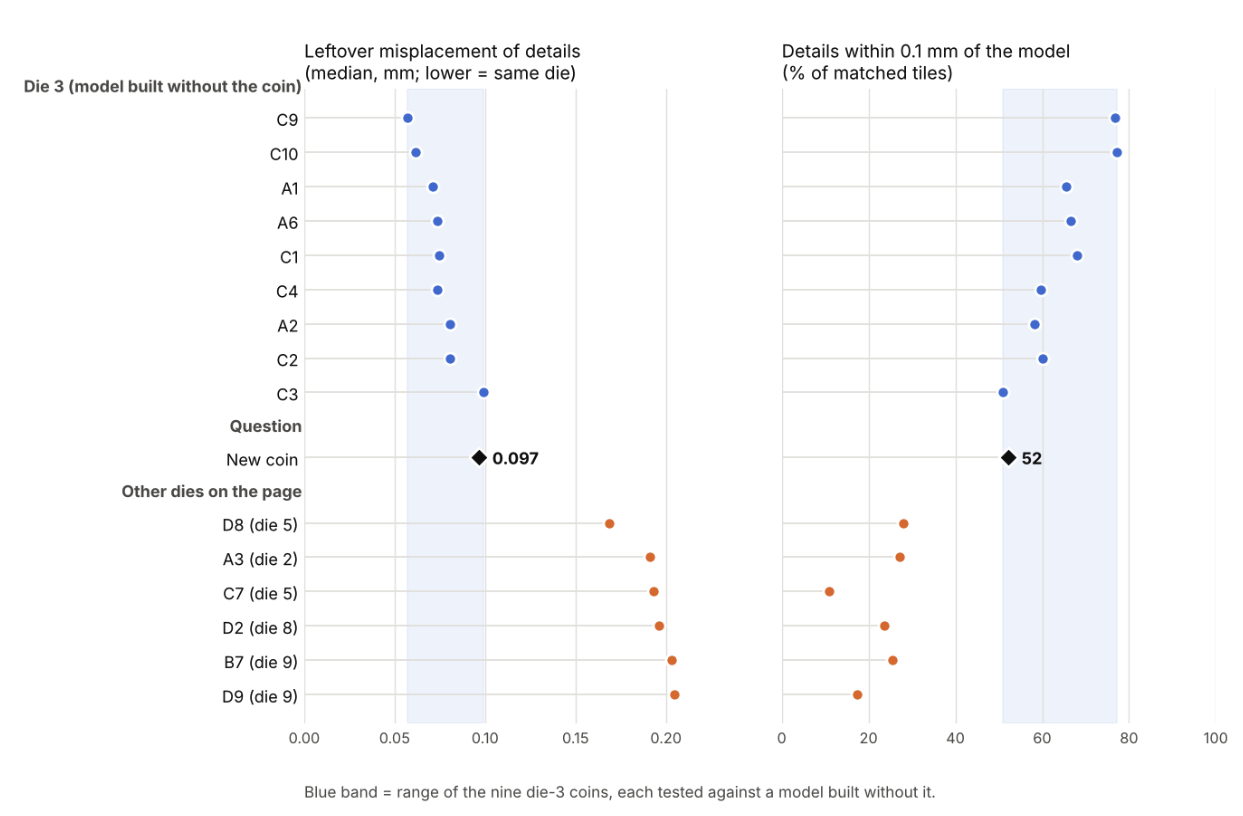
I’m pretty satisfied with this approach. It still isn’t as good as my eyeballs and brain or that of Schaefer or Alice. It takes longer and has a hard time in achieving a definite conclusion, where I have no doubt. In this way it might be TOO good at measuring difference.
I’m sure there will be more experiments to come. But, for now I’m going to feel smug about my own visual acumen and reasoning, even in the face of robust digital tools that seemed like science fiction 5 years ago.
Feel free to request the replication briefing. I haven’t generated it yet as I’m not really sure I need one for this right now.


