This is a footnote in a draft piece I’ve been writing.
[I’m 5,000 words into the first draft of an article and think it might be good, also think it might be banal and terrible–such is the nature of writing.]
After removing 18 suspected forgeries, Coinage of the Roman Republic Online (CRRO) provides weight data on 259 examples of denarii struck between 53 and 50 BCE at the Roman mint, with a mean weight of 3.83 grams and relative standard deviation (RSD) of 5%. 3.83 x 6000 = 22.98 kg = 50.66 lbs. By way of comparison RRC 350A/1 is dated to the Cinnan regime (c. 86 BCE) and is represented by 357 specimens in CRRO it has a mean weight of 3.84 and an RSD also of 5%. 3.84 x 6000 = 23.04 kg = 50.79 lbs. At 84 to the pound this would correspond to a Roman pound of c. 322 grams
Here’s another footnote from the draft:
Plin. 33.46. The Roman pound was not the same in all places at all times. Most prefer 327 grams as the conversion to modern weights and measures and this fits well will the set of seven basalt weights found at Praeneste in 1907 which have a mean average for a whole pound unit of 327.7 with an RSD of 0.2%. Crawford 1974 prefers 324 grams as the conversion for the Roman pound.
Yes, there are also mention of various stuff like batch control at the Roman mint. Yes, I used revised dating for what coins I included in the 53 to 50 BCE window.
Anyway. I got thinking about 5% tolerance number for weight variations and I wondered what gold was like as I’ve always believed gold was better regulated.
[Yes this was a distraction, but long columns of numbers are soothing as I trying to get words on the page and think thoughts more substantially through issues than I normally do here on the blog, so I’m allowing myself this moderate distraction before I go back to the article draft.]
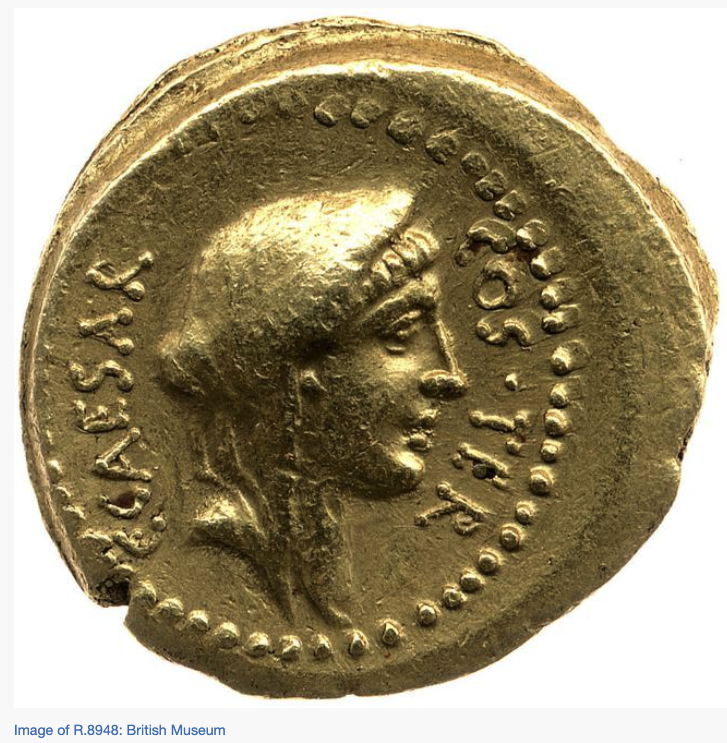
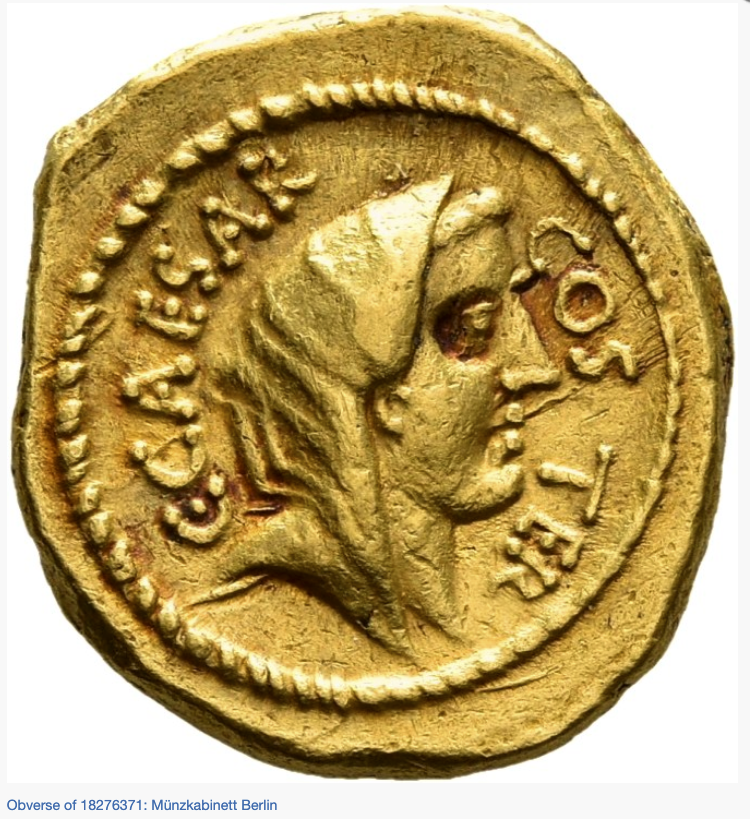
The Sullan gold issue best represented in CRRO is RRC 386/4 (28 specimens, 25 with weights recorded). It has an RSD of less than 2%.
Sextus Pompey’s RRC 511/1 has 44 specimens with weight values and an RSD of 3%.
BUT, the Hirtius gold issue (RRC 466/1 – rather erratic style of die engraving) has 45 specimens is recorded weight value and an RSD of 9.4%