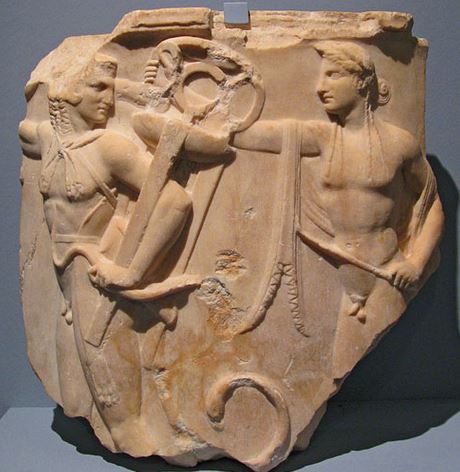
Cupid breaks Zeus’ fulmen OR could it be Veiovis’ ?!*


From Cook 1964
*-Cf. Wiseman T. P. (2009). Remembering the Roman People: Essays on Late Republican Politics and Literature. Oxford, 72-78.
adventures in my head
Cupid breaks Zeus’ fulmen OR could it be Veiovis’ ?!*
From Cook 1964
*-Cf. Wiseman T. P. (2009). Remembering the Roman People: Essays on Late Republican Politics and Literature. Oxford, 72-78.

Just a nice example of its utility beyond sequencing or quantification.
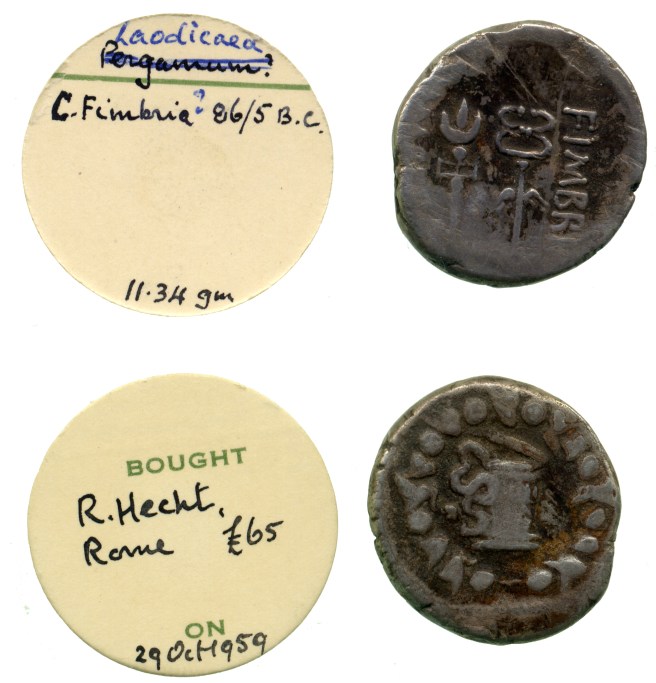
Book captioning isn’t leaving lots of time for blogging or other research, but it’s almost done. Today while doing a little image research I realized I had a photo on file from years back of the Ashmolean specimen of the Fimbria cistophorus (Metcalf 705). It won’t work for the book as I need the IMPERAT to be legible. I’ll pay for an image of Boston specimen instead. Still, I like the photo as it has the tags and shows the back and forth over attribution. (Metcalf endorses Witschonke and Amandry’s attribution to Pergamon now).
I started thinking about this previous post, when spotting this type from the second Punic War in the back of HN Italy while writing a caption for another Capuan type. Clearly it owes much to the Corinthian pegasi and all the derivative types.
(same coin two different photos)
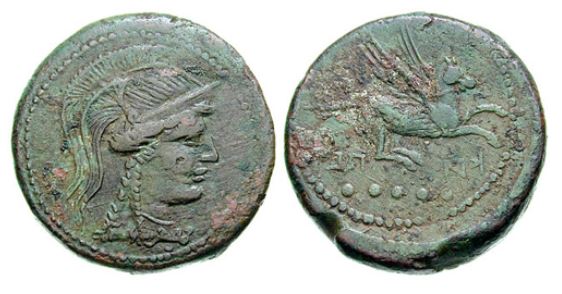
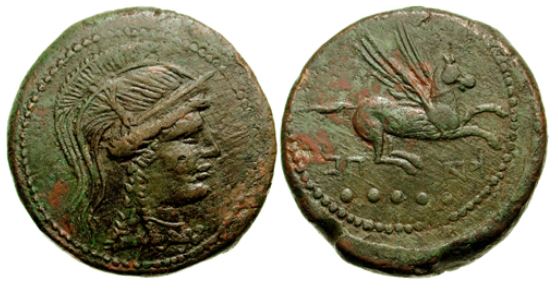
Things that strike me as interesting about this type is the bridle on the pegasus. Not on Siculo-Punic Issues, maybe but not likely on Roman currency bar at least based on BM photo.

Bridles do appear on numismatic pegagoi, just not that often. The straight out tail is also unusual.
On the obverse the rendering of the goddess’ hair in two large long ringlets is unusual. My first thought was the ringlets on RRC 39/1:

Or even the ringlets on the personification of Alexandria obv. of RRC 419/2.
Also I want to think about the triple crested helmet in light of Myles McDonnell’s thoughts on the symbolism of the helmet type…
And while were on RRC 39/1, (I’m sure this cannot be a new idea, but) perhaps the horns on this goddess are a misunderstanding of the leaves of the sheaves of grain in Tanit’s hair?!
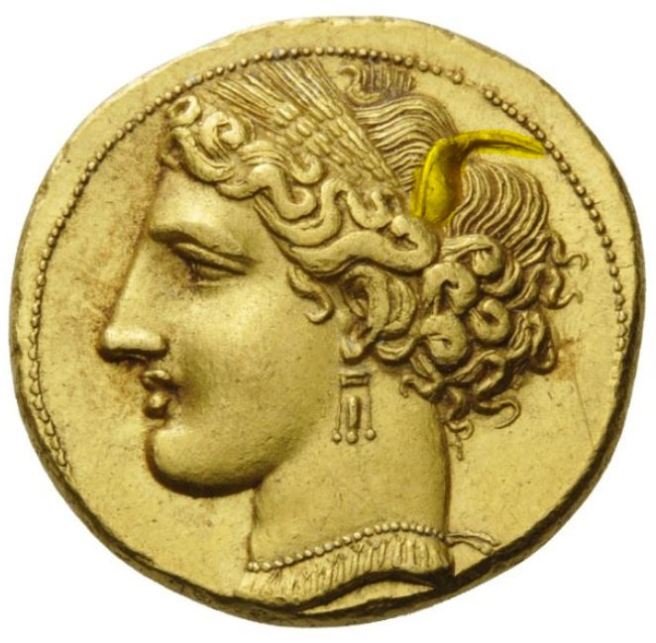
I started by trying to caption RRC 59/5. And then I went an reread an old post of mine on Dolabella ‘ s as moneyers or possible moneyers. And that got me worried about the dating of both RRC 73 and RRC 59 given the redating by Russo of RRC 81. RRC 73 isn’t in any hoard earlier than Bavagna which closes ~116 BCE. So Sicily and 2nd Punic War seems a not obvious necessary ID – Crawford’s weight standard argument is less conclusive if we add in 4 recent specimens in trade (average of 8 known specimens, comes down to 4.15, SD .251). I then went digging in specimens that have come up in trade to see if I could sniff out any wisdom or clues. All I found so far is this odd die feature (also visible on BM 2002,0102.330 ex Hersh Coll.).
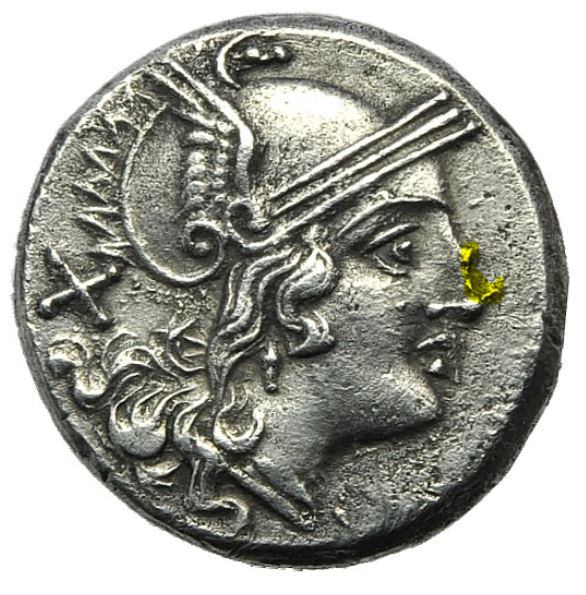

Other things I learned today is that the Rex Sacorum probably didn’t wear an apex (I’ll report back as I get in more ILL) and that nobody agrees which figure is which on the Ara Pacis. So there. A post of no conclusions. Just a lot of time spent fretting about a stupid hammer and a possible canting pun.
And maybe a jewel on his forehead? Or a snake head or whaa..? (RRC 410/1; assorted acsearch results for more specimen variations).
)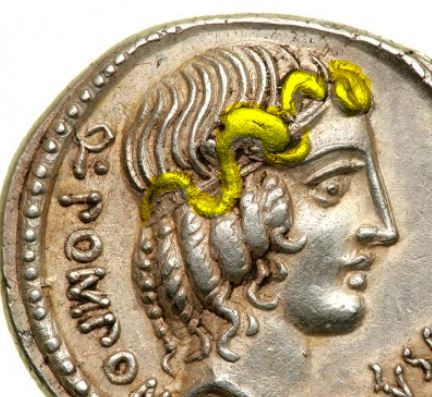


Through the allusion to the Pythia here on the obverse and Hercules on the reverse are we supposed to recall the struggle between the two for control of Delphi? (Ephesus relief shown)
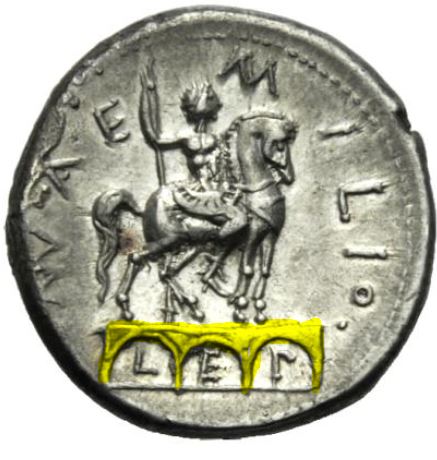
It would be so much easier to write these damn captions if I could stop thinking about the coins…
This is 291/1. And Crawford says its an aqueduct. And then I go read some Wiseman 1998 (“Rome and the Resplendent Aemilii”) hoping for a reference and I get none, but I do get references to other things done by the cens. 179 including building the pons Aemilius.
Wouldn’t Rome’s first stone bridge be more worthy of commemoration than an aqueduct that didn’t even bear the family name?!
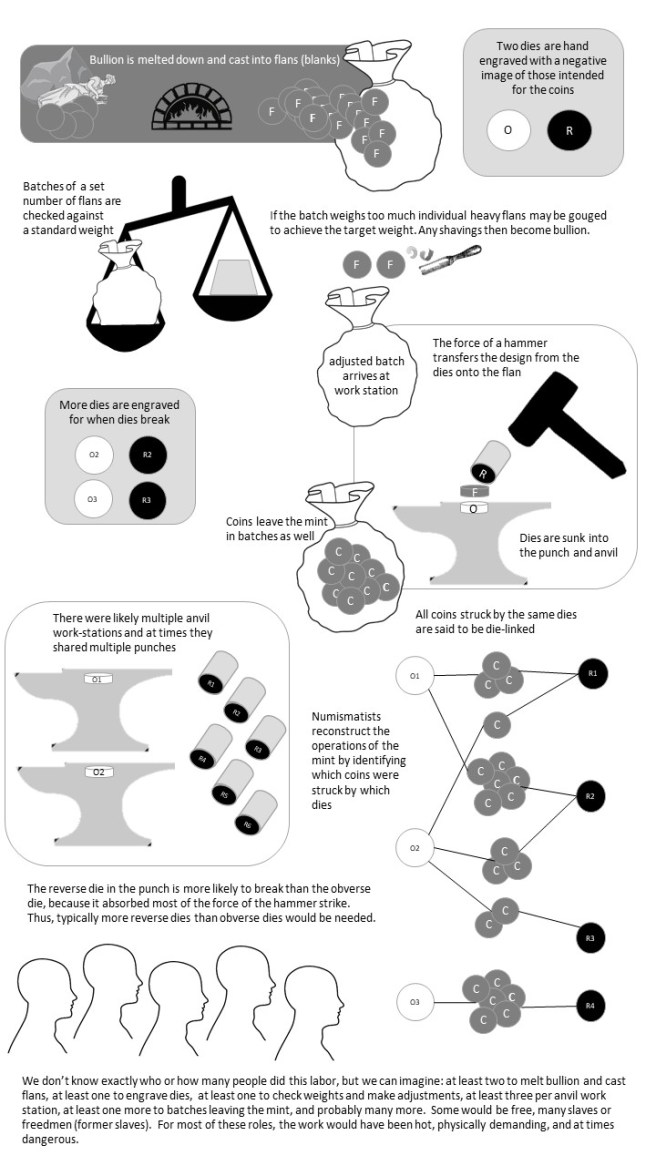
Very grateful for blog comments, twitter feedback, and discussion board wisdom that has helped this graphic evolve. Keep it coming!
Mint operation, coin production ‘infographic’

Timeline of serrated types and control marks combined

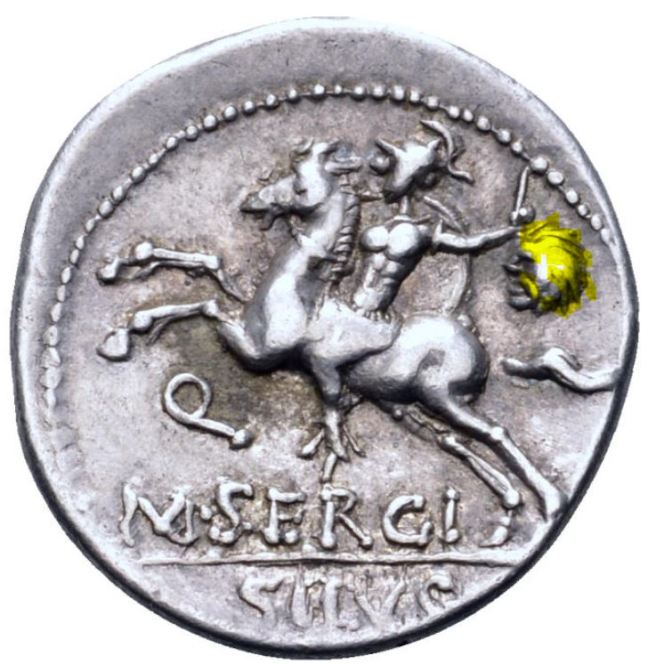
 Liv Mariah Yarrow