It’s an ANS day. I’m spending some time with the SNGs from Italian Collections this from Firenze (vol 3.) Umbria-Bruttium.
I also battled the scanning technology to make a high quality copy of the Divo, Coins Stolen from Naples (1977). I’ve been frustrated with not having it on file. But at long last I’ve a decent pdf (if you need one do ask!).
A screen shot just to give a sense of the publication. V little text almost all just photos.
I’m now scanning most of Bolletino di Numismatica 13 (1989). The images of well provenanced aes grave From the Roman National Museum Collection (Palazzo Massimo) are just delish.
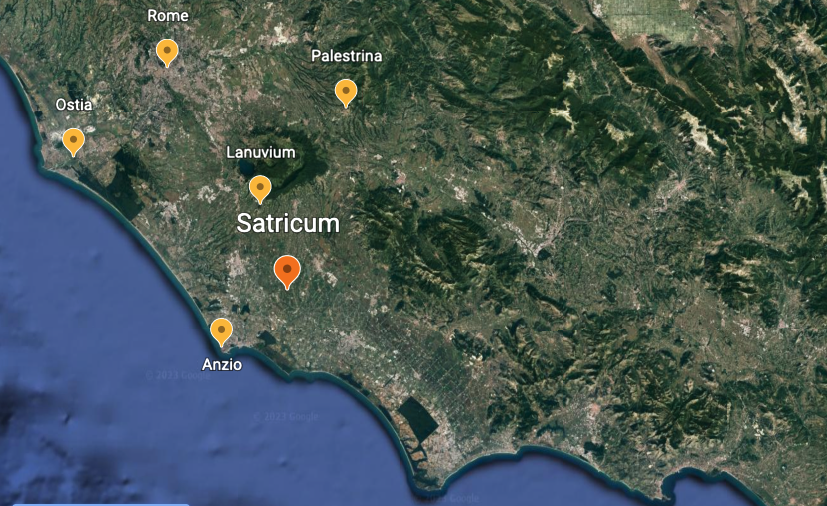
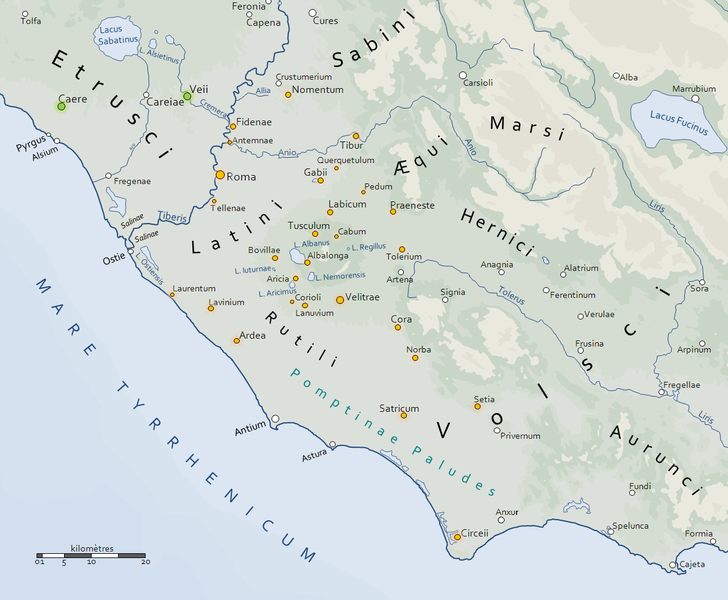
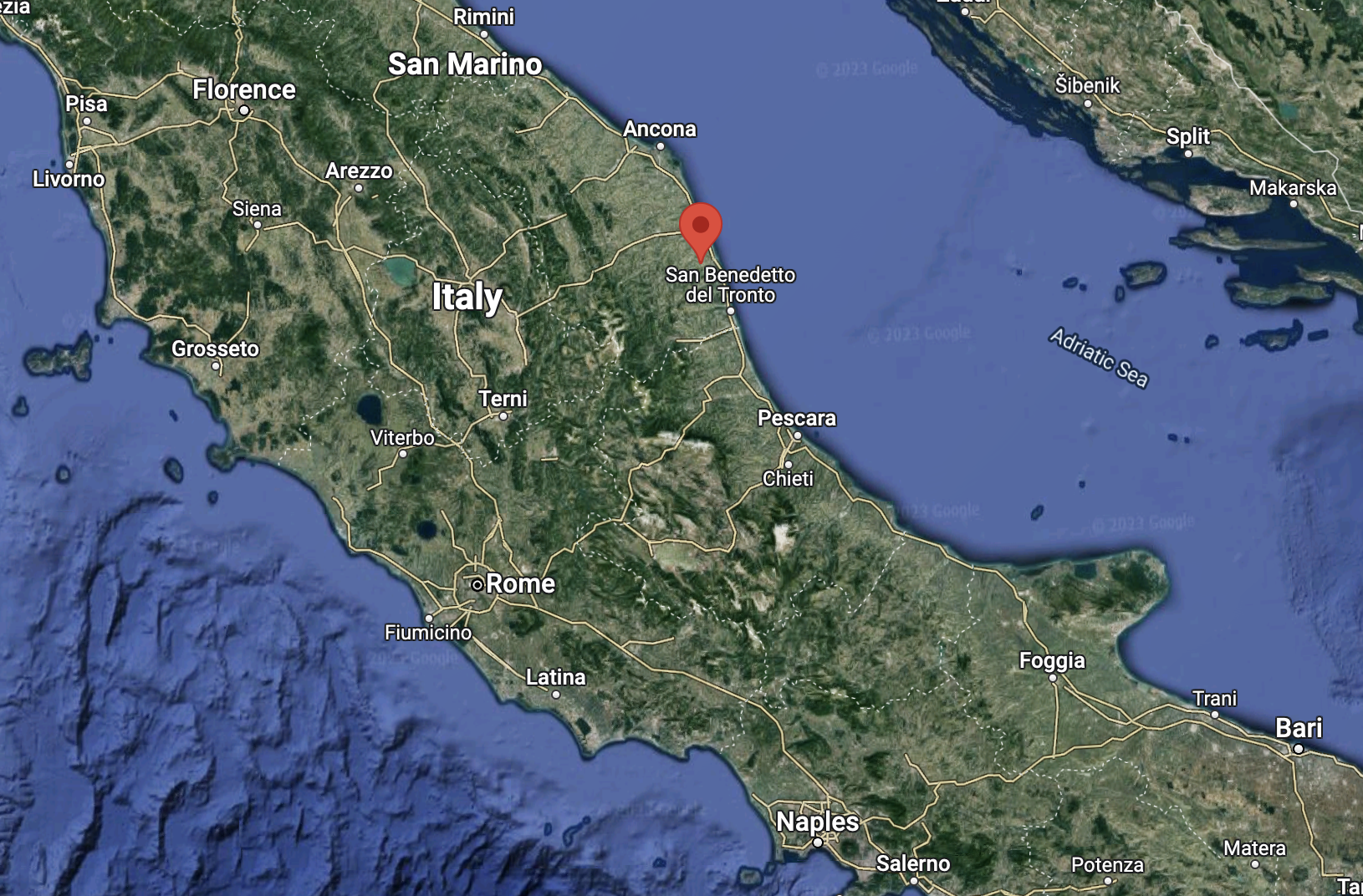
Screenshot of Google Earth project (I enjoy this type of orientation to the landscape as I try to fix in my mind where something is in relation to more familiar landmarks)Wikimedia map of Latium (public domain)
On the Goddess of this sanctuary I’m reading:
Carroll, M. (2019). MATER MATUTA, ‘FERTILITY CULTS’ AND THE INTEGRATION OF WOMEN IN RELIGIOUS LIFE IN ITALY IN THE FOURTH TO FIRST CENTURIES BC. Papers of the British School at Rome, 87, 1-45. doi:https://doi.org/10.1017/S0068246218000399
The article is very good at problematizing the whole ‘god of…’ approach to polytheistic religion and also has a succinct statement on syncretism with recent bibliography (for all she avoids using that term). This article will be good to circle back on when I return to either Feronia (last chapter of current book project) and/or Ino-Leukothea (esp. RRC 399/1, n.b. my glass paste article).
On page 5-6 she gives this summary of the temple chronology at Satricum:
She also has thoughts on how the cult might have re-enforced matrilineal ancestry and kinship ties, perhaps mildly relevant when discussing RRC 433/2.
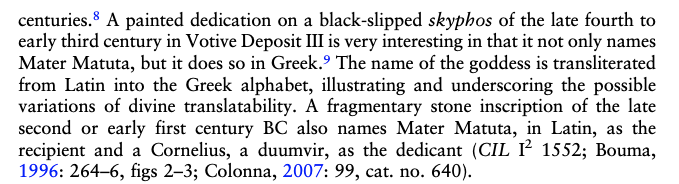
This passage is interesting for HOW we interpret votive deposits, especially in terms of gender:
In this next passage I’m interested in how the transition in types of votives is ALSO generally speaking correlated to the Roman adoption of coin making. Perhaps BOTH indicative of bigger cultural shifts.
Ok. I’ve got a much better understanding of cult and the goddess so now we can get on to the coins!
Termeer, Marleen K. and Prins, Jelle. 2021. “Coins and aes rude as votive gifts : the coins and aes rude from the Hellenistic votive deposit at Satricum and the first coinage in Latium” Ancient Numismatics : an international journal 2: 43-91. DOI: 10.19272/202114401002 (paid content) Deposited unformatted final text, no images (open access)
“We argue that the long tradition of deposition of aes rude in religious contexts in Latium was continued in the period when coins were first introduced, and the coins seem to have been embedded in this tradition. Thus, the use of coins and aes rude had considerable overlap in this period.”
This sentence reminds me of the bits of Festus and Varro on a coin being used instead of rough bronze in ritual exchanges.
Raniero Mengarelli conducted excavations in 1896. I should look up his N. Scavi entries at some point. When the Dutch Institute began excavating in 1985 they found a ‘secondary’ votive dump, and thus original stratigraphy of deposition cannot be reconstructed, it is however possible some portions of the original deposit were untouched…
Votive I – LOTS of Aes Rude, no coins (assoc. archaic sacellum)
Votive II – (5-3rd cent) more aes rude, 5 coins likely deposited after 300 BCE
Votive III – 108 coins (26 from 1896, 82 from 1985, 1989) listed in appendix [but I’m still waiting for my ILL copy with the original table.]
29 total RRC 17/1 – which is now dated after 240 BCE by Molinari and Jaia 2021, ‘ do no seem to occur in Vicarello’
“one Lion bronze (no. 38) with reverse lion to the left is a variety of RRC 16/1a and 1b, only known from Vicarello and Carsoli”
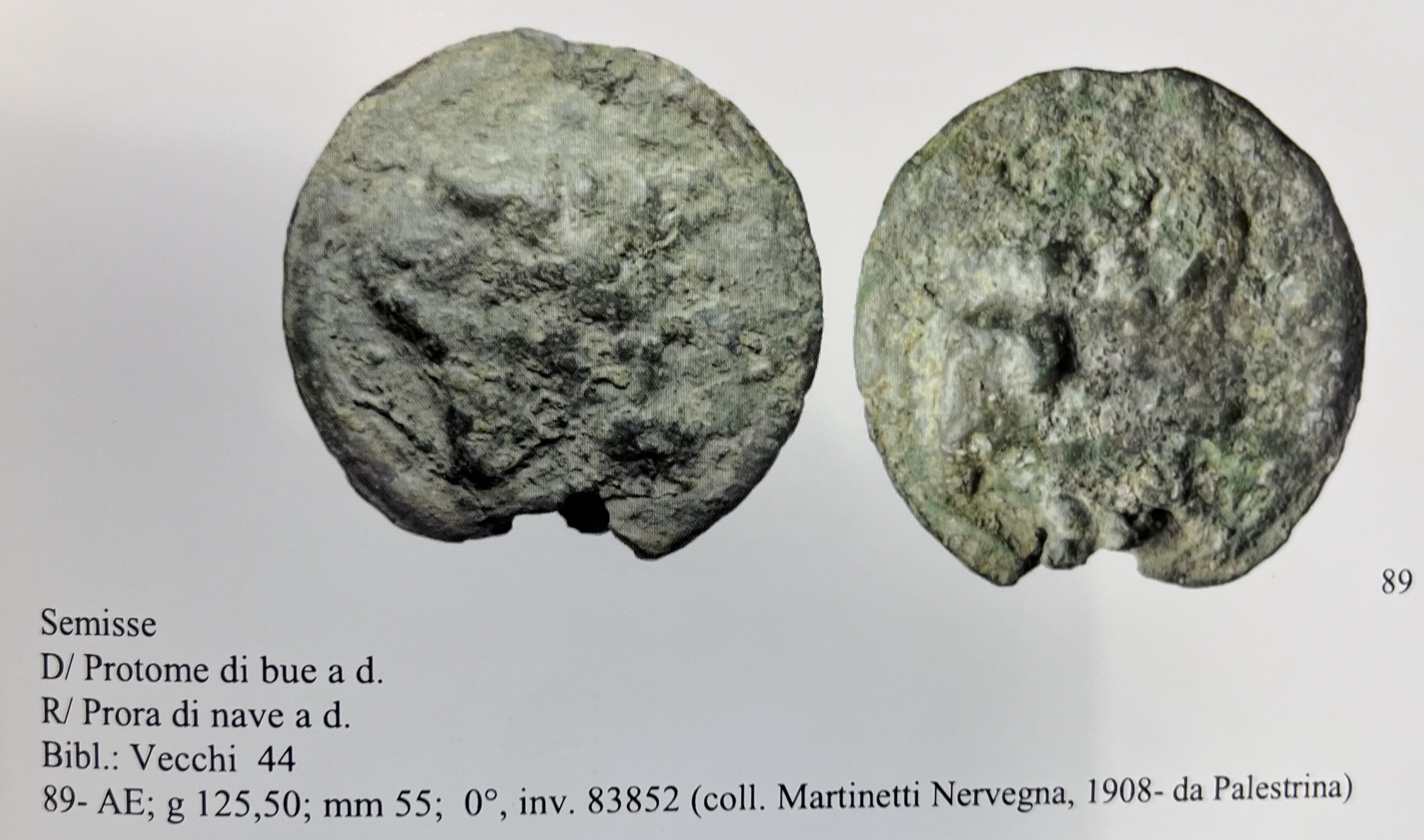
Central Italy uncertain mint HNItaly 362 = Vecchi 281 (better image) (forepart of bull / lyre)
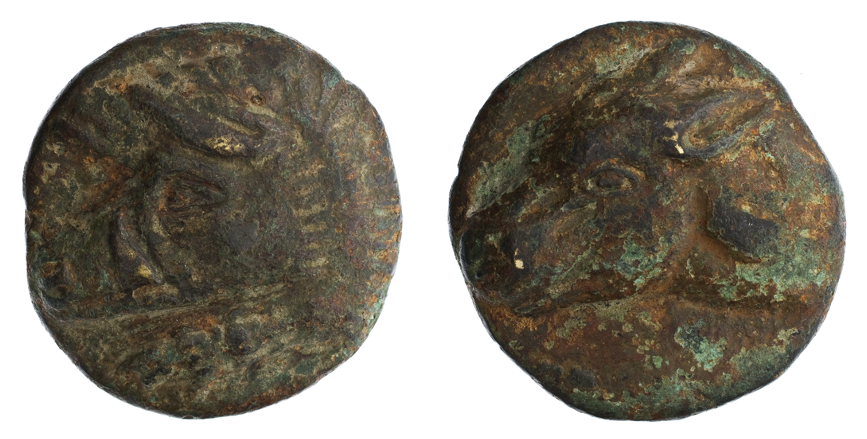
Praeneste (?) HN Italy 249 = Vecchi 281 (worse image) (frontal lion biting spear / horse head) – a fragment
“earliest coins that could have entered the votive deposit are the earliest Neapolitan bronzes from Taliercio’s series i (nos. 1-9), dated 325-300 bc, and the Punic bronzes (nos. 30-33), which are dated in the second half of the 4th century bc”
“Four of these seven Neapolitan coins (nos. 2, 5, 6 and 7) have chop marks.”
I wonder if the chop marks are a version of the same impulse seen on the graffiti-ed coins:
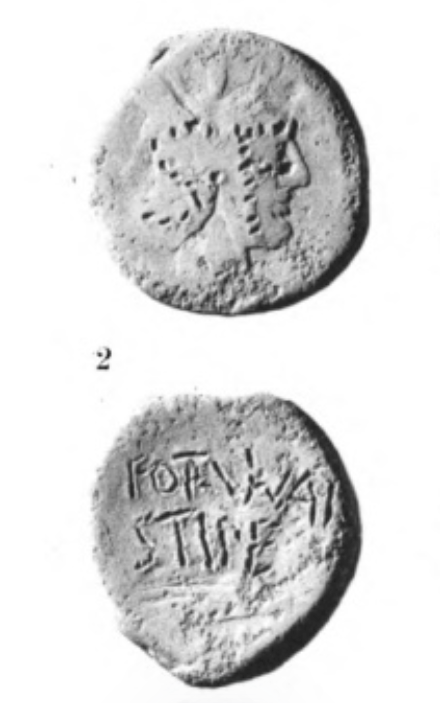
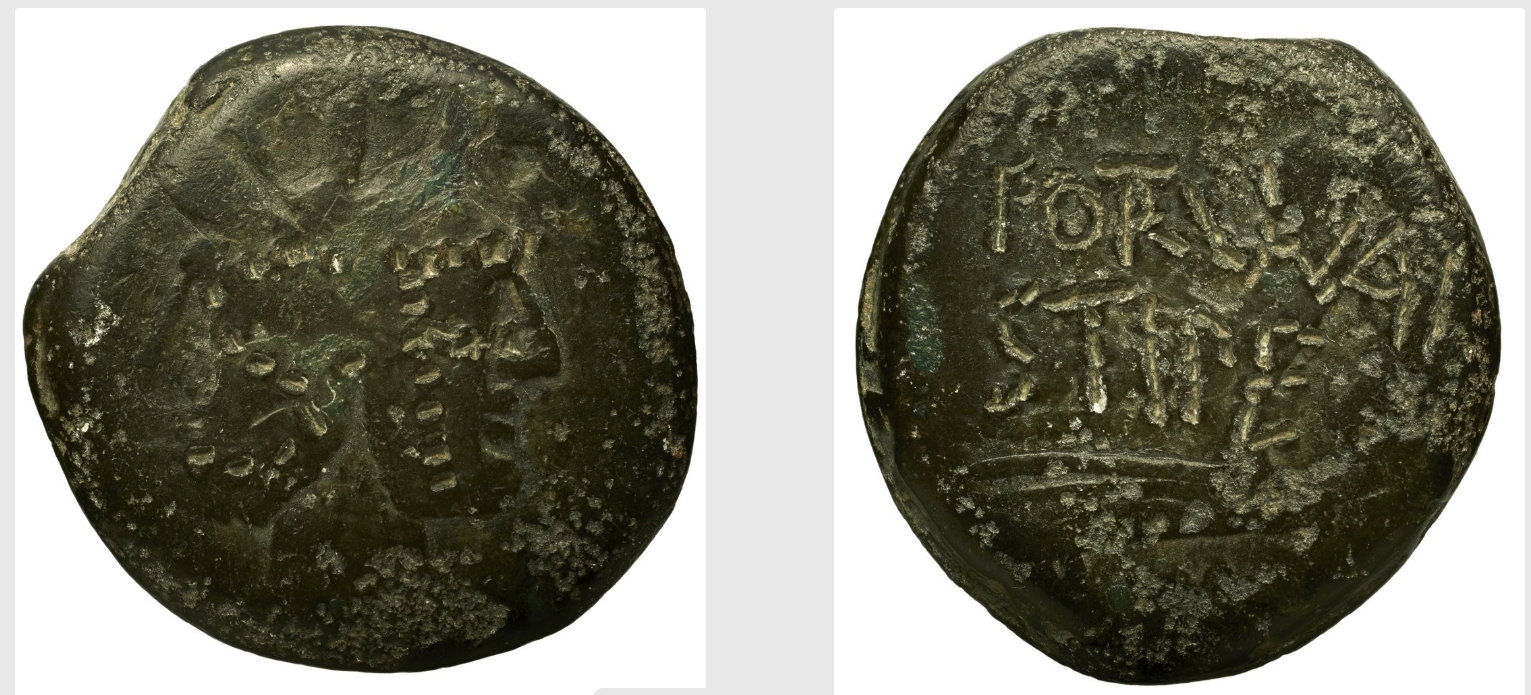
from Ailly reads FORTVNAI STIPE and indicates the coin was ritually deposited to the goddess. Only one parallel that I know of reads DIOVIS STIPE and was found at Collepietro (L’Aquila).From Willers 1909I’m grateful to Charles Parisot for sharing the modern photo and Gallica link with me via Twitter!
The photograph allows one to clearly see the reverse graffiti was created useing the same punch/chisel technique as the SF on the obverse. It is easiest to observe in the S an E of stipe.
I notice in the inventory that no. 97 is a folded coin and 96 is a melted ae/plated AR, perhaps again part of this phenomenon.
“cast aes grave (nos. 73-78), which may be a little earlier. Coins from this period, namely circa 270-240/225 bc, are the most common in the deposit” Narrow down that time frame!
“very few Roman coins from the period of the Second Punic War” – was Satricum loyal?
terminus post quem suggested by worn reduced uncial weight standard triens found in undisturbed portion of deposit : maybe c. 150 BCE or maybe later.
Points out that Vicarello seems unique in aes rude and coins being the preferred votive offering rather than those be tangential to other forms of offering.
“It is clear, however, that bronze was the preferred metal for oπering in Latium; precious metals are very rare”
“Our comparison will focus on the coins found in the votive deposits at Vicarello, Carsoli, Nemi, Via Tiberina and Casalvieri [Sora], and the Ardea hoard, which was probably part of a votive deposit or even a thesaurus.” [links are to earlier places on this blog I’ve talked about these finds]
I’ve ILLed Catalli 2005 (and his 2014 piece on the Nemi coins).
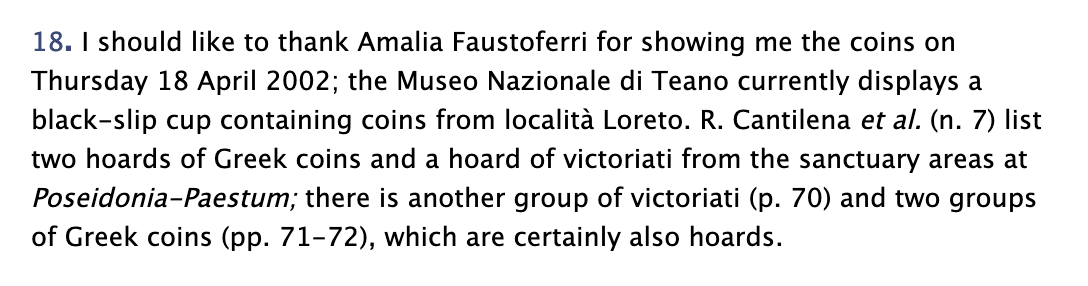
I was at this point panicking that I’d missed a currency bar hoard as I had no record of Via Tiberina, but thank goodness it just has two names! It’s La Bruna (CHRR 16), now mostly in Berlin. This just can’t be right. I’ve ILLed Cesano 1942. It’s very interesting to think of this as Stipe or Thesaurus rather than just a hoard…
“Farther from Rome, Carsoli and Satricum were indeed able to receive similarly high percentages of Romano-Campanian and Greek coins. The difference between these two and Nemi is striking, but we have no good explanation for it.”
Set time table for any collaborative RRDP work/publication prep that needs to happen this semester: Chicago pub, INC pub, collaboration with RACOM, etc…
Circle back to Capito project
Consider ask for funding from Dean’s office
Begin Med school rec letter
record mini myth
find out what is on that v old harddrive and back up to cloud
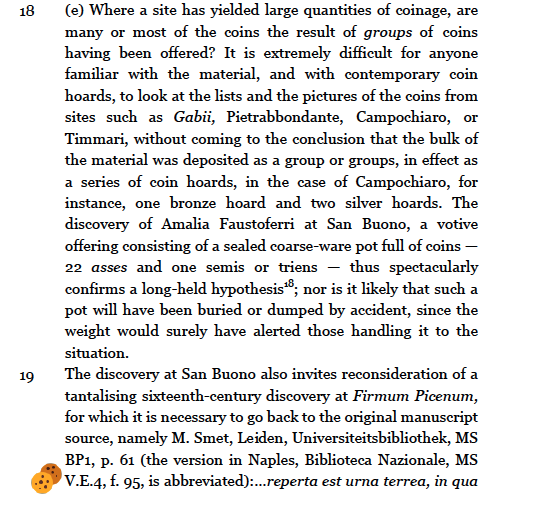
CRAWFORD, Michael H. Thesauri, hoards and votive deposits In: Sanctuaires et sources: Les sources documentaires et leurs limites dans la description des lieux de culte [online]. Naples: Publications du Centre Jean Bérard, 2003 (generated 19 janvier 2023). Available on the Internet: <http://books.openedition.org/pcjb/878>. ISBN: 9782918887218. DOI: https://doi.org/10.4000/books.pcjb.878.
It’s so good. I love coming back to read work when one is really ready for the text, even hungry to read it. So different to reading in the abstraction of possibly useful one day. Anyway on to the point.
That passage in Dionysius reminded me immediately of RRC 385/5 and the decoding of the legend to be about the foundation of the ludi Apollinares by subscription.
Original post below. I write these as I dive in an I like to preserve my train of thought. And, then sometimes post publication new stuff is shared with me by generous colleagues, like Seth Bernard. Who found that Crawford has tracked down records of this hoard in 2003, AND had seen another more recent one that was then unpublished and so leaving yet another content list to track down.
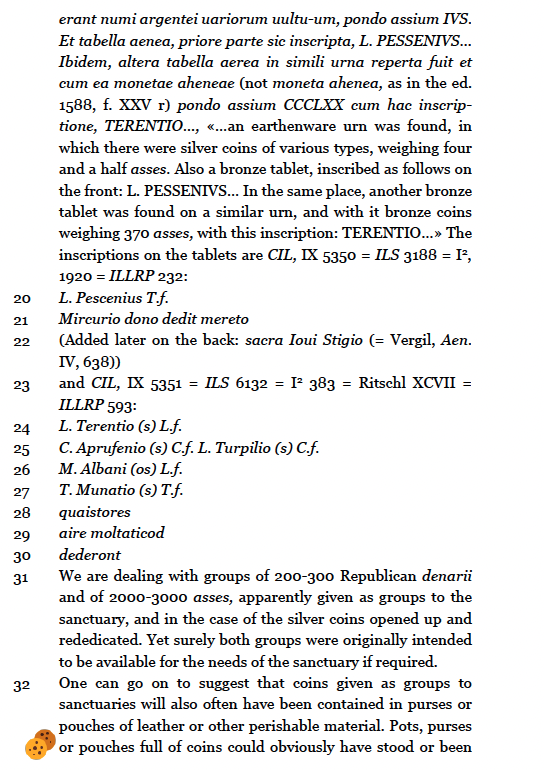
What I don’t understand is why Crawford assumes these are denarii… or that the asses are of the struck variety rather than the cast. I don’t see anything in the Latin to confirm that summary. The epigraphic evidence would suggest 1st Punic War date at least to my untrained eye….
The meat of this article is really the appendices just masses of data on where coins were found.
This is not the post I started writing this morning. That one may appear later today or whenever it is finished, it’s on more aes grave bibliography I was reading. This is a side note…
I went looking for images/info on Mater Matuta to round out my understanding of a findcontext and landed on this Arachne search result and as I read I found a hoard report from a completely different part of the early Roman Italy!
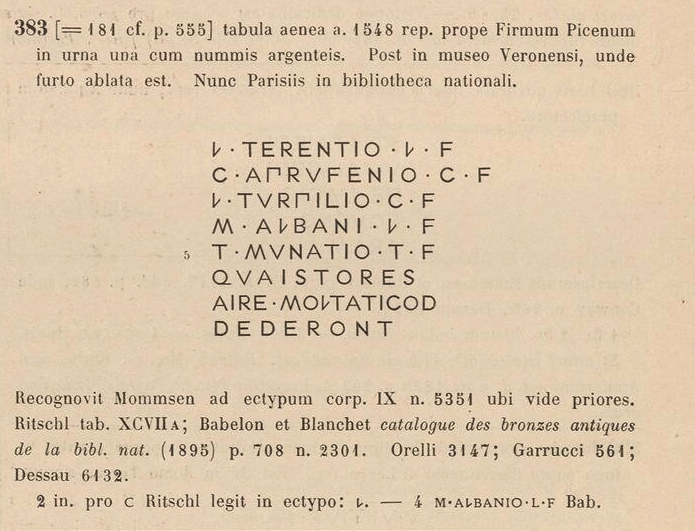
Extremely frustratingly I can’t find the inscription (yet!) in any of the typical epigraphic databases (I tend to start with Clauss/Slaby) and that seems supremely odd as it is clearly published. I also checked Coin Hoards and came up with zilch. My thought is if I can find a better publication of the inscription I might find the coin types. The next stop was to figure out what type of quaestors are making this offering: fines officers!
This got me to an article I’ve now ILL requested:
Piacentin, Sofia. 2021. “Public Fines in Italy Outside Rome.” In Financial Penalties in the Roman Republic, pp. 60-76. Brill.
But! The publisher’s preview gave me a head start:
Turns out Marengo is a PROLIFIC epigrapher with numerous interesting publications that I am studiously not letting myself consider reading at this time. This is the relevant one for the above inscription:
Marengo, Silvia Maria. “Le « multae ».” In Il capitolo delle entrate nelle finanze municipali in Occidente ed in Oriente: actes de la Xe rencontre franco-italienne sur l’épigraphie du monde romain : Rome, 27-29 mai 1996,. Collection de l’École Française de Rome; 256, 73-84. Roma: Università degli Studi di Roma La Sapienza, 1999. Which gloriously turns out to be open access!
The above inscription with the coin hoard is her no. 2:
Which with this transcription let me get the databases to spit it out:
Still no more information on the hoard…. I guess I’ll have to track down all the publications at some point…
I did however let me try to retrieve it the plaque from Gallica (BnF image database). Picenum, Firmum, and Fermo, gave me nothing relevant, neither did ‘inscription’, but that last search term did return a whole host of yummy images, especially of the fragments of the tablette ilaques.
Location of Firmum Picenum (mod. Fermo)
It was a long standing iron age settlement but made a Latin Colony c. 264 BCE (Vel. Pat. 1.14.8), and then sided with Hannibal… We can assume a deposition of this hoard was mid third century based on letter forms and history of the colony.
The development of the quaestorship in the third century has been a hot topic, furthered by the discovery of the Egadi Rams. I’m not sure yet how the use of the title in colonies intersects. I’ve not read enough. Here’s some starter bibliography…
Prag Jonathan R. W. The quaestorship in the third and second centuries BC. In: L’imperium Romanum en perspective. Les savoirs d’empire dans la République romaine et leur héritage dans l’Europe médiévale et moderne. Besançon : Institut des Sciences et Techniques de l’Antiquité, 2014. pp. 193-209. (Collection « ISTA », 1302) (open access – the whole volume is fascinating!)
Prag, J. (2014). Bronze rostra from the Egadi Islands off NW Sicily: The Latin inscriptions. Journal of Roman Archaeology,27, 33-59. doi:10.1017/S1047759414001159
Prag, Jonathan R. W. “A Revised Edition of the Latin Inscription on the Egadi 11 Bronze ‘Rostrum’ from the Egadi Islands.” Zeitschrift Für Papyrologie Und Epigraphik 202 (2017): 287–92. http://www.jstor.org/stable/26603819.
Pina Polo, Francisco and Díaz Fernández, Alejandro. “Chapter 2: The development of the quaestorship and the so-called Italian quaestors”. The Quaestorship in the Roman Republic, Berlin, Boston: De Gruyter, 2019, pp. 25-50. https://doi.org/10.1515/9783110666410-004 (again the whole volume is super relevant)
Today
Lafayette reply
Review grad student apps by Jan 19
Finalize LETTER draft
Read more on Aes Grave
Circle back to department about any Jan planning meetings
Not Today (but maybe tomorrow, or the day after)
post conference Rome accommodation
Teaching requests for Fall 2023
Set time table for any collaborative RRDP work/publication prep that needs to happen this semester: Chicago pub, INC pub, collaboration with RACOM, etc…
Circle back to Capito project
Consider ask for funding from Dean’s office
Begin Med school rec letter
record mini myth
find out what is on that v old harddrive and back up to cloud
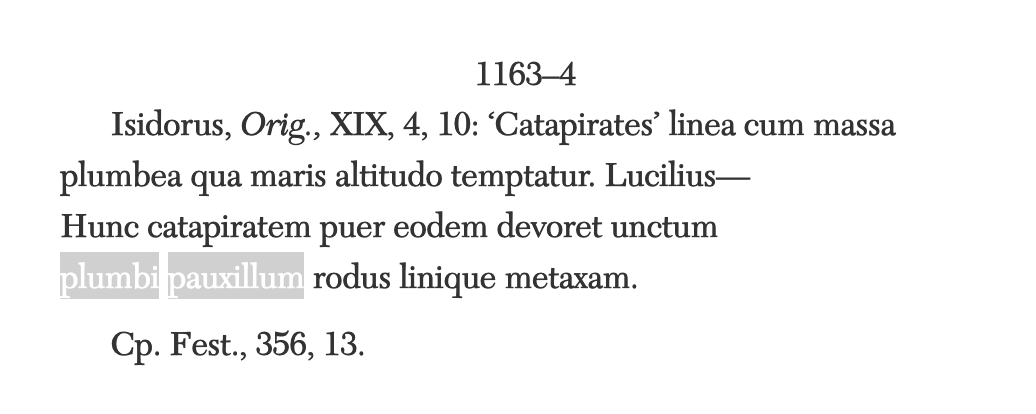
Rodus, vel raudus significat rem rudem et inperfectam; nam saxum quoque raudus appellant poetae, ut Accius in Melanippo: “Constit[u]it, cognovit, sensit, conlocat sese in locum celsum; hinc manibus rapere roudus saxeum grande[m] et grave[m]”; et in Chrysippo: “Neque quisquam a telis vacuus, sed uti cuique obviam fuerat, ferrum alius †saxio rudem†.” Vulgus quidem in usu habuit, non modo pro aere inperfec to, ut Lucilius, cum ait: “plumbi pa<u>xillum rodus li nique matexam”; sed etiam signato, quia in manci pando, cum dicitur: “rudusculo libram ferito”, asse tangitur libra. Cincius de verbis priscis sic ait: “Quemadmodum omnis fere materia non deforma ta rudis appellatur, sicut vestimentum rude, non perpolitum; sic aes infectum rudusculum. Apud aedem Apollinis aes conflatum iacuit, id ad rudus appellabant. In aestimatione censoria aes infectum rudus appellatur. Rudiari ab eodem dicuntur, qui saga nova poliunt. Hominem inperi tum rudem dicimus.” Rudentes restes nauticae, et asini, cum voces mittunt.
Working translation:
Rodus, or raudus, signifies an unfinished and imperfect thing; for the poets also call a rock raudus, as Accius in Melanippus:
“He stood, perceived, and recognised; betook And placed himself in a high place; thence seized In hands a huge and heavy unhewn rock.” [this quote is a modified Loeb trans.]
and in Chrysippus:
“Nor was anyone without a weapon, but they came together, some with iron, others with unhewn rock.”
The common people indeed had it in use not only as Lucilius says, for unrefined bronze, as when he says:
“a little lump of lead and a [fine?] cord [of flax? silk?]” [see below: Isodore also quotes this line with more context]
“In the same way that almost every material that is not deformed is called rudis, just as a garment is rude, as in not refined; so is unwrought bronze called rudusculum. Near the temple of Apollo was situated fused[?] bronze, which was called rudus. In census appraisals unwrought bronze is called rudus. Rudiari are called thus because they adorn new cloaks. We call an ignorant person, rudem.” [I’ve no idea what the penultimate sentence about rudiari means; I want it to be about rudiarii, i.e. manumitted gladiators, but I just can’t make it work to have that meaning.]
Rudentes [can mean either] the naval ropes, [or] the donkeys when they bellow.
—
Tangential update 1-19-23:
Quote from:
CRAWFORD, Michael H. Thesauri, hoards and votive deposits In: Sanctuaires et sources: Les sources documentaires et leurs limites dans la description des lieux de culte [online]. Naples: Publications du Centre Jean Bérard, 2003 (generated 19 janvier 2023). Available on the Internet: <http://books.openedition.org/pcjb/878>. ISBN: 9782918887218. DOI: https://doi.org/10.4000/books.pcjb.878.
He translated asses as money but I think given how many actual asses one finds in these things perhaps we should leave it be in the original language.
Turns out there are two sets of the photographs of Nemi finds taken by Lord Savile, not only the ones in the BM I’ve been trying to located but also in Nottingham. These aren’t fully digitized (yet), but the internal collections database has turned up wonderfully detailed descriptions of each print AND notes on how they correspond to photographs in the BM. So the BM photos exist clearly, and once I get the funds to go see the Nemi coins in person, I’ll also be able to study the photographs (maybe, hopefully even share them). I’ve seen one sample image and it is of high quality and the coins are legible (but only one side). I’m particularly interested that the photos seem to specify WHERE on the site the coins were found and other materials from the same find spot.
I wonder if Lord Savile kept a journal and if his personal papers are on deposit in some accessible archive…
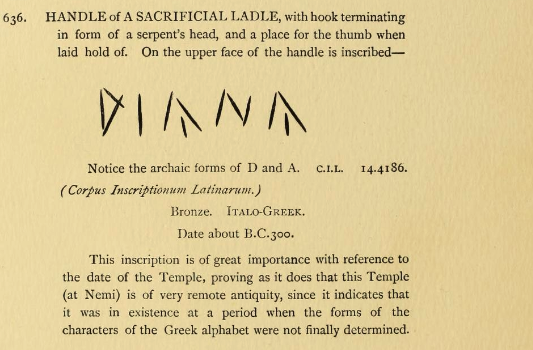
I’m also delighted with this report of a base to go with one of the small bronze statues. So often those figures are de contextualized from their original function, I find this satisfying to know of:
I’ve been overestimating what I can get done in a day. I’m going to try to put less on the today list.
Today
BM archivist reply
Review grad student apps by Jan 19
LETTER
Other email correspondence as necessary
Not Today (but maybe tomorrow, or the day after)
post conference Rome accommodation
Teaching requests for Fall 2023
Circle back to department about any Jan planning meetings
Set time table for any collaborative RRDP work/publication prep that needs to happen this semester: Chicago pub, INC pub, collaboration with RACOM, etc…
Circle back to Capito project
Consider ask for funding from Dean’s office
Begin Med school rec letter
record mini myth
find out what is on that v old harddrive and back up to cloud
I was getting my brain warmed up trying to think of the monetary landscape in the pre 1st Punic War period. So I looked at RRC 13/1 distribution and colonization efforts again and that got me thinking what I knew about the coinage of Venusia.
Luckily “past me” had ordered Burnett 1991, so I found a pdf on file. I was interested in the idea that the fractions might be on a different weight standard than the whole unit. I’ve not looked at the fractional weights but I thought I’d see if I could re look at the data and include any specimens not known to Haeberlin (his plates). I only found one in trade and the one illustrated above in the ANS. I’ve found none in: Oxford, Yale, Princeton, Cambridge, Michigan, Capitoline, IKMK (I’ve not checked my Copenhagen or Glasgow image files yet). With only 13 specimens no average or median is going to be very conclusive, but a box and whiskers gives some idea of shape of the data. A close cluster with relatively short whiskers and two extreme outliers.
I don’t know where the Hoard of 5 specimens found in 1903 and purchased by Haeberlin ended up. It is this hoard’s find location that has lead to the association of the type with the colony.
There is some relatively recent bibliography that I’d like to read on the colony:
Stek, Tesse D.. “Motivazioni e forme alternative dell’espansionismo romano repubblicano: il caso delle colonie latine nelle aree interne appenniniche.” In Paesaggi mediterranei di età romana : archeologia, tutela, comunicazione, Edited by Mastrocinque, Gianluca. Bibliotheca Archaeologica; 47, 135-146. Roma: Edipuglia, 2017.
Casarotto, Anita, Pelgrom, Jeremia and Stek, Tesse D.. “Testing settlement models in the early Roman colonial landscapes of Venusia (291 B. C.), Cosa (273 B. C.) and Aesernia (263 B. C.).” Journal of Field Archaeology 41, no. 5 (2016): 568-586. Doi: 10.1080/00934690.2016.1211474
Grelle, Francesco. “Le colonie latine e la romanizzazione della Puglia.” In Epigrafia e territorio, politica e società : temi di antichità romane. 8, Edited by Pani, Mario. Documenti e Studi; 42, 165-199. Bari: Edipuglia, 2007.
Perhaps I’ll diagram weights of the smaller denominations next…
Today
BM conservation reply
BM archivist reply
Cancel at least one more digital membership
renew Coinarchives
Review grad student apps by Jan 19
Banking documents
LETTER
Other email correspondence as necessary
PROOFS
PEER REVIEW
Not Today (but maybe tomorrow, or the day after)
post conference Rome accommodation
Teaching requests for Fall 2023
Circle back to department about any Jan planning meetings
Set time table for any collaborative RRDP work/publication prep that needs to happen this semester: Chicago pub, INC pub, collaboration with RACOM, etc…
Circle back to Capito project
Consider ask for funding from Dean’s office
Begin Med school rec letter
record mini myth
find out what is on that v old harddrive and back up to cloud
Good news, the Cesano pdf arrived. Bad news, no photos of republican specimens. Also, based on the lamp article I was expecting more republican material and lots more coins overall, ho hum.
Still it is interesting that they are ALL asses no other denominations… does that make it more likely they are ritual deposits?
“When I mapped findspots for #NotAllElephants I used “Find spots taken from Vecchi 2014, pp. 29-31 with the addition of Lavinium, Sutri, Viterbo, and the region north of Naples.”
I’m worried I might have missed the following find spots from Garrucci’s list, but they could be listed in Vecchi under another place name!
Ardea (area of the Rutules)
Tarquinii
Fabbro near Orvieto
Fiesole
Now if I’d mapped in Google Earth this would be much more simple to reconstruct and check. Doh. I’m going to leave the question for today, but definitely want to circle back and follow up.


















 Liv Mariah Yarrow