Ringlets to Evoke Africa

My brain is very full, my feet tired, and my data storage on my phone threatening to burst. Sometimes one must stop and think and try to integrate everything. So here I am with a negroni just a bit up the via Flaminia at a cafe devoid of other tourists, looking through my snapshots and trying to think about why each thing caught my eye and how not to forget those I care to remember. I started a photo round-up post but that took took long. Instead I think I will give each idea its own post as it seems appropriate.

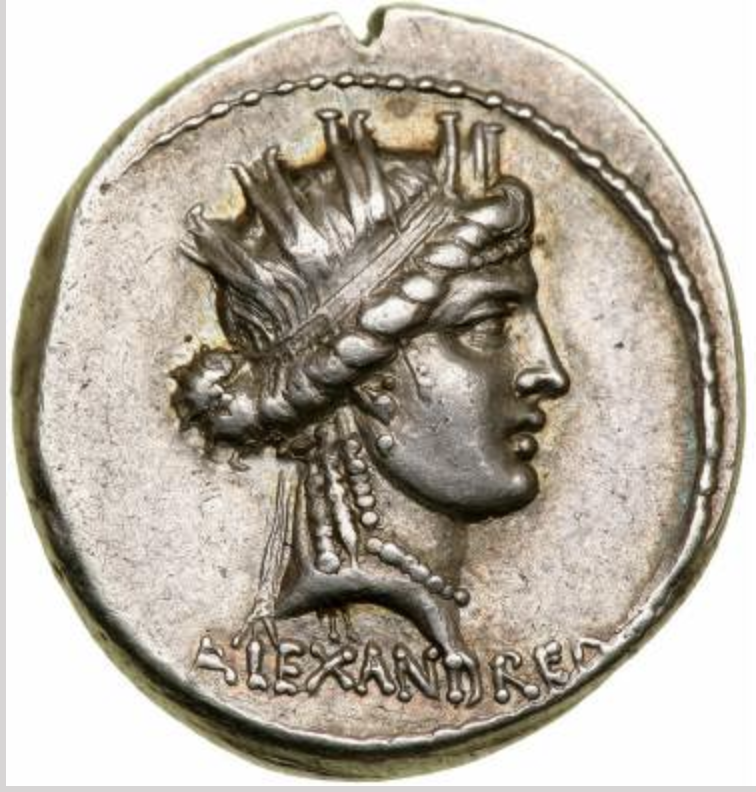
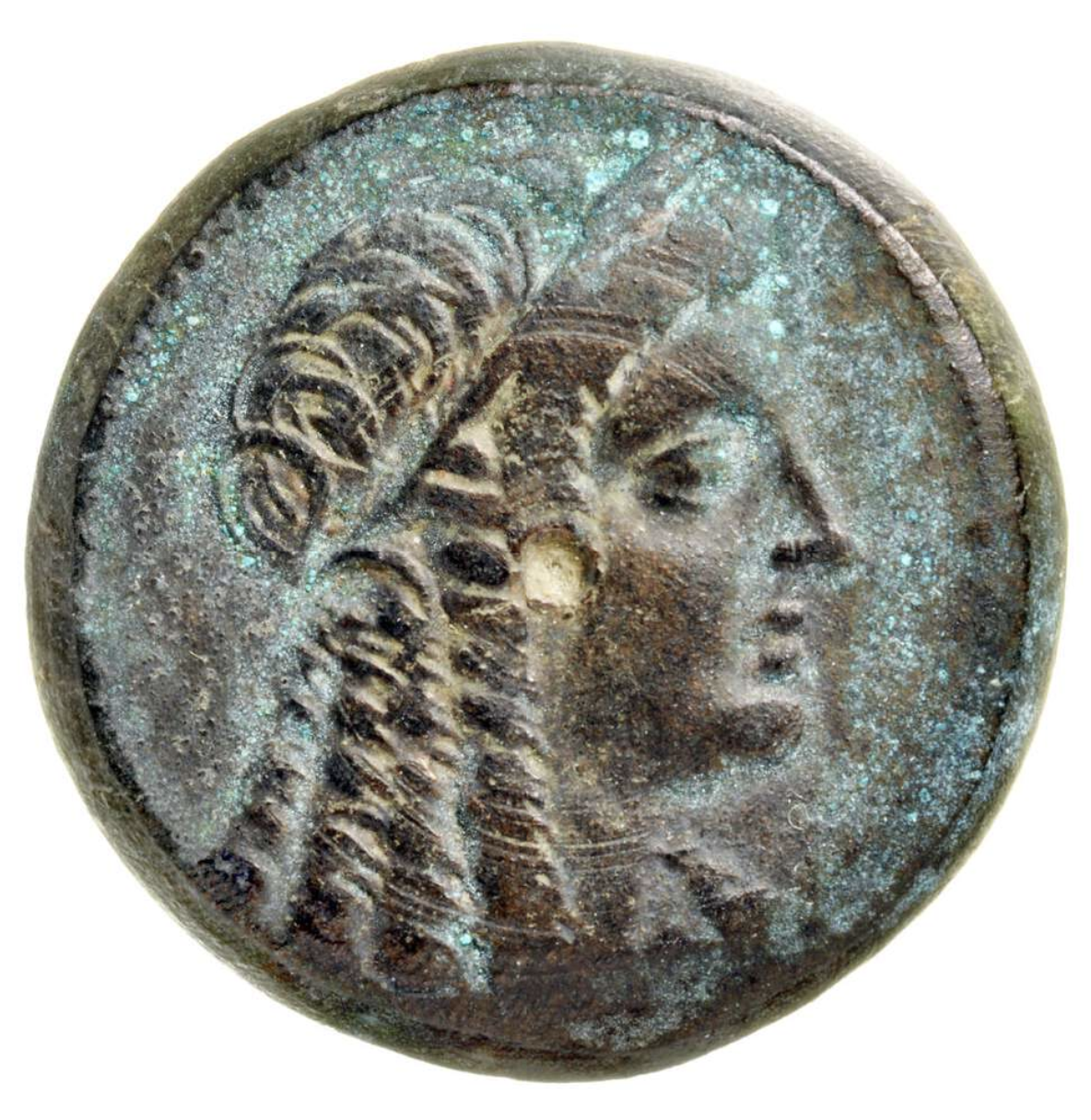
Yesterday Julian Oliver and Thomas Faucher gave a fantastic discussion on the likely recalling of bronze coins, their melting down and re-issuing in Ptolemaic Egypt. One such in the mid 150s and and other in the 50s BCE. On their slides were two lovely coins of series 6 and 7 which had a female head with distinctive ringlets, Isis is the typical identification but I’m not sure we can say for sure. I often say such ringlets evoke Africa for the Romans and while I can point to Roman examples. I like this iconography for how it shows pre existing Ptolemaic usage of the imagery.

Notice particularly how one can the central drill mark and radiating concentric circles on the flan. (BM specimen)
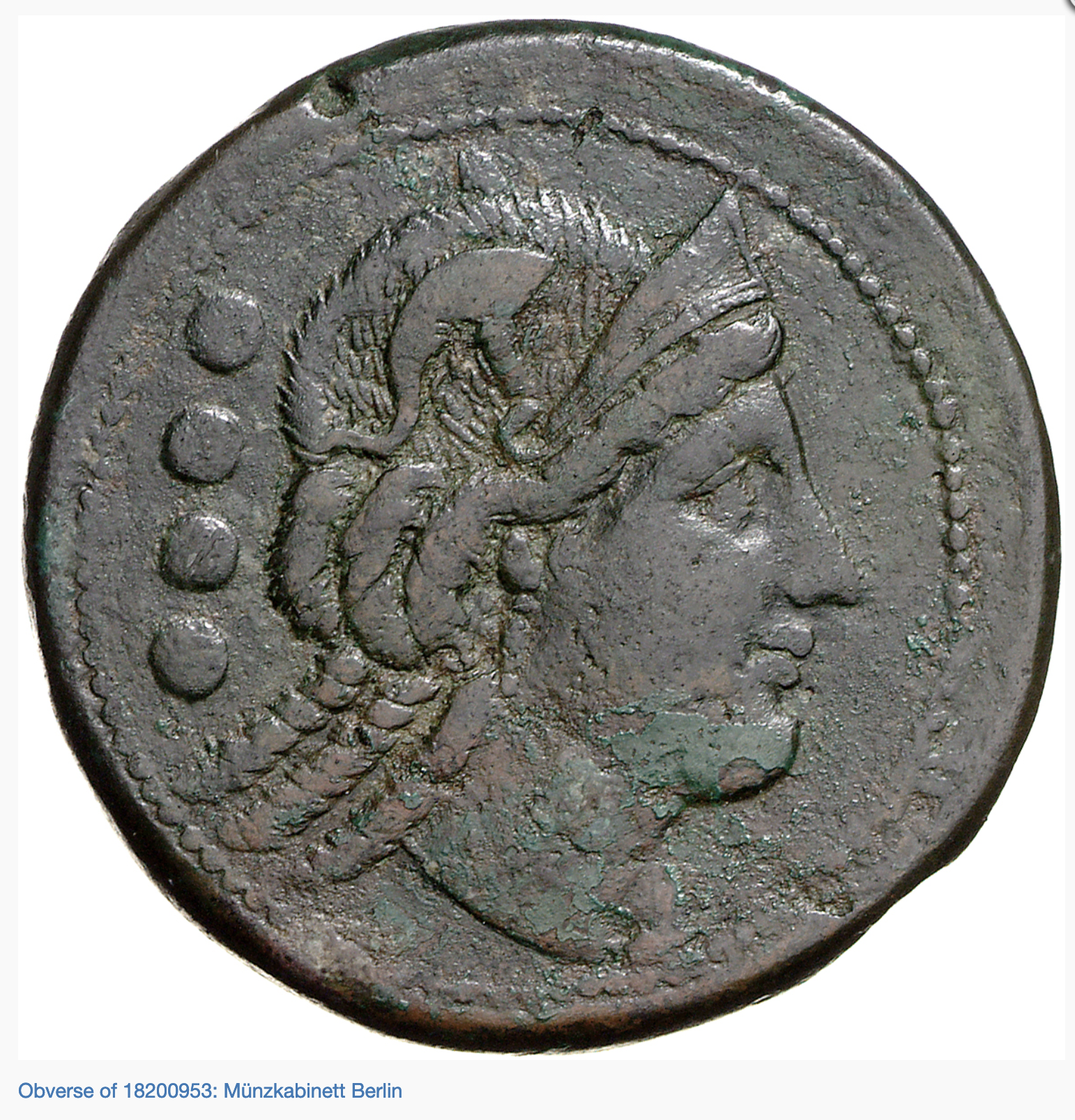
Image from Wildwinds; RRC 419/2
RRC 39/1

Ptolemy X Alexander’s Will

I’m reading:

Badian, E. “THE TESTAMENT OF PTOLEMY ALEXANDER.” Rheinisches Museum Für Philologie 110, no. 2 (1967): 178–92. http://www.jstor.org/stable/41244326.

For context see under 86 BCE in previous post.

He’s focused on testimony in Cic. Agr. 2.41. Here’s the Loeb from 1930 so you can follow along, but I’m reading Manuwald’s text translation and commentary from OUP 2018.

Manuwald brings in a note from Schol. Bob. on Cic. Reg. Alex. to support her interpretation:

on the previous page she notes “An absolute date for the embassy is not given”

Badian re hashes the idea that the King Alexander might be Alex II Pt XI before dismissing ID, but Manuwald doesn’t even both with mentioning alternative confidently IDing king as Pt X Alex 1 (d. 88) strangely without citing Badian. (sorting out the Ptolemies is famously confusing, earlier post)

Here’s the crux of Badian’s reconstruction (p. 189):

He thinks that Lucullus came to late to Tyre (p. 189):

So Badian doesn’t trust the Scholiast quoted by Manuwald, but is willing to believe the Cinnan regime got the money and then relieved itself of 3/4s the repayment. I’m generally inclined to think that Badian is over optimistic in his reconstruction, unless we can come up with better proof that Eastern silver flowed into Rome BEFORE the return of Sulla.

Badian ends with this observation (p. 192)

What would be proof of such an influx? Maybe a different trace element profile?

Dating RR coins! New Article Alert

This is super important work by Kris Lockyear published in 2022. I can’t read today as I fly to Rome tomorrow and I’ve got other stuff that MUST be done, but I’m really really keen to dive in. (Link to full article) How was this type of dating done in the pre computer age? I have a v old blog post on this topic. While this article is about methodology, there are very practical applications as shown by:

Lockyear, K. 2018. Mind the Gap! Roman Republican Coin Hoards from Italy and Iberia at the End of the Second Century BC. Numismatic Chronicle, 178: 123–164.

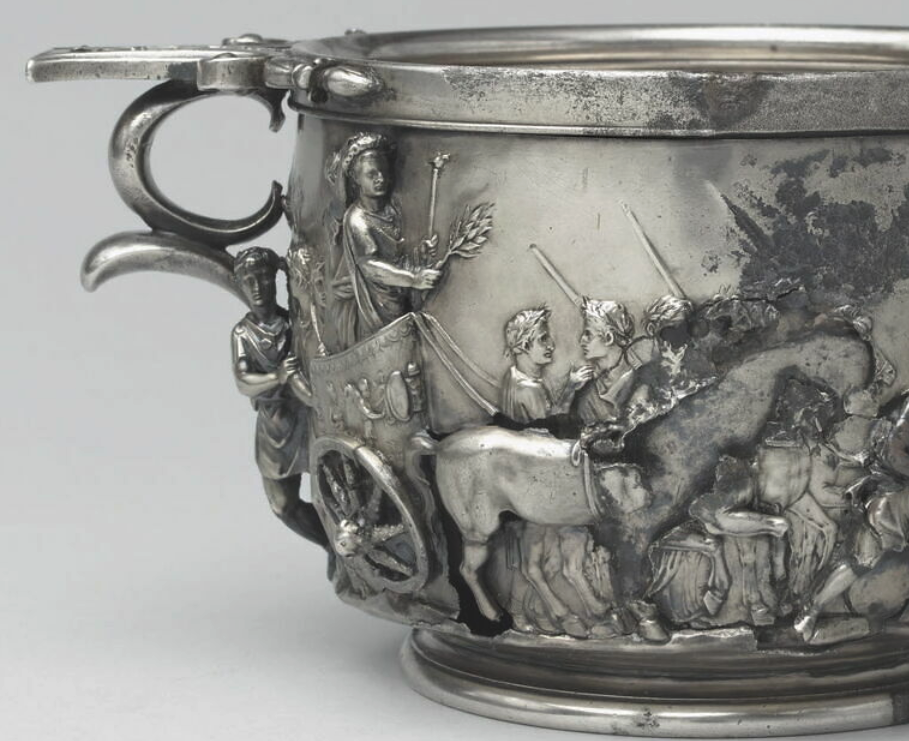
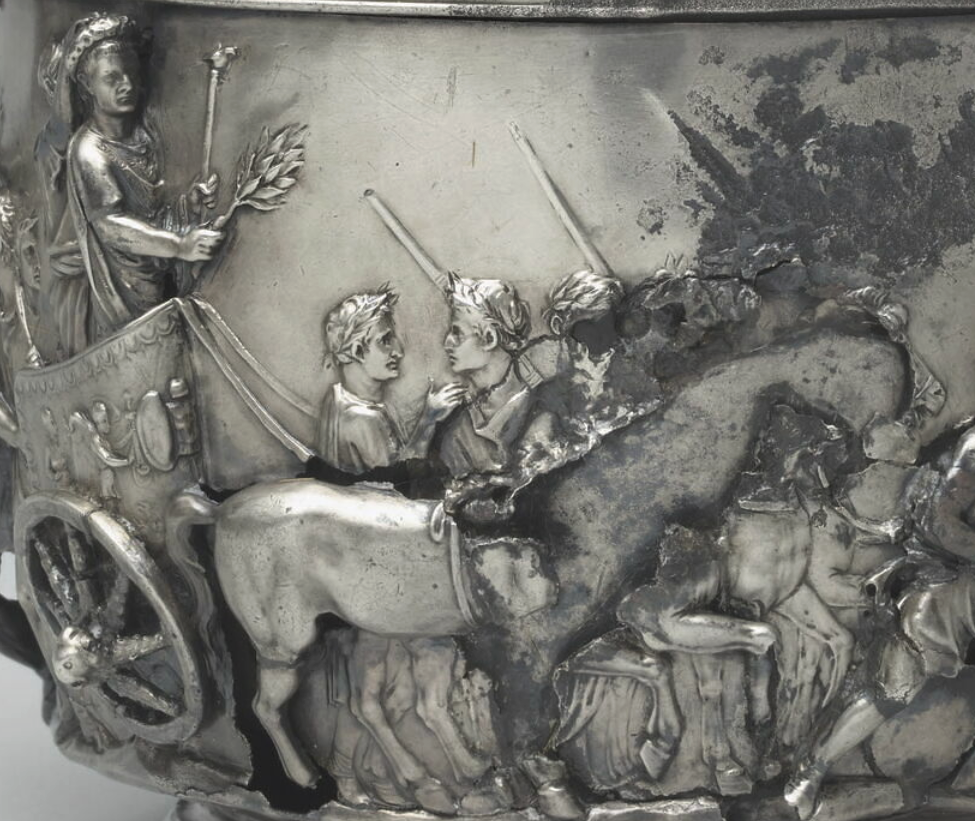
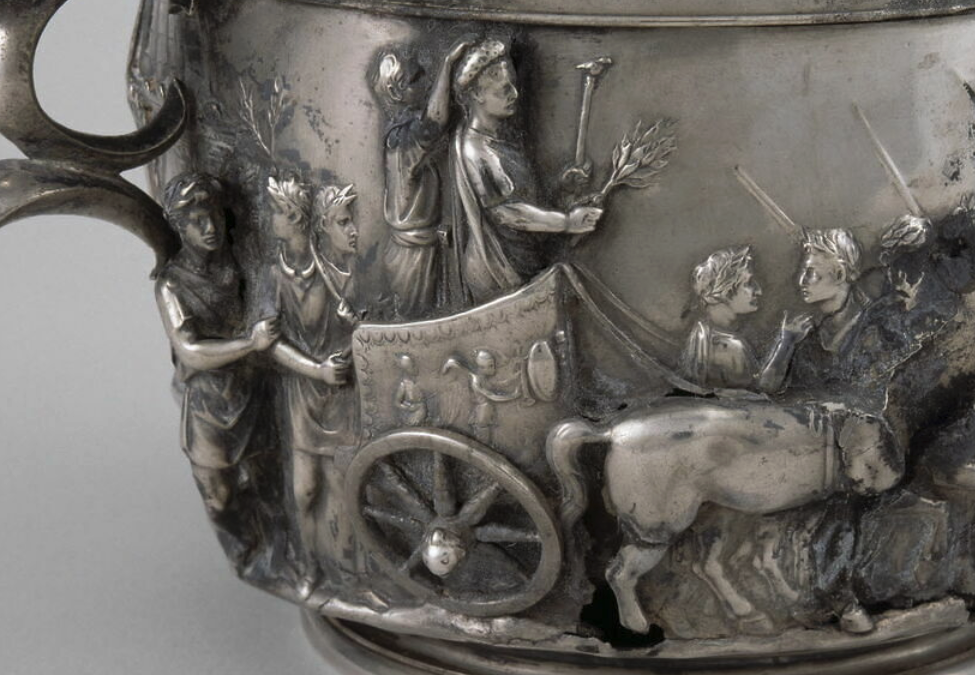
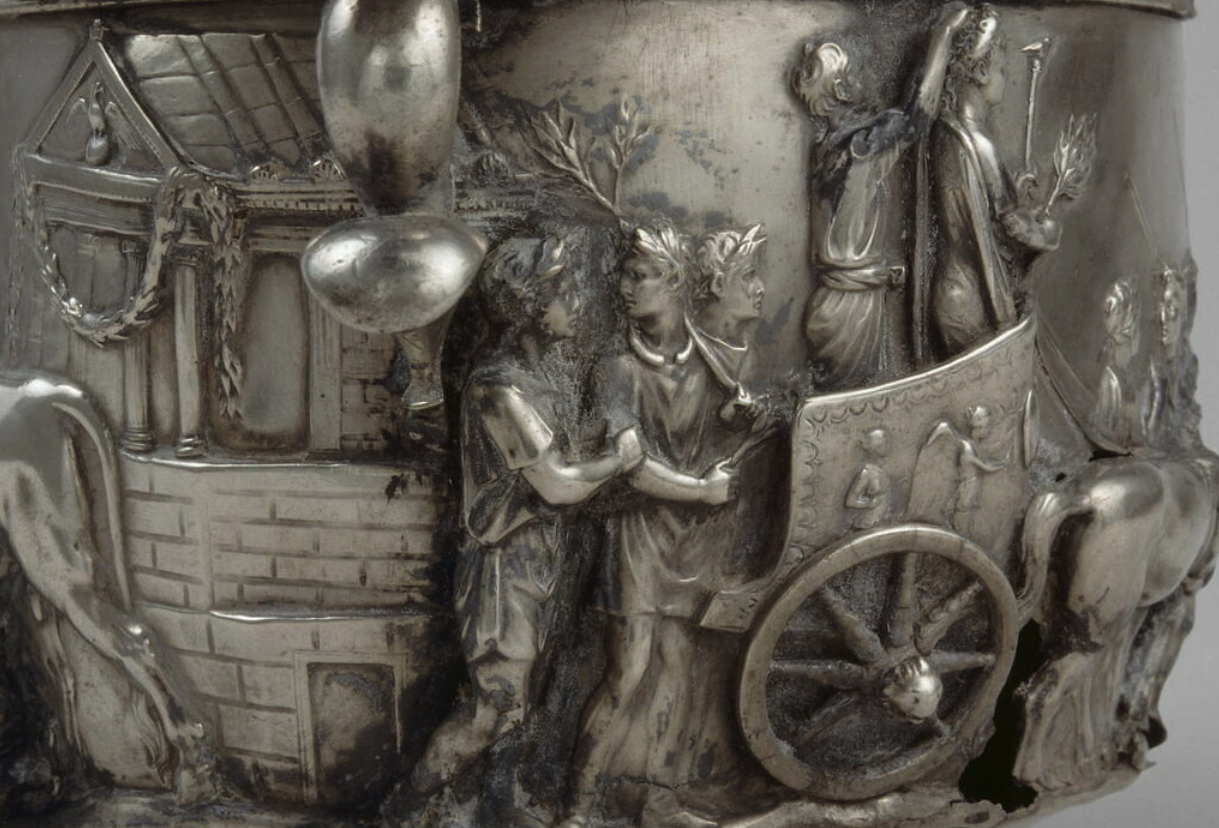
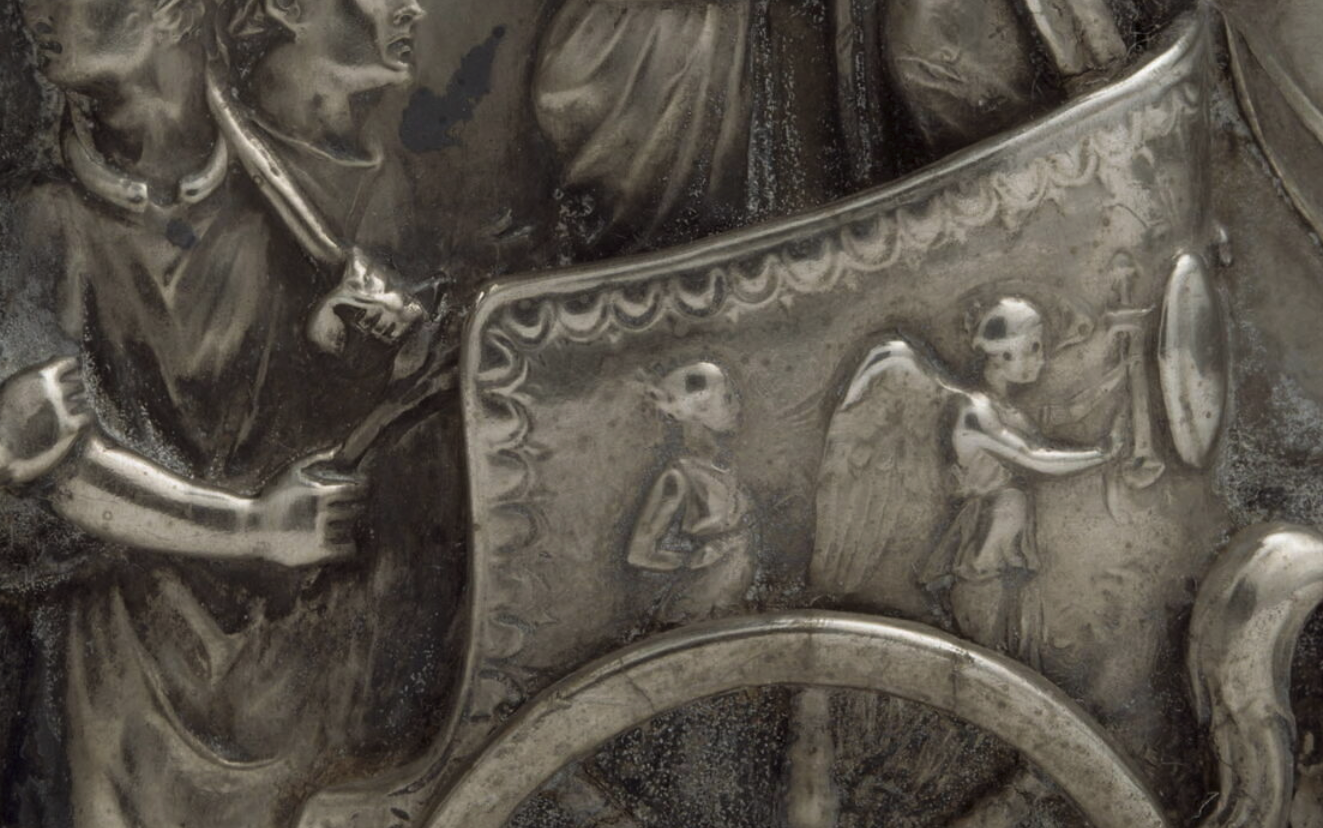
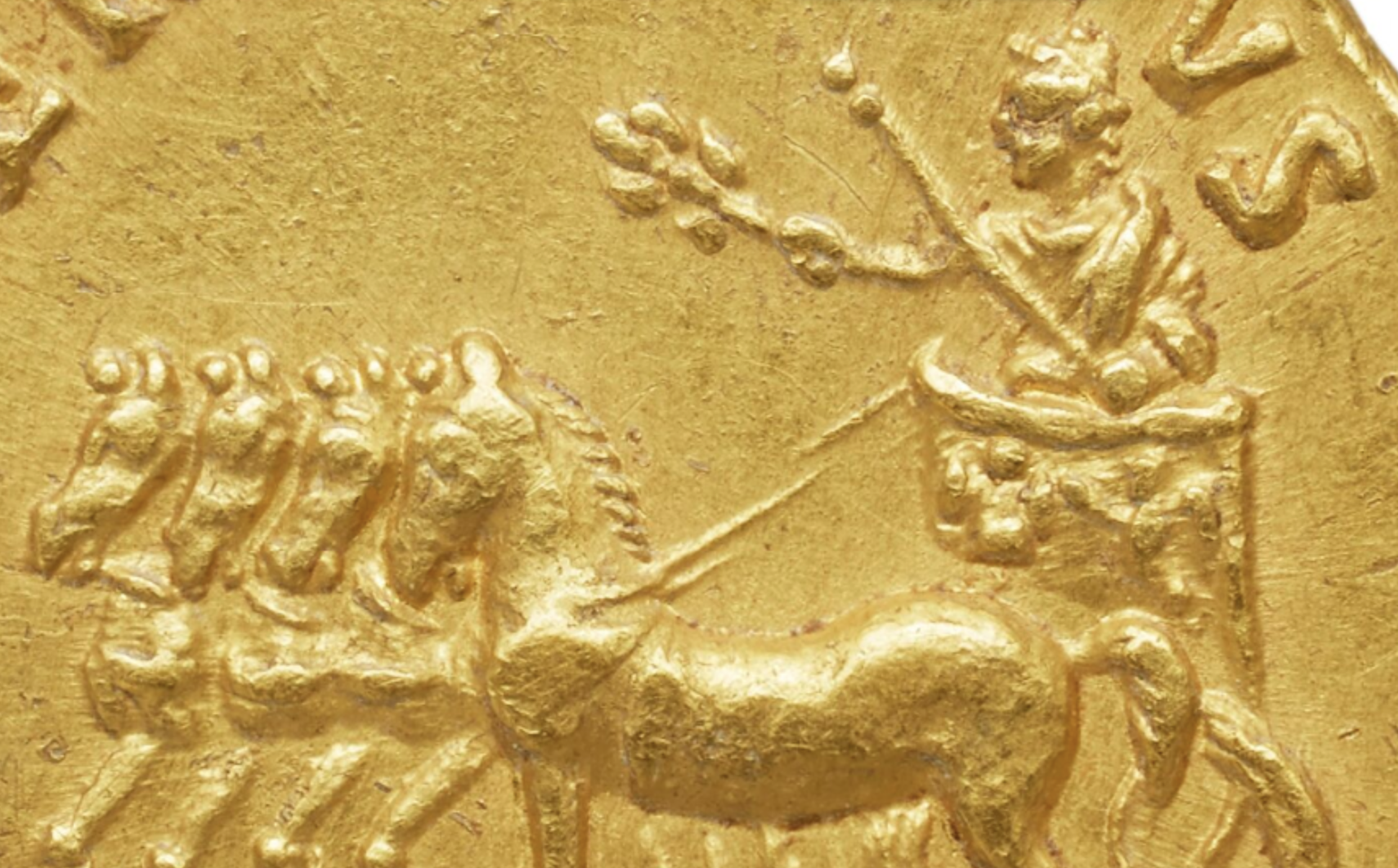
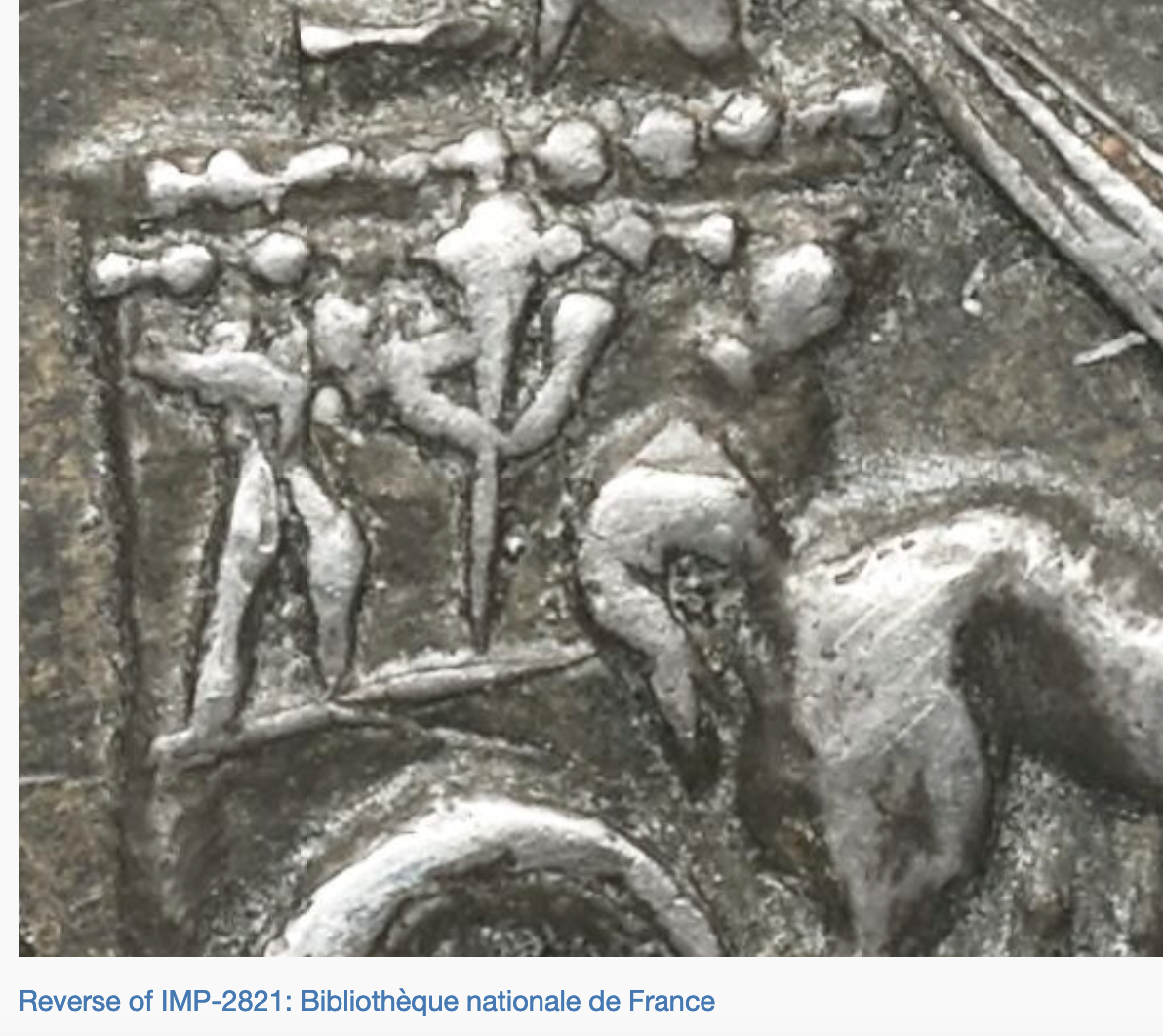
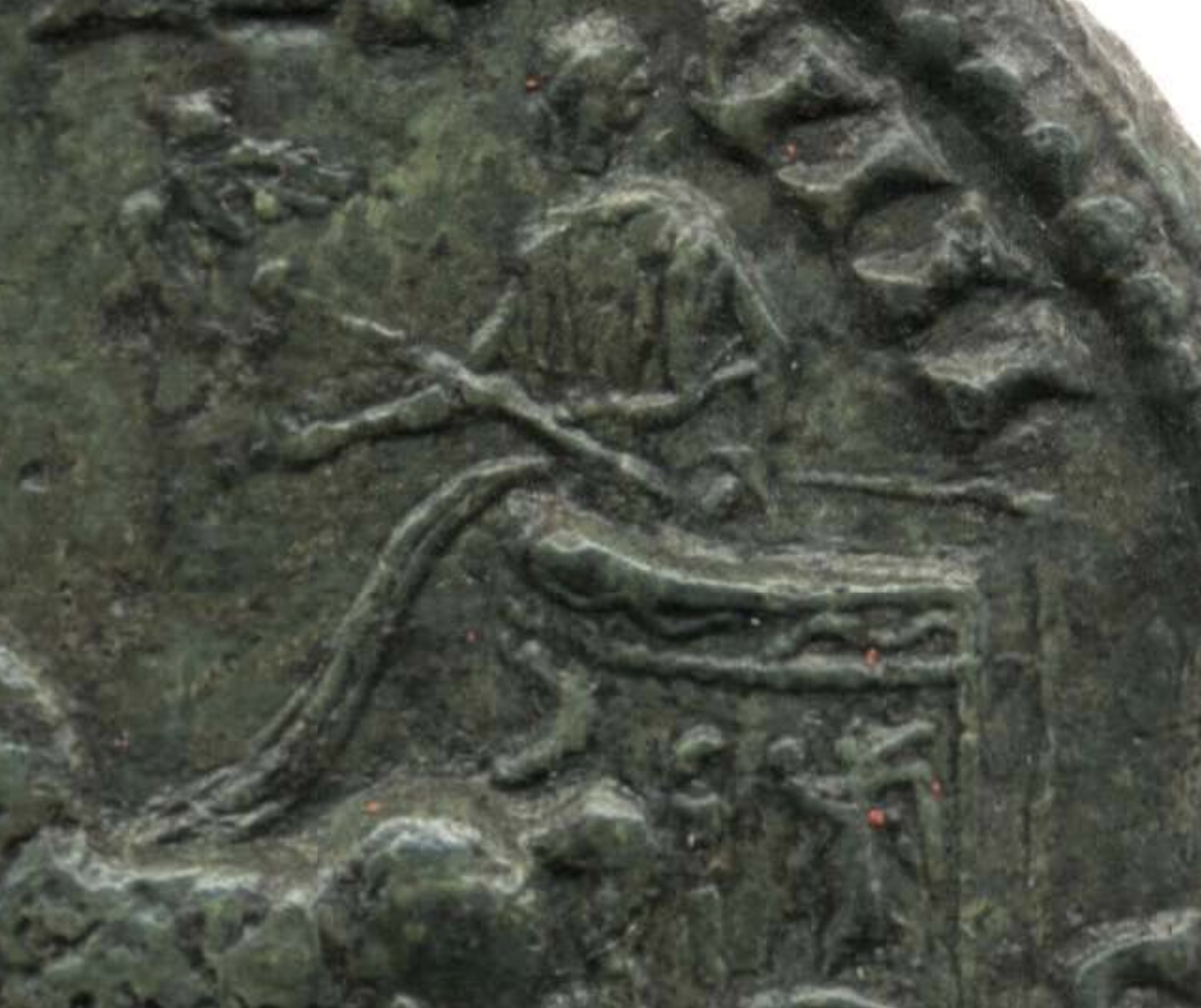
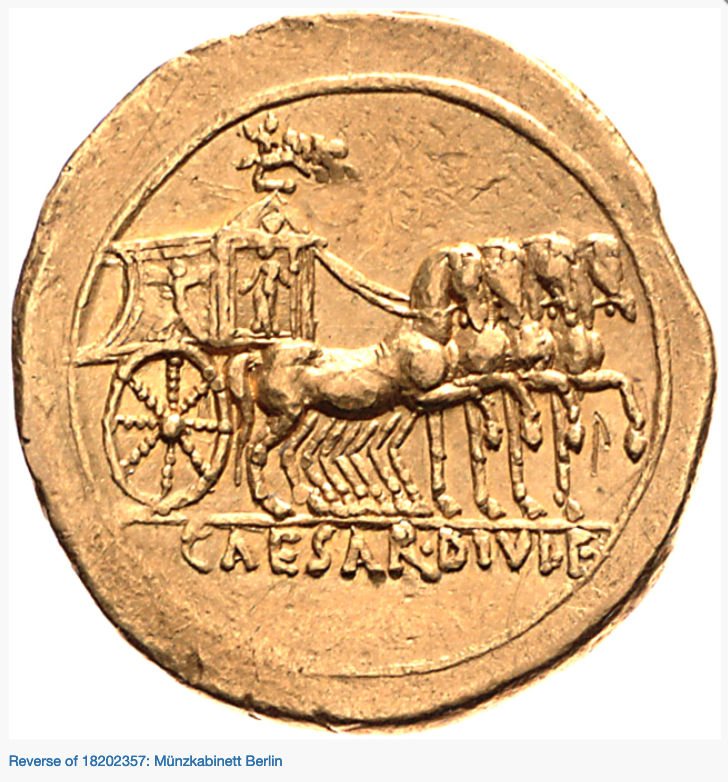
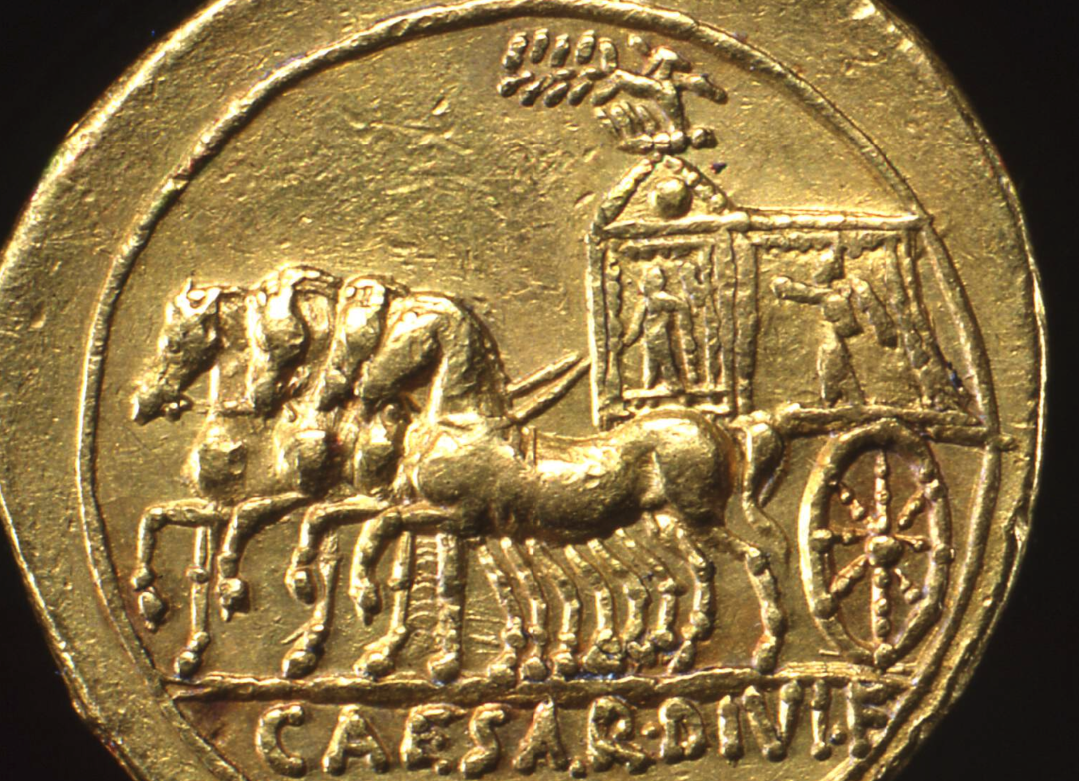
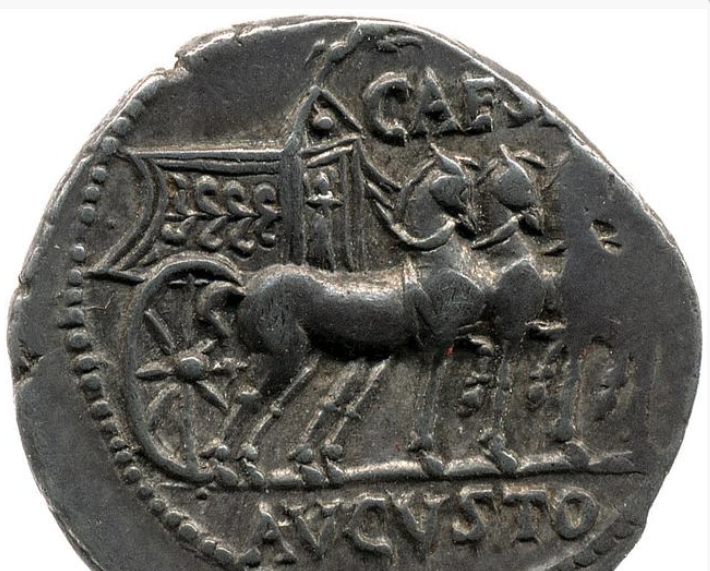
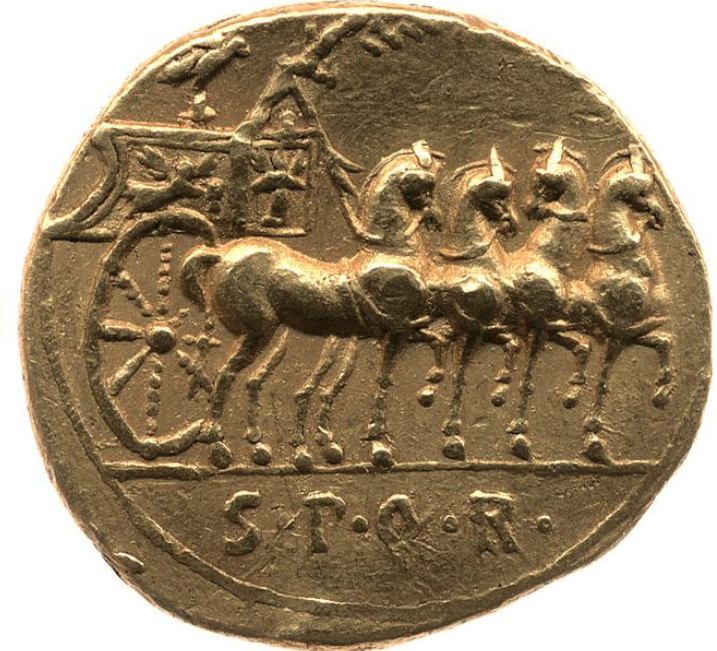
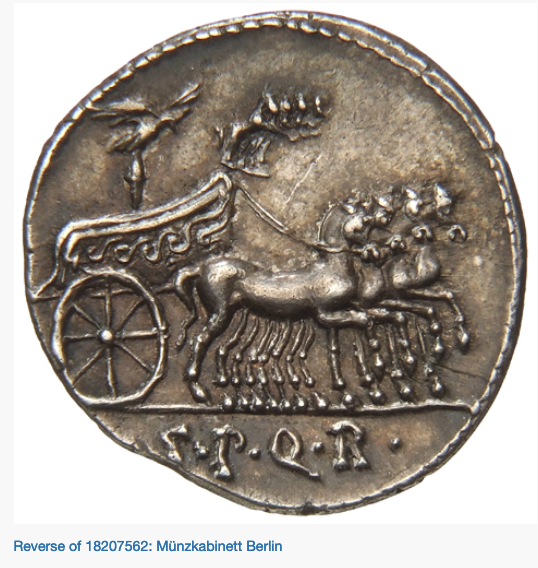
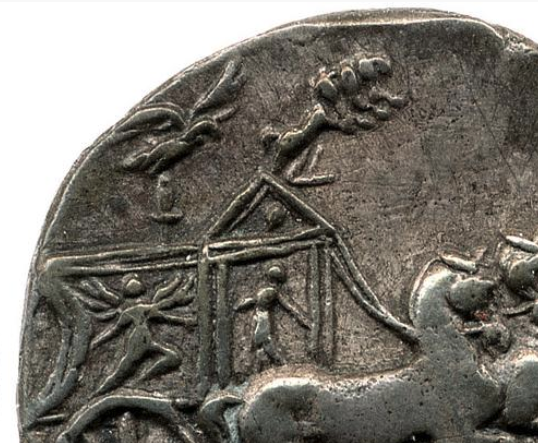
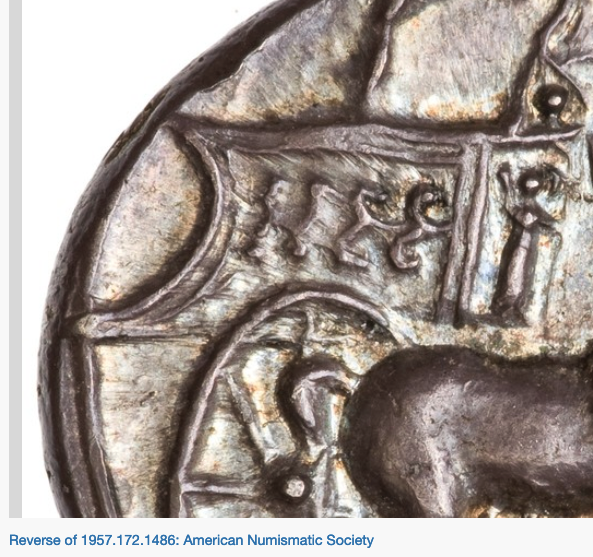
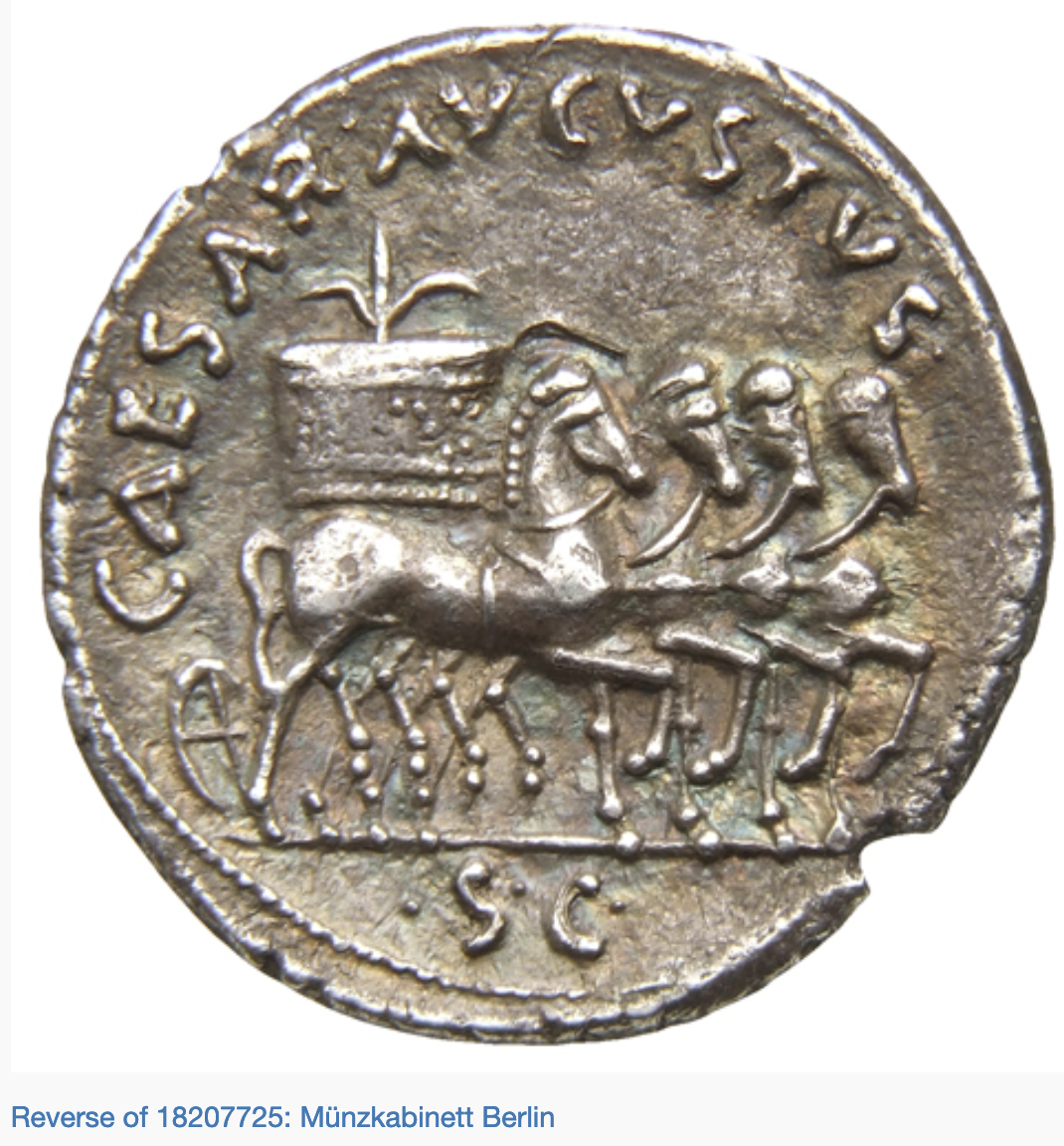
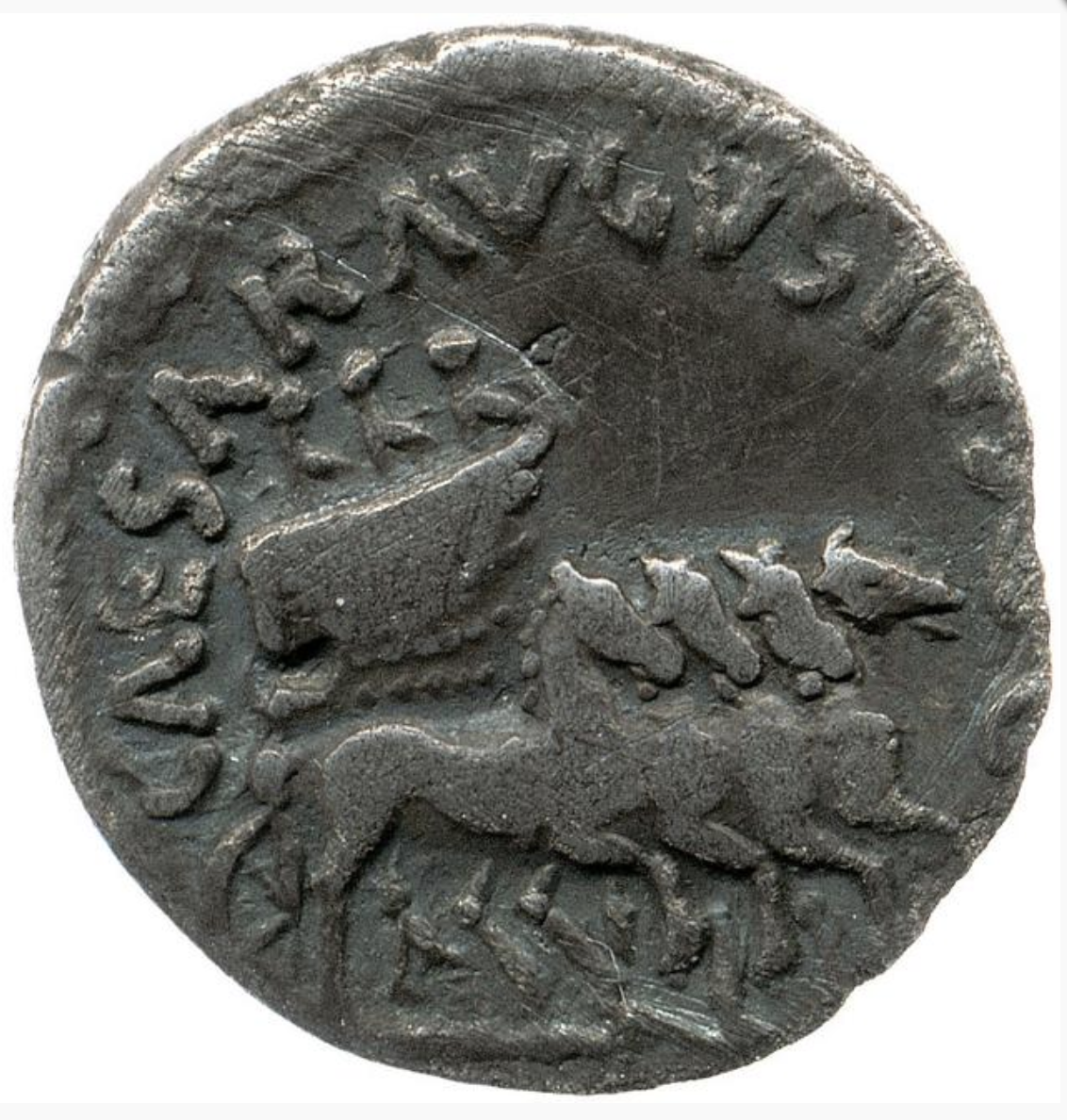
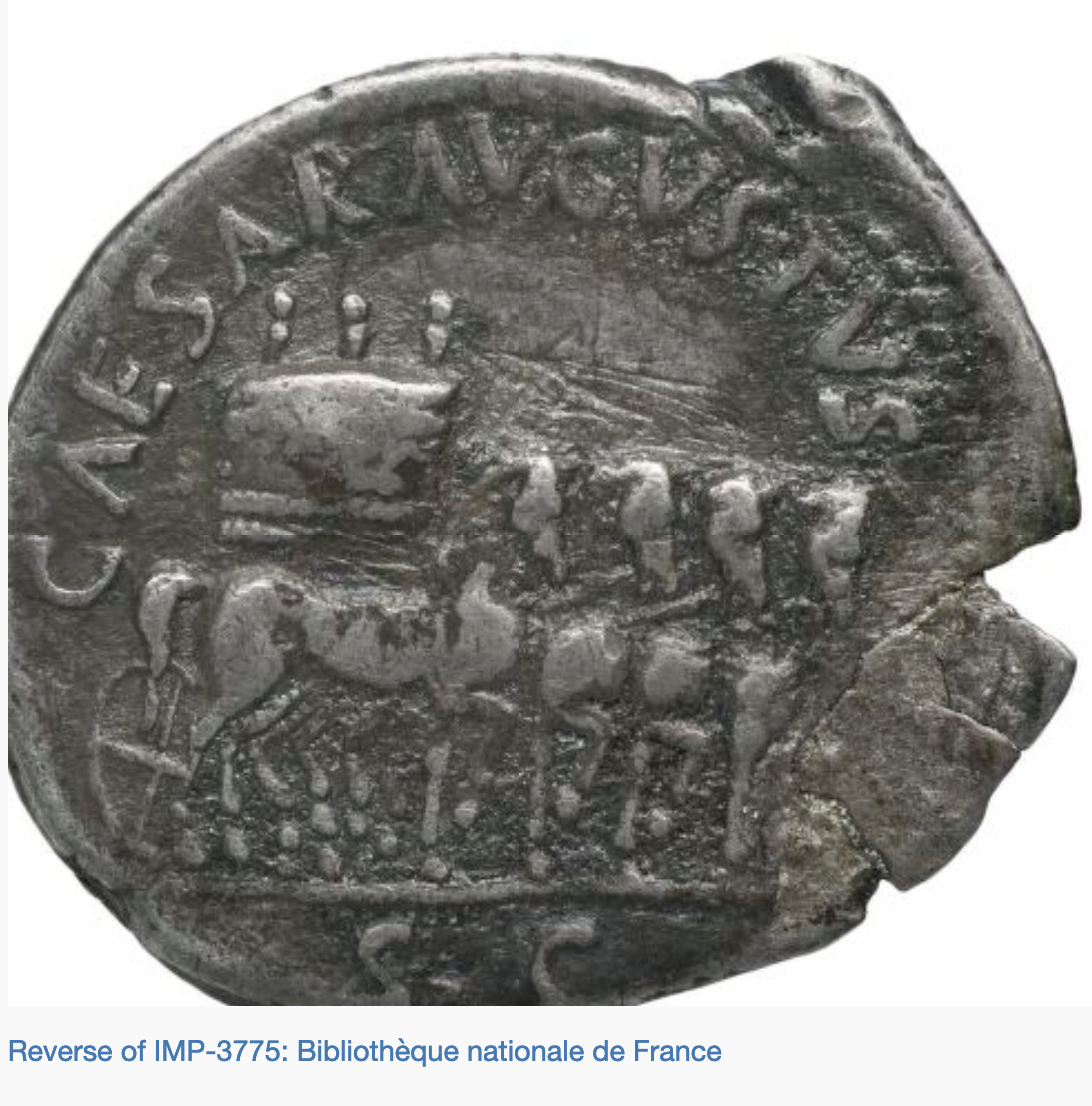
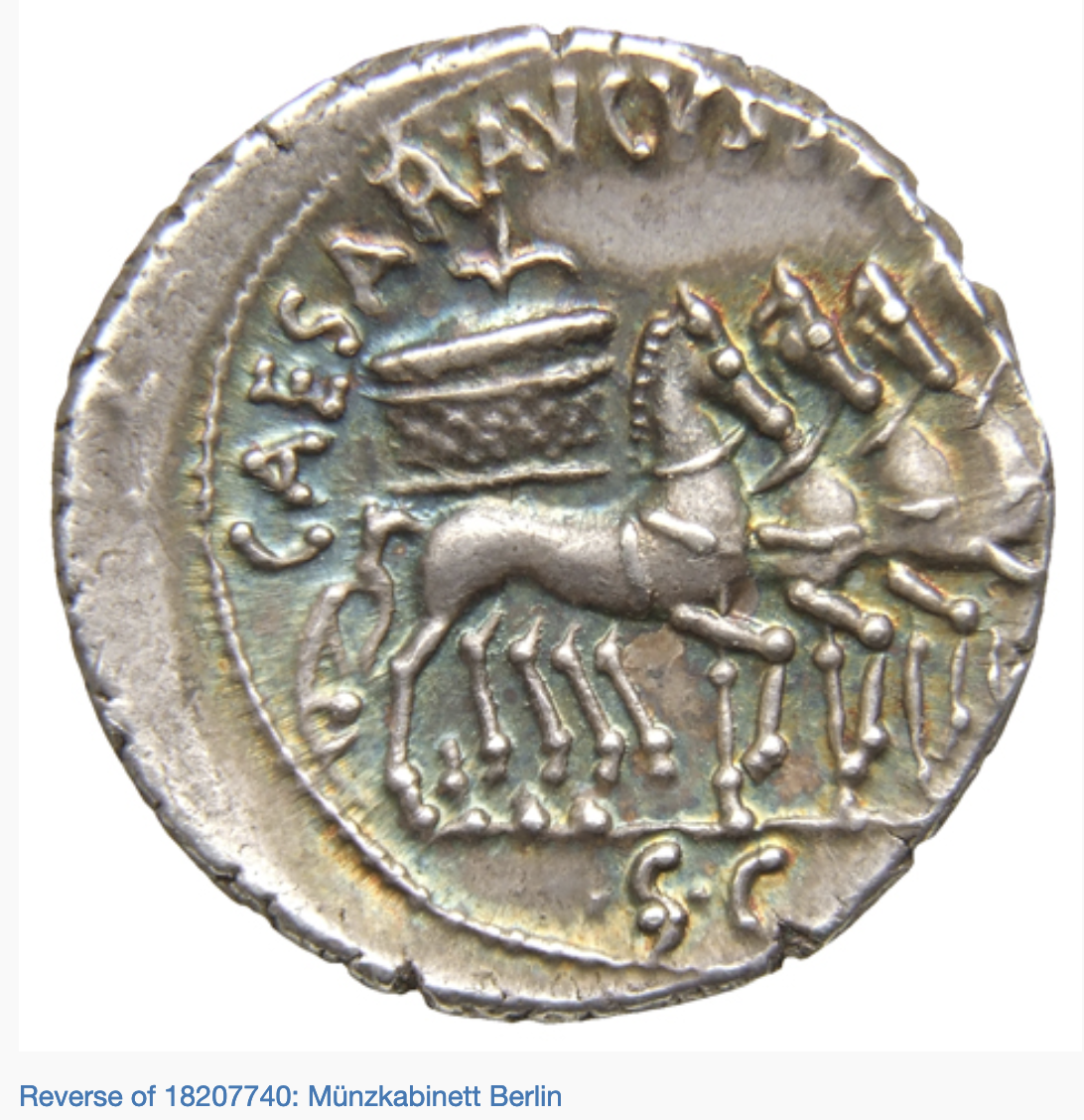
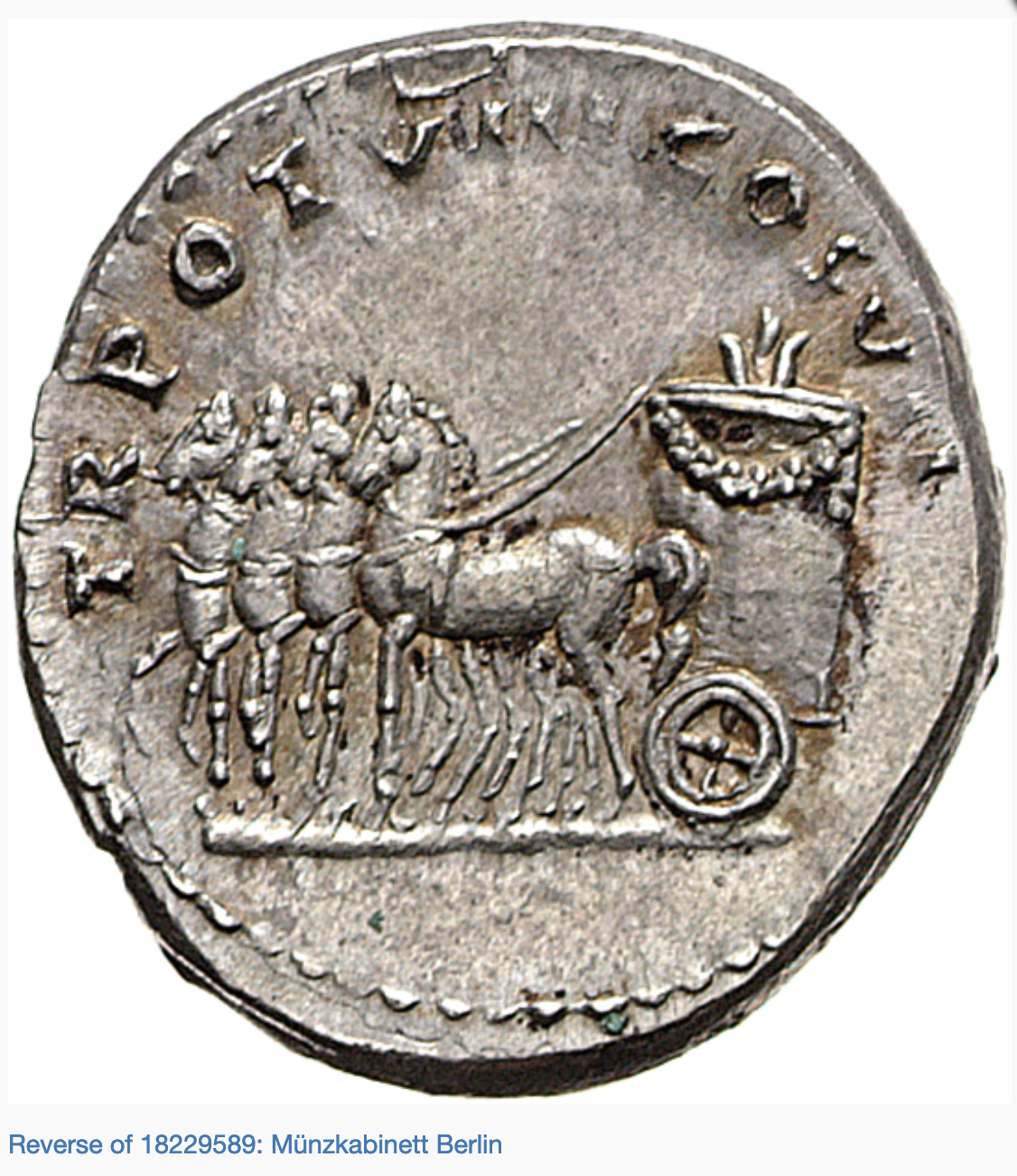
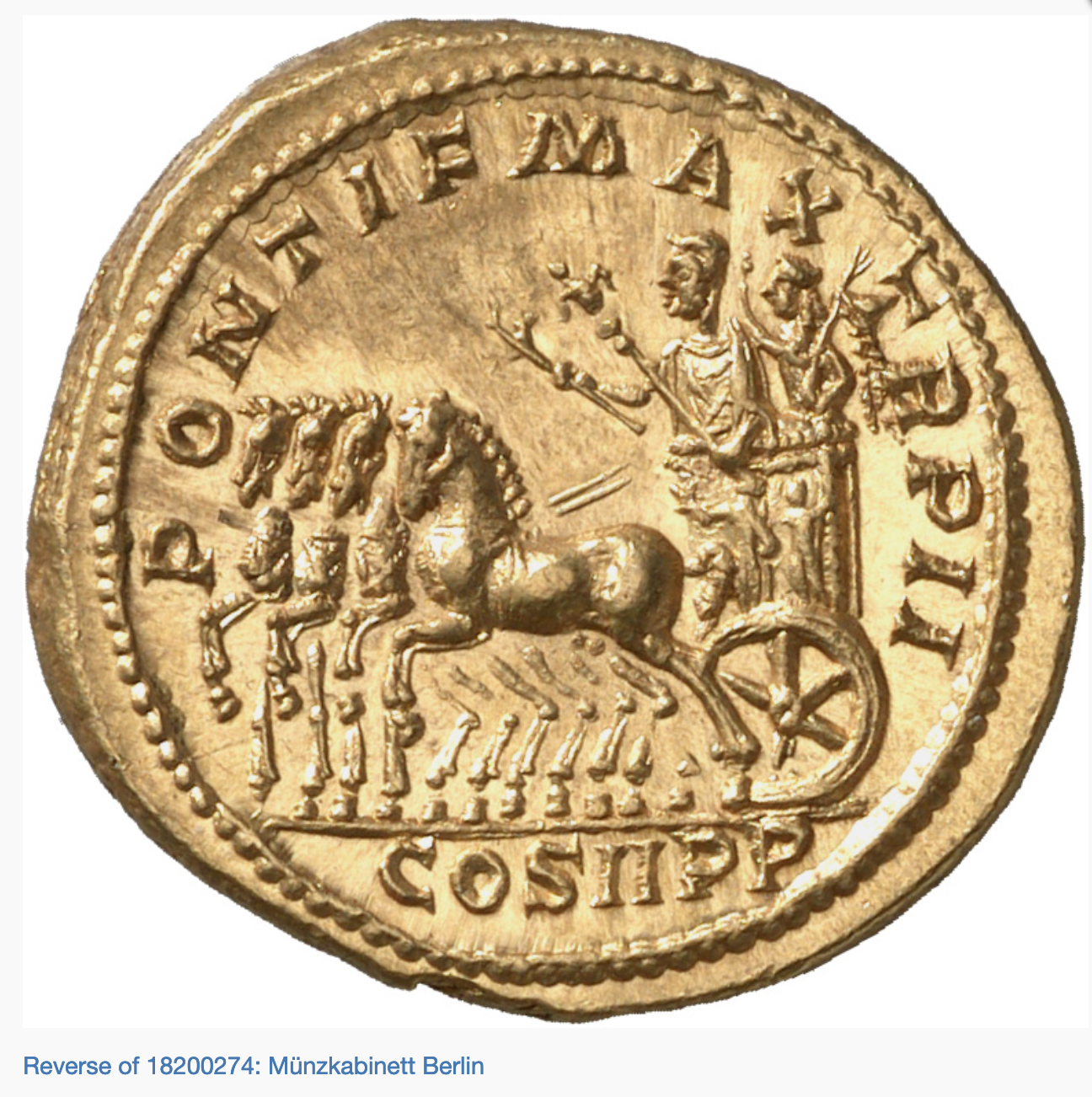
99 of 234: Triumphal Chariot Car Imagery

I’m thinking of the Dossenus denarii (RRC 348) and wanted some visual comparisons. This round up is incomplete. I’ll drop in other examples as I come across them.

Trésor de Boscoreale : skyphos (Louvre)

Vespasianic Bronzes:

Domitianic Gold. All have victory crowning trophy on triumphal car but none v clear. This is the same as the rare Trajanic aureus and denarius with similar imagery.

detail of a Paris specimen
Clearest of the v indistinct Trajanic specimens in OCRE
A rare as of Commodus (BM)

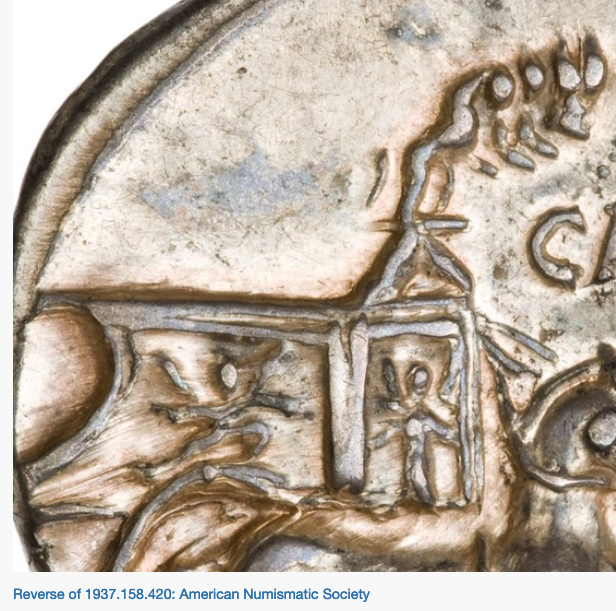
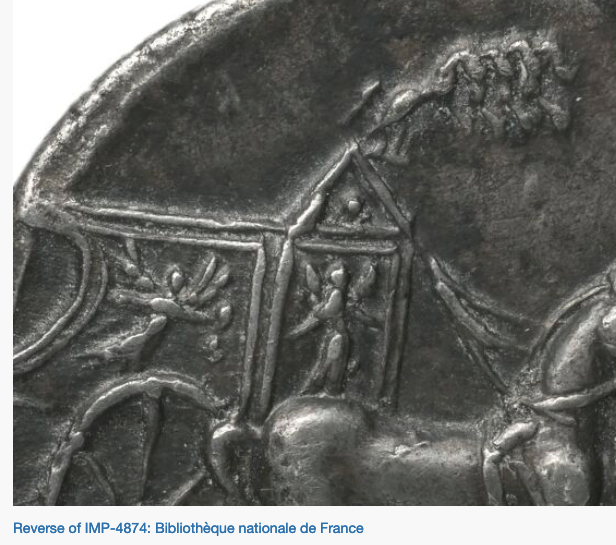
Augustus’ “slow quadrigas” There are a variety of car designs here that are not searchable in OCRE. Victory/Standing Figure with Scepter; Victory/Victory; Vegetal pattern and figure; just swirls

Under Augustus there is also a slow quadriga from the period of the revival of the III-viri. Florus’ uses dies with three distinct car contents but RIC did not differentiate these.

Fulmen(?) type:

Three rider(?) type:

A variant of the three rider(?) type, maybe we could call it the peg type for now:

Durmius only has the fulmen type on OCRE Specimens, but i wouldn’t be surprised if there was die sharing and we could find rider/peg reverses in trade. A rabbit hole for another day.

The most elaborate of the slow quadrigas is that on the coinage of Nero honoring the divine Claudius. A type revived by Titus to honor Vespasian.

Under Vespasian the fulmen type reappears again identified in RIC as a basket car with three corn ears. Doesn’t look like like grain to me but maybe?!

From the Antonines onwards RIC uses Slow Quadriga to identify many scenes that are clearly triumphal. A small selection follows.

Macrinus:

Elagabalus:


Self accountability section

I need to change my many many relevant blog posts into some slides and notes for next week, but at least I know basically what I think at this point. I’d love to do more with the hoards but maybe that just has to wait. UK logistics 95% sorted. Just waiting to hear from a friend about dates and then I’ll book my flights. Need to book a hotel for a few nights in Rome, cannot believe I left that this late. I fly out tomorrow. Loving my RRDP team. Zooms with my colleagues are really very useful to for structuring my work. Must go join one now!

The verb “probare”

I’m concerned at present as to what probare might mean in Pliny NH 33.132 and most of my thoughts on this verb in Roman political discourse go back to the third century: probare is something that happens to both bronze coins and also ship rams in the 1st Punic War (earlier post, follow up; see previous post under 86 BCE for context of why this Pliny passage matters). This blog post is to round out my understanding of its usage in formal governmental contexts, esp. to describe the action of a magistrate.

eum libellum Caesari dedi. probavit causam, rescripsit Attico aequa eum postulare, admonuit tamen ut pecuniam reliquam Buthrotii ad diem solverent. Cic. Att. 16.16a actually a copy of a letter addressed to Plancus as praetor-designate, 4 or 5 July 44.

I gave Caesar the document. He approved the case, and wrote back to Atticus that his request was reasonable, with a warning however that the Buthrotians must pay the sum outstanding punctually. (S-B trans.)

Haec illo vivo. post interitum autem Caesaris, ut primum ex senatus consulto causas consules cognoscere instituerunt, haec quae supra scripsi ad eos delata sunt. probaverunt causam sine ulla dubitatione seque ad te litteras daturos esse dixerunt. again from Cic. Att. 16.16a a copy of a letter addressed to Plancus as praetor-designate, 4 or 5 July 44.

That was as far as the affair went during Caesar’s lifetime. After his death, as soon as the Consuls commenced their review of cases according to the Senate’s decree, the facts which I have just stated were presented to them. They approved the case without any hesitation and undertook to send a letter to you. (S-B trans.)

sed, cum tanta res agatur Attici nostri, nunc vero etiam existimatio, ut id quod probavit Caesar nobis testibus et obsignatoribus qui et decretis et responsis Caesaris interfueramus videatur obtinere potuisse,… Cic. Att.16.16E a copy of another letter addressed to Plancus as praetor-designate, mid July 44.

But it is of so much consequence to our friend Atticus financially, and now in reputation as well, that he should show himself able to maintain in actuality what Caesar sanctioned both in decrees and in replies… (S-B trans.)

Dixit idem Dolabellam impetrasse. Omen magis patribus conscriptis quam causa placuit; probaverunt. Cic. Verr. 2.1.99

“He said that Dolabella had been granted the same concession: the conscript fathers found the argument weak but the parallel suggestive, and agreed.” (Loeb trans modified)

Cic. Or. 157: I should not criticize the form “scripsere” in scripsere alii rem, yet I feel that scripserunt is more correct, but I am glad to follow custom which favours the ear. Ennius says “idem campus habet” and on temples we findidem probavit”. But isdem would be more correct, not eisdem, however: the sound is too broad. Isdem had an unpleasant sound, and so custom granted permission to err for the sake of agreeable effect. (Loeb trans)

Loeb note on this phrase: “The same (official) approved.” Cicero is unusually brief here, and as a result there is a certain obscurity. He means to say that the original form of the word was isdem (the spelling eisdem, which he rejects, uses ei to represent long i, but the i of isdem is short), and that this was changed to idem for the sake of euphony.

Liv. 4.22: Eo anno C. Furius Paculus et M. Geganius Macerinus censores villam publicam in campo Martio probaverunt

In that year Gaius Furius Paculus and Marcus Geganius Macerinus the censors approved a public building erected in the Campus Martius,

et cum ad rem publicam pertineret viam Domitiam muniri, legatis suis, primariis viris, C. Annio Bellieno et C. Fonteio, negotium dedit; itaque praefuerunt; imperaverunt pro dignitate sua, quod visum est, et probaverunt; quod vos, si nulla alia ex re, ex litteris quidem nostris, quas exscripsistis, et missis et adlatis certe scire potuistis. Cic. Font. 18

“When M. Fonteius was hindered by great affairs of state and when it was in the public interest for the Via Domitia to be paved, he assigned the task to his legates, outstanding men, C. Annius Bellienus and C. Fonteius; they therefore were in charge; in line with their standing they made demands at their discretion and issued certifications.” (Dyck translation)

Dyck in his commentary rightly notes that isn’t really a defense. M. Fonteius was still responsible for their actions. (on Dyck see early blog post)


Less legal/formal but similar sense:

Maxime vero consulatum meum Cn. Pompeius probavit Cic. Phil. 2.12

Above all, my consulship was approved by Gnaeus Pompeius…(Loeb trans)

In praetura, in consulatu praefectum fabrum detulit; consilium hominis probavit, fidem est complexus, officia observantiamque dilexit. Cic. Balb. 63

When praetor, and when consul, Caesar appointed him as his “Chief Engineer,” he approved of the man’s judgment, he appreciated his loyalty, he valued highly his services and his respect. (Loeb trans)


Warmington in his Loeb volumes on Archaic Latin wants to translate probavit in all cases as “acceptably completed”. I think this is a misguided translation in these cases. I think approved or sanctioned would be better in all cases he cites.

There are over a hundred inscriptions from the republican period from Latium and surounding areas that use the abbreviation PROB or probaverunt, or probavit, or probavere, or even probavunt to describe the action of a magistrate typically for them carrying in out the wishes of a council or senate where there was an expenditure of money. It is an action that is distinguished from other verbs such as curare (often spelt coerare) or dedere, and thus clearly indicated another, albeit related, type of action or responsibility.


Carthaginienses eo anno argentum in stipendium impositum primum Romam advexerunt. id quia probum non esse quaestores renuntiaverant, experientibusque pars quarta decocta erat, pecunia Romae mutua sumpta intertrimentum argenti expleverunt. (Liv. 32.2)

That year the Carthaginians brought to Rome the first payment in silver of the indemnity imposed on them. Because the quaestors reported that the metal was not pure and that a quarter of it had boiled down to dross during the assay, the Carthaginians made good the shortfall of silver by borrowing in Rome. (Loeb trans. modified)

Notice that the Latin is not inprobum (bad, dishonorable), but rather probum non esse, unapproved. The quaestors could not validate by their authority the silver–word for the testing is experientibus. For the moral usage of inprobus/probus cf. ad Herr. 2.38 with regard to the character of a husband.

98 of 234: Money issues in the early 80s BCE, preliminaries

Main points. A brain dump.

91 BCE – Drusus is said to have mixed bronze with the silver as plebeian tribune. Still, even after testing by drilling, there is no evidence this is true for the denarii of these years. The Plinian tradition(s) want to cast Drusus as greedy and a liar, the historiographer in me wants to see the debasement accusation as just part of this tradition. He is also accused of nearly single-handedly CAUSING the Social War. (early post)

90 BCE – Social War: masses of coins rapidly struck by Romans, The new Italian confederacy issues denarii of their own (debased?). The only significant silver debasement among the Roman coins are for the quinarii, but quinarii were always lower silver content, but irregularly struck. I wonder if Drusus was blamed for the low silver content of these quinarii and the memory came down to us as that passage in Pliny? (RRC 340/2, RRC 341/3, RRC 343/2) Note to self: this debasement difference was confirmed in private correspondence; check email for details when doing final write up.

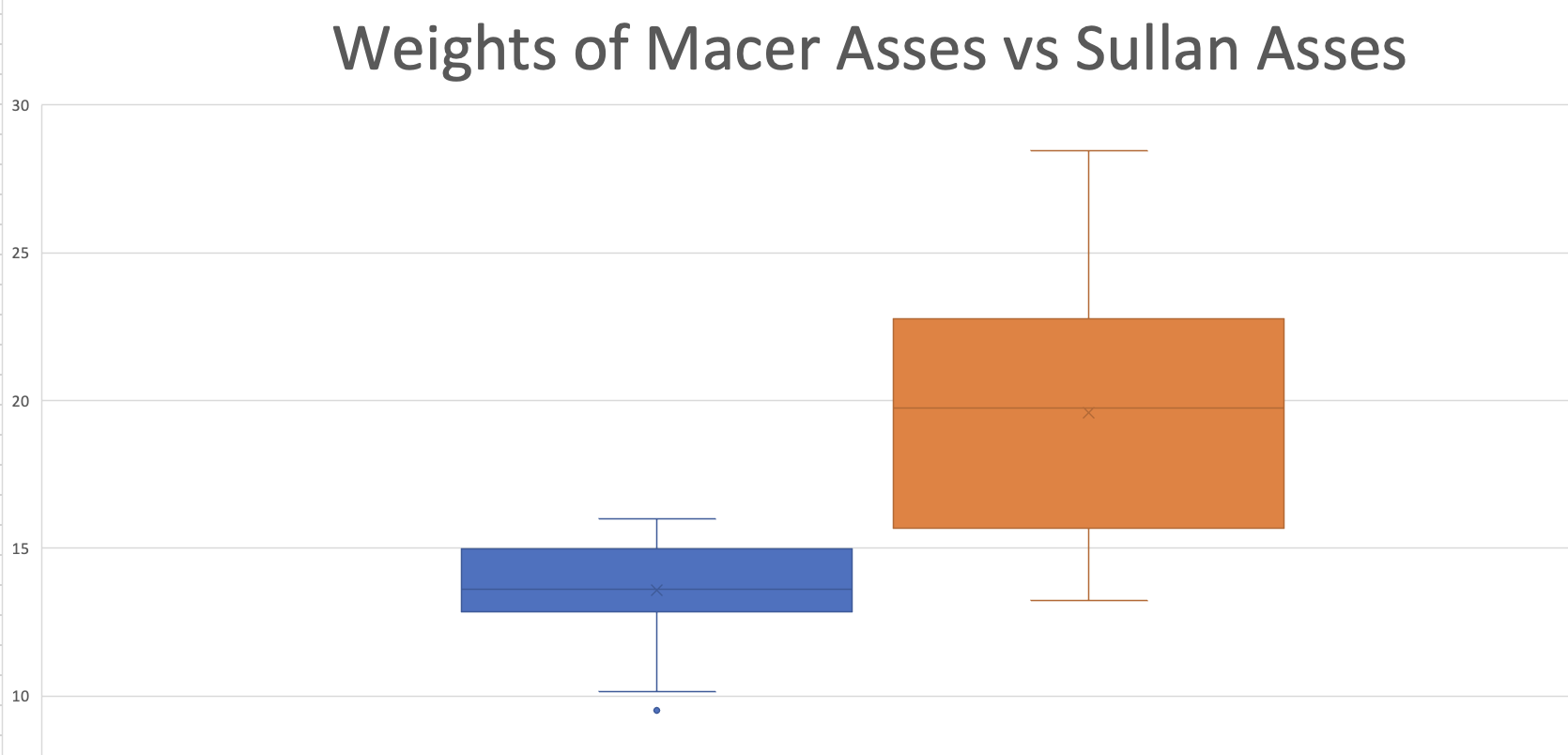
91-90 BCE – semiuncial standard introduced for bronze and we also get the rare little ELP silver sestertii (issued by Piso RRC 340/3 and Silanus RRC 337/4). The dating depends on whether it was Gnaeus the Marian brother or Gaius the Sullan Brother who brought about the lex Papiria, but I lean Marian as did Crawford and Mattingly. (early post) This view is supported by the heavy (if highly irratic) weight of Sullan asses as compared to those of the semuncial standard (I use Macer’s for the visual). Those Sullan asses on something closer to an uncial standard were the last asses before the next civil wars. Small change (i.e. fractional bronzes) seems to have been a popular type of politics not one actually useful to the state finances and certainly not something Sulla himself supported spending money on.

89 BCE – There is a big problem with debt following the Social War. Asellio as Praetor gets murdered by money lenders in the forum while offering sacrifice and no one ever turns in the mob ring leaders. They were angry he was upholding an old law against usury.

88 BCE – Sulla and Pompeius Rufus pass a law that seems to limit interest rates and perhaps erases 10% of existing debts (Festus 516 L)

88 BCE – Cinna is said to have (a) tried and failed to mobilized enslaved peoples by offers of freedom (an old trope), and (b) to have incited revolution in NEW citizens in Tibur, Praeneste, and as far as Nola, specifically he used them as a source of funding for his efforts (App. BC 1.65). There is more testimony of further money collection from allied cities, i.e. those who defected with the offer of citizenship to the Roman side in the Social War, after the administering of military oaths (App. BC 1.66). An analysis of historiographical tradition behind all this: Heredia Chimeno, Carlos. “Apiano, el « Cinnanum Tempus » y el nuevo régimen.” Aevum 93, no. 1 (2019): 155-174, esp. p. 159. cf. Also by the same author, Heredia Chimeno, Carlos. “Consideraciones historiográficas en torno al « Cinnanum tempus ».” Faventia 41 (2019): 21-36. [non vide]

COULD THE DEBASEMENT IN THE COIN BE FROM RECYCLING ALLIED COINAGE OF THE SOCIAL WAR!?!!

88-87 BCE – Roman issues are debased by a few percent, both those struck by Cinnan and Sullan partisans. There is however no evidence thus far that these issues are hoarded differently (new better evidence sent by Lockyear supporting this!), or cut more or subject to more bankers mark, but they are also slightly lower weight and contain more striking errors (double strikes, brockages, etc…) Future coin of the Cinnan regime is not debased in any meaningful way.

86 BCE – Influx of money from Ptolemy Alexander?! See Crawford RRC II, 605, citing Badian 1967. My take on this is that Crawford probably put too much emphasis on Badian’s reconstruction (new post). BUT now private correspondence suggests in fact trace elements show new influx of silver consistent to with Ptolemaic sources (see email)

86 BCE – Gratidianus as praetor urbanus takes credit for some sensible and popular monetary policy that had been developed in committee. We don’t know either the problem or the solution. (round up of evidence and interpretations) What is the key evidence? Cicero says the no one knew what they had (Off. 3.80: ut nemo posset scire, quid haberet). Pliny says a igitur ars facta denarios probare (NH 33.132). The key word here is probare. Which can mean to test, but I think is better taken to mean approved or validated in this context. Why do I think that? Well probare is something that happens to both bronze coins and also ship rams in the 1st Punic War (earlier post, follow up). Probare seems to be an action taken by a Roman magistrate to deem something acceptable for use (see new post). This makes me sympathetic to Heinrichs 2008 view that Gratidianus made it a crime not to accept a coin at face value unless proven fake (e.g. with a banker’s mark that showed it to be plated), even if it was low weight or worn, just like the lex Cornelia in the Sent. Paul. He may have also fixed the bronze to silver exchange rate or that might have already been fixed de facto if semi-uncial and uncial bronzes all had to be accepted at face value. Cicero’s iactabatur…nummus, “coin in flux”, is such a strange metaphoric phrase it is hard to put too much emphasis on it beyond perhaps meaning that the lex Papiria caused more problems than it solved.
86-85 BCE – revival of Argentum Publicum legend use on coinage. …

84 BCE – Cinna and Carbo fearing Sulla’s well-resourced return start collecting Money (and other stuff) up and down Italy (App. BC 1.76)

83 BCE – By contrast whereas Sulla’s enemies in the city are taking money from all over Italy (App. BC 81), Sulla is said to be spending money to get more Italic troops (App. BC 86) Capitoline burns, perhaps effecting mint operations?

82 BCE – Sulla specifically considers the contribution or lending or borrowing of money to be a crime worthy of massacre, banishment or property confiscation (App. BC 96)

lex Cornelia (Sent. Paul.) established perhaps because Sulla as dictator had to turn over existing legislation but also needed to keep or re-instituted/codify those financial solutions that actually worked.


Flower, Harriet I.. “Rome’s first civil war and the fragility of republican political culture.” In Citizens of discord: Rome and its civil wars, Edited by Breed, Brian W., Damon, Cynthia and Rossi, Andreola Francesca., 73-86. Oxford ; New York: Oxford University Pr., 2010. Abstract: The first true Roman civil war happened in 88 B.C. when Sulla marched on Rome, not in the violence surrounding the Gracchi in the 2nd cent. The traditional republican government of the « nobiles » came to a decisive end in the early 80s, specifically with the marches on Rome by Sulla and Cinna. The interpretation of the 80s as a political watershed is based on two fundamental observations : 1) The rupture caused by civil war in the city’s political life and social fabric was stark. 2) The republic set up by Sulla through his legislation in 81 was significantly different from what had come before in Roman history

The above is not unlike her argument in her own book on the Roman republics, but a nice focused treatment of the topic.

Cf. Morstein-Marx, Robert. “Consular appeals to the army in 88 and 87: the locus of legitimacy in late-republican Rome.” In Consuls and res publica: holding high office in the Roman Republic, Edited by Beck, Hans, Duplá, Antonio, Jehne, Martin and Pina Polo, Francisco., 259-278. Cambridge ; New York: Cambridge University Pr., 2011. Abstract: If one sets aside some traditional but questionable assumptions about the disaffection, disloyalty, or degeneration of the post-Marian army, one may appreciate more precisely the issues of political legitimacy that arose in 88 and 87 B.C. Sulla’s march can hardly have been generally viewed as a coup against the state. Arguably, the character and role of the consulship were central issues in the civil conflicts in which Sulla in 88 and Cinna in 87 were involved, especially in the minds of the legions who followed them. Attention to the claims of legitimacy that these men and their followers staked casts light on contemporary understanding of the meaning of the consulship in republican political culture. Texts considered include Cicero, Att. 9, 10, 2-3 ; and Appian 1, 57 and 1, 65-66.

I want to read something on Cinnan era legislation and Sulla’s reactions to it… I’ve not found the right study yet.

Old Interpretations…

I’m reading:

Frank, Tenney. “On Some Financial Legislation of the Sullan Period.” The American Journal of Philology 54, no. 1 (1933): 54–58. https://doi.org/10.2307/290251

And finding it very good to think with and through. He’s trying to make historical sense of an odd bit of Festus (516 L) which I’m sad to say I’ve never thought about before today:

Unciaria lex appellari est quam L. Sulla et Q. Pom[peius Rufus] tulerunt qua sanctum est ut debitores decimam partem …

“The law called that of the twelfth was carried by Sulla and Pompeius Rufus (coss. 88) by which it was sanctioned that debtors an tenth part…[the rest is lost]” (my translation)

It just cuts off and that is all we have. The unciaria could refer to a 1% per month interest rate for loans (=12% per annum). The assumption is that the decimam refers to some sort of debt relief and that the whole law was trying to address financial tensions as typified by the murder of the praetor Asellio in 89 BCE (last blog post).

Frank connects the Asellio incident with Senatorial attempts to regain control of juries, suggesting that this was motivated by a concern to adjudicate disputed debts — a clever view if not one able to be substantiated.

Frank’s big goal is to make sense of why a senatorial backer like Sulla would engage in debt relief, in this he’s arguing against Mommsen’s views. I’m less interested in this question and more in how he collects relevant evidence and reads it.

So, he reads Pliny NH 33.46

Livius Drusus in tribunatu plebei octavam partem aeris argento miscuit.

As meaning that every 8th coin was plated citing Grueber BMCRR I.200 for this interpretation. Debernardi has done a great deal of work on plated coin and seems to lean towards the belief that such plated coins could have indeed been issued by the Roman mint. I’m deeply skeptical and this seems an odd reading of the Latin, here but still Drusus didn’t debase the coins and when the silver content does dip in the denariii early 80s under the Cinnan regime it is only by a few precent. In a past post I point out that Pliny seems to be following a tradition that casts Drusus as greedy and dishonest and this passage is just one of a pattern pointing in this direction.

“Livius Drusus in his plebian tribunate mixed an eighth part bronze with silver” (my translation)

The Lex Valeria of 86 was passed by the consul suffectus L. Valerius Flaccus (the same man who lost his life in the mutiny of Fimbria later that year, but seems NOT to be the son of the moneyer, but rather his nephew). This law allowed debts to be repaid as in full with only a quarter of the amount owed (Vell. 2.23.2; cf. Cic. Font. 1.1; Quinct. 17; Sall. Cat. 33.2). Frank treats this as apply to private acocunts primarily, but the evidence from Cicero’s defense of Fonteius (the missing moneyer for whom no coins exist, see RRC 347) suggests that this was a particular benefit to the Cinnan regime in trying to settle its own public accounts. And it suggests that those account records were public:

Cic. Font. 5:

duorum magistratuum, quorum uterque in pecunia maxima tractanda procurandaque versatus est, triumviratus et quaesturae, ratio sic redditur, iudices, ut in eis rebus quae ante oculos gestae sunt, ad mu<l>tos pertinuerunt, confectae publicis privatisque tabulis sunt, nulla significatio furti, nulla alicuius delicti suspicio reperiatur

“of two magistracies, each of which is occupied in handling and dealing with large sums of money, the triumvirate and the quaestorship, such accurate accounts have been rendered, that in those things which were done in the sight of men, which affected many men’s interests, and which were set forth both in public and private registers, no hint of robbery, no suspicion of any offence can possibly arise.” (Loeb translation)

HOW DID FRONTEIUS SURVIVE SULLA’S RETURN?! So many didn’t even those who went to Spain on the winning side!

More tomorrow perhaps…

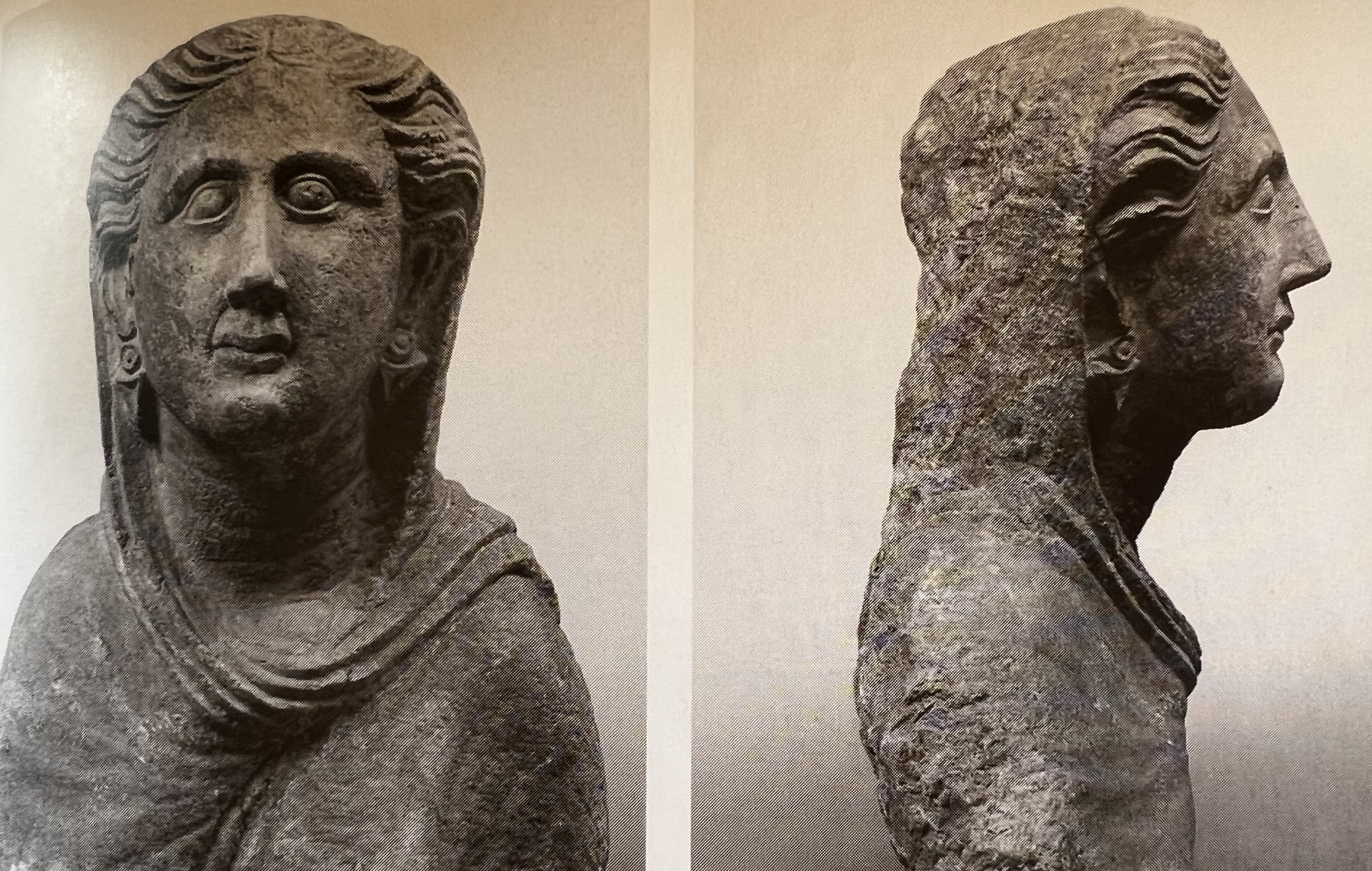
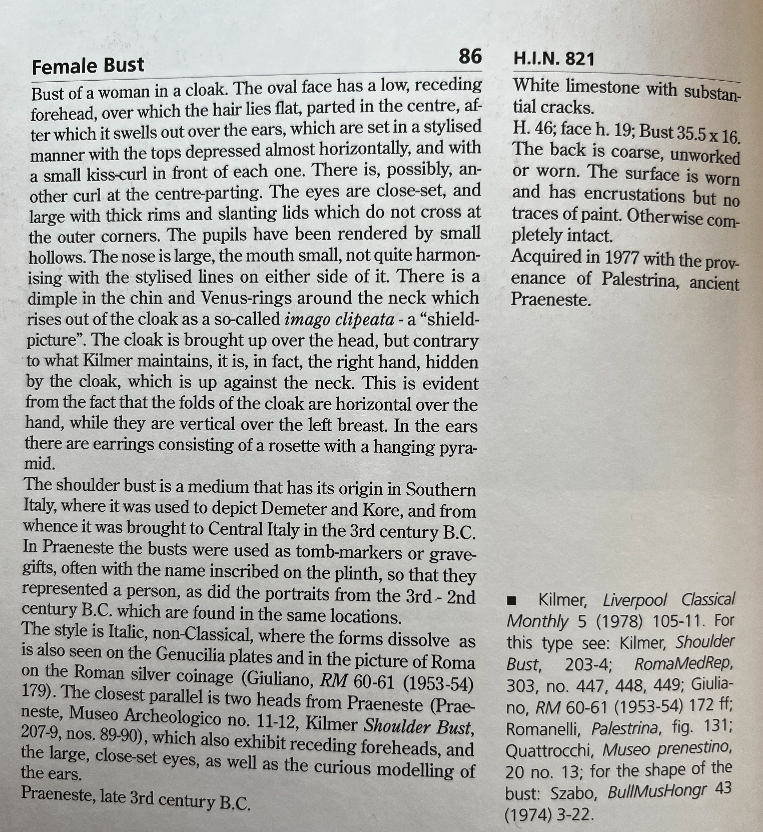
97 of 234 days: Italic style

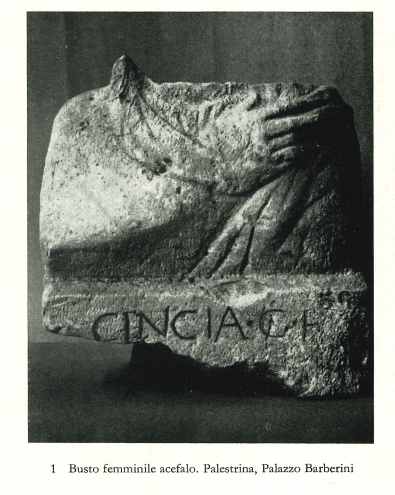
The sentence of interest:

Giuliano, Antonio. “Busti femminili da Palestrina.” Mitteilungen des Deutschen Archäologischen Instituts, Römische Abteilung = Bullettino dell’Istituto Archeologico Germanico, Sezione Romana LX-LXI (1953-1954): 172-183. [on file]

All the above is from the Etruria and Central Italy volume of the NY Carlsberg Glyptotek catalogue.

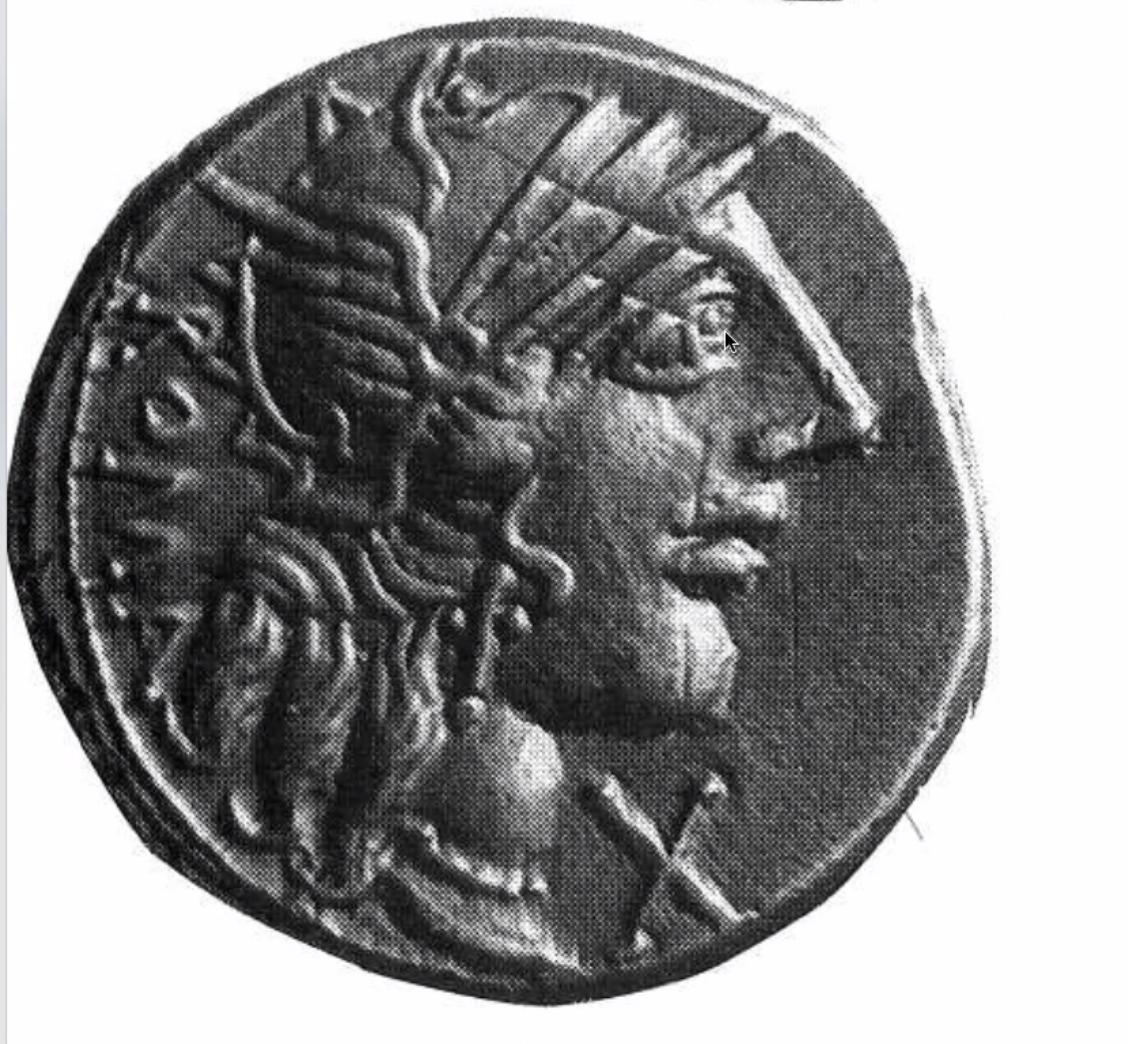
A specimen that made me think of this bust and that sentence as illustrated in

Stannard, C. “The Adjustment al marco of the Weight of Roman Republican Denarii Blanks by Gouging” in Metallurgy 3 (London, 1993). Available Online

Update 5-3-23: Giuliano 1953 finally arrived with images in my ILL inbox! These are the coin obverses he uses to illustrate this Italic style he sees as in parallel to the busts.

I’m also intrigued that we also have names on a number of bust bases. As far as I can tell none of the surviving names have surviving faces, but that these bust had once upon a time personal identities is really v cool and makes them much more portraits than ‘just’ mass made votives.

One example just to round out this post. Plenty more in the article itself:


Giuliano

Non coin material

Not a research day, but had a good convo on research with colleague. Sorted lots of UK logistics and grant logistics, real progress there. Also personal life stuff. Tomorrow is another day.

Tabernae in the Forum

Full image
Appian BC 1.54 (links to other accounts)

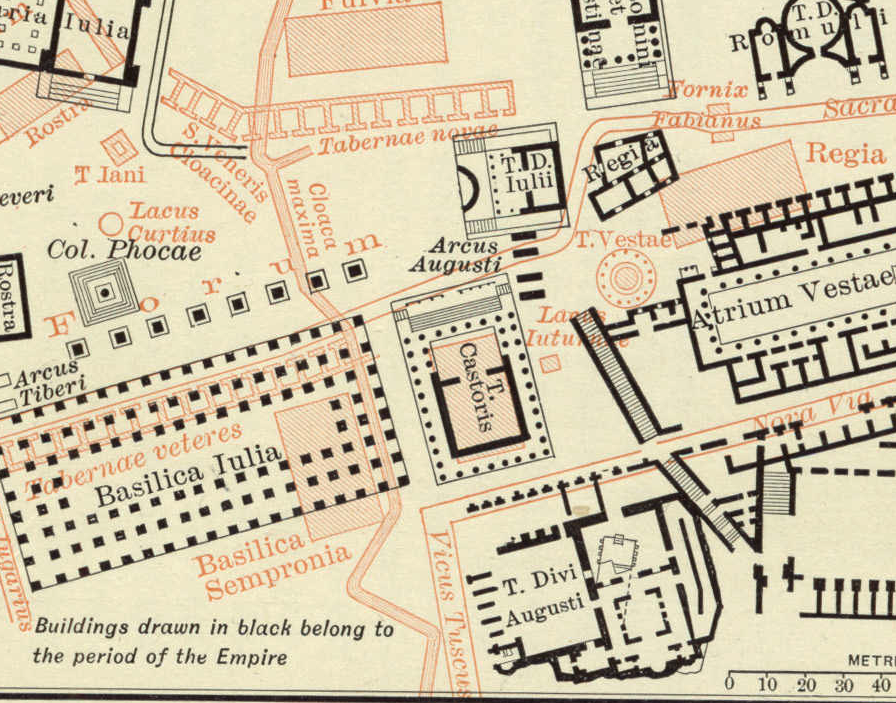
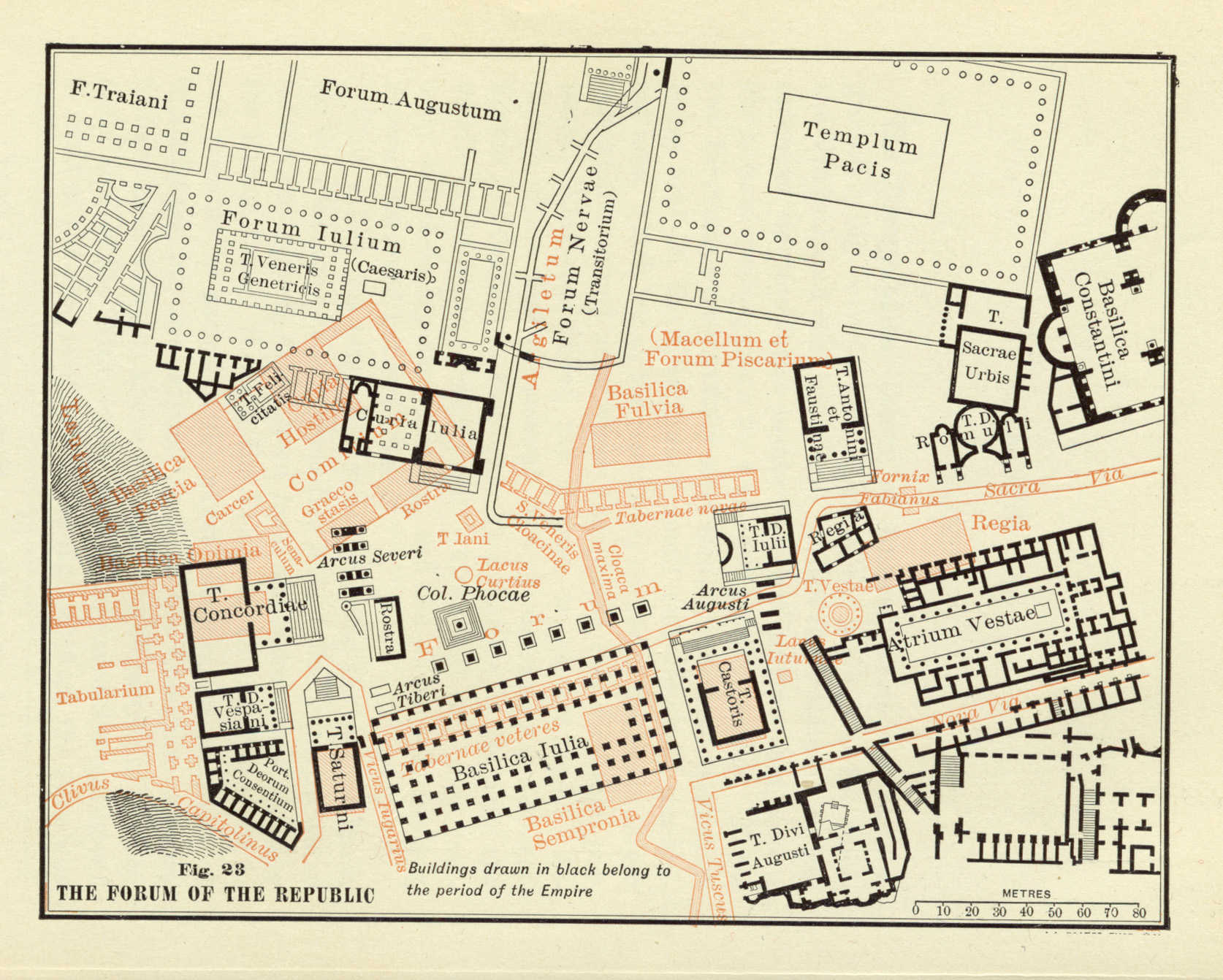
The topography of A. Sempronius Asellio‘s death (89 BCE) confused me. Where were the shops between the temple of Castor and the Vestals? The distance is very short, 50 meters or so and there was the lacus Juturna there. Could the text mean that he turned and ran all the way back to the tabernae veteres in front of the Basilica Sempronia? Would not going up into the temple of Castor have been a better place to seek sanctuary? But the course of action need not be logical. There have been many excavations in and around the Temple of Castor in recent years. I wonder if they might shed light on where Asellio might have fled. I also wonder if the mob that attacked him might not have been bankers and money changers working in the same area who made an opportunistic attack when the Praetor was in their vicinity.

I’m recalling also the work of Kondratieff on the topography of this region. I must check if he discusses this passage.

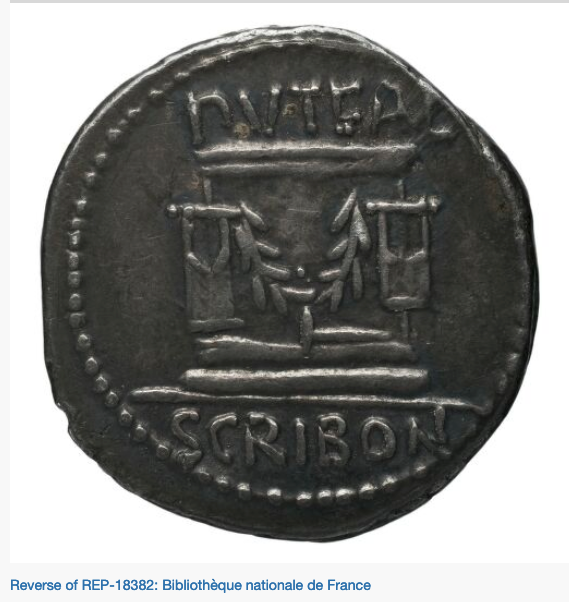
Kondratieff, Eric. “Finding Libo: numismatic, epigraphic and topographic evidence for the « cursus honorum » of L. Scribonius L. f. Libo, cos. 34 B.C.E.” Historia 64, no. 4 (2015): 428-466.

Kondratieff, Eric John. “The urban praetor’s tribunal in the Roman republic.” In Spaces of justice in the Roman world, Edited by De Angelis, Francesco. Columbia Studies in the Classical Tradition; 35, 89-126. Leiden: Brill, 2010

Kondratieff, Eric John. “Reading Rome’s evolving civic landscape in context: tribunes of the plebs and the praetor’s tribunal.” Phoenix 63, no. 3-4 (2009): 322-360.

Cf. RRC 416 and RRC 417

93 of 234 days: Liberalitas and the gens Thoria

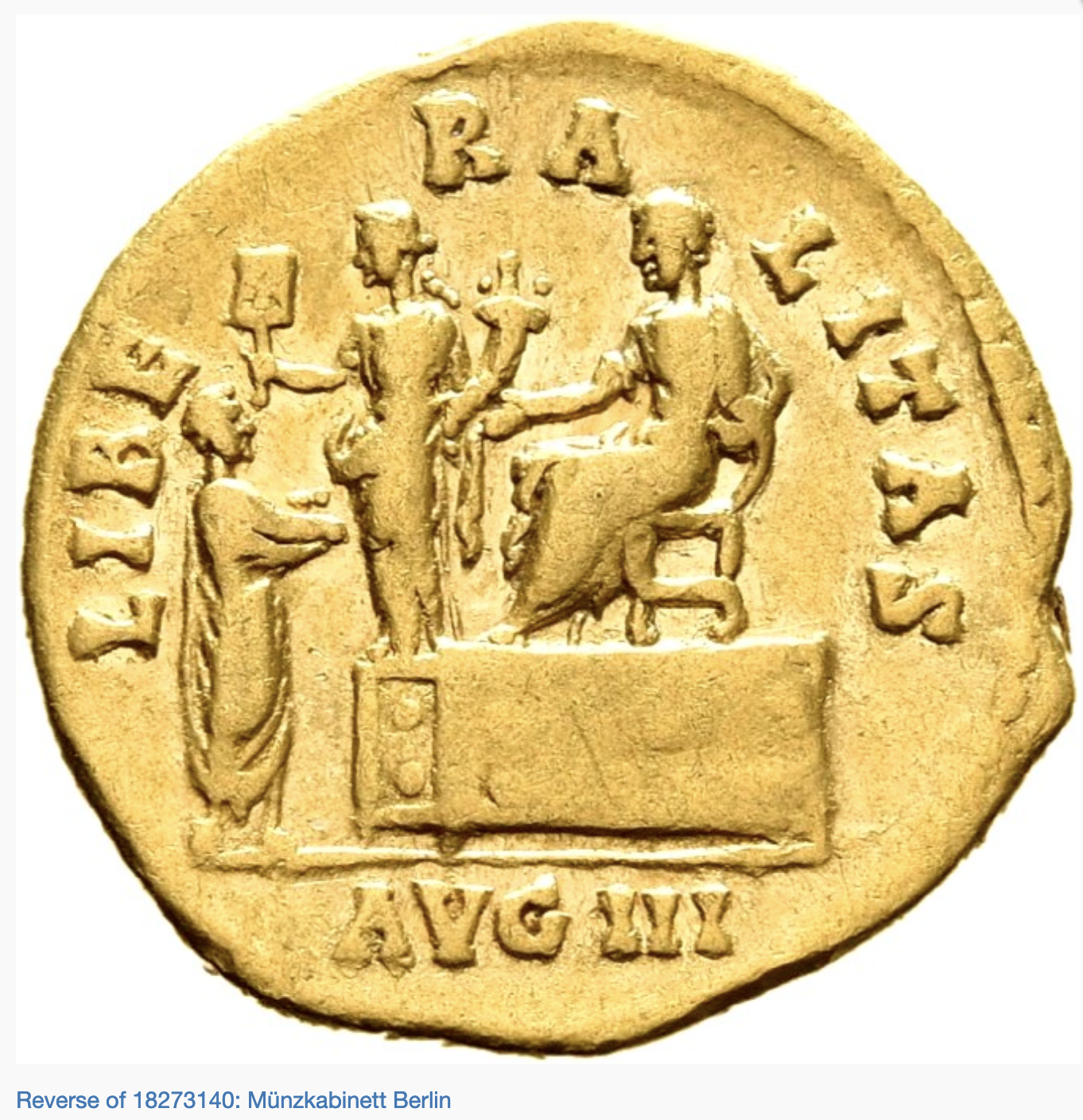
Detail of BM specimen

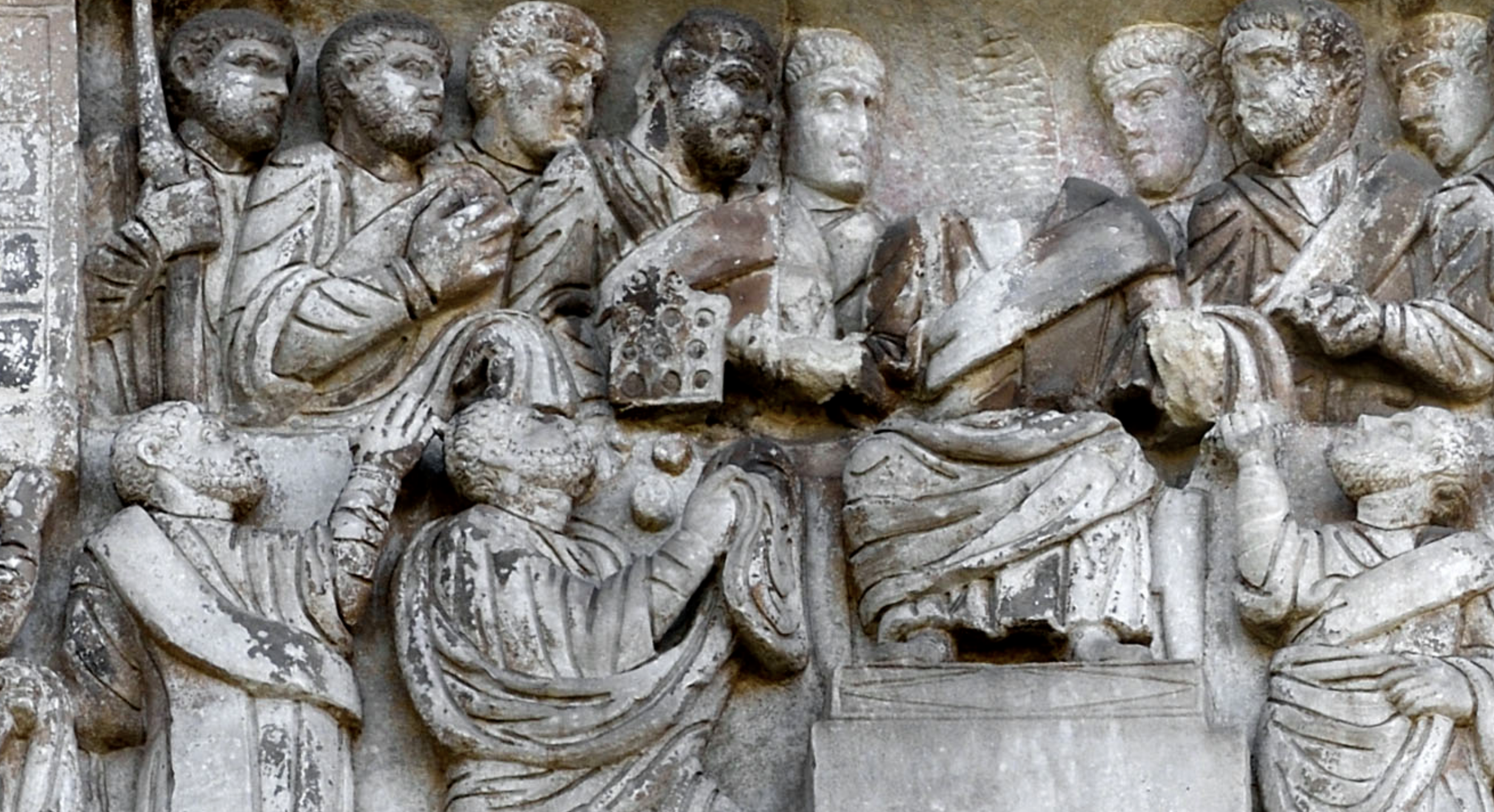
My favorite detail of the attributes of Liberalitas is her money shovel. Sometimes its called an abacus (wrong) or accounting board (a plausible, but potentially misleading term). This tool was used to ensure each individual got the same number of coins in distributions of imperial largesse. On the Arch of Constantine you can see the tool in action on a larger scale than on the coins. Notice the coin board has 9 recesses and the coins from it are being dumped into the outstretched toga of the man below it.

“Constantine and his attendants distributing largess to the Roman people (largitio). Relief of the frieze on the eastern side (Constantinian frieze). Marble. 312—315 CE.” © 2017. Photo: Ilya Shurygin. (Source)

This blog post is just to remind myself to try to squeeze the lex Thoria in with the other meager data points on the gens Thoria should I ever circle back to them. And to think about the logistics of the distribution of money to the poor in the Republic, albeit short lived. I wonder how much of the ritual and symbolism of Liberalitas from the empire could be transposed back onto the late second century experiment in state pay outs. (more images below)

This passage was what got me thinking in this direction this morning…

…a law was enacted to permit the holders to sell the land about which they had quarrelled; for even this had been forbidden by the law of the elder Gracchus. At once the rich began to buy the allotments of the poor, or found pretexts​ for seizing them by force. So the condition of the poor became even worse than it was before, until Spurius Thorius, a tribune of the people, brought in a law providing that the work of distributing the public domain should no longer be continued, but that the land should belong to those in possession of it, who should pay rent for it to the people, and that the money so received should be distributed; and this distribution was a kind of solace to the poor, but it did not help to increase the population. By these devices the law of Gracchus — a most excellent and useful one, if it could have been carried out — was once for all frustrated, and a little later the rent itself was abolished at the instance of another tribune. So the plebeians lost everything …

Appian BC 1.27

The only mention of this earlier on this blog was on the grain supply time line post. I have thought and read more about it and wrote some notes about the same time I made that timeline, they should be in the drafts file of the first version of my coin book, but I won’t go dig those out now.

But what I really want to do is point out that this Spurius Thorius may be a near relation to Lucius Thorius, a moneyer just over a decade later. Spurius’ legislation seems ‘popular’ in character, but Lucius died fighting Sertorius under Metellus Pius.

A Thorius Flaccus was Proconsul in the early to mid 20s BCE and issued bronze coins in both Nicaea and Nicomedia including some with his own portrait.

I’ve blogged about the Lanuvium connection of the Thorii before because of their use of Juno Sospita imagery, and I’ve written about Lucius Thorius as an issuer of small change (1st post, 2nd post). I mention in both instances, Lucius’ reputation as an Epicurean and tried to reconcile Cicero’s characterization with his clear engagement in public affairs, even to the extent of dying in a civil war.

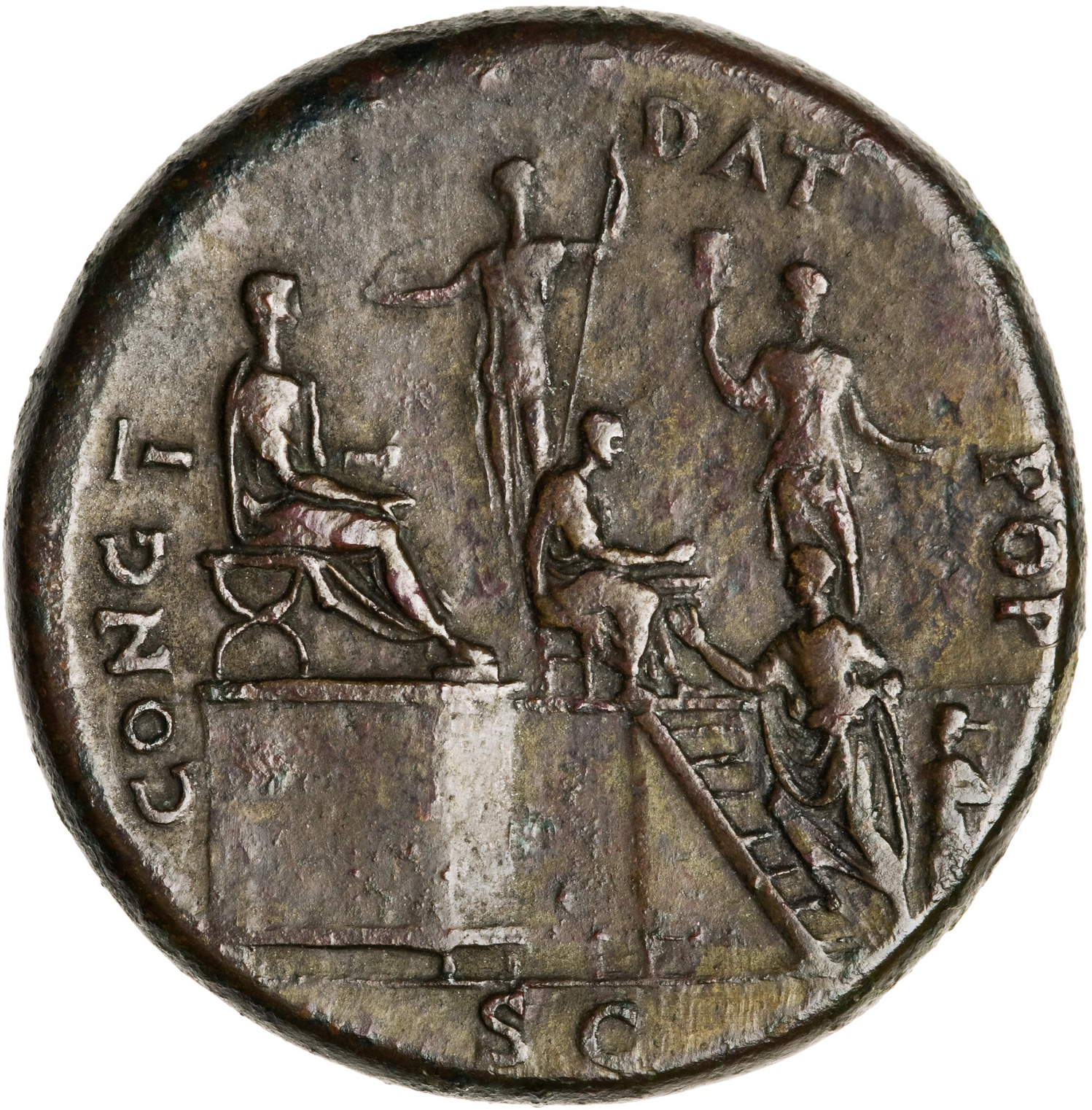
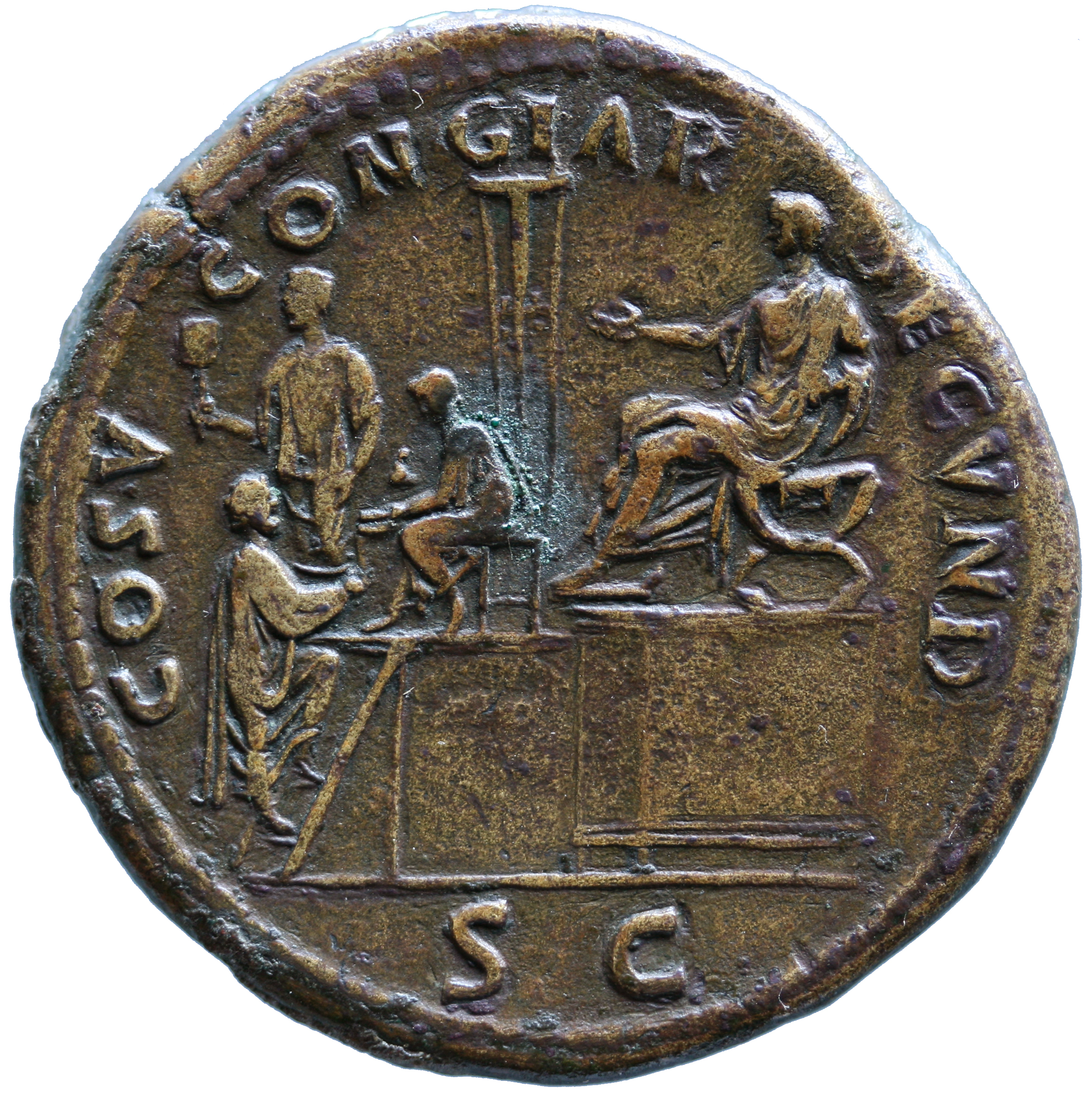
Round up of some typical distribution scenes on imperial coinage all but one include the money shovel:

ANS Specimen: “CONG I DAT POP S C – Nero, bare-headed and togate, seated right, on platform, left; official seated right on another platform extending congiarium to citizen with small boy behind him; Minerva, head left, holding owl and spear, and Liberalitas on right, holding tessera”
Wein Specimen: “Trajan, togate, seated left on platform on right, on lower platform in front of him, an officer is inscribing a tessera to give to citizen on left, holding out fold of toga to receive it; in the background, a tripod and Liberalitas, standing left, holding up an abacus”
RIC 3 Ant 74b: no money shovel: the coins flow from the cornucopia!
RIC 3 Ant. 75c

non coin portion.

I’m working a half day today. Kiddos turn 8 tomorrow and beloved needs some help pulling off three days of festivities. Coins can wait. I have between now and noon to give more attention to the money and moneyers of the 80s BCE. I also have a convo with a colleague to talk about career stuff. It’s good on sabbatical to step back and think about what work I want to do long term. I need to get on UK logistics and even a little Rome logistics.