Military honors?

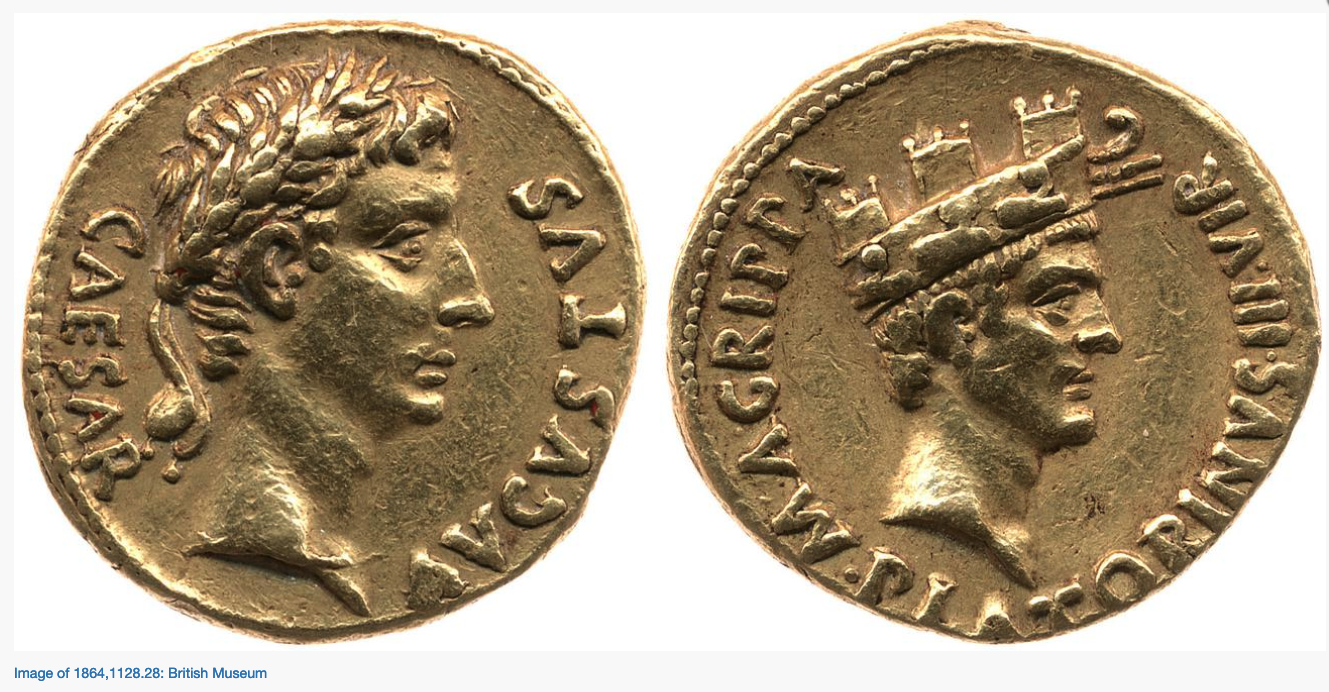
The symbol on right hand side of the reverse of RRC 513 (aureus and denarius; older post on this type) has been interpreted as a military honor, but the parallels are not definite. Crawford calls it “phalerae (dona militaria)”. Hence my interest in this sealing from Zeugma published by Mehmet Önal:

The idea of this representing phalerae is based on the reconstruction of how these would have been worn:

The ensemble displayed here was discovered in 1858 near Lauersfort in the district of Moers. The inscription names the owner as one Titus Flavius Festus. Photographed by Carole Raddato in Frankfurt museum.

Various reliefs showing soldiers wearing such honors:

From the Rheinisches Landesmuseum in Bonn. 1st century CE
Bas-relief depicting Falera with Victoria. Civici di Reggio Emilia Museum, 1-2 century CE
Found in Dalmatia (Da Tilurium Dalmatia). dated to 42 BCE
Estense Lapidary Museum. 1st century BCE

It gives me some comfort that the most similar representations are the simple early ones…

Thorvaldsen’s Coins?

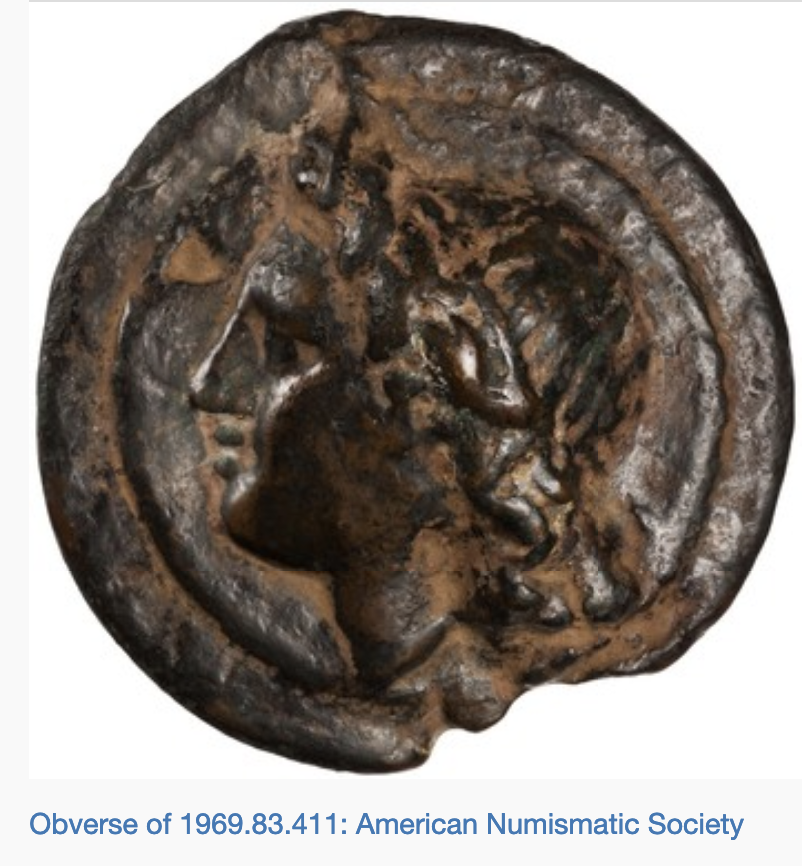
RRC 35/1 and RRC 290/2

This is a page out of the 1993 museum catalogue suggests a pretty rich collection. (There are other Greek coin pages, but these are the one’s that interested me most.) There are no ancient coins digitized online (YET!, It would be amazing if they ever joined IKMK), but they do have up two images of trays of casts as well as any number of drawings of coins. Among which was this v pretty drawing of Julius Caesar brockage (RRC 480/5, E1452)

These are described in the catalogue entries (L491 and L492) as casts of Roman imperial coins in sulfur. At first I was suspicious that something so pretty could be a cast…

But then I found out about Smyth’s casts! I would love to hold one of these to see what it felt like in the hand and if they would be robust enough for teaching demos…

Zeugma Belkis Bullae

Memet Önal has put on line a copy of the full book publication

He has also published academic articles on specific themes regarding these sealings others from the region. I want to survey them all but I think I best not, but here is my favorite goddess, the goddess of the Crepusii as I think of her.


Original Post:

Machine translation from Turkish with light human editing:

“65,000 bullae (seal imprints) were found in the archive room (Picture 11). This number is, to the best of our knowledge, the largest figure ever found in scientific excavations. As a result of this the Gaziantep Museum has the world’s largest bulla collection. Bullae are made of clay. Clay fabric ranges from brown, black, reddish, gray to bluish in color. The forms are triangular, smooth or those forced into an approximately circular shape. The Belkis bullae are generally made from the impression of a stamped seal and ring stone. Those from embossed rings and engraved stones are numerous. Bulla sizes range between 3-30 mm. The large ones (15-30 mm) often depict the head of the Roman Emperor Augustus. Bullae were formed by squeezing the negative image on the clay to create a positive image, as a result of the stamping of seal and ring tags with a description, name or sign. Bullae were used on official and private papyrus, wooden tablets and wax tablets, money bags, packaging such as postal service items, food and beverage containers, wooden boxes, room doors where valuable goods are found, customs goods, documents of inheritance and waivers. As a result of the stamping the seal on the clay attached to these type of goods, the seal and the pictures on the ring stone appeared on the clay dough. These seals were likely preserved in the archives as proof of receipt of postal items or accessing of materials. The stamped prints reveal the density of this city in trade and communication. This is also proof that there is a customs gate here.”

[full original text and OCR below]

Update later same day:

I’ve ordered this book and am hoping to come back with more info on these seals.

And I got a little help from twitter to translate yemenli, a fun thread!

Also, the best work on sealings I’ve seen to date is that by Jen Hicks on Seleucid uses!

I also want at some point to look at the glossy publications of all the materials from Seleucia on the Tigris where some 30,000 sealings were found:


OCR text

Arsiv odasinda 65.000 adet bulla (mühür baskist) ele gegmistir (Resim 11). Bu says, bilindigi kadamyla bugüne kadar bilimsel kazilarda ele geçmis olan en büyük rakamdir. Bu çalisma neticesinde

Gaziantep Müzesi dünyanin en büyük bulla koJeksiyonuna sahip olmustur. Bullalar kilden yapil-mister. Kil hamuru kahverengi, siyah, karmizi, gri ve mavimsi renktedir. Formlar üsgen, düz ve yemeni biçimindedir. Belkis bullalar genel olarak kazima betimli mühür ve yüzük tasinun basilmastyla yapilmistir. Kabartma betimli yüzük tast baskili olanlar ise a sayidadir. Bulla ebatlari genel olarak 3-30 mm arasindadir. Iri ebath olanlar (15-30 mm) genel olarak Roma Imparatoru Avgus-tus’un basinn betimlendigi bullalardir. Uzerlerinde betim, isim veya isaret olan mühür ve yüzük taglarinin kil hamuru üzerine basilmasi neticesin-de üzerlerindeki negatif betimlerin pozitif, pozitif betimlerin ise negatif olarak kil hamuru üzerine sikmasiyla bullalar meydana gelmekteydi. Bulla-lar resmi ve ozel papirüs, tahta tablet ve balmu-mu tablet, para torbasi, paket gibi posta gönderiJerini, yiyecek içecek kaplarini, ahsap kutulari de-gerli mallari bulundugu oda kapilarini, gümrük mallarini, veraset ve feragat belgelerini mühürle-me gibi islevler için cok amach olarak kullanilmistir. Bu tip esyalara baglanan kil hamuruna mühür basilmasi neticesinde kil hamuru üzerine mühür ve yuzük tasi üzerindeki resimler gikmaktaydi.

Bu mühürler posta gönderilerinin alindi veya malzemelerin acildi kaniti olarak arsiv odasinda korunmaktaydi. Mühür baskilar bu kentin ticaret ve haberlesmedeki yogunlugunu gözler önüne serilmistir. Bu ayni zamanda burada bir gümrük kapisinin da bulundugunun kanitidir.

From: Mehmet Onal. 2000. “Belkis’ta sular yükselirken…” in Arkeoloji ve Sanat 98, 29-33.

Revisiting Italic and Roman Portraiture

From NPR story

Like so much else the San Casciano find will change how we study and think about almost everything visual from Roman Republican Italy. I collected more images of the portrait heads below (these are just heads, they were never attached to bodies). They are inscribed on the necks by the individuals who commissioned the images and dedicated them. Prior to these discoveries our best evidence for such portraits were coins and gems and those mostly from the end of the first century BCE, whereas these new finds are 2nd Century BCE or earlier. They show what bullae and other occasional evidence have long suggested, Roman portrait styles were distinctive, stable, advanced, and well developed long before their appearance on coinage.

Below are examples from Boussac 1988, all from the same deposit on Delos all pre-69 BCE.

The Tel Kedesh cache of similar sealings are all before 145 BCE, but it is even harder to find images (cf. Ariel and Naveh 2003 ; and Cakmak 2009), but portrait examples have been published

I have lots of posts over the years on portraiture, maybe one day it will add up to something. Or not.

Seated Roma (again)

Original Post

Boussac 1988 connects this imagery on a Delos seal impression (bullae) with Athenian New style tetradrachm symbols of Xenokles and Harmoxenos

Yale specimen, attributed to Clarentza mint (Peloponnese)

The most likely date for this issue seems to be 91-90 BCE

We never get this 3/4 profile seated Roma on the Republican coin series, but we do have her seated with her right arm crossing her body and her left on a spear/scepter.

Earliest seated Roma on Roman coins:

RRC 287/1

CF. Pistis coinage of Locri (Pistis on this blog) which is MUCH earlier

BM specimen

A lovely specimen sold in 1910

Swaddling

Is on my mind after the Etruscan Workshop last Friday.

The best round up of images of the bronze statues discovered in San Casciano dei Bagni I’ve seen online.

There babies’ inspired a twitter thread on cross cultural comparisons and upright positioning as I couldn’t get it out of my head. Still having trouble letting go thinking of them, hence this blog post. The most interesting difference between these bronzes and the clay examples previously known is how much more detailed ornamentation these have. That’s a fibula on the far left exposed figure (not as I first thought an apotropaic phallus!). I’d always thought of fibula as adult dress adornment! So interesting to shift that mental image of the possible functions of such a common artifact.

If you’re not familiar with swaddled babies as votives (more familiarly in terracotta), check out this great blogpost from the votives project.

I also learned in the workshop that we have ancient swaddling directions from Soranus:

Use a manger as a bed!!! Isn’t that fun.

Trojan ancestry in Republican art

Stumbled over an article and couldn’t resist reading:

Rose, Charles Brian. “Forging Identity in the Roman Republic: Trojan Ancestry and Veristic Portraiture.” Memoirs of the American Academy in Rome. Supplementary Volumes 7 (2008): 97–131.

Here starts from the coins of which I approve but I’m not so sure he makes the most of them a less informed reader my think Fig. 1 dates to the Pyrrhic War!

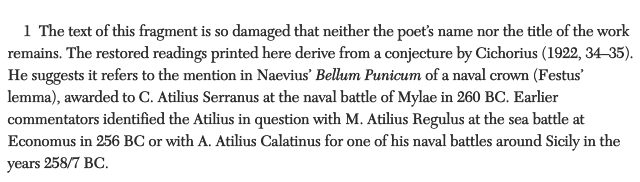
The first Phyrgian helmet on the Roman series is RRC 19/2. RRC 14, 18, 19 are all of the same time period, probably just before the first Punic War, so early 260s, maybe 270. I have a hard time connecting it to the Pyrrhic war, but do agree it invokes a Trojan ancestry (Yarrow 2021: 93). I’d also quibble and say a helmet and a cap is not necessarily the same thing, esp. in iconographic terms.

Rose goes on to make a comparison between the garb of the priests of Cybele and the costumes used in the lusus Troiae. His views observations especially on the torque and the relationship of the circus Maximus to the temple are very smart indeed.

My only quibble is that these games seems to have been a ‘restitution’ (i.e. invention) by Julius Caesar and not an authentic republican tradition. These are things be cannot be sure of but their importance in dynasty formation is well attested, cf.

Menichetti, Mauro. “« Troiae lusus »: mettere in scena le origini di Roma.” La Parola del Passato 74, no. 2 (2019): 287-299. [ILL requested]

For the numismatically inclined

SMITH, DEREK R. “The DECVRSIO Sestertius Types of Nero and the Lusus Troiae.” The Numismatic Chronicle (1966-) 160 (2000): 282–89. http://www.jstor.org/stable/42668274.

has proposed a connection between these bronze coin images of Nero and the Troy games, while also moving away from the idea that they are depicted on the base of Antoninus Pius in the Vatican. (I tweeted a different version of this coin and it created a stir about apparent stirrups). None of these costumes are reminiscent of the cult of Cybele, but then again the identification is tentative…

I just have to straight up disagree with this based on the reception of Battakes in 102 BCE as reported by Diodorus. On this I like Bowden’s chapter, but there are new pubs now. The next bit though is right to emphasis the importance of the under utilized

—some how I lost a great deal of my content that came after this point in the post and auto saves only restored to this point, I can’t quite be bothered to write it all out again but as I did upload the images here they are as a slide show —

Walls of Bronze

From an essay by Gregory Nagy (my emphasis)

Jeremiah 1:18

Jeremiah 15:20

Horace Epistle 1.60

Horace Carminae 3.65

I was really digging into try to think about what these parallells meant but lucky for me this dude already did!

WORMELL, D. E. W. “WALLS OF BRASS IN LITERATURE.” Hermathena, no. 58 (1941): 116–20. http://www.jstor.org/stable/23037709.

He has a great little joke on the first page:

“…assuming that a bronze tower need no more be of bronze than an ivory tower need be of ivory…”

I agree with this fairy land view. He goes on after this to make the case that bronze had magical properties, of this I am less convinced is relevant in these literary examples… He also speculates that in Horace’s Epistle the bronze walls are the goal or home base of the game and connects it to a childish version of the lusus Troiae! I’m not convinced but points for creative thinking!

He then jumps the shark and goes in for early English lit reference, claiming Horace lies behind this imagery.

NO MENTION OF JEREMIAH!!! Wormell must have fallen asleep in Sunday School.

Homer (maybe Hesiod) are likely in dialogue with Eastern traditions on which Jeremiah is also drawing (I’m thinking of the East Face of Helicon and West’s thoughts on connecting Sappho to Babylonia magic and Psalms; no, I’m not going to go find a citation right now, it is in my teaching notes if I ever need it). Plato is drawing on Homer. Horace is likely also drawing on Homer in an archaizing fashion. I’d love to connect Horace to Semitic literary traditions just for fun, but I don’t think I can really do that with any intellectual honesty.

Wait….

That magic idea of Wormell’s might have some merit:

[arrived from ILL! 5-3-23]

(link to above from which below is taken)

I kept digging and lo! A commentary on the wall of tin in Amos gave be to pharonic Egypt references:

A full view of this commentary is available on the Internet Archive

From Breasted 1906 Ancient Records of Egypt:

update from 5-3-23:

From the Chicago Assyrian Dictionary:

s.v. dūru

From Muss-Arnolt’s concise Assyrian dictionary: