EETIA?

UPDATE 2/4/22: see now, Sánchez 2021 (related blog post).


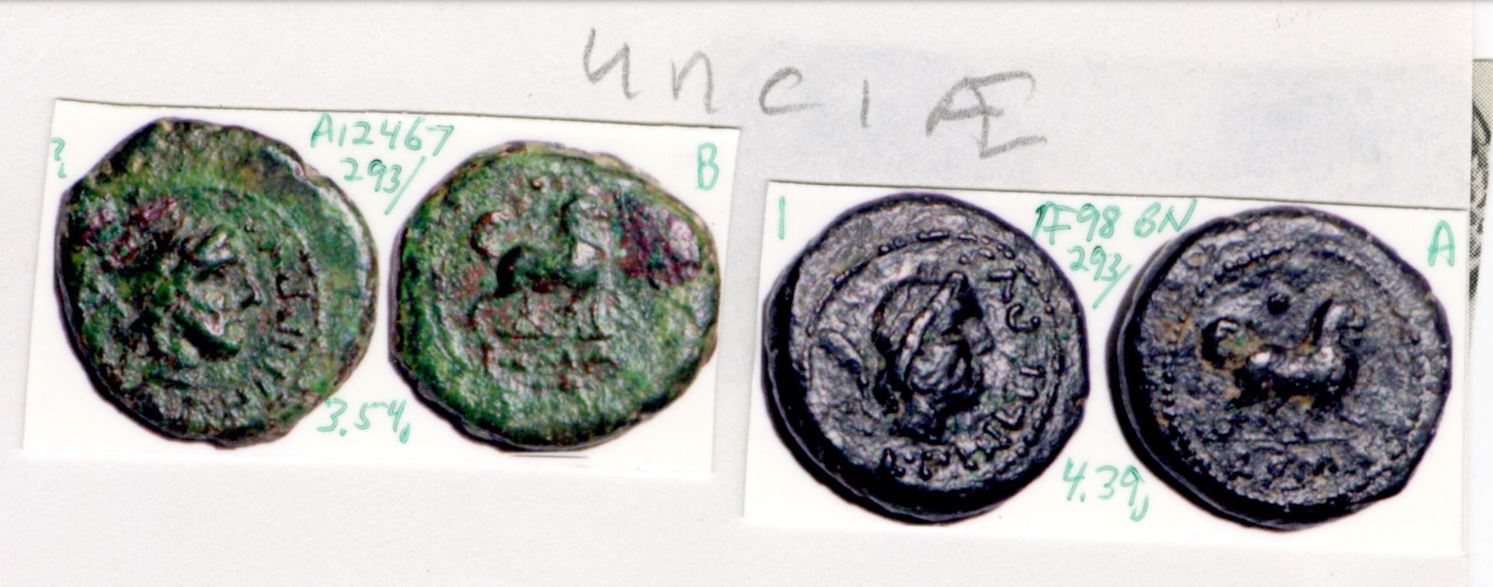
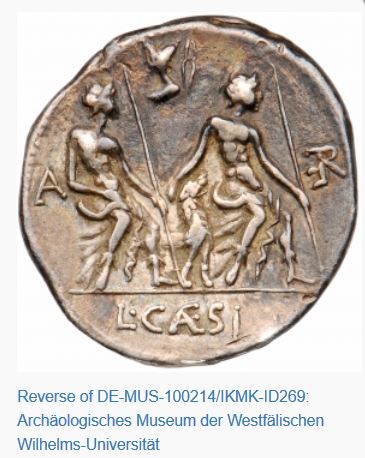
This is the coin type that occupied me much of last Thursday.  The interest comes from it being a potentially non-Italian instance of an oath-taking scene.  Such scenes appear during the Hannibalic War on both Roman coinage and that of certain Campanian cities which sided with the Punic forces.

And was resurrected by the Romans probably about 137 BC:

But was then famously the iconography was taken over by the Italian allies during the Social War in the 80s BC when they broke with Rome.

The swearing of an oath on a pig to seal a treaty is well attested as part of Italic culture, perhaps most famously at the Caudine Forks incident.  The legend of the type had previously been read on less clear specimens as FETIA and thought to refer to the fetiales, the priests associated with religious declarations of war and solemnizing the peace.  All these ‘oath scene’ coins have been associated with the fetiales in the past.  That’s somewhat problematic as such an oath could be sworn by the generals without such priests (again, see Cicero on the Caudine Forks oath).

Anyway, the new specimen above clearly reads EETI- and all the other reverse die specimens I’ve seen could be read the same way.  EETIA must be Latin as the letter combination is unattested in Greek.  It’s none too common in Latin.  If the word begins EETI- one thinks of the various legendary kings and heros named Eëtion.   They are associated with the Greek mainland or Asia Minor.  Leypold said he bought his specimen in Amisus and because small bronzes don’t tend to travel far its usually attributed to that location or the general region.   No other specimens find spots are known.   The lack of a diadem or garland on the obverse head has lead to the assumption it was a portrait of a Roman commander.  Speculation then commences about possible Roman commanders active in Asia Minor.  The Roman certainly experimented with coinage in the region.

As we puzzle out the legend we might recall that “Accian” Vowels, i.e. the reduplication of vowels to indicate their long vowel length, do appear on Republican coins.  [This type of vowel is discussed by Lucilius.]

And, even on provincial issues from Macedonia:

For the type of the last see BM catalogue.

One other clue might be visable on this rather awful specimen:

On this specimen one can see what I think might be a Q under the obverse head.   Q or PRO Q is a relativelycommon addition special issues and military coinage of this period.  We’ve seen two examples already above.  Here are two more from the Crawford sequence:

I grabbed this last example because of the placement under the bust.  If there wasn’t the assumption that it was from Asia Minor, I would have speculated Italic or at least Western Mediterranean origins.  The type is closer to the Campanian imagery of two figures holding a pig above the ground than any of the Roman or Marsic scenes.

But finally, given that there only seems to be one obverse die and maybe about four reverse dies amongst all the specimens, not to mention the scarcity of the type, this must be a very low volume production.  Why put all this energy into its manufacture?!  Who benefited?  Is it purely an ideological statement?  If so, towards whom is it aimed?

Visual Parallels, Debunking Historical Allusions

Crawford in RRC says of this coin: “The obverse type recalls the standard obverse type of the coinage of Lipara, captured by C. Aurelius Cotta, Cos. 252; the reverse type alludes to the triumph celebrated in consequence.”  He echoes Broughton in the MRR: “On coins of L. Cotta, perhaps celebrating the taking of Lipara, see Gueber CRRBM 1.200f.; Cesano, Stud. Num. 1 (1942) 158.”   Looking at the coins of Lipara doesn’t instill confidence in this claim:

I have a hard time believing I’m the first to see this, but the parallel with Malaka in Spain is nearly perfect, right down to the wreath and the placement of the tongs behind the head:

The mint of Malaka is well studied, but I’ll need to read up a bit on the dating of the obverse proto-type.  I think we can be sure the Spanish coin is the prototype, and not visa versa, as the Malakan bronze has Punic lettering.

So if the Lipara connection is a red herring, why this type?  So far I’m hard pressed to find a Cotta with a Spanish connection.  The poor L. Aurelius Cotta, cos. 144, was denied the opportunity to go to Spain (Val. Max. 6.4.2).

Perhaps the Malaca connection is also a red herring.  Maybe there is no attempt to recall a spanish Familial connection, only that it provided an attractive model for representing Hephaistos, the smith god, for some other reason…  One to think about.

[The ANS does list specimens in its collections for all these types, but they are just not imaged yet, hence the reliance on non-academic sources.  There are also academic images here but they do not allow direct links and the image quality is pour.]

Tools for Reaping

Pretty consistently on the Roman Republican Series the attribute of Saturn is identified as the harpa.  In fact the logic is a little circular, if its Saturn it must be the harpa and if there is a harpa with a bearded divinity it must be Saturn.

The harpa is a tool otherwise usually associated with Perseus who used it to cut off the head of Medusa and it is a regular numismatic symbol like Heracles’ club, though not precisely as common.  Here they are together:

My problem looking at the Saturns is that the later ones clearly have the traditional harpa on them.  See above, as well as this slightly earlier type:

But the object behind the heads of the divinity on all of these is clearly something different:

Whatever this implement is it clearly has ‘teeth’ and is a single curved piece, not a blade with a hook or prong, such as we associate with the word harpa.   Of course, at its most basic the word just means sickle or curved blade in Greek, the general equivalent of falx, falxis in Latin.  And yet, surely we can come up with some vocabulary discuss the shift in attributes of Saturn without rounding them all down to a generalization.  The earlier Saturn is clearly associated with something other than the tool of Perseus with which he is bestowed in the imperatorial period.  What is that earlier tool?  At first I saw the teeth and shape quite literally as a jawbone.  There are jawbones on some Greek coins, but they don’t look much like the tool:

My guess is that its some piece of agricultural equipment probably for reaping and that it has a specific name.  At some point Saturn’s agricultural associations perhaps became a little less critical and his attribute took on a more mythological, apotropaic form.

In the interests of completeness I should also mention that there is this other early coin with Saturn not as an obverse type but as a reverse type.  If I’m right, the tool in the hand should be be the toothed one, not the Perseus-style harpa, but frankly I’ve not yet seen one clear enough in that detail to say it looks like much of anything specific:

Saturn as an agricultural god of reaping would certainly have resonance for a number of these earlier moneyers, to say nothing of agrarian issues generally in the Republic.

Update 1/13/21:

From Schaefer’s Binders.
The photos of ?-B and 1-A in the Schaefer binder are actually better lit for seeing details than the official Gallica images.

Give a Girl a Hand, Won’t You?

Do you think that nice Roman general is gently lifting up that distressed provincial woman? Is this our Roman good deed of the day? Is the moneyer celebrating his grandfather’s lending a helping hand to Sicily during the slave revolts?  I think not.  Let’s look at another specimen:

No eye contact. In fact the heads are facing in different directions.  I’m thinking the standard interpretation is a little too romanticized, influenced perhaps by ideologies espoused by modern apologists for colonialism.  This looks to me like a figure group composition based on the Achilles-Penthesilea model which became pretty popular in the Imperial period:

Image

The moneyer would rather have a grandfather that conquered Sicily rather than one that just put down a mess of slaves.  And, given the scale of the rebellion and how it included non-slaves (Diod. 34/5.2.48 amongst other passages), that representation need not be considered a complete fiction.

Update 1/11/16: More comparative iconography:

gem with amazons

Update 20 Apr 23: Broken Images above fixed. RRC 401/1.

Other relevant posts

seal ring

restoration type under Augustus

Comparative iconography on Etruscan bronze seen at the Vatican 2023-04-15 (more pictures of object on camera back up on drop box if needed in future)

Crowns, Chairs, Scepters and other Gifts

So I’m reading my Polybius and I’m sorely curious to read up on the culture of Hellenistic diplomatic gifts.    There are Hellenistic states and kings sending vastly expensive “crowns” to Rome when making diplomatic requests (Just two examples: 30.4.5 & 31.32.3).  The value is invariable given in terms of number of pieces of gold (10,000 or 20,000 are common enough).   What the heck did these gifts  look like?  Are they really crowns?  Like this sort of thing but much heavier?

Or is it just called a “crown” but its actually bullion in one form or another.  Did the form or name of the gift have religious connotations, as well as agonistic connotations?  Maybe we can’t separate religion out from agonistic themes in the ancient world (think Olympic Games honoring Zeus).

Victory crowns are a very common as a design element on Hellenistic and Republican Coinage (see above).

And then there is the great passage of Polybius where the Romans send back an ivory (curule?) chair and scepter as part of the diplomatic exchange in which they’re given a crown.   Here we clearly have expensive gifts, but where the value is in their symbolic potency.

Much later, here is the Genius of the Roman People being crowned while seated in a curule chair holding a scepter.

Here’s a curule chair with a wreath/crown (no scepter that’s a lituus, i.e. a priestly instrument).

Is that a wreath sitting on this curule chair?

Reverse Image

No such note in RRC, but it seems pretty likely, especially after seeing these later types:

Chair and Crowns/Wreaths rather seem to go together!  Also, check out those Elvis sideburns on Octavian (the future Augustus)!

Okay back to Polybius and absolutely no checking up on the scholarship on all this while I’ve got a book review to work on.

25 out of 410 Days: Lares Praestites

Capture.JPG

The reverse of this coin (RRC 298/1) represents the Lares Praestites based on the description of their cult image in Ovid (see also Plutarch).  Earlier in Ovid’s same work he gives a pretty horrible account of their conception.  Lara or Lala warns Juturna of Jupiter’s amorous advances and is punished by having her tongue ripped out and then, while be lead to the underworld, she is raped by Mercury and conceives divine twins.  Wiseman and Coarelli have connected this narrative with a famous mid-forth century mirror:Image

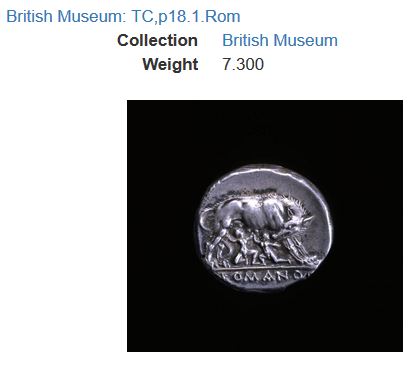
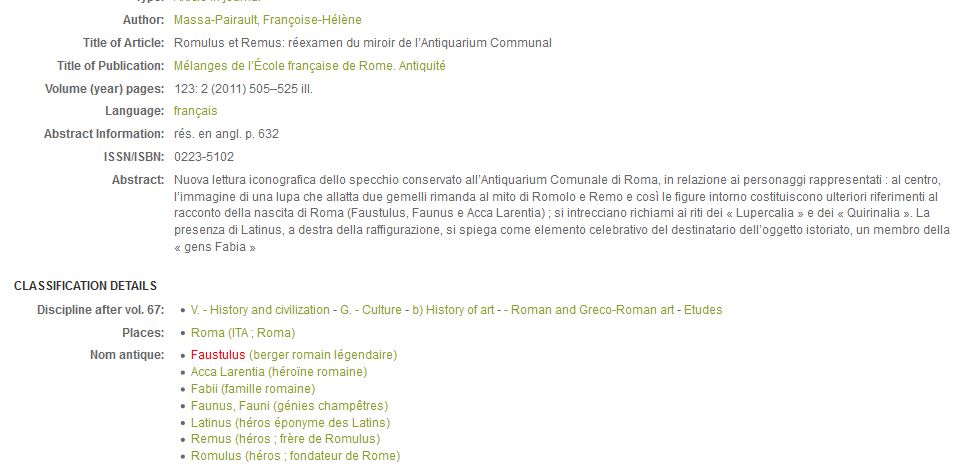
Obviously, the Bolsena mirror looks A LOT like what what we think the Romulus and Remus narrative should look like, BUT with many strange surrounding figures who our Romulus and Remus narrative can’t explain.  Wiseman used the mirror to show that iconography of the wolf and twins wasn’t exclusively linked to Romulus and Remus.  Coarelli took Wiseman’s argument further and suggests that these guardian Lares were originally founders of Rome themselves before being supplanted in traditional narratives by Romulus and Remus.  Wiseman is confident that this early didrachm (RRC 20/1; c.269 see Burnett 2006 for redating) is a representation of Romulus and Remus:

Capture.JPG

And so is pretty much everyone else in the world.  But Coarelli has a fairly interesting point about borrowing of the iconography of one myth to create a new one.  That sort of shift isn’t instantaneous.   So if the Lares Praestites were originally the twins beneath the wolf, when would  audiences have stopped seeing them as such?  Could the didrachm be ‘misread’?  Could the coin up top from 112-11 BC be taken to depict Rome’s founders?  Ovid’s poem suggests their cult was neglected in his day, but this moneyer certainly thought they were worthy of commemoration. Farney sees the representation as a claim to divine ancestry explaining the little head of Vulcan as an allusion to the paternity of Caeculus, the founder of Praeneste. Caeculus’ uncles could be understood to be these Lares.  But, Lott wants to see the Vulcan image to mean that these Lares protect the city from fire…

On Bolsena Mirror:

Capture.JPG

24 out of 410 Days: Proofing Problems

The worst thing that can happen when reviewing proofs is to find a mistake made not by the publishing house — those you can demand they fix — but instead by you, especially if that error is substantial and thus might change page layout or numbers.  Then again, one can’t very well leave historical inaccuracies and logical inconsistencies right there on the page.  Maybe it is a good thing for the publishing process to take a while, as it lets one read one’s own work as if it was the work of a stranger.  So my challenge today was to cut the offending statement and replace them with something accurate while using the exact correct number of characters including spaces.   I chopped 1,203 characters and replaced them with 1,198 characters.  Five characters under seemed a reasonable margin.  Hopefully my editor thinks so! 

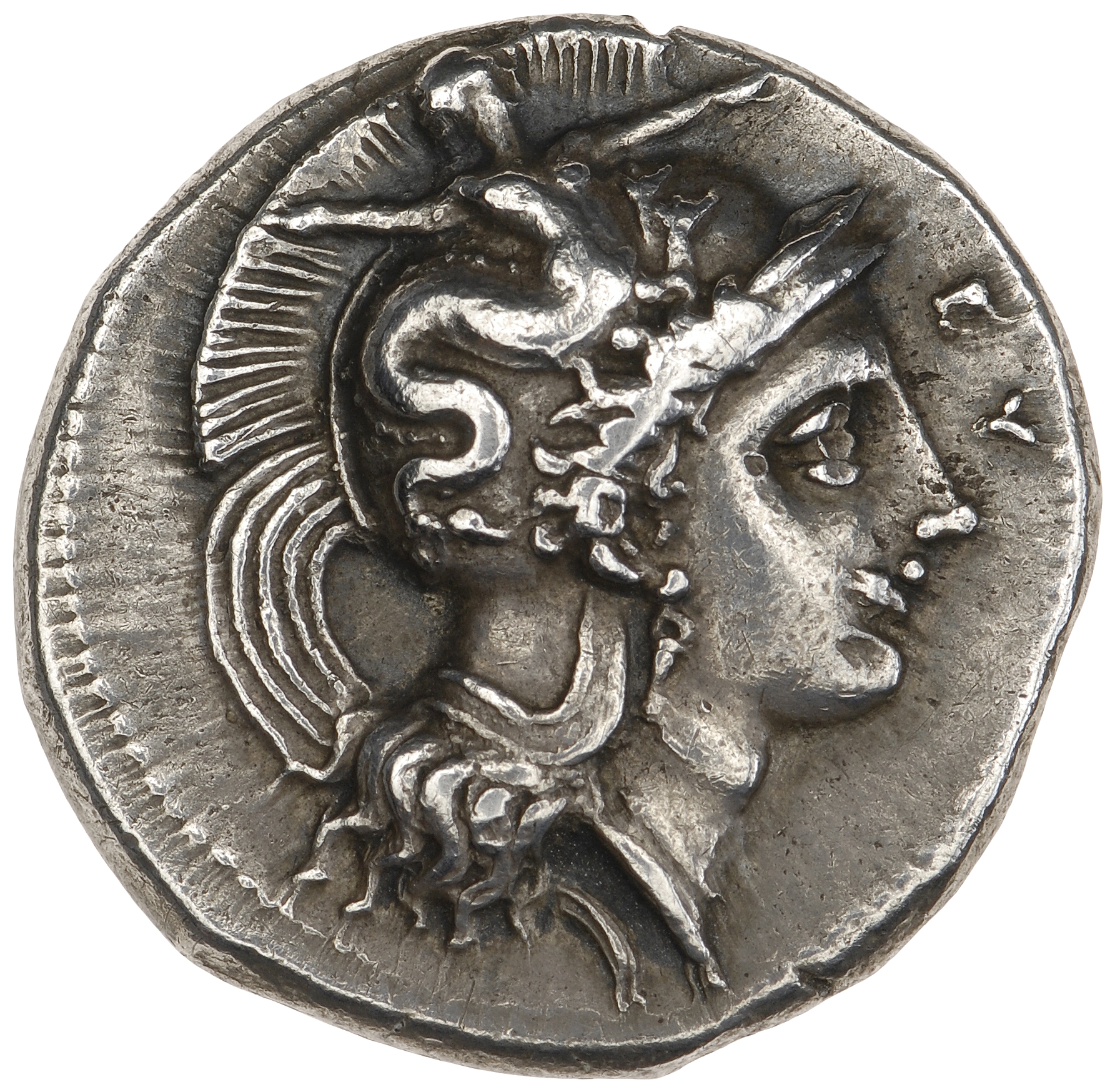
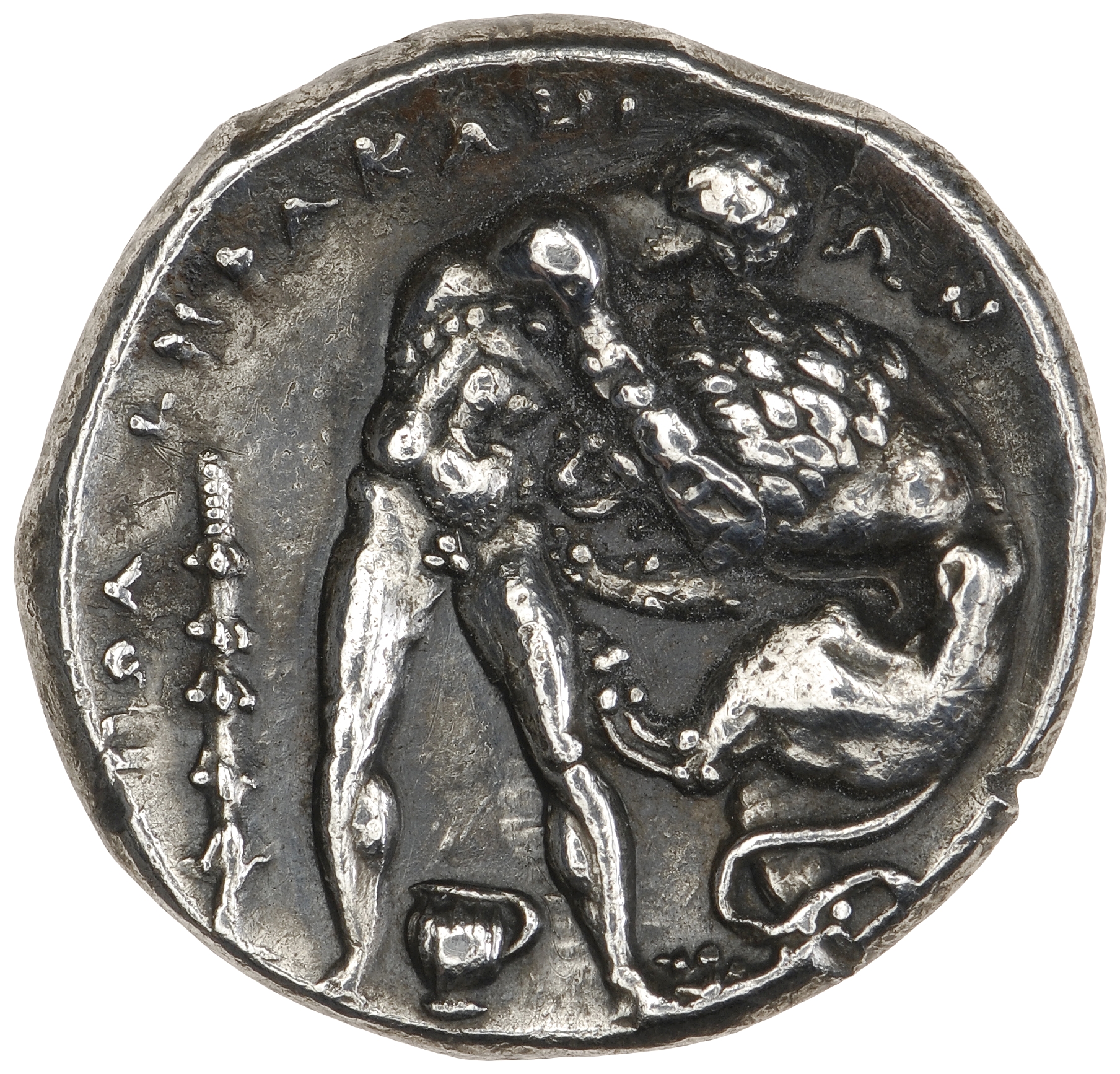
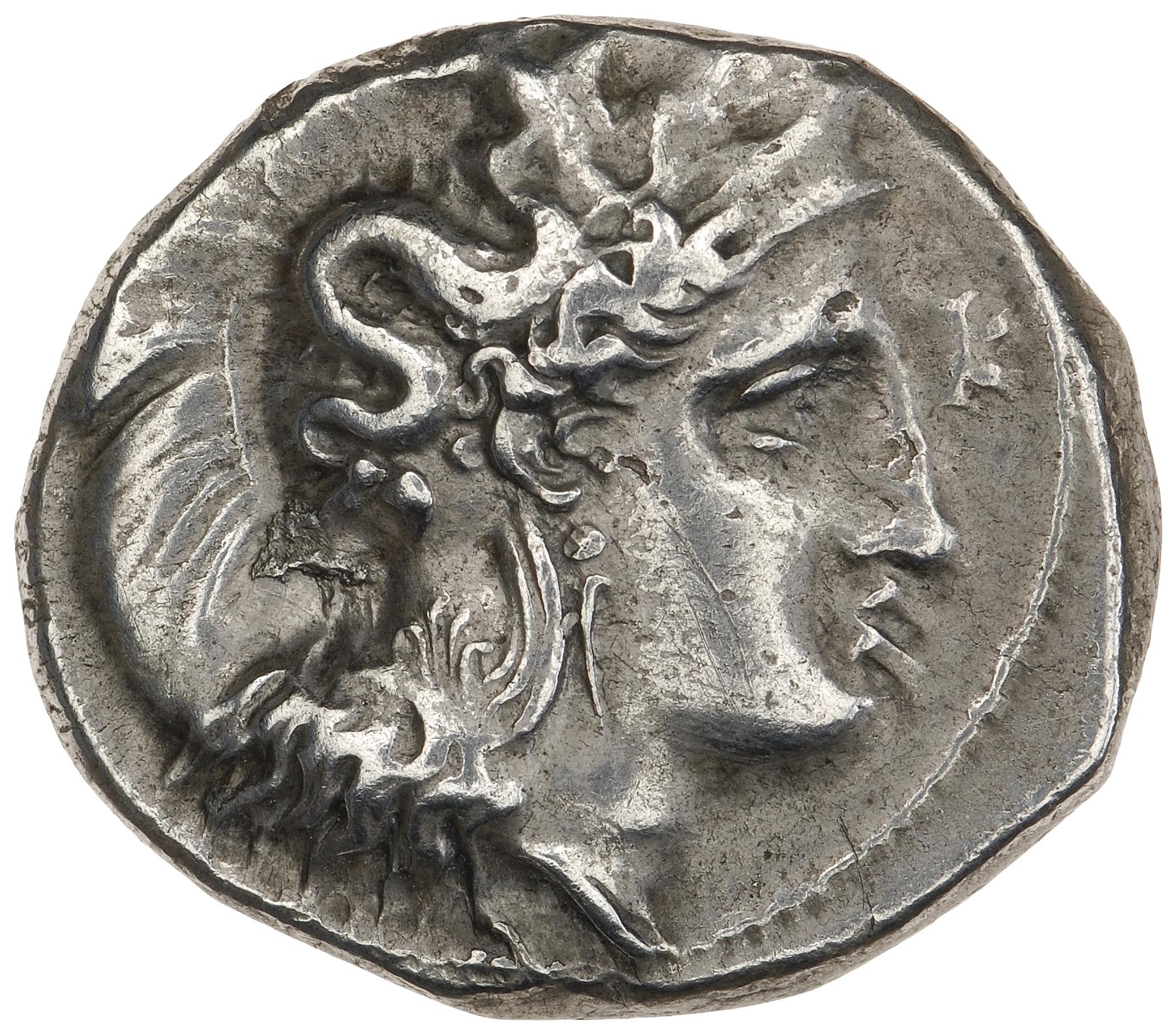
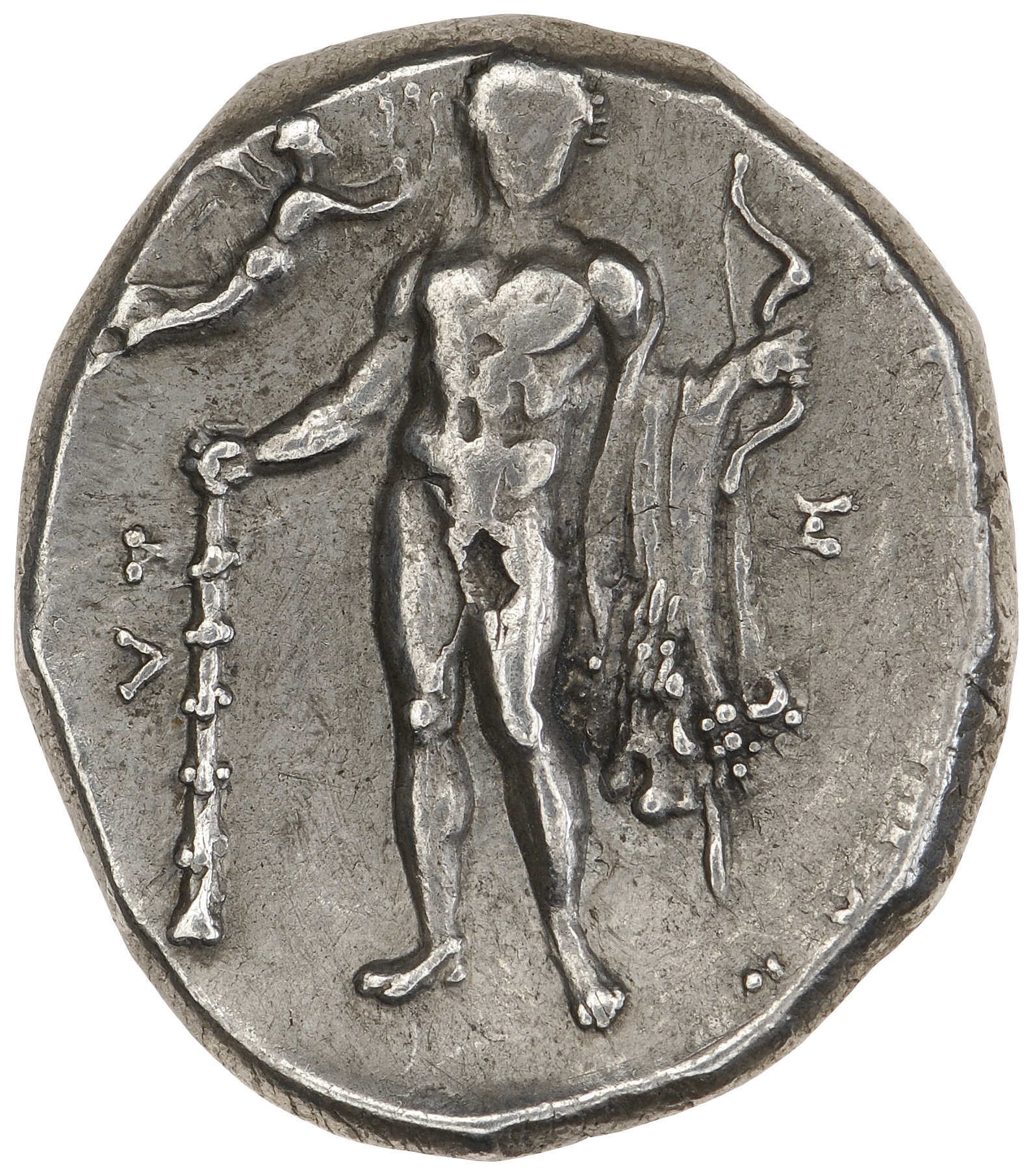
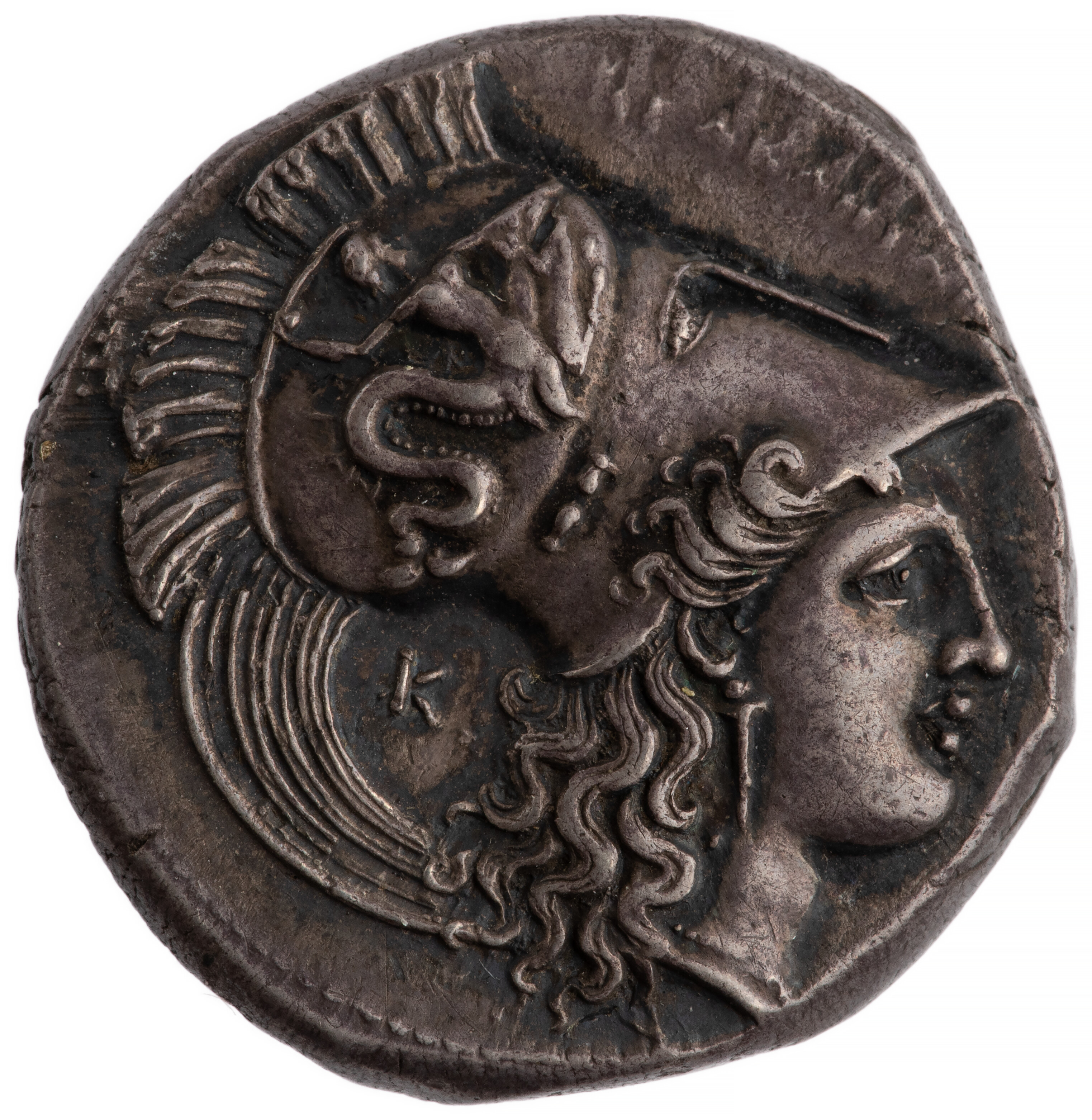
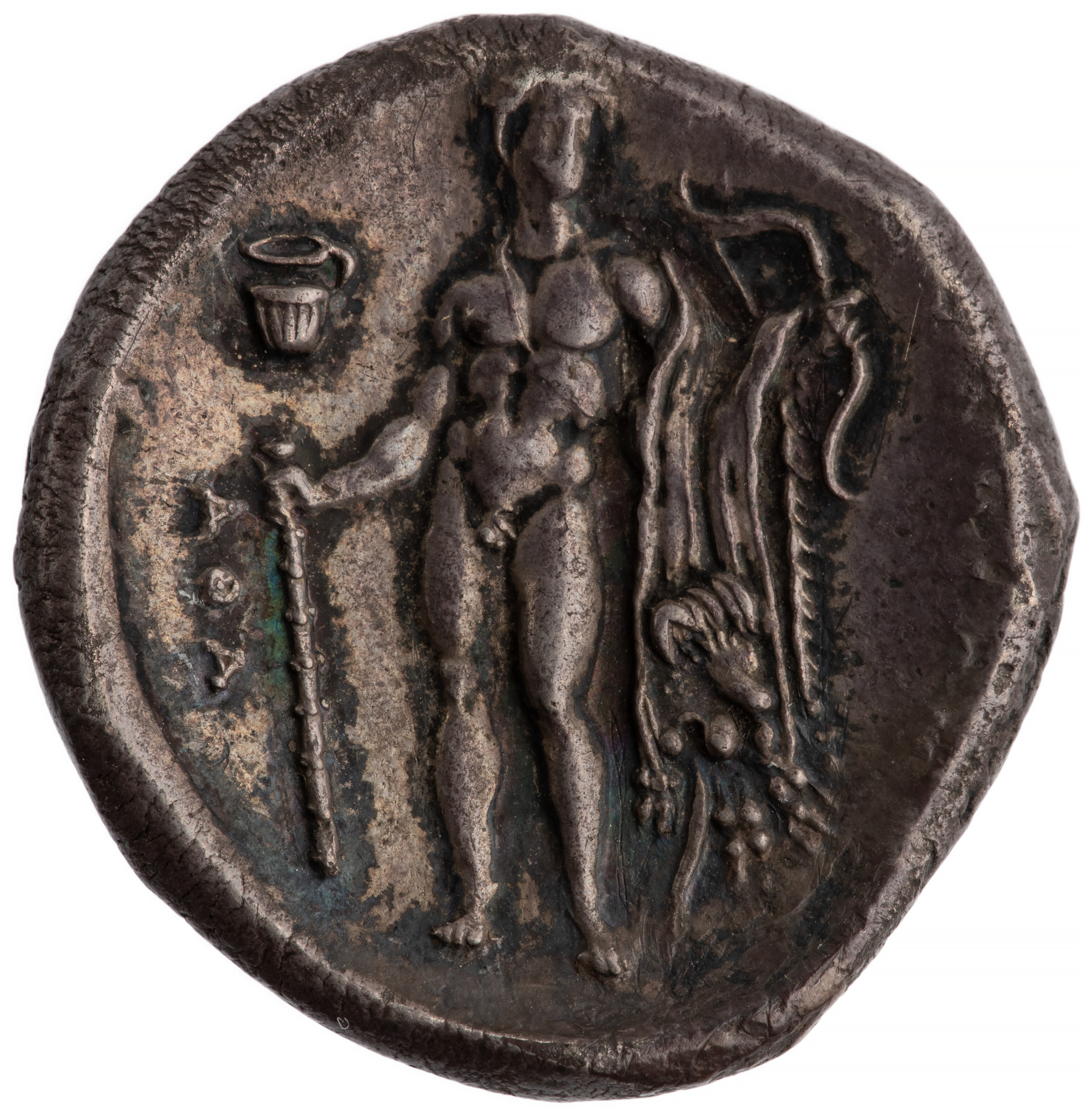
The point I’d failed to articulate was how the testimony of Livy and Strabo relates to the change in coin types at Heraclea Lucania.  The type of above borrows its obverse from Thurium and its reverse from Tarentum, the two cities that jointly founded Heraclea.  Livy and Strabo tell us that Alexander the Molossian who originally came across the Adriatic to aid the Tarantines turned on them and seized Heraclea and tried to move a large festival with a general assembly of the Greeks living Italy from Heraclea to Thurian territory.  The coins show first the Heracleans letting go the Tarentine design:

And then letting go the Thurian obverse as well:

The general subject matter (Athena/Heracles) stays the same but the direct iconographic parallels are removed.  Anyway, the literary testimony seems rather important to explain why Heraclea might have been distancing itself from each of its mother-cities in turn. I’m glad I caught my lapse.  I just wish I’d caught it earlier.

Evidence of Cultural Interaction

I was correcting proofs for a chapter in an edited volume and found a reference to a coin type I couldn’t perfectly remember.  So I thought I’d remind myself why I thought it so relevant.  I stuck in the key words ‘Agathocles’ and ‘lion’ into the ANS database, meaning to return coins from Syracuse, but in my search up pops this Greco-Bactrian specimen.  Much of this king’s coinage looks very much like that of any of Alexander’s successors, but some of it, like this piece borrows from Indian traditions, both Buddhist and Hindu.  I’ve not fact checked the Wikipedia entry, but it gives some idea of how rich the cultural connections may be.  A quick look at the academic material reveals how complex Greco-Bactrian Numismatics is.  It’s interesting to think that it dates within a decade or so of other coins reflecting (perhaps less drastic) cultural intersections brought about by the rise of previous peripheral states in the Hellenistic world:

Gold stater in the name of Titus Quinctius Flamininus

Where to begin?

I spent an hour or so this morning re-reading how different scholars narrate the beginning of Roman coinage.  I am most taken with Burnett’s narrative style, especially when he’s writing for a non specialist audience.  He owns the complexity but makes that complexity seem comprehensible by being brave enough to generalize and discuss the controversies in big brush strokes.  He owns his own options and gives a direct assessment of where he thinks the balance of scholarship is leaning.   There is a mildness in tone which allows the possibility that alternative view might prevail.   Shades of gray, but not pea soup opaque.  I really enjoyed his clear distinction between ramo secco and aes signatum.  Weight standard, design variation, metallurgical content, and find spots are all key.  And, yet they clearly can co exist in the same monetary system as they are hoarded together.

Cast copper alloy currency bar.

On critical addition seems to me to be that the Roman currency bars, even if on a weight standard, were often treated as bullion, like the ramo secco.

The design and weight standard aren’t ‘respected’ by those using the money. The use of bronze currency bars (esp. ramo secco) in Etruria and Emilia goes back at least until the 6th century BC.  The Romans didn’t start making their aes signatum until probably the 3rd century (280-255BC ish).  This is actually a little later than when we think they may have been making their first tentative forays into struck coinage.

Copper alloy coin.

This is probably the first Roman coin and it was probably made in Neapolis (modern Naples) c. 320 perhaps as early as 326.  It looks just like the Neapolitan coins of the time, but has the legend RΩΜΑΙΩΝ (notice the use of Greek not Latin).   It’s a bronze alloy.  The next up is this silver beauty which might be as early as 300BC:

Silver coin.

[I’m skipping over all the dating controversies and iconographic issues and historical context.]

My main point is just that its possible that the urge  instinct to standardize the weights and to add “obverse” and “reverse” designs to the currency bars may be influenced by the early forays into struck coinage.  They may be evidence of a change attitude towards what money should look like.

We need to guard against assumptions about what is more or less primitive and how societies should develop.  The story of money at Rome is one of comfortable(?) code switching between different socio-cultural systems through at least the 1st Punic war if not longer.

20, 21, and 22 out of 410 Days: Prow Stems

Copper alloy coin.

If you you look carefully at the prow stem of this coin of ~151 BC, you will see the head of a woman.  One way of reading this coin is to see the head as Venus and given that moneyer is probably an ancestor of Sulla (I’m skipping the prosopography today), it could then be taken over early proof of the family’s special affection for this divinity.  The denarius of this moneyer has Victory in a biga (two horse chariot) on the reverse; note the wings:


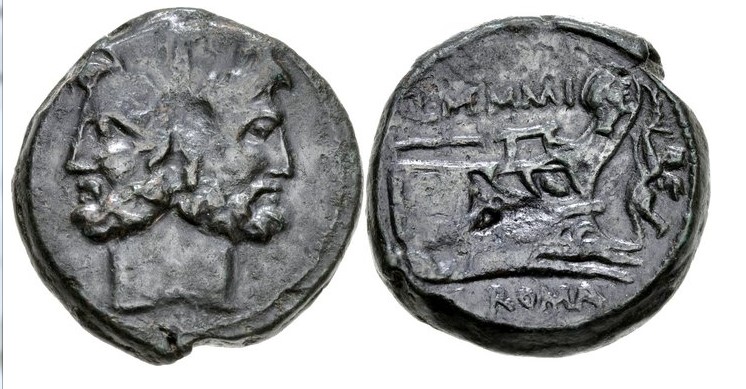
A similar prow stem decoration is seen on the coinage of a Memmius c. 106 BC:

capture.jpg

But in this case the die engraver has added a little figure of cupid crowning the prow stem to ensure the identification as Venus goes unmistaken.  More over the reverse of the denarius also shows Venus:

Here it seems clear that we have a reference to the Memmii being of Trojan origin.  Erskine says a little about the family connection (p. 21, 34, & 145) and provides context.

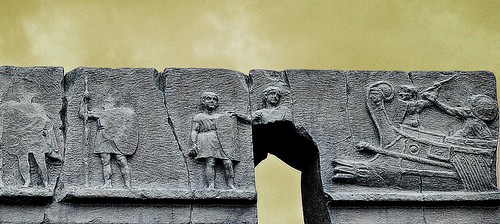
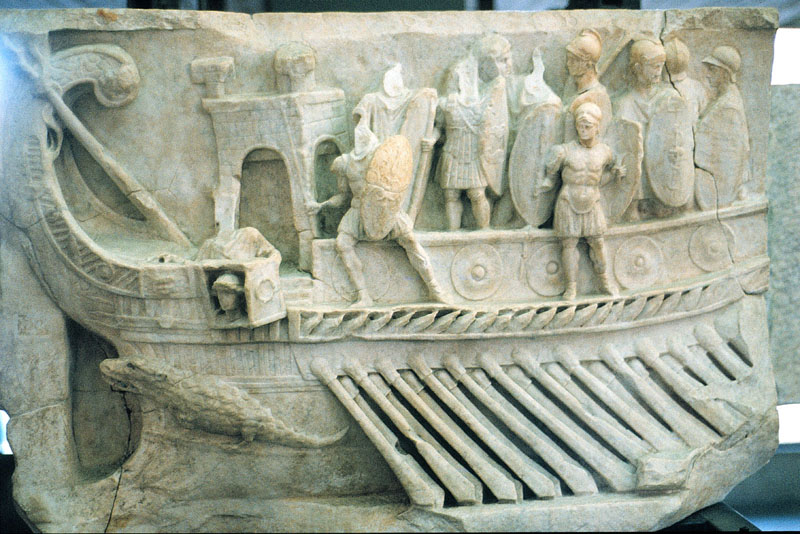
I don’t think the Sulla coin is nearly as clear. If we train our eye to other Roman monuments we quickly see that ship prows, or more properly the acrostolium, are traditionally so decorated.   Take for instance the Tomb of C Vartilus Poplicola from Ostia:


Or the warship relief from Praeneste:

I grant you that this last one is harder to see.  I include it mostly to demonstrate that different female deities occupied this spot and that on reliefs in larger context they are simply part of the decorative program.  Some times identifiable, sometimes not, but not usually read as significant to the overall monument.  See Holliday, p. 97-104.

So the Sulla coin could be Venus but there is nothing in the program of the moneyer to necessitate such a reading.  Heck it could be the head of Victoria!  And if one wanted to go down that route it would be a good idea to read some Clark.

Update 2/11/14: See also this post.