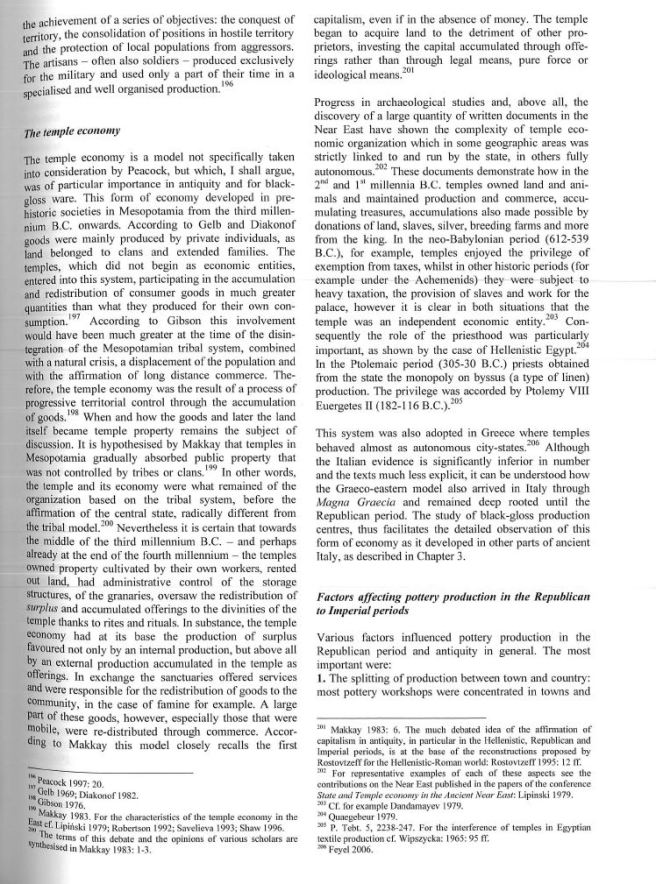
Temple Economies

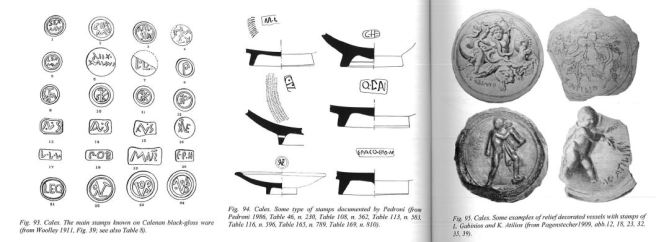
Reading Helga Di Giuseppe, Black-Gloss Ware in Italy: Production Management and Local Histories (BAR 2012).  Really exciting stuff with potential implications for early heavy bronze find patterns….

Capture.JPG

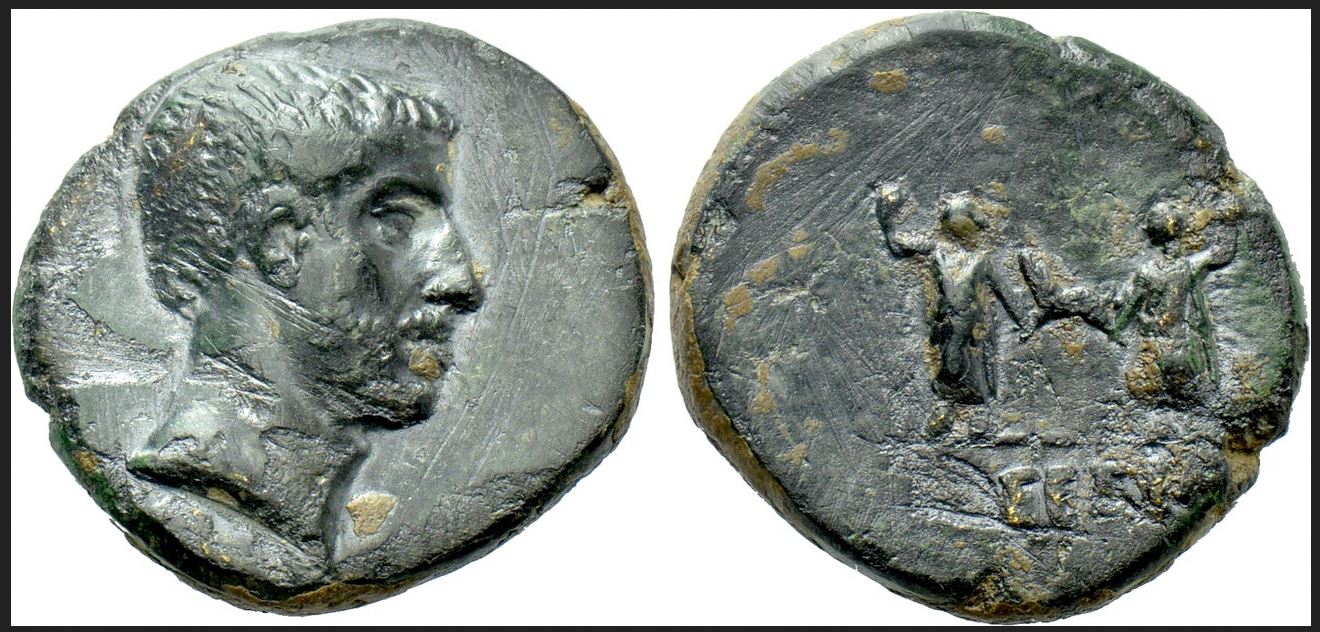
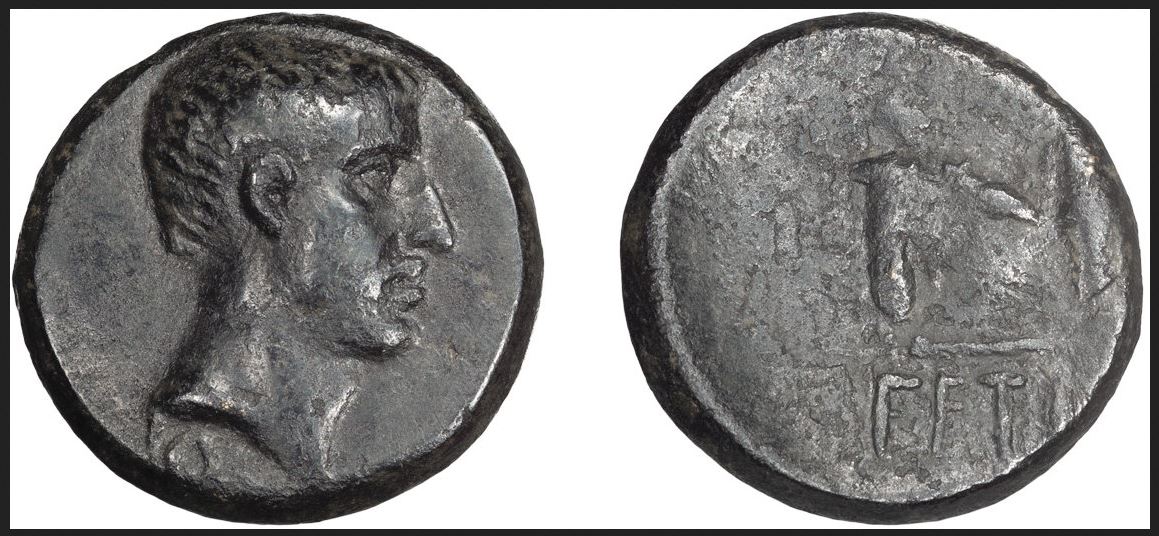
These images got me thinking about the ‘habit’ of signing with an abbreviated name or a name in ligature:

Capture.JPG

Praeneste Aes Grave Finds (Historic)

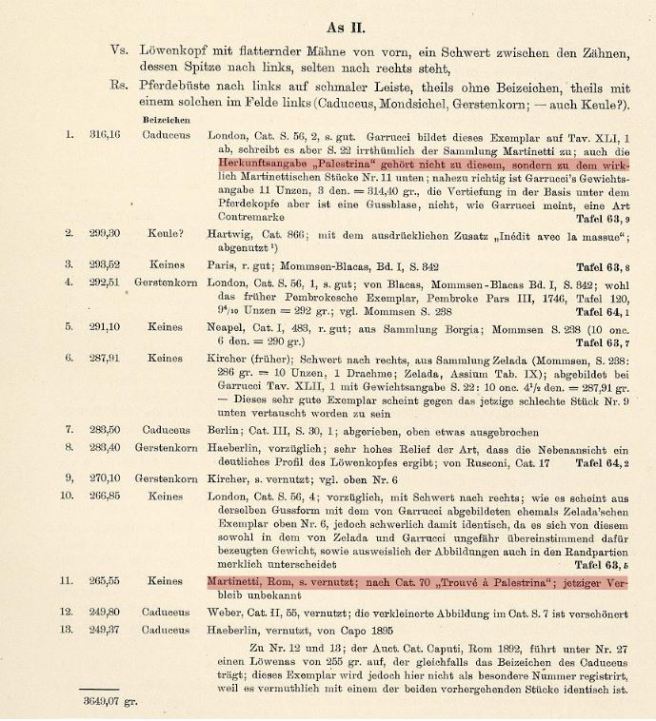
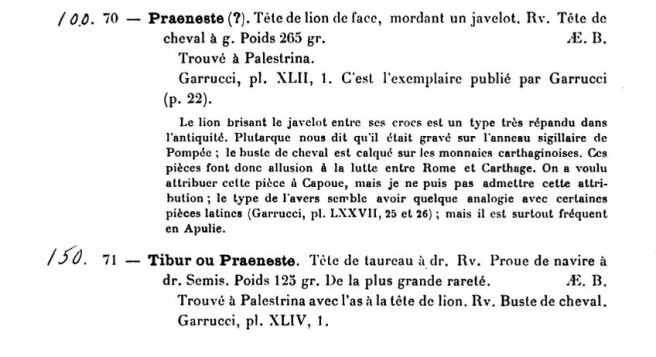
So reading Haeberlin, I think I can pretty safely say that there are two separate hoards(?) with the bull-head/prow semis from Praeneste.  This brings us up to 4 pieces of this type found at the site given those on display at the museum.

So first we have the one reported by Garrucci about which I blogged before.  It contained the bull-head/prow semis and the lion head/ horse head as.  We can call this the pre-1907 Martinetti hoard (when his collection sold).  The Marinetti sales catalogue is digitized.

Capture

Capture

Capture2

Second we have Stettiner pre 1893 Hoard (?) or possible just site finds.  [I cannot find a digitized copy of Sangiorgi’s sales catalogue… yet.]

This contained

  • bull-head/prow semis
  • boar-head/lyre triens [Vecchi 2014: no. 281, other known findspot: Satricum]
  • club/pentagram uncia [Vecchi 2014: no. 306, other known findspot: Pietrabbondante]

Capture4Capture3Capture2

A Pre 1986 Aes Signatum Hoard

As reported in Triton I, lot 754:

“…. This bar, superior in condition to both, is part of a hoard found between Rome and Naples. Of all 8 issues of Aes Signatum, only 31 examples were known, most in museums. This hoard added 6 or 7 more; its contents is as follows:

1) Elephant/Sow, Crawford 9/1 (not yet published) [NB: There was a bar of this type (illustrated) known to Thurlow and Vecchi by 1979 that weighed 1536g.]

2) Anchor/Tripod, Crawford 10/1, 1645 grams (Leu Auktion 42, lot 34)

3) Chickens/Tridents, Crawford 12/1, 1487 grams (Leu Auktion 42, lot 35)

4) Chickens/Tridents, Crawford 12/1, 1650 grams (NAC Sale 9, lot 410)

5) Chickens/Tridents, Crawford 12/1, 1145 grams (Athena Sale 2, lot 247; NAC Sale 5, lot 205) [illustrated as Vecchi 2014 no. 24 on pl. 19]

6) Chickens/Tridents, Crawford 12/1, 1461 grams (this specimen)

7) Unknown issue.

150 Aes Graves were found in this hoard, all Crawford issue 14, many of the Triens. 6 or 7 ingots roughly equalled them in total weight.

This implies that Crawford issue 14 is contemporary with the Aes Signatum.

Oval Series Denomination Markers

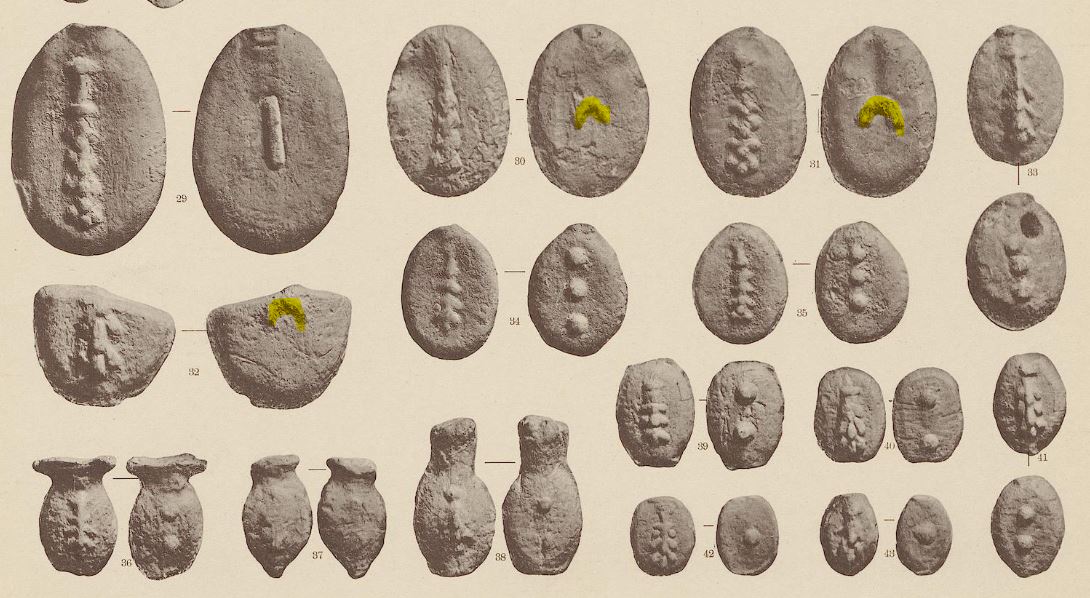
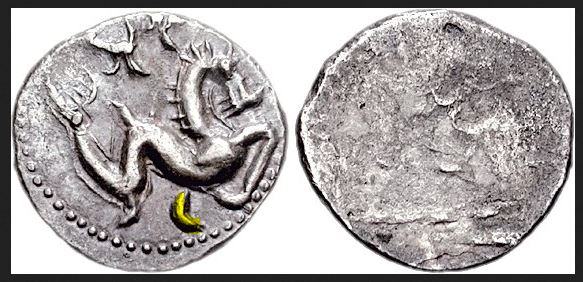
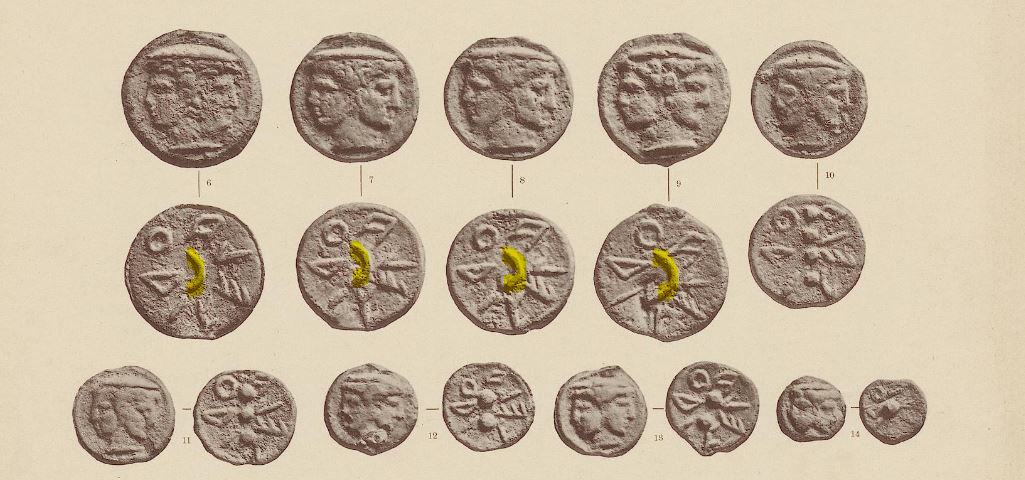
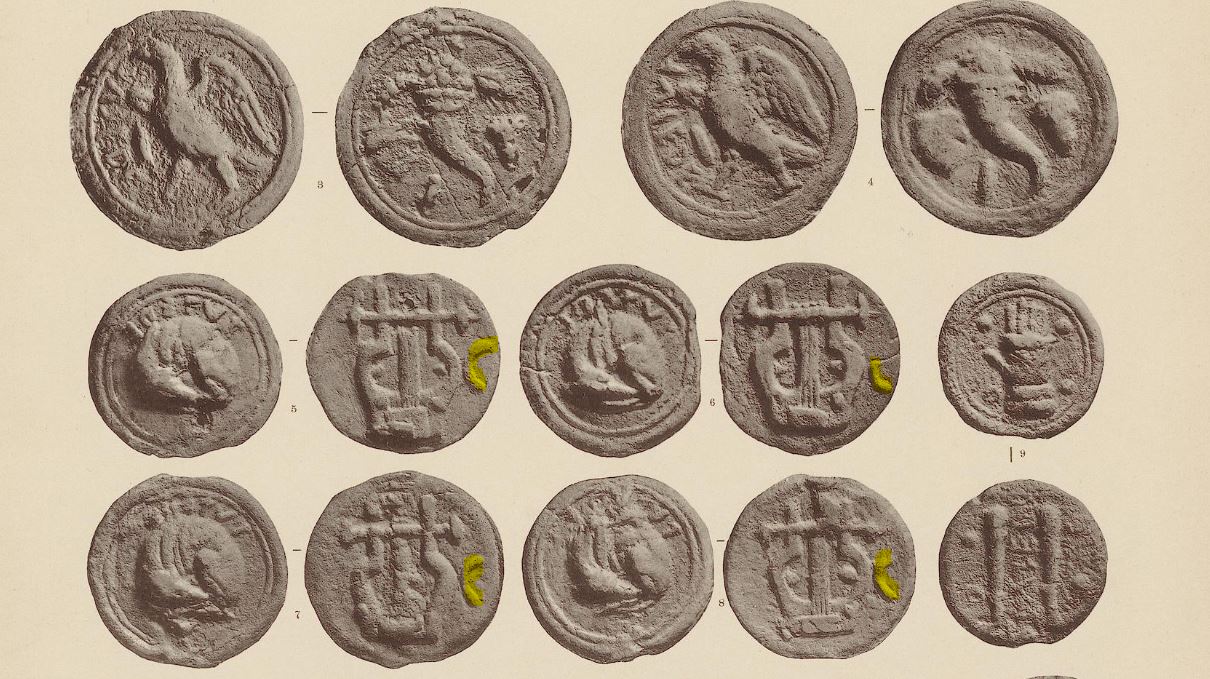
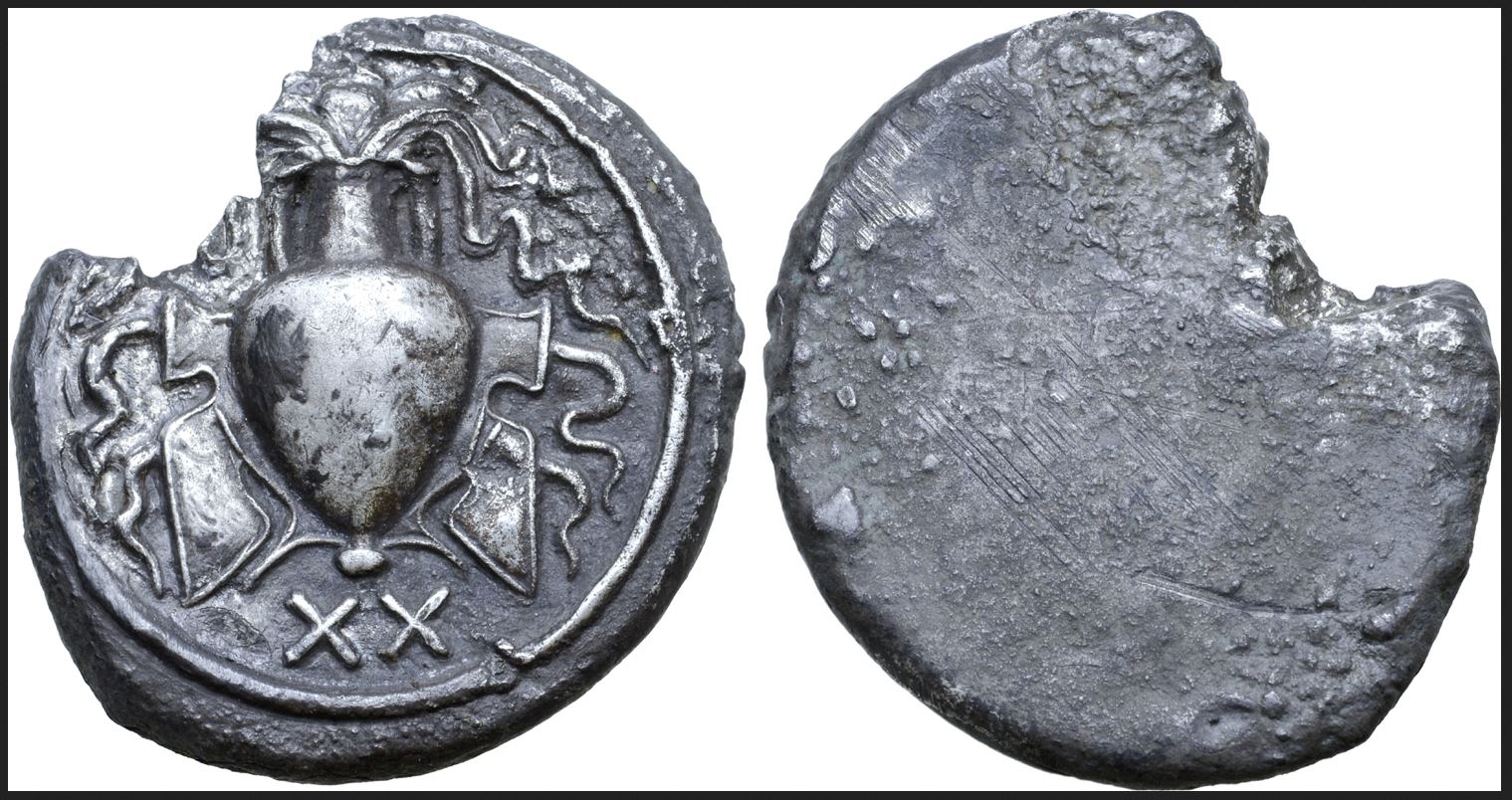
So the lunate symbol on the oval series aes grave bothers me.  I feel sure I’ve blogged about this before but cannot find the notes.

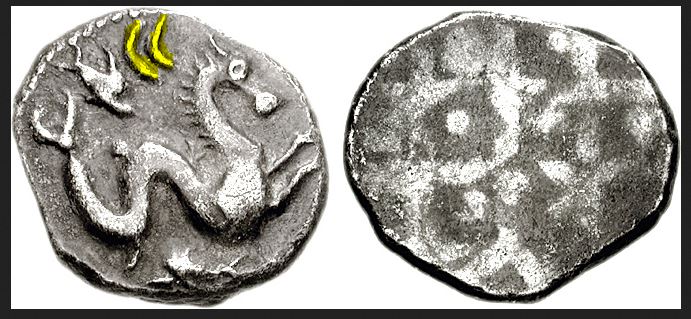
Talking to any number of Italic Language experts (Jay Fisher, Katherine MacDonald among others) there is no way that it is an S standing for Semis.  And if that is the case it’s not going to mean 1/2.  It’s going to be a numerical symbol.  And I think it is most likely the number 5, like V.  This would the oval series base-10 not base-12.  Anyway, I’ve not had positive evidence to support this BUT I think the marks on the Pisa/Luca Etruscan bronzes are probably good enough evidence to convince most (I hope).

Capture5.JPGCapture.JPGCapture2.JPG

If I’m right about this it would also mean that the Volterra series was also base-10:

Capture.JPG

and so also Tuder and other Etruscan/N. Italian mints:

Capture.JPG

Other denomination marks that have more “normal”  numerals to our eyes:

Capture4.JPGCapture3.JPG


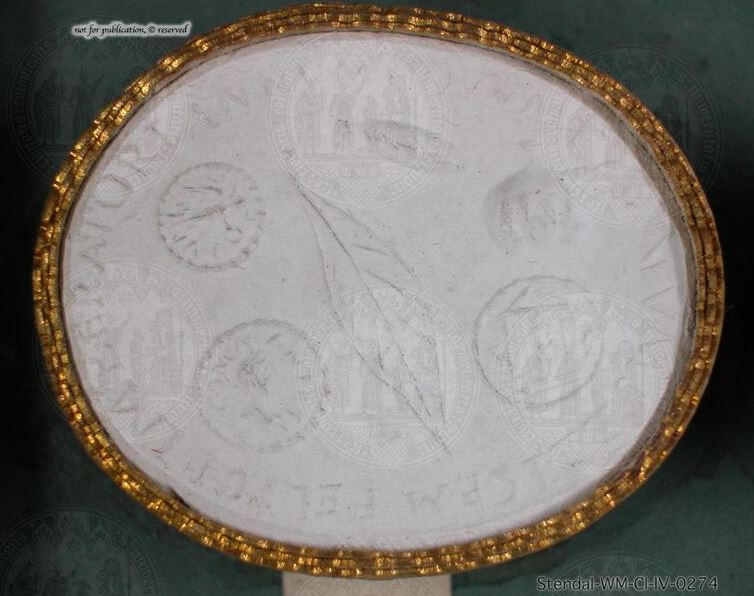
An Intaglio depicting Coins for New Year!

Capture.JPG

“Lorbeerblatt, Feige(?) und Phallus ohne Hoden. Dazu drei Münzen, eine mit dem bärtigen bekranzten Kopf des Kaisers Commodus und der Umschrift COMM.ANT.PFII die andere mit Victoria mit Palme und Kranz und der Umschrift VICTO, die dritte mit viersäuligem Tempel, darin die Statue eines Gottes, der die Rechte hoch auf Zepter oder Lanze stützt, zu den Seiten SC. Um das Ganze die (fagmentierte) Umschrift: FELIci impERAtori ANNVM Novum FAustum felicEM.”

“Bay leaf, fig (?) And phallus without testicles. wheat or barley kernel. In addition three coins, one with the bearded, wreathed head of the Emperor Commodus and the inscription COMM.ANT.PFII, the other with Victoria with a palm tree and wreath and the inscription VICTO, the third with a four-column temple, in it the statue of a god who holds the rights high based on scepter or lance, to the sides SC. All around the (fragmented) transcription: FELICI IMPERATORI ANNVM NOVVM FAVSTVM FELICEM”

” A Happy and Prosperous New Year for our Blessed Emperor”

Arachne entry object (no image)

Arachne entry cast (no description)

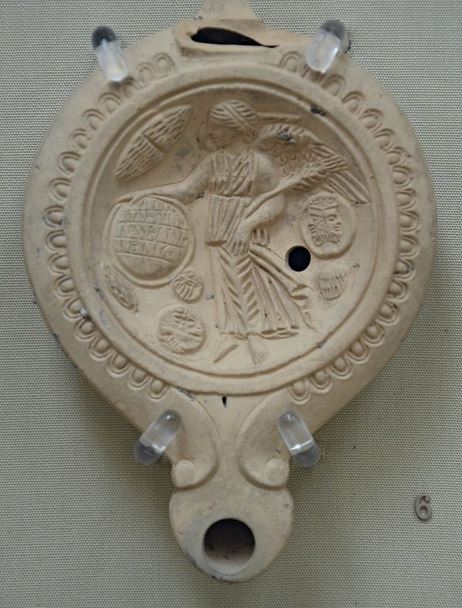
I guess this is the richie rich version of this type of gift.  BM specimen photographed by Carol Raddato

I Capture.JPG

ANNV/NOVM/FAVTVM/FELICE(M)

annu(m) / novum / fau(s)tum / felice(m)

“A happy and prosperous New Year”

another intaglio depicting coins

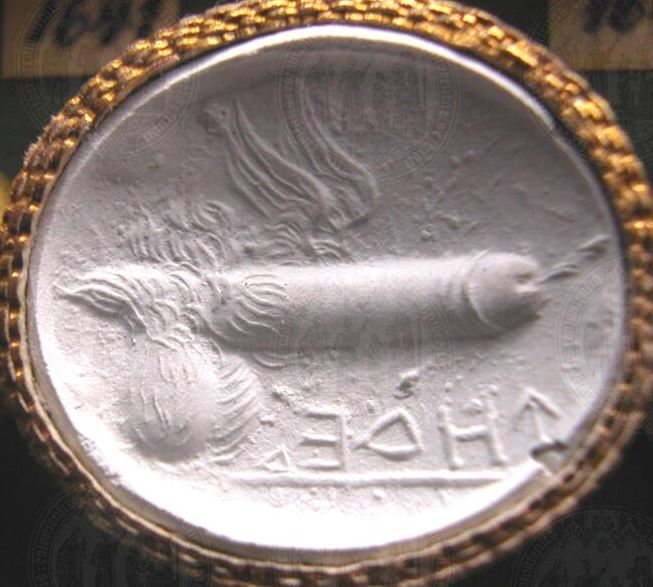
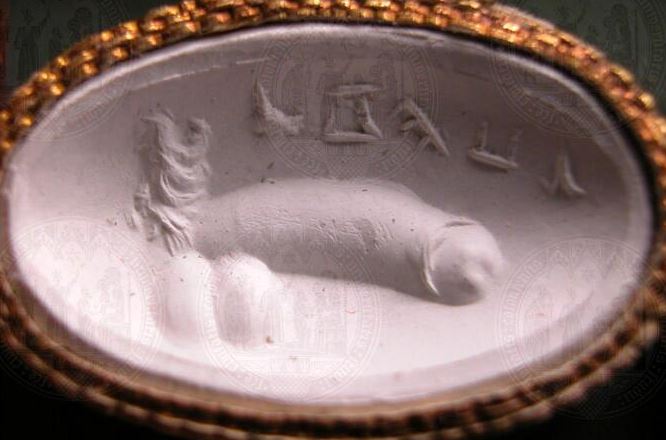
Phallus Intaglios with Odd Inscriptions

The thing that strikes me as strange about these are the inscriptions

They read right to left (these are impressions of the original intaglios) and also with characters not found regularly in Latin or Greek.  Some of the letter forms bear similarities with Etruscan and Punic but neither set of letters corresponds to letters in either alphabet as far as I can tell.

Are the inscription ‘magical’ ‘arcane’ (nonsense)? Or is this a limitation of my philological knowledge?

(I’m teaching a Sex and Gender in antiquity seminar in the fall hence my interest.)

Capture.JPG

Capture.JPG