If you’re reading this by email subscription please note, yesterday’s post has significant documentation updates on the process.
So earlier in the week I spent a great deal of time on RRC 22/1 and produced an interpretive die map after having used Co-Pilot to try to come up with the die clusters. Today I’ve used Claude to re do this work to demonstrate how much more robust it is as a tool and to see how it changes my thinking of my own work. One of the things I like best about it is how it tells me what it is doing. The artifacts it produces are far more useful, intelligible, checkable. I find this useful for running thought experiments about possible manufacturing practices.
Let’s start at the end.
Prompt:
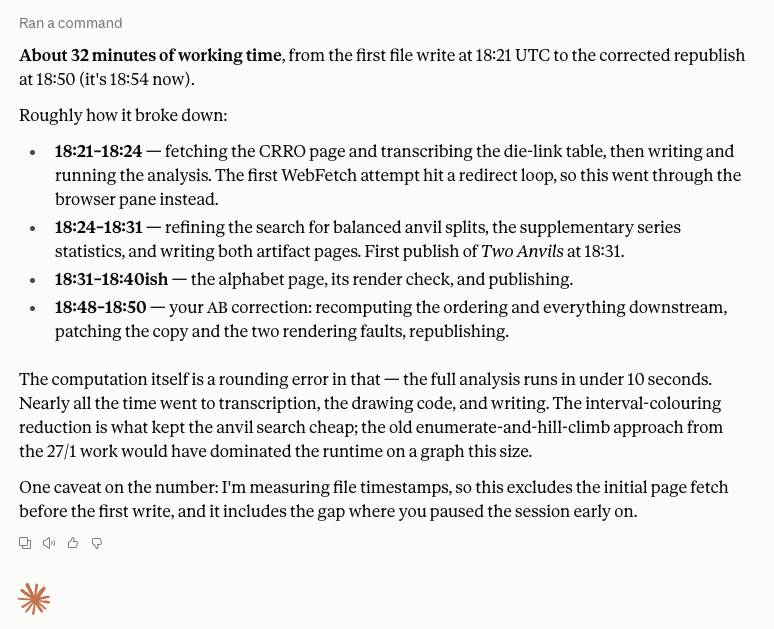
How long did it take to reach this point?
[of course this was 2.21 pm EST, but the robot doesn’t live in my time zone.]
Prompt:
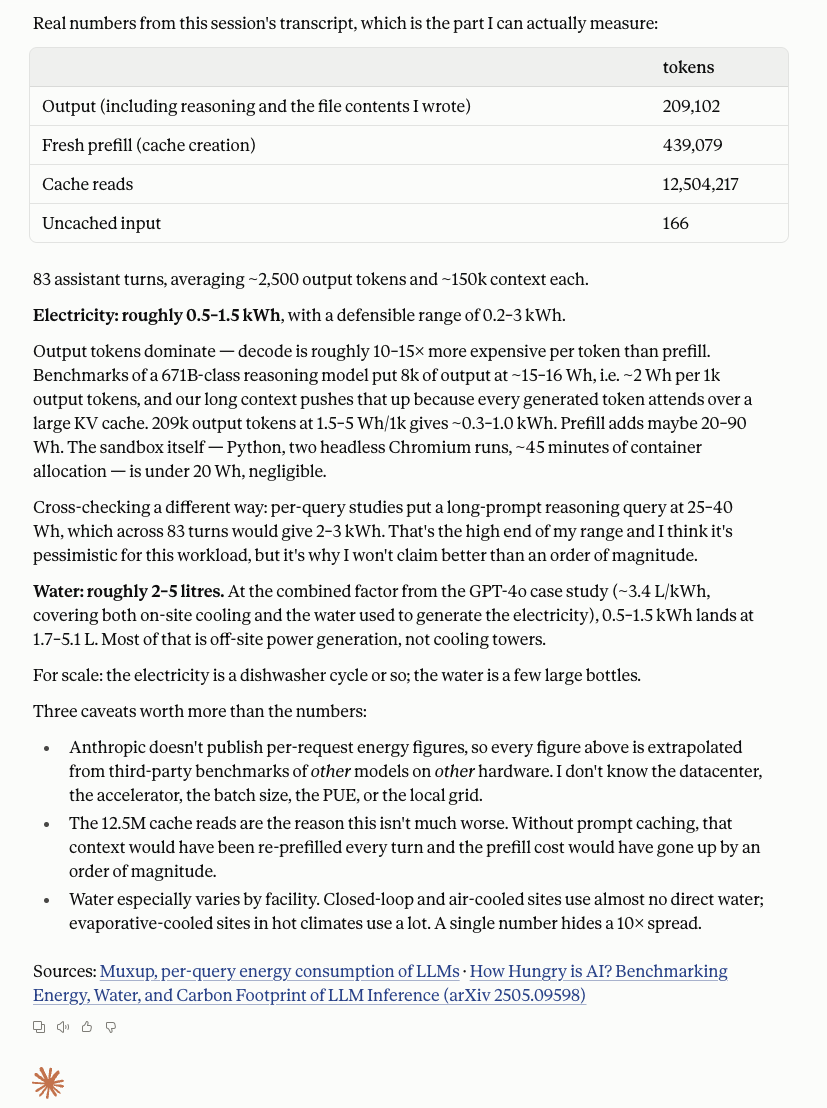
estimate the amount of electricity and water this co-work session used
The other cost of course is my allowance of usage. This is my second session. I used pretty much my whole limit yesterday testing functionality not just on coin stuff but also for coding and creating apps.
Claude has session limits calculated on 5 hour increments.
And these all go to my weekly allowance:
52 weeks in a year at 200 dollars a year means $3.85 per week. So yesterday and today together cost me 50 cents.
I began my session by pasting in the briefing from yesterday’s session (you can read that on yesterday’s updated blog post). I need to remember in future to start by telling it that I’m giving information that I don’t want it to use yet. It tried to start working straight away. I selected Opus 5 and told it to use High but not Max effort.
I used co-work rather than chat and started with a much more complex prompt:
The above information is for context and method. The next challenge is to fetch the die links for http://numismatics.org/crro/id/rrc-22.1. Produce aBipartite die-link graph that crossing minimisation, and then create and artifact that show the minimum number of anvils necessary to have no overlapping lines. Then produce an artifact that assumes the reverse dies were produced in the ancient greek alphabetical order of their labels, with the double letter series coming after the the single letter series. Take the time you need to do this task most efficiently with the least usage cost.
As you can tell from the time log above I made a mistake by not telling it where to put AB in the sequence. I also included more human language than is necessary. The strike outs mark what I would exclude in future.
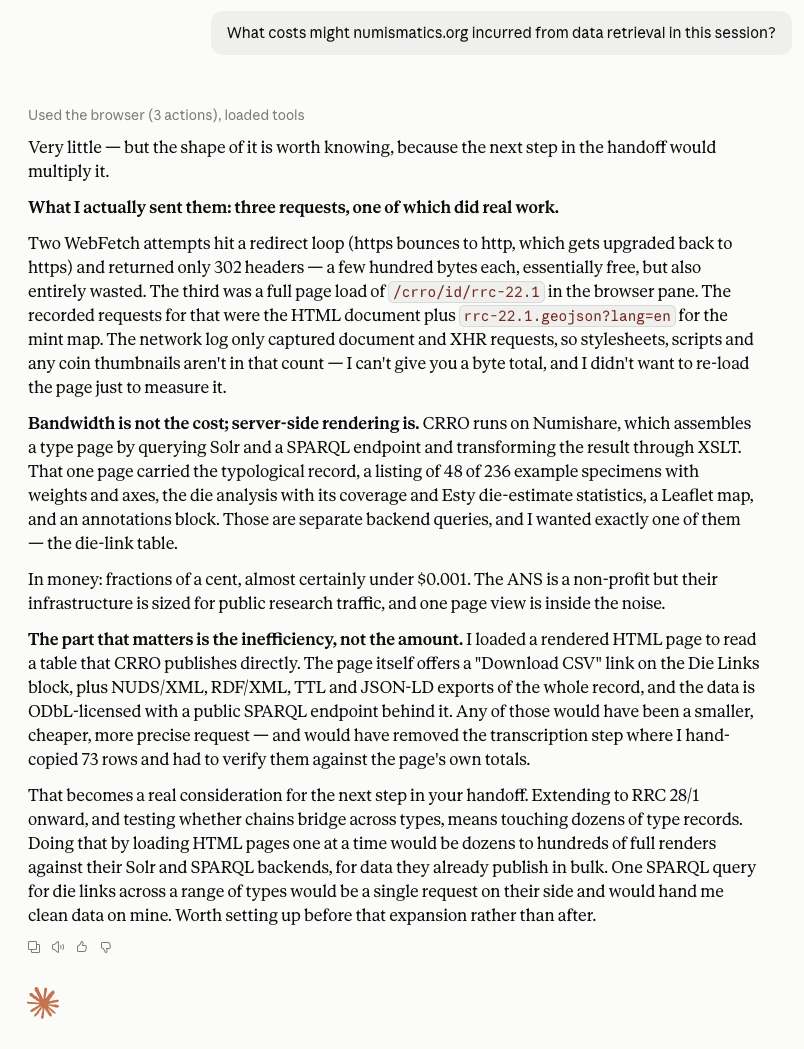
Prompt writing is a skill I will continue to develop. And I enjoy considering questions of data visualization. It is high usage to have Claude fetch its own data or search the web. I may try designing my data set and then uploading it with a careful prompt. I won’t spend much time asking it questions about my electricity and water usage and that in and of itself was a really complex ask. That said I value knowing my time today was about one dishwasher cycles worth of resources. My family of four runs a cycle every day, sometimes two or even three if we are entertaining (as we don’t use disposal materials unless compostable).
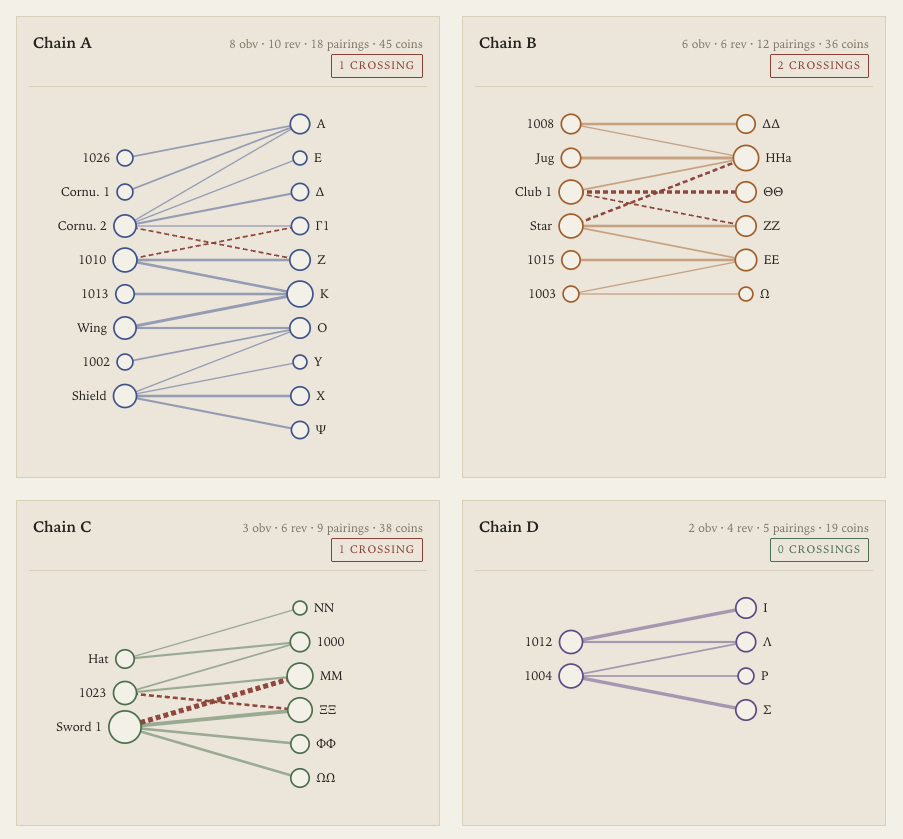
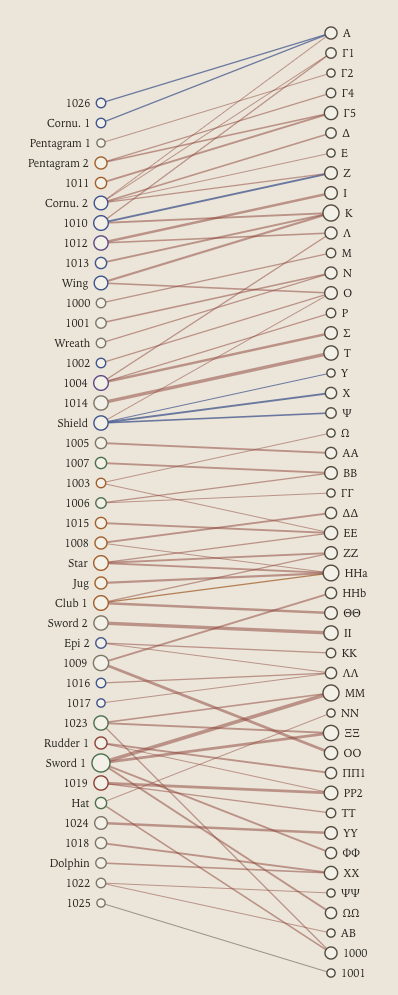
Intellectually these images have caused me to lean away from a two anvil model. Instead I think it most likely there was a single anvil and a die box filled with pre cut dies set into punches ready to be used and after a work session reverse dies were returned to a box while the obverse die was changed and then striking resumed.
Why do I think this? If we ignore alphabetical order there are very few necessary crossings in the die clusters:
There are many more crossings if we force alphabetical order, but I think that we can still imagine a one anvil set up with a die box.
I’m still struck how different RRC 25 is from 22, 26, or 27 in its die clusters. I think it was manufactured using a different logic of work flow which I want to think more about it.
I also want to think about how this process seems to prioritize NOT using dies to breakage and fairly regular changing dies.
I wonder if we would find similar patterns of manufacturing in issues struck by Campanian mints?
What I dislike about this response is that it presumes to know the next thing I want to do. I don’t care about RRC 28 at this point. It is the Quadrigatus issue and whole different kettle of fish. The data set is far form as robust.
Claude’s default is also to praise the user about the quality of the prompt and the question. I find that disgusting, BUT I told it to stop and it did. I need to ask it stop suggesting next steps, I think.




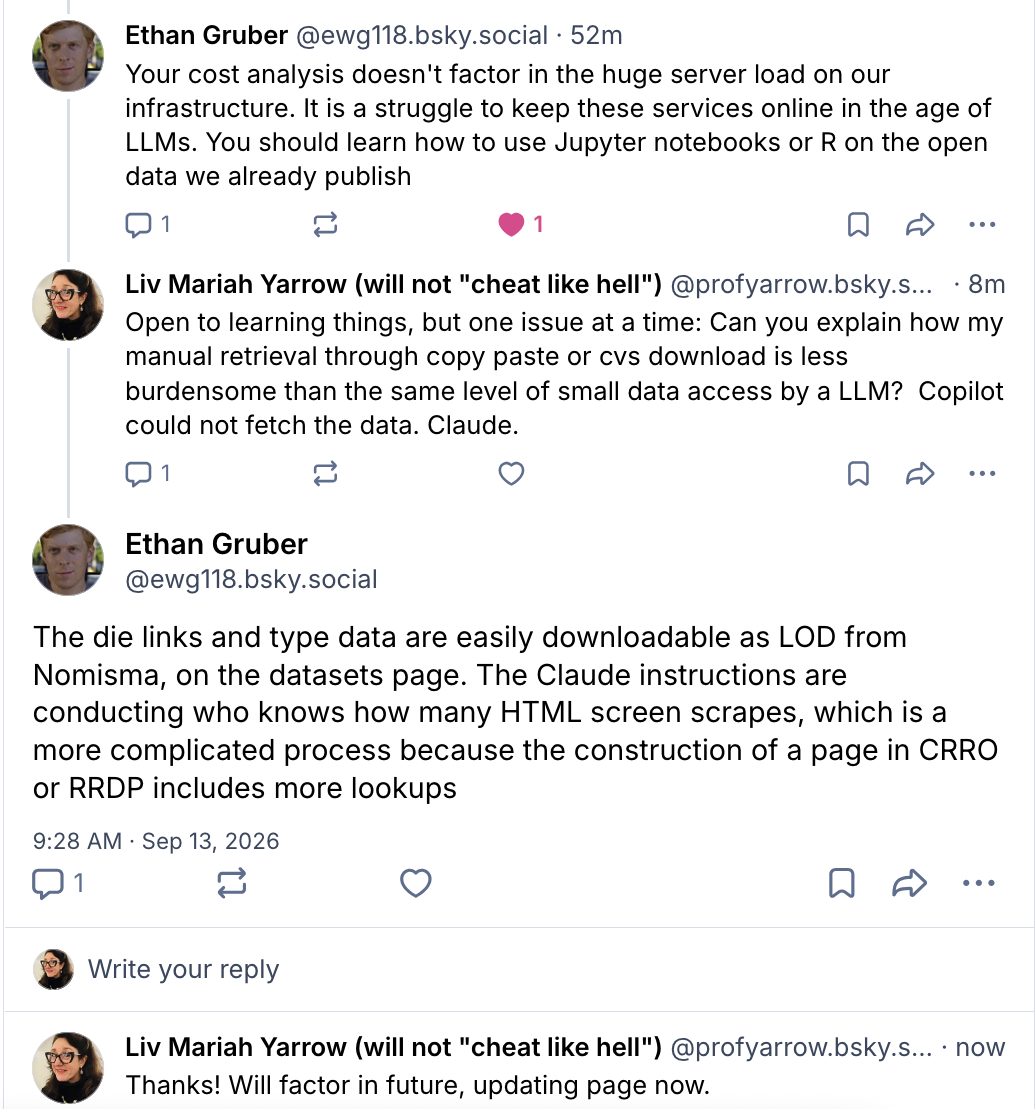
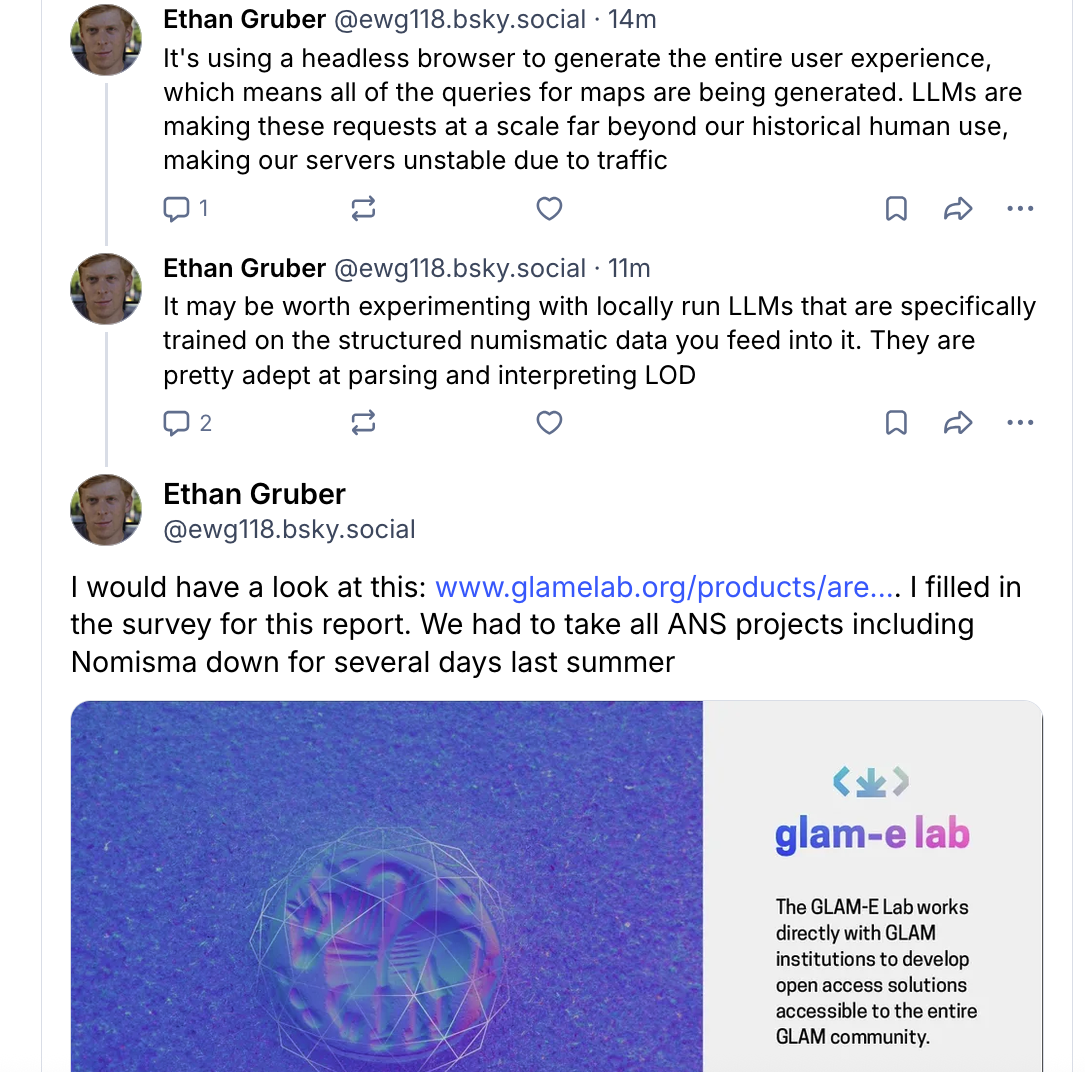


One thought on “Revisiting RRC 22/1 with Claude”