I’m really pleased that the in-house journalist took our long convo and did such a great job of finding just the right framing and questions and extracts for this profile in the college magazine.
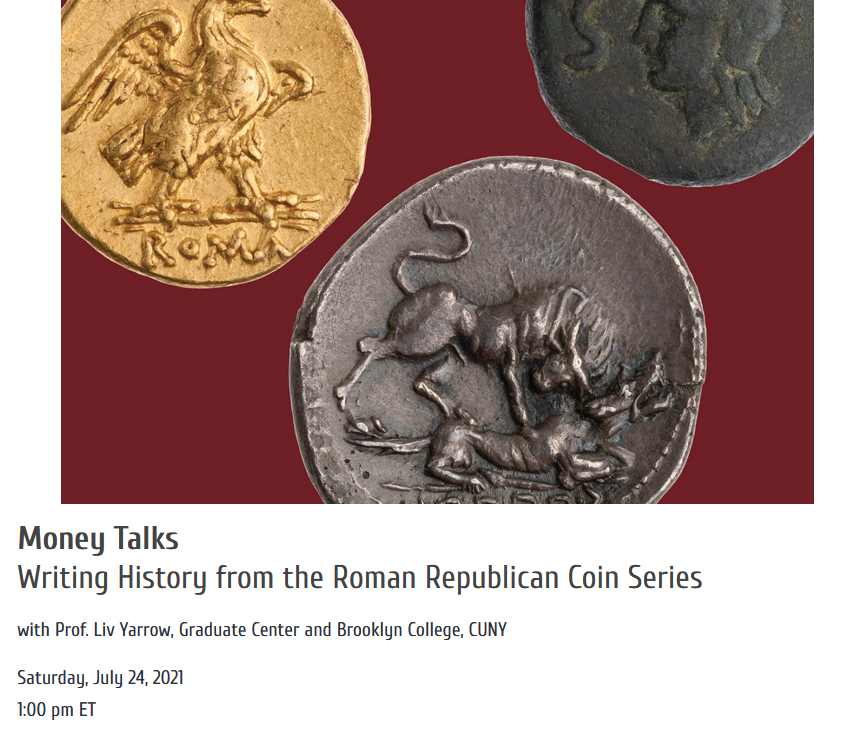
AND, if you want to hear me talk about lessons I learned from writing my book and how it ended up the way it did and where it might lead, THEN come Saturday, July 24, 1 pm
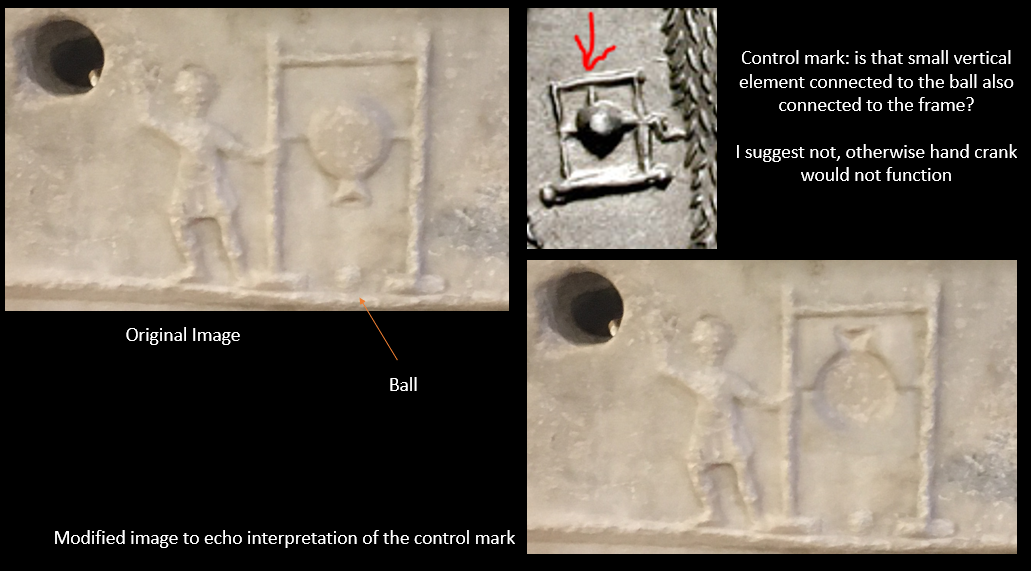
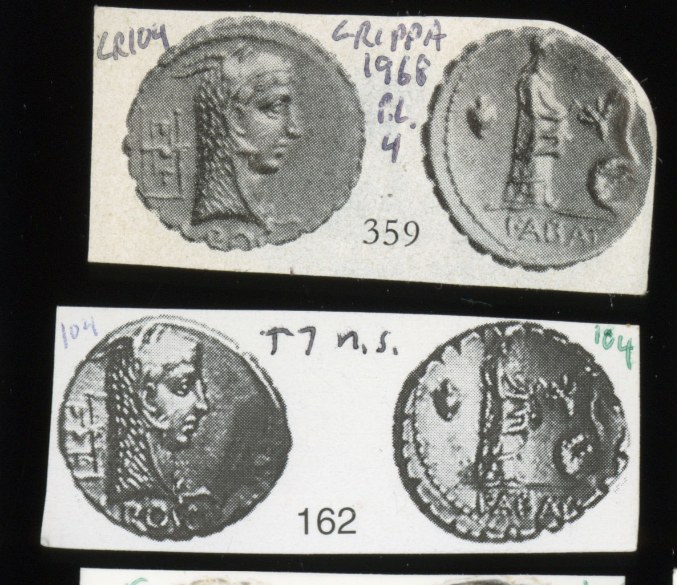
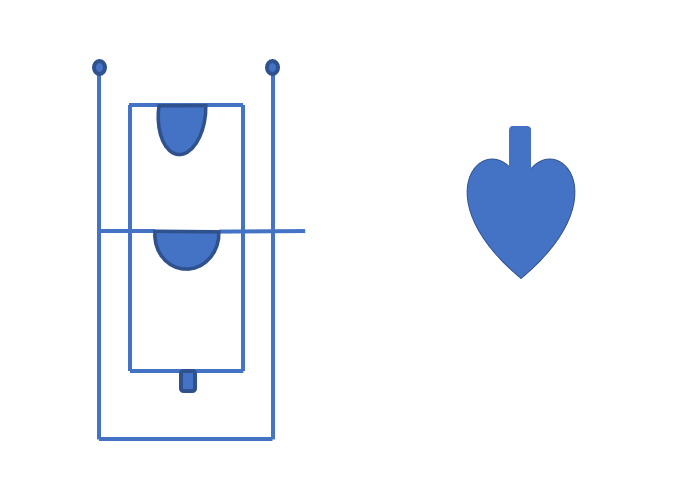
Schaefer pointed out the trouble with the bingo machine id for the obverse symbol 103 on the Fabatus series is the little symbol that (seems?) to connect the ball to the top bar.
See previous post to catch up on convo and also read comments.
I went looking for models of bingo balls that had a square frame around them (not a typical modern feature of mechanical bingo balls).
If the little sticky out thing at the top is part of the ball not part of the frame and not connecting the two, then it might be the box that catches and releases the random ball. That’s a lot of ifs and by no means certain, but until we find an actual archaeological match for the symbol this is the best I’ve got so far.
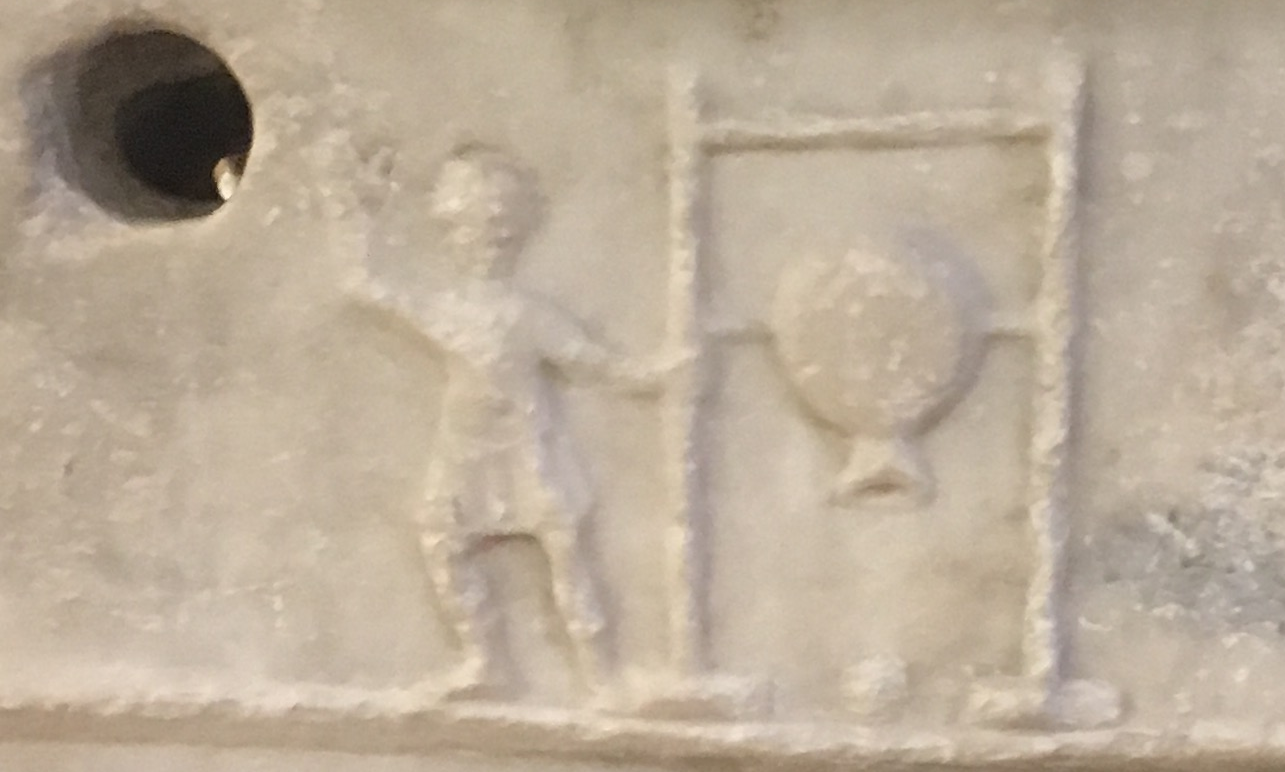
Clare Rowan drew my attention to this depiction on a ball game machine in the Bode Museum Berlin:
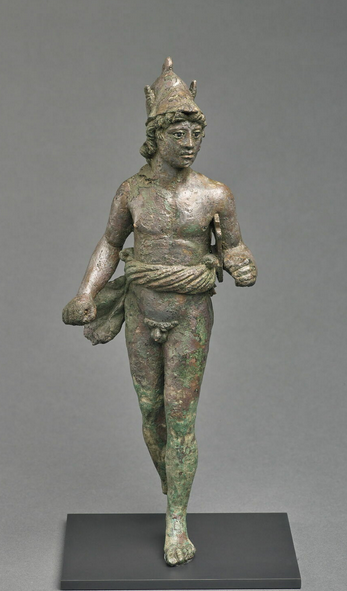
Detail of statuette found in Lombardy, now in Louvre
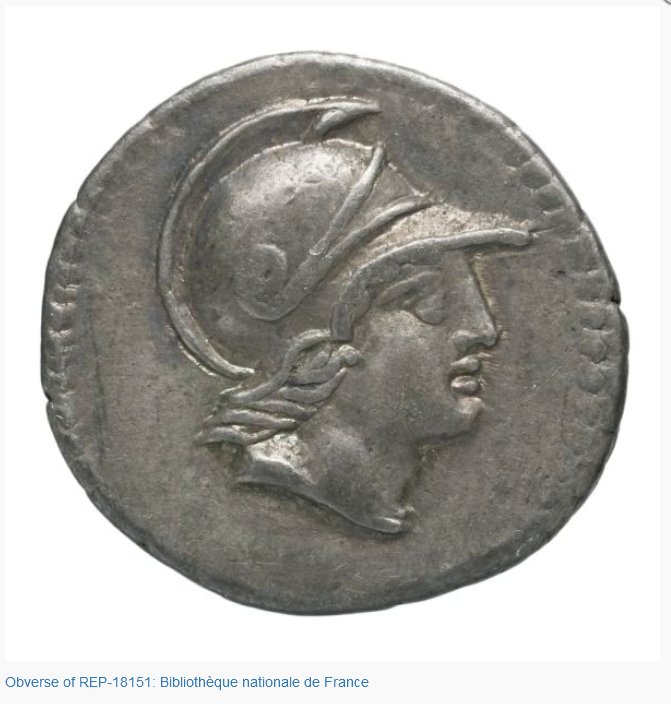
This statuette got me thinking that we probably have the obverse of RRC 388/1 (and perhaps other types with similar iconography) wrongly listed as Roma when they would more naturally be read as Mars by an ancient viewer:
front view of same statuette
This re identification would make sense with Mars’ totem animal the wolf on the reverse of 388.
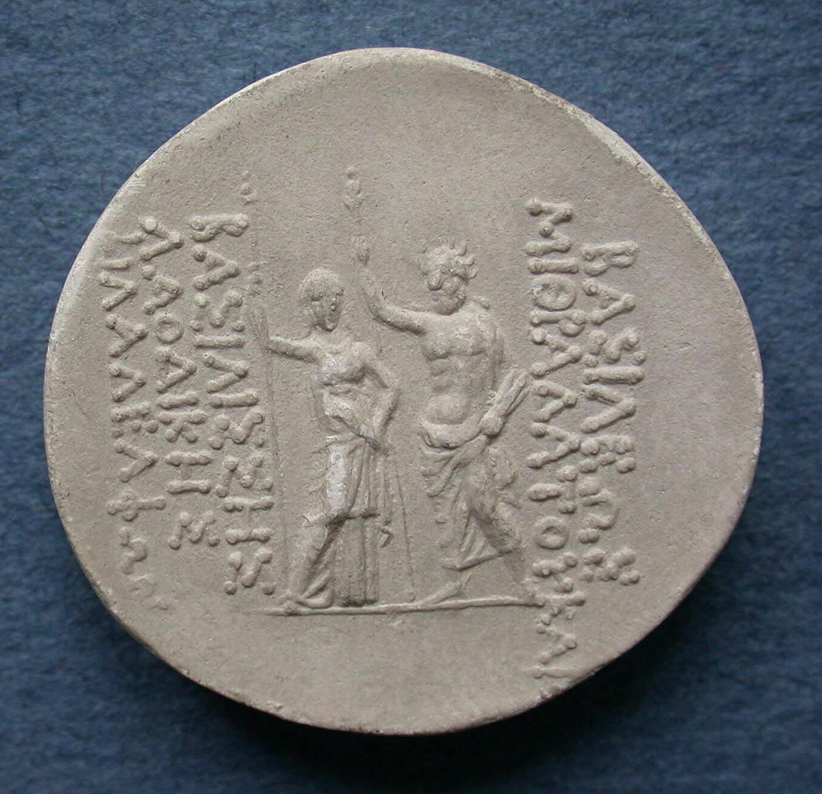
This is a cast of an unknown original specimen in the Louvre.
The type assimilates the identities of Queen (Basilisse) Laodice and King Mithridates (Philopator) with Zeus and Hera and identifies them as Philadephon. Sibling Lovers. Emulating the Ptolemies and with a heavy nod to the same logics as Theocritus Idylls 17 justifying the sibling marriage among Hellenistic royalty based on the Olympic precedent.
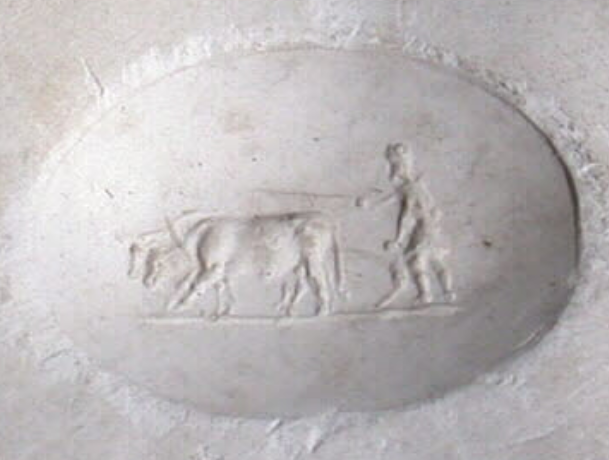
Oller Guzmán, Joan, Oriol Olesti Vila, Jordi Morera Camprubí, and Gertrud Platz-Horster. “Three Roman Republican Seal-Rings Discovered in the Eastern Pyrenees and Their Significance.” European Journal of Archaeology, 2021, 1–20. doi:10.1017/eaa.2021.5.
“Did you dare to snatch from the very jaws of death and to release slaves whom you had decided were eager to take arms and to make war in Sicily, and whom in accordance with the opinion of your colleagues on the bench you had sentenced, after they had been already delivered up to punishment after the manner of our ancestors and had been bound to the stake, in order to reserve for Roman citizens the cross which you had erected for condemned slaves? … That a man should have released slaves; that that very man who had sentenced them should release them; that he should release them, in a moment, out of the very jaws of death, that he should release slaves convicted of a crime which affected the life and existence of every free man— O splendid general, not to be compared now to Marcus Aquillius, a most valiant man, but to the Paulli, the Scipios, and the Marii! That a man should have had such foresight at a time of such alarm and danger to the province! As he saw that the minds of all the slaves in Sicily were in an unsettled state on account of the war of the runaway slaves in Italy, what was the great terror he struck into them to prevent any one’s daring to stir? He ordered them to be arrested—who would not he alarmed? He ordered their masters to plead their cause—what could be so terrible to slaves? He pronounced “That they appeared to have done….” He seems to have extinguished the rising flame by the pain and death of a few. What follows next? Scourgings, and burnings, and all those extreme agonies which are part of the punishment of condemned criminals, and which strike terror into the rest, torture and the cross? From all these punishments they are released. Who can doubt that he must have overwhelmed the minds of the slaves with the most abject fear, when they saw a praetor so good-natured as to allow the lives of men condemned of wickedness and conspiracy to be redeemed from punishment, the very executioner acting as the go-between to negotiate the terms?”
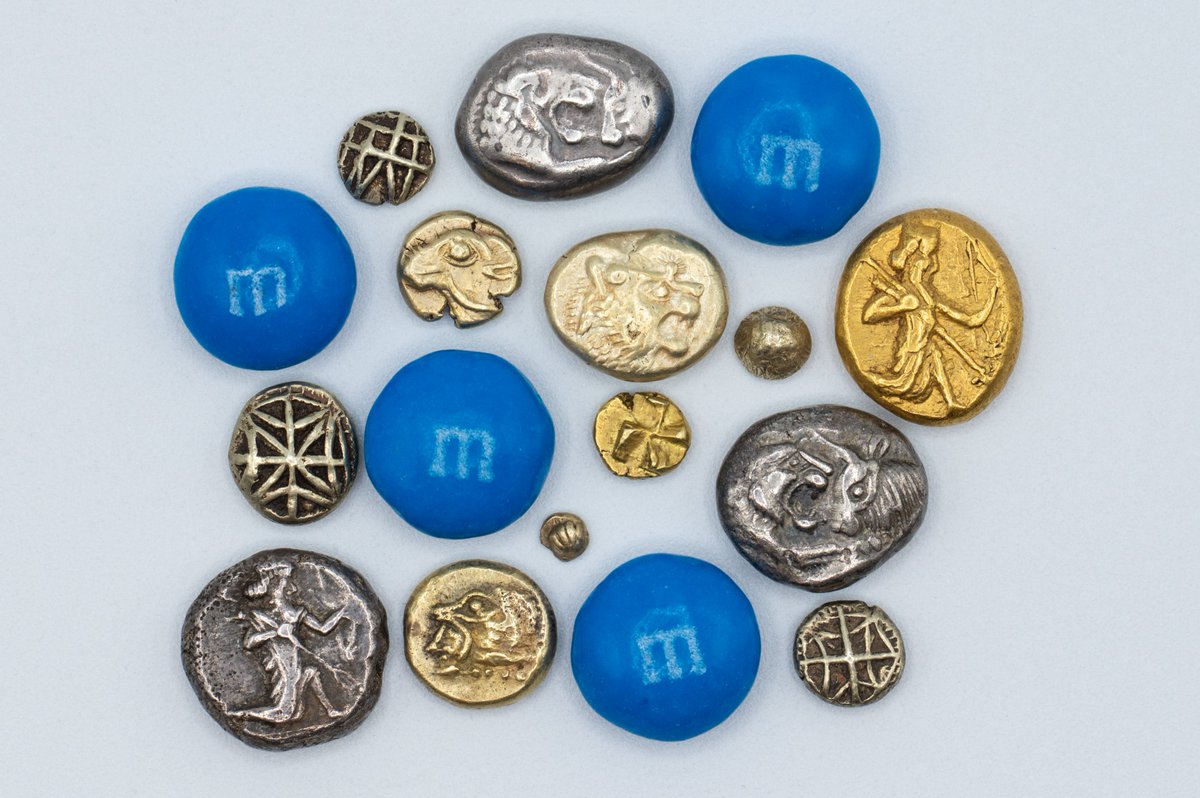
Barbara Pavlek, James Winters, Olivier Morin, “Ancient coin designs encoded increasing amounts of economic information over centuries.” Journal of Anthropological Archaeology 56 (2019).
Coinage, the practice of minting small bits of metal with distinctive marks, appearing in the second half of the 7th century BCE, had a transformative impact upon ancient economies and societies. Controversies endure concerning the original function of ancient coinage, in particular the respective role of states and markets in its emergence. Applying information-theoretic measures to a corpus of 6859 distinct coin types from the Ancient Mediterranean world, dated between c. 625 and c. 31 BCE, we show that the symbols minted on coins (designs combining images of plants, deities, animals, etc.) became increasingly informative about a coin’s value. This trend was specific to value-relevant information, as distinct from information concerning issuing states. Coin designs also carried more information about higher denominations than about lower ones. Before numerical or written marks of value became widely used on coinage, these iconic symbols were carrying economic information.
RRC 412 : L. Roscius Fabatus’ issue like Papius’ uses paired control marks (and also celebrates Juno Sopita). Some pairs repeat but some see unique to Fabatus. We saw the groma in my last post, but there are other fun examples of Roman technology on this series.
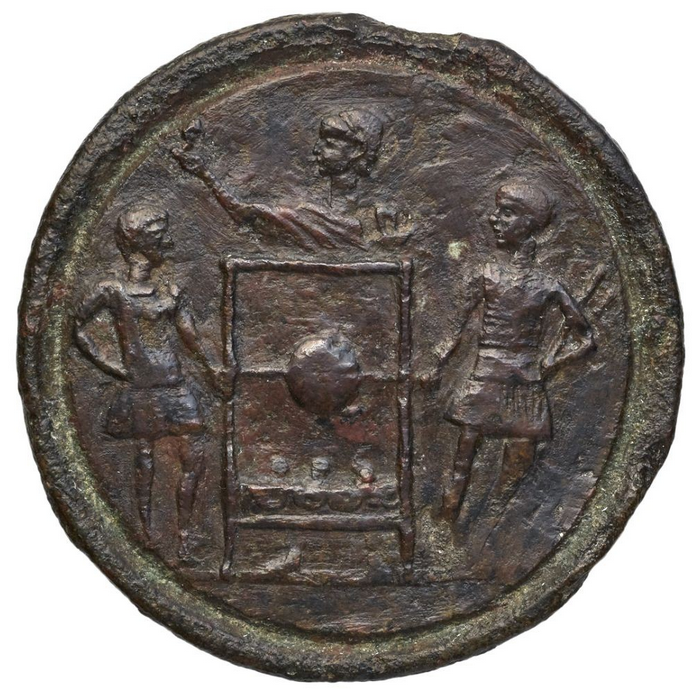
Lotto machine for randomizing ball draws!
CNG 64, 805: “L. Roscius Fabatus. 59 BC. AR Serrate Denarius (3.92 gm). Head of Juno Sospita right, wearing goat’s skin; lottery machine behind / Female standing right feeding serpent; lottery ball behind. Crawford 412/1 (symbols 103); Sydenham 915; Roscia 3. … The symbols on this particular issue of L. Roscius Fabatus depict components of an ancient lottery system. While Crawford misdescribed these symbols as a well and an unknown symbol, their actual identification is possible by comparison with contorniates made hundreds of years later which depict the identical equipment (see, e.g., Alföldi 203). Furthermore, it may be deduced through the comparisons with the contorniates that the lottery system they were parts of related to the determination of the starting positions in a chariot race.”
This is also a great example about why one must read auction catalogues: they contain key information not just on specimens but also on types and also often finds and relevant scholarship. I just wish the individual entries were authored.
It took me the better half of forever to find the right comparative image but I did it and I regret not a moment spent trolling contorniates. (a good blog post about them in French)
Bibliothèque nationale de France, département Monnaies, médailles et antiques, AF.17308 (IMP-11938) Gallica linkJust a few of the Schaefer archive photos
Unindentified Machine(?)
Schaefer images same link as that above
Schematic rendering
Do you know of a better specimen of with this control mark?! I’d love to see it.
It does not look like any water pump I can find from the ancient world and yet I wonder if it is not a hydraulic tool of some sort. Must get:
Ortloff, Charles R. The Hydraulic State: Science and Society in the Ancient World. Milton: Taylor and Francis, 2020.














 Liv Mariah Yarrow