1 of 234 Days: the work ahead

Creating this blog was such a life-changing experience when I first set it up in June 2013 to trace where the time went. I had deep fears that writing wouldn’t happen and that I couldn’t accomplish what I set out to do. More and different work was accomplished, all of which made the work between then and now richer and more meaningful. I’m excited to see what this period of time brings. I have none of those fears. I know that even if my goals shift and change, I will always be collecting new knowledge and ideas, enough to sustain me for another decade or so.

Practically, what is a sabbatical? I’m given the privilege of working on my research for Spring 2023 (and Spring 2024) in exchange for a 20% pay cut. I’m sad I won’t be at the AIA-SCS, but it isn’t in the cards. I’m calling it a “stay-batical”. I have made a very nice home office for myself and much of the work I want to do can be done right here. I put in some applications to travel for Spring 2024 so hopeful something will come up.

What is the work I hope to do?

I’m finishing footnoting a chapter on Dionysius’ thoughts on the Republican Constitution for an edited volume. That should be off my desk in 1-2 weeks all going well.

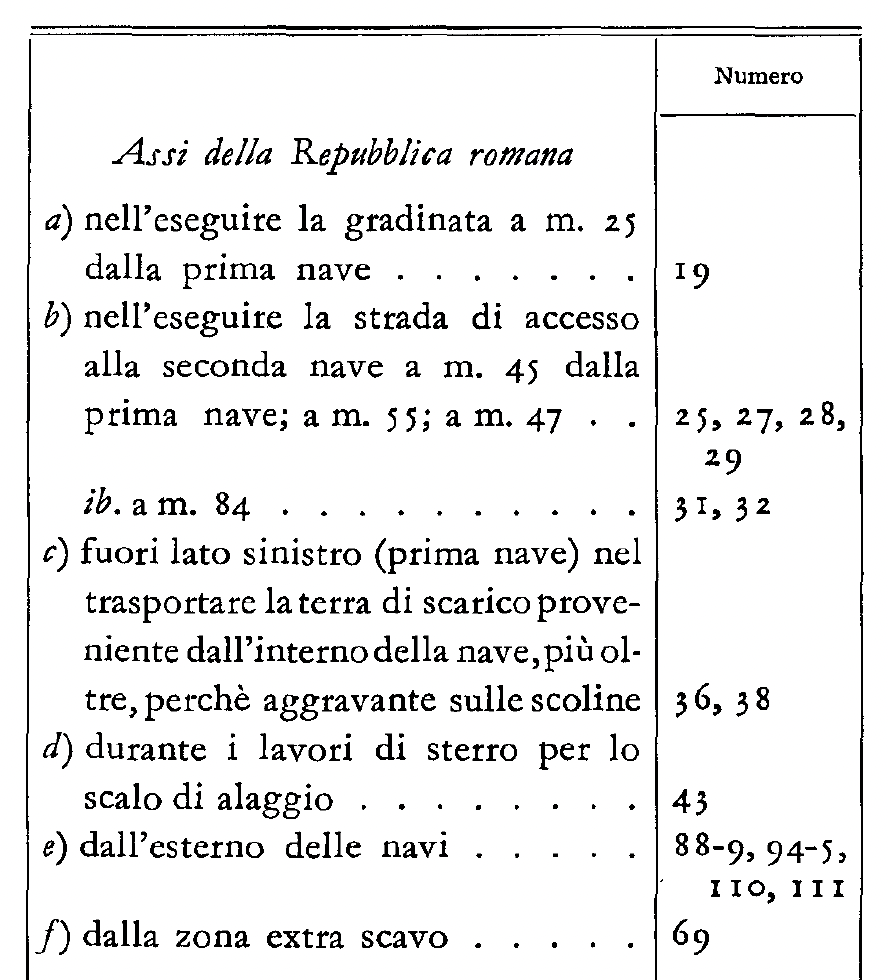
I need to crunch data from metallurgical testing of aes grave at Yale and Lafayette and compare with BM results and see if I could fit in another local collection or two before presenting my findings in Rome in mid February. (I also have to sort logistics around that trip.) Logistics need to be done ASAP, but the data crunching is last half of January along with some write up. I don’t think it will take four weeks but I’m allowing it just to be safe.

After that my hope is to keep the calendar nice and clear so as to plow through the edits of single-author Book No. 3. I’d love to have fully revised manuscript by June but that’s a pipe dream I’m sure. Maybe June 2024? We’ll see. Almost all the chapters are drafted. What is needed in intellectual rigor and footnoting. (AND not to get too distracted along the way).

Working Title: Making History: Coins, Texts, and the Late Republic

A richly illustrated exploration of what those living within the Roman republic knew, or thought they knew, about their own past and how they made that past meaningful to their contemporary lives. Chapters: (1) How to Read this Book (2) What Sort of Thing is a King? (3) Numa’s Memory (4) Celebrating Apollo (5) The Cost of Grain (6) Sulla’s Legacy (7) The Opimian Myth (8) A Fashion for Kings (9) After the Ides (10) The Relevance of Ancient History (11) Witnessing the Past (12) Who cared about the coins?

That’s the major stuff, but other things particularly, collaborative work, that may need to come to the foreground and may delay this work here and there.

I also wouldn’t mind writing up some of my Papius and Fabatus stuff for real and perhaps even diving into other thorny control marked issues…

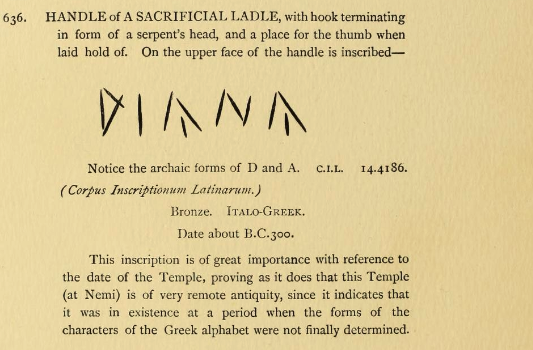
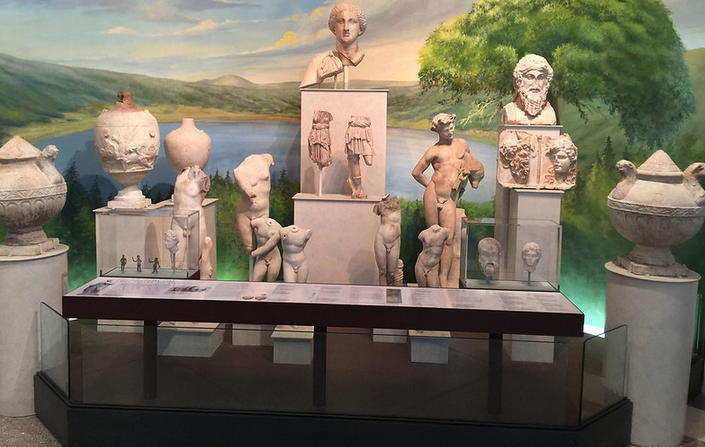
There will also be proofs to review at some point and I really must get to the Nemi material in Nottingham. I hope this year…

More tomorrow..

Undermining the Secret Ballot

Two men of praetorian rank were on the panel—Domitius Calvinus, who voted for acquittal so openly that everybody could see; and Cato, who, as soon as the voting tablets had been counted, withdrew from the ring of people, and was the first to tell Pompey the news.

duo praetorii sederunt, Domitius Calvinus (is aperte absolvit ut omnes viderent) et Cato (is diribitis tabellis de circulo se subduxit et Pompeio primus nuntiavit).

Cic. Q.fr. 3.4.1

In my book there is a whole section in chapter 4 on the secret ballot and voting tablets on coins. Those used in the law courts had two choices: A(bsolvo) or C(ondemno), ‘I absolve’ or ‘I condemn’, or L(ibero) or D(amno), ‘I free’ or ‘I sentence’. What I like about the above passage is that it nicely shows how followers of Pompey the would be autocrat are undermining the anonymity of the ballot to show their partisanship AND that Cicero’s words help confirm the interpretation of what we see on ballots on at least one coin (RRC 428/2) dating to just the year before.

This post relates to the content of the previous one as well.

Rumors of Dictatorship

Reading Cicero’s letters to his brother, I came across this bit from the explanation of why Gabinius was acquitted in October of 54 BCE.

sed tamen nisi incredibilis contentio, preces Pompei, dictaturae etiam rumor plenus timoris fuisset

Yet, after all, had it not been for incredible exertions and entreaties on Pompey’s part, and even an alarming rumor of a dictatorship…

Cic. Q.fr. 3.4.1

I can’t help but think of the coins of Brutus and Pompeius Rufus and how they seem to respond if not to this specific rumor to the same desires and fears. This interpretation of the iconography is not new, and I’d even go so far as to call it, well established. I just wanted to note the further support offered by this quote for the contemporary political climate.

obv. of RRC 434/1; MFA specimen
RRC 433/2; BM specimen

But you must see that the Republic, the senate, the law courts are mere ciphers, and that not one of us has any constitutional position at all.

sed vides nullam esse rem publicam, nullum senatum, nulla iudicia, nullam in ullo nostrum dignitatem.

Cic. Q.fr. 3.4.1

This quote comes just a few lines after that above. I like Shuckburgh’s translation a great deal, bit it is perhaps overly interpretative. Here’s a more stripped down version:

“Thus it seems there is no republic, no senate, no justice, no dignity in any of our affairs.”

…the Republic certainly has no power to do anything, while he [i.e. Pompey] is supreme in everything…

res publica certe nihil possit, unus ille omnia possit

Cic. Q.fr. 3.4.2

Again Shuckburgh is beautiful in his rendering; “Clearly the Republic has nothing, when that one man has everything.”

The business has been put off: the comitia postponed and postponed, till we may expect an interregnum. The rumor of a dictator is not pleasing to good men; for myself, I like still less what they say. But the proposal, as a whole, is looked upon with fear, and grows cold. Pompey says outright that he doesn’t wish it: to me previously he used not personally to deny the wish. … There is nothing else being talked about in politics just now; at any rate, nothing else is being done.

res prolatae ; ad interregnum comitia adducta. rumor dictatoris iniucundus bonis, mihi etiam magis quae loquuntur. sed tota res et timetur et refrigescit. Pompeius plane se negat velle ; antea mihi ipse non negabataliud hoc tempore de re publica nihil loquebantur; agebatur quidem certe nihil.

…Milo is alarmed at this, and no wonder, and almost gives up hope if Pompey is created dictator. If he assists anyone who vetoes the dictatorship by his troop and bodyguard, he fears he may excite Pompey’s enmity: if he doesn’t do so, he fears the proposal may be carried by force.

...hoc horret Milo, nec iniuria et, si ille dictator factus sit, paene diffidit. intercessorem dictaturae si iuverit manu et praesidio suo, Pompeium metuit inimicum ; si non iuverit, timet ne per vim perferatur.

Cic. Q.fr. 3.8; Nov 54 [I’ve adapted Shuckburgh word choices this time]

I can see that our friend Messalla will be consul, if by means of an interrex, without judgement, if by that of a dictator, without danger. He is not disliked by anyone. … En passant: nothing has, after all, been done as yet about a dictatorship. Pompey is absent; Appius schemes; Hirrus is paving the way: many may be counted on to intervene: the people are indifferent: the leading men [principes] disinclined to it: I keep quiet.

video Messalam nostrum consulem, si per interregem, sine iudicio, si per dictatorem, tamen sine periculo. odi nihil habet. ἐν παρέργῳ de dictatore tamen actum adhuc nihil est. Pompeius abest, Appius to miscet, Hirrus parat, multi intercessores numerantur, populus non curat, principes nolunt, ego quiesco.

Cic. Q.fr. 3.9; Nov or Dec 54 [again I’ve tweaked the word choice]

Capitoline Temple Again

Just more overlap between my Dionysius bibliographical research and my love of coins.

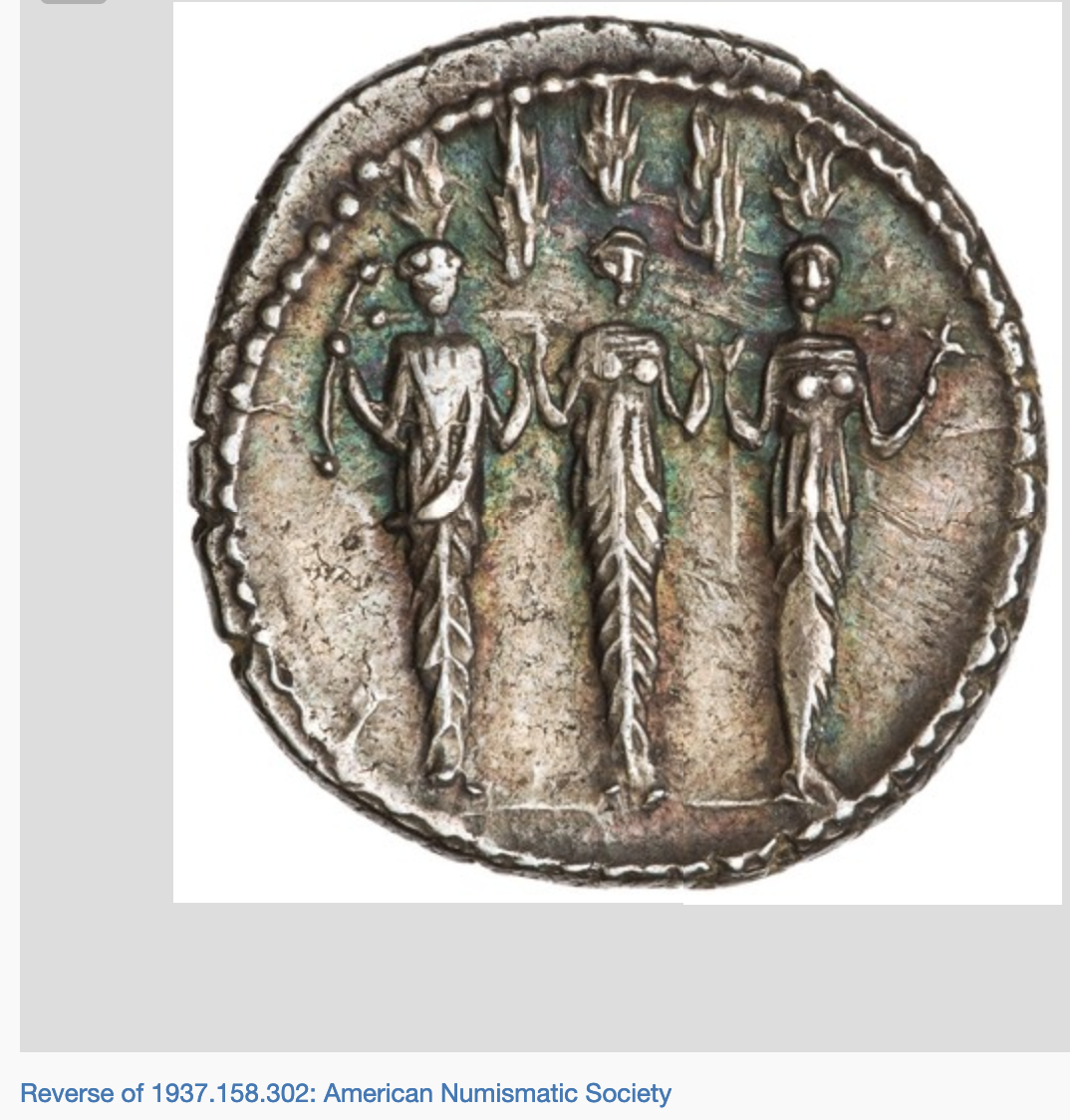
Reverse of RRC 487/2, ANS specimen

Mura Sommella, Anna. “Un frontone di età arcaica per il tempio di Giove Capitolino.” Atti della Pontificia Accademia Romana di Archeologia. Serie III, Rendiconti 89 (2016-2017): 277-298.

Abstract: The late Republican denarius of « Petillius Capitolinus », issued by the mint of Rome in 43 BC. C., confirms what is described in D. H. 1, 4, 61, 4 regarding the appearance of the Temple of Capitoline Jupiter after the destruction of the Sullan period (rebuilt identical to the original archaic building in terms of dimensions and decorative apparatus) and allows to identify in the pedimental space the presence of the Gorgon in the race on his knees, an image interpreted as a celebration of the origin of the Tarquini, who claimed to belong to the Corinthian lineage of the Bacchiadi.

Contrast this Campana tile I posted earlier.

On this passage of Dionysius also see:

Kaderka, Karolina and Tucci, Pier Luigi. “The Capitoline Temple of Jupiter: the best, the greatest, but not colossal.” Mitteilungen des Deutschen Archäologischen Instituts, Römische Abteilung = Bullettino dell’Istituto Archeologico Germanico, Sezione Romana 127 (2021): 146-187. Doi: 10.34780/09q1-1e01

Cf also this other earlier post.

Servilii

RRC 239/1

This morning I’m trying to catch up on my historiographical bibliography on Dionysius of Halicarnassus. [I look away for a couple of years and my friends and colleagues go and publish a mountain of stuff without telling me!] So this is just to get this bit of cross over numismatic bibliography on file.

Zanin, Manfredi. “« Servilia familia inlustris in fastis » : dubbi e certezze sulla prosopografia dei « Servilii Gemini » e « Vatiae » tra III e I secolo a. C.” Tyche 34 (2019): 221-236. [ download link]

Abstract: Despite some progress, it is still not possible to reconstruct the genealogy of the Servilii Gemini / Vatiae down to the last detail. The prosopographic hypotheses presented here are possible starting points for further considerations. Using Greek and Latin inscriptions as well as literary (including Dionys von Halikarnass, Pliny the Elder and Cicero) and numismatic evidence (including RRC 239).

This in turn led to some scholarship on this odd bit of Pliny turning up in my search results

Viglietti, C. “The Servilian triens reconsidered.” I Quaderni del Ramo d’Oro on line (2012): 177-202. [download link]

Mommsen’s coin?

This is the only illustration in whole of Über das römische münzwesen von Theodor Mommsen (1850).

And, it’s not even a product of the Roman mint but rather of Luceria (HNItaly 668 = Vecchi 333 = Haberlin 196 no. 2 Pl. 72.16). For good context see Termeer 2019. The iconography is likely borrowed from RRC 15/1, BUT we should bear in mind that earlier the same types were used by Arpi (HNItaly 633 = Yarrow 2021: fig. 3.1). Arpi is very close neighbor of Luceria.

The best known specimen is that in Berlin (below) once owned by Haeberlin, but the letter formations are slightly different (notice the R on the bottom left). It weighs 326.40g, almost exactly a Roman pound.

Bull-Prow Aes Grave again

This is HN Italy 359 = Vecchi 276 = Haberlin, pp. 157-158. A favorite of mine. This specimen from Hirsch 1914 gets a blog posting because of its heavy weight, 172.40 gm. Vecchi notes a weight range of 167.96-118.20g and this exceeds that. Maybe I’ll have to do a histogram of the known weights for myself one day soon, but not today. I got to Hirsch from Sydenham 1926

Prior posts.

26 Oct 2019

18 Nov 2019

1 Apr 2020

Update 11-7-2-25:

I found two specimens in the Schaefer Archive, Binder 14, page 209, exposures 267-268.

Early Aes Grave in Milan

I’m sitting in the ANS library post lecture and allowing myself a little time with the Belloni 1960 catalogue.

Image from Schaefer archive.

The RRC 4/1 bar has really weird edges. I’m trying to think how the could have occurred. Some pits and holes are common enough, but the number and the gathering of them at the edges seems v strange indeed. Did it come out of the mold like this? Is this the resule of deposition. Note that on the eagle side there is a significant straight/smooth edge on the right. I notice that the BM bar is broken or rough on the left side as well with the right edge smoother than the other sides. My current thought is that this was cast single entry with that smooth right edge being opposite the entry point of the molten metal.

The coins below are also in the Schaefer archive but I wanted to to have the full plates as well.

Relevant catalogue pages

Scaurus in Tyre

Berlin 18201837 reverse of RRC 422/1

The above moneyer (striking as Curule Aedile in 58 BCE), M. Aemilius Scaurus tries to inflate his claims to conquest on his coinage celebrating the ‘surrender’ of Aretas of Nabataea. I don’t know why but of all the Romans of this period I find him particularly irritating but then so do many of our sources. Anyway today I learned that rather un surprisingly he made the people of Tyre set up a statue to him. The inscription is now in the Louvre.