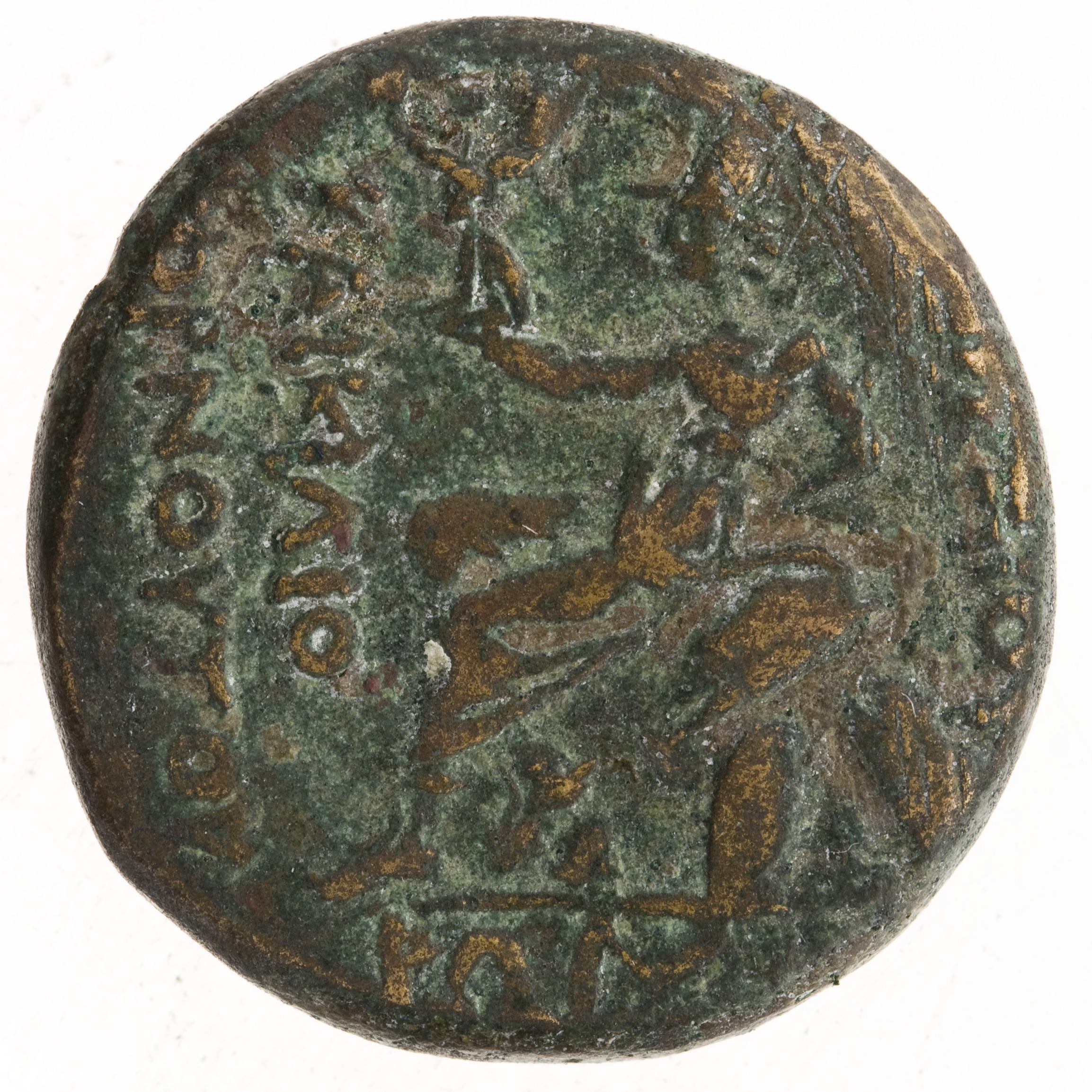
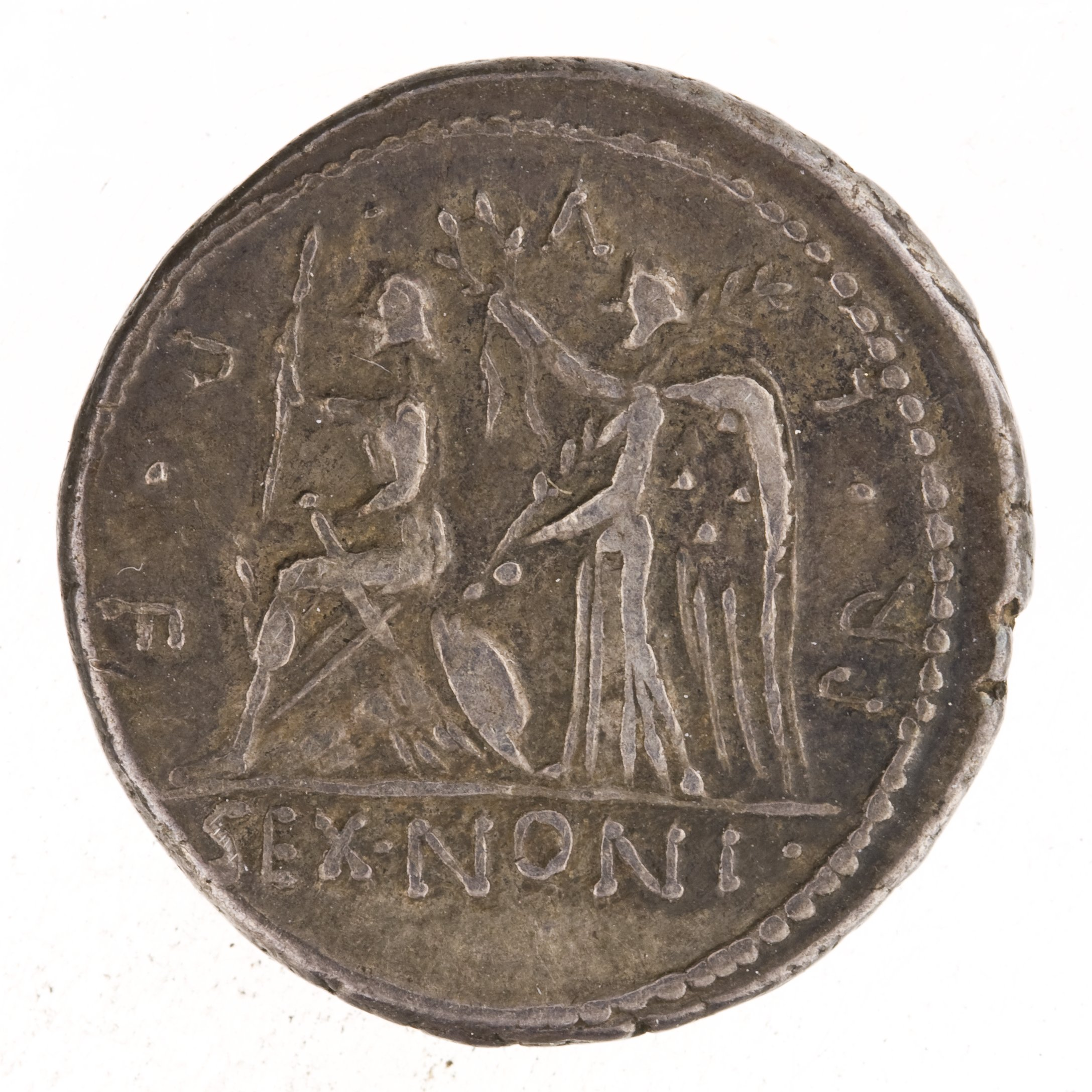
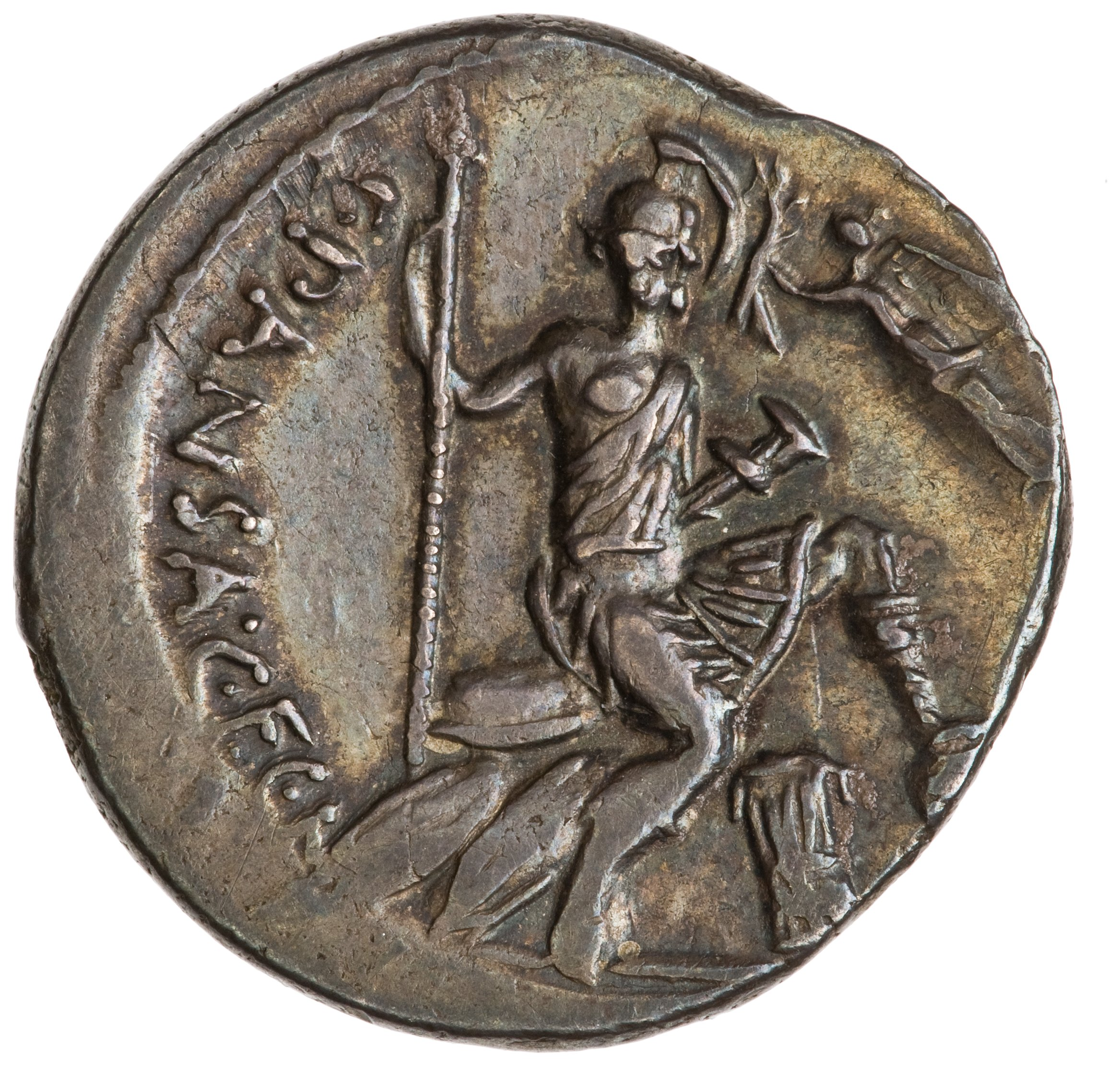
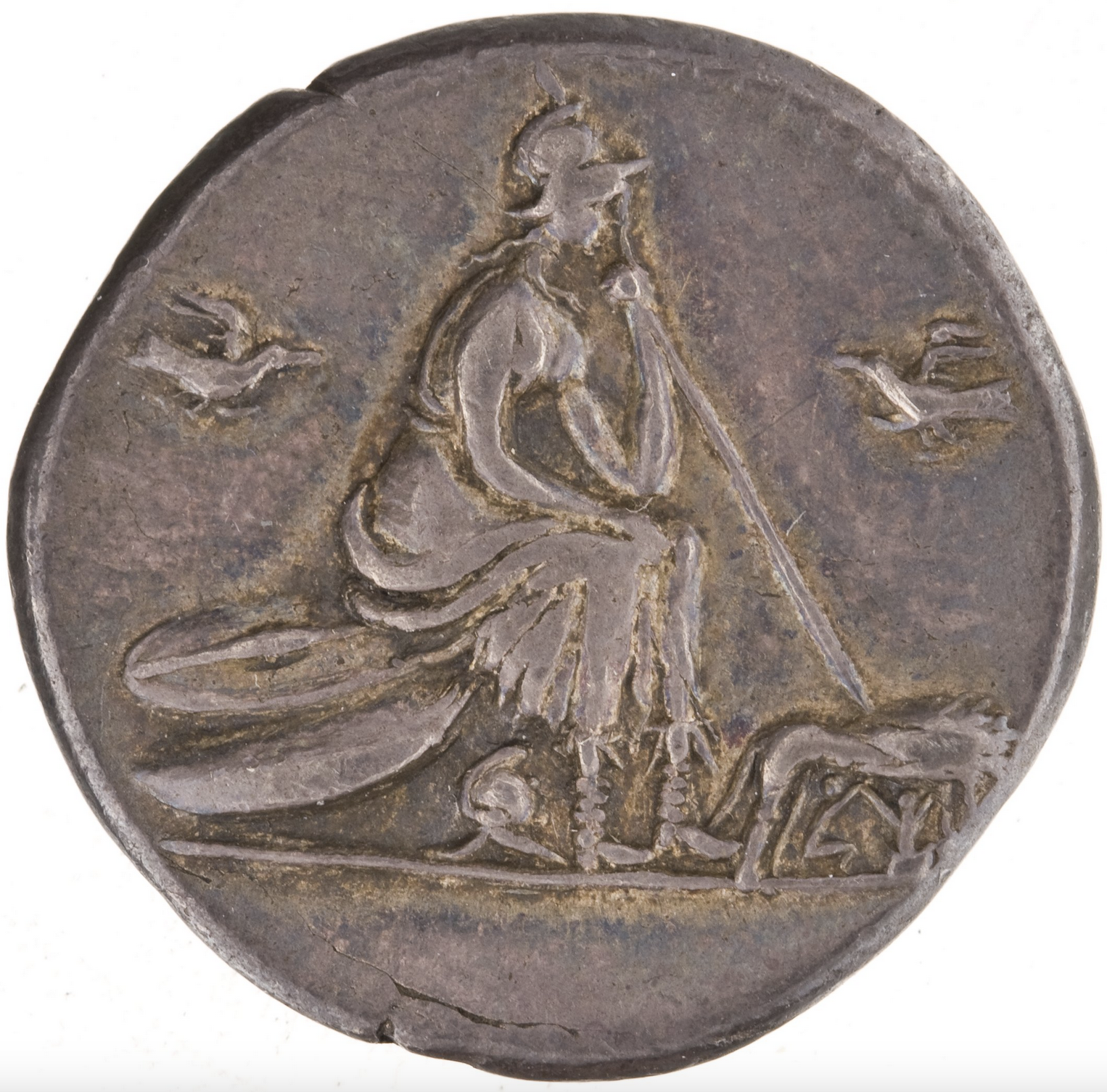
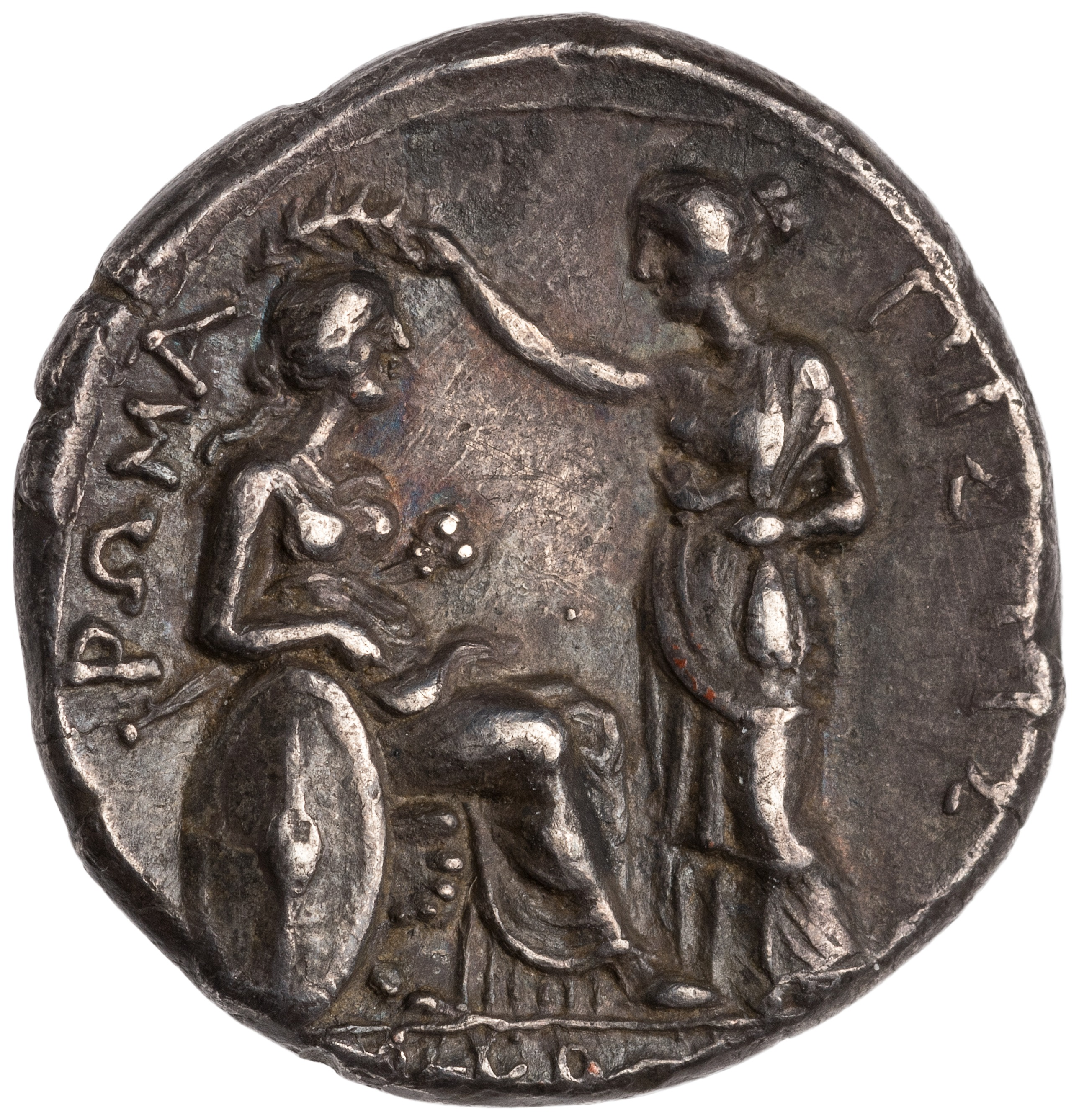
This is an Athenian coin from 89/88 BC in the crisis of Mithridatic Wars. Notice that one of the moneyers is KOINTOS, i.e. someone named Quintus. At this time and in the years just before the Athenians were adding and erasing and replacing various symbols in this position on their coinage to indicate their loyalties (Callatay 2011: 65 [Again, I just love this article of his AND how he puts his work in the public domain!]).
The dating makes the identification of the iconography pretty rock solid. I wish I could see what she’s seated on. It almost looks like she’s enthroned. Is there something she’s holding across her lap? (maybe a sword?)
While looking for a clear image of this or a related type, I also came across the beautiful specimen with a very clear representation of Cybele. Even on a very small scale key iconographic details can be made visible if they are critical to the meaning of the symbol:
Look at how exaggerated the headdress and lotus are of this little tiny Isis:
If the figure above being crowned by Nike is Roma and no particularly distinctive attributes are visible we have to assume the scene as a whole would be unmistakable to a contemporary viewer.
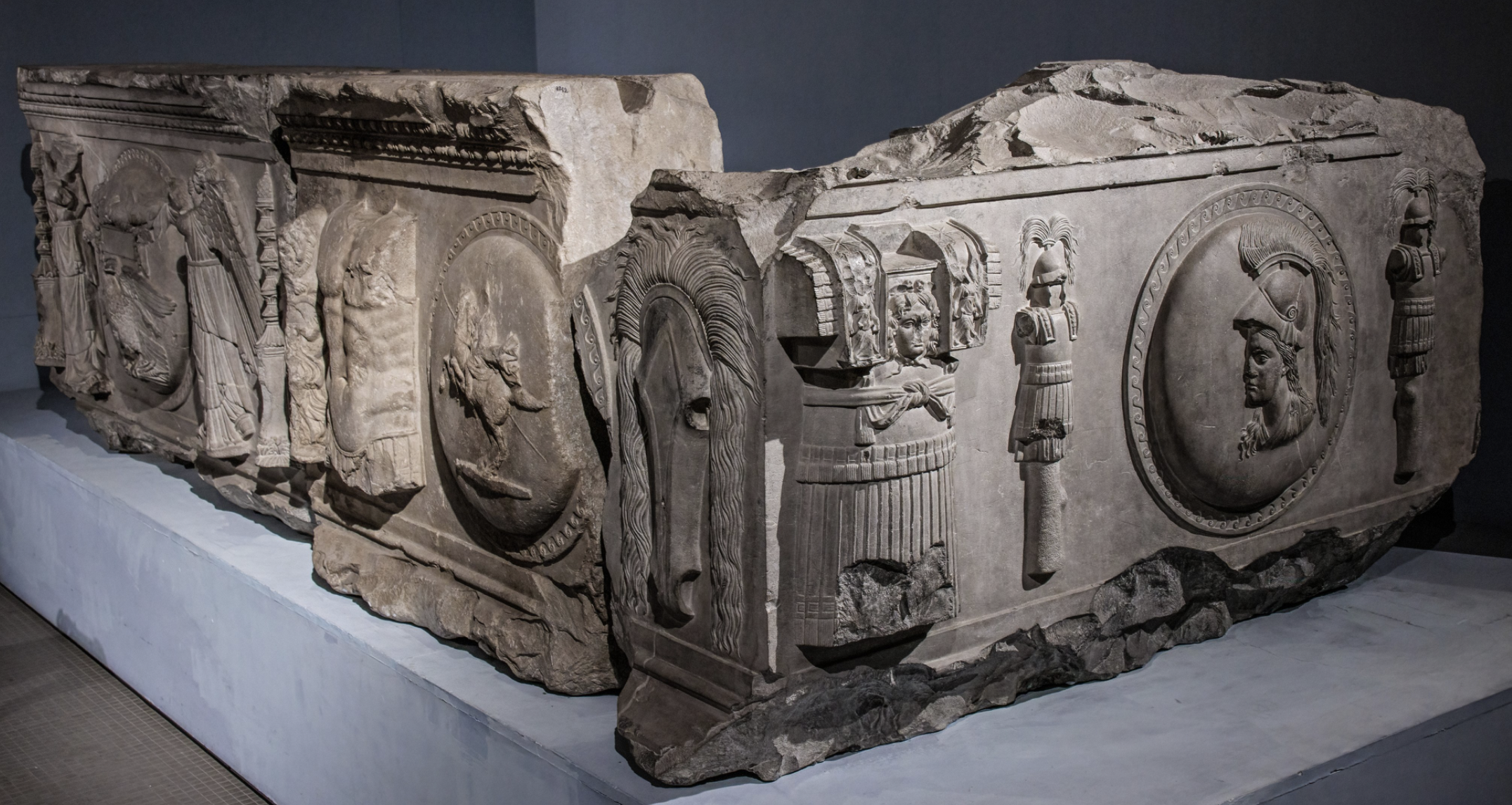
Hölscher in 1980 proposed that this monument was the base of the Bocchus Monument, so well known from literary descriptions (Plutarch, Marius 32, Sulla 6). The best discussion of the literary sources is Mackay. If this is true the statues on the top of this base would look something like this:
This coin was struck by Sulla’s son, Faustus and probably copied his father’s seal ring (cf. Marius 10,Sulla 3). So far so good by way of background. It has been suggested that the base is not the original base BUT was restored after Sulla’s return. The logic being that Marius would not have let such an offensive monument remain standing when he controlled the city. The two trophies of the relief are seen as representations of the Sullan trophies of Chaeronea (again see Mackay, link above), just like on this coin:
[There is also a regular denarius with the same design, but I am showing the aureus because it’s prettier.] This image is also associated with a Sullan seal ring by Crawford based on Dio 43.18.3 and the iconography is also seen on the Athenian New Style Tetradrachms (BM specimen):
From my 2021 book
Already Crawford brought in the Sant’Omobono relief into the discussion of Sulla with reference to the other block. He sees an analogy between the two wreaths hanging out from the palm branch and the two trophies. I’m interested in same detail but because of how it echoes the iconographic strategy of a later coin type (Pompeian?).
Notice how the four wreaths hang from the palm branch to presumably symbolize multiple victories. And, NOW, as I type this and check my RRC entry for 436/1, I see that Crawford saw the exact same connection…. [Insert footsteps-of-giants sentiment here.]
Not everyone thinks the Sant’Omobono Reliefs are the Bocchus Monument. Detractors include: Hafner German. – Zu den vermeintlich sullanischen Waffenreliefs von S. Omobono. Rivista di archeologia 1989 XIII : 46-54 and Alexander Thein’s unpublished dissertation on Sulla of 2002. Another dissenting opinion is Reusser, C. 1993, Der Fidestempel auf dem Kapitol in Rom und seine Ausstattung: ein Beitrag zu den Ausgrabungen an der Via delMare und um das Kapitol 1926–1943, Rome, p. 121-37.
Santangelo gives a concise up-to-date survey of the literature and its conclusions (p. 2-3, n. 7), but also see his later discussion at p. 206.
Minor reference updates 27 August 2013 & 16 June 2014
Link to Eidolon Article from which I stole this image to replace the original broken link.
No, no. I must be a historian. Or a numismatist. Or an art historian. Or Romanist. Or a Greco-Romanist. Oh wait. I’m employed — permanently — in a Classics department. I better get over myself and admit that for all my general ambivalence towards the word and its connotations that I really am a Classicist and this thus must really be a classics blog as it is about my professional life. [Really, very clearly this is not a food blog.]
This issue came up as I “discovered” [in the Christopher Columbus sense] that there are other bloggers out there. Hundreds [well dozens] all concerned about those pesky Greeks and Romans and their neighbors and what we do with them today. What fun!
What’s my hesitancy about the Classics label? Well, it is a label and I did have a good hippy-full childhood. [File under Freud.] Then there is the whole philology thing and given the learn disability with languages… [Just file under self-esteem and generalized anxiety.] Then add in the dissemination of the connotations of the word, a.k.a. ‘overuse’ for the purists. [File under ‘No, I don’t work on Jane Austin or MoTown or Model Ts’.]
Give me a while and I’d come up with a dozen more reasons. I am a Classicist after all.
The one thing I did notice in my peak into the blogosphere is that we classicists as a rule tend to take ourselves very seriously. I’m not sure that’s wholly necessary. It’s not like we’re working on something like this:
The personification of Victory (Nike, Victoria) is an exceptionally common motif in the Roman Empire. I appears on large imperial monuments (Trajan’s column, Marcus Aurelius’ column), on small domestic items such as lamps, and all over imperial and provincial coinage.
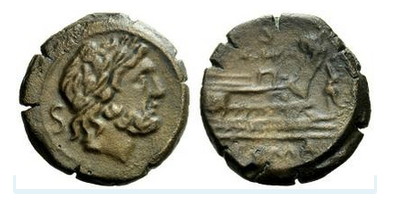
I’m hard pressed to think of a Hellenistic precedent; perhaps there is one lurking out there… Thus, I was surprised to find a very early example of the type amongst the quinarii of the mid 90s BC (97 BC according to Crawford, 94 BC according to Mattingly).
The deity on the obverse of this is always identified as Jupiter. Based, I suppose, primarily on the reverse which is clearly Jupiter in a quadriga with his lightening bolt and scepter. However, the iconography, especially the three thick locks of hair down the neck, looks an awful lot like typical representations of Saturn from the same period:
Of course, these are all likely to be the work of the same die cutter and that could account for most of the visual similarity. Nevertheless it strikes me that if that die cutter had wanted to differentiate two different deities on these obverses, he would have done so in a more dramatic fashion.
Update 2-5-24. Back here still thinking same thoughts about RRC 311/1
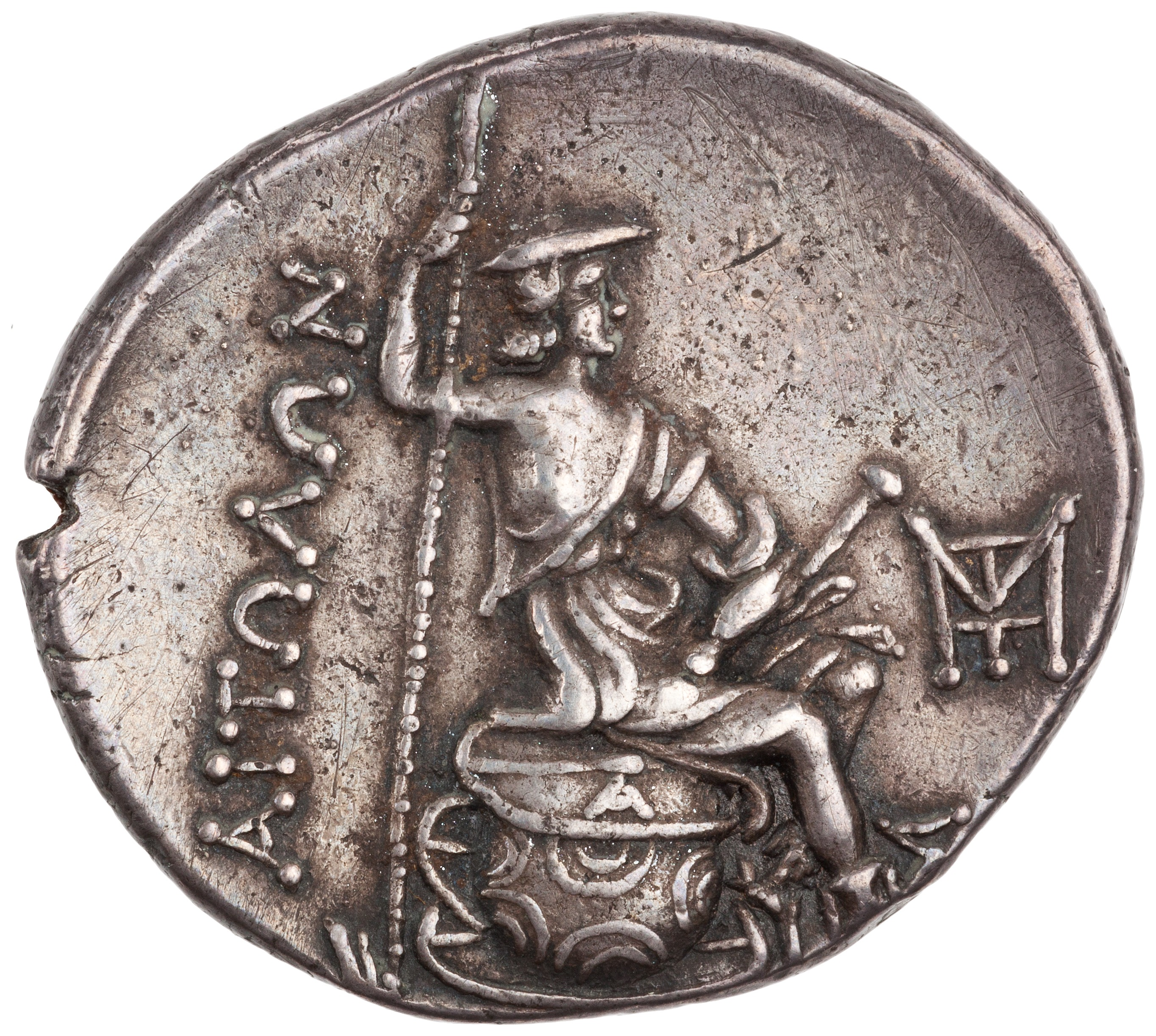
Reading a draft of a chapter by a friend, I was completely taken by the use of the Amazon-on-a-Pile-of-Arms Type to personify Aetolia. He pointed out how the arms start out a Gallic arms to which a large Macedonian shield is added, as on the specimen above. I love how this illustrates that the Romans are simply deploying an already fully formed numismatic iconographic vocabulary on their own coins. I am also captivated by the diversity of this basic reverse type on the Aetolian issues:
The usual assumption is that the type is modeled on a statue dedicated at Delphi to commemorate the defense of the sanctuary by the Aetolians against Gauls. However the variations in the reverse mean that we can’t see to an exact one to one match between the two. The gold specimen with Artemis and the Nike is most intriguing. Perhaps a reference to Artemis’ epiphany to defend Delphi?
Anyway. Where does this Amazon-on-a-Pile-of-Arms Type show up on Roman coins? All over!
And of course it also comes to be adopted as the personification of Britannia, which has itself Roman origins. What we shouldn’t do is conflate the Roma seated on a curule chair with this image, as the symbolism of the two has different connotations:
The arms represent conquest, the curule chair just rule.
I need to find out what artistic precedents the Aetolian type is based on…
Update 8/12/2013.
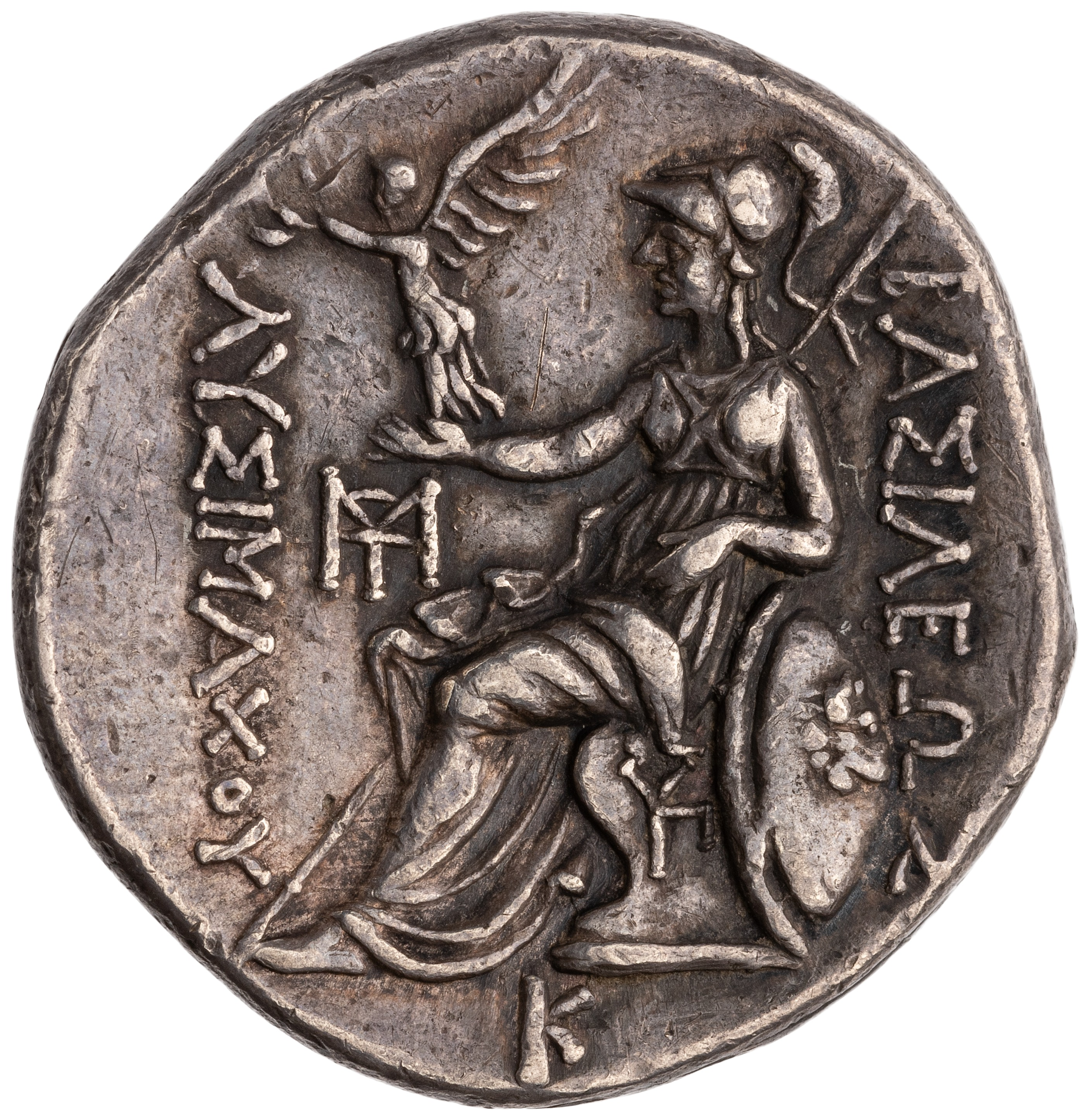
Silver Tetradrachm of Lysimachus, Pella, 286 BC – 281 BC. ANS 1944.100.81269
I found it asserted in an old gem catalogue (see p. xv under cat. no. 45) that Roma on a pile of arms derives from the Athena on the coinage of Lysimachus. It is certainly might be a basic prototype for personifications of Aetolia and Roma seen above but she is clearly enthroned with her own shield beside her, a very different symbolism than being atop the spoils of war.
I didn’t write here yesterday because a friend’s daughter died an hour after birth. We’re not terribly close, but I found I could not let the news go. I lit a candle and worked until about 4.30 and then gave up.
Modern medicine can make us feel like we have limitless options and tortuous decisions to make. And, that illusion of control can lead to a sense of culpability. In facing the inevitability of death, grief and fear are surely enough pain, without guilt as well.
Is this too heavy for a sabbatical blog? Maybe. Though it is certainly part of the answer to “where did the time go?”. I learned the news on a social media site and that’s the primary venue in which I talked about it and offered what comfort I could. That shocked some of my friends to whom I mentioned it in passing. But, that is one of the venues where the family chose to share the news and who the heck is any one to judge what is easiest or most comforting or comes most naturally in a time of crisis. We live online and death is one big part of life.
I’m going to DC this weekend to catch up with old friends, some of mine, some of SDA’s, pre Turkey. None have any connection to my undergraduate days there. I don’t have a single friend from those 2.5 years. Odd, as I’ve collected them from all the other years and geographic locations of my life. I do, however, have an abiding love of Lincoln at night. It will be good to see him again and think about the vices and virtues of my nation.
Much of the ‘noise’ in the scholarship regarding the Flamininus stater is over whether it is closer to Hellenistic Royal Portraiture, esp. Philip V, or if it is instead an example of Roman verism, the ‘warts and all’ style so well known from the late republic. Is it more like this:
Most seem to have become bored with this argument lately and have settled on a both/and answer. The royal die cutter was used to making royal style portraits but conceded certain details to give it a more authentically Roman air. All plausible enough, but the conversation seems to have done little to incorporate other evidence for Roman portraiture in the early period. Some items that might be contemporary are hard to date without archaeological context and poor comparative evidence. Take for instance this signet ring found at the site of ancient Capua and now in the Naples Museum:
This portrait is such a prestige piece that it is signed by the artist. Opinions vary from the 3rd to the 1st century BC. I’ve no strong opinion, other than to emphasize that to ‘identify’ it as one of the Scipios, especially one of the famous ones, is pure fantasy. What we need are some portraits with provenance. And, lo! we have them. They just are barely published (as far as I can find so far and I’d be very happy to learn I’ve missed shiny new fully illustrated catalogue). 1,756 readable seal impressions were found in a controlled excavation of a Hellenistic Archive beneath a sealed deposit layer securely dated to 145BC. Of those 20%, that’s right TWENTY percent are portraits. The only color image I can find is the one above. These are the only other images I can find from the preliminary publication of the archive.
There has been some attempt to integrate these new findings with what we know about Roman self presentation, but we won’t be able to say much until they are properly published. [Surely, someone must be working on the collection for a dissertation…]
My first reactions are two fold. Portraits as seals were not limited to royalty and the style of these portraits is comfortable between ‘dynamic idealism’ and ‘rugged verism’. Are any of them Roman? Who knows. But they are all part of Hellenistic repertoire. Flamininus could have easily have a portrait seal ring in such a style, but that’s not even required. Just the idea that objects could be validated and made official by the impression of a portrait might be catalyst enough for the creation. Yes, portraiture on coins is predominantly associated with kings, but kings put many many other images on their coins as well. The portrait-equals-king and king-equal-portrait formula may not be as rock solid in 197 BC as we often flippantly assume in Roman numismatic discussions: no one was worried about Flamininus overthrowing the Roman body politic in the same way they were about Caesar in 45/4 BC.
[There are other such archives with massive collections of sealings, but it’s the fixed deposit layer and secure dating that makes Kedesh so special.]
Images and links updated 3.6.2026. I apologize for having no idea 13 years on where that top image is from.
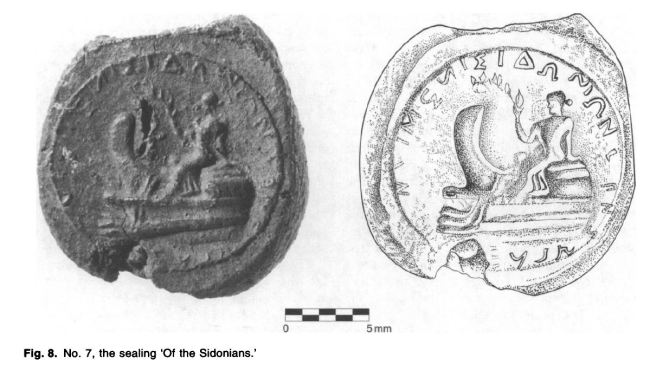
I came across this image of a bulla in my reading today and was immediately struck by the visual similarities with the Doson coin I posted about earlier. How common is this image? Not that common really. Besides Doson, Magnetes of Thessaly has a similar type with Artemis:
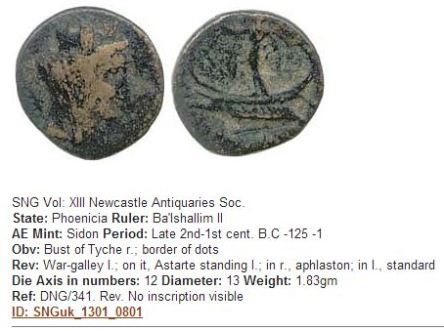
But that seems to be about it. The publishers of the seal focus on the coins of Sidon, such as this:
This isn’t really that close in design or style even if they show a figure on a ship. There might be a lost Sidonian type with a figure seated on just prow, but I suspect the inspiration for the design came from trade connections with the North.
I sent the wire transfer for the deposit on the Istanbul place. SDA said to me first thing this morning ‘there’s no one I’d rather have adventures with’. It will be a grand adventure, but Ditmas Park is pretty fabulous too.
This morning I cramped up between 1.5 and 2.5 miles and had to walk, so I did an extra loop at the end of my route around a long block. At the end of that very last loop a school crossing guard, who I swear I’ve never seen before, stopped me and with a big smile said “You made it round really fast! I was watching.” I love the eye contact and smiles along the way, but that comment takes the cake.
And, the other day I noticed this fabulous mystery item:
What is it? It’s a single work boot with a very large rock in it that has been bound in an exceptionally complicated pattern and placed just inside the perimeter of a church yard. Art? Binding Spell? Symbolic Catharsis? Joke? All of the above? You choose. No, I did not touch it. No, I’ve not gone back to check on it.
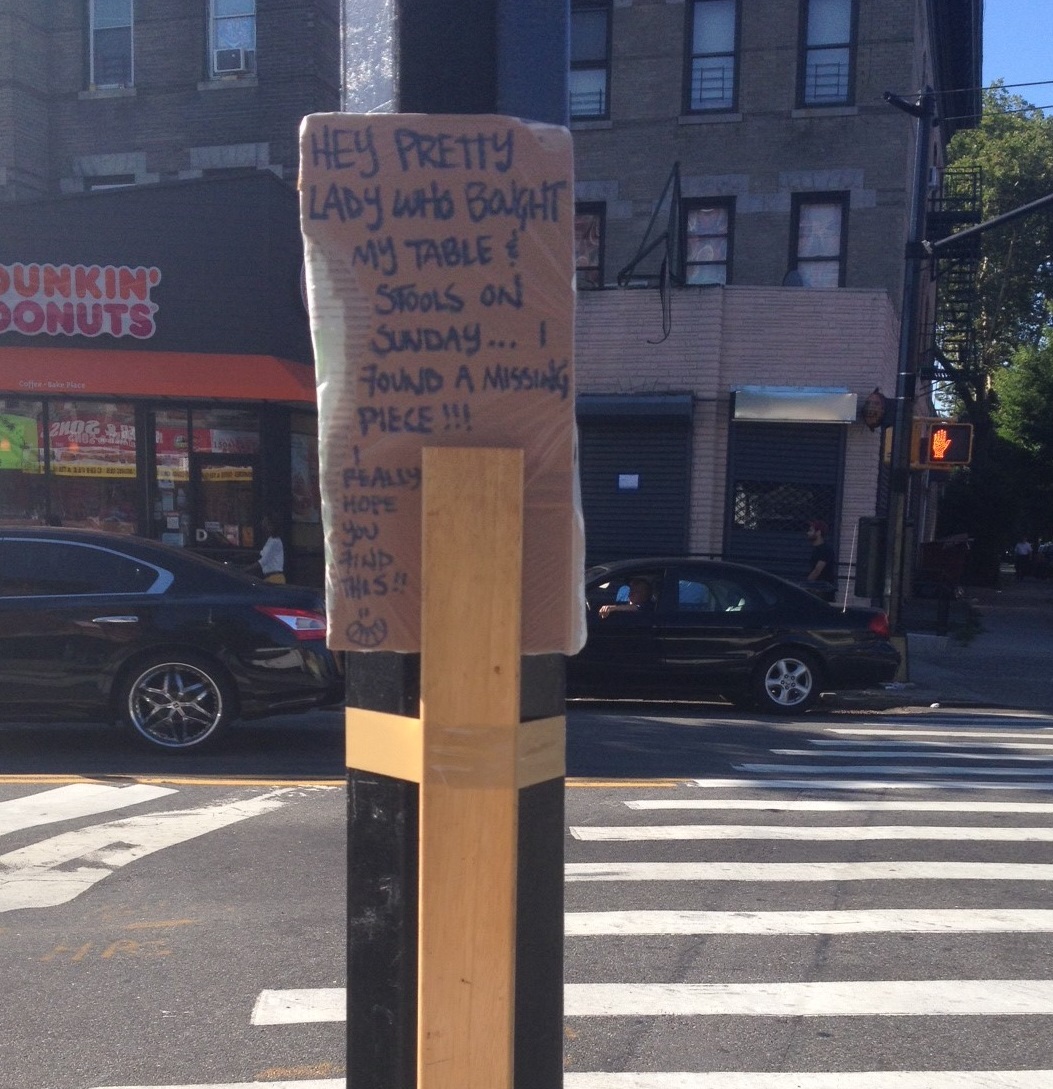
And then this:
The sign reads “Hey Pretty Lady who bought my table and stools on Sunday… I found a missing piece!!! I really hope you find this!!” And yes, that is a piece of wood taped to a lamp post. The toothy smile drawn on the sign is really the best part.