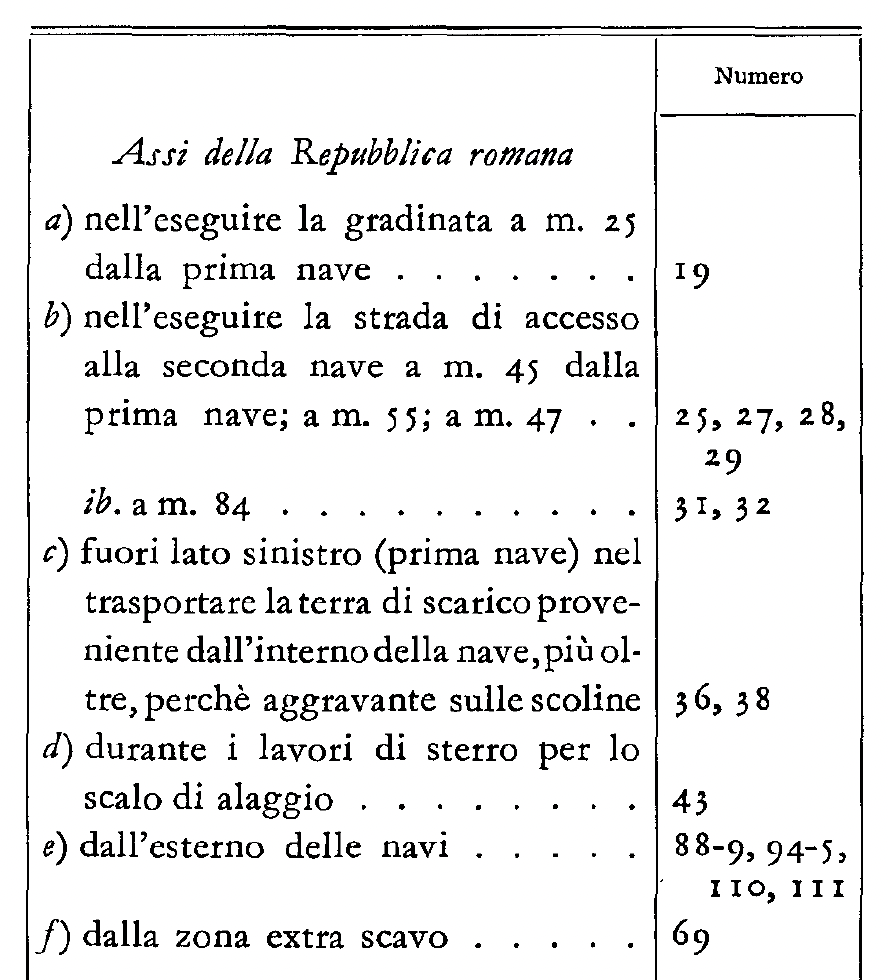
Good news, the Cesano pdf arrived. Bad news, no photos of republican specimens. Also, based on the lamp article I was expecting more republican material and lots more coins overall, ho hum.
Still it is interesting that they are ALL asses no other denominations… does that make it more likely they are ritual deposits?
Martínez Chico, David. “Reciente hallazgo de « aes grave » – as – en el Algarve (Portugal).” Revista Portuguesa de Arqueologia 20 (2017): 107-111. [pdf online]
A new « aes grave » coin is documented, dated approximately between 275 and 270 BC. C. Although it is part of a private collection, it is known that it was found in southern Portugal, specifically in Figueirinha (S. Marcos da Ataboeira, Castro Verde). An attempt is made to relate this finding to other coins also recovered in the Iberian Peninsula. It is concluded that this Roman coin must have been brought to the region after the outbreak of the Second Punic War.
Martínez Chico, David. “La moneda « aes grave » hallada en la península ibérica y su relación con la segunda guerra púnica.” Rivista Italiana di Numismatica e Scienze Affini 117 (2016): 21-33. [pdf online]
The sporadic diffusion of Roman coins of the “aes grave” type in the Iberian Peninsula is attested only after the outbreak of the Second Punic War and to a much lesser extent than the coin production in silver.
A cut “semis”, unearthed in Rheinau in 2011, is the first “aes grave” discovered on Swiss territory. This is a fragment of a coin minted after the monetary reform of 217 BC. J.-C., which reduced the weight of these pieces from 324 to 368 grams.[sic!] This currency did not arrive at the place of its discovery through monetary circulation, but through an exchange.
Hollstein, Wilhelm. “Ovids « Fasti » und das « aes grave » mit der Prora.” In « Noctes Sinenses »: Festschrift für Fritz-Heiner Mutschler zum 65. Geburtstag, Edited by Heil, Andreas, Korn, Matthias and Sauer, Jochen. Kalliope; 11, 59-67. Heidelberg: Winter, 2011.
Ovid leaves in Fast. 1, 229ff. interpret the Prora on the reverse of RRC 35/1 through the Janus on the obverse to indicate the arrival of Saturn in Latium. However, the coin dates to 241 BC, as do RRC 28/3, 35/2 and 35/3. BC, more precisely to the capture of Falerii and the victory in the naval battle of the Aegean Islands. As H. W. Ritter (=> 82-10324) has already seen, Janus on the front of 35/1 and Jupiter directing the quadriga on the back of 28/3 refer to the first victory, as well as Minerva on the front of 35/3 . The Prora on the reverse of the coins refer to the latter victory. On the obverse of 35/2 Saturn is not depicted as assumed by H. Mattingly (=> APh 3, p. 184, under H. Mattingly, 4th title), but because of the two victories Jupiter as the triumphant par excellence. The beardless Janus on the obverse of 28/3 represents the closure of the arch of Janus after defeating the Carthaginians.
Jaia, Alessandro M. and Molinari, Maria Cristina. “Two deposits of aes grave from the sanctuary of Sol Indiges (Torvaianica/Rome): the dating and function of the Roman libral series.” Numismatic Chronicle 171 (2011): 87-97. [on file – obviously it is like my favorite article of all time!]
Molinari, Maria Cristina. “Gli esemplari di « aes signatum » e « aes grave » dalla collezione del Medagliere Capitolino.” Bullettino della Commissione Archeologica Comunale di Roma 111 (2010): 15-53. [academia.edu] [jstor – photos slightly higher quality] Extremely important, esp. Appendices.
See also:
Molinari, Maria Cristina. “Un Ripostiglio Di ‘Aes Grave’ Proveniente Dai «Colli Vaticani» (Roma).” Bullettino Della Commissione Archeologica Comunale Di Roma 105 (2004): 115–22. jstor. [NOTE: The end in particular is very important for its discussion of find context and how it may related to a cult center. Bellona-Ma, Magna Mater]
Bruni, Stefano. “Sulla circolazione dell’« aes grave » di Volterra: nuovi contributi.” Rivista Italiana di Numismatica e Scienze Affini 100 (1999): 47-56. [ILL requested]
Reporting of the discoveries of Volterra coins, completing the contribution of F. Catalli (=> 47-08252), with particular regard to the northern borders of the city territory
Bar, Marc. “À propos du poids des plaques d’aes signatum, de leur nature et de leur fonction.” Rivista Italiana di Numismatica e Scienze Affini 95 (1993): 277-286. [ILL requested]
Burnett, Andrew. “The beginnings of Roman coinage.” Annali dell’Istituto Italiano di Numismatica XXXVI (1989): 33-64. [on file, obviously]
Ercolani Cocchi, Emanuela. Catalogo della collezione numismatica di Carlo Piancastelli. Aes grave. Moneta Romana repubblicana. Forlì: 1972. [next ANS visit]
From Donum:
no author set. “Aes Signatum and Aes Grave of the Morgan Collection” Coin Collector’s Journal, N.S Vol. 18, no. 6 (Nov.-Dec., 1951), pp. 125-129.
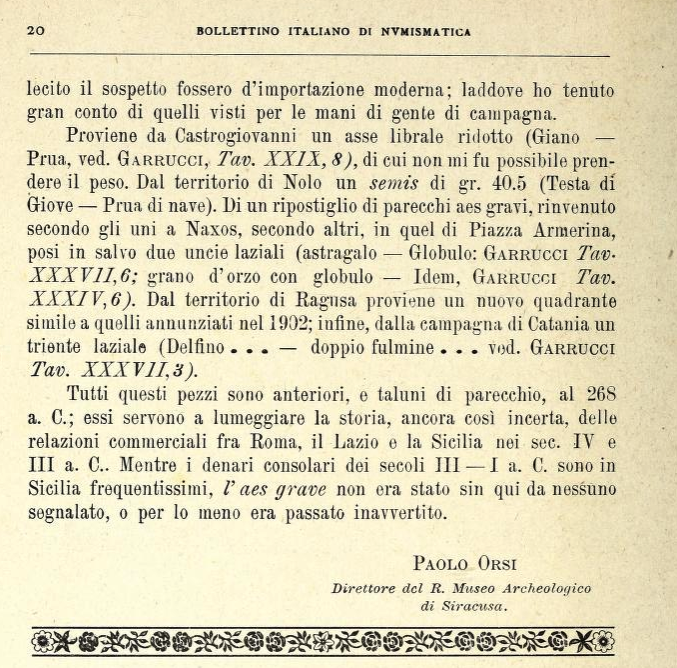
In the News of the excavations (1902, p. 217-218) I announced the discovery in the territory of Visrini (Catania) of a one libral standard uncia of Latium (astragalus [knuckle-bone]; Garrucci, pl. XL, fig. 40) and in that of Ragusa of two Latin quadranti (Head of Hercules – Prow of ship). These three pieces would have been the first specimens of aes grave found, or at least reported, in Sicily, and introductory, it should be noted, not by modern coin dealers, but in antiquity. Following the discoveries of 1902, I have noted others in the following years; and I have always used the greatest scruple in eliminating those pieces that have fallen on the antiques market, for which there may be
legitimate suspicion they were of modern import;whereas I have taken great account of those seen in the hands of country people. A as on the reduced libral standard comes from Castrogiovanni (Janus — Prow, see Garrucci, Table XXIX, 8), of which it was not possible for me to take the weight.From the territory of Nolo a semis of gr.40.5 (Head of Jupiter — Prow of ship).From a hoard of several aes grave, found according to some in Naxos, according to others, in Piazza Armerina, there were two uncia from Latium (astragalus – Globulus [knucklebone-dot]: Garrucci Pl XXXV11, 6; barley grain with globulus [dot] –Idem, Garrucci Table XXXIV, 6). Another quadrans similar to those announced in 1902 comes from the Ragusa area;finally, from the countryside of Catania a triens from Latium (Dolphin 3 dots— double thunderbolt 3 dots see Garrucci Plates XXXVII, 3). All of these pieces predate, and some by quite a lot, 268 BCE;they serve to highlight the history, still so uncertain, of the commercial relations between Rome, Latium and Sicily in the centuriesIV and III BCE. While the consular money of the III – I a.C. are very frequent in Sicily, aes grave had not been reported by anyone up to now, or at least it had gone unnoticed.
In the collection of the Archaeological Museum in Split, there is a copy of an aes grave of the Apolon/Apolon type (RRC 18/1). It belongs to the issue of the mint in Rome from 275 to 270 BC. It was found around 1901 in Jesenice. Any details about the context of the find are not known. Jesenice is a village at about 200 to 250 m above sea level, on the slope of Perun – the southern slope of the Mosor mountain. Along with other Hellenistic finds from the wider area of Jesenice, along the coast between Split and Omiš, this find could testify to the connection of the Illyrians with the Greeks from Isa and Faros, through the nearby Epeti, that is, with the first Roman merchants who most likely came to contact with the Illyrians. In addition to the aes grave from Jesenice, in the collection of the Archaeological Museum in Split, there are three more semis, fractions worth half of the aes grave. There are two bull/wheel types (RRC 24/4), issue from 265-242. ex. BC, and one of the Saturn/ship bow type (RRC 35/2), issue from 225-217. ex. Kr. Such an early Roman coin in the Illyrian area did not serve as money, but was most likely considered a valuable bronze object with a distinctive appearance, so it was stored as such, and was not used to make other bronze objects.
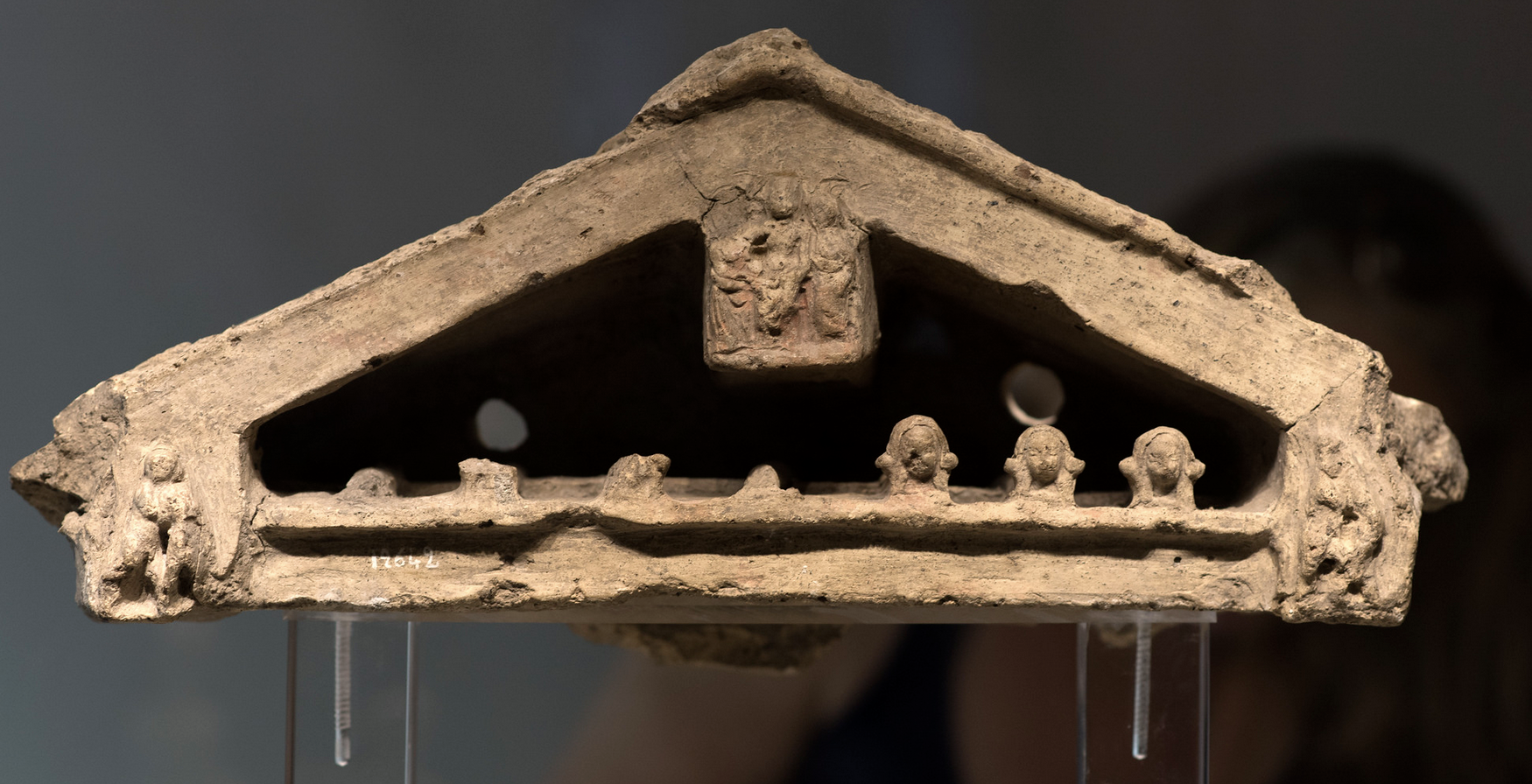
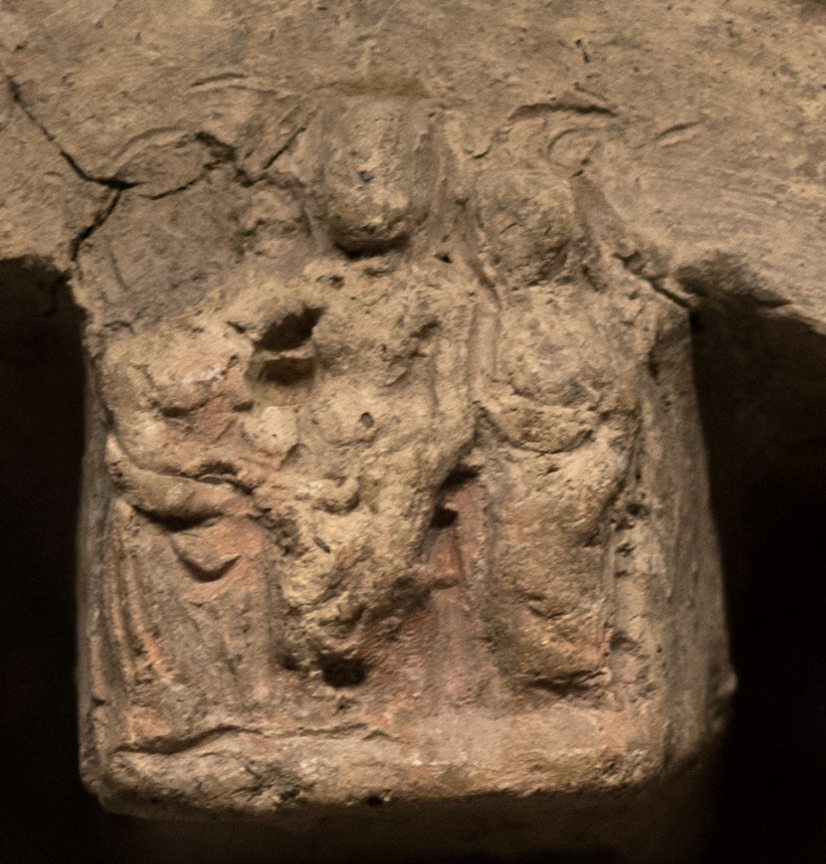
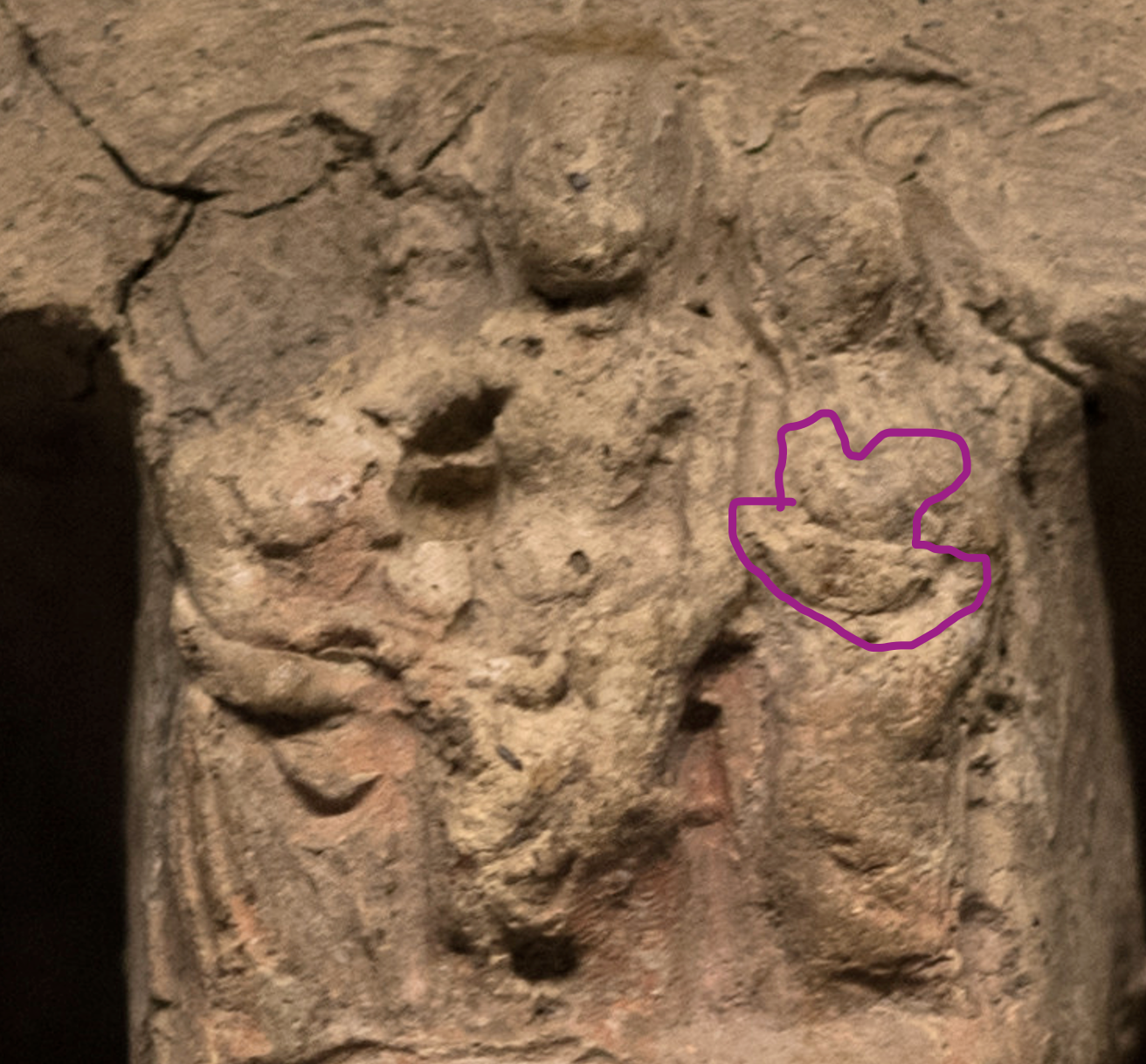
Dan’s photos are always SO good! If you go to his photo stream he has a few more of this same object from different angles. The detail I wanted to record other than just the existence of this object and its location is the center image, which to my eye in this photo looks like three seated women and I’d be tempted to read as a representation of the cult image.
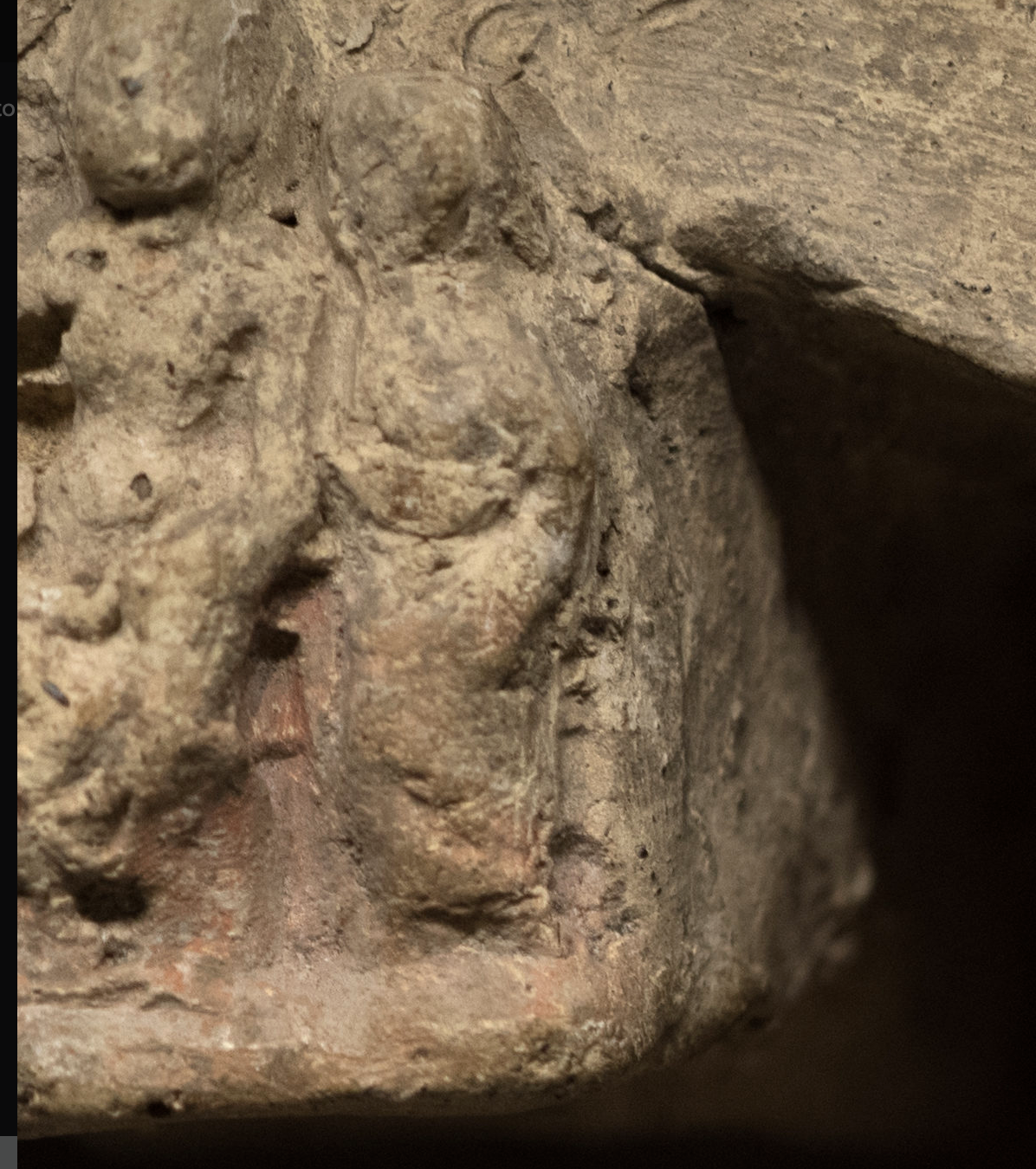
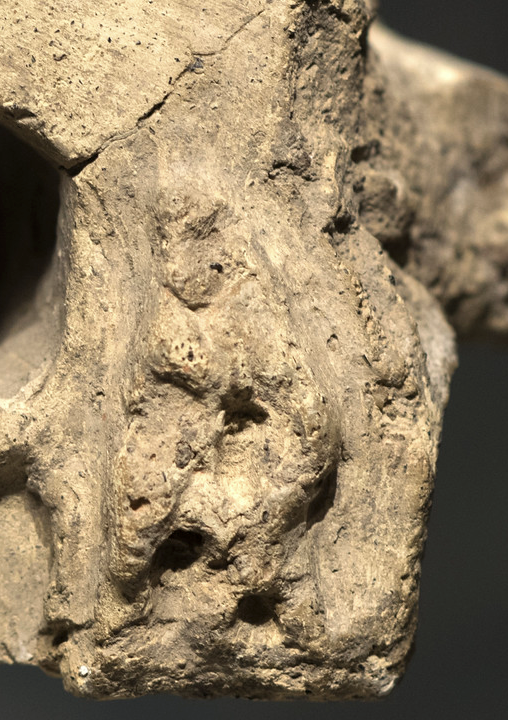
Here’s another detail from another of Dan’s photos at a slightly higher resolution:
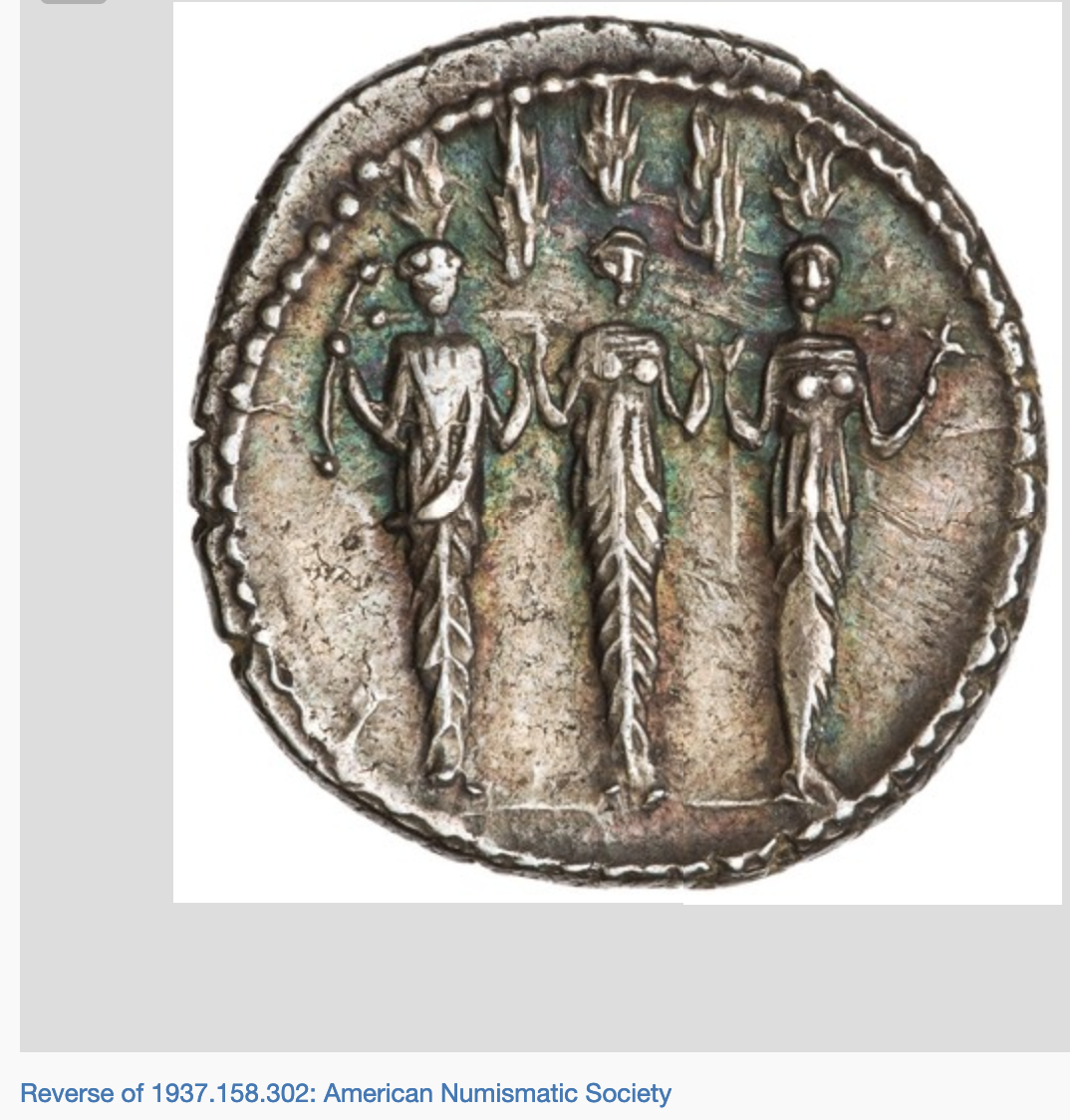
I’m interested in how different (less archaic) this representation is than that on RRC 486/1. I wish I could make out the attributes better on the terracotta model.
Update 23 March 2026:
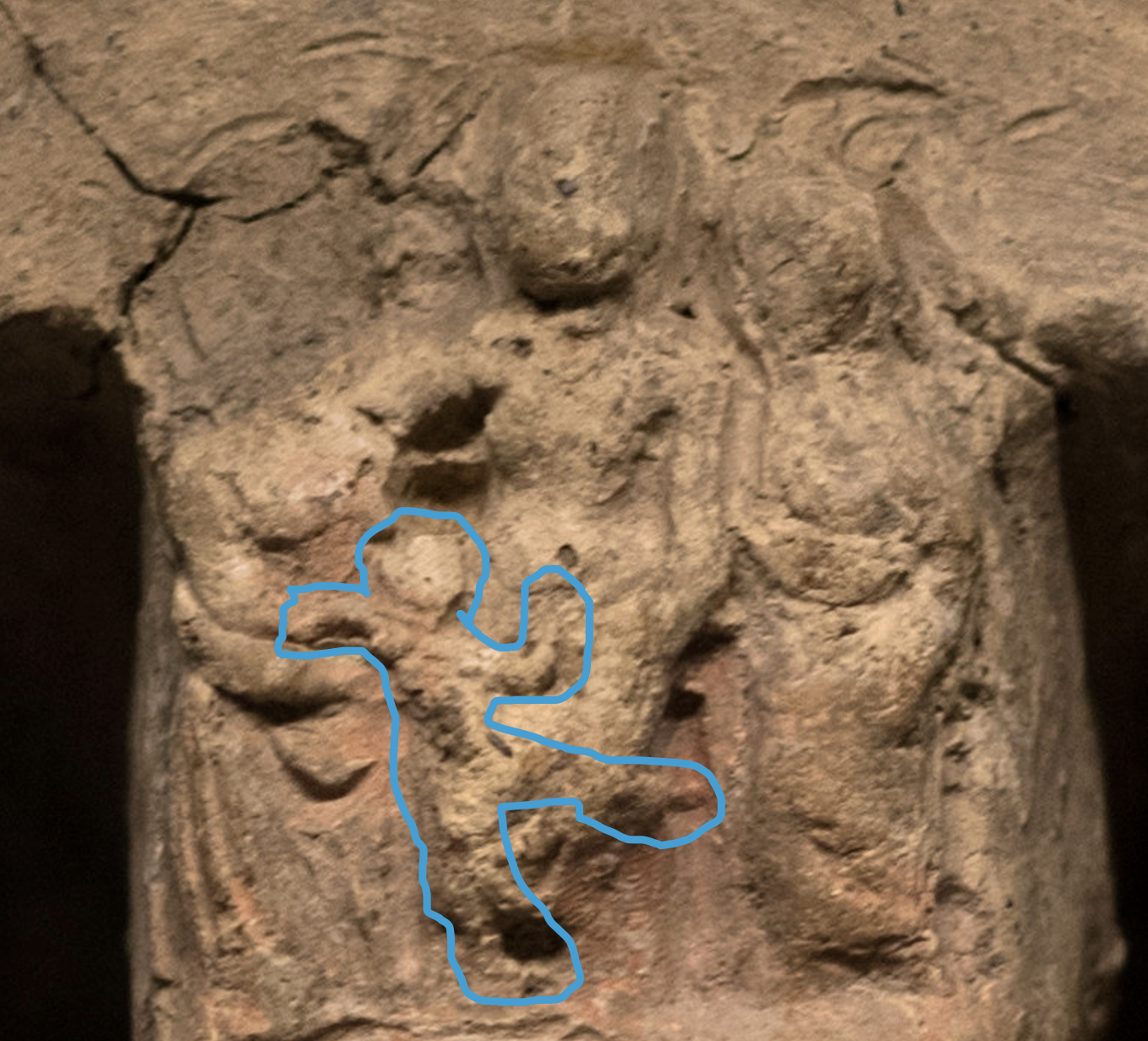
revisiting this post, I feel I’m seeing new things. Is a child being lifted by the left hand woman onto the lap of the central woman? Is the right hand woman hold a bowl on her lap? Is there something on the bowl? The right hand woman seems to direct her gaze towards the child…
The lower corner details seem to show a naked man wrestling with a beast, similar to the hercules and the lion motif.
—
Update 5/17/26:
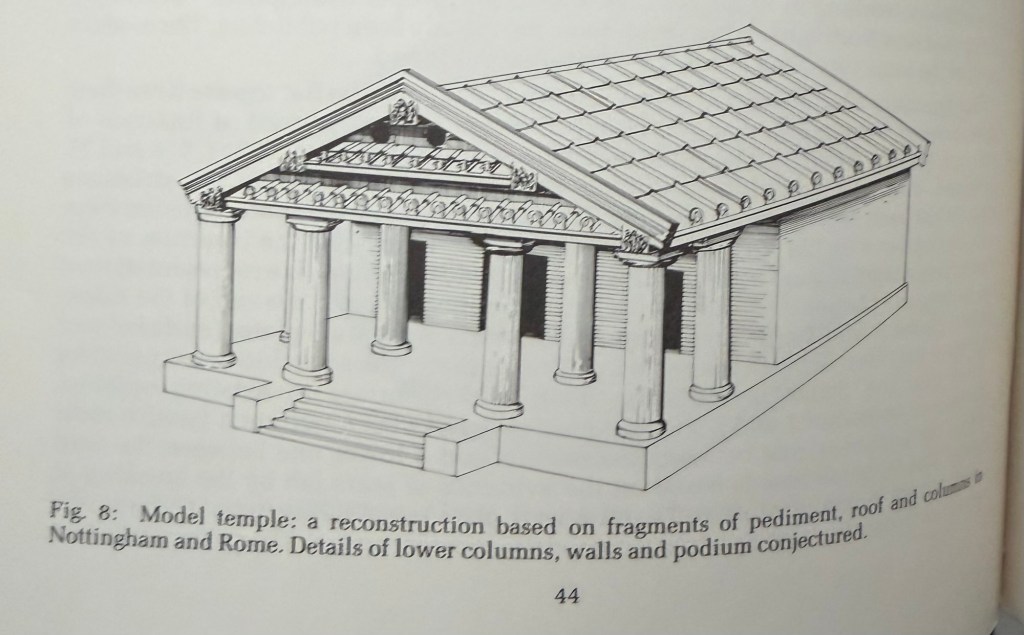
From Bragg 1983; if correct in reconstruction the Villa Guilia model is only 2/3s of pediment
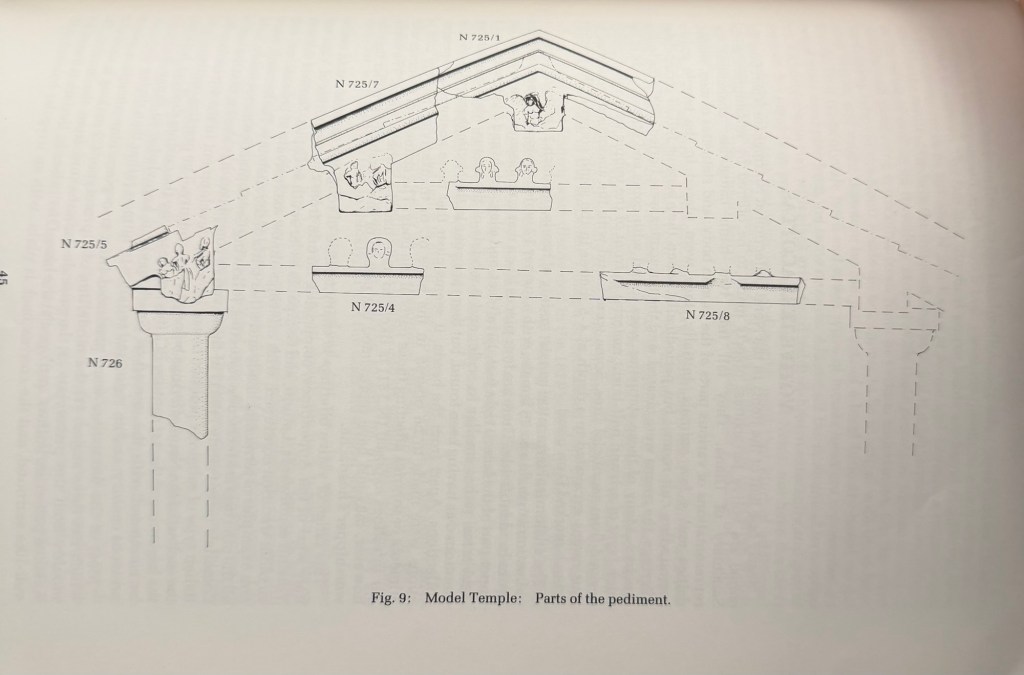
Also from Blagg 1983; made me think of the seated figures at the apex of the model pediment
ILL delivered that article I mentioned yesterday on lamps in Lake Nemi, nothing really on coins. But, the authors notice a long period of ritual deposits in the lake itself and they consider this separate from the sanctuary of Diana which has a longer period of use (well into third century CE), whereas lamp deposits seem to concentrated and then taper off in the second century CE. They speculate that the deposits might have been a means of communicating with the underworld. Nevertheless I find it tantalizing that they mention coin finds along with the lamps suggesting the coins were also part of such ritual deposits in the lake. I wondered if the coins were also in Museo delle Navi Romane di Nemi as the lamps were there. I took a ‘tour’ of the museum using snapshots posted on Tripadvisor.
Just one shot of the coin displayStratigraphic time line. Notice those coins in the republican era!Hand crank device for bailing bilge waterComponent (reconstruction?) from Caligula’s ships on Lake Nemi, showing the same type of ‘ball bearings’ used in Nero’s revolving dining room
Cesano, S. L. “Scavi di Nemi-le monete.” In G. Ucelli, ed. Le navi di Nemi. Roma, 1940. p. 307-327.
I’ve ILL-ed it.
Yesterday, I sent off Dionysius for editorial feedback. That felt good. I hate how admin/logistics never feels like “real” work. I’m trying how best to prepare for my Rome trip and finally have some firm dates for collecting some more data. I don’t know what it makes most sense to work on until then…Do I start crunching data I already have? Or will that lead me down a primrose path or just make double the work? Perhaps more background reading…
Today
First steps on Aes Grave project
More Italy visit logistics!
More Rutgers coordination !
More Princeton coordination !
EES coordination!
BM communications
Follow up old student/tree sunset
Not Today (but maybe tomorrow, or the day after)
Teaching requests for Fall 2023
Circle back to department about any Jan planning meetings
Book flights
Set time table for any collaborative RRDP work/publication prep that needs to happen this semester: Chicago pub, INC pub, collaboration with RACOM, etc…
Circle back to Capito project
Consider ask for funding from Dean’s office
Begin Med school rec letter
record mini myth
find out what is on that v old harddrive and back up to cloud
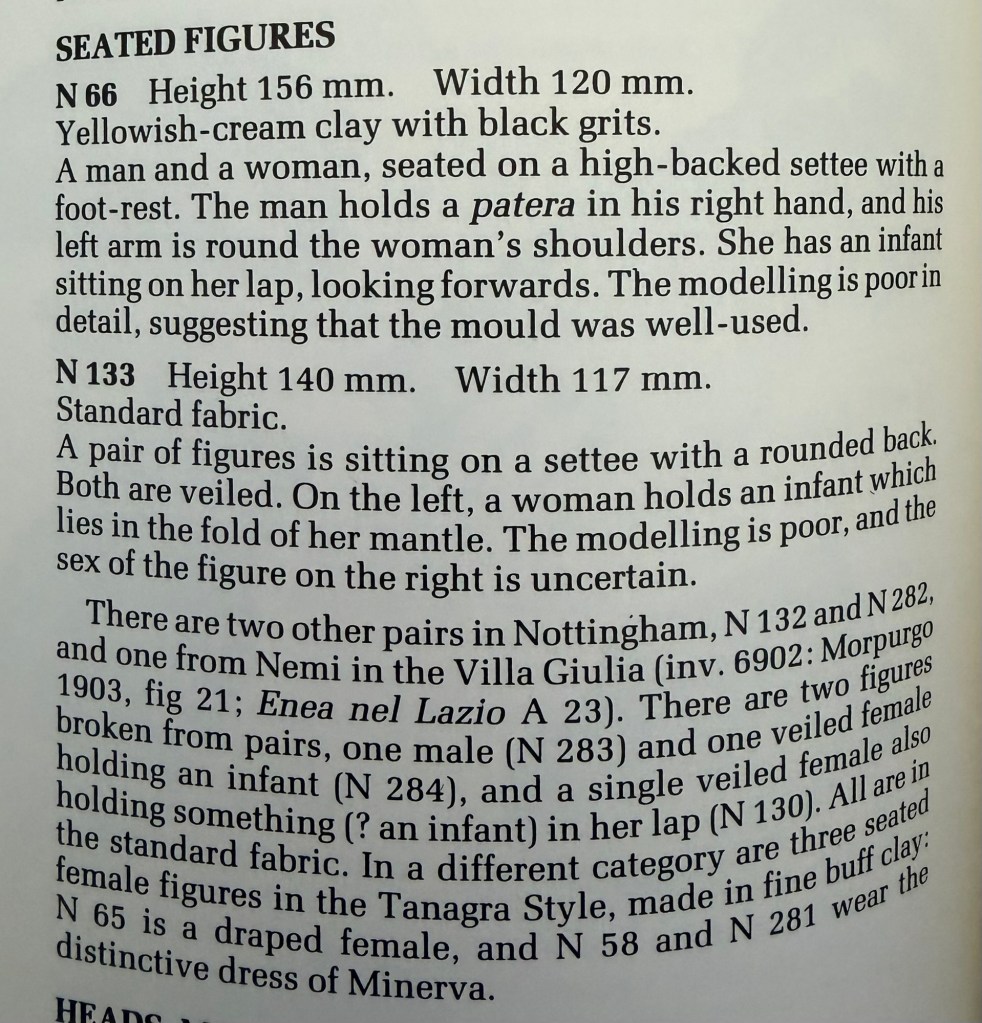
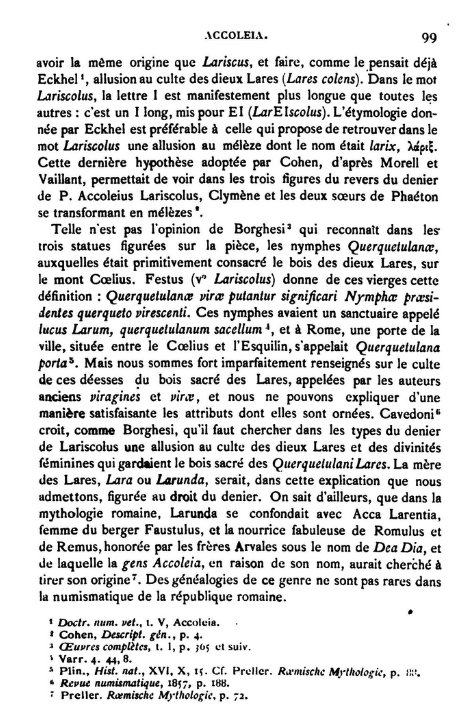
This name logic was not only of interest to numismatists in the 19th century, but also to philologists concerns with naming practices (cf. Mowat 1871: 35). Support is derived from the patterns of numerous other nomen and cognomen; the coins are largely used as another epigraphic source.
Continuing with French scholarship I finally came to Babelon. Perhaps wholly unsurprising he is far more thorough and descriptive than any of the others and Grueber seems to owe much to him. There isn’t much new here but it is perhaps the clearest overview.
Why do I keep flogging this dead horse of a coin looking up wrong interpretations of bygone generations? A few reasons. It gets me reading widely and remembering to check various and sundry perspectives and in the past I’ve found my own thinking that seemed new to me, was in fact a resurrection of older ideas (wrongly?) dismissed. But I am getting a little bored of the gens Accoleia as it is taking me too far away from Nemi.
I’ve requested a copy of this article from ILL so hopefully I’ll have something more interesting for a future post.
Diosono, Francesca and Cinaglia, Tiziano. “Light on the water: ritual deposit of lamps in Lake Nemi.” Journal of Roman Archaeology 29, no. 1 (2016): 451-468. Doi: 10.1017/S104775940007224X
Abstract:
Following attempts beginning in Renaissance times, in 1927 the decision was taken to lower the level of Lake Nemi to the floor where the hulls of two ships belonging to Caligula lay, using pumps. These operations, conducted between 1928-1932, concluded in 1936 with the opening of the Museo Nazionale delle Navi Romane, where the ships were displayed. The ships were destroyed in 1944. But in addition to the materials belonging to the ships themselves, a number of other materials were gathered from the lake bed, including coins and bronze and terracotta objects. Lamps constitute the majority of these materials. The presence of nearly 250 lamps on the lake bed must be assumed to be due to a deliberate action that was repeated over time. The chronological span of almost all the lamps, from the middle of the 1st to the end of 2nd cent. A.D., is too long to argue for an isolated event. The different types and workshops represented also suggest that we are dealing with an act performed on numerous occasions, for each of which the materials were acquired on the retail market. That characteristic suggests that the lamps featured in an individual ritual practice, ending with their deposition on the waters of the lake.
—-
Yesterday, I tried a more research first, communications second approach to structuring my day. Unfortunately, that meant communications didn’t get moved forward. I regularly overestimate how much I can actually get done. Also, I had to attend a doc appt with a kiddo and that ate up the last 2.5 hours of my day, so maybe I should go a little easier on myself.Started today with a wee walk–any walk is a good walk.
Today
Keep up on the Dionysius (sent off to editors!!)
More Italy visit logistics!
More Rutgers coordination !
More Princeton coordination !
EES coordination!
Local colleague communications
push Nemi photo hunt forward
JCope filing
Not Today (but maybe tomorrow, or the day after)
Teaching requests for Fall 2023
Circle back to department about any Jan planning meetings
Book flights
Set time table for any collaborative RRDP work/publication prep that needs to happen this semester: Chicago pub, INC pub, collaboration with RACOM, etc…
Circle back to Capito project
Consider ask for funding from Dean’s office
Begin Med school rec letter
record mini myth
find out what is on that v old harddrive and back up to cloud
Creating this blog was such a life-changing experience when I first set it up in June 2013 to trace where the time went. I had deep fears that writing wouldn’t happen and that I couldn’t accomplish what I set out to do. More and different work was accomplished, all of which made the work between then and now richer and more meaningful. I’m excited to see what this period of time brings. I have none of those fears. I know that even if my goals shift and change, I will always be collecting new knowledge and ideas, enough to sustain me for another decade or so.
Practically, what is a sabbatical? I’m given the privilege of working on my research for Spring 2023 (and Spring 2024) in exchange for a 20% pay cut. I’m sad I won’t be at the AIA-SCS, but it isn’t in the cards. I’m calling it a “stay-batical”. I have made a very nice home office for myself and much of the work I want to do can be done right here. I put in some applications to travel for Spring 2024 so hopeful something will come up.
What is the work I hope to do?
I’m finishing footnoting a chapter on Dionysius’ thoughts on the Republican Constitution for an edited volume. That should be off my desk in 1-2 weeks all going well.
I need to crunch data from metallurgical testing of aes grave at Yale and Lafayette and compare with BM results and see if I could fit in another local collection or two before presenting my findings in Rome in mid February. (I also have to sort logistics around that trip.) Logistics need to be done ASAP, but the data crunching is last half of January along with some write up. I don’t think it will take four weeks but I’m allowing it just to be safe.
After that my hope is to keep the calendar nice and clear so as to plow through the edits of single-author Book No. 3. I’d love to have fully revised manuscript by June but that’s a pipe dream I’m sure. Maybe June 2024? We’ll see. Almost all the chapters are drafted. What is needed in intellectual rigor and footnoting. (AND not to get too distracted along the way).
Working Title: Making History: Coins, Texts, and the Late Republic
A richly illustrated exploration of what those living within the Roman republic knew, or thought they knew, about their own past and how they made that past meaningful to their contemporary lives. Chapters: (1) How to Read this Book (2) What Sort of Thing is a King? (3) Numa’s Memory (4) Celebrating Apollo (5) The Cost of Grain (6) Sulla’s Legacy (7) The Opimian Myth (8) A Fashion for Kings (9) After the Ides (10) The Relevance of Ancient History (11) Witnessing the Past (12) Who cared about the coins?
That’s the major stuff, but other things particularly, collaborative work, that may need to come to the foreground and may delay this work here and there.
I also wouldn’t mind writing up some of my Papius and Fabatus stuff for real and perhaps even diving into other thorny control marked issues…
There will also be proofs to review at some point and I really must get to the Nemi material in Nottingham. I hope this year…
Two men of praetorian rank were on the panel—Domitius Calvinus, who voted for acquittal so openly that everybody could see; and Cato, who, as soon as the voting tablets had been counted, withdrew from the ring of people, and was the first to tell Pompey the news.
duo praetorii sederunt, Domitius Calvinus (is aperte absolvit ut omnes viderent) et Cato (is diribitis tabellis de circulo se subduxit et Pompeio primus nuntiavit).
In my book there is a whole section in chapter 4 on the secret ballot and voting tablets on coins. Those used in the law courts had two choices: A(bsolvo) or C(ondemno), ‘I absolve’ or ‘I condemn’, or L(ibero) or D(amno), ‘I free’ or ‘I sentence’. What I like about the above passage is that it nicely shows how followers of Pompey the would be autocrat are undermining the anonymity of the ballot to show their partisanship AND that Cicero’s words help confirm the interpretation of what we see on ballots on at least one coin (RRC 428/2) dating to just the year before.
This post relates to the content of the previous one as well.
I can’t help but think of the coins of Brutus and Pompeius Rufus and how they seem to respond if not to this specific rumor to the same desires and fears. This interpretation of the iconography is not new, and I’d even go so far as to call it, well established. I just wanted to note the further support offered by this quote for the contemporary political climate.
This quote comes just a few lines after that above. I like Shuckburgh’s translation a great deal, bit it is perhaps overly interpretative. Here’s a more stripped down version:
“Thus it seems there is no republic, no senate, no justice, no dignity in any of our affairs.”
…the Republic certainly has no power to do anything, while he [i.e. Pompey] is supreme in everything…
res publica certe nihil possit, unus ille omnia possit
Again Shuckburgh is beautiful in his rendering; “Clearly the Republic has nothing, when that one man has everything.”
The business has been put off: the comitia postponed and postponed, till we may expect an interregnum. The rumor of a dictator is not pleasing to good men; for myself, I like still less what they say. But the proposal, as a whole, is looked upon with fear, and grows cold. Pompey says outright that he doesn’t wish it: to me previously he used not personally to deny the wish. … There is nothing else being talked about in politics just now; at any rate, nothing else is being done.
res prolatae ; ad interregnum comitia adducta. rumor dictatoris iniucundus bonis, mihi etiam magis quae loquuntur. sed tota res et timetur et refrigescit. Pompeius plane se negat velle ; antea mihi ipse non negabat … aliud hoc tempore de re publica nihil loquebantur; agebatur quidem certe nihil.
…Milo is alarmed at this, and no wonder, and almost gives up hope if Pompey is created dictator. If he assists anyone who vetoes the dictatorship by his troop and bodyguard, he fears he may excite Pompey’s enmity: if he doesn’t do so, he fears the proposal may be carried by force.
...hoc horret Milo, nec iniuria et, si ille dictator factus sit, paene diffidit. intercessorem dictaturae si iuverit manu et praesidio suo, Pompeium metuit inimicum ; si non iuverit, timet ne per vim perferatur.
Cic. Q.fr. 3.8; Nov 54 [I’ve adapted Shuckburgh word choices this time]
I can see that our friend Messalla will be consul, if by means of an interrex, without judgement, if by that of a dictator, without danger. He is not disliked by anyone. … En passant: nothing has, after all, been done as yet about a dictatorship. Pompey is absent; Appius schemes; Hirrus is paving the way: many may be counted on to intervene: the people are indifferent: the leading men [principes] disinclined to it: I keep quiet.
video Messalam nostrum consulem, si per interregem, sine iudicio, si per dictatorem, tamen sine periculo. odi nihil habet. … ἐν παρέργῳ de dictatore tamen actum adhuc nihil est.Pompeius abest, Appius to miscet, Hirrus parat, multi intercessores numerantur, populus non curat, principes nolunt, ego quiesco.
Cic. Q.fr. 3.9; Nov or Dec 54 [again I’ve tweaked the word choice]
Mura Sommella, Anna. “Un frontone di età arcaica per il tempio di Giove Capitolino.” Atti della Pontificia Accademia Romana di Archeologia. Serie III, Rendiconti 89 (2016-2017): 277-298.
Abstract: The late Republican denarius of « Petillius Capitolinus », issued by the mint of Rome in 43 BC. C., confirms what is described in D. H. 1, 4, 61, 4 regarding the appearance of the Temple of Capitoline Jupiter after the destruction of the Sullan period (rebuilt identical to the original archaic building in terms of dimensions and decorative apparatus) and allows to identify in the pedimental space the presence of the Gorgon in the race on his knees, an image interpreted as a celebration of the origin of the Tarquini, who claimed to belong to the Corinthian lineage of the Bacchiadi.
Kaderka, Karolina and Tucci, Pier Luigi. “The Capitoline Temple of Jupiter: the best, the greatest, but not colossal.” Mitteilungen des Deutschen Archäologischen Instituts, Römische Abteilung = Bullettino dell’Istituto Archeologico Germanico, Sezione Romana 127 (2021): 146-187. Doi: 10.34780/09q1-1e01