I am in Dongguan, China, mostly learning about very new science, but also thinking about older technologies and how frustration leads to innovation.
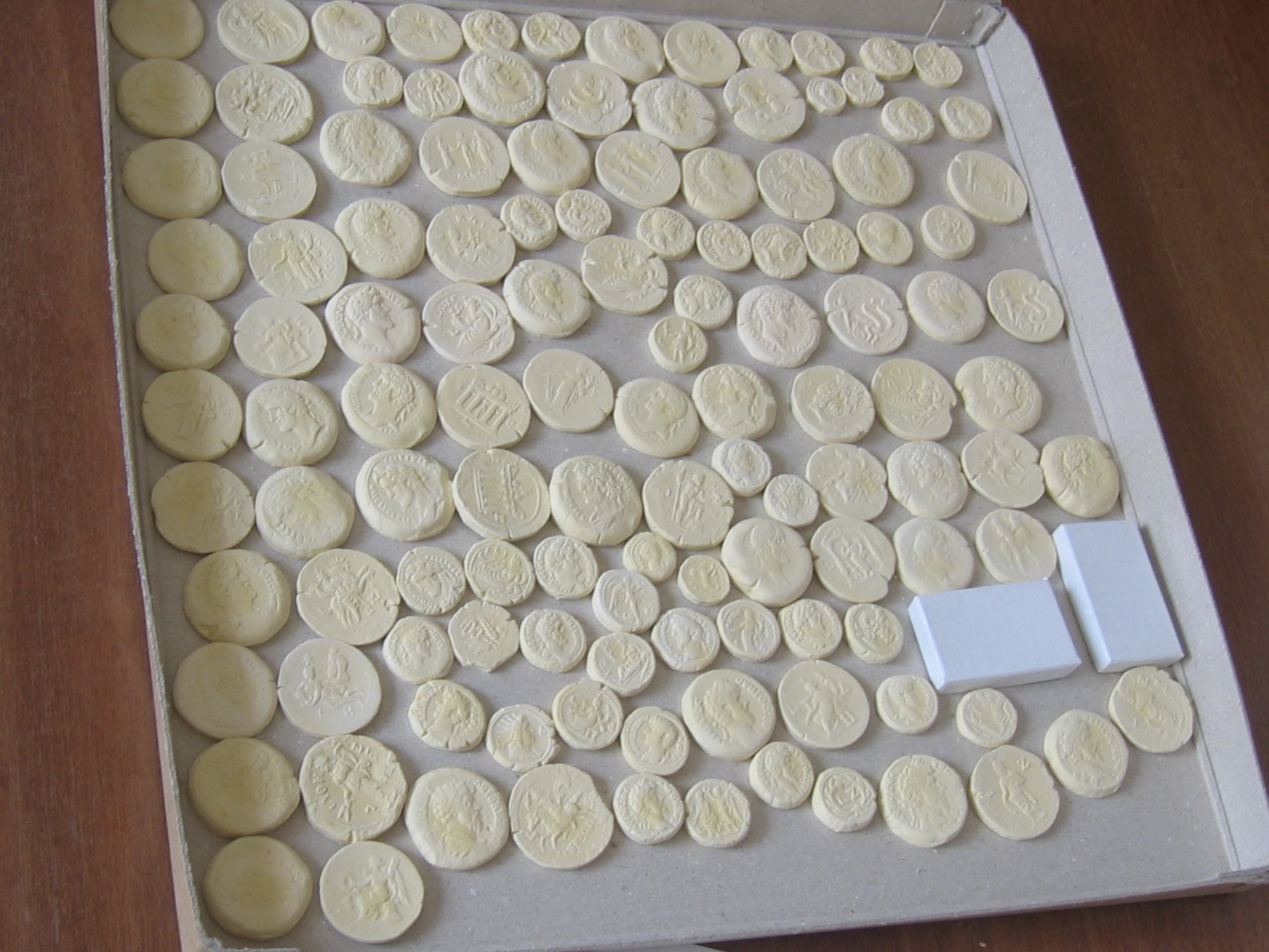
Until the early 2000s plaster casts were the gold standard for coin images. I made thousands of casts for RPC during my days as a post doc. I was first trained as a masters student to aid my die study of quarter assarion bronzes from Nicaea. Casts remove color data making it easier to see features of the die itself. A photograph of casts made the high quality plates we all know and love from the 20th century. One could even write to a museum and request their conservation department make and ship you casts for your scholarly work. This was phased out as BW Polaroid photo stands became common in numismatic collections worldwide as a high tech way to create a one off physical image of both sides of coin. It had build in lighting and created a reasonable image. I was given one of the RRC 13 specimen I was assigned in my very first numismatic summer school at ICS in 1999. If I find it I will share.
Casts honor the three dimensionality of coins better than photography. Even as digital photography grew, many still preferred casts and film photography to document coins. As one of the last initiated in this art, I feel it gives me a greater concern for the three dimensionality of coins and has led to a lifetime interest in 3D imaging. Something I am glad to have lived to see this tech come into its own, if still not commonly used for coins. I do notice however how often people now share videos of coins in motion to approximate this same experience.
As a historian I also feel it is important to preserve knowledge crafts and outdated technologies. The video compilation is based on photos taken in 2005 to document the laborious process. I just found them.
You may not recognize me as I am strangely not wearing black.
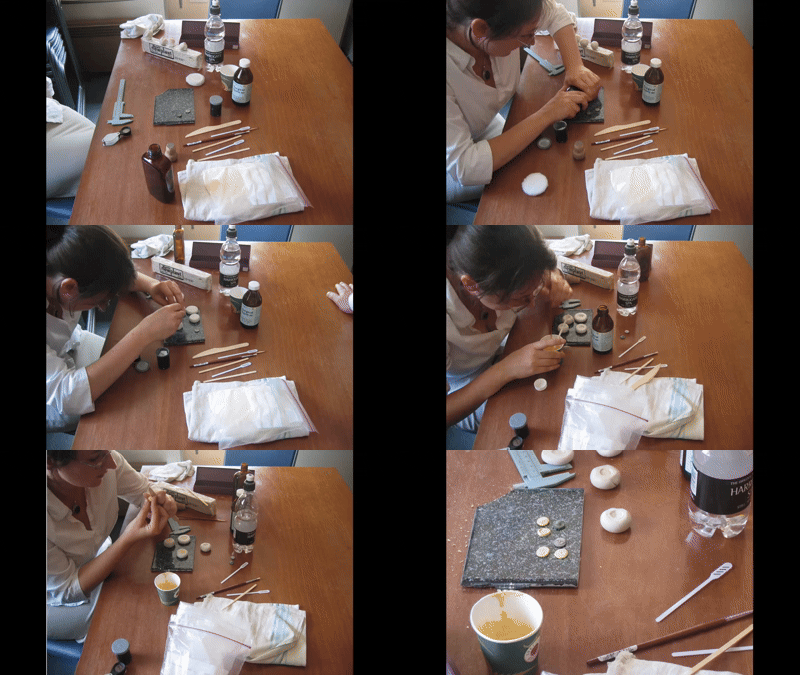
I also uploaded to youtube. I recommend slowing down playback and pausing to really understand process.
—
Materials.
Two exceptionally smooth surfaces (ceramic or glass), one for the work surface and one to to flatten the plasticine
Plasticine, highest sculpture grade, rolled into two balls about twice the diameter of the coin
talc powder, to ensure coin will not stick
powder puff, to evenly apply and remove excess (my male colleagues laughed and admired at my innovation here)
a selection of champagne corks to match size of coins and apply even pressure to the coin as you press it into the plasticine disc
methylated spirits fine paint brush to paint inside of mold to ensure surface tension breaks and no air bubbles interfere with replication
Plaster of Paris, highest dental grade, pure water, vessel for mixing, something to stir, and then tool, typically a brush to fill mold
Knife to trim cast while firm but still damp to original shape of coin
—
You can imagine after weeks of this mind numbing yet incredibly delicate process why I would have wanted a technological solution. In real, not demo, environments one spends all day at the museum making molds and carefully recording the coin details and storing the molds for transport and then all evening and into the night making the casts and trimming them. For weeks on end.
You may notice among my toolkit plastic calibers for taking the diameter with out risking scratching the coin.


