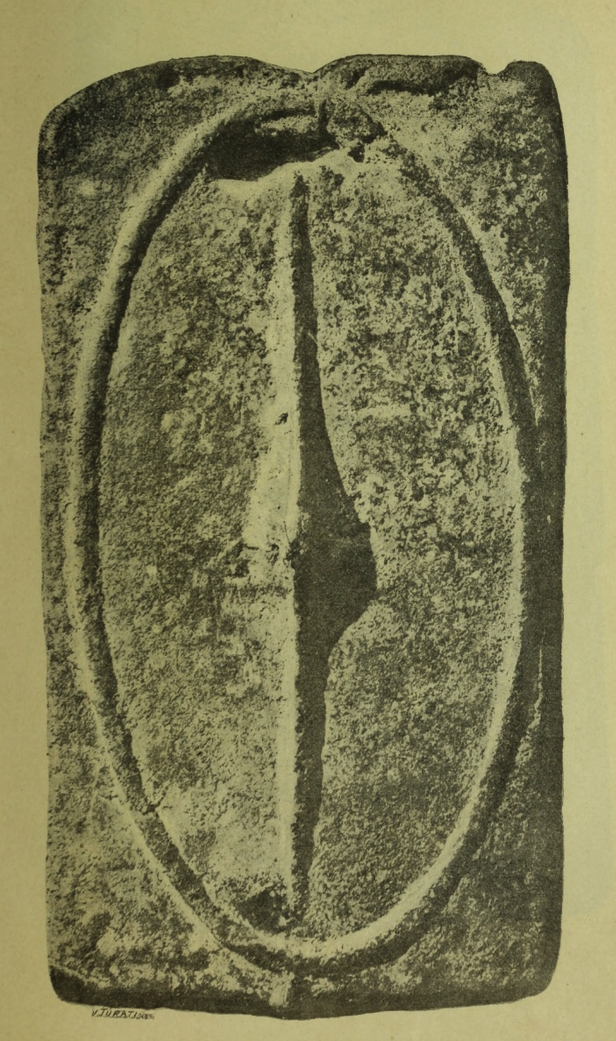
Bird Human Wearing Helmet

Impression of BM 1814,0704.2389

Glass Paste, BM 1814,0704.2389

“Convex oval blue glass paste intaglio: bird with human head wearing a helmet. Perhaps a representation of Athena with an owl’s body.”

Saving this intaglio because of similarity to the reverse of RRC 474/2

I’ve noticed in some sales catalogues this reverse described as a siren but I think that unlikely.

Update 1-20-24:

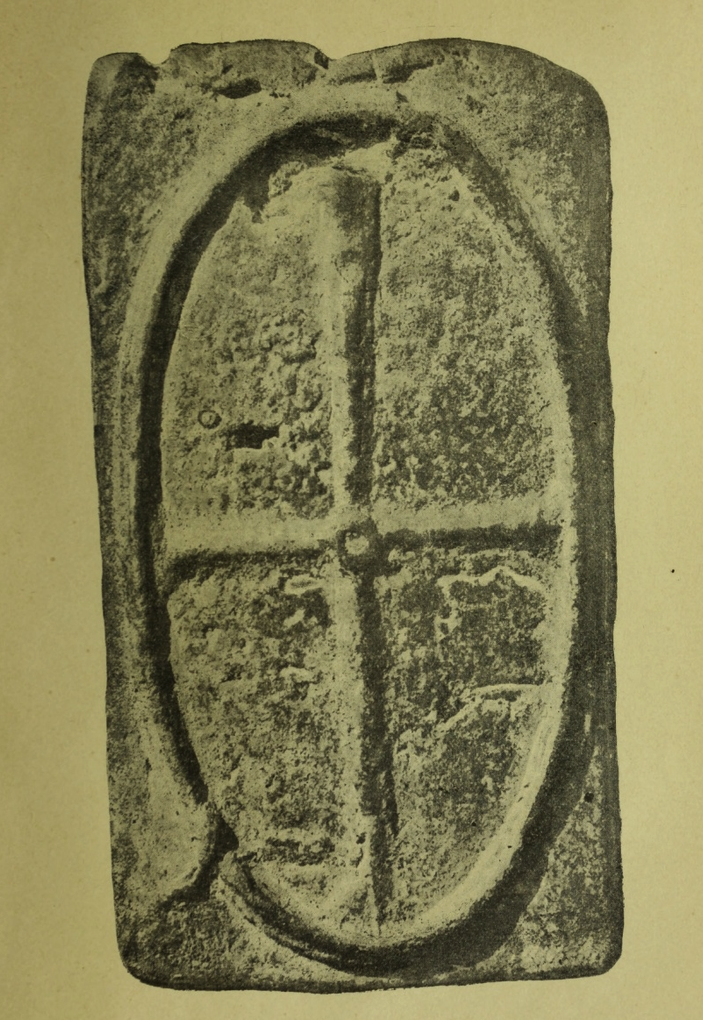
A better parallel

Townley coll. BM
Impression of Intaglio in BM

Cales Overstrike?

The inspiration for this post was a tweet announcing the growth of Winterthur’s contributions to IKMK. I thought I’d might go check out what they had uploaded that was struck in Italy for fun.

This lovely specimen caught my eye, esp. That mark on the obverse cheek. I can’t be sure even from the excellent photos but I do wonder if it might not be traces of an under type. We know the earlier(?) Minerva Cock type (HNI 435) is regularly over struck by the man-faced bull IΣ series at Naples. This coin likely dates to the same time as that series.

80 of 234: Etruscan Procession

“Procession of c. 16 figures, lictores, tuba players, death demons. The man Laris Pumpus, probably the owner of the tomb, is mentioned in the inscription” A 1910 painting on canvas of right wall middle of Tomba del Tifone, Tarquinia, 2nd cent BCE. Glyptotek, Copenhagen, H.I.N. 410, I.N. 2568 “The original of the procession is so ruined that it would be unintelligible without the help of the old copies.”

I’m most interested in the objects everyone is carrying. First figure with raise arm, sholder length hair, a hair band tied in front and sleeves, seems to be holding some thing with three curved horizontal bars and a fan shaped object above (orange). The green circles mark out a pretty ordinary horn player and horn. The blue circle is what I suspect is being interpreted as the symbol of the lictors: should we call this twisty stick with a hoop fasces?!? Perhaps these are not the lictors, but heralds of some sort with a form of the caduceus? There are more examples in the image near the horn. Yellow marks out a three objects. From left to right they are the hammer, the typical attribute of the death demon (blue dude in back above the other heads). Next comes what looks like a sheep head on a stick. Then there is a stick with a slight curve at the top. More like what I’d call fasces, but I’m far from certain. Then a hammer? that looks a little different than the death demon’s but might be for another spirit? It seems to be overlapping in the image an other stick with a slight curve.

Update:

(1) early versions of togas! We learned about that when I was an undergraduate, but there weren’t all that many good examples – the Arringatore was the prime example. This shows them off better. (2) Despite obvious differences, the composition is so similar to the procession on the Ara Pacis – presumably it was in direct conversation with a long tradition.

via social media Dr. Maria Pretzler made these observations which I thought had deep merit, quoted with permission

Update 9-11-2025

BM drawing

Production date 1842-1874


self accountability section

Felt bad about not getting to a blog post yesterday. Something unexpected came up my day took a bit of a turn. Yet, beyond that, it was really a very good day work-wise. I finalized a paper for conference proceedings and was reminded why co-authoring is so nice. I added edits to a chapter on Dionysius for an edited volume based on editors suggestions and thus got to spend a little time with the Brock’s views on the Ship of State in the Greek tradition, pre Alexander but clearly relevant later too. I had some nice email correspondence with PhD student asking good questions regarding the grain supply that got me thinking about my book project again. AND, I spend a good deal of time exploring funding options and grants and starting to think about my next target deadlines. Getting back on the horse and staying in the groove of such writing is critical. The is a habit to all forms of writing and I cannot take any of it too seriously if I am to get it done. I have a few now in mind and one will need some serious attention the next couple weeks. Ah yes, AND I agreed to give an ANS long table next Friday on my Aes Grave work, AND I concretized my smelting plans. A week from tomorrow I make my first test samples for drilling and experimentation. Yes, no reason to feel bad, that was a days work by any measure and it is also good to be open to interruptions and the unexpected. Again, part of the function of this type of blogging is to better understand how hard to push myself and when to give my self a break.
Possible docket for Today

More smelting logistics!

Respond to departmental planning email

Process die axis scans and share with colleagues

Check in with co-authors and tweak as needed

finalize images

Check in on book proposal

Time in on textual evidence for RACOM paper

Write first draft of abstract for RACOM paper

Look at some nice pictures just for fun, maybe post about them (it helps my mood and motivation!)

Maybe write referees about next grant application?

Maybe think about re working book proposal for grant app, or not

Check in on Abstract for AIA panel

Attend zoom talk

Glass Paste Scholarship

I was looking for another article I need cite and believe I have on file but cannot for the life of my find, BUT I did come across this fantastic piece, I had on file and never seem to have blogged about. And as this blog is my external brain, no post = no memory.

Alessandra Magni and Gabriella Tassiniari treat a very wide chronological range. The piece is beautifully illustrated and the real highlight for me are the unpublished ancient specimens from Verona.

It was published in these conference proceedings.

This one is a bit different and reminds me of the Mithridatic stylistic move on Roman Republican coins with the crazy hair. I wonder if the original intaglio may be ancient or just inspired by antiquity…

78 out 234 days: Gratidianus

a round up of stuff I’ve said or learned before about Gratidianus and concerns over the coinage in the 80s BCE

What follows has repetitions section to section, but it is useful for me personally to see the slight changes in my own framing or where I’ve been consistent over the years. This is an active post so I’ll be dropping more primary evidence and thoughts at the end as I spend more time with the topic.


This is from a draft of chapter 1 of my coin book written 2018. This section goes with fig. 1.40 and was cut to keep the book somewhat close to target word length.

We have both literary and physical evidence that suggests anxiety over the authenticity of coins and the ability of the state to regulate coin production, two issues that go hand-in-hand. These concerns seem to develop in the mid 110s BCE and continue down until the early 50s BCE, with a peak in intensity in the late 80s. On the coins themselves, we find increased use of serration and the use of control marks (1.40). Flans were serrated by cutting the edges prior to striking; control marks may have corresponded to record-keeping regarding batches of bullion issued to the mint.[1] Both processes are extremely labor intensive and neither became standard operating procedure. The irregular application of and great variety in control mark systems and other intermittent minting innovations such as serrations may derive from these regular shifts among post-holders and these individuals’ desires to distinguish themselves from their forerunners. They are outwardly visible signs of the care the moneyer took in regulating his issues. Our literary testimony seems to speak of similar concern. Cicero writes of the legislation of Gratidianus as a praetor under the Cinnan regime in the 80s BCE thus:

Even our kinsman Gratidianus failed on one occasion to perform what would be a good man’s duty: in his praetorship the tribunes of the people summoned the college of praetors to council, in order to adopt by joint resolution a standard of value for our currency; for at that time the value of money was so fluctuating that no one could tell how much he was worth. In joint session they drafted an ordinance, defining the penalty and the method of procedure in cases of violation of the ordinance, and agreed that they should all appear together upon the rostra in the afternoon to publish it. And while all the rest withdrew, some in one direction, some in another, Marius (Gratidianus) went straight from the council-chamber to the rostra and published individually what had been drawn up by all together. And that coup, if you care to know, brought him vast honor; in every street statues of him were erected; before these incense and candles burned. In a word, no one ever enjoyed greater popularity with the masses.

Cicero, On Duties 3.80

It maybe that Gratidianus codified the purity of the silver and the number of denarii to be struck to the pound.[2] The nature of these currency reforms or regulations are much disputed, but the political capital Gratidianus gained from being seen to act is not.[3] Upon his return, Sulla also passed legislation on the coinage, certainly concerning counterfeiting, and probably making it a crime to reject coin with the mark of the state upon it.[4] Sulla’s legal measures and preceding ones by members of Cinna’s faction all point to a general anxiety about the quality of the coinage in circulation. Thus, along with these legislative solutions, it is also possible that the uptick in serrated issues in the late 80s and early 70s may also be an attempt to improve confidence in the coinage.[5]


[1] Kraft et al. 2006; Witschonke 2012, cf. Stannard 1993, cf. 1987: 162.

[2] Plin. NH 33.132, quoted below p. XXX.

[3] Cic. Leg. 3.36, Plin. NH 34.27; Heinrichs 2008.

[4] Julius Paullus, Opinions 5.25.1; Lo Cascio 2008: 161.

[5] Cf. also p. XXX n. 6.


This is a section from chapter one of the longer version of coin book that I set aside as it was far more in-depth than the press wanted. To write the shorter now published version of the book, I had to move from a chronological approach to a thematic approach. Of course, the first longer version deeply influenced the writing of the final published version. This was last revised 18 June 2014. RACOM has now begun to answer the questions and concerns raised in the final section.

The Fabric of the Coins Themselves

After die studies and hoards, metallurgical analysis is the other major component of the quantitative numismatic tool kit.  Even in antiquity, there was great concern over the fabric of the coins themselves.  Did they weigh what they were supposed to weigh?  Did they contain the right amount of precious metal?  These were particularly key issues during the second Punic war (chapter 3, p. XXX) and also during the Civil Wars of the 80s BC (chapter 6, p. XXX).  Our challenge is to correctly interpret the physical evidence we have.

The first and most obvious data point is the weight of individual specimens as they survive today.  Even determining the original intended weight standard can be problematic.  It is not enough simply to average the weight of all known specimens.  Such an approach would ignore factors which make our existing specimens likely to weigh less than originally intended.  First, the more a coin circulates, the more wear it suffers from handling, so the less the specimen will weigh.  Thus, optimistic scholars have tried with little success to estimate the relative speed of circulation based on the observation and comparison of coin weights (Lightfoot 2007: 206 contra Duncan-Jones 1994: 180-192).  Second, environmental factors in the deposition of coins prior to their recovery, or even poor storage conditions after their recovery, can cause corrosion.  A potential third factor would be shaving or clipping, whereby an unscrupulous user could remove a small amount from the edge of a coin and then spend that same coin at face value.  Although a well-known phenomenon in later periods, rather surprisingly we see little-to-no evidence of the practice on republican coins (Stannard 1993: 50).

The other issue with using the average of known specimens as a means of expressing the intended weight standard is that it assumes that there was one specific weight per coin which the mint was attempting achieve.  This is not as obvious as it might at first appear.  The mint was given a certain amount of bullion, and there was an expectation that that bullion would produce a certain number coins.  Thus, it should be possible to express weight standards as the target number of coins per Roman pound.  We know this was the case for the Imperial period from Pliny and the context of the passage implies that the ratio, 84 denarii to the Roman pound, was in place for the Republican period (NH 33.132, also see p. XXX [quoted in chapter 7]). Based on his analysis of the Cosa hoard, Duncan-Jones suggests the ratio was 82 denarii to the pound before the Social War, then falling c. 90-89 BC to 83 and finally to 84 in the Triumviral period (1995, cf. 1994: 219).  This has not been widely accepted in part because we do not know with confidence what the Roman pound weighed.

Duncan-Jones uses the figure 322.8g for the Roman pound based solely on weights in the Naples collection (1994: 214-215; 1995: 110).  Other estimates are more wide ranging and often higher.  Crawford surveyed various estimates noting their different source materials – coins, stone weights, balances, metal weights – and in the end used c. 324g, with the caveat that it was not reasonable to assume “that the Romans were able to maintain the weight of their pound absolutely constant, at all times and in all places” (1974: 591).  He conceptualizes the target weight standards for the precious metal coins as fractions of the Roman pound, 6 scruples for the didrachm, 4 scruples for the early denarius, sometimes falling to 3 scruples (1974: 3, 7, 11, 34).  A scruple was a fractional measure, 288 scruples in a pound, 24 in an uncia or ‘ounce’.  The same vocabulary was used by Romans to also discuss small divisions of land and time, so a scruple could also be 1/288th of a iugerum or 1/24th of an hour as well.  One finds other scholars using other figures sometimes with no particular justification; so for instance, Heinrichs uses c. 327g without further comment in his discussion of Gratidianus’ reforms of 85/84 BC, a figure common enough in Late Roman and Byzantine studies (2008: 265-6; cf. Entwistle 2008: 39).

It appears that the Roman mint controlled the weight of its silver coins, not by the individual flan, but by the weight of batches.  Flans were cast erring on the heavy side.  When a batch of flans was weighed prior to striking and it came in over target, any particularly overweight flans were removed and recast or some were gouged to reduce their weight.  Only after this control step were coins heated and struck.   The results of the gouging often remain visible (fig. 1.35).  This practice was introduced c.123BC and does not seem to extend beyond 49/8BC (Stannard 1993).  Brockages and control marks may also be byproducts of the Roman mint working in batches (Goddard 1993; Witschonke 2012).  One could not discard a single flan as a striking error, i.e. a brockage, if its elimination would disrupt the integrity of the batch.  Control marks, even those appearing on duplicate dies, could have been used to trace batches of coins back to a particular striking team, thus deterring, or at least making detectable, corruption at the mint itself, if anything should prove wrong with a particular controlled batch.

The original, intended chemical composition of the coins is of just as much interest to scholars as the weight standard, and it is even more fraught with methodological difficulties.  The refining, smelting, casting and finishing techniques of the Romans and other ancient societies were highly sophisticated.  Not only could they closely control the percent of precious metals in the flans, but they even had techniques to ensure the surface of a coin had a higher percent of silver than its core.  Sometimes called ‘surface enrichment’, it is more accurately described as ‘depletion silvering or ‘gilding’.  A combination of oxidation and acid leaching removed base metal elements leaving behind a porous surface.  The porous flan would then be rendered smooth in the striking process.  Ancient Mediterranean societies were adept at these processes from the third millennium (La Niece 1995).  Even when flans were not thus treated in the manufacturing process, some deposition conditions can have a similar leaching effect.  Besides depletion silvering, the conditions under which an individual flan cools from a molten to a solid state also affect the distribution of elements within the flan.  There are well-known models for solidification for different metal alloys, but as historians and archaeologists we do not know enough about the practices in the ancient mint to model this.  Moreover, human intervention and environmental effects on the cooling process are unlikely to have been consistent mint to mint or even batch to batch.  While to a certain extent these issues affect all metal alloys, the problems are most pronounced and most studied for silver alloys. 

These factors mean that the only certain method of establishing chemical composition of any one specimen is to take a core sample.  This process is minimally invasive: a drill as small as 0.6 mm in diameter penetrating about a centimeter into the coin from the edge with no effect on the struck surfaces.  The discarding of the first, and sometimes even second, millimeter of the drillings ensures only the core is tested.  This type of analysis has been and continues to be applied to coins struck under the Roman Empire (Ponting 2012).  Unfortunately, most of the existing studies have relied heavily on non-destructive techniques.  These past methodological choices have been driven by a variety of understandable factors.  First, an appreciation of the extent to which all the factors above may affect results has been very slow to emerge.  Second, both museums and private collectors are exceptionally reticent to allow testing that has a physical effect on the coin, however minimal.  This has led to an over-optimistic application of a variety of non-destructive techniques. 

The largest study to date on Republican coins is still Walker’s analysis using x-ray fluorescence (XRF) of 1,991 silver coins from the Ashmolean Museum in Oxford (1980).  He understood the possibility of surface leaching from environmental factors, but did not anticipate intentional depletion silvering or possible issues around the dispersal of elements during the cooling process.  He abraded the surface of each coin until he achieved three consistent readings.  He found a gross mean silver fineness of 96.78% based on issues of 169-100, 97-81, 78-41 BC.  A flan made from an alloy of 90% or more silver with the remaining portion made up primarily of copper with other trace elements such as lead, bismuth and gold will be relatively homogenous in character, with exception of lead as it is insoluble in copper (Ponting 2009: 273, 2012: 21).  This means Walker’s analyses for the Republic are likely to be more valid than those he did for the Empire when debasement and depletion silvering have now been proved to be far more prevalent than originally thought (cf. Butcher and Ponting 2005).  It is suspected intentional depletion silvering may have been first introduced with the legionarii denarii of Antony, but this is not yet proven (Ponting 2012: 17).

Twenty years after Walker’s study, another major investigation of the composition of Republican coins was published (Hollstein 2000).  This project used non-destructive techniques, primarily wavelength dispersive XRF, to investigate more than 630 specimens, considering not only fineness, but trace elements.  The hope was that trace elements, especially lead isotopes, could point to likely metal sources for coins so produced.  Even coins struck by the same dies demonstrated very different trace element profiles (Hollstein 2000: 33-4).  This confirms that the Roman mint used bullion from many different sources, not only the product of recent mining, but likely also old and foreign coins and various the spoils of war, including jewelry and tableware.  Those with a metallurgical background have been critical of the methodology and missed opportunities of this study (Raub 2002), while numismatists have praised it for the number of insights it does offer (de Callatäy 2002).  Its results usefully inform many points of our historical discussion in coming chapters.

The future of metallurgical analysis for the republican series is likely to lead in a number of directions with technological improvements. Even smaller microscopic drill bits might encourage more curators to approve core sampling of specimens. There has even been some experimentation with using lasers which leave a crater not visible to the naked eye (Guillaume et al. 2007 with Ponting 2012: 24).  However, non-destructive techniques that answer the questions of greatest interest remain the holy grail.  The two largest studies on republican silver coins both used XRF, a surface analysis technique.  The other nondestructive techniques presently available are neutron and proton activation analyses (NAA, PAA).  Activation analysis can give an accurate reading of the composition of the whole coin as it exists today.  While this does not, on its own, bring us closer to knowing the original intended composition, it can be combined with XRF results for the same specimens to help determine any discrepancy between the composition of the coins surface and its core (Rizzo et al. 2010; Brissaud et al. 1990).  Republican specimens used in previous studies could be productively retested using activation analyses.


further snippets from unpublished papers

Both literary and physical evidence suggest anxiety over the authenticity of coins and the ability of the state to regulate coin production, two issues that go hand in hand. Much of the conversation in literature centers on the figure of Gratidianus, yet while nature of his currency reforms or regulations are much disputed, but the political capital he gained from being seen to act is not. Graditianus was part of the Marian-Cinnan regime, but we know Sulla also introduced currency reforms during his dictatorship.

Cic. Off. 3.80; Plin. NH 33.132; Cic. Leg. 3.36, Plin. NH 34.27 with Verboven 1994 and Heinrichs 2008, cf. Bransbourg 2013.

Heinrichs uses c. 327g without further comment in his discussion of Gratidianus’ reforms of 85/84 BC, a figure common enough in Late Roman and Byzantine studies.

Heinrichs 2008: 265-6; cf. Entwistle 2008: 39 cf. this past blog post

From another old post

In spurious coin there is an alloy of copper employed. Some, again, curtail the proper weight of our denarii, the legitimate proportion being eighty-four denarii to a pound of silver. In consequence, a method was devised of assaying the denarius: the law ordaining which was so much to the taste of the plebeians that in every quarter of the City there was a full-length statue erected in honour of Marius Gratidianus.

Pliny, Natural History 33.132

From a 2013 blog post

Anyone who knowingly and maliciously writes or reads publicly, substitutes, suppresses, removes, re-seals, or erases a will, or any other written instrument; and anyone who engraves a false seal, or makes one, or impresses it, or exhibits it; and anyone who counterfeits gold or silver money, or washes, melts, scrapes, spoils, or adulterates any coin bearing the impression of the face of the Emperor, or refuses to accept it, unless it is counterfeit, shall, if of superior rank, be deported to an island, and if of inferior station, be sentenced to the mines, or punished capitally. Slaves if manumitted after the crime has been perpetrated, shall be crucified.


From THE OPINIONS OF JULIUS PAULUS ADDRESSED TO HIS SON (as found in S. P. Scott, The Civil Law, I, Cincinnati, 1932. Book 5 section 25

Lo Cascio believes that the portion of this passage on the crime of refusing a coin goes back to Sulla like the rest (p. 161). And, that originally it would have been something like the mark of the state, rather than the face of the emperor. Heinrichs thinks that it this regulation goes back to Marcus Gratidianus and that it is key for understanding the problem he was trying to address, that is according to Heinrichs: underweight coins whose value depended on their relationship to the Roman pound (esp. p. 267). [If I’ve understood the German properly!]


I’ll add further primary source quotations here as I go along.

For now here is a link to the attalus.org website round up of primary evidence.

I particularly want to think more about how Catiline’s involvement in Gratidianus’ death may color how the man himself is remembered and also how we account for partisan politics in all these events. While most of the above is written as ‘history’, I think what might be called for is a more historiographical investigation of the literary testimony and why it has come down to us in the form it has.

“…or refuses to accept it, unless it is counterfeit…”

Lege Cornelia testamentaria tenentur: qui testamentum quodve aliud instrumentum falsum sciens dolo malo scripserit recitaverit subiecerit suppresserit amoverit resignaverit deleverit, quodve signum adulterinum sculpserit fecerit expresserit amoverit reseraverit, quive nummos aureos argenteos adulteraverit laverit conflaverit raserit corruperit vitiaverit, vultuve principum signatam monetam praeter adulterinam reprobaverit: honestiores quidem in insulam deportantur, humiliores autem aut in metallum dantur aut in crucem tolluntur: servi autem post admissum manumissi capite puniuntur.

Cic. Off. 3.91; Loeb

I put this passage here against the language of the sent. Paul. 5.25 because of the use of adulterinus to describe coinage.

I’m wondering if we could connect this clause to the rise in so called banker’s marks. The coin has to be accepted if it passes a simple punch test. I’m going to sit with this idea. I like it.

Likely Relevant Bibliography

Debernardi Pierluigi. Plated coins, false coins?. In: Revue numismatique, 6e série – Tome 166, année 2010 pp. 337-381. DOI : https://doi.org/10.3406/numi.2010.2941 ; www.persee.fr/doc/numi_0484-8942_2010_num_6_166_2941

CRAWFORD, M. H. “PLATED COINS—FALSE COINS.” The Numismatic Chronicle (1966-) 8 (1968): 55–59. http://www.jstor.org/stable/42666542.

F. Albarède et al. 2020. “From commodity to money: The rise of silver coinage around the Ancient Mediterranean (sixth–first centuries bce)Archaeometry 63(34) DOI: 10.1111/arcm.12615

P. Debernardi et al. 2018. “Average and core silver content of ancient-debased coins via neutron diffraction and specific gravity” Archaeological and Anthropological Sciences 10(7): 1585-1602 DOI:10.1007/s12520-017-0464-y


    non coin section

    Yesterday was frustrating. I’d put too much on my calendar, writing and editing a piece for a set of conference proceedings does not mix with doctor’s appts and other necessary logistics such as parenting while my partner addresses his commitments. Today looks better. I don’t think I have to leave the house. In the early pandemic all I wanted was a reason to leave the house, but now I just want to be left alone in my office to get on with things in my pajamas and cup of tea.

    Anyway, most of this post was pulled together yesterday and I did also have some great back and forth with colleagues via email and finalized my April Rome travel arrangements, including a visit to Nemi and fingers crossed the Capitoline too, so not a total wash out. Oh, and I also wrote and sent in the abstract for a public lecture I’m giving to open an exhibit at a local college.

    Today I’ve got a zoom on a grant proposal and those conference proceedings then need to take center stage. There are some emails but I may leave them to later in the day to keep my focus where I want it.

    76 out of 234 days: Open Access Attalids

    Some readers of this blog may be interested to know that Noah Kaye‘s 2022 book from CUP is available for free download and is completely open access. I’ve not yet dug in properly but I’m excited to do so. He also have a number of interesting numismatic and Hellenistic history articles and chapters posted on his academia edu page: worth checking out!


    non coin section

    Friday was so productive work wise I woke up Saturday itching to work. I resisted. I worked in the garden. I cleaned and re organized the pantry. I helped the kiddos build land form models for a school project (I can mix some pretty great earth tones out of black, orange, and green arcrylic paints and my tooth pick flags would make any 60s homemaker envious). There was more you get the idea. A good weekend.

    Today I’m in NYC to see Chroma and catch up with colleagues (friends!), but I have a little time to tend communications and logistics: got through 99.5 percent of my paper list Friday: must make another. Almost ready to buy my April plane ticket to Rome just waiting to hear about one more possible opportunity. I’m thinking it is early and I feel fresh perhaps I’ll do one historical blog post as pre writing for the RACOM conference.

    73 of 234 days: borrowed images

    RRC 346/2; Freiburg specimen
    RRC 340/1

    I have an extensive unpublished paper on the importance of the ludi Apollinares in the late republic which is slate to be a chapter in the new book. These two coin types will both feature in that chapter as will RRC 346/1. But for now what I’m really interested in is Censorinus’ decision to imitated Piso’s earlier issue. By contrast his bronze types are really innovative (Ostia on Bronze: cf earlier post). Even his other denarius is doing something relatively new. The Ancus Numa jugate heads might draw visually on RRC 307 and 312/1 (the only earlier jugate heads on the Roman series is a v rare semuncia from Luceria but I’m not even sure that counts); and the use of legendary kings probably was inspired by RRC 344 (Tatius). Desultors appeared in a slightly different form on RRC 297 (early blog posts on desultores). The Apollo horse coins echo a massive v recent series. I wonder if the nature of these borrowings on the silver might be a means of making the coins blend better with the coins most common in contemporary circulation. An attempt to illicit an ‘oh that’s familiar’ feeling in a moment of deep civil crisis.

    Non coin portion.

    Most of my main intellectual work for the day is done already: a grant co-writing/brainstorming session, a meeting about a co-authored conference paper, finishing my review of literary sources on Censorinus that I started yesterday, this post, now I really need to do logistics and emails. My least favorite work. That said it feels good to have written and thought a great deal and still have a sizable part of my work day left for those v necessary tasks. I’ll make a paper list.

    Gaius Censorinus, mon. 88

    The function of this post is to get my head screwed on straight about career and connections of the moneyer of 88 (RRC 346). It goes without saying that there is a great deal of recent scholarly work on the gens Marcia: I’ve collected bibliography below. That said, I like to start from the primary evidence and then read secondary literature to refine and critique my first impressions.

    The family cognomen derives from a Gaius, cos. 310, Censor 295 AND 265, and Princeps Senatus c. 269 (primary evidence on this last role not clear to me: check Ryan 1998). This man was also either a priest or augur, the evidence is inconclusive (cf. Vaahtera 2002: 105ff.). This man himself may have been the son of the cos. 357, cognomen Rutilius. [I may come back to him, but not just yet.] We also think that in 311, just one year before his consulship he was tribune of the plebs and proposed a piece of legislation relating to the election of military tribunes:

    “in that year, also, two commands —both military —began to be conferred by the people; for it was enacted, first, that sixteen tribunes of the soldiers should be chosen by popular vote for the four legions, whereas previously these places had been for the most part in the gift of dictators and consuls, very few being left to popular suffrage; secondly, that the people should likewise elect two naval commissioners to have charge of equipping and refitting the fleet. [4] The former of these measures was proposed by the tribunes of the plebs Lucius Atilius and Gaius Marcius; the latter by Marcus Decius, another tribune of the plebs.” (Liv. 9.30.3)

    I mention this because it reminds me of fragment from which we assume the existence of our moneyer’s uncle a Cnaeus, who is thought by MMR and Thommen 1989 to have been tribune of the plebs some time before 121 based on a fragment assigned to C. Gracchus from Char. GL 1.208k:

    from Loeb p. 309: DOI: 10.4159/DLCL.fragmentary_republican_latin-oratory.2019

    I think LPPR stands for G. Rotondi’s Leges Publicae Populi Romani: Elenco Cronologico con una Introduzione Sull’Attività Legislativa dei Comizi Romani (1912).

    Assuming the Cn. could be C., then why couldn’t C. Gracchus be talking about the law of 311?! Or, I guess we could say if the uncle Gnaeus exists he might have been trying to build on the success of the cos. 310 by proposing related legislation… Still not a lot to go on.

    MRR is perhaps misleading to suggest he passed legislation to limit times one could hold the censorship. The below passage describes a speech in a contio, not a legislative assembly. Plut. Cor. 1.1 does say it was legislation, not just the rebuke, but perhaps it is Plut. who is overstating rather than Val. Max. understating?

    Val. Max. 4.3.1; Loeb

    If they become check sources on military exploits and triumph in DPRR.

    We hear nothing of his descendants until the cos. 149, assumed to be his great grandson.

    Our first glimpse at his career is with his choice of the Hecyra by Terence for the Roman Games as curule aedile, where this play, ‘the mother-in-law’, was a huge hit after disruptions at its first two stagings (Knorr 2013, cf. Parker 1996; Did. Ter. Her.). We know nothing of his other offices until his consulship where he had a very lack luster career in charge of the fleet at the start of the 3rd Carthaginian War, barely escaping disaster. Nevertheless he was elected Censor for 147. (Did the name help?!) We also know he took some interest in Academic philosophy and Clitomachus of Carthage (died 110 BCE) addressed a treatise on the subject to him at some point (Cic. Acad. 2.102). Perhaps he introduced in grandsons to such philosophy? My colleague Philip Thibodeau pointed out to me that Terence and Clitomachus are near contemporaries and are both said to be of Africa origin, as well as appearing to share the cos. 149’s patronage.

    On to his grandsons, the moneyers, as we have no knowledge of their father.

    In 92 BCE we assume Gaius (mon. 87) was the Censorinus who thought about prosecuting Sulla and then chickened out (cf. Reams 1993 who argues this does not prove he was a Marian):

    When Sulla came back to Rome, however, Censorinus brought suit against him for bribery, alleging that he had collected large sums of money illegally from a friendly and allied kingdom. However, Censorinus did not put in an appearance at the trial, but dropped his impeachment.

    Plut. Sulla 5.6

    One Gaius Censorinus, likely our moneyer was known to have been an orator, and we might connect Cicero’s testimony in the Brutus with what we know of his grandfather’s connections to Greek literature, esp. academic philosophy.

    C. Censorinus had a good stock of Greek literature, explained whatever he advanced with great neatness and perspicuity, and had a graceful action, but was too cold and unanimated for the Forum.

    Cic. Brut. 237 cf. 311

    In 87 he was certainly deep into the dirty work of the regime. He is credited with the murder (execution?!) of the consul! His official capacity this year is uncertain. Broughton (MRR) thought he was a military tribune; Suolahti 1955 thought he might be better described as a legatus or praefectus equitum. I’m not sure it matters really. The world had turned upside down and he set some dangerous precedents.

    Cinna and Marius had sworn to Octavius (cos. 87), and the augurs and soothsayers had predicted, that he would suffer no harm, yet his friends advised him to fly. He replied that he would never desert the city while he was consul. So he withdrew from the forum to the Janiculum with the nobility and what was left of his army, where he occupied the curule chair and wore the robes of office, attended as consul by lictors. Here he was attacked by Censorinus with a body of horse, and again his friends and the soldiers who stood by him urged him to fly and brought him his horse, but he disdained even to arise, and awaited death. Censorinus cut off his head and carried it to Cinna, and it was suspended in the forum in front of the rostra, the first head of a consul that was so exposed. After him the heads of others who were slain were suspended there; and this shocking custom, which began with Octavius, was not discontinued, but was handed down to subsequent massacres.

    The execution of a consul was widely remembered, but Censorinus’ role was not always deemed crucial in how the incident was recall in our sources. Besides Appian none of the numerous sources on Octavius’ death mention Censorinus (see list below).

    Later in Appian we hear of a Marcius apparently in command of Cinnan faction troops, where he seems to be on par with Carbo and Marius at least in the narrative.

    About the same time Metellus gained a victory over another army of Carbo, and here again five cohorts, for safety’s sake, deserted to Metellus during the battle. Pompey overcame Marcius near Senae and plundered the town. Sulla, having shut Marius up in Praeneste…

    BC 1.88

    Yet we can’t be sure this is Gaius and not his brother Lucius! Or even another member of the gens… Appian again discusses Marcius’ defeat by Pompey a little later on. Within his narrative it seems to be a separate episode, but perhaps Appian is confused and Marcius only met Pompey once? Or perhaps both brothers were defeated by Pompey on two different occasions. I can’t see any easy way of resolving the mystery.

    Carbo sent Marcius with eight legions to the relief of his colleague, Marius, at Praeneste, having heard that he was suffering from hunger. Pompey fell upon them from ambush in a defile, defeated them, killed a large number, and surrounded the remainder on a hill. Marcius indeed made his escape, leaving his fires burning, but the army blamed him for being caught in an ambush and there was a serious mutiny. One whole legion marched off under their standards to Ariminum without orders. The rest separated and went home in driblets, so that only seven cohorts remained with their general. Marcius, having made a failure of it in this way, returned to Carbo.

    BC 1.90

    We have no direct testimony of how Gaius the moneyer died but that it was violent can be inferred by Cic. Brut. 311 where he is counted among the losses of civil unrest.

    His brother, Lucius, left no certain trace in our literary records only his coin issues (RRC 360, RRC 363). We can perhaps assume he is the younger brother because he held office later. Hinard 1985 assumes he was a senator and proscribed. He, however, seems to have been survived by a young son, thought by Rüpke 2005 to have been borne c. 89. He was another Lucius, cos. 39 in what year he also triumphed over Macedonia. He was in 43 a supporter of Antony whom he had joined at Mutina. He seems to have benefited by the proscriptions even getting for a time Cicero’s Palatine residence (Vell. 2.14.3).


    Sources on Octavius’ death excepting Appian quoted above

    Cic. Tusc. 5.55: decapitation on orders of Cinna

    Augustan era Fasti seem to recall his death in office (note to self: check Latin text at some point)

    Liv. Per. 79-80 gives a summary, death recorded, no particular agency ascribed but Cinna and Marius by implication

    IG 14.1297 records death and lays agency on Marius

    Vell. Pat. 2.22 slain on command of Cinna

    Val. Max. 1.6.10 omen of beheading: no ascribing of agency but Cinna by implication

    Ascon. Scaur. 23 Cinna agent of Octavius’ death as well as that of Crassus

    Plut. Sull. 12.8: Cinna kills Octavius

    Plut. Mar. 42.5: dragged down from the rostra and butchered by men sent to do the job

    Flor. 2.9.14: head displayed on rostra, general massacre at predesignated symbol.

    Vir. Ill. 69: Cinna kills Octavius

    Aug. Civ. 3.27: head displayed on rostra


    Morelli, Davide. “The family traditions of the « Gens Marcia » between the fourth and third centuries B.C.” Classical Quarterly N. S. 71, no. 1 (2021): 189-199. Doi: 10.1017/S0009838821000495

    Syme, Ronald. “The politics of the Marcii.” In Approaching the Roman revolution : papers on Republican history, Edited by Syme, Ronald and Santangelo, Federico., 44-55. Oxford: Oxford University Pr., 2016.

    Russo, Federico. “I « Carmina Marciana » e le tradizioni sui Marcii.” La Parola del Passato 60, no. 340 (2005): 5-32.

    Zanin, Manfredi. “Zur fraglichen Identität des Münzmeisters Q. Marcius (RRC 283).” Museum Helveticum 77, no. 2 (2020): 216-220.

    Briquel, Dominique. “Les guerres d’Ancus Marcius: comment mener les guerres en accord avec la religion.” Bulletin de l’Association Guillaume Budé, no. 2 (2018): 63-81.

    Hölkeskamp, K.-J.. “In the web of (hi-)stories : « memoria », monuments, and their myth-historical « interconnectedness ».” In Memory in ancient Rome and early Christianity, Edited by Galinsky, Karl., 169-213. Oxford: Oxford University Pr., 2016.

    Hölkeskamp, Karl-Joachim. “Im Gewebe der Geschichte(n): « memoria », Monumente und ihre mythhistorische Vernetzung.” Klio 94, no. 2 (2012): 380-414.

    Rohr Vio, Francesca. “« Clari monimenta Philippi »: poesia e politica nei « Fasti » di Ovidio.” Paideia 72 (2017): 279-291.

    Tansey, Patrick. “Marcia Catonis and the « fulmen clarum ».” Classical Quarterly N. S. 63, no. 1 (2013): 423-426. Doi: 10.1017/S000983881200081X

    Jyri Vaahtera. (2002). Livy and the Priestly Records: À Propos ILS 9338. Hermes, 130(1), 100–108. http://www.jstor.org/stable/4477486

    Thommen, L. (1989) Das Volkstribunat der späten römischen Republik. Stuttgart.

    Ryan, F. X. (1998) Rank and Participation in the Republican Senate. Stuttgart.

    Reams, Lee E. “CENSORINUS, SULLA, AND MARIUS.” Rheinisches Museum Für Philologie 136, no. 3/4 (1993): 281–88. http://www.jstor.org/stable/41233915.

    Knorr, Ortwin. “Hecyra.” In A Companion to Terence, 295–317. Oxford: Blackwell Publishing Ltd, 2013.

    Parker, Holt N. “Plautus vs. Terence: Audience and Popularity Re-Examined.” The American Journal of Philology 117, no. 4 (1996): 585–617. http://www.jstor.org/stable/1561950.

    Suolahti, J. (1955) The junior officers of the Roman army in the Republican period : a study on social structure. Helsinki.

    Hinard, F. (1985) Les Proscriptions de la Rome Républicaine. Rome & Paris.

    Rüpke, J. (2005) Fasti sacerdotum : die Mitglieder der Priesterschaften und das sakrale Funktionspersonal römischer, griechischer, orientalischer und jüdisch-christlicher Kulte in der Stadt Rom von 300 v. Chr. bis 499 n. Chr. (3 vols.). Wiesbaden.

    72 of 234 days: Hoards between 88-78 BCE

    Right. 22 days later I’m back at the question of RRC 346 and friends. Here’s the post where this work got started.

    Time is a mysterious thing: even as I log it here in these posts I still have an internal feeling that it is at once standing still and speeding forward.

    My initial question is does this issue behave any differently from near contemporary issues in the hoards. My guess was be that it might drop out of the hoards. No dice. It is never a very big part of any hoard, but up through 78 we don’t see in the 24 available hoards any real trend.

    I tried adding in a trend line to this graph and a linear one fit best with a very slight upward trend from just below 3% to just above 3% with a low R2 (.0106). I don’t put much stock in such a trend line other than perhaps to just confirm it is not a downward trend.

    Another issue of interest is RRC 348.

    Here the trend line dips, we have a very obvious outlier messing with our data.

    The funky hoard is Alife (ALI in CHRR online, this is recorded with only minimal details as no. 234 in Crawford’s CHRR 1969):

    Pozzi, E. “Ripostigli Repubblicani Romani nel Museo Archeologico Nazionale di Napoli.” Annali dell’Instituto Italiano di Numismatica 7–8 (1960–1961): 153-245.

    This hoard closes at 87BCE and contains only 83 Denarii the vast majority dating 91 or later. Once it is removed the trend line for the presence of the Dossenus issue in the remaining hoards is nearly perfectly flat. There is no evidence the hoard was intentionally excluded in any systematic way.

    The final issue of interest is RRC 349. It is smaller than the other two issues. (Yes, we can use RRDP data to quantify this and probably will for the conference paper, but for now just take my word for it.)

    While it appears in far fewer hoards and never makes up more than 5% of the proportion 100-78BCE coins in these hoards, there is again no downward trend over this initial decade.

    I hate negative conclusions they are so unsatisfying for all they are important. I think I’ve also learned a thing or two about how to make this process faster. I started by trying to emulated that work I did in the previous post for this longer time span and it was a hot mess. I wish it was easier to pull data for hoards out of CHRR online. I’d like to extend this by another decade to see if any downward trend emerges at any point. I doubt it but I like to be thorough, before I satisfy myself of the final conclusion.

    I’m going to leave this data crunching a do some historical narrative writing next. Getting my textual sources in order and the prosopography might help me ask better questions.


    Besides that historical narrative, I really really need to stop avoiding the smelting logistics problem, I’ve also got to put a little time into prepping for the grant planning meeting, and confirm Berlin dates (that’s just an email), and probably address Rome flight logistics and dates. Ok. I know that is too much for a single day. I’m just not that good as swapping between tasks. Maybe I best tackle some low hanging fruit before I let myself fall further into the 80s BCE.