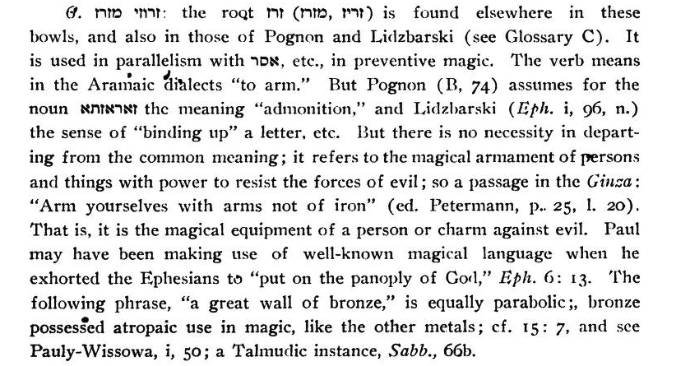
Walls of Bronze

From an essay by Gregory Nagy (my emphasis)

Jeremiah 1:18

Jeremiah 15:20

Horace Epistle 1.60

Horace Carminae 3.65

I was really digging into try to think about what these parallells meant but lucky for me this dude already did!

WORMELL, D. E. W. “WALLS OF BRASS IN LITERATURE.” Hermathena, no. 58 (1941): 116–20. http://www.jstor.org/stable/23037709.

He has a great little joke on the first page:

“…assuming that a bronze tower need no more be of bronze than an ivory tower need be of ivory…”

I agree with this fairy land view. He goes on after this to make the case that bronze had magical properties, of this I am less convinced is relevant in these literary examples… He also speculates that in Horace’s Epistle the bronze walls are the goal or home base of the game and connects it to a childish version of the lusus Troiae! I’m not convinced but points for creative thinking!

He then jumps the shark and goes in for early English lit reference, claiming Horace lies behind this imagery.

NO MENTION OF JEREMIAH!!! Wormell must have fallen asleep in Sunday School.

Homer (maybe Hesiod) are likely in dialogue with Eastern traditions on which Jeremiah is also drawing (I’m thinking of the East Face of Helicon and West’s thoughts on connecting Sappho to Babylonia magic and Psalms; no, I’m not going to go find a citation right now, it is in my teaching notes if I ever need it). Plato is drawing on Homer. Horace is likely also drawing on Homer in an archaizing fashion. I’d love to connect Horace to Semitic literary traditions just for fun, but I don’t think I can really do that with any intellectual honesty.

Wait….

That magic idea of Wormell’s might have some merit:
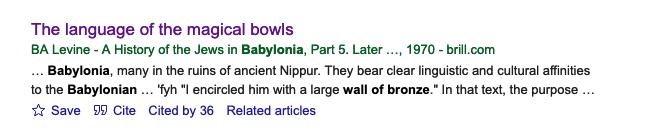
[arrived from ILL! 5-3-23]

(link to above from which below is taken)

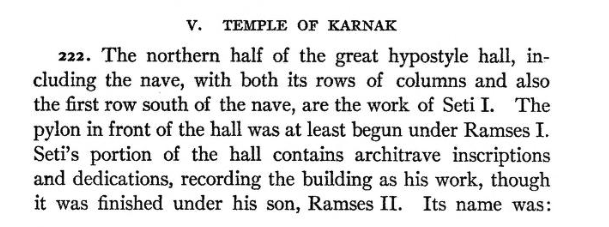
I kept digging and lo! A commentary on the wall of tin in Amos gave be to pharonic Egypt references:

A full view of this commentary is available on the Internet Archive

From Breasted 1906 Ancient Records of Egypt:
update from 5-3-23:

From the Chicago Assyrian Dictionary:

s.v. dūru

From Muss-Arnolt’s concise Assyrian dictionary:

119?! of 234: Neniae, chiasmus and other non-coin things

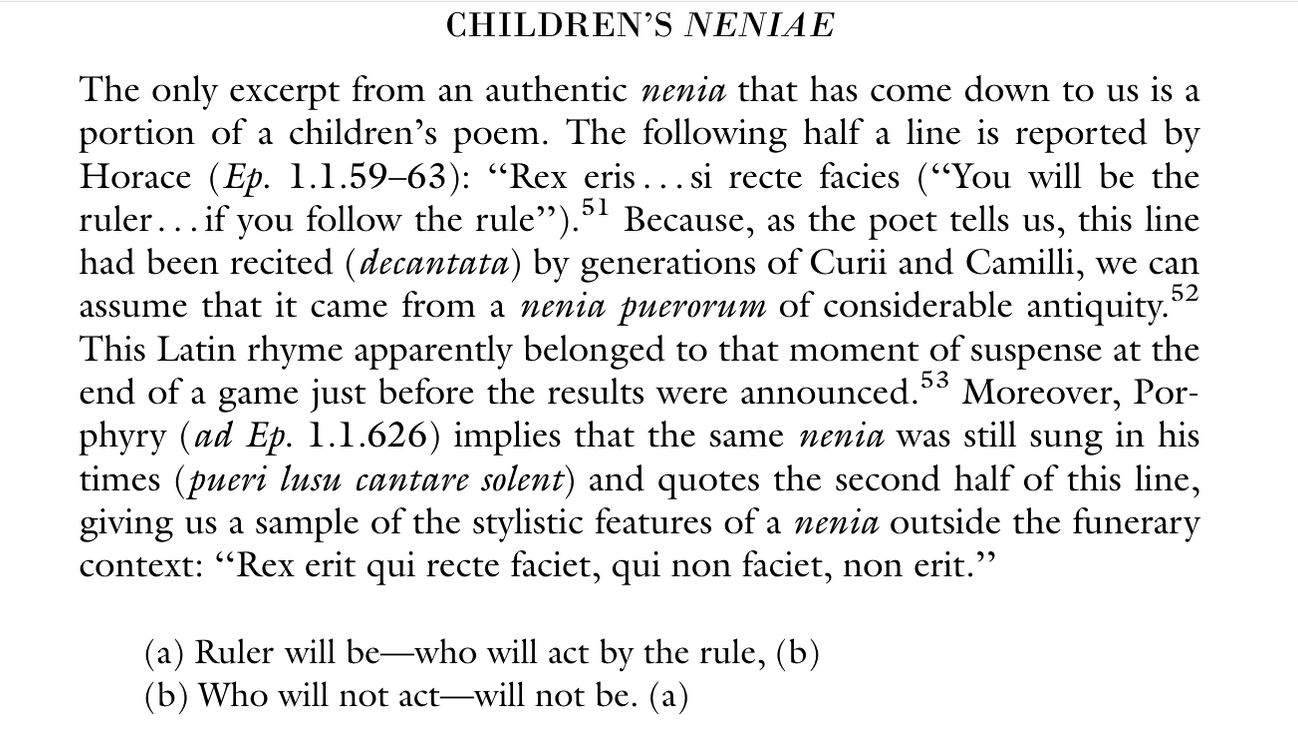
Here’s our one complete (non-literary?) nenia from antiquity and even this one had to be reassembled across the centuries.

Rex eris, si recte facies

Qui non faciet, non eris!

You will be king, if you act rightly;

He who does not act, will not be!

Reconstructed from Horace Ep. 1.1. 59-63 and Porphyry ad Ep. 1.1.626

I promise it is more catchy in the Latin than I can make the English!

The best discussion is:

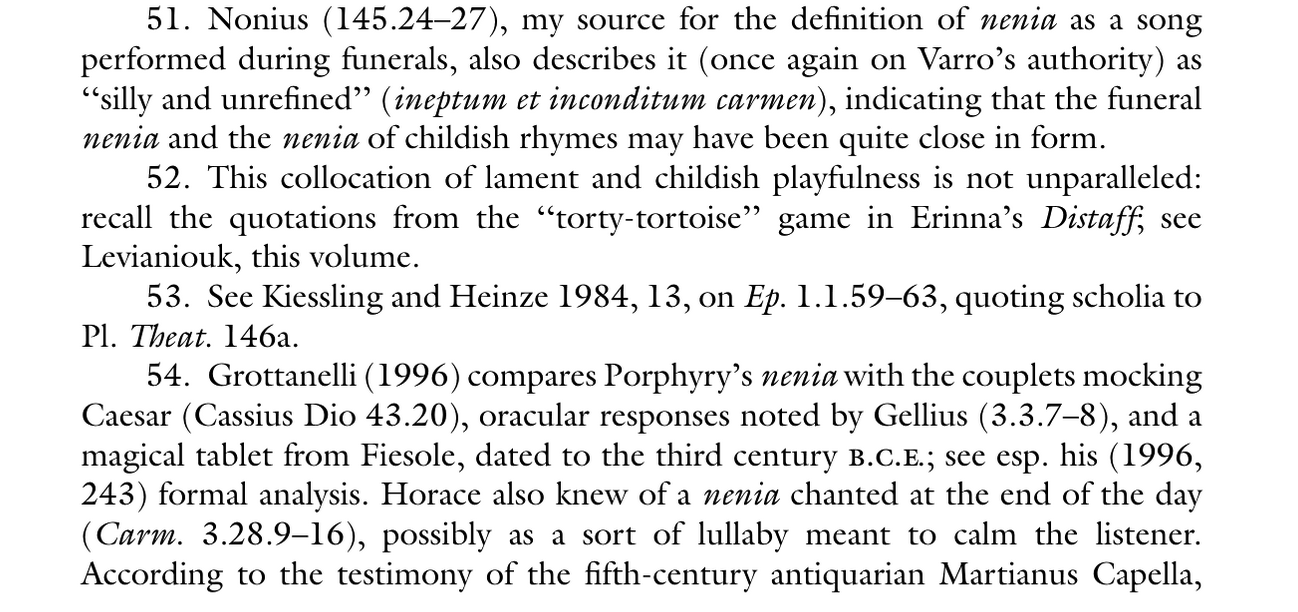
Dutsch, Dorota M.. “« Nenia »: gender, genre, and lament in ancient Rome.” In Lament: studies in the ancient Mediterranean and beyond, Edited by Suter, Ann., 258-279. Oxford ; New York: Oxford University Pr., 2008.

But her concern is on the more common use of term Nenia, i.e. in its funerary context:

Abstract of her piece: Two discourses were involved in the Roman funeral. One, the official « laudatio funebris », a speech commemorating members of the upper class, was the domain of male relatives of the deceased. The other, a chant called « nenia », was entrusted to female professionals and could thus offer us a rare example of Roman women’s poetic skills, but we have no script of a genuine lament sung at a Roman funeral. Scattered evidence regarding various types of the « nenia » is assembled and examined to recover some of the rules and cultural connotations of this lost genre.
P. 270 of her chapter with corresponding end notes:

Why do I care? Well I’m including the little rhyme in my transition between chapter one and two of my current book project. The first chapter “What sort of thing is a king?” investigates literary generalities about the nature of Roman and Foreign Kings and Roman relationships to kings, again in generalities and truisms not specific examples.

(I realize as I type this it is an interesting reprisal of my work on the historiographical uses of Eastern Kings in my first book (2006), esp. in Chapter 6, p. 291 ff: I best go read myself and try to see why I can’t get these questions out of my brain).

The second chapter addresses memories of Numa in the pre Augustan, esp. pre Ciceronian corpus. The little ditty I call in to try to access a bit of popular culture on the connect of (morally) right action and kingship in the Roman mind to set up the reader (who may have skipped chapter one!) to better understand the context in which the Numa traditions were formed. The writing challenge is to decide what of the Numa tradition goes in the chapter two and what is distinctive enough to be saved for chapter three on the Ludi Apollinares and their meaning.

I’m particularly interested in how recte and rex are linguistically connected through the verb rego, rexi, rectus.

Which in turn led me to Livy 6.6 AND Chris Kraus’ fabulously spoton commentary

Chiasmus is that A:B::B:A pattern in nenia


For reasons that aren’t public yet I think my sabbatical will be cut short. Not all bad reasons and largely of my own agency; I’m shifting my professional priorities it feels. More anon, sorry to be vague but the count down has started to feel weird. I do have 119 more days in which I can primarily focus on writing but I will likely also be taking on an preparing for other work. Regardless, I want this book out soon, even if I have to borrow time here and there. I do like blogging so I will try share bits as they come up.

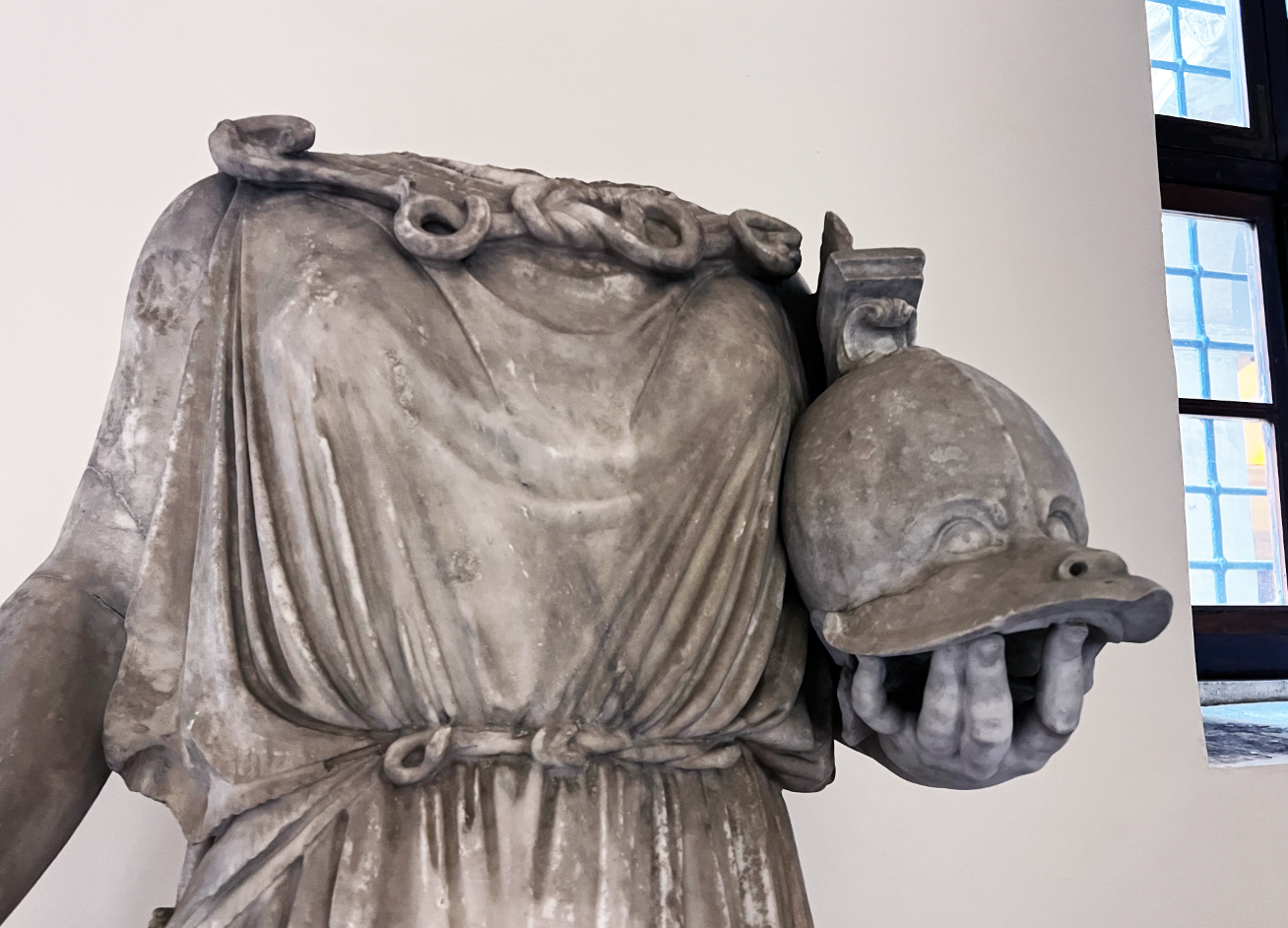
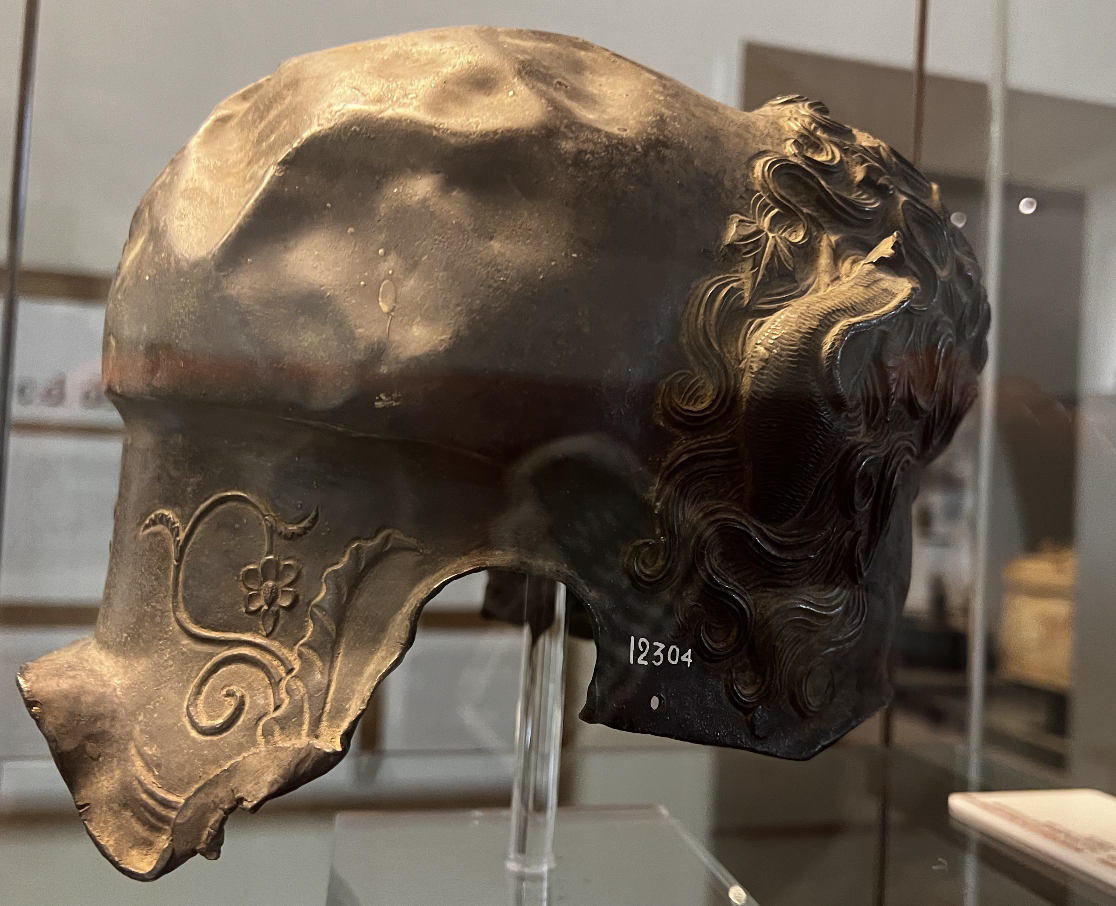
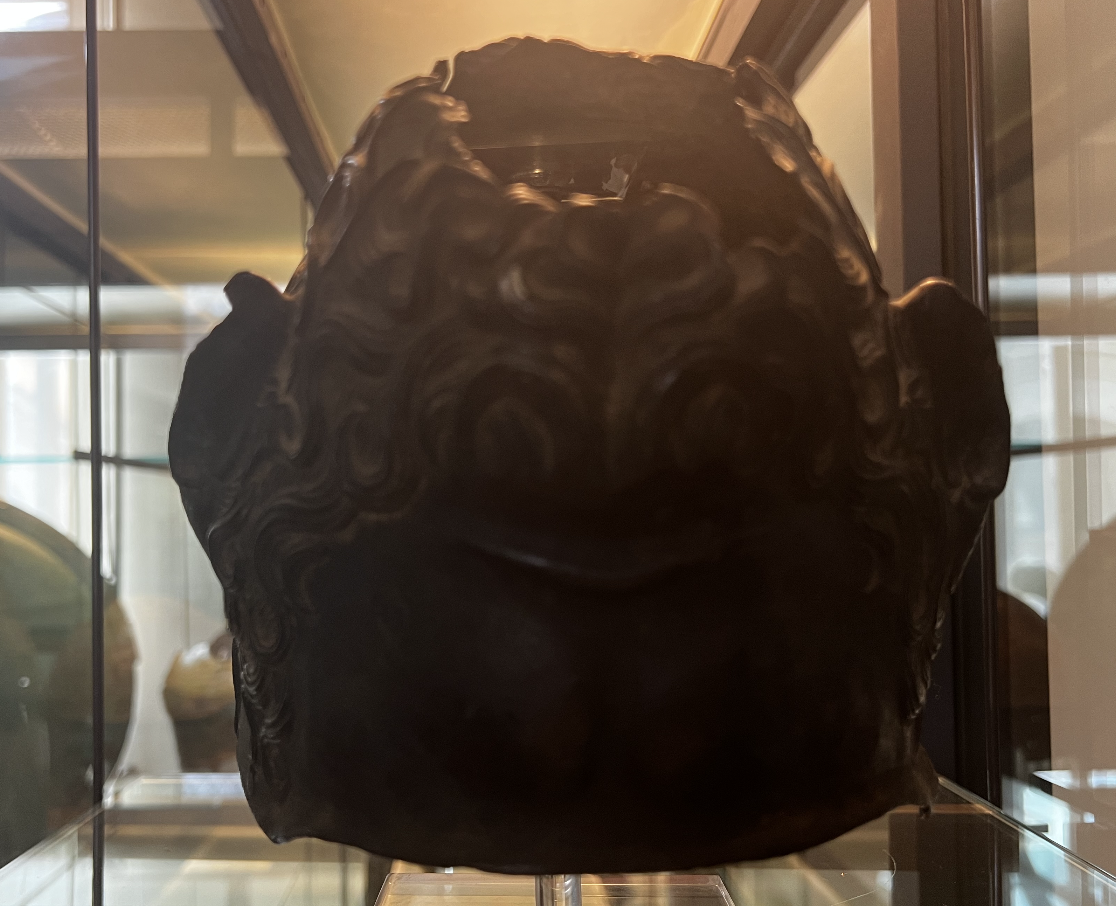
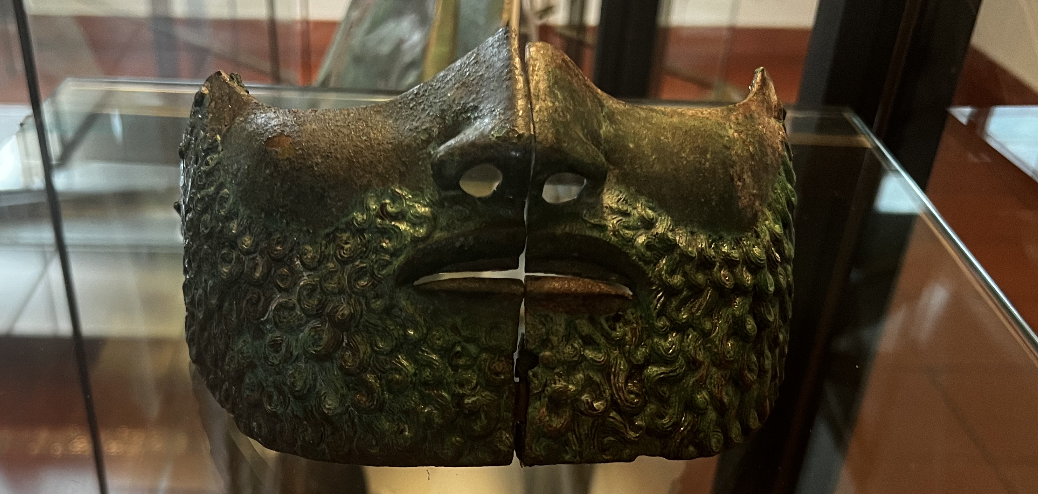
Helmets with Faces

From Palazzo Altemps
This crappy picture is the front view of the same helmet seen from the sides in the above two images. I spotted it in the Vatican Etruscan Bronzes Gallery.
Same case as previous, said to be a mask visor.

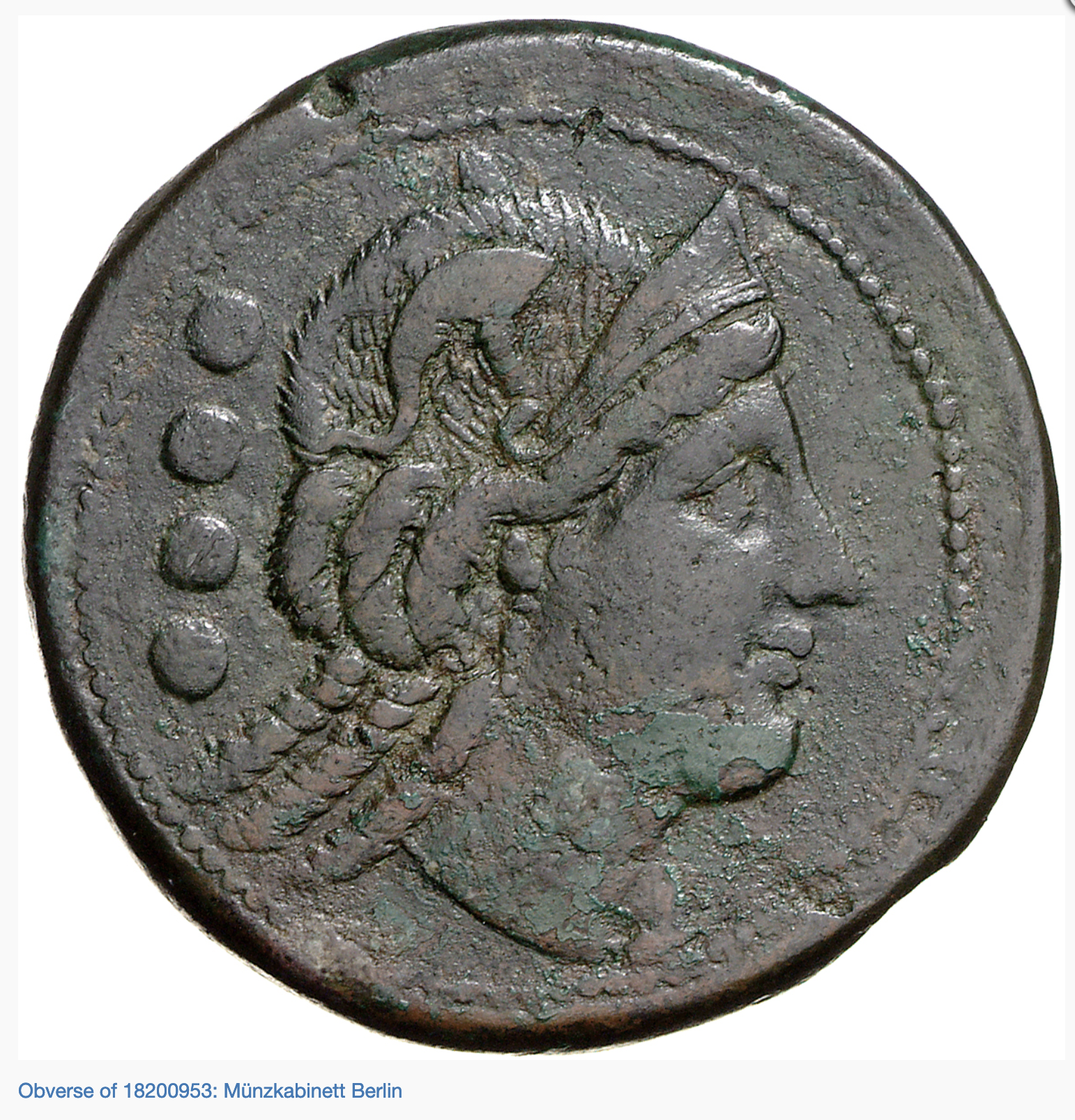
I’ll add more here when I spot them. I like this type of thing for thinking about coin imagery like the ketos helmet/headdress on the coins of Vetulonia (blog post) or even the boar headdress on Roman Republican bronzes. (RRC 39/2 etc…)

Update 5-3-23:

Reading this piece:

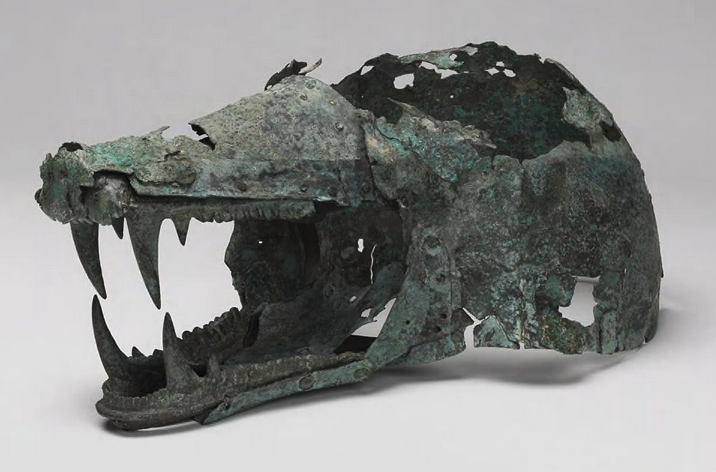
Elliott, John. “The Etruscan wolfman in myth and ritual.” Etruscan Studies 2 (1995): 17-33. (link)

Abstract: A large bronze animal’s head in Cambridge (Mass.), Arthur M. Sackler Museum, Harvard University Art Museums Acc. no. 1964.128, is indeed the head of a wolf and was used as part of a masked ritual in which the Etruscans defeated a monster personifying death. Urns, wall-paintings and pottery decoration all provide additional evidence for the connection between wolves and the deities of the underworld in Etruria.

It has great images and I think even without the helmet or the Capitoline Wolf (proven to be not ancient) the corpus of images adds up to a distinctive and important cultural practice. The helmet while likely ancient has been distorted through heavy ‘restoration’ esp the teeth and perhaps low jaw:

Harvard link

So it is evidence of an animal helmet but we cannot say what kind… This object needs some provenience research.

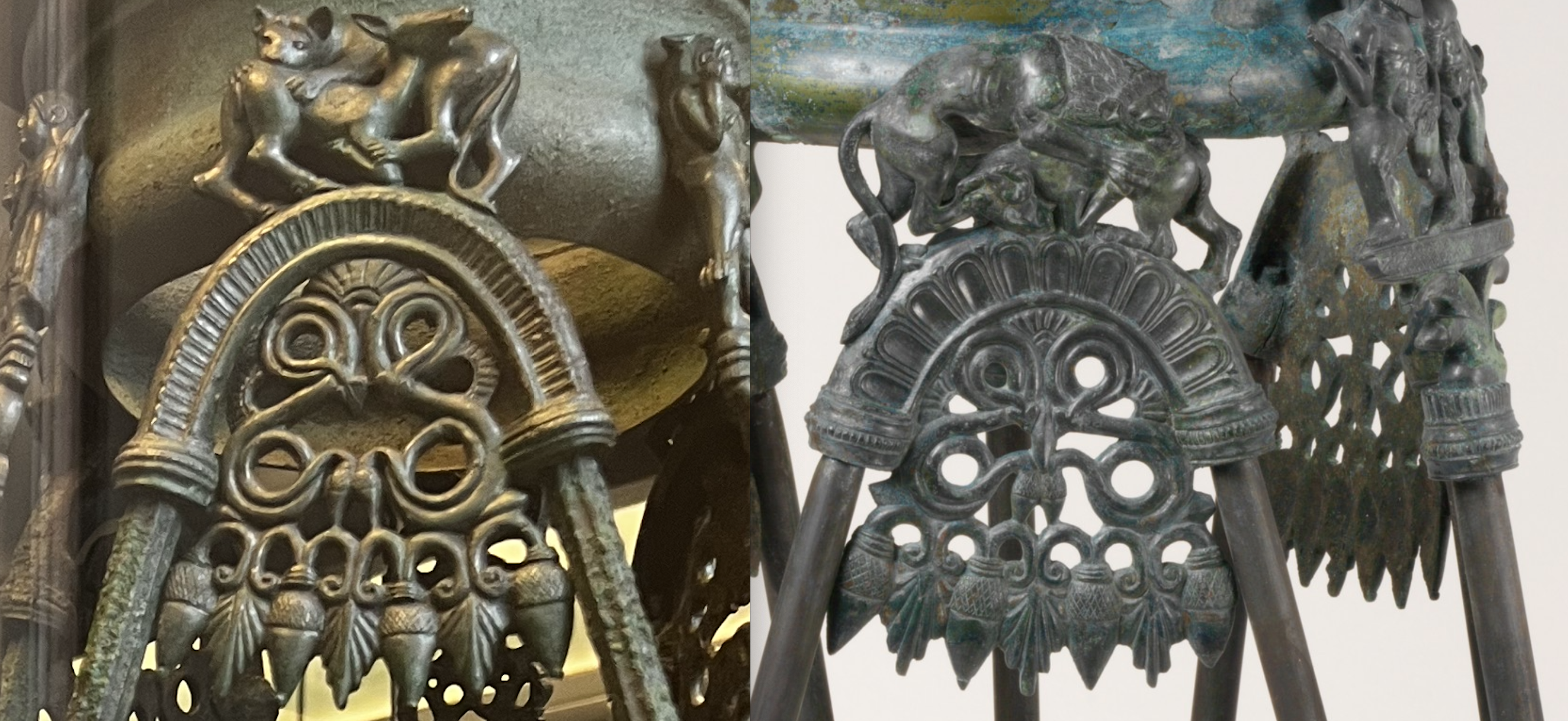
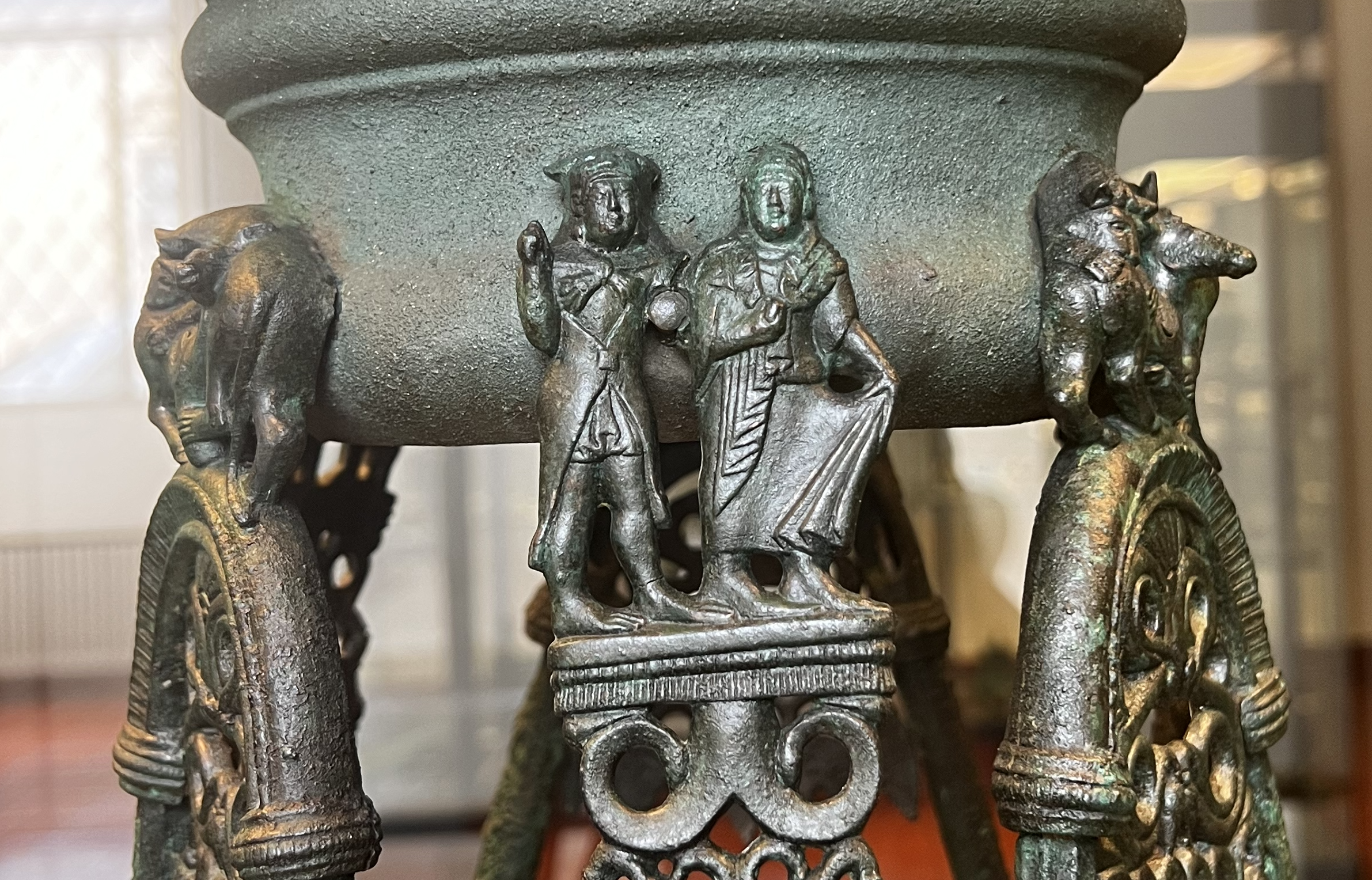
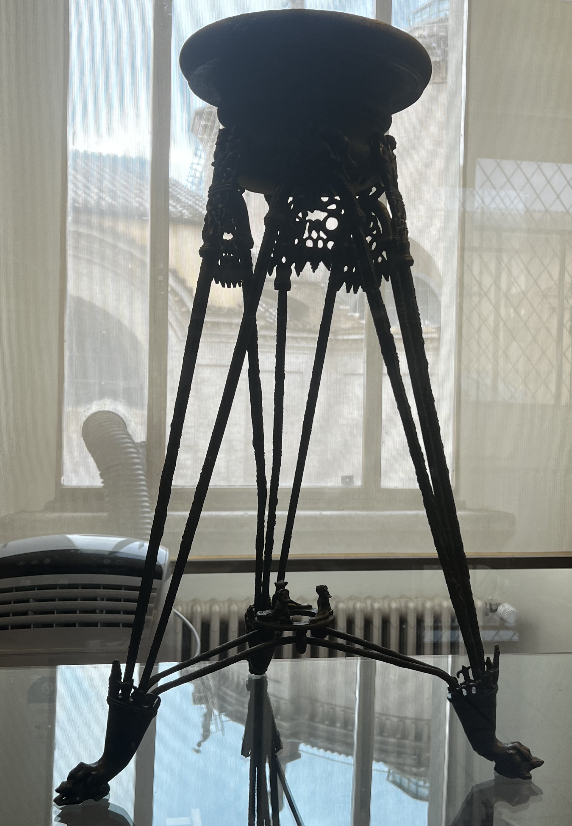
Vulci Tripods

The left hand detail is my own photograph from the Vatican, the right hand detail is from MET 60.11.11.

When I saw the basic form of Vatican specimen, it felt very familiar, but I thought I remembered posting about it with one in the MET and another in the Getty, but I think the latter must be false memory as it does not show up on their website. Perhaps I was remember an illustration of the Vatican one from some earlier MET publication… The MET acquired theirs in 1960, I wonder when and how it left Italy. They don’t have any provenance info on the website. Setting the two side by side makes me think intensely of how restoration effects our impression of objects. How different is the impression made by this old MET photo of theirs pre restoration

My favor part of the Vatican one is Hercle (Greek: Herakles) and his patron goddess, Menrva (Greek: Athena).

The details of the banqueters on the bottom ring and the paw feet are pretty good too but my photo is terrible. I like the animal feet because they remind me of the paws on RRC 10/1 (earlier post).


Update 5-3-23:

A fun illustration from Daremberg and Saglio

Update 1-22-24:

Said to be found in 1831 in Vulci, now in BnF

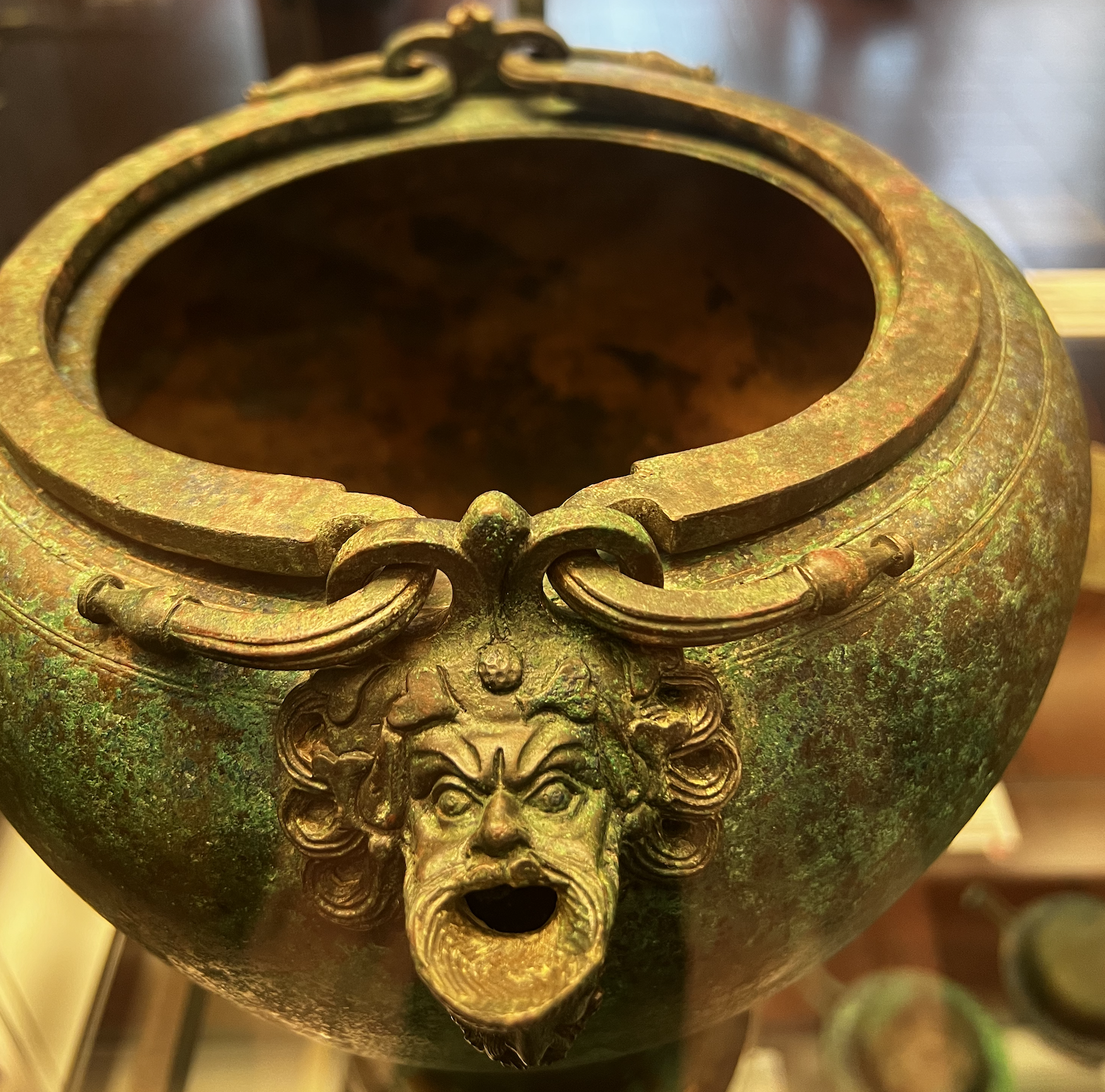
Not Ancient Elvis Hair

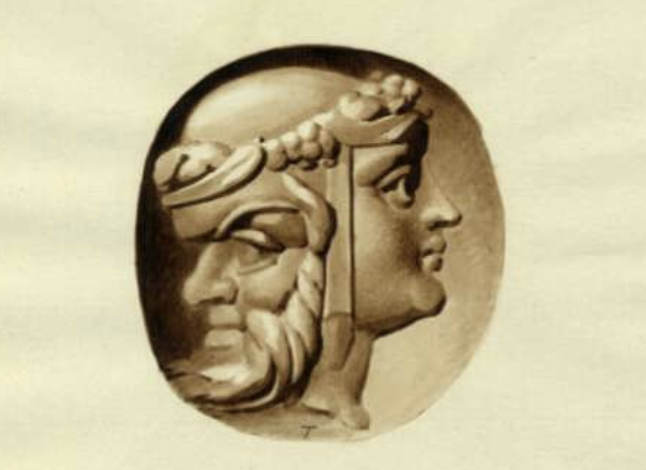
Another Etruscan bronze from the Vatican, but I’m posting this one because of how it parallels faces joined together on ancient intaglios. This next image is the same vessel seen from the top. The beard of the mask is the back of that bouffant hair style.

Here some pretty drawings of intagios of the type I mean. I feel there must be a name for this type of image, but I don’t know it.

BM 2010,5006.1355 drawing of BM 1814,0704.2486
BM 2010,5006.1359 drawing of BM 1814,0704.2450
BM 2010,5006.1353 drawing of BM 1814,0704.2727

I became interested in this style of intaglio nine years ago because of coin types of Signia. Earlier Blog Post with ever more image.

Ringlets to Evoke Africa

My brain is very full, my feet tired, and my data storage on my phone threatening to burst. Sometimes one must stop and think and try to integrate everything. So here I am with a negroni just a bit up the via Flaminia at a cafe devoid of other tourists, looking through my snapshots and trying to think about why each thing caught my eye and how not to forget those I care to remember. I started a photo round-up post but that took took long. Instead I think I will give each idea its own post as it seems appropriate.

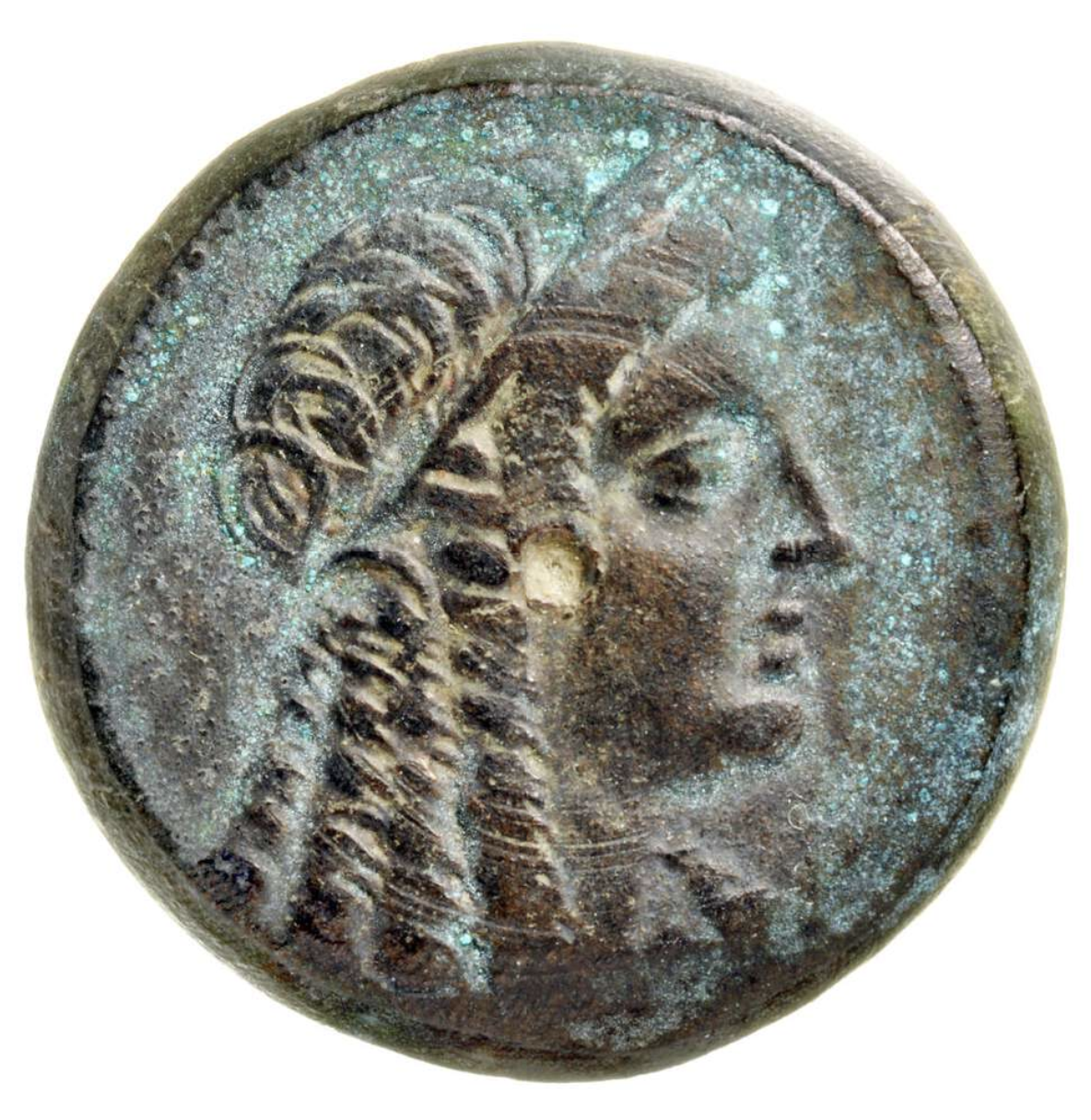
Yesterday Julian Oliver and Thomas Faucher gave a fantastic discussion on the likely recalling of bronze coins, their melting down and re-issuing in Ptolemaic Egypt. One such in the mid 150s and and other in the 50s BCE. On their slides were two lovely coins of series 6 and 7 which had a female head with distinctive ringlets, Isis is the typical identification but I’m not sure we can say for sure. I often say such ringlets evoke Africa for the Romans and while I can point to Roman examples. I like this iconography for how it shows pre existing Ptolemaic usage of the imagery.

Notice particularly how one can the central drill mark and radiating concentric circles on the flan. (BM specimen)
Image from Wildwinds; RRC 419/2
RRC 39/1

Ptolemy X Alexander’s Will

I’m reading:

Badian, E. “THE TESTAMENT OF PTOLEMY ALEXANDER.” Rheinisches Museum Für Philologie 110, no. 2 (1967): 178–92. http://www.jstor.org/stable/41244326.

For context see under 86 BCE in previous post.

He’s focused on testimony in Cic. Agr. 2.41. Here’s the Loeb from 1930 so you can follow along, but I’m reading Manuwald’s text translation and commentary from OUP 2018.

Manuwald brings in a note from Schol. Bob. on Cic. Reg. Alex. to support her interpretation:

on the previous page she notes “An absolute date for the embassy is not given”

Badian re hashes the idea that the King Alexander might be Alex II Pt XI before dismissing ID, but Manuwald doesn’t even both with mentioning alternative confidently IDing king as Pt X Alex 1 (d. 88) strangely without citing Badian. (sorting out the Ptolemies is famously confusing, earlier post)

Here’s the crux of Badian’s reconstruction (p. 189):

He thinks that Lucullus came to late to Tyre (p. 189):

So Badian doesn’t trust the Scholiast quoted by Manuwald, but is willing to believe the Cinnan regime got the money and then relieved itself of 3/4s the repayment. I’m generally inclined to think that Badian is over optimistic in his reconstruction, unless we can come up with better proof that Eastern silver flowed into Rome BEFORE the return of Sulla.

Badian ends with this observation (p. 192)

What would be proof of such an influx? Maybe a different trace element profile?

Dating RR coins! New Article Alert

This is super important work by Kris Lockyear published in 2022. I can’t read today as I fly to Rome tomorrow and I’ve got other stuff that MUST be done, but I’m really really keen to dive in. (Link to full article) How was this type of dating done in the pre computer age? I have a v old blog post on this topic. While this article is about methodology, there are very practical applications as shown by:
Lockyear, K. 2018. Mind the Gap! Roman Republican Coin Hoards from Italy and Iberia at the End of the Second Century BC. Numismatic Chronicle, 178: 123–164.
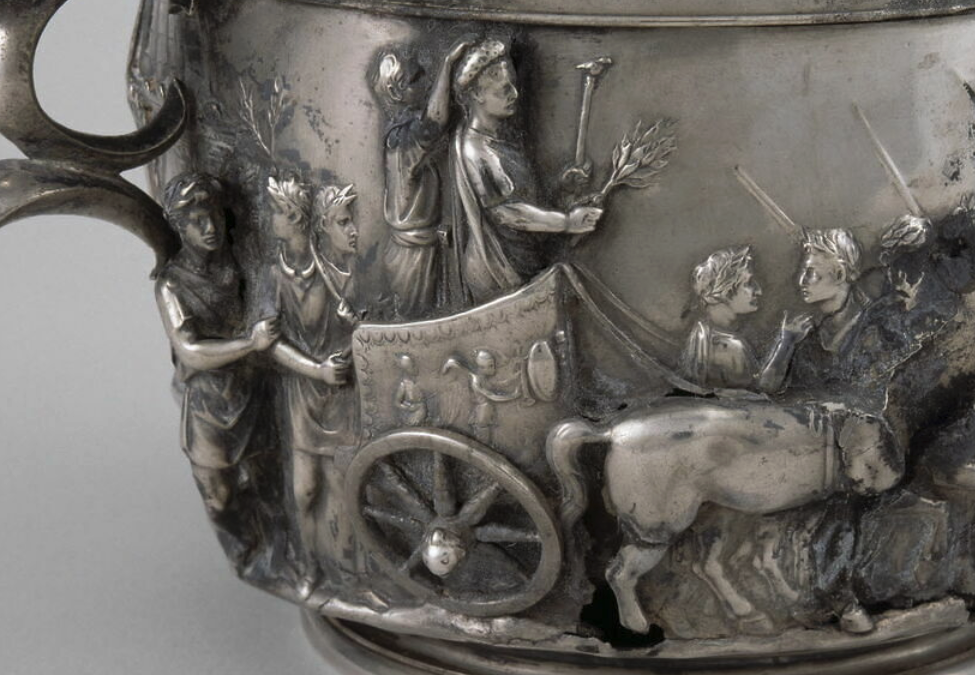
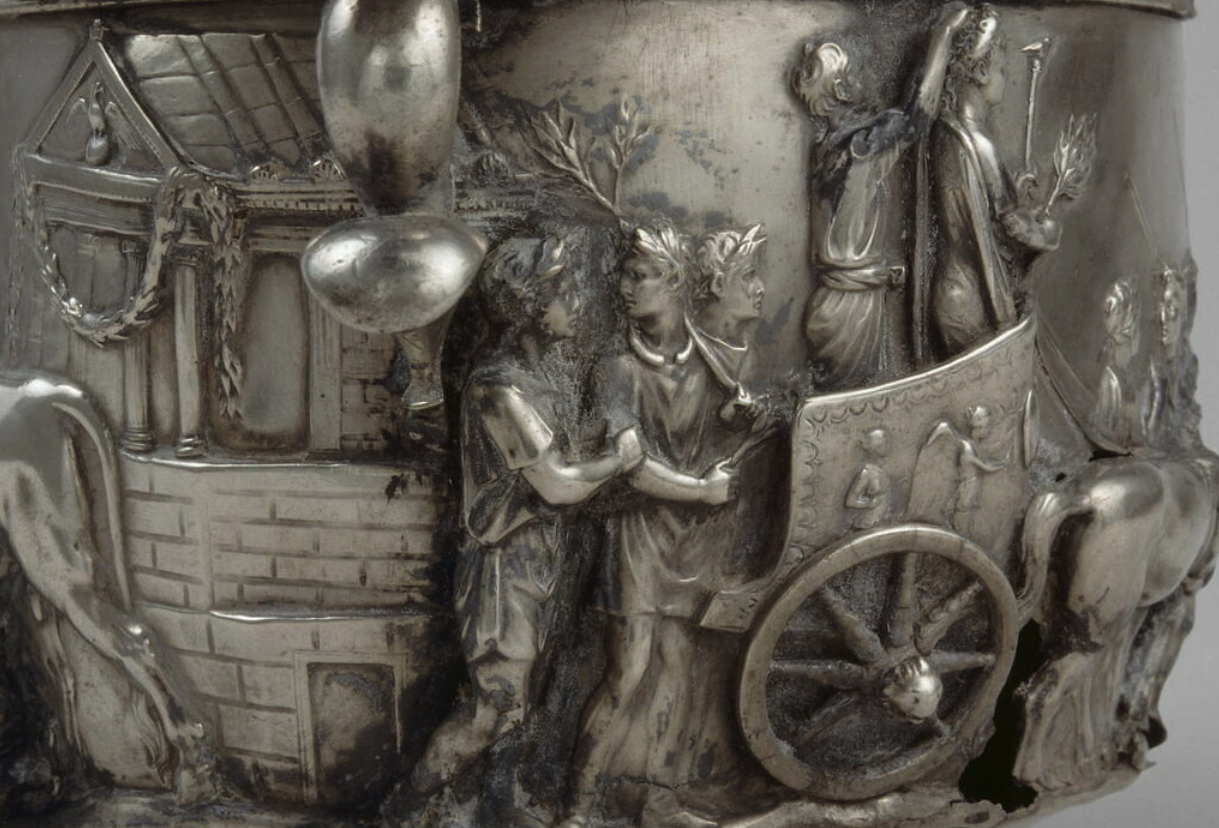
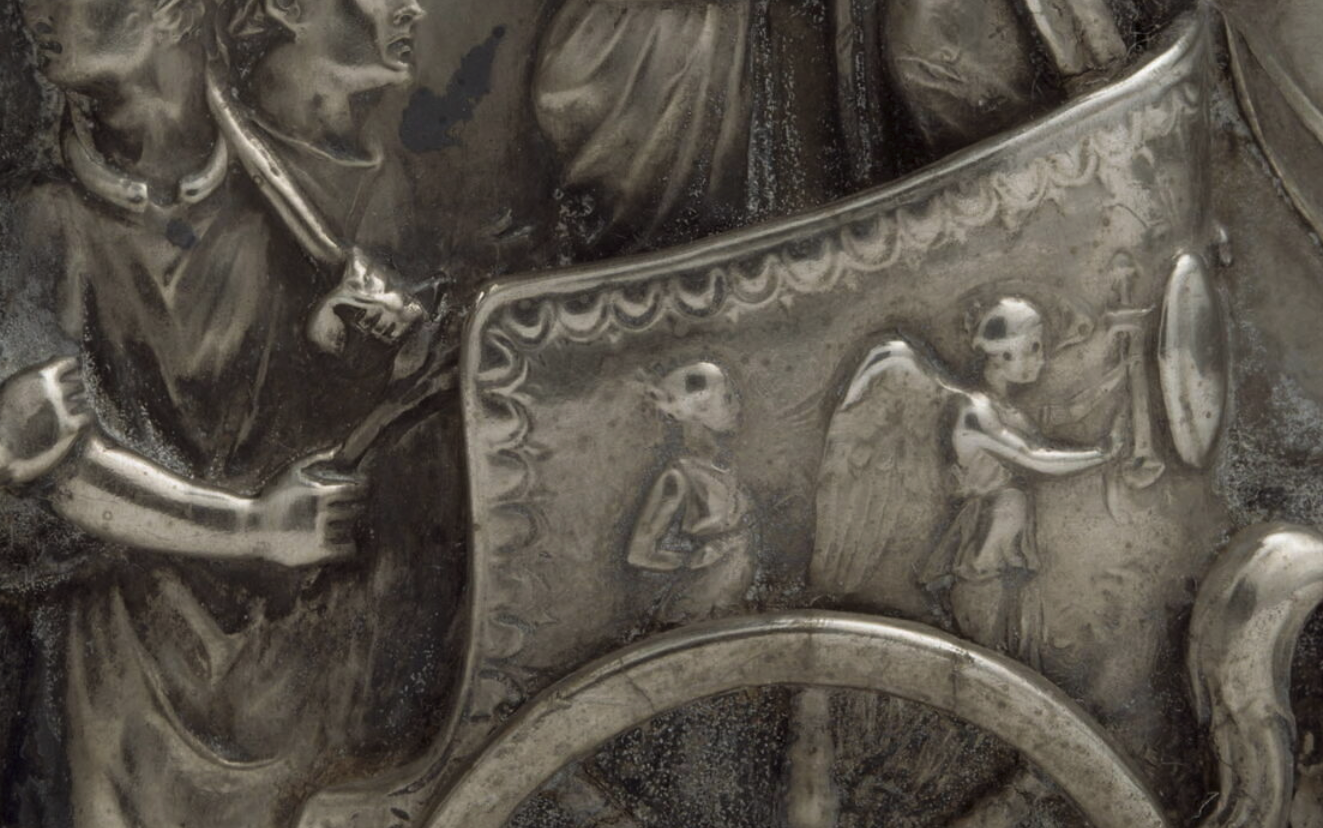
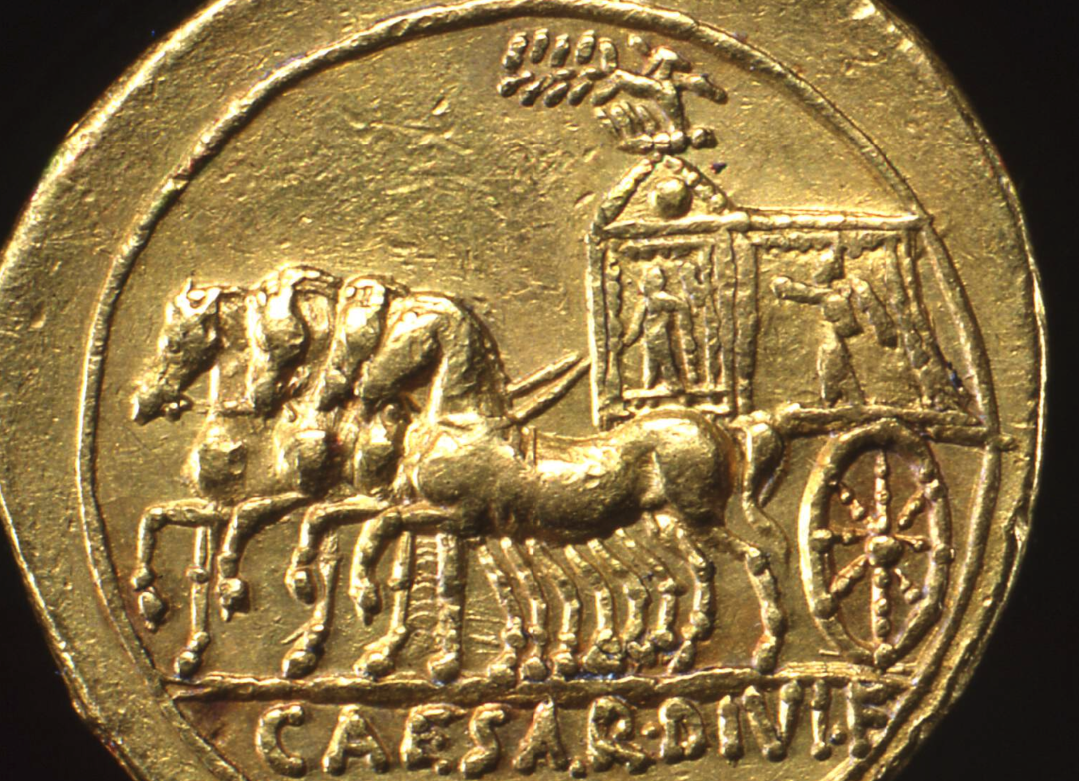
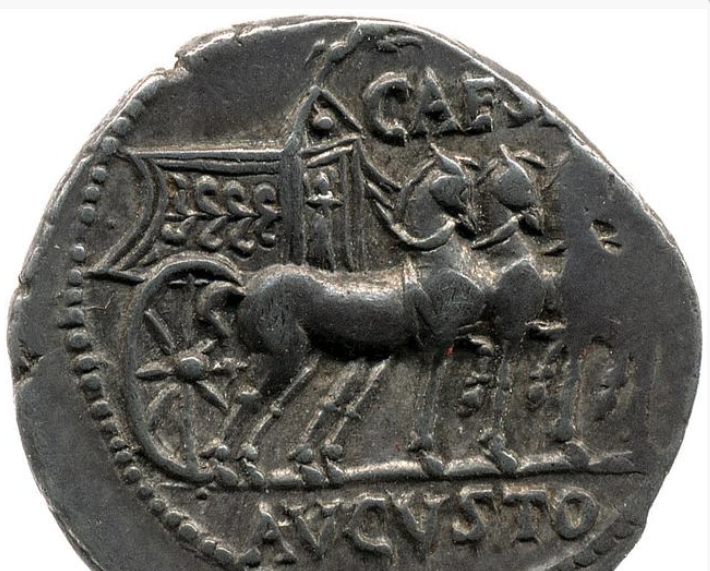
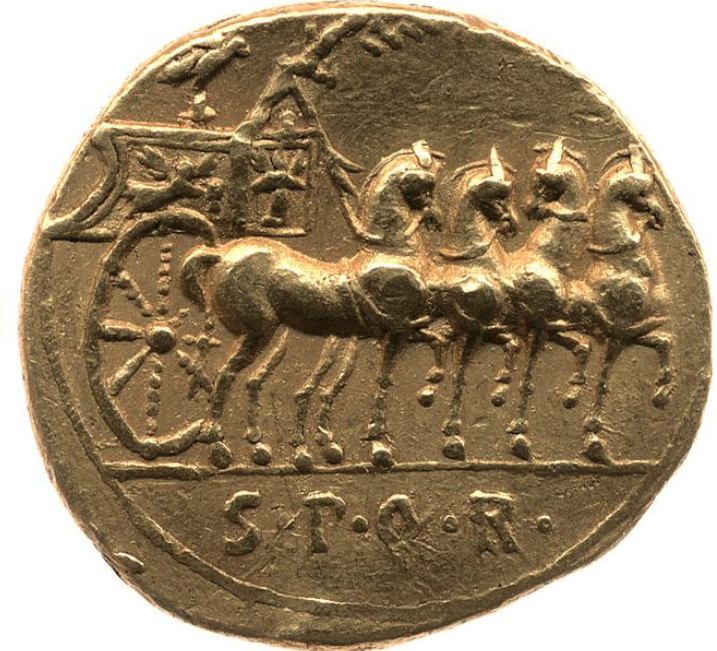
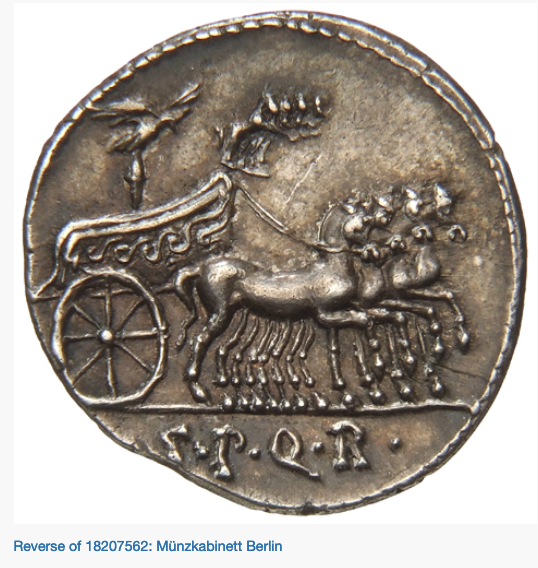
99 of 234: Triumphal Chariot Car Imagery

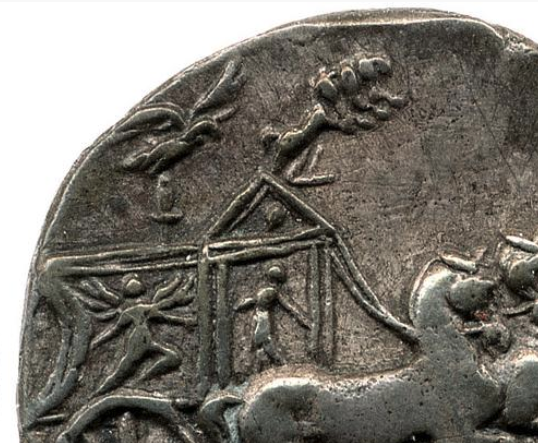
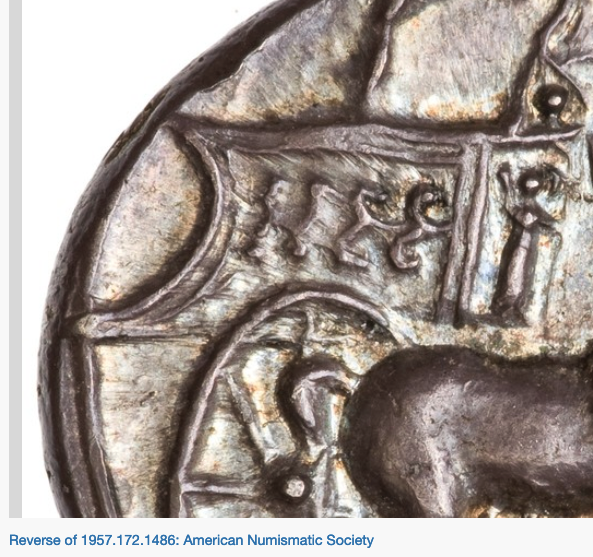
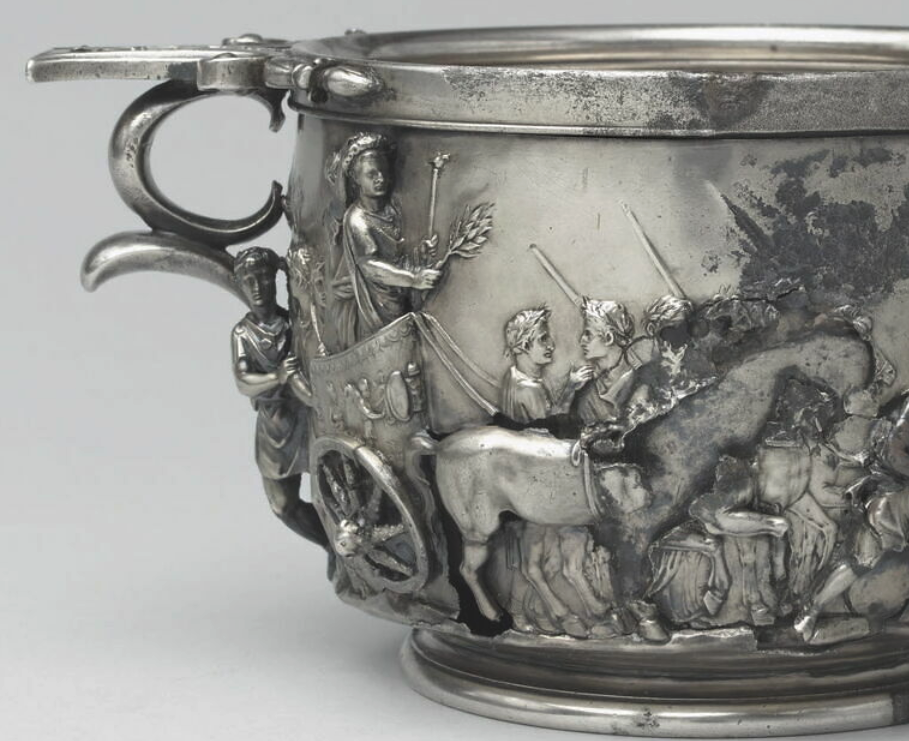
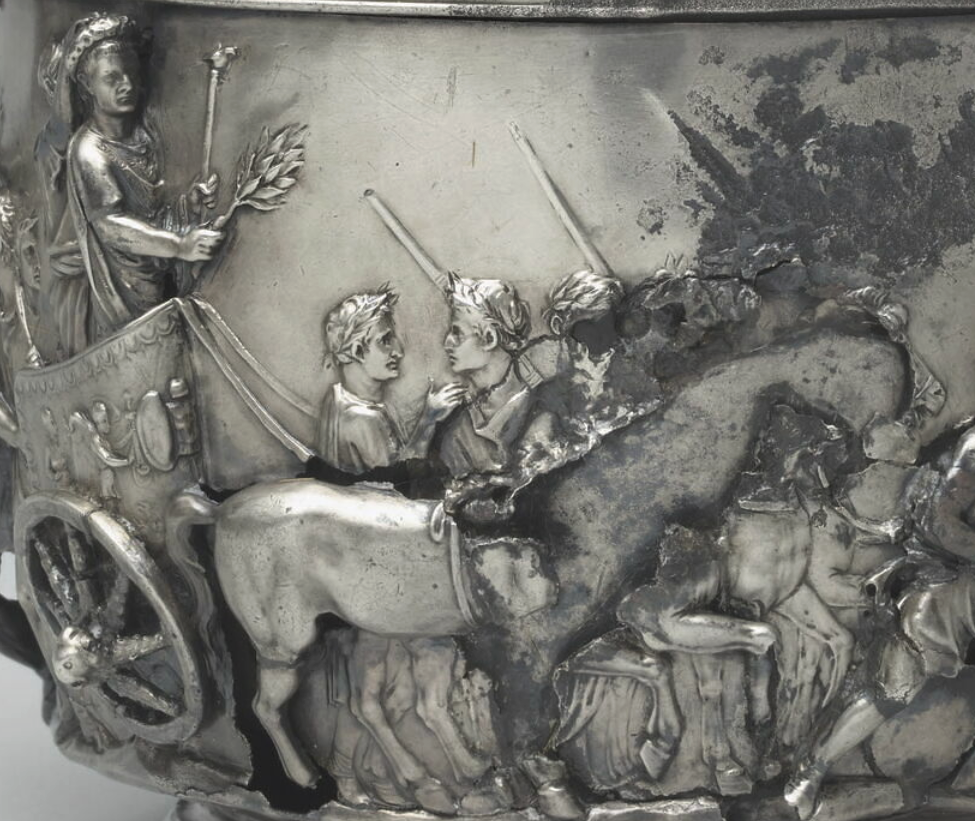
I’m thinking of the Dossenus denarii (RRC 348) and wanted some visual comparisons. This round up is incomplete. I’ll drop in other examples as I come across them.

Trésor de Boscoreale : skyphos (Louvre)

Vespasianic Bronzes:

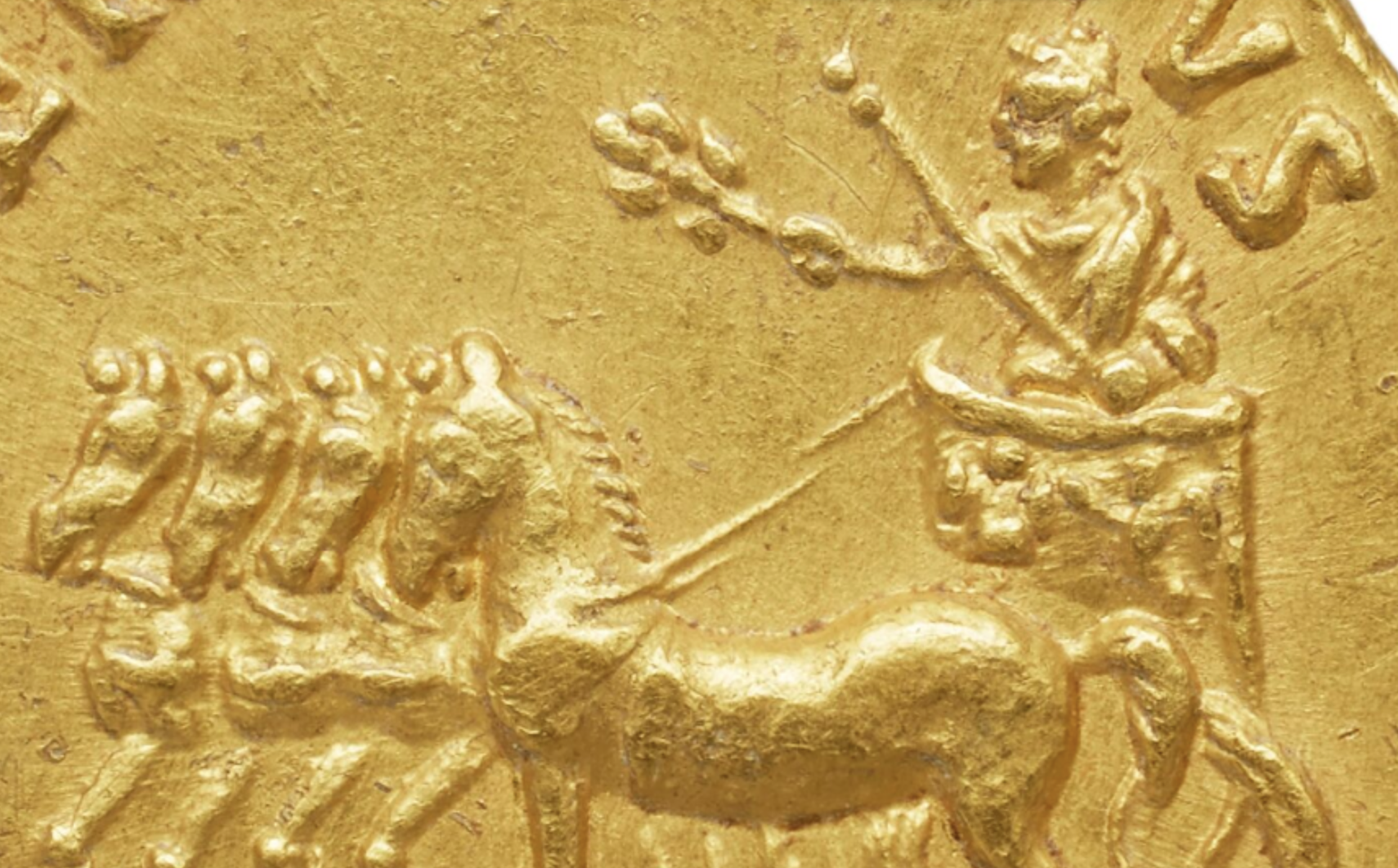
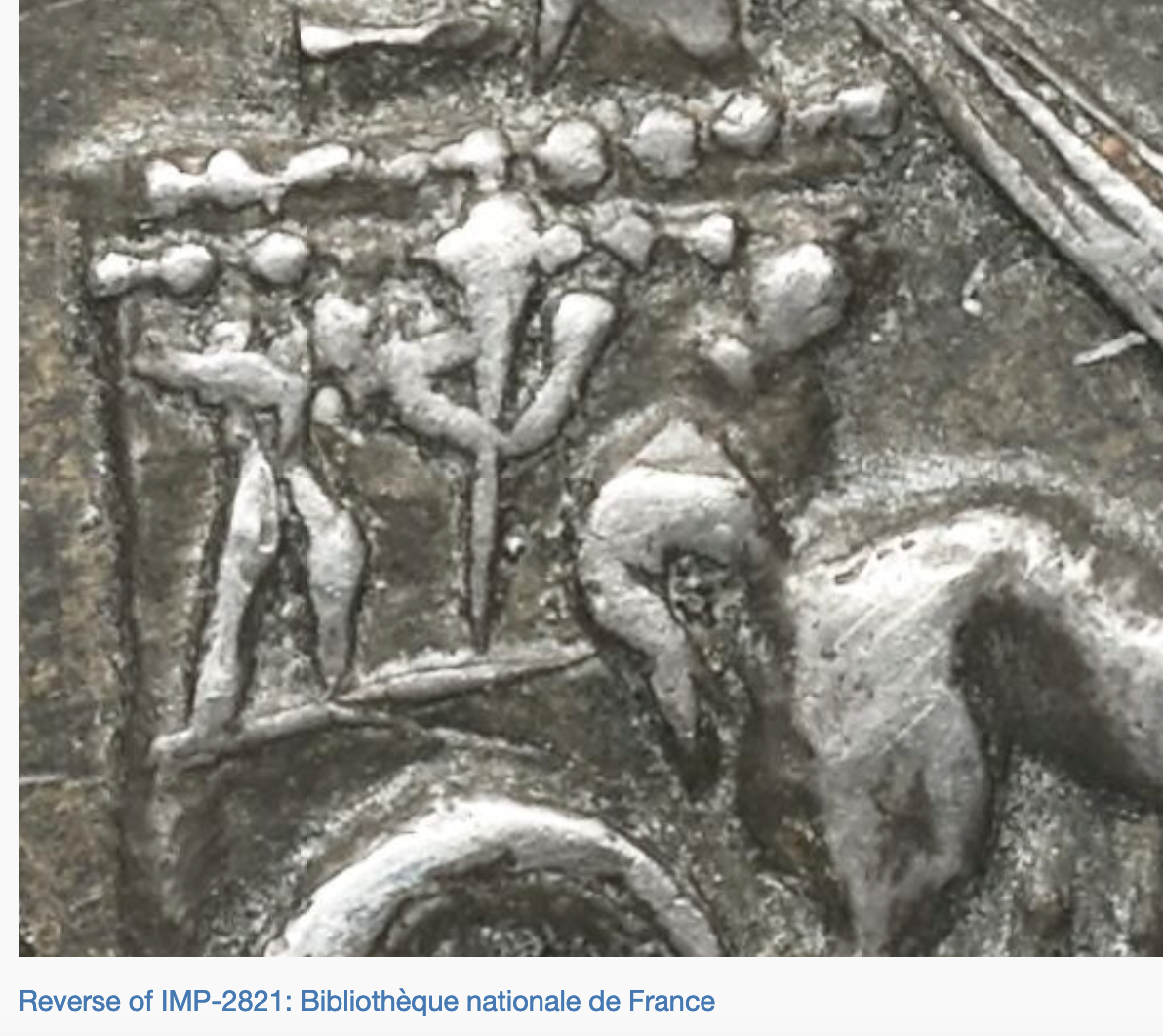
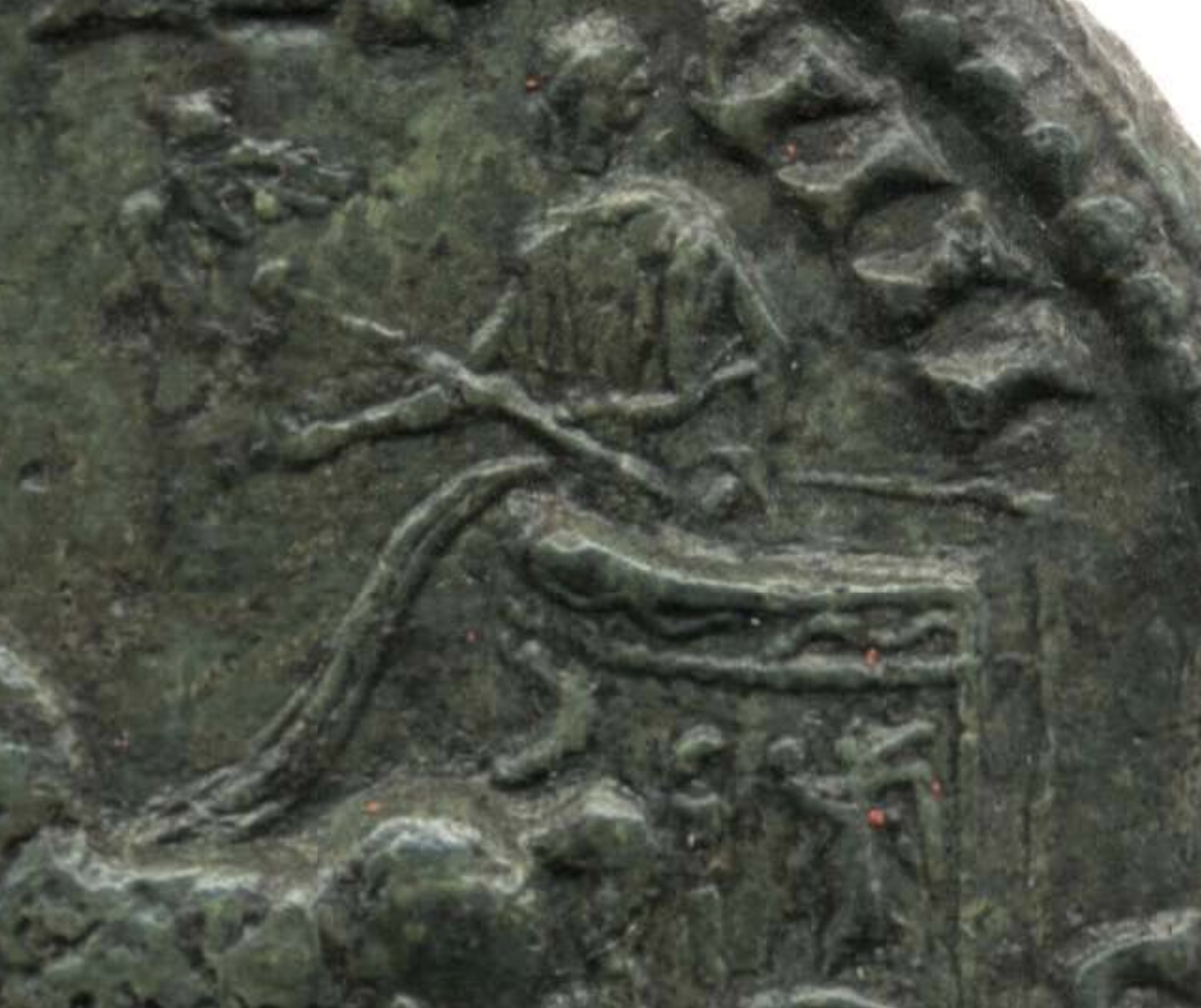
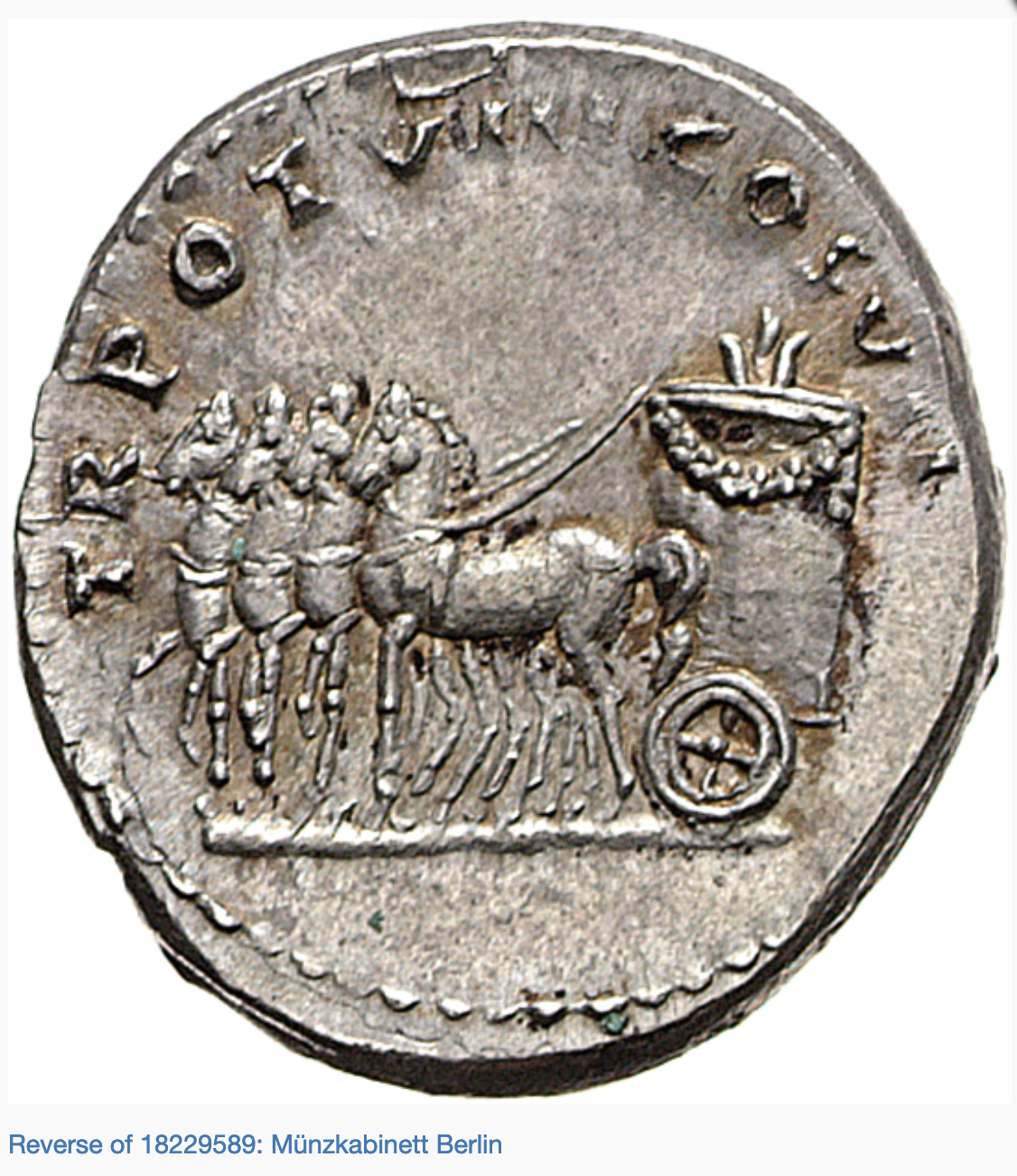
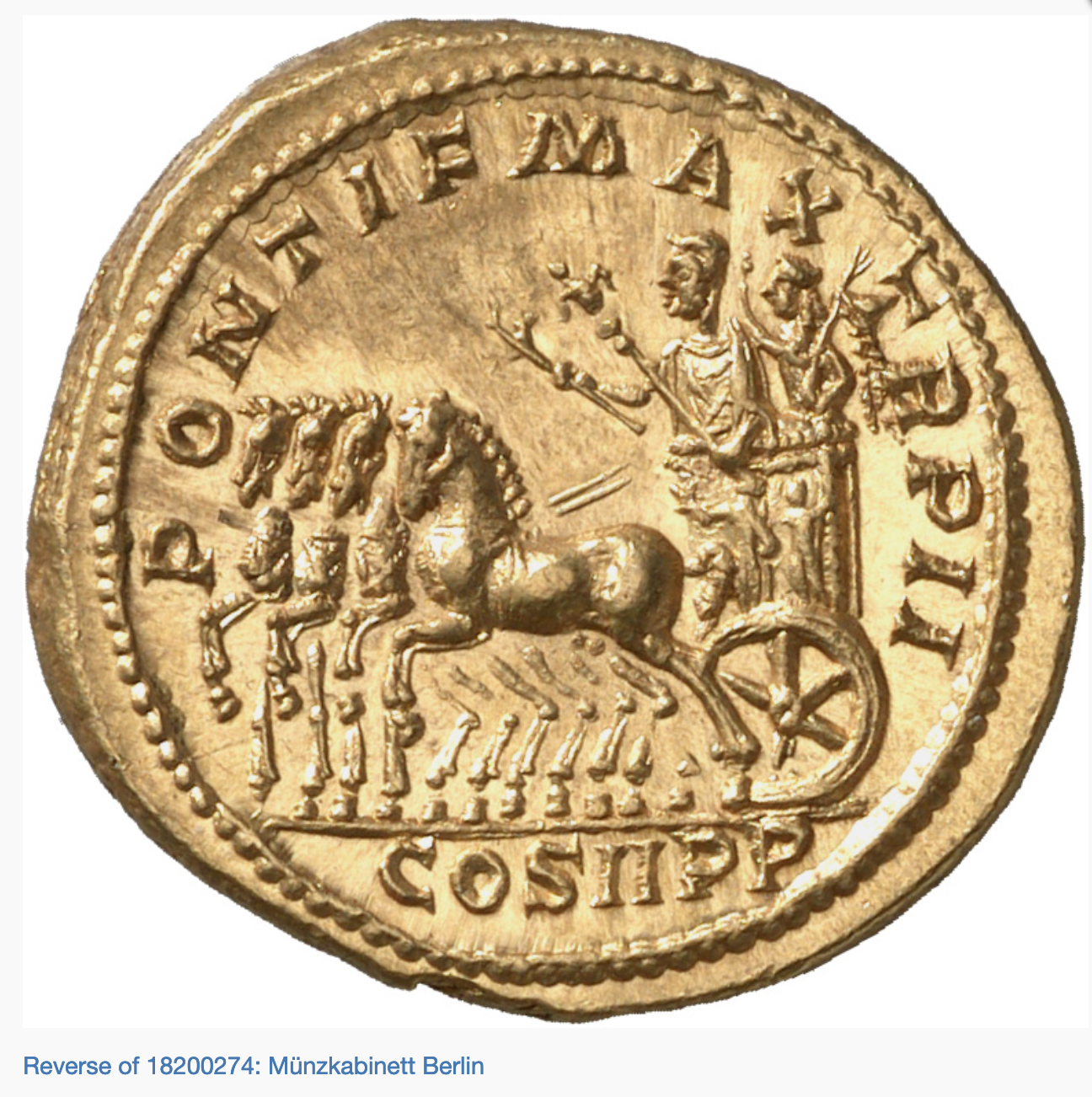
Domitianic Gold. All have victory crowning trophy on triumphal car but none v clear. This is the same as the rare Trajanic aureus and denarius with similar imagery.

detail of a Paris specimen
Clearest of the v indistinct Trajanic specimens in OCRE
A rare as of Commodus (BM)

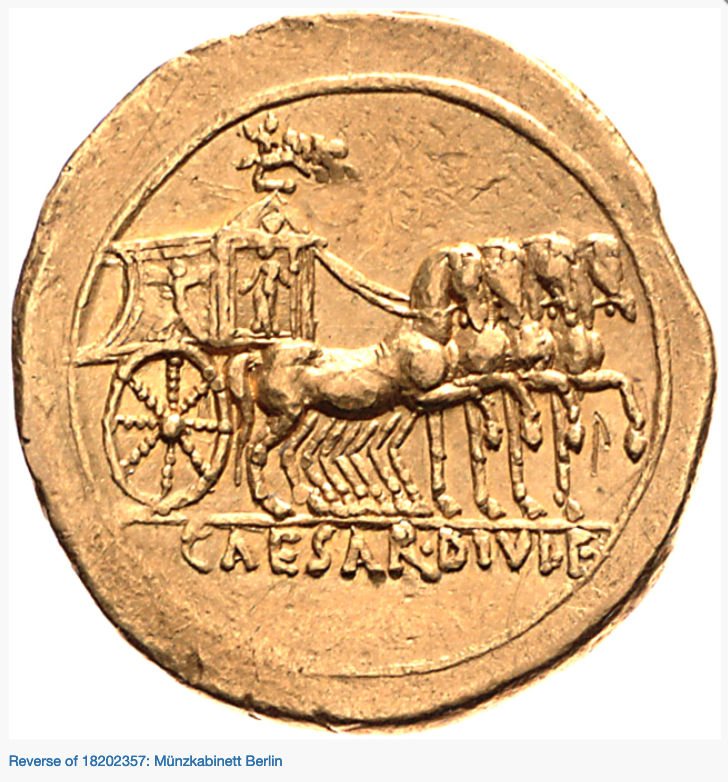
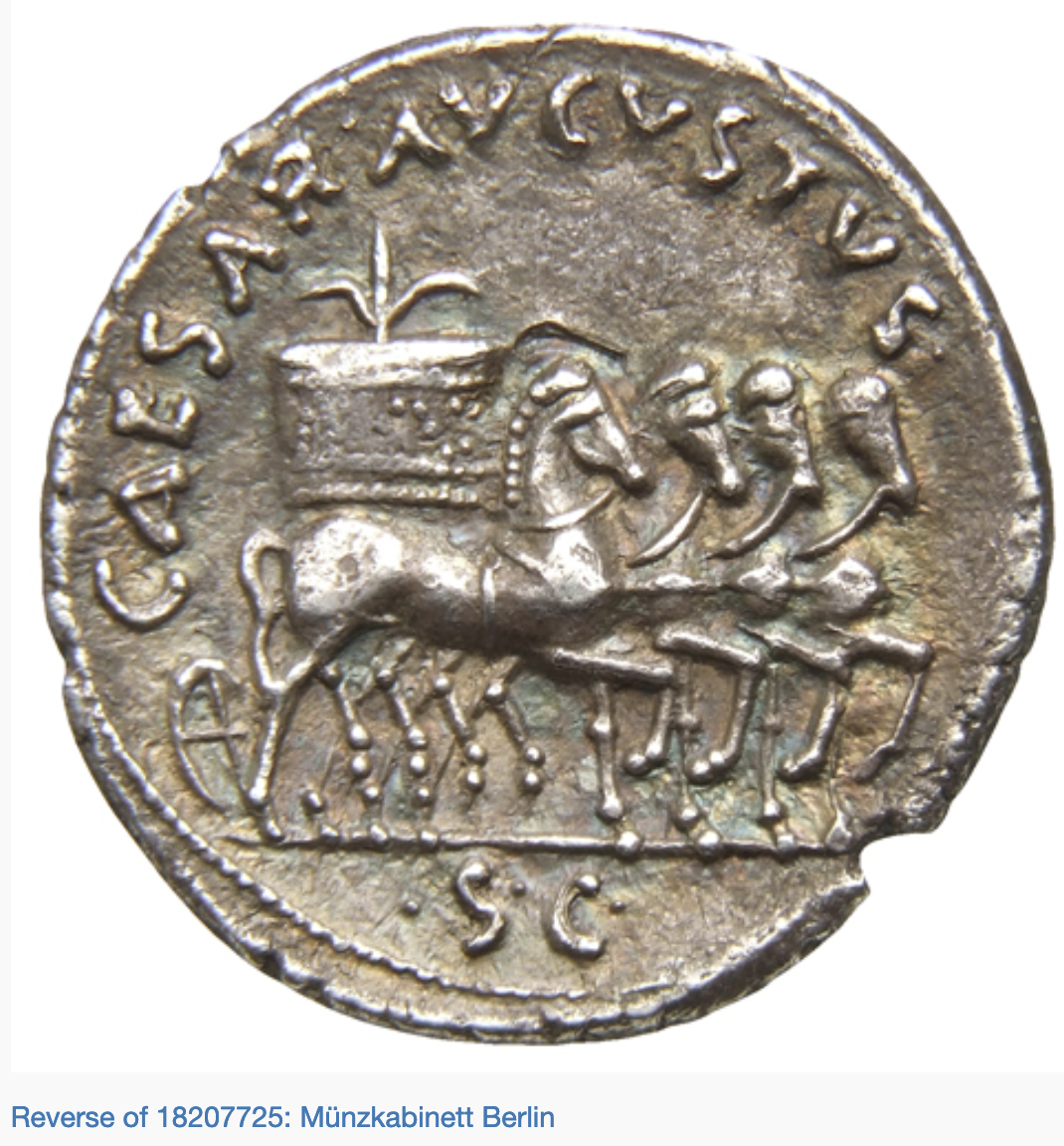
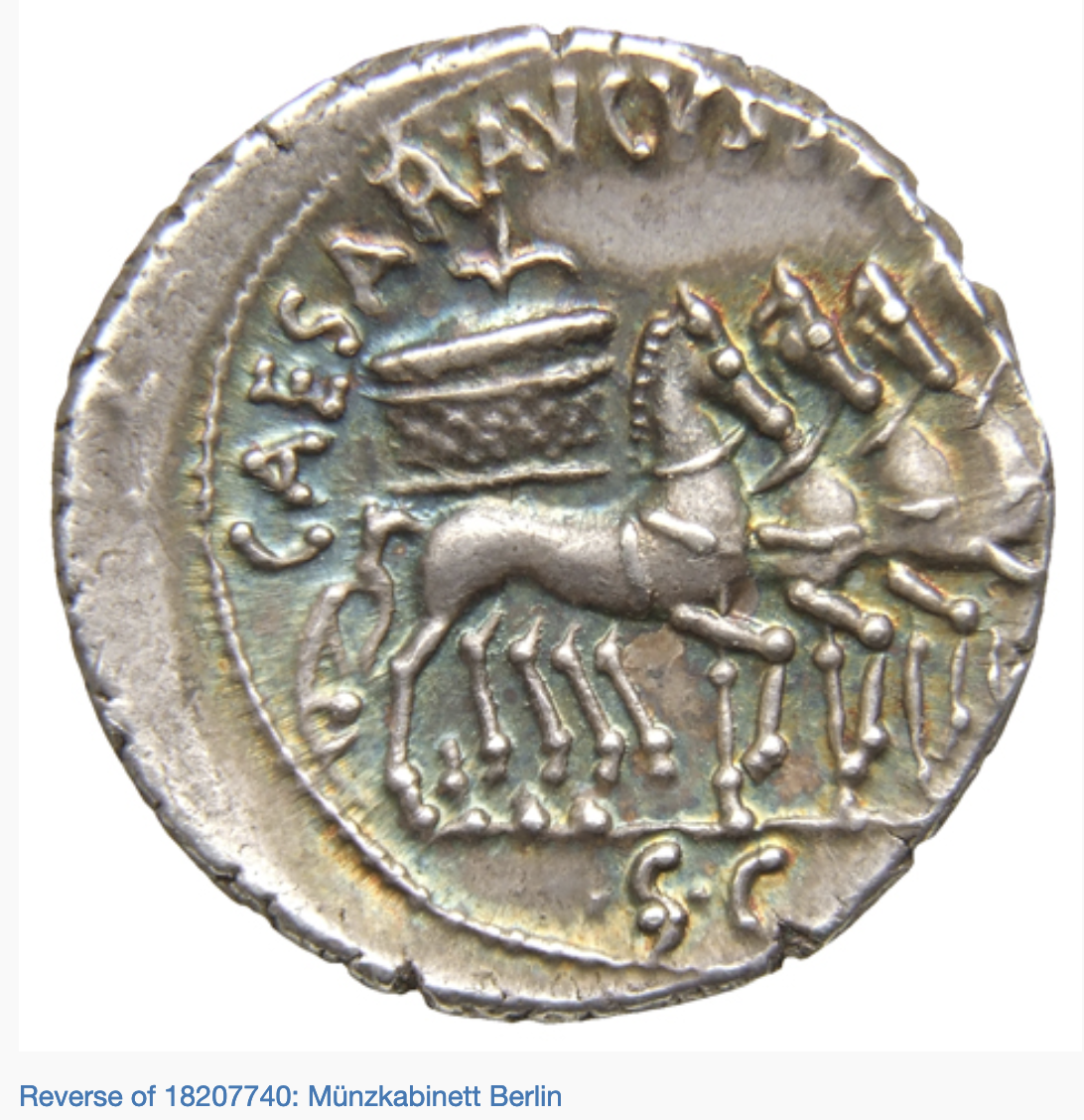
Augustus’ “slow quadrigas” There are a variety of car designs here that are not searchable in OCRE. Victory/Standing Figure with Scepter; Victory/Victory; Vegetal pattern and figure; just swirls

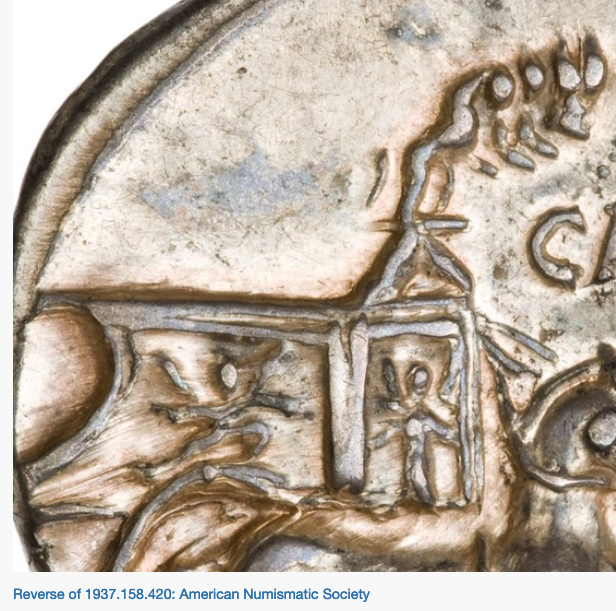
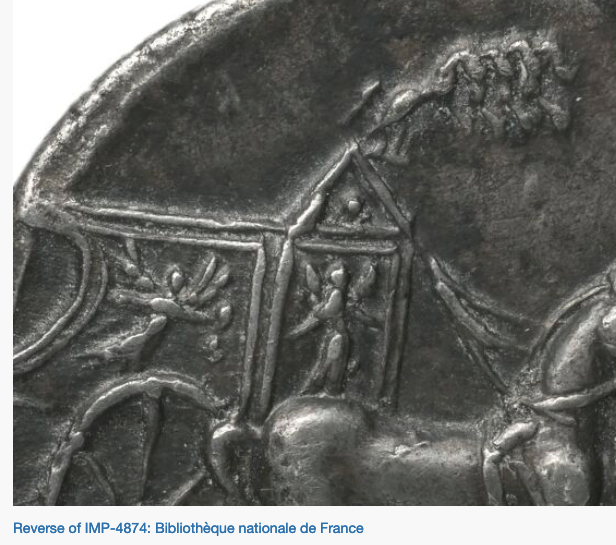
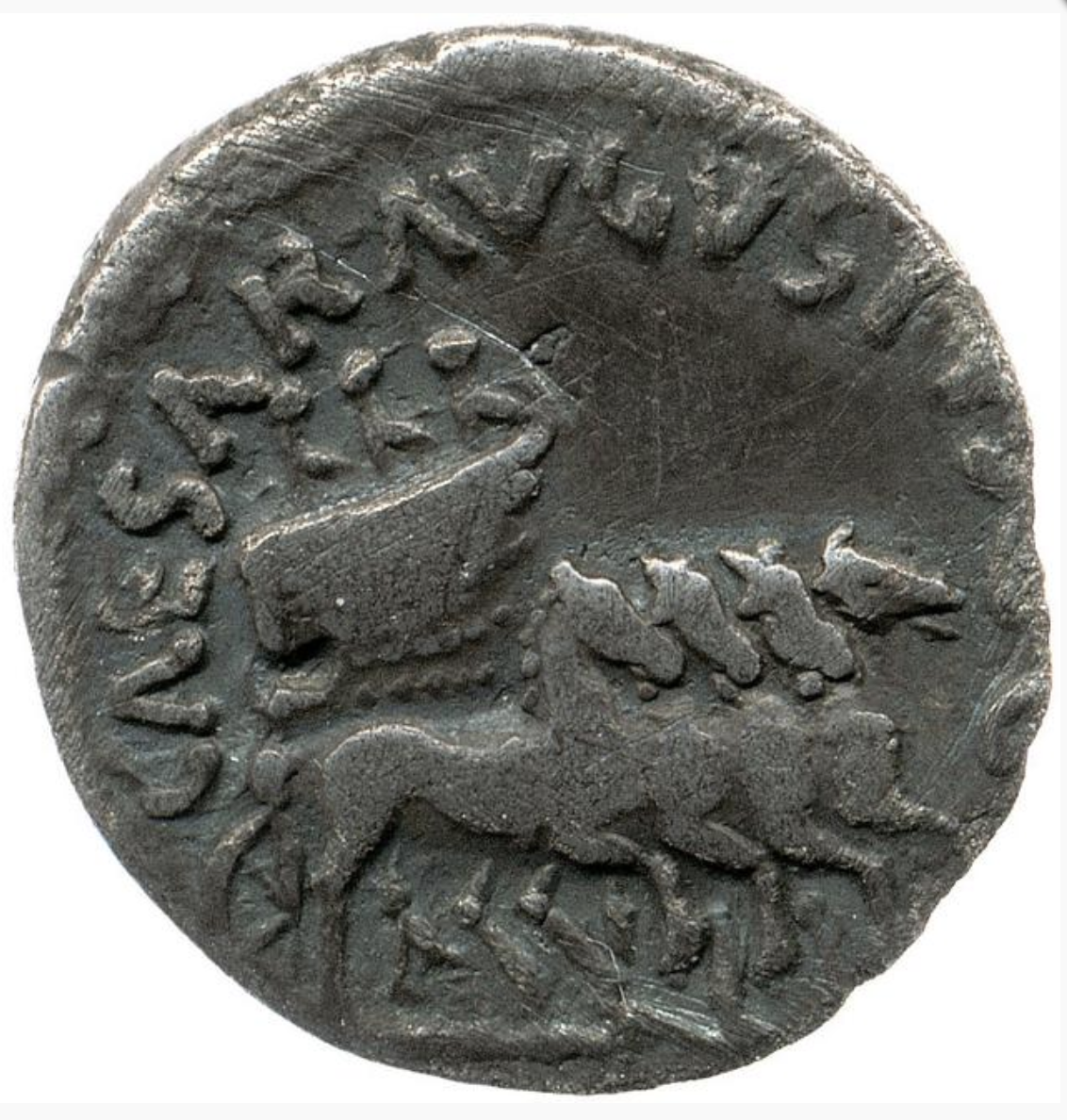
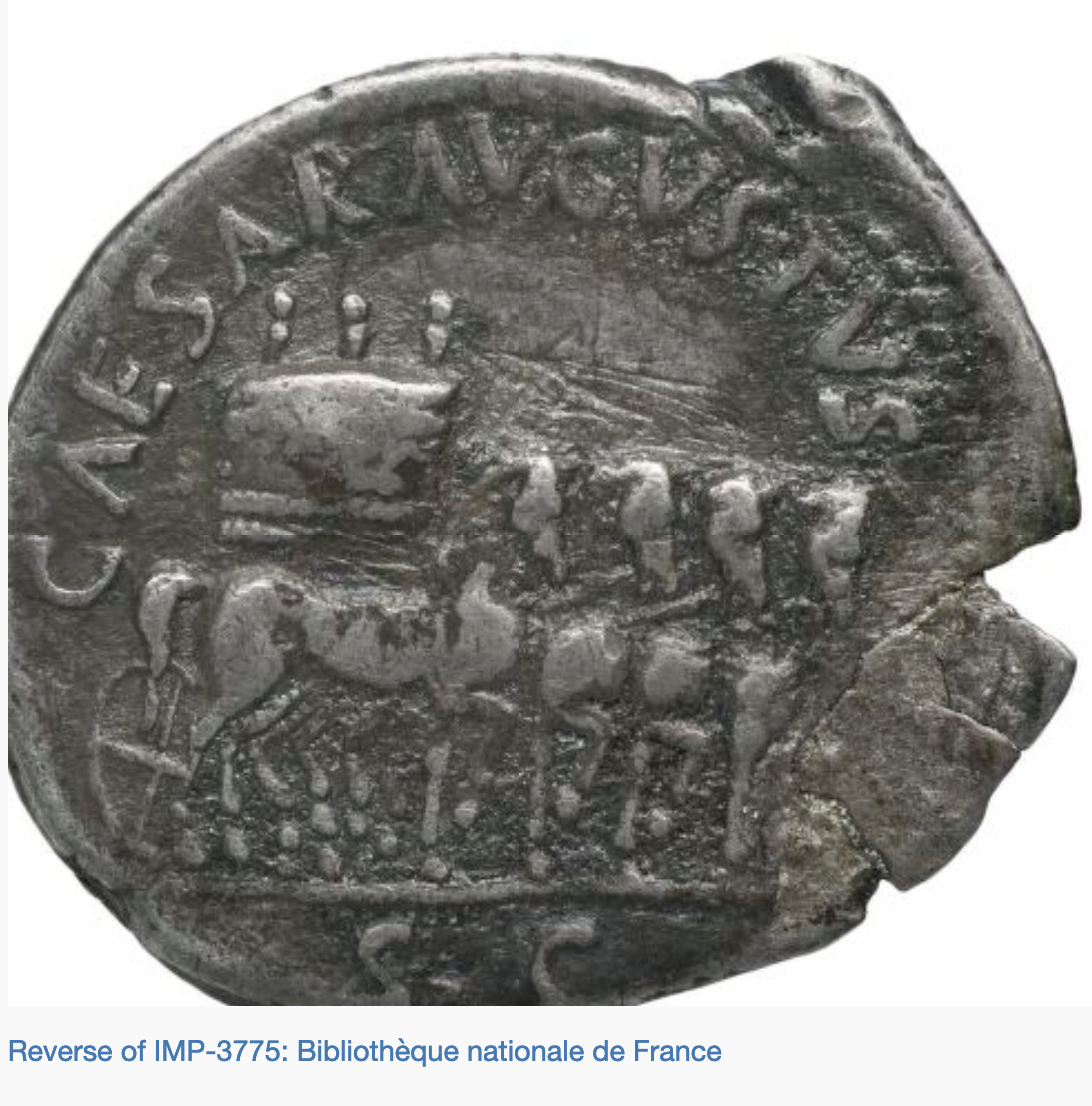
Under Augustus there is also a slow quadriga from the period of the revival of the III-viri. Florus’ uses dies with three distinct car contents but RIC did not differentiate these.

Fulmen(?) type:

Three rider(?) type:

A variant of the three rider(?) type, maybe we could call it the peg type for now:

Durmius only has the fulmen type on OCRE Specimens, but i wouldn’t be surprised if there was die sharing and we could find rider/peg reverses in trade. A rabbit hole for another day.

The most elaborate of the slow quadrigas is that on the coinage of Nero honoring the divine Claudius. A type revived by Titus to honor Vespasian.

Under Vespasian the fulmen type reappears again identified in RIC as a basket car with three corn ears. Doesn’t look like like grain to me but maybe?!

From the Antonines onwards RIC uses Slow Quadriga to identify many scenes that are clearly triumphal. A small selection follows.

Macrinus:

Elagabalus:


Self accountability section

I need to change my many many relevant blog posts into some slides and notes for next week, but at least I know basically what I think at this point. I’d love to do more with the hoards but maybe that just has to wait. UK logistics 95% sorted. Just waiting to hear from a friend about dates and then I’ll book my flights. Need to book a hotel for a few nights in Rome, cannot believe I left that this late. I fly out tomorrow. Loving my RRDP team. Zooms with my colleagues are really very useful to for structuring my work. Must go join one now!