It’s so rough and so full of typos, but I must let it go as I’ve got students who I can ignore not a minute longer. Feel free to tell me how wrong I am and what I’ve not read but obviously should have.
Author: Liv Yarrow
Long Family Memories?
When was the last semuncia struck before the 100s? RRC 160/5.
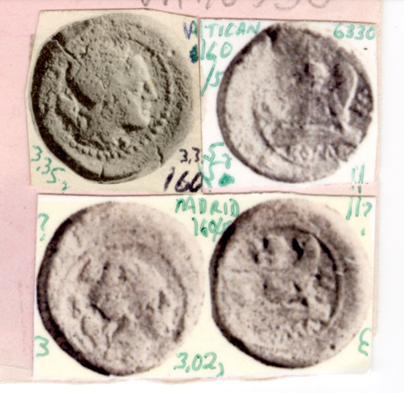
Wow that looks a great deal like the obverse of the Tubulus right down to the backwards sigma behind Diana’s head.
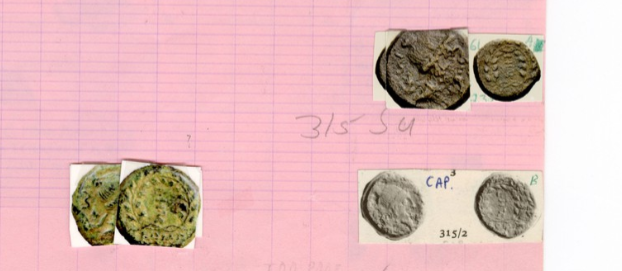
Curious I wonder if Crawford’s date of the dolphin series is update….
Why yes McCabe has done some serious work on it. He has but I was so thrilled that I missed that there were many dolphin series…. McCabe assures me that the Vatican specimen (and thus likely both) is from this Rome series struck 170s.
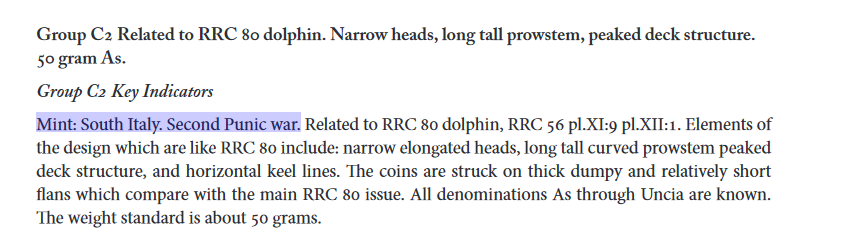
Mmmm. I wonder what if the Tubuli were active in the 2nd Punic War…

Can I prove that the dolphin series was made by C. Hostilius Tubulus Pr. 209 during his S. Italy campaigns? Nope. Do I think its highly likely that his descendant went and found an ancestors’ coin to emulate as he tried to resurrect the fortune of the family? ABSOLUTELY
Ah well it was fun speculation while it lasted.
So can I keep my creativity? Maybe.
If RRC 80 Dolphin was C. Hostilius Tubulus Pr. 209 at Capua …
perhaps RRC 160 Dolphin was struck by a descendant?
Maybe L. Hostilius Tubulus pr. 142 or his father?
Then thus a connection down to RRC 315?
More speculative.
I mean we do have the Mamilii using the same numismatic symbols over even longer spans of history so cannot be completely ridiculous.
RRC 160/5 was clearly known Herennius and Tubulus but how is now a bigger question.
A question of style
I’ll admit the style of the Roma head on this unique uncia of Thorius (RRC 316) has been bothering me. Like what’s up with that bulbous up turned nose and huge eyes?

But this specimen of RRC 315/1 has made me feel better about it. Plausibly by the same hand even if the Thorius specimen still seems more exaggerated and cartoonish.

Happy discovery
I just came across Arthur Wylene’s sensible views on Saturn on the coinage of Caepio Piso (RRC 330/1) as a reclaiming of the god from its association with Saturninus. I’ve not previously bumped into his short notes on Roman republican topics, but will certainly be reading more. If you enjoy this blog you may also enjoy his notes.
Imitations and Originals
292/4 was I believe subject to imitation in antiquity (hence the greater number of specimens).
These three heavy-weight die-linked specimens I believe to be the product of the Roman mint. Notice the small neck and fine features, both common at the Roman mint at this time.

Here’s a selection of light weight crudely carved specimens without known die links:


I thank both Schaefer and McCabe for discussing 339/4 with me and thus getting me thinking about weights and imitations.
Dream Collections
I remember someone telling me about a numismatist who only collected photos to assemble a dream collection of the absolute best coins for illustrating a type. Perhaps you can remind me. If I were to build a dream collection this photo would be a good contender to illustrate RRC 232/1 (138 BCE, date confirmed by Molinari 2016):

A denarius that never was?
I’m writing up my notes-thoughts on RRC 290/6 for the paper on small change for the RBW conference next week. I just wrote this sentence:
The unciae looks like the type was designed to be used on a denarius that was never struck.
As I stare at the two known specimens I wonder if I see traces of the uncia denomination mark having been carved out of what was meant to be an X behind the head. Or maybe its just confirmation bias…


The third known specimen is no use as this portion of the die is off flan.
Die feature?
This specimen of RRC 290/2 now in the Andrew McCabe collection (London) has something funny above the M on the reverse. What’s going on? I don’t see anything like on any of the other known specimens. Although I feel sure I’ve noted before on this blog or twitter the funny A like scrape on the obverse dies of this lovely Paris specimen.

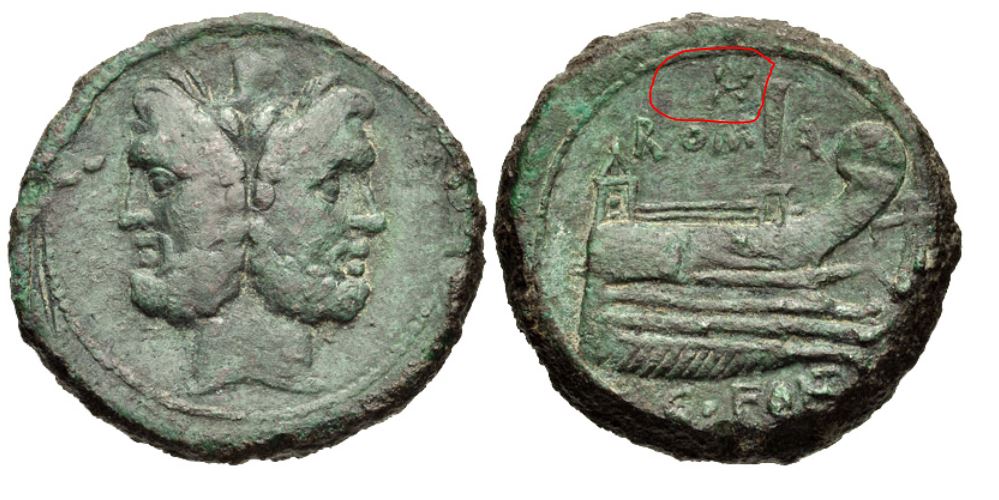
(images from trade)
Comfort Classics: Liv Mariah Yarrow

I’m honored and delighted to have been interviewed for this initiative that helps us all remember why we do what we do.

The world is in a state of upheaval at the moment, and we’re all looking for things to make us feel less anxious. Maybe Classics can help.
Today’s interview is with Liv Mariah Yarrow
Is there a source from the ancient world that you find yourself coming back to when you want to feel better?
I really like browsing images. I can get lost in pretty much any database that will show me objects from the ancient world just looking at the iconography. Coins are my specialty, but for real comfort I want see something I’ve never seen before. It is the little thrill of an image puzzle and connecting the dots in my mind between the new (to me!) object and what I already know or have seen before. I’m always on the hunt for a new database I’ve not yet exhausted, but I keep coming back to the
View original post 963 more words
More Elephants wearing Bells
The curved back means their based on an African elephant at least originally.


