
A senior colleague generously gave me a sneak peak of some weight data for known Oval series specimens pre publication. I wanted to think about it as a dataset so I drew some charts.
The series are whole, half, quadrans, sextans, uncia, semuncia if this is a base-12 series and I think it is based on this data. In the past I’ve wondered if it might be base-10, but I think that is likely wrong.
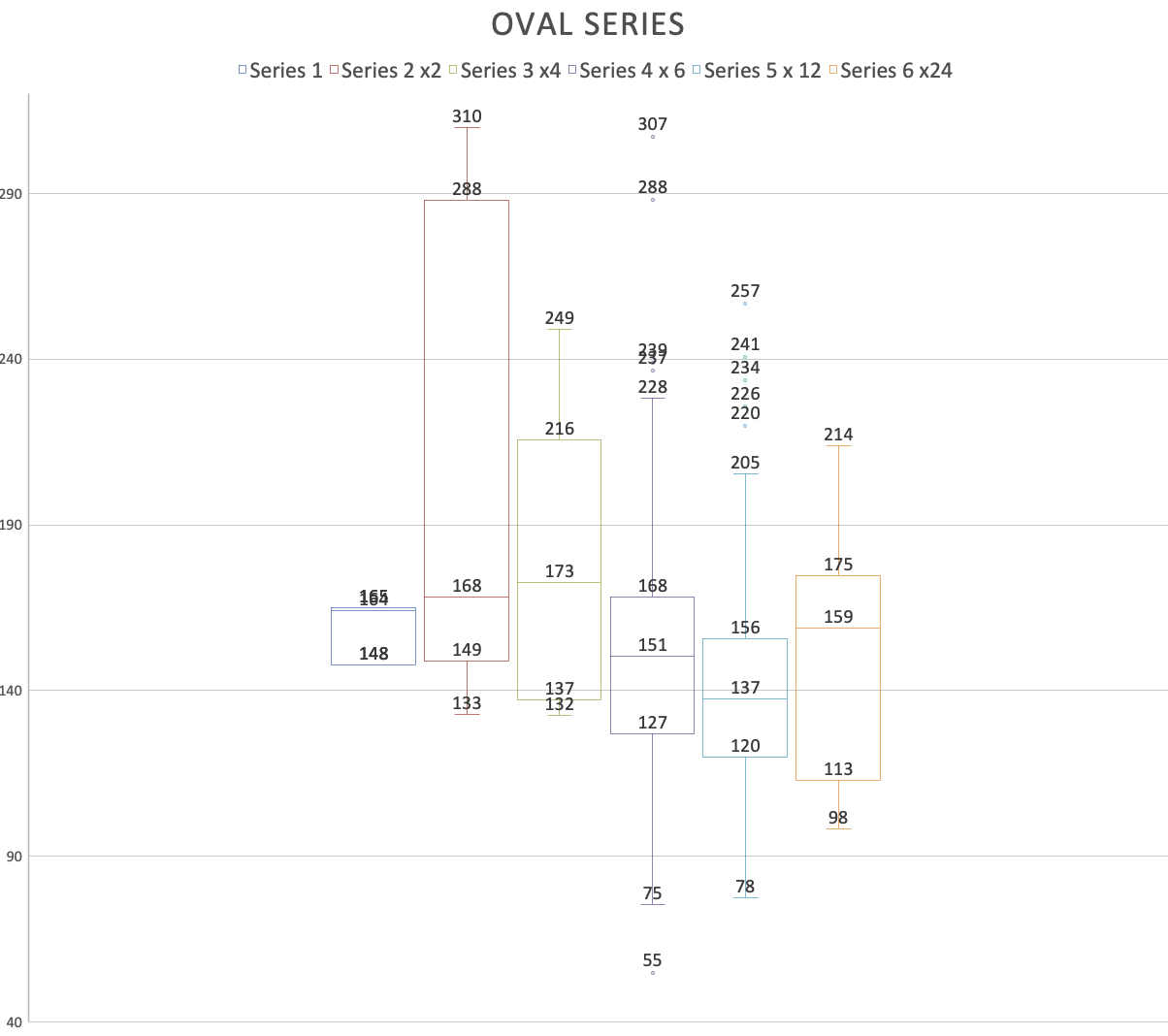
This box and whiskers graph helps us see the median in each group of data and inter quartile range for each denomination overlaps but not well. In the Roman RRC 14 and 18 series smaller denomination are overvalued compared to large one, but here it looks like the semis and the quadrans may be the heavy outliers. The graph is deceptive because we have far less of the whole, half, quadrans and semunica, and we have more than 4 times as many sextantes than unciae.
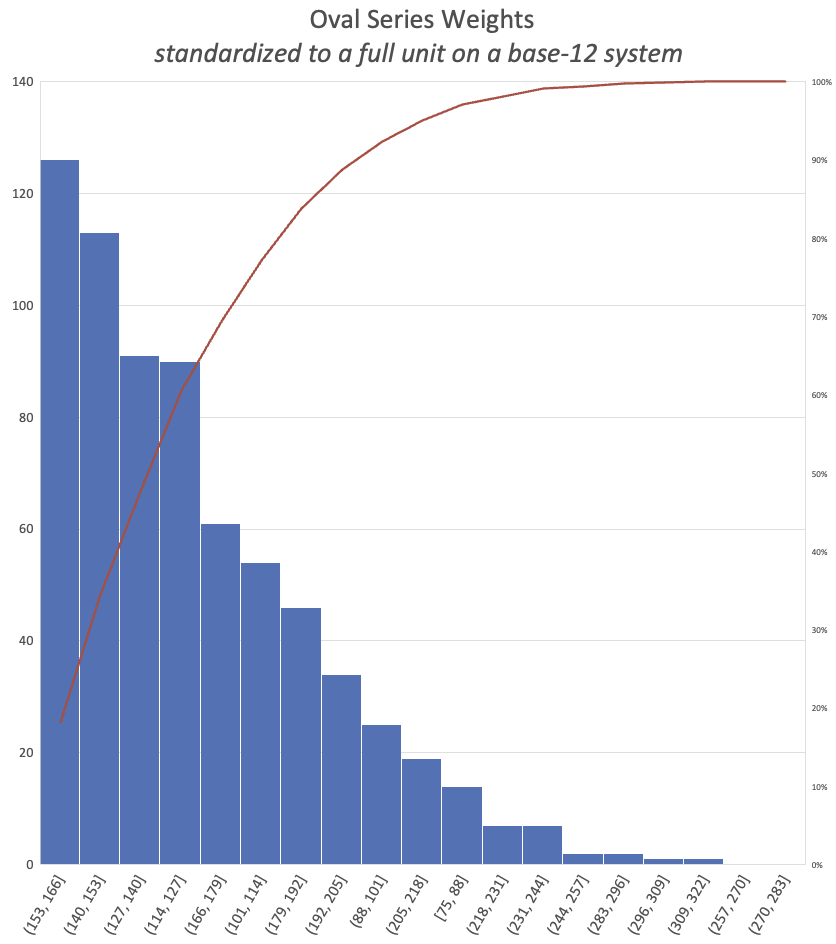
A Pareto histogram helps us see the long tail of outliers from the central grouping of the data. The picture doesn’t change if we divide the half units into a heavier and lighter series. The data has an incredibly high relative standard deviation of 22% but the other denominations do not easily separate into heavy and light series in any way. I explored the RSD of RRC 14 and 18 in a recent publication and the Roman series seem much better controlled than the club series with an RSD under 15% and under 10% for the as and semis. Smaller denominations do tend to have higher variation but by most metrics the Roman unciae (a contemporary coin of about the same mass) has an RSD under 20%. And I thought the Roman coinage was highly variable!
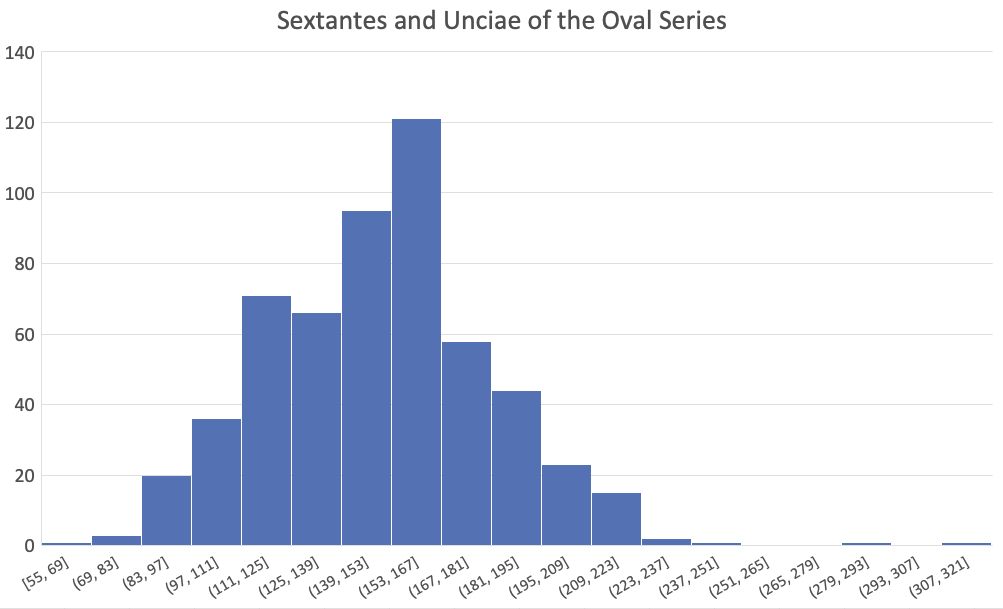
IF we focus just on the denominations for which we have robust data sets the picture doesn’t change. The RSD stays at 22%. But we do see the sharp drop off in specimens corresponding to a whole unit of more than 167 grams, we also see the long tails.
I decided to see what would happen if I removed the tails and played around with the number of bin:
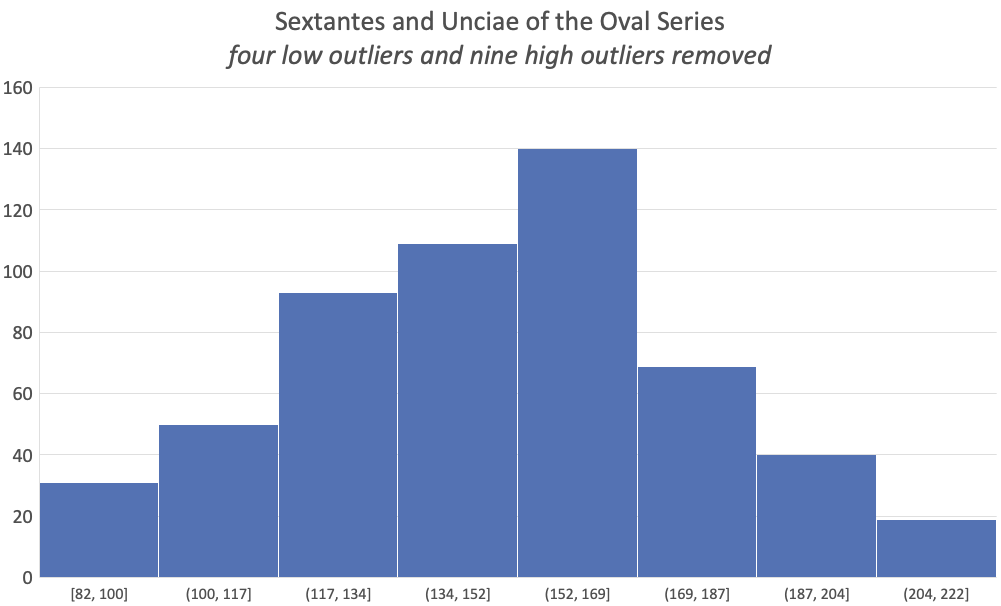
Overall I’d say that the whole unit was probably about 155-160 grams but this has got to be a fiat currency with this degree of weight variation within denominations.
There was also some find spot data sent along so of course I did a map. Below are points where sextantes have been reported as found:
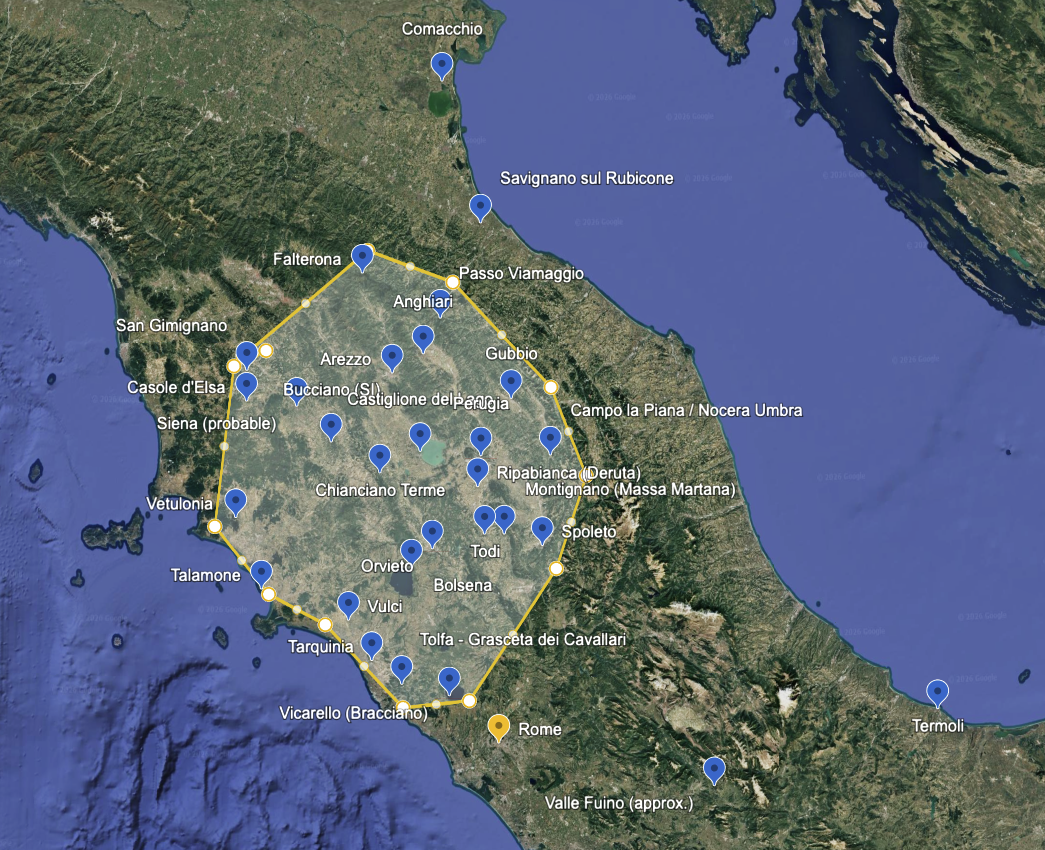
I’ve marked the primary area with yellow. Below is a standard map of “Etruria”
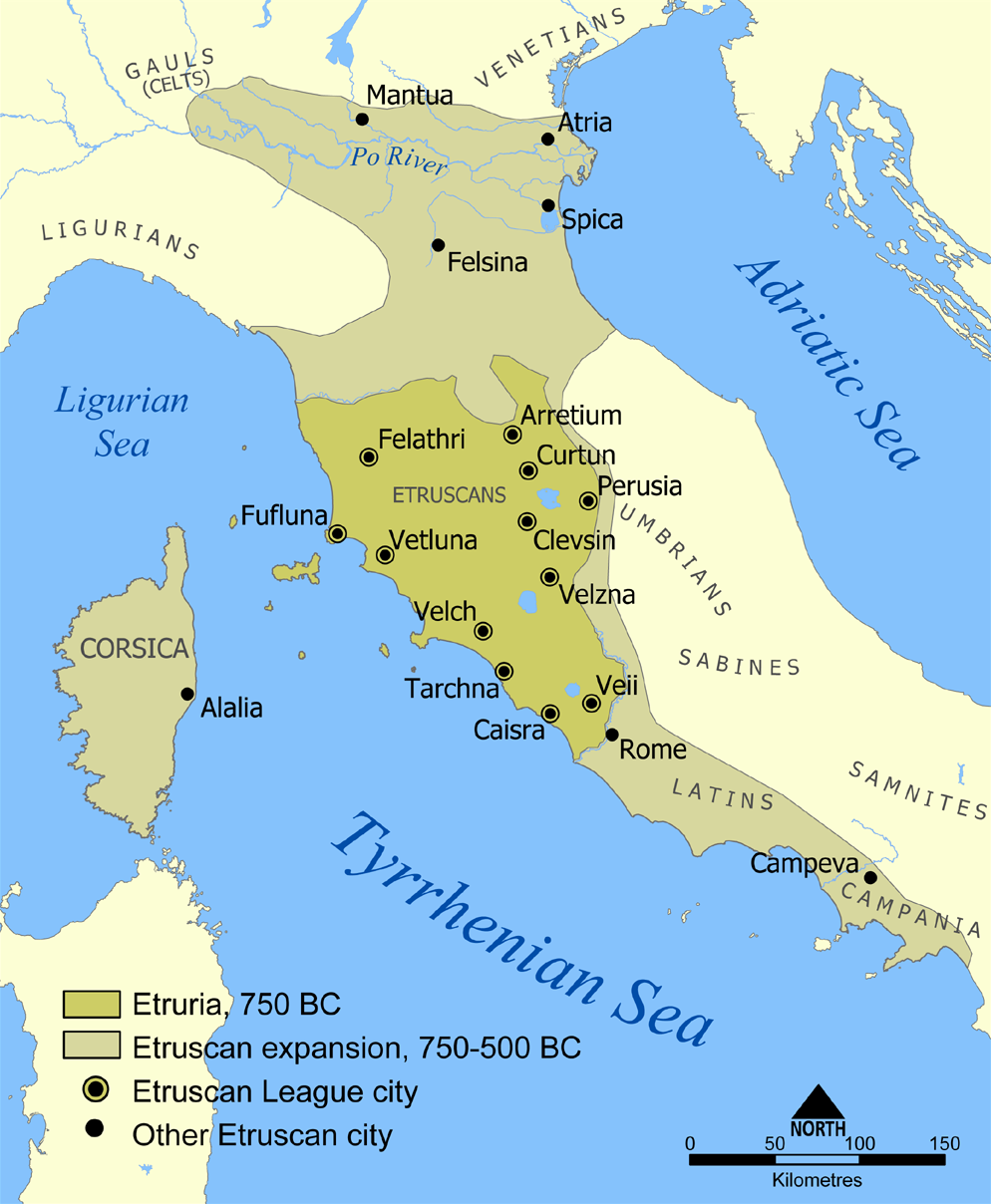
I wonder if this very simple design could have been made in more than one place in Etruria and perhaps served as a common currency throughout the League. It’s spread throughout the territory is remarkably even.
The Vulci and Ariccia hoards suggest a date similar to the RRC 14 and the currency bars (aes signatum), so 1st Punic War. Interesting how much lighter this weight standard is than the Roman one at the same time…
I’m very grateful for generous colleagues letting me play with there data.


