Sassù, Alessio. “Honouring Sulla in Sikyon: The Dedication to Mars Revised.” Zeitschrift Für Papyrologie Und Epigraphik 217 (2021): 223–28. [on JSTOR]
This article I read last week is stuck in my brain and distracting me from banging out the rest of the article I’m drafting. It isn’t even that closely related.
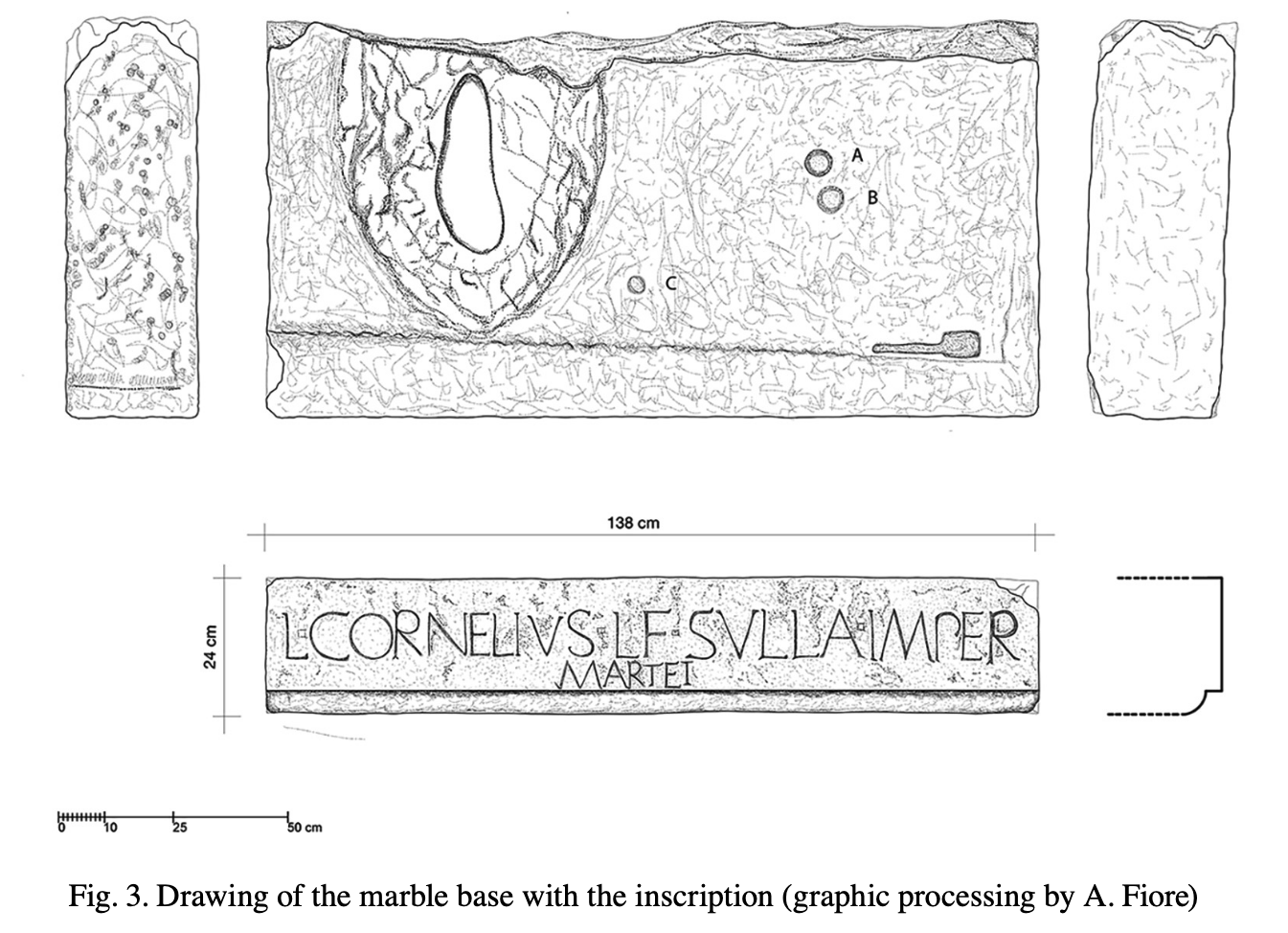
First letter forms.
The rounded open form P of IMPER is catching my eye. And making me think about Ps on Sullan coinage struck before his return to Rome
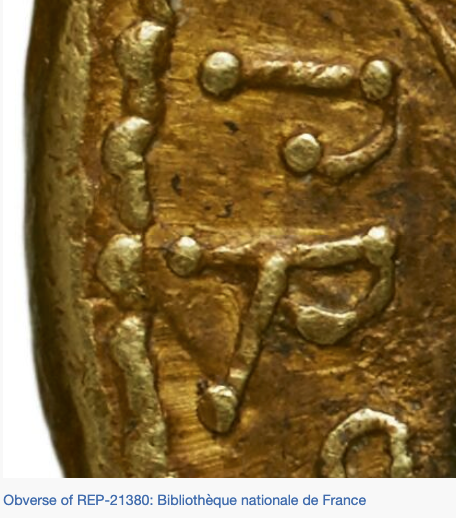

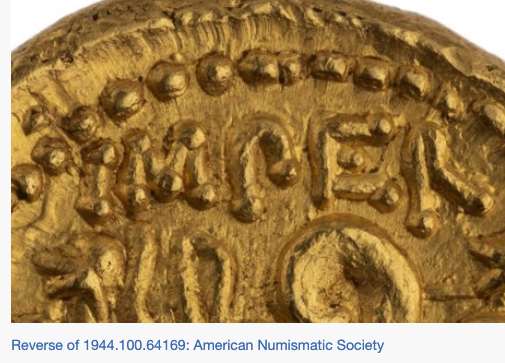
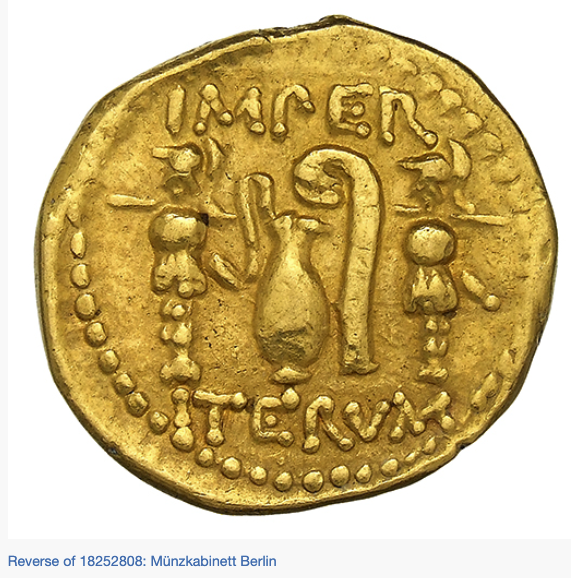
I’m using gold for comparison because the specimens tend to be in better condition so it was easier to find decent images faster but I could have just as easily used the denarii. RRC 359 is the better parallel as we believe it was made in Athens by Greek mint workers. Whereas RRC 367 seems to be more of a camp coinage. Regardless the Greek engravers would have had a template from a Latin speaker in Sulla’s administration.
The coins all have open Ps but the there is a significant range between dies. Some more rounded some more short legged Pi shaped. I have no conclusions. The R forms also deserve some attention. Notice how on RRC 359 the curve of the R meets the leg not the post of the letter. On the Rs of RRC 367 the curve and the leg are one stroke leaving an open space between itself and the vertical post. This is very preliminary. I’d want a research assistant to go through and tabulate the variation by number of dies before I was confident this was a pattern. I’m not doing it myself I have other writing and research goals.
See how strict I can be with myself!?
Es are also interesting. Notice how some have a short middle bar and others a middle bar of equal length to the top and bottom bars.
I will notice that the Es are consistent within the two lines of the Sikyon inscription as are the Rs. The M and I deserve closer inspection from a better photograph.
Do you have one you could share?!
The author of the 2021 ZPE inscription makes much of the nominative form of Sulla’s name to suggest the statue was originally one of the general. Possible certainly. The coins also use the nominative for Sulla and we certainly believe that RRC 381/1 represents a statue of Sulla.
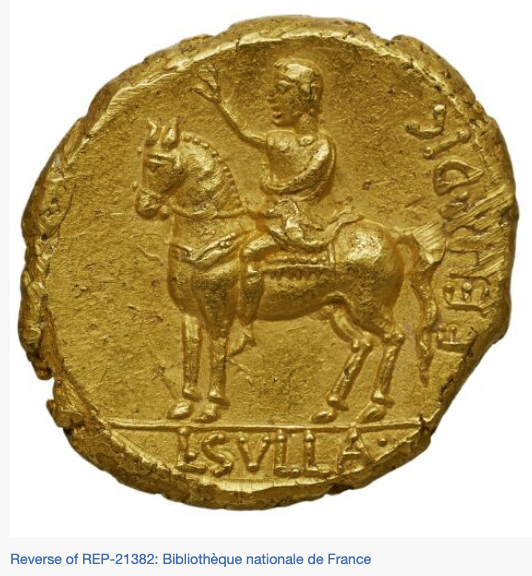
The X ending of FELIX leaves no doubt this is a nominative labeling the man.
The holes in the base are consistent with a standing warrior with spear resting his weight on right leg and only touching the base with his toes. Below are a variety of statues that might be somewhat similar to what appeared on the base. Those with the raised left leg are probably closest. But part of me has a hard time imagining Sulla choosing to be represented heroically nude but completely possible. I just don’t want to think about it.
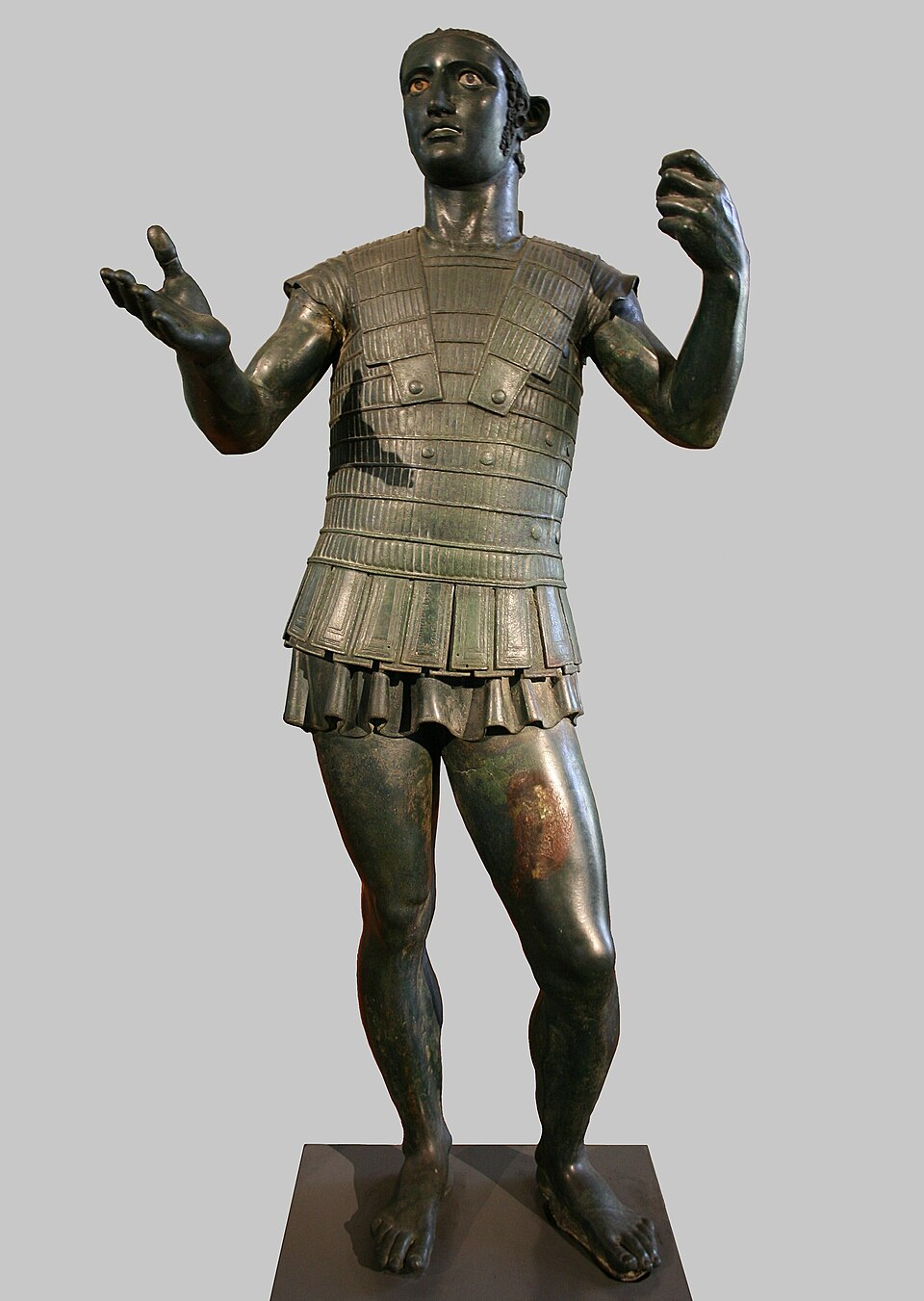
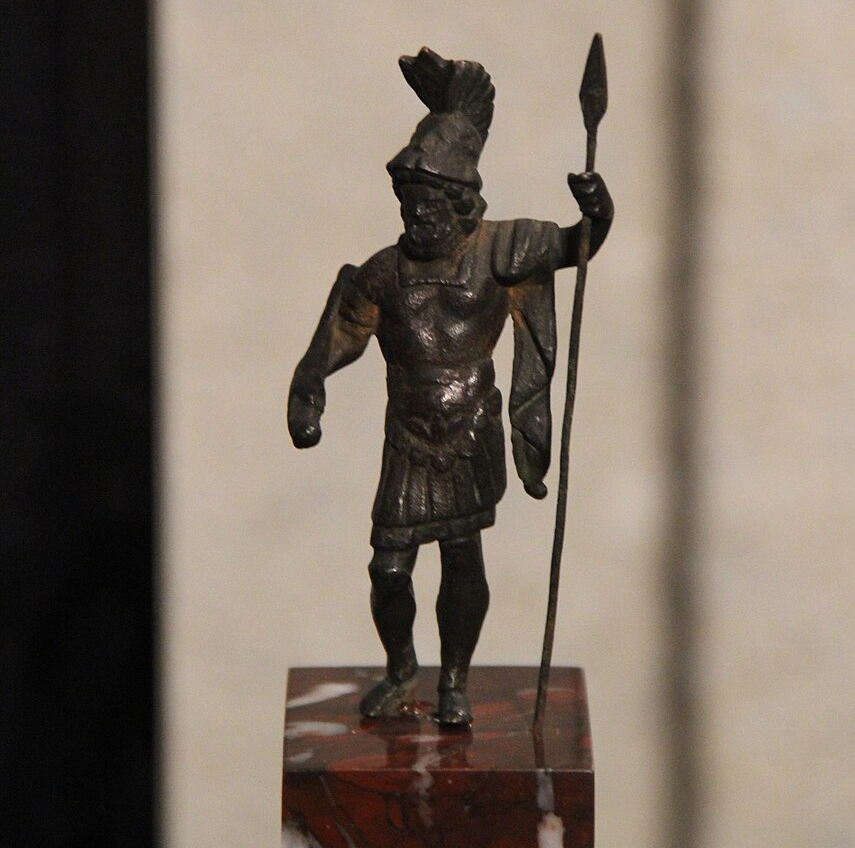


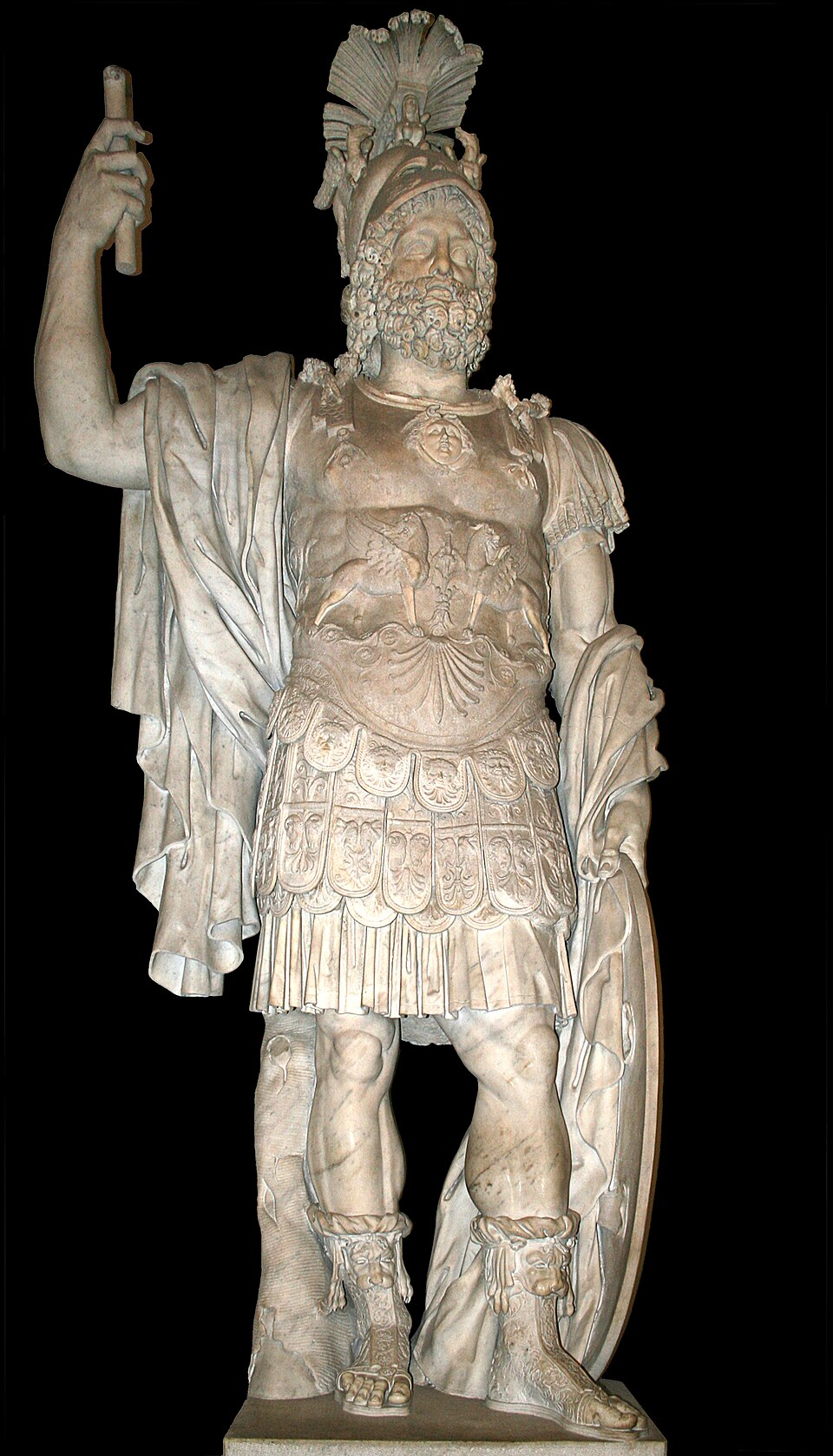
We know from literary testimony say for Nero’s colossus being changed into a Helios colossus that bronze statues could be reformed from portraiture to divine idealization. Equally we know that many Romans chose to represent themselves in the guise of gods, even Mars.
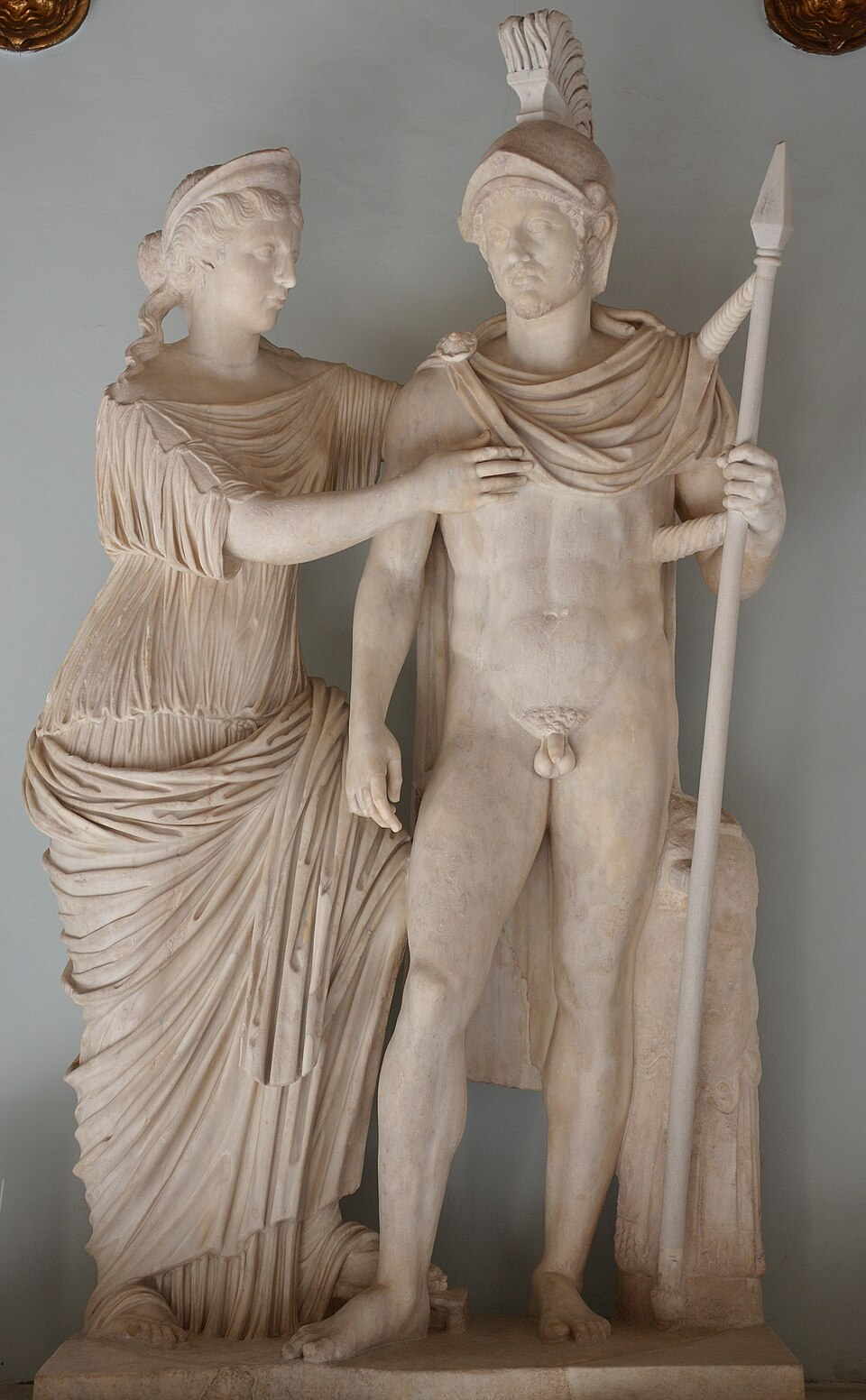
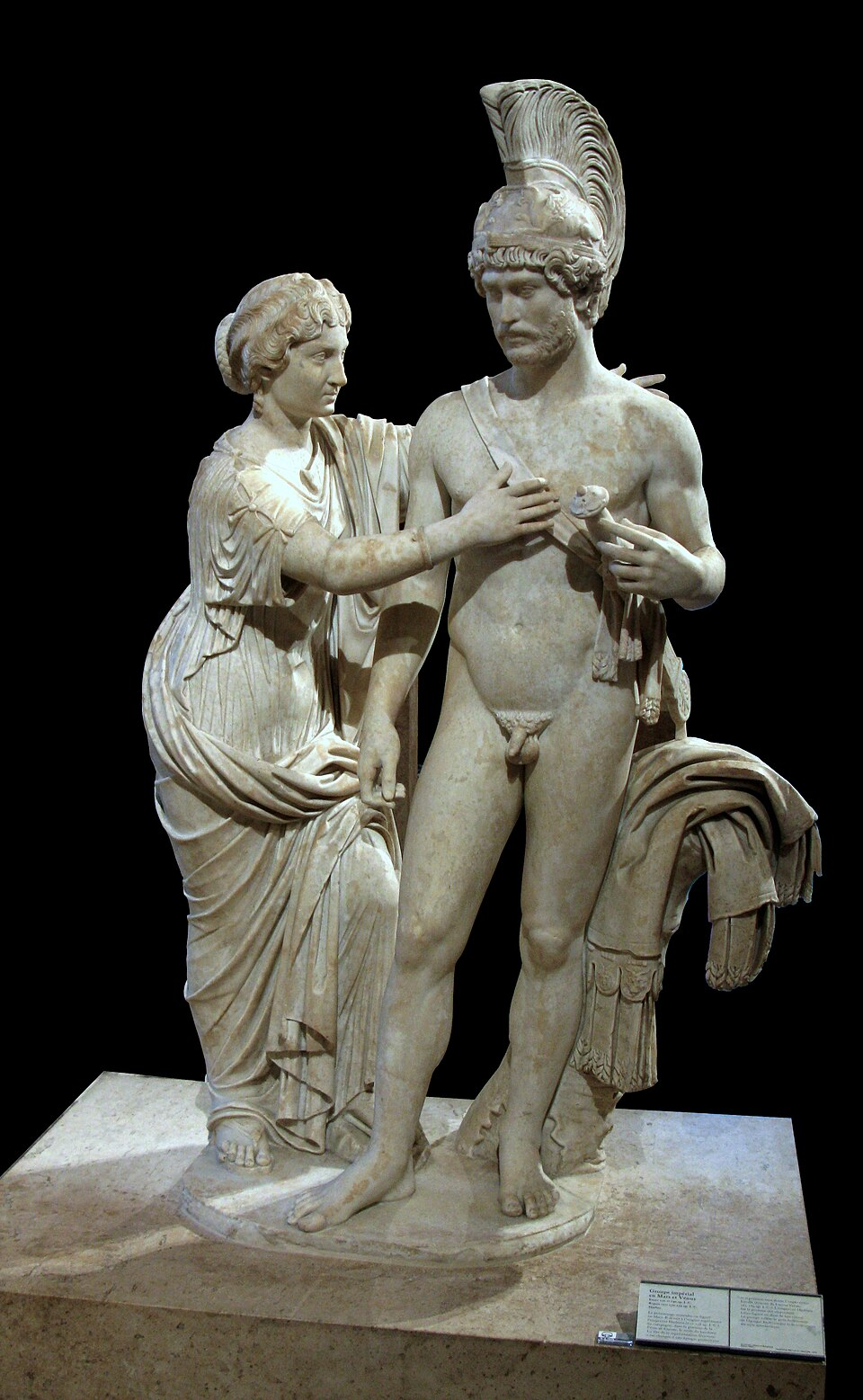
And yet I have a hard time thinking that without significant reworking anyone could use a Sullan portrait with its intense verism for the perfection of the war god. Notice the leathered skin with deep lines in the cheeks and crows feet around the eyes.
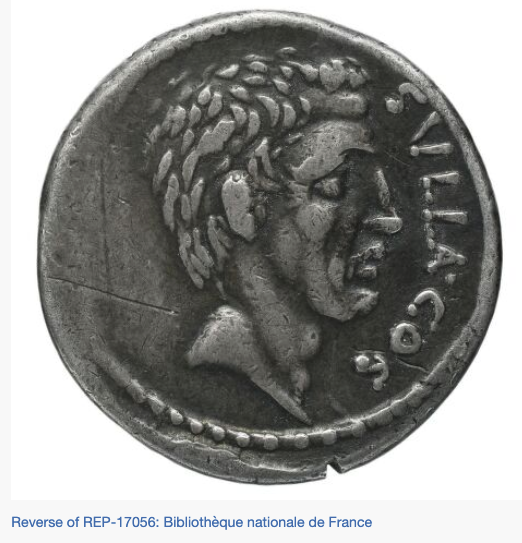
This is not a face that easily fits with beard father god or the youthful clean shaven god.
I’m hoping I can source a better photo of the inscription to consider it better for the belief that the last line might be a later addition.
Later, same day.
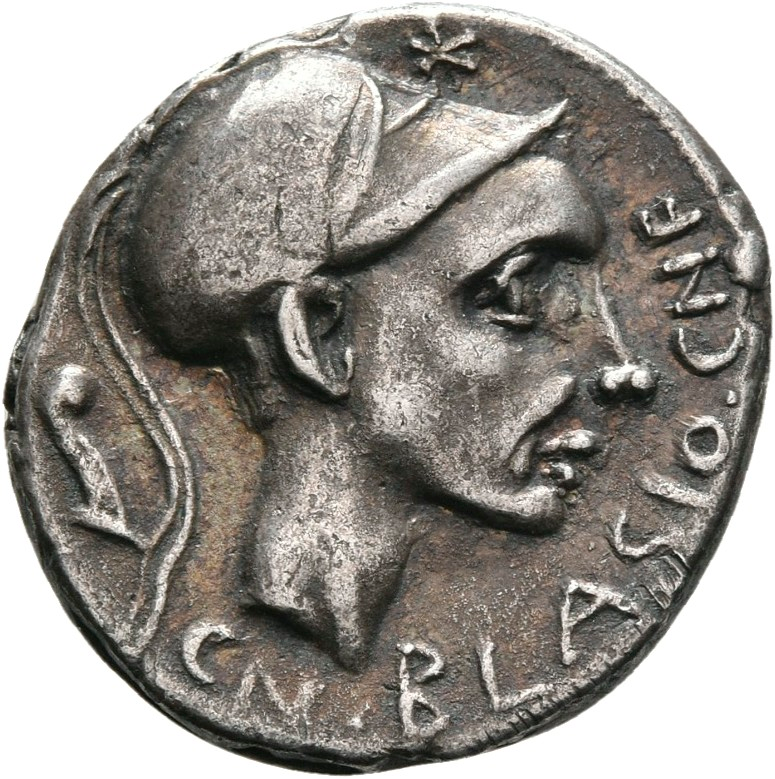
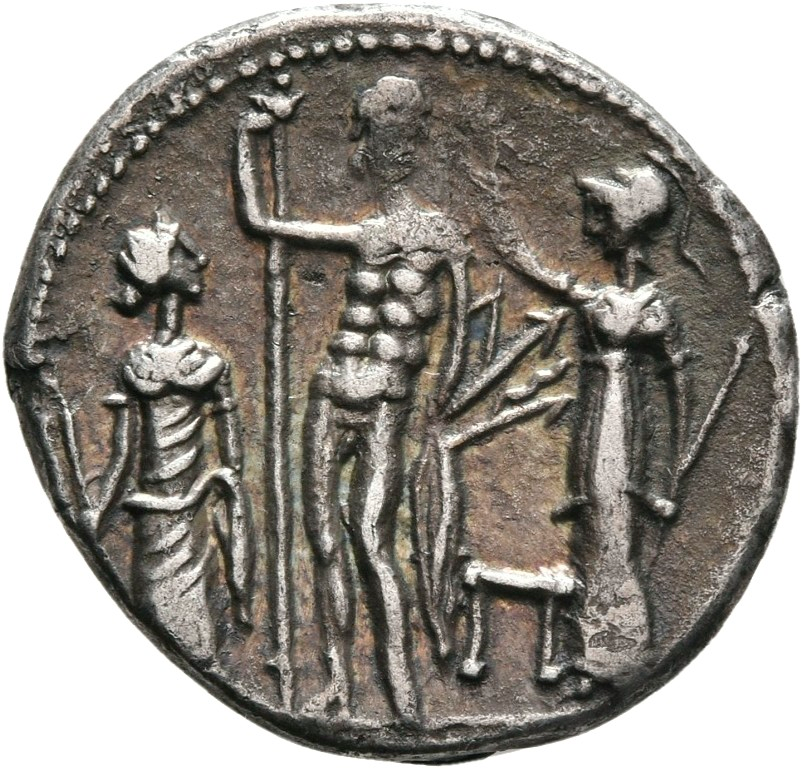
It occurs to me that, we do have one clean shaven Mars ugly enough to look like Sulla. I know we’re not supposed to have least favorite coins, but I really dislike the design of RRC 296/1. Thin neck, weak chin, bulging forehead, ski jump nose. What was the engraver thinking?!