
I was checking notes on Papius’ controlmarks (RRC 384/1). A mindless task of a sort. I’ve looked at them many times; there should be no surprises.
No. 4 obverse [click for more images of the same]
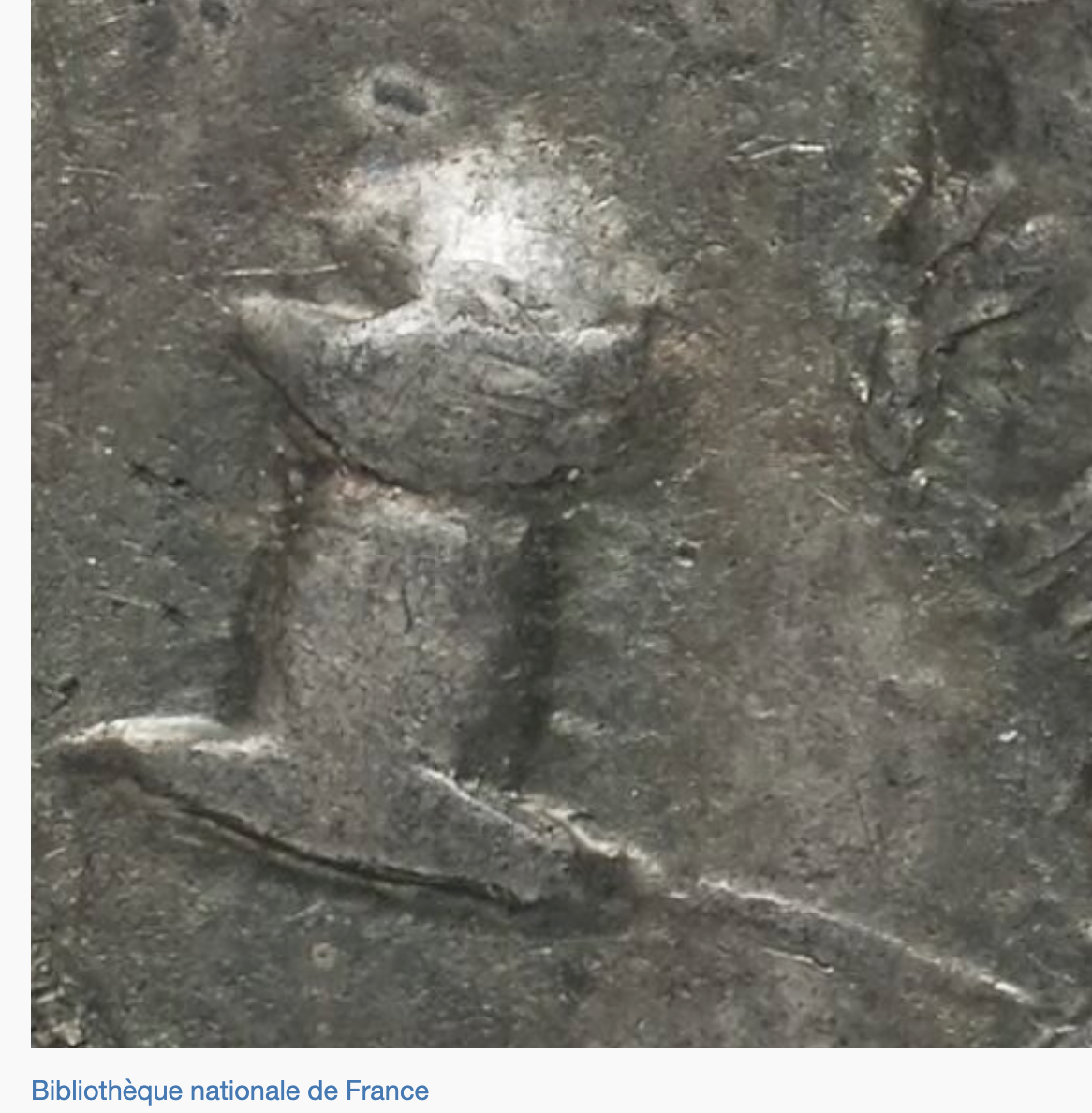
So my first concern was that bump on the top. On some specimens it looks more like a shallow dome. Anvils are known in numismatic art, as well as lots of other art media:
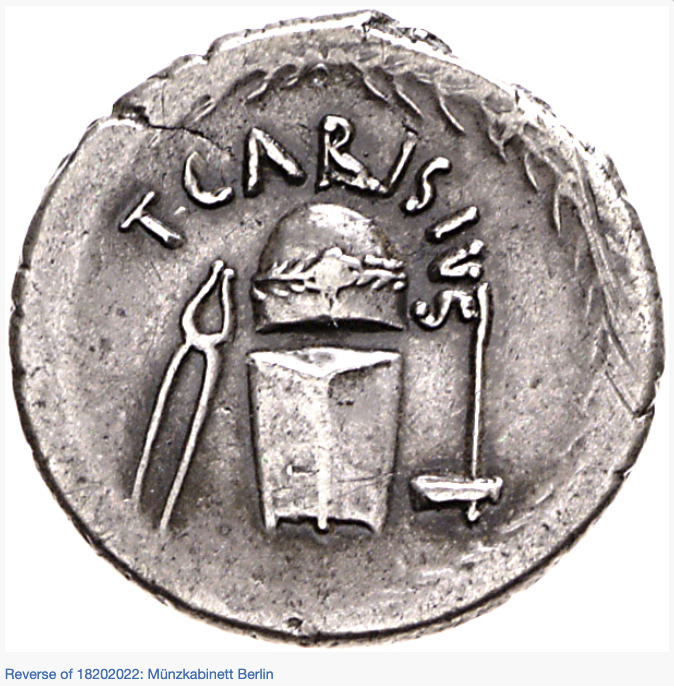
There is even a really convincing Anvil on the Fabatus control mark series (RRC 412/1 Obverse 4). I have post full of images of anvils. And I even went to Arachne to be sure I’d not missed any thing relevant. I found more images confirming the same but no significant variation. An Anvil is typically rectilinear. It often has little feet. The top surface is often slightly larger than the bottom. I see none with a top and bottom edge and central shaft like in the controlmark above. And none with a rounded top.
For a hot minute I contemplated if the thing on top could be a shield because of this relief, but then dismissed the idea.
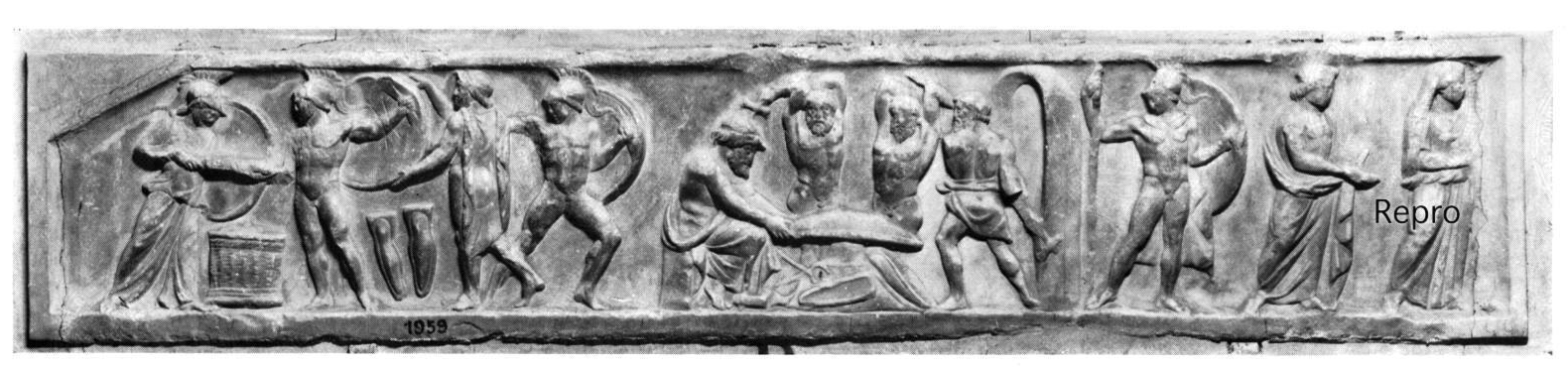
This is frustrating as anvil was such a clean and tidy ID, but I no longer believe it. Altar or Puteal would seem more likely but why the tongs and why the domed top?
I wonder if it could be the fire for heating the metal prior to striking. These often look like altars with a clam shell backing to keep the heat in.
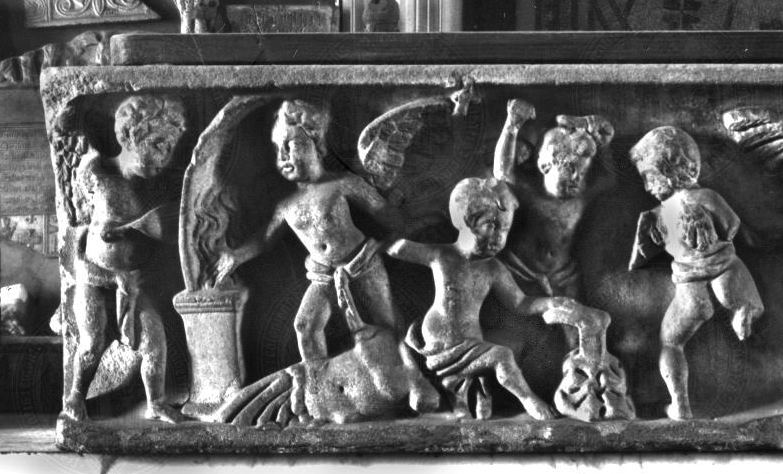
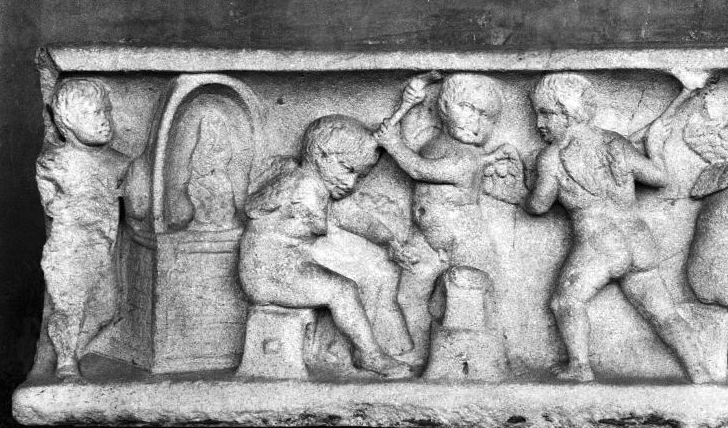
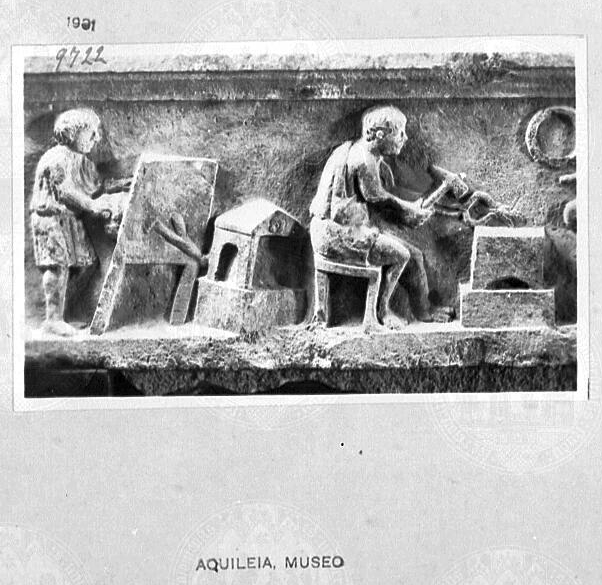
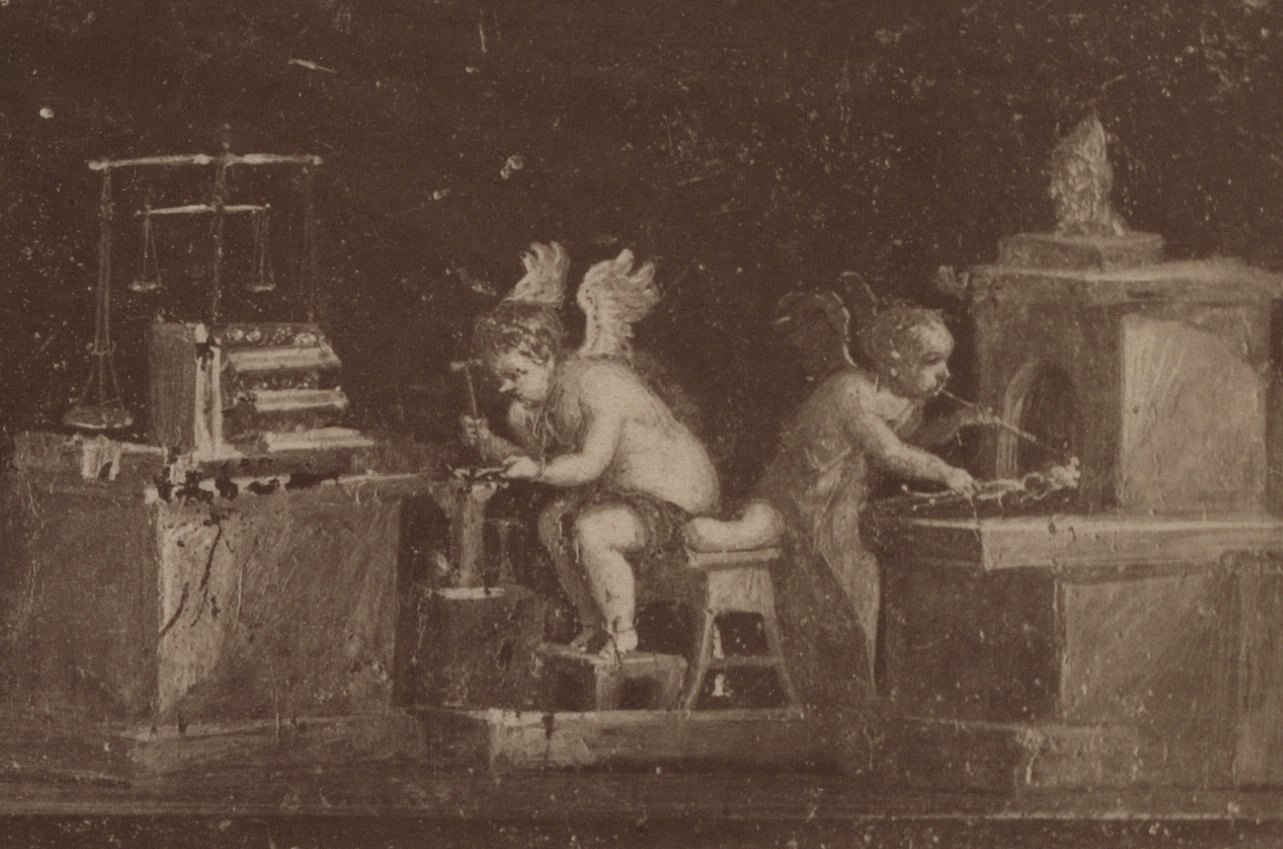
I’m not at all convinced. So I went looking for objects found with Tongs. Not much. Bah. I will leave it for now.
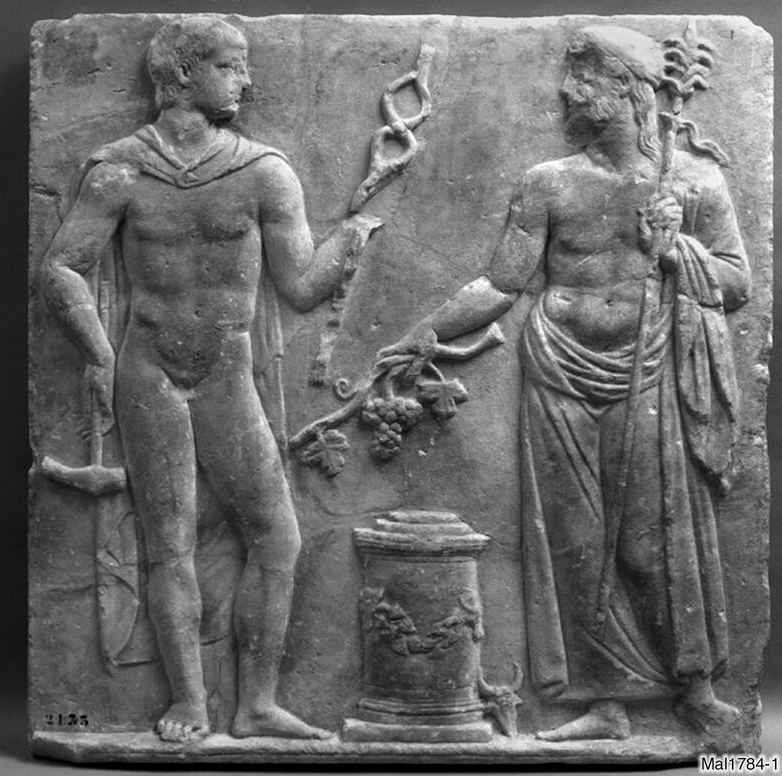
The altar in the relief below has some little steps on it.
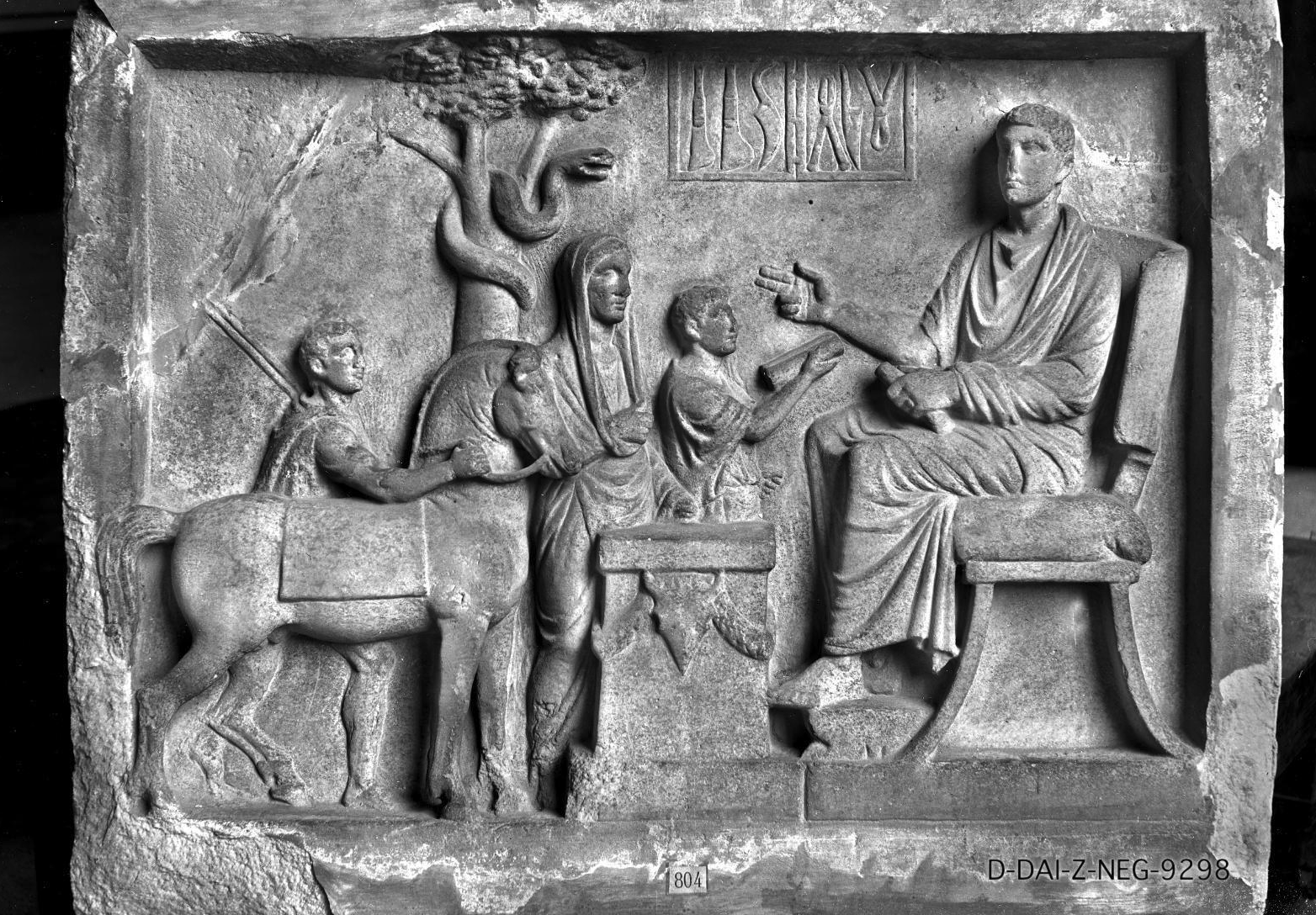
The medical tongs look quite different here.


An anvil for blacksmithing a sword and/or armor (and/or shield) may be different than one for striking coins which may be similar or different to one for making jewelry. Something to think about (and add to the confusion!).
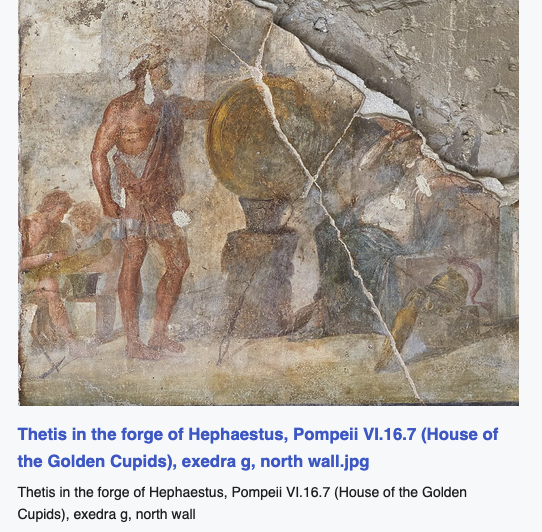
Yes! There is some variation, but less than one might assume. See the cupid goldsmiths above. A much more delicate set up!