Evidence for the weight of the Roman Pound

Capture.JPG

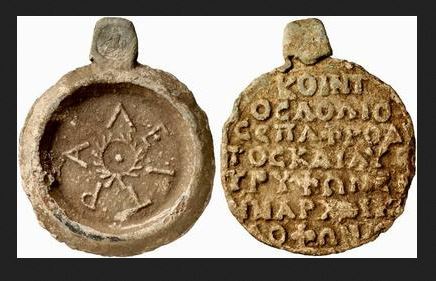
A database just spit out this result from my using a search term looking for something quite different.  I have such mixed emotions.  This should be in a museum, not a private collection.  I’ve been to Kolophon.  I’ve seen the holes created by speculative digging among the ruins.  I’ve seen the primarily subsistence level agriculture of the current community.  I know why this is on the collector’s market.  It just doesn’t belong to any one of us; it belongs to all of us.  It is not a mass produced object.

Anyway.  I’m still glad that we have photos and details regarding its weight and other features and that I get to see it.

Ho hum.

The catalogue say: “Here, ΛΕΙΤΡΑ is the Greek translation for LIBRA in Latin and with a weight of 348 g, it corresponds fairly well to the Roman pound of 327 g. Approx.

I would point out that oxidation can effect the weight of lead objects in particular, especially when were just talking a matter of grams.

Here’s another earlier post on the weight of the Roman pound.

Here is newer bibliography: Butcher and Ponting 2015: 206-208.

Hercules’ Lion Pelt

capture
Andrew McCabe’s Image

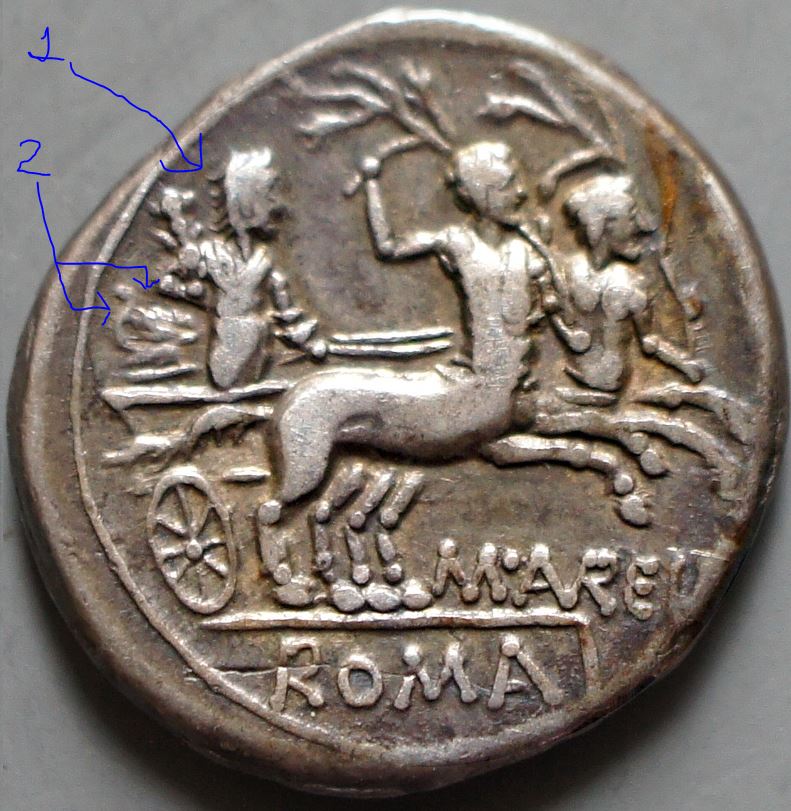
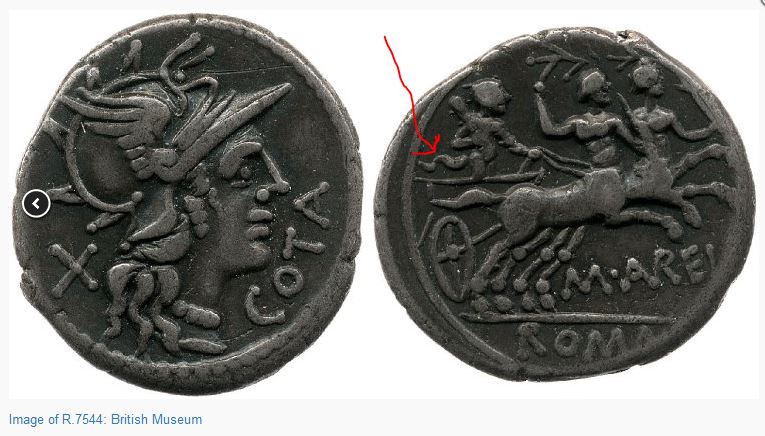
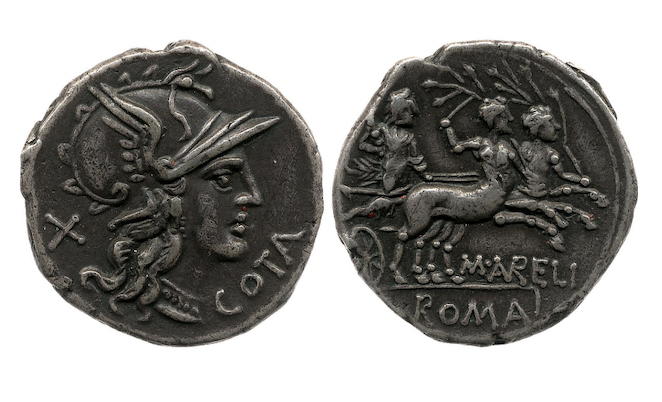
I’m working on illustrations for the book and hence have been looking at a good number of specimens.  One of the fun things I noticed about some, but not all, specimens of RRC 229 is that they take the time to represent bottom half of Hercules’ lion pelt.  No. 1 on the image above shows the care taken to represent the fur of the lion scalp, but look a no. 2!  that a tail and more furry pelt flying out behind the god.  Fun.   By contrast other dies reduce the pelt to just a little squiggle of flying drapery, as in the image below.capture

A little crankiness: So CRRO seems to have made up a new RRC number, 229/2, this seems to be just a data entry error, but could cause much confusion.  Also, it gives RRC 229/1a and 1b separate dates.  Again a typo, but potentially problematic.  I used to send these errors in for correction, but they don’t seem to have a fixed procedure for cleaning up the data yet, and thus my emails were just a nuisance.   Ho Hum.  One day.  Still a great resource.

3.6.26 some typos fixed and I’ve confirmed the RRC 229/2 error persists. It is populated by one BM specimen and I see nothing that makes this specimen need its own type number. I think it is just a really persistent typo from the data from the BM the ANS used to create CRRO in the first place.

British Museum: 1843,0116.217

Romulus and Mars

So I’m waiting to hear back from the peer-reviewers, but I’m hoping you’ll be able to read an article by me in the AJN this year entitled, ‘Romulus’ Apotheosis (RRC 392)’.  I’m pretty excited about it.  I send it off last September or thereabouts.  It’s all about this type:

Capture1.JPG
CNG 103, lot 637

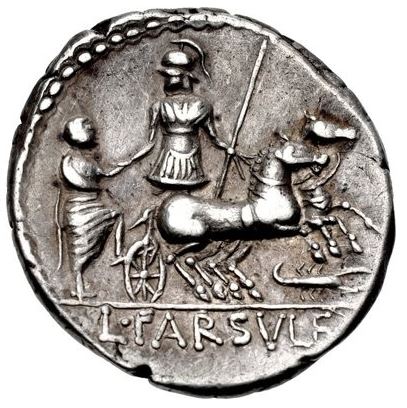
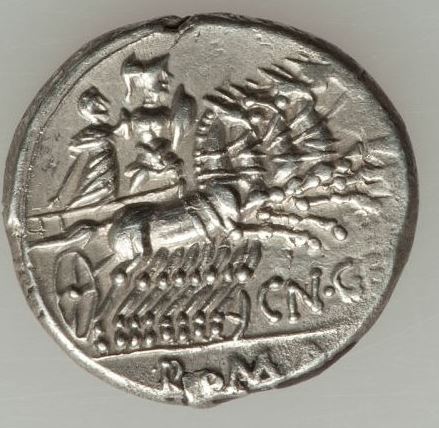
You’ll have to wait to read it.  The main point of this post is that I found myself looking again at a much earlier republican coin type (RRC 232/1)  in light of my work on the one above and now I’m thinking I need to add a note to that article.

Capture.JPG
image from acsearch.info

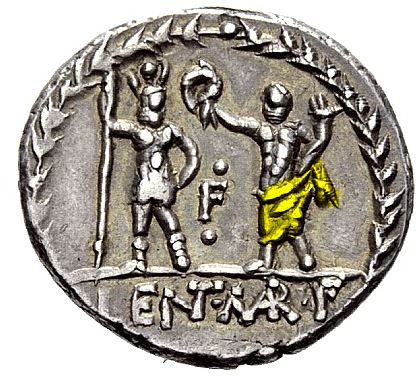
I’m pretty confident in my identification of RRC 392.  I have lots of literary and visual parallels to back me up.  So my big questions are about the attributes of the figure standing next to Mars in this chariot on RRC 232.  Is that a toga?  I think it may well be.  Although it isn’t as well rendered as on other types.  If it is a toga, than I’d be very comfortable calling this an apotheosis scene, celebrating Rome’s divine foundation and continuing divine protection.

If you can tell me why it can’t be a toga, I’d love to hear from you in the comments!

There is certainly hierarchy of scale used to distinguish the rear figure from Mars, but I have a hard time agreeing with Crawford that the figure is in any way represented as a captive.  The body position is not humbled; the drapery is not tattered or distressed; there is no restraint; and care has been taken to represent the figure’s right arm as free.

Addendum later the same day.

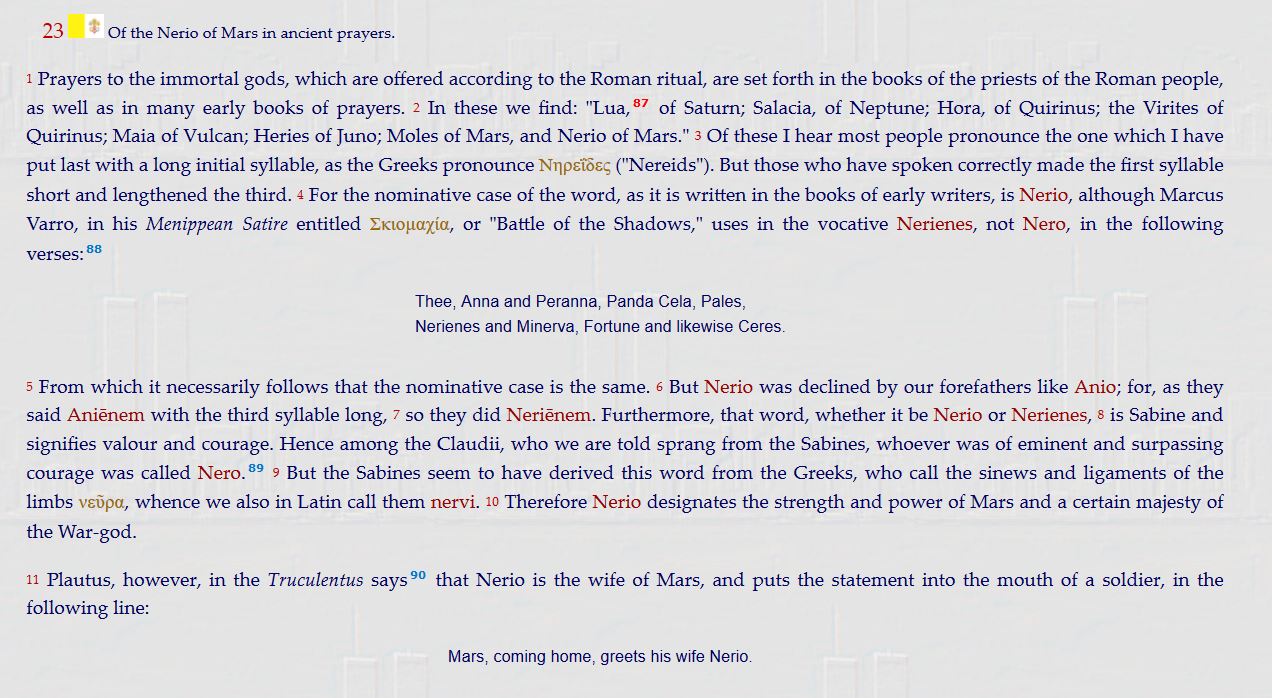
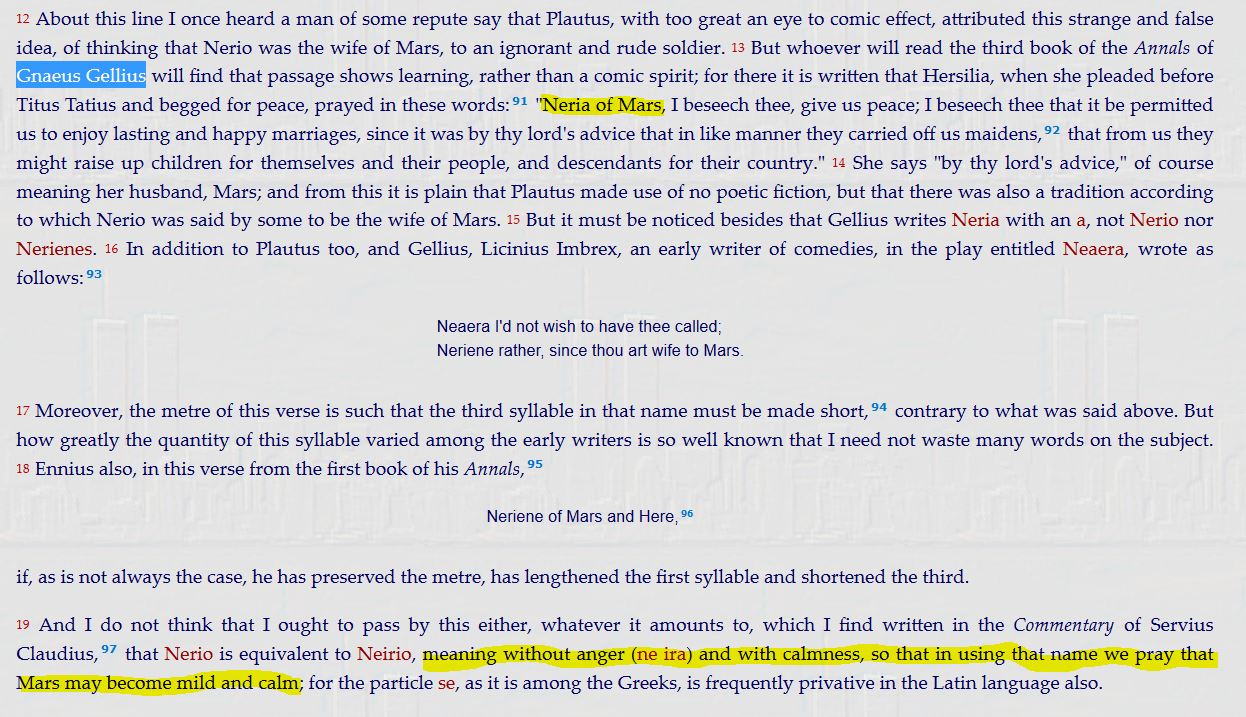
So as I thought more about the above ideas and how they might make me adjust/tweak the AJN submission, I decided to have a good read through the fragments of Gn. Gellius in new Fragments of the Roman Historians. ( It is widely accepted that the historian and the moneyer are likely to be the same individual.) This has not really clarified my opinion, but rather made me wonder at why Crawford dismissed the Nerio/Neria idea.  It also made me once again think about that drapery.  Is it feminine dress?!  Or is it a toga?  I can’t quite decide.  This is the relevant material from Aulus Gellius Attic Nights 13:

capture

Capture1.JPG

I find myself wondering how this religious conception of the divine intersects with the Divine Qualities discussed in Anna Clark’s book.   I was also surprised the Myles McDonnell didn’t discuss the passage given the reference to the Virites of Quirinus.  Maybe this will be a little conference paper one day…

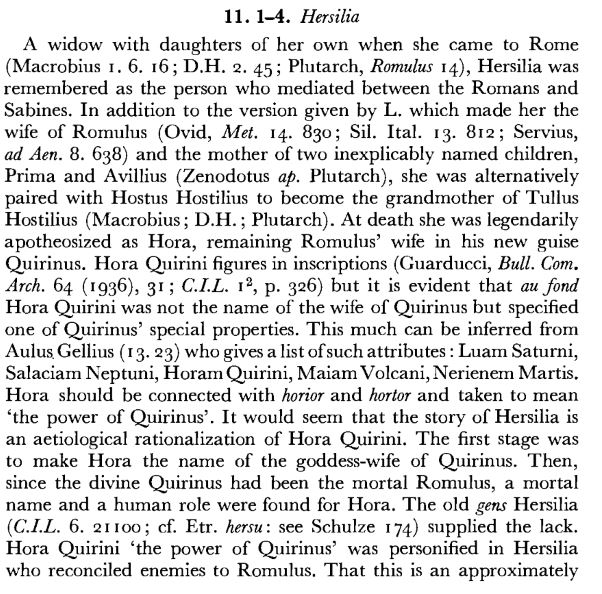
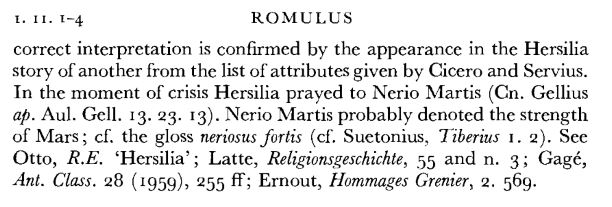
Ogilvie on Livy:

Capture.JPG

Capture1.JPG

The Sestos Inscription

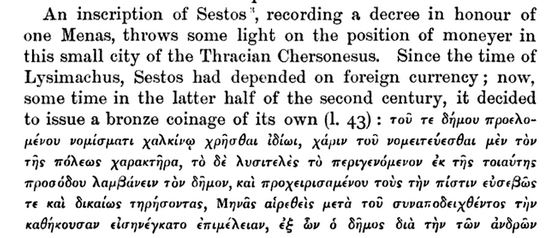
Why do cities mint coins?  One of the only written pieces of evidence we have from the ancient world is the ‘famous’ Sestos Inscription (OGIS 339).

From Hill 1899:

Capture.JPGCapture1.JPG

It is well discussed in a modern context by Katsari 2011 with up to date bibliography in footnote 22, missing only Le Rider 2001: 242-244.

Lines 43-51, translated by J. R. Melville-Jones in Testimonia Numaria, Greek and Latin Texts concerning Ancient Greek Coinage, Vol. I (1993), no. 377:

… and when the people had decided to use its own bronze coinage, in order that the city’s type (charakter) might have currency, and the city might receive the profit which would accrue from a revenue of such a kind, and had selected those who would preserve this position of trust piously and justly, Menas, chosen together with his colleague, discharged the appropriate responsibilities, as a result of which the people, through the righteousness and love of honour of these men, has the use of its own coinage.  And in the other offices and liturgies for which the people has selected him, he has presented himself as impartial and righteous …

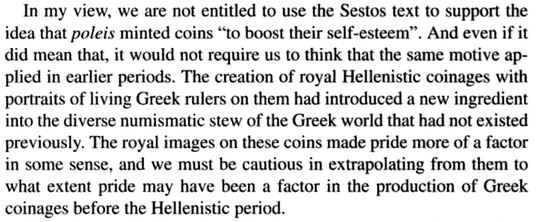
Martin 1995:

Capture.JPG

I am officially back at work on my coin book project.  I’m editing my draft of chapter 1 right now and realized I needed to expand what I had to say about this inscription, hence the post.

Curule Chair and Accompanying Objects

primaryImage
Ny Carlesberg Glyptotek inv. no. 1465

I’m looking for the inventory number of a piece in the Glyptotek I need to footnote in this article I’m trying to send off.  Hence, I’m trying to find just the right word to get the Danish National Database of Museum holdings to spit out the right information.  Given that the database only functions in Danish (not one of my languages!), I keep getting distracted by my interesting, but incorrect search results.  Thus, this flurry of posts.

Anyway, I wanted to keep a record of this image from the high empire because of how it juxtaposes the scepter with the chair and crown.  I also want to think more about the barbarians as leg supports and how this may have evolved out of the ‘creative’ feet on some of the curule chairs in republican iconography.  I’m thinking the lion feet on the chair of the P. Fourius Crassipes on his issue as curule aedile (RRC 356/1).

The Religious Life of Animals

undefined
Ny Carlsberg Glyptotek inv. no. 0858

This is the back of an altar the front of which is commonly used to illustrate Roman sacrificial practices.  I’m taken by how it imagines the deer participating in its own ritual offering, placing a filleted palm branch on an altar.  Perhaps for some interdisciplinary conference on animal studies I might write a short piece contextualizing this images with other evidence for Roman thinking regarding the religious life of animals.

First Sketch

Capture.JPG

I’m in the last stages of getting ready to send an article out.  This is my first ever pencil sketch of a coin (well part of a coin).  Of course I used a light box and high quality image to produce it (I wanted it to be accurate after all!), but nonetheless I’m exceptionally pleased with how it turned out and how is emphasizes details I’m discussing in the publication.

Why can a candidate win the popular vote and lose the presidency? An Op-Ed from a Roman Historian

The “Founding Fathers” are often treated as a sainted lot.  They like, all politicians, were engaged at their best moments in a grand compromise.  A horse-trading of privileges, rights, and duties that leaves no-one happy, but, if successful, staves off civil war.  At their worst, again like all politicians, they were engaged in the protection of their own self-interests and the interests of their kith and kin.

I’m not a U.S. historian, but I am an American and I do know quite a bit about the models on which our founding fathers drew.  As our country faces again our deep divisions, I offer a question, a history lesson, and more questions for introspection.

Why can a candidate win the popular vote and lose the presidency?

In the grand compromise negotiated by the founding fathers at its heart was a struggle over balancing the rights of individual communities to be self-governing and the rights of individuals to be treated equally under the law.  You may remember this from Social Studies, Civics Class, or American History 101 as the question of “States’ Rights” or the Federalists and the Anti-Federalists.  Because the 13 original colonies already had independent political structures in place, there was no will among the elite to dismantle the existing entities and start anew, only a desire to unite these states into a more perfect union.  “More perfect” meaning better able to assert itself on an international stage as a viable, powerful nation state.

This comprise is the same compromise that gave us a slave counting as 3/5s of a human being and the same compromise that was designed to keep a power balance between states with large slave populations and those with smaller or unacknowledged slave populations.  This is also why you will hear some claim that the Civil War was not about slavery, but “States’ Rights”.

We may be in motto ‘one nation under god’ or e pluribus unum (out of many, one), but we are not under one law.  We have the right to move freely between states (if we are privileged enough to have this economic mobility), but we must live under the different laws of each state while resident therein.  These laws can be very different indeed.  What power does the federal government have to unify individual rights? Only those constitutionally guaranteed.  Which is, of course, highly dependent on how the constitution is interpreted (= why everyone is freakin’ out about the Supreme Court).

In the grand compromise of our founding, the restriction of the powers of the federal government was not only limited to the written constitution, but also by how we as citizens are allowed to participate in that central government.  The electoral college is intentionally designed to restrict our ability to effect change by a simple popular majority.  The design worked.  Hillary will not be president.

Whaaaa?

Back to Civics class.  The number of members of the electoral college, the people who actually choose our next president, is equivalent to the number of members of Congress.  Each state gets 2 votes, one for each senator, and one vote for each member of the house of representatives.  (DC get three, Puerto Rico and other territories get none; all further later political compromises.) Thus, no state has less than three, no matter its population.  The distribution of representatives to the House between the states, and thus electoral votes, changes each census to reflect population shifts.

The media often talks about the importance of winning big states with large numbers of electoral college votes, but in fact the system is set up so as to privilege regions with low population densities.  Your vote counts more in the electoral college if you live in a state with a smaller population:

Capture.JPG

The Texas voter has the least say and the Wyoming voter the most.  This type of block voting intentionally suppresses the interests of the individual and prioritizes State identity.  It is more important that the state gets its say than the individual.

To really drive this point home, consider this: states are allowed to choose by their own means who serves as delegates to the electoral college and those mysterious individuals are not by federal law constrained to follow the popular vote, although some 35 individual states do regulate how they vote.  Theoretically, the electoral college could meet and elect whomever they chose and no constitutional crisis would follow. (Update: SCOTUS has moved us away from this as of 7/6/2020.)

The means by which we choose our president is not intended to be democratic in any pure sense of the term (demos = people, kratos = power, authority), but instead an expression of the States’ choice of leadership informed by a popular poll.

In our nation’s history we’ve been moving away from the compromises of our founding fathers towards more democratic institutions.  We’ve tended towards a widening of the enfranchisement, incorporating women, former slaves and their descendants, and those between the ages of 18-21.  Before 1913 US senators were chosen by the governments of individual states, not through direct popular election.

The question I put to you now, is this: is it more important to allow individual communities to be self-governing, or should we as one big, messy, divided nation, live by majority rule?

I myself am a Federalist.  One Country.  One People.  One Law.  This is largely informed by my reading of Roman republican history and the ways in which it demonstrates both the power and the disenfranchisement inherent in systems of block voting.

Our founding fathers were not enamored by the chaos of classical Athens’ radical democracy and its eventual, painful fall beneath the sway of the Spartans.  They worried about how to unite and govern vast tracts of land and they took comfort in the successes of the Roman republic in the centuries before Julius Caesar, Augustus, and the rest of the Emperors featured in B movies.  Our main sources on this form of government are Polybius, a Greek political detainee in Rome, who asked the question: How and by what constitution did Rome come to dominate the known world in just fifty-three years, and Cicero, a man from greater Italy who broke into Rome’s political scene by playing the arch-conservative.  They gave us and our founding fathers an idealized vision of Roman government, both in their own way from an outside perspective.

One ideal they both communicate is still one of our most cherished values: the checks and balances between different branches of government.  However, for Polybius and Cicero, the checks and balances were not exactly between branches of government, but instead between types of government: monarchical, aristocratic, and democratic.  Ancient wisdom said you needed some of each, but not too much.

The ‘genius’ of the Roman system of block voting was that it appeared each individual had a say, but not all of those ‘says’ were in fact relevant.  Another Greek historian commenting on Rome’s government, Dionysius of Halicarnassus, claimed that the true power of Rome rested in this appearance of democracy through its system of voting, without in fact having popular rule.  In one Roman system of block voting, citizens voted in groups determined by wealth and age, with the groups of wealthier older citizens having fewer members than those with less property and fewer years.  Fewer members meant more power because the individual votes carried more weight toward the block vote.  Other Roman block voting systems were ostensibly tied to geographical origins and by extension family origin, but really meant that if you came from a poor urban background your vote would probably count much less than that of a leisured country dweller who decided to come to the city to cast a vote.

Block voting allowed the Romans to perpetuate the inequalities of their society.  Block voting allowed our founding fathers to give significant concessions to the anti-Federalists and slave owners.  Let us re-negotiate their grand compromise, as we have already done many times before.  And, in doing so, strive once again to create a more perfect union.

Male God with Covered Head

capture

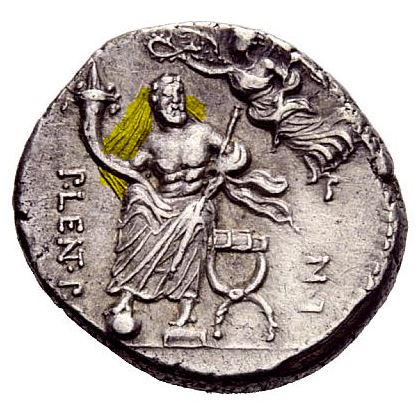
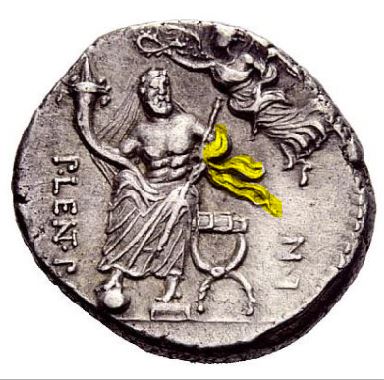
This is a representation of the genius of the Roman people.  The attributes are indisputable:  foot on a globe, scepter, cornucopia, curule chair, crowned by victory.  But what the heck is he wearing?  Notice the drapery over and around the head.  This is just not typical.  Is it supposed to be a toga over the head for piety?  I can’t think of another similarly dressed seated figure.    Also notice below that the fabric comes around the arm and billows outward.  I’d originally thought of this as fillets tided to the scepter, but I think not now.  It seems to all be meant as one single garment.

capture

We can compare the earlier full body representation of the genius of the Roman people on a rather poorly carved type:

Capture.JPG

CRRO Links 329/1 and 397/1.  Links to illustrated specimens (here and here).

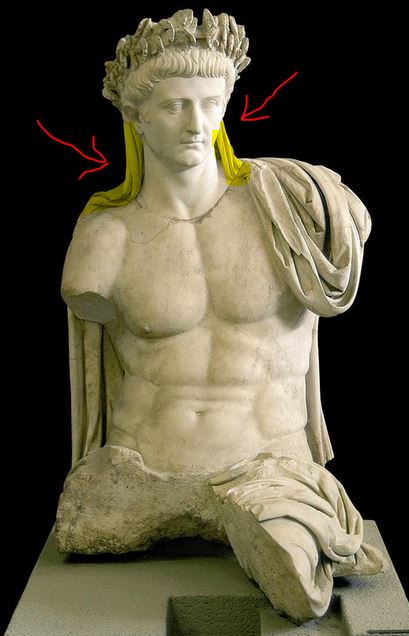
The closest seated bare chested figure with drapery over the head I can find is the Tiberius in the Vatican (if it has not been overly restored, that is):

Capture.JPG