
BM 1814,0704.2175 (glass paste intaglio) cf. RRC 388/1

adventures in my head

http://jaha.org.ro/index.php/JAHA/article/download/221/185
I love being able to have large full color illustrations to make my points. And this is also the first publication of my coin drawings!
So, like many of the authors of contemporary sale catalogue entries, I think this claim by Crawford contra Bahrfeldt cannot be support:


Why? Well first, just the way the object over the anvil looks.
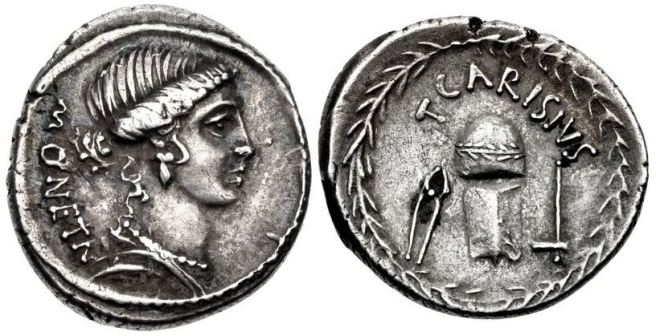
Actually reverse dies were smaller and there is no reason to put a wreath on one or to make it so much bigger proportionally to the other symbolic objects in the field (other specimens of RRC 464/2). It looks like a pileus and the wreathed pileus and tongs are the attributes of Vulcan, not just on republican coinage, but more generally in classical numismatic imagery.

For more specimens like this see the ANS collection. (Although I think it a little perverse they catalogue the obverse as Hephaestus, when the die engraver actually labelled it VOLCANOM.)
But Crawford has a point that Carisius’ series all has thematic connections between obverse and reverse and so the two should have some logical connection.
Sibyl/Sphinx – Speak in enigmatic, yet consequential ways
Roma/Symbols of Imperium – Power, the prosperity that comes from ruling land and sea, global dominion…
Victory/Victory – obvious
Victory/Roma seated on a pile of arms – ditto
Mask of Pan/Panther, thyrsus – Dionysiac Cult
Diana/hound – obvious
So what do Juno and Vulcan have in common? In Greek myth they are mother and son. Did this hold in the Roman tradition? We don’t have much evidence, just a single word in Ovid’s Metamorphoses, book 4:
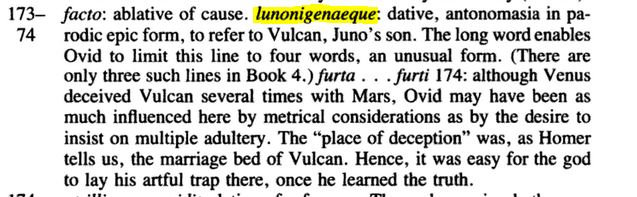
Is this what Carisius has in mind? Maybe. Or more likely the Greek tradition made more comfortable the celebration of the forge under Juno Moneta’s guardianship, i.e. the Roman mint. The imagery on coins was not baunastic, but rather sacred, civic, and pious. Any forge on a Roman coin would be under the protection of the divine, namely Vulcan the smith god. Notice how the cap hovers above the instruments.
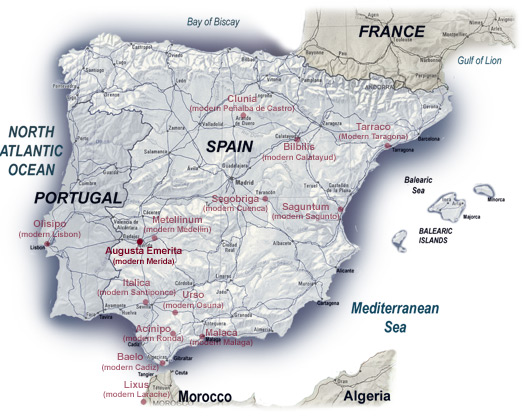
 I’ve blogged quite a bit about the falcata as a marker of Celtiberian identity on Roman republican coins (maybe I should just publish the stuff on this properly…). I was happy to have this confirmed by Augustan examples from Emerita, such as the specimen above.
What I find strange about this type is the degree to which it reminds me of the design of coins showing sacrificial implements, say the coins of Brutus or those of Piso. At first glance, I thought the center object a patera.
This book arrived today:
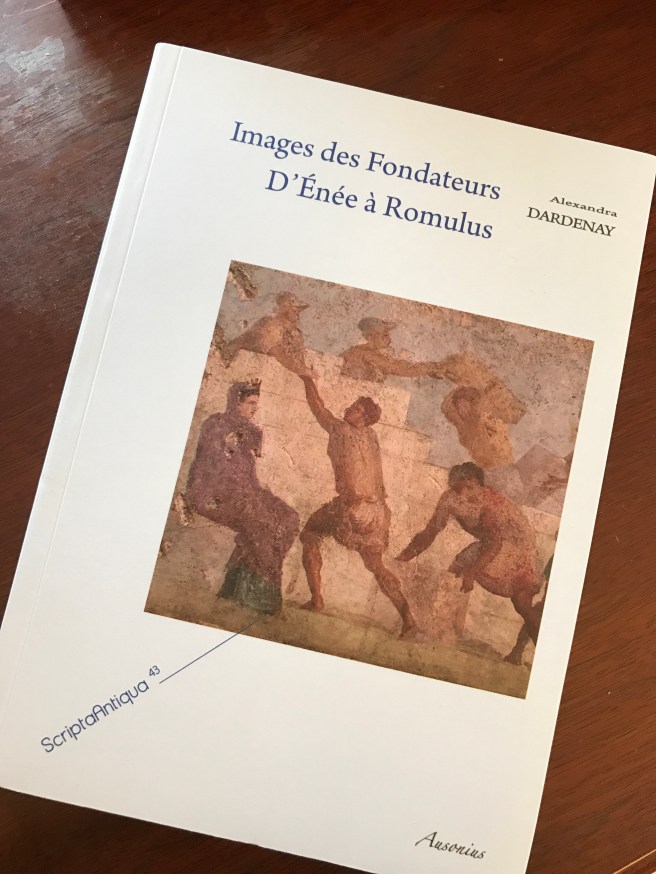
I’m really excited by how richly illustrated it is and how detailed the text, really focusing on the images themselves and their analysis.
On the first page I found an answer to a question I didn’t know I had. I was long confused by why Crawford thought the woman with the big rugby ball shaped object was Creusa. See my earlier posts (first and follow up). Well, he just published a detail of the vase, not the whole vase. There’s the whole thing:
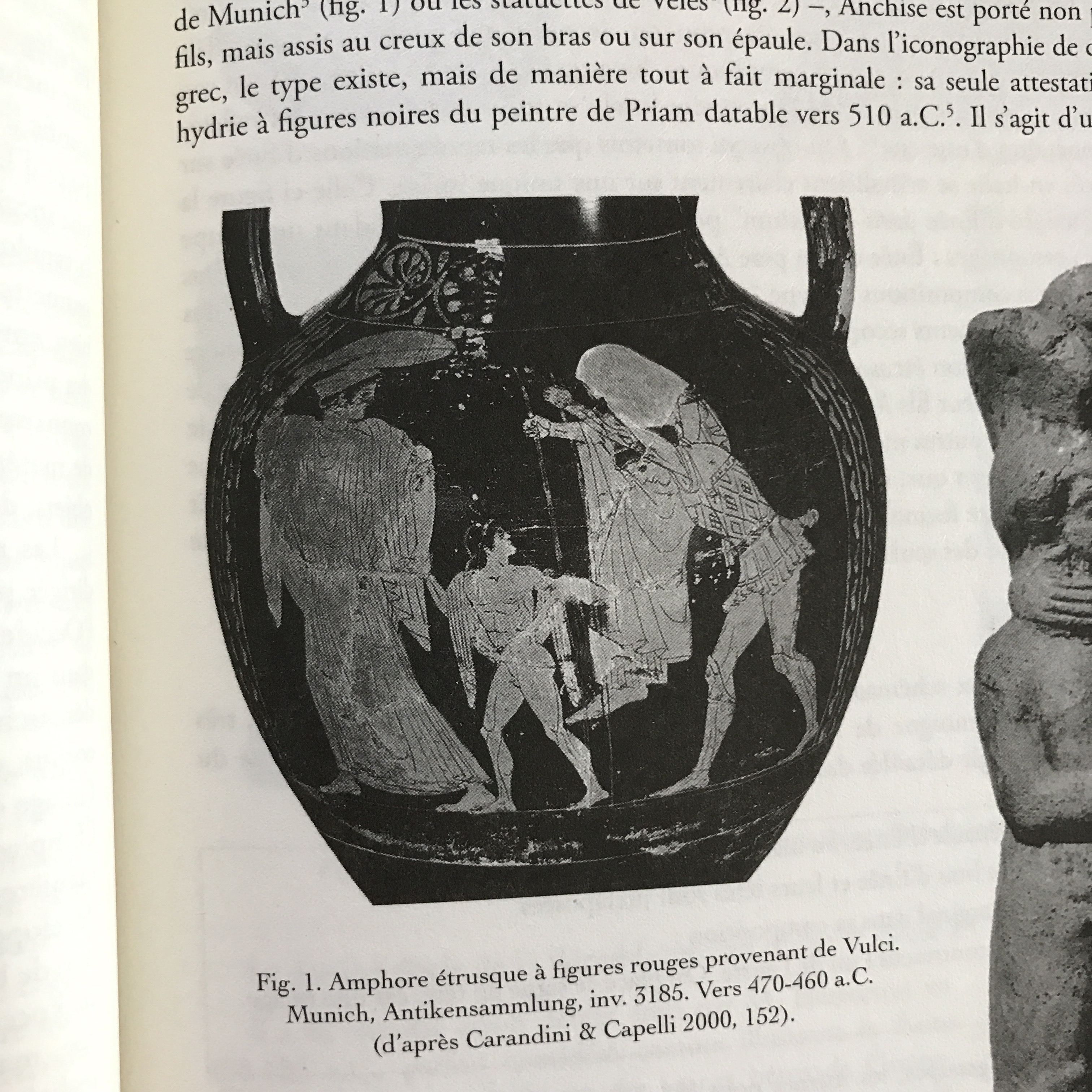
So clearly this is Aeneas and his family (Ascanius (a.k.a. Iulus), Anchises, etc.. fleeing Troy). However, I don’t think that’s the doliolum or any other sacred object on the wife’s head (whatever her name is). That is almost certainly the family’s worldly possessions. This is just how Greek women are depicted carrying heavy loads on their heads:
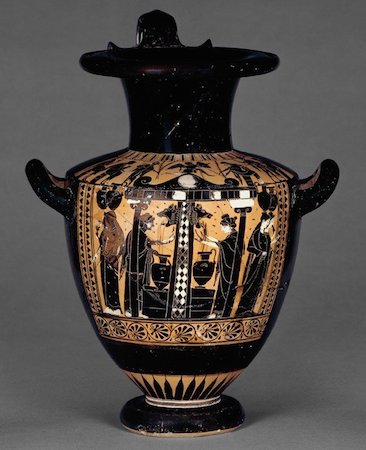

Notice also that the son holds his mother’s hand not his father’s in the above vase.
Update 7/1/2020:
My view is shared by “N.M. Horsfall, Antike Kunst 1979, suggests that the object carried by a female companion on the Munich vase showing the flight of Aeneas from Troy is not a doliolum containing sacra brought from Troy, but simply a piece of luggage.” This is a quote from Crawford’s Edinburgh Catalogue as quoted on McCabe’s website.
I’m really excited I get to participate in the 13-14 Oct 2017, Numa Numa Conference at UMich, Ann Arbor, MI. It’s always good to get some coins into any conversation, but especially one on Classical Receptions. Here’s my paper abstract:
The Early Flexibility of Numa’s Image
Numa has always been “good to think with” at least as early as we can identify his tradition in art and literature. This paper seeks to contextualize and explain our very earliest testimony with a specific emphasis on early material culture. In doing so it aims to problematize the later reception of any one singular or canonical ‘Roman’ tradition around this king.
Our pre-Ciceronian testimonia is very scant indeed. Only four late second century BC historians L. Cassius Hemina, L. Calpurnius Piso Frugi, C. Sempronius Tuditanus, Gn. Gellius are known to have discussed Numa. And of those from the first half of the first century only two, Paulus Clodius (date disputed) and Valerius Antias (80s-60s BC). Even more telling is that we know of these earlier references primarily through antiquarian sources, such as Pliny the Elder and Macrobius. Besides these historical tidbits of the early Numa tradition, we have just one satirical poetic reference from Lucilius (c. 100 BC; 15.485) The Ciceronian corpus is equally sparse in the early days of his career and just three references total from his numerous public speeches (63 BC, pro C. Rab. 13.10; 62 BC, pro Sulla 22.9; 57 BC, de Domo 127.2). None in his voluminous corpus of surviving letters! It is in his later oratorical, philosophical and legal treatises that Cicero helps to form our conception of Numa: four references in the De Oratore (55 BC); six references in the de re publica and de legibus (51 BC); and then four references in Paradoxa Stoicorum, De Finibus, and De Natura Deorum (46-45 BC). Thus, while we may safely assume that Numa has a place in the most influential pieces of early Latin literature, say the Annales of Ennius, and that this influenced the later traditions we know so well, we have little to no surviving evidence of the formation of this tradition.
Numa does, however, appear on Roman republican coinage of the first century BC and within certain limits this coinage can be accurately dated, just as can be done with the Ciceronian corpus. This numismatic iconography is remarkably diverse, emphasizing different regal and religious attributes of the Roman king (RRC 334/1, 97 BC; 346/1 & 3, 88BC; 446/1, 48 BC). This diversity deserves explanation as it has an extended influence over the later reception of Numa’s image and identity. A good deal of contemporary contextualization can be provided by the early (pre-Augustan) literary tradition, but the specific references to Numa in both these texts and images needs to be brought into dialogue with the evolving Roman perspective of kingship at Rome in the tumultuous last century of the Republic. To that end this paper demonstrates what is unique about Numa’s image in this early period as contrasted with other early Roman kings, Romulus, Servius, Ancius and Tarquin most specifically.
I am only slightly embarrassed that I had no idea until I was making travel plans and talking to my partner in life about the conference, that the title was a reference to the very first viral video. I do, however, look forward to figuring out how to include the viral video in my talk somehow!
—
Snippets of interest for later reference:
A. Smith on K. Galinsky on Numa and Augustus:
“Particularly interesting is Galinsky’s discussion of Augustus as a second Numa (35-37). Numa was one of Augustus’ primary models of inspiration because Numa was associated with Apollo and because he was the quintessential paradigm of reverence for religion. But inasmuch as that king had already been claimed by the gens Calpurnia, any connection with him necessarily had to be subtle. One way Augustus forged the connection was through an issue of coinage in 23 that presented his own head on the obverse, and Numa’s on the reverse. Octavian’s second Romulus was being transformed throughout the 20s into Augustus’ Numa. Galinsky might have called attention here, or in his discussion of literature in ch. 5, to the prominence of both Numa and Augustus in the final book of the Metamorphoses. He could have also mentioned the ancilia that were said to have dropped from heaven during the reign of Numa and in Aen. 8 are described, as is Augustus, as being on Aeneas’ shield. Whether or not these same ancilia of Numa were depicted on the clipeus virtutis, presented to Augustus in 27 (v. Hardie, 367), they certainly provided a fitting mythological prototype for that shield and for the Virgilian shield of Aeneas (cf. West, PVS 15 [1975-76] 1-7).”

This is from Feliks Gross’ bibliography of Cecil Rhodes, Rhodes of Africa. Notice how the imposition of the colonial government’s tax intersects with the private enterprise of individual colonists. It provides the means for extracting both labor and the interest on the debt. If you’re not familiar with the slang Kaffir, it is a racial slur derived from the Arabic word meaning ‘unbeliever’ or ‘one without religion’, and on par with ‘nigger’ in degree of offensiveness.
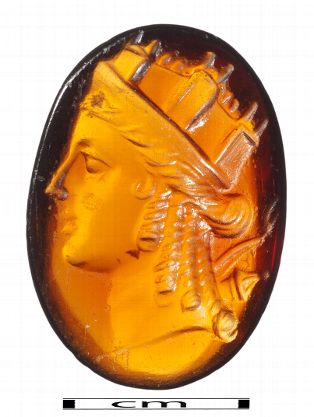
I don’t mean to suggest a direct prototype, just the sort of possible inspiration for the design of RRC 419/2. The above gem is described as “Head of Tyche (Cleopatra I?) Wearing the crown and four loops of isis, profile to the left. Behind the back of the neck, emerge a bow and a quiver.” Maybe. Why the bow and quiver? Some Artemis connection?
Notice the coin below that a Hellenistic royal diadem is interlaced with the turreted crown. I’ll need to think about what that might mean more…
I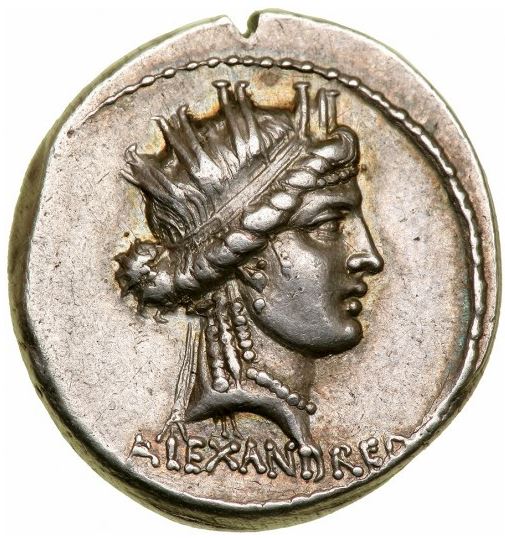
This blog post is largely obsolete given my 2018 publication, but it is preserved to story the footprints of that research and drop in new similar iconography.
—
Added 5/9/2022:

—
Original post:

So, this just came up in a database search for something else entirely. Image links to entry. This is a section from plate “K: Histoire égyptienne”
I’ve blogged very briefly about connections between RRC 399/1 and intaglios before.
I, however, talked a great deal about this parallel in Tacoma last May. Here’s what I said and the slides that go with it. I’m making this post so all the material on this topic is together on the blog when (if) I come back to the coin type.
—
Excerpt from my lecture: ‘Mass Production and Markers of Identity: A Prolegomenon to the Study of Glass Pastes in the Roman Republic’

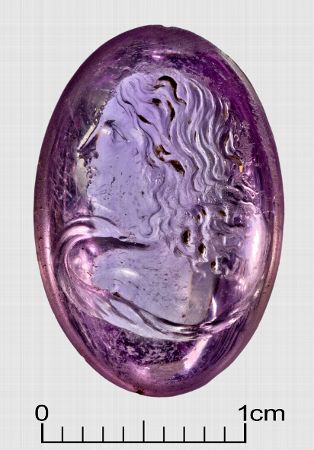
The reasons for these marine types have been the matter of intense speculation in the 20th century. Suggestions have included Rome’s conflict with Sertorius or the pirates, and the mythical foundation of the gens from a union of Neptune and some nymph or mortal woman. The most enduring theory has been that Hellenistic depictions of sea gods are appropriate for the Creperii because other members of the same gens are known to have been active in the trade on both Delos and Athens in the late republic. The later point was loosely tied to the existence of known precious gems by Crawford, like this small Cornelian. I would note that this particular precious gemstone intaglio just happens to be the same diameter as a the dies used to strike denarii.
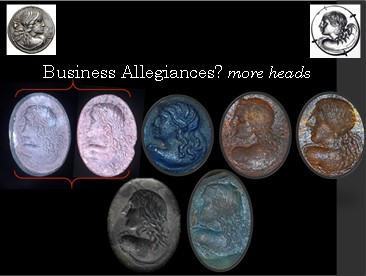
What I find more historically significant than the connection between the precious gems and the coins alone is that this design is found in remarkable abundance in glass. Of these, six come from the British Museum and one from the Met. These are just the ones I’ve stumbled upon in my initial survey of the material, and by no means represent the sum total of the surviving glass pastes of this type. Based on this, I would anticipate finding dozens more in a thorough survey of extant specimens. They are clearly not all made from the same mold, although at least two are.
These mold-made glass pastes would not have been desirable objects for the most successful Roman negotiatores in the Greek East, such as we know some members of the gens Crepereii to be. We even find other Crepereii as negotiatores in Gallia Narbonensis in the 1st century BCE. So who was using these imitation gems? Specifically the clients or agents of the Crepereii? Or just any sailor seeking a little extra divine protection at sea? Is it a recognizable family symbol or just popular representation of a popular patron deity? Regardless the coin type now seems less the artistic fancy of a young equestrian hoping to join the cursus honorum and more an explicit attempt to associate the moneyer with a well-known, popular piece of iconography
—
9 plateaux d’une boîte de 1540 moulages en soufre rouge, accompagnée d’un catalogue manuscrit. La classification thématique suit le schéma de Winckelmann; elle comprend 18 séries, répertoriées de A à S. Seuls les plateaux 10 à 18 sont conservés (séries K à S)
A à G : Mythologie
A : Saturne, Jupiter et Isis (71 soufres)
B : Cérès, Neptune et Minerve (64)
C : Hercule, Iole et Déjanire (73)
D : Bachhus, Bacchantes et Bacchanales (76)
E : Apollo, Diane et ? (80)
F : Esculape, Minerve et Sacrifices (79)
G : Mars, Vénus et amours (100)
H : philosophes, poètes et orateurs (99)
I : Rois de Macédoine, Syrie et Egypte (75)
– K : Histoire égyptienne (81)
– L : Histoire grecque et troyenne (93)
– M : Histoire Romaine (76)
– N : Rois et consuls romains (98)
-O, P, Q : Empereurs et impératrices (223)
-R : Masques et Chimères(72) ; vases(22); sphinx(9)
-S : animaux (72); Priapes (55)
Seules les séries de K à S sont conservées, c’est-à dire plateaux 10 à 18
Pour chaque pièce est donnée l’indication du sujet, de la matière de la pierre originale; dans quelque cas, mention du lieu de conservation (notamment Cabinet de Florence, du roi de Naples, du baron de Stosch, les cabinets de France et de Vienne, des collections privées romaines, comme Strozzi, Albani, Capponi, Altieri, Odescalchi, Barberini, Molinari, l’abbé Franchini à Sienne, Mylord Carlisle, le duc de Devonshire, le duc de Leeds.
Série proche de celles de Christian Dehn (1697-1770) mais le système de classification ne correspond pas au catalogue de Dolce.
Later addendum same day:
Information here.
It is great when images and collections go online but using them outside your native language and when search terms are non-obvious to a specialist can be a real bear.
I decided to try to come up with some basic guidelines for myself for the Paris collection.
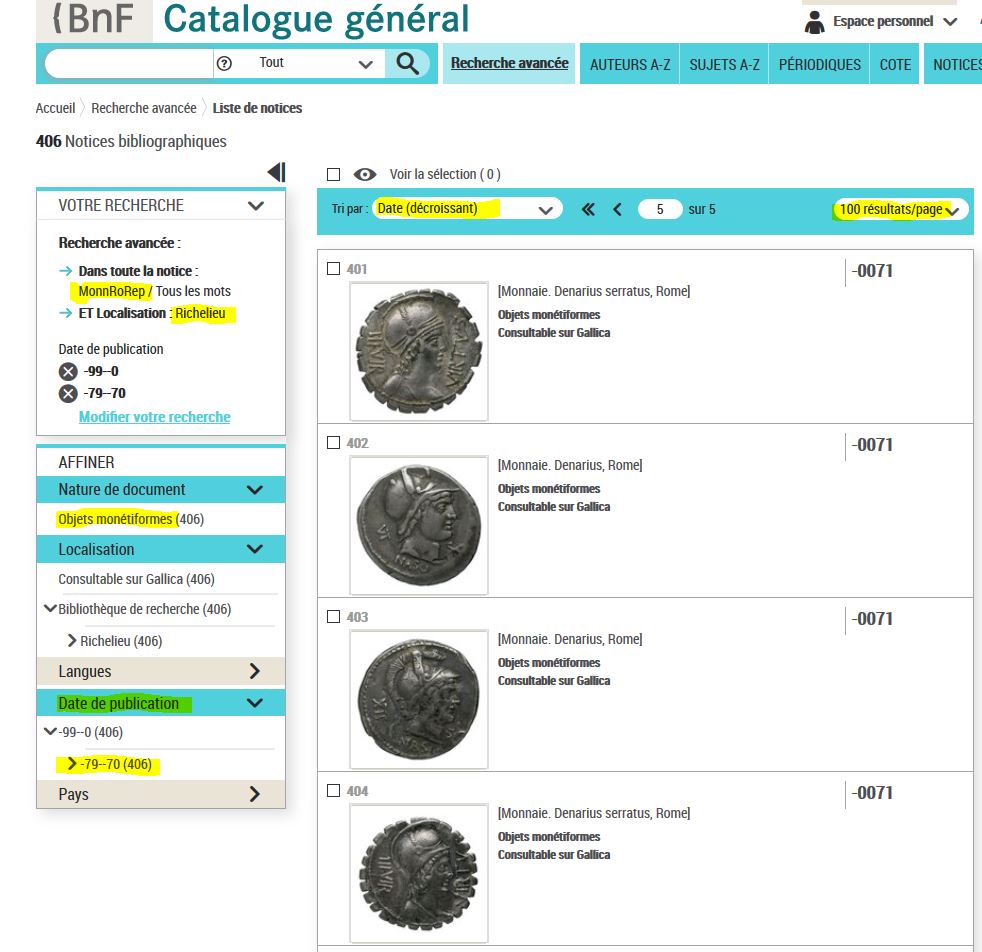
The best default search term for republican coins is MonnRoRep. This returns 22,752 specimens. That’s not all of them but its a really good start. The cataloguing just isn’t uniform.
Then, limit your search returns on the left hand menu by Date de Publication. This lets you limit your results first by century and then by decade. (See image below)
Once you’ve done this, you’re almost at a manageable number of returns. Sort your results by date and select 100 résultats/page.
The bad news is that of those with the MonnRoRep label, only 8,957 specimens have dates attached. That leave another 13,795 specimens that need visual review. That is only 138 internet pages to browse. So after you check the dated specimens, go back to your MonnRoRep search and sort results by date (croissant) to put the undated specimens first. Then add to your search term the denomination of the specimen you’re looking for, this will reduce your work a little.
Let’s say you want to use the BnF catalogue for other coins, not republican. The best starting point is to limit your search to ET Localistion: Richelieu (the coin cabinet) and select under Nature de document: Objets monétiformes. For the Roman empire they seem pretty good about adding the the emperor.
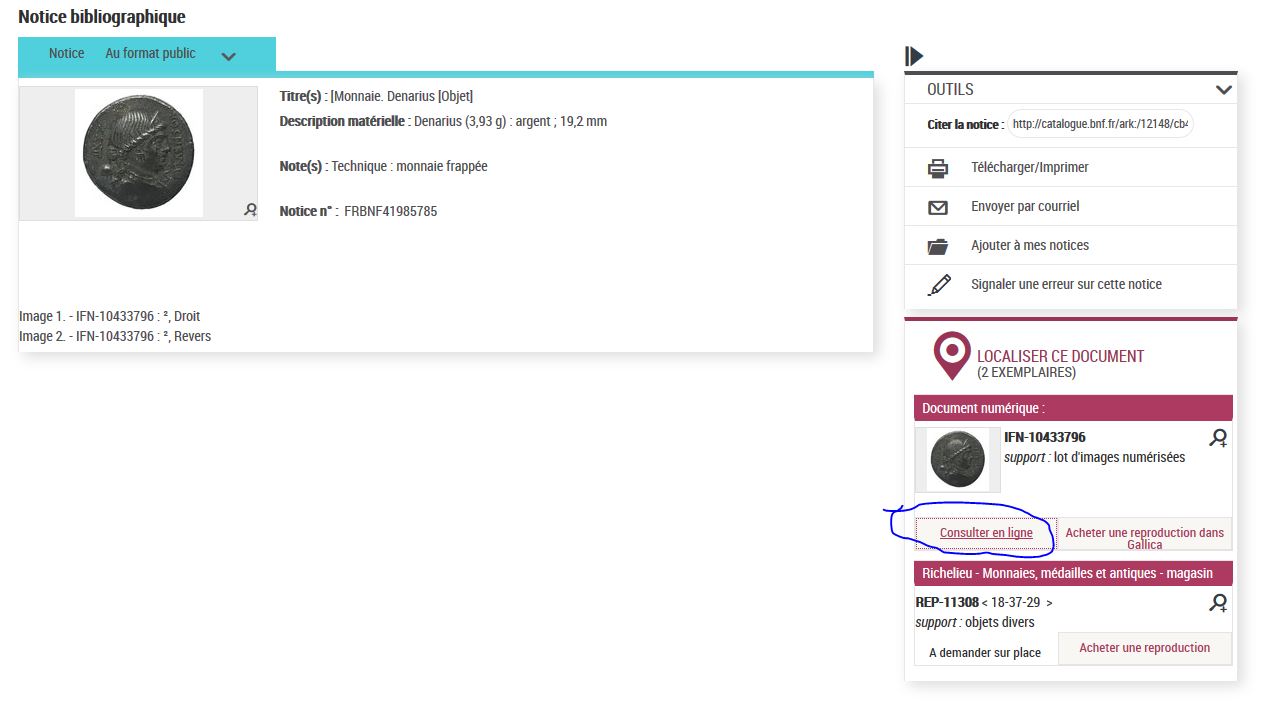
Once you find the entry you want it may not be immediately obvious how to view the whole coin at the highest digital resolution. This image should help you figure out where to click (see where I’ve circled in blue):
 Liv Mariah Yarrow