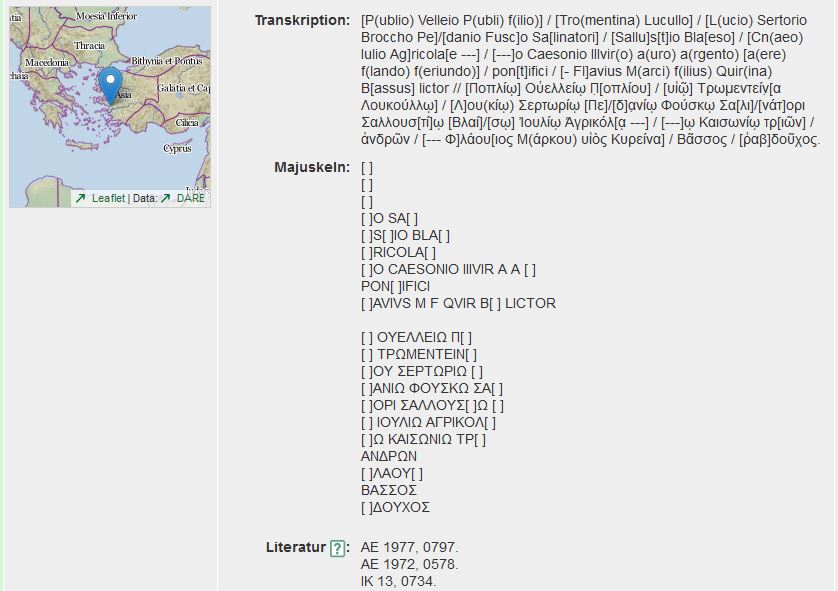
John Ma on twitter offered a translation of this newly discovered inscription:
“I am Maternus, new Herakles, who was best in the Muses and unconquered in the gladiatorial schools. I killed Pasinikos, and myself descended to the underworld with him”
Public Domain image by Jona Lendering taking at the Naples museumSketch in the public domain
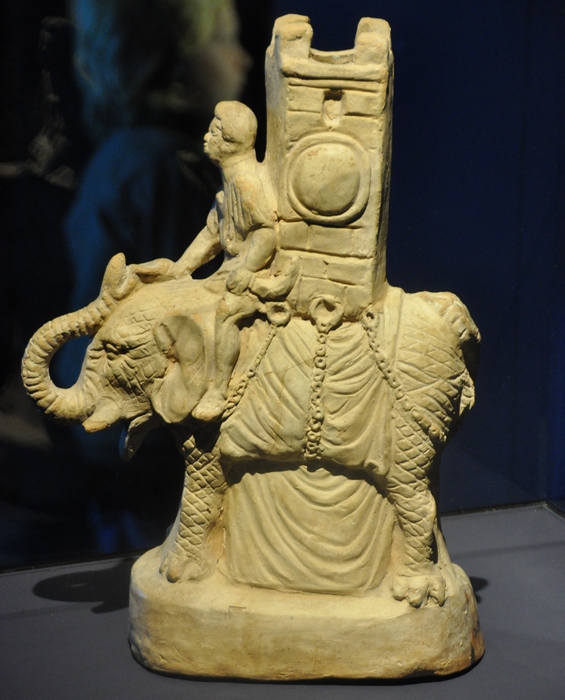
“VI.15.5 Pompeii. Clay figurine of an elephant carrying a tower on its back, 0.35m high incl. base. The figurine served as a vessel for liquid. The liquid was put in through the top of the tower, which was open. See Notizie degli Scavi di Antichità,1897, p.25, fig. 3. It was found in October 1895 in or near the garden niche, together with a group of other objects. See Notizie degli Scavi di Antichità,1895, p. 438. According to Jashemski, this was also a jug, and was now in the Naples Archaeological Museum, inventory number 124845, Ruesch 442. See Jashemski, W. F., 1993. The Gardens of Pompeii, Volume II: Appendices. New York: Caratzas. (p.155)” – quoted from Pompeii in Pictures
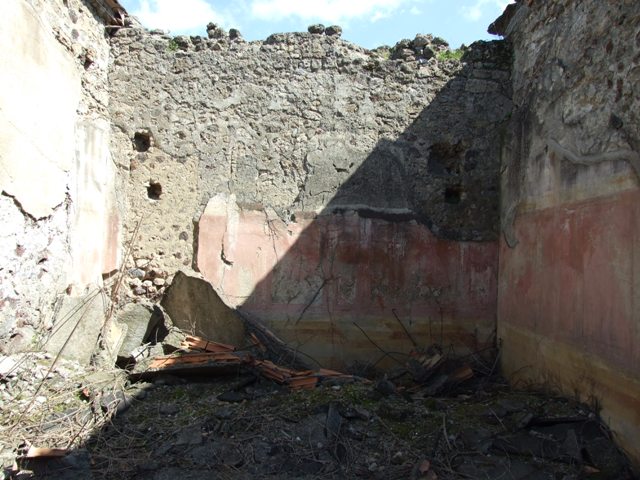
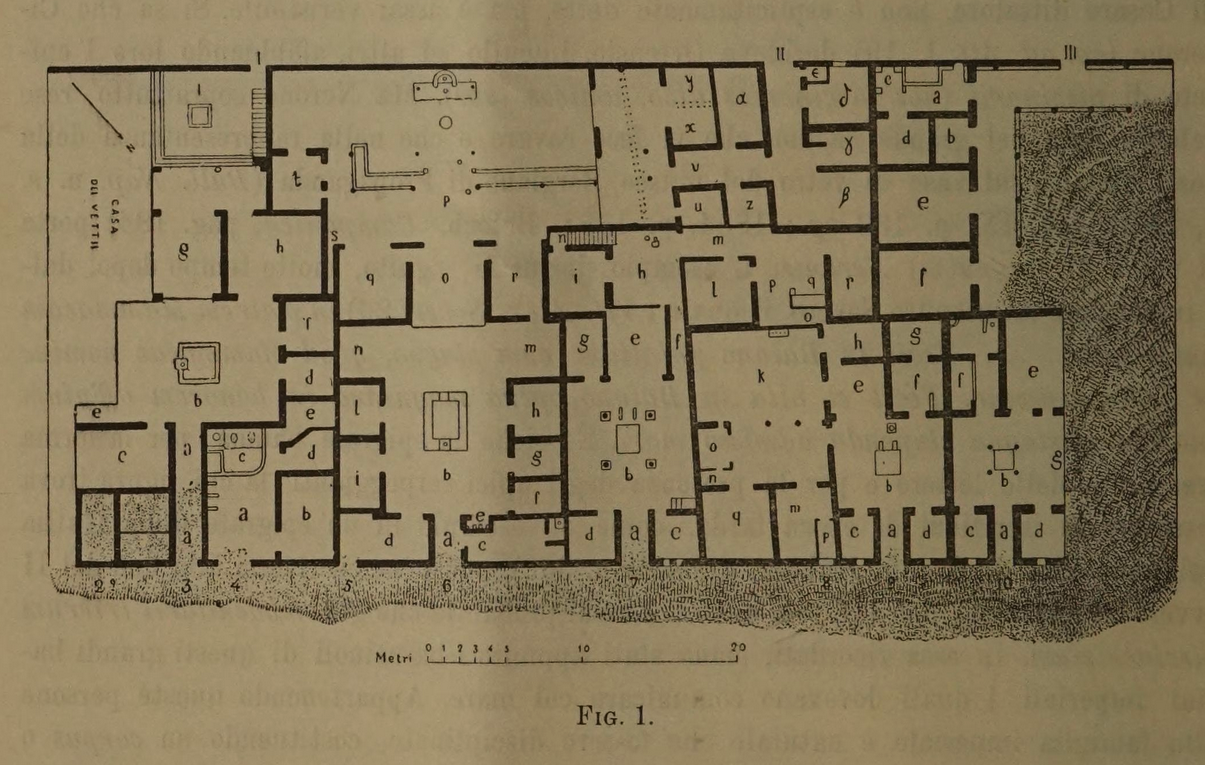
The niche against the back wall of P is the approximate find spot.
Machine translation:
“Along the eastern side—and that aforementioned section of the southern side—runs the rainwater channel, unusually wide and lined with red plaster. Originally, the peristyle most likely housed a masonry *triclinium* (dining couch), surfaced with *opus signinum* and sheltered by a pergola supported by small octagonal columns clad in green stucco. Subsequently, during a renovation of the house, the masonry *triclinium* was demolished; only a portion of the western couch remained intact, serving as a solid base upon which to rest the walls of a vaulted niche—complete with a small pediment—which, having been decorated (perhaps at a later date) with shells and mosaics, was destined to become a fountain. Still standing there today is a handsome travertine wellhead—fluted and capped by a slab of *bardiglio* marble—and, situated directly in front of the niche upon that same solid base, a circular masonry *monopodium* (pedestal), surfaced with stucco imitating *giallo antico* marble and adorned with moldings and a relief decoration of small leaves, likewise executed in stucco.
“Within the niche just described—and in its immediate vicinity—a group of sculptural works came to light in October 1895; this assemblage is not without significance, both for its overall composition and for the subject matter depicted in some of its individual pieces (cf. *Notizie* 1895, pp. 4388 ff.)
….
“Terracotta statuette; total height (including base): 350 mm. An illustration of this piece—reproduced here from a photograph—is provided in Fig. 3. It depicts a striding elephant bearing a tower upon its back, ridden by a Moor. Upon the elephant—whose back is draped in a broad housing that descends beneath its belly all the way to its feet—rests a quadrangular, crenellated tower. This tower is secured to the animal’s back by means of three chains, fastened to six rings embedded at the base of the tower (three on each of its two sides); of these chains, the first encircles the elephant’s neck, the second its belly, and the third its hindquarters. Each of the tower’s lateral faces features a large round shield, surmounted by a small window. Riding in front of the tower—positioned almost directly over the elephant’s neck—is a Moor clad in a short tunic; holding a sickle-like implement in his left hand, which rests against his corresponding thigh, he extends his right hand to offer food to the elephant. The elephant has curled its trunk backward to grasp the food with its tip, which is shaped like a serpent’s mouth. The elephant’s tusks are broken, and the Moor’s head has been reattached; the statuette shows signs of damage in several places. It also served as a vessel, with liquid being poured into it through the top of the tower, which remains open.
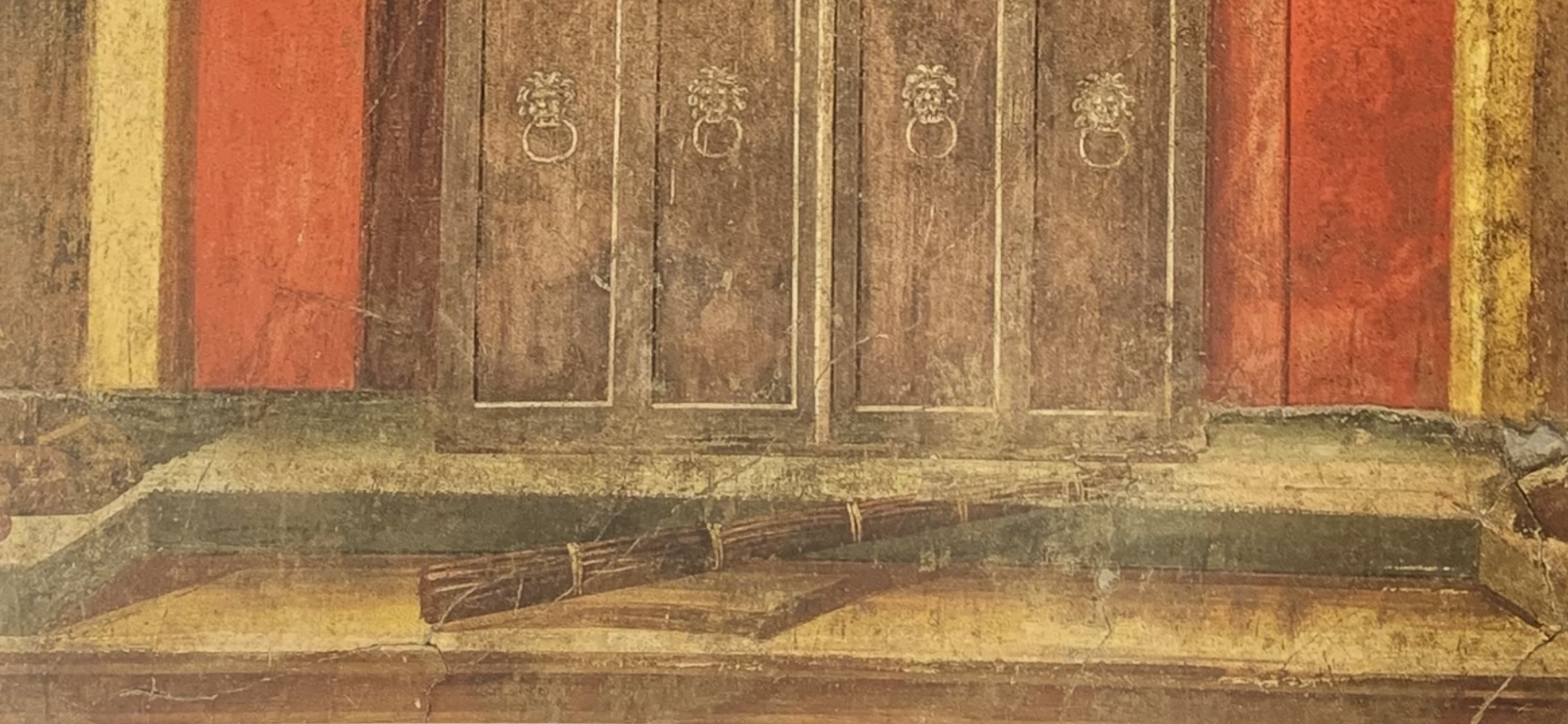
So strange how they seem to be thrown down before the gate…
Update 10/5/22:
I think it is a torch (still a weird thing to leave on the ground at the gates). What convinced me was seeing the torches on this Campana plaque (relief)
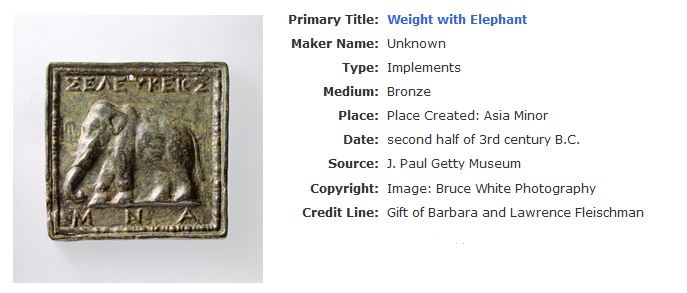
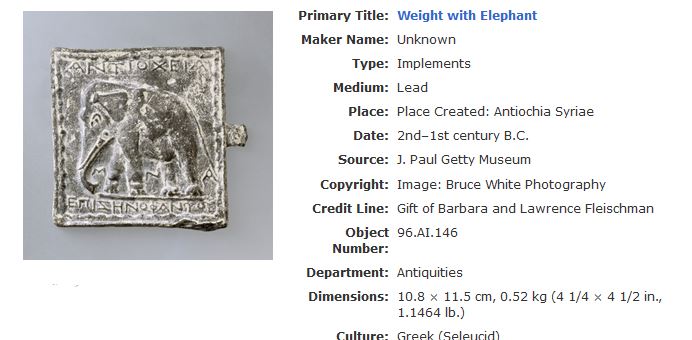
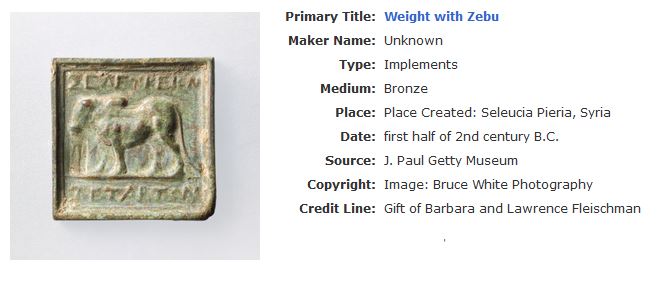
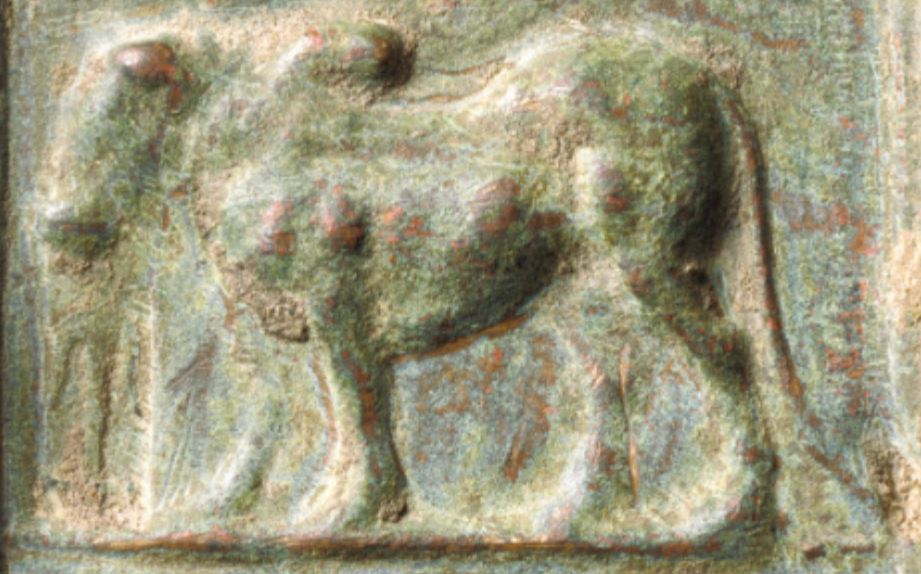
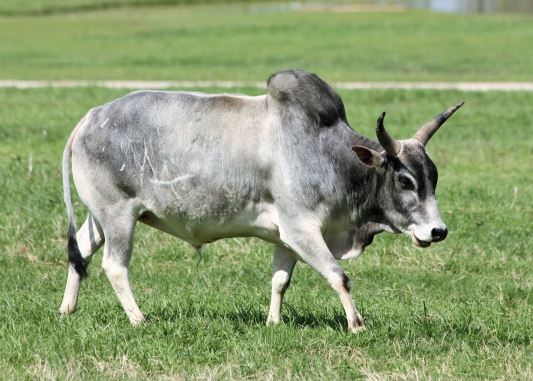
Also I don’t believe this last is supposed to be a Zebu or Brahma Bull… Looks too much like a badly drawn elephant esp a mash up of African and Indian features….
I grant you the hump looks vaguely like this a zebu hump but creature on weight has trunk and also domed scull and curved back and NO HORNS.
Frankly I’ve my doubts about its authenticity….
Must thank Eduardo García-Molina on Twitter for bringing these weights to my attention.
“On metrology, there’s been a lot of work by Kushner-Stein and Finkielsztejn on Seleukid weights. I wonder where these fit into F.’s theory (no enshrined in a narrative in this big article by Honigman et al. in a vol. on Antiochos III from a few years ago) of a major reform in the time of Antiochos IV.
Finkielsztejn, G. “Poids de plomb inscrits du Levant: une réforme d’Antiochos IV?” edited by M. Sartre, 35–60. Topoi Suppl. 8. Lyon: Maison de l’orient méditerranéen, 2007.”
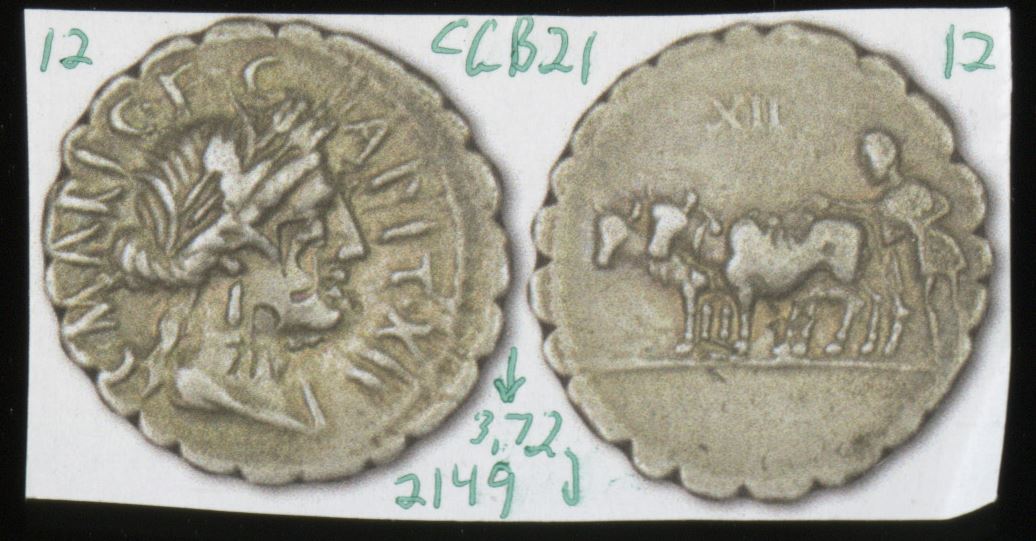
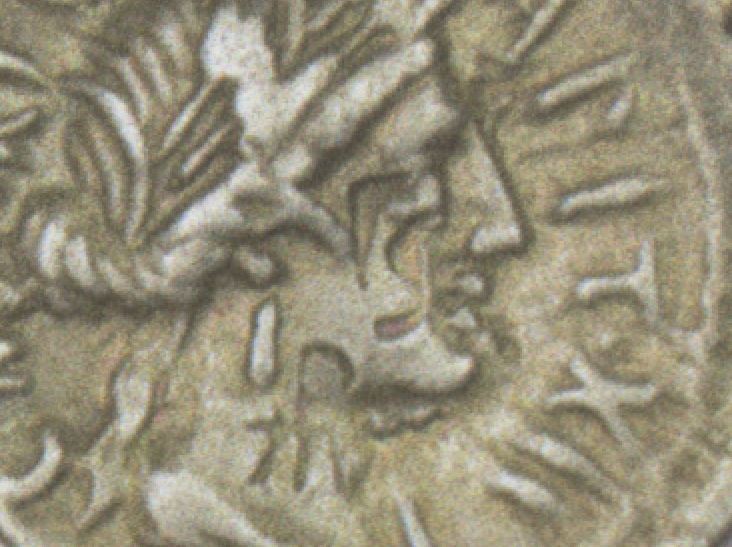
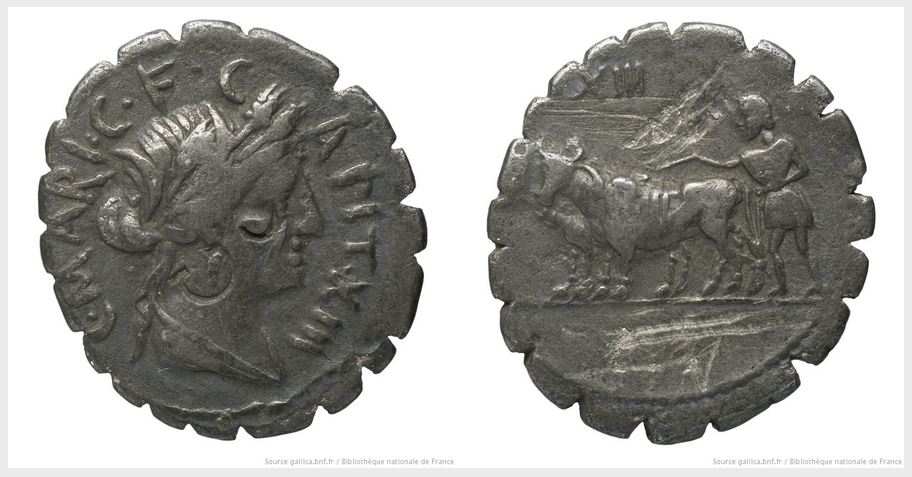
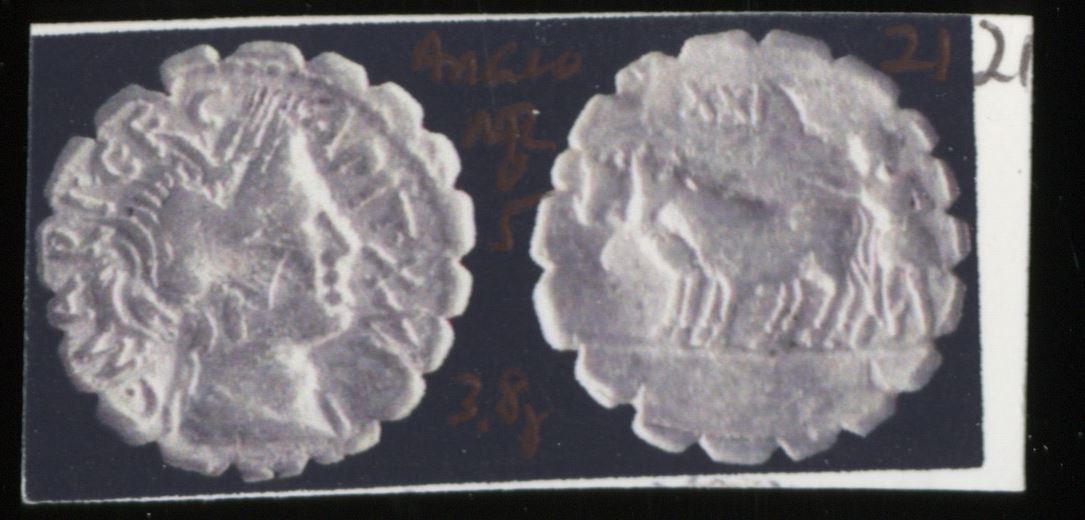
What’s been stamped on the face of this specimen of RRC 378/1a? We saw a weird S very recently on this blog and in the land of twitter, but I don’t think this is the same…
Ideas welcome. Doesn’t look much like a test punch to me….
…
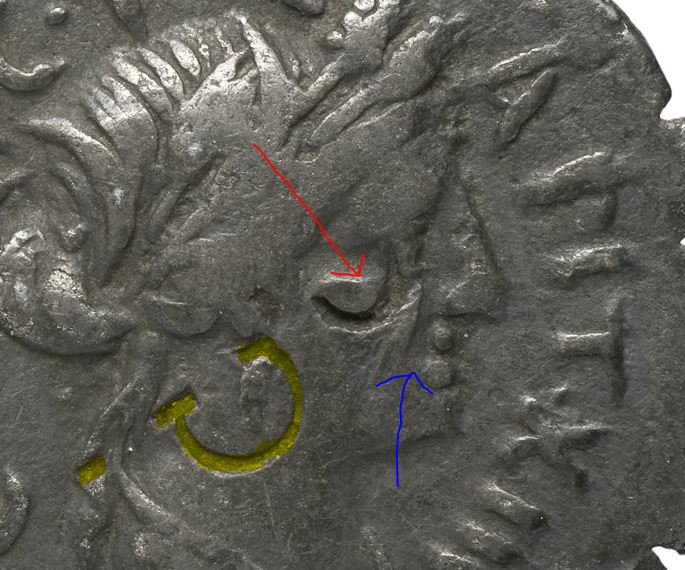
This is not an ‘S’ but it also doesn’t look like a test mark. The specimen is in Paris. Red is clearly a test punch. Blue might be a test gouge.
—
This is something different again but odd as well. Bad photo but seems Sigma shaped.
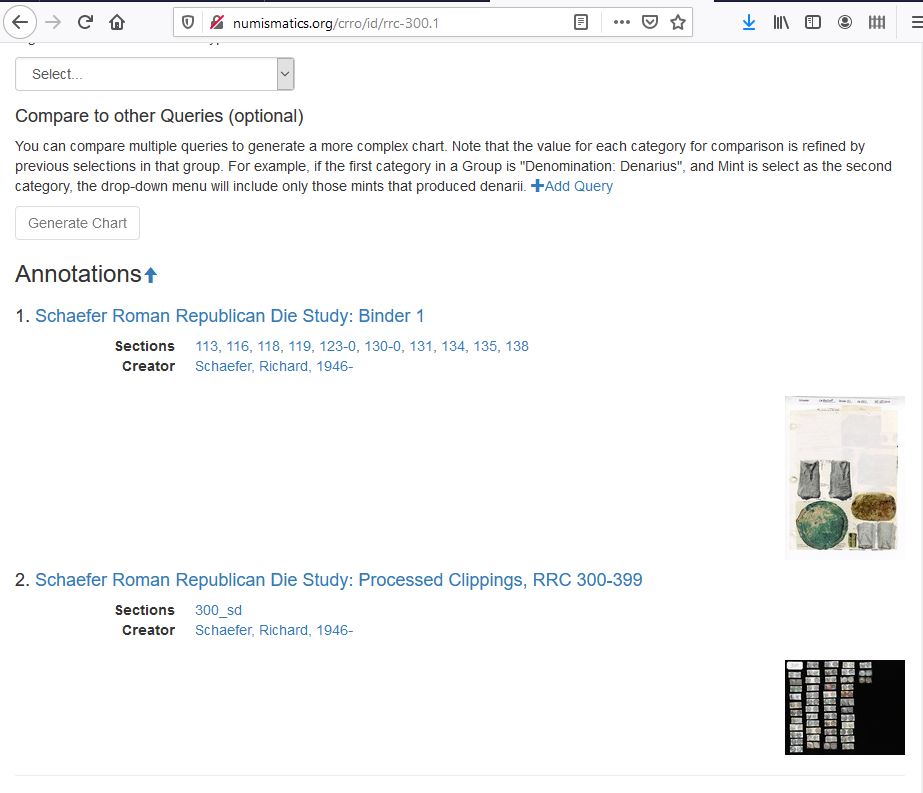
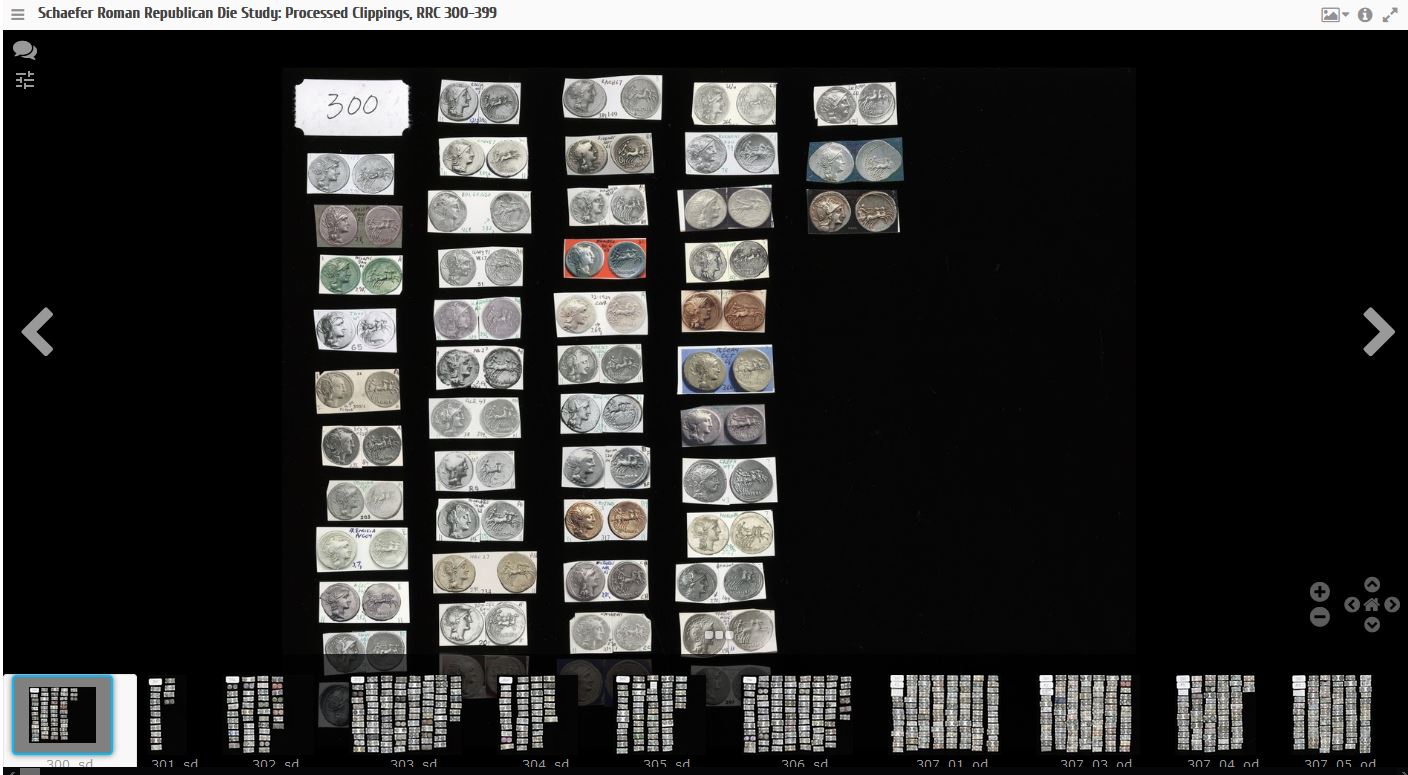
The first release of Schaefer’s die study (RRDP) was just the binders. NOW you can see all the analyzed specimens! All digitized clippings have been uploaded to Archer, the ANS archival portal, in batches of 100 Crawford numbers. Again, using CRRO is the best way to find the images of a type. Just like you’d do to find a specimen in the Binder (direction here), you just go to the bottom of the CRRO page and click the link to Archer.
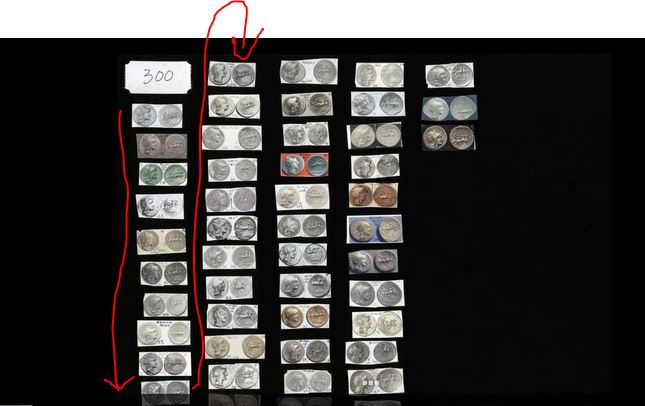
Processed clippings means that they represent photographs of die-analysed specimens that for MOST issues represent dies are already illustrated in the binders. Typically Schaefer left the two specimens that best represented a die in the binder and then placed the rest in his drawers (output).
To scan the drawers Dr. Richardson dealt out the images with the first image in the drawer at the top left corner of the scan and then down in a column before then starting an new column. This allows you to reconstruct a drawer. Some types took more than one scanner page. You will need to consult the binders for the die study, in particular to match die names in the processed clippings to the die names on specimens in the binders.
The exception to all this is ODEC (One Die for Each Control Mark). These types are only processed clippings and do not have corresponding pages in the binders. For example, you might check out my favorite, Papius (RRC 384/1).
For ODEC the order that the images are laid out in the scans are the die study. The die names are also labelled and should always be double checked against layout. (Human error is real, esp. in a project of this scale)
Is that it? Has Schaefer’s archive given up all its treasure? Sadly no.
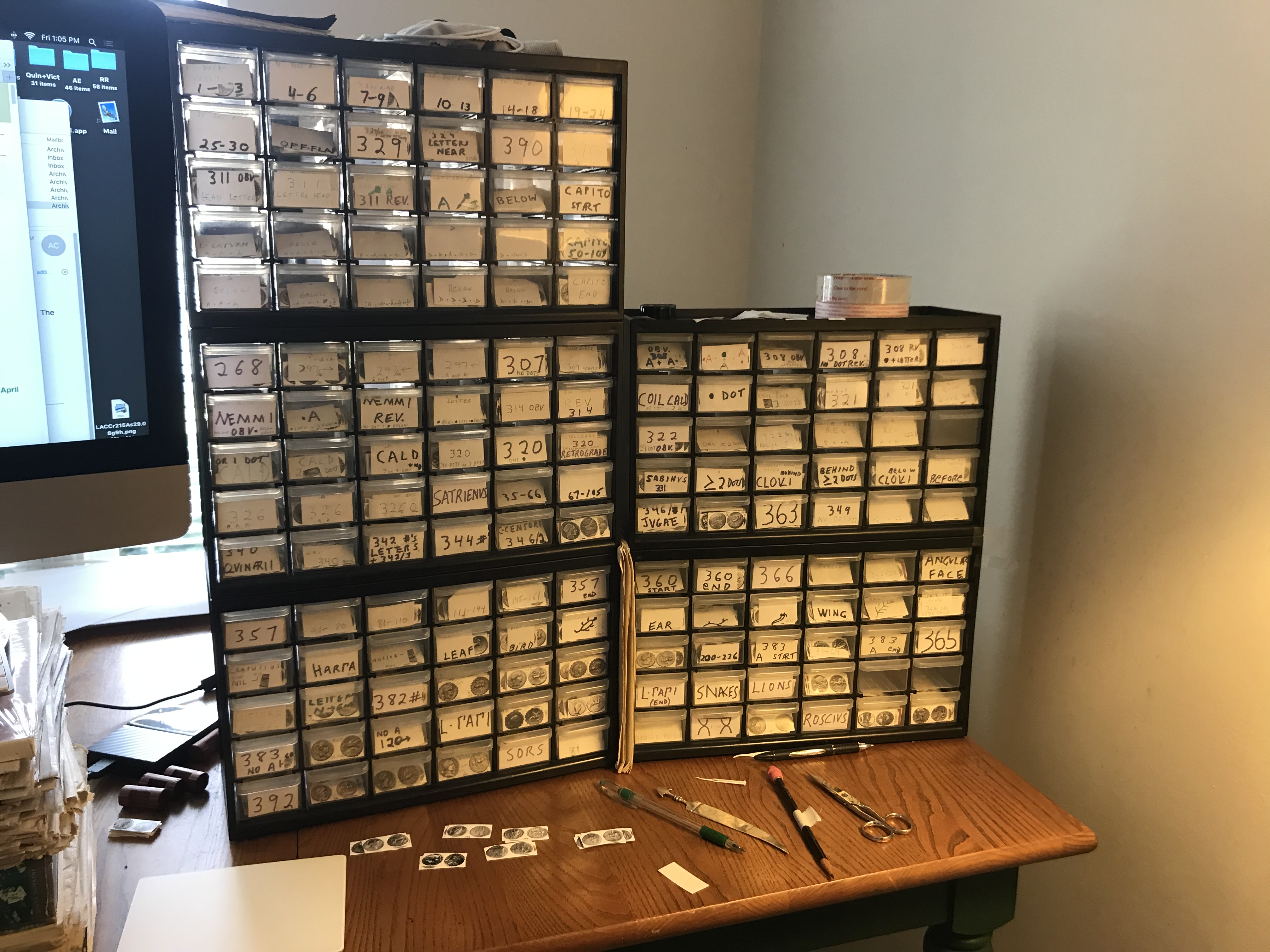
Schaefer has thousands and thousands of un-analysed (prepossessed) clippings only a very small fraction of these could be scanned because of time constraints. Dr. Richardson did put together a spreadsheet documenting the extent of this collection. The clipping are organized by type, just not die organized.
Things to expect in the future.
A full finding aid to the collection incorporating and refining much of the preliminary information archived here on my personal blog in draft form.
Disambiguation to improve links on CRRO. Schaefer did not always use Crawford’s subtypes (a, b, c…) and this means that it is more difficult to create links from CRRO pages that follow Crawford to the right Schaefer pages. HOWEVER, just because you don’t see a link in CRRO doesn’t mean there aren’t pages in Schaefer’s Archive. It more likely means we’ve not yet manage to create the links. I welcome emails to help identify these types. For clippings you can easily find these yourself, but if you cannot locate the right binder, I’m happy to provide this service.
Have a question? Check here first. If that doesn’t answer it just email me!
With deep gratitude to Ethan Gruber for making this release possible!
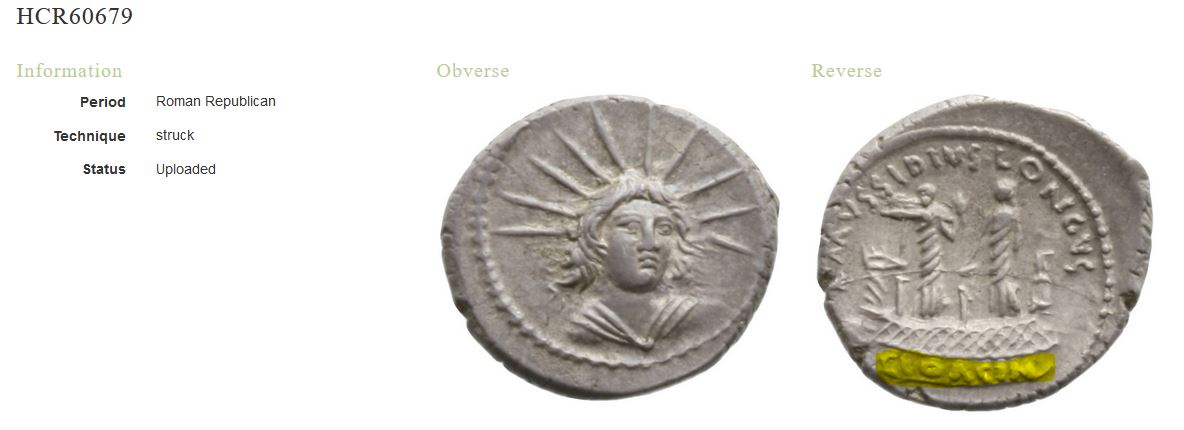
CRRO refs to different types with relevant reverse.
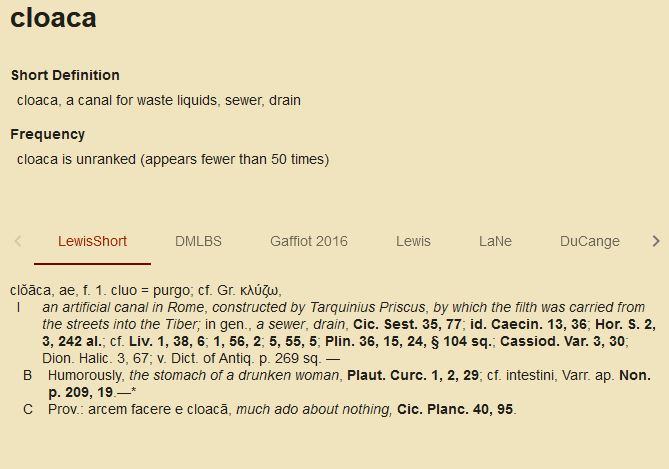
This specimen got me thinking in a prurient way about what fun it might be to explore ancient uses of cloaca and its modern usages.
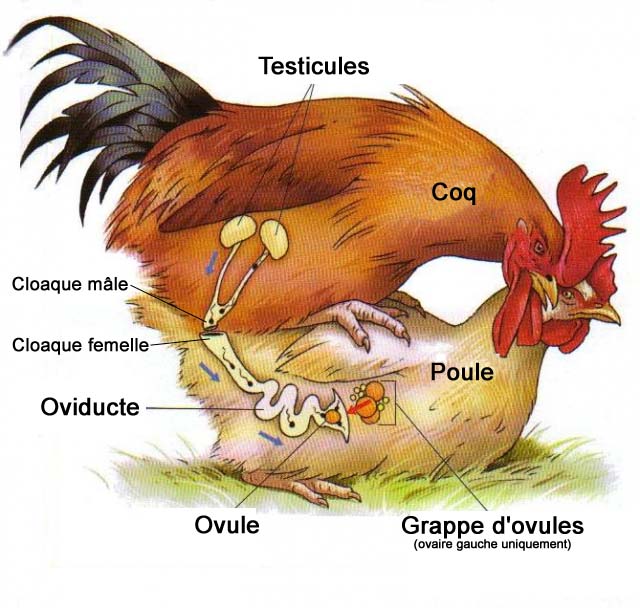
I’ve an immoderate interest in chicken sex which is called the cloacal kiss.
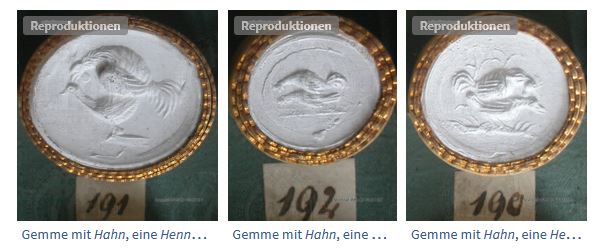
I blame my interest on the bad influence of Roman intaglios which regularly show this act (which the intertubes tell me are pretty realistic representations):
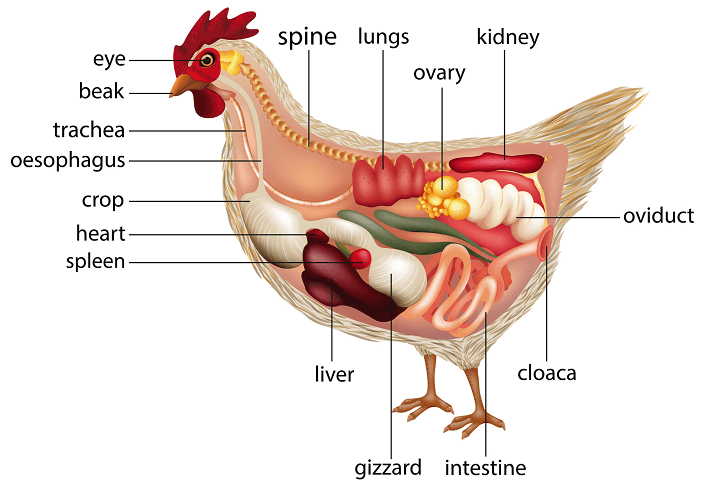
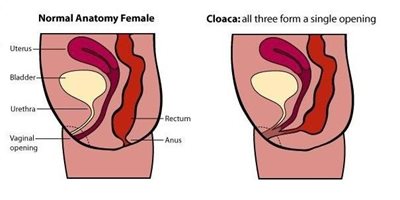
In anatomy cloaca means one hole out of which everything comes, both digestive waste and reproductive products….
Which leads to this relatively common non-normative anatomical development that is usually corrected by surgery in humans:
What Greek and Latin Roots student wouldn’t want this lesson?!
I thank a colleague on twitter for adding this comicto my list of modern uses of the term.
I’m very grateful to Prof. Sinclair W. Bell for reading the below post and sending me the following article which I had not read when I wrote the original post! I’ve annotated my original post to highlight our agreements and disagreements.
—Original post with annotations based on Daoust–
I am very grateful to Dr. Jeremy Haag for sending me an email asking my thoughts on this relief. I found I had quite a few… As often happens.
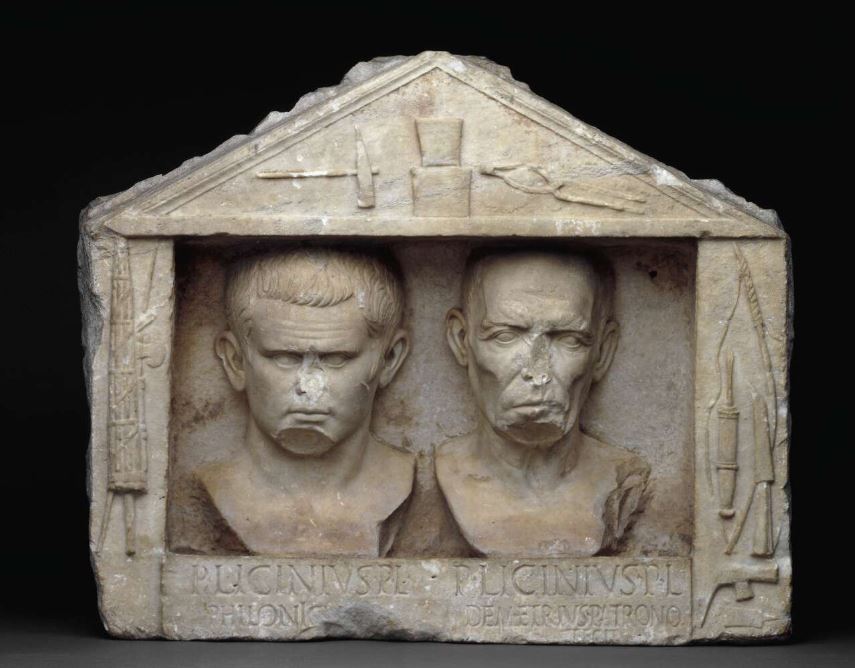
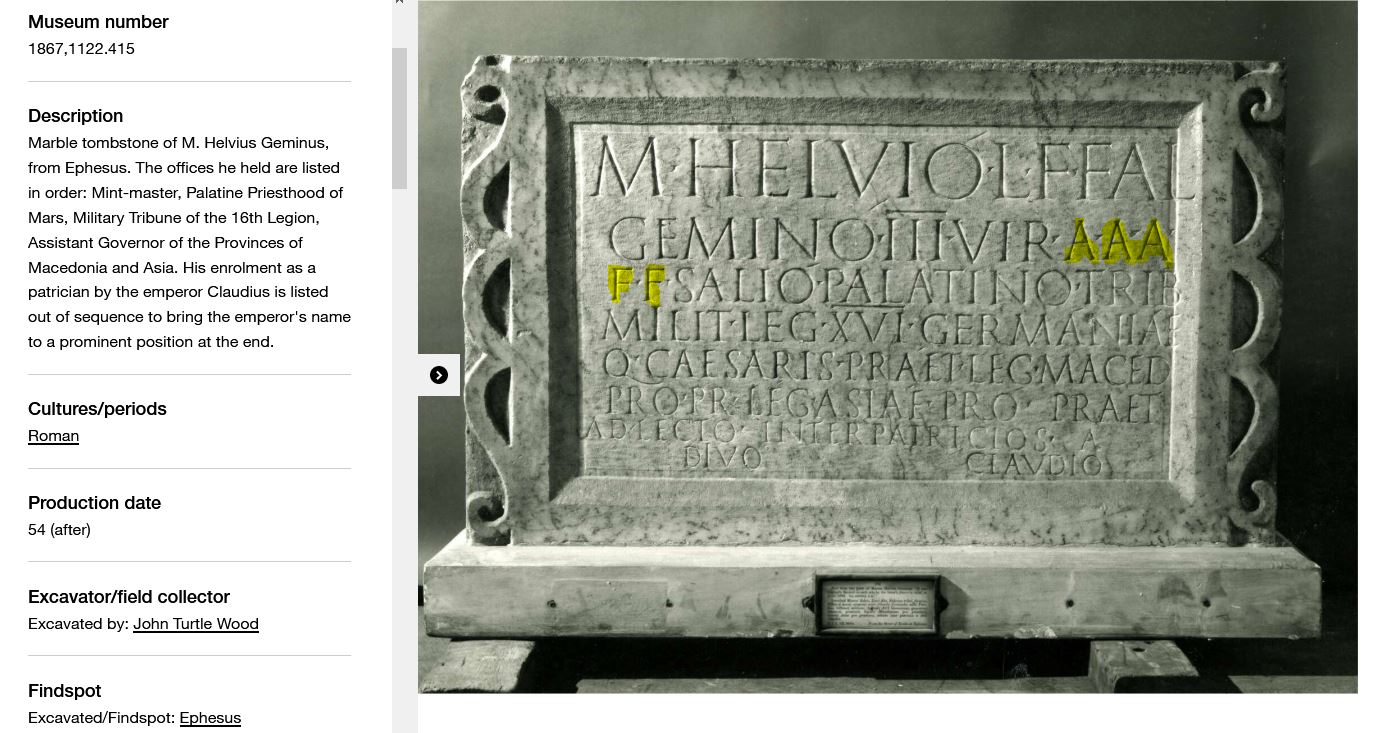
BM 1954,1214.1has since Vermuele been taken as a possible illustration of some mint workers. This interpretation cannot stand.
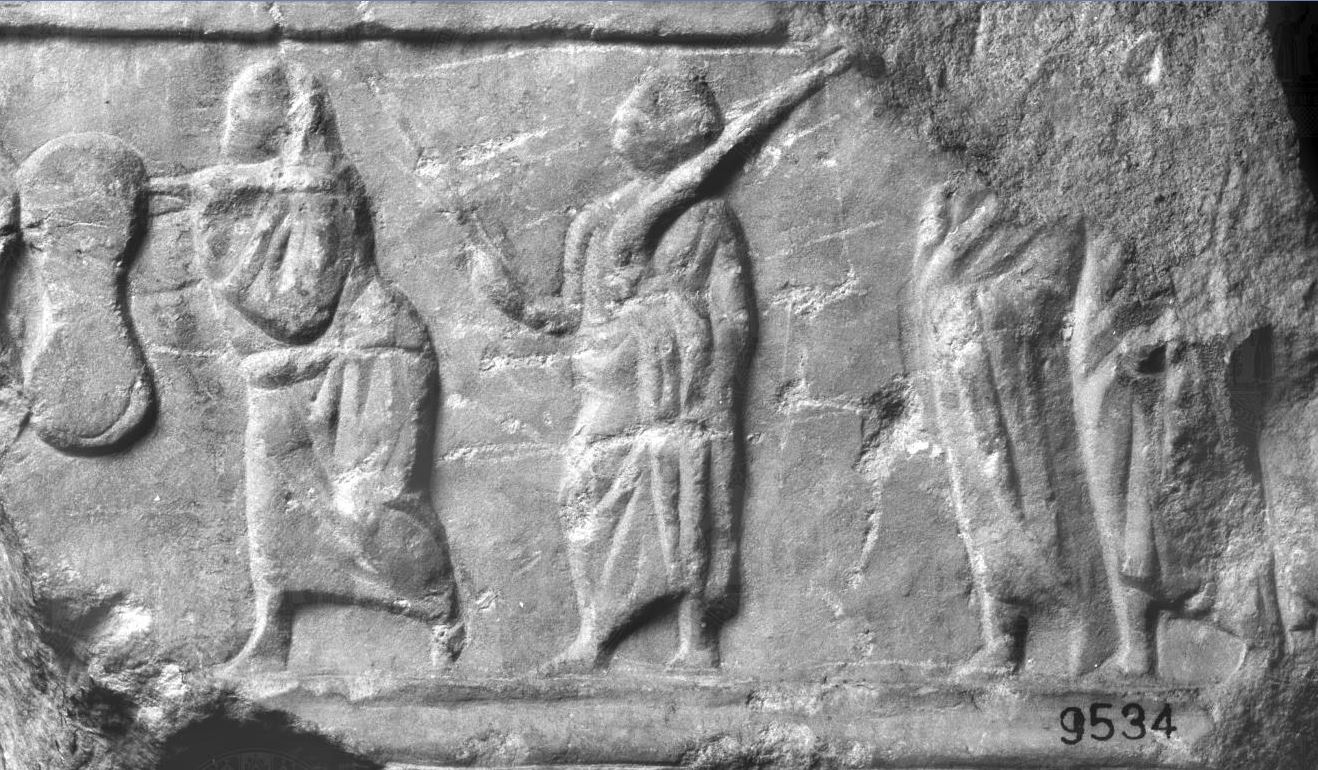
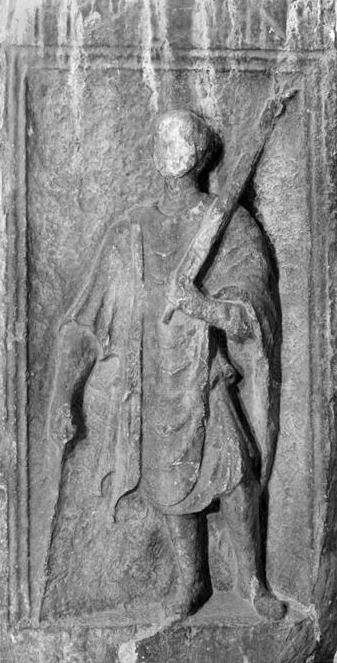
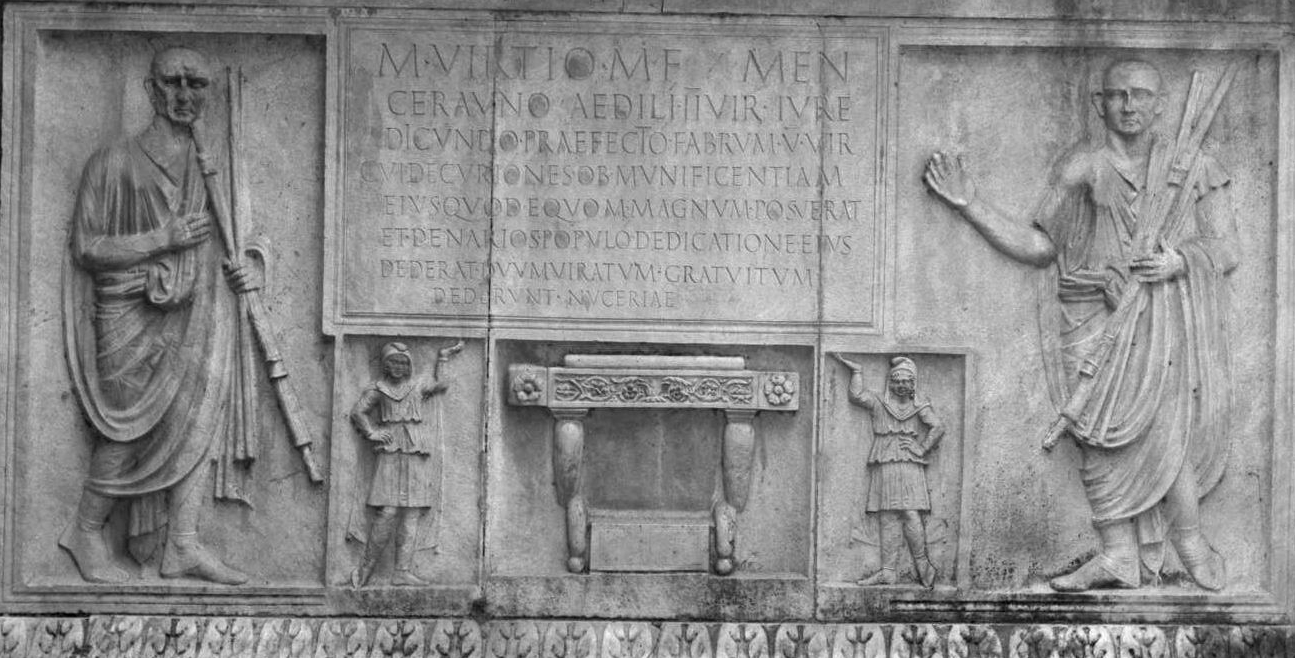
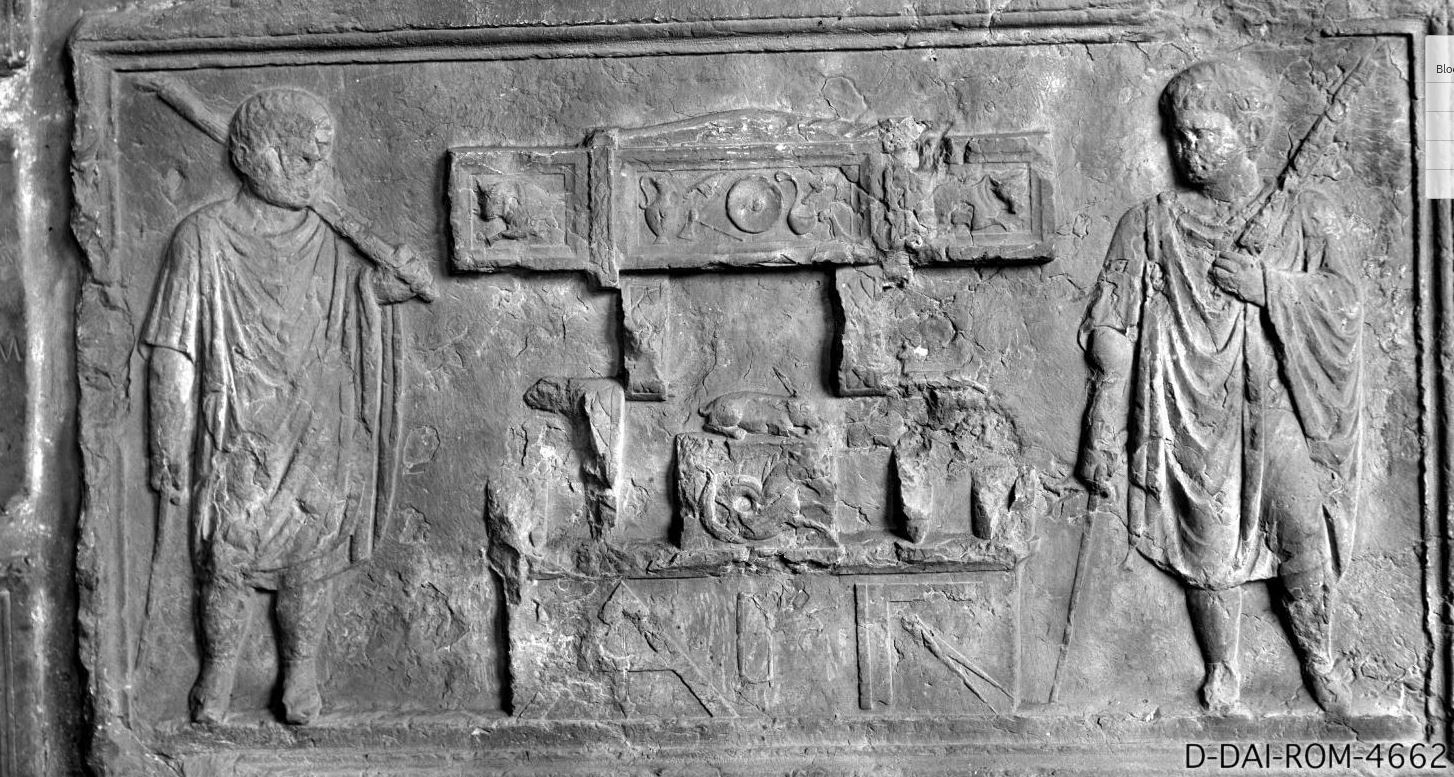
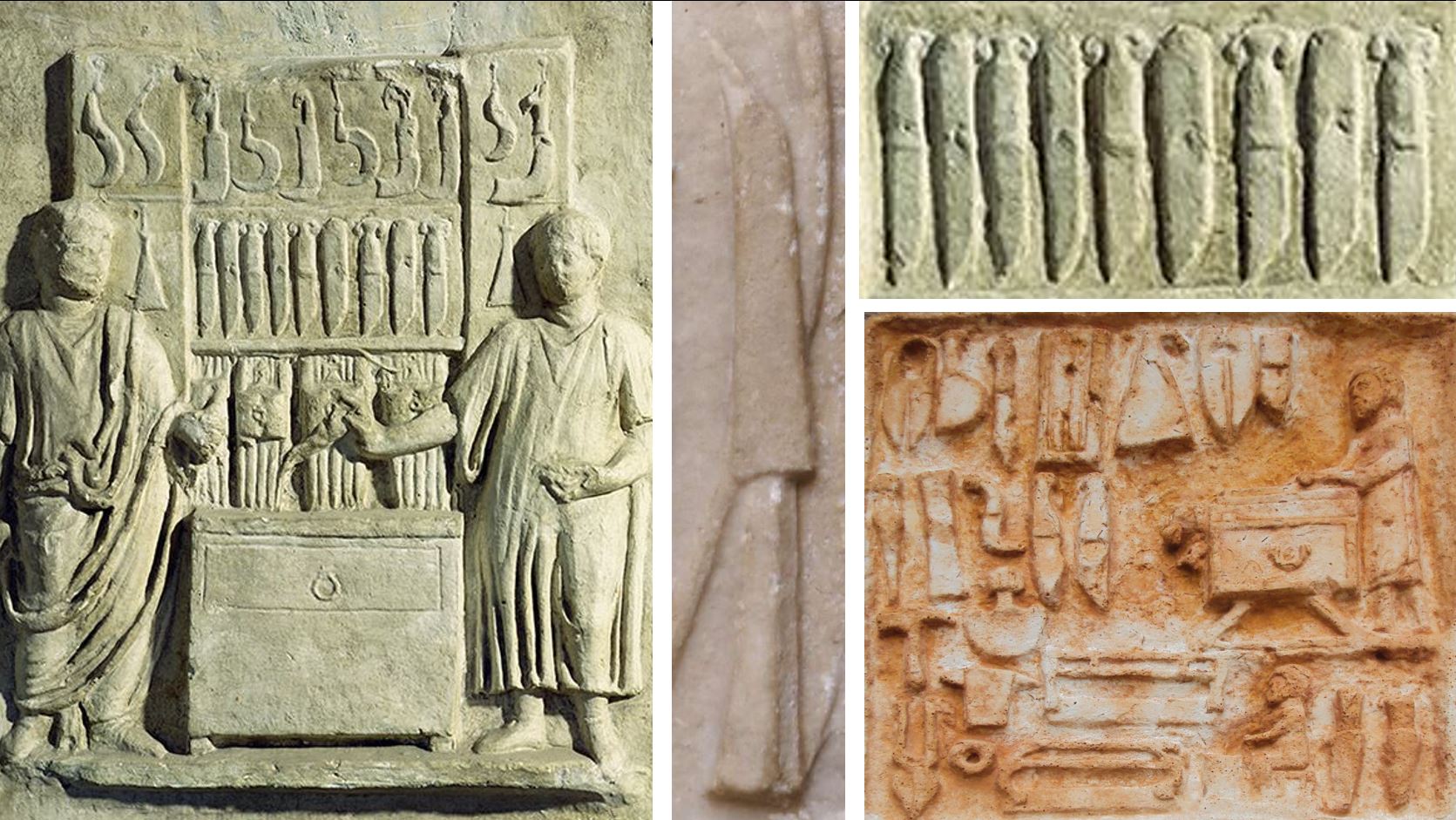
Two men are pictured, both formerly enslaved. The man on the left, Philonicus was a lictor. Lictors not only carried fasces but also carried another thinner rod perhaps what is called by Festus a commetaculum, or maybe it would be called a bacillum (staff) as in Cic. Agr. 2.93. Regardless of what the right Latin word is for this little rod, never the less we see it in the hands of lictors all the time! There is a good case to be made that it’s “the get out of my way” stick–the stick that actually got used as opposed to the ceremonial bundle.
Details of above monument:
Museo Gregoriano Profano, Vatikanische Museen, Italien, Inv.-Nr. 9534
Museo Maffeiano, Verona, Italien, Pronao. Inv.-Nr. 28164
Villa Pelicano, Castellammare di Stabia, Italien, Inv.-Nr. 140/1012
Museo Maffeiano, Verona, Italien, Pronao. Inv.-Nr. 28165
Why did anyone ever think Philonicus might have not been a lictor? Because they were misled by the idea that the Mariemont Relief represented a scene of emancipation rather than a scene from the circus with a presiding official and three desultores.
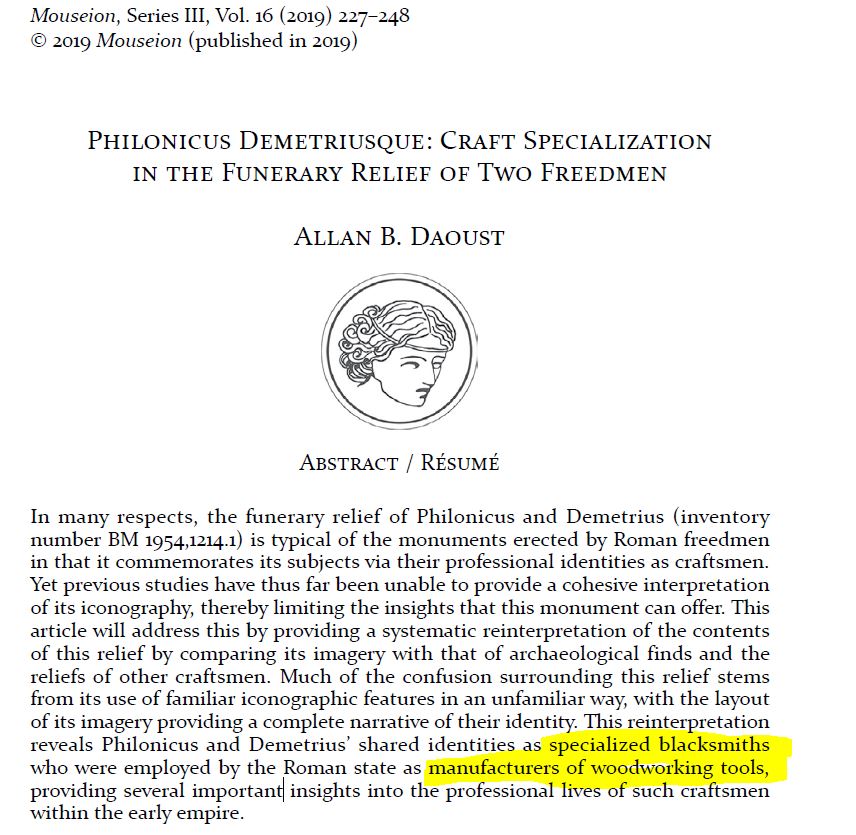
[Update: Daoust p. 239ff. is concerned, as Ashmole and Manning before him, that the axe shape is strange and describes it as archaic following Schäfer’s chronology (dang, I want that book on my shelves forever–pandemic book access is such a pain…). Not having Schäfer to hand I can’t decide how convinced I am but I’m generally skeptical. Some times representations of fasces are consistent (e.g. on Norbanus coinage), but often the die engravers are very casual about variations in style and not all iconography ‘evolves’ in the chronologically meaningful way–look at the mess Fittschen hair styles got us into for the Antonine dating. I agree that the fasces are occupational; I do not believe the men worked for the Roman state as blacksmiths or reported to lictors, I believe Philonicus may have started life as a blacksmith and then became a lictor.]
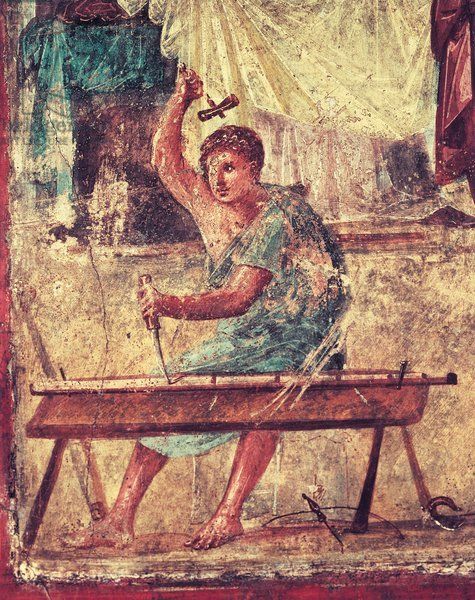
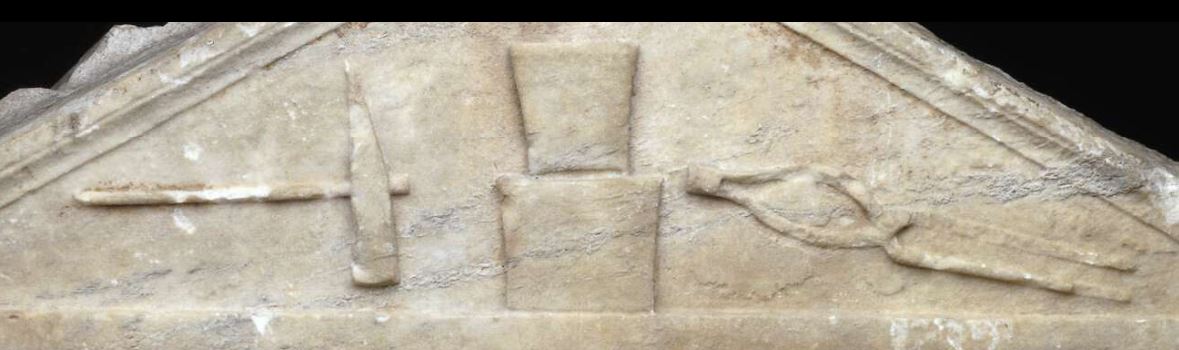
The man on the right is Demetrius and he was owned by the late Philonicus and made the monument for both himself and his patronus [Update: Daoust concurs, p. 232-3]. I concur strongly with Manning that the tools are the right represent are to be associated with carpentry, a view endorsed by Roger Ulrich (p. 31 of his book Roman Woodworking). The only thing I have to add is the observation that some of the tools are also depicted in the fresco of Icarus from the House of Vettius, namely bow-drill, adze.
[Update: Daoust p. 237 also mentions this fresco and sees in it Icarus using a tool like the ‘knife’ in the relief–what he identifies as a mortise chisel. This was my very first thought as well for the identity of the tool on the relief, so I am tempted. I shied away from this interpretation as I couldn’t find a good parallel image in Ulrich but this may be about which profile of the chisel is shown. I was inclined to emphasize its knife-like qualities because of the similarity in profile to knives in cutler iconography. I grant these are not exact parallels, but neither is the chisel (yet…)]
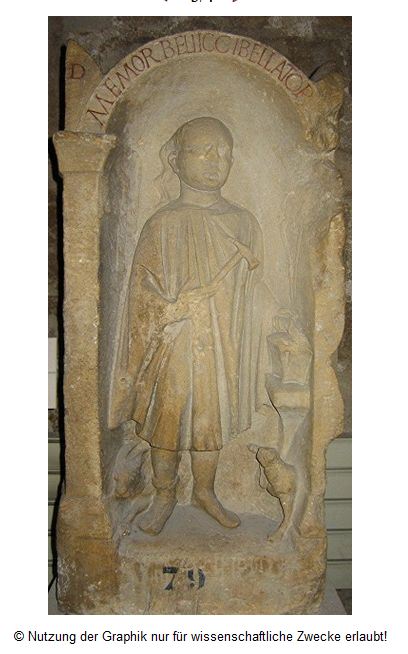
[Is it a knife?!]One of the mysteries is why the adze and tanged paring chisel, the lowest two tools on the right hand side are shown without handles, whereas the drill is shown with its finely turned spoke and the knife is also shown with a handle (Daoust, p. 238 also emphasizes this point). I have a speculation, but I’m going to wait to share until we’ve dealt with the pediment.
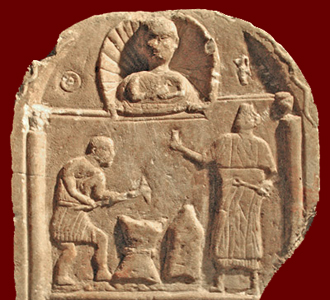
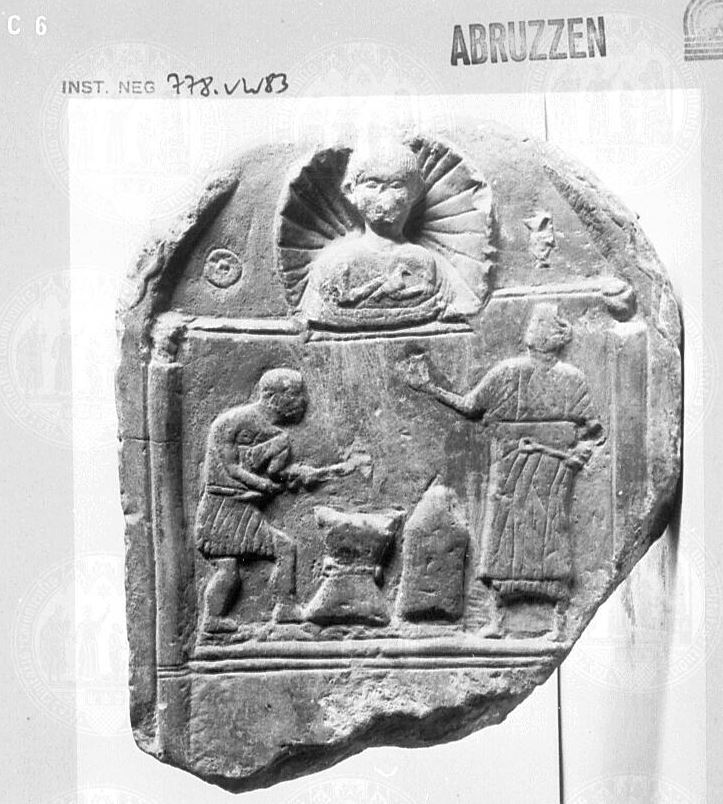
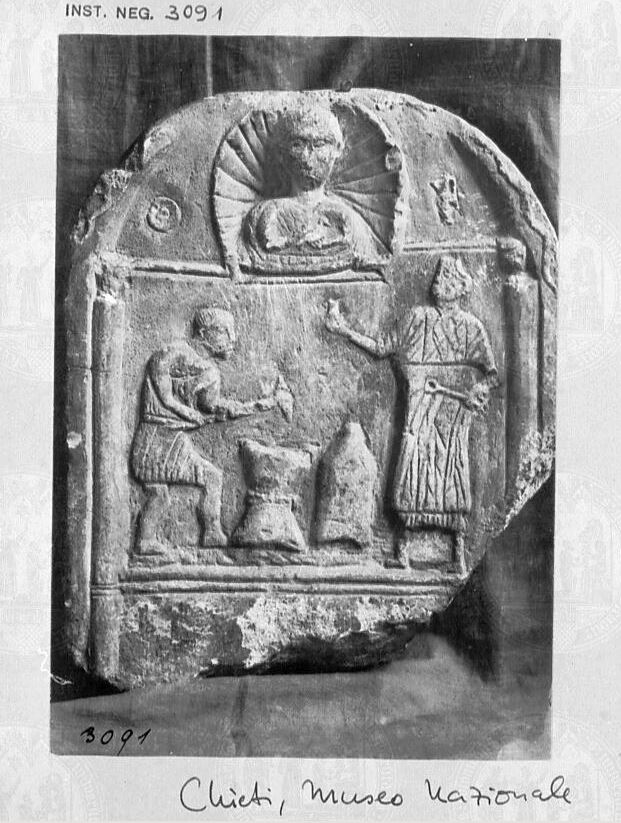
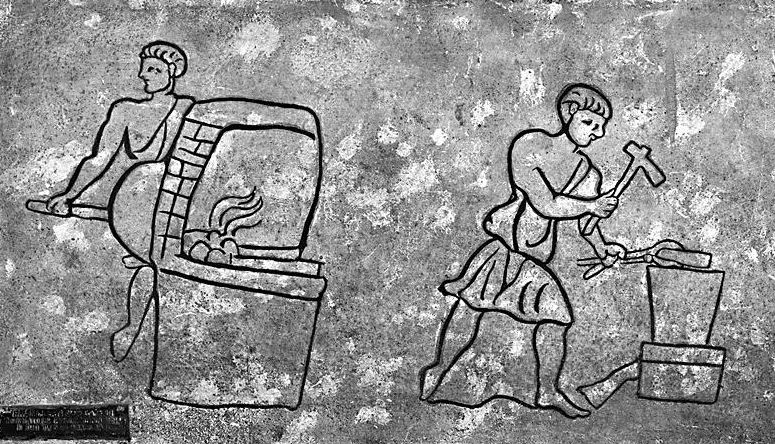
Manning has already observed that the tongs do not hold a flan but instead had a flange to ensure closure and improve grasp [Update: on this feature of tongs and relationship to the production of small tools, Daoust p. 236]. The really kicker though is the two part anvil. One part anvils are known in Roman art, but two part anvils like the one seen here are very common. The top portion of the anvil is NOT a die.
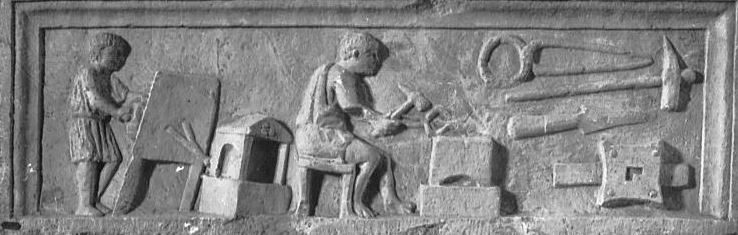
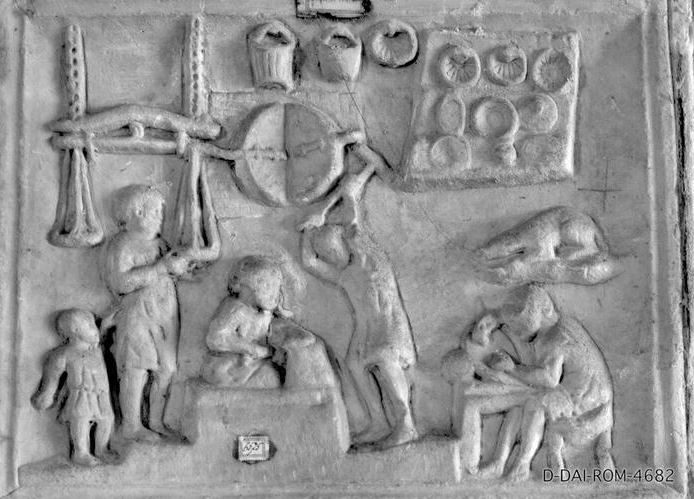
Museo della Civilta Romana (1964) 617 Nr. 50
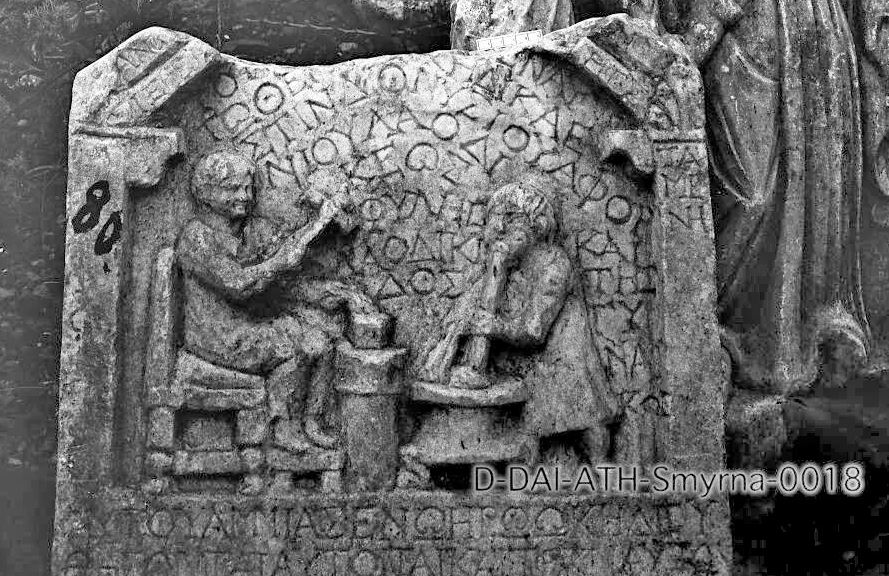
Türkische Schule, Izmir, Republik Türkei, Inv.-Nr. 80
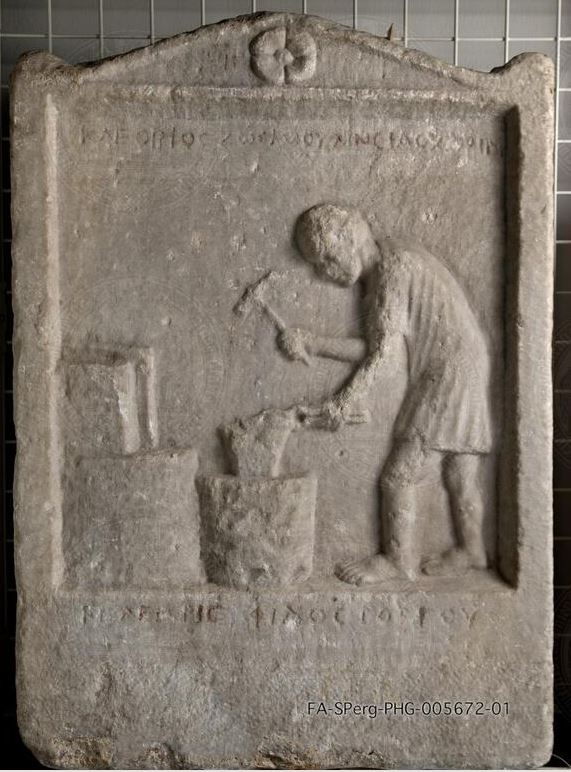
[Daoust p. 236 refers to this type of relief of a blacksmith expert in lock making for comparative evidence of tools and product both appearing on such occupationally themed memorials.]
Grabstele des Schmieds Kleobios, Staatliche Museen, Antikensammlung Berlin Sk 790
So do we have three professions held by two men here? Maybe. Maybe Philonicus started off as a blacksmith became a lictor upon being freed and then set up Demetrius in business as a carpenter. Lictors are essentially bully-boys or body guards and Philonicus does have a meathead look to him and who better than a blacksmith to make a lictor?
But I also think it just possible that Demetrius was a blacksmith specializing in the creation of carpentry tools especially hard to make stuff like drill bits and precise knives. It’s a simpler explanation, two professions instead of three AND it fits with the last two tools being shown with out handles.
[Update: Daoust believes the tympanum must refer to both men and a share profession. This is logical. p. 234 following. He emphasizes on p. 235 that the hammer is a a cross-pene type and thus for finer work. I’d put less emphasis on on this as identifying the type of blacksmith or try to marshal more comparative evidence to support it. That said I don’t have Zimmer, G. 1982. Römische Berufsdarstellungen, AF 12. Berlin: Gebr. Mann Verlag to hand and if I did I might be more convinced.]
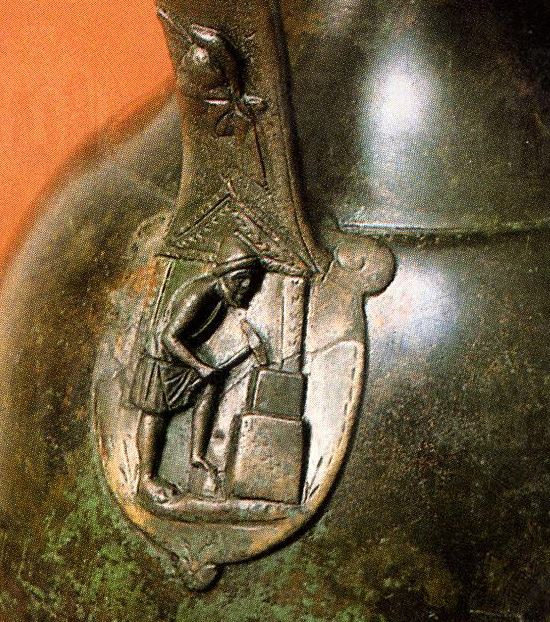
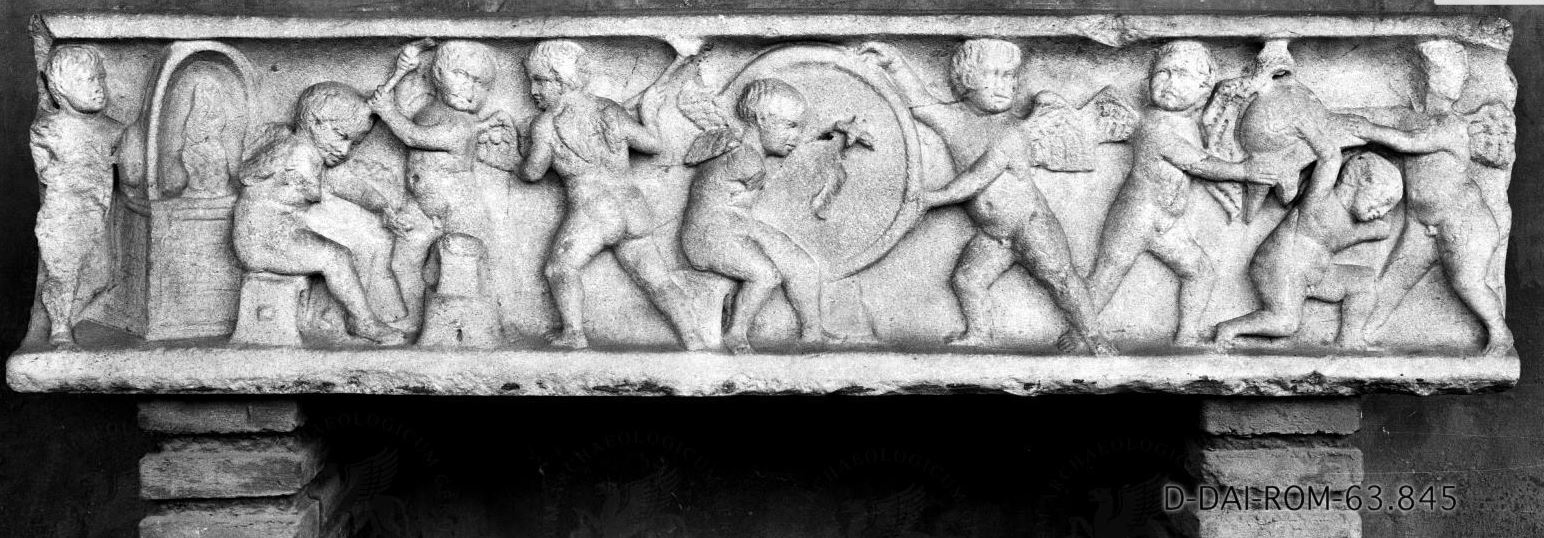
Smiths with specializations are known:
Museo Archeologico Nazionale di Napoli
As are those that specialize in blades. Tomb 29 from Ostia might be a good comparison point.
—
Further images
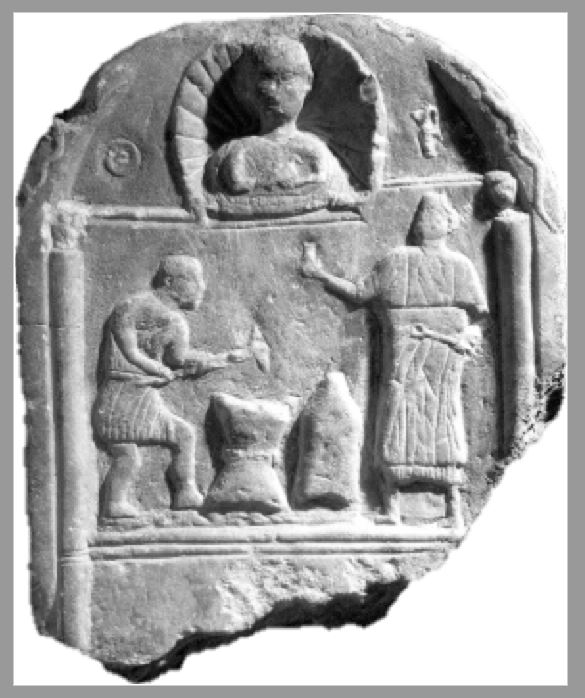
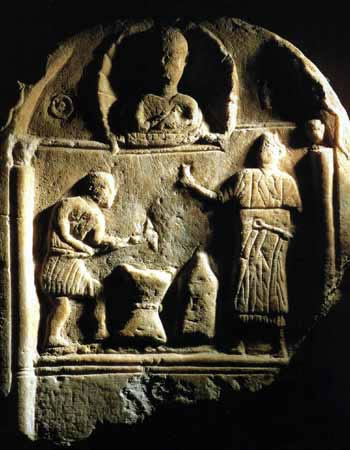
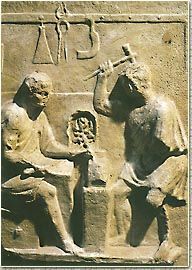
Tomb relief showing a smith in the act of working with his helper. Imperial times. Roma, Museo della Civilta Romana; Roma, Museo della Civilta Romana. Di Tanna, A., “I Collegi degli artigiani”, Archeo: Attualita del Passato, 140 (1996)




 The first release of Schaefer’s die study (RRDP) was just the binders. NOW you can see all the analyzed specimens! All digitized clippings have been uploaded to