Papius stats

This is all in the works for a peer-reviewed co-authored journal article but I wanted to blog about it to get thinking and write out my initial reactions.

I’m using Esty’s formula to estimate the original number of dies using Schaefer’s photo archive.

And the results bother me slightly.  There are very few singletons.  18 if one includes everything, 12 if one is really feisty and excludes everything that looks a little ‘off’.  Statistically for coverage it doesn’t really matter:

Capture.JPG

The thing that bothers me is the estimate of total dies and the assumption that we’re missing between 33-35 dies.  The reason this bothers me is because one of the dies has a number 246 as its symbol.  And it feels like the number should be the last die carved, but that is an assumption based on nothing but a sense that if they were going to abandon symbols and do a number, a big number that number would be the last set of dies carved.  line of the chart above is how many specimens would need to be observed without any new dies found to make the estimated total number of dies match the number on the coin.  It’s 3 times the number of observed  coins so far.

246.jpg246 2.jpg


Dates and Fowl (?)

bananas and maize

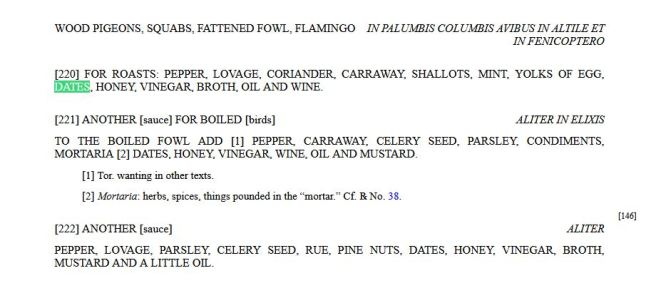
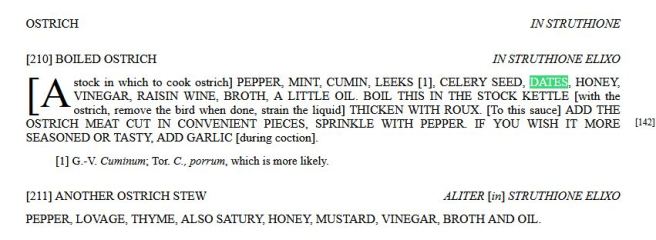
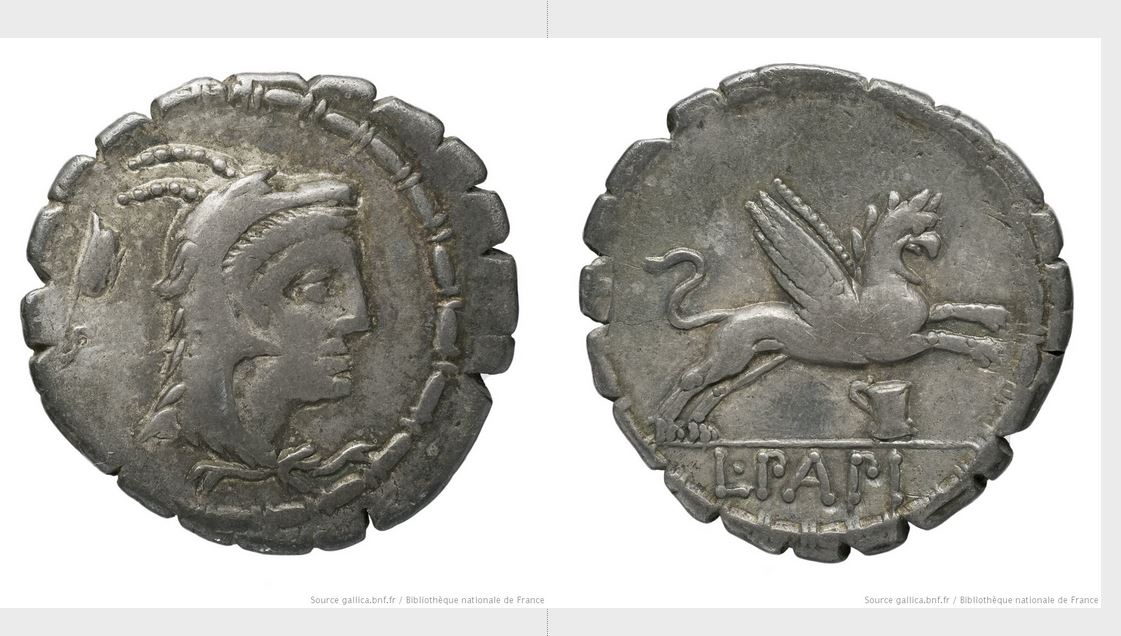
I’m checking singletons in the RRC 384/1 Papius series to make sure they really are singletons.  This one was a puzzle but with the help of Twitter, esp. Ethan Gruber, I think we have an answer.  On the left a bunch of dates and on the right a fowl ready to be eaten.

Roman food mosaic
Still life mosaic of food for a banquet; from a villa at Tor Marancia; near the Catacombs of Domitilla; 2nd century CE; Roman Gallery of the Candelabra, Vatican

Selection of Recipes from Alpicius with two ingredients:

more fowl recipesboiled duckboiled ostrichduck sauce

Transparent images and Die comparison

I’ve posted about this technique and its potential before but new features in MS PowerPoint make it even easier to make an image transparent.

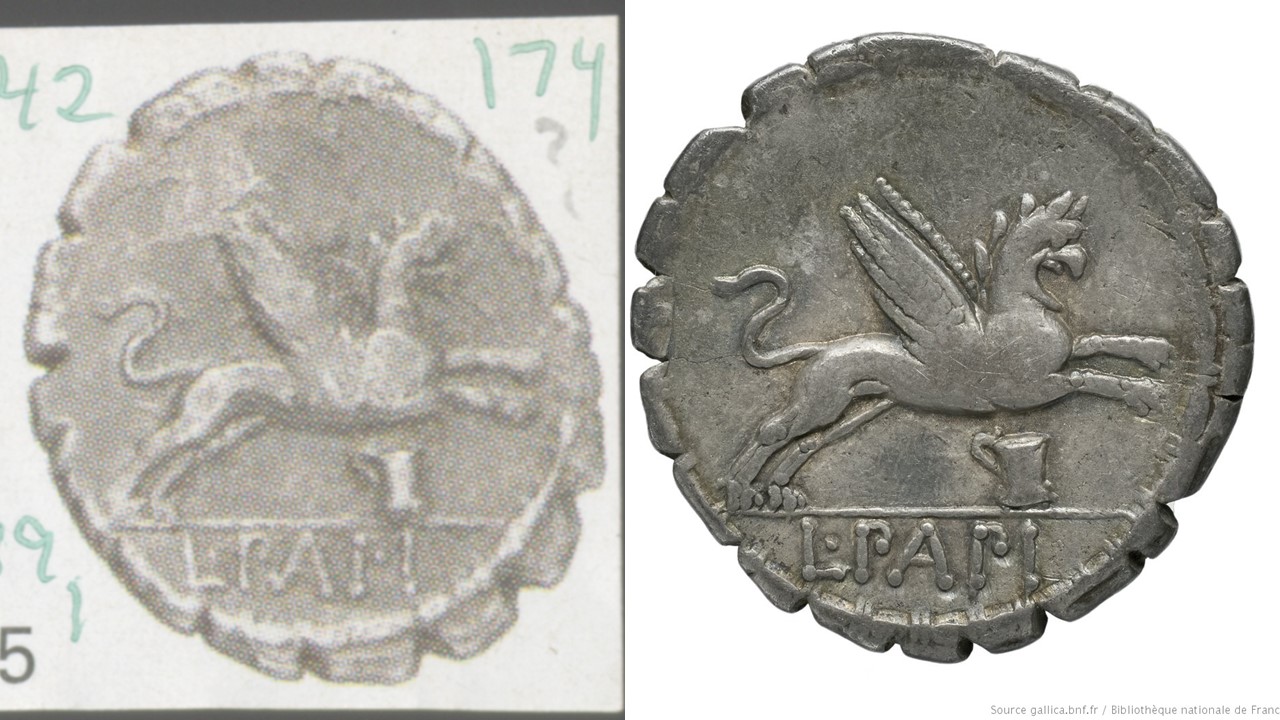
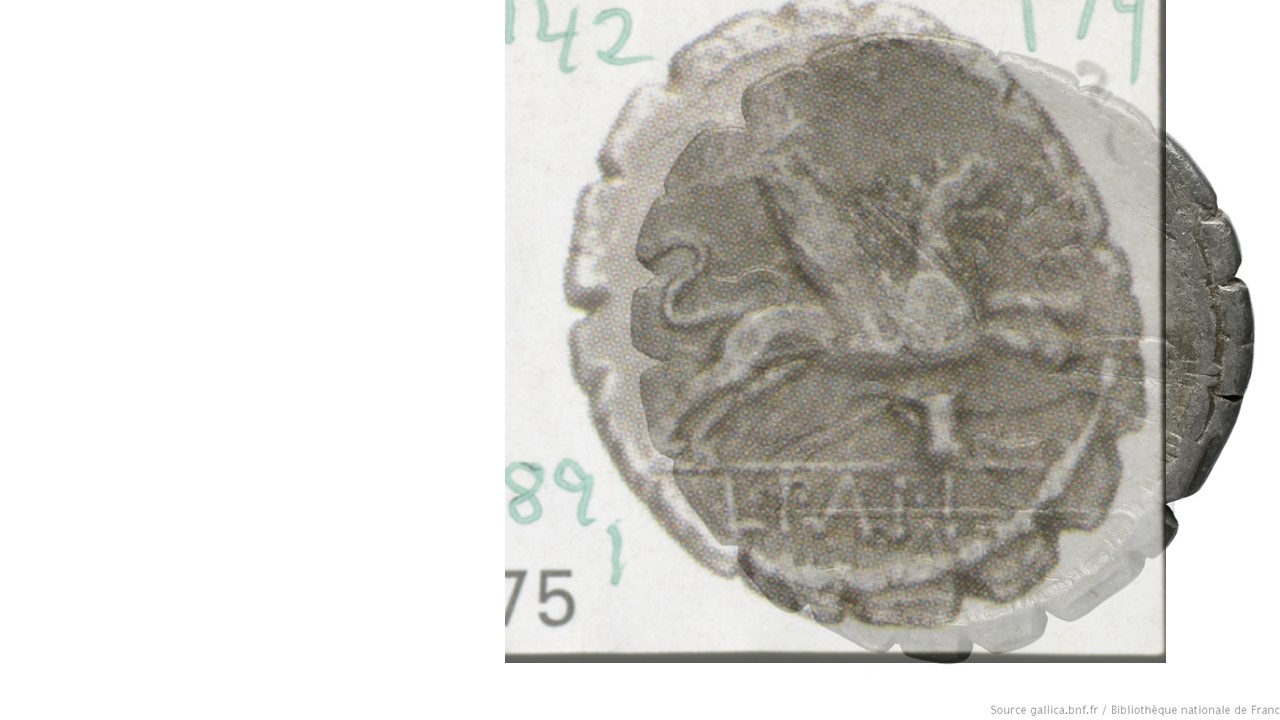
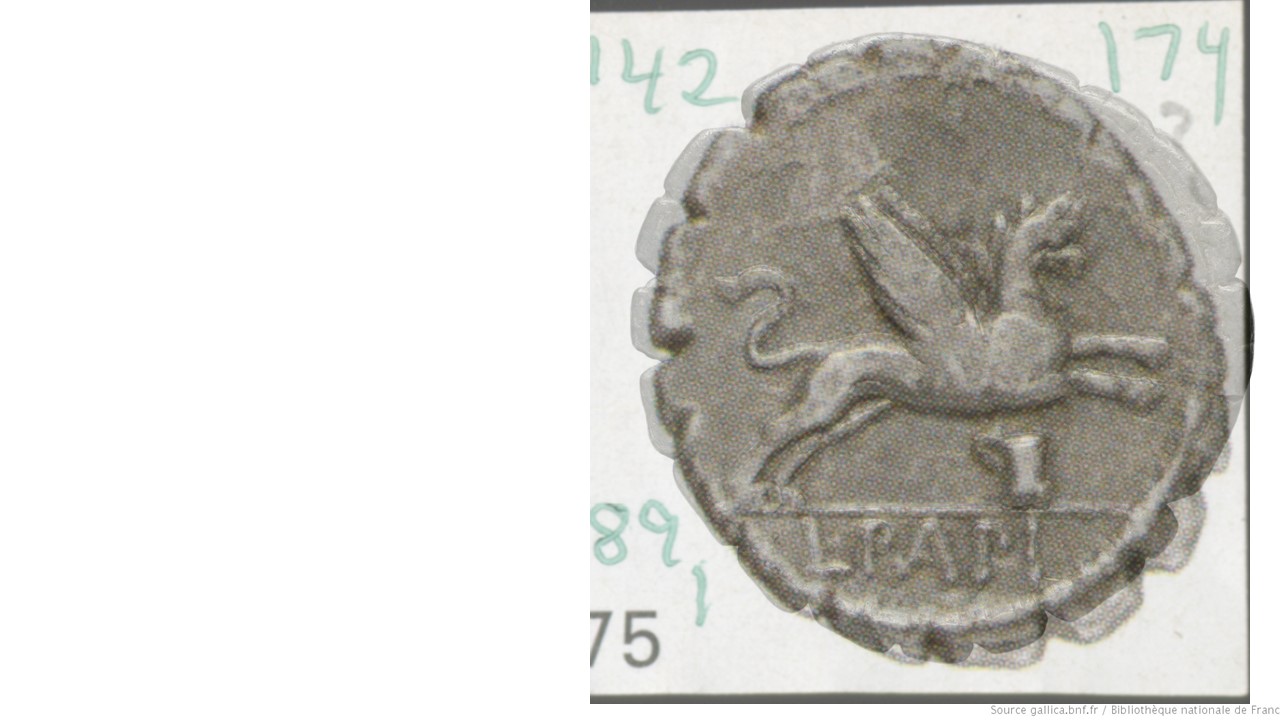
So Schaefer’s archive only had one specimen illustrating controlmark Cr 174 = Babylon 145 and those of you familiar with Esty’s method for estimating the original number of dies know that the singleton count is really important.  So I went looking for more with the help of Hersh’s unpublished work on control marks.

BINGO!  Not a true singleton!  BUT at first the Schaefer image was of a really worn coin and so I was unsure of the die match. (This may seems non-nonsensical with the controlmarks, but imitations exist and in a few cases more than one die was used per controlmark but that is really unusual on this series.)  I decided to do a side by side first.  AND then I confirmed the die link by using a transparent overlay.  (RRC 384/1, Papius)

The Paris specimen in Gallica (better for images); and in BnF catalogue (better for searching)

Slide3.JPG

Slide2.JPG

Slide1.JPG

An illicit die pair (RRC 384/1)

I was looking through transcription data for the Schaefer files and thought this was an error in the spread sheet but NO it really exists and is a die match.  At first I assumed it must be a bad fake.  Plated specimens of the type are known.  However, I think someone in the Roman mint just messed up and combined a reverse with the wrong obverse.

Crassus, For-Profit Fire-Chief or Speculative Property Developer?

So I’m teaching the six day fire of Rome in the reign of Nero in 4 hours.  I thought I’d mug up a bit on the history of fire-fighting at Rome so that I could answer questions and contextualize (and anyway I like the republic best so often end up looking backwards in my Empire course).

Everyone KNOWS that Crassus is where the history of fire fighting starts in Rome.  (I thought) I knew this too this morning when I went to check references.

Capture

I teach from primary sources so I needed a reference.

Plutarch, Life of Crassus 2.4 reads:

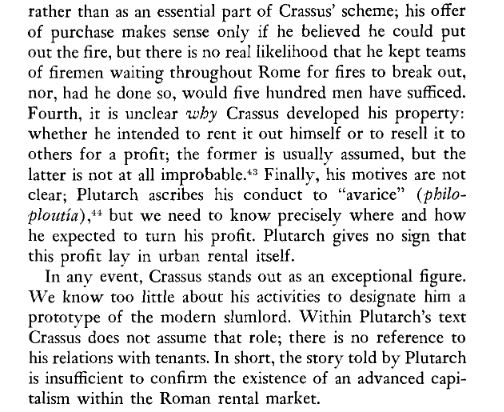
…observing how natural and familiar at Rome were such fatalities as the conflagration and collapse of buildings, owing to their being too massive and close together, he proceeded to buy slaves who were architects and builders. Then, when he had over five hundred of these, he would buy houses that were afire, and houses which adjoined those that were afire, and these their owners would let go at a trifling price owing to their fear and uncertainty. In this way the largest part of Rome came into his possession. But though he owned so many artisans, he built no house for himself other than the one in which he lived; indeed, he used to say that men who were fond of building were their own undoers, and needed no other foes.

Frier, Bruce W. “The Social Institutions of the Roman Rental Market.” In Landlords and Tenants in Imperial Rome, 21-47, quoting from p. 33-34. Princeton: Princeton University Press, 1980. doi:10.2307/j.ctt7ztrw9.8.

Capture.JPG

Capture2.JPG

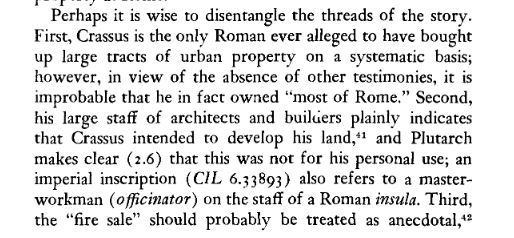
So where the heck did Crassus the fire fighter come from in our historical “truths” ?! Once I figure it out I’ll let you know. …

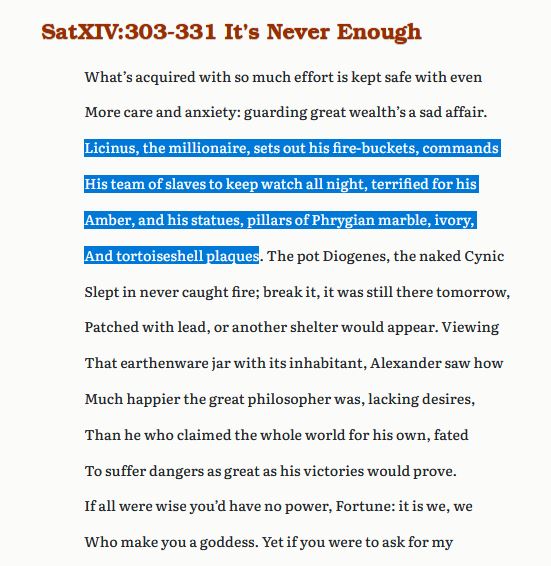
Okay, now just one hour to class time but I chased down another reference, but it still doesn’t actually suggest Crassus did this for profit, but rather self protection like many private house holders (Juvenal 14):

Capture.JPG

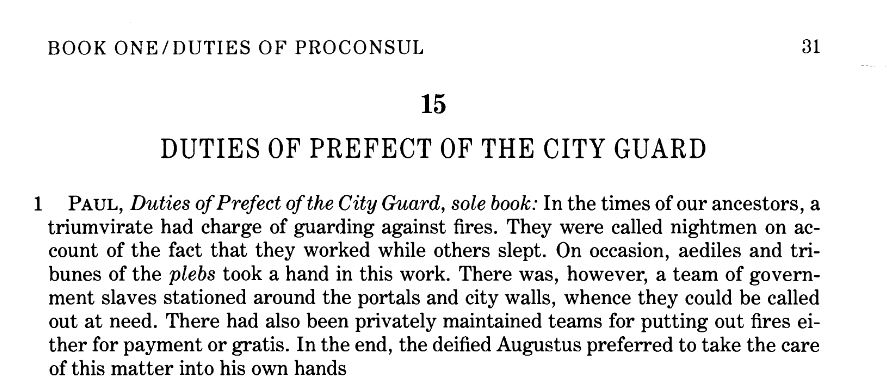
AND when you combine this with the statement in Justinian’s Digest (1.15.1) that there were for profit fire brigades the assumption that Crassus operated one makes more sense, although we don’t really have any direct testimony that he did.

Capture.JPG


A very small issue, another die map

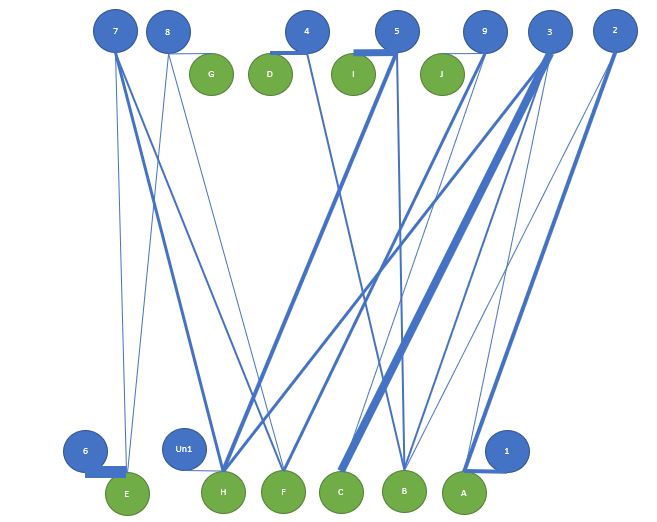
RRC 419/2 was probably only struck by between 10-13 obverse dies.  We know 10 of them.

Blue are obverses and green are reverses.  I’ve excluded plated coins (there are 4 or so documented in Schaefer’s archive).

Capture

Line thickness is proportional to specimens known with that link.  This issue was probably made near the same time as RRC  419/1 (see previous posts).  Given the high degree of interconnectedness and the way in which the number of reverse dies so closely match the obverse, I find it easiest to imagine the die engraver being told we we’ll need a dozen pairs of dies for this type and them arriving at the work station(s?) in two boxes.  It looks to me that there must be a die box not just for the reverses but also for the obverses.  Both obverse and reverse dies pair on average with 2.3 different dies.

Messier Die Map

Capture

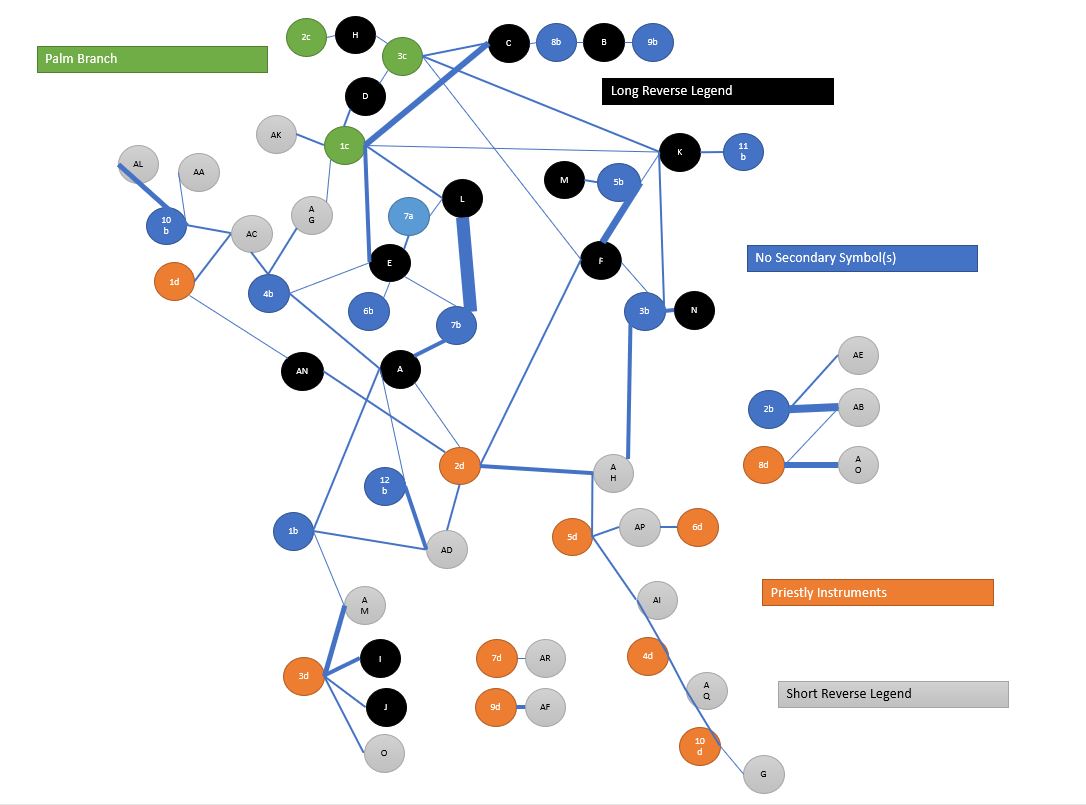
Same data from yesterday (Schaefer’s archive on 419/1).  I double checked my map against archive again for accuracy.  I found a couple I’d missed in my original transcriptions and corrected them.  Good reminder to always check this kind of work.  I also wanted to see if there were any patterns with the long and short reverse legends. I at first stuck with the traditional ‘sequence’ approach to mapping of my last post.  But things were so criss-crossy It didn’t feel like it made any particular sense.  So I decided to try a free form untangling as it were.

What have I learned?    Some reverse dies were only used with one obverse.  Approximately 40% of reverse dies are used with only one obverse die.  Some 25% of obverse dies have only one reverse.  Approximately 40% of obverse dies pair with 3 or more reverses.  Just over 20% of reverses pair with 3 or more obverses.  Some of the obverses (e.g. 10b) show heavy usage through die flaws.

What does it mean?  It seems likely that a number of dies were created before production started that at most times at least two anvils were in operation and that their was a shared die box for reverse dies.  The pairings and the intensity of usage probably means that certain dies were used with greater consistence but pairings were in no way controlled.

Palm branch is more likely to be paired with a long legend.  Priestly instruments with a short, but exceptions to both tendency are known. I’m agnostic about whether priestly instruments-short legend is the start of the series or the end of it.

Staring at obverse I’m pretty confident that the goddess is Venus Victrix and that means we need to think about the Pompeian angle with the politics of the series as a whole.


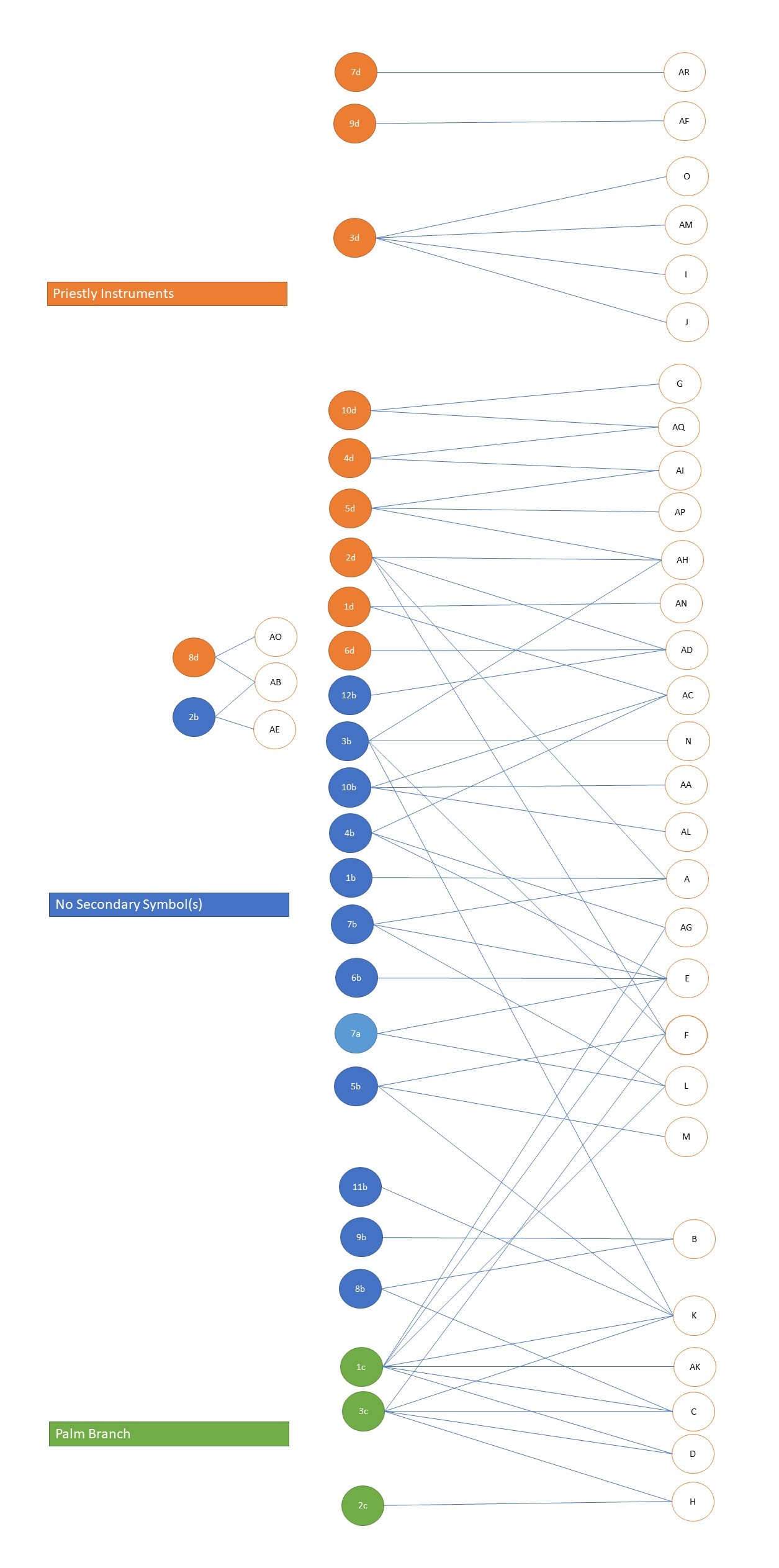
Die Map RRC 419/1

I’ve been exploring Schaefer’s scanned archive in preparation for my next co-authored article on the dataset and also as a means of quality control checking the scanning and file labelling etc… done by the professional archivist.  A nice student from Sydney wrote me this morning about Auletes and that got me thinking again about RRC 419.  Once I ran the Esty’s stats I realized Schaefer’s coverage was 99% and that he’d identified all obverse and reverse dies for this small part of this smallish issue.  There were also far more shared dies than in most issues I’ve looked closely at (so far).  For instance, most of RRC 330/1 most dies have a single pair with only the vary occasional sharing.   So thinking about RBW and his interest in the organization the mint,  thought I might try to map RRC 419/1.  Tomorrow I am going to go in and color long legend vs. short legend reverse dies and see if any patterns emerge there.  It was a good exercise.  Partly just to get my brain off current events but also to think through the subjective part of such mapping and why I was preferring one visual lay out of the information over another. 

One thing that seems extra clear is that 1a wasn’t really meant to be a separate type or subtype from 1b,.

Die Map