So all the ELP and LPDAP issues are listed as c. 91-90 BCE by Crawford. Mattingly concurs about would put them all in 90 BCE.
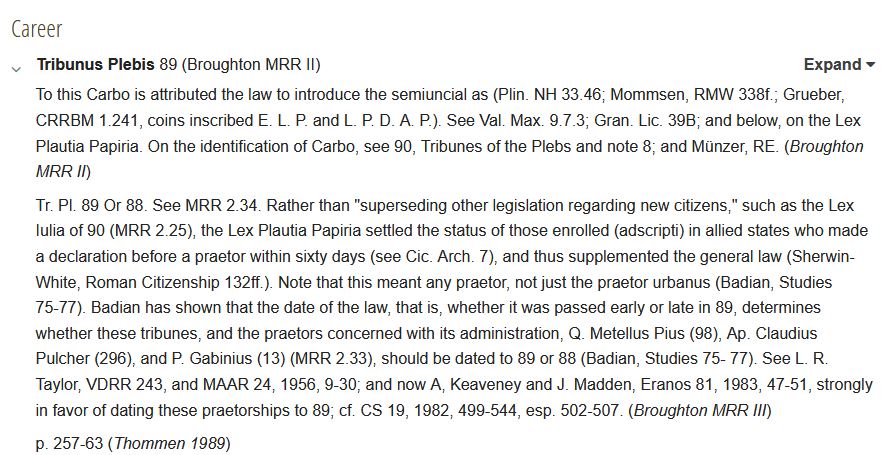
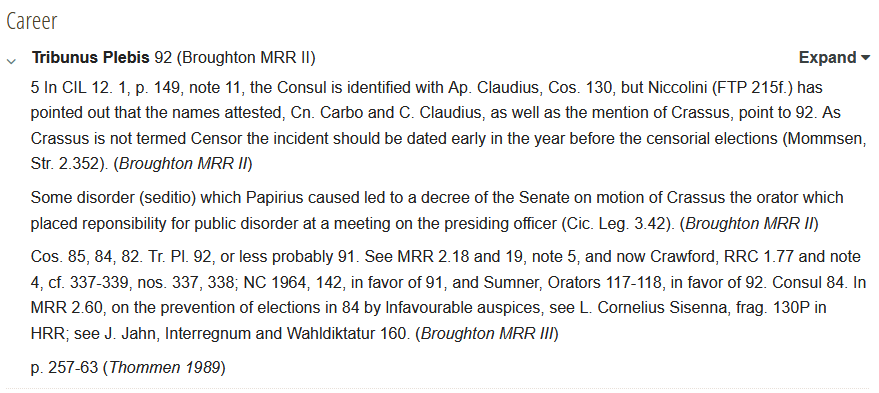
No numismatist I know of has had a problem with this date, It didn’t cross my mind as even a question until moments ago when I decided to try to figure out which Papirius it was who was responsible for this law. Crawford knew Broughton’s dating but doesn’t directly address the issue.
Crawford would attribute it to this guy’s brother Gnaeus, Tribune of 92 or 91. The was the same Carbo that was consul three times and thus obviously was a major Marian/Cinnan partisan: 85, 84, 82. This brother ends up proscribed by Sulla and executed by Pompey. By contrast the Tribune of 89 was a Sullan partisan likely holding the praetorship in 81 BCE under the dictatorship and in 80 his own troops mutinied against him and he died.
So was it the Marian or the Sullan brother who brought this legislation. Crawford puts weight on the fact that the reduction in the bronze was a ‘cost saving’ measure in the face of the Social War. They didn’t NEED to strike bronze at all (esp. in a lot of little denominations), so why even bother if one is trying to cut costs. The ELP sestertii now those seems like they might be useful in a crisis, I guess, kinda, no I don’t buy that all…. Too few to actually be part of any real economic strategy or plan. BUT The denarii of the series that made ELP types, Silanus and Piso, are huge, absolutely part of a war effort and Social war makes the most sense.
So the Marian soon to be Cinnan is our guy. Just as Crawford said, but maybe not precisely for the reasons he says. But I need to go pull the Numismatic Chronicle 1964 article to see the details. More after that.
I’m guessing I’m not the only one to flip to p. 606-607 in volume 2 and feel a little frustrated that the list of names has no RRC numbers, isn’t in RRC order, and has no dates. This stuff happens. I was looking to annotate my physical copy but it turns out I’d already at some earlier date annotated my scan a bit and that need fleshing out.
Some stray thoughts on this annotation
Cetegus is only known from two coins, Laterensis from one. They muddy the big picture.
I think given that Sergius and Torquatus are quaestors; We should probably consider whether the Q on the issue of Ti. [mouse/rat] (RRC 297) means that that too is a quaestor issue. I think the DSS must be correlated with these abbreviations esp. given its appearance on coins of C. Cassius and L. Salinator.
It is also esp. noteworthy how little SC (etc.) is used before the Cinnan regime and mostly then by quaestors. Then it seems adopted from the Cinnan regime by the Sullan allies. The function of its use in the 70s is messy and deserves better investigation. It then is correlated from 69 onwards with Aedilician issues (an other innovation of the Cinnan regime continued). There is the flurry of SC issues with Pompeian imagery (venus victrix etc) in the mid 50s. And then we slide into civil war. I find myself starting to think SC issues are more exceptional/crisis moments than I thought before. The only place its hard to see whats going on with reference to historical circumstances are the 70s but the 70s are always a little bit of a black hole because Cicero isn’t in full swing and Sallust’s histories are lost…
Hmm… I’ve strayed from my writing goals but still learned a good deal.
“The badly minted, mostly badly preserved aces that bear the name of Macer, who became famous for his history, are extremely rare. Pierre-Philippe Bourlier, Baron d’Ailly, whose 20,000-piece collection is one of the great treasures of the Cabinet des Médailles in Paris, was unable to acquire a copy. None of them was known at all before the advocate Lovatti in Rome in 1865 presented the first piece from his own collection to a monthly meeting of the Instituto per la corrispondenza archeologica. Fortunately, Baron d’Ailly mentioned this coin in his still indispensable book Recherches sur la Monnaie Romaine depuis son origine jusqu’à la mort d’Auguste (II 2, Lyon 1868, plates 93, 5; cf. ibid. 535 ff .) reproduced in a reliable drawing. So we know that that first copy is identical to the As, which later came to the British Museum (H. A. Grueber,
-P. 118-
“BMC Rep. 3, Pl. 38.9; see 1, 320f.). Then M. v. Bahrfeldt reported a worn piece from the Vienna Federal Collection in his very useful work “Supplements and Corrections” (NZ 1896, Pl. 12, 287, cf. 99f.), And E. Babelon brought another copy to the drawing (2, 133 , No. 17 ), whose legend C. LICINI LF is not written from bottom to top, but vice versa. The fact that he valued this type at only 20 francs, although he was certainly aware of its great rarity, only shows that this shabby type of coin was of no interest to amateurs who collected from an aesthetic point of view. The whereabouts of this specimen are unknown to me. But I found another such as in the rich collection of the Kestner Museum in Hanover, an informative variant (with the legend from bottom to top) – probably from the estate of Bahrfeldt – which I will come back to in a moment. Baron d’Ailly has recognized (op. Cit.) that the anonymous asses with the general standing on the prow and the legend EX S.C. are also coined by Macer.
-P. 119-
“He has precisely cataloged 17 copies. From the variant with the coin letters affixed to the ship (our Fig. 3), he recorded the A, B, C, and I. M. v. Bahrfeldt also added those with E, I, K, O, Q and X. E. Babelon (1, 412, no. 45) attributed these asses to Sulla without justification and erroneously dated them to the year 82 BC. M. v. Bahrfeldt and H. A. Grueber have already rightly rejected this.
“Babelon called the standing figure of the reverse “Un légionnaire appuyé sur la lance”. But this pose is not that of a common soldier: it belongs to the iconography of the general. In the eighties of the last century of the Roman Republic, this figure can only have been one of two generals, Sulla or Marius. Since the well-known politician of the “People’s Party”, Licinius Macer, undoubtedly would not have allowed the proponent of an oligarchic regime to be put on his coins, only Marius comes into consideration. This knowledge can be deepened by looking at the depiction of the general.
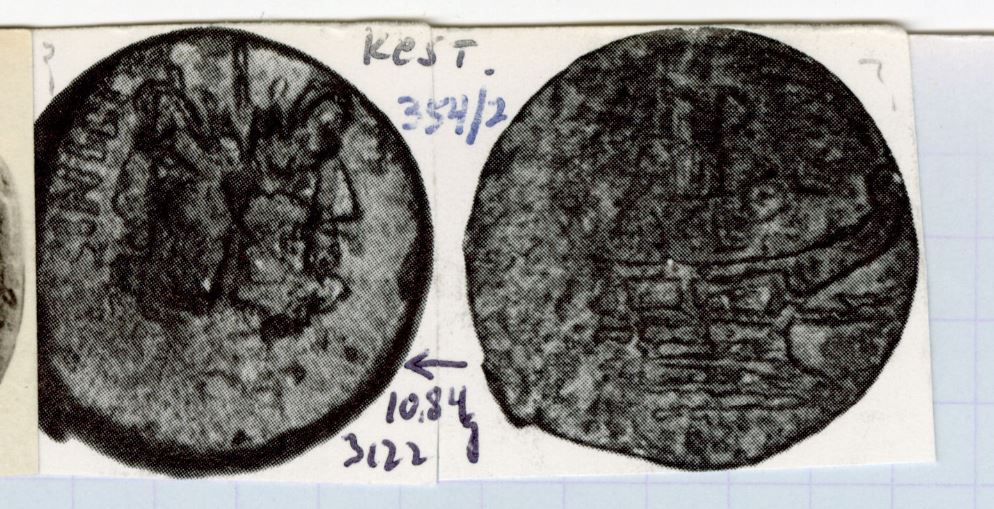
“On the well-known variant with inscriptions (Fig. 2), the general stands on a short base, indicated by a horizontal line, which, as it is, makes little sense. Apparently this was also recognized in the mint, since the unlabeled variants (Fig. 3-5) were simply placed on the prow without this base. However, these positions do not correspond to the original plan. The latter is preserved for us on the As in Hanover (Fig. 1): the general is standing in a small ship. This is Marius called back by Cinna from Africa, whence he’s fled to avoid Sulla’s execution order. This interpretation fixes the date on a very short period of time: between the end of 87 and the beginning of 86, i.e. between Marius’ arrival in Telamon and his death in Rome.
“Before I present these facts in the context of a detailed investigation with rich photo evidence, I would like to ask the carers and owners of coin collections to send me photos or casts of these asses of Macer – with a legend or anonymously: there will certainly still be pieces that I have so far are not known. My argument should gain much more accuracy by increasing the material.”
So I wonder if Alföldi ever followed up on this project, and/or if amongst his papers might be photos of unknown specimens of this type?
First reactions from me:
Dating logic is weak
Must look for this allusive small boat: The bad photo of the Kestner specimen below is disappointingly little help.
Marius as identifier of figure on reverse is plausible but likely would make it a statue, not the man himself returning.
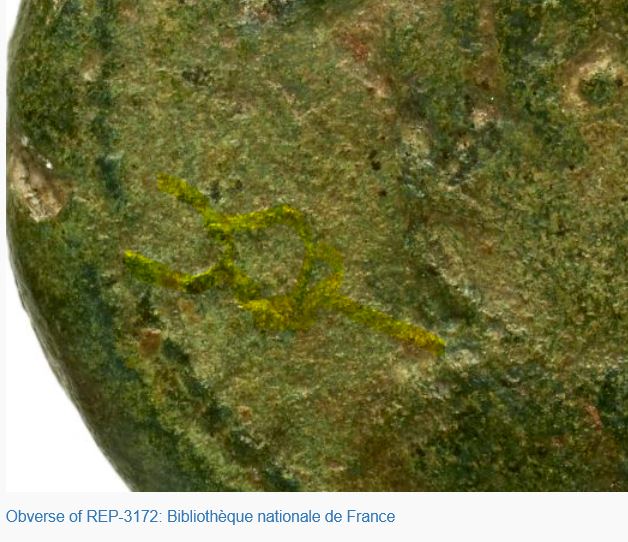
Wow, that’s a lot of control marks and far more than seem to be in Schaefer’s archive
Are there other bronzes with control marks ? I cannot think of any off hand…But I can check!Looks like RRC 350A/3 is the only other bronze with a control marks.
This is a stray thought before I prep a little zoom talk on the Seleucid for my students. What if at all is the connection between the small change introduction and all the ‘funny’ design variations we see on the late Roman bronze issues? Is there one? It seems there must be something underlying both forms of creativity with the coinage….
This lovely specimen was up on my screen when I opened my computer this am and thus inspired this stray thought. Its RRC 342/7f. Of this issue only the As is creative.
Wondering why I’m all in about SF and Myth which seems a little off brand? I auctioned my organizational skills for charity last Fall and now I am rendering services to the highest bidder, which is fun and educational. And organizing and being game for a good cause are certainly on brand.
Also, I’ve given up exclamation points for Lent. If I slip, I will pay forfeit to a charitable cause. Feel free to remind me if you notice one of the forbidden pieces of punctuation.
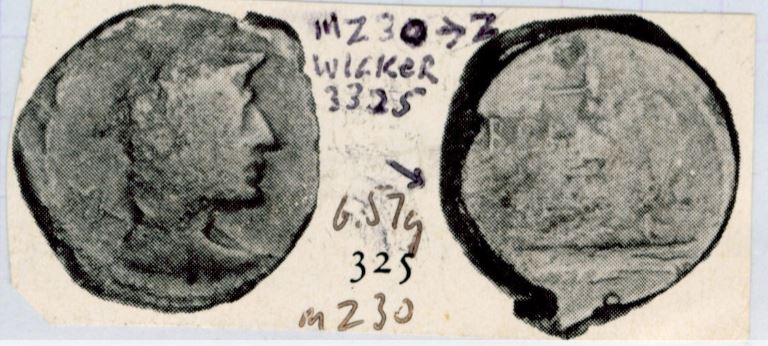
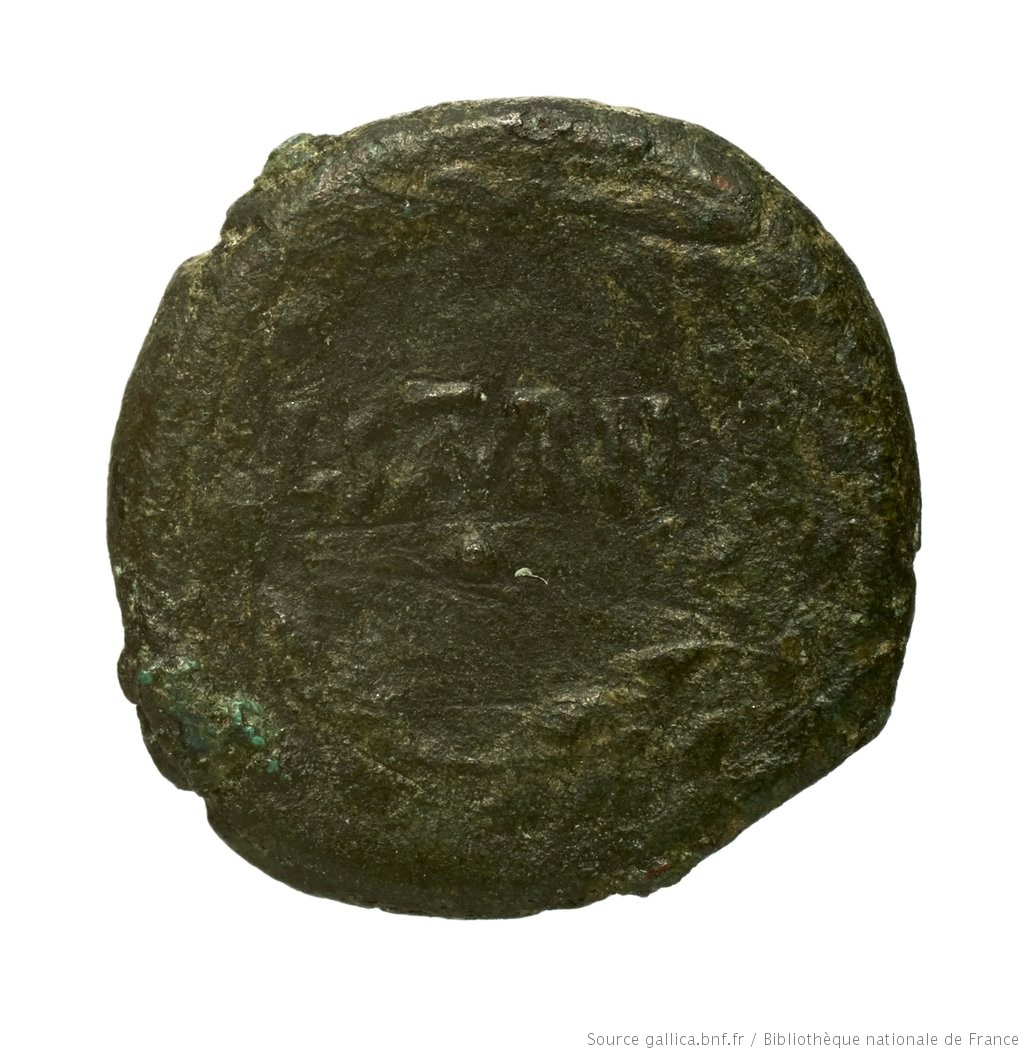
So the final sextans was c. 92 BCE as part of RRC 335 (CRRO erroneously lists this issue as c. 96 BCE whereas Crawford assigns it ‘late 90s’), but is only ‘signed’ by C. Publicius Malleolus, meaning the only indication of maker is the hammer above the name Roma in the field above the prow. Crawford distinguishes between 335/8a and 8b without and with caduceus over the shoulder but I think this is likely just a note taking error. The specimen he lists as WITHOUT caduceus is Paris A 2522 but that specimen clearly has one:
Images from GallicaThis looks to be a specimen sold by MÜNZ ZENTRUM in 1979 list no.30, item 325. I don’t know who/what Zwicker 3325 is… perhaps related to the numismatist Ulrich Zwicker?
The Glasgow specimen *alas* is not online (much of their collection is not yet) and in a pandemic I cannot ask, but we can assume it is there and exists like these two illustrated above.
RRC 334 (c.93 BCE, according to Mattingly and certainly issue preceding 335) like 335 produced bronze coins or each denomination down to the sextans.
Schaefer binder 3, p. 113 detail. Not yet linked to CRRO record for 334/6. The BMCRR types are also in CRRO but the Kestner-Museum Hannover Collection and Puskin are ‘new’.
The last of the quadrans (that we know of) is RRC 350B/3a-d an issue from the under the Cinnan regime and likely corresponding to the moneyership of GAR OGVL VER (a massive issue!) but issued anonymously for whatever reason. Interestingly 350B is also missing the as; it runs semis, triens, quadrans only (or so we think). Not only is 350B is the last the quadrans it is also the last of the semis and triens too. It marks the end of the fractional bronze of the republic issued by the Roman mint. The as also dies under Cinna and with Sulla’s 2nd march on Rome.
Macer is another well known historical figure. See Wiseman.
That there is no bronze struck under the Sullan constitution (cf. Flower) makes me think even more that bronze and small change might be a popular political gesture one that a small c conservative regime did not believe necessary/appropriate for the state. Not evidence, but not illogical supposition.
I am leaning towards seeing the period of the semuncia and uncia ‘revival’ as social experimentation with the nature and function of the mint. What is it FOR? What is the job to be done? And answer was proposed, to provide money for the market place and the answer was rejected for practical reasons? for ideological reasons? perhaps a bit of both?
Not sure what is next for these posts. I was thinking data visualization of weights and presumed date of manufacture, but I don’t think that will necessarily be terribly fruitful. I think I’m going to go dig around in votive deposits and see what I find…
Have I forgotten the small change? No! I just took two speaking engagements on new topis the first two weeks of the semester on top of other research commitments, accidentally fell in love with my great great grandfather and started a website for that project, had some proofs to deal with (we are now through proofs and actually really in production and printing!!!), and next week I get to onboard and train the new full-time researcher on RRDP for 92-75 BCE. It’s all good stuff, but wow my calendar is full of meetings and little time to THINK about coins. But I’m awake and kiddos aren’t yet so me and cup of coffee are here….
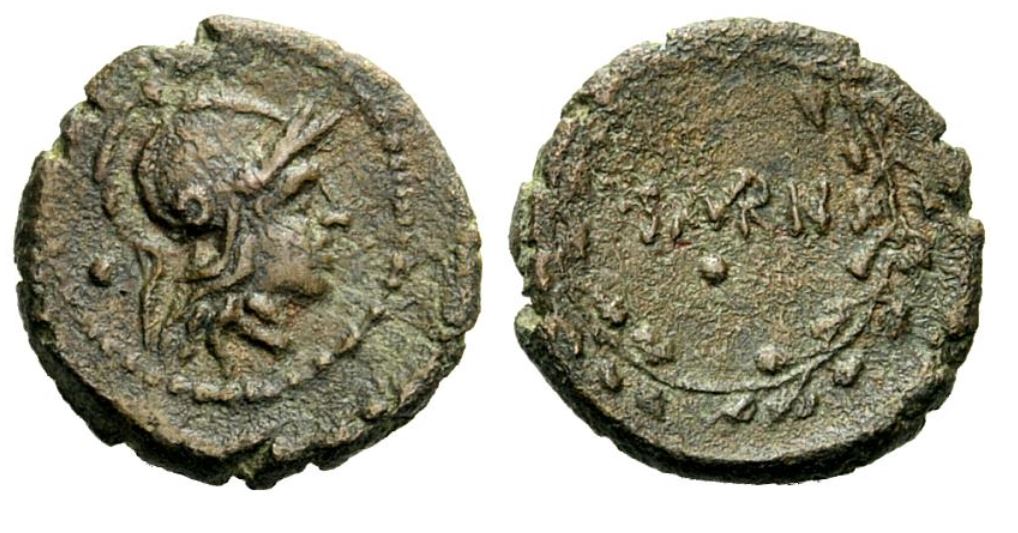
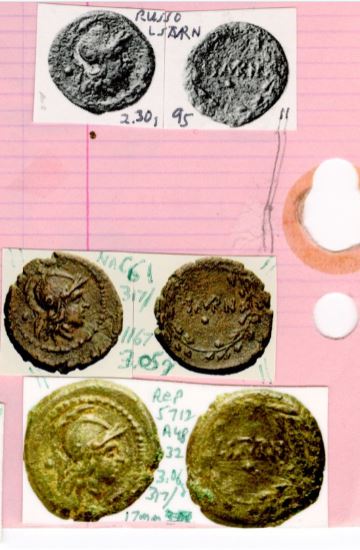
L. Thorius Balbus (RRC 316) and L. Appulius Saturninus (RRC 317) both stuck unciae, but were not included by Crawford in RRC but instead reporting Saturninus’ uncia as a fake on p. 551, n. 83, where as Russo 1998, pl. 21, 95 accepts it as genuine as do I, as did Babelon Appuleia 5 and Sydenham 581a, and most others, I think.
Do you disagree? I want to know why! Send me a message!
One kiddo is awake and looking at RRC plates next to me…. This might all have to wait… Yup just had a long conversation about this specimen in 44/2 with a 5 year old, quite interesting actually, and now I have to find viking helmets to compare to corinthian helmets…. BACK LATER
Right. I’m back (at least for now). Now to track down the other specimens…. And that wasn’t so hard as Schaefer seems to have done all the work. The thing to notice is that we only know one reverse die but from 3 specimens. Strongly indicating that this was a v v small issue. The Russo specimen is much lighter but not unreasonably so given apparent porus condition.
Schaefer Binder 2, page 96 detailParis specimen obv.Paris specimen rev.Schaefer binder 2, p. 101 detail – I don’t think this auction has been digitized… do you have a better photo of this specimen? I’d be most grateful. And isn’t that a funny looking Roma on the obverse v. lumpy? The letters on reverse almost look too perfectly clear but that could all be photo distortion. Would love to see a second specimen. Ho Hum.
So the interesting thing about these two moneyers is both are known historical figures or at least presumed to be the same men as those who are known from the literature. I have a few posts on Saturninus on the blog, but there is much much more that could be said about the man (Wikipedia entry).
Ok back to kiddos..and once again I’m going to try to pick up my chain of thought after baking handpies, crocheting 1/2 a mitten and playing board games….
So Thorius is known from Cicero (we think) and a relative seems to have made bronze coins in the East in the 20s BCE, see earlier post. He apparently was best known to his contemporaries as an Epicurean type.
I wonder (just speculating here so bear with me) if it is more than coincidence that the men who made these unciae and some of the preceding group are men known to us as historical figures or who seem from their coins be engaged in popular politics. Did it take a certain amount of chutzpah to issue these near worthless but clearly useful small coins? Compare for instance the strange Bes and Dodrans issues by C. Cassius, a known radical (early post on these issues). Note that HBMattingly thinks I take as plausible that the moneyer IS the consul of 124 BCE (not his son as Crawford would have it). The type dates from c. 130 BCE (so Molinari) and being moneyer 6 years or so before your consulship isn’t completely preposterous.
…
Am I done with my survey of small change… Not quite we’ve surveyed all the unciae, but I feel compelled to look at other denominations as well… New post to follow on the end of the sextans.
What is your theory about the nose spies and other ‘scratches’ on the die?!
Another specimen in trade with the family resemblance between late JC and Venus made clear (j/k) More seriously if you told me this flan had been serrated at one point I would totally believe you…
I love my blog, but periodically I find other digital outlets and they distract me from it. Twitter (blogging light?!) is a big one for content that might go here. BUT the newest one is my newest website:
We’ll see how it goes, but like my obsession with crochet (did I mention that?! I’m going through a ball of yarn a week night and 3-4 balls per weekend day) it is a late pandemic escapism project. (Oh I also went through a family photo album creation phase…) Whatever gets us through to vaccination, I say go with it!
Update: maybe I should just describe my relationship with my blog as non-monogamous…
So the weird thing about this coin issue is that apparently the moneyer only made unciae and semuncia. What’s up with that? Some guesses. 1) Tubulus also made the anonymous issue 287/1 (no proof, wild speculation, do not quote me as believing this!); 2) The moneyers in the annual college got to mint in order of their being returned in the election but were only allowed to produce as much coinage as was prescribed by the quaestor urbanus or the senate etc… (again don’t quote me, I’m being creative here), perhaps by Tubulus’ turn they didn’t need any large value issue and he decided to mint more coins by striking small change?!; 3) He made a radical choice to break tradition because it was popular?!?!?!
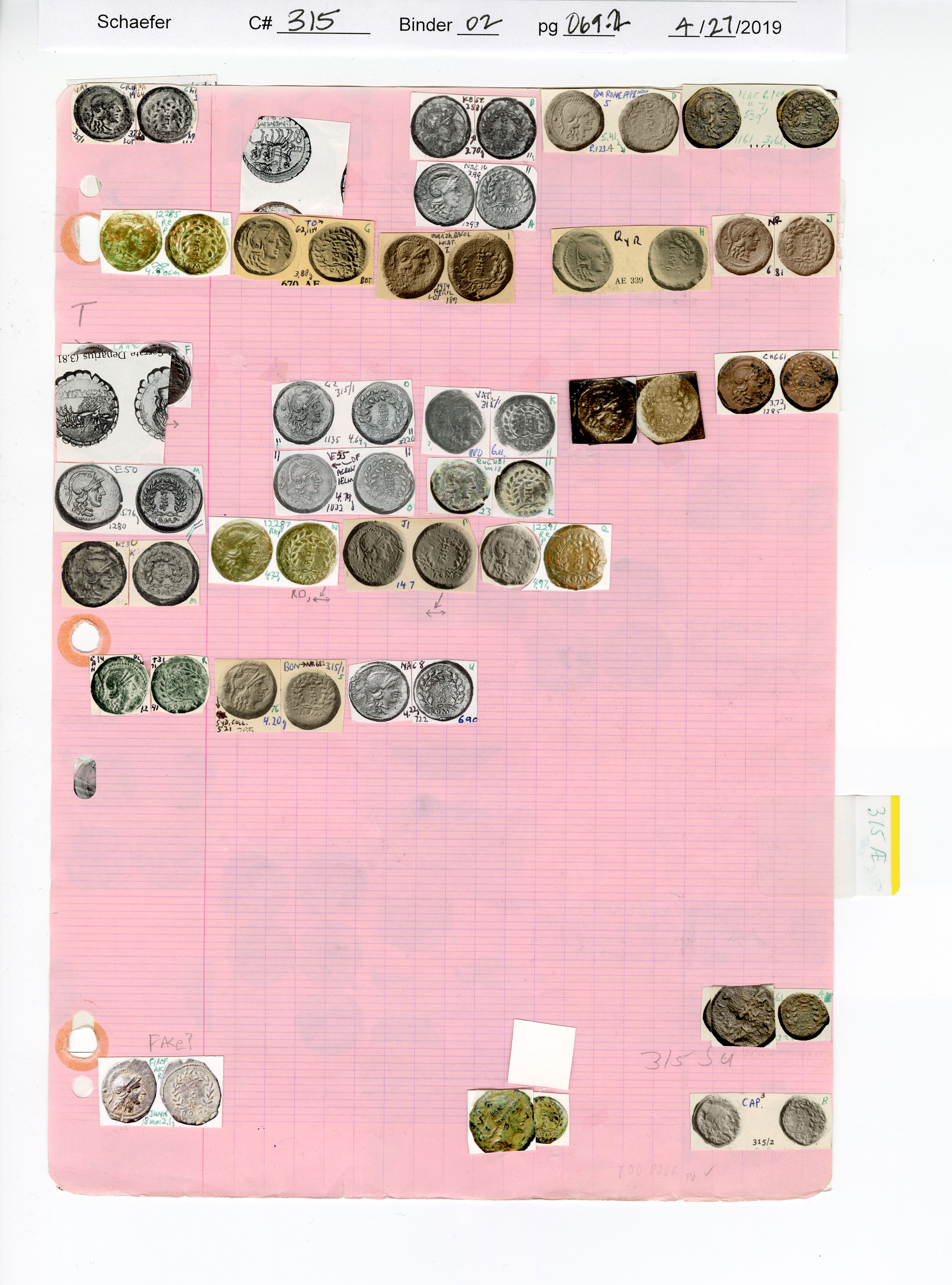
We’ll likely never know. Ok. To the evidence and away from flights of fancy! Let’s start with Schaefer this time. He has 28 specimens in his photo archive. Now I get to cross ref them with CRRO and CoinArchive and Acsearch.info… Back soon with an update. Scroll down for findings.
This is a lower res version of an image available via Archer. There are two more images of the same page in Archer as that is how we captured overlapping images.Two more Schaefer images for specimens not yet integrated into the die study and not yet on Archer.And one further image from Schaefer for rev. die 7. This is on Archer.
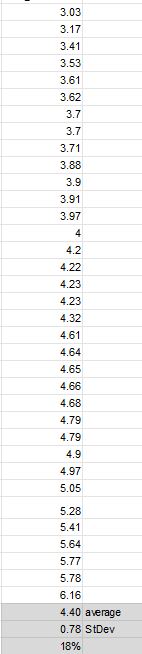
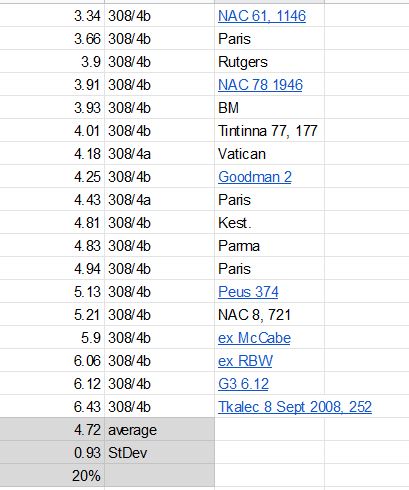
I’ve finished checking trade an CRRO for specimens not in Schaefe I decided they need their own sheet in my Unciae workbook, so if you go to Unciae in my Google sheets look at the bottom for a Tubulus tab for the specimens I’ve transcribed and their corresponding URLs. 35 specimens (so far) have weights. Do you know of a specimen I missed?! Let me know!
At least 21 dies from some 44 known specimens suggests a large issue with many missing specimens…. Note I’ve not checked specimens not in Schaefer for links or non-links. Regardless I think we can safely say this is a far larger issue than any of the earlier ones…
Manfred Fischer specimen, 5.28g. From Peus e-auction 10, lot 105.
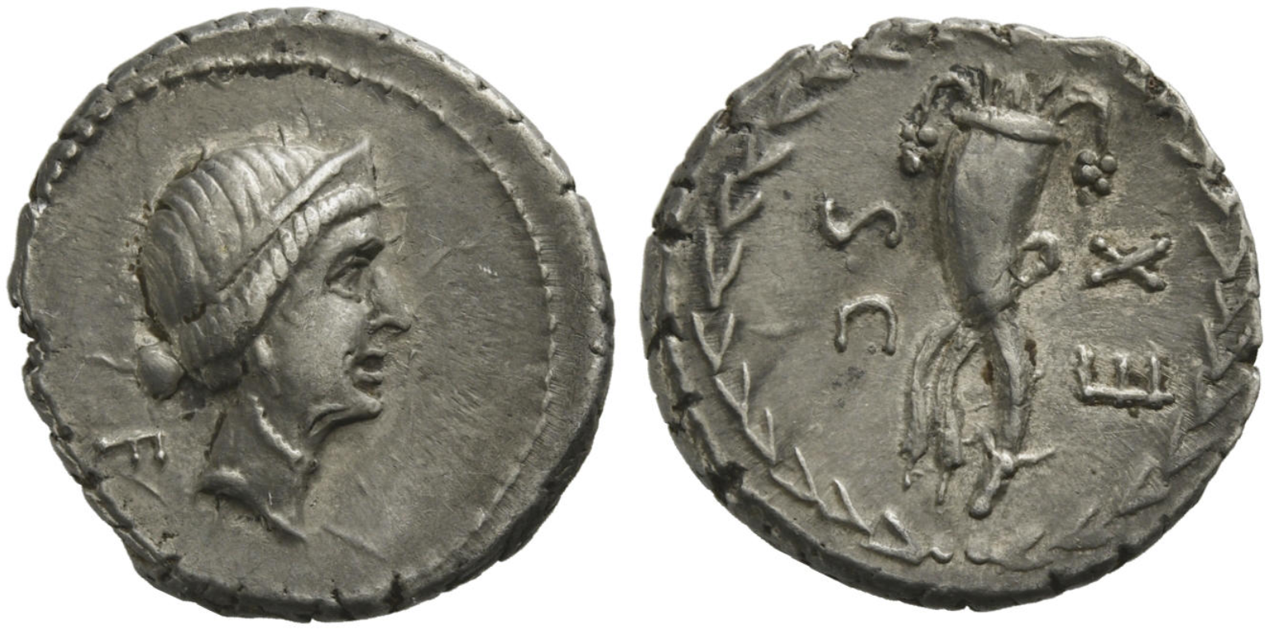
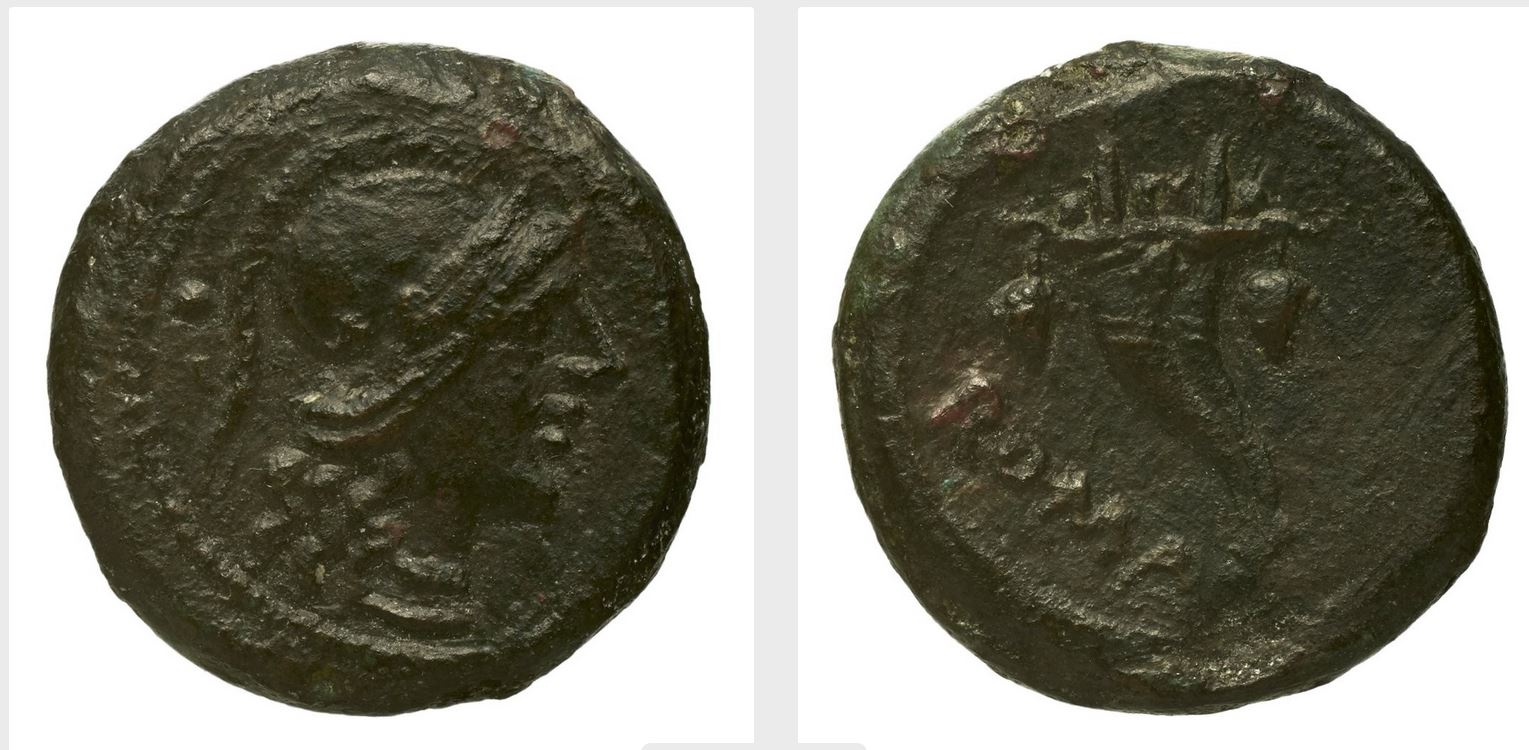
The unciae are in visual dialogue with the semuncia of this issue. The semuncia has a single cornucopia and the unciae have two.
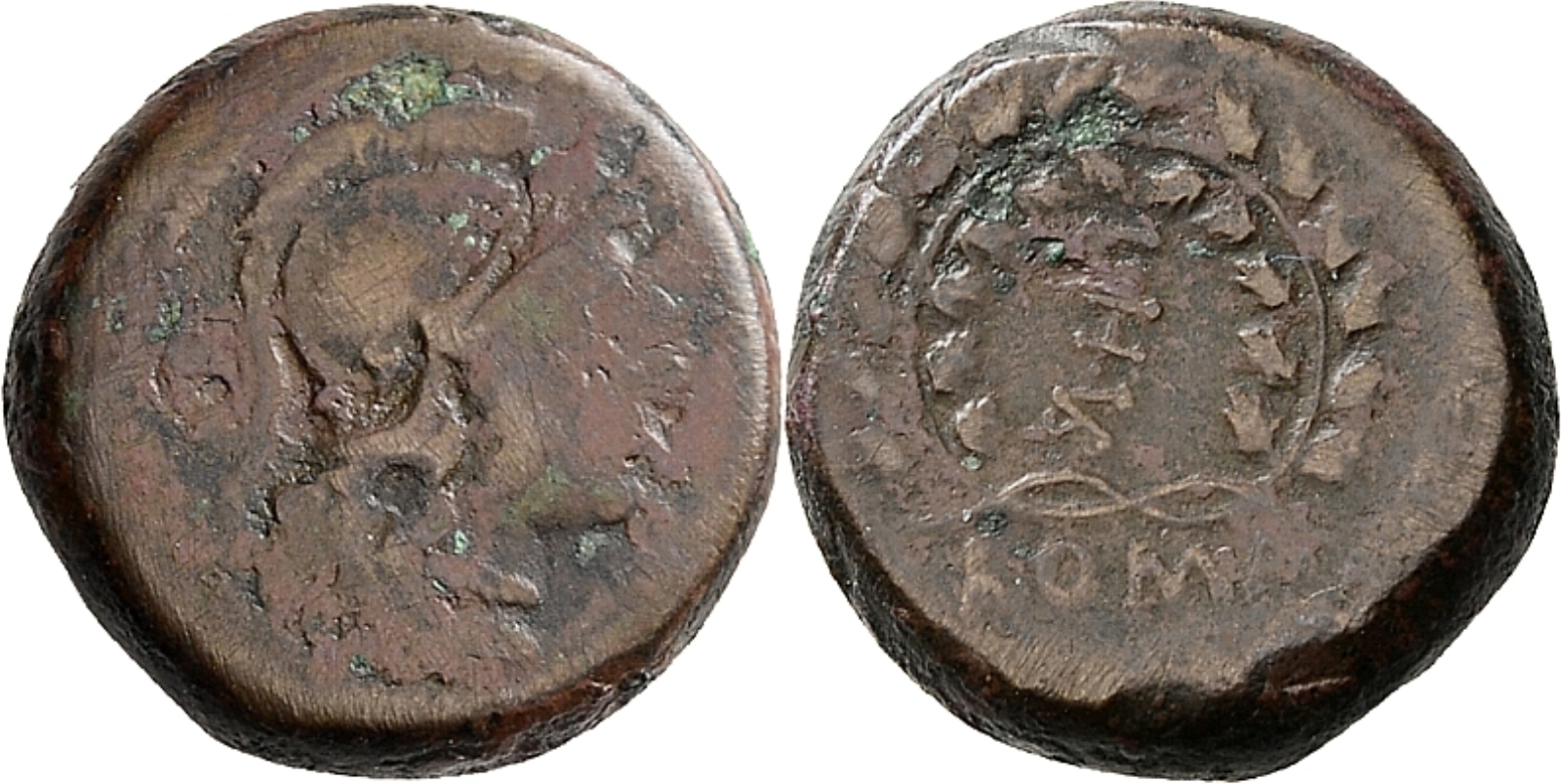
Paris specimen; Crawford subtype a: 4.43 g. Notice the moneyer’s name under the cornucopia on reverseParis specimen; Crawford subtype b: 3.66 g. This subtype is anonymous and known in greater numbers.














 Liv Mariah Yarrow