

adventures in my head

Louvre Campana Plaque (relief)
Eumenes, Argos, Ulysesses, Eurecleia
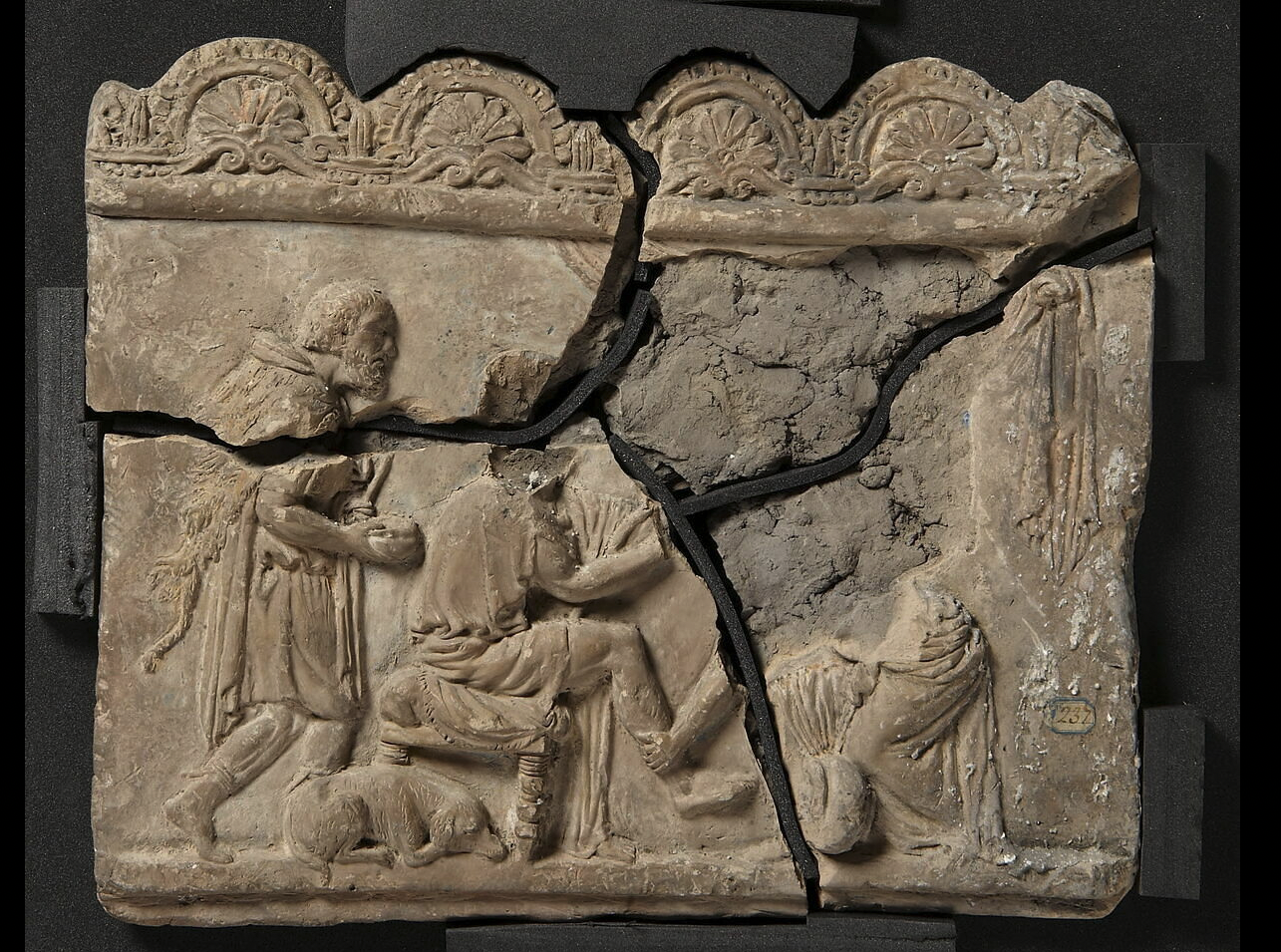

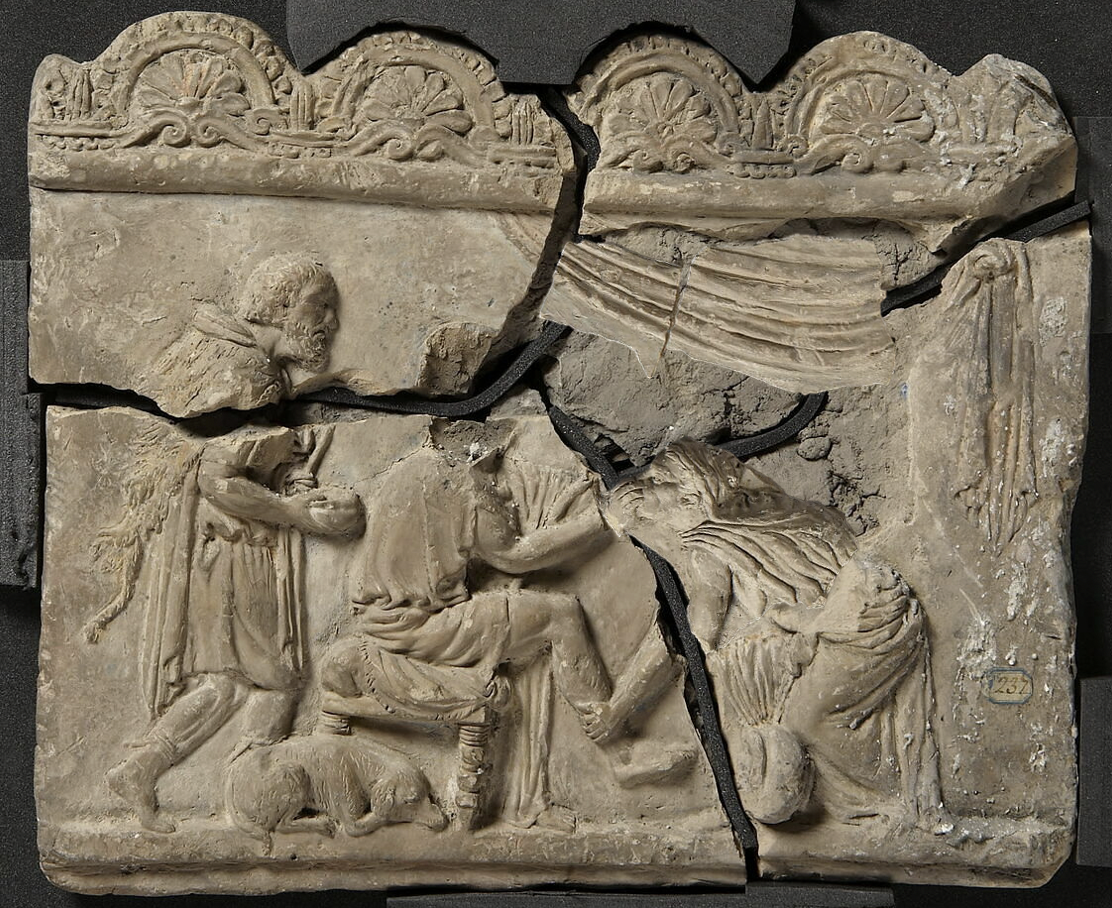
I digitally recombined the photos to may the scene easier to read. Ulysses silences his old nurse as she recognizes him. There is a better preserved but worse photographed copy in the BM.
This other Louvre plaque has different boarder so likely from a different series. I wonder if the Odysseus fragment is original or a restoration.


I came across this other specimen in the Yale collection while browsing there for another reason and it’s attribution in that catalogue got me curious. I then found a handful in the ANS with a different attribution. The CNG cataloguing of this above 2021 specimen gave some good context. Basically I just want to keep this as an object lesson on how iconography cannot compete with hoard evidence.
an incomplete list mostly for my own use
Institute for Advanced Study, School of History (Princeton) – October 15 Deadline
Residential, salary replacement up to 39-78k, half or full year, no letters of reference required for those 10 years out from PhD!
Rome Prize (American Academy in Rome) – Nov 1 Deadline
residential, 15-30k plus housing, family friendly, 1/2 years and full years
ARIT (Ankara for ancient studies) – Nov 1 Deadline
residential, 4-12 months, 5k per month
Loeb Classical Library Fellowship – Nov 6 Deadline
non-residential, 1-40k
NEH public scholar book grant – Nov 15 Deadline
non-residential, 30-60k – can be be held with other awards, writing sample must be in the style of proposed book, if not actual sample chapter, letter of interest/intent from publisher recommended
Center for Hellenic Studies (DC) – Dec 1 Deadline
residential, 5-40k plus housing, travel costs, one month, one semester, or full year options (not clear about partners/kids, must ask)
ANAMED (Istanbul) – Dec 15 Deadline
residential, covers local cost of living for singles and couples, but not families, some travel and research funds, 1/2 year for senior scholars, full year everyone
Berlin Museums – Dec 30 Deadline
residential, 1-3 months, 1200 euro stipend per month plus 500 euro for travel
Tytus Fellowship (Cincinnati) – March 15 Deadline
residential, $1500 a month plus housing, (not clear about partners/kids, must ask)
NEH Fellowship – April 15 Deadline
non-residential, 6-12 months max award: $60,000 ($5,000 per month) project can start in January, need not start with academic year (only about 7% of apps are funded)
Start planning in Spring as lots of steps, Deadline in the Aug 15 to Sept 15 range typically
Guggenheim Fellowship – Mid September Deadline
Berlin Prize (AAD) – End of Sept
residential, 5k per month, plus housing, family friendly,
ICS fellowships are currently suspended but will likely resume in future (residential London)
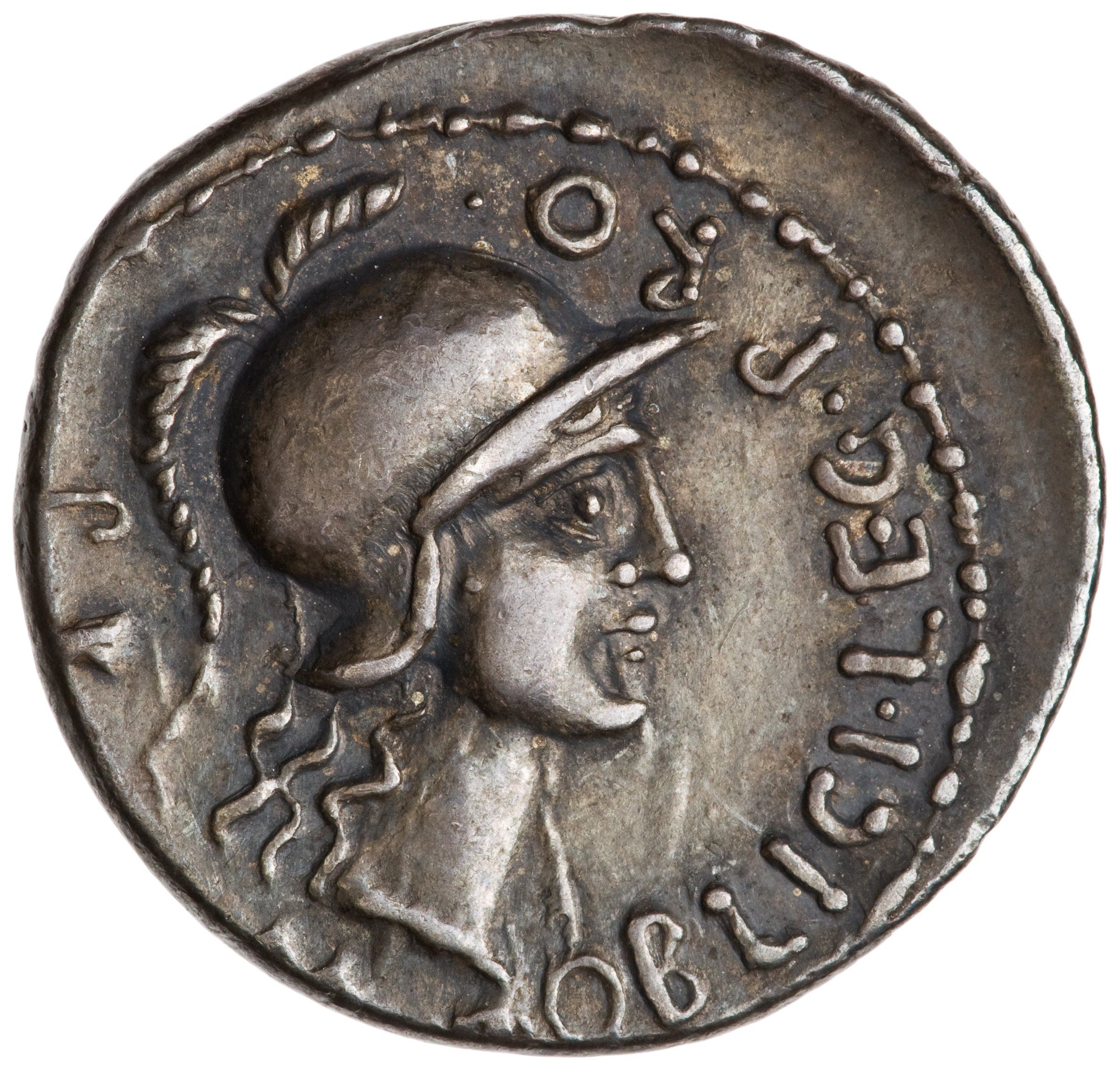
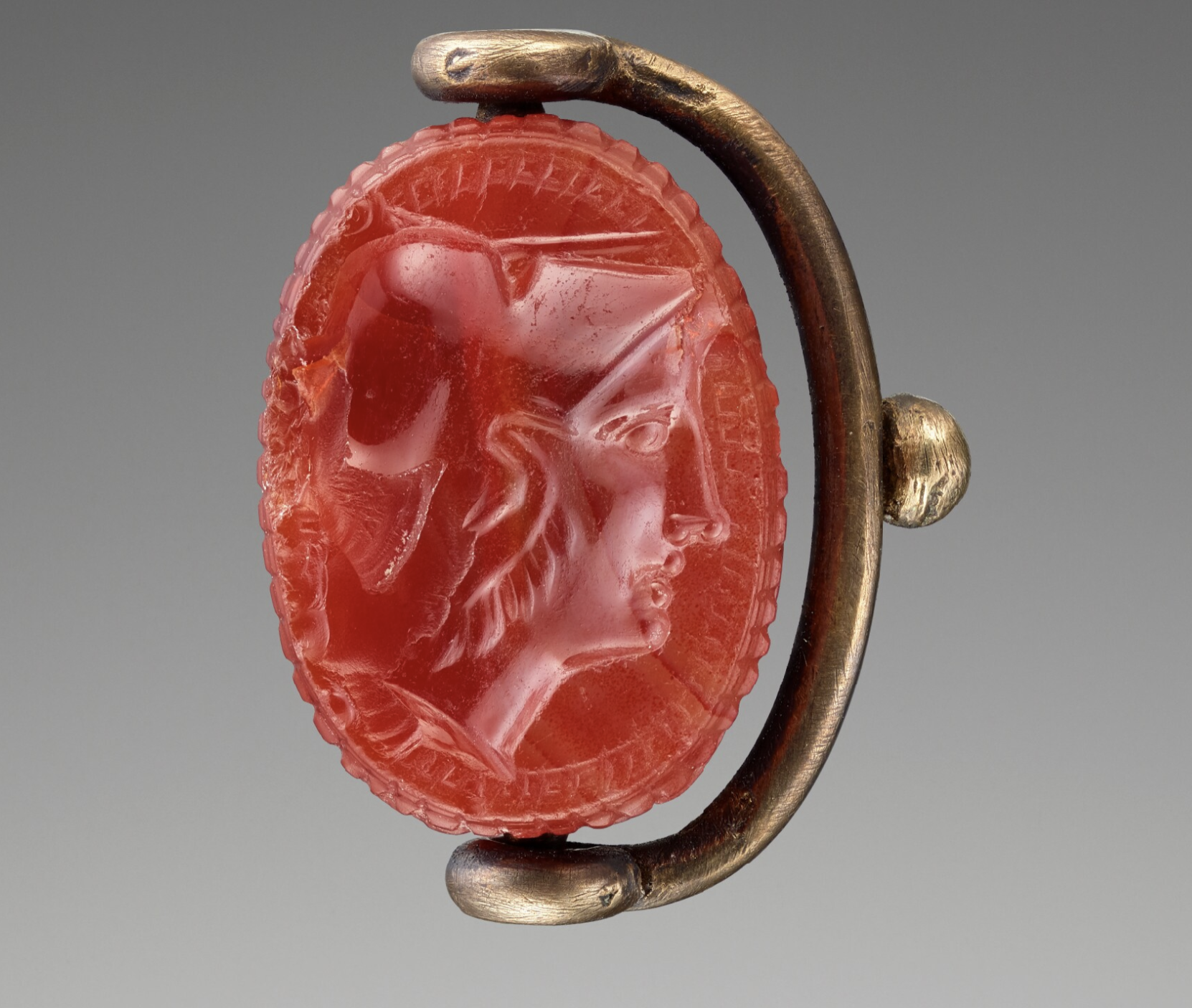
I was looking up Mars in the index of Woytek’s Arma and Numma to make sure I hadn’t missed something on the reverse of 494/16. (I was tweeting about this latter type yesterday, wondering if it’s Mars was at all related to the testimony of the vowing of a temple to Mars Ultor on the eve of the battle of Philippi, Suet. Aug. 29.2; Ov. Fast. V.569‑578). What I found instead was his ID of the above obverse as Mars not Roma, and I could not agree more.
Mars not Roma was blind spot for Crawford. I’ve blogged about other misidentified types and Woytek’s conclusion only strengthens my views.
Relevant types
RRC 388/1 – Blog post with comparative iconography
RRC 14/2 – Blog post (here Crawford saw Minerva, rather than Mars (or Roma).
Update 3-9-23:
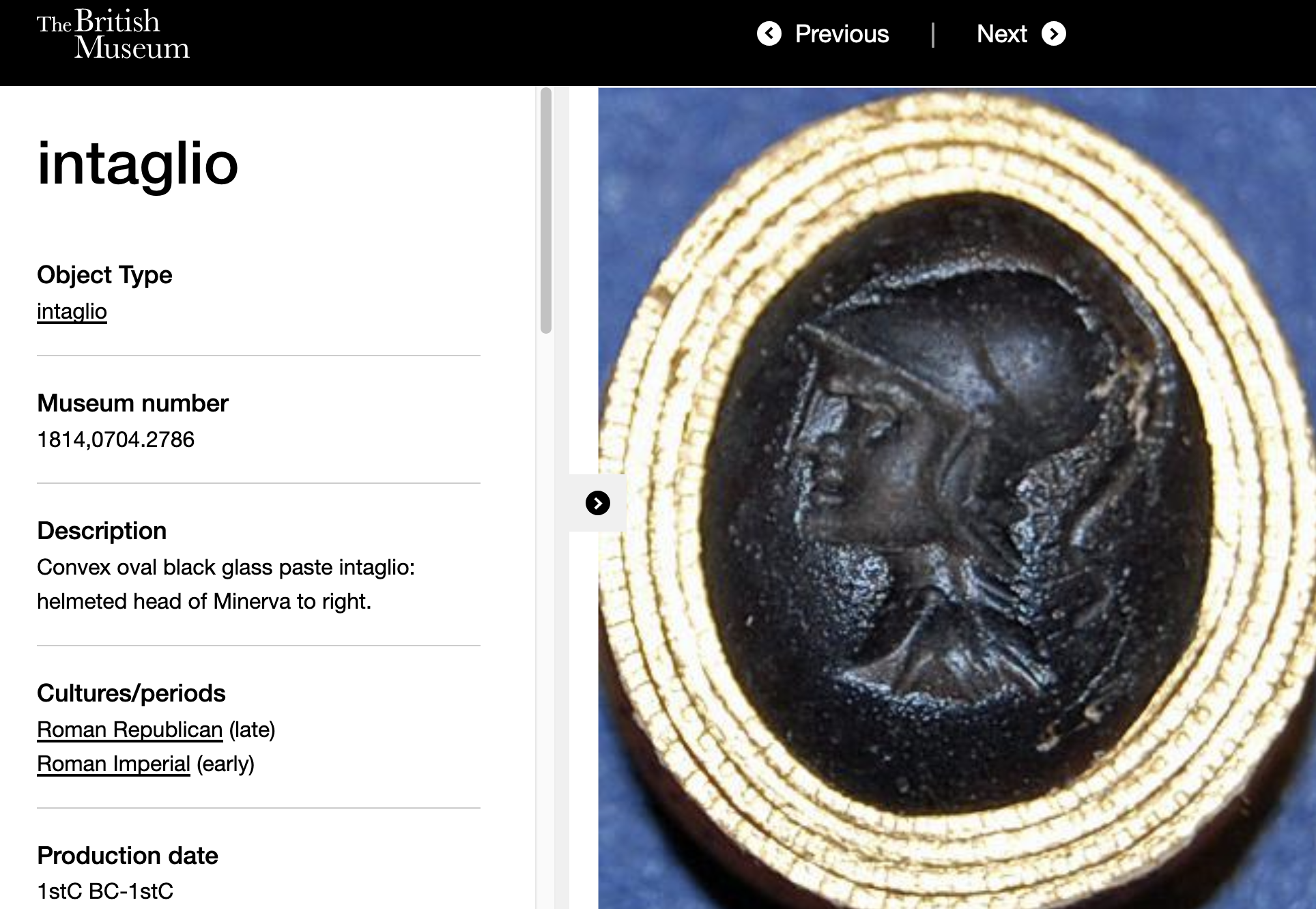
The same type of question also arises in other iconographic contexts (link).
5-5-23 update:
update 2/26/24:
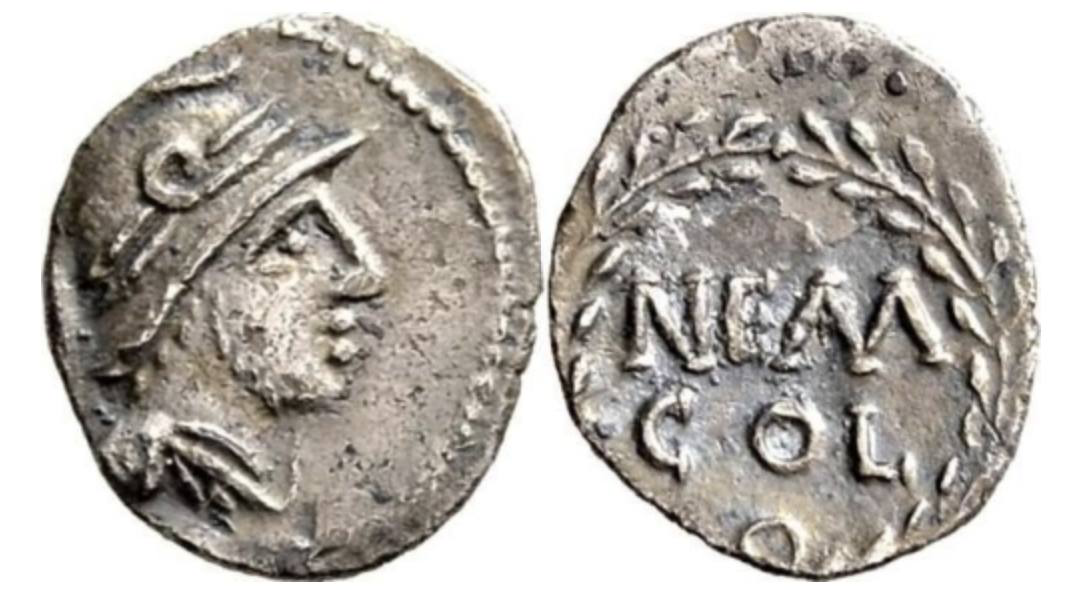
Look at this lovely teeny tiny coin! 11 mm and weighing on average just .38 grams! It was made c. 40 BCE in the Roman colony at what is now Nimes, France. What I love in particular is how the obverse reminds me of young Mars on republican coins and the wreath plus inscription of the small late uncia struck at Rome and other wreathed reverses from Sicilian bronzes struck by Romans https://rpc.ashmus.ox.ac.uk/coins/1/519. RPC 520 and 521 have the same head on the obverse.
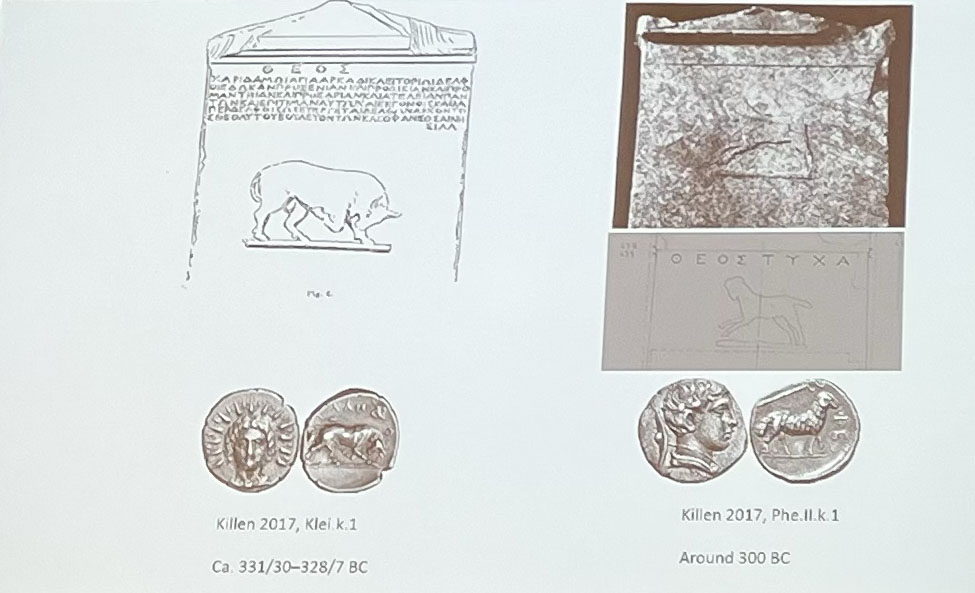
This led to my talking more with him about Killen’s work Parasema: Offizielle Symbole griechischer Poleis und Bundesstaaten. (publisher’s link, ANS catalogue link). This blog post is really just a bibliographical reminder to myself to check out the book the next time I’m in the ANS. Seems an invaluable resource for political iconographic work on the Roman Republic.

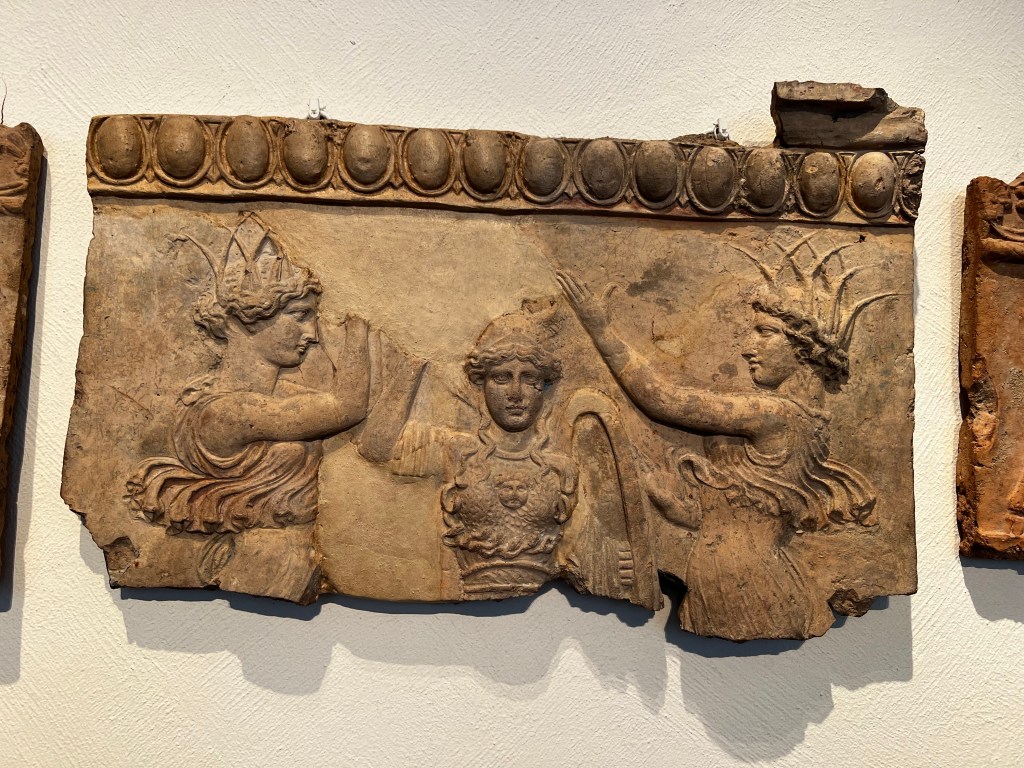
I wanted to juxtapose this coin with this terracotta plaque I saw yesterday the Altes Museum (Berlin)


Part of me wonders if the dating could be off and these plaques might possibly be part of the Augustan era classicizing/archaizing impetus.
Updated 1/20/24:

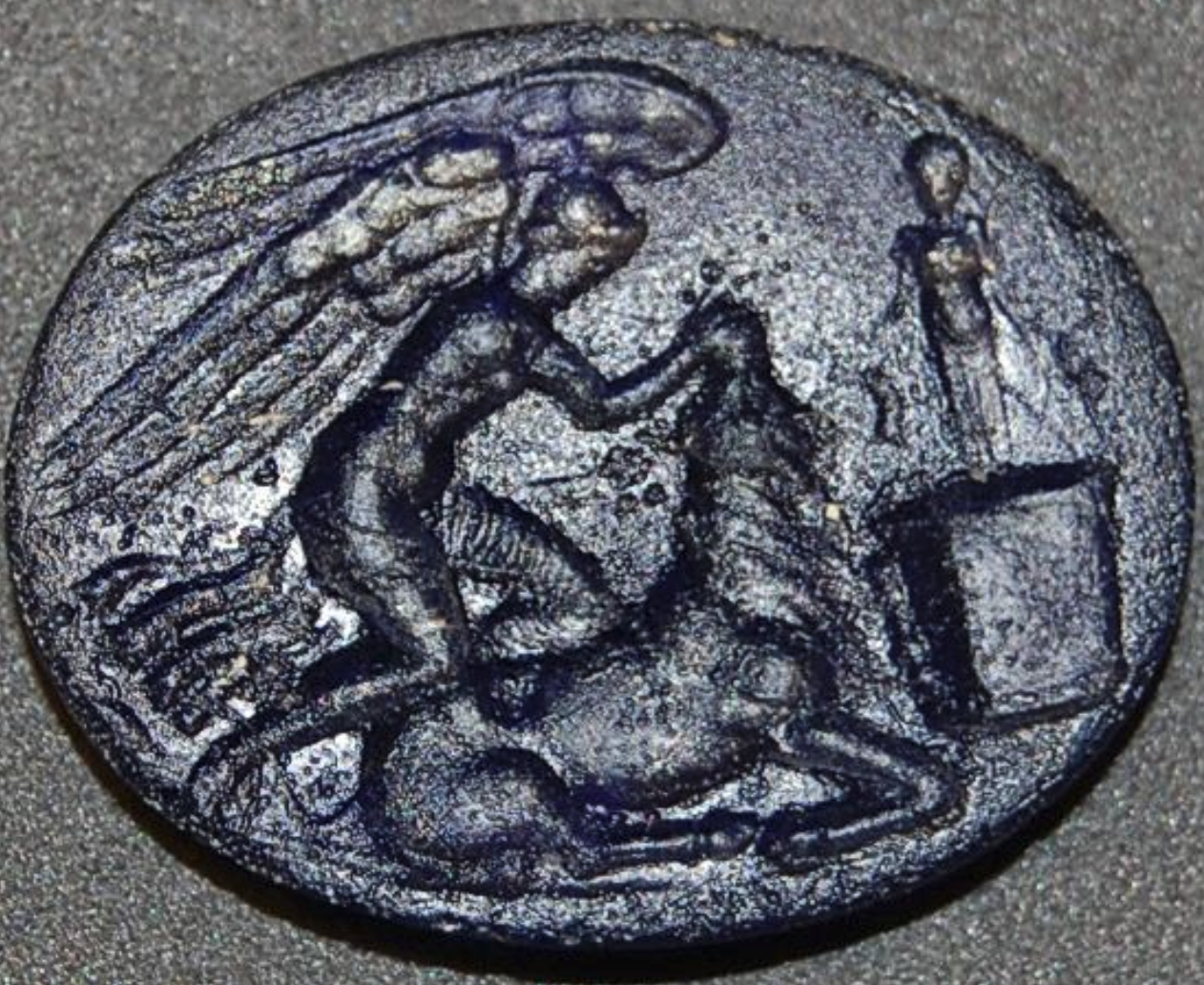

Notice the sacrifice is to Artemis!


Arachne link, impression of A. Furtwängler, Beschreibung der geschnittenen Steine im Antiquarium, Königliche Museen Berlin (1896), Kat.Nr. 9548 (Karneol).

Arachne Link. (Consider if iconography of Nike temple on Acropolis is relevant at all, esp. Balustrad
Thorvaldsen has two such gems, neither yet digitized.
Cf. Cupids engaged in Bull Sacrifice in the reliefs from the Forum of Julius Caesar honoring Venus Genetrix

—
Update 10/5/22:
Louvre has bull slaying scene too, but a different mold. Wierd how this one has the palmettes at the bottom.

—
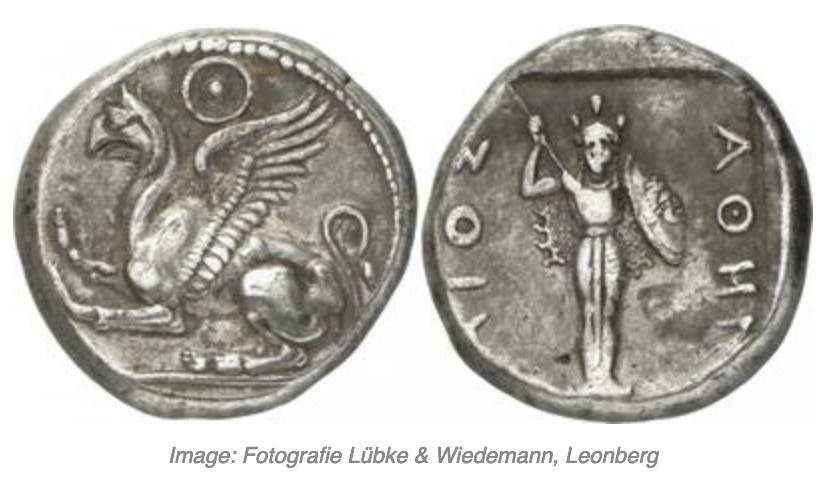
The another plaque in this set also shares a similar iconography with other numismatic representations:

 ANS specimen
Minerva/Athena Promachos? Palladion? Your call.
Updated 10-10-22:

Update 12/8/22:
comparative iconography. What do we call these grassy crowns?!


Note the high tin content and the similarity in shape to the republican die found near Orange, now in Madrid.
Images of a terracotta painted pig in a Prygian cap with spear and shield was shared on Twitter in hopes of locating its present whereabouts by Chapps. He found it on the UKansas Classics webpage.
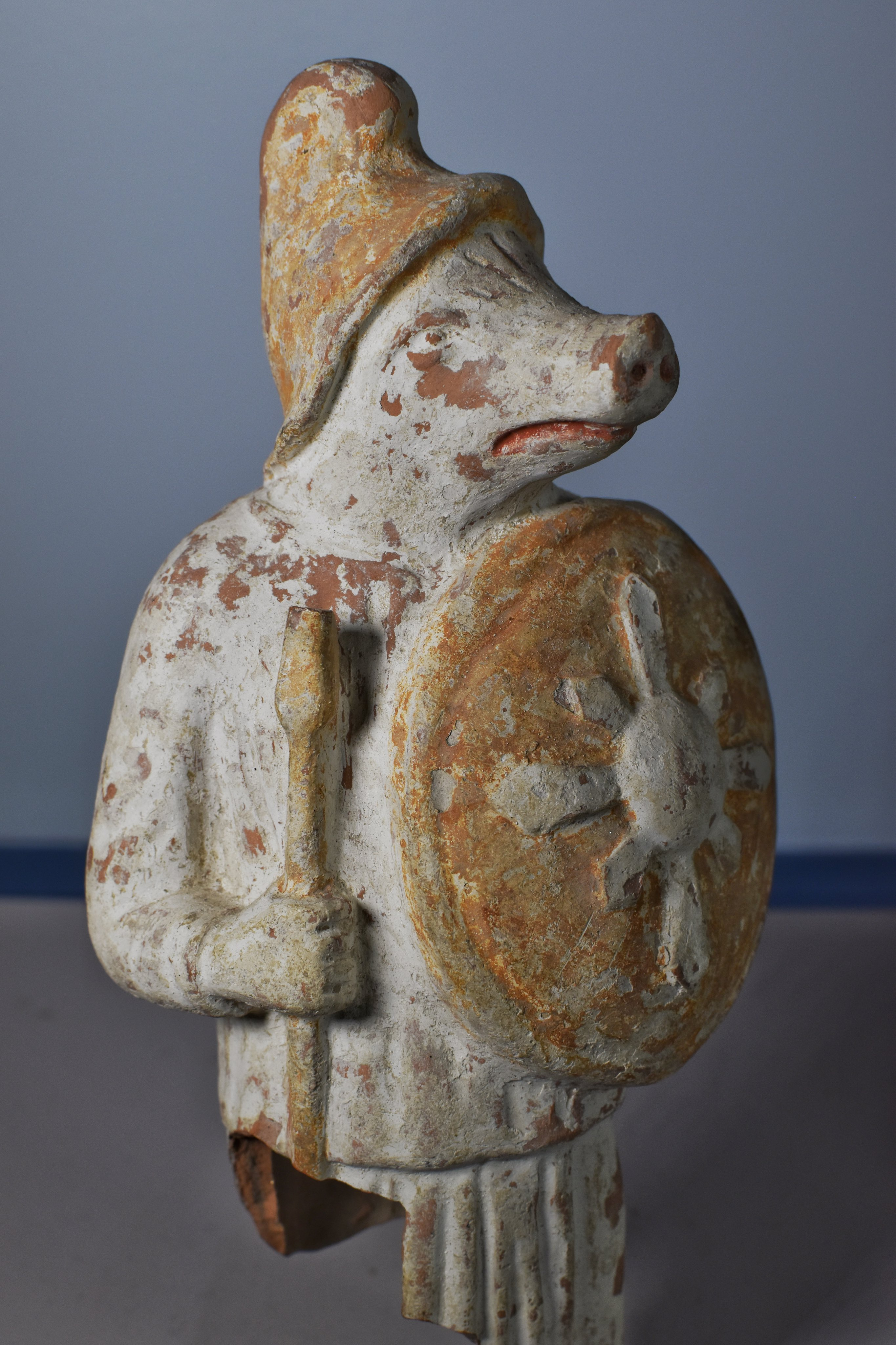

This immediately reminded me of this passage of Macrobius about which I posted a very long time ago.
“Titius assailed the times in which he lived because people served a dish called porcus Troianus, so named because it was stuffed with smaller animals as the Trojan horse was stuffed with armed men” (ap. Macrob. Sat. 3.13.13).
This type of dish is also part of Petronius’ Satyricon and appears as part of Trimalchio’s feast (49.1ff).
And it reminded my colleague Karl Steel of M. Grunnius Corocotta (tweet)!
This is a character from a humorous piece of Latin that claims to be the dictation of a piglet’s will, the TESTAMENTUM PORCELLI, for which Terrence Lockyer provided a convenient online translation.
We should also remember that the boar was a legionary standard used by the Romans in the Republic (early post on this).
It also reminds me a great deal of the Aeneas, Anchises, Ascanius as dogs type of humor:

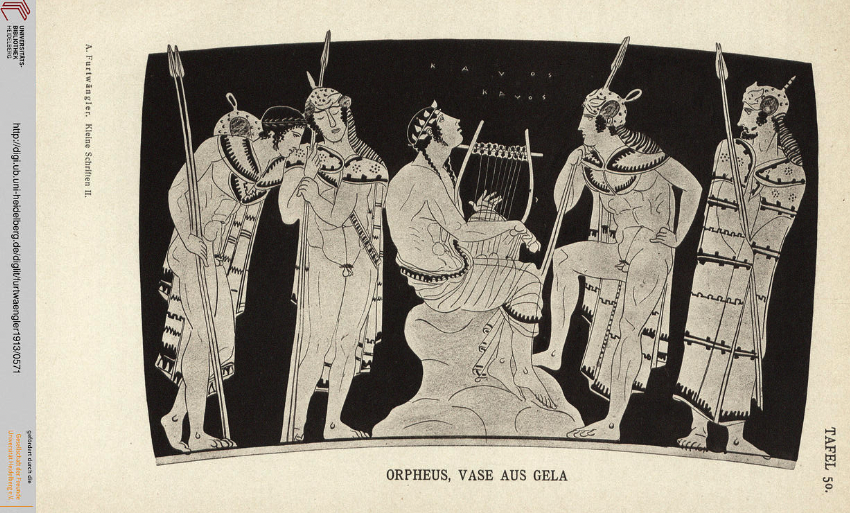
The hats of these warriors remind me of the apex worn by some Roman priests.
 Liv Mariah Yarrow