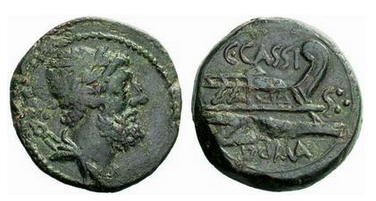
Based on the New Italy Hoard (Hersh NC 1977), Mattingly holds that the denomination the Dodrans (3/4s of an as = 9 unciae) was first introduced by C. Cassius, not M. Metellus (2004: 220). This rules out his original theory echoed by Crawford in RRC that the type was introduced by the later to provide a space to commemorate a divine ancestor via the legendary Caeculus. Why would Cassius create a new denomination for Vulcan? Mattingly gives a terse answer: “The Vulcanal near the forum was the center of popular and tribunican activity in the early republic.” No footnote. It’s a hard assertion for which to find much support.
Does it have anything to do with Liber on his other new denomination the bes (2/3s of an as = 8 unciae)? What do Vulcan and Liber have in common? Not much but we do have his intriguing passage:
That the two gods could be linked is shown in this little passage from Hyginus’ Astronomica:
This text however seems to me another explanation of a common artistic motif “Hephaestus’ return to Olympus”:
The narrative might go back to a lacuna in the Homeric hymn of Dionysus, some speculate. The narrative is mostly deduced from various vase paintings with the help of this passage in Pausanias:
On the denarius series the reverse is more flexible than the obverse and we see more variation soon there. The first big break in the design of both is likely to be this type of c. 137 or 136 BC:
This type can be seen as borrowing from earlier Roman coin types and is thus at once a radical change and a conservative choice. [Note that Mattingly thinks this is the second big change in the reverse, hypothesizing that the coins with the wolf, twins, Faustulus and fig tree where made the previous year (2004: 214).] It will be nearly two decades before the obverse changes again this time borrowing from the bronze coinage, i.e. keeping the choice in the familiar repertoire:
Then, about five years on another Janiform head:
This feels again like a throw back to to earlier silver designs on Roman diadrachms and the reverse of a ship makes the whole type echo the standard Janus/prow type of the as. The same year, or perhaps the next year, this unusual obverse appears:
Does the legend identify this female divinity as Roma in a different guise that we’ve seen her previously? Maybe. Or perhaps another goddess entirely is intended.
The next year sees even more experimentation on the obverse:
From this point onward — 113/112 if you want to follow Crawford, 110 Mattingly — the obverse design remains flexible and expressive just as the reverse had been since c. 137. Conservative types re occur throughout the series on both obverse and reverse, but after the mid seventies (RRC 387/1) the Roma and biga combination fails to re occur again together. In fact after this Roma appears more often on the reverse than the obverse. She’s not seen on the obverse again until 53BC (RRC 435/1)!
This little silenos figure on a lid of cista no. 45 in the Pierpont Morgan Library collection is labelled EBRIOS. Ebrius is the Latin adjective meaning ‘drunk’. Think English inebriation. Not an inappropriate name for a dionysiac character. I wonder if there is any relation to the river name where Ovid says the Bacchic throng discovered honey (Fasti, book 3):
liba deo fiunt, sucis quia dulcibus idem 735 gaudet, et a Baccho mella reperta ferunt. ibat harenoso satyris comitatus ab Hebro (non habet ingratos fabula nostra iocos); iamque erat ad Rhodopen Pangaeaque florida ventum: aeriferae comitum concrepuere manus. 740 ecce novae coeunt volucres tinnitibus actae, quosque movent sonitus aera, sequuntur apes; colligit errantes et in arbore claudit inani Liber, et inventi praemia mellis habet.
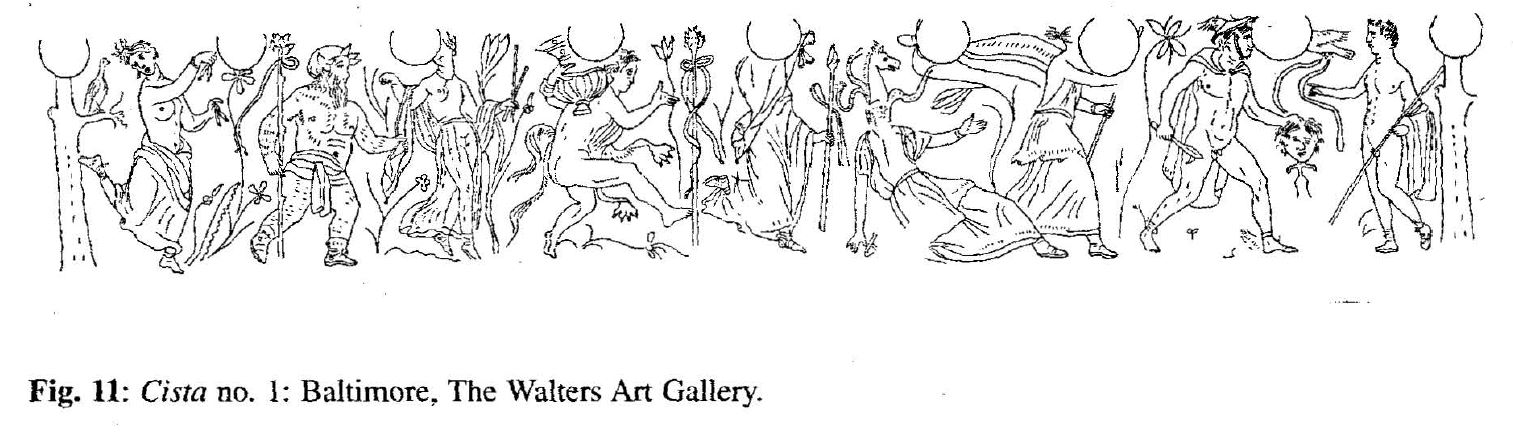
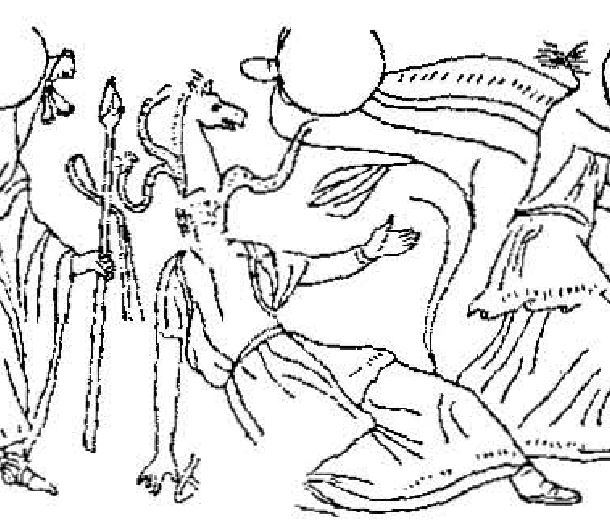
Notice in the midst of this Dionysiac revel Medusa collapses after being decapitated by Perseus and Pegasus rises from her neck framed by a few snakes of her remaining hair. Fantastic image. Great Halloween costume idea too. Here’s the actual object but the line drawing is far clearer:
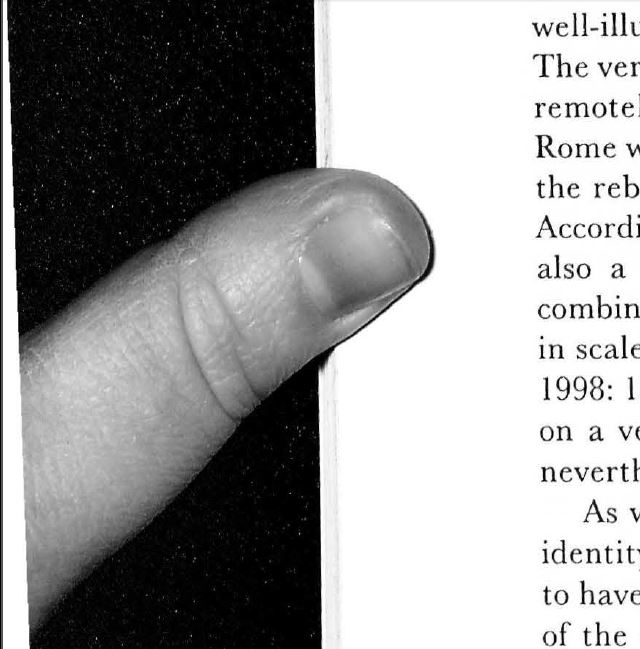
I couldn’t do my research without the hard laboring librarians of ILL. Those at my own institution process and vet my innumerably requests, but others all over the world slave at scanners to bring me tidbits of information. My favorite part is when I find a little trace of their humanity in the margins of my scans. Thumbs of glory disseminating esoteric knowledge free of charge. Or, more accurately, as all the coversheets now say:
Anyway in honor of the thumb above: ” Dear Librarian of Binghampton University, THANK YOU!”
24 January 2012 Update: Thank you University of Chicago ILL:
I always love a good cross-cultural narrative parallel. There is a dreamer in me that secretly wants Jung’s Archetypes to be real. I’m reading Wiseman’s “Games of Flora” today and he has a nice opening about how Flora under her Greek name, Antho, appears in some versions of the Romulus foundation legend:
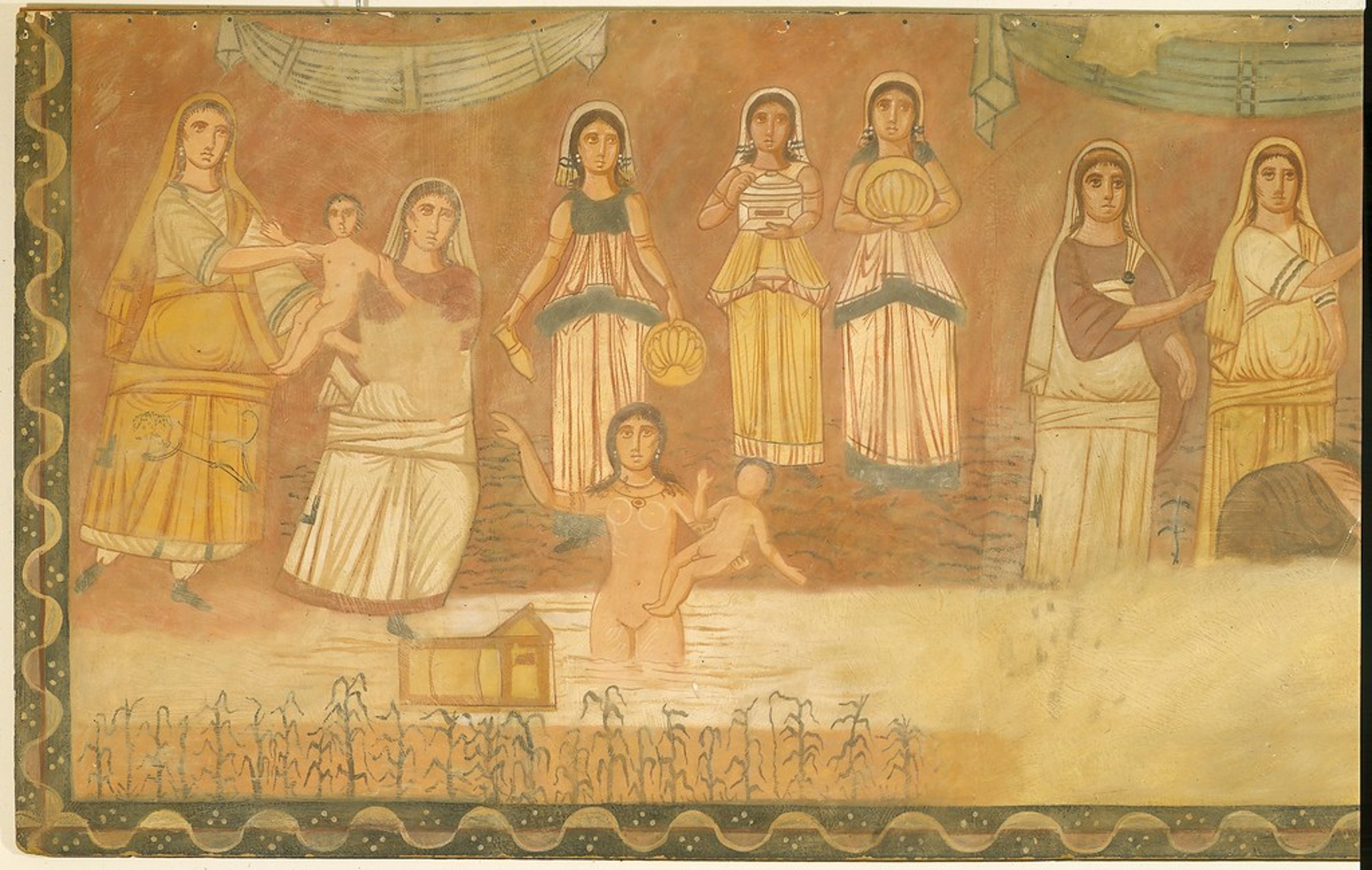
So basically the evil king’s good daughter rescues the future leader of the people. This time before the infant leader is tossed in the river, instead of after. Still I can’t help but think of the Exodus story. This led me to a very illuminating look at the character of pharaoh’s daughter in the Jewish tradition.
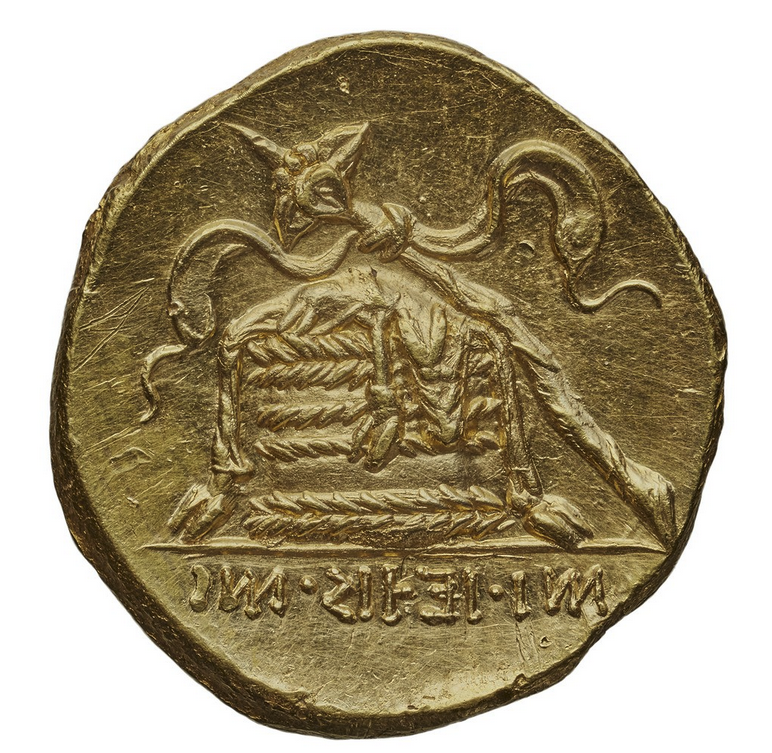
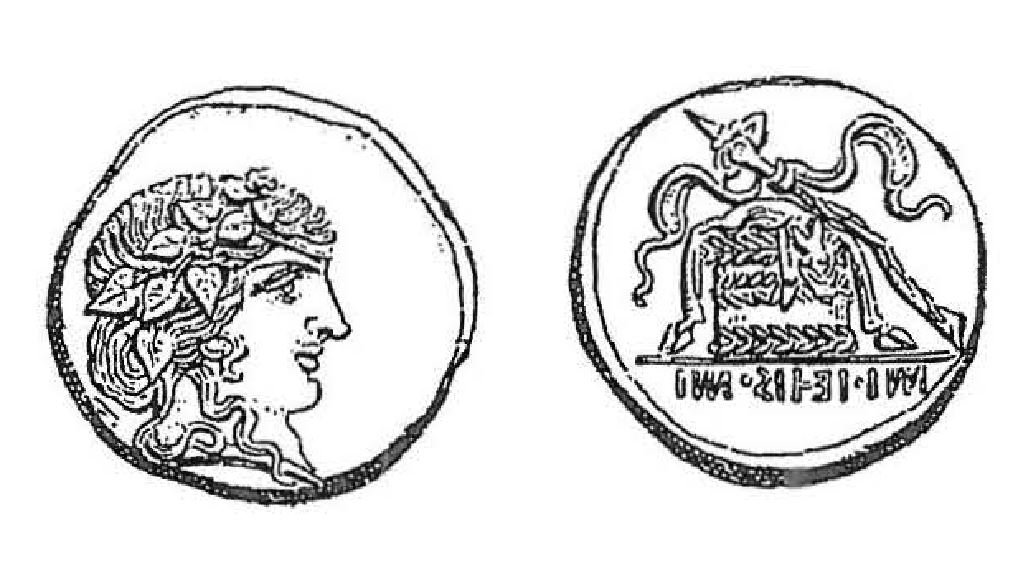
What does this have to do with coins? Not much particularly, except that now this coin with the head of Flora will probably get a wee mention in chapter 2 along with the more obvious wolf and twins types:
This coin is only known from one unique specimen in Paris. {Irritatingly the digital catalogue entry has the wrong image linked to it as of 7/20/18} Its authenticity seems guaranteed by the accuracy of the Oscan language inscription, which at the time of its first documentation was not yet fully understood. Photos on the internet are hard to find. The wikipedia entry is okay. Heck, I’m impressed it has an entry or sub-entry. I’ve taken the drawing above from Wyler’s 2008 article.
Mostly I’m writing this post to make a note of Mattingly’s rather under-acknowledged theory that this is not a Social War coin at all, but a product of the Mithridatic Wars (2004: 189-192). The usual explanation is that the Italians copied the type from the bronze of Amisos:
And that thus it represents tangible proof of the suggestions in the literature that the Italians sought (and perhaps obtained?) support from Mithridates (Diod. 37.2.10; Athenaeus 5.213C). My enemy’s enemy is my friend, as they say. On Dionysus imagery during the Social War, see:
Pobjoy, M., ‘The First Italia’ in K. Lomas and E. Herring (eds.), The Emergence of State Identities in Italy in the First Millennium BC (London: Accordia Research Institute, 2000), 187-211.
Anyway, Mattingly focuses on this passage from Plutarch’s Lucullus:
He thinks that the Parisian specimen is one of these pieces of gold and that the Oscan was used to unsettle the Italian troops in Lucullus’ army and encourage them all the more to revolt.
This seems even more far fetched, than the Social War explanation. Really the problem comes down to there only being one of these gold coins. We have no comparative evidence or geographical data, let alone archaeological context. We remain in the realm of speculation. Anyway, just to make this post a little more complete, we should note that a similar bust of Dionysus does appear on the Italian’s silver coinage:
Update 8-29-25:
I’m interested in early knowledge of this type/specimen.
I’m reading V. Arena’s fabulous new book on Libertas. The BMCR review made it seem like a very theoretical take. I find it well grounded in both theory and evidence. Really well conceived throughout. She does a brilliant job of integrating numismatic evidence throughout.
In the midst of a well-reasoned discussion of why libertas and victoria are linking in the Roman mind set, she drops in the bit about Cicero I quote above (p. 77).
This kicked off in my mind an old thought I’ve often had while reading the prophesy of Jupiter in Vergil’s Aeneid with my students in gen ed classes. Do we have the Romans to blame for such problematic ideologies as Manifest Destiny, The White Man’s Burden, vel sim. Did all that classical education in post-renaissance Europe provide a template for justifying Imperialism to the emerging christian colonial powers?
I hope some one smarter than me has articulated the connection.
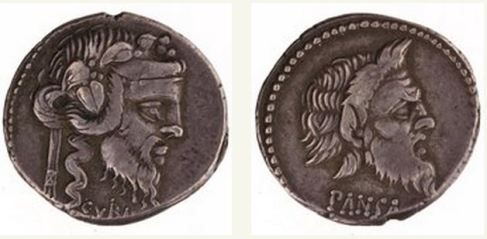
There seems to me to be some logical inconsistency in how we identify Pan and Silenus on Roman Republican coins. The type above is likely the first to depict either. Crawford dates it to 91; Mattingly prefers 90 (2004: 248). Quite logically the “Silenus” on the obverse is taken to pun on the moneyer’s name, D. Silanus. The following year (according to both Crawford and Mattingly), C. Vibius Pansa strikes a coin that looks like this:
These coins might almost be called vanity pieces. There were probably less than 10 dies created for the manufacture for these types, but his other coins with Apollo and Minerva in a Quadriga (RRC 342/4-5) used upwards of a 1000 dies. Crawford assumes another name pun and identifies the head with pointy ears as Pan and the head with the ivy wreath as Silenus and sees them both as masks. Notice the heads have no necks. I find this problematic as Silanus’ Silenus and Pansa’s Pan have nearly identical iconography. If we look beyond the coins to for comparative iconography it become clear that Pan and Silenus have a pretty distinctive iconography. Pans are part goat and usually have more animalistic bodies, especially their lower halves. Their heads are marked out by two goat horns rising from their forehead. Silenoi or Papasilenus is an old satyr, pug-nosed, covered in a white flocked suit on stage, and horse ears like any satyr. [Note: the ears are pretty much the only difference between a Silenus depiction and that of Socrates.] Here is a perfect side by side:
Uncertain image source, for similar motif see this specimen.
Of course, rigid rules need not apply. Perhaps the same image can represent both Silenus and Pan. Compare for instance these coins of Panticapaeum:
The head on the coins of this city is often identified in catalogs as Silenus but because of the name of the community a visual pun is often assumed.
I am less convinced that a case can be made for the ivy crowded figure to be a Silenus. The face is just too smooth, the nose to straight. This seems very much like a head of Dionysus. The hair style is the same as that found on the Thasian type used by the Romans in Macedonia:
Compare the hair roll over the forehead, the loop down in front of the ears, and the prominent back knot. The two locks of hair hanging down have been slightly modified on the Roman type. The front is left curly the back has been modified into a straight fillet, perhaps to emphasize the mask like qualities. Notice that the two bunches of ivy berries at the top of the head and the ivy leaves below. The typical five on the Thracian type have become just three but with lobes and berries.
Pansa’s silver types was echoed on a few of the bronzes of his fellow moneyer Q. Titius:
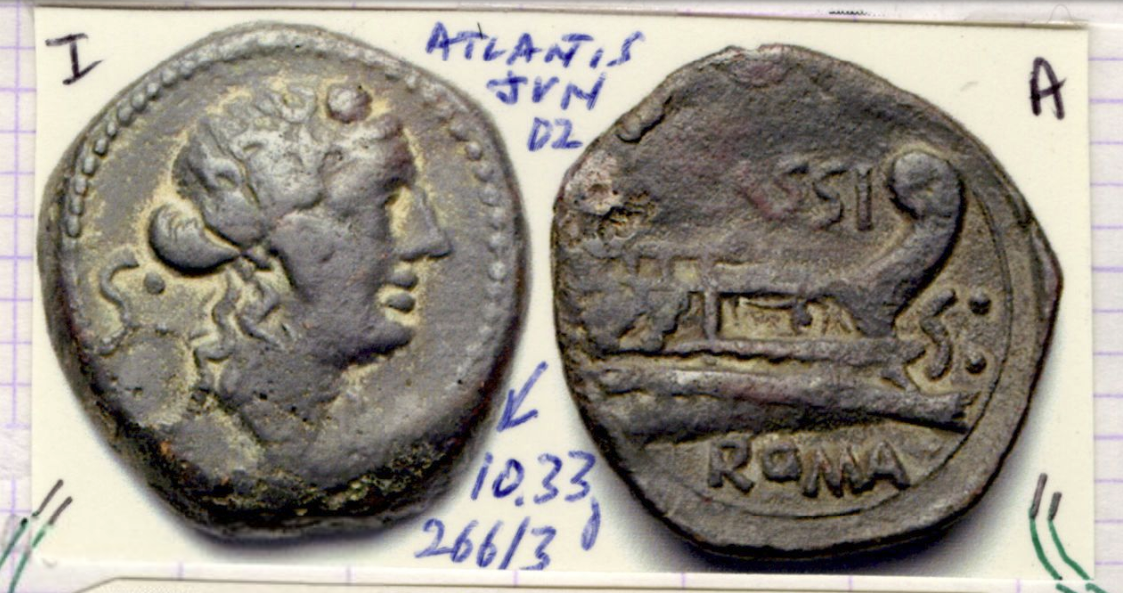
These are the first representations of Liber (Roman Dionysus) on the silver coinage. His first appearance at all was on an especially created denomination of the silver the bes or 2/3s coin = 8 unciae (RRC 266/3)
The adoptive son of the Pansa just mentioned echoed elements of his father’s series in 48 BC (RRC 449).
I’ve put up this small selection just to note the later rendering of Dionysus and the Pan/Silenus mask. On the series of 90/89BC (RRC 342), Ceres had been paired with Apollo who is now missing from the later series, replace with a youthful Dionysus.
Update 3 January 2014: Just another nice juxtaposition of Silenus (central figure; note: beard and balding forehead and hair suit) and Pan (right figure, note: two horns from top of his head)
Mirror with symposion scene; Baltimore, The Walters Art Gallery; Etruskische Spiegel V, Taf. 43. Discussed in T. P. Wiseman. ‘The God of the Lupercal’, JRS 85 (1995) 1-22, at 9-10 (with plates 1-111) and ‘Liber; Myth, Drama and Ideology in Republican Rome’ in The Roman Middle Republic (2000) 265-299. Wiseman identifies Marsyas as a type of silenos. Here we see him dancing being imitated by a little pan, labelled Painiscos, or ‘Paniskos’.
Also note regarding the name pun on Silanus’s coin the first illustrated above, in Wiseman 2000: 270 with fig. 6 & 7 it is asserted on this basis that younger satyrs with no beard or a short beard are labeled SILANOS and SILANVS.
This summary by Crawford in RRC vol. 1 on page 6 is so useful I thought I’d toss it up on the web so it would be easy for me (and others) to find in future.




















 Liv Mariah Yarrow