Another Marcian Marsyas?

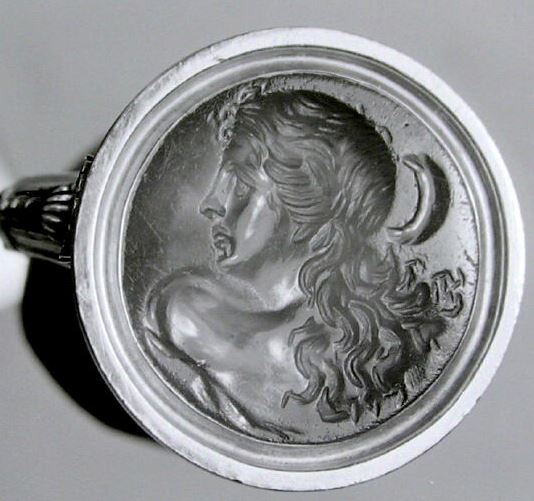
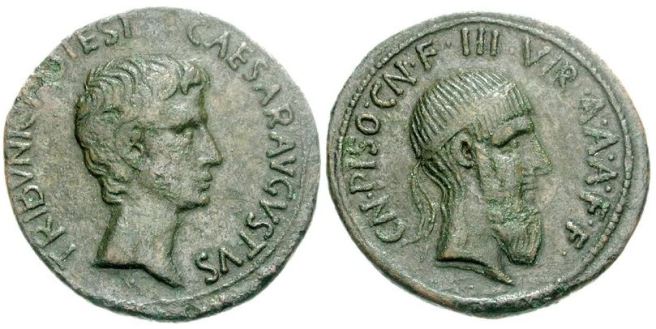
A connection between RRC 363/1 and a gem in the BM has long been known.  There also has been much written on the connection between these images and the statue in the forum of Marsyas and Marsyas’ status as a symbol of libertas.

I was hoping I’d found another instance of the same intaglio type.

Image

Beazley link.

But I think it most likely that this is just a positive imprint of the BM specimen.  Ah well.  The photos aren’t clear enough to be certain, but that is my hunch.

Banded onyx gem engraved with Seilenos moving to the left, with a wine-skin on his shoulder and his right hand raised; behind is the Palladion on a column.

Update 3/28/2018

A glass paste in Berlin:

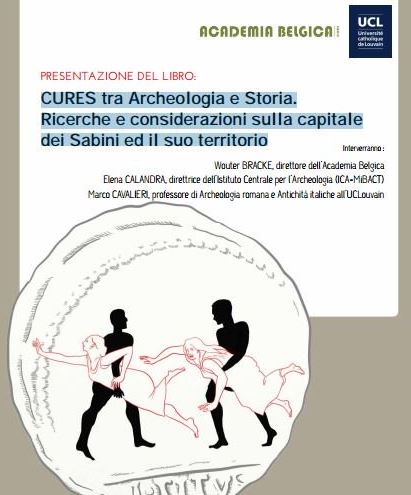
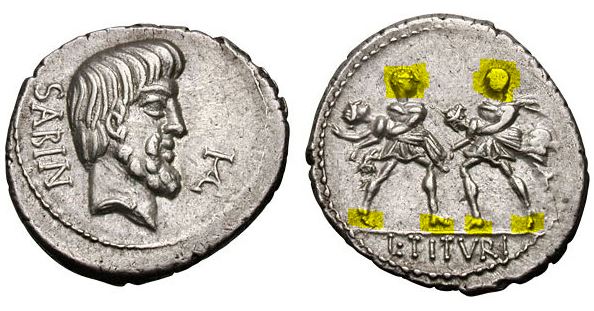
Brutus’ Sons

The betrayal of Brutus’ sons and their execution at their father’s orders to preserve the newly founded republic is well known in literary sources, but rare in Roman art.  Here we might have a rare instance:

Image

Beazley archive link.

Image

Beazley archive link.

Alternately these intaglios represent the sacrifice of the Trojan prisoners, but that usually puts the emphasis on a single figure.

The only other representation I know of the killing of Brutus’ sons is from a late Silver Lanx:

Image result for brutus sons

Link to early publication on JStor.

Update 9/15/16:

Read this old catalogue entry and wonder if this specimen might look something like those above.  The BM has not photographed the piece. 😦

capture

Could the gems above really be Orestes and Pylades?  As I wrote about in a previous post this story had great theatrical/moral resonance in the late republic, or so Cicero says.

Rutilus’ Victory Column? Victory Arch?

Elkins 2015: 24-5 writes:

“The coins may well represent the victory arch at Ostia of…

CaptureCapture1

Very plausible.  But this ‘near Ostia’ business had me worried.  A little Livy (7.17) cheered me up:

This led to a rising of the whole of Etruria, and under the leadership of the Tarquinians and Faliscans they marched to the salt-works (salinas). In this emergency C. Marcius Rutilus was nominated Dictator—the first Dictator nominated from the plebs—and he appointed as Master of the Horse C. Plautius, also a plebeian. The patricians were indignant at even the dictatorship becoming common property, and they offered all the resistance in their power to any decree being passed or any preparations made to help the Dictator in prosecuting that war. This only made the people more ready to adopt every proposal which the Dictator made. On leaving the City he marched along both banks of the Tiber, ferrying the troops across in whichever direction the enemy were reported to be; in this way he surprised many of the raiders scattered about the fields. Finally he surprised and captured their camp; 8ooo prisoners were taken, the rest were either killed or hunted out of the Roman territory. By an order of the people which was not confirmed by the senate a triumph was awarded him.

Here’s a handy map to help visualize the geography.

Capture

This is all in relationship to these asses (RRC 346/3 and 4) on which I’ve written a bit before.


Family Lore and False Triumphs

For it was customary in most families of note to preserve their images, their trophies of honour, and their memoirs, either to adorn a funeral when any of the family deceased, or to perpetuate the fame of their ancestors, or prove their own nobility. But the truth of history has been much corrupted by these laudatory essays; for many circumstances were recorded in them which never existed; such as false triumphs, a pretended succession of consulships, and false alliances and elevations, when men of inferior rank were confounded with a noble family of the same name: as if I myself should pretend that I am descended from M’. Tullius, who was a patrician, and shared the consulship with Servius Sulpicius, about ten years after the expulsion of the kings

Cic. Brut . 62.  Cf. the now lost inscription from the Fabian Fornix and RRC 415/1

Discussed (if I remember rightly) in Wiseman, ‘Resplendent Aemilii’

Cicero on the Sabine Character

I always find myself looking for this quote and having to hunt it up elsewhere.  It seemed prudent just to stick it on my own blog.

My Orator—for that is the title I have given it—I have handed to your Sabinus. His nationality made me think that he was a proper person to whom to give it: unless he too has availed himself of the licence of candidates and has suddenly adopted this surname. However, the modesty of his look and the gravity of his conversation seemed to me to smack somewhat of Cures. But enough about Sabinus.

Cic. Fam. 15.20 written in April(?) 44BC to Trebonius, a good friend with whom Cicero often jokes. Latin here.

Sabinus is probably a slave, perhaps a freedman.  The name will have been given to him to indicate indigenous Italic stock.  The joke is that aspiring politicians might claim this cognomen for the same sort of associations which made it appealing to slave owners.  Cicero pushes the joke further by legitimating the ethic connotation of the man’s name by crediting him with the moral characteristics usually associated with that ethnicity.

The letter continues with another geographical ‘joke’ of sorts.  Cicero observes:

that in old days those remaining at Rome were accustomed to write on public affairs to their friends in the provinces; whereas you are now bound to write to us: for the Republic is there

Just as Sabini might not really be Sabines, so too the res publica can be separated from Rome itself.  Both allude to the anxieties of the day.