Elephant Scalps Again

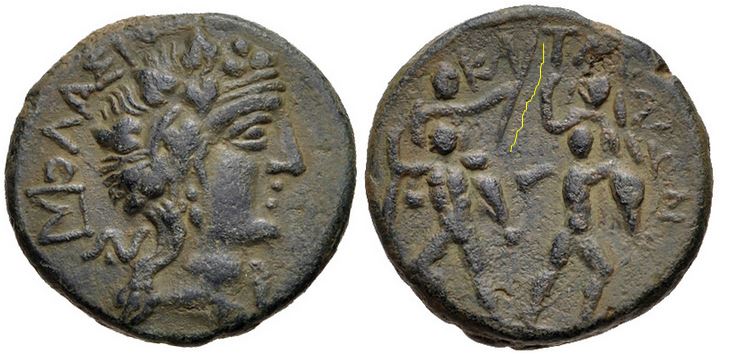
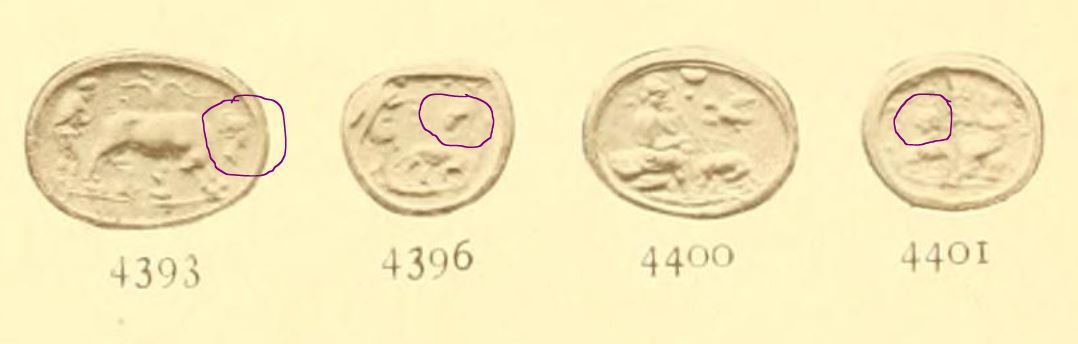
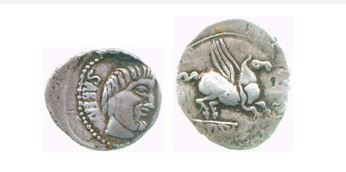
So I’m reading Kopij NAC 2016, 106-127 on RRC 402 at this moment and it was really bothering me I didn’t have an image to hand of this (unique) coin (I do hate unique coins).  Both he and Maritz 2001 cite SNG Copenhagen but don’t illustrate.  Much to my delight this website on Magna Grecia gave me the Jenkins SNR 50 reference which let me track an image down.  I now see why Panormos and Camarina are preferred IDs.  The reverse looks very much like the reverses of those two cities at the end of the fifth beginning of the fourth centuries BCE.

It is much like many glass paste representations and not much like other early coin types…  No particularly personal theories yet…

Capture1.JPGCapture.JPG

Update 5/9/2022:

Emory 2008.031.031

A glass paste for a Pompey supporter

Capture1.JPG

I don’t usually like to be totally 100% certain about anything, but this one seems pretty dang clear!  (RRC 447/1)

Capture.JPG

Addendum.  Tassie records a jasper with the same design (no. 2682) in the collection of one Mr. Chracherode.

Capture.JPG

Second Addendum.  A related glass paste: BM 1814,0704.2253 = ex. Townley coll. = Tassie 1042:

Capture.JPG

Caduceus replaces sceptre perhaps to lessen regal overtones?  Or simply to mark the coming of good things…


Those Catana Boys Again…

I thought I’d settled my mind on RRC 308/1 previously (two earlier posts).  But now a Berlin glass paste has thrown open the question in my mind again.
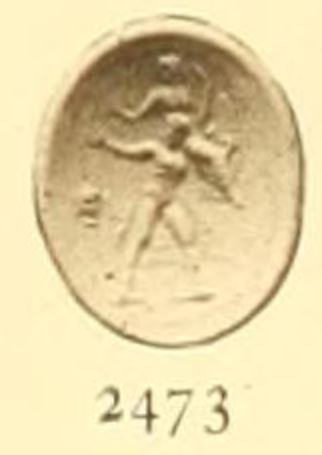
Capture1Capture

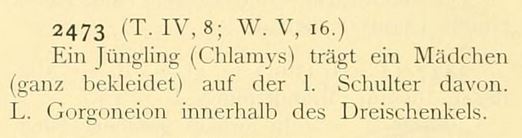
The identify of the figure as one single Cantanaean brother seems confirmed by the symbol in the field, the triskeles, a symbol of Sicily.

This then got me thinking about arm and body positions.  The outstretch arm echoes the representations of the father on the coins of Sextus Pompeius (RRC 511/3).
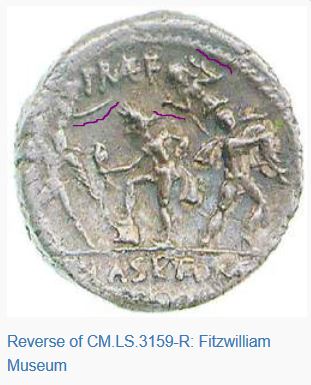
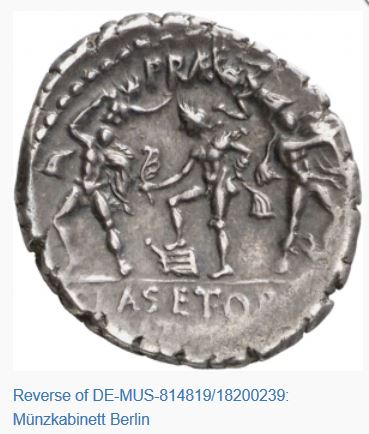
Capture2Capture3

The Sextus coins bear a strong compositional resemblance to these bronze coins of Catana (date disputed).  So strong in fact I might posit one or more pre existing local representations of monumental scale.  The one big difference is that the father is holding a long slender object in his out stretch hand.  No parallel object is held on the Sextus coins.  BUT on the glass paste above there is a similar long slender object in the father’s opposite hand held close to the body.
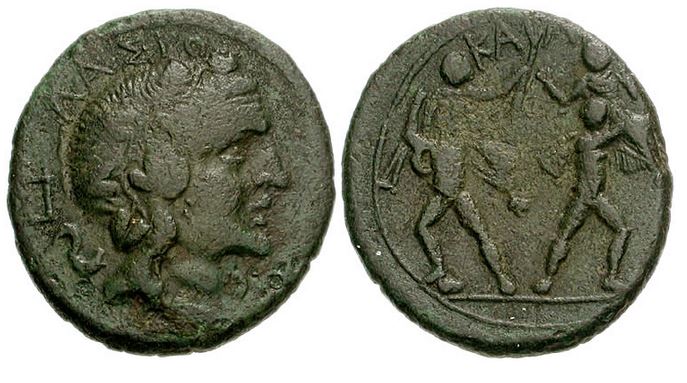
Capture4elCapture5

On these other coins of Catana (Katane) the mother’s arms are represented identical to the two coin types above, BUT the not the fathers.  He holds his arms close to his body.  There is a strong vertical element which could be the same rod like object seen above or might just be drapery as on the RRC 308/1.
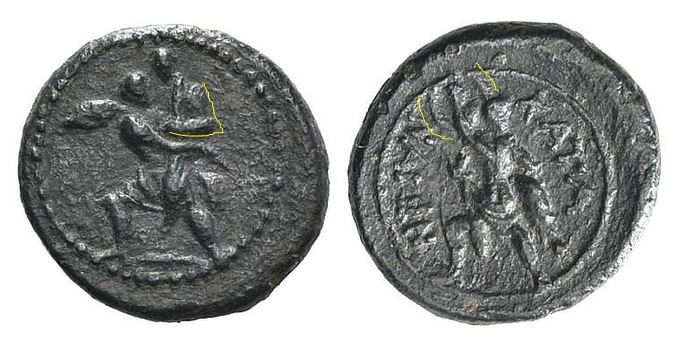
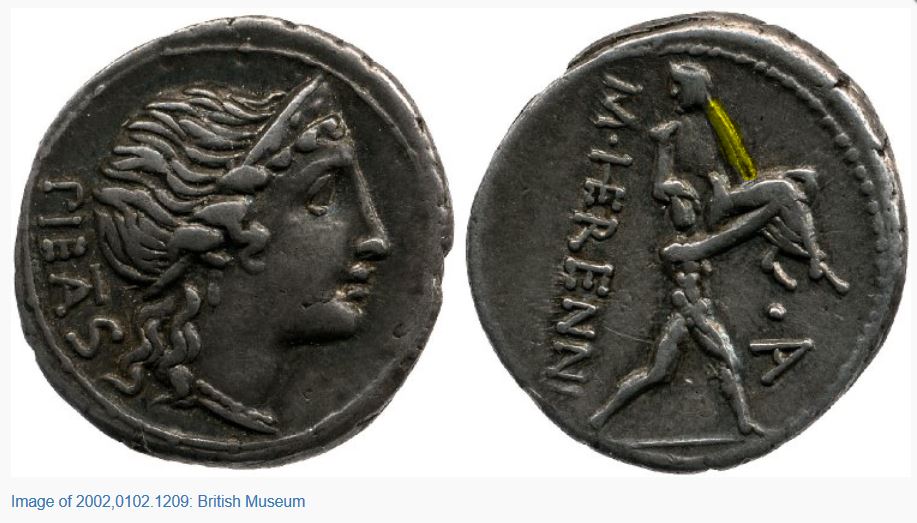
Capture6

Capture.JPG

Drapery is a keep design component in RRC 494/3:
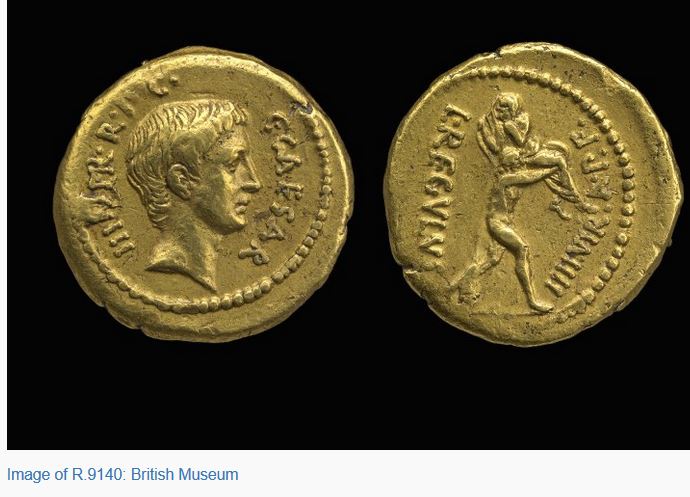
Capture.JPG

The distinctive element of the glass paste illustrated above is the outstretch arms of BOTH father and son.  I would interpret this as a visual reminder of the other brother and the mother, a beckoning gesture.  What that stick thing is I’d dearly love to know…

All in all I’m back to being a little less sure of my reading of RRC 308/1…

Addendum.

Capture.JPG

Capture.JPG


Let’s Just Call Him Mercury!

(or Hermes.)

Capture1.JPG

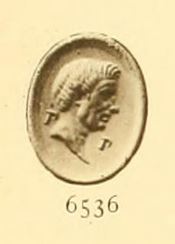
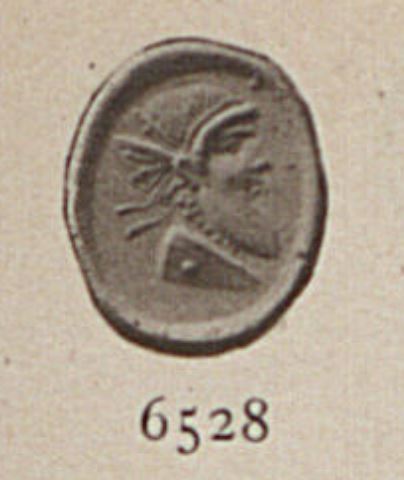
So I don’t think we should follow Crawford’s hesitation to identify the head on RRC 341/1.   He doesn’t hesitate to identify the youthful head with a winged diadem on a terminal bust as Mercury on RRC 418/2 and we also have a whole slew of 5th century style portrayals of Hermes on what are likely to be Roman Republican glass pastes, some even wearing wings (these are all in Berlin).

Capture.JPG

Capture.JPG


Update 9/11/22:

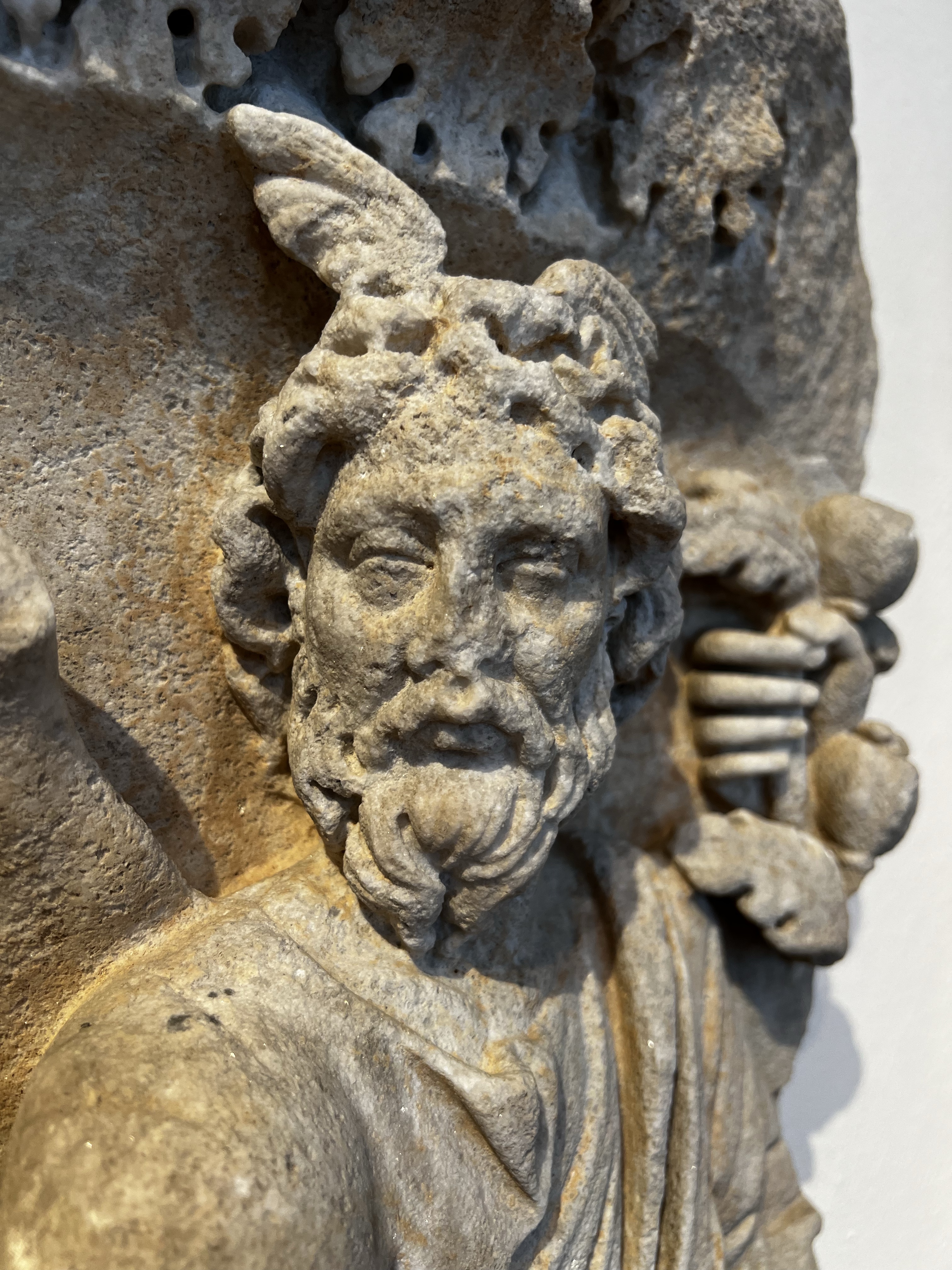
I still think Hermes is the most likely identification for the obverse of the above type but I did pause and think about it when I saw this figure on a sarcophagus in Berlin yesterday (Altes Museum).

Dacian Mash Up?

Capture1.JPG

Just a fun imitation specimen from the Fitzwilliam in Cambridge.  It copies RRC 341/1 and 344/1.

It would be fun to see if there are any archival records about how it came to Gonville and Caius College  (acquistion: “loan; 1938-01-11; Gonville and Caius College”)