Organization Crisis

I don’t have writer’s block. I haven’t really since I started this blog.  Good thing.  I used to hate to write.  Now it is a happy place.   I’ve got a new problem.  I can’t find an organizational structure that lets me be concise.  My instincts towards completeness keep driving up my word count.  I need 40,000 words.  50,000 MAX.    That seems impossible.   The file I have now that is supposed to be my short version with just four chapters is already at 11,000 and I’m not done with chapter 1, not by half.  This is a structure problem.   I need some framework that lets me know what NOT to include.  Something that lets me throw out the damn kitchen sink if it is stopping me from building the house.

My strategy for fixing this problem is first to write about it here.  (Better than moaning and avoiding and feeling sorry for myself)  It is an intellectual challenge after all. And then second, to look at other writer’s short organizational principles.

Right now I found the hard copy version of this on my bookself:

Capture.JPG

So how could I imitate that?

Coins and the Economy

Coins and Exempla

Coins and Empire

Coins and the Enemy

OR

Money

Monuments

Mutinies

Mobility

These are no-chronological but hell chronology hasn’t been working for me.  Let’s play these out a little further.

Money

what motivates the state to strike?

At first she doesn’t!

Early State expenditures – Via Appia? and Aes Grave with the Maritime Defense Network

Distribution of Booty – Currency bars, Gold Donatives

S.C. issues – Caepio Piso and Faustus

Small Change Problem, Bay of Naples

when does coinage change?

spendibility, you make what is familiar to those you pay!

debasement lower weight standards of the quadrigati –> introduction of denarius (c. 211BCE)

Retariffing and new accounting Systems, correlated to increased creativity in the designs (c. 140s BCE)

is quantification possible?

Old debate: dies-to-coins

Lockyear’s different approach

Monuments

Juno Moneta and the importance of exempla in Roman Culture

Our Myths,Their History – Numa, Brutus

individuals, families, and the state

Minucii, Marcii, Aemilii, Marcell(in)us

Wait a second… that’s not really true…

a god-given empire and the ‘just’ war

Wolf and Twins, Roma, Genio Pop Rom,

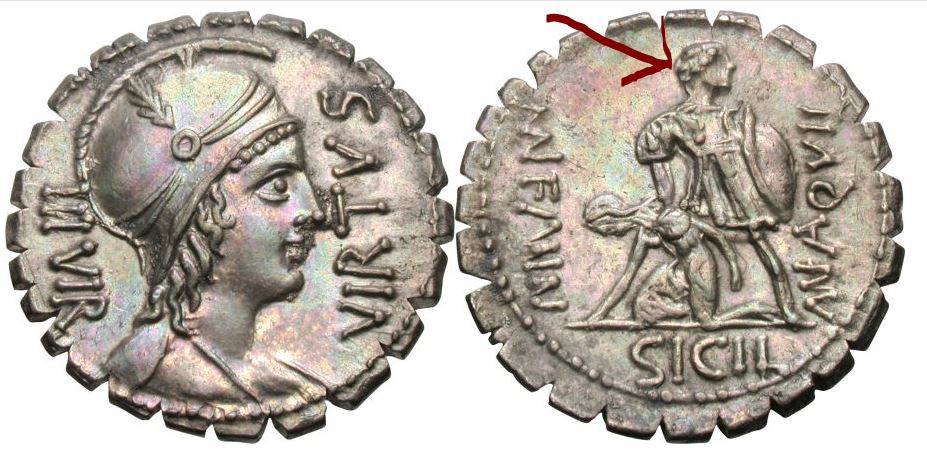
Appropriating symbols of the enemy: falcata, torque, elephant, kneeling barbarian, Macedonian shield


Mutinies

who revolts and why

Capua during Hannibalic War, Social War, Sicilian Slave Rebellion

the enemy within?

Sulla and the Marians

The dominance of Pompey

responding to rebellion

Conquering by a place? Sicily, Spain, etc…

After Catiline, coins of 62 BCE

Rejecting Autocracy 75 coins and broken diadem imagery in late 50s

Mobilization

Manpower: recruitment and colonization: Narbo, Quinarii

Popular Politics

Grain refs, Ludi refs, Voting Refs

More

did anyone ever look at the coins?

when to question the dates assigned to coins

how to find relevant evidence for your own work


Hmm.  Okay enough time outlining on the blog.  I’m still pessimistic but less so.


Political defacement of a coin, anti-Roman sentiment?

As evidence that this alliance did not meet universal approval we cite an example of this very coinage on which the reverse inscriptions were chiseled away (NAC 9, 1996, lot 115), presumably by a dissatisfied Locrian.
quoted from here.
Right now I need to find an image of this coin…  Grrr….
My earlier posts discussing Locri, esp. this issue.
Addendum.  Also, I’ve been describing the object held by Roma wrong.  Its a parazonium.  Clearly.  I of all people should have realized this.  (earlier relevant post).  This is relevant for dating how early it becomes an attribute of Roma.

[F]ukes Sestines

Capture1.JPG

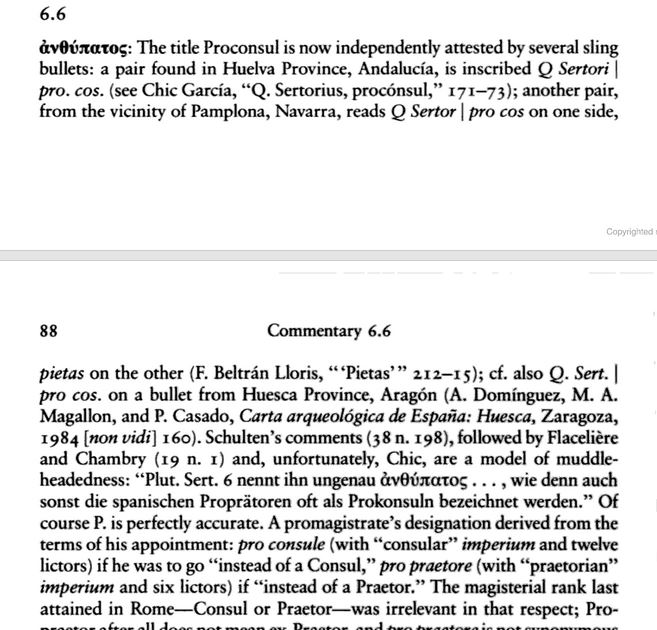
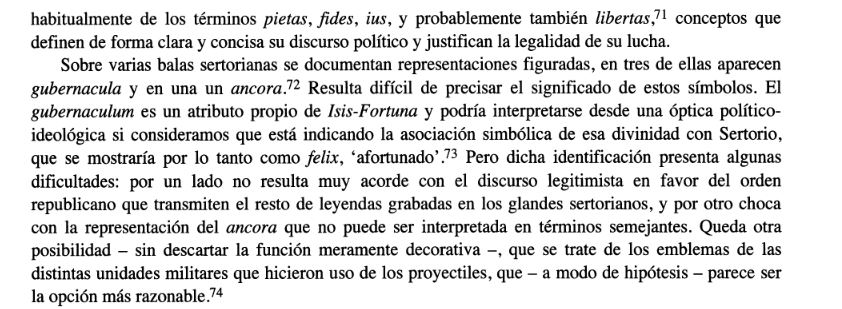
This awesome specimen of RRC 5/1 is from Berlin.  Here’s some commentary on the inscription:

Capture.JPG

Vecchi says the following:

Capture.JPG

Fusi-Rossetti 96 (1995) 26 agrees with Vecchi’s translation:Capture.JPG

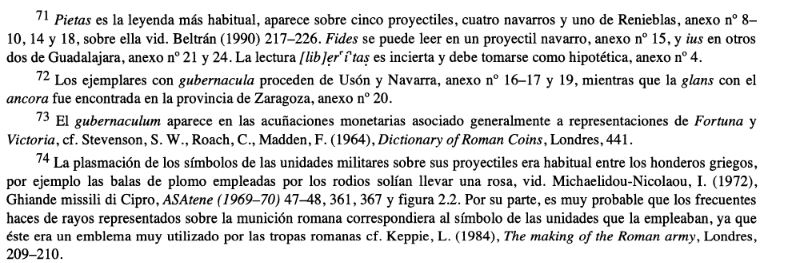
I’ve ILL-ed Guy Bradley’s relevant comments:

Capture.JPG

To the list of find locations for the type should be added the Pratica di Mare hoard (Molinari 2011).

The findspot is quite a full day of walking from Sestino.  I’d prefer to take two days if I had to walk it.

Capture.JPG


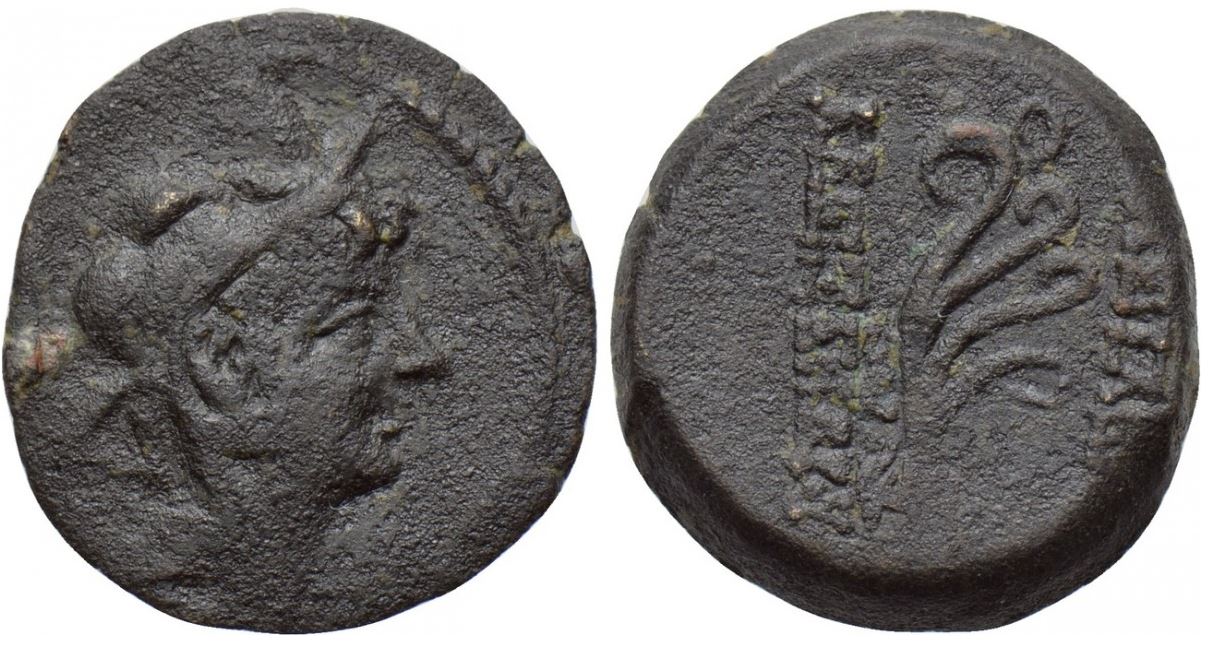
Animal skin headdress and dog

This isn’t an actual argument yet.  It’s an instinct.   I agree  that this is the half value coin (Sambon 146) which goes with the full value coin (Sambon 145) with an elephant on it (see Baglione 1976).

Capture.JPG

I think that the obverse is more likely to be a Celtic warrior wearing an animal skin (bear probably) and that some how this is supposed to correlate with the dog.  I’ve a hunch based on the appearance of these coins in regional Italic museums that we should date the series to late 218 early 217 while Hannibal is his winter camp having conquered the Taurini and  working on improving his troop moral and recruiting Italic allies before going to meet the Roman arm near Arretium (Polybius 3.60 onwards).

Capture.JPG

The problem is I can’t find the text references or images to back my thinking up at least not to my own tastes and I need to move on to other things.

Stuff of possible relevance.

E. Wamer’s Von Bären und Männern. Zeitschrift für Archäologie des Mittelalters 37, 2009, 1-46.  (good images)

M. P. Speidel’s Ancient Germanic Warriors 2004.

And then just to taunt me the internetz keep returning this damn image:

Capture.JPG

BUT (a few hours later…) Let’s not forget

Aita (=Hades) is personified with a wolfskin headdress in Etruria:

Tomba Golini, Orvieto

Capture.JPG

Tomb of Orcus II

Capture.JPG


A pseudo Gladiatorial Combat in Polybius

Polybius 3.62:

Mustering the troops, Hannibal brought forward certain young men from among the prisoners he had taken molesting his march in the difficult part of the Alpine pass. 4 He had purposely, with a view to the use he was going to make of them, ill-used them: they wore heavy fetters, they had suffered much from hunger, and their bodies were disfigured by the marks of blows. 5 Placing them in the middle of the meeting he exhibited some Gaulish suits of armour, such as their kings are wont to deck themselves with when about to engage in single combat. In addition to these he placed there some horses and had some rich military cloaks brought in. 6 He then asked the young men which of them were willing to do combat with each other, the prizes exhibited being destined for the victor, while the vanquished would be delivered by death from his present misery. 7 When all shouted out with one voice that they were willing to fight, he ordered them to draw lots, and the two on whom the lot fell to arm themselves and do combat. 8 The young men, the moment they heard this, lifted up their hands  and prayed to the gods, each eager to be himself one of the chosen. 9 When the result was announced, those on whom the lot had fallen were overjoyed and the rest mournful and dejected, 10 and after the combat was over the remaining prisoners congratulated the fallen champion no less than the victor, as having been set free from many and grievous evils which they themselves were left alive to suffer. 11 The sentiment of most of the Carthaginians was identical; for looking on the misery of the other prisoners as they were led away alive, they pitied them on comparing their fate with that of the dead whom they all pronounced to be fortunate.

This episode is bizarre to me.  Is it Polybius’ own creation or an actual event?  Is Polybius trying give a rational moralizing explanation for gladiatorial combat, such as practiced by the Romans.  Does he expect his Greek audience to find this barbaric?