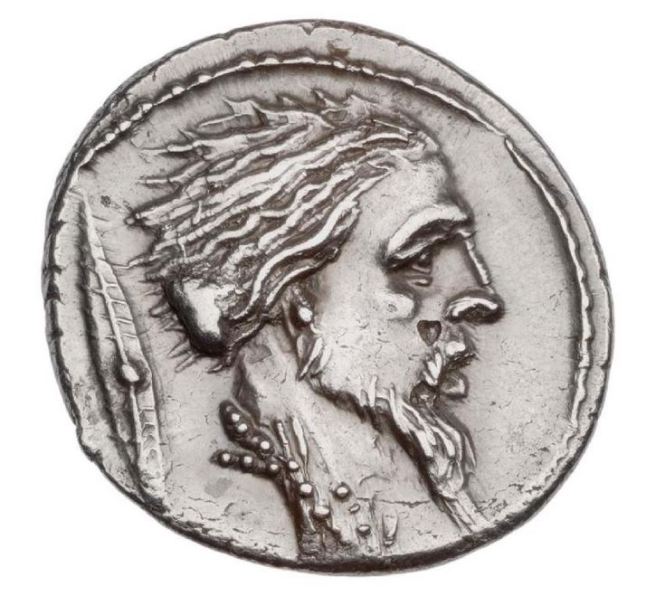
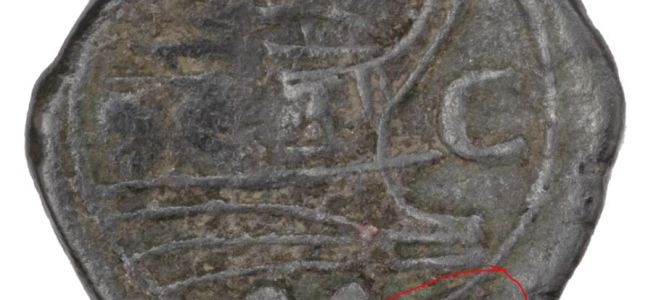
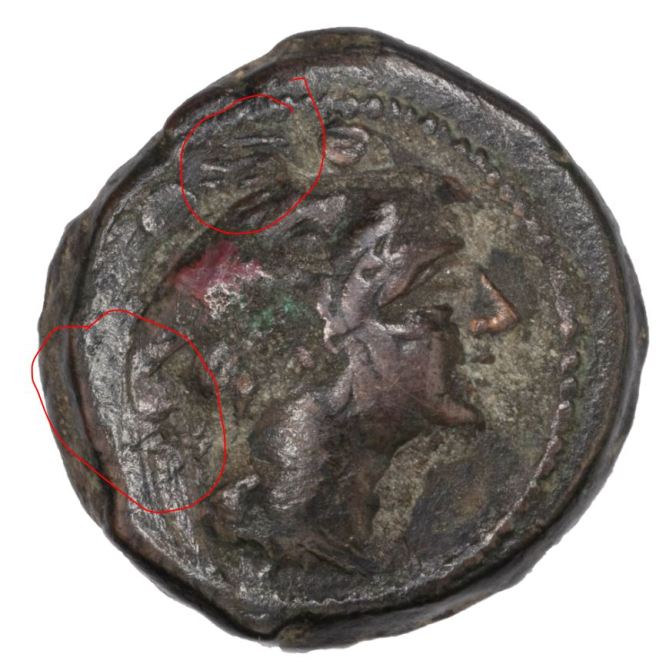
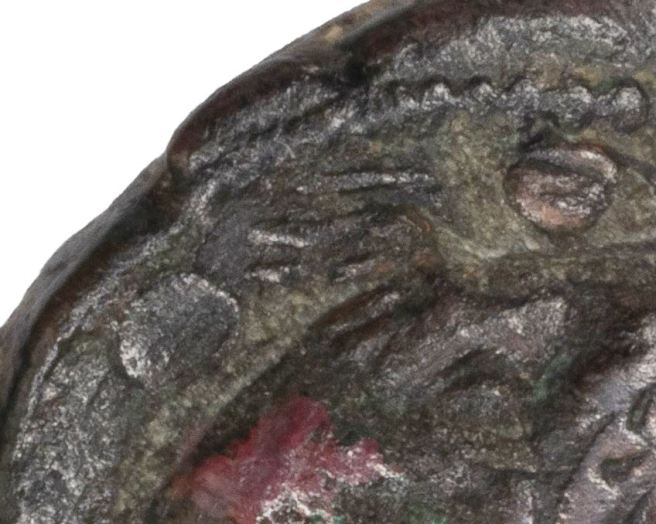
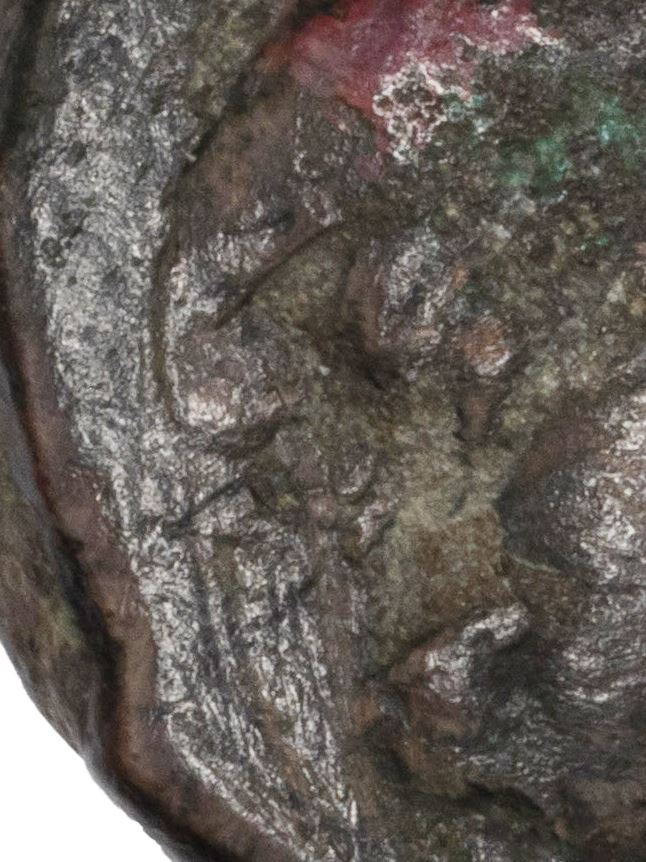
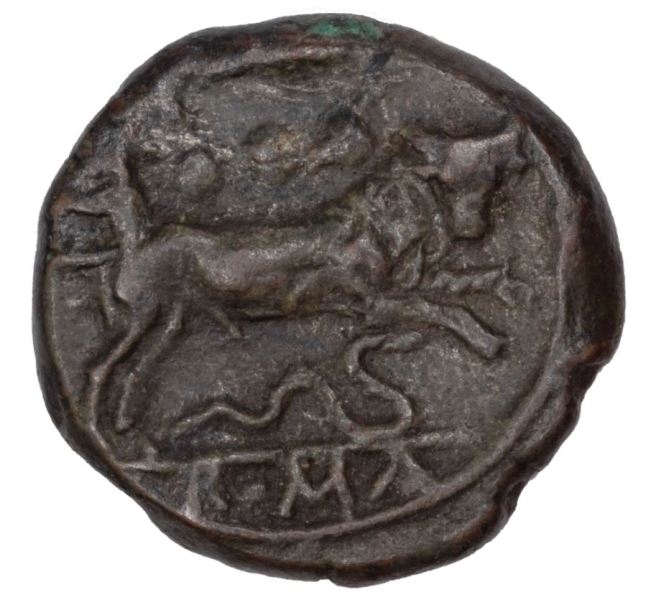
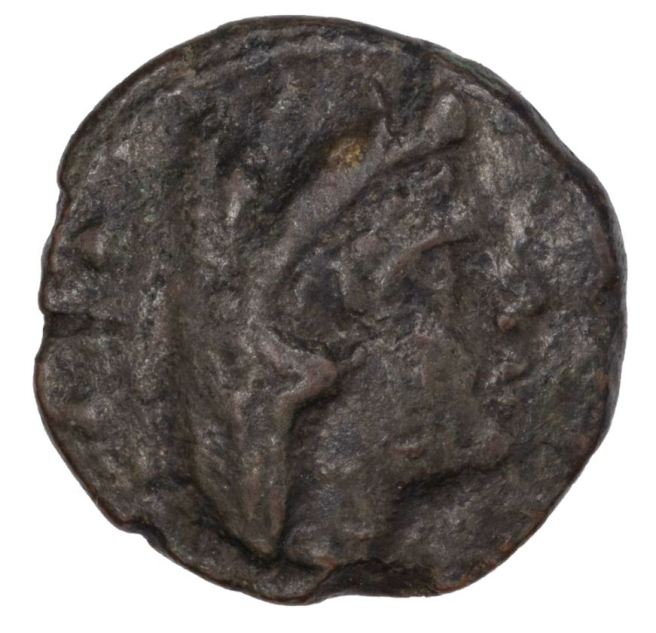
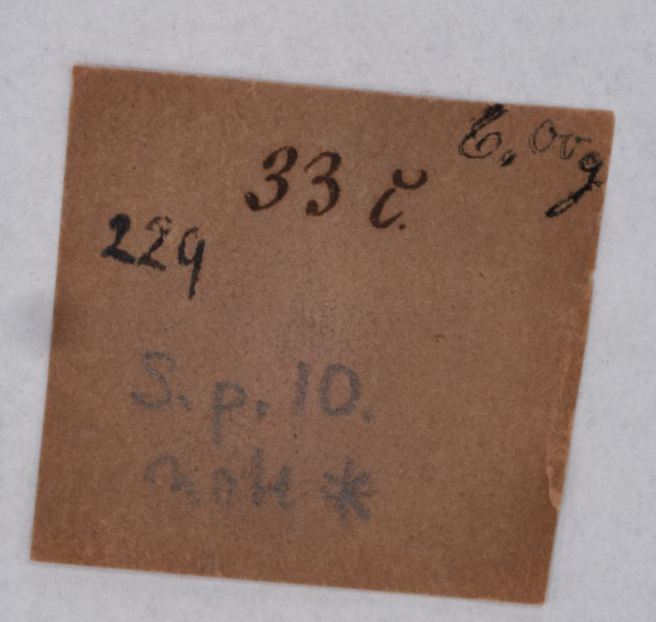
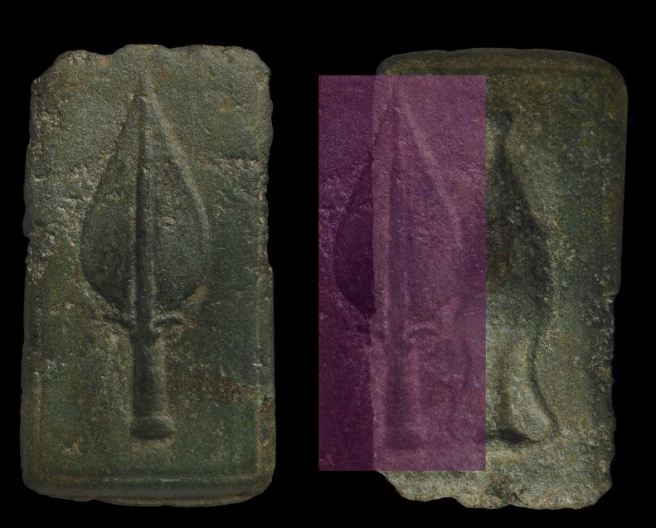
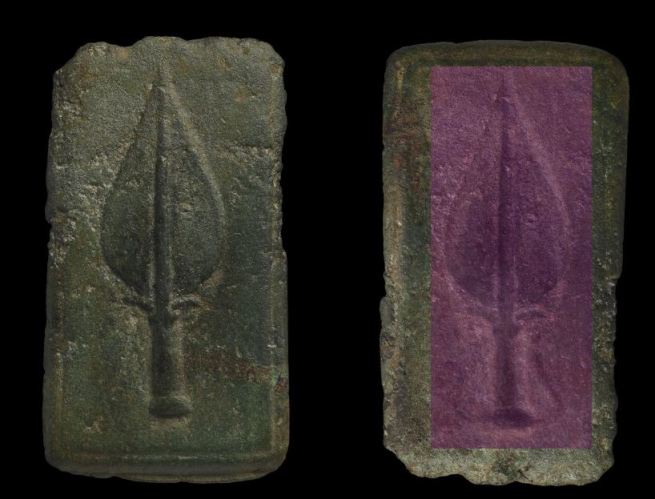
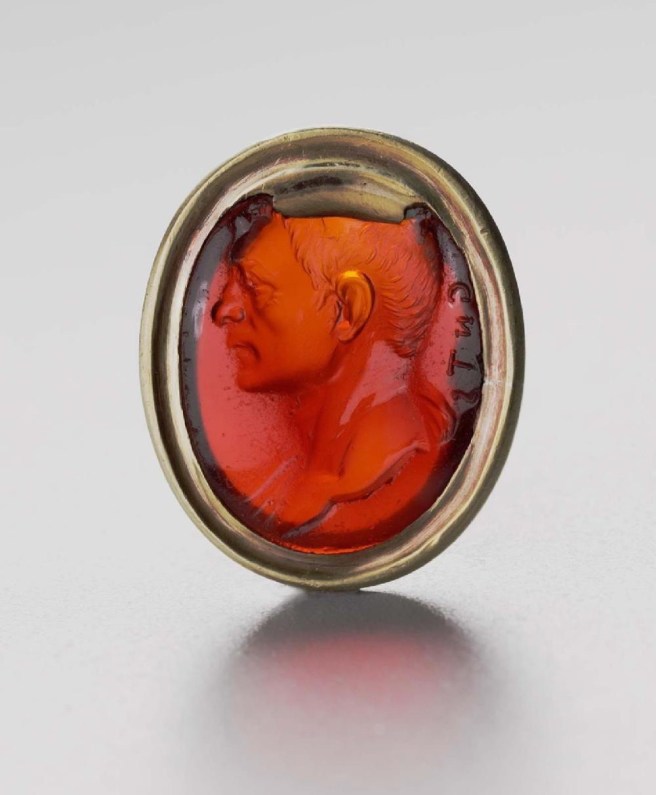
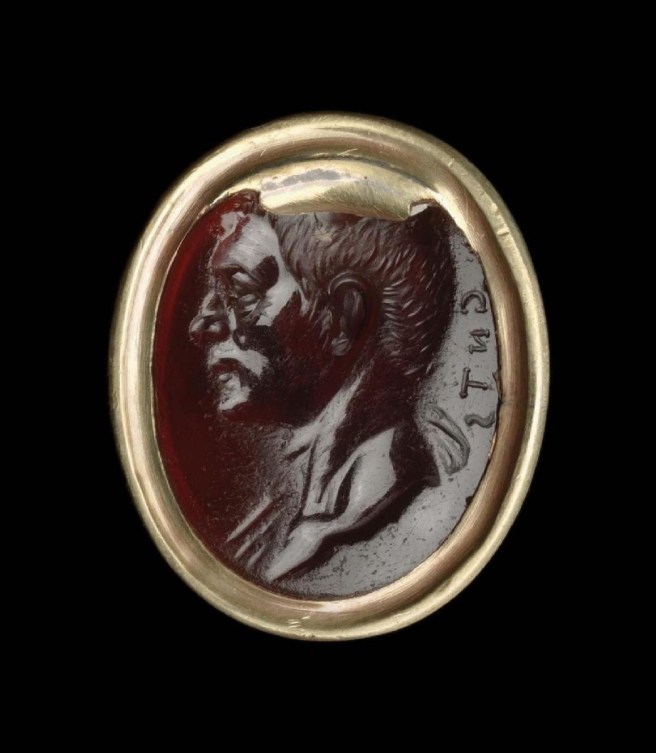
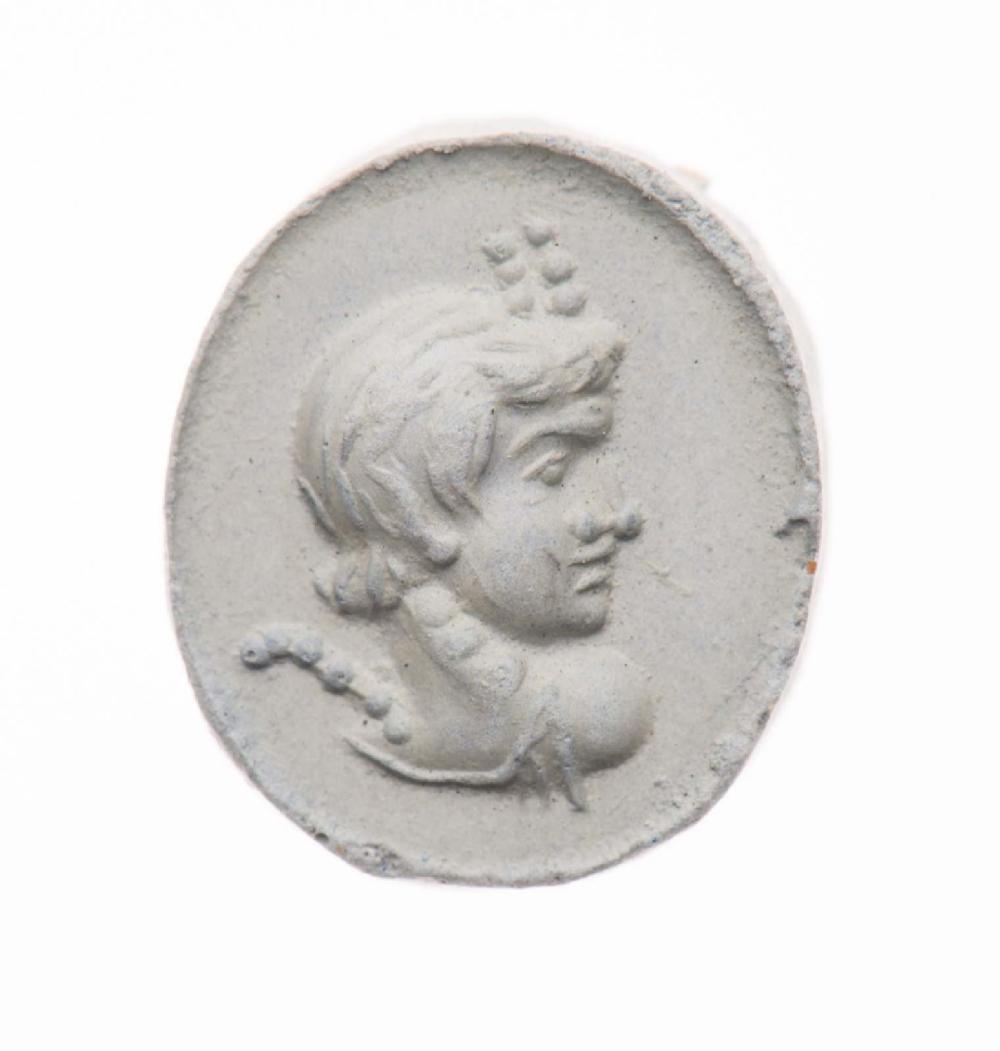
I strongly object to how much the BM charges for images. Here’s a photo of the BM example of RRC 402/1b that is in the public domain from Hill 1909.
adventures in my head

I strongly object to how much the BM charges for images. Here’s a photo of the BM example of RRC 402/1b that is in the public domain from Hill 1909.
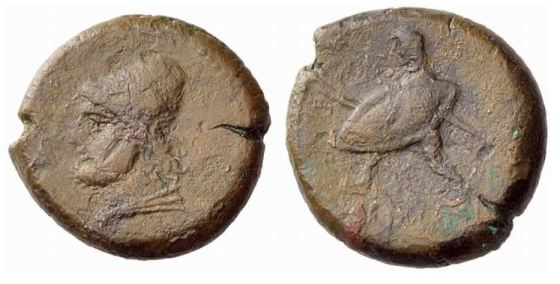
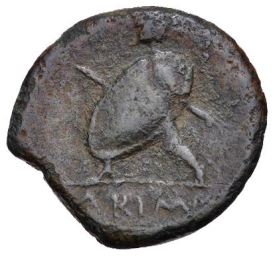
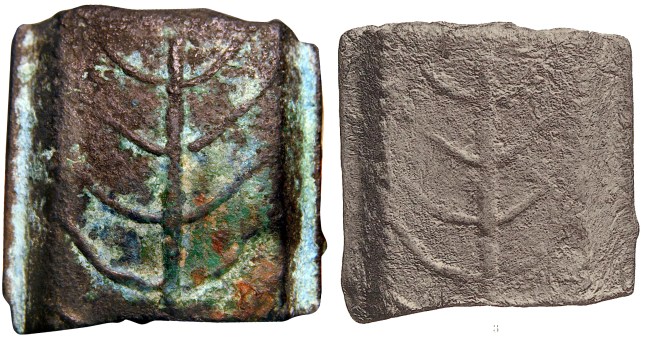
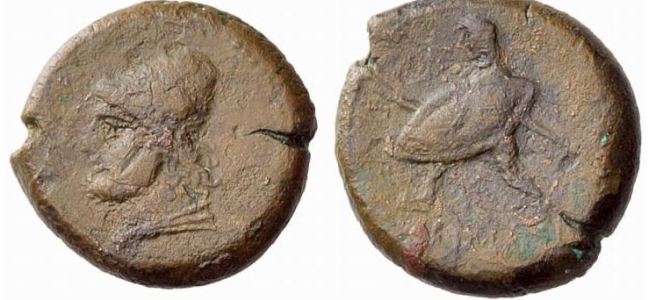
HN Italy 485, Capua, 216-211 BCE, AE biunx, ANS 1944.100.454 (on left, other two specimens in trade)
And no RRC 39/5 does NOT have the same feature.
Aeneia c. 525-480 BCE ANS SNG.7.67
Of course she picks up her son to carry him to safety!

Aeneas, Creusa, Ascanius, Anchises
I’m weeping at my desk this morning. Big belly sobs. Not pretty sentimental choked up tears. Where the tears roll down and a kind of grunting sound comes from my throat reminding me how angry I am at death. Here in no particular order are the ways Fergus touched my life and left me a better scholar, a better teacher, and a better human. Things I wish I’d put into words for him, but was just too self conscious to do so.
1) Everyone feels like an outsider. His stories of coming to Oxford from Scotland encompassed the loneliness of early academic life and hope that it need not be that way. He did everything in his power to welcome newcomers.
2) Always introduce people. He never assumed people necessarily knew each other and even once introduced long married husband and wife in an elevator. Funny, yes. But his radical commitment to introductions involves the risk of insult through a failure to remember. It risked the discomfort of all those present, a little social awkwardness. He prioritizes building connections and making people feel welcome over all else.
3) When in power, take the fall for vulnerable students. My relationship with my beloved masters supervisor was not going to be a happy or healthy one for my doctorate. Fergus as my college advisor gave me one of the greatest gifts of my career by allowing my former supervisor to blame him, not me for my shift. I got to keep everyone as a mentor and ally.
4) Finish the book. This was a hard, unpleasant lesson. It involved regular reminders of the negative career consequences of not finishing. It certainly was not pleasant for those who did not finish or finished in their own time. For me, the object lesson meant that I landed on the job market with a book in contract, awaiting proofs and my new institution put me up for promotion nearly immediately. The moral pressure he exerted ensured that I got that first book out even while on an unrelated post doc and also teaching nearly full time (i.e. working two full time jobs). I have no idea how I worked so hard those years, but much of it was to live up to his expectations.
5) Just because someone has looked at the question before doesn’t mean you can’t do it better. When I was feeling terrible about needing to switch supervisors and was contemplating thesis topics, he pulled books off his shelf on possible ancient authors and carefully critiqued the works of senior scholars (respectfully, of course, always respectfully) and then told me there was still work to be done and that he believed I could do it.
6) Think big and never loose track of the fine grained details. He welcomed the wide view of history, not just for himself but in his students. He encouraged broad, creative thinking with an emphasis on interconnecting phenomena and theories. Yet his ability to close read pieces of evidence was astounding. His undergraduate lecture, really an exegesis, on the Polla stone took one inscription, concentrated on each element of the text and its materiality, and then spiraled out to encompass nearly the whole of Rome’s relationship with Italy. He insisted that the big views be tested against the fine grain of our evidence.
7) Value families. He took great joy in his marriage and his children and he wanted everyone to have that joy. Academic life for him was not in tension with family life. His parties for graduate students in College always had children present. He wanted to know not just what I’d published but was I happy and whole. I am. It was easier to take the time I needed build my family because I knew that one of the mentors I admired most valued that time and commitment as much as I did and that it wasn’t contrary to my life and career as a scholar.
8) Start by just reading. Even though it seemed my doctorate was to be an extension of my masters thesis, Fergus believed in making space to just read at the beginning of a project. He’d started his own doctoral studies (if memory serves) by reading all of Livy. He’d invited Katherine to read all Jacoby. I didn’t know what Cicero held for my project on Greek historiography, but spending a term doing nothing else but close reading his letters and other writings, has enriched nearly everything I’ve ever written since. I still go back to that file of notes. To read deeply and to reflect on a text without a fixed goal is a great freedom. Questions percolate up. Ideas invite exploration. Interconnections start to build. Now when I need to refresh my mind, I pick up an ancient text and just read. It is never wasted time.
There will be more to add, but for now this is enough.
God bless you, Fergus. You have been a blessing in our lives and will continue to be so.


9) And, Polybius was right. Never forget that.
—
Update 7.17.19. This post is getting a lot of traffic. Far more than is typical of this personal note-taking, though-holding academic blog. If you’re looking for more of my writing on professional matters, advice and the state of classics, you can find a list of this type of post on my draft index page.
In the Sackler having a leisurely browse of new scholarship. This is where I will track refs and points of interest.
Sent this article to Vallerie…
Therefore with the common people Marcellus won more favour because he adorned the city with objects that had Hellenic grace and charm and fidelity; but with the elder citizens Fabius Maximus was more popular. For he neither disturbed nor brought away anything of the sort from Tarentum, when that city was taken, but while he carried off the money and the other valuables, he suffered the statues to remain in their places, adding the well-known saying: “Let us leave these gods in their anger for the Tarentines.” And they blamed Marcellus, first, because he made the city odious, in that not only men, but even gods were led about in her triumphal processions like captives; and again, because, when the people was accustomed only to war or agriculture, and was inexperienced in luxury and ease, but, like the Heracles of Euripides, was
“Plain, unadorned, in a great crisis brave and true,”
he made them idle and full of glib talk about art and artists, so that they spent a great part of the day in such clever disputation. Notwithstanding such censure, Marcellus spoke of this with pride even to the Greeks, declaring that he had taught the ignorant Romans to admire and honour the wonderful and beautiful productions of Greece
While everything else was carried off as plunder, it is said that the accountant asked Fabius what his orders were concerning the gods, for so he called the pictures and statues; and that Fabius answered: “Let us leave their angered gods for the Tarentines.” However, he removed the colossal statue of Heracles from Tarentum, and set it up on the Capitol, and near it an equestrian statue of himself, in bronze. He thus appeared far more eccentric in these matters than Marcellus, nay rather, the mild and humane conduct of Marcellus was thus made to seem altogether admirable by contrast, as has been written in his Life.
Cf Strabo 6.3.1
Among this booty is the Heracles in the Capitol, a colossal bronze statue, the work of Lysippus, dedicated by Maximus Fabius, who captured the city.


LIMC entry.


Illustrated in article with miniature statue and coin. Cf. LIMC no. 927-949.
Perhaps gens Fabia connection relevant for representation at house of M. Fabius Rufus at Pompeii

UPDATE 2/4/22: see now, Sánchez 2021 (related blog post).
One day “in my copious free time” I want to write up a history of the public image of the quaestorship as presented on coinage. Here are are bunch of images that I’m not going to write up properly now because of how long today’s to do list is…
Ideas I want to think more about:
Calorie estimates might be just as disputed as die estimates, maybe even more. And they are clearly just as important to any estimates about the Roman economy, state finances. I was struck reading this book review (by accident as I end up reading most interesting things) was how different these numbers are than discussion of feeding the city of Rome. I’m also curious when reading about the Roman grain supply that I didn’t come across this work then. As RRDP takes off, thinking about how the data can help us think about the economy will often come back to grain supply issues. So, I’m just flagging this for follow up:
From Goldsworthy’s BMCR review:

Goldsworthy goes on to talk about Roth’s discussion of the economic repercussions of grain distribution in a raw, not prepared state. Another key issue also for the urban grain supply.
Parrish Wright and Nic Terrenato – Italian descent in mid republican Roman magistrates: the flip side of conquest
Consular Lists – unparalleled as evidence in of history, although just names, no other data
Importance of Munzer work: grew out of writing individual RE entries and recognition of patterns. Not Parties, but Factions. Parties have opposing goals, Factions have the same goal = Power
Foreign Princes who become Roman Citizens important chapter
Research Question: How big was the influx of new families and where did they come from?
Two historical processes: horizonal mobility vs. vertical mobility, integration of outside elite vs. rising status of Roman
Mouritsen work building on Broughton (look up!)
Graph of number of consulships by gens
Chart with five catagories: Established, Pre-376 Horizontal, Horizontal, Vertical and Unknown
Reproduction as Bourdin 2012 chart on origins of patrician families: local cultural discourse on the openness of Roman society
Ambiguities between Established andPre-376 Horizontal, cf. Mamilii and Licinii Etruscan epigraphic evidence
Horizontal category nearly all from Latium, exception Ogulnii Etruria
Vertical movement less common than Horizontal movement, but Established still have far and away the most consulships (great chart!)
Ogulnian and Licinian laws should be thought about in light of their familial origins outside Rome and an interest in Roman openness.
Cornell: Schultz very speculative on Etruscan origins
Lomas: Etruscan epigraph has depth for families that have actual Etruscan noble origins
Peralta: Some families
Bernard: Important chestnut the lack of vertical mobility at consular level, speculates that more may be their at lower magistracies
Smith: no data on failure: laws allow but system blocks, lets look at other things like priesthoods too… Uncomfortable with XY axis
Terranto: not a tension between old and new money (old land vs new cash), but a tension about how new expanding state will be run
Christopher Smith on “Becoming Political”
Oakley on Livy very comforting us by erasing doubt, but many scholars still harbor doubts and see retrojection in the fasti
Under statements about disagreements about archaic Rome and how to reconstruct, some would have long dark fifth and long bright third with a negligibly short 4th century.
Twelve Tables: Humbert and Corsi moving us beyond Watson
Frier summarizing Watson in book review: “…449 BCE… a grim world…crude code…little innovation…restricting vision to private law…”
Highly substractional process to find a ‘original text’
Humbert and Corsi: the XII put the Magistrates under rules, under whose power is the magistrate put? The Populus?!
de capite civis iniussu populi ne roganto (Pomponius)
de capite civis, nisi per maximus comitiatum ne ferunto (Cicero)
Side step to Greek world, following Emily Mackil in Ando and Richardson ed. vol.: the juridical formulation of property is required for establishment of state, quoted: “The concern for property….lend the state autonomous power” Mackil is working primarily with reference to Gortyn Code
Praises Mignone’s work on lex Acilia, how did the plebiscite work?
Leave Locke aside, property NOT natural, but created contested category.
References how this intersects with Bernhard on 3rd Century Debt
commercium: Humbert and Corsi don’t take on Roselaar’s 2012 and 2013 articles on this as conubium.
Livy 8.14.10. – does this miss describe relationship by reading Latin colony rights onto an earlier period?
Is this all an elite game?
All community restrictions on Elite behavior.
What is the legal mechanism by which someone can stand for office in Rome? If we follow Roselaar and Broadhead by seeing a bigger gap between Romans and Latins…
civitias sine suffragio
Romans read back their later history, and we also need to think about reading forward…
Q&A
Terranto: Elites are coming to Rome with agenda. Believes sortition (assignment of consular provinces by lot) manipulated.
Rosenstein: Are we back as Scullard?
Terranto: can’t throw baby out with bathwater, familial agendas don’t hold up over long periods of time but do exist on shorter time span
Cornell: Candidates not running against each other, but for the Plebeian and Patrician slot, thus running in tandem
Peralta: Let’s think about failure, would it be better strategy for aiming to lower magistrates
Bernard: C. Naevius is the classic example
Smith: Don’t believe the binary of plebeian/patrician as Livy gives us; picture much more complicated on social groupings
Feldherr: Annalistic tradition works against picture both papers are talking about, esp. division between domestic and foreign affairs
Tan: Geltzer doesn’t even believe his own line about mobilizing clients…Livy really doesn’t want to talk about popular sovereignty… How does causation work with matching war and consul?
Terranto: believes in smoke filled rooms where politics stitched up, but also real military threats and necessary defense.
Smith: worrying about who can play with sortition…this is a problem for the smoke filled room theory, the deal that is struck and must legitimated and there are consequences if it goes wrong…
Rosenstein: the prize is glory, sortition manipulation quite unusual, both consuls want the same thing that’s the purpose of sortition, Laelius and Scipiones
Bernhard: is the definition provincia fixed in this period?
Rosenstein, Paying for Conquest
Tributum and Citizen without the Vote
Military challenges of this period would require more material resources: campaigns are longer, evidence: Dates of celebrations on the Fasti Triumphales
excellent scattershot chart of days on campain based on Fasti
Assumptions:
Fasti reliable source, also assuming calendar is running normal, and that starting point of campaign is about the same most years (perhaps varying up to 30 days either way), NOT grappling with start of consular year
Impressionistic chart with trend line, not a claim about any specific campaign
Also limited by the fact that not all campaigns end in triumph, but assuming most
distance from Rome: longer marches
But lots of part of campaigning that doesn’t just include battle includes trying to force opponent into a strategic position, devastation of lands, diplomacy
leaving aside coinage and instead focusing on food
4500 soldiers and food requirement: ration 800g. per person per day = only 70% of caloric need
15 days, 57 tons, 34 days, 130 tons, 138 days, 528 tons
tributum must increase to fund this
long campaign takes more money, BUT does not necessarily or even likely increase spoils
spoils in 2nd century were NOT sufficient to repay tributum (stipendium), we can assume same picture in 4th-3rd Century.
The strategy of imposing citizenship without the vote is usually is interpreted as increasing manpower=>doubling of number of legions marshalled every year, but was this the AIM?
NO.
Dion. Hal. RA 21.4-5 (Ref seems off?!)
Before 2nd Punic war few Campanians citizens without vote used in legions
Suggests Language barrier not a reason not to enroll them in legions, but perhaps just bad infantry soldiers (uses 2nd Punic war performance as support for this)
Citizens without the vote are the TAX BASE
integration like this regularizes and prolongs financial benefit derived from conquest, more valuable than spoils or war indemnities.
Lower tax burden for citizens with vote may have allowed greater investment in land improvements, points to Tymon’s paper from yesterday.
Scheidel on building up Slaveries
very speculative views on Italian development of slavery
Summarizes a Finley-esque view of slow development
BUT Slavery Appears early: in XII tables, manumission tax and abolition of nexum (debt bondage) in 4th century
Can’t trust Livy, but lots of war and also lots of people being taking captive
Captives don’t always transfer into stable slavery population in Italy: ransom, export
Western Greeks like slaves, keep them, raids to be capture Italians of slaves; highly developed slavery in Carthage, but mostly anecdotal evidence
Maybe we don’t need commercial slavery, and we can think about familial model of slavery
Not mutually exclusive models, points back Tymon’s paper again and how this enslavement would support what we see in archaeological
Sub-Saharan Africa as comparison
Most enslavers buy slaves, but SSAfrica and Rome enslavers are also those who capture the slaves themselves
Sudan region, Senegal to Lake Chad (not country)
Slaves traded for north horses and then horses used to enslave more people
Songhai Empire intensifies this effort
In Sudan most slaves exported north to other Islamic societies and retained locally, very very rarely shipped south
Sokoto Caliphate emergence explained. Stated intention to end enslavement of Muslims, but then rationalized that those who resist caliphate are bad Muslims and may be enslaved. Slavery intensifies. Great local demand little selling to Europeans. Many many captured slaves given as gifts to Fulani elite by caliphates. Fulani elite completely supported by slaves.
Similarities with Rome
Religious motivations for war
War is a steady state, assumed necessary every year
political advancement dependent on attainment of military success
network of fortified outposts
familial style slavery
plantations similar to those described by Cato with slave overseers
peculium, systems for incorporating freed slaves,
Does Rome also have the distribution of slaves by gifts on battle field? Perhaps much more important that allowed to date. Cf. model of land distribution
We may need to give more emphasis to non-market distribution. Slavery need not correlated with cash economy
100,000s of slaves need not produce more economic growth for export
Comparison don’t answer questions but help us ask better questions and also suggest what is plausible.
Q&A
Cornell: Reflects on how these two papers work together
Brennan: Brings in Prorogation to support Rosenstein
Terranto and DeHaas: disagree about whether archaeological evidence can be seen as large estates with intensifications
Bernard: Brings in amphora production
Smith: More sites seen
Rosenstein: Indemnities/tribute only work when victims have surplus
Rosenstein: reads back on to this period publicani who hold state contracts, like Polybius says in book 6
Terranto: what is the evidence that citizenship is an imposition?
Tan: because you don’t do it to people who are nice to you, the alternative is killing them, paraphrases Cornell, << if Germans had enfranchised the French (e.g. in WWII) no one would have any allusions about what was going on….>>
Scheidel: big difference between Sokoto Caliphate and Rome is the keeping of female slaves for sex/reproduction as marker of elite status.