
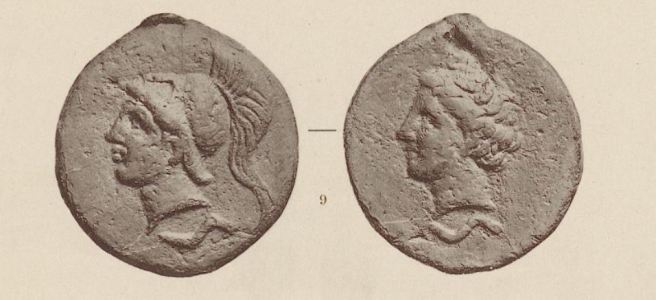
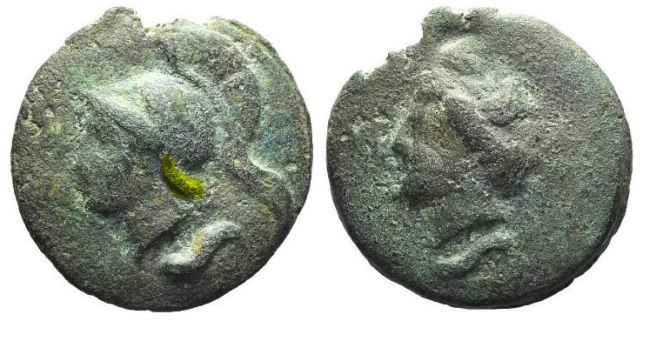
Rejecting Crawford’s identification (Minerva/Goddess) and going with Haeberlin‘s Mars and Venus (followed by Thomson), has a big implications. Perhaps for the historian most importantly it pushes the evidence for the synchronized foundation legends (Romulus and Aeneas) further in the past.
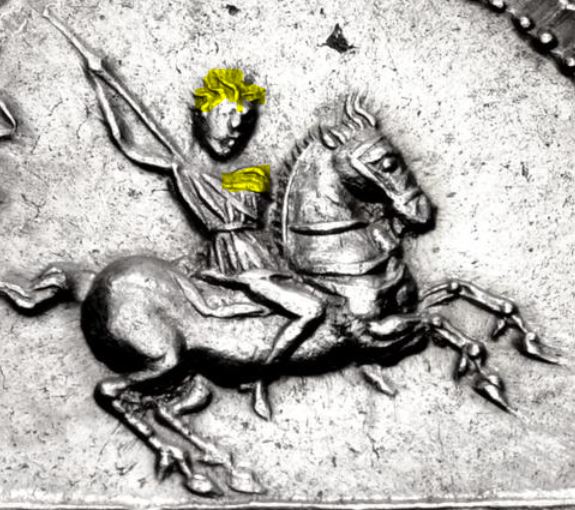
I think I’m ready to abandon Crawford’s vision for Thomson. Specimens are really worn, but the defining characteristic of Minerva/Athena is her hair as a marker of gender, BUT there is no hair on pretty much any specimen photographs I’ve seen so far. They are all worn and soapy but surely one would preserve this detail if it were there. Above I highlight in yellow the neck guard of the helmet which might be mistaken for hair.
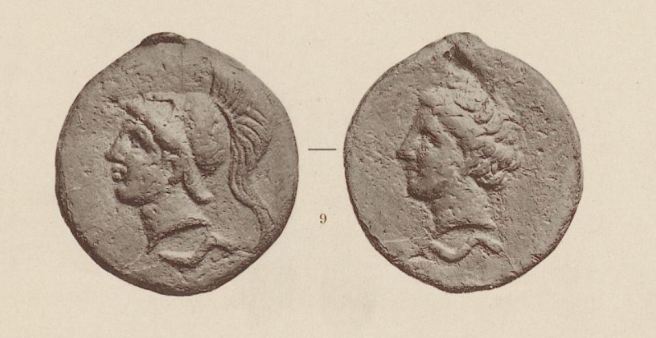
Haeberlin‘s plate:
It also means re thinking some of the other “Minerva” ‘s on early aes grave semisses.
I think Crawford is wrong and all of these are Mars. Yikes.


















 Liv Mariah Yarrow