
This 1562 illustration of RRC 320/1 is lovely. I wanted to add it to a note on an older post on this type just to keep the citation but I cannot find such a post. Odd.
adventures in my head

This 1562 illustration of RRC 320/1 is lovely. I wanted to add it to a note on an older post on this type just to keep the citation but I cannot find such a post. Odd.
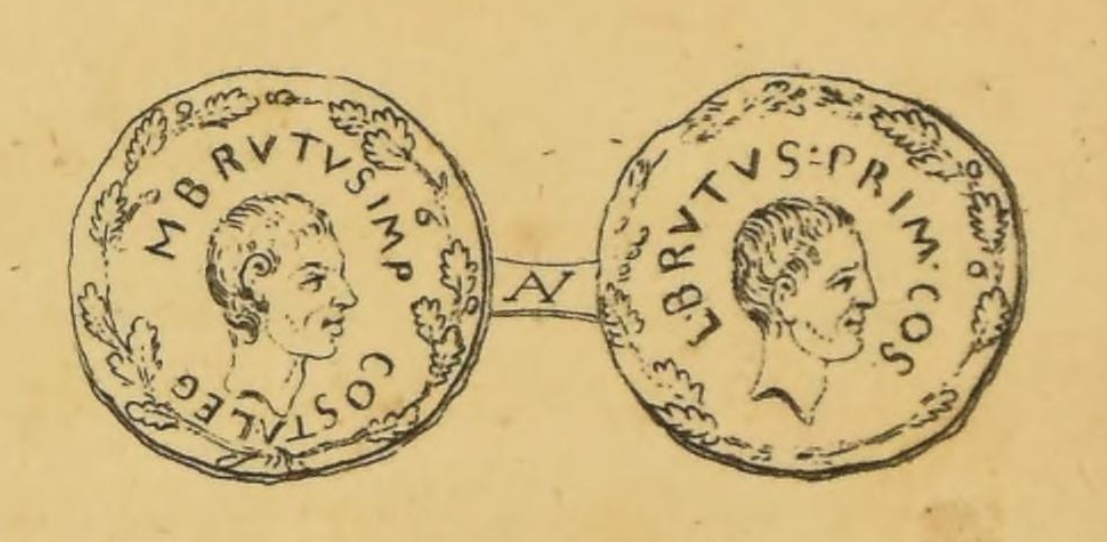
In 1755 Richard Mead M.D. owned an aureus of the type we now refer to as RRC 506/1.
The above engraving is intriguing because it does not seem to fill in missing detail. The engraver seems to be trying for high degree of accuracy, not just here but on the other plates. The missing tie on the bottom of what is here shown as the reverse (the PRIM side) is on the key clues. It rules out a match with many known specimens. The only possible matches are on the below list are 6 and 9, but I don’t think either is a perfect match.
A mystery where the Mead specimen is today.
At last count 9 specimens were known. I quote and annotate:
A revised census of the specimens we can account for and based on Bahrfeldt’s original list (compiled with the aid of Michel Amandry, Hadrien Rambach, and Alan Walker):
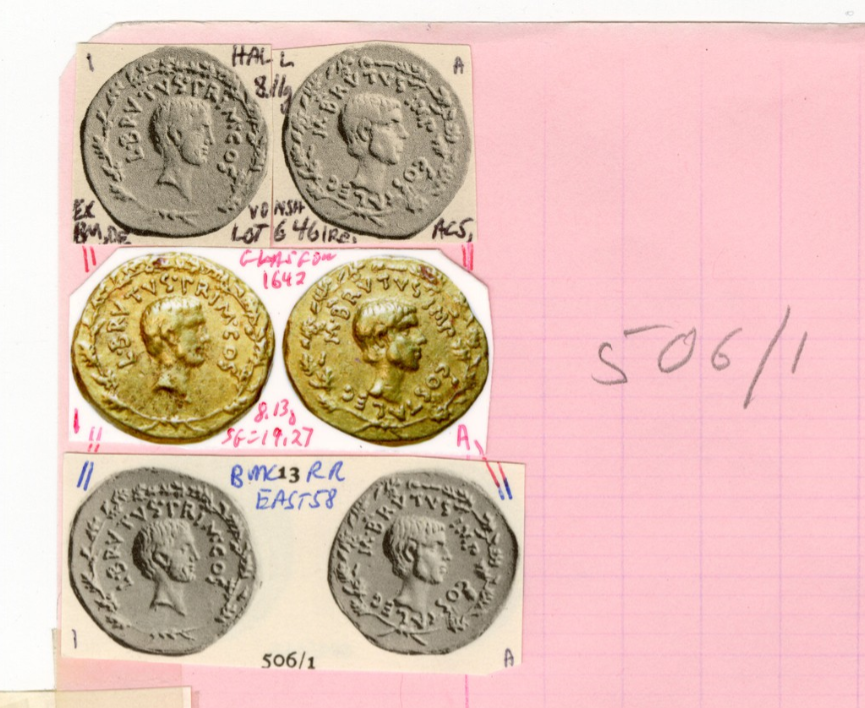
1). BMCRR East 57 = Duke of Devonshire Collection = Henry Platt Hall Collection = Leo Biaggi de Blasys Collection = Ratto Stock = Present location unknown? [image below]
2). Hunterian Collection (Glasgow) [image below]
3). Münzkabinett Berlin = Marquis Lionel René de Moustier Collection (Hoffmann, 1872), lot 42
4). Kunsthistorisches Museum Wien [Vienna] (plated in Bahrfeldt) [Non vide]
5.) BMCRR East 58 = Dupré-Wigan Collection [image below]
6). Duplicate from the Bibliothèque Nationale, purchased in 1844 from the Paris dealers Charles-Louis Rollin (1777-1853) and his son Claude-Camille Rollin (1813-1883) = Münzen und Medaillen AG 77 (18 September 1992), lot 141 = RBW Collection (Triton III, 30 November 1999), lot 844 = Property of an European Nobleman (Numismatica Ars Classica 24, 5 December 2002), lot 6 [sold again in 2021 by CNG with detailed write up: PDF copy]
7). Vatican Collection (Rome) [Non vide]
8). Ponton d’Amécourt (Rollin & Feuardent, 25 April 1887), lot 26. Present location unknown? [Non vide]
9.) Bibliothèque Nationale (Paris) = Montagu (Rollin & Feuardent, 20 April 1896), lot 40 = Comte du Chastel Collection (Rollin & Feuardent, 27 May 1889), lot 179.
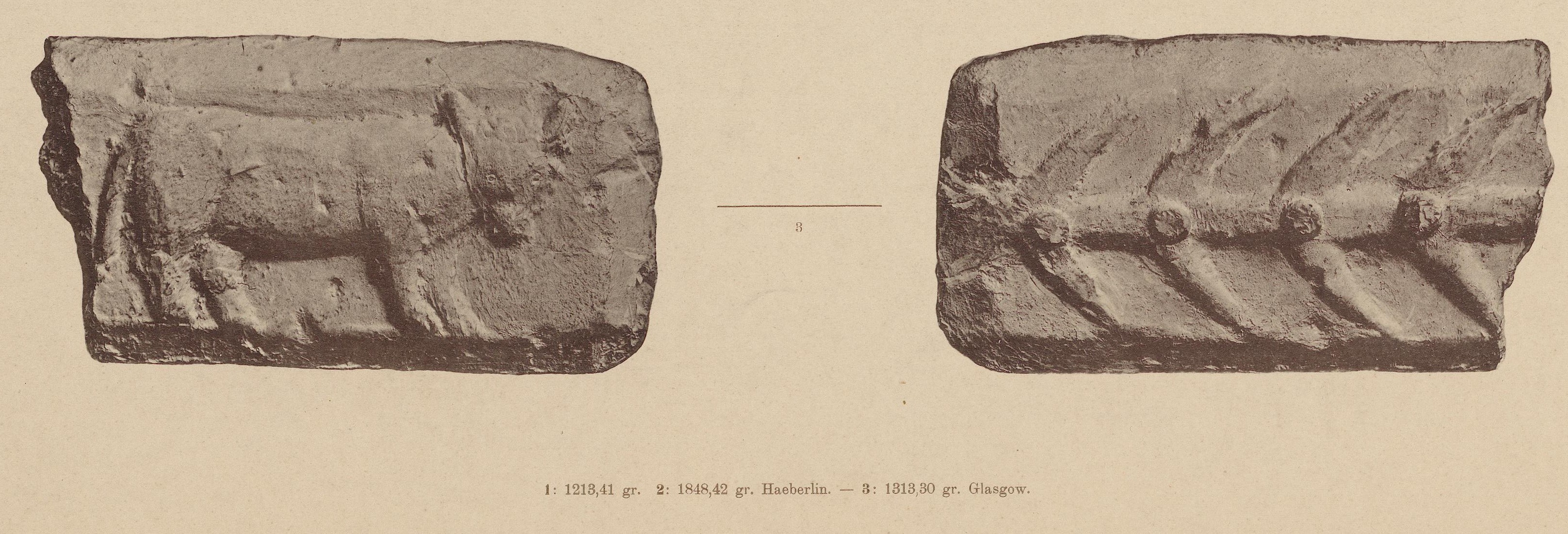
This bar has been recorded as a fake. And I found it in draw labeled as fakes in Glasgow still.


The bar has been in my head making noise there for a while. This post is intended to get out my thoughts. I have a hunch that numismatic forgeries of cast bronzes may have been modeled in some cases on book engravings. This is a wild guess.

The style of engraving on Carellii’s plates has intrigued me. Like many other engravings the artist often draws what they think ought to be there (not unlike Thucydides’ approach to historical speeches in his histories).
I decided to chase the reference which led me here:

This engraver has clearly seen a bar similar to the one in Glasgow if not the same bar the text says the following.
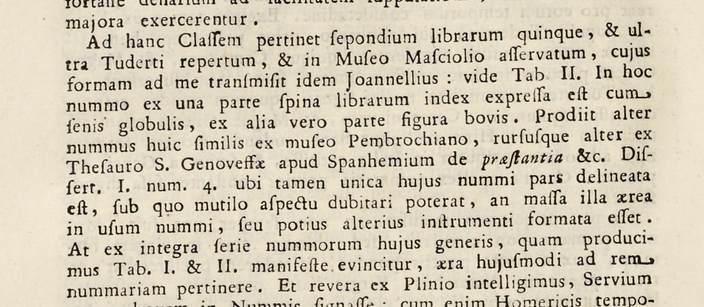
Joannellius supplied Passeri with a drawing of a specimen found beyond Todi and kept in the Museo Masciolio (do you know where or what this was? do tell!). Similar bars are said to be in the Pembroke Museum and another said to be in the Treasury of San Genovese according Spanhiem, but the latter in very poor condition. For all my skimming of Spanhiem I’ve not (yet) found this testimony. I was reading 1.4. It’s an disquisition on the great coin collections and collectors Europe so interesting none the less.
I guess my question is if this bar has been known for so long is it more likely to be authentic rather than a misguided replica…. When does the fake trade in aes grave really get going historically…?

Not the greatest photos. Just took a quick snap for reference on my last visit to Cambridge. But Thought I’d put on the blog to make them easier to find in future.
I’m grateful to David Hill, ANS librarian and archivist, for his help accessing the Hersh papers and his kind permission to share these photographs. I am presently preparing a finding aid for the papers and this post was inspired by that work.
RRC 24/1 = Vecchi 64 is a rare large denomination of Aes Grave. There is no image in CRRO. Vecchi knows of only five specimens and lists the weights and last known location of all five. Only one is in a public collection, and that is in the Vatican.
Amongst Charles Hersh’s papers in the ANS archives, there are the following photos and details of a specimen previously unknown in publications.

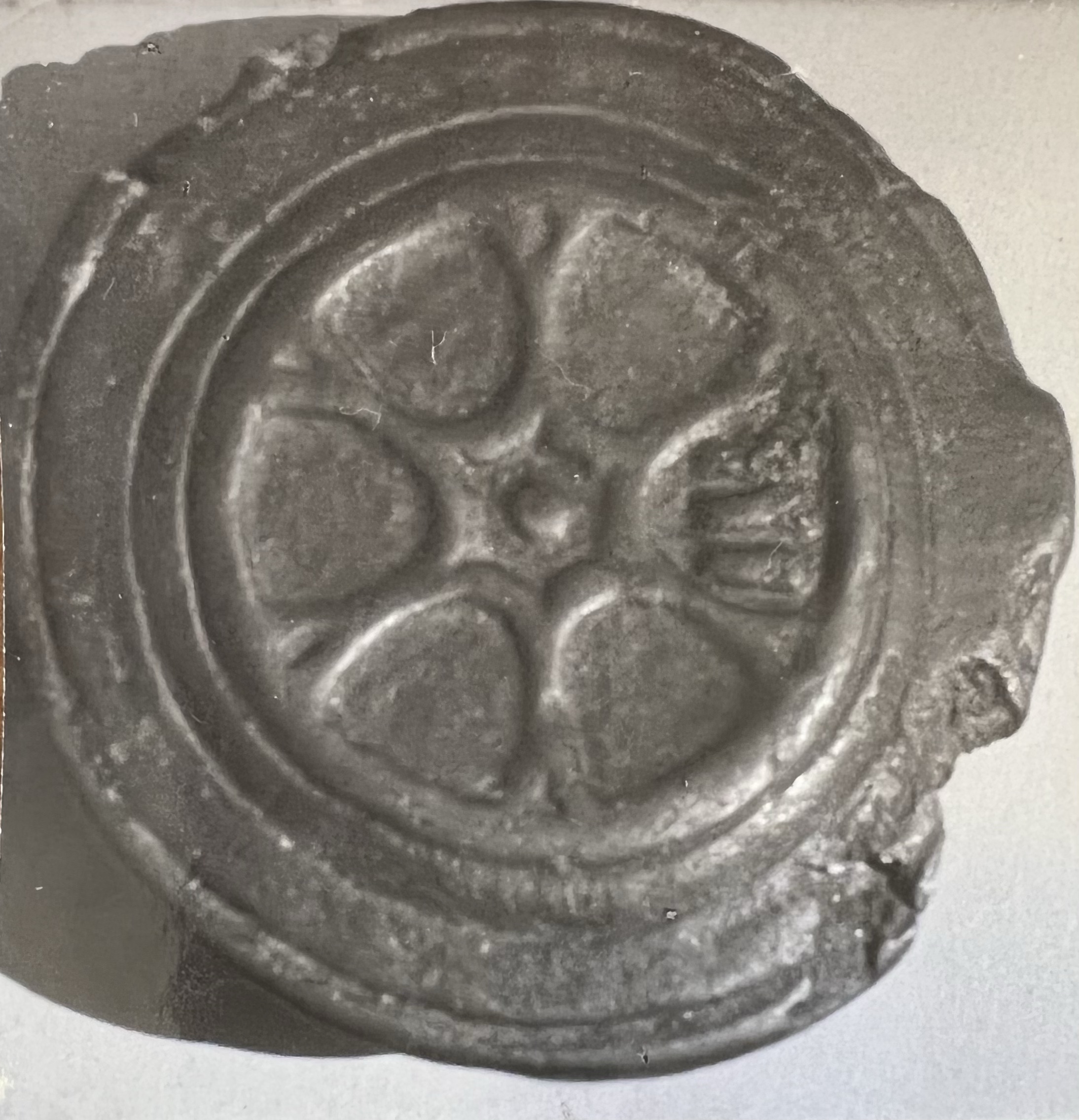
The whereabouts of the specimen today are unknown. If you recognize the coin and have a better photograph, I’d be glad to know of it.
Update. With the help of Bill Dazell, I’ve learned that upon the owner’s death some 533 coins went to the ANS, but not this one it seems…
—
Update 11/4/2022:
a published specimen, just for reference.

This talk is unlikely to be ever published in precisely this general form. I continue to work on Kings on Coins and will likely publish some of this material in some form as the ideas mature. The talk was not recorded so in lieu of that I share here a script and screen shots of my slides. They are rough and I did at points diverse from the script but it largely reflects the event.

I was reading Crawford and he said that there was no convincing proposal of which A. Postumius Cos the portrait meant to honor. I grant there are seven men who held the consulship with this name (DPRR link to search results).
BUT I’m strongly inclined to think the man who made the coin is honoring his v own adoptive father the consul of 99.
The ancestry is deduced from Cicero’s letters, reading Cic. Att. 5.21.9 with Cic. Att. XII 22.2. Shackleton Bailey in his commentary endorses this reading and others have followed.
If correct this would also throw out Crawford’s speculation that his adoptive father was the moneyer of RRC 372.
The consul of 99 was killed in a mutiny in 89 in the social war, but even ancestors with greater failures had been celebrated on the coins…. Cf. this early post.
Update the next day: A colleague points out via twitter that it would be a very early adoption in an old family. A valid concern, I wonder if any one has done a typical age at adoption study for the Roman elite? How deep is the data to do such a study? This question generated some twitter convo of its own.
The same colleague points out that the consul of 99 also was ‘trounced’ (great word!) by Jugurtha.

Here’s a clearer photo of the bottom specimen.

The easiest explanation is that the forger used dies created by hubbing a legitimate specimen, but I also would love a weight for the top coin or even better a specific gravity….
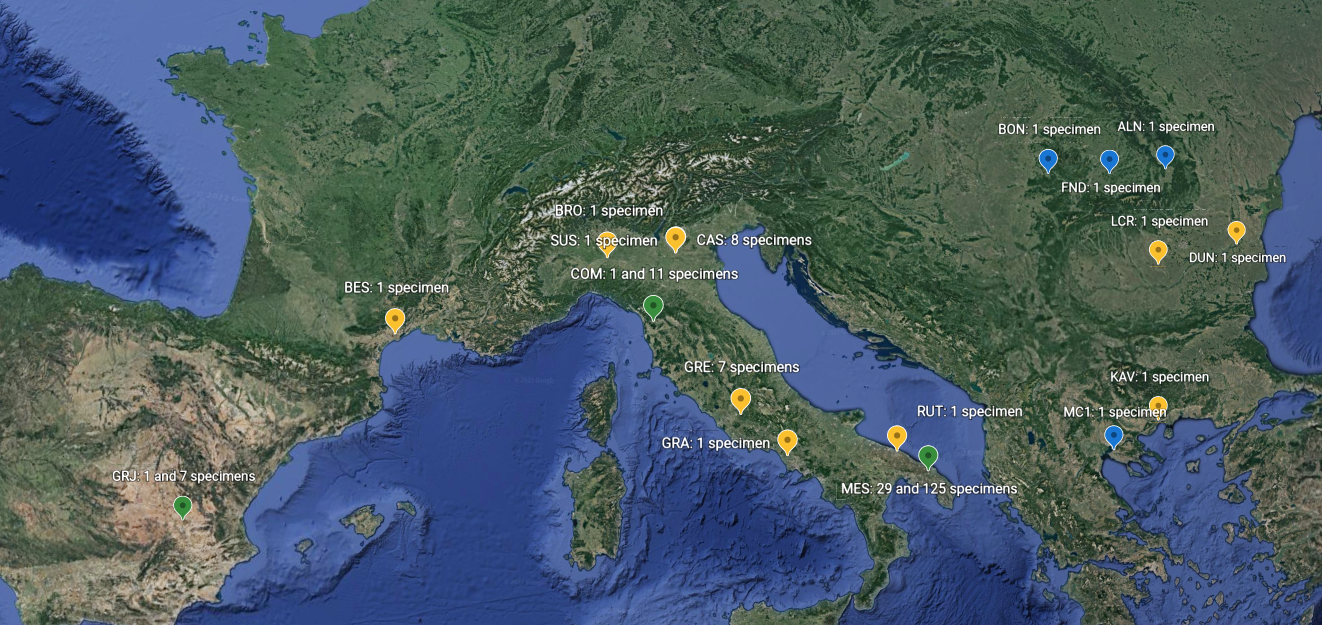
I made the above map using data from Lockyear’s CHRR and Google Earth Projects. You can view the map in Google Earth.
Again thanks to seeing specimens side by side in a print catalogue I find myself asking questions.
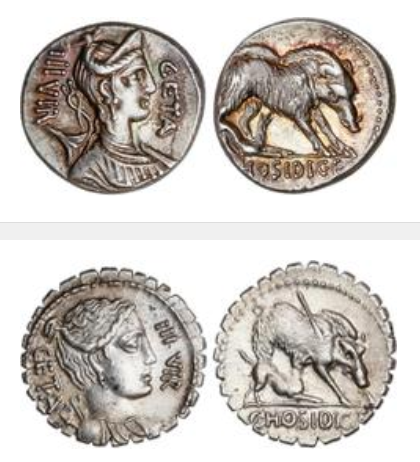
The styles are so different.
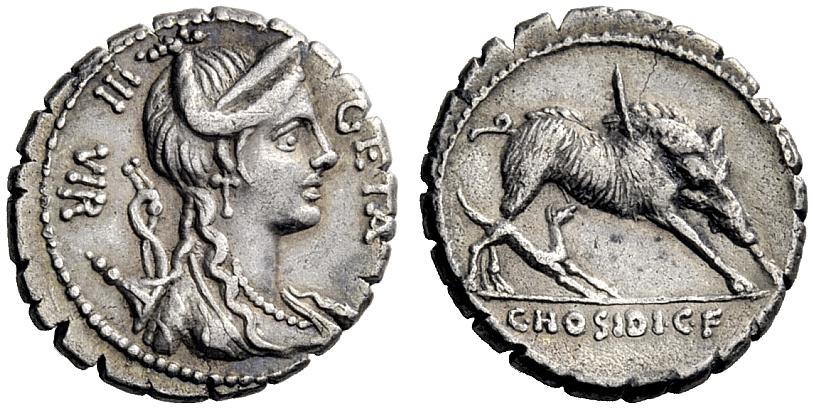
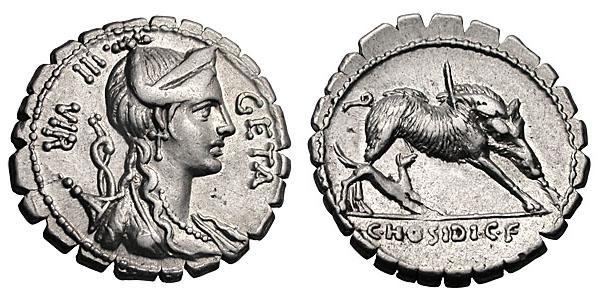
No serrations and small head with stephane (407/2) and large head, no stephane, serrated (407/1).
Were they produced at the same mint at the same time?!
The above map was my first stab at seeing if they might have had different distributions in antiquity. One explanation is that the serrated issue was just taking too long to produce and at one point in the production process the serrations were abandoned. But… I’m still suspicious.
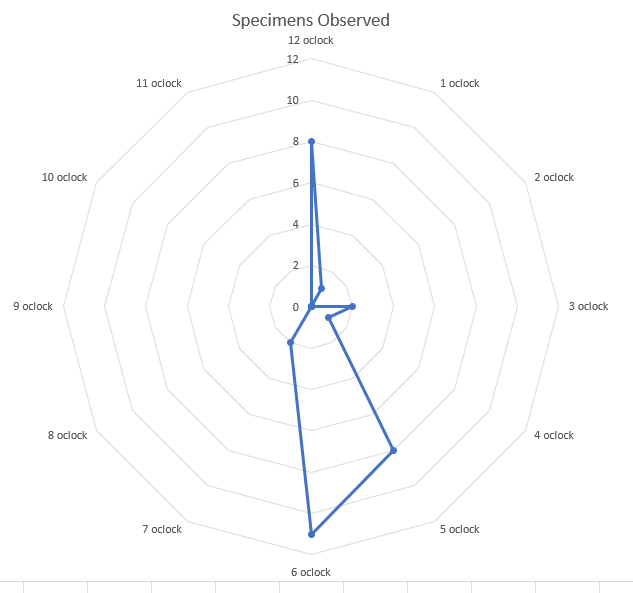
I’m more convinced we need to throw out the Fitzwilliam die axis data after graphing 407/1 (no serrations, small head). See below. Here there is not a single 12 oclock die axis reported by another collection.
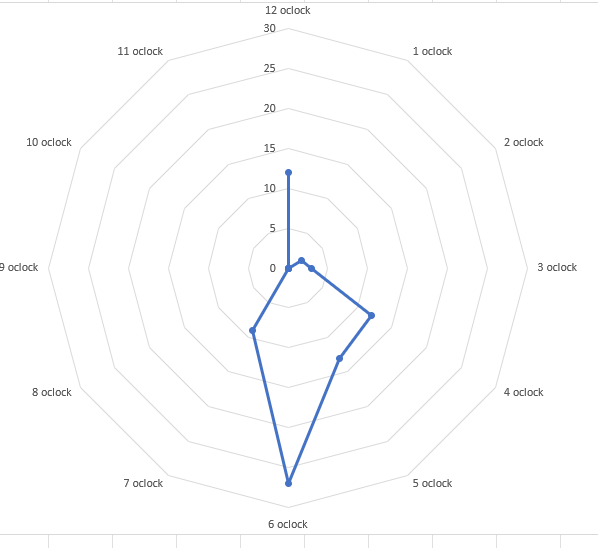
What do I make of this? The fact that both have a strong 6 oclock die access might be a point in favor of their actually being produced at the same mint, but we all know the Roman mint wasn’t so keen on controlling die axes. To do this properly I’d have to also do all the specimens in the Schaefer archive.
I don’t have a theory yet but it is odd…
P.S. While you’re here note that the date for these two types is likely c. 64 BCE (So Hollstein endorsing Hersh and Walker based on Mesange hoard), not 68 BCE as in Crawford.
RRC 407/1
Update 1/17/19:
A colleague reminds me of this rare type published by P. Debernardi, “Some Unlisted Varieties and Rare Dies in Roman Republican Coinage”, NC 2010 and that this type suggests all were produced at the same mint. There are two obverse dies of small head, crown, serrated.
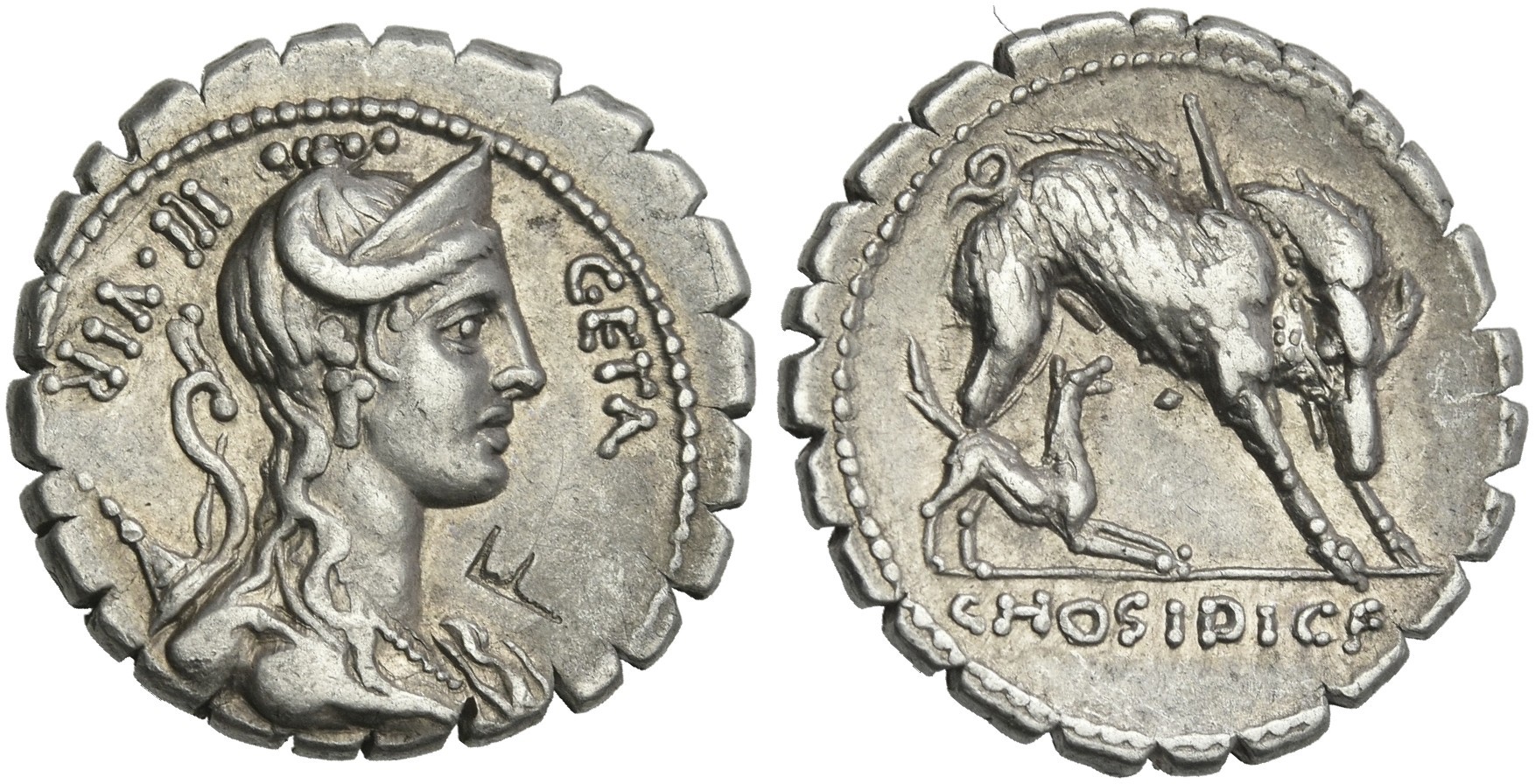
Another specimen of the same variant
 Liv Mariah Yarrow