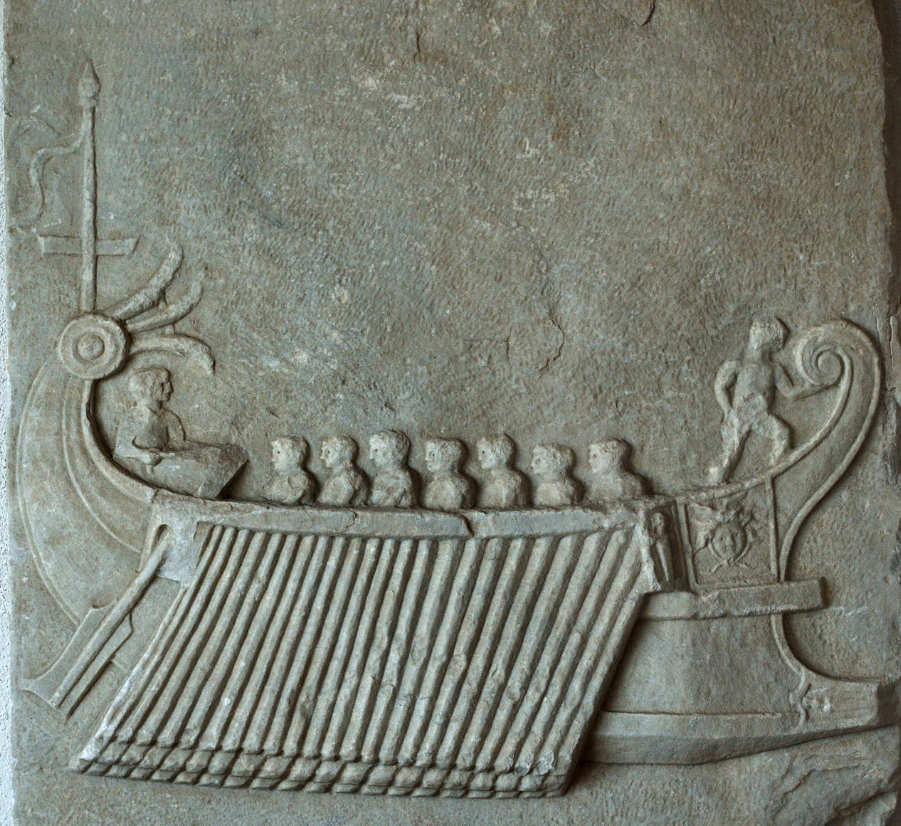
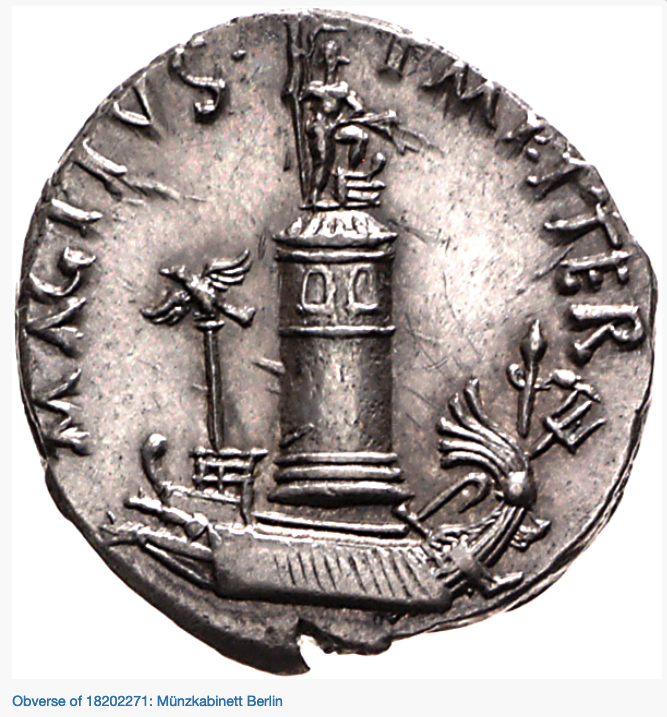
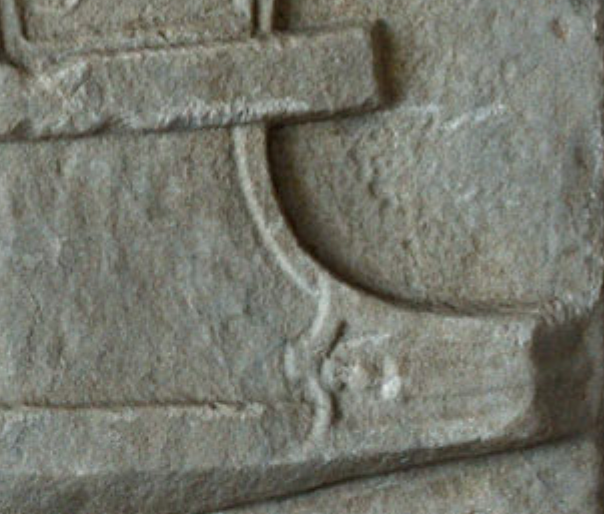
The aplustre with the circle before the fan is similar to the so called fleet coinage of Antony (RRC 544)
The scepter on Antony’s ships near the prow seems different than the pole on the relief near the aplustre (at the stern). But that does seem to have a parallel on the coins of Sextus Pompeius, which also place a legionary standard near the prow and a trident (symbolically invoking Neptune?) near the stern. The trident like the scepter on Antony’s coinage help remind us not to take these depictions a 100% literally, but rather as visual invocations of an idea.
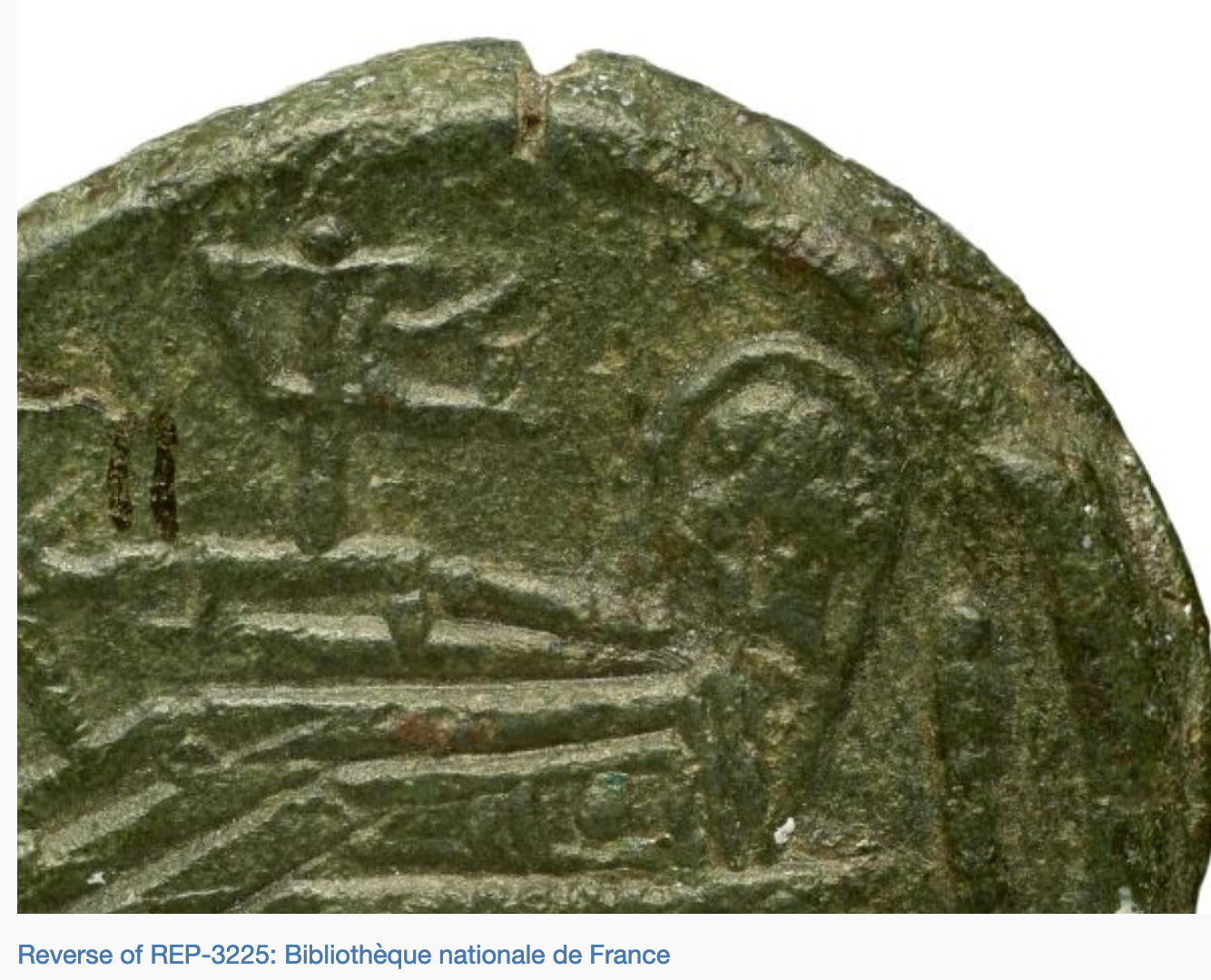
The semis and quadrans of P. Calpurnius are the earliest full ships on the Republican coin series and they have a stick at both stern and stem. I say a stick to keep from committing to what type of vertical object I’m seeing.
This might be the best parallel for what we’re seeing on the aplustre of the relief. I’d also note that where there is a Medusa on the relief their is an eye on the prows both of these bronzes but of almost all RR bronzes since the intro of the prow series. Bear in mind the Gordon head is apotropaic as is the eye and they have been found together from v early on in ancient Mediterrean art. A typical kylix with eyes on the outside has a Gorgon in the tondo.
There are earlier bronzes where the prow is augmented by a vertical element usually called a mast and sail (RRC 213 and RRC 239). Given scale I wonder if it might not represent some sort of standard or pennant or something.
Note also that the prow stem has a female head on RRC 213/1, a feature not noted by Crawford in RRC (cf. earlier blog post discussion).
If you look at comments of this old blog post you’ll find most other previous blog posts discussing ships on this blog.
My last observations are on the depiction of the rams on the relief.
The bottom ram reminds me of the trident decoration on the Athlit ram (Haifa)
public domain image (source) public domain image (source)
The top ram just really a blunt rectangular horizontal element on the relief. This surprises me because on most coin representations it has the head of a canine, probably a wolf. This feature is perhaps clearest on RRC 290/1.
Non-coin section.
Well I didn’t really want to come to work today, so that might mean yesterday’s goal wasn’t accomplished but here I am regardless. I got my blog post done. I may wait to get to email and turn back to the book proposal (good progress has been made, the end is insight). I touched most other tasks that needed touching. I think I’ll just see what happens with my day and give myself a break from goal setting and just be glad I showed up.
While visiting the Met last week to catch Chroma before it closed, I snapped a pic of this little figurine to remind me of it. Then last Friday I got to see a former mentee, Hannah Lynch, present on the hair as a form of communication at a conference (she was amazing and I was so proud I could almost burst) and this came rushing back to mind.
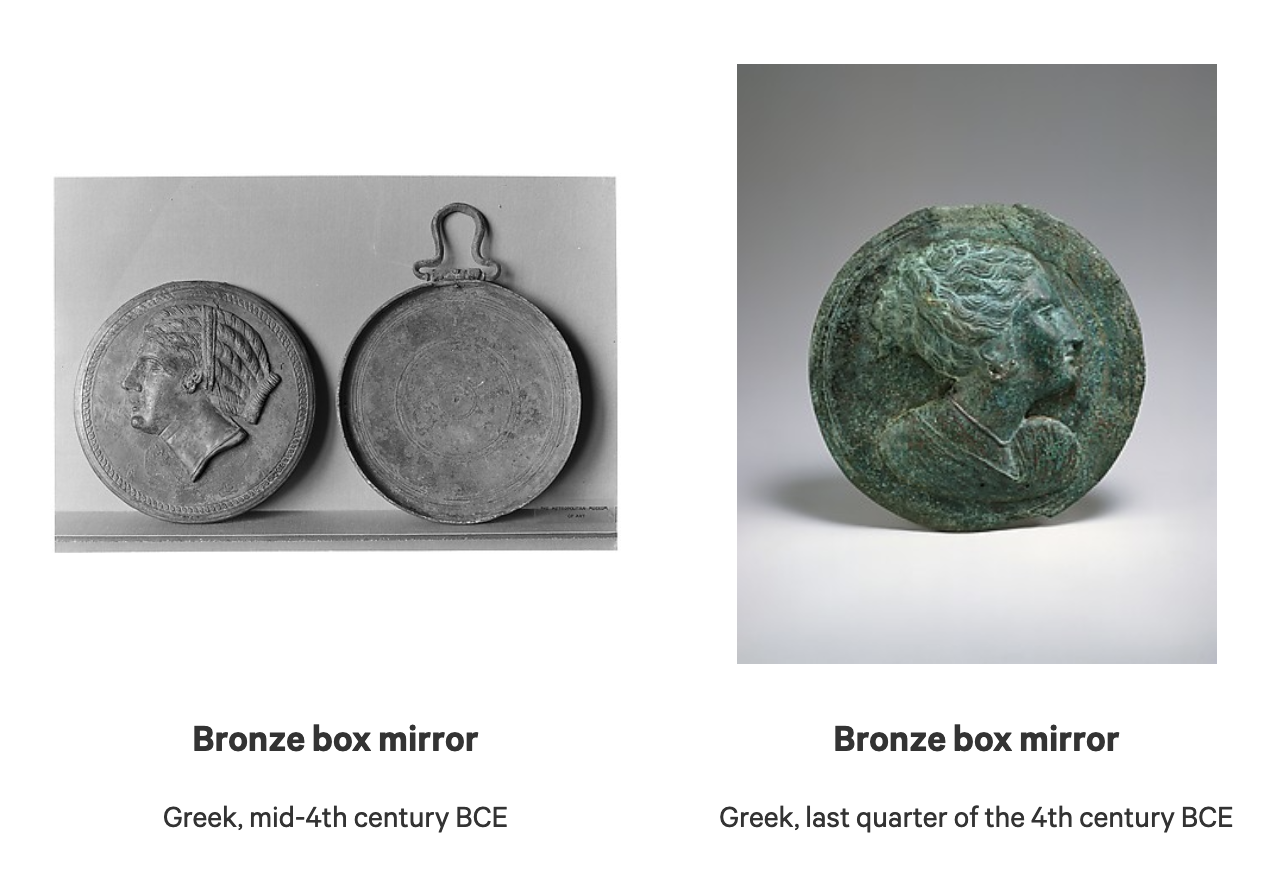
What I liked a great deal about it was that the statuette was in the same room as some gorgeous mirror cases, which in turn show off some pretty elaborate hair styles:
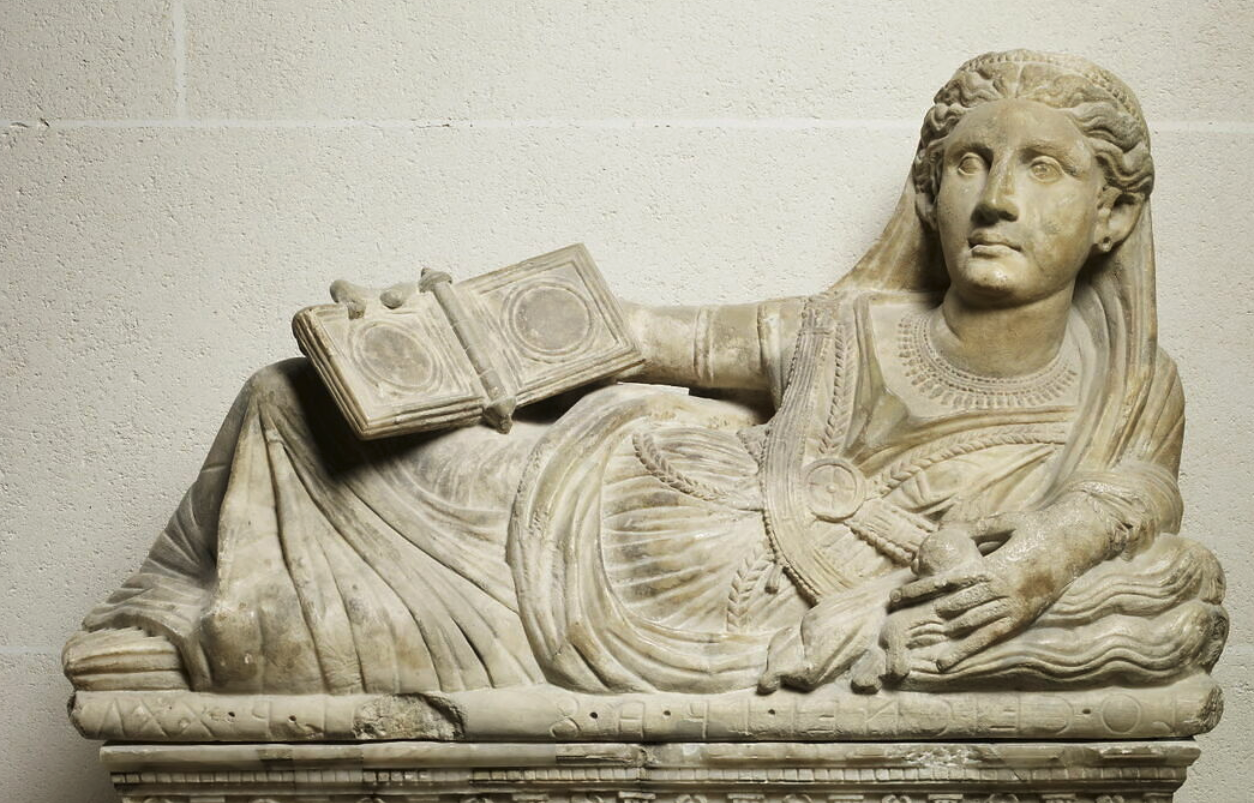
The statuette in turn made me think of this poly chromatic terracotta sarcophagus in the BM. Notice the woman pulls away her veil to check her hair in her mirror. It is almost a play on the pudicitia gesture. (For what it’s worth, when I think of ancient statues as painted I always then to call to mind these terracottas to render an image in my mind. I find them more satisfying than many modern reconstructions largely I think because of the shading in the drapery and other modelling.)
There is perhaps a similar humor? or play on the meaning of the gesture on this mirror box below. Notice how instead of pulling on a veil the woman grasps a tendril of her own rather wild hair.
I love how listening to smart students and junior scholars lets me look with new eyes on material I’ve known for so long.
I already sent one necessary email there is another one to go. Spring is tempting me into the garden, but I will mostly resist. I think after that email, I circle back to a book proposal and grant before trying to do some writing. The logistics for visiting the Nemi material in the UK got complicated because airline prices went through the roof. I need not to put my head in the sand on that and take some action. RACOM paper could use some drafting. But I need a gentle day and am going to do all of this slowly, slowly. The goal is to wake up tomorrow wanting to work, rather than having to work. Overall the most important part of this sabbatical, is not what I publish but to recharge my batteries such that I fortify the determination to keep engaging with my disciplines.
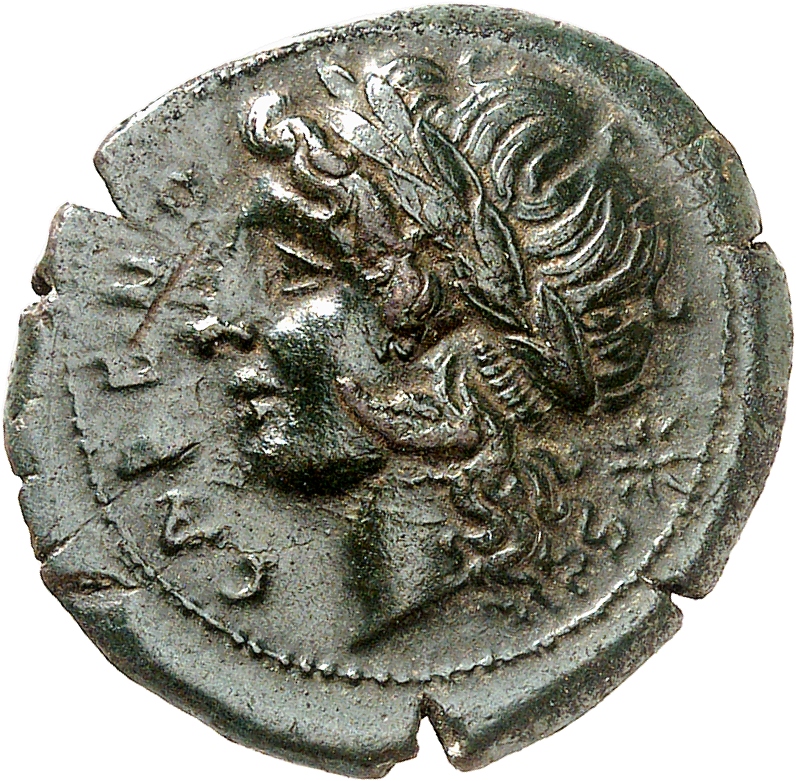
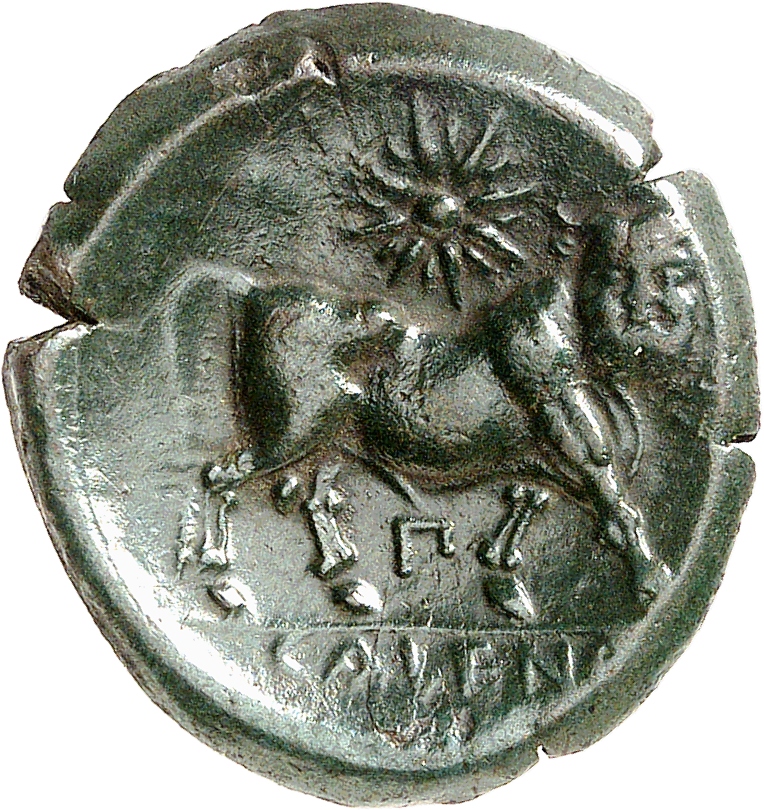
The inspiration for this post was a tweet announcing the growth of Winterthur’s contributions to IKMK. I thought I’d might go check out what they had uploaded that was struck in Italy for fun.
Cales, KampanienCales, Kampanien
This lovely specimen caught my eye, esp. That mark on the obverse cheek. I can’t be sure even from the excellent photos but I do wonder if it might not be traces of an under type. We know the earlier(?) Minerva Cock type (HNI 435) is regularly over struck by the man-faced bull IΣ series at Naples. This coin likely dates to the same time as that series.
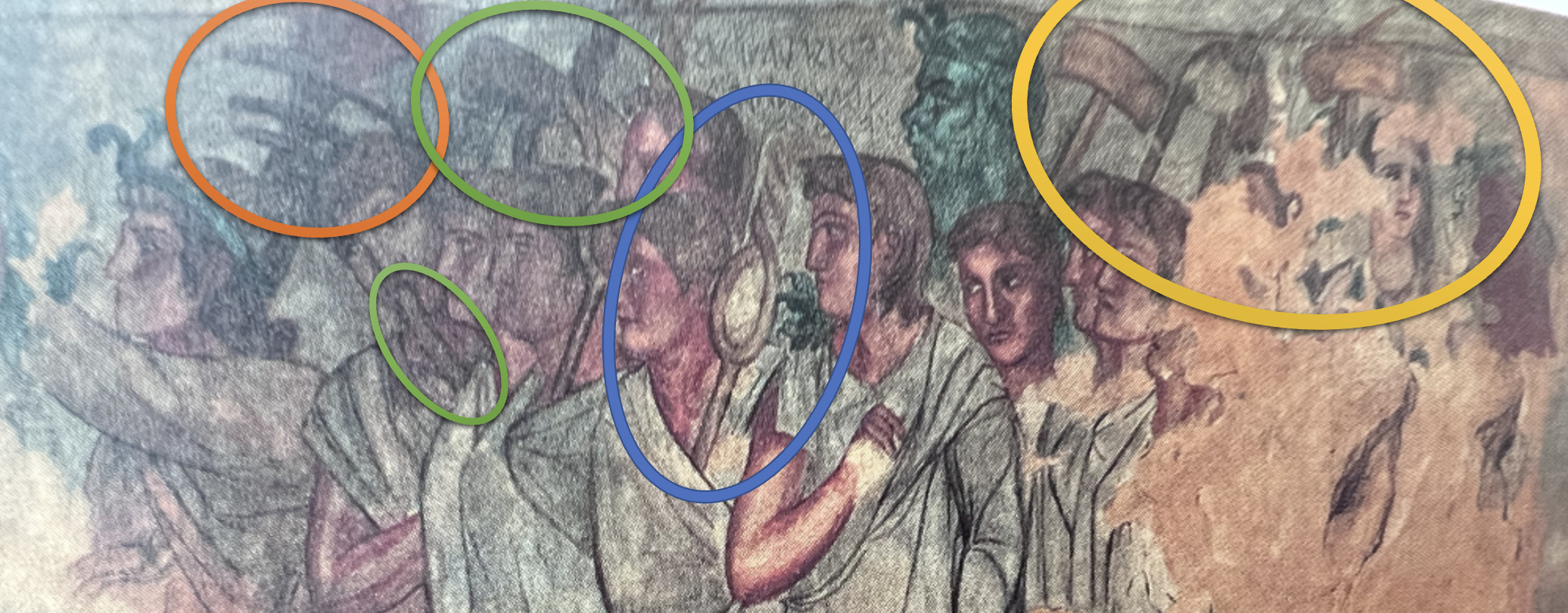
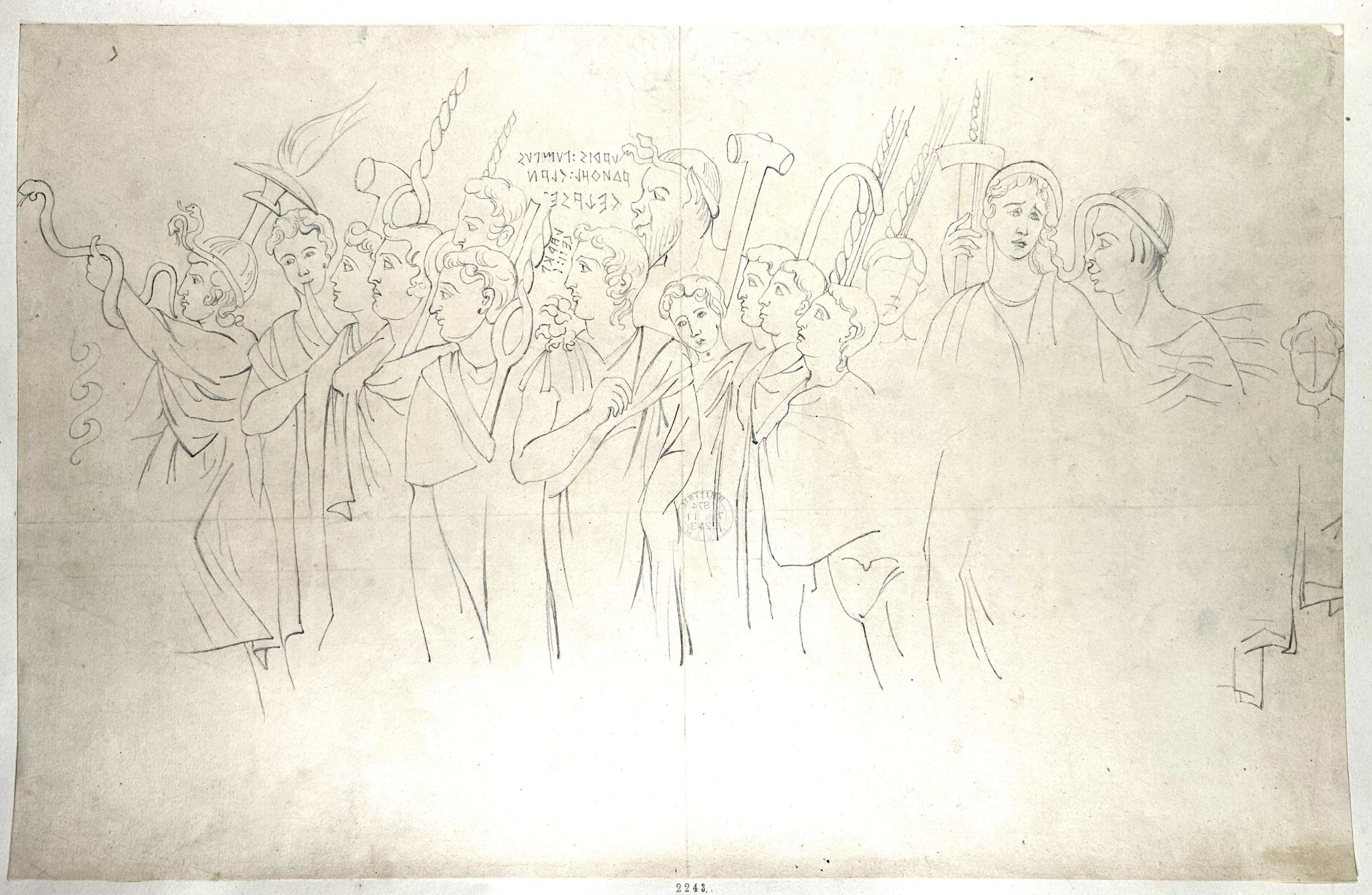
“Procession of c. 16 figures, lictores, tuba players, death demons. The man Laris Pumpus, probably the owner of the tomb, is mentioned in the inscription” A 1910 painting on canvas of right wall middle of Tomba del Tifone, Tarquinia, 2nd cent BCE. Glyptotek, Copenhagen, H.I.N. 410, I.N. 2568 “The original of the procession is so ruined that it would be unintelligible without the help of the old copies.”
I’m most interested in the objects everyone is carrying. First figure with raise arm, sholder length hair, a hair band tied in front and sleeves, seems to be holding some thing with three curved horizontal bars and a fan shaped object above (orange). The green circles mark out a pretty ordinary horn player and horn. The blue circle is what I suspect is being interpreted as the symbol of the lictors: should we call this twisty stick with a hoop fasces?!? Perhaps these are not the lictors, but heralds of some sort with a form of the caduceus? There are more examples in the image near the horn. Yellow marks out a three objects. From left to right they are the hammer, the typical attribute of the death demon (blue dude in back above the other heads). Next comes what looks like a sheep head on a stick. Then there is a stick with a slight curve at the top. More like what I’d call fasces, but I’m far from certain. Then a hammer? that looks a little different than the death demon’s but might be for another spirit? It seems to be overlapping in the image an other stick with a slight curve.
Update:
(1) early versions of togas! We learned about that when I was an undergraduate, but there weren’t all that many good examples – the Arringatore was the prime example. This shows them off better. (2) Despite obvious differences, the composition is so similar to the procession on the Ara Pacis – presumably it was in direct conversation with a long tradition.
via social media Dr. Maria Pretzler made these observations which I thought had deep merit, quoted with permission
Felt bad about not getting to a blog post yesterday. Something unexpected came up my day took a bit of a turn. Yet, beyond that, it was really a very good day work-wise. I finalized a paper for conference proceedings and was reminded why co-authoring is so nice. I added edits to a chapter on Dionysius for an edited volume based on editors suggestions and thus got to spend a little time with the Brock’s views on the Ship of State in the Greek tradition, pre Alexander but clearly relevant later too. I had some nice email correspondence with PhD student asking good questions regarding the grain supply that got me thinking about my book project again. AND, I spend a good deal of time exploring funding options and grants and starting to think about my next target deadlines. Getting back on the horse and staying in the groove of such writing is critical. The is a habit to all forms of writing and I cannot take any of it too seriously if I am to get it done. I have a few now in mind and one will need some serious attention the next couple weeks. Ah yes, AND I agreed to give an ANS long table next Friday on my Aes Grave work, AND I concretized my smelting plans. A week from tomorrow I make my first test samples for drilling and experimentation. Yes, no reason to feel bad, that was a days work by any measure and it is also good to be open to interruptions and the unexpected. Again, part of the function of this type of blogging is to better understand how hard to push myself and when to give my self a break.
Possible docket for Today
More smelting logistics!
Respond to departmental planning email
Process die axis scans and share with colleagues
Check in with co-authors and tweak as needed
finalize images
Check in on book proposal
Time in on textual evidence for RACOM paper
Write first draft of abstract for RACOM paper
Look at some nice pictures just for fun, maybe post about them (it helps my mood and motivation!)
Maybe write referees about next grant application?
Maybe think about re working book proposal for grant app, or not
I was looking for another article I need cite and believe I have on file but cannot for the life of my find, BUT I did come across this fantastic piece, I had on file and never seem to have blogged about. And as this blog is my external brain, no post = no memory.
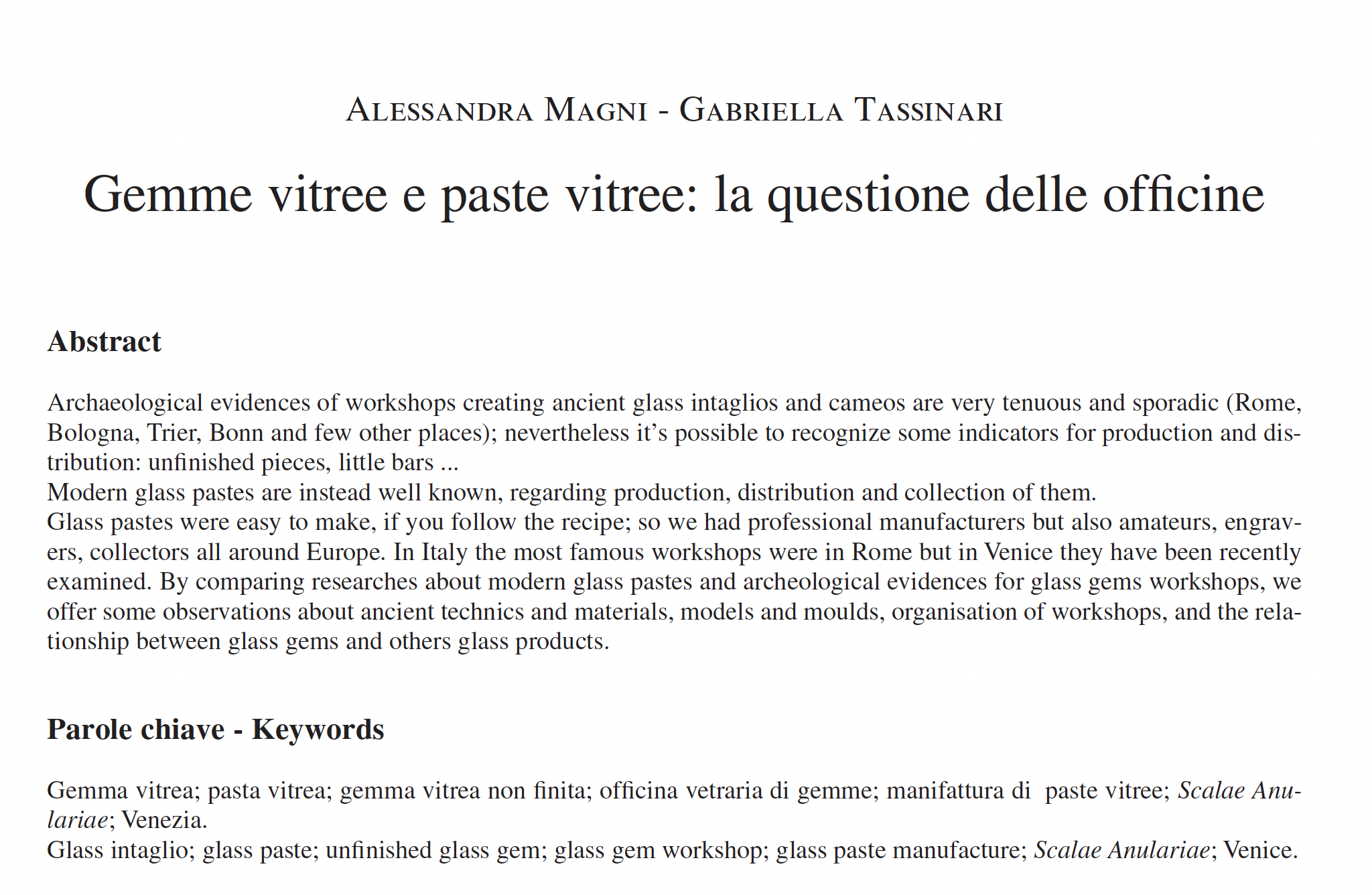
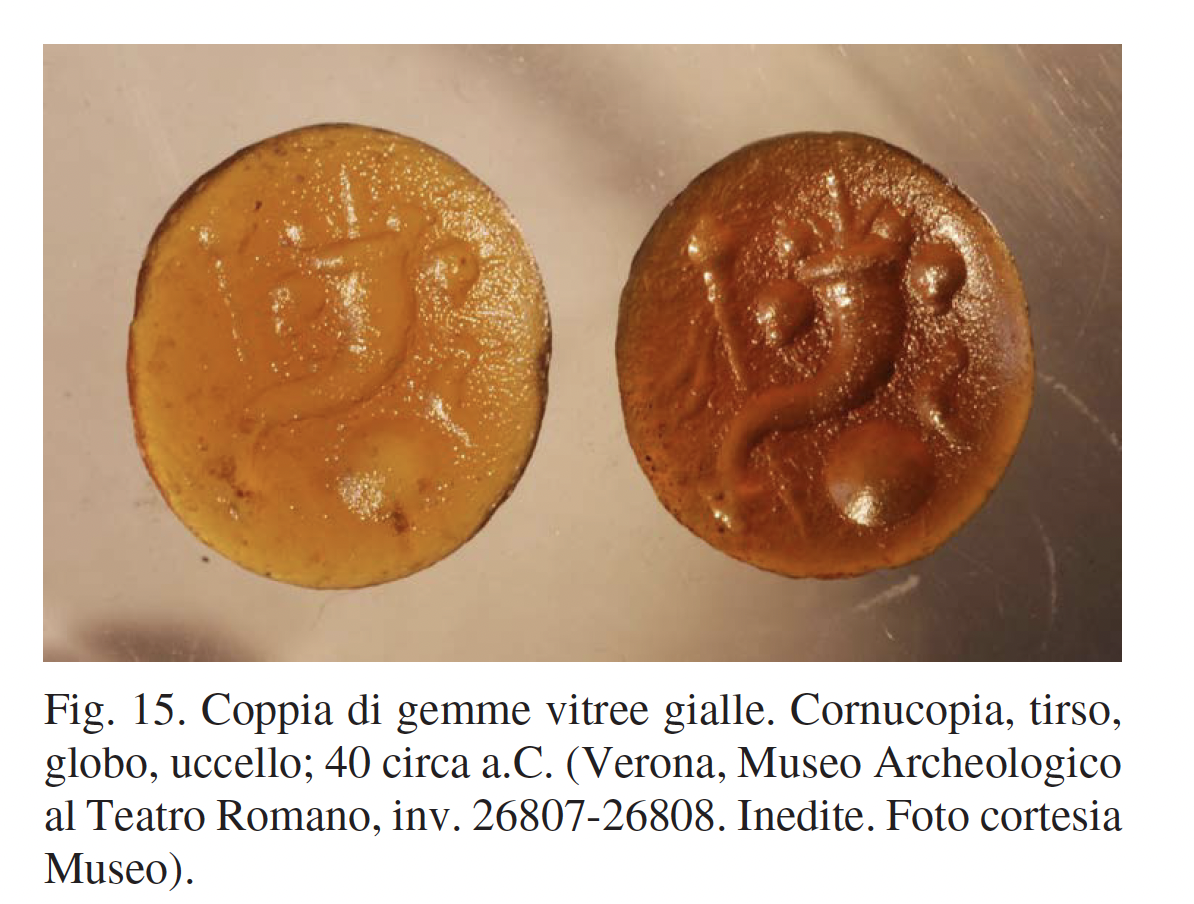
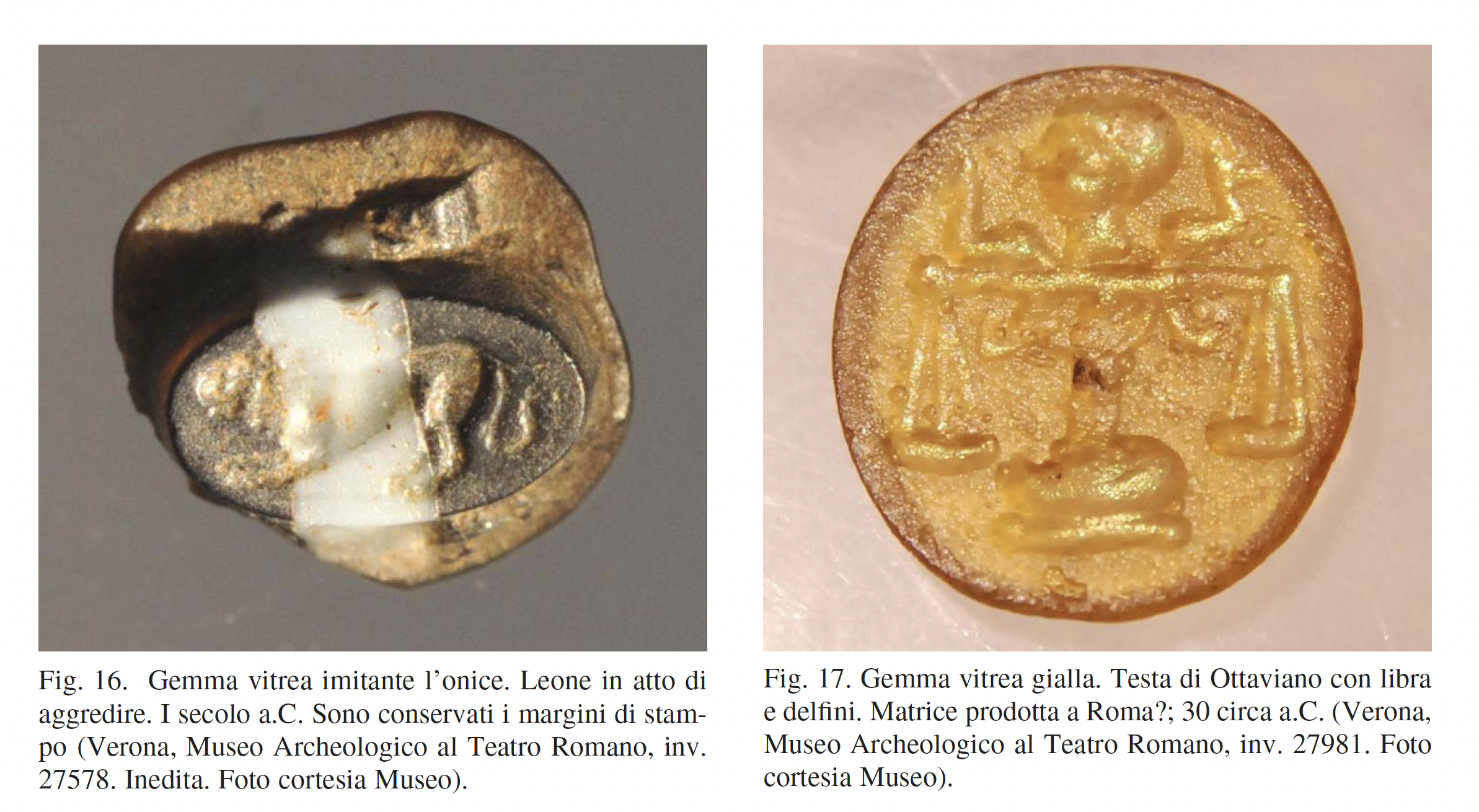
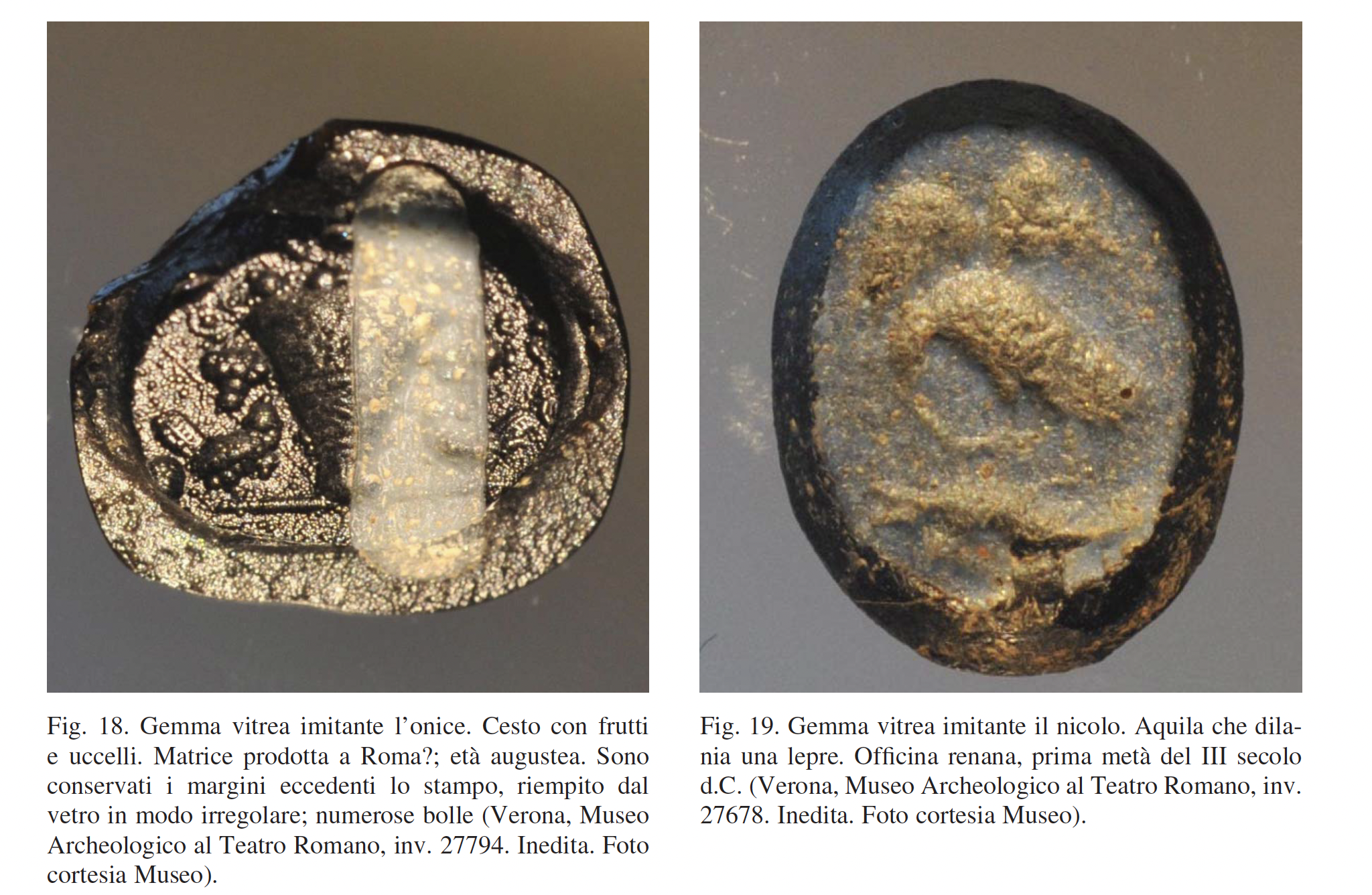
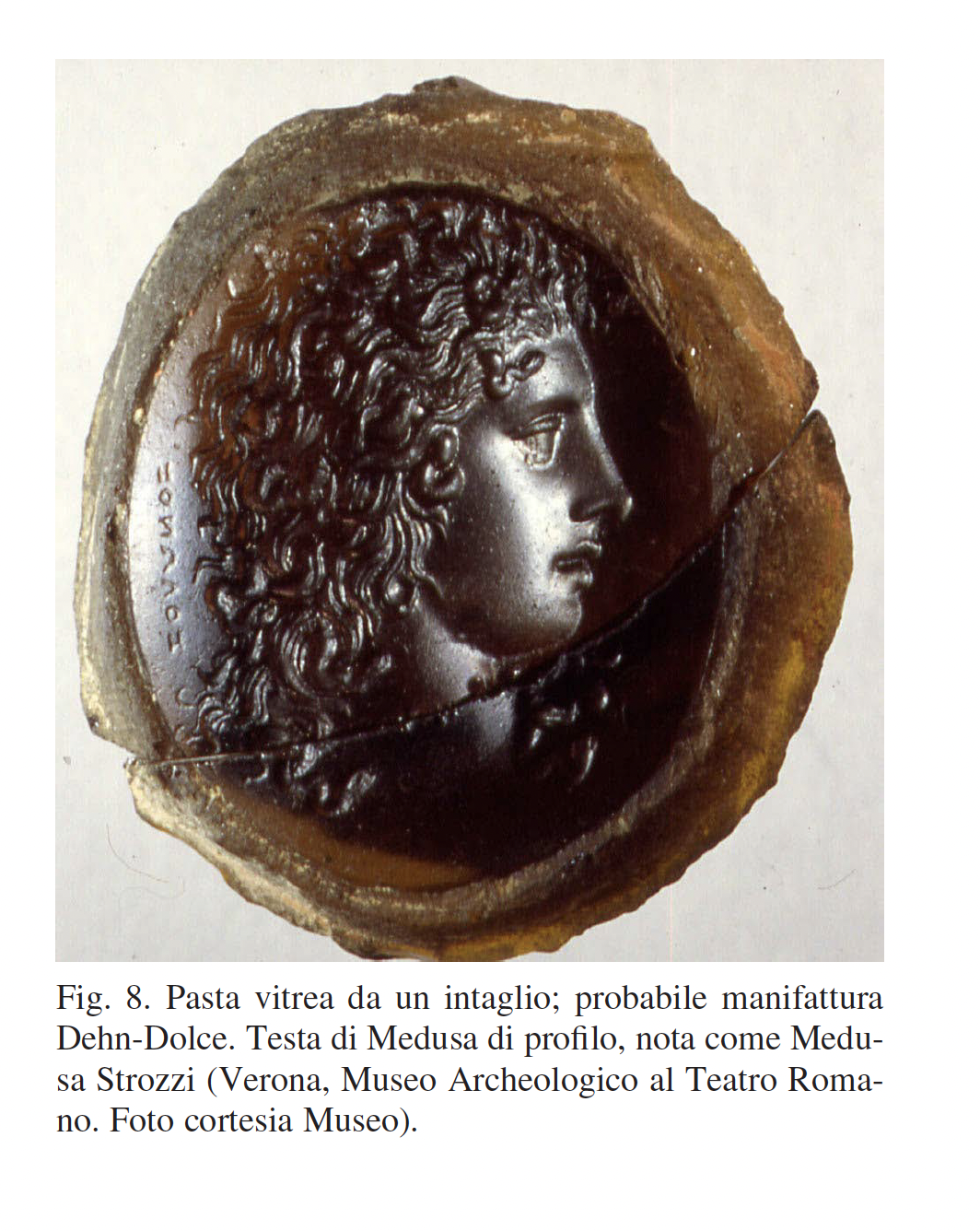
Alessandra Magni and Gabriella Tassiniari treat a very wide chronological range. The piece is beautifully illustrated and the real highlight for me are the unpublished ancient specimens from Verona.
This one is a bit different and reminds me of the Mithridatic stylistic move on Roman Republican coins with the crazy hair. I wonder if the original intaglio may be ancient or just inspired by antiquity…
a round up of stuff I’ve said or learned before about Gratidianus and concerns over the coinage in the 80s BCE
What follows has repetitions section to section, but it is useful for me personally to see the slight changes in my own framing or where I’ve been consistent over the years.This is an active post so I’ll be dropping more primary evidence and thoughts at the end as I spend more time with the topic.
This is from a draft of chapter 1 of my coin book written 2018. This section goes with fig. 1.40 and was cut to keep the book somewhat close to target word length.
We have both literary and physical evidence that suggests anxiety over the authenticity of coins and the ability of the state to regulate coin production, two issues that go hand-in-hand. These concerns seem to develop in the mid 110s BCE and continue down until the early 50s BCE, with a peak in intensity in the late 80s. On the coins themselves, we find increased use of serration and the use of control marks (1.40). Flans were serrated by cutting the edges prior to striking; control marks may have corresponded to record-keeping regarding batches of bullion issued to the mint.[1] Both processes are extremely labor intensive and neither became standard operating procedure. The irregular application of and great variety in control mark systems and other intermittent minting innovations such as serrations may derive from these regular shifts among post-holders and these individuals’ desires to distinguish themselves from their forerunners. They are outwardly visible signs of the care the moneyer took in regulating his issues. Our literary testimony seems to speak of similar concern. Cicero writes of the legislation of Gratidianus as a praetor under the Cinnan regime in the 80s BCE thus:
Even our kinsman Gratidianus failed on one occasion to perform what would be a good man’s duty: in his praetorship the tribunes of the people summoned the college of praetors to council, in order to adopt by joint resolution a standard of value for our currency; for at that time the value of money was so fluctuating that no one could tell how much he was worth. In joint session they drafted an ordinance, defining the penalty and the method of procedure in cases of violation of the ordinance, and agreed that they should all appear together upon the rostra in the afternoon to publish it. And while all the rest withdrew, some in one direction, some in another, Marius (Gratidianus) went straight from the council-chamber to the rostra and published individually what had been drawn up by all together. And that coup, if you care to know, brought him vast honor; in every street statues of him were erected; before these incense and candles burned. In a word, no one ever enjoyed greater popularity with the masses.
Cicero, On Duties 3.80
It maybe that Gratidianus codified the purity of the silver and the number of denarii to be struck to the pound.[2] The nature of these currency reforms or regulations are much disputed, but the political capital Gratidianus gained from being seen to act is not.[3] Upon his return, Sulla also passed legislation on the coinage, certainly concerning counterfeiting, and probably making it a crime to reject coin with the mark of the state upon it.[4] Sulla’s legal measures and preceding ones by members of Cinna’s faction all point to a general anxiety about the quality of the coinage in circulation. Thus, along with these legislative solutions, it is also possible that the uptick in serrated issues in the late 80s and early 70s may also be an attempt to improve confidence in the coinage.[5]
This is a section from chapter one of the longer version of coin book that I set aside as it was far more in-depth than the press wanted. To write the shorter now published version of the book, I had to move from a chronological approach to a thematic approach. Of course, the first longer version deeply influenced the writing of the final published version.This was last revised 18 June 2014. RACOM has now begun to answer the questions and concerns raised in the final section.
The Fabric of the Coins Themselves
After die studies and hoards, metallurgical analysis is the other major component of the quantitative numismatic tool kit. Even in antiquity, there was great concern over the fabric of the coins themselves. Did they weigh what they were supposed to weigh? Did they contain the right amount of precious metal? These were particularly key issues during the second Punic war (chapter 3, p. XXX) and also during the Civil Wars of the 80s BC (chapter 6, p. XXX). Our challenge is to correctly interpret the physical evidence we have.
The first and most obvious data point is the weight of individual specimens as they survive today. Even determining the original intended weight standard can be problematic. It is not enough simply to average the weight of all known specimens. Such an approach would ignore factors which make our existing specimens likely to weigh less than originally intended. First, the more a coin circulates, the more wear it suffers from handling, so the less the specimen will weigh. Thus, optimistic scholars have tried with little success to estimate the relative speed of circulation based on the observation and comparison of coin weights (Lightfoot 2007: 206 contra Duncan-Jones 1994: 180-192). Second, environmental factors in the deposition of coins prior to their recovery, or even poor storage conditions after their recovery, can cause corrosion. A potential third factor would be shaving or clipping, whereby an unscrupulous user could remove a small amount from the edge of a coin and then spend that same coin at face value. Although a well-known phenomenon in later periods, rather surprisingly we see little-to-no evidence of the practice on republican coins (Stannard 1993: 50).
The other issue with using the average of known specimens as a means of expressing the intended weight standard is that it assumes that there was one specific weight per coin which the mint was attempting achieve. This is not as obvious as it might at first appear. The mint was given a certain amount of bullion, and there was an expectation that that bullion would produce a certain number coins. Thus, it should be possible to express weight standards as the target number of coins per Roman pound. We know this was the case for the Imperial period from Pliny and the context of the passage implies that the ratio, 84 denarii to the Roman pound, was in place for the Republican period (NH 33.132, also see p. XXX [quoted in chapter 7]). Based on his analysis of the Cosa hoard, Duncan-Jones suggests the ratio was 82 denarii to the pound before the Social War, then falling c. 90-89 BC to 83 and finally to 84 in the Triumviral period (1995, cf. 1994: 219). This has not been widely accepted in part because we do not know with confidence what the Roman pound weighed.
Duncan-Jones uses the figure 322.8g for the Roman pound based solely on weights in the Naples collection (1994: 214-215; 1995: 110). Other estimates are more wide ranging and often higher. Crawford surveyed various estimates noting their different source materials – coins, stone weights, balances, metal weights – and in the end used c. 324g, with the caveat that it was not reasonable to assume “that the Romans were able to maintain the weight of their pound absolutely constant, at all times and in all places” (1974: 591). He conceptualizes the target weight standards for the precious metal coins as fractions of the Roman pound, 6 scruples for the didrachm, 4 scruples for the early denarius, sometimes falling to 3 scruples (1974: 3, 7, 11, 34). A scruple was a fractional measure, 288 scruples in a pound, 24 in an uncia or ‘ounce’. The same vocabulary was used by Romans to also discuss small divisions of land and time, so a scruple could also be 1/288th of a iugerum or 1/24th of an hour as well. One finds other scholars using other figures sometimes with no particular justification; so for instance, Heinrichs uses c. 327g without further comment in his discussion of Gratidianus’ reforms of 85/84 BC, a figure common enough in Late Roman and Byzantine studies (2008: 265-6; cf. Entwistle 2008: 39).
It appears that the Roman mint controlled the weight of its silver coins, not by the individual flan, but by the weight of batches. Flans were cast erring on the heavy side. When a batch of flans was weighed prior to striking and it came in over target, any particularly overweight flans were removed and recast or some were gouged to reduce their weight. Only after this control step were coins heated and struck. The results of the gouging often remain visible (fig. 1.35). This practice was introduced c.123BC and does not seem to extend beyond 49/8BC (Stannard 1993). Brockages and control marks may also be byproducts of the Roman mint working in batches (Goddard 1993; Witschonke 2012). One could not discard a single flan as a striking error, i.e. a brockage, if its elimination would disrupt the integrity of the batch. Control marks, even those appearing on duplicate dies, could have been used to trace batches of coins back to a particular striking team, thus deterring, or at least making detectable, corruption at the mint itself, if anything should prove wrong with a particular controlled batch.
The original, intended chemical composition of the coins is of just as much interest to scholars as the weight standard, and it is even more fraught with methodological difficulties. The refining, smelting, casting and finishing techniques of the Romans and other ancient societies were highly sophisticated. Not only could they closely control the percent of precious metals in the flans, but they even had techniques to ensure the surface of a coin had a higher percent of silver than its core. Sometimes called ‘surface enrichment’, it is more accurately described as ‘depletion silvering or ‘gilding’. A combination of oxidation and acid leaching removed base metal elements leaving behind a porous surface. The porous flan would then be rendered smooth in the striking process. Ancient Mediterranean societies were adept at these processes from the third millennium (La Niece 1995). Even when flans were not thus treated in the manufacturing process, some deposition conditions can have a similar leaching effect. Besides depletion silvering, the conditions under which an individual flan cools from a molten to a solid state also affect the distribution of elements within the flan. There are well-known models for solidification for different metal alloys, but as historians and archaeologists we do not know enough about the practices in the ancient mint to model this. Moreover, human intervention and environmental effects on the cooling process are unlikely to have been consistent mint to mint or even batch to batch. While to a certain extent these issues affect all metal alloys, the problems are most pronounced and most studied for silver alloys.
These factors mean that the only certain method of establishing chemical composition of any one specimen is to take a core sample. This process is minimally invasive: a drill as small as 0.6 mm in diameter penetrating about a centimeter into the coin from the edge with no effect on the struck surfaces. The discarding of the first, and sometimes even second, millimeter of the drillings ensures only the core is tested. This type of analysis has been and continues to be applied to coins struck under the Roman Empire (Ponting 2012). Unfortunately, most of the existing studies have relied heavily on non-destructive techniques. These past methodological choices have been driven by a variety of understandable factors. First, an appreciation of the extent to which all the factors above may affect results has been very slow to emerge. Second, both museums and private collectors are exceptionally reticent to allow testing that has a physical effect on the coin, however minimal. This has led to an over-optimistic application of a variety of non-destructive techniques.
The largest study to date on Republican coins is still Walker’s analysis using x-ray fluorescence (XRF) of 1,991 silver coins from the Ashmolean Museum in Oxford (1980). He understood the possibility of surface leaching from environmental factors, but did not anticipate intentional depletion silvering or possible issues around the dispersal of elements during the cooling process. He abraded the surface of each coin until he achieved three consistent readings. He found a gross mean silver fineness of 96.78% based on issues of 169-100, 97-81, 78-41 BC. A flan made from an alloy of 90% or more silver with the remaining portion made up primarily of copper with other trace elements such as lead, bismuth and gold will be relatively homogenous in character, with exception of lead as it is insoluble in copper (Ponting 2009: 273, 2012: 21). This means Walker’s analyses for the Republic are likely to be more valid than those he did for the Empire when debasement and depletion silvering have now been proved to be far more prevalent than originally thought (cf. Butcher and Ponting 2005). It is suspected intentional depletion silvering may have been first introduced with the legionarii denarii of Antony, but this is not yet proven (Ponting 2012: 17).
Twenty years after Walker’s study, another major investigation of the composition of Republican coins was published (Hollstein 2000). This project used non-destructive techniques, primarily wavelength dispersive XRF, to investigate more than 630 specimens, considering not only fineness, but trace elements. The hope was that trace elements, especially lead isotopes, could point to likely metal sources for coins so produced. Even coins struck by the same dies demonstrated very different trace element profiles (Hollstein 2000: 33-4). This confirms that the Roman mint used bullion from many different sources, not only the product of recent mining, but likely also old and foreign coins and various the spoils of war, including jewelry and tableware. Those with a metallurgical background have been critical of the methodology and missed opportunities of this study (Raub 2002), while numismatists have praised it for the number of insights it does offer (de Callatäy 2002). Its results usefully inform many points of our historical discussion in coming chapters.
The future of metallurgical analysis for the republican series is likely to lead in a number of directions with technological improvements. Even smaller microscopic drill bits might encourage more curators to approve core sampling of specimens. There has even been some experimentation with using lasers which leave a crater not visible to the naked eye (Guillaume et al. 2007 with Ponting 2012: 24). However, non-destructive techniques that answer the questions of greatest interest remain the holy grail. The two largest studies on republican silver coins both used XRF, a surface analysis technique. The other nondestructive techniques presently available are neutron and proton activation analyses (NAA, PAA). Activation analysis can give an accurate reading of the composition of the whole coin as it exists today. While this does not, on its own, bring us closer to knowing the original intended composition, it can be combined with XRF results for the same specimens to help determine any discrepancy between the composition of the coins surface and its core (Rizzo et al. 2010; Brissaud et al. 1990). Republican specimens used in previous studies could be productively retested using activation analyses.
further snippets from unpublished papers
Both literary and physical evidence suggest anxiety over the authenticity of coins and the ability of the state to regulate coin production, two issues that go hand in hand. Much of the conversation in literature centers on the figure of Gratidianus, yet while nature of his currency reforms or regulations are much disputed, but the political capital he gained from being seen to act is not. Graditianus was part of the Marian-Cinnan regime, but we know Sulla also introduced currency reforms during his dictatorship.
Heinrichs uses c. 327g without further comment in his discussion of Gratidianus’ reforms of 85/84 BC, a figure common enough in Late Roman and Byzantine studies.
Heinrichs 2008: 265-6; cf. Entwistle 2008: 39 cf. this past blog post
In spurious coin there is an alloy of copper employed. Some, again, curtail the proper weight of our denarii, the legitimate proportion being eighty-four denarii to a pound of silver. In consequence, a method was devised of assaying the denarius: the law ordaining which was so much to the taste of the plebeians that in every quarter of the City there was a full-length statue erected in honour of Marius Gratidianus.
Anyone who knowingly and maliciously writes or reads publicly, substitutes, suppresses, removes, re-seals, or erases a will, or any other written instrument; and anyone who engraves a false seal, or makes one, or impresses it, or exhibits it; and anyone who counterfeits gold or silver money, or washes, melts, scrapes, spoils, or adulterates any coin bearing the impression of the face of the Emperor, or refuses to accept it, unless it is counterfeit, shall, if of superior rank, be deported to an island, and if of inferior station, be sentenced to the mines, or punished capitally. Slaves if manumitted after the crime has been perpetrated, shall be crucified.
From THE OPINIONS OF JULIUS PAULUS ADDRESSED TO HIS SON (as found in S. P. Scott, The Civil Law, I, Cincinnati, 1932. Book 5 section 25
Lo Cascio believes that the portion of this passage on the crime of refusing a coin goes back to Sulla like the rest (p. 161). And, that originally it would have been something like the mark of the state, rather than the face of the emperor. Heinrichs thinks that it this regulation goes back to Marcus Gratidianus and that it is key for understanding the problem he was trying to address, that is according to Heinrichs: underweight coins whose value depended on their relationship to the Roman pound (esp. p. 267). [If I’ve understood the German properly!]
I’ll add further primary source quotations here as I go along.
I particularly want to think more about how Catiline’s involvement in Gratidianus’ death may color how the man himself is remembered and also how we account for partisan politics in all these events. While most of the above is written as ‘history’, I think what might be called for is a more historiographical investigation of the literary testimony and why it has come down to us in the form it has.
“…or refuses to accept it, unless it is counterfeit…”
Lege Cornelia testamentaria tenentur: qui testamentum quodve aliud instrumentum falsum sciens dolo malo scripserit recitaverit subiecerit suppresserit amoverit resignaverit deleverit, quodve signum adulterinum sculpserit fecerit expresserit amoverit reseraverit, quive nummos aureos argenteos adulteraverit laverit conflaverit raserit corruperit vitiaverit, vultuve principum signatam monetam praeter adulterinam reprobaverit: honestiores quidem in insulam deportantur, humiliores autem aut in metallum dantur aut in crucem tolluntur: servi autem post admissum manumissi capite puniuntur.
Cic. Off. 3.91; Loeb
I put this passage here against the language of the sent. Paul. 5.25 because of the use of adulterinus to describe coinage.
I’m wondering if we could connect this clause to the rise in so called banker’s marks. The coin has to be accepted if it passes a simple punch test. I’m going to sit with this idea. I like it.
P. Debernardi et al. 2018. “Average and core silver content of ancient-debased coins via neutron diffraction and specific gravity” Archaeological and Anthropological Sciences 10(7): 1585-1602 DOI:10.1007/s12520-017-0464-y
non coin section
Yesterday was frustrating. I’d put too much on my calendar, writing and editing a piece for a set of conference proceedings does not mix with doctor’s appts and other necessary logistics such as parenting while my partner addresses his commitments. Today looks better. I don’t think I have to leave the house. In the early pandemic all I wanted was a reason to leave the house, but now I just want to be left alone in my office to get on with things in my pajamas and cup of tea.
Anyway, most of this post was pulled together yesterday and I did also have some great back and forth with colleagues via email and finalized my April Rome travel arrangements, including a visit to Nemi and fingers crossed the Capitoline too, so not a total wash out. Oh, and I also wrote and sent in the abstract for a public lecture I’m giving to open an exhibit at a local college.
Today I’ve got a zoom on a grant proposal and those conference proceedings then need to take center stage. There are some emails but I may leave them to later in the day to keep my focus where I want it.
Some readers of this blog may be interested to know that Noah Kaye‘s 2022 book from CUP is available for free download and is completely open access. I’ve not yet dug in properly but I’m excited to do so. He also have a number of interesting numismatic and Hellenistic history articles and chapters posted on his academia edu page: worth checking out!
non coin section
Friday was so productive work wise I woke up Saturday itching to work. I resisted. I worked in the garden. I cleaned and re organized the pantry. I helped the kiddos build land form models for a school project (I can mix some pretty great earth tones out of black, orange, and green arcrylic paints and my tooth pick flags would make any 60s homemaker envious). There was more you get the idea. A good weekend.
Today I’m in NYC to see Chroma and catch up with colleagues (friends!), but I have a little time to tend communications and logistics: got through 99.5 percent of my paper list Friday: must make another. Almost ready to buy my April plane ticket to Rome just waiting to hear about one more possible opportunity. I’m thinking it is early and I feel fresh perhaps I’ll do one historical blog post as pre writing for the RACOM conference.
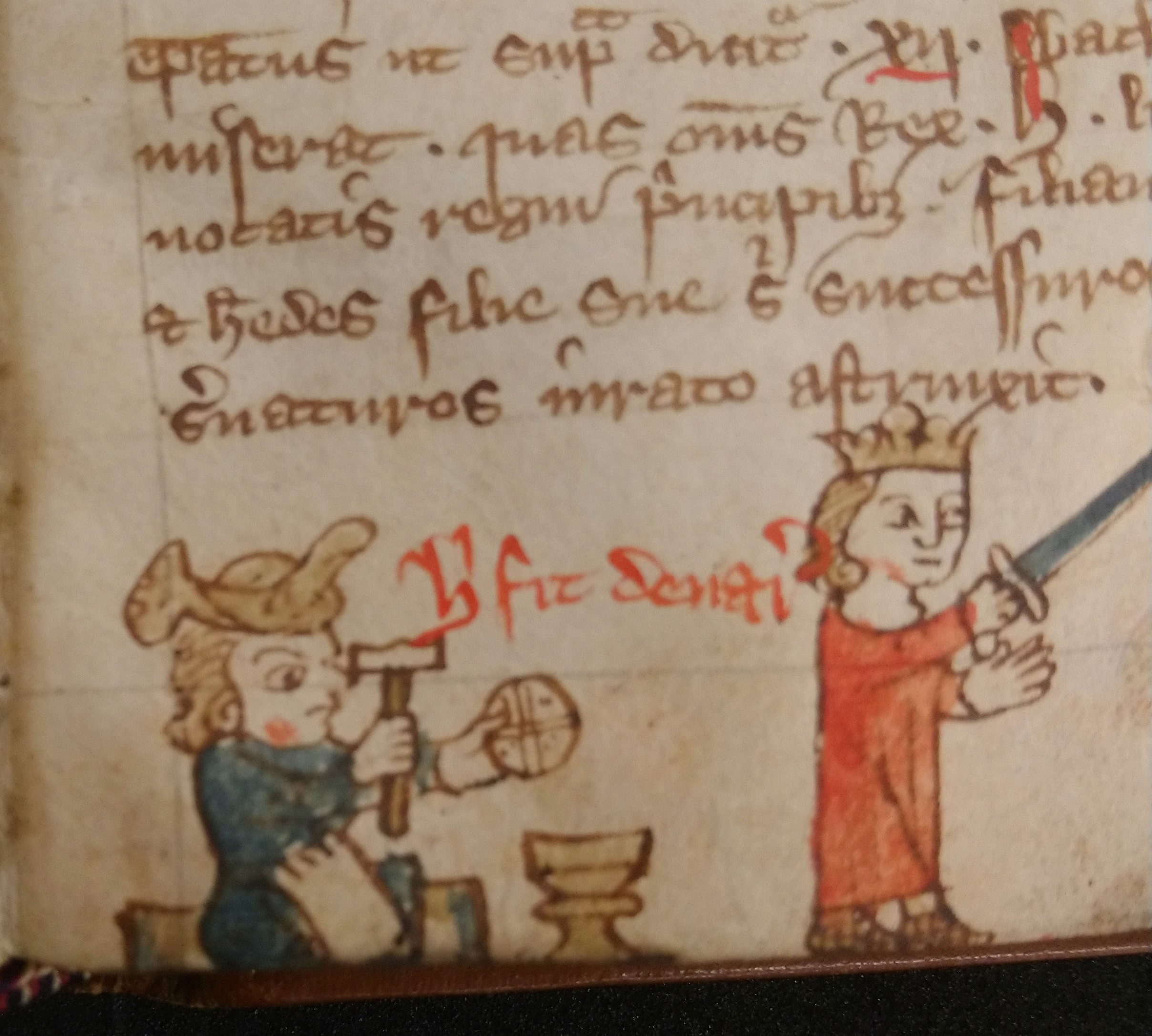
A man striking a coin. Cotton MS Nero A IV. – Thanks to Rory MacLellan for posting.Installation at the Aydin museum (my own photo – non-commercial CC license)A two woman approach using equipment in the Aydin museum (my own photo – all rights reserved)
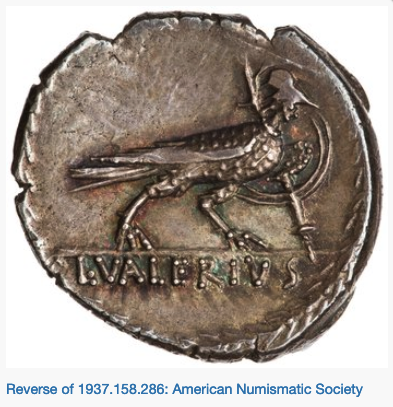
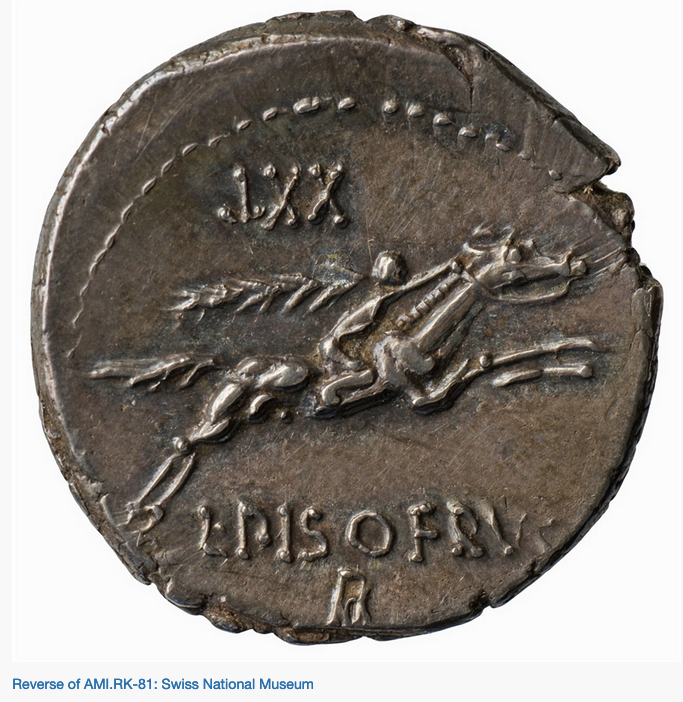
I have an extensive unpublished paper on the importance of the ludi Apollinares in the late republic which is slate to be a chapter in the new book. These two coin types will both feature in that chapter as will RRC 346/1. But for now what I’m really interested in is Censorinus’ decision to imitated Piso’s earlier issue. By contrast his bronze types are really innovative (Ostia on Bronze: cf earlier post). Even his other denarius is doing something relatively new. The Ancus Numa jugate heads might draw visually on RRC 307 and 312/1 (the only earlier jugate heads on the Roman series is a v rare semuncia from Luceria but I’m not even sure that counts); and the use of legendary kings probably was inspired by RRC 344 (Tatius). Desultors appeared in a slightly different form on RRC 297 (early blog posts on desultores). The Apollo horse coins echo a massive v recent series. I wonder if the nature of these borrowings on the silver might be a means of making the coins blend better with the coins most common in contemporary circulation. An attempt to illicit an ‘oh that’s familiar’ feeling in a moment of deep civil crisis.
—
Non coin portion.
Most of my main intellectual work for the day is done already: a grant co-writing/brainstorming session, a meeting about a co-authored conference paper, finishing my review of literary sources on Censorinus that I started yesterday, this post, now I really need to do logistics and emails. My least favorite work. That said it feels good to have written and thought a great deal and still have a sizable part of my work day left for those v necessary tasks. I’ll make a paper list.

















 Liv Mariah Yarrow
