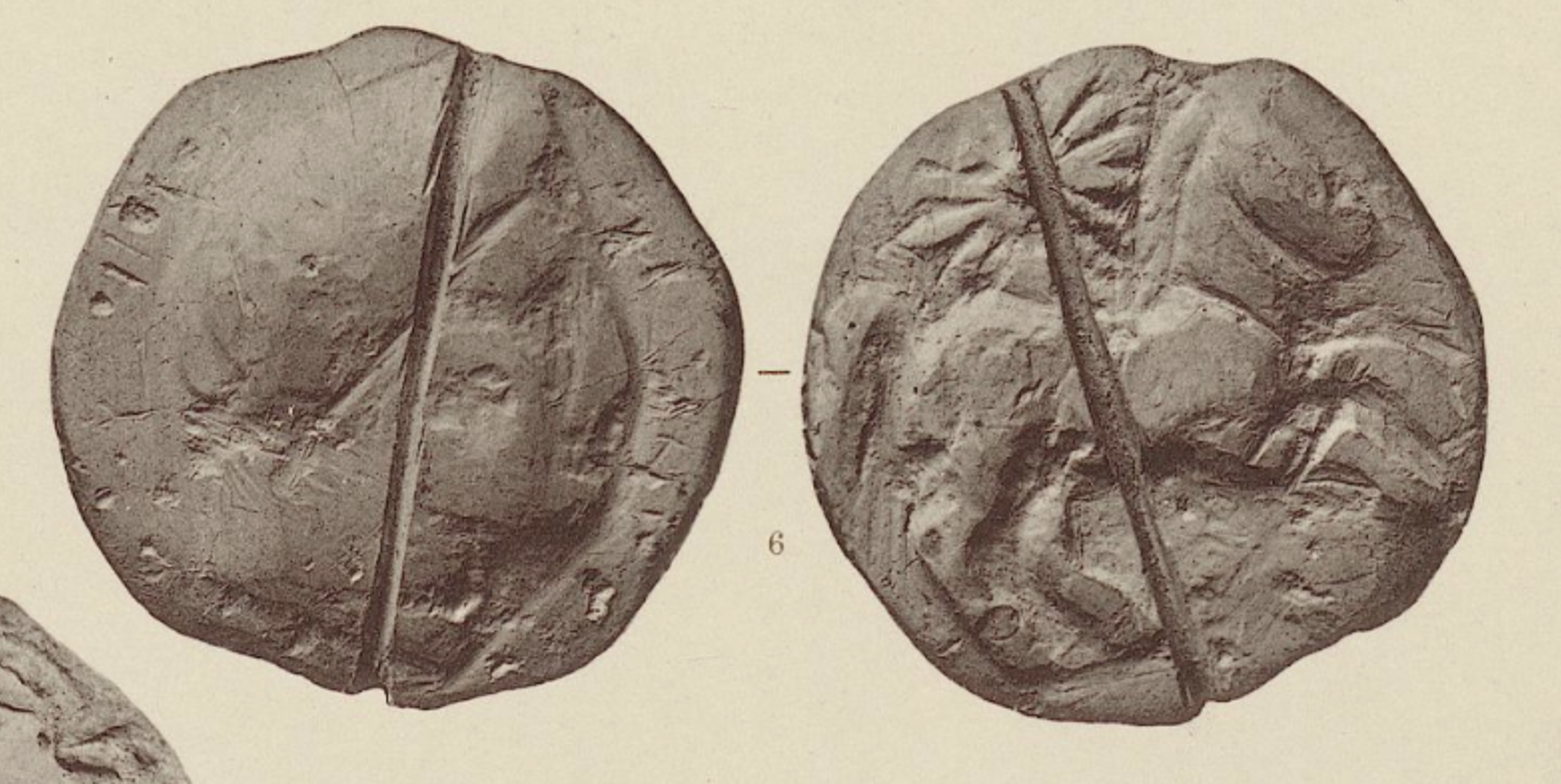
Why were the workmen dividing? A case of the judgement of Solomon? And how were they dividing that the cut is even on both sides? Some sort of chopper? Or is the story all a fantasy to give the ugly coin a origin story and thus make it more ‘collectable’?
Whelp. I now feel I have something to say about the Vicarello find that probably should be PRed, so we’ll have to have some stuff for the bibliography of that article. Not to mention reading it all to make sure I’m not intending on saying something in print that is too foolish. I’ll add to this post as I find more.
Haberlin’s notes are invaluable as he reports where some vicarello coins ended up, where Garucci and Marchi conflict in their testimony.
Taylor, Rabun. “Wheels, Keels, and Coins: Aquae Apollinares (Vicarello, Lazio) and Patterns of Pilgrimage in 3rd-Century Italy.” Ancient Waterlands, 2019, 225–44. doi:10.4000/BOOKS.PUP.40645. (academia) VERY USEFUL. VERY WELL ILLUSTRATED.
Falkenstein-Wirth Vera von. 2011. Das Quellheiligtum Von Vicarello (Aquae Apollinares) : Ein Kultort Von Der Bronzezeit Bis Zum Ende Des Kaiserreichs. Darmstadt: Verlag Philipp von Zabern. [coin chapter requested via ILL]
Colini, A. M. “La stipe delle acque salutari di Vicarello.” Rendiconti della Pontifica Accademia Romana dr’Arcbeo1ogia 60 (1968): 35-56. [Discussed in past blog post; on file.]
Tocci, L. M. 1967-1968. “Monete della stipe di Vicarello nel Medagliere Vaticano.”Atti della Pontificia Accademia Romana di archeologia40: 75-81.(PDF on file)
Francesco Panvini Rosati (on file in collected works)
Important for details of signed issues! Also of Italic coins, esp. Etruscan. give not only reported count but also number actually in collection. Here’s taste. V interesting that Marchi failed to record Semuncia and Quartuncia of Prow series.
I’m not listing the cup/itinerary bibliography it is just too long and too unrelated.
Hodges, Richard. “The archaeology of the Vicarello Estate, Lake Bracciano.” Papers of the British School at Rome 63 (1995): 245-249. (Jstor). Survey of previous work and holistic approach to the site, but short.
Falkenstein-Wirth 2011 above
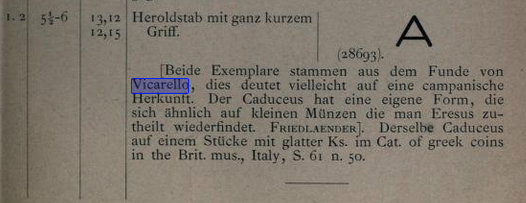
The BM has 4 coins from this votive deposit and one vase; the purchases were made through Rollin & Feuardent, Sambon
Historia Nummorum Italy 357 (Yet another is listed in Sambon sale 1870 also from Vicarello. But only one is listed by Marchi as found and the BM specimen was sold to them by Sambon in 1870 — I hope no duplication occurred)
RRC 37/1c (Haeberlin illustrates other RRC 37 specimens found at Vicarello)
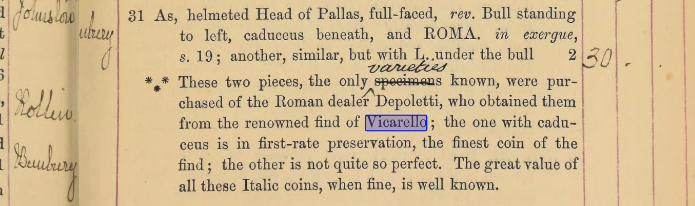
Again we must ask the question how many Roma/Bull (RRC 37s) were really found at Vicarello. Here is Sambon selling two more with that attribution in 1870. Even after he sold one with this attribution to the BM in 1867. Marchi says 5: 3 cadeuceus, 2 Ls.
I wonder if this might be Vecchi 350 = HN Italy 677f?
Noe 1925 says that the best of the Vicarello finds were acquired by the Pontificium Collegium Germanicum et Hungaricum de Urbe. I wonder if they still hold them or deposited them with the Vatican? The college has its own library so it is not beyond possibility that they have them still.
Barhfeldt asked the Italian Numismatics community a series of questions in RIN 1888. one of which was WHAT happened to the Vicarello coins?!
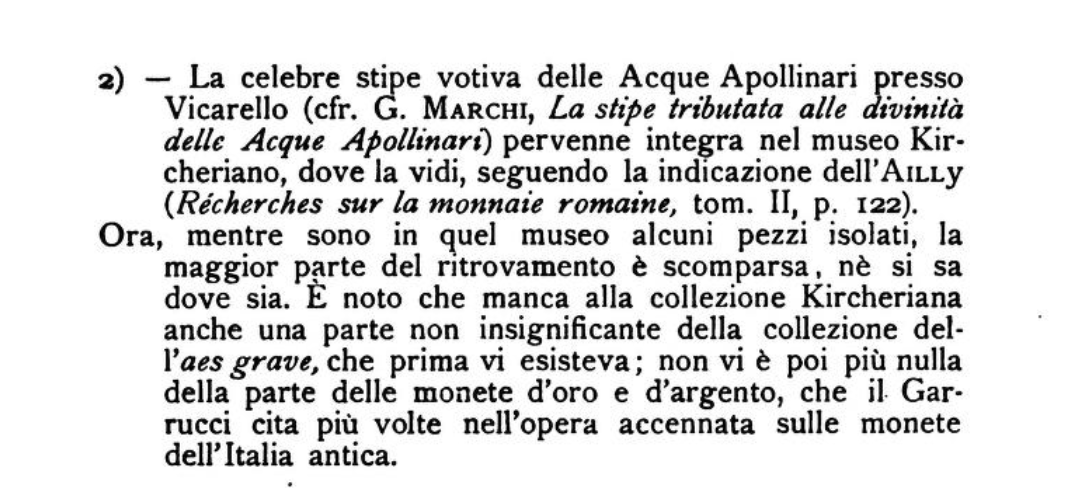
Pigorini director of the Kircher Museum answered in the same publication:
In short he says the Jesuits left not a clue about the what they might have done with the coins either what they chose to keep or what the disposed of in some other way. No papers let alone a catalogue or inventory.
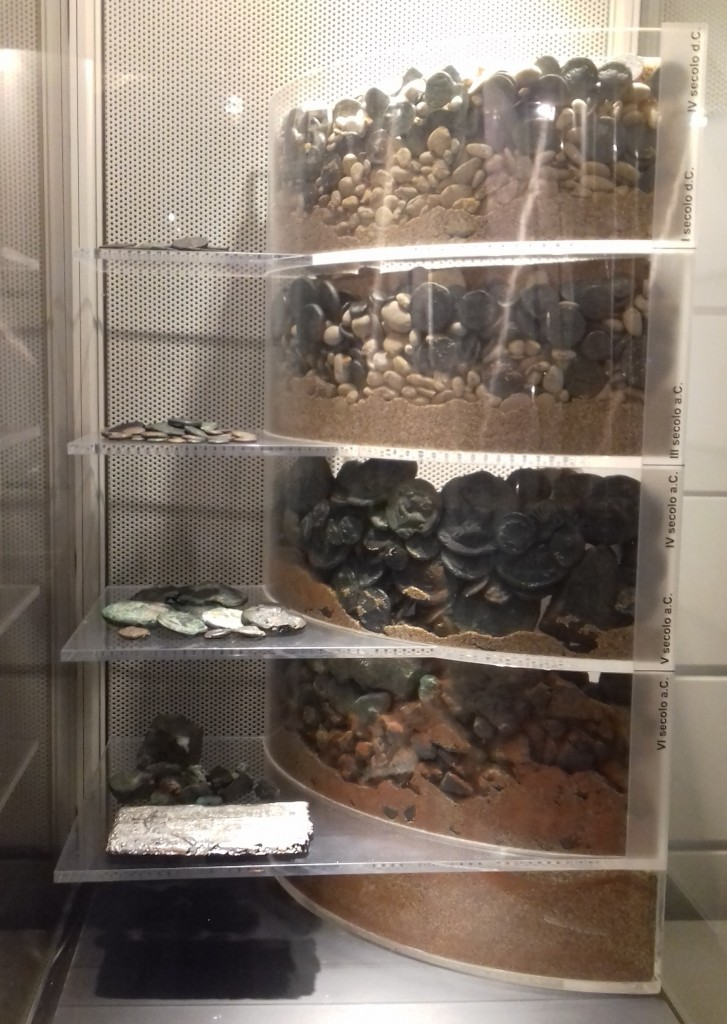
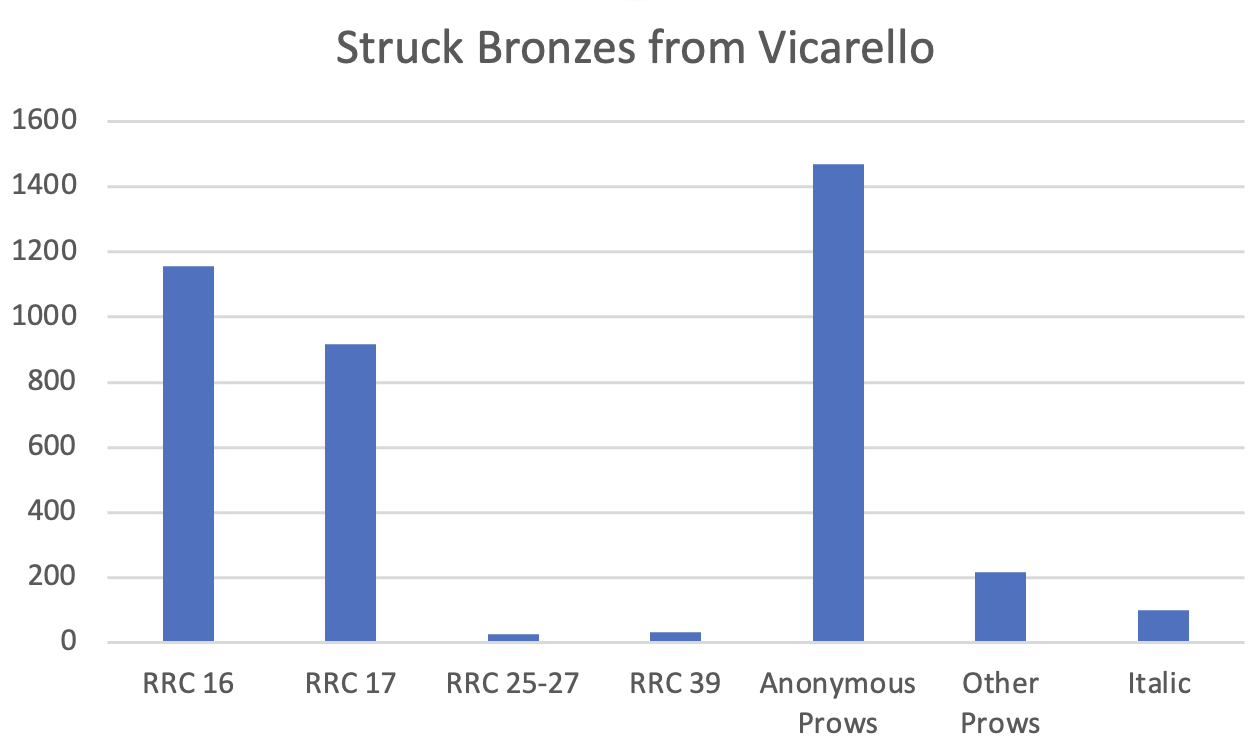
This post (in conjunction withearlier posts) shows that there was a demonstrable shift away from aes grave c. 240 in the votive deposits at Vicarello. Prior to 240 BCE aes grave and struck bronzes exist in near equal numbers, but after 240 BCE aes grave drops off and struck material strongly persists.
Signed here means anything with a name a symbol or a monogram. So unsigned mean anonymous issues–these far and away out number the later signed bronzes. The preference for the sextans is interesting, but it is not nearly as pronounced as the denominational preferences we saw for the cast coins from deposit.
From RRC 39 there are only 3 sextans, but 31 semuncia!
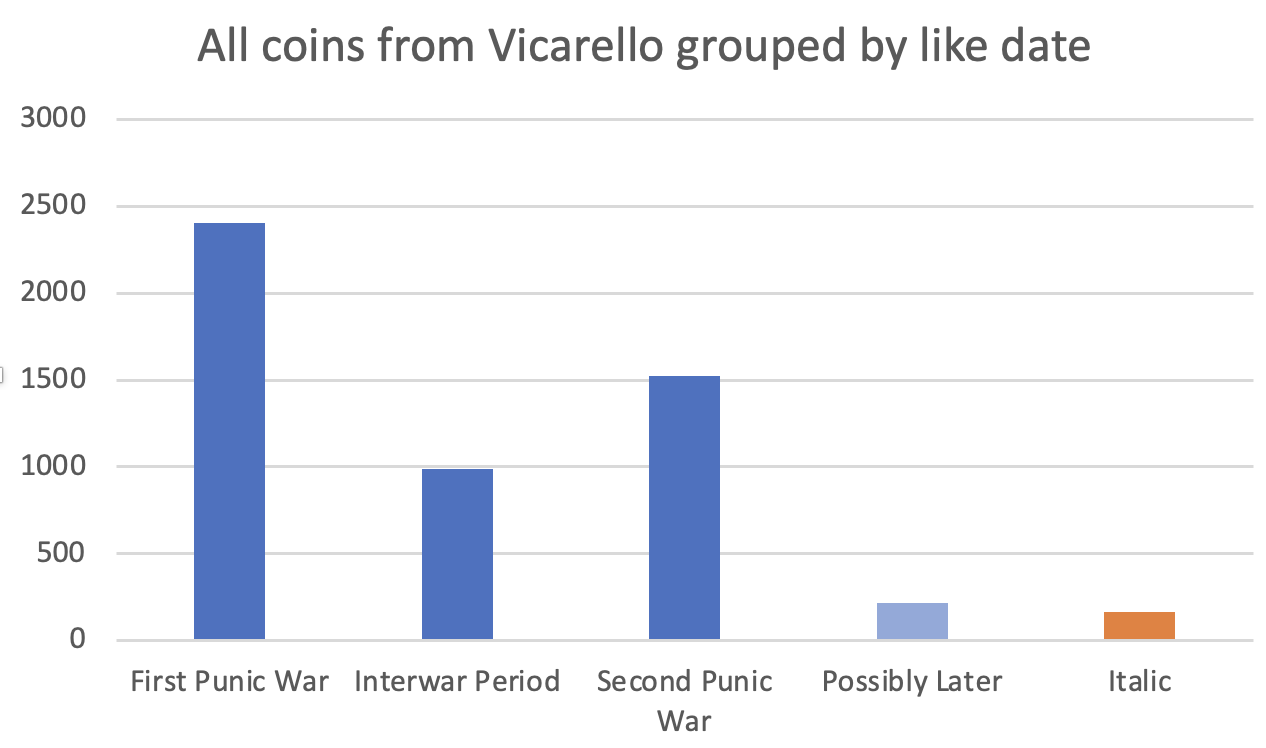
Tiano, Suesano and Caleno issues together with Naples coins correlate with the large presence of RRC 16 (earlier post) and RRC 14 (earlier post), all together I’d suggest that the site was most active during the 1st Punic war. RRC 17 has been shown by Molinari and Jaia 2020 to be of a similar time to RRC 25-27. It’s greater presence here shows that in this next period (post 240 but prior to 2nd Punic war), the deposit was still active but the preference was strongly shifting to struck coinage. Dedications pick up in the second Punic war but not quite to levels of 1st Punic wars.
Of course the interwar period dip might reflect dip in coin production rather than a dip in sanctuary activity. Coins made during the First Punic War remain in circulation and available to deposit in the later periods. Many of those in light blue may actually be from 2nd Punic War and many of those in orange are likely to be from the 1st Punic War.
I’ve put RRC 21 in the interwar period again following Molinari and Jaia 2020 who based this finding on the La Bruna and Spoletium finds.
I’m still thinking about Vicarello. I was looking through the lists of struck coins this morning.
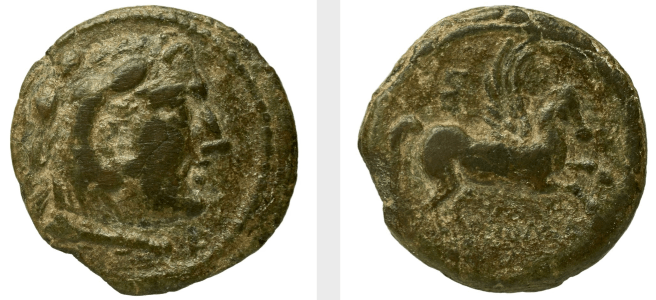
This one caught my eye. Obviously from club series, RRC 27/3
But I’d not thought about the struck bronze in this series much. It does have cast bronze in six denominations copying the types of RRC 21 which in turn echo for the triens down types from RRC 14.
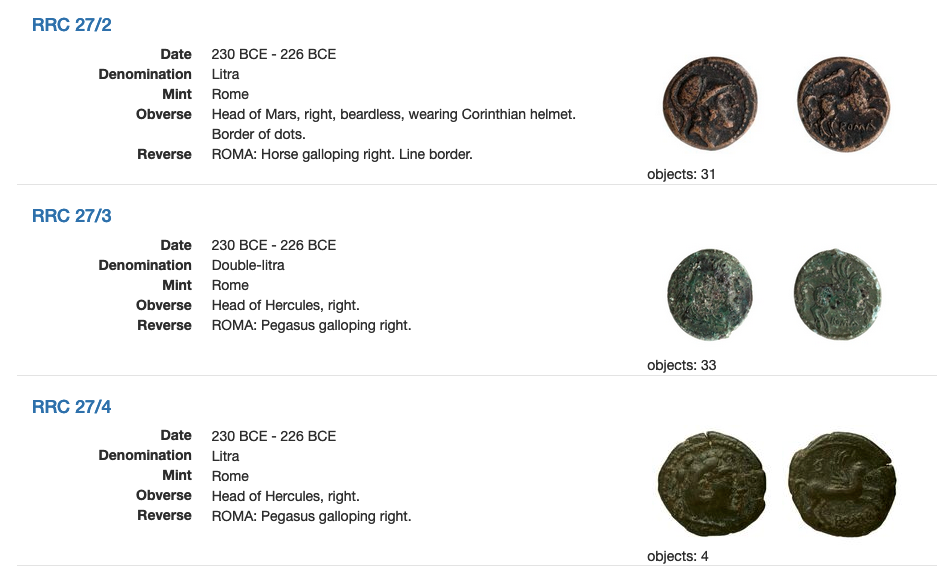
Here’s the RRC 27 struck bronze at a glance
Mars/Horse litra borrows the type of the diadrachm of the same series. There were four in the Vicarello find:
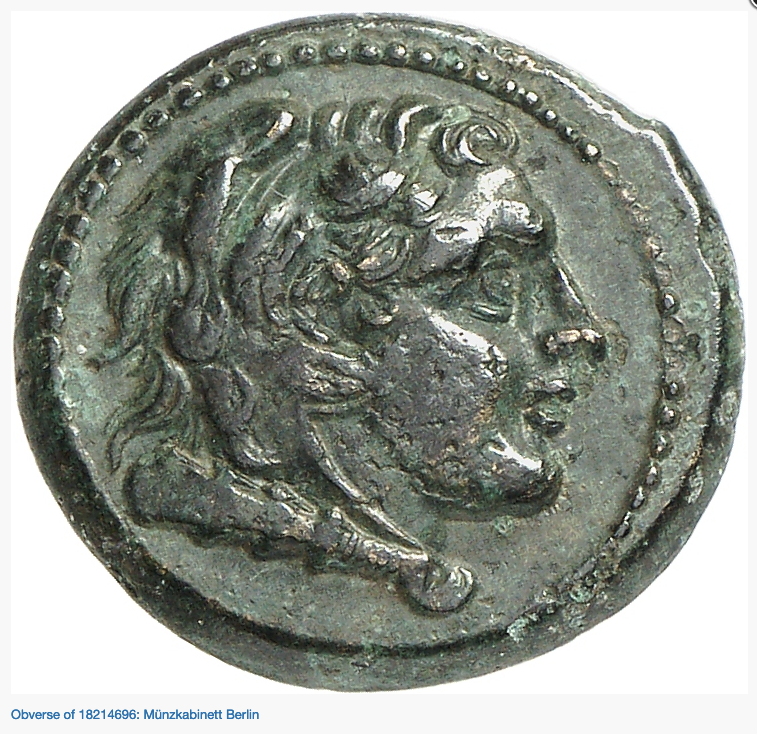
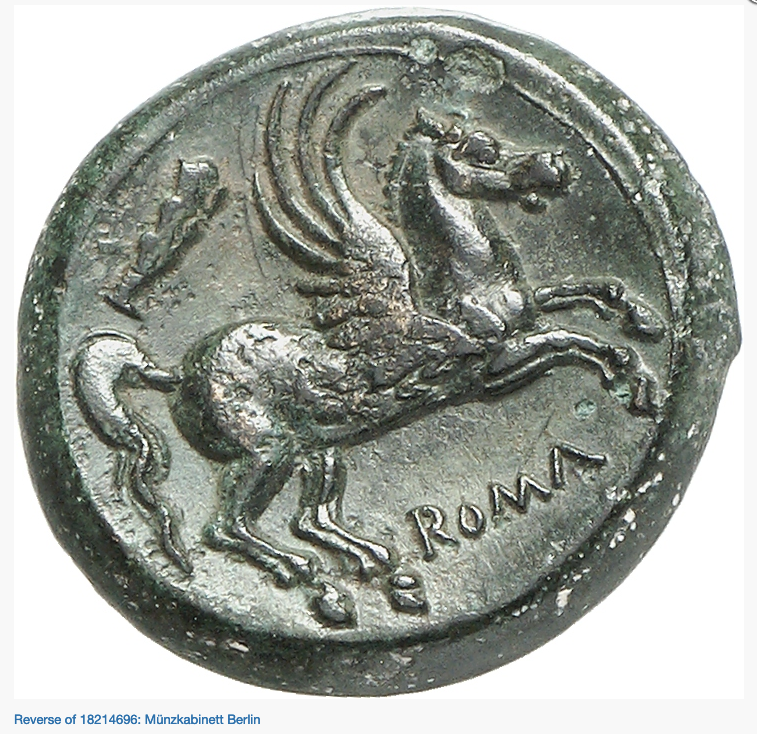
So what’s up with the having two so called “litras” one mars, one hercules in the same series?! I have thoughts, but first let’s look at the ‘double litra’ similar to what was found at Vicarello, of course Berlin has gorgeous specimen.
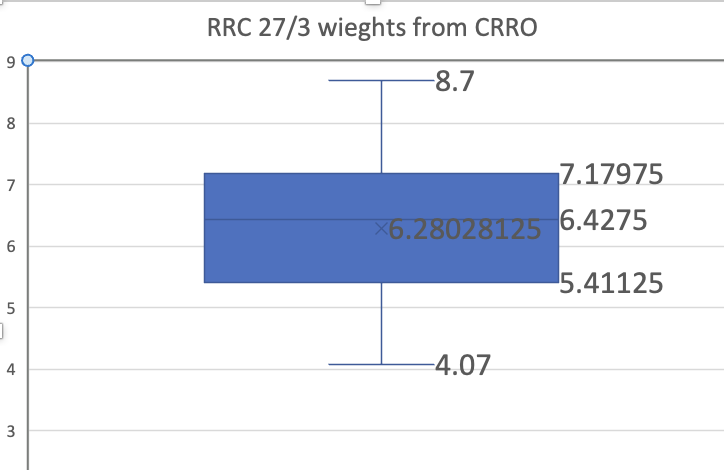
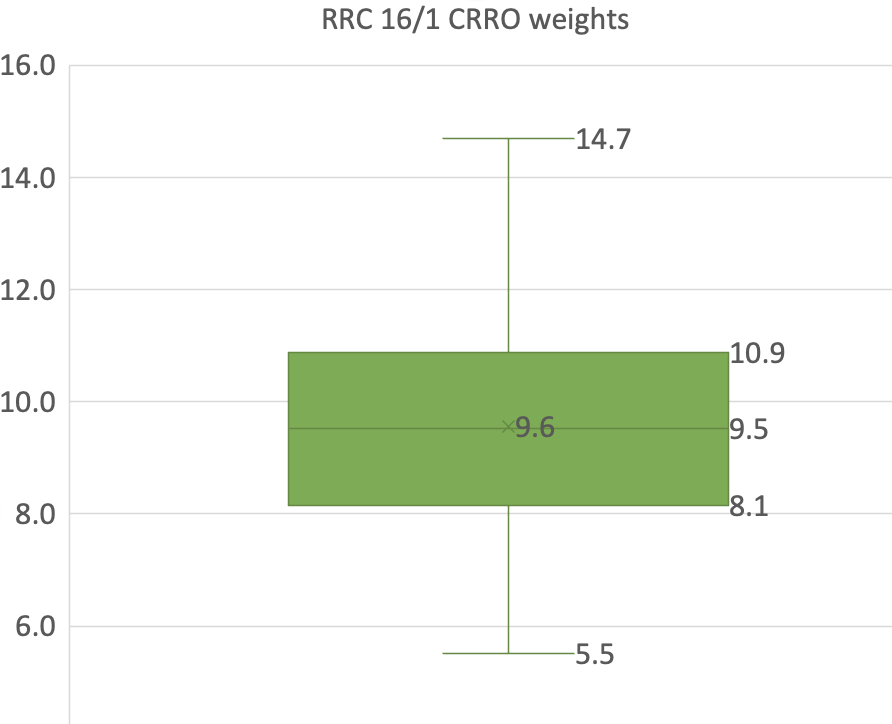
At first glance calling it the double unit of RRC 27/2 and 27/4 seems fine it is about double the weight. But is it really the same denomination a so called ‘double-litra’ as RRC 16/1?
I’m inclined toward no and would at least emphasize that RRC 27/3 is clearly on a different weight standard than RRC 16/1.
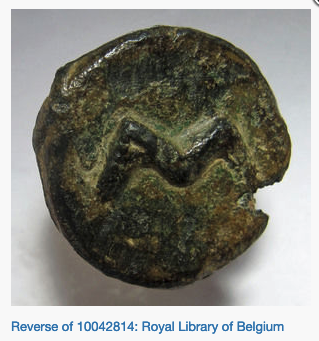
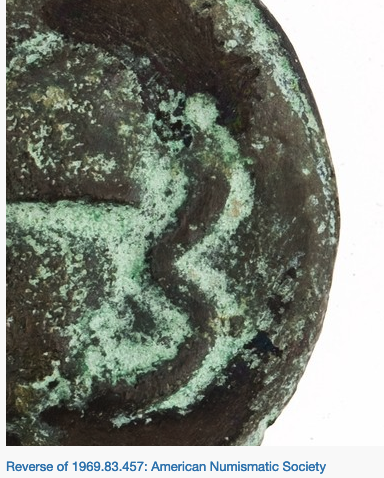
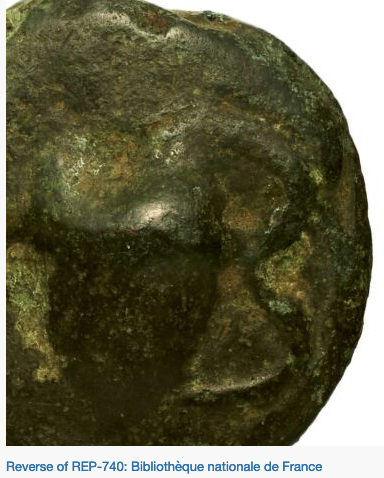
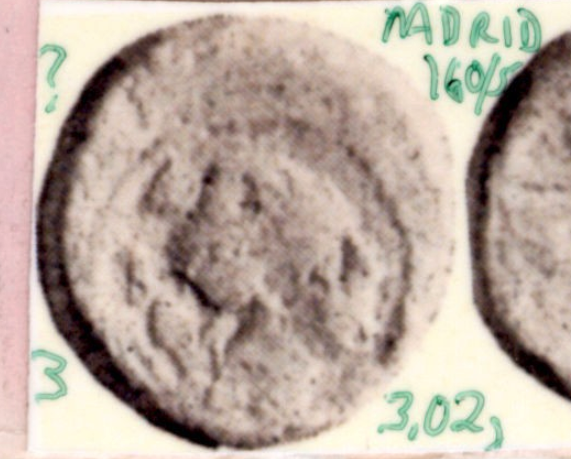
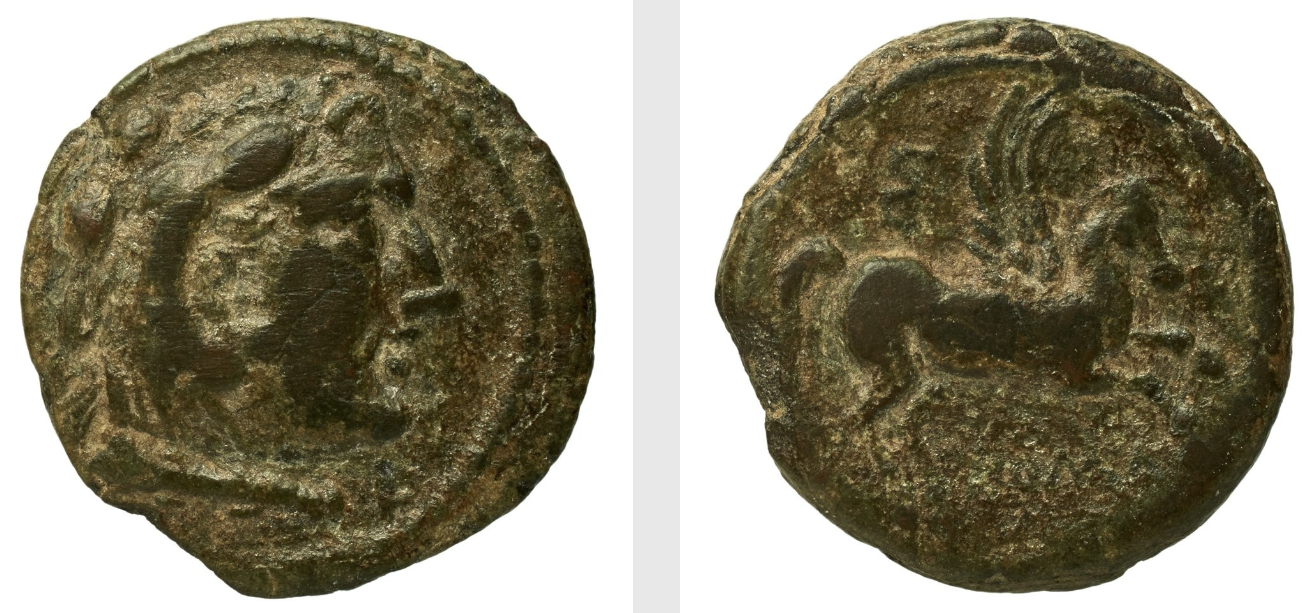
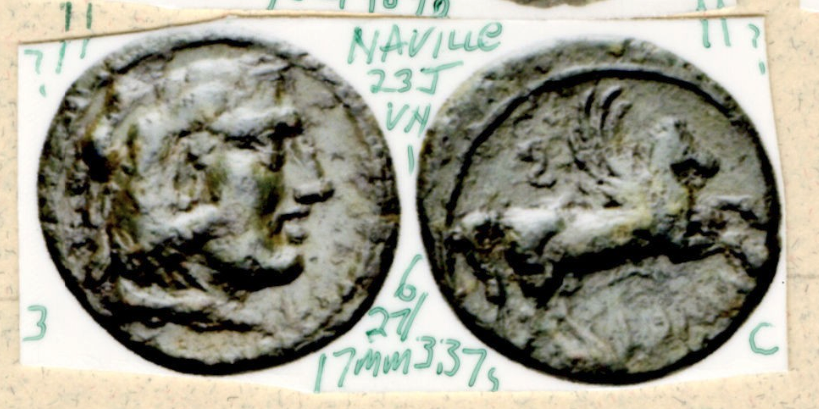
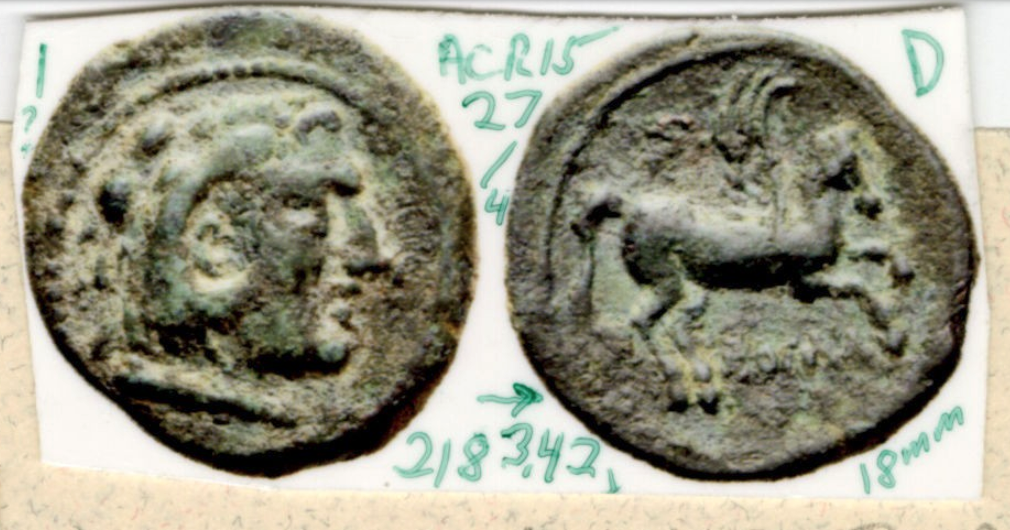
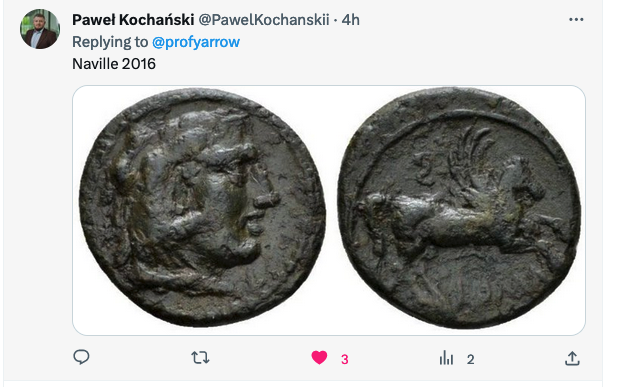
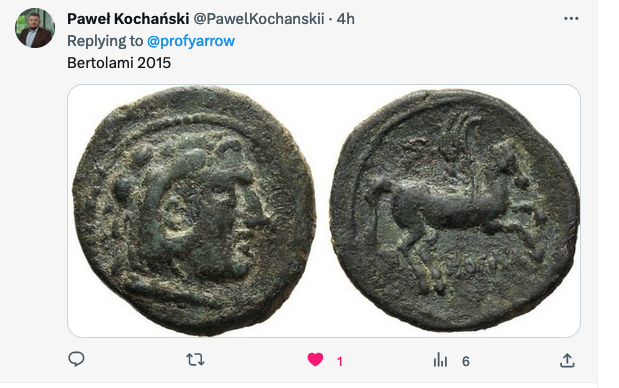
All of this is context to what really fascinates me. Is what Crawford calls a “bow” in his RRC catalogue entry for RRC 27/4. There are only 4 in CRRO, 2 Paris, 1 Berlin, 1 Cambridge (Bahrfeldt new 5 specimens, average weight 3.23g!)
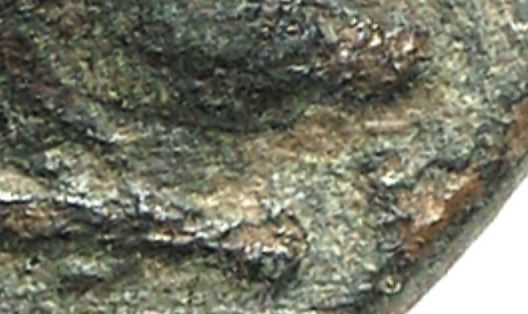
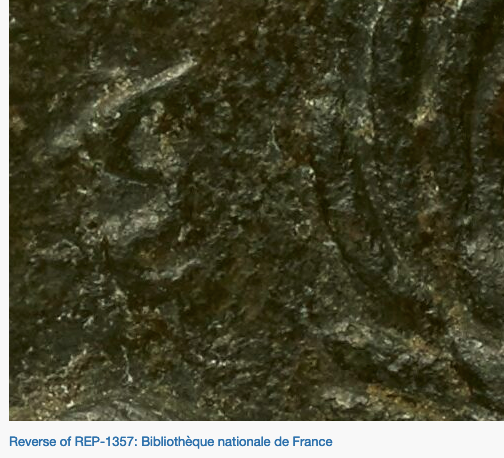
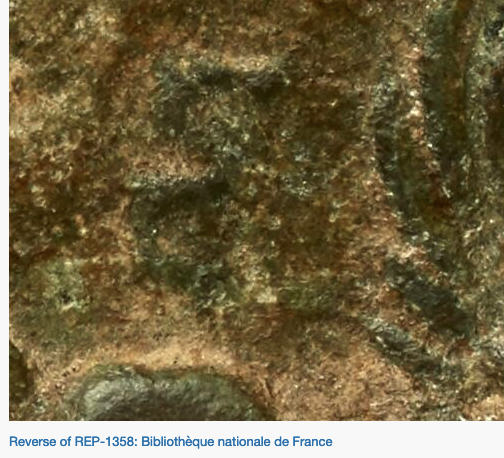
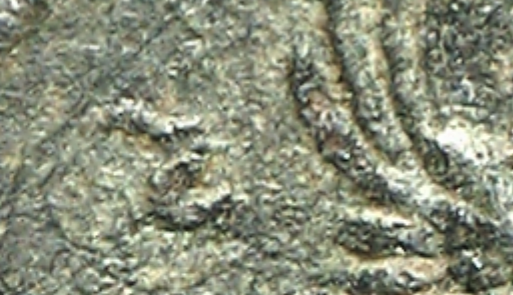
I was skeptical of his saying there was an L before the head of Hercules but zooming in suggests he is indeed correct (as so often).
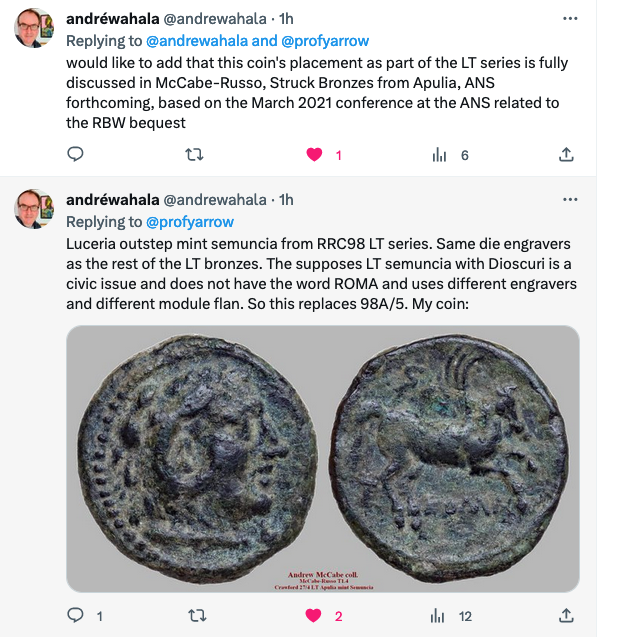
Clearly RRC 27/4 derives its design inspiration from RRC 27/3. Does that mean it was struck at the same time? I don’t know. There is no club visible on it. The series already has a litra and this seems like it might be a semuncia because of the sigma on the reverse.
The average weight of an uncia in the club series (RRC 27/10) is over 22 grams so this cannot be the half unit of that. If RRC 27/4 is a semuncia it would likely correspond to a weight standard where the as was c. 78g. So perhaps it should be situated somewhere near RRC 43 or RRC 98. We know Luceria issued other semuncia and we also know as a mint it was slightly more experimental with its designs on bronze during the Hannibalic war (earlier blog post).
Speaking against such placement is the flatter style of the die engraving at Luceria for the bronzes.
Whenever and wherever RRC 27/4 was made it is a strange and v rare coin. I’d love to see photos of specimens NOT in CRRO if you have any.
Two more specimens from the Schaefer Archives
A full publication coming to much the same conclusion separately is forthcoming 2024 from McCabe Russo in a special edition of BSN (edited by Carbone and Yarrow).
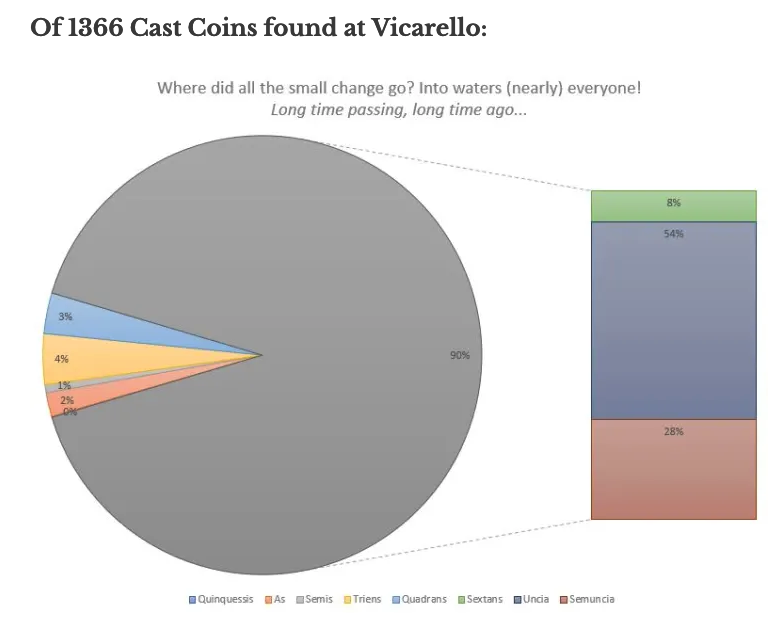
My sense has been that unciae are popular as small votives and out number other denominations among the finds, but I hadn’t actually quantified this until today:
The surprise for me here is the relative popularity of the Triens over the Semis and the Quadrans.
This chart was drawn from the counts reported in Crawford’s 1983 catalogue.
And do you know what?! I thought I still needed to do the same with Vicarello BUT NO I’d already done all that work at least by denomination in a previous blog post! I wasn’t just shooting from my hip I actually had found data to back me up on this previously.
In that previous post I asked:
“Does the lower count of semisses and quadrantes as compared to asses and trientes, suggest there were fewer of these denominations in people’s purses? likewise fewer circulating semunciae than uncia? “
I am leaning towards yes as the answer after seeing the Nemi material.
I guess if I want to do it right I should look for series variation to see if 14/18 behave differently than the later ones.
If anything though my immediate take away is that it is surprising how many more large denomination specimens are actually present at Nemi.
Ok. I did it.
And it is v weird indeed. There was far more Italic (non-Roman) material than I thought and that took the most time to sort by type. Most are all are from unidentified ‘mints’.
What is even weirder is how RRC 24, 25, 26 are completely missing:
AND RRC 14 dominates by a vast margin.
What does it MEAN? I can’t tell you yet, but it sure is interesting.
And then we have this weird line:
“Missing in the cited tables: Quinquessis (5 as piece): Tripod / Amphora”
Is this an otherwise unknown currency bar?! Super strange and tantalizing.
Again this is very very preliminary but I like to write and think and play with data before I decide exactly what I really think and what should be submitted for PR publication.
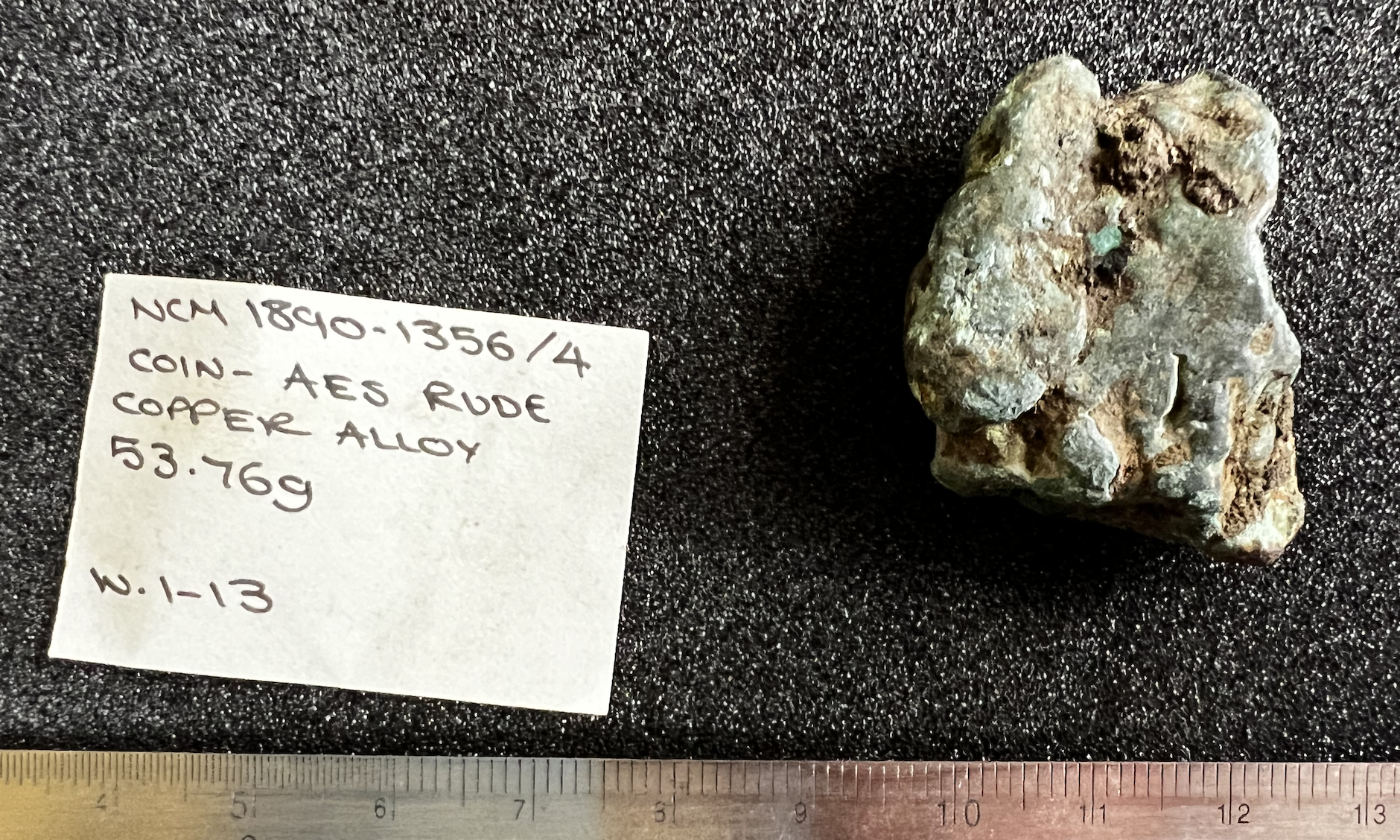
The Nemi aes rude all looks much the same. There was no way to sort it visually. Crawford didn’t distinguish different types in his catalogue back in the 1980s and neither I nor my archaeo-metallurgist colleague specializing in bronze could visually distinguish specimens. Yes they all weighed different amounts 19.23g to 211.10g, but other than that they all seemed to be of the same fabric.
NOT SO AT ALL.
We took a minimum of 2 readings from each specimen up to 5 in some cases. While we had some issues with incrustation etc… The readings still suggest two groups. To make the below graph I averaged all readings from each specimen and only focused on copper tin and bronze ratios. The only specimen that MIGHT have originally had another metal intentionally added into the mix was 1890-1356-10 (20.69g) which along with tin and lead also had high iron, c. 10%.
8 of the specimens seem to have originally been intended to be pure copper. The only other votive objects that are so copper rich and devoid of tin and bronze are two small votive nails.
The other 5 specimens are not so far off the aes grave found on the site. If aes rude contains tin with in this sample it also contains lead and v significant amounts, not less than 17%!
If you’ve been following along (youtube recorded lecture on earlier research), you’ll notice straight away that this is FAR too little copper based on surface readings of specimens in museum collections, like 15-20% too little copper. I’ve excluded readings with too many light elements (suggesting oxidation and other surface interference) and those with too high of sulfur or other evidence for incrustation. So what’s going on. My preliminary hypothesis is that the conditions of deposit may have been high in sulfur/sulfuric acid resulting in the leeching away of surface copper. The same but also sort of the opposite of surface enrichment (blanching) for silver coins.
My research partner Wayne Powell also reminds me that he would have consider all the Nemi coins to have a patina that will have lowered the copper. I’m curious about the mechanisms for the formation of a patina in such a collection of such archaeological material.
That said the consistence is across issues and internally is is very satisfying. Relative standard deviations are 14 for copper, 25 for lead and 23 for tin. This is far better than for museum collection data where copper was at 21, lead at 38 and tin at 47. The sample set is very internally consistent and that is reassuring.
The next steps are to compare this data to the aes rude and figural votive deposits pXRF readings for the same site. For me this is even more exciting.
The figural votives from the same site have almost the same metallurgical profile as the aes grave:
The relative standard deviation isn’t far off either: 17 copper, 26 lead, 32 tin. Whatever soup was being cooked up to make small cast bronzes be they aes grave or votive figurines it all looks to be much the same.
This is based on 39 readings of 15 figures or figure fragments. Many of the other votive bronzes (nails, tridents, knuckle bone, shell, etc…) seem also to come from the soup but they are more distinctive form and with few similar types to compare. Here is a quick snap shot of everything we tested that wasn’t likely to be monetary object and loosely classified as bronze:
Most could be described as heavily leaded.
The discrepancy between this archaeological data set with readings collected in museums (Rutgers, Princeton, Yale) is interesting and deepens the justification for testing the composition at depth, either by drilling or better through non-invasive exploration. I guess I have some grant writing to do.
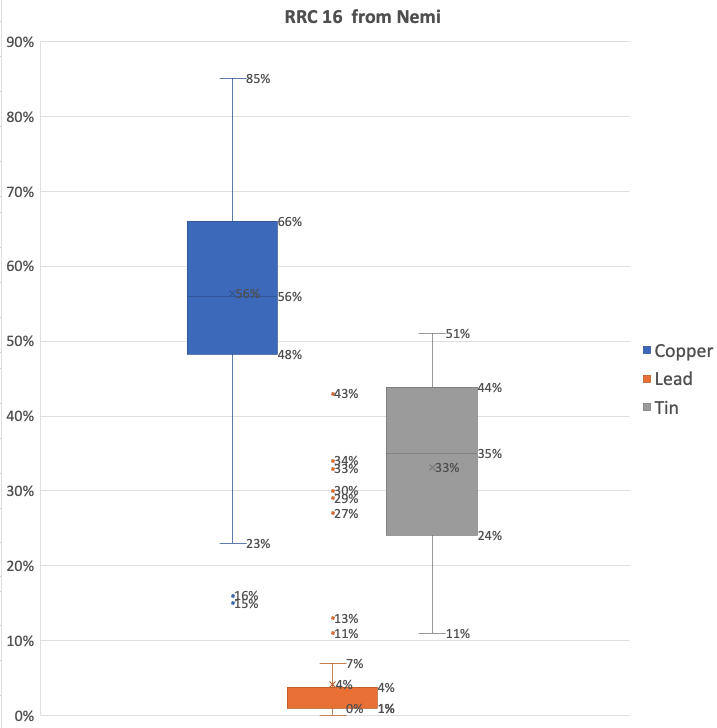
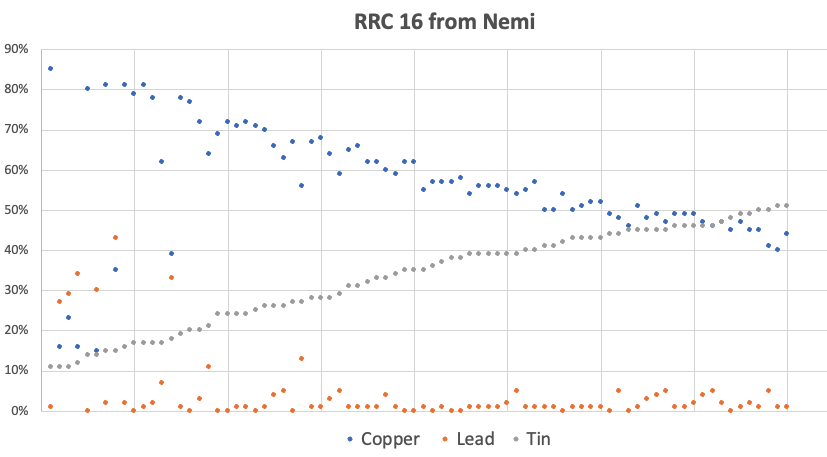
I’m cleaning up the data and my notes from my May trip to Nottingham to study the Nemi material today. And to be honest I got bored so I took a micro break to think about the data we collected from the RRC 16 specimens from this site. Generally speaking they are about 2:1 Copper:Tin, with just a smattering of lead. But you’ll notice a small subgroup have high lead.
A total of 80 readings were taken from a total of 41 coins.
In a scatter plot we can readily see that high lead correlates to low tin and usually lower copper as well.
My first thought was this might be from recycling leaded aes grave for some of the production, but this is also more likely to occur with specimens that have high light elements, i.e. a great deal of surface interference in the readings so I may very well be just bad data.
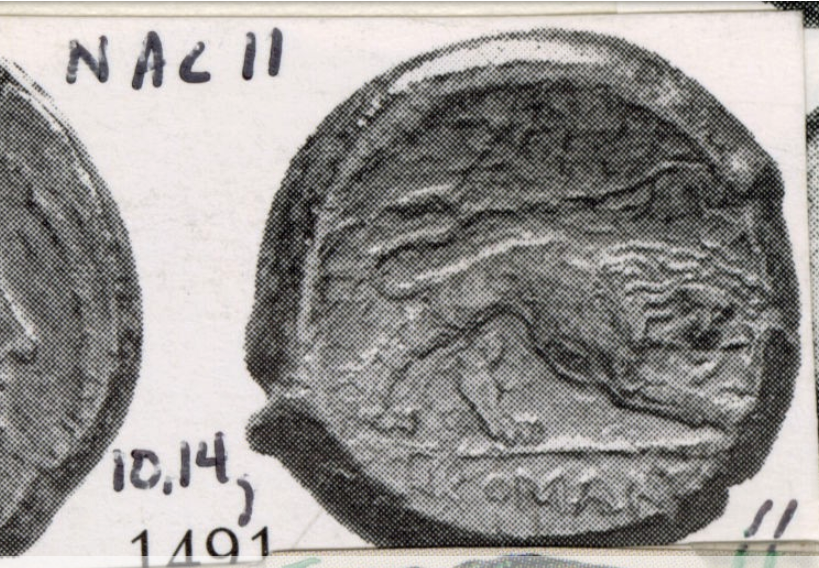
Some idea of the rapid striking and mass production of RRC 16/1 can be gathered not just from the large numbers found (1156 specimens at Vicarello!), but also the visible die breaks. Here is a die link observed by Schaefer.
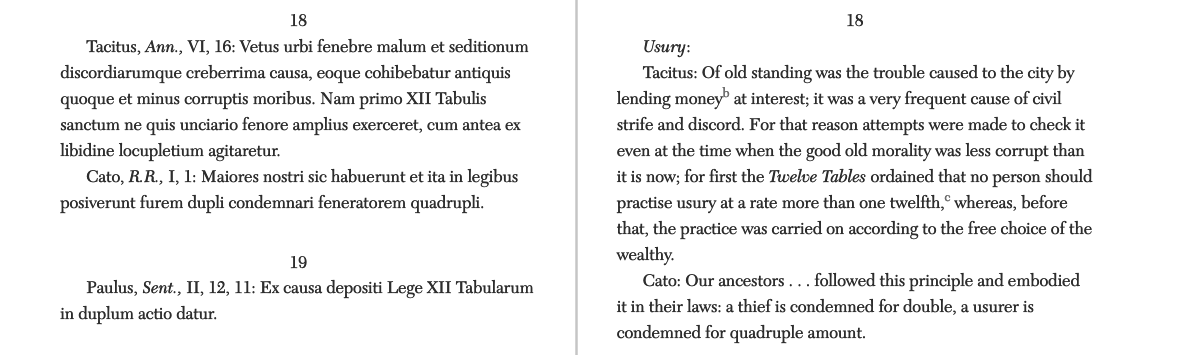
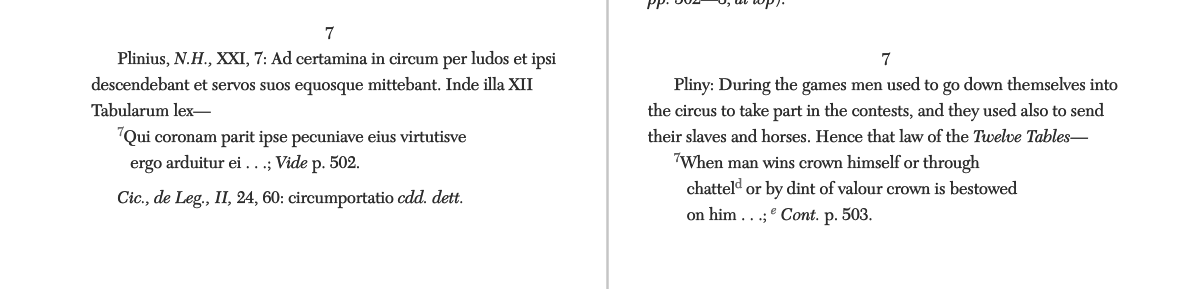
The twelve tables only exist in fragmentary form. The best edition is in Crawford’s Roman Legal Statutes, but it is more accessible in the Loeb. I’ve got both but I’m reading the Loeb yesterday and today.
In Aulus Gellius’ Attic Nights (16.10) there is a long disquisition on the meaning of old words based on a line of Ennius that calls in as evidence the XII tables. The main concern is what does proletarii mean as compared to capite censi. It is a good read all on its own. But the part that is of interest is in the list of out dated legal jargon occurs the phrase: ‘twenty-five asses’ viginti quinque asses, but it is commonly said the XII give no units to their multiple fines. What is meant here then?
Festus to the rescue! (Verb. Sign. 371.1)
Viginti quinque poenae in XII significat viginti quinque asses
In the twelve [tables] a penalty of 25 refers to 25 asses.
Gellius is glossing or remembering an edition that itself supplied the word asses. The same glossing occurs in Gaius, Inst., IV, 13–14: with reference to solemn deposits of 500 or 50. And then even more explicitly in Gaius:
We get later in Gellius this amusing anecdote about inflation and the fines being out of date (20.1).
The key Latin reads: Si iniuriam alteri faxsit, viginti quinque aeris poenae sunto
Was aeris “bronze” in the original? I again expect a gloss.
The restoration of sestertiorum here is non-sense.
Numbers mentioned
500 or 50 for a surety
10,000 for freedom of an enslaved person on death of enslaver on payment to heir or to whom the heir sold him Ulpianus, Tit., II, 4
300 or 150 for a broken bone
25 for a cutting down a tree (Plin NH 17.7 with aeris)
one percent per month = 12 percent per annum, legal interest:
aeris as a term for debt or money owed! Gell. 15.13.11
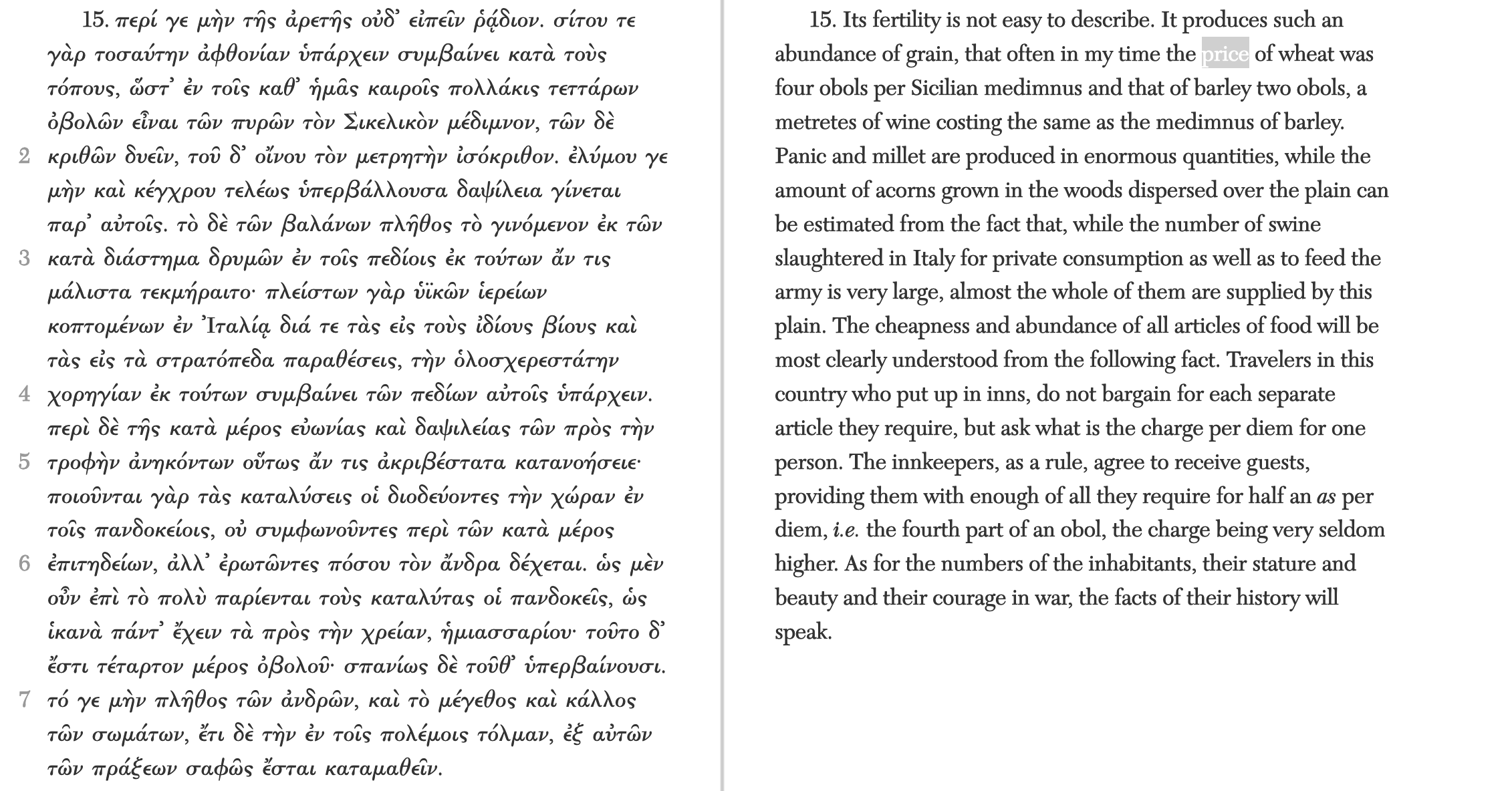
He expects you to think that the all inclusive cost of staying at an inn for a SEMIS for a day to be shockingly low.
Using his conversion 16 asses would buy some where in the ball park of 37 kilograms of wheat. I’m using round numbers here 52 liters to approximate a medimnus and assuming wheat weights 710 grams per liter. That medimnus contains about 130k calories. Or a 52 day supply of 2500 calories per day. This works out to be about QUADRANS a good days ration of grain. But again that is bulk prices and we’re supposed to think it is shockingly low. (Earlier posts on calories and Romans, post 1, post 2, post 3)
Now you’re right to question my assumption that I know an assarion is equivalent to an AS in this period or in Polybius’ mind, but it seems close enough for this sort of ball parking.
An as for modius of wheat was always considered giving it away, even 4 asses a low price. A modius is 9 days at 2500 calories. At one as that works out to be approximately and UNCIA or SEXTANS for a days nourishment as far lower than typical. With a TRIENS to a SEMIS still being a pretty low daily cost for food.
Livy 31.50.1; 200 BCE
By 70 BCE the sestertius was worth 4 asses. So Cicero in the following passage is talking about Medimnii at 60 asses or 84 asses compared to the shockingly low 16 as price of Polybius. Equally, the legal price of a modius was 14 asses and the lowest price 8 asses. So about an asplusa semis to an as a day for basic nutrition.
For you got 15 sesterces a medimnus, that being then the local price, and you kept 21 sesterces a medimnus, that being the price fixed by law to be paid for Sicilian corn. What is the difference between doing this and, instead of rejecting, passing and taking over the Sicilian corn and then keeping all the public money and never paying any of the cities anything ? For the price fixed by law was a price that at any other time ought to have satisfied the Sicilians, and while you were their governor ought to have delighted them: the legal price was 3½ sesterces a modius, and actually, while you were governor, the price got was 2 sesterces, as you yourself boasted in a number of letters written to your friends. However, let us say that the actual price was 2½ sesterces, since you exacted that amount per modius from the cities.
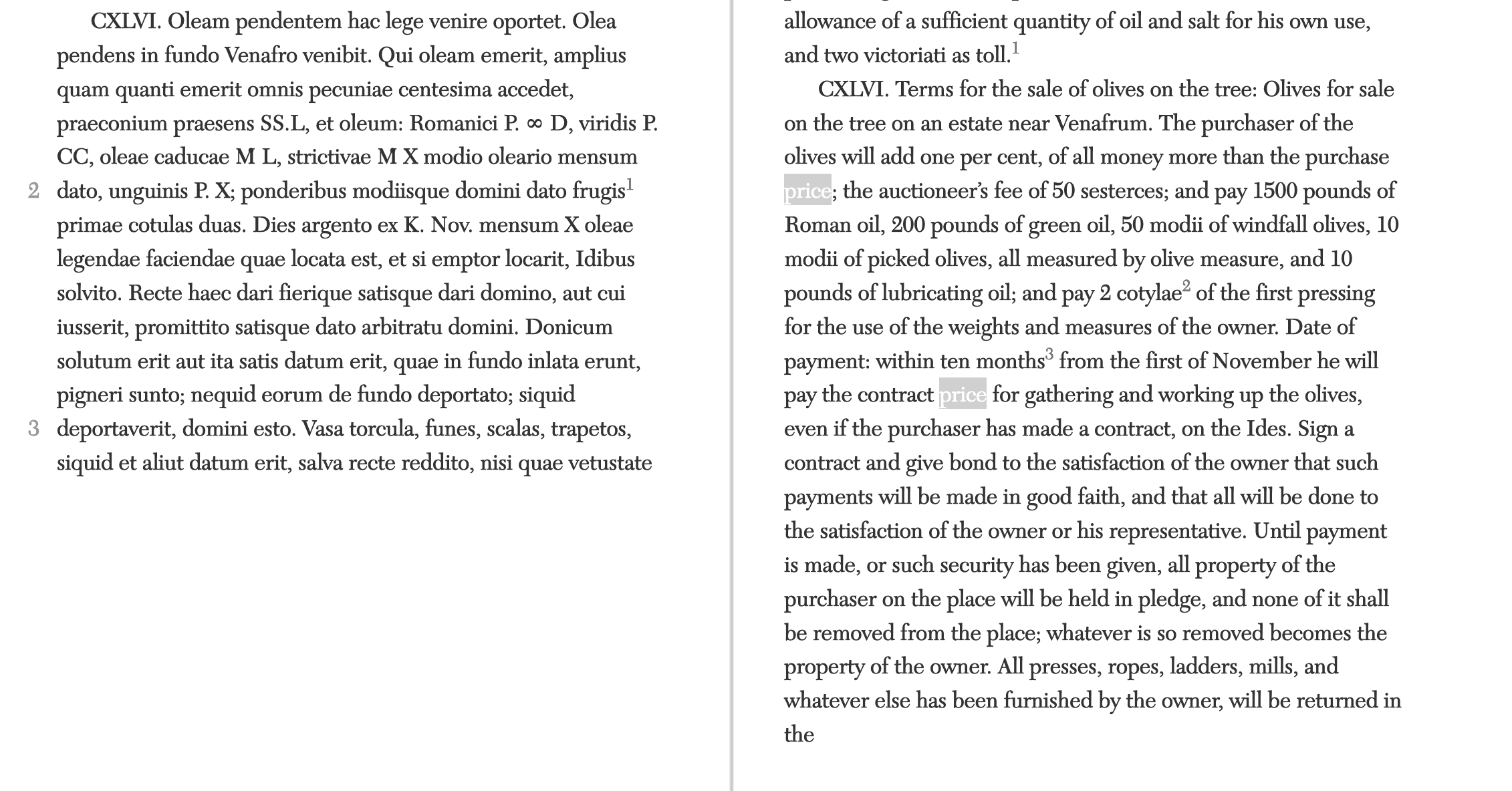
Note that the manuscript gives SS as the until for what the auctioneer will be paid 50 of. This translator renders that sestertii, but this text must be before 149 BCE. A period in which we tend to think of the unit of account being asses. The passage below is more clear using the more standard HS but in one place with SS. Something to think about another day.
























 Liv Mariah Yarrow