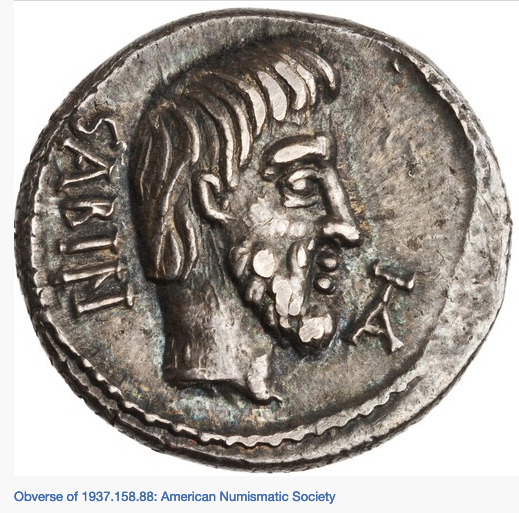
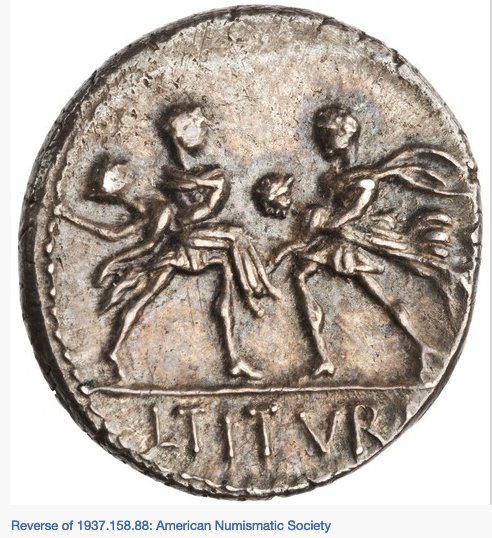
The moneyer of c. 54 BCE (RRC 434) is a favorite because of how his coin types are in close dialogue with those of Brutus (RRC 433). And, seem to influence my favorite anti-regal coin type of 53 BCE of Messala (RRC 345).
I’m just thrilled to meet some gossip about Rufus in a letter from Caelius (lover of Clodia) to Cicero.
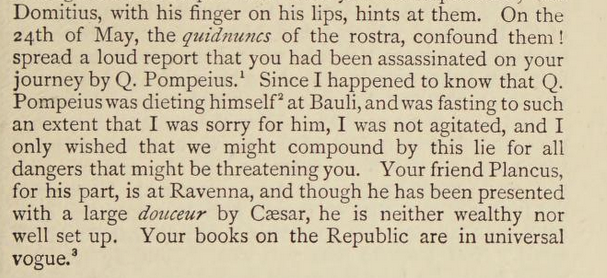
A. 5.1.2.May. Minuturae. Cicero gives instruction to Atticus about guarantees (satis dando, satisdationes) relating to his personal fiances and an expectation that Atticus will hand them himself. 800k sestertii are mentioned along side the name Oppius. Shackleton Bailey like Shuckburgh before him thinks thinks this is a debt Cicero owes to Caesar with Oppius serving at Caesar’s agent. That is about 768 kilos (1693 pounds) of silver. Cicero wants something (this debt to Caesar?) paid immediately, even if it means borrowing rather than waiting for payment himself.
A. 5.4.2. May 12. Beneventum. Needs an SC to pass to authorize a grant from Treasury to fund his provincial governorship, says Bibulus needs the same.
A. 5.5.2. May 15. Venusia. along with the 800k there is now a 20k figure. Both SB and Shuckburgh suggest this may be interest on the debt. Atticus is again urged to settle this on Cicero’s behalf.
A.5.6.1. May 18. Tarentum. That it is a debt to Caesar that Cicero wants resolved is made explicit.
F.8.1. late May. Rome. Caelius Rufus mentions the cost of employing someone to write down decrees, gossip, news, etc.. that he is sending to Cicero.
A 5.8. June 1. Brundisium. Cicero is purchasing Milo’s estate after his exile to help preserve key assets and ensure his wife, Fausta’s, dowry is restored to her. Milo is objecting to a freedman of Terentia, Philotimus, being a partner in the financial transaction. Cicero just wants to keep Milo (and Fausta) happy.
A.5.9. June 15. Actium or overland voyage thereafter. Cicero wants re assurances about how A settled the 20k and 80k debt and is worried the letter with the details might go astray.
F.8.2. June.Rome. Caelius’ first indication that he expects panthers for his anticipated aedileship in return for his keeping Cicero uptodate on politics in the City. He also reminds Cicero to help a certain Sittius collect on an outstanding debt. SB thinks Caelius might be Sittius’ financial backer. Letter takes as main theme how everyone knew (even as they liked him) that Messalla (cos. 53) was guilty of bribery and that the jury should not have acquitted him, such as to make Hortensius regret defending him and winning.
F.8.3. June. Rome. Caelius assures Cicero that he will makes sure Philotimus “the freedman” does right by Milo.
A.5.10. 27 June. Athens. Cicero brags about not taking anything from the locals to cover his and his staff’s expenses. Complains he has no idea about whether/how his debt to Caesar was settled or what is going on about Milo’s property.
F.13.1. July. Athens. Cicero writes the exiled Memmius (pr. 58) seeking have him grant Patro(n), an Epicurean, Epicurus’ (ruined?) house in Athens, which Patron seems to claim was his by Phaedrus’ will, but Memmius owns through a decree of the Aeropagites. Cicero claims Atticus wants this to happen.
A.5.11. 6 July. Athens. Has boats from Rhodes and Mitylene as well as others for his own use. Brags again about lack of exploitation. Let’s Atticus offer anyone the role of praefectus on his staff to get them out of jury duty (!).
A.5.13. after 22 July. Ephesus. Expresses anxiety about settling contracts in his province given pressures he’s already facing from locals and Romans even where he is not governor. Atticus has financial interests here, but the local governor Thermus has it in hand. Cicero only makes more introductions to Atticus’ people.
Ego praeterea rationem Philogeni permutationis eius quam tecum feci edidi.
This sentence seems to me the clearest example of individuals being able to draw on lines of credit internationally rather than travel with vast sums of coin or bullion.
F.3.15. 28 July. Tralles. Cicero writes to Pulcher the out-going governor about their various travel and logistics.
perpaucos dies, dum pecunia accipitur quae mihii ex publica permutatione debetur, commorabor.
This sentence helps us see that even public funds do not necessarily need to be sent from Rome to fund provincial activities. Cicero can simply access the funds upon arrival. In combination with the previous quote, we see that Cicero had arranged to pick up cash for himself in Ephesus, and for his official duties in Laodicea.
F8.4. 1 August. Rome. Caelius ends his letter with a reminder about syngrapha Sittiana and how this is a matter of personal concern to himself (supports theory he was the underwriter of this debt). The panthers are again requested even before his election to the aedileship is certain.
A 5.15. 3 August. Laodicia. Cicero makes explicit the connection between not exploiting provincials and his own debt. The money he borrowed from Atticus will have to be repaid by yet another loan. This letter is being sent via a trusted mutual but Cicero explains most letters will be delivered via the private companies charged with land tax and customs collections.
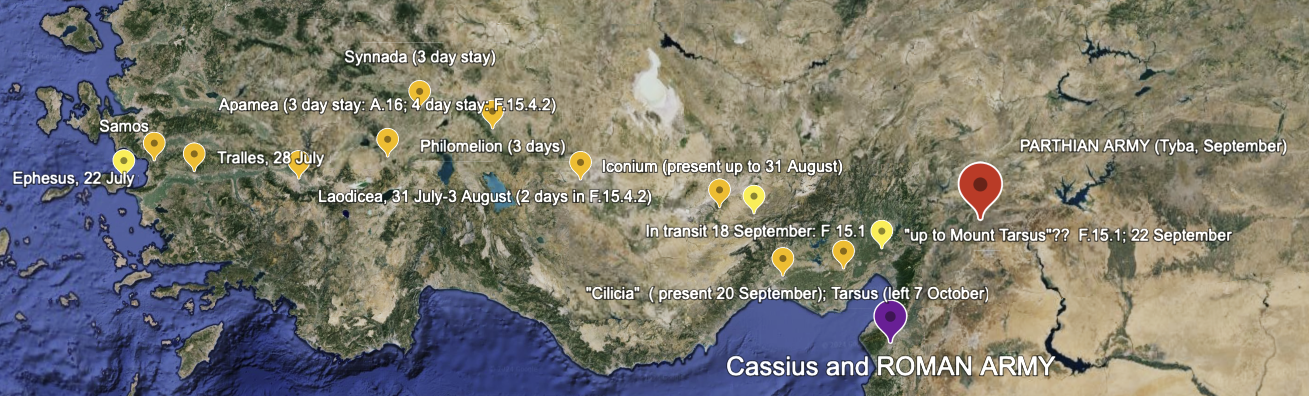
A.5.16 c. 14 August. Between Synnada and Pilomelium. General complaints about how the province has been drained of resources. Only stopping because tax collectors area leaving and he is dependent on them to carry the letter. Cicero now accepts four beds and a roof but not even hay or firewood. However he is often in a tent he says.
A.5.17. August. On the Road to Pilomelium? or Perhaps Iconium? Same about not taking stuff from locals. Has entrusted Deiotarus with son and nephew for campaign season. Did they go to Ankara? elsewhere?
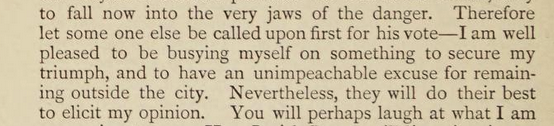
F.8.5 August. Rome. Caelius plants the idea of an ‘easy’ triumph from a not too dangerous victory in Cicero’s mind.
F.8.9. 2 September. Rome. Caelius wants Cicero to send more than 10 panthers (the number secured by Curio via Patiscus and now gifted along with 10 more to Caelius). The feeding and transport of said panthers can be handled by the same men Caelius has sent to collect on Sittianam syngrapham! He’s willing to send more men if needed. For debt collection or panthers is ambiguous. Perhaps intentionally. They are one and the same. He recommends an equites M. Feridius to Cicero who hopes to secure an exemption from taxation on certain lands. The Latin is a little obscure here and the financial arrangements thus also. This may be at the expense of locals in favor of Roman investor interest?
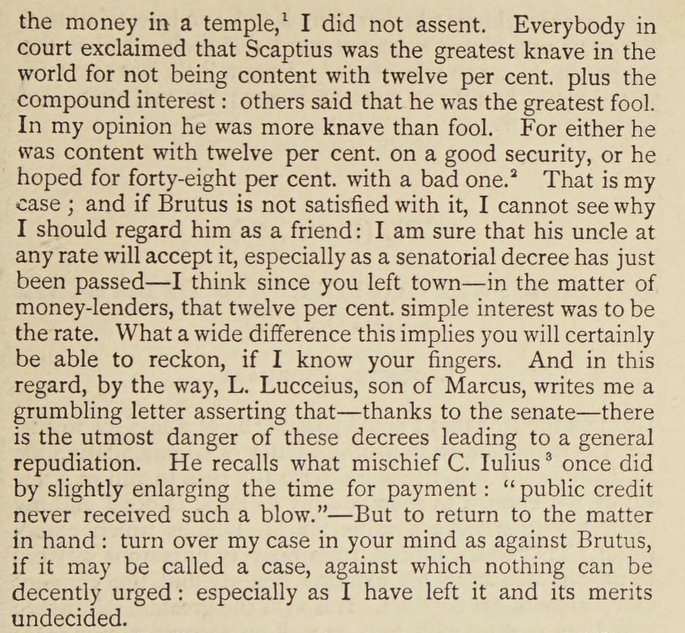
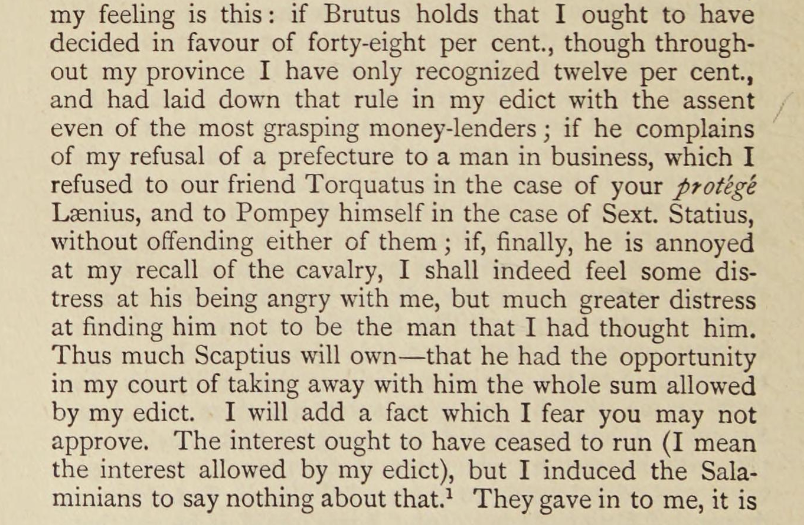
A.5.18 September. Cybistra. After much discussion of the Parthian threat, ends letter by saying that he will settle up Brutus’ business (clearly a favor asked by Atticus) and do so better than Brutus could himself BUT his pupillum he cannot defend (against delinquency charges), because he is so poor and without resources.
A.5.19. 20 September. Cilician plain (outside Tarsus?). There seems to be another letter missing which was written to Atticus in his own hand (so this one was not?). An express messenger has arrived from Rome. The journey took him 47 days (Orbis estimates the journey would be possible in 20.5 days). Cicero has told his agent Philotimus not to collect on Messalla’s debt to Attilius (because of the Messalla’s recent conviction).
F.3.8. 8 October. Cilician plain. Cicero defends to Pulcher his decision to absolve local communities of sending representatives to Rome (to praise Pulcher). He frames it as an unnecessary financial burden on communities already suffering from a lack of resources–local communities petitioned linking this expense to already burdensome tax collection. Informs Pulcher that he was met by publicani on Samos! who convinced him to change the wording of his edict [in their favor] by adopting a phrase from Pulcher’s edict.
F.8.8. October. Rome. Caelius alludes to Cicero having a negative view of Sempronius Rufus in relation to a business deal involving also Vestorius of Puetoli. Tuccius who is persecuted by Rufus seems to have been a close business associate of Vestorius: wares of both merchants have been found together in shipwrecks. See D’Arms 1980: 48-55 for full reconstruction of the relationship using A. 14.12 and A. 6.2.10 and epigraphic evidence. 3 million sestertii were transfered from Pulcher (previous governor)’s estate to Servilius to try to secure a failed prosecution for extortion, the former’s own son testified to this. Copies of veto-ed Senatorial Resolutions are appended to letter. Then as all most a postscript Caelius mentions his entanglement with Curio who is opposing everything Caesar does. The entanglement is the gift of African animals, and thus Caelius presses Cicero to deliver panthers. He’s sent a Greek and a freedmen with the message but also to retrieve the animals and pressure Cicero.
F.2.10. 26 November. Pindenissum. First letter signed imperator. Hailed as Imperator at Issus prior to the siege which is in 25th day. I placed Pidenissum tentatively on the map by assuming it was no accident it had Issus in the name and that Cicero has watershed on his brain. I followed the nearest river up to the mountains foothills found a bridge and a settlement and dropped a pin. That said, given that Cicero is using siege equipment it must have been a fortified settlement. There are a number of modern hilltop communities in the region that might be better guesses. I mark ÇÖKEK YAYLASI as an example.
A.5.20. 19 December. Pindenissum. Recaps whole of voyage with some inconsistencies with earlier letters but not much. The amount for which captives are sold remains a question. Watt wants the number to be 12,000,000, S-B prefers 120,000. The main question to my mind is to what degree are these captives being ransomed to other loved ones, versus being sold as chattel slaves. The British museum quotes 2,000 sestertii for an unskilled or moderately skilled person. So did he sell 60 people or did he sell closer to 6000 people? If S-B is right. Cicero did not deserve that triumph if Watt is correct the triumph is more warranted. Cicero alludes to having cheered Brutus even as he denied extracting money from king Ariobarzanes. Cicero promises to be on the look out for the right musical instrument for Phemio (presumed to be an enslaved musician in Atticus’ household, cf. A.6.16.7). Mentions his debt to Deiotarus for looking out for the boys. Alludes to his helping Atticus’ business dealings via Thermus in Ephesus.
F.7.32. Date uncertain. to Volumnius. S-B thinks February or March. Shuckburgh placed in December. Reference to salt mining is a joke turning on wit/salt pun. Cites his own work de Oratore. Concern over Curio’s tribuneship.
F.13.53. Date uncertain. to Thermus governor of Asia as for special treatment of L. Genucilius Curvus about property rights and in determination of the venue for any legal proceedings.
F.013.56. Date uncertain. Again to Thermus. Recommends Cluvius the banker of Puteoli. Mylasa and Alabanda owe him money. An Agent named Euthydemus told Cicero at Ephesus that Mylasa would send envoys to Rome. A specific individual in Alabanda has mortgaged property and needs to pay or surrender the property to Cluvius’ agents. Heraclea and Bargylia are also in debt to him, but can offer liens instead of payment. Caunus says they deposited the money they owe him but Cluvius is claiming it as unpaid. Pompey underwrites these debts to Cluvius.
F.13.55. Date uncertain. Again to Thermus. Requests help for his legate M. Anneius in his ongoing legal suit with Sardis.
F.13.61. Date uncertain. To Nerva governor of Bithynia and Pontus. Requests help collecting on a debt of 8Mill owed by Nicaea to a young man Pinnius for whom Cicero is serving as a guardian.
F.13.64. Date uncertain. Labelled as to Nerva in manuscripts but seems more likely to have been to Thermus, so S-B and I concur. Recommends T. Claudius Nero’s business interests, both in Nysa and with a certain Pausanias of Alabanda and Servilius Strabo.
F.13.65. Date uncertain. Also labelled as to Nerva, but the community that needs to be influenced appears to the Ephesus and thus perhaps this also went to Thermus? S-B is silent. My own hypothesis. Cicero describes himself as a patron of whole tax company and P. Terentius Hispo in particular. They’re supposed to be collection pasturing duties.
F.13.9. Date uncertain. To Crassipes quaestor in Bithynia. Urges him to help publicani, esp. P. Rupilius.
F.15.4. January? To Cato.
“I spent but two days at Laodicea, four at Apamea, three at Synnada, and the same at Philomelium. Having held largely attended assizes in these towns, I freed a great number of cities from very vexatious tributes, excessive interest, and fraudulent debt.”
Cicero restored Commagenean exiles Metras and Athenaeus on Cato’s recommendation against animosity of the queen put them in as advisors to the king.
Altars of Alexander associated with testimony in Curtius 3.12.27 to it being near the river Pinarus (not Pyramus as S-B mistakenly notes in his commentary)
Requests Cato vote in favor of honors in the Senate to celebrate his successful military campaigns, part of the argument is base on services rendered to Cyprus and Commagene, Cato’s client states.
F.15.13. January? To Paullus. Cicero alludes to his endebtedness for past political support of Paullus, asks for him to support him on not staying in the province and a positive vote in senate on honors for Cicero.
F15.14. January? To Cassius. Network of mutual obligation is contructed through Cassius’ recommendation of Fadius and their shared connection to Brutus. Cicero mostly wants political support in return.
F.8.6. February? From Caelius. Urges Cicero to support Appius against Dolabella’s charges of misgovernment of his province. Pompey wants Appius acquitted and is planning on sending one of his sons to Cicero to gather evidence/support. Caelius suggests evidence/testimony against Appius is being suppressed. Reports consuls can’t get anything through the senate except procedural religious stuff. Adds two postscripts: one about Curio as tribune bringing road legislation (reminicient of the Rullus’ agrarian proposal? Perhaps in how it managed power?) and also a bill that would force Aediles to distribute food. But he failed to get an intercalary month. The other shaming Cicero about the panthers he’s not yet supplied.
F.8.7. February? From Caelius. Refers to another letter sent via Cicero’s freedman (implies save method) lets it be known this is written in a rush to give to publicani (unsafe communication). Puts in a great deal of marital gossip among the elites. Ending by teasing Cicero about this being below the dignity of an Imperator, and thus perhaps also twitting him about his new title.
F.3.7. After February 11. Laodicaea. To Appius. Letter is travelling via Brutus’ messengers and written in haste. Commissioners from Appia delivered to Cicero a letter from Appius complaining Cicero’s policy stopping additional taxes has stopped a building project. Cicero assures Appius more of the members of the community want the tax halted than want it extracted. Appius is insulted Cicero didn’t come to meet him but Cicero charges Appius avoided seeing him at Iconium. Cicero takes umbrage that anyone would think he would disrespect dignity of Appius’ family and title as Imperator. Then denies he is even impressed by names.
F.3.7. After February 11. Laodicaea. To Caelius. Recommends Fadius for Caelius’ legal defense. No mention of Cassius or Brutus interestingly.
F.9.25. After February 11. Laodicaea. To Paetus. Spells out M. Fadius’ trouble: his brother Quintus has listed for sale a property jointly owned at Herculaneum. Marcus doesn’t want it sold. Cicero is soliciting help to settle outside of court. Marcus’ problems may stem from Mato and Pollio.
F.13.59After February 11. Laodicaea. To Peduceanus, Praetor (peregrinus). Seems to be in charge of the Fadii matter in his court at Rome. Cicero again pushes Marcus’ case.
F.13.58After February 11. Laodicaea. To Titus Rufus, Praetor (urbanus). Will be hearing a case involving Custidius and Cicero wants him to know the fellow is his friend.
F.3.9.After February 11. Laodicaea. To Appius. Cicero is happy they are friends again. Supports Appius’ honors, wants Appius to do the same.
A.5.21. February 13. Laodicaea. Fears of war. Fears of inaction because of domestic politics. Letters carried by Publicani mentioned for speed of delivery. Laenius recommended to Cicero by Atticus: unclear for what purpose. M. Octavius (curule aedile with Caelius; Appius’ father in law) wants panthers. Atticus suggested unlikely. Cicero says NO. No extra public expense. Deputized Q. Volusius to hear legal cases in Cyprus.
SB commentary
…
F.13.63. February. Laodicaea. To Nerva (gov of Pontus & Bithynia). Recommends Laenius. See previous letter. Laenius wanted a Praefectus position in Cilicia. Torquatus supported this. Cicero denied and Pompey approved. Now Laenius is going to another province where he has unspecified ‘business interests’.
A.6.1. 20 February. Laodicaea. Apparently in a letter of 21st Sept. Atticus praised Cicero’s restraint with Appius and independence regarding Brutus. Long reflection on how Appius bled the province dry and how pleased Cicero is to reverse course and rescind his injustices.
Now follows the deep financial interests of Pompey and Brutus in Ariobarzanes:
Cicero’s efforts to separate government and business are bucking the common trend and ruffling feathers. He moves on to Salamis:
I find the idea that Paullus would favor Brutus because of family connections odd logic (S-B follows this logic too). The two brothers did not get along at all. Could it be another relationship between Paullus and Brutus? S-B worries that Paullus couldn’t get a province in light of Pompey’s law requiring a 5 year wait, but clearly Cicero thinks that law is not worth much given current political landscape and obviously he was correct just not in this way.
Invokes His own Republic as moral justification in the face of others’ anger at him sticking to his fiscal policies, Atticus has questioned his history.
Cicero reports on other matters including his failure to recover two self liberating slaves: one case was mentioned in A.5.15 as a goal. The musical instrument for Phemius has been acquired at great cost as has some special pottery from Rhosus.
Discussion of parts of Cicero’s edict including right to over turn bad faith contracts and allow locals to be tried under their own laws. He divided the edict in three parts, but first and foremost all the stuff about money to be paid to taxcollectors, debts, interest, etc…
Servilius was governor of Cilicia 78-74.
Mentions of Lucceius putting a Tusculum property for sale and Lentulus Spinther putting everything but his Tusculum property on the market and a debt owed (presumably to Cicero) by an Egnatius that may or may not be paid. Perhaps a man from Teanum Sidicinum.
F.13.54. Spring. Laodicaea. To Thermus (governor of Asia). Recommends a Marcilius son of his interpreter. Specifically to help him stop the prosecution of his mother in law.
F13.57. Spring. Laodicaea. To Thermus (governor of Asia). Needs his military expert M. Anneius back and because of this needs Thermus to sort out Anneius legal woes with Sardis.
F.2.11. April 4. Laodicaea. To Caelius. Cicero tries to assure Caelius that he’s working on the panthers BUT not using public funds/powers. Cicero must satisfy both his own reputation and also Caelius’ expectations. Patiscus is Caelius’ agent on the ground.
De pantheris per eos qui venari solent agitur mandatu meo diligenter.
F.8.11. April. From Caelius. Great evidence for how procedural matters could be used to gum up the political machinery. I’ll veto your religious honors because I can find enough valid days on the calendar. We’ll postpone when the religious honors happen to accommodate your concern. I’ll talk so much you can’t get to a vote. I’ll demand with a tally of votes. Cato Hirrus and Favorinus all said no to the thanksgiving, but no long speeches. Another group whipped the vote among them Balbus at Caesar’s rep. Some voted who counted on the matter being vetoed. Mention’s Sittius (related to the panther business).
A.6.2. First week of May. Laodicaea. Responds to a letter Atticus sent via Brutus’ letter carrier. Doesn’t want Quintus and Pomponia to get divorced esp for sake of their mutual nephew.
F.2.13. early May. Laodicaea. To Caelius. Mostly trying to convince Caelius he does like Appius just as he likes Brutus and Pompey.
F.2.18. early May. Laodicaea. To Thermus, gov. of Asia. Trying to convince Thermus not to slight L. Antonius his questor by promoting someone over him. The argument is that the three Antonii brothers are just to powerful and can make big touble for him in future esp. if as is likely they are elected tribunes.
F.3.10. early May. Laodicaea. To Appius. Trying to convince him he has his back and that he loves Pompey and Brutus. Pomptinus was leaving Ephesus but for Appius’ sake turned back and delivered a message to Cicero in Laodicaea. Appius hopes a Census will be called and he will be elected Censor.
Cicero emphasizes how he has fulfilled past obligations:
More about loyalty to Pompey Appius’ daughter’s father in law. On account of his restoration. Also his letting him support Milo without repercussions. Ethnic prejudices… How could you believe a Phrygian or Lycaonian legate over me.
F.2.19. Cilicia. After June 21st. To Caldus incoming quaestor. Complains he has no idea when or where he may meet him. Lictors can serve as official letter carriers!
F.2.18. June. Cilicia. To Caelius. Hungry for news. Reports Caelius’ men have left to try to collect on a debt. Down plays any hope of a triumph.
A.6.3. June. Cilicia. Debates who to leave in charge of the province when he leaves on 30 July.
Shuckburgh thinks Curio and Paullus were bribed by Caesar. S-B says nothing about this background:
Requests Atticus get him a copy of a speech. Disapproves of Young Hortensius.
F.3.2. June. Cilicia. To Appius. Addresses him as if he were censor. Congratulates him on acquittal. Calls Pompey princeps.
Discuss exchanging literary texts.
F.15.5. From Cato. The famous a supplication is better than a triumph and don’t expect the latter letter.
A.6.4. Tarsus. Early June.
A.6.5. June 26. Tarsus.
Auxillaries better than regular Roman Soldiers. Still doesn’t know who to leave in charge. And still hasn’t heard from Caldus the incoming quaestor.
A.6.7. End of June. Tarsus.
Must leave accounts in two cities Tarsus and Laodicea. Plans to travel to Rhodes and then on to Athens.
F.8.13. From Caelius. June. Congratulates Cicero on Tullia’s marriage. Mentions in a backhanded way some of the bridegroom’s flaws. Looks like Caesar will be allowed to stand for consul without giving up army and provinces, but fear is how Pompey will react. Curio still at the center of it all.
F.2.17. Tarsus 18 July. To Sallustius proq. Syria. All fear of Parthians removed. Successor still unknown. Now wants to hurry back to Rome. But still considering Rhodes stop. Impossible to meet. Defends decision to demobilize troops especially at Apamea. Accounts will not be sent may be deposited at Apamea. Plunder will go to the city quaestors.
F.15.6. Late July? August? To Cato. Thanks for the speech in the senate. Please don’t block my triumph. Honored you drafted the decree that you voted against.
F.3.12. Side. 3 August. To Appius. Sorry my wife arranged a marriage of my daughter to your sworn enemy, but we’re still friends right?
A.6.6. Side. 11 August.
concern over marriage; concern over successor but defends position. Similar reasons as given to Caelius but also references fear for young Quintus and his brother’s temper. Hopes of Triumph.
F.2.15. En route home. August. To Caelius. Hoping for a triumph again. Marriage: what is done is done. quaestor Caldus left in charge of province. Selection of Antony by Caesar and Cassius by Pompey as quaestors seen as political.
F.15.11. En route home. August. To Marcellus Cos. Basically says thanks and I’m on my way home.
F.3.13. En route home. August. To Appius. Thanks for help with my supplication. SB thinks sent from Rhodes.
F.8.12. Begun mid August but not posted until after 23 Sept. From Caelius.
The Latin is confused but it seems Appius as censor is looking to take action against Caelius and in doing so trying to show favor to Pompey. SB assumes Caelius has already gone over to Caesar at the is point.
Appius retaliated by charging Caelius under the lex Scantinia (immoral sex acts with the freeborn, maybe). Who charged him with the same in return. Tells Cicero he should take up his cause against Appius.
F.8.14. September. From Caelius. Gloating over Domitius failing to become augur. Mentions his own endorsement of Antony.
A.6.8. Ephesus.1 October. Talk of delays because of winds. But in a hurry. Worried about Caesar. Angry about Bibulus.
A.6.9. Athens. 15 October.
F.14.5. 16 October. Athens. To Terentia. Much concern about letter exchange and travel arrangements also political news
A.7.1. 16 October. Athens.
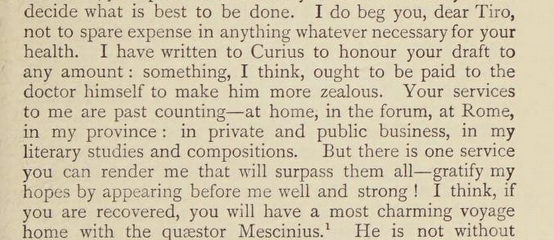
F.16.4. Leucas. 7 November. To Tiro ill at Patrae.
F.16.9. Brundisium. 26 November. To Tiro ill at Patrae.
A.7.2. Brundisium. 25 November.
Anger over Cato backing Bibulus. Revoking of Chrysippus’ freedom.
So in the last blog post I complained about not having enough context, but sometimes context doesn’t help, but rather confounds.
The following tessera is from Agrigento and we even know the niche in the wall of a house into which it seems to have been intentionally deposited (as a ritual object? perhaps repurposed?!).
Full publication and source of all images:
Francesco Belfiori, « Su alcuni depositi rituali di Agrigento: prassi sacrificale e «riti di costruzione» in ambito domestico nel Quartiere ellenistico-romano (Insula III, Casa M) », Mélanges de l’École française de Rome – Antiquité [Online], 131-2 | 2019, URL : http://journals.openedition.org/mefra/8837; DOI : 10.4000/mefra.8837
It seems to read:
ARTEM ‘. AELIA . S
SPECTAVIT
AD . D . VI . K. MART. CO
I agree with the original publication that the first name is probably abbreviated form of Artemidorus or similar Greek name of an enslaved person. The second name they suggest Aulus but don’t committ. I feel I clearly read AELI and then what is probably an A missing its cross bar. The AE are in ligature. What I don’t understand is the enslaver’s name should be in the genitive of possession. No genitive ends in A or AS. The final CO in the third line is also a mystery. The letter forms are far sloppier than on most other similar tessera and it may be unfinished as the fourth side has no consular date. So…
Maybe it was just a bad piece of work someone shoved into a crack in the wall before starting over? In the image below the tessera was found in niche (hole?) 15a. So basically at floor level.
I’m wondering if the inside of the whole of a bone tessera like this might contain any trace elements of fibers or metal wire or lead or whatever was inserted into it and if we could now with our present technologies swap and test for this…
This next tessera is from Pompeii, one of two from the city thus far. It was found in the Basilica (reg. VIII, I, I) during the 1960 excavations, but the exact conditions of deposition are not clearer. I like this as it seems to fit our assumptions that these objects are part of the world of business transactions, particularly for large payments in coin.
Part of what is fun about this object is that the enslaver’s name is Papius and that consular year is 79 BCE. The same year (Crawford estimated) that L. Papius was moneyer in Rome (RRC 384/1).
I want to leap to conclusions about why this might be the case, but one tessera does not a pattern make and so I will withhold speculation. (Rare for me I know!)
I’ve requested via ILL
Pace, Alessandro. “Tesserae nummulariae da Pompei. Un approccio contestuale.” Epigraphica 1, no. 1 (2022): 327-340.
And I hope it offers more details.
The other Pompeii find was from October 1878 and in “bedroom” in reg. 9.6.4-7. This doesn’t really narrow it down v much.
We know that excavations that October were happening in ix.6.4.x so that is a candidate… But they were also happening in ix.6.5.d and g, so that doesn’t really narrow anything down. I’d love to know more about associated finds…
I’m reading this and boy is it at once exciting and frustrating…
Pedroni, Luigi, and Guido Devoto. “TESSERE DA UNA COLLEZIONE PRIVATA.” Archeologia Classica 47 (1995): 161–201. http://www.jstor.org/stable/44367457.
This object has no listed provenience. It is made of bone. Is it even ancient? I know of no close parallels. If it were sitting in the BM I’d put together a proposal to get it carbon dated, but I’ve no way of tracking the object.
The object is noteworthy because of its connection to the moneyer of RRC 344, Titurius Sabinus, and how he signed his name on some of his denarii. (see image below). BUT the TA only appears on a limited number of sub types and by no means the majority of all the moneyer’s coin types. Also the TA is an abbreviation for Tatius, a label for the ‘portrait head’ on the obverse.
It is a very odd object. Most ancient tessera are designed to be read horizontally, not vertically like this one. This object is also larger than most and the carving of the head is most unusual, clearly meant to echo the head on the coin.
With out more data, I feel I must regard it as a fantasy piece, not something from antiquity. Other tesserae are found in large numbers and follow standard types (nummularia: those used to seal bags of money, called gladitorial in the past; lusoria: those used as game pieces or in divination or both).
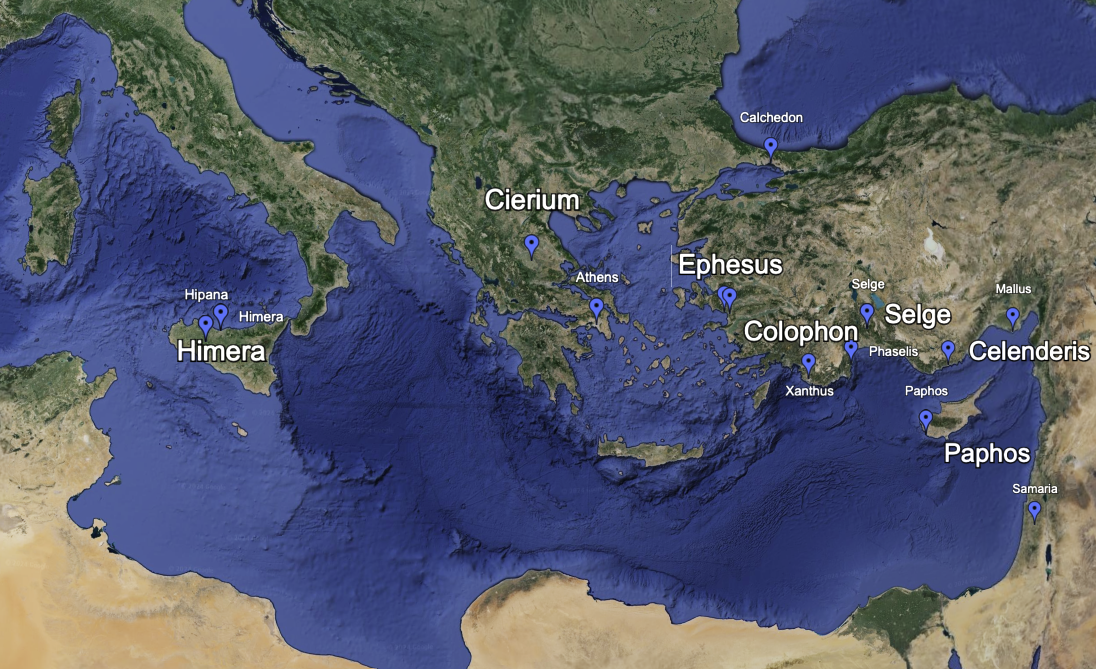
Map of mints producing coins with a kucklebone as the primary design type in the 3rd cent BCE or earlier. I made this by download KML files from search results from the ANS database and IRIS and then cleaning the data.
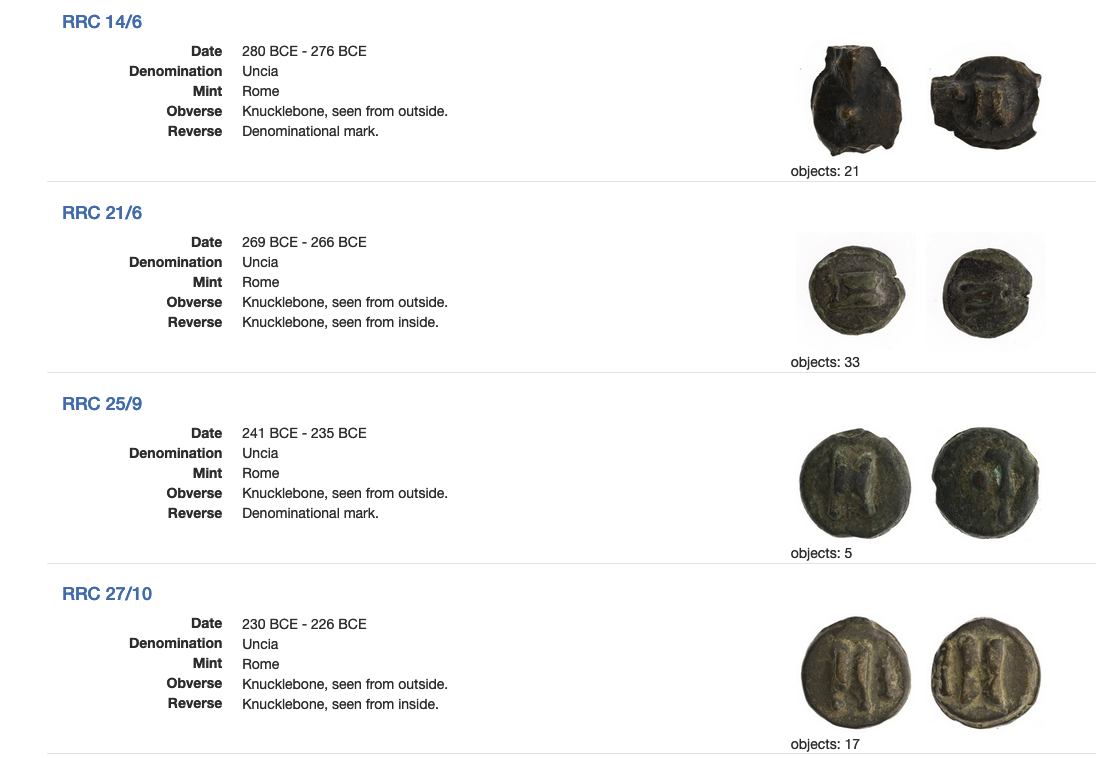
My interest of course stems from RRC 14/6 and related aes grave types.
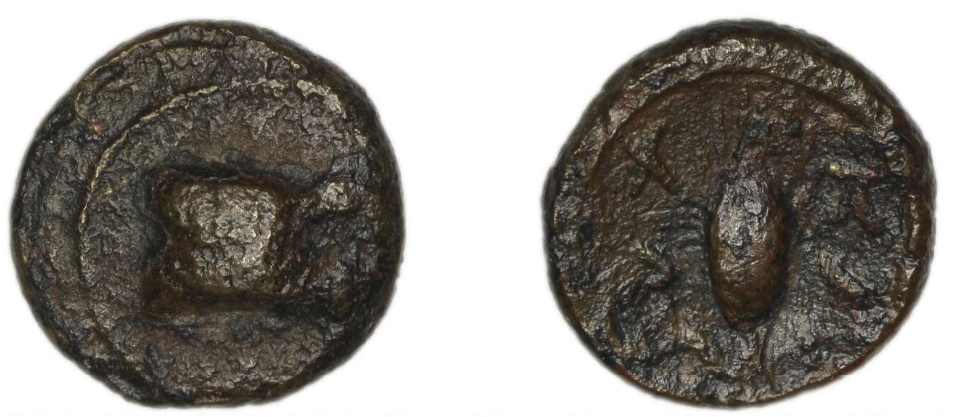
I got thinking about the potential prevalence of this design choice from this coin of Calchedon which popped up when I was looking for something else in the BM search.
The combination of the grain ear and knuckle bone brought to mind early uncia types (Cf. 18/6).
The use of the type at Paphos got me thinking of this other article:
Nifosi, A. (2022). The Throw of Isis-Aphrodite: A Rare Decorated Knucklebone from the Metropolitan Museum of New York. The Journal of Egyptian Archaeology, 108(1-2), 177-189. https://doi.org/10.1177/03075133221137365
But that is besides the point.
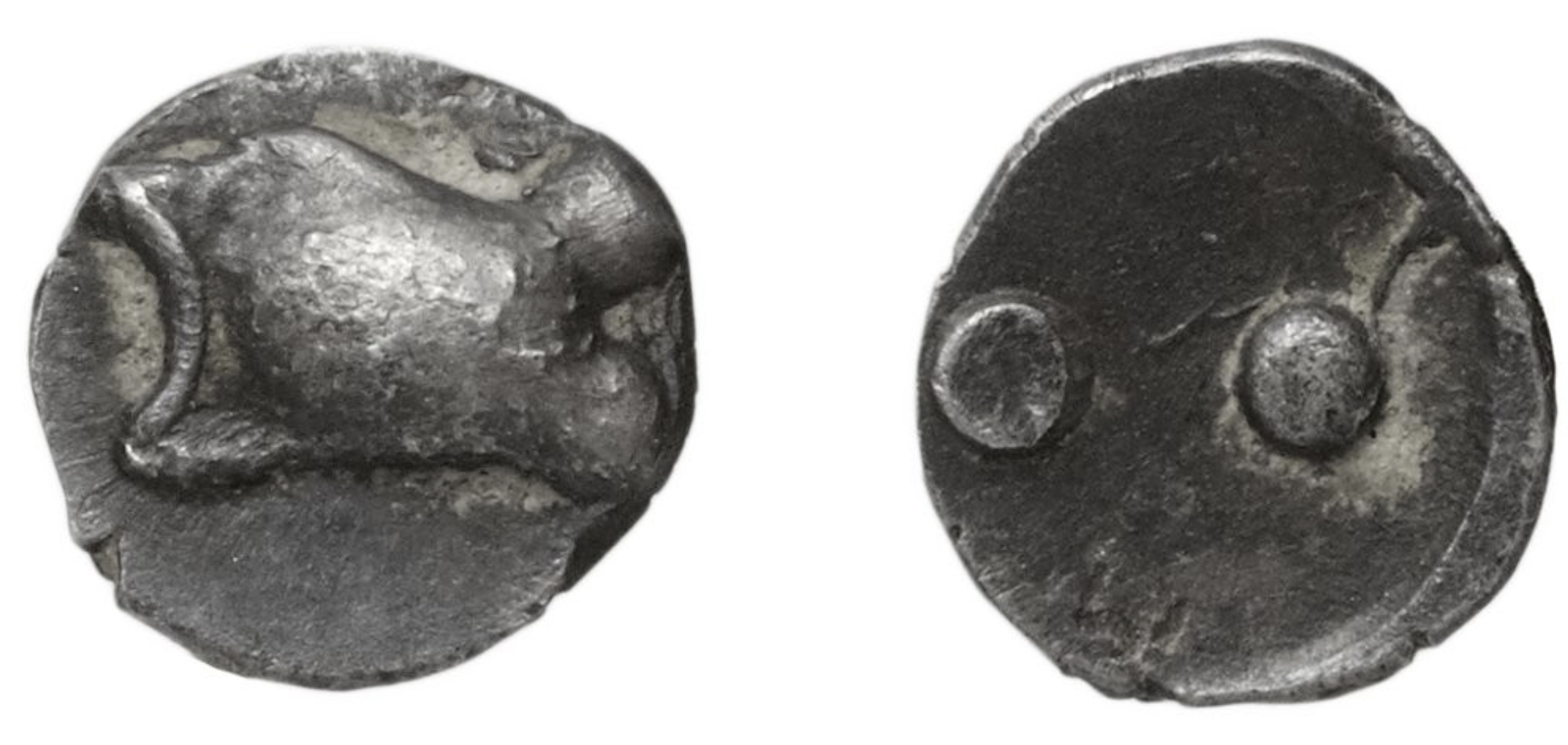
My main thought is that the v small coins of Himera are likely to have been the point of influence, if there need be one.
I say if there need be one as knucklebones, astragalos, astragalus, astragal, etc… are ubiquitous in the ancient world as small game objects also associated with divination.
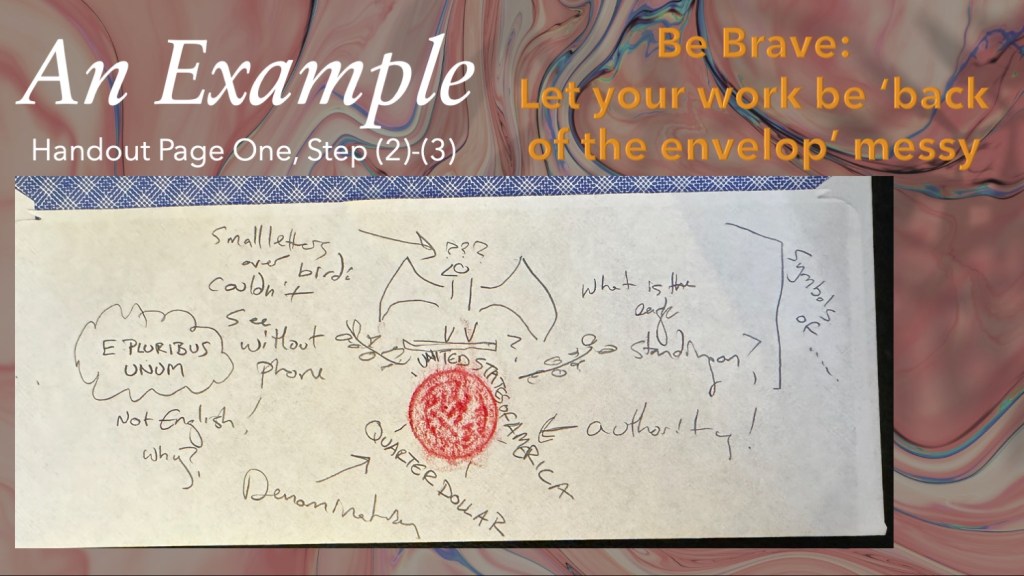
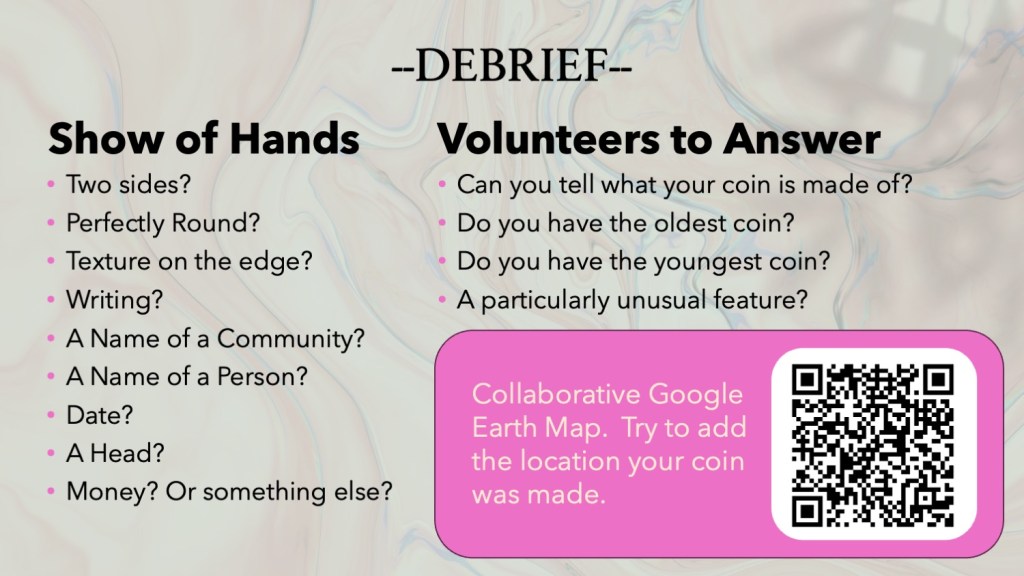
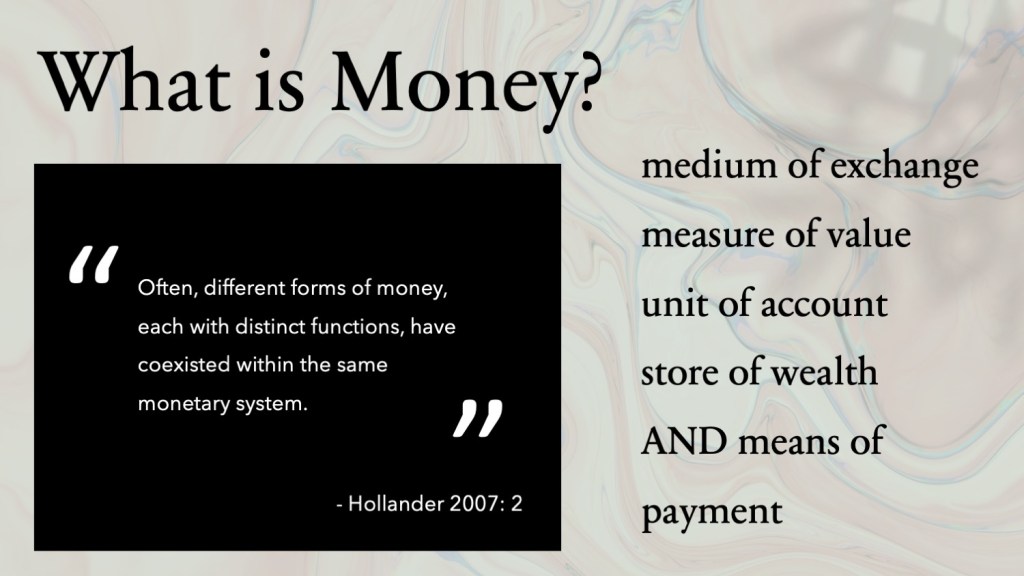
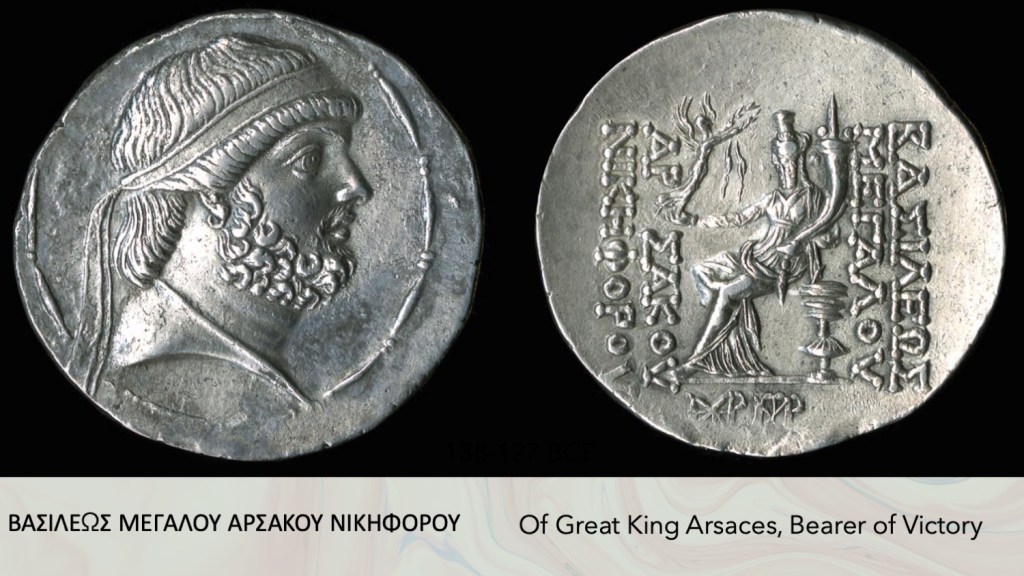
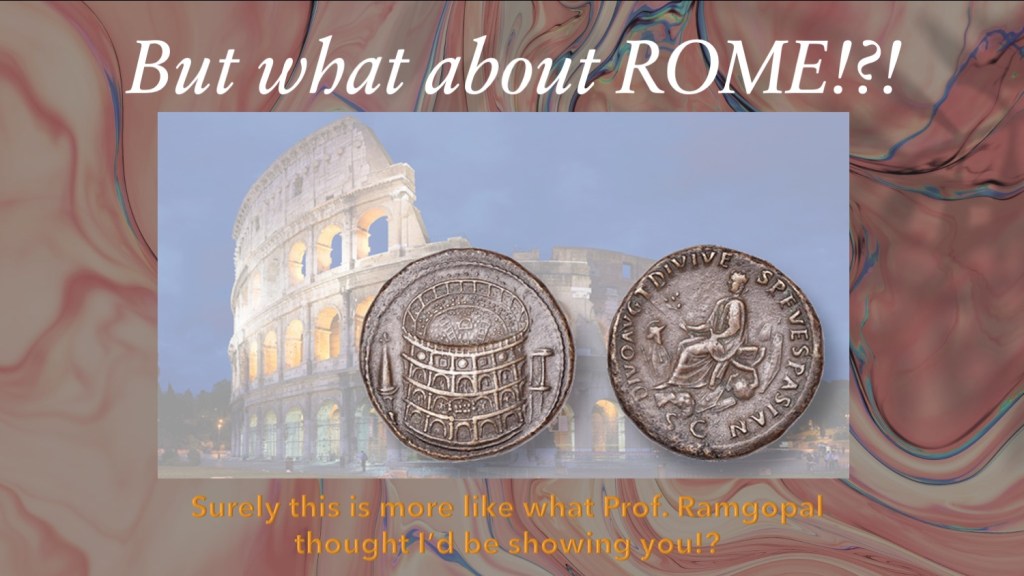
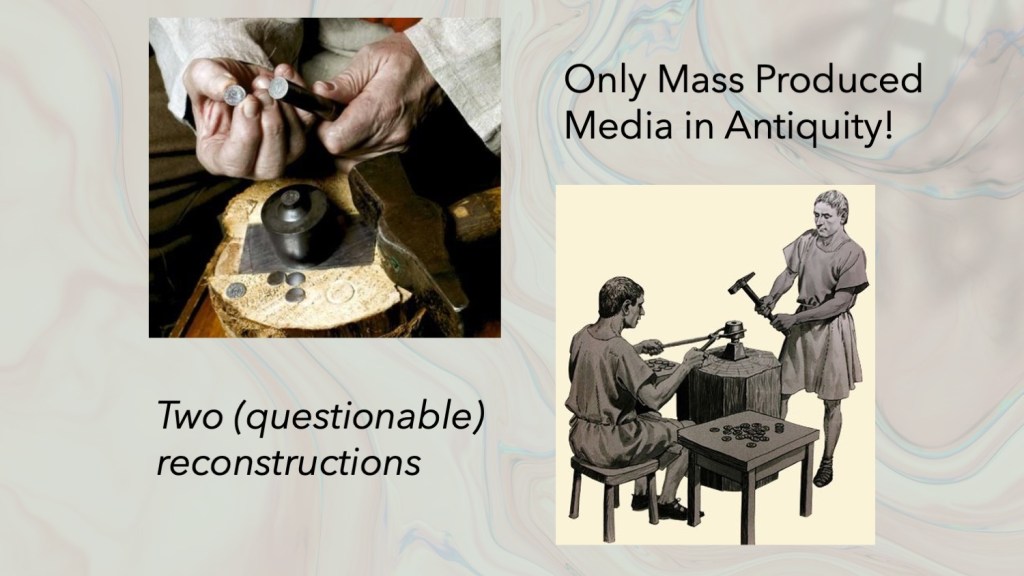
I was honored to visit Prof. SailakshmiRamgopal’s Roman history class at Columbia to give an introduction to Coins. I was asked to share my materials and when I do so I like to keep an archive here for future reference.
This particular class centers Commodus as that is where the students were in the semester. I give variations of this class with numerous other tailored set pieces and depending on the audience more on the origins of coinage and more on the global phenomenon of money.
Archiving some thoughts I threw up on FB earlier this week for future reference.All images borrowed from a BCC news story.
Things I love about this new Pompeii fresco showing Paris inviting Helen to Troy:
1) The dog knows this is a terrible idea. Dogs are often symbols of fidelity and this one know marital trust and guest-friendship are both about to be broken. He breaks the fourth wall and gives us the viewer a knowing glance. [On dogs as such symbols]
4) Paris’ eastern costume looks less silly than in most cases. The color block squares and the overall get up even how he holds his shepherd’s crook all have a more exotic dignified look… [compare say the costume of Ascanius from Pompeii IX.13.5]
I’m curious about the identification of the woman on the Omphalos as Cassandra. Cassandra has a clear iconography for her rape by Ajax, but seated on an Omphalos? I don’t have a parallel. I associate the Omphalos with Delphi so my first thought was the Pythia. I did waste a little time with the LIMC before posting this. I learned that Cassandra poor thing doesn’t get her own entry but rather appears with all the men who fucked up her life. Seems an injustice…
On FB some agreed with me, others pointed out that Cassandra fits better with theme of room as a whole (as we understand it at present) and suggest the omphalos could just represent her gift of prophecy.
As I think about orientation of designs both relative and absolute, I’m now thinking of the open hand on RRC 14/4. It is always photographed with fingers pointing up but they could easily be shown pointed to the left and thus a right hand extended in a gesture of offering partnership like the Augustan coinage (RRC 546).
We might lean away from this option because of the open left hand on some of the other aes grave (RRC 21/4 and RRC 27/8), but I find it useful to consider about the assumptions we bring to the designs.
The ‘knuckbone’ is also called an Astragalus (or Talus in Humans).
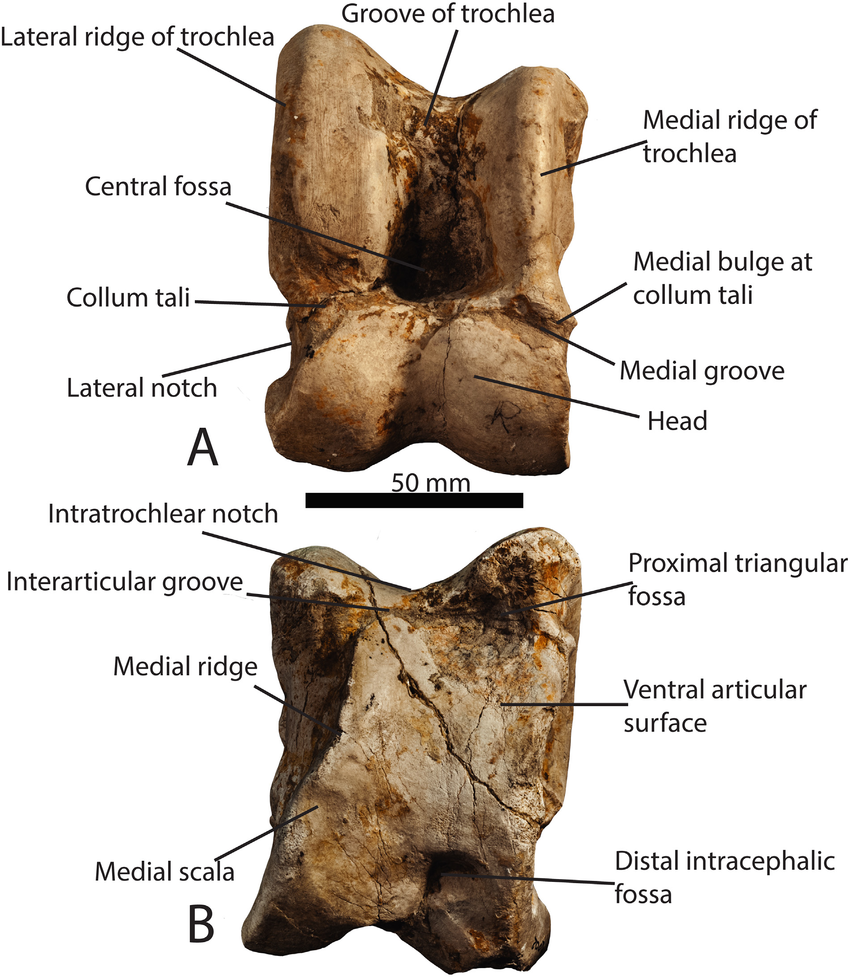
I need to be able to describe the parts of the bone in order to describe the orientation of design and spues and other features of the individual coin specimens.
“Schematic diagram of the lateral outline of an astragalus rotating as a cam. The bold portion of the astragalar outline line shows the surface of the cam, comprising the lateral outline of the distal trochlea and the calcaneal (sustentacular) facet. The circle indicates the center of rotation at the transverse tarsal joint. Straight dashed lines indicate the distance between the axis of rotation and the calcaneus, which is represented by a simple rectangle. The system is shown in extreme dorsiflexion (A) and then in extreme plantarflexion (B) with resulting posterior displacement of calcaneus.”
Astragalar terminology. (A) Photograph of a Samotherium major (GMM 2002) astragalus in dorsal view, with representative terminology. (B) Samotherium major (GMM 2002) astragalus in ventral view, with representative terminology. The scale bar represents 50 mm. doi:10.1371/journal.pone.0151310.g001
“A sheep astragalus (L7 5 1034; crate 4) showing clear signs of acid etching — probably the result of partial digestion in an animal’s (perhaps a dog) stomach. “
From DAvIS, SJM & GOnçAlvES, MJOS & Gabriel, Sónia. (2008). Animal remains from a Moslem period (12th/13th century AD) lixeira (garbage dump) in Silves, Algarve, Portugal. Revista Portuguesa de Arqueologia. 11. 183-258.
So where does this leave me in my vocabulary. I think we can say on RRC 14/6 the knucklebone is shown on the plantar side, which we might also call the ventral or posterior view. I will consider the distinctive interarticular groove and related proximal triangular fossa to be indicative of the ‘top’ and use it as my primary reference point.
Interestingly this is by chance the second lowest scoring/most common throw in a game of chance.








































 Liv Mariah Yarrow
