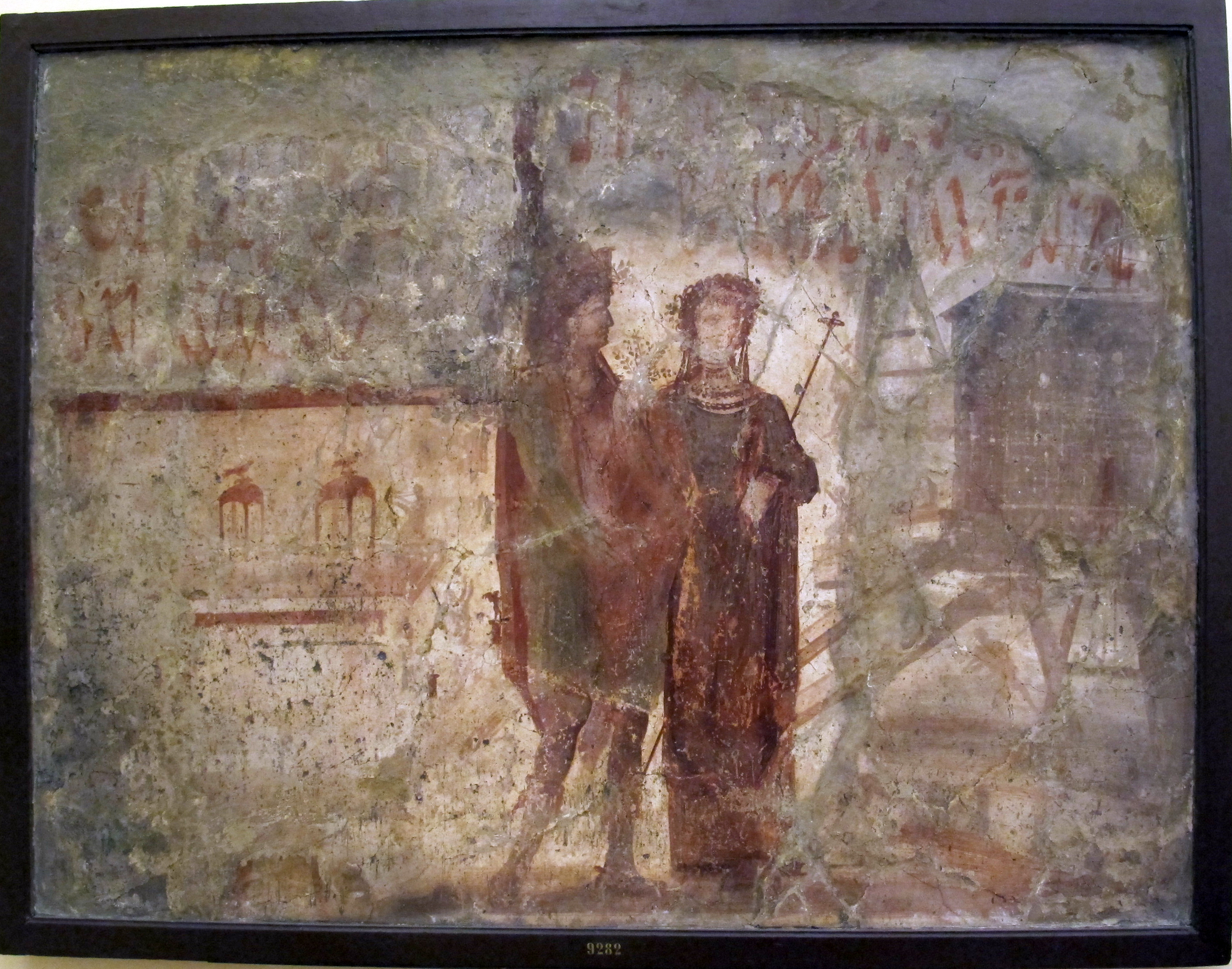
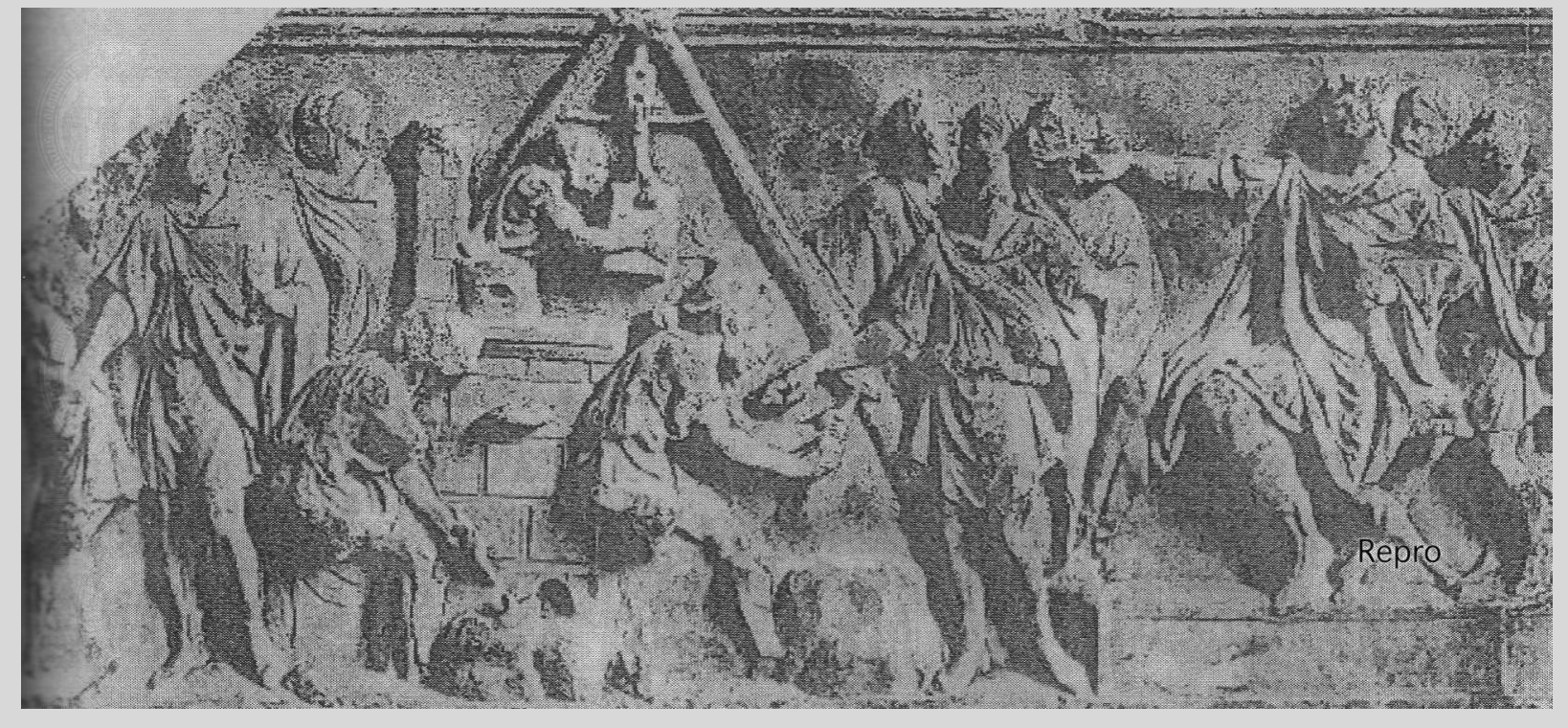
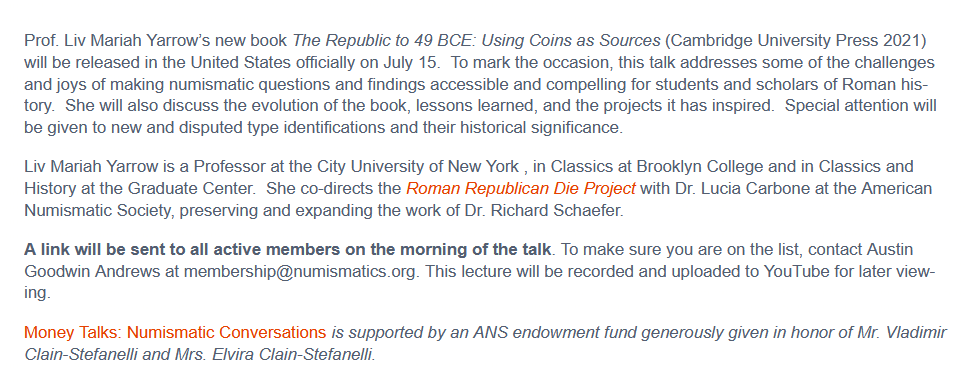
I’m intrigued by the right hand side of the fresco and the crane and other equipment and tools being employed in building construction. Leaving the images here to remember to look for better older ones or older drawings. From Pompeii and part of an electoral campaign sign.
While I have a great deal of experience teaching coins, I usually have a captive audience of college students who know there is likely to be a test and I get a full hour plus and all the powerpoint slides I want.This is a completely different challenge. I need to keep it under 20 minutes. Ideally under 15. I have to pay to print large posters of any images I want to share (outside venue = no ppt) and I must assume the know nothing and I cannot be boring.
SOOOOooooo. My plan is to talk about five coins and try to hit all the most important points about Roman republican coinage with just those five coins.
Preliminary line up:
Elephant and Pig
a Quadrigatus
a Bigatus
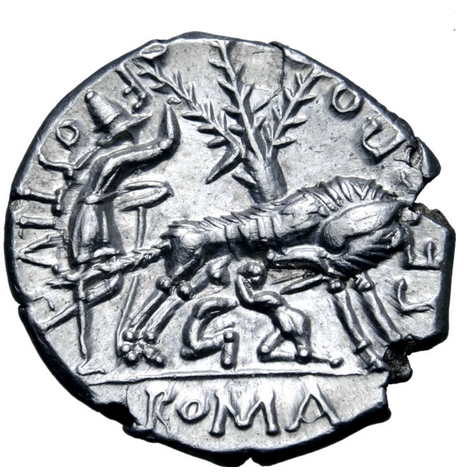
Faustulus
Brutus’ Libertas
Elephant and Pig
Coins don’t have to be round and small
The Italic monetary tradition is different than the Greek
We make mistakes when we want to connect the pictures on coins to our most famous stories
Quadrigatus
Romans struck coins to circulate with Greek coinages and thus imitating Greek conventions
Heads (=obverse = anvil die) and Tails (=reverse = punch die) correlate to how coins were manufactured
Roman coinage reflects Roman religion, and we don’t always know for certain the mean of the images
Crisis –> Change
So-Called “Bigatus“
conservative, stable designs is the norm for ancient coinages
Denarius = 10 asses
an innovative new denomination but one whose influence is still felt today
Roma: goddess? personification?
Dioscuri: Battle of Lake Regillus: Proof of Divine Favor
Signed Issues: another Greek habit but one eventually to ‘take over’ of the Roman coin design tradition
Faustulus
With Mediterranean-wide hegemony conservative coin design is no longer a necessity, even as the denomination itself remains stable
New designs speak both to community identity in new ways, using an existing visual repertoire
Diverse legend functions: Denomination marks, Moneyer’s name, labeling of the design, missing ROMA
Brutus‘ Libertas
Still the denarius! Incredible stability and recognizably of the denomination
Radical design shifts
Use of shared past to comment on the shared present
How the individual is also communal
Foreshadowing…?!?!
Yeah that’s going to run longer than 15 minutes isn’t it….
Thoughts? suggestions?
NOW I need to get my image files and figure out where I’m getting them printed. Bonus result is I’ll have some pretty sweet posters for my office!
Leaving my self this sweet specimen so I can find it in future when thinking about RRC 235/1
I’m really pleased that the in-house journalist took our long convo and did such a great job of finding just the right framing and questions and extracts for this profile in the college magazine.
AND, if you want to hear me talk about lessons I learned from writing my book and how it ended up the way it did and where it might lead, THEN come Saturday, July 24, 1 pm
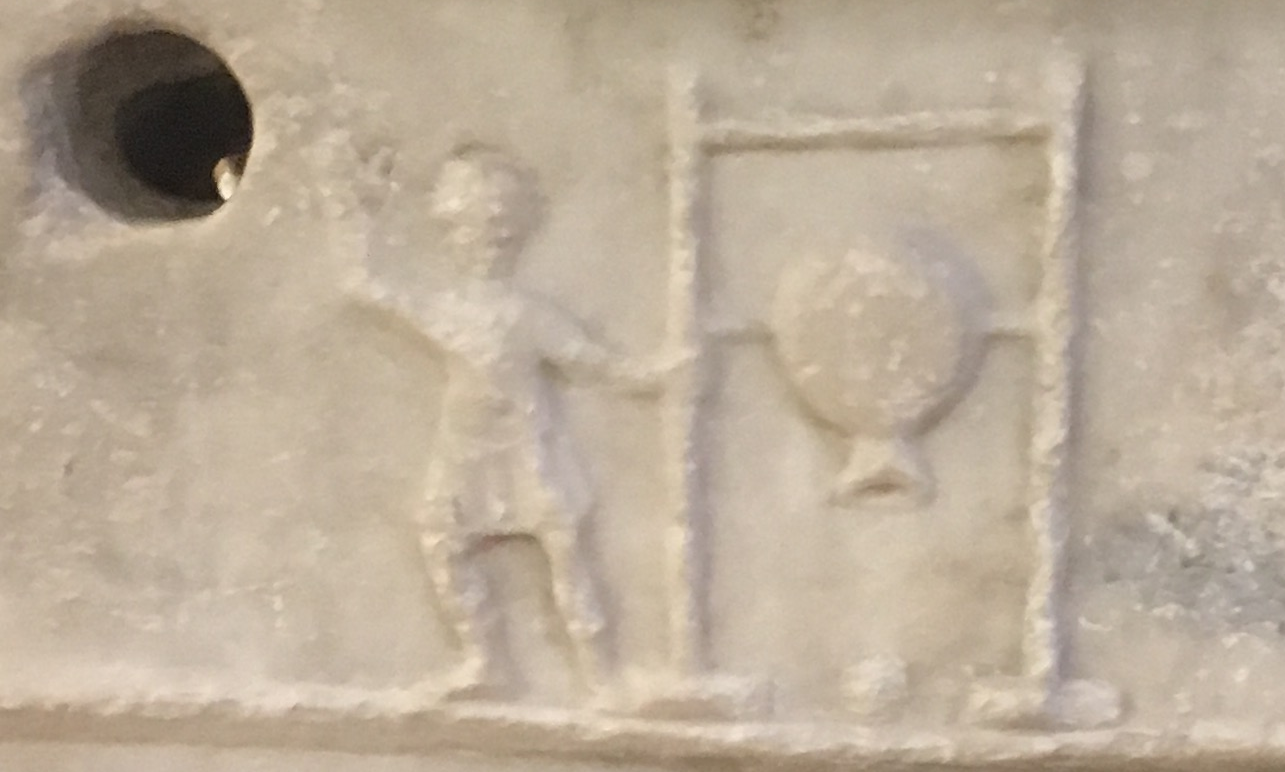
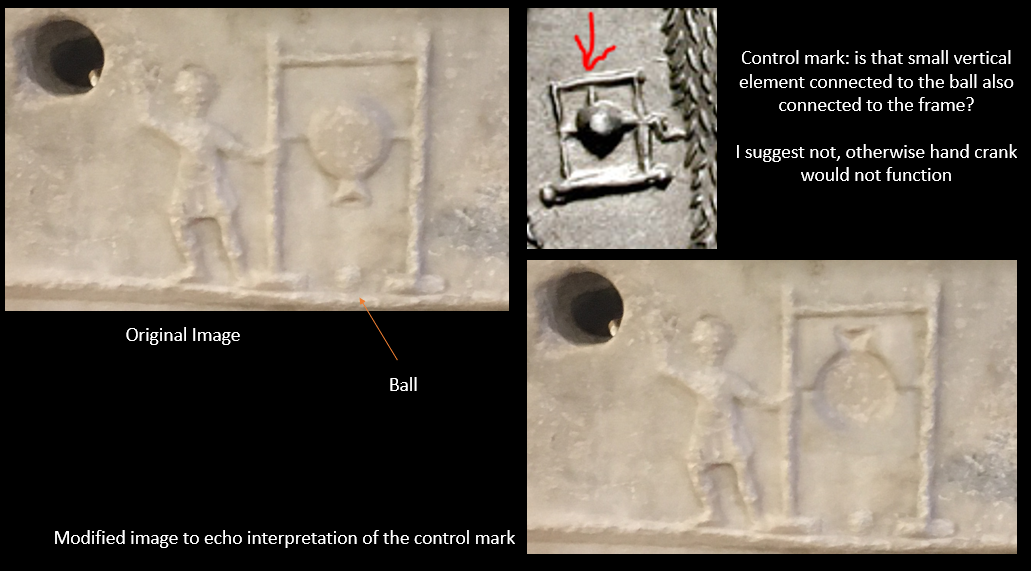
Schaefer pointed out the trouble with the bingo machine id for the obverse symbol 103 on the Fabatus series is the little symbol that (seems?) to connect the ball to the top bar.
See previous post to catch up on convo and also read comments.
I went looking for models of bingo balls that had a square frame around them (not a typical modern feature of mechanical bingo balls).
If the little sticky out thing at the top is part of the ball not part of the frame and not connecting the two, then it might be the box that catches and releases the random ball. That’s a lot of ifs and by no means certain, but until we find an actual archaeological match for the symbol this is the best I’ve got so far.
Clare Rowan drew my attention to this depiction on a ball game machine in the Bode Museum Berlin:
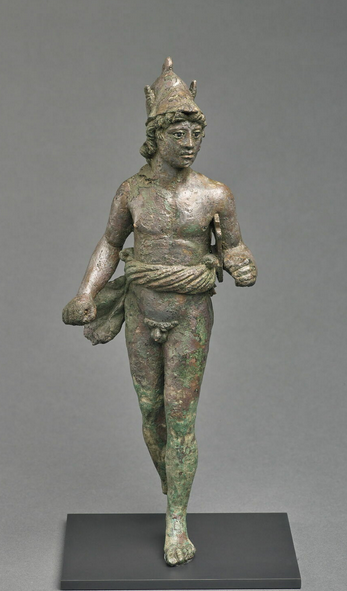
Detail of statuette found in Lombardy, now in Louvre
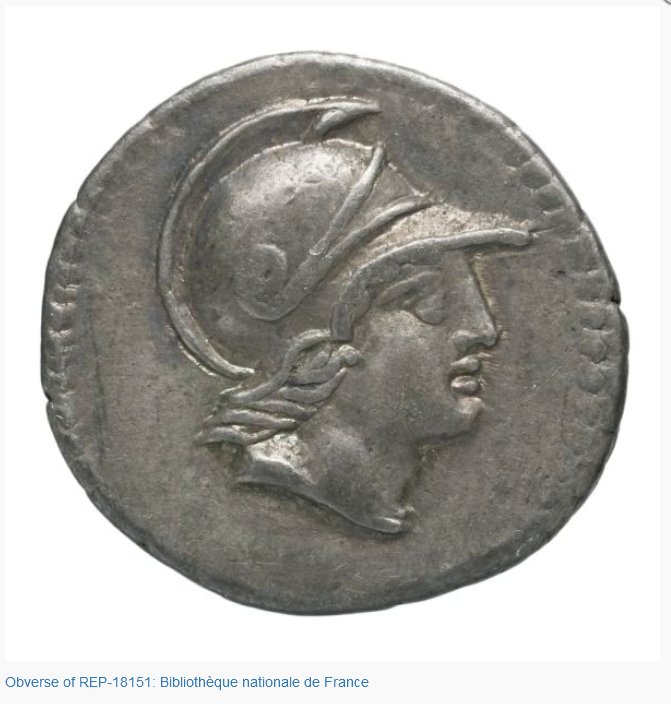
This statuette got me thinking that we probably have the obverse of RRC 388/1 (and perhaps other types with similar iconography) wrongly listed as Roma when they would more naturally be read as Mars by an ancient viewer:
front view of same statuette
This re identification would make sense with Mars’ totem animal the wolf on the reverse of 388.
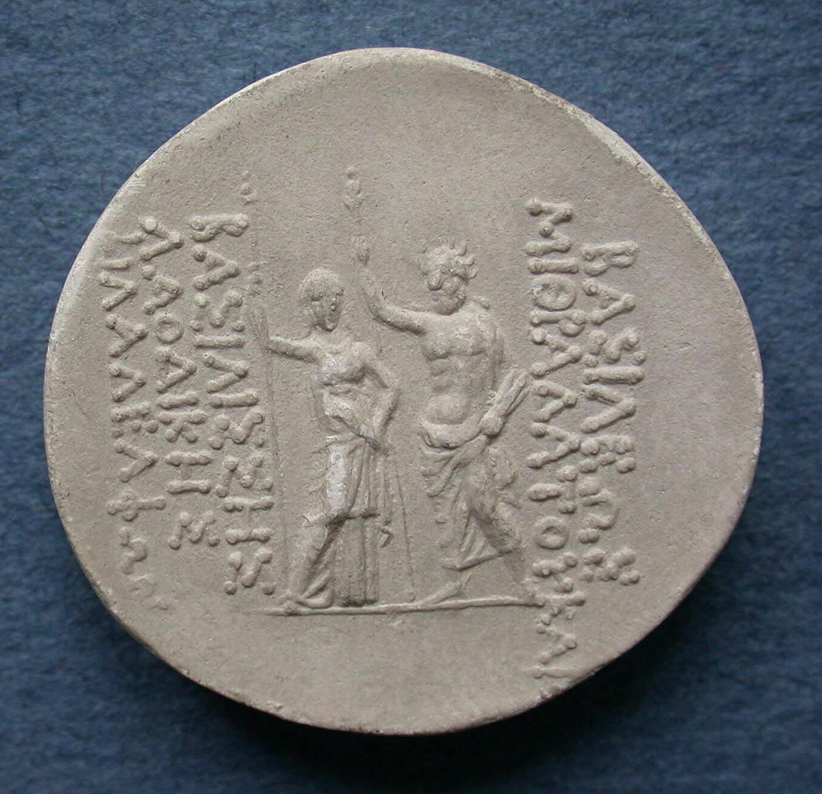
This is a cast of an unknown original specimen in the Louvre.
The type assimilates the identities of Queen (Basilisse) Laodice and King Mithridates (Philopator) with Zeus and Hera and identifies them as Philadephon. Sibling Lovers. Emulating the Ptolemies and with a heavy nod to the same logics as Theocritus Idylls 17 justifying the sibling marriage among Hellenistic royalty based on the Olympic precedent.
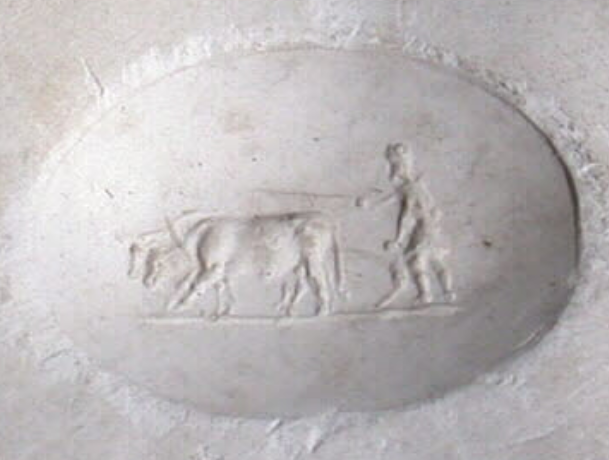
Oller Guzmán, Joan, Oriol Olesti Vila, Jordi Morera Camprubí, and Gertrud Platz-Horster. “Three Roman Republican Seal-Rings Discovered in the Eastern Pyrenees and Their Significance.” European Journal of Archaeology, 2021, 1–20. doi:10.1017/eaa.2021.5.
“Did you dare to snatch from the very jaws of death and to release slaves whom you had decided were eager to take arms and to make war in Sicily, and whom in accordance with the opinion of your colleagues on the bench you had sentenced, after they had been already delivered up to punishment after the manner of our ancestors and had been bound to the stake, in order to reserve for Roman citizens the cross which you had erected for condemned slaves? … That a man should have released slaves; that that very man who had sentenced them should release them; that he should release them, in a moment, out of the very jaws of death, that he should release slaves convicted of a crime which affected the life and existence of every free man— O splendid general, not to be compared now to Marcus Aquillius, a most valiant man, but to the Paulli, the Scipios, and the Marii! That a man should have had such foresight at a time of such alarm and danger to the province! As he saw that the minds of all the slaves in Sicily were in an unsettled state on account of the war of the runaway slaves in Italy, what was the great terror he struck into them to prevent any one’s daring to stir? He ordered them to be arrested—who would not he alarmed? He ordered their masters to plead their cause—what could be so terrible to slaves? He pronounced “That they appeared to have done….” He seems to have extinguished the rising flame by the pain and death of a few. What follows next? Scourgings, and burnings, and all those extreme agonies which are part of the punishment of condemned criminals, and which strike terror into the rest, torture and the cross? From all these punishments they are released. Who can doubt that he must have overwhelmed the minds of the slaves with the most abject fear, when they saw a praetor so good-natured as to allow the lives of men condemned of wickedness and conspiracy to be redeemed from punishment, the very executioner acting as the go-between to negotiate the terms?”
Barbara Pavlek, James Winters, Olivier Morin, “Ancient coin designs encoded increasing amounts of economic information over centuries.” Journal of Anthropological Archaeology 56 (2019).
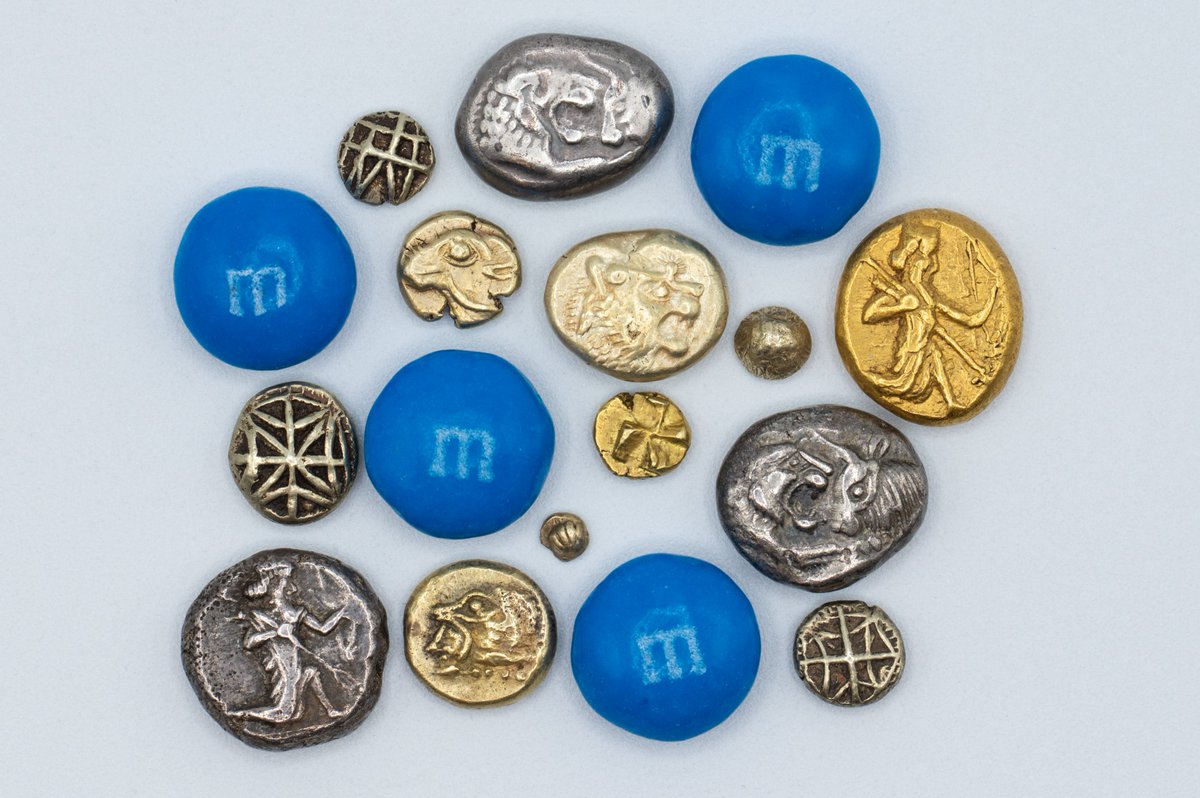
Coinage, the practice of minting small bits of metal with distinctive marks, appearing in the second half of the 7th century BCE, had a transformative impact upon ancient economies and societies. Controversies endure concerning the original function of ancient coinage, in particular the respective role of states and markets in its emergence. Applying information-theoretic measures to a corpus of 6859 distinct coin types from the Ancient Mediterranean world, dated between c. 625 and c. 31 BCE, we show that the symbols minted on coins (designs combining images of plants, deities, animals, etc.) became increasingly informative about a coin’s value. This trend was specific to value-relevant information, as distinct from information concerning issuing states. Coin designs also carried more information about higher denominations than about lower ones. Before numerical or written marks of value became widely used on coinage, these iconic symbols were carrying economic information.