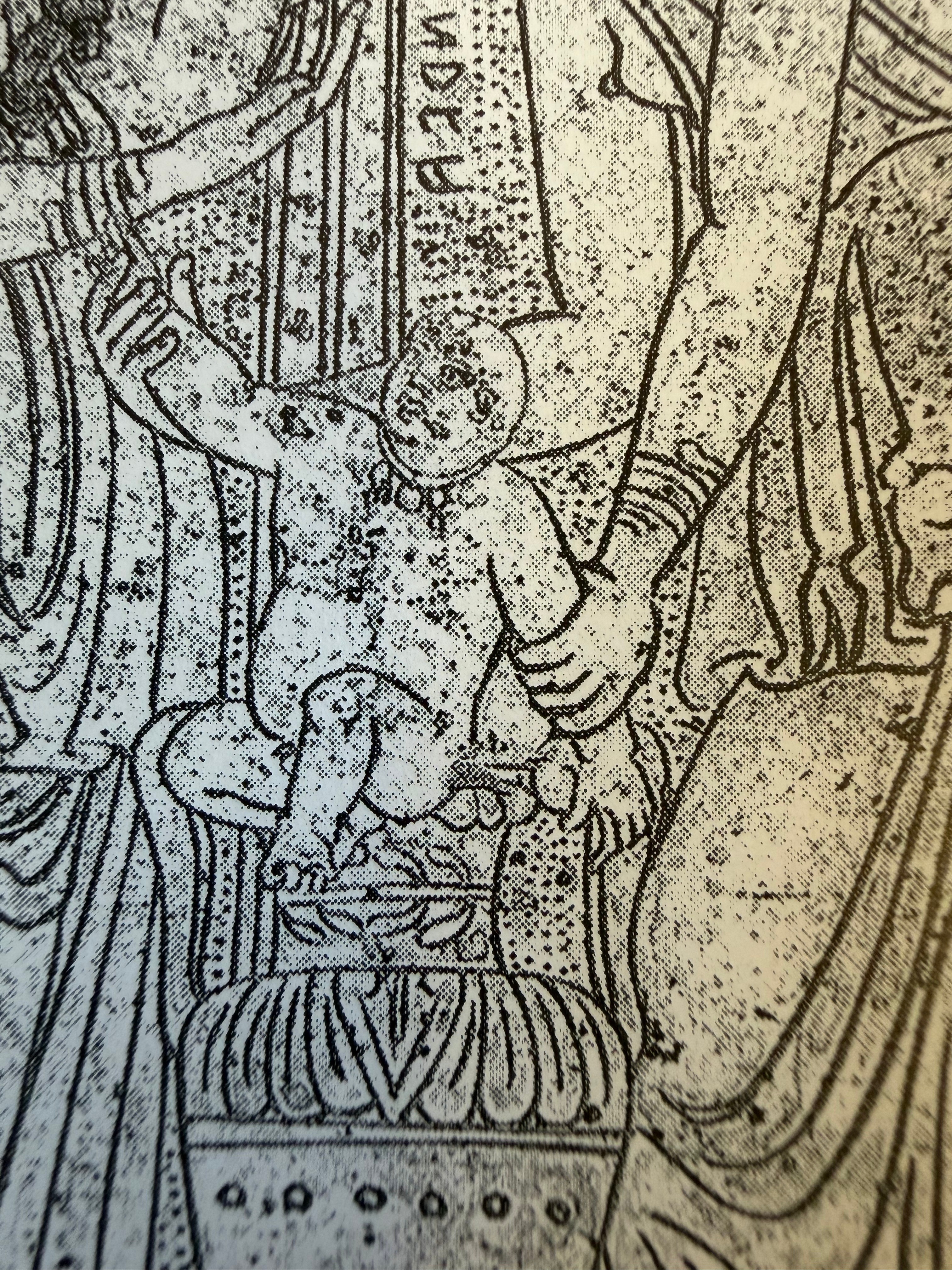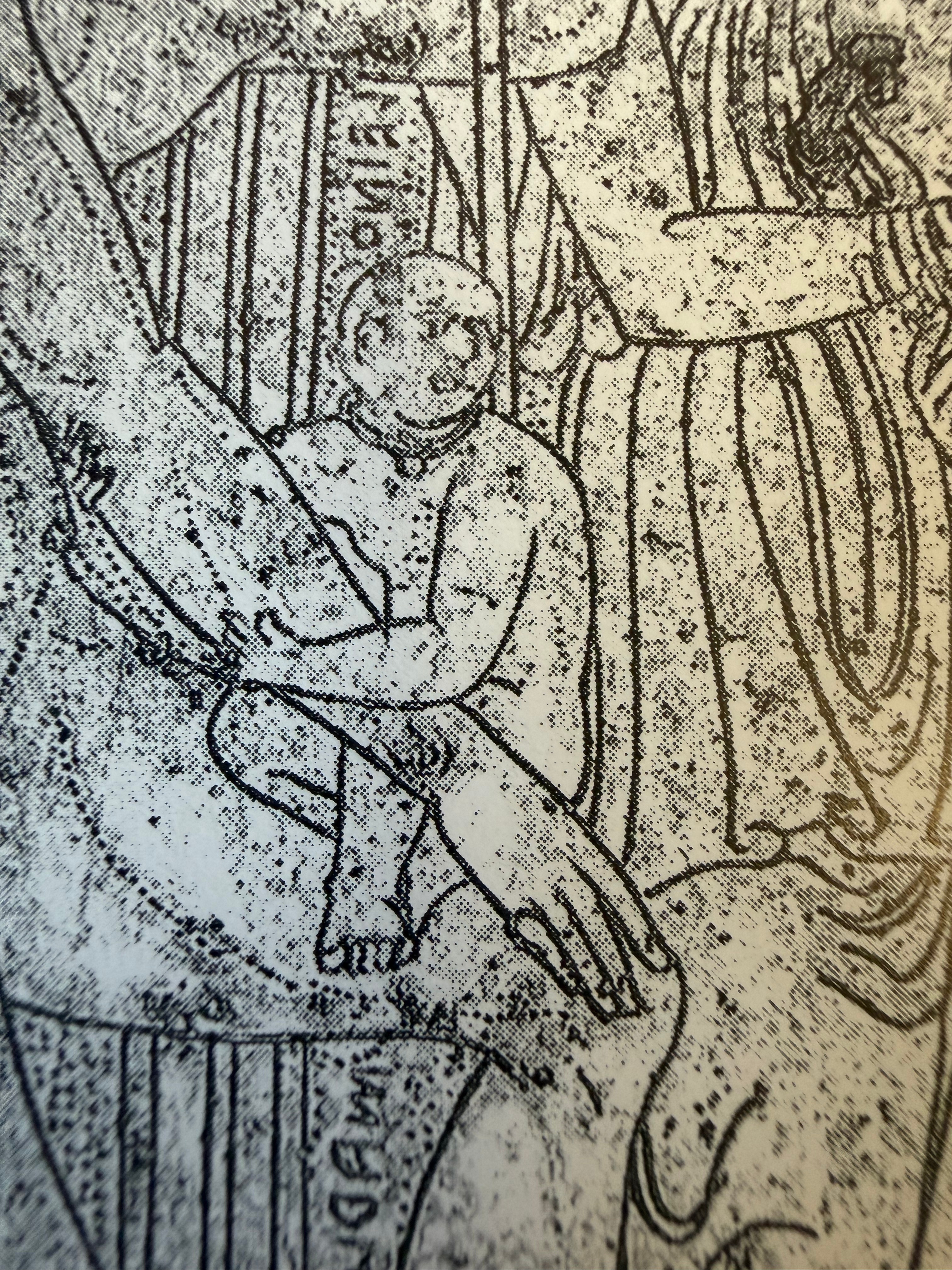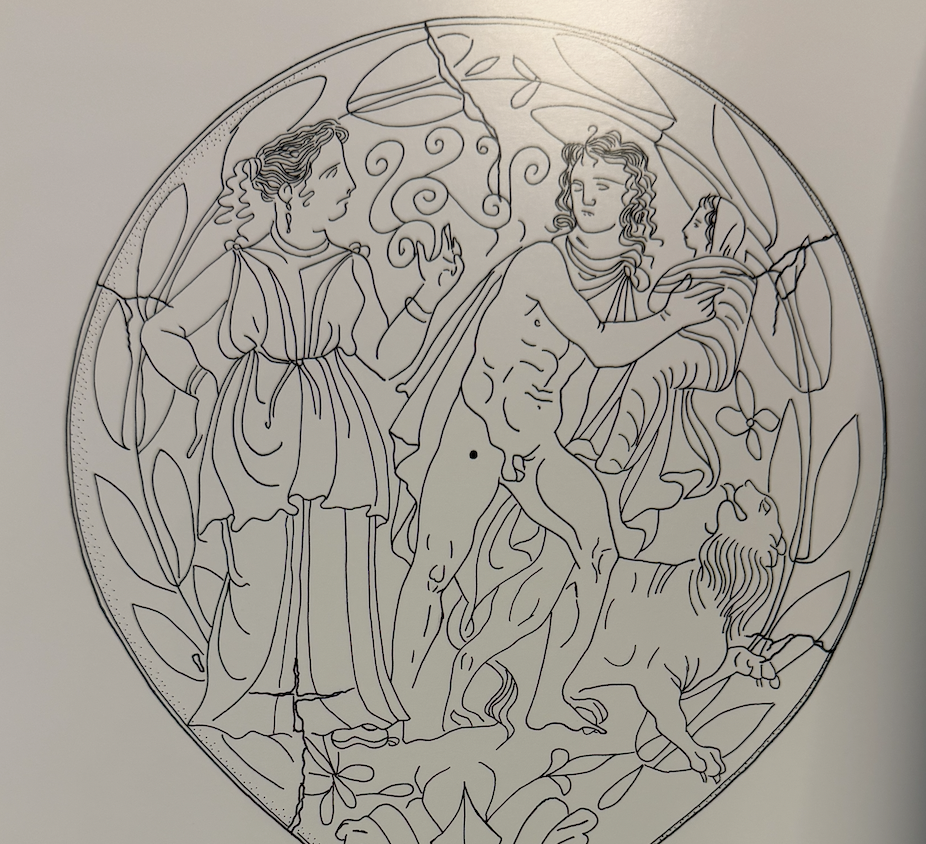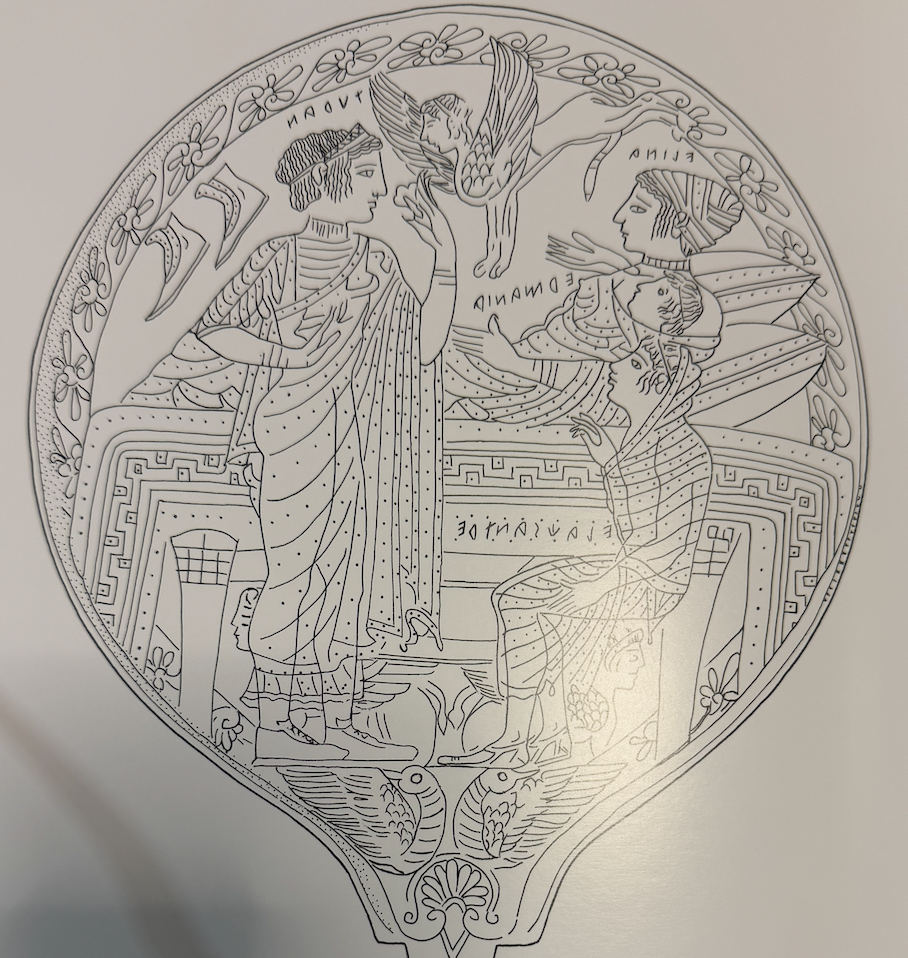
Skip down if you just want coin stuff.
Prelude
If you’ve been reading this blog for a while you’ll have noticed I’m on a journey to embrace many of my complex feelings about my work and my own ways of moving through the world as someone who is definitely some flavor of neurospicy and with learning disabilities (US term, UK readers should read as ‘learning difficulties’). A huge part of this is my relationship to language acquisition and how my early teachers conditioned me to think about what I could and could not succeed at learning. This is intimately tied to how I ended up in my profession, the entanglement of the two is inescapable, as they have formed the me that I am for both good and bad. Vague, yes, but really I’m just gesturing towards stuff I’ve already articulated, see for example “Why Latin?”, a favorite post of mine.
The mind-f*ck part of ending up in Classics-adjacent work as someone told they could not acquire languages well or succeed at them is that there is some part of me that believes I can never truly succeed at my own profession.

Obviously I have lots of strong evidence to contradict these thoughts, but it is baggage I’m still working on and why I’m tend to freak out a little when I need to go deep in anything philological.
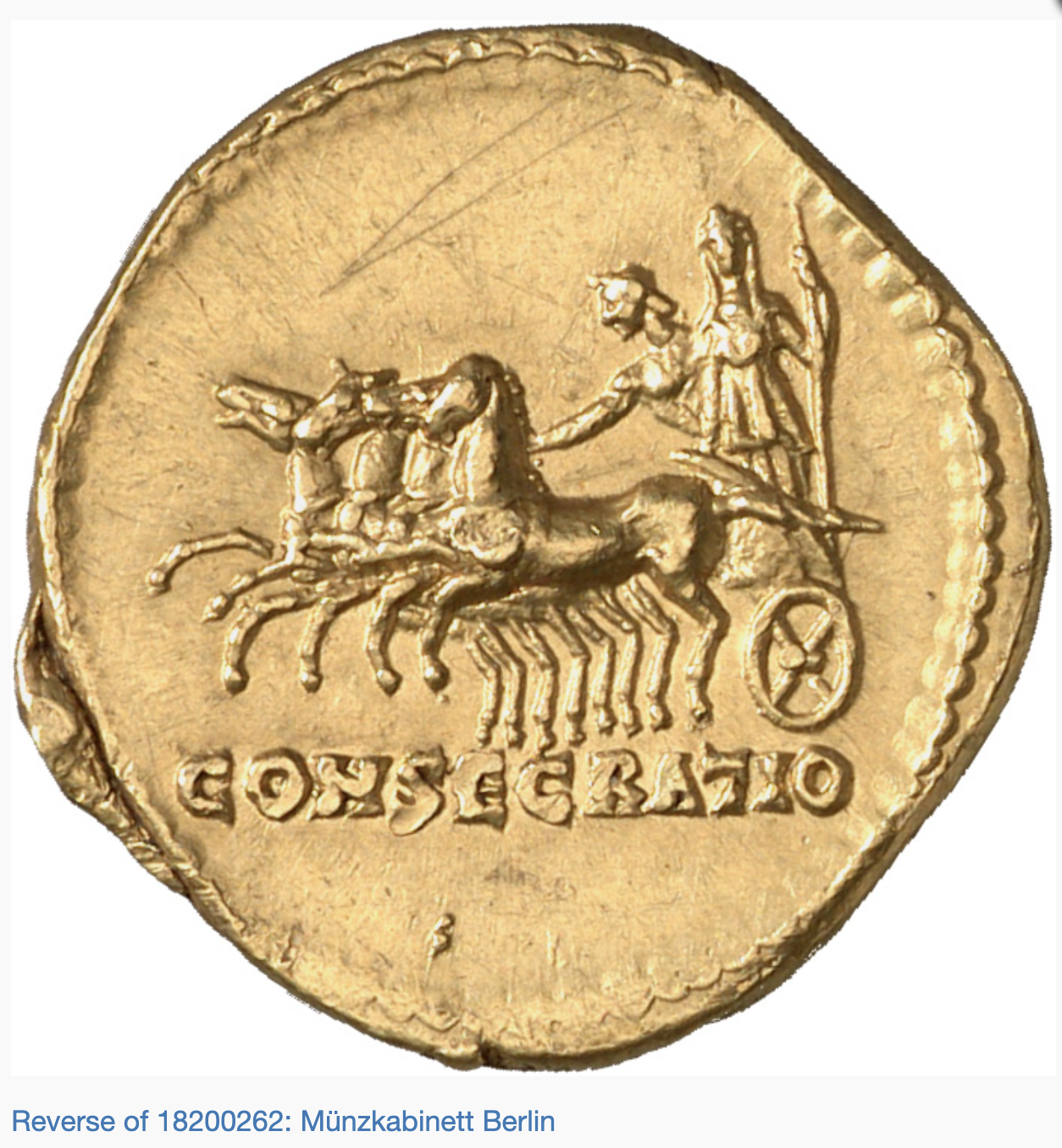
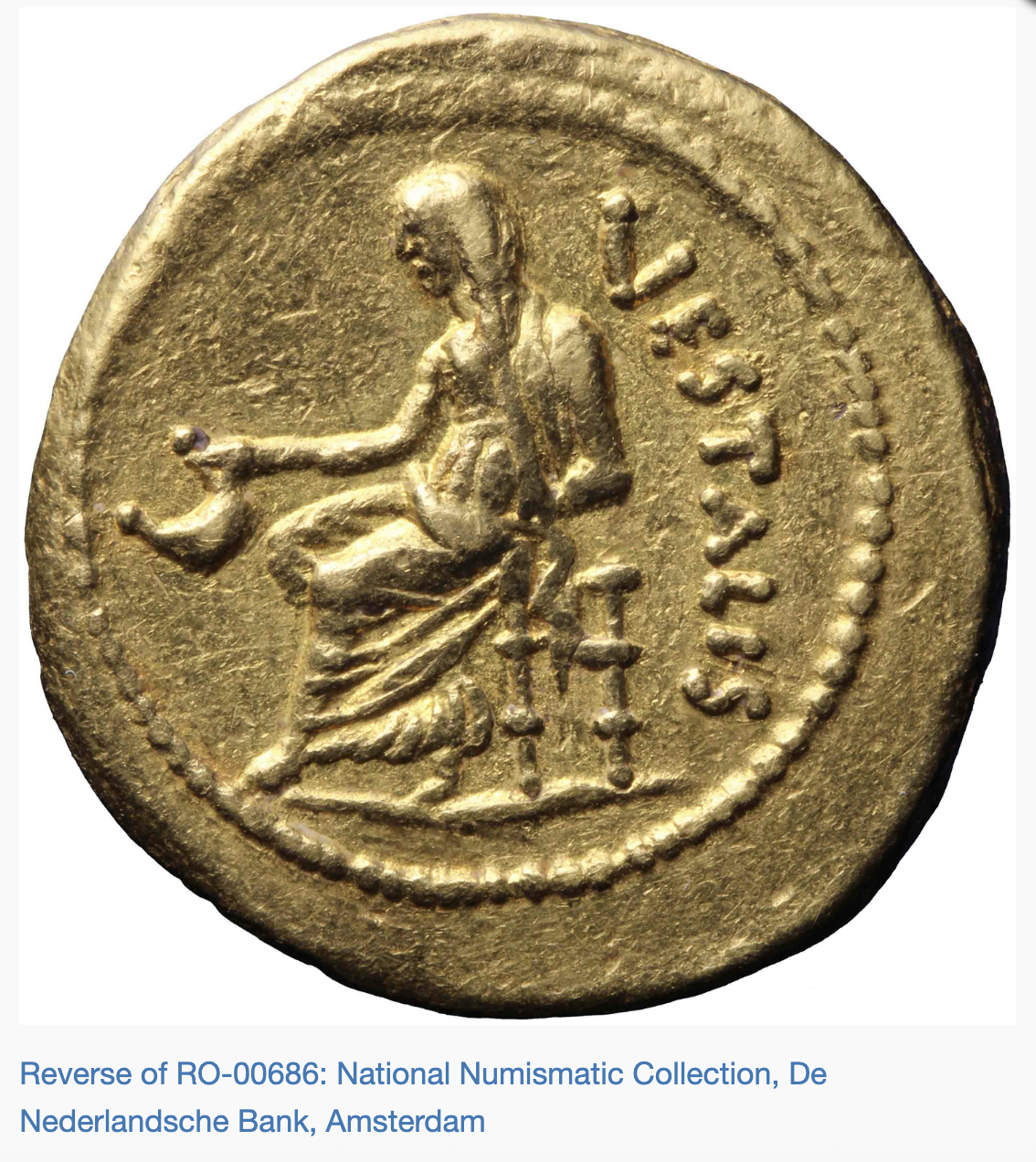
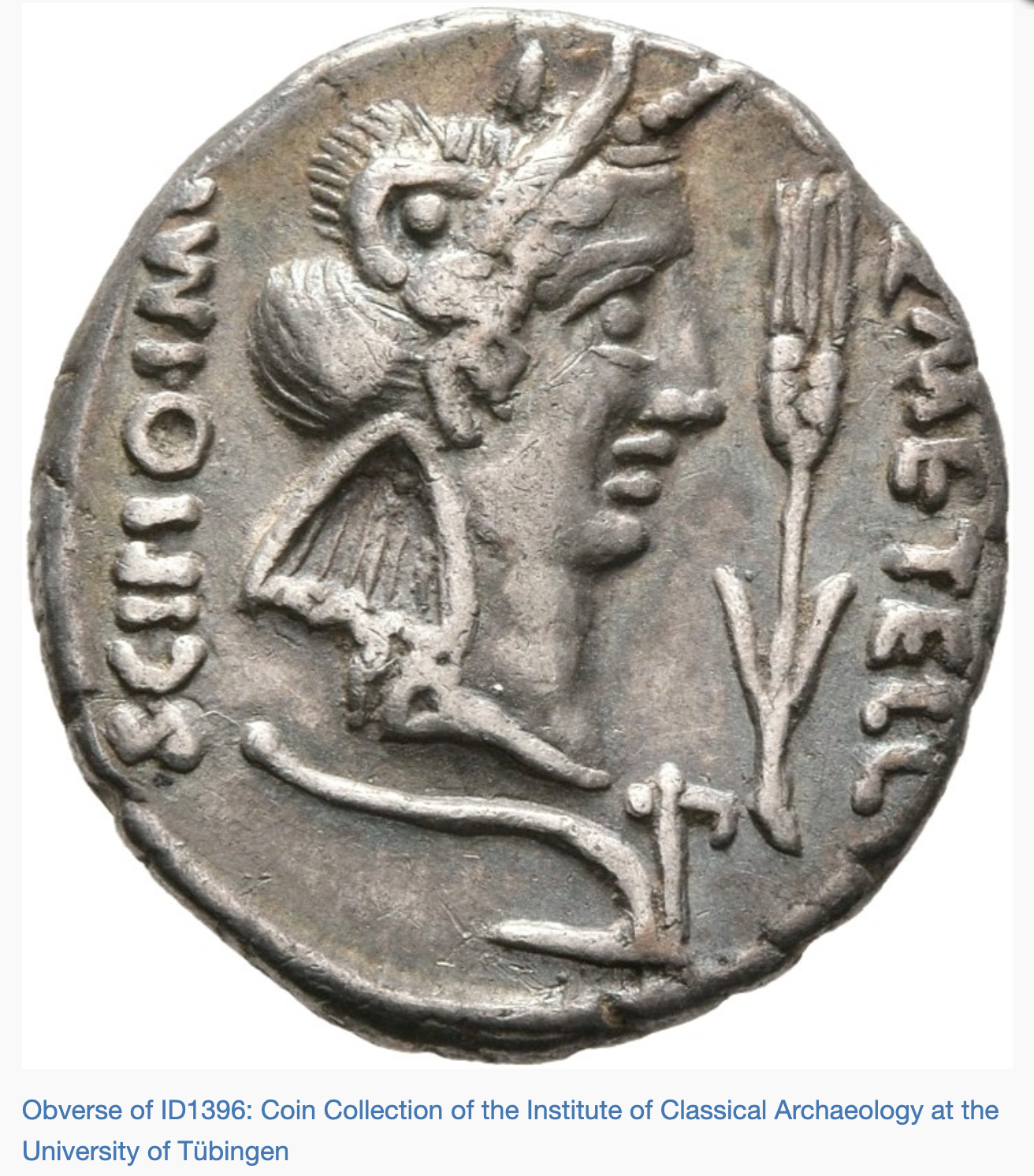
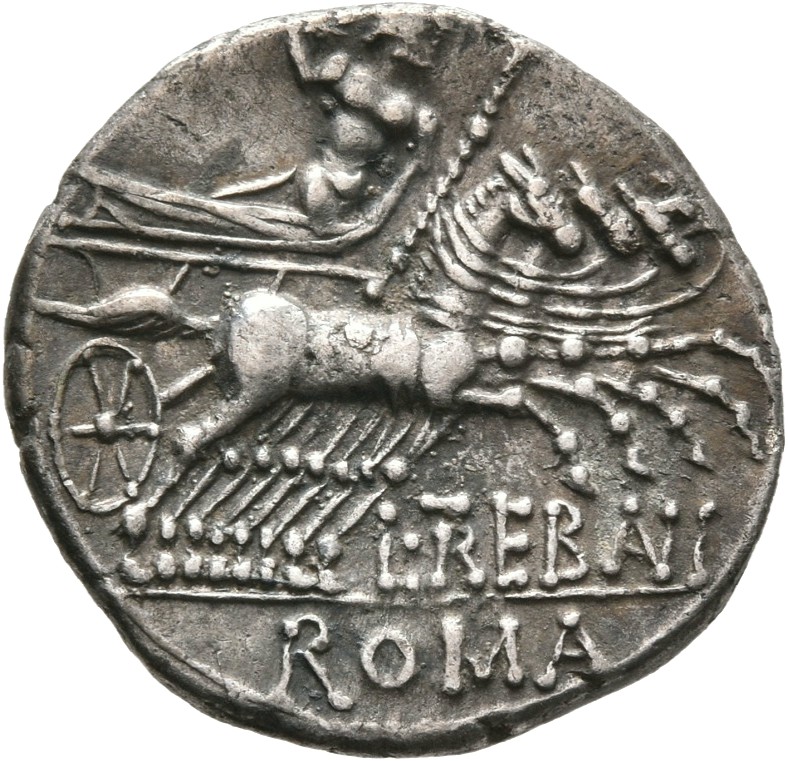
Today’s freak out was inspired by RRC 410. I’ve got a substantial almost complete article I’m working on pushing out the door for first feedback from friends and then proper peer-review. I started writing it for an edited volume but it jumped the shark and needs a different home. I’m on a second full pass on editing and engaging in image selection and creation as I go, so I can be sure the text and visuals communicate together.
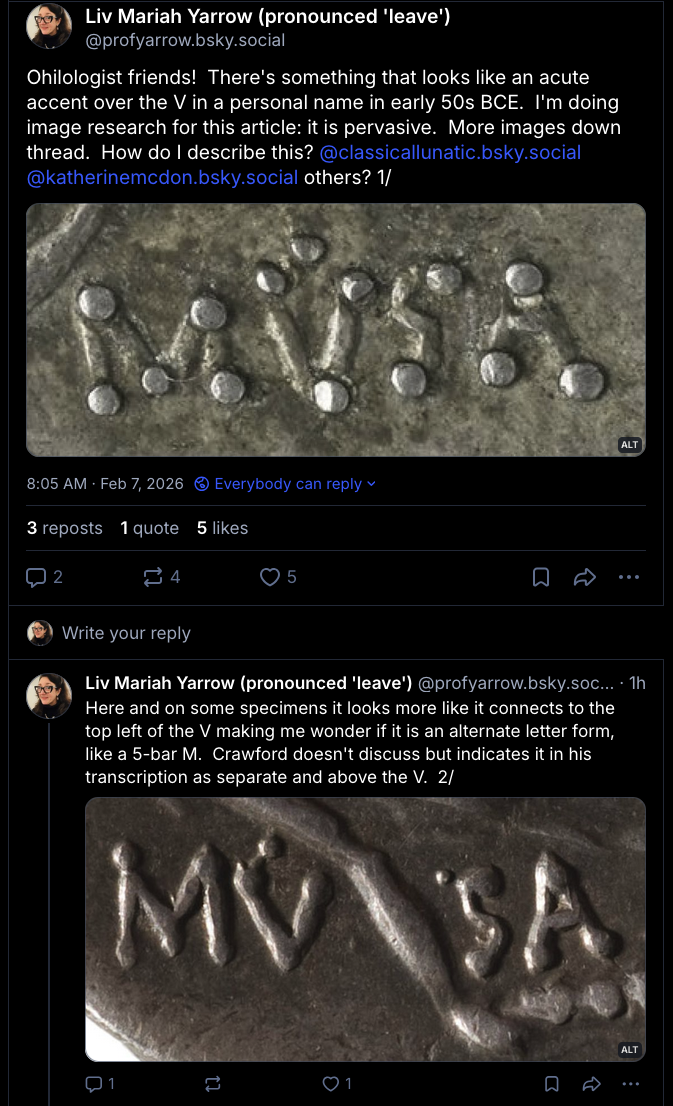
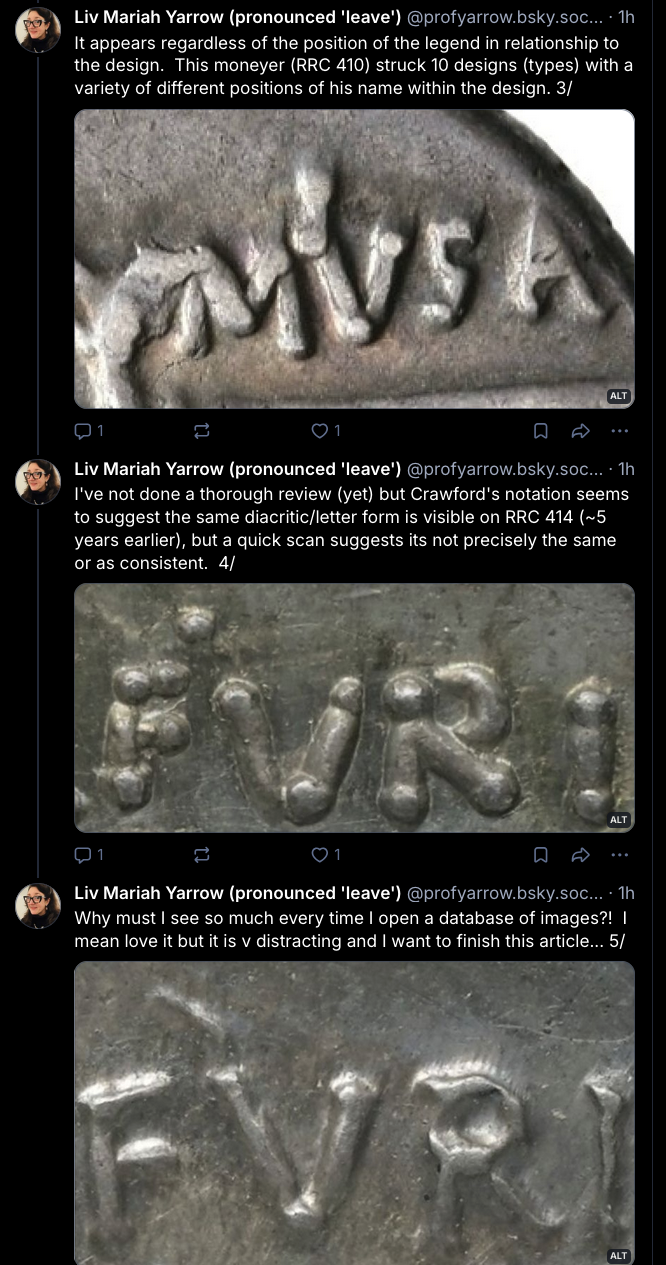
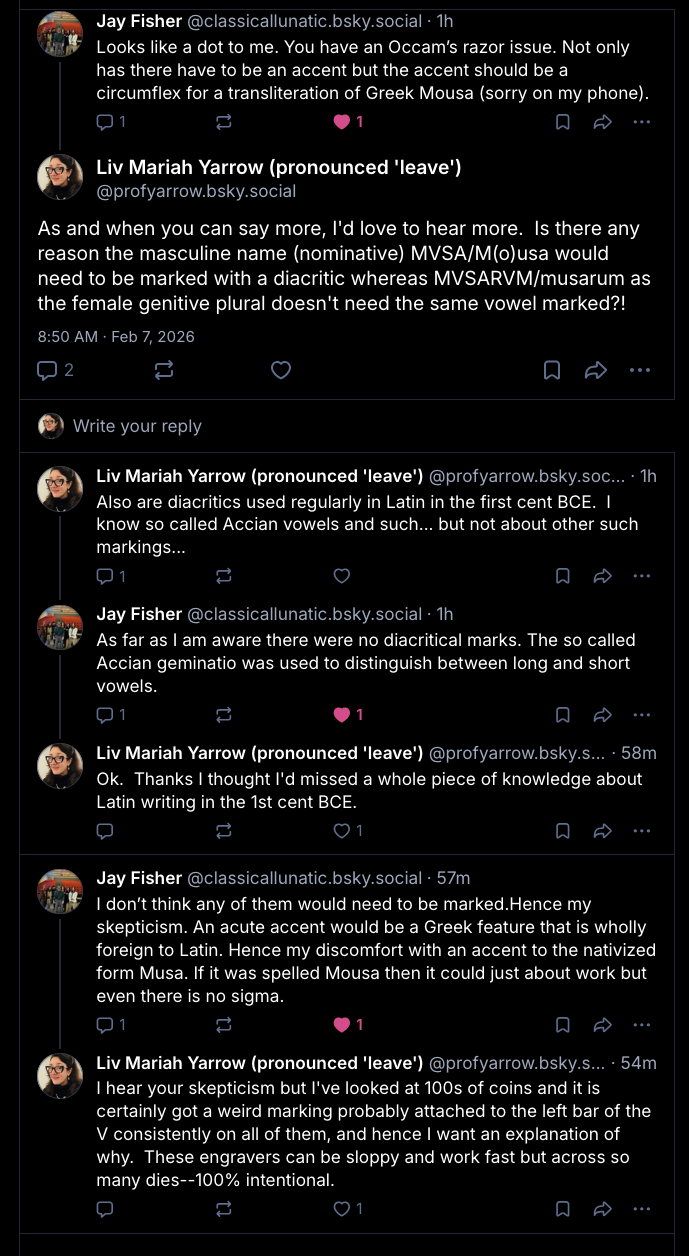
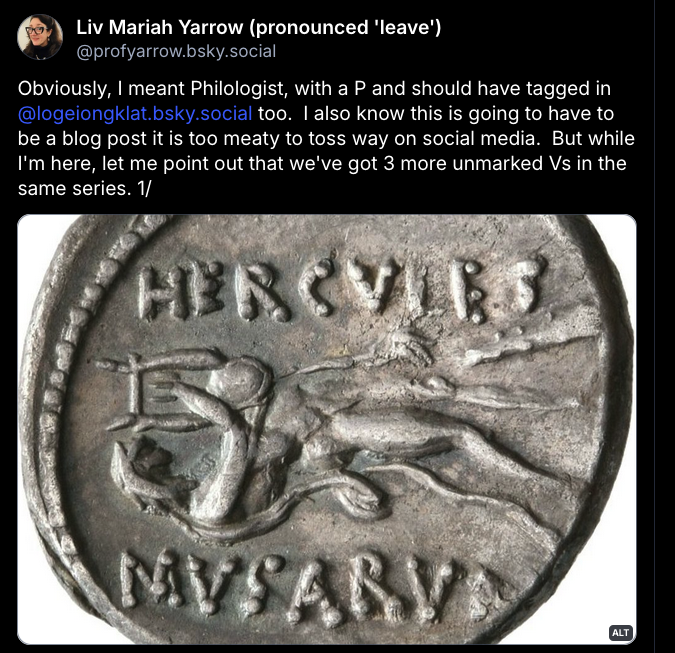
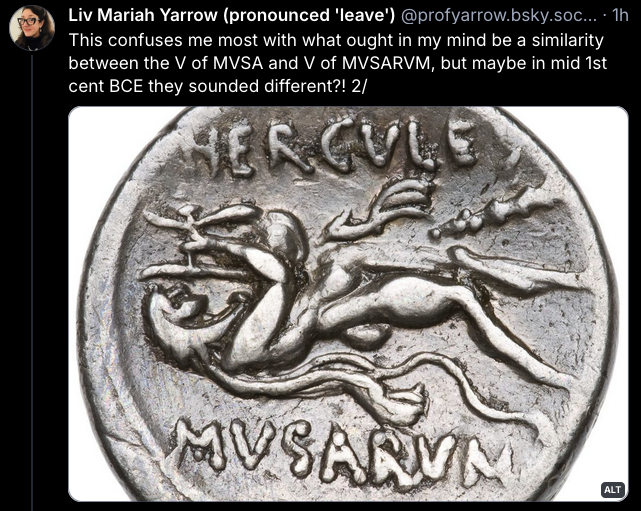
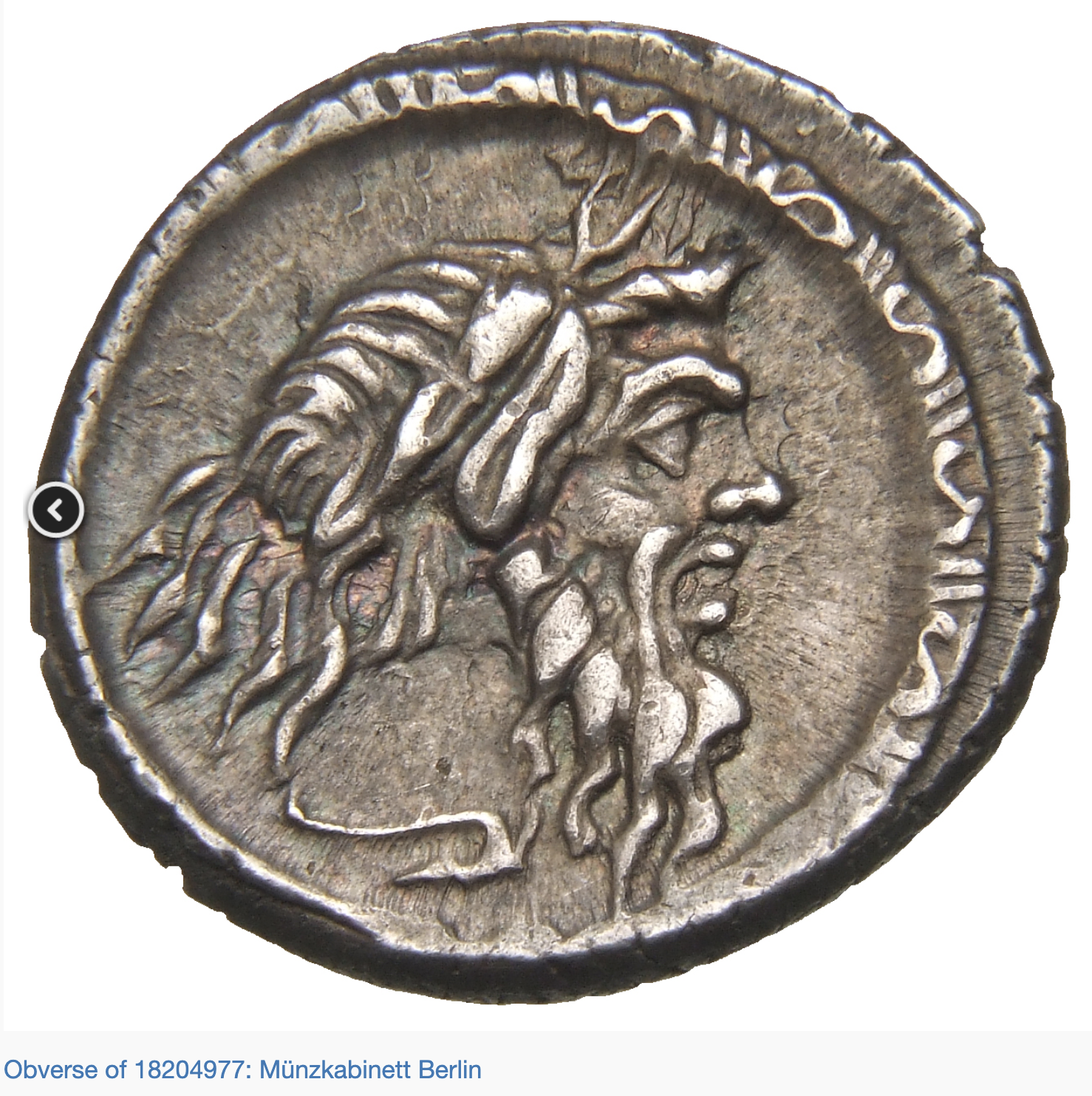
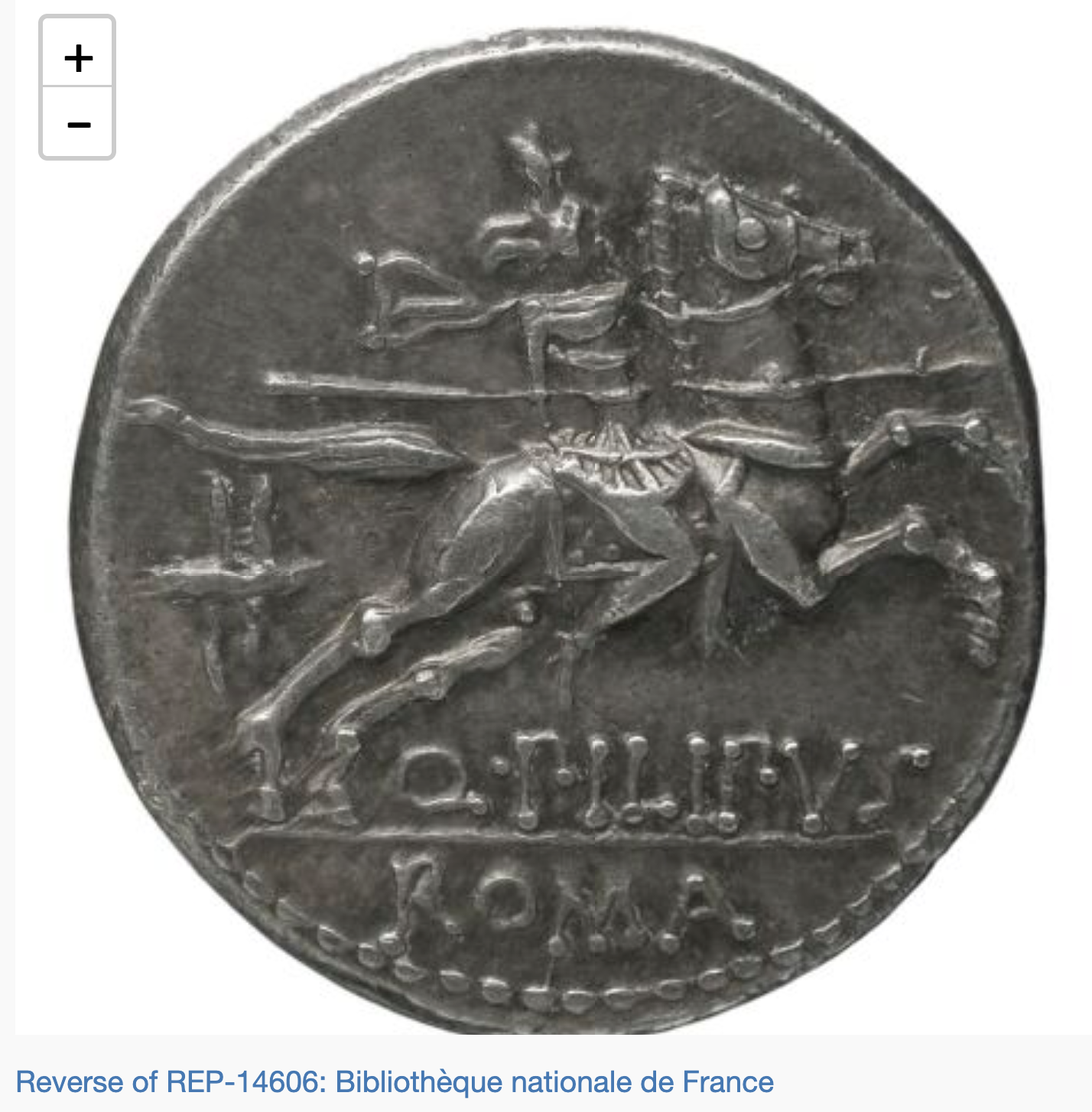
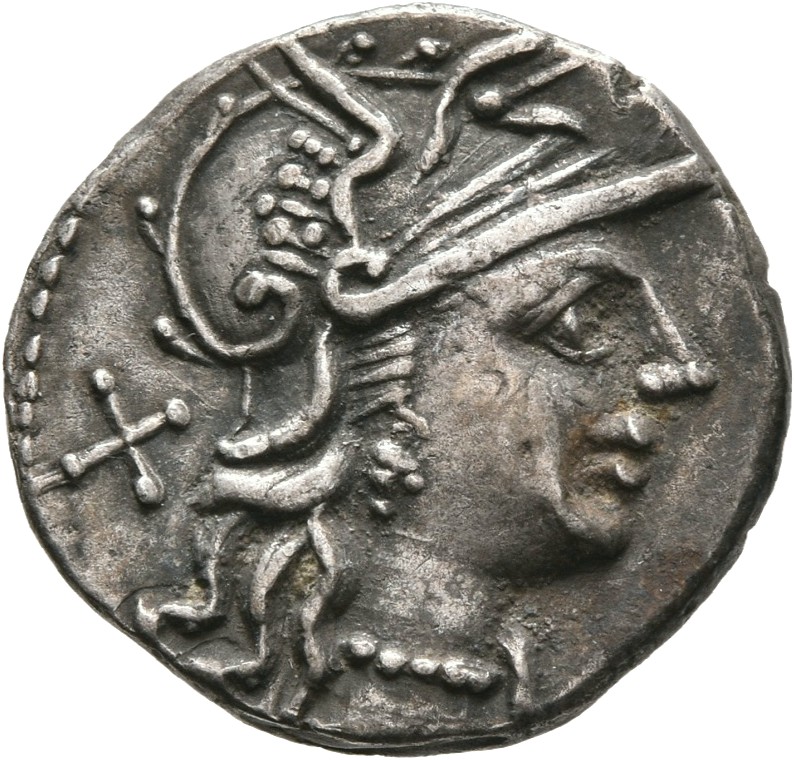
While looking for a legible specimen with a permissive image license, I noticed a weird feature of the legend and also observed that Crawford had noted the same feature but not commented on it. Oh! fascinating, I thought, and threw up a social media post that started to spiral. I put it on social media because in the first instance I deemed it irrelevant to my article and thus immediate goals. I flagged it as philological and thus outside my area even in my wording of those posts.
And now, I’m here blogging. Why?
Because ORTHOGRAPHY is a key aspect of DATING INSCRIPTIONS. I know this. There is even a sentence about this in my very article bemoaning that a stone inscription I discuss is lost and I can’t review letter forms to aid in dating. And, wait for it,
COIN LEGENDS are INSCRIPTIONS. So logically I must engage in orthographic analysis if I want to be complete in my review of potential dating clues. I’m kicking myself that the part of my brain that tells me I don’t do language stuff (even as I clearly do) tricks me into trying to ignore critical evidence.
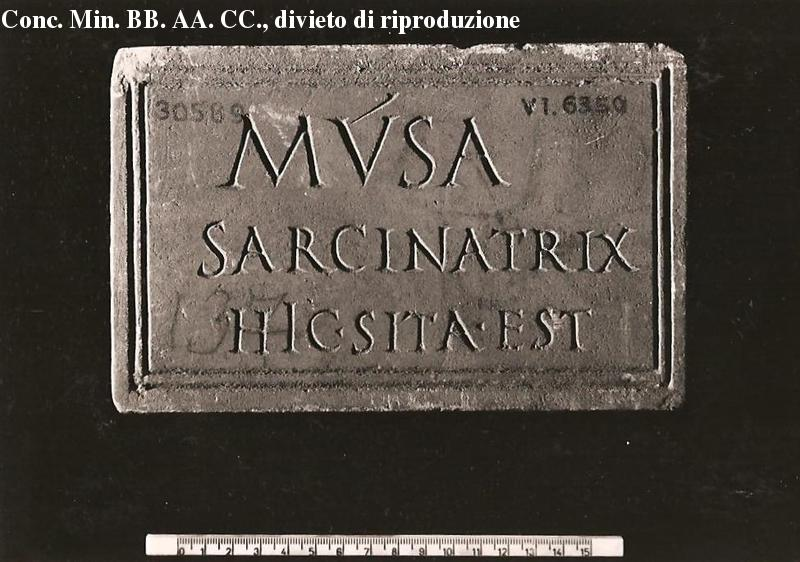
So after that prelude let’s see what’s up with the letter forms on Musa’s coin.
Letter Forms
Scroll down to bottom of post for social media screen shots of which this is a continuation.
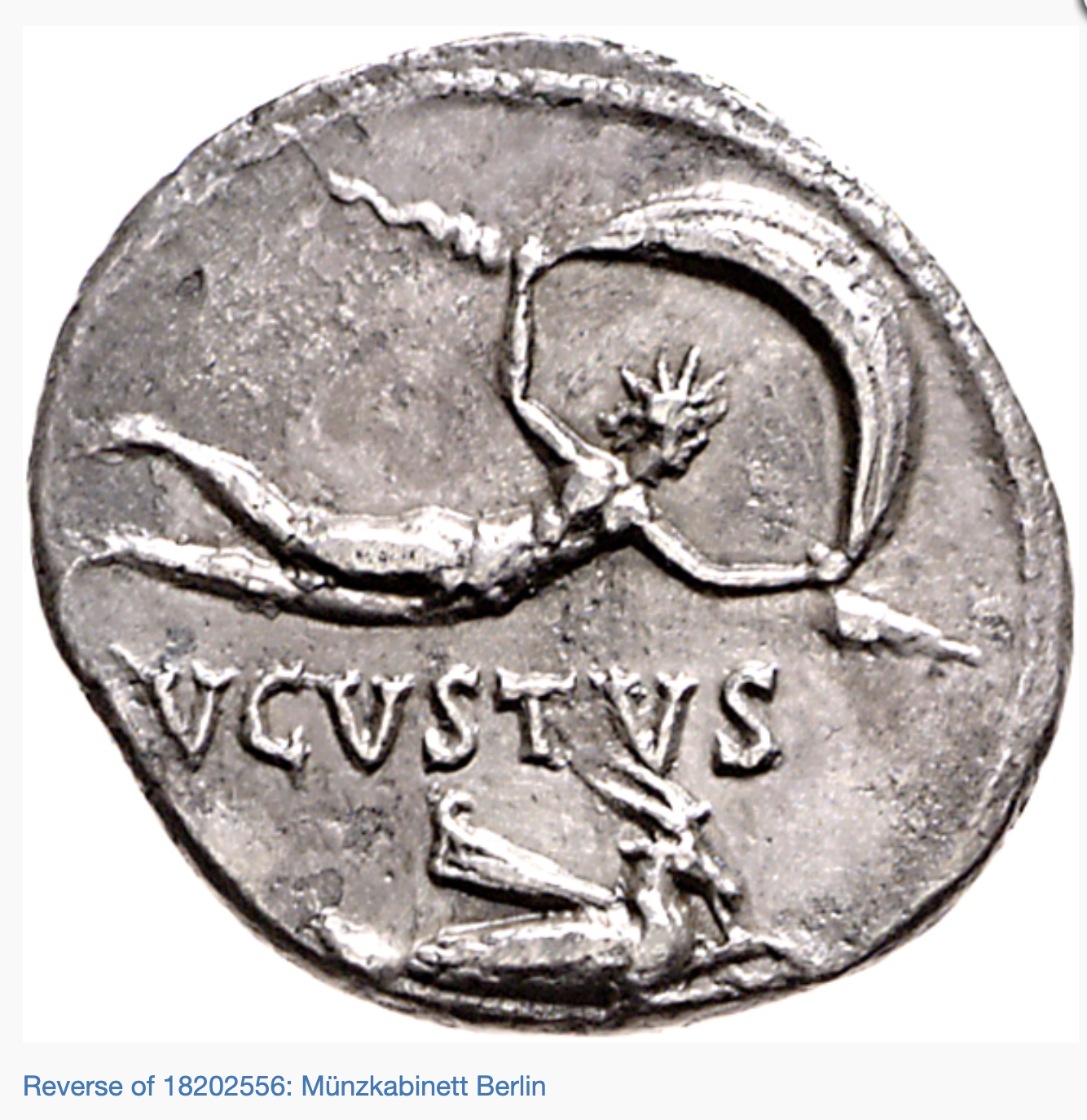
Numismatists are familiar with some basic epigraphic oddities common on the republican series. Ligature being perhaps the most common (and boy, have we discussed or alluded to the phenomenon a great deal on this blog). There is also the use of ‘archaic’ letter forms and spellings, these aren’t limited to coins but familiar to epigraphers working in the same period. Think of the 5 barred M used to abbreviate the praenomen Manius to differentiate it from Marcus, the open P that looks like a Greek Pi with a short right leg, the bent ‘italic’ L early in series but disappearing over time. I’m sure there are many more. As to spelling ‘variants’ most often the ‘difference’ is with the vowels, POBLICI for a gentleman we’d call now Publicius, or MAXSVMVS for someone we’d refer to as Maximus. The RRC series occasionally also has vowel reduplication like FEELIX to differentiate long and short vowels. Words are often truncated and abbreviated. Interestingly this often involves removing the terminal ending that would let us establish the case of words and thus its grammatical expression. We tend to assume in most of these truncations of moneyer’s names that the missing letters are -VS (nominative). Frankly coins are deeply untapped resource for studying republican orthography and its evolution. What first century Latin doesn’t have is a great deal of punctuation–just our favorite interpunct, that handy dot in the middle register which commonly separates words. There are the lines used above, below, through, and around, letters that are being used to represent numerals. But that is irrelevant. The best I’ve got thus far is the apex. Trying to understand the origins of this irregularly marking, got me to this article
Bodel, John. “Paragrams, punctuation, and system in ancient Roman script.” In The shape of script : how and why writing systems change, edited by Stephen Houston. School for Advanced Research advanced seminar series, 65-92. Santa Fe (N. M.): School for Advanced Research Pr., 2012.
I’m in love with it. It is such a good survey of evolution of letter forms and other orthographic elements (numerals, punctuation, etc…). However in it is survey quality it only cites examples and other scholarship in an illustrative not comprehensive way. Understandable and yet I’m hungry for more.
Having stated the rules which we must follow in speaking, I will now proceed to lay down the rules which must be observed when we write. Such rules are called orthography by the Greeks; let us style it the science of writing correctly. This science does not consist merely in the knowledge of the letters composing each syllable (such a study is beneath the dignity of a teacher of grammar), but, in my opinion, develops all its subtlety in connection with doubtful points. For instance, while it is absurd to place a apex over all long syllables since the quantity of most syllables is obvious from the very nature of the word which is written, it is all the same occasionally necessary, since the same letter involves a different meaning according as it is long or short. For example we determine whether malus is to mean an “apple tree” or a “bad man” by the use of the apex; palus means a “stake,” if the first syllable is long, a “marsh,” if it be short; again when the same letter is short in the nominative and long in the ablative, we generally require the apex to make it clear which quantity to understand.
Quintilian, Inst. Orat. 1.7.1-3
This is great, as is Bodel’s discussion of its highly irregular implementation and lookalikes. But it doesn’t get to my question of WHEN this started to be used. So I got back to:
Oliver, R. P. (1966). Apex and Sicilicus. American Journal of Philology, 87 (2), 129–170. https://doi.org/10.2307/292702
He states confidently “Diacritical signs first appear on inscriptions of the lastdecade of the second century B. C.” (p. 129) But then gives no examples! I want to scream. “The apex is found in thousands of inscriptions, and also inthe few surviving papyri and wax tablets, of the last six decades of the Republic and the first two centuries of the Principate,after which it becomes increasingly rare.” (p.131). I have learned from his footnotes our friend Garrucci tackled this subject, but that the author considers as the standard work:
J. Christiansen, De apicibus et I longis inscriptionum Latinarum (Husumi, 1889).
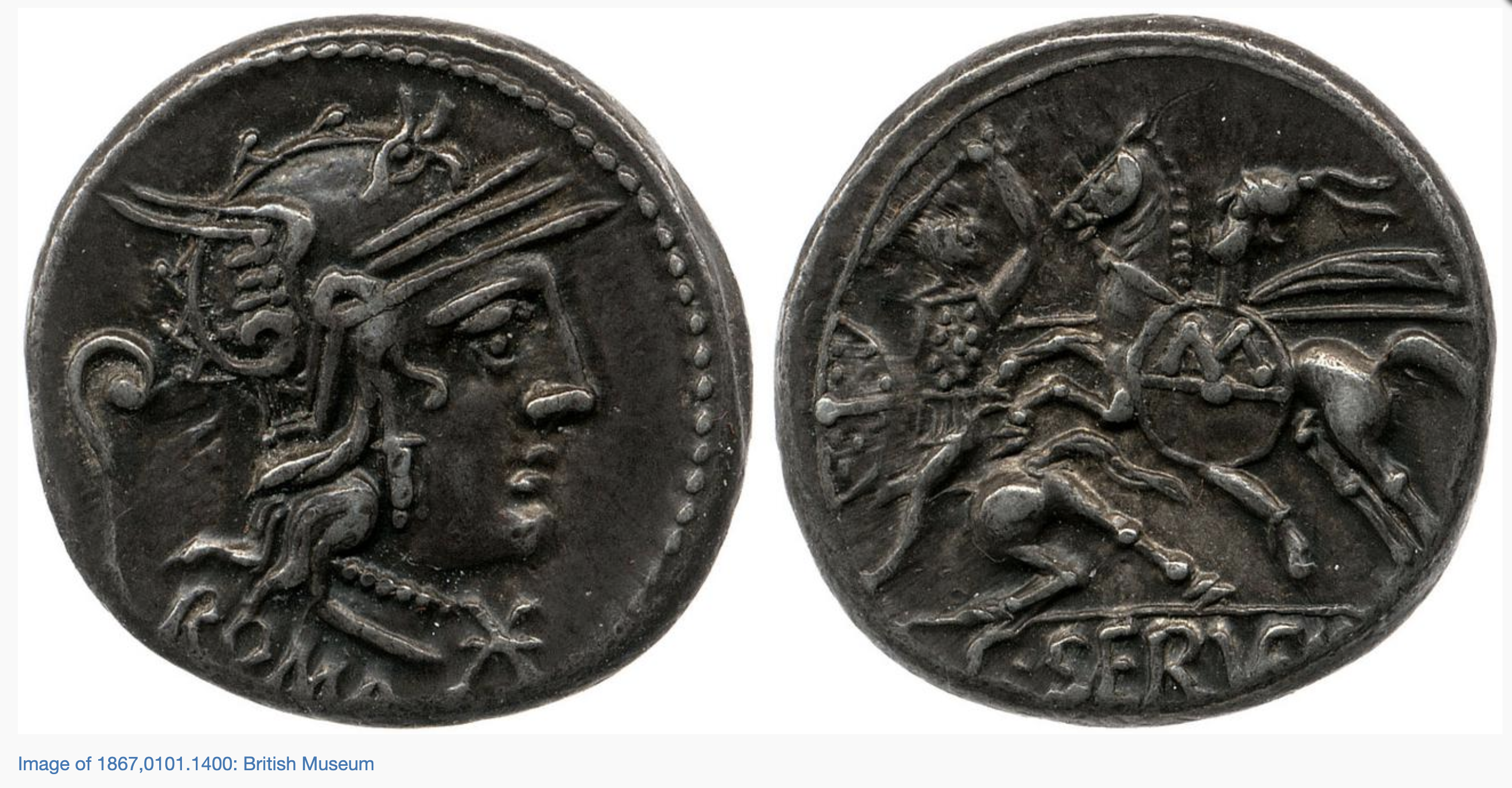
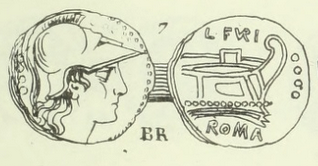
I’m giving up on Oliver and diving into Christiansen hoping for actual early examples I can visually compare. Unsurprisingly, a German scholar of the late 19th century is VERY fulsome in his citations. Although, can we talk about an age where a classics doctoral dissertation could be just 61 pages?!Anyway, page 4 the very first example given is a coin reference to what is now known as RRC 414 (L. Furius Cn. F. Brocchius). The author is relying on CIL for numismatic data (it seems) and thus assumes these denarii were made c. 55 BCE (700 C.U.C.). The does not make my life easier as I cannot confirm that certain coins exist for all they are discussed and illustrated by Riccio and seem to have been accepted by Mommsen (with an approximate date of 154 BCE (600 C.U.C.)). While Riccio’s illustrations below don’t show any apex on the V the transcription in CIL suggests some specimens may have one. The L. FVRI bronzes will have to wait for another day.
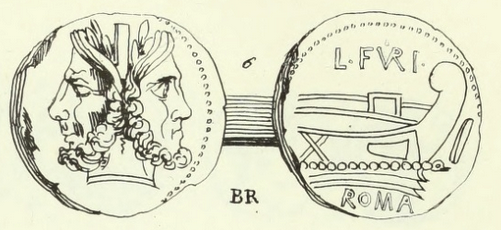
The second citation is to Musa’s coinage (RRC 410) which in CIL is dated to 60 BCE (695). First non-coin citation, cf. 44 BCE?.
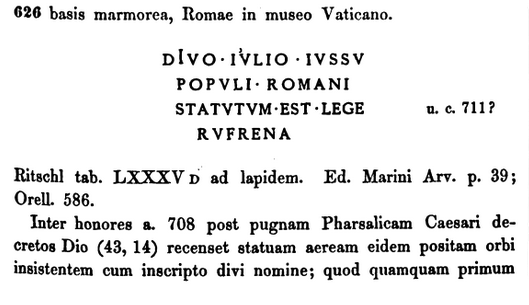
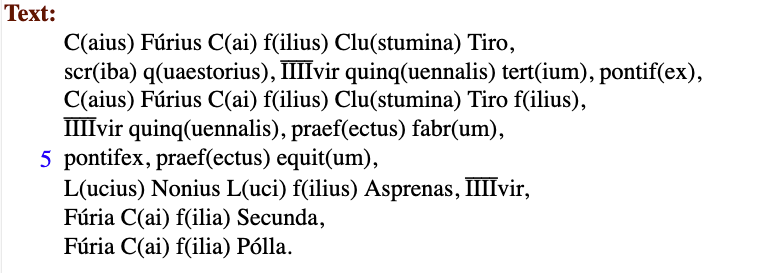
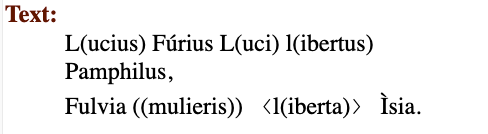
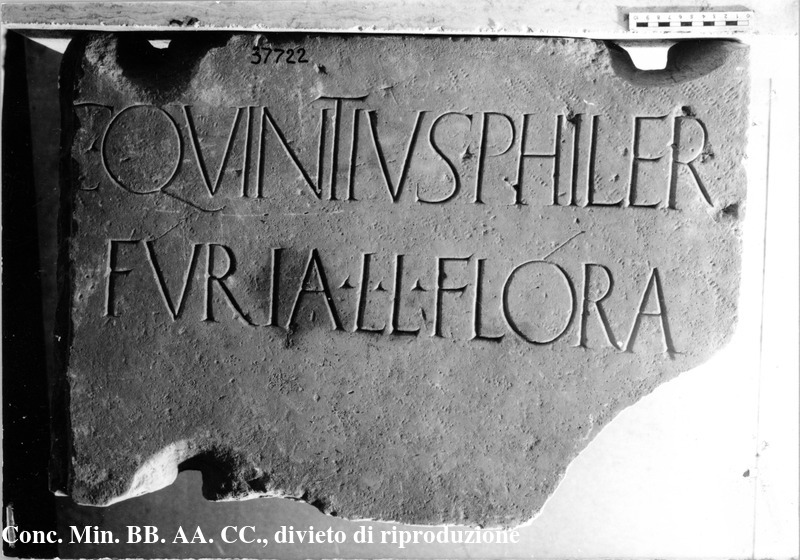
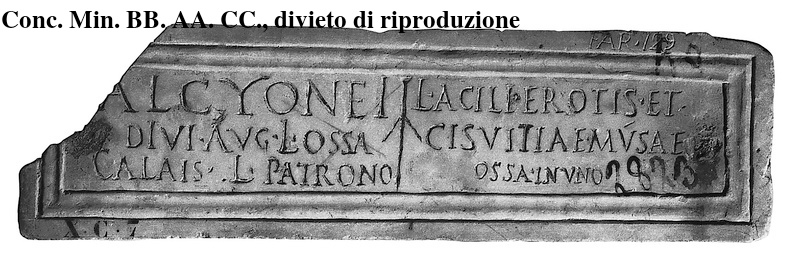
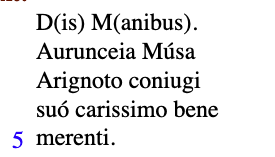
CIL 1.1009 is typically dated loosely to the age of Cicero and Augustus. It has an apex over the e in leti and the o of hora. CIL 1.1194 from Minturnae has 18(!) apices in the six lines of verse (iambic trimeters) composed about one of freedwomen commemorated. Dating is again difficult. Some of the spellings, such as the use of ei in domineis and leiberate and veiginti might point to 1st cent. BCE.
Jackpot! CIL 1.568 [= CIL 1(2), 679) is from Capua and with a consular date of 104 BCE (EDCS-17700039). Look at the word MVRVM the first V has an apex and the final VM are in ligature. There are other fun orthographic features of this stone, but I’m satisfied that by 104 BCE the apex was in use.
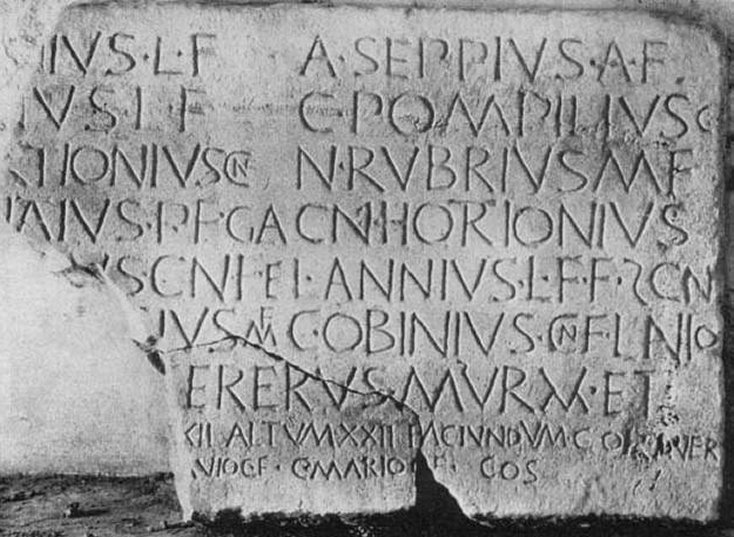
I could keep looking at inscriptions and checking refs from Christiansen but I think this is good enough for now.
Update 9 Feb 2025
Woke up Monday AM delighted to see Katherine McDonald jumped into the thread and pointed me to this:
Zair, Nicholas. “Apices and I-Longa: Introduction.” Chapter 18. In Orthographic Traditions and the Sub-Elite in the Roman Empire, 207–14. Cambridge Classical Studies. Cambridge: Cambridge University Press, 2023. [OPEN ACCESS]
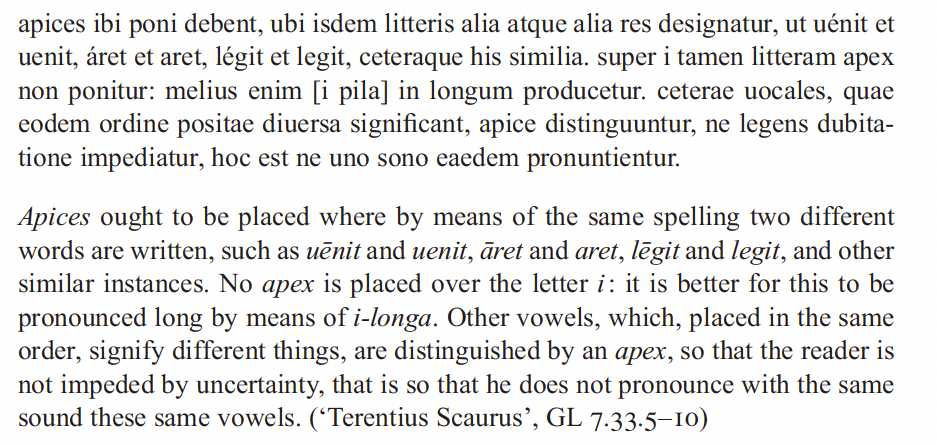
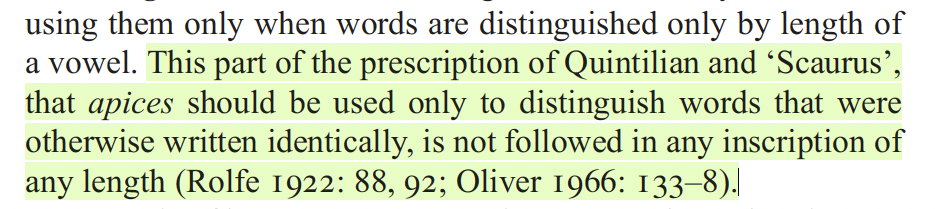
Zair chapter at once points out inconsistencies in usage and also seek to generalize the rules of use. He can only give one example where it seems the writer of a papyrus intended to mark every long vowel.

Now I’m just totally geeking out at the states for usage of apices in the Laudatio Turia and Res Gestae. Notably a minority of ‘short’ vowels are also marked with apices. Besides vowel length a variety of other functions have been observed/intuited by past scholars.
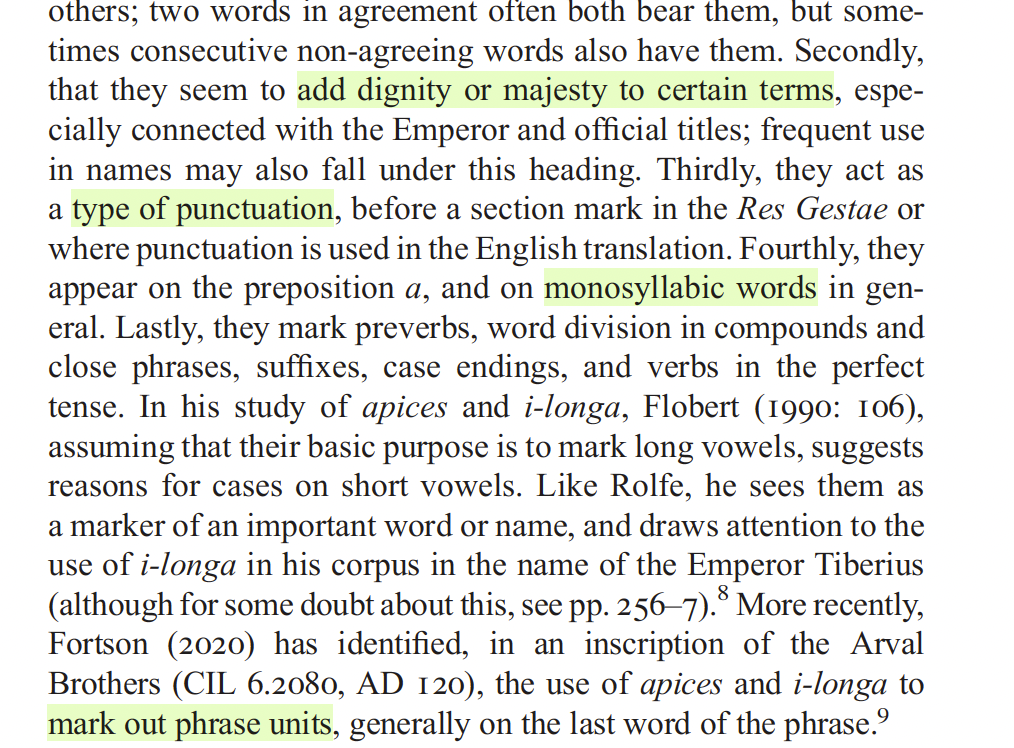
Page 212 then makes clear that the trends look different if one focuses on sub-elite texts and the author believes that it is more associated with how particular writers (scribes, stonemasons, etc…) were educated.
—
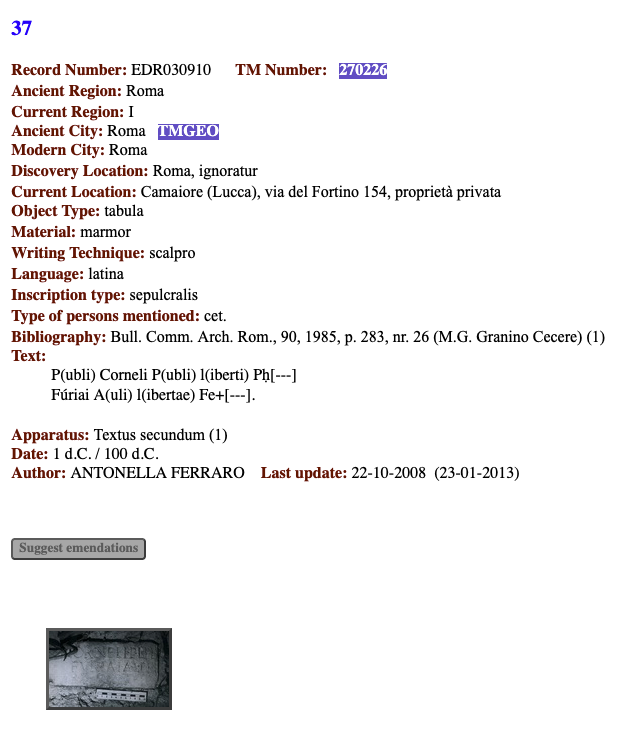
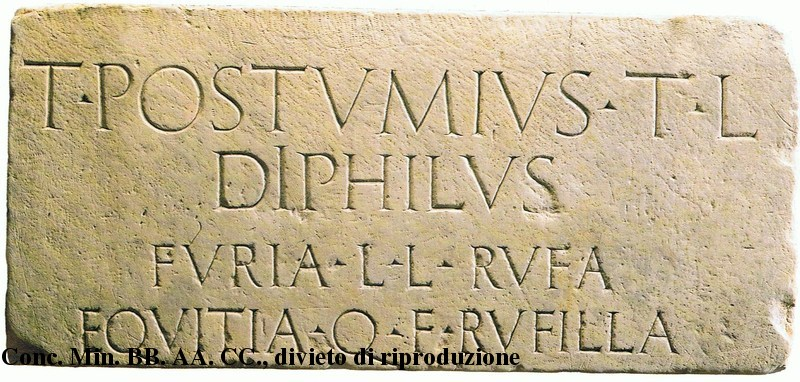
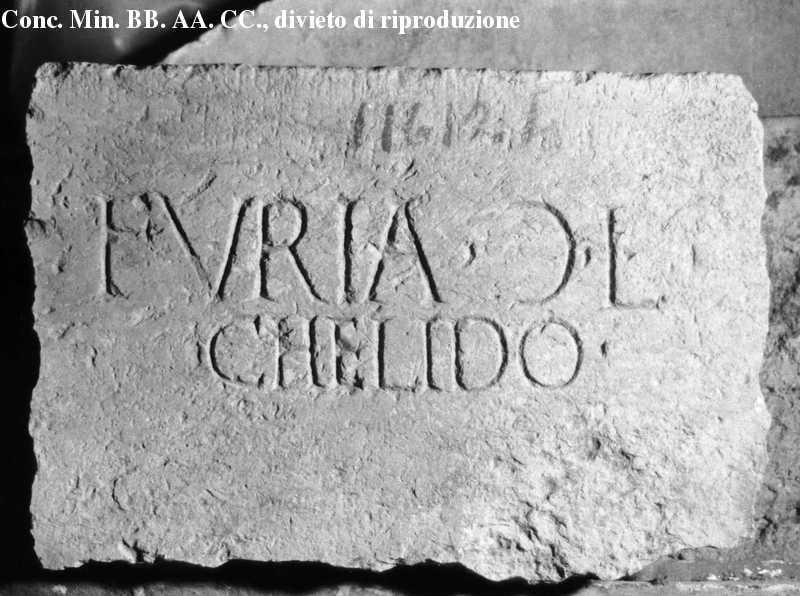
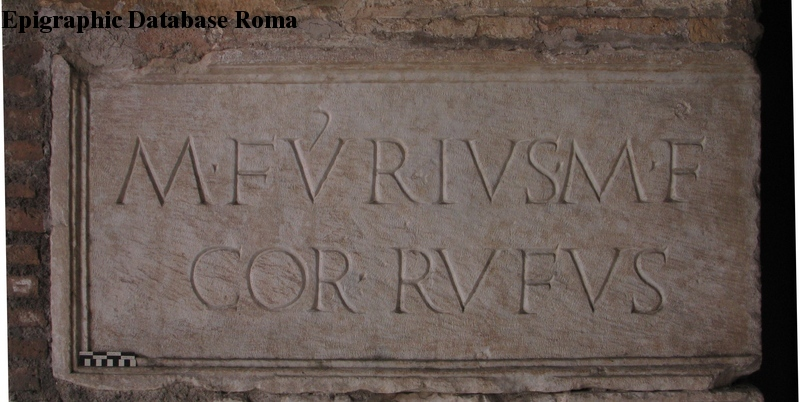
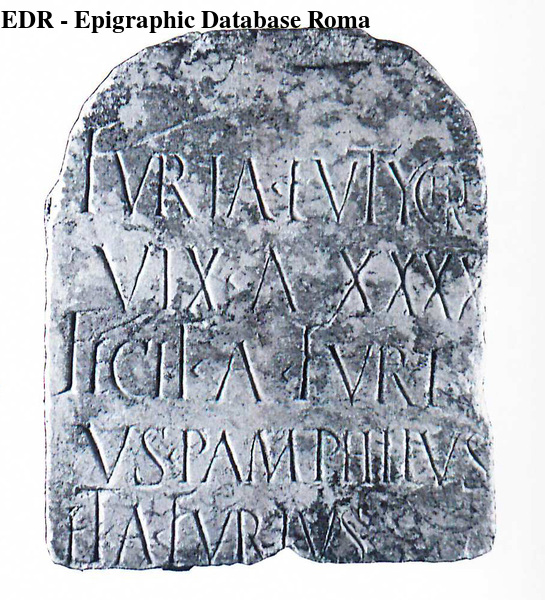
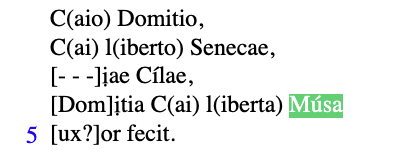
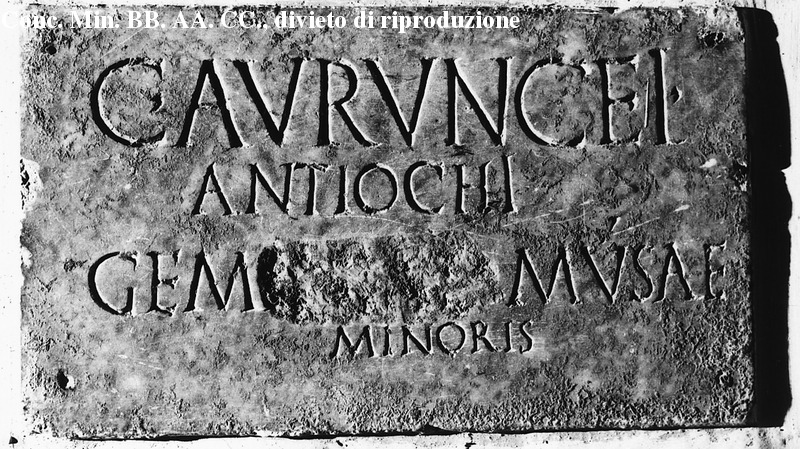
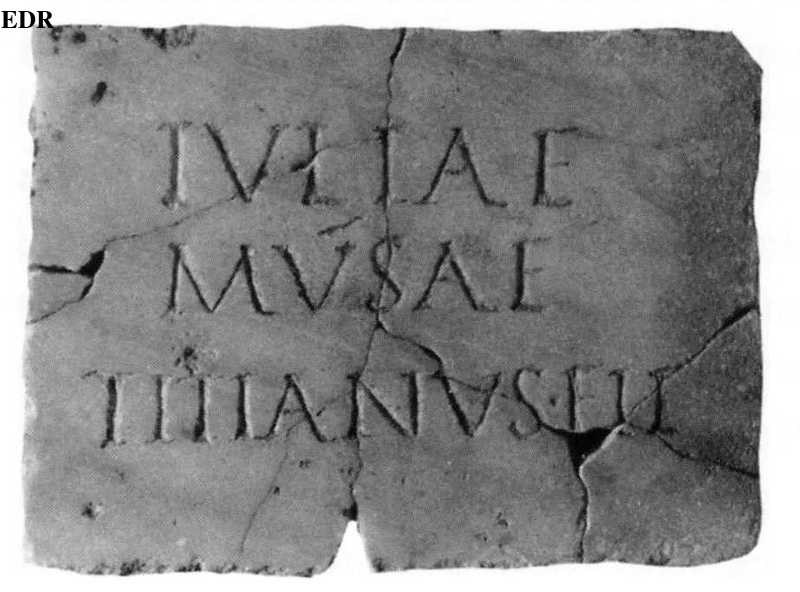
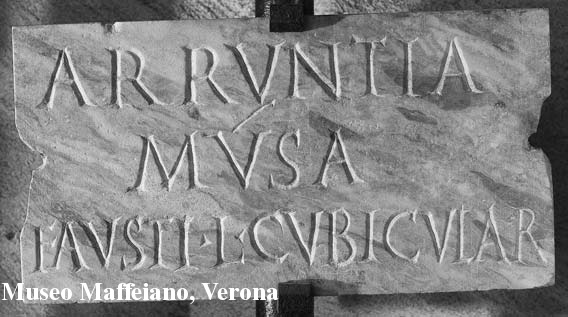
Record Number: EDR134386
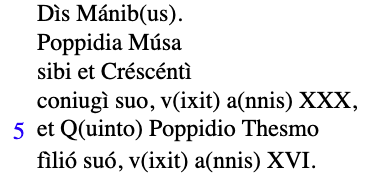
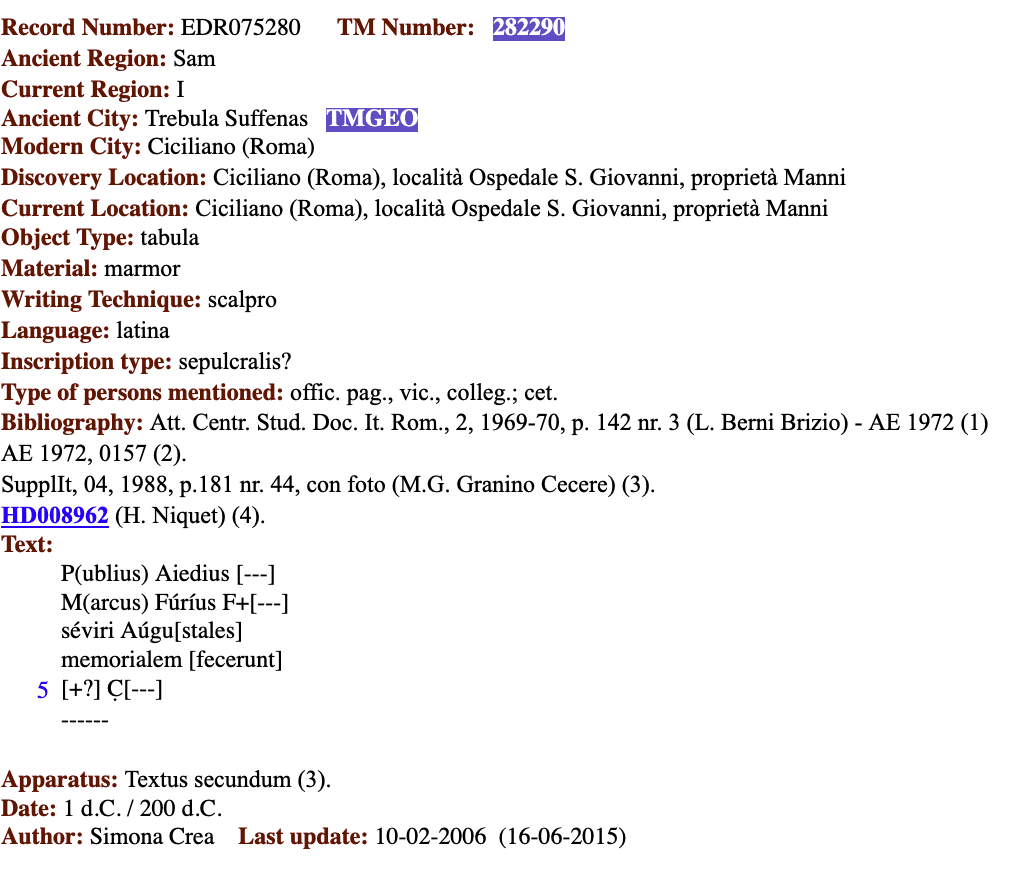
Record Number: EDR151099
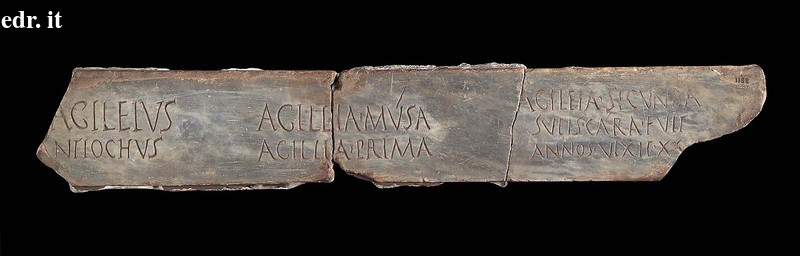
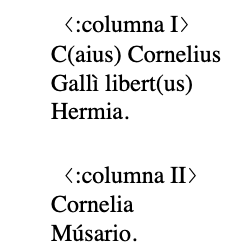
—