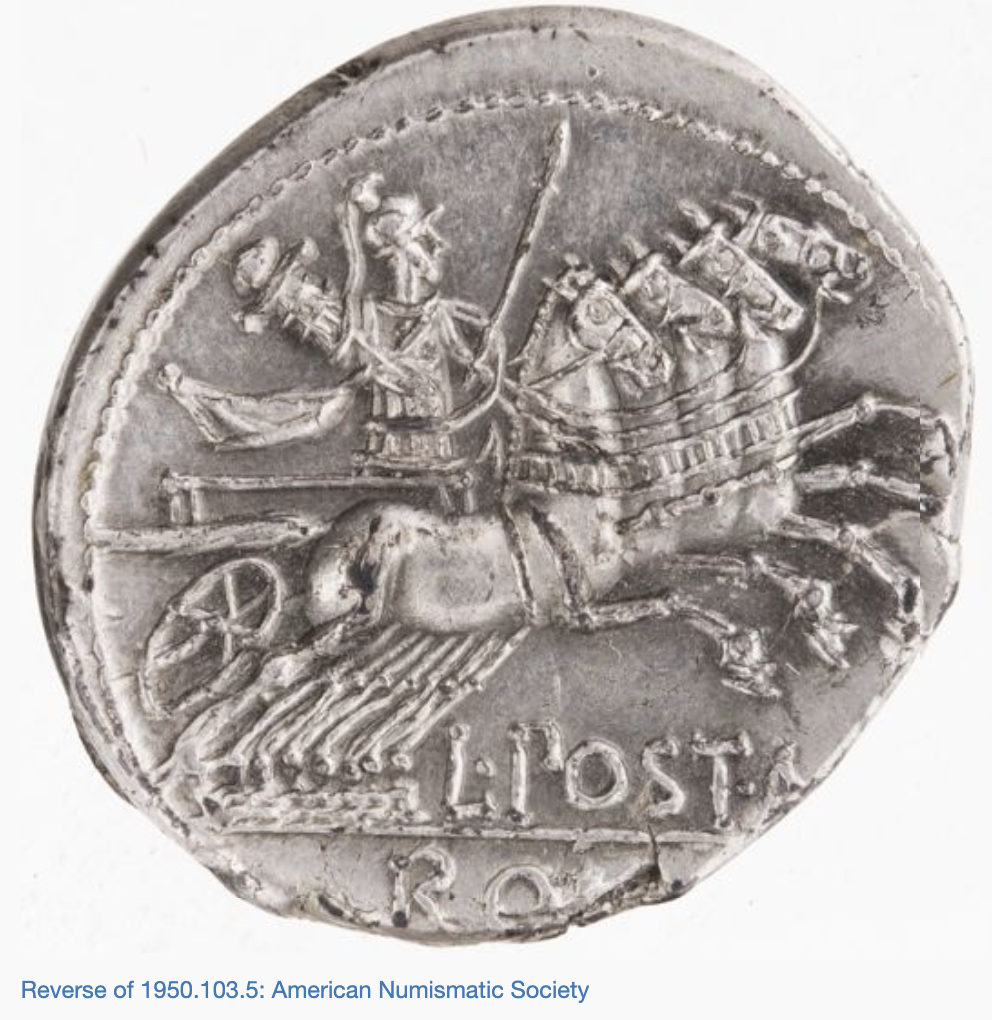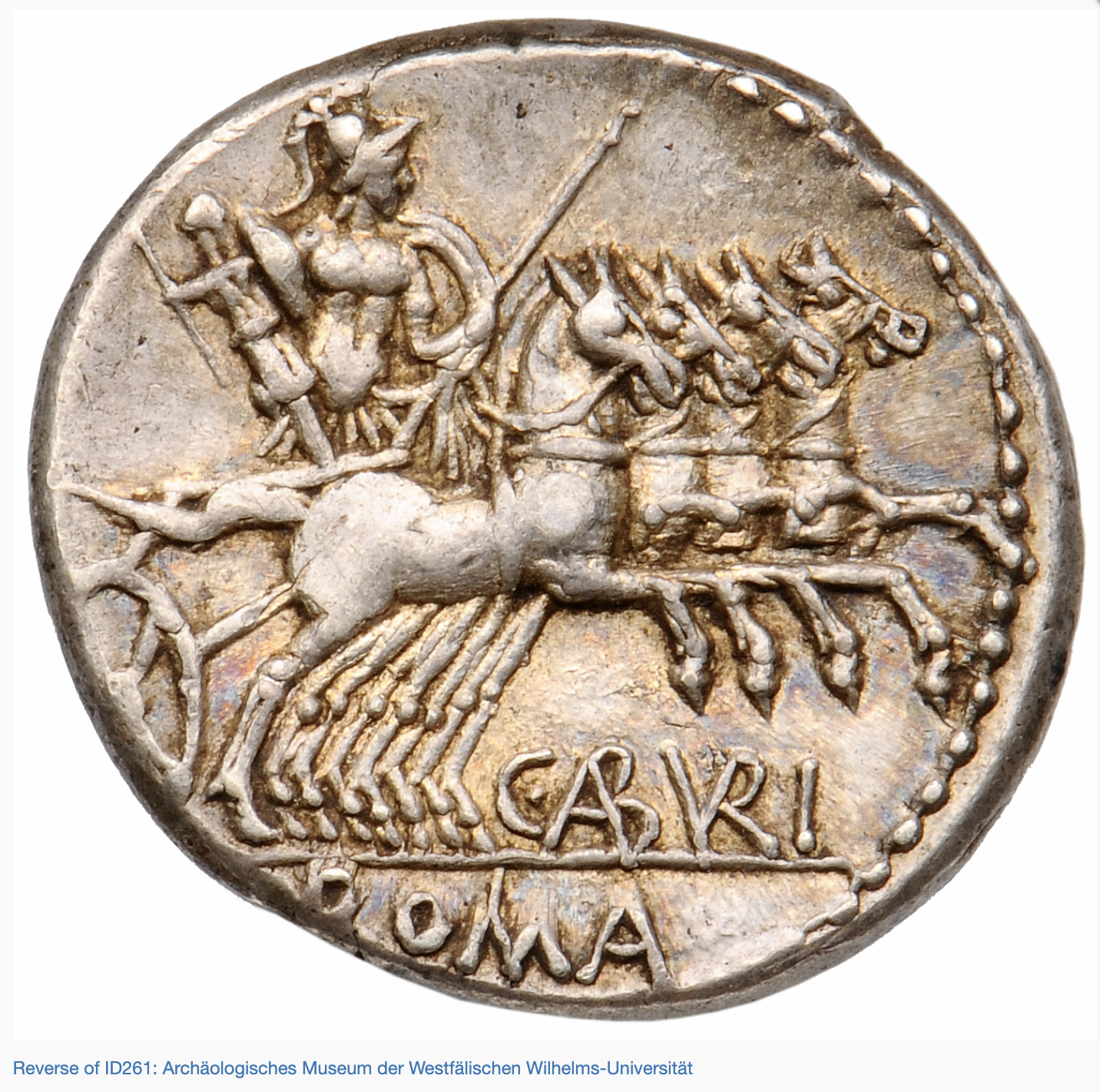
60 out of 410 days: Serrati

Image

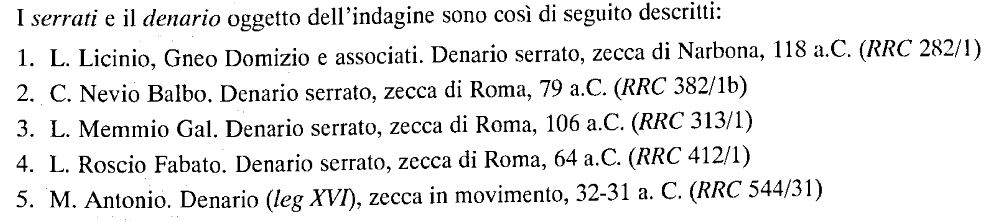
Serrated Denarii are less than 5 percent of all Roman Republican Issues. And their production is certainly not consisten,t as the above timeline shows. In constructing it I’ve deferred mostly to Hersh & Walker and Mattingly, and noted Hollstein’s disagreements. Even if one prefers one dating assignment over the other the big pattern doesn’t change. A few early issues, most notably the Narbo issue, four issues in the midst of the Marian period when Roman was embattled against the Cimbri and the Teutoni, and then a big uptake around the time of Sulla’s return, followed by petering out over about the next two decades. Crawford held that it must be an aesthetic as it would not adequately deter forgeries. The awkward uneven execution makes it hard to consider it likely to have been an aesthetic choice.

Kraft et al. has undertaken a recent analysis:

A number of serrated silver denars of the Roman Republic and a Greek bronze coin were investigated, paying special attention to the notches, in order to reveal their production technique. Particular interest was devoted to three contemporary forgeries of serrated denars, because the official pure silver issues were also available for inspection. Several microbeam analytical techniques were applied, such as scanning electron microscopy(SEM), electron probe micro-analysis (EPMA) and secondary ion mass spectrometry(SIMS). The surfaces of the notches, which show traces of the tools used, were investigated by SEM. In the case of the forged coins, the thickness of the silver layer (inside the notches as well as on the surface of the coin) was determined by SEM and SIMS. The main components of the surfaces were similar in both cases as measured by EPMA. Combining the results, it is possible to reconstruct the steps in the production of the serrated denars. The investigations also permit a review of different opinions about the purpose of the notches.

Their conclusion is that forgers using the foil technique and the official mint both used the same technique: chiseling each notch into the blank prior to its heating and striking. AND, that it is likely that serrati were preferred because they where perceived as less likely to be forged. It would have been a costly labor intensive technique, so there must have been some perceived benefit. It is tempting to connect the height of their production with the monetary anxieties reflected in the legislation we talked about yesterday.

Tacitus tells us in the Germania:

Silver and gold the gods, I know not whether in their favor or anger, have denied to this country. [35] Not that I would assert that no veins of these metals are generated in Germany; for who has made the search? The possession of them is not coveted by these people as it is by us. Vessels of silver are indeed to be seen among them, which have been presented to their ambassadors and chiefs; but they are held in no higher estimation than earthenware. The borderers, however, set a value on gold and silver for the purpose of commerce, and have learned to distinguish several kinds of our coin, some of which they prefer to others: the remoter inhabitants continue the more simple and ancient usage of bartering commodities. The money preferred by the Germans is the old and well-known species, such as the Serrati and Bigati. [36] They are also better pleased with silver than gold; [37] not on account of any fondness for that metal, but because the smaller money is more convenient in their common and petty merchandise.

This testimony has certainly influenced our belief that these coins were more trusted. Even if they made up a small percentage of the coins in circulation they were certainly noticable, and would have been easy to select out in Imperial times as older, and perhaps purer than some contemporary issues.

Here is Duncan Jones‘ chart showing decreasing fineness:

Image

However, can we tell is serrati were really preferred in a more contemporary context? For this we’d need hoard evidence. There is no hoard I have found where serrati make up even a majority of the coins, rarely even 10%. I’d need to do a proper statistical analysis of the hoards to see if they are retained in greater numbers than one might expect. Unfortunately I had some problems pulling the data from the CHRR online and I don’t absolutely need to find out to write the book, so I shall probably let it go for now.

The Italian scholarship is on ILL order. If it changes my thinking, I’m sure you’ll be the first to know.

Wondering what these things look like? Click Here.

What is interesting is that periodically we find a coin of an unserrated issue that has been serrated after it has entered circulation (in ancient times? in modern times?):

Obverse Image

Was this a means of ‘adding value’ in someway?

Update 24 January 2014:  Just for completeness, here is the English abstract of the Italian article from Bollettino di numismatica 17.1 nos.32-33 (Jan/Dec 1999): p.104-128.  Pancotti and Calabria consider the consequences of these finding in the Proceedings of the XVIth International Numismatic Congress (2009), 888-892.  They do not consider the work of Kraft et al.  Likewise Kraft seems unaware of de Caro et al.  A sad state of affairs.
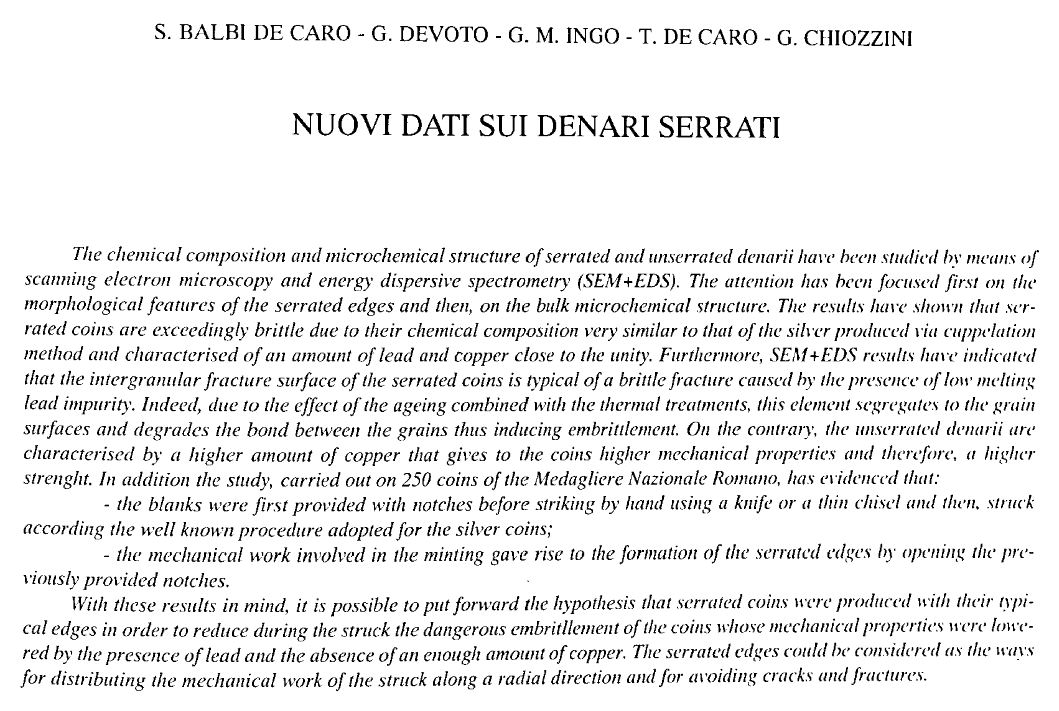
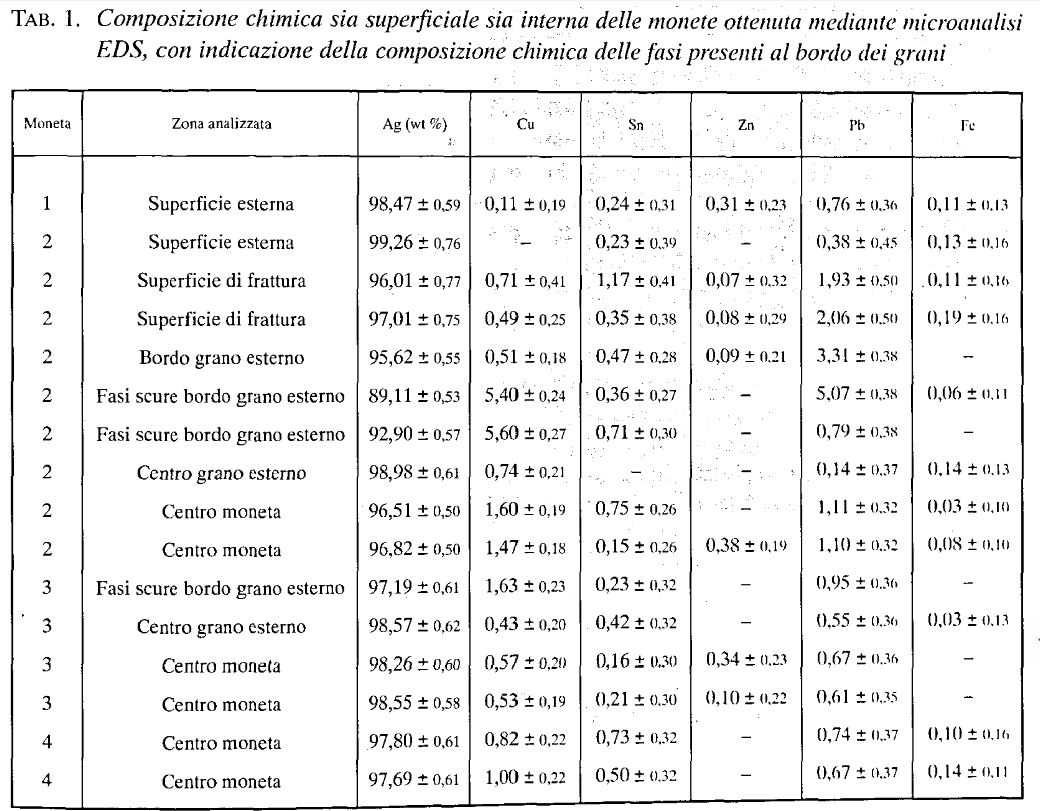
CaptureThe abstract is a little misleading.  250 coins were not looked at with SEM+EDS only 5 got the full treatment.  The 250 is the number examined with an ‘ordinary’ (?) microscope.  Here’s the data on the five that got the works:
Capture

Capture1In inexplicably they use E. R. CALEY, Analysis of Ancient Metals, Pergamon Press, Oxford 1964 for comparative data instead of Walker, D. R. (1980) The silver content of the Roman Republican coinage’, in D.M. Metcalf, W.M. Oddy (edd.) Metallurgy in numismatics, 1 (London), 55-72.  Another missed opportunity.


59 out 410 days: Lex Cornelia De Falsis

Anyone who knowingly and maliciously writes or reads publicly, substitutes, suppresses, removes, re-seals, or erases a will, or any other written instrument; and anyone who engraves a false seal, or makes one, or impresses it, or exhibits it; and anyone who counterfeits gold or silver money, or washes, melts, scrapes, spoils, or adulterates any coin bearing the impression of the face of the Emperor, or refuses to accept it, unless it is counterfeit, shall, if of superior rank, be deported to an island, and if of inferior station, be sentenced to the mines, or punished capitally. Slaves if manumitted after the crime has been perpetrated, shall be crucified.

Lo Cascio believes that the portion of this passage on the crime of refusing a coin goes back to Sulla like the rest (p. 161). And, that originally it would have been something like the mark of the state, rather than the face of the emperor. Heinrichs thinks that it this regulation goes back to Marcus Gratidianus and that it is key for understanding the problem he was trying to address, that is according to Heinrichs: underweight coins whose value depended on their relationship to the Roman pound (esp. p. 267). [If I’ve understood the German properly!]

Given my current obsession with seals, I’m also rather taken with how the same law that covers counterfeiting coins also applies to false seals.

58 out of 410 days: Language Test Failure

20130814-141926.jpg
[Such a sad little photo! I’ll do better with my next from-the-phone post.]
So standing in line at the consulate waiting to pick up our visas and a man starts talking to me in Turkish. Did I use the very lesson I learned this morning? Did I say “Türkçe bilmiyorum”? Nope. I stood there like a deer in headlights and waited for him to switch to English. Oh well.

AND I just learned SDA’s companion visa hasn’t yet been approved. Just my research visa. This will not be the last trip here…

57 out of 410 Days: Long Hand

I resorted to long hand. I left the house in the pouring rain and headed for a place of Milk and Honey. [It’s actually called that, but I drank coffee instead.] I brought a print out of chapter six to date and gave it a careful editing and started writing. Six new pages later I was feeling pretty pleased with myself. Still am really.

I left because a man left a backpack and ran out of the coffee shop. A clean cut white man with all the trappings of privilege. He asked if me and another anonymous coffee shop surfer would we be there for a while, dropped an expensive looking computer bag, and hustled out. He didn’t even wait for a response. He didn’t buy anything or even look towards the register. When he crossed the street and started walking down the opposite block, he slowed and began tucking in his shirt as he moved out of view. Yes, I watched him go. Maybe he hasn’t been in Brooklyn long. You just don’t do that. Who am I to him? And frankly, in this day and age I’m no more likely to carry a package on plane for a stranger than I am to watch a bag. Paranoid? Maybe. Is that a true representation of myself and my actions? Nope. I’ve watched a lot of bags for a lot of strangers over the years in a variety of locations and always ALWAYS turned down invitations to be a mule. [That’s another story.] Something must have hit me differently this time.

Most of my emigrant neighbors and friends of color are treated with suspicion on public transportation and in many other public and private spaces. It sucks. The pervasive culture of fear erodes trust in our shared institutions.

I was faced with a choice: Do I let myself think the worst of the kind of person whom no-one usually suspects? Something about his manner just made me nervy and on edge. Or, do I tell myself to get over it, tamp down my anxiety, and keep on drinking coffee and scribbling away?

I gave the backpack one last look and glanced around the place and decided that maybe I really could do with an afternoon run. I feel a little silly, but I don’t regret it. I guess the better thing to do would have been to say “No, you really shouldn’t leave your bag here unattended.” But after the fact (and his fast exit), I decided not to infect my overblown imagination regarding what the backpack could contain on my fellow coffee drinkers in our little gentrified haven. Frankly, I doubted anyone would share my sense that something was off. I’d “camped” enough for the day any how.

The run was lovely. Then I got to fight with the bank about a wire transfer to Turkey for a very long time. Again. That killed what forward momentum I had, besides entering edits during the discordant hold music. I had clear forgotten my little bout of paranoia earlier, until I came to this ritual confession of the contents of my day.

I keep wondering why I might have thought something was off. What was the trigger?

The owner of the previous establishment to occupy that space was the victim of a mob-style execution. The body was dumped in nearly unidentifiable condition a few states away. Actually, it was found quite close to where SDA’s parents live. Maybe that.

Maybe something else entirely.

Maybe I was just angry at his thoughtless (and largely correct) assumption that his privilege would let him drop a bag and walk away from it with no consequences.

I’m really glad the “trick” of writing by hand worked to get the words flowing in a continuous manner. My learning disability also means my fine motor skills are crap. I doubt anyone but me could decipher the scrawl.

55 and 56 out of 410 Days: A Better Sort of King

Numa is the second legendary king of Rome and more than the individual heroic founders of the city (Aeneas, Romulus, etc…) he gets his own numismatic commemorations in the late Republic. Moreover, he’s commemorated by a number of families in a variety of styles. The moneyer on this specimen has put Numa’s name on the diadem to save room on the flan for for his own name!

Perhaps most interesting is this denarius where his ‘portrait’ is unlabeled on the obverse:

But which is clearly identified with a legend on the bronze coinage in the same series:

Ancus Marcius, his grandson, also gets an obverse of his own:

Some of these commemorations are simply tying the moneyer to the legendary kings of Rome, but the the narrative of these kings was also particularly attractive. Numa especially was remembered for establishing religious traditions and thus the state’s continued well being through a correct relationship with the gods.

***

The last few days as I’ve been writing just about every image seems to me to lead to five new thoughts, leading off in a dozen different directions. I find I keep telling myself ‘not now!’ come back to it later. And yet, just the time to put a note in the correct file or update an old blog post (which amounts to the same thing these days) so I can come back to it later seems to consume all the space for writing. “Where was I?” feels like a constant refrain. I need to find away to stay more focused and efficient as a I fact-check what I’m writing. Perhaps that’s the difficulty: that I want to check my accuracy as I write, instead of saying what I generally believe to be true and then editing and correcting at a later stage.

54 out of 410 Days: Sign of Tanit

Capture.JPG

The fabulous Dr. Hannah of Oxford pointed out in comments that this type (RRC 460/4) would be relevant to yesterday’s post. That Victory carrying a caduceus: with victory comes peace! Such a perfect summation of Roman ideological rhetoric during the Civil Wars. I’ve been turning a blind eye to everything post Caesar’s crossing of the Rubicon, because that’s when the book terminates, but, of course, it is still the same monetary system. The chaos of the symbolism of that later period through Augustus really does deserve its own book and I prefer the earlier periods, but I am missing out on some fun with the present schema.

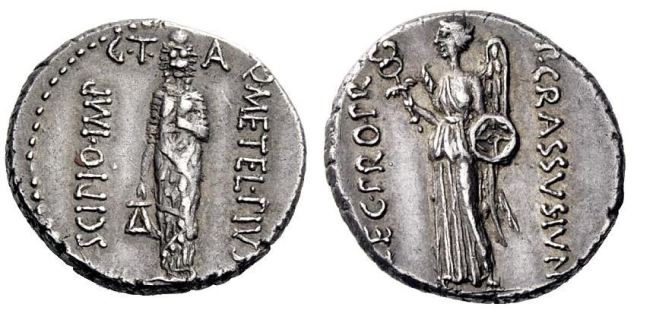
This type is really intriguing to me because of the other side.

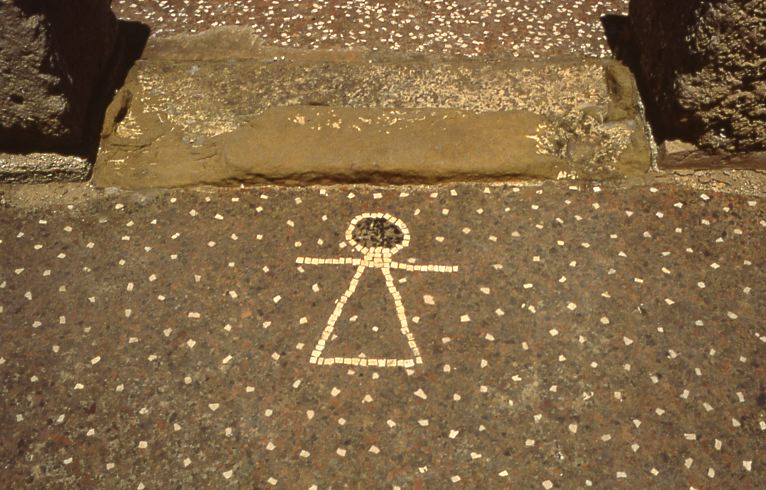
The RRC description reads “Lion-headed Genius terrae Africae (head surmounted by disk), holding ahkh in r. hand…” That is no ahkh, that is the sign of Tanit, the patron goddess of Carthage.  [A scholarly friend has suggested that there might in fact be a connection between the two symbols.]

A flickr search or a google image search can give you a sense of the variations on this symbol and its contexts. And the image as a whole is clearly the same as this statue in the Bardo:

The connection was made in 1918.  The publication is now in the public domain; see p. 241-242 for the relevant discussion.  The identification as Genius Terrae Africae comes from the resolution of the  “C . T . A”  legend on the coin above the figure’s head by Babylon.  I wonder if any other epigraphic parallels exist for this abbreviation or even the existence of this Genius in this form?   Crawford (and others? ) see a link with the “Genius of Carthage”  (Δαίμονος Καρχηδονίων) of Polybius 7.9.2.

Based on the abstract this might be relevant: Salcedo Garcés, Fabiola. – El relieve tetrarquico de Rapidum (Sour-Djouab, Argelia) : política y religión en el Africa romana. Antiquités africaines 1996 32 : 67-85.

Gabriela Vlahovici-Jones has given the type some discussion online.  She treats the deity as “Sekhmet holding ankh” without any reference to Tanit.

Much of the concern over the identity of the Genius Terrae Africae or the Genius generally in N. Africa, seems to be in scholarship on the Late Antique and the Church Fathers, so for example this discussion and notes.

Linderski, Jerzy. “Q. Scipio Imperator.” In Imperium sine fine: T. Robert S. Broughton and the Roman Republic. (1996), pp. 144–185 is probably the most through description of the coin series.

And while we’re at it, I might as well mention that the sign of Tanit is often combined with a symbol similar too (and perhaps the same as?) the caduceus.

Capture.JPG
British Museum

I’m no expert on North Africa so I’m going to stop here before I say anything stupid.

[Oh. And I think Victory is holding a shield not a patera (possibly even a Macedonian shield?)]

53 out of 410 Days: One of a Kind

Images and some links added 1-6-25.

RRC 358/1 – with beautiful new photo.

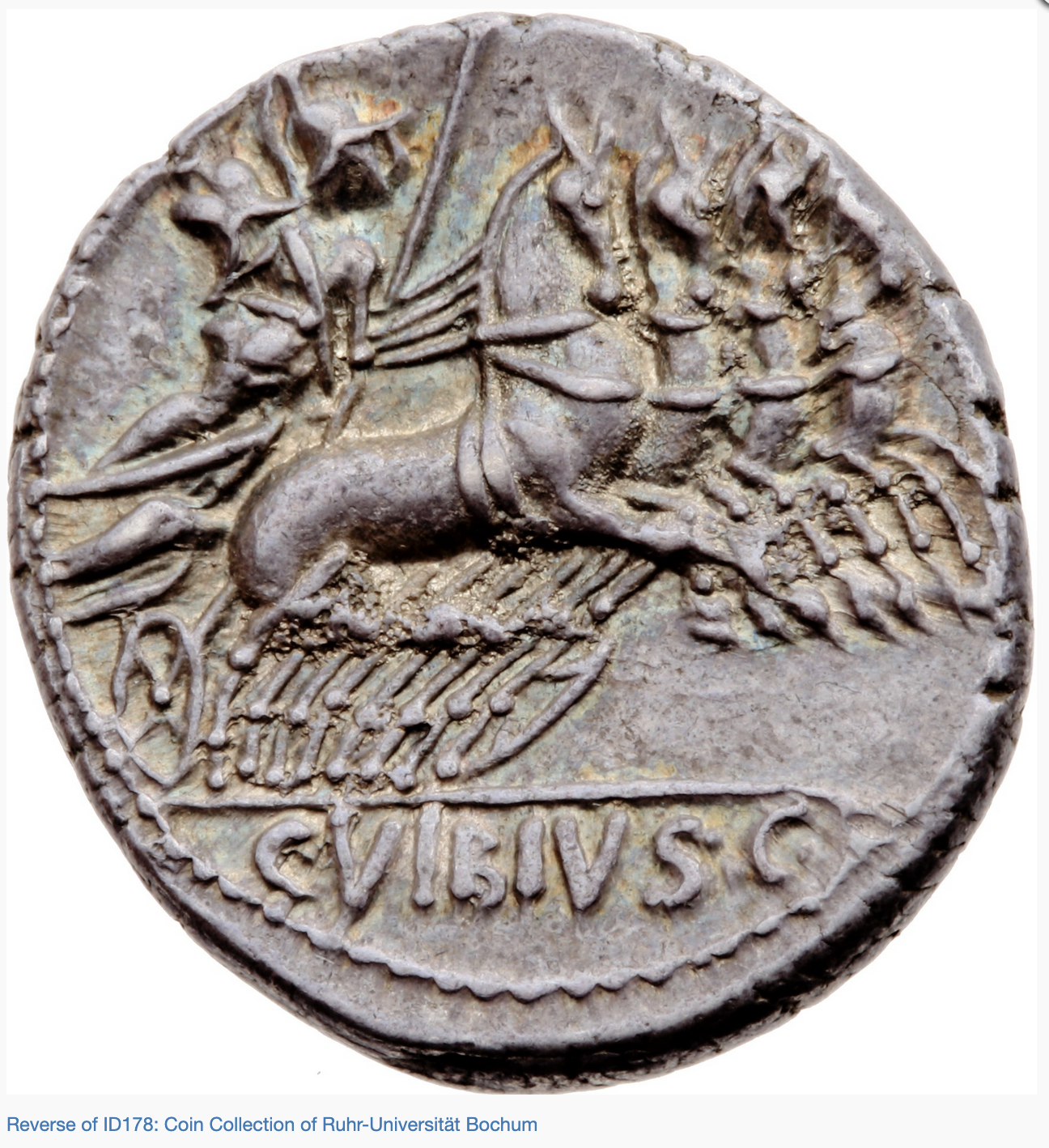
There is only one of these coins known.  It’s in Berlin, although a modern photo is not available on their website.  One coin and thus just one set of dies isn’t much evidence to go on.  It’s dated purely on stylistic and prosopographical grounds to c. 83 BC.   The RRC entry says it represents a triumphator.  The figure in the quadriga holds a trophy and palm branch(?) and seems to have some sort of spiky substantial head piece on.  Holding a trophy is not typical triumphal iconography.  In fact the only references to a triumphator holding a trophy in his triumphal chariot in the republican period which I know of is Plutarch’s Marcellus, and that is in connection with his dedication of the spolia opima.  Flower has argued that his is the only historically likely case of this type of dedication, a view nuanced by Beard 2007: 292-295.  I’m not ready to say that the figure in the chariot is Marcellus, esp. not without some connection between the moneyer and Marcellus or some other identifying characteristic.   Marcellus and his spolia opima do appear latter on coins (RRC 439/1; 50 BC).

The motif of chariot and trophy is not alien to the republican series:

90 BC, RRC 342/4-6 Minerva in a ‘fast’ quadriga holding trophy

130 BC, RRC 255/1 Hercules in a ‘slow’ quadriga hold trophy

131BCE, RRC 252/1 Mars in ‘fast’ quadriga holding trophy

134 BCE, RRC 244/1 Mars in ‘fast’ quadriga holding trophy

(Cf. also RRC 306/1 Mars naked trophy over shoulder and RRC 335/3 Naked warrior standing on cuirass next to trophy)

Both the laurel wreath and the bead and reel borders have plenty of precedents on the series, neither in any helpful pattern I can see (notes below).

The three-quarters profile chariot is unusual as is the lack of indication of motion in the horses, neither slow, nor fast, just still.  The stillness and the palm branch and the laurel wreath are the best arguments for seeing this as triumphal.

The head on the obverse is usually identified as Jupiter but it isn’t a typical representation of him.  My first reaction when looking at the head type is to see it as Hercules, but this may be overly influenced by his later iconography during the high empire.  This sort of image:

[Herakles was associated with athletics going back to Pindar and this ‘portrait’ style has Hellenistic antecedents. – 1/6/26]

All in all my thoughts tend in a conservative and reductive direction.  I’m not sure we can be certain of the identity of the figures depicted on either the obverse and reverse type.  The unexplained elements I’d want answered are regarding the headgear and also the long flowing drapery off the figure and out the back of the chariot.  Isn’t the latter usually associated with a female deity?  I’d also want an explanation for why this palm branch is more “S” shaped instead of a single fluid arch such as Victory normally holds.  Perhaps its the 3/4 perspective or perhaps its some other attribute:

Laterens

Given its low production its hard to see it as a large, or significant, or influential issue.  A curiosity, but perhaps not historically meaningful?

Similar border types (post 49BC types excluded)

Laurel Wreath Borders: RRC 232/1 – 138BC (chunkier, fixed bottom tie); 290/6 – 114/113BC (Unica – non vide); 324/1 – 101BC (distinct central stem); 329/1 – 100BC (loose thin, but same V execution); 336/1 -92BC (loose thin, but same V execution, not all v’s close: some become more parallel); 342/3a – 90 BC (non vide); 402/1- 71 BC (Pompey Aureus – perhaps most stylistically similar but lacks definitive dot at top join of Vs); 411/1a -64 BC (more leaf like, space at bottom); 418/1-2 – 61BC (more leaf like with berries and tie at bottom).

Bead and Reel:  RRC 97/1a&b Luceria, 211-208BC; 103/1a Apulia 211-210BC; 236/1 (occasionally?!) 137BC; 366/2 82-81 N. Italy and Spain; 384/1 79BC; 392/1 75 BC; 409/1&2 67 BC

Update 30 November 2013: Compare the radiate crown on this representation of Jupiter below.  The triumphator is said to have dressed like the statue of Jupiter on the Capitoline who is dressed in regal costume.   Can’t be bothered to look up the reference but surely in Beard or Versnel. 

reverse

52 out of 410 Days: Syncretism

Kinda looks like a Christmas wreath, doesn’t it?  This occurred to me yesterday when I was in a local boutique buying bangles as Eidi for the young people who invited me to celebrate with their family today. [I’m really excited.]  The woman in the shop suggested an up-sell: gold cloth bags to hold each bangle set.  My first reaction was “ooo …nice! well-worth 2 bucks” and then she pulled them out of the cupboard and they had a holly leaf and berry design over them.  I quickly back pedalled.  I can’t exactly bring gifts looking like I used left over Christmas wrapping.  I was worried about being perceived as uncouth or insensitive.   At the same time it was Muslim woman in a muslim shop advising me on my purchase.   I took them home and wrapped them myself.   

And then when I got home I find myself reading about the reception of the cult of Cybele, a.k.a. the Magna Mater, in Rome.  This is the first coin at Rome to depict the goddess.  


Her cult object was originally an aniconic (non-figurative) black stone.  That got set inside a silver statue.  And, all the Roman representations follow the Greek model.  I’m not going to go on about this as there is an award winning book on the subject.  Most intriguingly in the earliest archaeological layers of her temple at Rome terracotta plaques representing Juno Sospita were found.  This is not one of those finds, but gives a visual point of reference as to what Juno Sospita’s iconography looked like in the early period.


What’s my take away?  I know that Eid isn’t Christmas, and I also know there is nothing inappropriate about borrowing one set of traditions to augment the celebrations of a different religion.  The elisions are more comfortably made by insiders, than outsiders.  I find the phenomenon bemusing, but not confusing.    After all the holly and the ivy and the presents and many other festive trappings all entered Christian celebrations from earlier pre-existing religious traditions.

I don’t want to stretch the parallels with ancient worship too far.  Monotheism and polytheism often work very differently, so too communally versus individually driven worship.   And, yet.  I think my understanding of Cybele is just a little more nuanced for having gone present shopping.

51 out of 410 Days: The Most Important Truth

I had writer’s block yesterday, also known as getting stuck in the scholarly literature.  I panicked [a mind set not helped by some fiendish back pain]  that I’d never understand what was going on with the absolute and relative dating of a coin series and how could I ever explain it.  Everything I read was so contradictory.  And, then it dawned on me.  That itself was the truth, perhaps the most important truth.  I don’t know and I don’t believe anyone knows with enough certainty that firm historical argumentation can be build on that chronology.   Knowing when you don’t know and saying those words aloud often and frequently creates a powerful truth.  When I was nervous the evening before the first time I taught, my Masters Supervisor poured me a small drop and told me to just be honest with the students and never be afraid to say ‘I don’t know’.  It’s made me a better teacher over the years, and at least right now its making me a better writer.

Back to my scribbling.  It’s Eid this evening and there will thus be much shenanigans to distract me later.   

50 out of 410 Days: Am I a Classicist?

Link to Eidolon Article from which I stole this image to replace the original broken link.

No, no.  I must be a historian.  Or a numismatist.  Or an art historian.  Or Romanist.  Or a Greco-Romanist.  Oh wait.  I’m employed — permanently — in a Classics department.  I better get over myself and admit that for all my general ambivalence towards the word and its connotations that I really am a Classicist and this thus must really be a classics blog as it is about my professional life.  [Really, very clearly this is not a food blog.]  

This issue came up as I “discovered” [in the Christopher Columbus sense] that there are other bloggers out there.  Hundreds [well dozens] all concerned about those pesky Greeks and Romans and their neighbors and what we do with them today.  What fun!  

What’s my hesitancy about the Classics label?  Well, it is a label and I did have a good hippy-full childhood.  [File under Freud.]  Then there is the whole philology thing and given the learn disability with languages…  [Just file under self-esteem and generalized anxiety.]  Then add in the dissemination of the connotations of the word, a.k.a. ‘overuse’ for the purists.  [File under ‘No, I don’t work on Jane Austin or MoTown or Model Ts’.]  

Give me a while and I’d come up with a dozen more reasons.  I am a Classicist after all.

The one thing I did notice in my peak into the blogosphere is that we classicists as a rule tend to take ourselves very seriously.  I’m not sure that’s wholly necessary. It’s not like we’re working on something like this:

http://www.end7.org/

That is a random plug for just one of my NGO-employed friends.  I just like to keep some perspective on my general relative impact.

On the upside, Classicists do seem to have a great sense of awe and wonder.  That’s no bad thing.